In 1990, a friend was thinking about acquiring a synthesiser...
Synthesisers... mysterious keyboard instruments with lots of knobs that made strange sounds. Something we’ve always known about but never really had an opportunity to experience up close. Most of the music we grew up listening to and loved featured synths.
So we trawled through the Trading Post and found an old Roland JX-8P going cheap. I had a car, my friend had the cash - now we had a synth! We wanted to make electronic music, but something was missing...
Shortly after, a drum machine was acquired. Like the synth, we had no clue about them but very soon a Roland TR-707 was acquired. Pooling our remaining funds, we purchased a 4-track tape recorder and began to learn how to use these instruments to compose music.
Fast forward to 1991, SWLABR was born. I'd fallen down the techno rabbit hole and amassed several more electronic devices... synths, samplers, sequencers and began composing tunes with a techno flavour in my bedroom studio - some of which feature on this EP in all their original glory, tape hiss included!
Search:hiss
Habibi Funk is excited to share “Marzipan” - our first full length contemporary release courtesy of Beirut’s multi-instrumental phenom Charif Megarbane, also known as the man behind prolific Cosmic Analog Ensemble. The LP is a journey into Charif’s styling, one he terms “Lebrary”: a vision of Lebanon + Mediterranean expressed through the kaleidoscopic sonics of library music. Drawing from artists that encapsulates the HF sound, such as Ziad Rahbani, Ahmed Malek and Issam Hajali, Charif translates these influences into an LP that is equally at home in ’23. We always wondered why Charif’s music stayed under the radar for so long, that all changes with “Marzipan”.
Charif Megarbane, the staggeringly prolific producer, instrumentalist, and all-around musical mastermind returns with full LP “Marzipan.” Following his previous release of EP “Tayara Warak” in 2022, “Marzipan” is a sonic journey that seeks to capture the full scope of Megarbane’s habitus. As a composer and producer, Megarbane touts hugely versatile, sometimes volatile musicianship — his 100+ catalogue of projects (including legendary groups like the Cosmic Analog Ensemble, Free Association Syndicate, Monumental Detail, etc.) features a huge domain of sonic direction. This collection was previously developed in Megarbane’s own Hisstology label which hosts a wealth of collaborative efforts. Now, Habibi Funk represents Megarbane under his own name. Megarbane finds a sonic through-line in his surrounding soundscapes as he draws on the chaotic energy of the crowded Beirut metropolis (“Souk El Ahad”), the warm atmosphere of the Lebanese countryside (“Chez Mounir”), or the lushness of a Mediterranean beach resort (“Portemilio”). Reflecting the aural composition of his direct surroundings into kaleidoscopic instrumentation provides a unique insight into how one musical phenomenon transposes sight into sound. Habibi Funk is thrilled to share “Marzipan” and finally throttle this under-theradar phenomenon into the solo spotlight. Despite the magnitude of his catalog, Megarbane’s LP sounds as fresh—as resolutely inspired—as a debut record. “Marzipan” continues down the winding path he trod on EP “Tayyara Warak” (released Decmber, 2022) which features solid footing in the hectic city sounds Megarbane hears as home. Despite his obvious musical acumen, Megarbane’s greatest talent seems to be his open ears. In many ways, “Marzipan” is a cartographic feat — it travels and traces a journey across many dimensions (both sonic and physical). Megarbane’s instrumental catalogue is vast: toy glockenspiel, harpsichord, pedal steel, a classic Wurlitzer, et al are used liberally on the record. The resultant sound is as sprawling as the musician’s instrumental dexterity. “Marzipan’s” closing track “Bala 3anouan” can be translated loosely to “without address” — a fitting final word. Despite the entire record being a sincere testament to Megarbane’s environmental approach to music-making, the record is not bound to any particular coordinates, or any particular sound for that matter. The vastness of his influences — beloved artists like Ahmed Malek and Issam Hajali (both Habibi Funk veterans); West African funk deep cuts; European cinematic scores; et al — result in a record of somewhat unparalleled expansiveness. Floating melodies and frantic rhythmic interludes both find natural homes across “Marzipan.” The record is tinged with psychedelic elements—fuzz-drenched guitar, sliding microtonal interludes, hypnotic rhythmic breakdowns. Reflecting on his creative process, Megarbane cites a stream of consciousness approach: “It’s a very spontaneous, playful, and diary-like approach and workflow…I trust my instinct because instinct is based on experience.” Lead single “Souk El Ahad” opens the roll-out with a raucous energy, out June 12. Megarbane abstracts busy city sounds into a psychedelic framework, casting technicolor hues on everyday experience. Following is second single “Pas de Dialogue” out June 23. The track jerks the listener towards a more meditative state with lulling harpsichord and expanding, cinematic sound. “Marzipan” will be available physically and digitally everywhere on July 14, 2023. Be sure to listen for focus track “Chez Mounir” that captures the warmth of community in a joyful, laidback groove.
Uncover greater insight into the world of Charif Megarbane in the booklet accompanying the LP
A kind of hush pervades throughout Standards Vol VI, the latest release by The National Jazz Trio of Scotland, the ironically named project helmed by Falkirk’s musical polymath, Bill Wells, that is neither a trio, nor a jazz band. If this collection of ten covers probably comes closest to the latter in its late night renditions of actual standards, the presence of long-term NJToS member and collaborator Aby Vulliamy as the record’s lone vocalist adds to its solitary air. This follows Standards Vol IV (2018), which featured fellow NJToS co-founder Kate Sugden as primary vocalist, while Gerard Black, a member of the group since 2016, took centre stage in similar fashion on Standards Vol V (2019). Wells has long been a fan of Vulliamy, both of her work as a viola player with numerous collaborators, and as a singer.
Vulliamy played viola on Everything’s Getting Older, Wells’ 2011 collaboration with Arab Strap vocalist Aidan Moffat. Wells went on to play melodica on Vulliamy’s solo record, Spin Cycle, released on Karaoke Kalk in 2018. With the intent of producing the saddest heartbreak record ever made, Wells sourced a back catalogue of miniature epics, reinterpreting each tale of everyday yearning to make a canon of melancholy loungecore designed for nights in alone, if not always lonely. Beyond the concept of isolation behind Standards Vol VI, practical concerns added to the affair, with Wells recording backing tracks at home in Glasgow, while Vulliamy added her voice from her home in Yorkshire. The result on Standards Vol VI is a thing of quiet beauty that sees Wells and Vulliamy reimagine a panoply of pop classics in their own aloof sounding image.
Shades of Margo Guryan and Claudine Longet abound in Vulliamy’s delivery over Wells’ woozy, low-slung guitar and piano, with samples culled from a session with Teenage Fanclub’s Norman Blake. Little electronic percussive clicks and hisses lend things an even more otherworldly air on a record bookended by opener, Donovan’s proto hippy classic, Catch the Wind, and Dixieland miniature, Careless Love. The eight points in between take in a first half led by The Beatles’ normally jaunty We Can Work it Out, flipping the loveable mop-tops’ perky optimism for something more soul searching. This is followed by I Wish You Love, Albert Beach’s English language version of French songwriter Charles Trenet’s evergreen, Que reste-t-il de nos amours. The Bee Gees lost classic, To Love Somebody, is up next, with more impossible to answer questions coming in Why Can’t I?
The latter is a Rodgers and Hart composition that first appeared in the duo’s 1930 Broadway musical, Spring is Here, in which the show’s two heroines commiserate each other over their shared loneliness. Wells stumbled on the song in a tatty Rodgers and Hart songbook, which, like its subjects, had been left on the shelf before he and Vulliamy brought it in from the cold. The second half of Standards Vol VI leads with Matchmaker, Matchmaker, Jerry Bock and Sheldon Harnick’s much covered evocation of a pre dating app era from their 1964 hit musical, Fiddler on the Roof. This is followed by Billy Rose and Dave Dreyer’s showbiz staple (with Al Jolson also taking a credit), Me and My Shadow. While made famous by showbiz double acts ranging from Frank and Sammy to Robbie and Jonathan, here it flies decidedly solo. Johnny Mercer and Hoagy Carmichael’s Skylark comes next, a song inspired by Mercer’s yearning for Judy Garland. We hear ya, bub. The most downbeat take on Bacharach and David’s The Look of Love you’re ever likely to hear comes next, ushering in the short farewell of Careless Love, before the lights are turned out forever. Yeah, well. Whatever gets you through the night…
Angel Deradoorian and Kate NV are Decisive Pink - Ticket To Fame is their highly anticipated debut. After teasing the single 'Haffmilch Holiday' the duo amassed a rapturous response, with The Guardian calling it "a space-age-dancefloor swoon that brings to mind Kate Bush's Waking the Witch" and the New York Times highlighting the single as "substantive and thoroughly hypnotic". On their first LP they do not disappoint, calling on Kate NV's experimental pop leanings and Angel Deradoorian's taste for atmosphere and otherworldliness, Decisive Pink have created a playful and abstract album designed for escape and enchantment. Electronic pop at it's finest, the debut points to the fact that life is a puzzle, but you can still get a lot from living it. 'Destiny' is a smart take on the nature of belief, built on a question-and-answer format, where Angel plays a role as the seer, and Kate the enquirer. The poppy beat is reminiscent of Talking Heads' 'The Great Curve', from Remain in Light. There again, it could be a sinister take on Will Powers' 'Kissing with Confidence'. The synth squeaks, squelches and toots sound like the timid affirmation of the initiate. Ticket to Fame is also unashamedly romantic in atmosphere and tone. Romance is to be found in the simple pleasures, such as listening to a blackbird on the instrumental 'Rodeo', where warm synths, a melancholic guitar pattern and hissing rhythm combine with some vocal snippets to form a soothing contemplation. Then there is 'Ode to Boy'; a perfect pop track. The walking into the room of "more than just an ordinary boy" (doubtless "drunk with fire") allows a set of initially different, and shortened synth patterns to build to a glorious affirmation of the power of love. "Perfect pop music" Marc Riley, BBC6 Music And guess what? The vinyl comes in pink!
Siamese Twins Records presents Temple Rat, known offstage as Mei Yuxin, and her highly anticipated debut EP, "The Composition of Air." This album signifies her first solo release with Siamese Twins, following her contribution to the Kāthā V.A. (ST-๐๐ห้า), which Higher Intelligence Agency later reworked on ST-๐๐๘. Each track gracefully transitions, creating a harmonious blend of ethereal haze yet grounded echogenic brushstrokes. Despite the otherworldly ambiance, the EP remains deeply rooted in an ancient mystique, which Mei has skillfully crafted.
Hailing from Chengdu, Mei is a master of the traditional Chinese Erhu, a two-stringed folk instrument made of wood and snakeskin. The soulful resonance of this time-honored instrument intertwines with Mei's productions and live performances.
The opening track, "Dreaming of Electric Sheep," immerses listeners in a dystopian sci-fi atmosphere, masterfully merging rustic ambiance with hissing field recordings and IDM-inspired elements. Hypnotic rhythms envelop and wash over meditative alchemy.
"Rooted in the Soil of Your Heritage" features a captivating collaboration with Portuguese vocalist Meta_, taking on a contemporary darkwave approach. This track spirals into the horizon, offering solace through interlacing oscillations, and perfectly illustrates Mei's ability to facilitate interethnic dialogue with her distinct and enthralling Erhu sound.
The true story unfolds in the title track, "The Composition of Air," as Mei expertly employs organic synths to create absorbing arpeggios and sequences.
The final piece, "东风," feels familiar and otherworldly, as drums pirouette beneath melodies that balance delicately, culminating in an intriguing and welcoming soundscape—the ideal conclusion to a captivating EP.
Ygrok brings a long-awaited fourth release to its catalog. René Audiard's Sakhalin' takes things a step away from traditional club music.
The A side, Vox Out' opens with the skeleton of a rhythm. Scattered tom drums and barely detectable whirs, fading and reeling in the background. When the distorted voices begin their story behind a hissing, grinding off-shaker, you know this will not be your traditional club track. A story develops. The barest hint of a shuffling beat, a subtle reminder of Soren's previous work, pins down the journey into the darkest psychic territory. The title track Sakhalin steps even further into darkness. Crackling electrics and disjointed atmospheres change at a glacial pace over a submerged hydraulic beat. Sakhalin Audiard experimental territory.
Birds chirp through a tape-hiss breeze atop a bed of airy pads, and a cleareyed, forlorn guitar springs forth: this is the beginning of the debut album from Sans Merit, a new rock project from Griffin James, otherwise known as Francis Inferno Orchestra.
For over a decade, the Melbourne-raised—and now L.A.-based—producer has been indulging his indie and alt interests, and this fuzzed-out bedroom janglepop and shoegaze LP, Early Grave, is his first extensive deliverance.
The album represents a gestalt of sorts: years of approaching different genres and songwriting styles, and producing not “in the box,” with soft synths and
samples, but with live instruments (and sometimes a band), has led to this focused and succinct thirteen-track musical journey.
In pursuit of a pure and low-key aesthetic, James recorded demos on phones and chose to rely heavily on budget instruments, clapped-out synths, and
crappy amps, and would often cut tapes live in bedrooms, lay down vocal takes in closets and put microphones to broken speakers, all in part of the quest of using limited resources to create a truthful body of work. The finishing touch is a thick coating of nostalgia ooze; soundbites from internet clips flitter throughout the record, and goofy sound effects flicker above like dying incandescent bulbs.
A dream-pop album for our times: its lyrics are off-kilter romantic musings, sarcastic self-loathing mumbles, reflections on the unrealness of real life.
Essential UK experimental composer Richard Skelton returns to Phantom Limb for new album selenodesy, interweaving his newfound love of electronics and synthesis with mastery of gritty organic texture.
Skelton’s music has always been rooted in landscape, in the loam and grit of the earth: from his 2009 Pennine Moors-inspired modern classic Landings to his more recent Moraine Sequence of geological excavations, his work has been bound inexorably with the stark and untended wilderness of northern landscapes. With this new album, however, Skelton shifts his gaze skyward — in part the result of a move in 2017 to the countryside near the Kielder Observatory, and to a so-called ‘dark sky’ region of the UK. In this remote landscape, light pollution is minimal, allowing the austere majesty of the night sky to be seen with greater clarity.
The resulting album, selenodesy, reveals a new, reverberant spaciousness to Skelton’s use of electronics. It marries the twin worlds of his previous Phantom Limb release - 2020’s These Charms May Be Sung Over A Wound, and its abandoned-factory threnody - with the landscape-revering arcana of his earlier work, which saw him bury instruments in the soil to return months later to recover and record with them, newly imbued with the land they occupied. selenodesy was prefigured by a period of insomnia and the relief found
in stargazing, during which Skelton tried to transcribe his hypnagogic visions: “much of this music came to me in the early hours, in that nowhere state between dreaming and waking. I’d look out the window and the night sky would be swirling with stars. Mars or Venus would be hovering in the corner of the room. I’d lie there and watch the Aurora Borealis dance across the ceiling.”
In selenodesy, we find the lingering, distorted sine waves of album opener “Albedo” that thrum and fizz with an icy, foreboding moonlight, rays of subtle movement that illuminate and darken alternately. Next follows lead single “The Plot of Lunar Phases”, whose passive shrieks echo about a cold, yawning space, reaching an ecstatic crescendo of hissing sonics and swirling celestial drone. Its dynamic range acts like the light of a lunar passage, from utmost darkness to radiant luminosity. Elsewhere, the pulsing, precessional bass of “Faint Ray Systems” gradually opens to reveal mournful, elegiac synthesis that reaches high into the night sky with an unearthly beauty. It is as if, during those long months of lockdown in the Scottish countryside, Skelton tapped into a series of sidereal electromagnetic transmissions, and transposed them into musical form.
- A1: Oceana 4D
- A2: Key Of Youth
- A3: Old Bones
- A4: Emerald Nights
- A5: Banana Boat And The Kalo Sanctum
- A6: Key Of Life (Feat. Justice A. Gonzalez)
- A7: Splendid Macaw And The Rotan Initiative
- A8: By Firelight In The Dead Of Night
- A9: Mother Moon And The Mangrove Midnight
- A10: Enigma Of Sator
- B1: Zarzus And The Lotus Eaters (Smugglers Bay)
- B2: Towers Above The Mist
- B3: The Fountains Of Living Water
- B4: In The Land Of Vision (Silkwinds)
- B5: The Sower Sows The Wheel With Effort
- B6: Mysteries From The Wild Ones
- B7: Temple Of The Shark Hunter
- B8: Polyhedron Of Minos
- B9: The Dance Of Pythia
- B10: Unto The Harvest The Feast That’s Sown
Over a decade since its inception, Wave Temples continues to refine and refract the project’s visionary mythopoetic exotica. Panama Shift presents a 20-track kaleidoscopic star map inspired by “the euphoric cults, both then and now, that come and go in the vast ritual of night.” Bleached keys, devotional synth, and driftwood percussion align in minimalist vignettes shaded by tape hiss and field recordings of streams, waves, wind, and birds.
Dedicated to the late Japanese-born American anthropologist Yosihiko H. Sinoto (whose portrait graces the cover), famed for his excavations throughout the Pacific and French Polynesia, the album embodies a similarly voyaging spirit: “chasing ancient mysteries… and rekindling with the esoteric journey of the human spirit.” This is music of forgotten shores, sea air, and saltwater shrines, echoing in shells scattered across the altars of Atlantis.
Voice Magnetic by Hainbach is the enigmatic Berlin based artist’s sonic diary of 2022. On his sixth release on Seil Records, Stefan Goetsch collages the sounds he made and the ones that surrounded him over the course of twelve months into a powerfully intimate ambient experience.
In his studio or on travels — Hainbach always is working on new material and allows the locations he records his tracks in to find their way into the music. Consequently, on many tracks you can can hear the outside bleeding in — seagulls and waves on "Izmir", the voices of his children while record the piano or the sirens of Neukölln’s police cars in background.
The connecting threads between these pieces are magnetic tape and the human voice — hiss and breath. The result are 15 immersive ambient pieces that make up Voice Magnetic. Often short like the moments that spark them. Fading and intricate, honest and pure.
Based out of Berlin, Germany, electro-acoustic music composer and performer Hainbach creates shifting audio landscapes, using esoteric synthesizers, nuclear test equipment, magnetic tape and a collection of idiophones. Hainbach has become known for his immersive live shows and an unique sound that is both abstract yet very much a corporal experience. Otherworldly and intimate, raw and heartfelt. On his wildly popular YouTube channel, Hainbach shares his love for experimental music techniques and his passion for forgotten machines with a wide audience. Inspiring over one hundred thousand each week to explore synthesis, electronics - and to leave beaten paths.
- A1: The Water Seems Changed To Mist And Vapor
- A2: Ropes Sing In The Air
- A3: Waiting And Watching (Version
- A4: Warm Murmur In The Room
- A5: It Moves Swiftly Forward, Throwing Up Great Waves
- B1: On The Quay Now, Waiting And Watching
- B2: Someone Squeezes A Concertina, Sailors Begin To Sing
- B3: Drawn Toward The Whirlpool's Center
- B4: It Moves Swiftly Forward (Version)
- B5: On The Quay (Version)
One of the most notorious hatemongers in movie history is Captain Ahab from John Huston’s 1956 classic Moby Dick. His manic monologues cast a spell on generations of viewers. Berlin based musician and sound artist Jan Jelinek has now turned the voice of Ahab into a musical instrument.
Faitiche presents Jan Jelinek's soundtrack for SEASCAPE – polyptych, an audio-visual software developed in collaboration with Canadian new media artist Clive Holden in 2022.
SEASCAPE – polyptych is based on image and acoustic source material from Moby Dick. While Holden works on manipulating film sequences, the voice of Ahab plays a central role in Jan Jelinek’s soundtrack. The dynamic volume and tone of the captain's speech control a synthesizer system that turns Ahabs voice into ten abstract soundscapes.
In this production the voice gives the impulse and controls things but is not the sound of spoken word itself that we hear. Only occasionally can snippets of speech be heard so that syllables or sounds are recognisable. Instead we hear compositions made of hissing, soundscapes and eruptive sounds. The atmosphere is dark and sinister. Still every piece has a clear sonic structure and follows an understandable dramatic composition. This music is abstract but not overwhelming. Quite the opposite, SEASCAPE – polyptych is an invitation to listeners to let themselves be carried by the stream of sonic events. Although part of a media art work, the soundtrack can be enjoyed without any of this connecting superstructure. It works with no previous knowledge. But what happens when one does know that it’s the sonic waves of a human voice that is controlling a network of synthesizers?
If you want to hear Ahab, you will hear a choir of Ahabs in every piece of sound. The subliminal threatening as well as the conjuring Ahab. Finally the Ahab who whips up his crew and tears them with him into their downfall. The majestic „on the quay now, waiting and watching“, the oppressive “drawn towards the whirlpools center” - they are all music as well as sonic discourse.
Black Truffle is pleased to announce Down On Darkened Meetings, the first solo release on the label from the quietly prolific Giuseppe Ielasi. Recorded at Ielasi’s studio in Monza outside of Milan over two days in February 2022, the seven pieces presented here continue the renewed exploration of the guitar that marks much of his solo work over the last few years. Emerging in the late 1990s as an improviser working primarily with prepared acoustic and electric guitars, the instrument became less prominent in his work over the next decade, ceding to loop-based constructs that would eventually split into abstracted takes on club music and hip-hop (including his work as Inventing Masks), on the one hand, and spectral electroacoustic explorations (such as the stunning triple disc 3 pauses), on the other. Returning to the guitar in recent years, he has approached the instrument as a source of shimmering metallic glissandi (Five Wooden Frames) or as the vehicle of elegiac double-tracked lines that feel almost like Frisell playing Feldman (The Return). Here the focus is on electric guitar filtered, looped, and splayed out into fields of irregular echoes through a bank of pedals. Like many of Ielasi’s releases, Down On Darkened Meetings is structured as a set of short untitled pieces (here ranging between two and six minutes in length) that single-mindedly explore a single instrument or source throughout. The opening track immediately introduced the distinctive timbral world of fizzing, heavily filtered tones, chiming harmonics, and woozy looping bass figures inhabited throughout. At points it becomes near impossible to trace these sounds to the strings of an electric guitar; at others, as on the final two pieces, the instrument is unmistakable, as Ielasi builds up his shifting loops from snatches of almost unintentional sounding half-playing that give these closing tracks a hushed, private atmosphere reminiscent of Tolerance’s Anonym. While the repeating chords and hanging melodic figures present on many tracks call to mind earlier Ielasi classics like Gesine and Untitled, here the music feels less meticulously constructed than played: Ielasi’s lyrical guitar lines obscured by a battery of effects at times come across like a dilated take on the outer-fringe fretwork of improvisers like Henry Kaiser and Raymond Boni, and the muddy, asynchronous fields of pops and hiss at times wander into areas reminiscent of the hand-played dub techno of Vladislav Delay’s Multila. Like much of Ielasi’s work in recent years, these seven pieces perform a delicate balancing act: between abstraction and immediacy, austerity and abundance. Imbued with Ielasi’s distinctive lightness of touch, considered approach to pacing, and subtly psychedelic approach to the stereo field, Down on Darkened Meetings is a major new work from a quiet master of contemporary experimental music.
SP-1200 beats made using postal service. Fredfades and Sraw collaborate through post, exchanging dusty beats for an experimental Hip Hop record. The process of sending floppy discs back and forth, where each producer added element over element on their own SP-1200, has been on-going for almost 10 years, slowly building a collaborative body of work.
The result is Double Density, an LP that oozes with the character of that infamous instrument which laid much of the foundation for the earliest Hip Hop artists and still manages to evoke those raw and visceral sounds of that era. Reinforcing those sounds are the voices of Planet Asia, Pink Siifu and Blue November, who deliver lyrics from US coasts to Scandanavia’s fjords.
The duos collaborative effort swims in a sea of eclectic influences where Jazz, Soul and Hip-Hop thrive in the construct of this unique instrument. The drum machine pops, crackles and hisses on a bed of big bass lines through 12 tracks that go from short instrumentals to fully arranged songs.
Taking Hip-Hop back to its origins, everything is stripped bare to its essentials and for every vocal track, there’s its antithesis in the form of an instrumental break. It’s a record that plays with the archetypes of Hip Hop and Rap as something that we’ve lost over the years that begs for revocation. Double Density sounds exotic in the world of today’s gleaming beats.
Veils Of Transformation 1972 - 1980 is a collection of the earliest works of Gregory Kramer, one of the 20th century masters of textural electronic music. This collection is available on CD and cassette with liner notes from Gregory Kramer and Kaitlyn Aurelia Smith, who first brought this fascinating work to the attention of Important Records.
“Greg is one of the pioneers of electronic music and these pieces are unique opportunities to discover how intricate and dynamic early synthesizers are.” Kaitlyn Aurelia Smith
Kramer developed a musical language focused on continuous transformation of timbre, yielding a continuity of attention. This musical language, formed of timbral change, is a compelling aesthetic in its own right and a source of meditative experience. The four works on this album share a deep sense of order derived not from organizing pitches or rhythms, but from the evolution of timbre itself.
Gregory Kramer (b. 1952) is a pioneering electronic composer, inventor, researcher, teacher and author. In 1975 he co-founded Electronic Musicmobile, a synthesizer ensemble later renamed Electronic Musicmobile, a series of synthesizer concerts in New York from which he formed the Electronic Art Ensemble, a highly regarded all electronic quartet. His work extended to developing synthesizers and related equipment. Kramer also co-founded the not-for-profit arts organization Harvestworks in New York City. He is recognized as the founding figure of the intensely cross-disciplinary field of data sonification. Since 1980, Kramer teaches Buddhist meditation.
The four compositions collected here each represent Kramer’s unique approaches:
The structure of Meditations on 32 Parts of the Body (1978) is derived from the means of its production. Recording 5 people chanting an ancient meditation text, then layering to gradually achieve more than one million voices. The layering was all done using analogue tape recorders. The decomposition of the sound reflects the anomalies of tape machines out of sync, and the build up of artifacts from the audio tape itself, such as uneven response curves and tape hiss, are all engaged as musical materials.
Role (1972) was generated using one complex patch on a large hybrid Buchla 200/100 system. Emerging from a zeitgeist that valued pure synthesis as a combined artistic and technological research. At the time this piece was realized its as exceedingly difficult to produce electronic sounds that were internally complex.
Blue Wave (1980) is built on Kramer’s timbral development technique Veils Of Transformation which allows for disparate timbres to be woven into a continuously developing sound.
Monologue (1977) is a virtuosic performance of a massive patch on a Buchla/Electron Farm hybrid electronic instrument. Built into the patch is a pathway for continuous transformation of voice and voltage-controlled synthesizer. The blunt, raw and sometimes harsh sounds of this piece reflect an attitude prominent among composers that music can, or even should, be difficult, contrary to what’s already been done and, by all means, new.
Hailu Mergia & Dahlak Band's Wede Harer Guzo is the third release on Awesome Tapes From Africa for Ethiopian keyboard and accordion maestro. In the years since Shemonmuanaye, Mergia has revamped his touring career, playing festivals and clubs worldwide, including a recent tour supporting Beirut. By 1978, Addis Ababa's nightlife was facing challenges. The ruling Derg regime imposed curfews, banning citizens from the streets after midnight until 6:00 am. But that didn't stop some people from dancing and partying through the night. Bands would play from evening until daybreak and people would stay at the clubs until curfew was lifted in the morning. One key denizen of Addis' musical golden age, Hailu Mergia, was preparing a follow-up to his seminal Tche Belew LP with the famed Walias Band. It was the band's only full-length record and it had been a success. But his Hilton house band colleagues were a bit tied up recording cassettes with different vocalists. Still Mergia, amidst recording and gigs with the Walias, was also eager to make another recording of his instrumental-focused arrangements. So he went to the nearby Ghion Hotel, another upmarket outpost with a popular nightclub. Dahlak Band was the house band at Ghion at the time. Together they made this tape Wede Harer Guzo right there in the club during the band's afternoon rehearsal meetings, with sessions lasting three days. Dahlak Band catered to a slightly more youthful, local audience, while Mergia's main gig with the Walias at Addis' swankiest hotel had a mixed audience that included wealthy Ethiopians, foreign diplomats and older folks from abroad. Therefore, their sets featured lighter fare during dinnertime and a less rollicking selection of jazz and r&b. Meanwhile, Dahlak was known more for the mainly soul and Amharic jams they served up for hours two nights a week to a younger crowd. Mergia released Wede Harer Guzo ("Journey to Harer," a city in eastern Ethiopia) with Sheba Music Shop, which was located in the Piazza district but has long since shut down. His cassette copy is the only known source we could find. Jessica Thompson at Coast Mastering managed to restore the recording to clean up layers of hiss, flutter and distorted frequencies, made worse by years of storage. Although there are some remaining sonic artifacts of the era's recording and cassette duplicating quality, this reissue captures the band's inimitable vibe. Recalling the audience's positive reaction to Wede Harer Guzo's novel arrangements, he says it sold well and found many fans. However, as no trace of the tape can be found online, there's no indication as to why the cassette appears largely forgotten until now
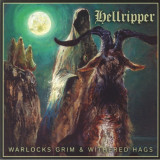
Inspired by the likes of old-school legends including Venom, Kreator, Sabbat JPN & Metallica, James McBain formed Hellripper in 2014, showcasing an electrifying brand of blackened thrash. Building on the already impressive foundations laid by their early EP & split releases, the first full-length album, Coagulating Darkness',
was released in 2017 to media acclaim, with the UK's Metal Hammer hailing Hellripper as Scotland's King of the arcane mosh & the band receiving notable attention throughout Europe & the US. This was followed by the Black Arts & Alchemy' EP, before an eventual deal was inked with Peaceville Records, resulting in the masterful The Affair Of The Poisons', further propelling the band to the forefront of the UK metal scene. Warlocks Grim & Withered Hags' - Hellripper's third studio album - establishes a new threshold of excellence & raises the bar further over The Affair Of The Poisons', with an opus standing at the crossroads between the sound that Hellripper has become known for & a whirlwind of different influences up until now yet to be explored, resulting in James McBain's most personal & diverse
work to date. With a greatly expanded scope to the tracks, incorporating more epic & melodic blackened anthems alongside the high- speed metal attack & blistering solos, Warlocks Grim & Withered Hags' marks a new highpoint for the band. Inspired by the landscapes & legends of the Scottish highlands, McBain explores the darker side of Scottish history & folklore - the title itself taken from a
line in the Robert Burns poem,Address to the Deil' - as well as including references to clan culture (including his own) throughout the album. For example, one of the tracks ( The Cursed Carrion Crown') is based on the legend of Sawney
Bean' & the Bean Clan (a spelling variation of McBain'') & tells the story of a family of cannibals that lived in a cave & committed various gruesome acts. As always, the writing & recording process was carried out by James McBain himself, with a few guests offering contributions in the form of additional vocals & instrumental
parts. With recording taking place between March 2021 & June 2022, the album was also mixed by McBain & mastered by Damian Herring at Subterranean Watchtower Studios. The suitably sinister & ominous artwork appears courtesy of Adam Burke. Hellripper will be embarking upon a series of shows in support of the album throughout 2023.
After opening the dimension door via a hypnagogic contribution to recent Ruf Kutz comp 'Expansion Pack 2: Textures' and offering a sonic submersion into his 'Deep Waters Mixtape', Inner Glow takes the controls for RK18, treating the DJs and dancers to a high grade house triptych.
For the uninitiated, the man behind the music is a lifelong friend from Ruf Dug's Sydney sojourn, when the two would host mushroom squat parties with the rest of the "Bodega Clan", and who helped mastermind the seminal Paradise Lost warehouse parties. Virtuously patient, the Australian spent the years since perfecting his craft, maxing out the XP and emerging as his evolved form, Inner Glow.
On the A-side, Inner Glow comes through with the two clubbiest cuts from the 'Deep Waters' cassette, unmixed, mastered loud and exclusive to vinyl. Already a firm favourite with Bradley Zero 'Party People' pulses on the A1, its one note bassline and taut pads keeping tension at a maximum. At the top of the frequency band sparse stabs and nuanced percussion dance in tandem, while the deft use of E-Smoove and First Choice acapellas provide an underground intertext Sprinkles would be proud of.
'Call Me' coaxes us into the shadow realm with the lure of Lynchian dialogue, slowly taking shape as a dub techno phantom. It's a heads down affair as urgent subs push against the mist of static, until a rising, wriggling keyboard riff unwinds waists with a hint of UKG exuberance.
Inner Glow brings the beatific on the B-side's 'Love Has No Age', combining rippling keys and MK vocal chops over waves of hiss and haze.
The percussion combines classic house swing with the tinny hats of electro, keeping perfect time as the soulful vocals swell into the sublime.
Over the last twelve months Ruffy's rocked the spot from Pikes to Houghton with these heaters, and now he's sharing them with you.