Straight Outta Caledonia is the first commercially available “Greatest Hits” of the outsider songwriter Jackie Leven, an artist
who has largely remained in obscurity in his native Scotland despite being one of the greatest wordsmiths – and singers – it ever
produced. A well-travelled musician who began making psychedelic, progressive music in the late 60s before emerging as an
epic storyteller full of pathos, humour and humanity in the 90s, Leven lived and wrote like many of the fragile, gregarious
characters of his songs; large, full of life and empathy. Leven passed away in 2011 after recording 30+ albums under different
guises or with his briefly successful New Wave band Doll by Doll. Straight Outta Caledonia is a compilation collated by Night
School Records on its Archival label School Daze that seeks to introduce Leven’s music to new generations.
In an age of isolation, alienation and loss of visceral experience, Jackie Leven’s music can be massive and welcoming. It feels
connected to some universal humanity and vibrates with vitality. His songs are often full of tragedy and comedy simultaneously,
cutting straight to the heart, often plugging directly into the nervous system of the listener. His lyrics are rich, dense with imagery
that can veer from apocalyptic to the comically banal in a sentence, with a songwriting panache that can be heavy handed to
almost bursting point before skewering the song with a clownish, warm punchline. His productions ranged from Bob Dylan’s
Rolling Thunder Revue style rock band orchestrations with strings and organ as on the epic Ancient Misty Morning or they could
be pared down to the purest form of folk song as on Poortoun: Leven on stage alone with an acoustic guitar, albeit played with a
mastery of the instrument that he often only hinted at. Musically his sound can bend traditional structures or stay completely
confined within them yet still forever push towards an ecstatic release, as on the cinematic Snow In Central Park.
The most exciting, jaw-droppingly effective tool at Leven’s disposal was his voice. A multi-octave instrument that, though
damaged during a savage assault in Fife, he used with flair; he had both a brazen disregard for the rules and a deep humility, all
of which is evidenced with every phrasing. A baritone that could flit up through the register – always touched by his gentle
Kirkcaldy accent – it’s the prime delivery method for his songs. Leven’s voice enabled him to inhabit the characters in his songs to
an uncanny degree, a skill that in turn enables the listener to empathise with them and, subsequently, the singer. It’s most evident
in stand out song The Sexual Loneliness Of Jesus Christ, a breathtaking re-telling of the life of its protagonist, not as a pure,
sinless messiah but as a sexually frustrated, solitary man condemned to an existential loneliness no one else will ever feel. In
many ways the track is the archetypal Jackie Leven song. Produced by Pere Ubu’s David Thomas, what strikes the ear first –
after the samples of unemployed workers in Glasgow following the closing of the Clyde shipyards – is the audacious, rhythmic
tremolo effect Leven employs through the verses before the production opens up to allow Leven’s vocal to lift into a soar, a
freeing glide powered both by the force of the singer’s chutzpah and the inherent, doomed destiny of the protagonist. With any
other singer such subject matter could come across as gauche or worse, pretentiously sonorous, but Jackie Leven’s genius was
such that he could be this cinematic and brazen while touching something elemental and true in the beholder. It’s a skill evident in
every song on Straight Outta Caledonia, the trademark of a songwriter who revelled and excelled in intensity with a lightness of
touch.
In his lifetime, Jackie Leven toured, wrote and recorded at a ferocious rate. He recorded under aliases to avoid record contract
restrictions, played house shows in Europe after or instead of official concerts, events which were often spoken word story telling
masterclasses as well as performances of his often bewilderingly dense songbook. His music has traditionally been catalogued
as “folk” music and has been largely banished to a small, dedicated group of international fans and apostles both private and well
known, like author Ian Rankin or Glenn Matlock. Since his passing in 2011 however, there has been a growing recognition
amongst a newer generation, with artists like James Yorkston or Molly Nilsson publicly stating the influence of the unsung
troubadour on their own craft. Jackie Leven’s fairytales for hard men are often forensic deconstructions of masculinity, sad and
ecstatic, light and shadow, always endlessly rich, a resource as bountiful as Leven himself’s human spirit undoubtedly was.
Поиск:hit house
Все
The last twelve months have been a whirlwind for Henry Counsell and Louis Curran, the men who make up Joy (Anonymous). Having established themselves during the Covid-19 era by playing impromptu meet-ups on London’s South Bank, they have graduated to bigger venues, travelled to far-flung locales and recorded their second album, Cult Classics, while maintaining the spontaneous energy and irrepressible joy that made their name. Their music revels in the euphoria of being alive and all the feelings, good or bad, that come with it. It invites us into a community, draws us close and promises the night of our lives.
Recorded over the course of a year, the blueprint for Cult Classics was laid down over a two-week span at Imogen Heap’s Round House in east London. Joy (Anonymous) invited friends old and new to visit - they’d record live instruments in jam sessions upstairs and then retreat to a second room to flip and loop and generally mess with the sounds, moulding them into sizzling dance tracks. “Loads of people were coming up to me like ‘I thought this was going to be a dance record?’” Louis says, remembering the quietly beautiful music they’d be recording. “I’d be like, don’t worry about that, just keep playing.” He’d send it back to people later and they’d be floored - “That was my bit and you’ve made it... jungle!”
It was an organic and creatively fulfilling approach, one that didn’t allow any of the music to get stale or stagnate. As they built the tracks from the sounds they’d collected, Joy (Anonymous) would weave the new songs into their famously improvised live sets, testing them, refining them, taking note of the audiences’ reactions. In a year punctuated by a lot of travel, they’d also incorporate the voices of people they met along the way - “Beazley’s Poem”, which opens the record, features the words of a man who was working security at a Fred Again show at New York’s Terminal Five. “He was basically doing the opposite of his job and being a hype man, climbing on the fence and ramping up the crowd - we ended up hanging out with him - like, who’s this legend?” Louis explains. “He just speaks really amazingly about his life, all these amazing thoughts and opinions - he started jumping on the mic when we were playing, preaching these amazing messages to the crowd, like that we all need to be nicer to each other. The first time we played the record in its entirety, he introduced us and that’s the recording we’ve used.”
Joy (Anonymous) remain dedicated to the spirit of spontaneity. They shut a street down with a surprise waterside party in New York. On a trip to Copenhagen they played an impromptu set in a cafe, which turned into a house party and a night-long good time. In Lithuania, they ended up playing in a decommissioned prison. It’s harder, perhaps, to keep that spirit alive now that they are operating more within the confines of the music industry but they will keep lugging their kit to wherever the party calls for as long as they can. “I think if we lose that, we’ve kind of lost what makes us us,” Henry says.
Bursting with multi-genre reference points and disparate influences, Cult Classics is very much a dance album. The samples we made ourselves or we took from music that is quite different to dance music, but we definitely wanted to shout out a lot of the dance influences that we love,” Henry says. They listened to a lot of Daft Punk and Basement Jaxx as well as The Prodigy (“more rage stuff”), taking songwriting tips from their dance forebears, but also recording bits that felt more like jazz and motown (see: A Place I Belong and the lovely album closer, You’re In Or You’re Out). Emir Taha’s gentle classical guitar runs like a thread throughout Cult Classics, washing into the undertones of the record, tying it all together.
The album follows the beat of a night out, from frenetic, sweaty movement to the gentler winding down as the dawn breaks. At times it is euphoric, celebratory and pure, whirling fun, at others it seeks the joy in the darker emotions that life throws our way. 404 is designed to encapsulate everything about the Joy (Anonymous) journey so far. Skittering beats and ghostly vocals give way to vibrating house chords: sirens blare as we approach a dubstep drop. It’s dramatic and wild, ratcheting up, seeming to settle then hitting you with an intense and frantic breakdown before the ghostly vocal returns to lull us back into the world. It has the feel of a hungry cat playing with a mouse, toying with it before letting it get away.
What sounds like someone playing the spoons on playful, housey How We End Up Here is actually Louis’ restless habit of clicking his rings on everything, one of a myriad of calling cards and easter eggs that day one fans will recognise. They rework Miley Cyrus and Swae Lee’s Party Up The Street into a French-electro-inspired future classic, adding a note of melancholy to a tune that you can imagine hearing blaring from every car on a summer drive. The lyrics on Cult Classic are generally reassuring, inspirational, originally drawn from Henry in stream-of-consciousness freestyles. You’re fine the way you are, they seem to say - the repeated “No need to try” of A Place I Belong, the assurance that “It’s in me all the time” on In Me All The Time. Even the summery but regretful Did You Wrong hints at the growth that is possible from less than ideal behaviour. For Joy (Anonymous), joy isn’t about just being “happy” all the time - it’s about relishing every element of your being.
The name ‘Joy (Anonymous)’ is taken from the work Henry did with Alcoholics Anonymous groups: it is a way to build a community around sharing joy. Their impromptu live sets are known as ‘meetings’; they encourage fans to share moments of joy to their website. They care deeply about the scene they’ve come up in and are determined not to leave it behind. Every show is another chance to reach out and connect with people who love to come together and revel in music as loud as it can go.
Support slots for Fred Again and The Streets, wild B2Bs with Fred and Skrillex, and a set at Four Tet’s Finsbury Park all-dayer this summer have given the duo the opportunity to live out childhood dreams and introduced their infectious live shows to new audiences at huge venues.
With an album as assured and joyful as Cult Classics on the horizon (and a killer collab with The Blessed Madonna coming up), they’re only going to reach higher heights. But the essence of Joy (Anonymous) remains on the South Bank. Between shows at Ally Pally in September, they dragged their camping chairs and gear back down to the banks of the Thames: and it just felt right.
Just what the doctor ordered...
Next up on Q1E2 Recordings - for the label's fifth release so far - is Dr Sud. He's a Rome-born, Berlin-raised producer whose music is a fusion of percussion-centric soundscapes and integrated jazz-leaning harmonies, drawing inspiration from diverse genres like electronica, funk, and house.
On 'Heading South', the broken beat don serves up his specialist percussive sound, folding all manner of drums into synth-smothered house. The EP explores the undulating cycle of morning into night, back into morning, inviting you to dance your way through it all.
'Brina', a word which in Italian refers to morning dew - perhaps found on a tent on the morning of a festival - represents the breaking of dawn with broken beats. The track breaks and squints into the start of the day with spacious kick drums leaving room for warm, almost familiar pads and keys.
Then, 'Life Itself' reflects daytime, revolving around an arpeggiating synth that soon makes way for luscious keys.
An excursion into percussive bliss concludes side A in the form of the magical, grin-inducing 'Evening Breath'. This, as you might have guessed, is where the listener cruises through smoothly into the final stages of the day. It encapsulates that last burst of light as the sun sets and a slight shiver of the evening air slivers up your spine.
Then, before you know it, the mysterious night arrives. Flip to that B side, and 'Tramontana' will greet you, inviting you to dance deep into the late hours.
When you're there, the chugging '3/4AM' will hit the spot like an unforgettable dance floor moment, bursting with low and slow Balearic tendencies.
Finally, 'Mondgesicht' - "Moonface" in German -fittingly concludes proceedings with deep lounge vibes. Mumbles of effortless trumpet manoeuvre through a swaying sea of percussion and delicious, wavering synth solo. The day is here again. The cycle is complete.
This is some seriously high-quality music on show here from Dr Sud. The EP is out on Q1E2 Recordings in October.
Run-D.M.C.'s Raising Hell remains the turning point at which hip-hop crashed through mainstream barriers and never left. Anchored by the crossover smash "Walk This Way," the 1986 blockbuster still sounds like a revolution unfolding in real time. It has everything – hard-rock riffs, turntable scratching, itchy rhythms, hit singles – not the least of which are the trio's invigorating raps and inseparable chemistry. And now it's the first rap record afforded audiophile treatment, courtesy of Mobile Fidelity.
Sourced from the original master tapes and pressed on MoFi SuperVinyl, the reissue label's numbered-edition 180g 33RPM SuperVinyl LP elevates Raising Hell to sonic heights on par with its musical and cultural significance. Ranked the 123rd Greatest Album of All Time by Rolling Stone, 43rd on Pitchfork's Greatest Albums of the 1980s, one of the Top 100 Albums of All Time by TIME – and included on "Best of" lists by Spin, Paste, XXL, Entertainment Weekly, and basically every other significant media outlet – the triple-platinum effort rocks the house.
Benefitting from the ultra-low noise floor and groove definition of SuperVinyl, Raising Hell unleashes a torrent of massive dynamics and tsunami of frequency-plumbing details underlined by Rick Rubin's taut, crisp, albeit raw and streetwise production. Just as the Queens-based group both defined what hip-hop could represent – and displayed just how big it could get – Rubin's work melded ear-worm hooks, savvy drum loops, metal-leaning guitars, and, of course, Run and D.M.C.'s cross-fire lyrical interplay into watertight frameworks bursting with ideas, tones, samples, and beats. Heard anew on Mobile Fidelity vinyl, Raising Hell is in every regard the aural equivalent of a direct-to-console 1970s classic. And it sounds as fresh as hell.
As for the music, it ranks among the most influential, inventive, and invigorating ever released – rap or otherwise. Vanguard artists such as Ice-T, Eminem, Jay-Z, and Public Enemy's Chuck D – who declared it his all-time favorite and "the first record that made me realize this was an album-oriented genre" – have testified on behalf of its brilliance. And never mind the presence of the Top 5 single "Walk This Way," whose power helped make Aerosmith's Steven Tyler and Joe Perry relevant for the first time in nearly a decade – and literally put Run-D.M.C. in bedrooms ranging from the Bronx to Bartlett to Bad Axe.
Look instead to the rest of the entirely filler-free set, be it the corkscrew turns, slippery wordplay, and "My Sharona"-meets-"Mickey" mixology of the boisterous "It's Tricky," the fat-but-minimized bass grooves and warped turntable wobble of the hysterical "You Be Illin'," chimes-accented inertia and boombox-on- shoulder thunder of the now-iconic "Peter Piper," or voice-as-percussion attack of the funky "Is It Live." With Raising Hell, the answer to the question is always affirmative – a sensation bolstered by the fact the group always had something to say.
The definition of Golden Age Hip-Hop in every way, Run-D.M.C. avoids the negativity and misogyny that later plagued the style, spinning assertive tales about identity (the biographical and culture-changing "My Adidas"), work ethics ("Perfection"), and, most notably, pride (the Harriet Tubman- and Malcom X.-referencing "Proud to Be Black"). Pavement-packed inner cities, tree-lined suburbs, and cornfield-rimmed rural areas would never again be the same. And rocking a rhyme that's right on time would become trickier than ever.
Run-D.M.C. leaves no doubt about its intent on King of Rock. The New York trio's hard-hitting sophomore album begins with a statement of purpose ("Rock the House") that serves as a stereophonic primer for the title track, a hybrid warning-anthem-theme song that swarms with justified boasts, heavy metal riffs, booming beats, cowbell accents, and dance-worthy grooves. The back-to-back tunes set the tone for a 1985 record that largely established the blueprint for the hip-hop that would follow for the next two decades – and which helped make rap a mainstream currency via the previously off-limits channels of radio, TV, and the national stage. "It's not Michael Jackson/And this is not Thriller," the group broadcasts early on in the record. Truer words – and music recorded with such honesty, pride, rawness, and integrity – have seldom been committed to tape.
Radio Slave covers and rewires Audion’s modern classic, ‘Mouth to Mouth’. A painstaking, disco-inspired replay rather than a traditional remix, the Radio Slave version of Matthew Dear’s
Audion project’s mid-noughties defining track lands on the former’s Rekids imprint late-October.
This all-new Radio Slave vs Audion version keeps the original's iconic pulsating energy but brings fresh synth loops and a buzzing lead that tread a new path for an anthem that unified house, techno minimal and more scenes upon its original release in 2006. An ever-evolving refresh with dark and freaky spoken word fragments that will have the dance floor in raptures all over again, Radio Slave vs Audion’s ‘Mouth to Mouth’ has been seeing dancefloor action from the great and good for a few months now.
Radio Slave, aka Matt Edwards, has been synonymous with cutting-edge electronic music for decades. He has done it all, from underground techno anthems to rolling house tracks and plenty in between. Audion, aka Matthew Dear, is much the same - an artist with several different aliases and the ability to explore fresh musical territory each time he steps out. 2006's 'Mouth to Mouth' on Spectral Sound is one of his biggest hits - a truly unique track that united dance floors all over the world.
Repress!
In the mid-1970s, a force of nature swept across the continental United States, cutting across all strata of race and class, rooting in our minds, our homes, our culture. It wasn’t The Exorcist, Goodbye Yellow Brick Road, or even bell-bottoms, but instead a book called The Secret Life of Plants. The work of occultist/former OSS agent Peter Tompkins and former CIA agent/dowsing enthusiast Christopher Bird, the books shot up the bestseller charts and spread like kudzu across the landscape, becoming a phenomenon. Seemingly overnight, the indoor plant business was in full bloom and photosynthetic eukaryotes of every genus were hanging off walls, lording over bookshelves, and basking on sunny window ledges. The science behind Secret Life was specious: plants can hear our prayers, they’re lie detectors, they’re telepathic, able to predict natural disasters and receive signals from distant galaxies. But that didn’t stop millions from buying and nurturing their new plants.
Perhaps the craziest claim of the book was that plants also dug music. And whether you purchased a snake plant, asparagus fern, peace lily, or what have you from Mother Earth on Melrose Avenue in Los Angeles (or bought a Simmons mattress from Sears), you also took home Plantasia, an album recorded especially for them. Subtitled “warm earth music for plants…and the people that love them,” it was full of bucolic, charming, stoner-friendly, decidedly unscientific tunes enacted on the new-fangled device called the Moog. Plants date back from the dawn of time, but apparently they loved the Moog, never mind that the synthesizer had been on the market for just a few years. Most of all, the plants loved the ditties made by composer Mort Garson.
Few characters in early electronic music can be both fearless pioneers and cheesy trend-chasers, but Garson embraced both extremes, and has been unheralded as a result. When one writer rhetorically asked: “How was Garson’s music so ubiquitous while the man remained so under the radar?” the answer was simple. Well before Brian Eno did it, Garson was making discreet music, both the man and his music as inconspicuous as a Chlorophytumcomosum. Julliard-educated and active as a session player in the post-war era, Garson wrote lounge hits, scored plush arrangements for Doris Day, and garlanded weeping countrypolitan strings around Glen Campbell’s “By the Time I Get to Phoenix.” He could render the Beatles and Simon & Garfunkel alike into easy listening and also dreamed up his own ditties. “An idear” as Garson himself would drawl it out. “I live with it, I walk it, I sing it.”
But as his daughter Day Darmet recalls: “When my dad found the synthesizer, he realized he didn’t want to do pop music anymore.” Garson encountered Robert Moog and his new device at the Audio Engineering Society’s West Coast convention in 1967 and immediately began tinkering with the device. With the Moog, those idears could be transformed. “He constantly had a song he was humming,” Darmet says. “At the table he was constantly tapping.” Which is to say that Mort pulled his melodies out of thin air, just like any household plant would.
The Plantae kingdom grew to its height by 1976, from DC Comics’ mossy superhero Swamp Thing to Stevie Wonder’s own herbal meditation, Journey Through the Secret Life of Plants. Nefarious manifestations of human-plant interaction also abounded, be it the grotesque pods in Invasion of the Body Snatchers or the pothead paranoia of the US Government spraying Mexican marijuana fields with the herbicide paraquat (which led to the rise in homegrown pot by the 1980s). And then there’s the warm, leafy embrace of Plantasia itself.
“My mom had a lot of plants,” Darmet says. “She didn’t believe in organized religion, she believed the earth was the best thing in the whole world. Whatever created us was incredible.” And she also knew when her husband had a good song, shouting from another room when she heard him humming a good idear. Novel as it might seem, Plantasia is simply full of good tunes.
Garson may have given the album away to new plant and bed owners, but a decade later a new generation could hear his music in another surreptitious way. Millions of kids bought The Legend of Zelda for their Nintendo Entertainment System back in 1986 and one distinct 8-bit tune bears more than a passing resemblance to album highlight “Concerto for Philodendron and Pothos.” Garson was never properly credited for it, but he nevertheless subliminally slipped into a new generations’ head, helping kids and plants alike grow.
Hearing Plantasia in the 21st century, it seems less an ode to our photosynthesizing friends by Garson and more an homage to his wife, the one with the green thumb that made everything flower around him. “My dad would be totally pleased to know that people are really interested in this music that had no popularity at the time,” Darmet says of Plantasia’snew renaissance. “He would be fascinated by the fact that people are finally understanding and appreciating this part of his musical career that he got no admiration for back then.” Garson seems to be everywhere again, even if he’s not really noticed, just like a houseplant.
On "Tambor De Cura", producer Daniel David (The Pendletons) and Bay Area staples Jazz Mafia team up with Rio De Janeiro artist Guinu to cook up a genre defying dancefloor hitter that blends dirty analog Brazilian funk, sci-fi synth sounds and raw horn lines with an unstoppable bass hook. Midway, the song transitions into a Samba break with a beautiful trumpet solo, while seamlessly returning to its infectious house tempo. Guinu's passionate vocals highlight the healing power of the music.
On "Devotion", producer/singer and multi-instrumentalist Daniel David (The Pendletons) teams up with Jazz Mafia to bring a rich up-tempo offering. Building off of a hypnotic jazzy house piano and tapestry of congas and live percussion, Daniel soulfully paints a picture of connecting to spirit through one's inner world. Jazz Mafia's driving horns build throughout, propelling the track, with relief by an energetic drum breakdown and conga solo.
Techno House Connoisseurs are back with another storming EP of various artists for dance floors worldwide. This V/A features some big hitters in Phoreski and Felix Dickinson as well as San Diego's Terry Jasinto, Seattle's Lock and Hammer and LA's Praus. Lots of ground covered here with unusual and unique stylings in the realm of acid and cosmic.
Phoreski's Kyoto Dawn leads the way with it's deep and euphoric vibe floating along leaning deep and etherial in all the right places.
Felix Dickinson follows up with his remix of Phoreski's track bringing the 303/acid into the forefront building it into a monster chugger complete with droning synths and 808 accents. Look for a sweaty frenzy at the climax of the track!
San Diego's Terry Jasinto makes his THC label debut with a tech house gem that pumps and weaves with it's dynamic drums and synth stabs. With several nice subtle layers of acid throughout, it is perfect for a high energy dancefloor.
LA's Praus continues to produce deep and complex tracks for THC records showing he has an ear for unique programming. His release, "Heedful" quickly gets your attention delivering haunting synths and beautiful acid lines in the cosmic fashion only Praus can deliver.
Seattle's own Lock and Hammer rounds out the EP with an unusual and quirky burner that intrigues and delights in a wealth of analog glory. Built for a warehouse, the artist has let loose a track that will glimmer on any loud system doing a number on your head/psyche in the early hours.
- A1: Microwave Prince - Eternal Light
- A2: Dave Kane - Zero Plus (Dj Wout Remix)
- B1: Delerium Feat. Leigh Nash - Innocente (Mr. Sam's The Space Between Us Remix)
- B2: Mark N-R-G - Don't Stop
- C1: Taucher - Miracle (Phase Ii-Mix)
- C2: S'n's - Conflicts
- D1: Awa - Together We Can Learn
- D2: L.s.g. - Lonely Casseopaya
On the second sampler the first gem on the A side is undoubtedly one of the greatest pearls and trance compositions of the 90's, released on the prestigious German label that all current techno producers revere: Le Petit Prince. Microwave Prince 'Eternal Light' was, upon its release in 1995, already an extremely difficult record to find. 28 years later, this has not changed in the slightest. Closing the A side we have the essential DJ Wout remix of Dave Kane's 'Zero Plus', an enormous hit in the early 00's in clubs like La Bush, La Rocca, etc.
The B side brings us the legendary Delerium 'Innocente', reinterpreted by Mr Sam in his iconic and now timeless 'The Space Between Us Remix' and the German techno gem 'Don't Stop' by Mark N-R-G.
The C Side features 'Miracle', one of the most beautiful trance records ever made coming straight from Germany in the person of Taucher, undoubtedly one of the best producers of his generation. With S'N'S 'Conflicts' the C side brings us another true genius, a future prodigy of progressive and melodic house at the time of this release: Sander Kleinenberg. An emblematic record at Extreme on Mondays if there ever was one.
The D Side is taken up by two tracks that take us even deeper into the essences of trance music with the enigmatic track 'Together We Can Learn' by Awa. This mid 90's English trance gem was already a collector's item upon its release, so it's our privilege to have it on this sampler in 2023. As is the case with the second track 'Lonely Casseopaya' by L.S.G., composed by one of the true pioneers of trance: Oliver Lieb. This record is a treat for those who listen to it closely and feel the classic 'after' vibe of our golden age of Belgian clubbing.
“Pumping, vibrant, and packed with energy”: Iconic duo Dam Swindle deliver once again with their ‘Minor fools’ EP.
Last year, Dam Swindle celebrated their 10 year anniversary with the ‘Keep on Swindling’ series. The hard-hitters ‘All I want’, ‘Good woman’, and ‘You’ showed various sides of that much loved Swindle sound as well as some steps into a more leftfield electronic area. Now, they’re back on Heist with a 3-track club EP full of that recognizable upbeat energy.
‘That’s Right’ has Dam Swindle in full live mode, not unlike their timeless classic “Call of the Wild feat. Jungle by Night”. Live keys, bass, percussion, and horns (the latter by the Jungle by Night’s trumpet guru Bo Floor) give you the feeling like you’re on stage with a full band, hearing them give their all to record this heartwarming piece of music. Over the course of its 7 minutes, the duo takes you on an electrifying feel-good trip through the Swindle sonic universe.
On The EP title track ‘Minor fools’, Dam Swindle go into classic US house mode. Shuffling hats, a bouncy bass and male vocal chops lay the foundation for some crunchy jazz chords (think Underground Resistance with a Swindle touch). The track builds tension with haunting organs, looped vocals and smart modulation in the keys. Add to that the bouncy synth section at the heart of the track and you’ve got a jam that slaps hard in the best way imaginable.
The EP ends with the dreamy & contemplative ‘Soul’s lament’; A slow burner that builds and builds on a relentless rhythm of bells and skipping hi-hats. Slowly, a massive string section takes control of the track, after which, an acid line takes over that gives the track its driving electronic touch. It’s a welcome deep note to an EP that shows you exactly why Dam Swindle are such well respected and versatile producers.
Grab this record while you can and dance, dance, dance!
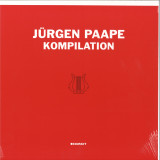
How do you define an artist who has never performed live, nor DJ’ed, nor ever had his photograph published and has never partaken in an interview? By the music of course. Jürgen Paape has proven this time and time again. How? Listen. Here. Right. Now. Co-owner of Kompakt. The house’s most elusive member remains the uncompromised, untainted shining star. He, who has launched the label with its very first release “Triumph“, Jürgen Paape has left a legacy of music that is a true core of the sound which Kompakt’s foundation is built on.
We celebrate Jürgen Paape with “Kompilation”. A well deserved opportunity to hear Jürgen Paape for fans and newcomers – revived and remastered and for the very first time on double vinyl – in a way that it plays through like a full length album. Some of the biggest moments of Kompakt over a three decade history are here; the chorus of “So Weit Wie Noch Nie” remains timeless – there to send shivers of pleasure down your spine as we feel at the end of exhaustive end of a night. “Take That” is an anthem for the still to be built rock stadiums of tomorrow. It’s a bonafide hit that put him in the charts in Australia and Italy. – “Come Into My Life” remains undeniably one of Kompakt’s catchiest pop tracks ever. “So Wird Die Zeit Gemacht” – builds on Paape’s signature sound with the spirit and vitality of classic house and a truly demented vocal hook. Then there’s the unique Schaffel quirkiness of “Ofterschwang” and so many other hits Jürgen Paape has delivered over the years. Well, it’s Paape!
Wie definiert man einen Künstler, der noch nie live aufgetreten ist, der noch nie als DJ aufgelegt hat, der noch nie ein Foto von sich veröffentlicht hat und der noch nie an einem Interview teilgenommen hat? Natürlich über die Musik. Jürgen Paape hat das immer wieder bewiesen. Und wie? Hört selbst. Hier. Genau. Jetzt. Er ist Miteigentümer von Kompakt. Das am schwersten fassbare Mitglied des Hauses bleibt sein kompromissloser, ungetrübter leuchtender Stern. Er, der das Label mit seiner allerersten Veröffentlichung “Triumph” aus der Taufe hob, hat ein musikalisches Vermächtnis hinterlassen, das der wahre Kern des Sounds ist, auf dem Kompakts Fundament aufgebaut ist.
Wir feiern Jürgen Paape mit “Kompilation”. Eine wohlverdiente Gelegenheit, Jürgen Paape für Fans und Neueinsteiger wieder zu entdecken – aufgefrischt, remastered und zum ersten Mal auf Doppel-Vinyl. Einige der größten Momente in der drei Jahrzehnte währenden Geschichte von Kompakt sind hier zu hören; der Refrain von “So Weit Wie Noch Nie” bleibt zeitlos – er lässt einem noch immer Schauer der Freude über den Rücken laufen, als würden wir nach durchtanzter Nacht morgens aus dem Club taumeln. “Take That” ist eine Hymne für die noch zu bauenden Rockstadien von morgen. Es ist ein echter Hit, der ihn sogar in Australien und Italien in die Charts brachte. “Come Into My Life” bleibt unbestreitbar einer der eingängigsten Popsongs von Kompakt überhaupt. “So Wird Die Zeit Gemacht” baut auf Paapes charakteristischem Sound auf, mit dem Geist und der Vitalität von klassischem House und einem wahrhaft verrückten Vocal-Hook. Und dann ist da noch die einzigartige Schaffel-Schrägheit von “Ofterschwang” und so viele andere Hits, die Jürgen Paape im Laufe der Jahre abgeliefert hat. Well, it’s Paape!
Short Attention has more than grabbed ours with its first two EPs and this third one keeps up that good early form. It's a heavy-hitting mix of pivotal house talents starting off with prolific Windy City player Boo Williams.
The big man's 'Transformation' is a smooth and chord-laced house roller that has a more reflective vibe than his usual party-starting offerings.
Atlanta don Kai Alce's 'Love Exists' is a heartfelt house romance then the long-time partnership of Owen Jay & Melchior Sultana douse us in star-gazing chords on 'Soul Expression' that leave you feeling refreshed. Hector Ram's 'Morning Sun Vibes' then uplifts with beautifully gentle piano chords.
"Folk Songs of the American Longhair" (2010) ist das inzwischen von der Kritik gefeierte Debütalbum von Brother Dege - eine Platte, die Quentin Tarantino später als "wie ein Greatest-Hits-Album" des neuen Delta-Blues bezeichnete. "American Longhair" liefert postmoderne Geschichten über verzweifelte Südstaatler, apokalyptische Prophezeiungen, Mitternachtsengel, Hippie-Herumtreiber, brennende Scheunen und die endlosen Geister, die die Geschichte des tiefen Südens heimsuchen. Das Album wurde in aller Stille selbst veröffentlicht, ohne Vertrieb, ohne Repräsentation und absolut ohne Hype. Es erhielt schnell Vier- und Fünf-Sterne-Rezensionen und erregte die Aufmerksamkeit zahlreicher Geschmacksmacher in Film und Fernsehen, was zu Sync-Platzierungen auf Discovery Channels "After the Catch (Deadliest Catch)", "Hard Riders" von National Geographic, der Frauen-Radsportdokumentation "Half the Road" sowie "The Afflicted" von Netflix führte und vor allem von Quentin Tarantino persönlich für den Film "Django Unchained" und dazugehörigen Soundtrack ausgesucht wurde, wo Deges Lied "Too Old to Die Young" in der entscheidenden Höhepunktszene des Films spielt.
Saxuality is the successful debut album by Dutch alto saxophonist Candy Dulfer and contained two singles, "Heavenly City" and "Saxuality". Following up the huge worldwide hit "Lily Was Here" with Dave Stewart, the album was a guaranteed seller and charted in Germany, The Netherlands, United Kingdom, and United States. It was also nominated for the Grammy Award for Best Contemporary Jazz Album.
The album is not just a collection of songs, but a testament to the artist's undeniable talent and creative vision.
Saxuality is available as a limited edition of 1000 individually numbered copies on gold coloured vinyl and includes an insert.
Teakup is Lauri Reponen, the Columbus, Ohio DJ, producer and torch-bearer for the city’s proud Techno heritage. Following in the footsteps of Columbus originators, Titonton Duvanté, Archetype and Todd Sines, Teakup has spent the past decade forging a sound of his own via a genre alchemy that embraces genres past and present. Hardcore’s staccato samples and chopped breakbeats, UKG’s crunchy triplet hi hats and mellifluous House melodies combine in novel forms. Titonton’s wonky Tech House takes, Todd Sines’ stripped minimalism and Archetype’s broken rhythmic exploration are more key ingredients in the Teakup stew. This recipe has cooked up a massive cache of unreleased tunes as well as previous 12”s on is / was, Residual, Shut Off Notice and Lauri’s recently-minted TKP imprint.
Compiled from over 200 demos, Signal 23 has Lauri flexing a new level of genre-mastery. The title track explores Spiral Tribe’s ripping, psychedelic Freetekno. ‘Valve’ is cutting-edge rhythm hypnotism. ‘Felopzd’ loops into ecstatic trippy crescendo and ‘Pad Thai Mystic’ takes you on the spiritual voyage of late-night food delivery in middle America. Four modes, four hitters – to warm floors, open hearts or split psyches.
King Sporty is something of a chameleonic artists, not that many people know. He started out int he 70s making reggae and soul 7"s, then moved into disco, boogie, hip-hop and electro 12"s during the 80s, and then when house music hit in the 90s he evolved once more. This new drop from Emotional Rescue takes a tune from that late era. 'Computer Music' is four to the floor with electro influences and a lazy break that pull you in deep. Far-sighted chords bring a serene sense of cosmic majesty while a filtered vocal adds space age vibes. A dub is included as well as the Universal Cave Discomix by the Philadelphia DJ and production crew. A retro-future EP indeed..
- A1: Back On The Road
- A2: Beats On A String
- A3: Come Down
- A4: Down Right Funk
- A5: Funky Magic
- A6: Back To The Ol Skool
- B1: My Streets On Fire
- B2: Ital Stew (Skeewiff Mix)
- B3: I Got U
- B4: Sunshine
- B5: Take It Back
- B6: We Love You Jb's
- C1: Ital Stew
- C2: Ancestors
- C3: Call Me
- C4: I Got U
- D1: New Day Comin
- D2: Sunshine 2K4
- D3: The Brothers
Black Vinyl[39,87 €]
First time on vinyl, expanded version of Japan-only CD album from 2006! Now a double LP with unreleased tracks on audiophile grade colored vinyl (Disc 1: Opaque Baby Blue, Disc 2: Opaque Brown) The Jungle Bros embraced of a range of styles -- including house music, Afrocentric philosophy, a James Brown fixation, and of course, the use of jazz sample , on this reissue double LP Release on Colored Audiophile grade Vinyl , the I got U album is remastered and re-released with additional tracks .Michael Small (Mike Gee), Nathaniel Hall (Afrika Baby Bam), and Sammy Burwell (DJ Sammy B). Known as the pioneers of the fusion of jazz, hip-hop, and house music, they were the first hip-hop group to collaborate with a house-music producer. The trio released their debut album, Straight out the Jungle in July 1988. Their hip-house club hit single, "I'll House You" was added to the album in late-1988 reissues. Fostered by Kool DJ Red Alert, the Jungle Brothers success would pave the way for De La Soul, A Tribe Called Quest, and eventually the Native Tongues collective that they founded. Hip-Hop-House with a jazzy feel including "I Got U", a re-recorded "Sunshine" and four bonus tracks/versions. -- The Jungle Bros embrace of a range of styles -- including house music, Afrocentric philosophy, a James Brown fixation, and of course, the use of jazz samples -- _John Bush, All Music
The Capitols were an American, Detroit, Michigan-based soul trio, widely known in 1966 for their Billboard hit single "Cool Jerk". After playing predominantly small gigs, they were discovered by former Ann Arbor radio DJ Ollie McLaughlin after performing at a local dance.
The mid-1960s saw many dance crazes; one of the most popular ones was a dance called "the jerk". Seeking to capitalize on the popularity of the dance, and dance songs in general, The Capitols member Donald Storball wrote the song "Cool Jerk", which was later recorded in Detroit with Motown house band The Funk Brothers. The single was released late March 1966 and became a hit, reaching number 7 on the Billboard Hot 100. Ever since, it has been used in many movie soundtracks, including More American Graffiti, Home Alone 2: Lost in New York, and Madagascar 3. The group released eight additional singles after "Cool Jerk".
So, let's crank up the stereo and Dance The Cool Jerk!
Dance The Cool Jerk is available as a limited edition of 750 individually numbered copies on red coloured vinyl.