This one already has created a nice little stir with the soul crowd, and rightly so.
The A side "Is It Still Good For You" is a wonderful Modern soul chugger that oozes that late night club feel. Simple in its melody and production but bounces along so soulfully. Great vocals but the late Johnny Kemp with the group on some killer backing harmonies.
Kinky Foxx could be described as an ever changing funk machine with nuts and bolts that remained strong over time. This band planted its roots in the Bahamas where the name "Kinky" was given to Joseph Foxx and teaming up with his Brother Donny Foxx formed the musical group named, "DER KINKY FOXX"!!! The two Foxx Brothers added members Kevin Bassett-Guitar, Johnny Kemp-Vocals, and Burnis Stubbs-percussion performing clubs and concerts in the Bahamas. Moving to New York City Kinky Foxx changed members to compete with the major funk venue during the early 80s. Acquiring Dan Atherton Sr. AKA "The Slammin 'Drummer", Larry Robinson-Keyboardist, Timmy Allen-Bass, Kevin Robinson-Guitar these musicians combined forces with Johnny Kemp, Kevin Bassett, and Burnis Stubbs to form the New York City based "Original" Kinky Foxx from '79 to '81, burning up the famous Cellar Club in NYC, the mecca for Black Funk entertainment. With a front line of top musical talent some members moved on to follow solo recording and production careers and contracts. To fill lead gutiarist and Bass guitarist vacancies Jerry Powell was added on guitar,and Leslie Booker was added on bass. In 1982 Kinky Foxx added Vincent Lilly on lead vocals and Curtis Styles on Keyboards.The Foxx released the hit song "So Different" on Sound of New York records in '83 and embarked on a Canadian experiment leaving the US to play briefly in Montreal, Quebec at Club Checkers. The rest is history as the band became so popular in Quebec and Ontario they could have been called Canadian residents, usually working 6 nights a week and 11 months out of the year from '83-'91 . Dan Atherton moved on in '83 to pursue a career as The "Slammin Drummer" for hire, and was sought after by a barrage of major artists,touring with Bobby Brown,New Edition,Levert,Teddy Riley and Guy,Cameo,and Atlantic Starr. Tyrone Govan aka "King" moved in as the Foxx Drummer in '83 and remained with the group until the band went their separate ways in the mid 90's. The Foxx's last performance in the States was in North Carolina on tour and backing Prince's sister Tyka Nelson in the 90's. Currently the band has sparked interest once again writing and recording new material and is forming a reunion show which will eventually lead to additional performances with other recording acts and headline shows.
Suche:hit the north
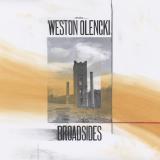
'In 2023, sound artist and composer Weston Olencki toured across the American South. Beginning in their hometown in South Carolina, they snaked a circuitous path from the mountains of West Virginia to the banks of the Mississippi River. As the miles accumulated, so did the initial seeds of new work.
'Instruments and artifacts they acquired hitched a ride in the backseat, while songs and sounds filled their portable recorder: water in its various states, the familiar insectoid buzz of those summer nights, trains cutting through the landscape, the traditional music that lived alongside the communities that kept it. Olencki took it all in, and over time, found ways that these experiences coalesced into a bramble-like perspective of time, where past, present, and future intersect in ways both barbed and beautiful.
'Broadsides, Olencki’s newest solo full-length is the multilayered result of this journey. The album follows their landmark release Old Time Music from 2022, which presented radical interpretations of traditional tunes from Appalachia and throughout the South alongside original compositions that drew significantly on archival recordings. On Broadsides, Olencki rejects delineations between the unmoored avant-garde and the rootedness of one’s cultural heritage, revealing their porous and intertwined nature. “My mother was a quilter. Her mother before that,” they write in the album’s liner notes. “Quilting, like music, is a practice of embedding knowledge and remembrance into the very core of the thing you are making. It’s not just about the materials, but how they’re reassembled, recontextualized, stitched, woven to form new patterns - the minutiae of craft holding significance to those looking to find it. Stories woven from stories, never told the same way twice.”
'Like all great road trips, Broadsides unfolds slowly and continuously, with moments of dramatic reverie punctuating the endless melt of highway in the rearview. We’re immediately confronted by the uncanniness of revisiting old haunts, as Southern storms break through the initial churn of the freight locomotives of Alabama. Olencki’s interpretation of the bluegrass standard “Foggy Mountain Breakdown” captures the euphoria of melancholy in motion. The permutational plucks of banjo are bounced around the frame by a computer, its pitches determined within algorithmic sequences and transcriptions of classic three-finger licks. The tonalities of old-time are smeared and stretched until all that’s audible is the insistence that Heaven might be real.
'In the album’s second half, “Omie Wise,” a murder ballad made famous by Doc Watson, follows an interlude recorded on the river in North Carolina in which the titular character’s body was laid. Ghostly echoes of a dozen other renditions float through the substrata as Tongue Depressor’s Henry Birdsey accompanies them on the pedal steel guitar. The album’s central composition, “all my father’s clocks,” is a profound meditation on entropy and impermanence. The sound of their father’s extensive clock collection ticks away as Olencki pulls a bow across the length of an autoharp sourced from a rural strip mall. The instrument was left as detuned as it was found, the resonance of its deep bass drone and clanging high-end the result of years of neglect and the warping effects of Southern humidity.
'Historically, broadsides were an early form of broadcasting, an often- musicalized telling of current news pasted in the public square. The name was later taken up by Sis Cunningham and Gordon Friesen in the 1960s, whose Broadside magazine published songs and social commentary when American folk music resurfaced as an urgent way of communicating the multifaceted politics of its time.
'Olencki borrows the phrase to recall both this old form of songmaking and that later prominent reexamination of traditional music’s role in modern life, but also to draw attention to the fragmented and machine- mediated way heritage is diffused in this very different, but no less pivotal, moment.
'As a sanitized past is used as justification for current violence and domination, we can turn to these artifacts to better understand the history of ourselves, but only if they are consciously pushed to evolve. Broadsides represents one personal, striking vision of what far-flung futurisms could be respun from = these high, lonesome sounds: a reflection of the unbridled joy and deep sorrow inherent to living together through time, and a desire to push further into the untold and unknown.'
- A1: Rai Rai
- B1: Kanashiyana
Since 2018, BBE Music’s J Jazz Series of compilations and album reissues has been at the forefront in focussing attention on the hitherto cloistered and rarified world of Japanese jazz. True to the ethos of the series, curators Tony Higgins and Mike Peden have once again dug up a truly rare gem in the form of a 45 from the mysterious Christal Zone, originally released in 1971 only as a promo and reissued here for the very first time. Several years before pianist Tohru Aizawa and brothers Tetsuya and Kyoichiro Morimura formed the now-celebrated Tohru Aizawa Quartet — whose 1975 private- press spiritual jazz LP Tachibana Vol 1 has become a cornerstone of the J Jazz canon and previously reissued by BBE — they were already venturing into bold, experimental territory. Their 1971 single Rai Rai, released as a promotional 7-inch on Liberty Records under the short-lived moniker Christal Zone was written and arranged by koto player and composer Hideakira Sakurai. An almost unclassifiable hybrid of jazz, Japanese folk, Algerian raï, and free improvisation. Sakurai’s visionary approach dominates the track, blending traditional Japanese instrumentation with a dense polyrhythmic groove that evokes not only avant-garde jazz but also the raw street energy of Algerian raï — celebratory, unfiltered, and joyfully unrestrained. The story behind the recording of Rai Rai is as spontaneous as the music itself. While casually rehearsing at Sakurai’s villa, the group was overheard by producer Kunihiko Murai, who was so stunned by what he heard that he arranged a studio session for them the very next day. The resulting 7-inch — Rai Rai / Kanashiyana, released under the one-off Christal Zone name — is now one of the rarest artefacts in Japanese jazz, with original copies fetching astronomical prices among collectors. BBE Music has faithfully reproduced the original artwork and packaging to celebrate this extraordinary and super rare piece of J Jazz history. A piece that bridges the ancient and the future, Japan and North Africa, in under four minutes of controlled chaos. A truly one-of-a-kind artefact, Rai Rai is a manifesto from a generation unafraid to rip up the rulebook and follow their own path.
- Johnny
- World Keeps Turning
- Electravision Mantra
- Dial Om
- Wonderful Life
- El Salvador (Former Cd Only Track)
- Sean O'farrell
- Belfast
- Cycle
- They're Killing Us All (To Make The World Safe)
- O Salvation
- Fish And Trees (Former Cd Only Track)
This remastered vinyl reissue of Blind Ear reintroduces The Celibate Rifles' urgent, socially aware punk-rock energy, cementing its place as a cornerstone of Australian alternative rock. 1989 is where The Celibate Rifles take their punk instincts to the next level-garage muscle, surgical precision, and a rock'n'roll pulse that sounds more urgent than ever today. Formed in Sydney ten years ago, the band appears here in full flight: two guitars in constant dialogue, a rhythm section with newfound dynamic range, and a razor-edged vocal that bites without losing melody. The remaster opens up the stereo image, sharpens the six-string detail, and restores to the turntable the physical punch this record demanded from day one; it's the definitive way to (re)discover a key title from the Australian school. The tracklist is pure traction: "Some Kind of Feeling" hits the ground running with speed and focus; "Wonderful Life '88" nails an instant hook and a clear-eyed critique of yuppie culture; and the closer, "O Salvation," lands as an expansive, cathartic statement of intent. Two tracks unusual in Australian rock for their subject matter-"Sean O'Farrell" and "Belfast"-tackle the Northern Ireland conflict head-on and underscore the band's social gaze, while the rest of the album maintains a no-filler intensity. This edition preserves the original LP sequence (the two bonus tracks existed only on the period CD) and stands as an essential piece for collectors and front racks alike: ideal for in-stores, listening bars, and classic alternative rock playlists. If your audience connects with BORED!, Radio Birdman, The New Christs, or The Saints, Blind Ear is an unequivocal yes.
- Somewhere, Nowhere
- Angles Mortz
- False Prophet
- Fluoride Stare
- The Void
- Ascension
- Just A Kid
- Host
- Landslide
- Renaissance
- 7: Am
- Blue In Grey
2026 Repress
Flickering in ultraviolet, there is an elusive place where blue pill meets red, ups become downs, and day merges with night. Those liminal spaces where anything is possible is where you’ll find Nightbus and their hypnotic debut album Passenger. Doom, uncertainty, and opportunity lurk in the shadowy corners of their murky existence with stops at disassociation, co-dependency, and addiction before reaching its final destination - a glimmer of hope.
The in-between of Nightbus’ own Gotham lies where Manchester’s city pulse meets Stockport’s outer realm. An audio-visual entity formed among a musical family of friends, freaks, and foes in messy mills and after hours on dancefloors alike, their sound bleeds from tension where collective creative forces are bound together and collide with the fallout of being torn apart. Before even playing a show, their So Young released single ‘Mirrors’ – a knowing nod of respect to some well-known gloomy Northerners - may have made old school indie heads shimmy at shows in Salford’s The White Hotel but also signalled the duo’s knack for offering listeners a Bandersnatch approach to hitchhiking their own personal Nightbus in whatever direction they choose to take. “Everyone can have their moment with our songs; the music is our response to who we are as young people, living in the city full of this energy right now,” they say.
Whilst reverb hefty melodies and dread-filled loops embody isolation from writing at each of their home studio set-ups, magic happens in the ether across 90s trip-hop, indie sleaze and electronica; Jake’s production layers Olive’s pop sentimentality with drums and samples whilst tales of a cast of faceless characters place Olive as puppet master; her severed self’s perspective manipulating their stringed limbs at arm’s length to see how their stories play out when scenes reflecting her own lie close to the bone. “It’s a bit fucked; like having this out of body experience with a made-up movie running through my head,” she says. “As I write I can see they’re all from a similar world, but they allow me to explore different feelings without giving away part of myself.”
Recorded at The Nave in Leeds with producer-engineer Alex Greaves (Heavy Lungs, Working Men’s Club), surprise and danger lies in every crevice. Brooding whispers turn to chants on 6-minute opus ‘Host.’ Improvised when performed live, its immersive shift in tempo leads to hefty dub courtesy of Jake’s pedals. Even then, you won’t know shit’s hit the fan until its mid-point reveal when ominous bass blasts a thunderous soundtrack as its protagonist defiantly walks away after committing the perfect crime. “It makes you wait, and more songs should have sirens,” Olive grins.
Leaning deeper into alter-egos via the video game-psychological horror of a Silent Hill dystopia, the band’s Fight Club moment ‘Angles Mortz’ turns its literal translation of death angles on its head as it reflects upon kink and internalised shame reincarnated as pride. Elsewhere the ice cool ‘Landslide’ is a Requiem for a Dream about the addiction of being in a band; ‘The Void’ explores co-dependency and estranged relationships; and carefully selected samples revive house track ‘Just A Kid’ from the band’s early incarnation. Passenger’s every direction is to face challenges head on. “That is what’s so great about horror; you can see through predictable patterns so when the unexpected occurs it's more realistic and uncomfortable… I want to own the dark stuff!”
As for Passenger’s first single, the pulsating ‘Ascension’ is a spiralling deep dive into death, suicide, and legacy around who or what we leave behind. A noughties club banger by way of NYC beats - ergonomically designed for those who like to stay out a little too often and too late - it throbs like a house party’s partition wall as the literal levelling up undergoes a neon transformation; blue glitching to pink, diffusing the white construct of the Nightbus Matrix. “It really does feel like the end of something and was purposely written that way,” they say, “the ascension is like a firework going off!”
With wheels in motion, Nightbus has become a movement surpassing sonic realms. Between shows from Porto to Brighton taking in The Great Escape, Rotterdam’s Left Of The Dial and Paris’ Supersonic; DJing; remixing; guesting (BDRMM’s Microtonic album); and even enlisting talented like-minds to craft a 3-part queer coming-of-age music video series which ties in with a new ‘hyperpop’ phase in the evolution of their popular Nightbus Soundsystem club night, heads are now being turned from sports brands to high-end fashion designers. “There are things we can’t reveal just yet,” tells Olive, “but we’re excited about the direction this beast we’ve created is heading.” As the album philosophises and asks one ultimate question; what does it truly mean to be ‘Passenger’? Nightbus may not claim to offer a definitive answer, but it might make you feel a bit better about those demons.
- Kris P. (The Christmas Elf)
- Hitch A Ride With Santa
- Everytime When Christmas Comes Around
- (Will You Be) Gone By Christmas Night
- Hang Your Lights
- The Old Songs
- Stay For Christmas (Ft. Lucy Woodward)
- Last Christmas
- Driving Home For Christmas
- Santa’s Crazy North Pole Orchestra
- The Joy That’s In Your Heart
- Christmas When You’re Here
- Wonderful Christmastime
- This Time Of Year
- Until Next Christmas
„Weihnachten ist wirklich die schönste Zeit des Jahres“! „Im Laufe der Jahre habe ich viele originelle Weihnachtslieder geschrieben und ich hatte das Gefühl, dass es jetzt an der Zeit ist, die besten davon auf einem Album zu bündeln. Und hier ist es: Ein wundervolles Weihnachtsalbum mit einer Vielzahl von Liedern, von denen jedes ein wesentliches Element der Weihnachtsstimmung enthält, jetzt in einer Deluxe-Edition. 15 Songs, die ich sorgfältig ausgewählt habe. Ich habe 9 der 11 Originale mit den Amerikanern Jeff Franzel und Maria Christensen geschrieben und die anderen 2 Originalsongs mit den niederländischen Songwritern Simon Gitsels und Karel Schepers. Die Cover auf diesem Album sind Songs, die ich so sehr liebe, dass ich ihnen meine eigene Note geben und ihnen einen Platz auf dem Album geben wollte.“ Vier erfolgreiche Studioalben, mehreren Theatertourneen in den Niederlanden und erste internationale Shows, die allesamt ausverkauft waren. Es folgten bereits zahlreiche Auszeichnungen, darunter eine Goldene Schallplatte und bereits zweimal der renommierte Edison Jazz Award (der Holländische Grammy). Keine alltägliche Errungenschaft im Jazzbereich oder wie „Crooner“ Dennis es lieber nennt, im Swing, einem Stil, der für ihn unvergleichlich ist.
Swan Song
The vinyl LP at the heart of this éthiopiques 31 tracks 2 to 11 was one of the very last vinyl records ever released in Ethiopia. But above all it represents, we felt, the absolute masterpiece of the Ethiopian Groove – the Swan Song of Swinging Addis. The album leaves a clear idea for posterity of the level of sophistication and mastery that modern Ethiopian music had achieved, before being crushed under the Stalino-military heel of the Derg – as the bloody revolution that was unfolding came to be called.
Ethiopia1976.
The Revolution that broke out in February 1974 rolled on in a ruthless march. The whole of Ethiopian society was utterly stunned. The bouquets of flowers handed joyfully to the first tanks of the coup d'état were to wilt very rapidly. From September 1976 to February 1978, 18 months of Red Terror (the name given by the junta itself) spilled blood throughout the country. This fratricidal conflict took its heaviest toll among students and youth. The shift from feudalism to a cruel and primitive Stalinism left the country's citizens deeply traumatised, and snuffed out any pretence of activism, whatever the sector of society. This ice age was to last for seventeen long years.
ሙሉቀን፡መለሰ Mulukèn Mellèssè Muluqän Mälläsä
It was three tracks by Muluken that served as the opener for éthiopiques-1 more than 25 years ago. Seven more tracks appeared on éthiopiques-3 and 13, all accompanied by The Equators, which was soon to become the Dahlak Band.
The first track, Hédètch alu, also the very first piece that Muluken ever recorded, left audiences both unsettled and amazed. Reflecting the singer's extremely young age (he was just 17 at the time), this angelic voice mystified many, who thought they were in fact listening to a feminine voice. He was not yet 22 when he released his last vinyl record in 1976 with Kaifa Records (KF 39LP), one of the very last to be issued in Ethiopia, before the cassette tape became the dominant medium for music distribution – and before the new revolutionary regime put a stop to all independent musical life, via an unspeakable barrage of prohibitions and other persecutions.
Mulu qèn, literally, “A well filled day”. This tender maternal intention wasn't enough to ward off the cruelty of fate. His mother's premature death drove Muluken to leave his native Godjam, in northeast Ethiopia, to live with an uncle in Addis Ababa. Born Muluken Tamer, he took his uncle's last name – Mèllèssè.
The spelling Muluken appeared in his administrative records. Transcription of Amharic to the Latin alphabet, both in Ethiopia and for scholars, gives rise to controversies and quibbles that can never be neatly settled. French allows for a closer approximation of the original pronunciation, thanks to its battery of accent marks, confusing as they may be to anglophones.
Between rather accommodating administrative record-keepers and the various versions that pop up in interviews given by the artist, Muluken's year of birth oscillates between 1953 and 1955…
1954? One thing is certain: the artist's talent made itself known very early indeed, because he got his start in 1966-67, at the age of 13 or 14. Photos from the period attest to his extreme youth. It's a strange sort of initiation for a very young teenager to become a sensation in the heart of Addis's nightlife at the time, Woubé Bèrèha – the Wilds of Woubé. And what's more, in the club of the Queen of the Night, the Godjamé Assègèdètch Alamrèw herself, the very same that was portrayed by Sebhat Guèbrè-Egziabhér in his novel-memoir Les Nuits d’Addis Abeba2… The legendary female club owner who is remembered to this day by the capital's ageing boomers.
Muluken first tried his hand at the drums, before he grabbed the microphone. He emigrated briefly to the Zula Club, across the street from the old Addis Post Office, one of the ground-breaking bars of the burgeoning musical scene, before joining the Second Police Band in 1968, for around three years. He spent a few months with the short-lived Blue Nile Band founded by saxophonist Besrat Tammènè. As the musical scene grew increasingly successful, and pulled slowly but decisively away from its institutional ties, Muluken released his first 45rpm single in February 1972 (Amha Records AE 440). It was included in two LP Ethiopian Hit Parade compilation albums in September of the same year. All in all, Muluken released eight two-track 45s and the same number of original cassette tapes between February 1972 and 1984, the year that he departed for permanent exile in the USA. After converting to Pentecostalism in 1980, Muluken gradually abandoned all secular musical activity. In 1985, at the end of a concert in Philadelphia, he decided to quit concerts and recording for good. Mèlakè Gèbré, the historic bass player from the Walias band who was playing with him that night, recalls that everything appeared so irredeemably diabolical in Muluken's eyes, that it was to be the end of his contribution to Ethiopian Groove.
The end of the story, the beginning of a legend.
Dahlak Band, forgotten by History
Aside from his personal history and vocal talents, it must be remembered that Muluken Mèllèssè was one of the biggest names in the musical innovations that marked the end of the imperial period. These éthiopiques aim to convince those who are just discovering this hidden gem... As for Ethiopians themselves, they are to this day captivated by this singular and atypical figure in the Abyssinian pop landscape – even though he withdrew from public life some 40 years ago. Incorrigible devotees of poetic twists, of more or less hidden meanings, Ethiopians appreciate above all the care Muluken took in choosing his lyrics and the writers who penned them, such as Feqerte Haylou, Alemtsehay Wodajo and, here, Shewalul Mengistu (1944-1977). Love songs, written by women, a far cry from the conventional drivel that pleases sappy sentimentalists.
Muluken is equally acclaimed for his perfectionism when it came to music, the opposite of the overly casual approach that is all too common. He remained a faithful partner of musicians who came from a lineage that borrowed from several inventive and pioneering bands (Venus, Equators, Dahlak). Amongst them were certain artists who began their musical lives with Nersès Nalbandian at the Haile Sellassie Theatre and who come of age in around 1973 – at just the wrong time, you might say. Among them were the pillars Shimèlis Bèyènè (trumpet), Dawit Yifru (keyboards) and Tilayé Gèbrè (sax & flute). Most notably Tilayé Gèbrè, certainly one of the most important musicians, composers and arrangers of his generation, of the end of the imperial era, and of the early years of the Derg.
It was only in 1981 that a miraculous opportunity arose for Tilayé to escape the Stalinist paradise of the dictator Menguistou Haylè-Maryam. Once again it was Amha Eshèté (1946-2021) who provided a solution. The spirited and courageous producer, who had been in exile in Washington since 1975, succeeded, thanks to his incredible perseverence, in bringing the Walias Band to the USA. It was, in fact an extended Walias Band comprising ten musicians3, six of whom chose to slip away after a few concerts and the recording of an LP (The Best of Walias, WRS 100). Tilayé Gèbrè was one of these. He has been living in the USA ever since. There he joined the then-nascent Ethiopian diaspora, which lived largely unto itself, and was making only very modest headway in the American musical market. It seems unfair that Tilayé Gèbrè and the Dahlak Band were not able to benefit earlier from the public recognition that they do deserve.
A similar draining away of the top-rate talents would lead to the reorganization of the major groups of the “Derg Time”. The remaining artists spread themselves around between Ibex Band (renamed Roha Band), Ethio Star Band and a remodeled Walias Band. That spelled the end of the Dahlak Band.
With this record, produced by the essential Ali Abdella Kaifa a.k.a. Ali Tango, we can appreciate everything that the Derg not only destroyed, but also prevented from flourishing. This gem of Ethiopian-style afrobeat came out in 1976 (and, by way of a parenthesis, before the FESTAC 1977 in Lagos, which was attended by an impressive delegation of Ethiopian musicians — although Fela was already personna non grata in his own country). Despite everything that might distinguish this ethio-groove from Fela’s music – no colonial axe to grind, no question of political confrontation with the authorities, no claims to negritude or Africanism for the Ethiopian musicians, and less extrovertion! –, this LP fits beautifully into the saga of intense and electrified soul of the new “African” groove that Fela and Manu Dibango embodied so well from that point onwards.
In restoring this record to its place in the afrobeat epic, it can be seen that, if nothing else, the timeline bestows a legitimate pedigree and a historical primacy to works that had no international impact when they were originally released.
Warning! Masterpiece!
- Weera
- Share Your Care
- Mekong
- Interlude 1 - Sam Law
- Fortune
- Horizon
- Morlam Plearn (Luk Khrueng Surprise)
- Interlude 2 - Look That Way!
- Barn Nork
- Hell Money
- Chaiyo!
- Interlude 3 - Conversations At The Catfish Lake
- Myna
In the summer of 2021, Brighton-based, Scottish-Thai songwriter Helen Ganya's grandmother passed away
The grief hit the artist hard, not only because it marked the loss of her last remaining grandparent, but also because it felt like her links to being half- Thai were disintegrating, roots quaking and shifting in uncharted territories. Ganya grew up in Singapore, but spent her summers in the northeast of Thailand where her mum's side of the family is from, visiting her grandmother. Where would all those memories go now that the person at the centre of them was gone? What was her relationship to this place without that glue? And so, in an attempt to process it all, Ganya began to write. "I got my diary and wrote every single memory of my time as a child in Thailand, spending time with her, my grandad, my aunts and cousins and everything," she explains, "I had these snapshots of memories that I just wrote down because I just suddenly panicked: it was like, who am I, then?" It was for this reason that, while Helen Ganya was waiting for her acclaimed 2022 album, polish the machine, to come out, she was already working on what would become her arresting new record, Share Your Care. Ganya has been releasing music since 2015 (formerly under the moniker Dog in the Snow). In the records she's put out over the years, she's shown a proclivity towards dark and artful rock and off- kilter sounds, garnering praise from the likes of the Sunday Times, Uncut, Clash, Loud & Quiet and more. But Share Your Caremarks a new era, building on Ganya's past sonic worlds and interspersing them with traditional Thai instrumentation, resulting in a plush, luminous, psych-tinged affair that is full of feeling. The result is a triumphant, abundant record, teeming with heart and cinematic warmth.
- John Coltrane's Moscow Skyscraper Nureyev
- Said It Best
- No Neutral
- Shake The Slack
- Ecstasy
- Serious Dance Music
- The Noise Between Us
- Slinky Chainz
- Target
- Collateral Damage
Avalanche Party is a garage-punk rock and roll band from the bleak yet beautiful North Yorkshire Moors After releasing their critically acclaimed debut album '24 Carat Diamond Trephine' in 2019 (BBC 6Music, BBC Radio 1, Radio X, KEXP, NME Top 100, PRS Momentum Fund Award), the band toured heavily until they weren't allowed anymore in 2020. After picking up with they left off, hitting the road with mentors ...And You Will Know Us By The Trail of Dead, they found their way to the hallowed Rancho De La Luna studio in California's Joshua Tree in 2022 to record their follow up album, engineered and produced by Dave Catching (QOTSA, Iggy Pop, Arctic Monkeys). DER TRAUM UBER ALLES is now ready to be unleashed onto the world.
The LP and CD are the first reissues of this album from 1976. The LP is re-issued in its original format due to demand that has driven the value of the pressing on All Platinum to in excess of £400. The CD is the first issue here in this format and comes complete with two preceding singles and a post album release of the 12' mix of My Man Is On His Way' in 1978, the only 12' release on all Platinum. This makes the CD the complete collection of Retta Young songs including her UK Top 40 chart hit (Sending Out An) S.O.S. which appeals to both northern soul and disco audiences. The complete album is a gem for connoisseurs of quality modern soul from the 70s.
ROMÉO ELVIS & OSCAR AND THE WOLF
JARDIN
- 1: Lose My Baby
- 2: Chargé
- 3: Bon Sens
- 4: M'en Ballec
- 5: Fading Into You
- 6: Ceiling
- 7: Closer (Monet)
- 8: Crocodilla
Sometimes, the most beautiful stories begin simply between friends, over laughter, late nights and shared music. That’s how the collaboration between Oscar and the Wolf and Roméo Elvis was born. What started as an unexpected jam session after dinner soon evolved into something much greater: a modern-day Romeo and Juliet where two distinct worlds, North and South, pop and rap, light and shadow, meet and merge effortlessly.
Their first collaboration, “Ceiling”, captures that magic: the perfect balance between intimacy and grandeur, where contrast becomes harmony. Premiered live before 100,000 people during Belgium’s National Day celebrations, the single immediately resonated, becoming a radio hit and surpassing one million streams within weeks.
Now, the duo present JARDIN, an eight-track EP arriving this December. Here, Oscar and the Wolf and Roméo Elvis push each other beyond their comfort zones, exploring new sonic landscapes and blending their unique identities into one sound. From the pulsating energy of “Crocodila” and “Je M’en Balec”, to the tender alternative rock ballad “Lose My Baby”, and the groove-driven “Chargé (Monet)” or the club-ready “Bon Sense”, JARDIN unfolds like a living garden, a vibrant space where every track blossoms into something new.
To celebrate the release, the duo will perform together for the first time on December 15 and 16 at Ancienne Belgique in Brussels. Both shows sold out within hours, a testament to the excitement surrounding this groundbreaking collaboration.
With JARDIN, Oscar and the Wolf and Roméo Elvis don’t just unite genres and languages; they build a bridge between regions, emotions and artistic worlds, a celebration of sound, connection and friendship.
Whilst Caribou tour the globe throughout 2012 in support of Radiohead, Dan Snaith has fallen deeper into his love affair with the dancefloor, to bring us a full length release as Daphni. The first Daphni album of shape-shifting works is JIAOLONG (pron. Jow-long), to be released on his own imprint in the UK, and on Merge in North America on 8/9 October respectively.
Alongside Caribou's ongoing world tour schedule, Dan concurrently hits club nights in each city, DJing into the wee hours, searching for that sweet spot.DJs have the potential to blindside you,' Snaith says. 'During the time I was making the Caribou album Swim, I'd fallen back in love with moments in small, dark clubs when a DJ puts on a piece of music that not only can you not identify, but that until you heard it, you could not have conceived of existing.
- 1: Stay Down
- 2: Kiss Tried To Kill Me
- 3: Just Like A Woman
- 4: Easy Peasy
- 5: Blood Of The Kings
- 6: St Peter
- 7: Mans Ruin
- 8: Medusas Eyes
- 9: Si El Diablo
- 10: What Goods A Rock Without A Roll
Originally released in Feb 2011, next year it will be 15 years young and like every teenager it wants to make a racket. So, in February 2026 the band will be doing just that, with some very special shows celebrating their debut album. Tour Dates for 2026 : Exeter Cavern 12/02/26, Cardiff Fuel 13/02/26, London Lexington 14/02/26, Edinburgh Bannermans 20/02/26, Nottingham Rescue Rooms 21/02/26
"The gauntlet for best album of 2011 is being thrown down early!" Metal Hammer. // “Black Spiders are pure genius, AND, they go onstage on time!” Duff McKagan (yeah, him off Guns n Roses)..// “Their apocalyptic three-man axe assault is awe-inspiring“ Rock Sound..// “Another monolithic slab of thunderous rock. This Sheffield-based quintet have managed to harness the powers of Angus Young and priapic death punks Turbonegro and distil it into a brew fit for Odin himself” KKKK Kerrang. SONS OF THE NORTH was the much anticipated debut album by the United Kingdoms very own rock juggernaut BLACK SPIDERS. Quite literally ten tracks of galloping rock and thunderous roll, heads down, no nonsense, ear splintering, gut wrenching organic, melodic goodness. Classic Rock and Metal Hammer Magazines hailed them as ‘Ones to Watch’, Kerrang, Rock Sound, Big Cheese Magazines, Subba Cultcha and Thrash Hits all reviewed.
- 1: Redcurrants
- 2: Healing
- 3: Placeholder
- 4: Erica
- 5: Number's Game
- 6: Dead Inside
- 7: Kind Eyes
- 8: Boy Bingo
From the humdrum to the huge; Tiia explores heartbreak, disappointment, climate change, and dying house plants. The record plays with contrasts, light and shadow, fizz and gloom. Keys melt into darker textures before guitars and drums lift them back into sparkle. It's heaviest moment is the title track, written in an airport bathroom after Tiia's father passed, yet even here, hope breaks through in irresistible vocal harmonies and inventive melodies. "To me, 'Kind Eyes' is a feelings record," Tiia says. "The grief for my dad passing sits at the centre and expands towards the edges, but there's a range of other feelings too. Sometimes they're hard to pin down and navigate but the songs are my map, trying to chart where you are and where you're going. And listeners should remember that sometimes X does mark the spot."
Lead single 'Healing' hits like a mascara- smeared midnight drive through Lynch's America. First sketched with Prince in mind, it finally found its teeth on a long, lonely walk in north-east London: a rock song hiding in plain sight. Tiia says "As soon as I had a rough idea for the driving beat, I knew I had to get Sean Berry (fellow bandmate from the once mighty Comet Sands) involved on the guitar, and the hooks all fell into place". Dusted with plush keys, on 'Numbers Game', Tiia leans into classic rock drama - warmth turning suddenly cold, the floor falling away from underneath you. "The lesson here is don't spy on your exes, but when you do, be prepared to write a song about it. It was the first track I asked Paul Rains (of Allo Darlin' fame) to play guitar on and he instantly got where I was trying to go with it. Now he's my partner, I have no idea how he feels about the lyrics!" Tiia laughs. Having also worked with Tiia's previous cult all-girl indie band The Minor Characters, Seb Kellig lent his trademark dub- inspired production influences at the legendary sonic heaven of Sausage Studios, east London, which Tiia calls "My happy place".
Tiia will again be playing keys for Allo Darlin's four UK tour dates this October followed by tour dates as Count Jaakola. 'Kind Eyes' is set for release 21st November 2025 via Tip Top Recordings (Mandrake Handshake, Japanese Television, Pearl & The Oysters, Golden Toad).
Blue Vinyl[24,58 €]
The brilliantly named duo - formed by Adam Morrow and Jamie Sego - might be based in "the hit recording capital of the world", Muscle Shoals, Alabama, but somehow, they have made a concept album about the ancient religious outpost off the coast of northeast England. It's a stunning record that mixes fuzzy guitars with folk horror and fantastic melodies - for fans of Ride, Slowdive, Galaxie 500, Talk Talk, Yo La Tengo and The Clientele. Despite its lyrical inspiration lying thousands of miles away, it comes imbued with the soulfulness of their surroundings - not least because it was recorded in the old Muscle Shoals Sound studio by the Tennessee River, now Portside Sound, which is run by Jamie. "The story of Lindisfarne gave us a framework for what were otherwise very abstract ideas and emotions," explains Adam. "It became a way to make sense of our own moment in history. We really want our lives and societies to always get better, and to be left alone to make that happen. But we are stuck in these cycles of progress and regression, and I think most people are really driven to make sense of it and assign meaning. Lately, we've lived through a global pandemic, a devaluation of truth and reality, and a resurgence of far-right politics into the mainstream. Not really what I expected out of life in 2025." He is keen to point out that, despite the seriousness of its inspirations, the duo had a lot of fun making the album and really want it to be "a living and breathing thing". "We want people to be able to engage with it regardless of whether they care about it as a concept record," he says. "For me, it's just another reason to expand the pedalboard," concludes Jamie. "We hope you enjoy it. Peace, love and reverb from Alabama." Coloured Vinyl LP, and Bonustrack CD available, this version is `Lindisfarne Sky' Blue & White Vinyl and adds a postcard.
- Repetition
- How I Wrote 'Elastic Man
- Totally Wired
- Lie Dream Of A Casino Soul
- The Classical
- The Man Whose Head Expanded
- Cruiser's Creek
- Mr. Pharmacist
- There's A Ghost In My House
- Hit The North
- Victoria
- Telephone Thing
- Free Range
- Lost In Music
- Behind The Counter (Single Version)
- Touch Sensitive
- Theme From Sparta Fc (Single Version)
- Blindness
- Bury
- New Facts Emerge
- A1: Riot Radio
- A2: A Different Age
- A3: Train To Nowhere
- A4: Red Light
- A5: We Get Low
- A6: Ghostfaced Killer
- B1: Loaded Gun
- B2: Control This
- B3: Soul Survivor
- B4: Nationwide
- B5: Horizontal
- B6: The Last Resort
- B7: You're Not The Law
- C1: Too Much Tv Dub
- C2: Invader Dub
- C3: D-60 Fights The Evil Force
- C4: No Control Dub
- C5: Tower Block Dub
- D1: Cns Lazer Attack D-60
- D2: Police Radio Dub
- D3: Flight Mission Dub
- D4: No Good Town Dub
- D5: Game Over
The Dead 60s seminal self-titled album gets a timely Deluxe edition reissue on Vinyl for its 20th Anniversary, on Deltasonic Records
“Back in the day, punk and dub weren’t just sharing space—they were smashing into each other headfirst. Late '70s Britain was a pressure cooker, and for kids like me, growing up between Brixton’s bass bins and the chaos of King’s Road, that collision was everything. Jamaican sound system culture met punk’s raw spirit in a haze of smoke, sweat, and feedback. It wasn’t about genre—it was about energy. Identity. Defiance. so when The Dead 60s came along, post-Britpop and post-bullshit, it felt like someone had dusted off the blueprint and run it through a battered old tape echo. These weren’t just lads with good taste—they understood the assignment. They took the DNA of two rebel cultures and mutated it into something that could stand tall in the 21st century. Dub-soaked, punk-fuelled, dripping with that Liverpool attitude. I remember first hearing them and thinking—yeah, here we go again. Not in a retro way, but in a real way. Guitars that cut like sirens in the night. Basslines fat and warm, straight out the Channel One playbook. Lyrics that painted the grey corners of Britain like CCTV poetry. It was the sound of youth under pressure. The sound of not fitting in—and not wanting to.
Their debut album dropped in 2005, and it hit like a flare in the dark. “Riot Radio” was a pirate broadcast from the concrete frontlines. “Control This” swaggered with menace and reverb. It was like someone opened a time capsule from the punky-reggae party and rewired it for a new generation.
Now, with this 20th anniversary vinyl reissue—complete with the full dub companion produced by Central Nervous System—we get to hear the bones and blood of it all. The dub versions pull the tracks apart and let the ghosts speak. Reverb, delay, space—it’s not just production, it’s meditation. Revolution slowed down to a heartbeat. It’s music that makes you move and think. What they’ve done here is more than remix a record—they’ve revealed its soul. That’s what dub does when it’s done right. And The Dead 60s, they got that. They weren’t tourists in the culture—they were students of it, shaped by it, and ultimately, contributors to the legacy. Liverpool’s long had a love affair with Jamaican music—you can hear it in the streets if you’re really listening. The Dead 60s tapped into that lineage, but they brought their own thing to the table. Punk's fire. Dub’s depth. Ska’s bounce. All filtered through a Northern lens and blasted out like protest graffiti. This 20th anniversary reissue ain’t about nostalgia. It’s a reminder. A celebration. A call to arms. Music like this doesn’t belong in a museum—it belongs on a system, shaking walls and waking minds. Crate diggers, completists, young punks, old heads—this one's for all of you.
So put it on and turn it up. Let the punk edge sharpen your thoughts, and the dub shake your bones ‘cos this isn’t just a reissue - it’s resistance on wax.....”
- A1: Kee'ahn, Pataphysics, Ojiaji, Yusuf Harare Jnr, Kawel Che, Kasinda Fa'ase - Heavy
- A2: Kee'ahn, Jake Amy, Anthony Liddell Featuring Sensible J And Kasinda Fa'ase - This Is Not The End
- B1: Kee'ahn, Jake Amy, Anthony Liddell, Sensible J, Elle Shimada - At Least For Now
- B2: Kee'ahn, Jake Amy, Anthony Liddell, Sensible J, Basil Byrne, Elle Shimada - The Way I Love
- B3: Kee'ahn, Pataphysics - Better Things
Kee'ahn, whose name is derived from kee’an, the Wik word meaning to dance and to play, is a proud Yalanji, Jirrbal, and Badulaig artist. Her music is steeped in connection to culture, community, Country, and self and with her soulful voice and storytelling, Kee’ahn has had a powerful impact on the Australian music scene, earning her the Archie Roach Foundation Award and Music Victoria’s Best Emerging Artist award. She has since performed at the 2025 AFL Grand Final collaborating with Baker Boy, Thelma Plum, Emma Donovan, Dallas Woods, Alice Ivy and shared stages with the likes of Julia Jacklin, Hiatus Kaiyote, Greentea Peng and Angie McMahon.
Kee’ahn’s debut EP “for me, for you x” is a collection of lush cinematic soul and rnb love letters. Across 5 tracks, Kee’ahn explores the pursuit of hope, compassion, connection, heartbreak, and healing. This project naturally and authentically came together, detailing moments across 5 years of Kee’ahn’s life. Each song begins on guitar and vocals with demo production in Kee’ahn’s Brunswick bedroom - they are diary entries to herself, formed into messages that hit the hearts of its listeners.
Each song is reminiscent of classic 60’s jazz soul to 90’s neo-soul rnb, to early 2000’s inspired soul pop weaving dynamic soundscapes with clear and meaningful catchy lyricism.
- A1: Picture Me Gone
- A2: I Can't Let Go
- A3: You've Got Me Up Tight
- A4: Take Me For A Little While
- A5: We Know Better
- A6: The Roll
- A7: The Love Of A Boy
- A8: My Dog S
- B1: Angel Of The Morning
- B2: Billy Sunshine
- B3: Run Home To Your Mama
- B4: Danny Boy I Love You So
- B5: It Makes Me Laugh
- B6: Dear John
- B7: I Was Moved
„I Can’t Let Go“ ist die erste Zusammenstellung der Aufnahmen der Brooklyn-Sängerin Evie Sands aus den 60er Jahren, die alle 15 Titel ihrer ersten 8 Singles auf der Vinylversion enthält. Die CD-Ausgabe umfasst weitere 11 Titel, darunter ihre kompletten 45er-Singles aus den Jahren 1963 bis 1970. · Sands, die bereits als Kind zu singen begann und schon in jungen Jahren im Studio arbeitete, verfügte über eine kraftvolle und faszinierende Stimme, die ihr Alter Lügen strafte und auf klassischen 45er-Singles zu hören war, die von Soul- und Rock-Sammlern sowie Liebhabern von Girlgroups und Femme-Pop gleichermaßen geschätzt wurden. · Nach ersten Veröffentlichungen bei ABC und Gold tat sich Sands 1965 mit dem Songwriting-, Arrangement- und Produktionsteam Chip Taylor und Al Gorgoni zusammen, um eine Reihe exzellenter und oft erstaunlicher Platten bei den Labels Blue Cat, Cameo und A&M aufzunehmen, die in ihrem vielbewunderten ersten LP gipfelten. Dabei nahm sie die Originalversionen (und definitiven Versionen) von „Take Me For A Little While“, „I Can't Let Go“, dem Northern-Soul-Floor-Filler „Picture Me Gone“ und dem majestätischen „Angel Of The Morning“ auf und sah ungläubig zu, wie sie alle zu Hits für andere Künstler wurden. Nachdem sie 1969 mit „Any Way That You Want Me“ endlich einen eigenen großen Hit gelandet hatte, folgte nach einer kurzen Auszeit Anfang der 70er Jahre ein gut aufgenommenes Comeback-Album, „Estate Of Mind“, und zwei US-Top-50-Hitsingles. Durch die kontinuierliche Weiterentwicklung ihrer Produktions- und Songwriting-Fähigkeiten standen bald die Größen der Popmusik Schlange, um mit ihr zusammenzuarbeiten und ihre Songs aufzunehmen: Barbra Streisand, Dusty Springfield, Karen Carpenter, Dionne Warwick und später auch Missy Elliot coverten Sands' Kompositionen, und Elvis hätte es beinahe auch getan... · „I Can’t Let Go“ wurde von Jai Rathbone in enger Zusammenarbeit mit Evie Sands zusammengestellt, die ihre Gedanken und Erkenntnisse über diesen frühen Abschnitt ihrer Karriere teilt. Mit zahlreichen Illustrationen versehen, ist dieses Buch ein Muss für jeden Fan. · Bewundern Sie erneut (oder zum ersten Mal) die Vielseitigkeit eines der bestgehüteten Geheimnisse der 60er Jahre: die volle, emotionale und wahrhaft unverwechselbare Stimme von Evie Sands.
- 1: I'm Not Getting Excited - Live
- 2: Great No One - Live
- 3: Whatever - Live
- 4: Mars, The God Of War - Live
- 5: Future Me Hates Me - Live
- 6: Introduction
- 7: Jump Rope Gazers - Live
- 8: Uptown Girl - Live
- 9: Bird Talk
- 10: Happy Unhappy - Live
- 11: Out Of Sight - Live
- 12: Thank You
- 13: Don't Go Away - Live
- 14: Little Death - Live
- 15: Dying To Believe - Live
- 16: River Run - Live
The anticipation is there in Elizabeth Stokes’ solo guitar riff under the opening lines of “I’m Not Getting Excited”: a frenetic, driving force daring a packed Auckland Town Hall to do exactly the opposite of what the track title suggests.
As the opener of The Beths’ Auckland, New Zealand, 2020 expands to include the full band, the crowd screeches and bellows. It’s a collective exhalation, in one of the few countries where live music is still possible.
The album title, and film of the same name, deliberately include the date and location, lead guitarist Jonathan Pearce says. “That’s the sensational part of what we actually did.” In a mid-pandemic world, playing to a heaving, enraptured home crowd feels miraculous.
In March 2020, everything seemed on track for another huge year for The Beths. Home after an 18-month northern hemisphere tour, they had just finished recording sophomore album Jump Rope Gazers and were primed for more extensive touring. But within days, New Zealand’s lockdown split the band between three separate houses. All touring was cancelled.
“It was existentially bad,” Stokes says. As well as worrying about economic survival, they lost something crucial to the band’s identity: live performance. “It's a huge part of how we see ourselves... What does it mean, if we can't play live?”
The band found an outlet through live-streaming, returning to the do-it-yourself mentality of their early days to connect with a global audience. The album and film have their genesis in that urge to share the now-rare experience of a live show, as widely as possible.
The fuzzy-round-the-edges live-streams pointed the way aesthetically. Native birds, wonkily crafted by the band from tissue paper and wire, festoon the venue’s cavernous ceiling while house plants soften and disguise the imposing pipes of an organ. The presence of the film crew isn’t disguised: much of the camerawork is handheld; full of fast zooms and pans.
With much of the material still fresh, the band was less focused on re-invention than playing “a good, fast rock show”, Pearce says. The tempo is up on crowd favourites “Whatever” and “Future Me Hates Me” (released as a live single on its third anniversary) as both band and audience feed off the mutual energy in the room.
Certain songs have taken on special resonance post-Covid. Pearce has found “Out Of Sight”, a tender rumination on long-distance relationships, hits particularly hard with live audiences.
Album closer “River Run” visibly brings Stokes to tears as a mix of achievement and relief kicks in. “You can finally relax at that point … You play the last note, breathe out a sigh and look up - and you’re in a giant room full of people happy and smiling.”