Season 2 formed in late 2024, bringing together seasoned Melbourne musicians with previous and current projects including Parsnip, The Stroppies and Phil and the Tiles. The five piece, comprising Carolyn Hawkins, Claudia Serfaty, Charlotte Zarb, Freya McLeod and Matt Powell, quickly set to work writing winsome, DIY, shimmer-pop hits that careen through your mind in a gratifying dizzy rush.
With a clear collective vision and little time to waste, Season 2 spent 2025 writing and recording, appearing live only a handful of times. Finally, this April, the band are primed for their debut release, a full-length album entitled 'Power of Now'. ‘Power of Now ‘is a cerebral explosion of melody, hooks, drones and rhythm. In the vein of The Feelies, The Vaselines and The Clean, Season 2 have whipped up a sonic whirlwind. It's a giddy thrill of snappy slap, catchy gang vocals and crystalline guitar refrains.
'Abundance of Power' is a bittersweet bop of ponderous bass, crisp chord flashes and grounded vocals that dwell on slighted futures and bored realities. 'Becomes a Dream' is a delirious race of scrappy strumming and flying phrases that unsettle as much as they pinball endorphins - "pour the ink into the sand, watch the dog it bites the hand". "Tell me something, elbows on the table, I'll tell you nothing, leave you tugging at the cable" they sing on the peppy future single 'Tugging at the Cable', capturing a certain innocent, wide-eyed expressiveness. Season 2 do sparky well, their songs are instant rewards, tunnelling into your subconscious and testing the dance floor. They keep everything moving, the beat and the conversation. Season 2 sound barely controlled and all the better for it, you have no choice but to be swept up.
'Power of Now' was recorded by Alex Macfarlane (The Green Child, Chateau) and mastered by Mikey Young. It will be released digitally and on LP (black vinyl) on April 24th, internationally via Upset The Rhythm and locally in Australia by Spoilsport Records.
Suche:holiday inn
- A1: Maria Kocic And The Mk Sound - Trust Me
- A2: Whadya Want - Open Spaces
- A3: Poets Of The Machine - Arabs
- A4: The Couch - Full Treatment
- A5: Sedation
- B1: The Igniters - Hakka Suru
- B2: Mumbo Jumbo - Wind It Up
- B3: Mix - Do You Do It
- B4: Cameron Allen And Graham Bidstrup - Bikini Atoll
- B5: Foot And Mouth - I Want My Mummy On Midnite Spares
2025 Repress
Australian music devotees András and Instant Peterson hold a candle to overlooked avant-pop and electronic works by antipodean artists and outsiders working through the 80s and 90s. Through co-presenting weekly radio show Strange Holiday, the duo slowly upturned their locale for inspiration - archives, country bookstores, private collections and convenience stores, searching for a place to anchor their own identities in the oceans of the island continent. The 10 tracks acknowledge a minor history, passed on via a network of friends, friends of friends, the libraries of radio station 3RRR and more often than not, the artists themselves. Renowned mixed media artist Maria Kozic enters with the mysterious downbeat of Trust Me, her husband Philip Brophy responsible for digital and analogue sonic construction. A recurring character in András and Instant Peterson's investigations, Brophy reappears with a score piece from his divisive feature film Salt, Saliva, Sperm and Sweat, recorded as (pronounced 'Tch Tch Tch"). Other links are thread under the surface. Melbourne inner north experimentalist David Chesworth explores his Australiana songcraft leading Whadya Want. The short lived project also featured Philip Jackson, whose husband-wife duo The Couch is restored from Fast Forward's dance issue - a pioneering cassette fanzine published by early-80s 3RRR personality Bruce Milne.
- A1: Winter Wonderland (Feat Kansas Smitty's) (2 40)
- A2: I Believe In Father Christmas (3 51)
- A3: Man With The Bag (Feat Kansas Smitty's) (2 54)
- A4: Christmas Don't Let Me Down (3 21)
- A5: Sleigh Ride (Feat Kansas Smitty's) (2 24)
- A6: Amazing Grace (Feat The Vernon Spring) (2 53)
- B1: This Winter (Feat Lady Blackbird & Kansas Smitty's) (2 54)
- B2: Silent Night (3 50)
- B3: Jingle Bells (Feat Kansas Smitty's) (2 55)
- B4: Frosty The Snowman (Feat Kansas Smitty's) (2 09)
- B5: Have Yourself A Merry Little Christmas (5 34)
- B6: God Rest Ye Merry Gentlemen (Feat Kansas Smitty's) (2 15)
- B7: Let No Walls Divide (3 21)
- C1: It's Christmas (3 12)
- C2: Beautiful, Together (3 26)
- C3: Hang Your Lights (4 57)
- C4: The Jolly Fat Man (3 05)
- C5: The Pianoman At Christmas (4 27)
- D1: Turn On The Lights (4 16)
- D2: So Many Santas (3 28)
- D3: Christmas Never Gets Old (2 43)
- D4: How Do You Fly (5 55)
- D5: Christmas Caught Me Crying (3 17)
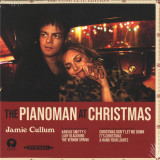
Multi platinum-selling musician and multi-instrumentalist Jamie Cullum today announces The Pianoman At Christmas - The Complete Edition. Due for release on 19th November via Island Records. The deluxe album completes last year’s critically acclaimed hit album The Pianoman At Christmas Part 1, with its Second Part - featuring 11 covers of classic Christmas songs, as well as two original songs, including lead single ‘Christmas Don’t Let Me Down’, out now.
Drawing from the past and inspired by the present, The Pianoman At Christmas - The Complete Edition sees Jamie team up with London jazz innovators Kansas Smitty’s, as well as composer and producer The Vernon Spring and acclaimed LA-based jazz singer Lady Blackbird to complete a piece of work that is imbued with seasonal sophistication. Alongside his two original tracks, Jamie breathes new life into classics such as ‘Winter Wonderland’, ‘Silent Night’ and ‘Frosty The Snowman’, ranging from ‘Amazing Grace’ to ‘Man With The Bag’ and ‘Sleigh Ride’. The Complete Edition will be released on double CD and double black vinyl formats, alongside a limited run of 180G Heavyweight coloured vinyl in red and gold.
Speaking on the release, Jamie said -
“I had a huge amount of fun creating part two of TPAC. Recorded live, all in the room together - it’s the party after the big show, with friends, drinks and some of the finest musicians on planet earth.”
Released almost a year to the day before The Complete Edition is due out, The Pianoman At Christmas featured 11 original songs played by 57 of Britain’s best musicians, recorded in Abbey Road’s famous Studio 2 and produced by Greg Wells whose The Greatest Showman soundtrack spent 28 weeks at number 1. The album sold over 37,000 copies, spending 6 weeks in the album chart and peaking at number 11. In December Jamie broke the Guinness World Record for the largest music lesson ever, when he held a virtual piano lesson for 2,282 people, teaching them the carol ‘In The Bleak Midwinter’ with special guests Robbie Williams, Sigrid and Dodie.
With 10 million album sales and over 890 million streams to date, Jamie is a celebrated musician the world over with loyal fans in every corner of the globe. With a career spanning over 20 years, his legendary live shows have seen him perform and work alongside artists as diverse as Herbie Hancock, Pharrell Williams, Kendrick Lamar and IDLES - Jamie writing on the latter’s album Ultra Mono. The success of Jamie’s major label breakthrough, Twentysomething in 2003 and its follow up Catching Tales saw him nominated for a BRIT, Grammy and numerous other awards around the world. In 2020 he won an Ivor Novello Award for his track ‘Age of Anxiety’, taken from his acclaimed 9th studio album Taller. In addition to his enduringly successful recording career, Jamie has also established himself as a multi-award winning music broadcaster; his BBC Radio 2 show celebrated its 11th year on air this year.
With her debut album Black Acid Soul earning critical praise, Lady Blackbird is a revelatory new talent with music that transcends the jazz scene through which the LA-based artist is rooted. Reflecting influences as varied as Billie Holiday, Gladys Knight, Tina Turner and Chaka Khan, with critics drawing comparisons to Adele, Amy and Celeste, Lady Blackbird’s distinct and beguiling voice is not one to be missed.
UK band Kansas Smitty’s have developed a musical voice wholly unique from what’s happening around them. They are led by band leader and producer Giacomo Smith who's cinematic compositions feature on their releases, most recently 2021's acclaimed Things Happened Here for Berlin based label !K7. In 2015 they launched their own east London venue and bar, of the same name, which became one of the conception points for the current UK jazz boom.
Londoner Sam Beste aka The Vernon Spring is a polymath in music who has production, writing and performance credits as eclectic as Amy Winehouse, Matthew Herbert, Kano, Joy Crookes, Beth Orton, Blood Orange, Gabriels and MF DOOM. Since 2019 he has been making waves with solo project The Vernon Spring, which foregrounds his rare capacity to hold sophistication and simplicity in the same hands through highly intimate muted-piano compositions and improvisations.
Very Tall marked the first recorded collaboration between Oscar Peterson and Milt Jackson. The two musicians were both highly regarded and successful jazz figures by 1961. Peterson had recorded innumerable albums with his own trio and backing such stars as Louis Armstrong, Lester Young, Ben Webster and Billie Holiday, to name just a few. Jackson had played with most of the great names in modern jazz and had been a founder of the Modern Jazz Quartet. Very Tall features Jackson as an added member of the legendary Peterson Trio with Ray Brown and Ed Thigpen.
d b1 JOHN BROWN’S BODY BATTLE HYMN
- A1: Pat Bio - Guide Us Jah
- A2: Don Bruce - Watiyo
- A3: Johnny Keslar - Wadada
- B1: Orits Williki - Fight The Fire
- B2: Majah Kungu - Wayo Nack In Town
- B3: Oby Onyioha - Raid Dem Jah
- C1: Georgy-Gold Owoghiri - Wonderful Holiday
- C2: B G. And Fibre - Drunken Driver (Dub)
- C3: Alphonsus Idigo - Mystic World
- C4: Sheila & Des Majek - Mother Nature
- D1: Jan Blast - Reggae Rigmarole
- D2: Alpha Kuffa - Messiah I
- D3: Bob Dazzy - Abandon Nation
A collection of fourteen digital reggae, deep roots and dub rarities from the Nigerian underground, spotlighting a time when Jamaican reggae entwined with Nigerian styles, politics and consciousness, creating a bridge between Lagos and Kingston. Fight the Fire is a companion piece to Soundway"s seminal "Doing it in Lagos" and "Nigeria Special" compilations, celebrating the innovation and musical experimentation of Nigeria in the 80s. Features rare tracks from key figures of the time including Oby Onyioha (with a crucial Burning Spear cover) and Orits Williki.
Holiday resort entertainer Tooper Keps takes a break from entertaining the professional leisure class, and reflects their own world back at them with an EP of otherworldly synths and eerie carnivalesque chansons.
Tooper Keps has fired up his trusty Yamaha PSR-11 and PSS-360 to write his first (and probably last) EP, condensing his favourite chord changes from years of distracting the retired and affluent. The result is a collection of floating song structures that revolve like fairground waltzes, punctuated by modulated effects, cowbells and Tooper’s own bitter tenor. Tapping into his inner goblin, he tackles themes such as property (as theft), Drexler’s gray goo problem, and the ‘merits’ of complaining about a system while also benefiting from it - a typical parasite’s paradox.
“1000 Guest Rooms” finds itself on location in luxury homes, cruise ships and holiday resorts, soaked in Tooper’s own self-loathing while casting a critical eye over the state of the world. While we hurtle towards a future that no one wants, “1000 Guest Rooms” is perhaps the best soundtrack we could hope for.
- A1: Demons In The Dark - Money Man & Key Glock
- A2: Magnum P.i. - Larry June
- A3: Rules - Sauce Walka (Feat. Bossman Dlow)
- B1: Let’s Go - Key Glock
- B2: Ballin - Lil Yee & Lil Pete
- B3: Grab Yo Skates - Babytron
- C1: Wave - Asake & Central Cee
- C2: Legacy - Babyface Ray & Doughboy Clay
- C3: On Point - Lucki
- D1: 2 Million Up - Peezy
- D2: Triangle Offense - Albee Al, Dave East, Millyz
- D3: Nothing Is Forever - Haarper
- D4: Player’s Holiday ‘25 - P-Lo, Larry June, Saweetie, G-Eazy, Larussell, Kamaiyah, Thuy, Ymtk
EMPIRE, the nation’s leading independent record label, recently teamed up with the NBA 2K video game to provide the soundtrack for Season 2 of its series in October 2024. The soundtrack was a natural pairing of the two iconic Bay Area based companies to push culture forward through music, sports, and gaming. The 2 LP Box set, which includes music from the likes of Larry June, Key Glock, Money Man, LUCKI, Asake & Central Cee, and more is housed in a premium box with glossy, hardwood floor print on the outside, and a basketball textured inner box will also include a mini-satin championship banner, a custom basketball keychain, and virtual currency for in-game purchases.
Custom outer box with high gloss print
Custom inner box with basketball texture and debossed print
1 Red Smoke Vinyl in jacket
1 Blue Smoke Vinyl in jacket
16.5” x 10.5” custom satin championship banner
Custom basketball keychain
35,000 Virtual Currency for in-game purchases
Featuring music from Larry June, Key Glock, Money Man, LUCKI, Asake & Central Cee, and more
Hamburg-born composer, pianist and producer Niklas Paschburg announces his latest project, 'Mexican Alps' EP due for release on July 11th. 'La Hormiga' is a rhythmic exploration of life in motion. Pulsing beats and textured synths create forward momentum, echoing the journey through the winding paths of Oaxaca's mountainous surroundings, where tradition and nature intertwine. 'Mexican Alps' combines inspirations gathered from the picturesque mountains of southern Mexico and the majestic peaks of the Swiss Alps. The EP is a mesmerizing journey through those landscapes; drawing inspiration from nature's grandeur and the vibrancy of Día de los Muertos, Niklas blends electronic textures, atmospheric samples, and innovative instrumentation to create a soundscape that is both grounding and transcendent. Without relying on his signature piano, this EP explores new creative territories, evoking deep emotional resonance and moments of introspection. -- If his first album, 'Oceanic '(2018), was conceived as an ode to the Baltic Sea, for his next release, 'Svalbard' (2020), produced with Andy Barlow of Lamb, the Hamburg-born musician, now a Berliner by adoption, sought refuge on an island in the Arctic Ocean, surrounded by snow, ice, darkness and breathtaking landscapes. This time, however, the setting is completely different. "It all started with an invitation to play at a festival in Oaxaca," Niklas says. "Since I had never been to Latin America, I began considering how to take advantage of the opportunity to stay for a while and write something there. I started looking for houses, but I quickly realized it was almost impossible to find one with a piano—it's not a common instrument in Mexican culture. I thought, why not try immersing myself in a writing process that doesn't involve one? I was so excited about the idea that I jumped in." 'Mexican Alps' is the result of a challenge in which Paschburg harnessed his collection of synths and effects to create an ambient-electronic record. On the one hand, an evolution of the work primarily carried out in 'Svalbard' and 'Panta Rhei'; on the other hand, an episode in its own right, distinct from its predecessors due to the absence of the piano and the greater role played by improvisation, by coincidence, it became his first work created without his signature instrument. "Not having the opportunity to write chords, harmonies, and everything else on the piano, I improvised more, focusing on the sound. This was the approach I used to record demos in Mexico, which I then brought with me to Switzerland, where I carried on working on the EP. In addition to my usual setup (the OB-6 by Dave Smith and Tom Oberheim and the OP-1 by Teenage Engineering, plus my ever-beloved Hohner accordion, inherited from my grandfather), I was also guided by the purchase of a new Moog Matriarch with a unique delay. All this helped me build the sound I had in mind: a spacious, abstract, 3D sound that is definitely immersive." He expands. It is an emotional landscape that translates into music. In some of the tracks, Paschburg has also included field recordings collected during the Día de los Muertos, a deeply felt Mexican holiday: "A great celebration, a colorful parade of skeletons, skulls, flowers, and decorated altars, so engaging and intoxicating that I felt compelled to use its sounds in my music." It was precisely from this blend of influences that the fourth track, "Oaxaca de Juárez", emerged—a single characterized by a catchy funk procession and enhanced by the guitar work of Tal Arditi, a rising European jazz artist and singer-songwriter based between Basel and Berlin. 'Mexican Alps' is his new calling card, featuring an enveloping sound crafted by Paschburg in collaboration with Gijs van Klooster, who mixed the EP in a studio specifically designed for Atmos music. Mastering was handled by Bo Kondren at Calyx Studio in Berlin.
MR. CHRISTMAS In the beginning there was White Christmas and the Christmas albums of Bing Crosby. Everything else came after and can hardly compete with that success. Bing Crosby‘s sig- nature song White Christmas is still the best-selling single of all time, with 50 million units sold. The song, composed by Irving Berlin, first appeared in Crosby‘s film Holiday Inn. The composition won the Oscar for Best Original Song at the 15th Academy Awards. The song was so successful that it topped the charts again year after year, 16 times in the USA alone. The same goes for Crosby‘s Christmas albums. The records, which have been repeated over the past 70 years, have accompanied many generations and have become an integral part of Christmas. Christmas without Bing Crosby, without White Christmas would be something like doing without a Christmas tree, mulled wine or presents. So let‘s rather not try it!
- Ete
- Kharita
- Baynana
- Mudun
- Haigazian (October 22)
- Burj Al Murr (October 25 To 27)
- Markaz Azraq (December 6)
- Markaz Ahmar (December 6 Suite)
- Al Hisar (December 8)
- Holiday Inn (January To March)
- Holiday Inn (March 21 To 29)
- Al Irth
Mayssa Jallad is a Beirut-based bilingual singer-songwriter, architectural researcher and teacher. Her work deals with the highly personal as well as the political, as with her first solo album "Marjaa: The Battle of the Hotels", which explores the histories of urban battles that occurred before she was born, during the Lebanese Civil War, through a collaborative musical and architectural lens. "(Marjaa) is, as one might expect, a sombre affair largely comprised of Jallad's delicate vocals backed by acoustic guitar and ethereal synthesizer. Elsewhere, co-composer and producer Fadi Tabbal adds the crackle of distant artillery and a ghostly wind between the high-rise blocks." - Daniel Spicer, Songlines, April 2023 "Historical trauma, strings, drones, metallophones and buzuks wrap around powerful stories and gossamer vocals on Lebanese singer's tender, intimate debut. With shades of Nico, Jarboe and Elizabeth Fraser, '80s' 4AD fans will rejoice." - Andy Cowan, MOJO `Marjaa_' (tr. `reference') combined Mayssa Jallad's two main vocations: music and urban research/architectural history. The album was co-written with Fadi Tabbal and based on Mayssa's Historic Preservation master's thesis (`Beirut's Civil War Hotel District: Preserving the World's First High-Rise Urban Battlefield'). The thesis examined a 5-month conflict that took place within Beirut's skyscraper-laden luxury hotel district of Minet El Husn near the start of the Lebanese Civil War. Addressing a post-war generation who have never been taught this difficult history, `Marjaa_' was an attempt to process trauma, and "a call to protest for the renewal, rather than the recycling of the political class that once destroyed the country and holds us, to this day, hostage of its violence". In 2013, Mayssa founded indie-pop band Safar with guitarist Elie Abdelnour, releasing debut album In Transit with Lebanese indie label Ruptured in 2017, and follow-up EP Studies of an Unknown Lover in 2019. Both albums were produced by Lebanese producer Fadi Tabbal at Tunefork Studios in Beirut. Mayssa's most recent multi-genre collaborations include "Madina min Baeed" (2022) with electronic musician/producer Khaled Allaf; "Bi Kheir" and "Fil Aatma" (2022) with indie supergroup Baada Ab (Dani Shukri, Ezra Tenenbaum and Omaya Malaeb), released by Thawra records and Found Sound Nation. Next is the Versions version of Marjaa, which sees Civilistjävel! (aka Swedish producer Tomas Bodén) apply a stripped, dub methodology to Mayssa's original rich stems, refracting the Arabic source through the hazy prism of Northern European electronica. 140gsm vinyl, jacket printed on 20pt board with aqueous gloss coating, with a 3.5mm spine and a black paper inner dust sleeve.
Civilistjävel! x Mayssa Jallad’s ‘Marjaa: The Battle of the Hotels (Versions)’ is a radical response to Mayssa Jallad’s 2023 original LP, a lyrical account of epochal events in Beirut at the dawn of Lebanon's civil war. ‘…(Versions)’ sees Civilistjävel! (aka Swedish producer Tomas Bodén) apply a stripped, dub methodology to Mayssa's rich stems, refracting the Arabic source through the hazy prism of Northern European electronica. Retaining ‘Marjaa…’s deep spatial framing and vaporous, shifting nature, traces are lifted and set down in a new landscape: a ghost of a ghost. Informed by Tomas' singular strand of ambient, minimalist, dub techno, ‘… (Versions)’ recalls the reductive, shimmering pulse of pioneering Berlin-based practitioners Basic Channel/Chain Reaction, but with the parameters stretched into the ether. Where versions typically focus on a rhythm, here the anchor is the tone and texture of Mayssa’s voice, around which a new world has been constructed. Disembodied and liminal, it conjures an eerie panorama that feels like a postscript to the original, further emphasizing the geopolitical events that have had such devastating effect in Mayssa’s homeland of Lebanon since that record’s release. ‘Marjaa…’ (tr. ‘reference’) combined Mayssa Jallad’s two main vocations: music and urban research/architectural history. The album was co-written with Fadi Tabbal and based on Mayssa's Historic Preservation master's thesis (‘Beirut’s Civil War Hotel District: Preserving the World’s First High-Rise Urban Battlefield’). The thesis examined a 5-month conflict that took place within Beirut's skyscraper-laden luxury hotel district of Minet El Husn near the start of the Lebanese Civil War. Addressing a post-war generation who have never been taught this difficult history, ‘Marjaa…’ was an attempt to process trauma, and “a call to protest for the renewal, rather than the recycling of the political class that once destroyed the country and holds us, to this day, hostage of its violence.” Often perceived as a mysterious, shadowy presence, Civilistjävel! has come increasingly to the fore in recent years through a consistently dazzling stream of records, released both anonymously and via Fergus Jones’ FELT imprint, often appearing with scant information and tracks for the most part untitled. Having featured tracks from ‘Marjaa…’ on mixes, and included the album in his picks of 2023, in early 2024 Tomas asked Mayssa to provide vocals for a track on his album ‘Brödföda’. Mayssa remembers, “Tomas asked me to choose one of the tracks he was working on. I was in Boston at the time, so I took a walk and chose a track. I wrote the lyrics at the public park, wondering if I was the only one around that was losing sleep over the genocide in Palestine and the war in South Lebanon. I went back to the apartment and recorded the vocals on my phone, while listening to the track on headphones. Tomas reworked it with the voice and sent it back. I liked it immediately.” Despite the geographical distance from Beirut to Uppsala, Sweden, where Tomas resides, Mayssa’s contribution sounds very much at home in Civilistjävel!’s atmospheric, contemplative sound-world. Tomas’ request was reciprocated by Mayssa soon after, resulting in the spectral, glassy ambience of ‘Etel, Kharita (Version)’. This was followed by an invitation to work on more tracks, which Tomas immediately embraced, intensively jamming out versions live to two-track tape in downtime between travelling. If not entirely dissimilar to his regular working practice, the immediacy of it was unusual. Much was improvised live with just a keyboard (not tethered to a grid), and a restricted set-up that largely forbade later edits - only the rhythm tracks are programmed. A sharp conceptual thinker and composer, Tomas takes creative liberties with Mayssa’s songs in a way that is deeply felt and sympathetically aligned, whilst unashamedly outside of the original context of the record. The voice is leaned into as an instrument, without the clear, specific details of language, and this axis provides an uncertain, amorphous footing - structure is often suggested or hinted at, before disappearing or collapsing into fog, and folding back into the message within the song. A somewhat unprecedented source for an album of versions, even those familiar with ‘Marjaa: The Battle of the Hotels’ may at points struggle to hear the songs these versions are rebuilt from, despite the vocal narratives remaining virtually intact. The light has shifted; eroded buildings are foregrounded; fragments of memories appear in chiaroscuro. Signs and signifiers have been replaced. Shorn of the original's warm guitar, ‘Baynana (Version)’ feels like an ominous visitation, the sun no longer visible. ‘Holiday Inn (March 21 to 29) (Version)’ is a molten, clattering invocation. The beat-less tracks nod towards the cold, otherworldly sound-scaping of late '90s isolationism. More propulsive and embodied, ‘Holiday Inn (January to March) (Version)’ and ‘Kharita (Dub)’ are strobing, iridescent techno - lithe, shifting and mutating with almost implausible finesse. A stunning addition to Civilistjävel!’s growing catalogue, ‘…(Versions)’ is a luminous counterpoint to ‘Marjaa…’, and a welcome reminder of how incredible that record remains.
VERVE ACOUSTIC SOUNDS SERIE: komplett analog von Ryan K. Smith bei Sterling Sound von den Originalbändern gemastert, QPR-Pressung (180 g), stabiles Tip-On-Gatefold (Stoughton Printing), wattierte Innenhülle, Gatefold Sleeve
Ein Klassiker des Vocal Jazz! ”All Or Nothing At All” - was für ein passender Titel! Denn für Billie Holiday, deren Karriere sich im Sinkflug befand, ging es in gewisser Weise wirklich um alles oder nichts. Es war das letzte Album, das Norman Granz von der Sängerin auf seinem Label Verve veröffentlichte. Entstanden waren die Aufnahmen im August 1956 und Januar 1957 bei denselben Sessions wie die Holiday-Klassiker ”Body And Soul” und ”Songs For Distingué Lovers” und übertreffen diese nach Ansicht heutiger Kritiker sogar.
• 180 GRAM AUDIOPHILE VINYL
• INCLUDES INSERT WITH COMIC STRIP AND PRINTED INNERSLEEVE WITH PHOTOS AND TEXT
• LIMITED EDITION OF 500 COPIES ON TURQUOISE VINYL
The third Supersister album is a big favorite with prog fans because it provides a good representation of the group’s combination of Caravan-inspired jamming and Zappa-esque humor.
Pudding en Gisteren is available as a limited edition of 500 copies on turquoise vinyl and includes an insert and printed innersleeve.
- 1: New Snow
- 2: Crash Course Christmas
- 3: Magnetic Field
- 4: I Do
- 5: First Winter
- 6: Back In Town
- 7: Turtle Neck
- 8: Colibri Heart
- 9: The Day Before The Day
- 10: This Christmas / Next Christmas
The Norwegian indie-pop super-group with members from Making Marks, The Little Hands of Asphalt, Mildfire, Flight Mode and Elva return with a third album of original Christmas songs.
Get into that alternative, Nordic Christmas spirit! Christmas III at its heart is an alt-Christmas album: the songs are firmly rooted in December’s festivities, albeit not usually relying on the season’s traditional reference points. The songs hone in on the more ambivalent sides of Christmas - family, customs and the passing of time - with a keen eye towards the holidays’ most obvious function in countries close to the Artic circle: getting through the cold and dark times to celebrate the winter solstice and the turning of the sun. Drawing from Sufjan Stevens’ epic indie Christmas compendium and Phil Spector’s wall of sound classic A Christmas Gift From You, Christmas III is built on shimmering guitars, snow filled piano lines, gentle strings, springy vocals and dynamic drums - all steadily conducted by Sunturns’ own Sjur Lyseid (Flight Mode, The Little Hands of Asphalt) in the producer’s seat at his Globus studio in Oslo. With 3 songwriters (Ola Innset, Einar Stray & Sjur Lyseid) contributing to Christmas III, there’s an ever shifting sense of reflections. Parenthood and the struggles of the dark Norwegian winter is behind Ola’s track First Winter. “Sometimes I feel bad about bringing children into such a difficult world. Not so much with respect to daylight and the seasons, they’re just going to have to learn how to live with it, but with many other things – like war, poverty, climate change and even just death.” Back In Town might have been inspired by a discussion over whether Thin Lizzy’s “The Boys Are Back In Town” is a Christmas song or not, but it’s written about his youngest daughter Klara, to his elder daughter, about taking holidays with your family in a town you once lived. Einar pulls in Phoenix and Mew by the way of Jesus and Mary Chain on Crash Course Christmas, resulting in a seasick wave of a pop tune. “It’s a song about the guilt of not prioritizing your relationships. It’s been year of rainchecks and Christmas finally gives you some time to reflect. You’ve experienced so much and changed so much as a person that you almost forget your origins. Coming home for Christmas can then be a ritual of finding your way back to what you left behind." Drawing on the knitwear from the film Love, Actually, Turtle Neck, taps into the Backstreet Boys by way of Mac Demarco, with a sneaky reference to the legendary Norwegian Christmas hit En Stjerne Skinner I Natt. Album closer This Christmas / Next Christmas leans in on the hook for the Norwegian Christmas TV show Jul i Blåfjell, a multi-generational seasonal staple (essentially a daily children’s advent calendar kids show). “The song is about your parents ageing and needing your help – possibly really far away - while at the same time having your own children to take care of”. The cover artwork is a homage to Christmas dress codes for Norwegian men. Suits and shirts are a rarity in day to day life, but there are a handful of occasions that require some form of formal attempt at a suit: New Year’s Eve, National Day, weddings & funerals, and Christmas Eve: resulting in various degrees of sartorial elegance on the day (and on this instance, a hot summer’s day stifling the Christmas vibes, with ambiguous apparel instructions ahead of the photoshoot!).
Merry Christmas! Sunturns are Ola Innset – vocals, guitars, banjo. Sjur Lyseid – vocals, guitars. Einar Stray – vocals, keyboards, guitars. Eivind Almhjell – guitars, bass. Simen Herning – guitar. Jørgen Nordby – drums.
signed by Marshall Allen & limited to 500
Auf „Lights On A Satellite“ ist der unnachahmliche Groove dieses Ausnahmeorchesters in der vollen Besetzung von 24 Musikern zu hören, aufgenommen in einer Qualität, die alle Stimmen zur Geltung kommen lässt und die Musik in ihrer ganzen Schönheit präsentiert.
Mit diesen Vorgaben und 24 Musikern als Produzent ins Studio zu gehen, war ein Wagnis. Frank Kleinschmidt von IN+OUT Records hat mit „Lights On A Satellite“ seiner über 40-jährigen Verbundenheit mit dem Sun Ra Arkestra den innigsten Ausdruck verliehen. Was für ein großartiges Projekt!
The last couple of years have seen a renaissance for West Coast singer-songwriters. LA-based youngsters such as Drugdealer and Sylvie have attracted considerable attention releasing warm and mellow records tonally reminiscent of the early 70s. Most fans of this new/old sound are unaware of Bart Davenport's early explorations in the same sonic territory. His now 20-year-old "Game Preserve"album should gain an appreciative new audience with its first ever vinyl release.
In the year 2000, Bay Area troubadour Bart Davenport and several other musicians were recruited by a major tech corporation in Seattle to work on an algorithm-based music matching/search engine. It was what looked like the beginning of a promising career. After a year, however, the project was shelved. Bart and his colleagues were laid off with a healthy severance package... on the 12th of September, 2001. Not only had the musician's life changed, so had the world. Rather than blow the money on a holiday or new car, Bart knew he had to make a record. A proper album that meant something.
Back in Oakland, he entered Wally Sound Studios with former Kinetics bandmate Jon Erickson at the controls, and a swathe of talented local musicians. "With Game Preserve," Bart explains, "Jon and I really wanted to knock it out of the park. I wanted to utilize people from my old bands like Loved Ones drummer John Kent. I also invited my newer indie-pop friends from Call & Response, and a young Nedelle Torrisi. Harmony singing by The Moore Brothers was an essential ingredient on Game Preserve as well."
Both Erickson and Davenport fondly recall growing up in households where the music of The Carpenters, Joni Mitchell and The Eagles soundtracked their young lives. By the early 00s they were ready to reconnect with what is often referred to as the "Laurel Canyon" sound. "I'd buy used tapes at garage sales and play them in the car. "Ladies Of The Canyon" by Joni and Jackson Browne's first album were both in heavy rotation. Jon Erickson was getting deeper into the Steely-Mac-Doobie yacht-rock sound in earnest. A certain amount of childhood nostalgia led a lot of us back to that part of the 70s. I'd flirted with classic soft-rock on my first album, but that record was pretty scattered esthetically. I wanted my next one to be more focused. Jon and I made some ground rules: no electric guitars (except on 'Bar-Code Trees'). No synths. Most importantly, all the songs have an air-tight, super dead, close mic'd drum sound. Putting these sorts of limitations on the sessions will give your record a specific quality. In the case of "Game Preserve"it's mostly about tight drums, acoustic instruments and analog production. We used a 24-track, two-inch tape machine for tracking, then ran the mixes through an analog board straight to a 1/4 inch master tape."
While the album's sonic palette may be firmly planted in 1970, Davenport's songwriting covers a sizable landscape of moods and reflections. From the quasi-flamenco intro of 'Sweetest Game' to the somber Wurlitzer of 'Nowhere Left To Go', to the 12-string shimmer of 'Intertwine', "Game Preserve" tells a story of young love, lost innocence and redemption, crossing borders and oceans along the way.
Released in 2003 on family-run Oakland label Antenna Farm, the ultra-analog sounding "Game Preserve" was only made available on digital formats, including CD. Copies were later pressed by labels in Germany and Spain; the latter being one country the album actually did well in, establishing Bart Davenport with a small but loyal fanbase he still enjoys today. Two European tours as support for Kings of Convenience also helped gain a foothold on the continent. Back in the US, however, Davenport and his sophomore album remained quite obscure.
Limited promotion meant it did little, but for the music lovers that heard it, the album undoubtedly remains a classic of the era, deserving far more. Twenty years on, it now finally receives its vinyl debut. "I personally think it holds up well," says Bart of the album two decades later. "The idea was to make something that could be an homage to late 60s/early 70s West Coast pop but hopefully timeless as well. Years on, I hear it as just that. It was a colorful and brief period of my life that felt at times like it could last forever. I discovered the joy of working in a proper studio with a perfect cast of characters. I'm still very close with all these people and still play music with many of them."
- 1: Halloweenie Vi: Possess Me
- 2: Halloweenie V: The Moss King
- 3: Halloweenie Iv: Innards
- 4: Halloweenie Iii: Seven Days
- 5: Halloweenie Ii: Pumpkin Spice
- 6: Halloweenie
Coloured Vinyl[38,87 €]
Pop disruptor Ashnikko (she/they) has announced Halloweenie I-VI , a celebration of their Halloweenie series.
Over the past 5 years, Ashnikko has made it a tradition to release a Halloween track in celebration of their favourite holiday - something that has quickly become a fan-favourite. This year’s instalment sees Ashnikko deliver her haunting lyrics with appropriate venom over a backdrop of heavy drums and spiralling guitar riffs.
The special edition vinyl EP release Halloweenie I-VI will include all previous releases Halloweenie, Halloweenie II: Pumpkin Spice, Halloweenie III: Seven Days, Halloweenie IV: Innards, Halloweenie V: The Moss King alongside new single Halloweenie VI: Possess Me and will be printed on an Oxblood Red vinyl, of course, in a pop-up gatefold sleeve.
Pop disruptor Ashnikko (she/they) has announced Halloweenie I-VI , a celebration of their Halloweenie series.
Over the past 5 years, Ashnikko has made it a tradition to release a Halloween track in celebration of their favourite holiday - something that has quickly become a fan-favourite. This year’s instalment sees Ashnikko deliver her haunting lyrics with appropriate venom over a backdrop of heavy drums and spiralling guitar riffs.
The special edition vinyl EP release Halloweenie I-VI will include all previous releases Halloweenie, Halloweenie II: Pumpkin Spice, Halloweenie III: Seven Days, Halloweenie IV: Innards, Halloweenie V: The Moss King alongside new single Halloweenie VI: Possess Me and will be printed on an Oxblood Red vinyl, of course, in a pop-up gatefold sleeve.
Black[25,17 €]
"All LP configurations will be housed in a gatefold with a printed inner sleeve and the inside of the gatefold will have a Candyland-type Christmas game. Sweet December features Kelly Clarkson
Inspired by family traditions and the warmth that surrounds Christmas, Merry Christmas (Welcome to the Family) is produced by Ian Miller and features duets with Kelly Clarkson and Idarose. The LP version of the record has a Christmas game on the inside of the gatefold with accompanying gamepieces and a virtual die, inspiring families everywhere to create a new tradition of a “vinyl + family game night” during the holidays."
Evergreen[25,17 €]
"All LP configurations will be housed in a gatefold with a printed inner sleeve and the inside of the gatefold will have a Candyland-type Christmas game. Sweet December features Kelly Clarkson
Inspired by family traditions and the warmth that surrounds Christmas, Merry Christmas (Welcome to the Family) is produced by Ian Miller and features duets with Kelly Clarkson and Idarose. The LP version of the record has a Christmas game on the inside of the gatefold with accompanying gamepieces and a virtual die, inspiring families everywhere to create a new tradition of a “vinyl + family game night” during the holidays."
VERVE ACOUSTIC SOUNDS SERIE: Stereo, komplett analog von Ryan K. Smith bei Sterling Sound von
den Originalbändern gemastert, QPR-Pressung (180 g), stabiles Tip-On-Gatefold (Stoughton Printing),
wattierte Innenhülle.
Erstmals in audiophilem Glanz: ”Baker’s Holiday”, Chet Bakers swingende Hommage an Billie Holiday
von 1965. Das Album enthält eine Reihe von Songs, die Baker noch nie zuvor eingespielt hatte und präsentiert seine unverkennbare Trompete und auf vier Titeln auch seinen charakteristischen Gesang. Unterstützt
wird er von einer Saxofon-Sektion und einer vierköpfigen Rhythmusgruppe, zu der auch Pianist Hank Jones
gehört. Die farbenfrohen Arrangements stammen von Jimmy Mundy.
‘Feels’ is Animal Collective’s sixth studio album, originally released in 2008. The album features all four band members - Avey Tare, Deakin, Geologist and Panda Bear.
‘Sung Tongs’ is the band's fifth studio album. Originally released in 2005, the album features Avey Tare and Panda Bear.
Both albums available on 140g black double vinyl in poly inner sleeves and gatefold jackets with matte UV finish, plus digital download card.
Limited to 350 copies
Stop what you're doing and give us your full attention because Hell Yeah mainstay My Friend Dario's new album Senza Estate is going to define the sound of summer 2024. It's an eclectic eight-track collection that has something for everyone and is inspired by dreamy Italian soundtrack composers Piero Piccioni and Umiliani.
Curveball Italian talent Dario is a real dance floor don who collides acid, nu-disco, breakbeat and electro. His take on Balearic is unique and always sends dance floors wild, as proven with his last outing Food For Woofers Vol 2 earlier in the year. His new album is the sound of life by the Mediterranean, Balearic audio pleasure for daytime dreaming and nighttime dancing with vocal tracks written and performed by the UK's Space Echo Records associate Darene Obika.
Dario hails from Catania on the island of Sicily and his inspiration for Senza Estate, which translates as 'without summer,' was an imaginary holiday, weekends at the seaside, car journeys in the sun, relaxing sunsets and late-night dancing. 'For five years, I worked in a shop six days a week so despite living on a Mediterranean island I could never enjoy these things. Instead, I locked myself in the studio and jotted down the ideas, sensations, melodies and rhythms I had about another lost summer.'
'Keep On Cruising' is a downtempo opener with innocent synths that are filled with hope and promise for the warm months ahead. 'Zingarella' is a wide open sea view with wispy pads, seductive flutes and jazzy melodies that bristle with life and the tropical title cut gets more dancey on shuffling broken beats and radiant synth glows. There's a seductive laid-back cool to the tumbling keys of 'Marittimo' and 'What You Need' is a horizontal groove with loved-up vocals, 'Falò' pairs sensual acoustic guitar with work with pillowy drums and 'Il Pianeta Proibito' layers up sci-fi synths and stuttering bass into a bubbly sound that leads to cosmic take-off. 'Acid Panorama' is the melancholic closer which hints that the summer sun is setting one final time after weeks of carefree fun.
But the good news is, you can repeat the joys of My Friend Dario's masterful Senza Estate over and over again.
- 1: Kaleidoscope
- 2: Please Excuse My Face
- 3: Dive Into Yesterday
- 4: Mr. Small, The Watch Repairer Man
- 5: Flight From Ashiya
- 6: The Murder Of Lewis Tollani
- 7: (Further Reflections) In The Room Of Percussion
- 8: Dear Nellie Goodrich
- 9: Holidaymaker
- 10: A Lesson Perhaps
- 11: The Sky Children
- 12: Kaleidoscope (Earliest Known Recorded Version)
- 13: Dream For Julie (Earliest Known Recorded Version)
Look through any self respecting quality music publication or web site and peruse through a list of the most important and influential psychedelic albums of all time and you can be pretty sure to see KALEIDOSCOPE'S 'Tangerine Dream' ranked high up there, along with your 'Sgt Peppers', your 'Forever Changes' 'Satanic Majesties Request' 'Axis Bold As Love' 'Odyssey & Oracle' and 'The Psychedelic Sounds of the 13th Floor Elevators'........
This seminal album of quintessential English psychedelia is one of the most highly prized artifacts that define the psychedelic genre and like some of the most highly collected and prized albums from that time, mint copies can now go for way in excess of £1000.
Thus given the record`s rarity & collectability, matched to the recent explosive interest in all things psyche, garage & underground, you would be excused for thinking that this slice of perfect late 60's progressive underground pop would have been given the full reissue and remastering treatment already. Surprisingly though, you would very much be mistaken. But to those of you who know the checkered history of Kaleidoscope this will perhaps come as no surprise!!!
Thankfully after 3 years of painstaking detective work, chance encounters with Universal archivists, heavy negotiations with major label legal executives and some good fortune, we are delighted to announce that this record will finally not only get its first proper official reissue in over 5 decades, but thanks to a lot of pure persistence it can now be presented to its listeners in the manner in which it was supposed to have been heard, following the discovery of a batch of the original master tapes that were languishing in the vaults of Universal that have laid largely unheard for 50 years!
Furthermore following a couple of shared festival billings at Austin and Copenhagen Psyche Festival, with another legend of the scene, Mr Pete Kember aka SONIC BOOM of SPACEMEN 3 fame, Sonic has been holed up in his Lisbon studio, painstakingly remastering the album from the original ¼' tapes.
The remastering of these ¼' tapes though is only part of the story, as along with the discovery of these a significant number of ½' tapes and other material was also discovered which is penned for a future release when the band`s entire works will be presented in a definitive boxset of all four of their studio albums (including all their Fairfield Parlour recordings) plus BBC Sessions, live recordings, alternative takes, new mixes, unreleased tracks and material from the band`s own archive including pre-Kaleidoscope demos when they were known as both The Sidekicks and The Key.
For now though, this 50th Anniversary release comes with a flavor of what is to come, with the inclusion of two unreleased out-takes tracks from 1967 on a bonus 7' housed in a replica original paper thin Fontana sleeve which, includes an early version of the track that gave the band their name, the suitably titled: 'Kaleidoscope'. Whilst the flip presents an alternative earliest known recorded version of the album's follow-up single: Dream For Julie'.
The album itself, has been cut onto 180g heavyweight vinyl, housed in a deluxe high-end gatefold tip-on sleeve with the lyrics printed and new artwork. The first 1000 copies of the album will be hand numbered by the band & pressed on 'Tangerine' orange vinyl housed in an inner sleeve with attractive new artwork + download code.
- A1: Thelonious Monk - Straight, No Chaser
- A2: Amy Winehouse - What Is It About Men
- A3: Amy Winehouse - Stronger Than Me
- A4: Amy Winehouse - I Heard Love Is Blind
- A5: The Specials - Ghost Town
- A6: Amy Winehouse - Know You Now
- A7: Little Anthony & The Imperials - I'm On The Outside (Looking In)
- B1: The Shangri-Las - Leader Of The Pack
- B2: Billie Holiday - All Of Me
- B3: The Shangri-Las - Dressed In Black
- B4: Donny Hathaway - I Love You More Than You’ll Ever Know
- B5: The Libertines - Don't Look Back Into The Sun
- B6: Amy Winehouse - Fuck Me Pumps
- C1: Tony Bennett - Body & Soul
- C2: Amy Winehouse - Back To Black
- C3: Amy Winehouse - Valerie (Live Lounge Version)
- C4: Minnie Riperton - Les Fleurs
- C5: Willie Nelson - That’s Life
- C6: Dinah Washington - Mad About The Boy
- C7: Amy Winehouse - (There Is) No Greater Love
- D1: Amy Winehouse - Me & Mr Jones
- D2: Amy Winehouse - Love Is A Losing Game
- D3: Amy Winehouse - Rehab
- D4: Sarah Vaughan - Embraceable You
- D5: Amy Winehouse - Tears Dry On Their Own
- D6: Nick Cave – Song For Amy
Black LP[25,63 €]
The official soundtrack release to the new film of Amy Winehouse, BACK TO BLACK, releasing Spring 2024. Amy Winehouse is widely considered as one of the greatest artists in recent history, selling more than 30 million records worldwide. Her acclaimed self-produced 2006 album Back to Black, propelled her to global stardom, going on to win a (then) record breaking 5 Grammy Awards, including Record Of The Year and Song of The Year for hit single Rehab. Releasing on 140g 1LP Black vinyl, the tracklist comprises a carefully curated highlights collection of Amy's original recordings and tracks from her idols, such as The Shangri-Las, Billie Holiday and Dinah Washington, that are featured in the film, plus a new original track sung by Nick Cave. The vinyl product is housed in a single sleeve with printed inners featuring a personal note from director Sam Taylor-Johnson.
- A1: Amy Winehouse - What Is It About Men
- A2: Amy Winehouse - Stronger Than Me
- A3: Amy Winehouse - Know You Now
- A4: The Shangri-Las - Leader Of The Pack
- A5: Billie Holiday - All Of Me
- A6: Amy Winehouse - Back To Black
- B1: Minnie Riperton - Les Fleurs
- B2: Dinah Washington - Mad About The Boy
- B3: Amy Winehouse – Love Is A Losing Game
- B4: Sarah Vaughan Featuring Clifford Brown - Embraceable You
- B5: Amy Winehouse - Tears Dry On Their Own
- B6: Nick Cave – Song For Amy
Black 2LP[31,51 €]
The official soundtrack release to the new film of Amy Winehouse, BACK TO BLACK, releasing Spring 2024. Amy Winehouse is widely considered as one of the greatest artists in recent history, selling more than 30 million records worldwide. Her acclaimed self-produced 2006 album Back to Black, propelled her to global stardom, going on to win a (then) record breaking 5 Grammy Awards, including Record Of The Year and Song of The Year for hit single Rehab. Releasing on 140g 1LP Black vinyl, the tracklist comprises a carefully curated highlights collection of Amy's original recordings and tracks from her idols, such as The Shangri-Las, Billie Holiday and Dinah Washington, that are featured in the film, plus a new original track sung by Nick Cave. The vinyl product is housed in a single sleeve with printed inners featuring a personal note from director Sam Taylor-Johnson.
"Holiday for Skins Vol. 2" is a percussion-driven jazz album led by Art Blakey, recorded in 1958. Featuring master percussionists like Ray Barretto and Sabu Martinez, the album dives into Afro-Cuban and Brazilian rhythms, interwoven with the Jazz Messengers' expertise. This captivating collection highlights Blakey's innovative exploration of diverse beats, creating a rhythmic feast that showcases his profound influence on the fusion of percussion and jazz.
"Holiday For Skins Vol. 2" by Art Blakey includes the following tracks: "Dinga" and more.
Marjaa: The Battle of the Hotels” is a concept album born of the idea of merging singer & songwriter Mayssa Jallad’s two vocations: music and urban research/architectural history. Written in collaboration with producer Fadi Tabbal, the music builds upon Tabbal’s spatial approach to sound and Jallad’s research on Beirut’s Hotel District. The album is a reference to Jallad’s Historic Preservation master's thesis, in which she detailed the history of the “Battle of the Hotels”, a 5-months battle that took place in Beirut at the beginning of the Lebanese Civil War, from October 22nd, 1975 to March 29th, 1976. Jallad saw architecture as a main protagonist of the battle, as she discovered it was the first high rise urban battle in the world. The close of the battle resulted in the 15-year Green Line, an urban rift which split Beirut into “East and West”, restricting movement and communication and creating a violent divide that still resonates today. The album comprises two parts. Part A: Dahaliz, is a stroll in the city, where Jallad tries (and fails) to follow an old map. Musician Youmna Saba is a companion in this journey of remembering the once winding corridors (“Dahaliz”) of the city, destroyed by new developments since the 1960s. Empty skyscrapers propel her onto a past filled with the violence of snipers, and a present filled with the glamorous injustice of empty luxury real estate endorsed by powerful warlords-turned-politicians. In Part B: Maaraka, Jallad inhabits the building of the Battle of the Hotels, as its events unfold. She calls the fighting militias the Blues and Reds, respectively the Lebanese Front (Christian Nationalists) and the Lebanese National Movement (Pro-Palestinian leftists), leveling the playing field, and drawing a map of the battle through songwriting. Sary Moussa produces the conclusion of the battle in “Holiday Inn (March 21 to 29)”, which ends with the ultimate severance of the city of Beirut. The music caters to post-war youth who have never been taught this difficult history. Once we consider the “Battle of the Hotels” as our common heritage, it provides an opportunity to teach the value of civil peace. It is also a call to protest for the renewal, rather than the recycling of the political class that has once destroyed the country and holds us, to this day, hostage of its violence. Limited edition of 300 copies. 140gsm vinyl pressed at Microforum (Canada).
Rival Sons kündigen neues Album " LIGHTBRINGER " an Das Pendant zu " DARKFIGHTER " erscheint am 20. Oktober
Nach Regen kommt Sonne, auf Nacht folgt Tag - und wer erfolgreich die Dunkelheit bekämpft hat, bringt das Licht: Gut zwei Monate nach dem Album " DARKFIGHTER ", das in die deutschen Top 20 kam, haben Rival Sons mit " LIGTHBRINGER " ihre zweite LP des Jahres 2023 für den 20. Oktober angekündigt.
Wie der Titel schon suggeriert, handelt es sich dabei um ein Schwesteralbum des Vorgängers.
Über " LIGHTBRINGER " sagt Scott Holiday, Gitarrist der zweifach Grammy-nominierten Band aus Kalifornien: " Wenn man zwei Alben direkt hintereinander macht, gibt es viele Dinge zu bedenken. Die erste Platte muss genug Schlagkraft und haben und einen inhaltlich so abholen, dass man mit dem zweiten Teil einen noch größeren
Aufschlag machen kann."
" DARKFIGHTER " und " LIGHTBRINGER" entstanden als Teil derselben Sessions im Verlauf des Jahres 2021.
An ihrer Seite einmal mehr: Ihr angestammter Kreativpartner und langjährige Producer Dave Cobb. Als " DARKFIGHTER " Anfang Juni erschien, waren sich die Kritiker:innen in ihrem Lob einig: " DARKFIGHTER hat das Zeug zu Rival Sons? Meisterwerk", jubelte Classic Rock, und das GLIDE Magazine schwärmte: "
DARKFIGHTER ist ein sehniges Hardrock-Album, das alle Stärken von Rival Sons zu einem kurzen Angriff verdichtet."
- 1: A Handful Of Summer
- 2: The Summer Isles (Sunrise)
- 3: Fairy Falls
- 4: I Just Love You
- 5: Our Time
- 6: Suburban Pines
- 7: Samalaman Bay
- 8: Notes From A Holiday
- 9: Arcadia
- 10: Letter To The Boy
- 11: Childhood
- 12: Let It Be A Long Time
- 13: Leave That Light On
- 14: Remember Fall In Montreal
- 15: The Summer Isles (Sundown)
Der britische Folk-Singer/Songwriter Roo Panes kündigte sein neues Album 'The Summer Isles' dieses Jahr mit ersten Konzerten an namhaften Orten in London (Union Chapel), Amsterdam (Paradiso) und Berlin (Heimathafen) an. Zu Panes' durchdachtem Gitarrenspiel gesellen sich himmlische Harmonien und klangvolle Strukturelemente, die sich mühelos zu stimmungsvollen Bildern verbinden, während Roo von Schätzen, Jacarandas, unberührten Blumen und ruhigen Meeresnächten singt. Durchweg sicher und atmosphärisch, trägt die klare Produktion des Albums zur natürlichen Thematik bei.
- 'Mit seiner grandiosen Gitarrentechnik verzaubert er die Ohren, mit den Texten die Herzen der Hörer*innen. Der Aufbau und die Harmonik seiner Songs stammen nicht selten aus der klassischen Musik.' - heimathafen-neukoelln.de
- A1: Nobody Like You
- A2: Once In A While
- A3: Maybe I'm A Fool
- A4: Muddy Water
- A5: Bill Bailey, Won't You Please Come Home? (Alternate Version)
- A6: Hard Times (No One Knows Better Than I) (No One Knows Better Than I)
- A7: Today I Sing The Blues
- A8: Won't Be Long
- B1: Nobody Knows The Way I Feel This Morning
- B2: Evil Gal Blues
- B3: Lee Cross
- B4: Walk On By
- B5: I Wonder (Where You Are Tonight) (Where You Are Tonight)
- B6: God Bless The Child
- C1: Blue Holiday
- C2: Looking Through A Tear
- C3: Tiny Sparrow
- C4: Here Today And Gone Tomorrow
- C5: Little Brown Book
- C6: Without The One You Love
- C7: This Bitter Earth
- D1: Just For The Thrill
- D2: Skylark
- D3: Skylark (Alternate Version)
- D6: Drinking Again
- E1: Laughing On The Outside (Crying On The Inside) (Crying On The Inside)
- E2: What A Difference A Day Makes
- E3: Soulville
- E4: You'll Lose A Good Thing
- E5: Take A Look
- E6: Cry Like A Baby
- E7: I Wish I Didn't Love You So
- F1: Only The Lonely
- F2: People
- F3: Mockingbird
- F4: Until You Were Gone
- F5: My Coloring Book
- F6: Try A Little Tenderness
- D4: Trouble In Mind
- D5: Running Out Of Fools
Before Aretha Franklin rose to fame, she was signed to Columbia Records. This 3LP compilation album is a collection of some of Aretha's most notable songs during her time at Columbia from 1960 to 1965. The Queen in Waiting highlights Franklin's jazz and big-band recordings, and includes the songs "Won't Be Long", "Walk On By", "Today I Sing The Blues" and "Try A Little Tenderness" a.o.
The Queen in Waiting: The Columbia Years 1960-1965 is available as a 3LP limited edition of 2000 individually numbered copies on gold & black marbled vinyl and comes with three printed inner sleeves.
The Origins of Power Pop.
Remastered and pressed on Gold Vinyl. Includes printed inner sleeve.
In these songs you’ll find the DNA of The Direct Hits. Although very Elvis Costello like in both style and vocal delivery, these early recordings, dating from 1979 show a remarkable pop sensibility that had come on leaps and bounds since the release of the band’s first single, the now highly sought after ‘Fashion Plague’ b/w ‘Cheam’ released a year prior to these being recorded. Songs like ‘We broke up today’ have all the hallmarks of classic merseybeat, while out and out power pop like ‘Holiday Shots’ and ‘Fool to fall in love’ encapsulate perfectly the sheer exuberance of the genre.
More than a few steps ahead of several of their contemporaries, the band’s built in tunesmiths Buckmaster and Swan were writing catchy songs that carried a powerful punch performed with the energy and excitement of the period. The Exits left behind a wonderful set of recordings that are worthy of a comprehensive vinyl retrospective release,
These recordings first saw the light of day on a CD only release back in 2007 when Cherry Red released the CD ‘The Legendary Lost Exits album’ through its Rev-Ola offshoot. Reportedly the band members were disappointed with the overall mix on the finished release for being a little Lo-Fi . There are no such issues with this specially remastered version for vinyl. The tracks sound fresh, punchy and full of annoyingly great hooks! We are delighted to bring you yet another great addition to our catalogue of long since undisturbed sleeping giants, the Exits, and their Legendary Lost album!
The Infamous Stringdusters aus Nashville gelten als eine der besten und innovativsten Bluegrass-Bands unserer Zeit, sie traten mit Dolly Parton, Earl Scruggs und Bobby Osborne auf, belegten mehrmals die #1 der US-Bluegrass-Charts und erhielten 2018 sogar einen Grammy Award für das beste Bluegrass-Album. Nun veröffentlichen sie das Weihnachtsalbum "Dust The Halls" mit 10 zeitlosen Xmas-Klassikern in ihrem unverwechselbaren, groovy Style.
"With a nod to the past and a firm foot down on the gas toward the future, the 'Dusters... don't leave bluegrass behind, they're stretching it from within." - New York Times
- A1: It’s The Most Wonderful Time Of The Year
- A2: Have Yourself A Merry Little Christmas
- A3: Christmas In New York
- A4: I’ll Be Home For Christmas Featuring Jonathan Groff
- A5: Do You Want To Build A Snowman?
- A6: Rockin’ Around The Christmas Tree
- B1: Silent Night
- B2: White Christmas Featuring Darren Criss
- B3: Silver Bells
- B4: Angels We Have Heard On High Featuring Cynthia Erivo
- B5: O Holy Nigh
Ever spent Christmas in New
York City? It’s pure magic…the
department store decorations,
the nip in the air putting color in
the cheeks of eager shoppers, the
general spirit of bonhomie that
pervades the street and subway,
and—if you’re lucky—the silent
beauty of a fresh snowfall reflecting
in the streetlights. Having grown
up in New York, Lea Michele knows
well just how spectacular New York
can be during the holiday season;
and on this, her Top 40 2019
album, the Glee star (currently
playing Fanny Brice in Funny Girl on Broadway)
captured a sleigh-full of that Yuletide joy. The centerpiece of the
record is “Christmas in New York,” an original that, in her words,
“paints this beautiful picture of New York, but it also is really about
what it means to be with your family and friends and engaged in that
holiday spirit.” The rest of the record, which is produced by Glee
producers Alex and Adam Anders, is equally transcendent, featuring
duets with fellow Glee stars Jonathan Groff (the voice of Kristoff
in Frozen) and Darren Criss, plus a showstopping vocal display on
“Angels We Have Heard on High” with Cynthia Erivo. For its vinyl
debut, Christmas in the City comes to you in a gatefold album jacket
containing a printed inner sleeve featuring beautiful shots of Lea
spreading some Christmas cheer. A snow white vinyl pressing limited
to 1500 copies…Merry Christmas!
- A1: Rock This Mother
- A2: Talk To Me Girl
- A3: You Can Find Me
- A4: Check This Out
- A5: Jesus Going To Clean House
- A6: Hope You Understood
- A7: Is It What You Want
- A8: Love Is Everlasting
- A9: This Is Hip-Hop Art
- A10: Opposite Of Love
- A11: Do You Know What I Mean
- B1: Saving All My Love For You
- B2: Look Out Here I Come
- B3: Girl You Always Talking
- B4: Have A Great Day
- B5: Take My Hand
- B6: I Need Your Love
- B7: Your Town
- B8: Talk Around Town
- B9: Booty Head/Take A Little Walk
- B10: I Love My Mama
- B11: I Never Found Anyone Like You
Vinyl LP[23,49 €]
As the sun sets on a quaint East Nashville house, a young man bares a piece of his soul. Facing the camera, sporting a silky suit jacket/shirt/slacks/fingerless gloves ensemble that announces "singer" before he's even opened his mouth, Lee Tracy Johnson settles onto his stage, the front yard. He sways to the dirge-like drum machine pulse of a synth-soaked slow jam, extends his arms as if gaining his balance, and croons in affecting, fragile earnest, "I need your love… oh baby…"
Dogs in the yard next door begin barking. A mysterious cardboard robot figure, beamed in from galaxies unknown and affixed to a tree, is less vocal. Lee doesn't acknowledge either's presence. He's busy feeling it, arms and hands gesticulating. His voice rises in falsetto over the now-quiet dogs, over the ambient noise from the street that seeps into the handheld camcorder's microphone, over the recording of his own voice played back from a boombox off-camera. After six minutes the single, continuous shot ends. In this intimate creative universe there are no re-takes. There are many more music videos to shoot, and as Lee later puts it, "The first time you do it is actually the best. Because you can never get that again. You expressing yourself from within."
"I Need Your Love" dates from a lost heyday. From some time in the '80s or early '90s, when Lee Tracy (as he was known in performance) and his music partner/producer/manager Isaac Manning committed hours upon hours of their sonic and visual ideas to tape. Embracing drum machines and synthesizers – electronics that made their personal futurism palpable – they recorded exclusively at home, live in a room into a simple cassette deck. Soul, funk, electro and new wave informed their songs, yet Lee and Isaac eschewed the confinement of conventional categories and genres, preferring to let experimentation guide them.
"Anytime somebody put out a new record they had the same instruments or the same sound," explains Isaac. "So I basically wanted to find something that's really gonna stand out away from all of the rest of 'em." Their ethos meant that every idea they came up with was at least worth trying: echoed out half-rapped exhortations over frantic techno-style beats, gospel synth soul, modal electro-funk, oddball pop reinterpretations, emo AOR balladry, nods to Prince and the Fat Boys, or arrangements that might collapse mid-song into a mess of arcade game-ish blips before rallying to reach the finish line. All of it conjoined by consistent tape hiss, and most vitally, Lee's chameleonic voice, which managed to wildly shape shift and still evoke something sincere – whether toggling between falsetto and tenor exalting Jesus's return, or punctuating a melismatic romantic adlib with a succinct, "We all know how it feels to be alone."
"People think we went to a studio," says Isaac derisively. "We never went to no studio. We didn't have the money to go to no studio! We did this stuff at home. I shot videos in my front yard with whatever we could to get things together." Sometimes Isaac would just put on an instrumental record, be it "Planet Rock" or "Don't Cry For Me Argentina" (from Evita), press "record," and let Lee improvise over it, yielding peculiar love songs, would-be patriotic anthems, or Elvis Presley or Marilyn Monroe tributes. Technical limitations and a lack of professional polish never dissuaded them. They believed they were onto something.
"That struggle," Isaac says, "made that sound sound good to me."
In the parlance of modern music criticism Lee and Isaac's dizzying DIY efforts would inevitably be described as "outsider." But "outsider" carries the burden of untold additional layers of meaning if you're Black and from the South, creating on a budget, and trying to get someone, anyone within the country music capital of the world to take your vision seriously. "What category should we put it in?" Isaac asks rhetorically. "I don't know. All I know is feeling. I ain't gonna name it nothing. It's music. If it grabs your soul and touch your heart that's what it basically is supposed to do."
=
Born in 1963, the baby boy of nine siblings, Lee Tracy spent his earliest years living amidst the shotgun houses on Nashville's south side. "We was poor, man!" he says, recalling the outhouse his family used for a bathroom and the blocks of ice they kept in the kitchen to chill perishables. "But I actually don't think I really realized I was in poverty until I got grown and started thinking about it." Lee's mom worked at the Holiday Inn; his dad did whatever he had to do, from selling fruit from a horse drawn cart to bootlegging. "We didn't have much," Lee continues, "but my mother and my father got us the things we needed, the clothes on our back." By the end of the decade with the city's urban renewal programs razing entire neighborhoods to accommodate construction of the Interstate, the family moved to Edgehill Projects. Lee remembers music and art as a constant source of inspiration for he and his brothers and sisters – especially after seeing the Jackson 5 perform on Ed Sullivan. "As a small child I just knew that was what I wanted to do."
His older brother Don began musically mentoring him, introducing Lee to a variety of instruments and sounds. "He would never play one particular type of music, like R&B," says Lee. "I was surrounded by jazz, hard rock and roll, easy listening, gospel, reggae, country music; I mean I was a sponge absorbing all of that." Lee taught himself to play drums by beating on cardboard boxes, gaining a rep around the way for his timekeeping, and his singing voice. Emulating his favorites, Earth Wind & Fire and Cameo, he formed groups with other kids with era-evocative band names like Concept and TNT Connection, and emerged as the leader of disciplined rehearsals. "I made them practice," says Lee. "We practiced and practiced and practiced. Because I wanted that perfection." By high school the most accomplished of these bands would take top prize in a prominent local talent show. It was a big moment for Lee, and he felt ready to take things to the next level. But his band-mates had other ideas.
"I don't know what happened," he says, still miffed at the memory. "It must have blew they mind after we won and people started showing notice, because it's like everybody quit! I was like, where the hell did everybody go?" Lee had always made a point of interrogating prospective musicians about their intentions before joining his groups: were they really serious or just looking for a way to pick up girls? Now he understood even more the importance of finding a collaborator just as committed to the music as he was.
=
Isaac Manning had spent much of his life immersed in music and the arts – singing in the church choir with his family on Nashville's north side, writing, painting, dancing, and working various gigs within the entertainment industry. After serving in the armed forces, in the early '70s he ran The Teenage Place, a music and performance venue that catered to the local youth. But he was forced out of town when word of one of his recreational routines created a stir beyond the safe haven of his bohemian circles.
"I was growing marijuana," Isaac explains. "It wasn't no business, I was smoking it myself… I would put marijuana in scrambled eggs, cornbread and stuff." His weed use originated as a form of self-medication to combat severe tooth pain. But when he began sharing it with some of the other young people he hung out with, some of who just so happened to be the kids of Nashville politicians, the cops came calling. "When I got busted," he remembers, "they were talking about how they were gonna get rid of me because they didn't want me saying nothing about they children because of the politics and stuff. So I got my family, took two raggedy cars, and left Nashville and went to Vegas."
Out in the desert, Isaac happened to meet Chubby Checker of "The Twist" fame while the singer was gigging at The Flamingo. Impressed by Isaac's zeal, Checker invited him to go on the road with him as his tour manager/roadie/valet. The experience gave Isaac a window into a part of the entertainment world he'd never encountered – a glimpse of what a true pop act's audience looked like. "Chubby Checker, none of his shows were played for Black folks," he remembers. "All his gigs were done at high-class white people areas." Returning home after a few years with Chubby, Isaac was properly motivated to make it in Music City. He began writing songs and scouting around Nashville for local talent anywhere he could find it with an expressed goal: "Find someone who can deliver your songs the way you want 'em delivered and make people feel what you want them to feel."
One day while walking through Edgehill Projects Isaac heard someone playing the drums in a way that made him stop and take notice. "The music was so tight, just the drums made me feel like, oh I'm-a find this person," he recalls. "So I circled through the projects until I found who it was.
"That's how I met him – Lee Tracy. When I found him and he started singing and stuff, I said, ohhh, this is somebody different."
=
Theirs was a true complementary partnership: young Lee possessed the raw talent, the older Isaac the belief. "He's really the only one besides my brother and my family that really seen the potential in me," says Lee. "He made me see that I could do it."
Isaac long being a night owl, his house also made for a fertile collaborative environment – a space where there always seemed to be a new piece of his visual art on display: paintings, illustrations, and dolls and figures (including an enigmatic cardboard robot). Lee and Issac would hang out together and talk, listen to music, conjure ideas, and smoke the herb Isaac had resumed growing in his yard. "It got to where I could trust him, he could trust me," Isaac says of their bond. They also worked together for hours on drawings, spreading larges rolls of paper on the walls and sketching faces with abstract patterns and imagery: alien-like beings, tri-horned horse heads, inverted Janus-like characters where one visage blurred into the other.
Soon it became apparent that they didn't need other collaborators; self-sufficiency was the natural way forward. At Isaac's behest Lee, already fed up with dealing with band musicians, began playing around with a poly-sonic Yamaha keyboard at the local music store. "It had everything on it – trumpet, bass, drums, organ," remembers Lee. "And that's when I started recording my own stuff."
The technology afforded Lee the flexibility and independence he craved, setting him on a path other bedroom musicians and producers around the world were simultaneously following through the '80s into the early '90s. Saving up money from day jobs, he eventually supplemented the Yamaha Isaac had gotten him with Roland and Casio drum machines and a Moog. Lee was living in an apartment in Hillside at that point caring for his dad, who'd been partially paralyzed since early in life. In the evenings up in his second floor room, the music put him in a zone where he could tune out everything and lose himself in his ideas.
"Oh I loved it," he recalls. "I would really experiment with the instruments and use a lot of different sound effects. I was looking for something nobody else had. I wanted something totally different. And once I found the sound I was looking for, I would just smoke me a good joint and just let it go, hit the record button." More potent a creative stimulant than even Isaac's weed was the holistic flow and spontaneity of recording. Between sessions at Isaac's place and Lee's apartment, their volume of output quickly ballooned.
"We was always recording," says Lee. "That's why we have so much music. Even when I went to Isaac's and we start creating, I get home, my mind is racing, I gotta start creating, creating, creating. I remember there were times when I took a 90-minute tape from front to back and just filled it up."
"We never practiced," says Isaac. "See, that was just so odd about the whole thing. I could relate to him, and tell him about the songs I had ideas for and everything and stuff. And then he would bring it back or whatever, and we'd get together and put it down." Once the taskmaster hell bent on rehearsing, Lee had flipped a full 180. Perfection was no longer an aspiration, but the enemy of inspiration.
"I seen where practicing and practicing got me," says Lee. "A lot of musicians you get to playing and they gotta stop, they have to analyze the music. But while you analyzing you losing a lot of the greatness of what you creating. Stop analyzing what you play, just play! And it'll all take shape."
=
"I hope you understood the beginning of the record because this was invented from a dream I had today… (You tell me, I'll tell you, we'll figure it out together)" – Lee Tracy and Isaac Manning, "Hope You Understand"
Lee lets loose a maniacal cackle when he acknowledges that the material that he and Isaac recorded was by anyone's estimation pretty out there. It's the same laugh that commences "Hope You Understand" – a chaotic transmission that encapsulates the duality at the heart of their music: a stated desire to reach people and a compulsion to go as leftfield as they saw fit.
"We just did it," says Lee. "We cut the music on and cut loose. I don't sit around and write. I do it by listening, get a feeling, play the music, and the lyrics and stuff just come out of me."
The approach proved adaptable to interpreting other artists' material. While recording a cover of Whitney Houston's pop ballad "Saving All My Love For You," Lee played Whitney's version in his headphones as he laid down his own vocals – partially following the lyrics, partially using them as a departure point. The end result is barely recognizable compared with the original, Lee and Isaac having switched up the time signature and reinvented the melody along the way towards morphing a slick mainstream radio standard into something that sounds solely their own.
"I really used that song to get me started," says Lee. "Then I said, well I need something else, something is missing. Something just came over me. That's when I came up with 'Is It What You Want.'"
The song would become the centerpiece of Lee and Isaac's repertoire. Pushed along by a percolating metronomic Rhythm King style beat somewhere between a military march and a samba, "Is It What You Want" finds Lee pleading the sincerity of his commitment to a potential love interest embellished by vocal tics and hiccups subtlely reminiscent of his childhood hero MJ. Absent chord changes, only synth riffs gliding in and out like apparitions, the song achieves a lingering lo-fi power that leaves you feeling like it's still playing, somewhere, even after the fade out.
"I don't know, it's like a real spiritual song," Lee reflects. "But it's not just spiritual. To me the more I listen to it it's like about everything that you do in your everyday life, period. Is it what you want? Do you want a car or you don't want a car? Do you want Jesus or do you want the Devil? It's basically asking you the question. Can't nobody answer the question but you yourself."
In 1989 Lee won a lawsuit stemming from injuries sustained from a fight he'd gotten into. He took part of the settlement money and with Isaac pressed up "Saving All My Love For You" b/w "Is It What You Want" as a 45 single. Isaac christened the label One Chance Records. "Because that's all we wanted," he says with a laugh, "one chance."
Isaac sent the record out to radio stations and major labels, hoping for it to make enough noise to get picked up nationally. But the response he and Lee were hoping for never materialized. According to Isaac the closest the single got to getting played on the radio is when a disk jock from a local station made a highly unusual announcement on air: "The dude said on the radio, 107.5 – 'We are not gonna play 'Is It What You Want.' We cracked up! Wow, that's deep.
"It was a whole racist thing that was going on," he reflects. "So we just looked over and kept on going. That was it. That was about the way it goes… If you were Black and you were living in Nashville and stuff, that's the way you got treated." Isaac already knew as much from all the times he'd brought he and Lee's tapes (even their cache of country music tunes) over to Music Row to try to drum up interest to no avail.
"Isaac, he really worked his ass off," says Lee. "He probably been to every record place down on Music Row." Nashville's famed recording and music business corridor wasn't but a few blocks from where Lee grew up. Close enough, he remembers, for him to ride his bike along its back alleys and stumble upon the occasional random treasure, like a discarded box of harmonicas. Getting in through the front door, however, still felt a world away.
"I just don't think at the time our music fell into a category for them," he concedes. "It was before its time."
=
Lee stopped making music some time in the latter part of the '90s, around the time his mom passed away and life became increasingly tough to manage. "When my mother died I had a nervous breakdown," he says, "So I shut down for a long time. I was in such a sadness frame of mind. That's why nobody seen me. I had just disappeared off the map." He fell out of touch with Isaac, and in an indication of just how bad things had gotten for him, lost track of all the recordings they'd made together. Music became a distant memory.
Fortunately, Isaac kept the faith. In a self-published collection of his poetry – paeans to some of his favorite entertainment and public figures entitled Friends and Dick Clark – he'd written that he believed "music has a life of its own." But his prescience and presence of mind were truly manifested in the fact that he kept an archive of he and Lee's work. As perfectly imperfect as "Is It What You Want" now sounds in a post-Personal Space world, Lee and Isaac's lone official release was in fact just a taste. The bulk of the Is It What You Want album is culled from the pair's essentially unheard home recordings – complete songs, half-realized experiments, Isaac's blue monologues and pronouncements et al – compiled, mixed and programmed in the loose and impulsive creative spirit of their regular get-togethers from decades ago. The rest of us, it seems, may have finally caught up to them.
On the prospect of at long last reaching a wider audience, Isaac says simply, "I been trying for a long time, it feels good." Ever the survivor, he adds, "The only way I know how to make it to the top is to keep climbing. If one leg break on the ladder, hey, you gotta fix it and keep on going… That's where I be at. I'll kill death to make it out there."
For Lee it all feels akin to a personal resurrection: "It's like I was in a tomb and the tomb was opened and I'm back… Man, it feels so great. I feel like I'm gonna jump out of my skin." Success at this stage of his life, he realizes, probably means something different than what it did back when he was singing and dancing in Isaac's front yard. "What I really mean by 'making it,'" he explains isn't just the music being heard but, "the story being told."
Occasionally Lee will pull up "Is It What You Want" on YouTube on his phone, put on his headphones, and listen. He remembers the first time he heard his recorded voice. How surreal it was, how he thought to himself, "Is that really me?" What would he say to that younger version of himself now?
"I would probably tell myself, hang in there, don't give up. Keep striving for the goal. And everything will work out."
Despite what's printed on the record label, sometimes you do get more than one chance.
- A1: Rock This Mother
- A2: Talk To Me Girl
- A3: You Can Find Me
- A4: Check This Out
- A5: Jesus Going To Clean House
- A6: Hope You Understood
- A7: Is It What You Want
- A8: Love Is Everlasting
- A9: This Is Hip-Hop Art
- A10: Opposite Of Love
- A11: Do You Know What I Mean
- B1: Saving All My Love For You
- B2: Look Out Here I Come
- B3: Girl You Always Talking
- B4: Have A Great Day
- B5: Take My Hand
- B6: I Need Your Love
- B7: Your Town
- B8: Talk Around Town
- B9: Booty Head/Take A Little Walk
- B10: I Love My Mama
- B11: I Never Found Anyone Like You
Cassette[11,72 €]
As the sun sets on a quaint East Nashville house, a young man bares a piece of his soul. Facing the camera, sporting a silky suit jacket/shirt/slacks/fingerless gloves ensemble that announces "singer" before he's even opened his mouth, Lee Tracy Johnson settles onto his stage, the front yard. He sways to the dirge-like drum machine pulse of a synth-soaked slow jam, extends his arms as if gaining his balance, and croons in affecting, fragile earnest, "I need your love… oh baby…"
Dogs in the yard next door begin barking. A mysterious cardboard robot figure, beamed in from galaxies unknown and affixed to a tree, is less vocal. Lee doesn't acknowledge either's presence. He's busy feeling it, arms and hands gesticulating. His voice rises in falsetto over the now-quiet dogs, over the ambient noise from the street that seeps into the handheld camcorder's microphone, over the recording of his own voice played back from a boombox off-camera. After six minutes the single, continuous shot ends. In this intimate creative universe there are no re-takes. There are many more music videos to shoot, and as Lee later puts it, "The first time you do it is actually the best. Because you can never get that again. You expressing yourself from within."
"I Need Your Love" dates from a lost heyday. From some time in the '80s or early '90s, when Lee Tracy (as he was known in performance) and his music partner/producer/manager Isaac Manning committed hours upon hours of their sonic and visual ideas to tape. Embracing drum machines and synthesizers – electronics that made their personal futurism palpable – they recorded exclusively at home, live in a room into a simple cassette deck. Soul, funk, electro and new wave informed their songs, yet Lee and Isaac eschewed the confinement of conventional categories and genres, preferring to let experimentation guide them.
"Anytime somebody put out a new record they had the same instruments or the same sound," explains Isaac. "So I basically wanted to find something that's really gonna stand out away from all of the rest of 'em." Their ethos meant that every idea they came up with was at least worth trying: echoed out half-rapped exhortations over frantic techno-style beats, gospel synth soul, modal electro-funk, oddball pop reinterpretations, emo AOR balladry, nods to Prince and the Fat Boys, or arrangements that might collapse mid-song into a mess of arcade game-ish blips before rallying to reach the finish line. All of it conjoined by consistent tape hiss, and most vitally, Lee's chameleonic voice, which managed to wildly shape shift and still evoke something sincere – whether toggling between falsetto and tenor exalting Jesus's return, or punctuating a melismatic romantic adlib with a succinct, "We all know how it feels to be alone."
"People think we went to a studio," says Isaac derisively. "We never went to no studio. We didn't have the money to go to no studio! We did this stuff at home. I shot videos in my front yard with whatever we could to get things together." Sometimes Isaac would just put on an instrumental record, be it "Planet Rock" or "Don't Cry For Me Argentina" (from Evita), press "record," and let Lee improvise over it, yielding peculiar love songs, would-be patriotic anthems, or Elvis Presley or Marilyn Monroe tributes. Technical limitations and a lack of professional polish never dissuaded them. They believed they were onto something.
"That struggle," Isaac says, "made that sound sound good to me."
In the parlance of modern music criticism Lee and Isaac's dizzying DIY efforts would inevitably be described as "outsider." But "outsider" carries the burden of untold additional layers of meaning if you're Black and from the South, creating on a budget, and trying to get someone, anyone within the country music capital of the world to take your vision seriously. "What category should we put it in?" Isaac asks rhetorically. "I don't know. All I know is feeling. I ain't gonna name it nothing. It's music. If it grabs your soul and touch your heart that's what it basically is supposed to do."
=
Born in 1963, the baby boy of nine siblings, Lee Tracy spent his earliest years living amidst the shotgun houses on Nashville's south side. "We was poor, man!" he says, recalling the outhouse his family used for a bathroom and the blocks of ice they kept in the kitchen to chill perishables. "But I actually don't think I really realized I was in poverty until I got grown and started thinking about it." Lee's mom worked at the Holiday Inn; his dad did whatever he had to do, from selling fruit from a horse drawn cart to bootlegging. "We didn't have much," Lee continues, "but my mother and my father got us the things we needed, the clothes on our back." By the end of the decade with the city's urban renewal programs razing entire neighborhoods to accommodate construction of the Interstate, the family moved to Edgehill Projects. Lee remembers music and art as a constant source of inspiration for he and his brothers and sisters – especially after seeing the Jackson 5 perform on Ed Sullivan. "As a small child I just knew that was what I wanted to do."
His older brother Don began musically mentoring him, introducing Lee to a variety of instruments and sounds. "He would never play one particular type of music, like R&B," says Lee. "I was surrounded by jazz, hard rock and roll, easy listening, gospel, reggae, country music; I mean I was a sponge absorbing all of that." Lee taught himself to play drums by beating on cardboard boxes, gaining a rep around the way for his timekeeping, and his singing voice. Emulating his favorites, Earth Wind & Fire and Cameo, he formed groups with other kids with era-evocative band names like Concept and TNT Connection, and emerged as the leader of disciplined rehearsals. "I made them practice," says Lee. "We practiced and practiced and practiced. Because I wanted that perfection." By high school the most accomplished of these bands would take top prize in a prominent local talent show. It was a big moment for Lee, and he felt ready to take things to the next level. But his band-mates had other ideas.
"I don't know what happened," he says, still miffed at the memory. "It must have blew they mind after we won and people started showing notice, because it's like everybody quit! I was like, where the hell did everybody go?" Lee had always made a point of interrogating prospective musicians about their intentions before joining his groups: were they really serious or just looking for a way to pick up girls? Now he understood even more the importance of finding a collaborator just as committed to the music as he was.
=
Isaac Manning had spent much of his life immersed in music and the arts – singing in the church choir with his family on Nashville's north side, writing, painting, dancing, and working various gigs within the entertainment industry. After serving in the armed forces, in the early '70s he ran The Teenage Place, a music and performance venue that catered to the local youth. But he was forced out of town when word of one of his recreational routines created a stir beyond the safe haven of his bohemian circles.
"I was growing marijuana," Isaac explains. "It wasn't no business, I was smoking it myself… I would put marijuana in scrambled eggs, cornbread and stuff." His weed use originated as a form of self-medication to combat severe tooth pain. But when he began sharing it with some of the other young people he hung out with, some of who just so happened to be the kids of Nashville politicians, the cops came calling. "When I got busted," he remembers, "they were talking about how they were gonna get rid of me because they didn't want me saying nothing about they children because of the politics and stuff. So I got my family, took two raggedy cars, and left Nashville and went to Vegas."
Out in the desert, Isaac happened to meet Chubby Checker of "The Twist" fame while the singer was gigging at The Flamingo. Impressed by Isaac's zeal, Checker invited him to go on the road with him as his tour manager/roadie/valet. The experience gave Isaac a window into a part of the entertainment world he'd never encountered – a glimpse of what a true pop act's audience looked like. "Chubby Checker, none of his shows were played for Black folks," he remembers. "All his gigs were done at high-class white people areas." Returning home after a few years with Chubby, Isaac was properly motivated to make it in Music City. He began writing songs and scouting around Nashville for local talent anywhere he could find it with an expressed goal: "Find someone who can deliver your songs the way you want 'em delivered and make people feel what you want them to feel."
One day while walking through Edgehill Projects Isaac heard someone playing the drums in a way that made him stop and take notice. "The music was so tight, just the drums made me feel like, oh I'm-a find this person," he recalls. "So I circled through the projects until I found who it was.
"That's how I met him – Lee Tracy. When I found him and he started singing and stuff, I said, ohhh, this is somebody different."
=
Theirs was a true complementary partnership: young Lee possessed the raw talent, the older Isaac the belief. "He's really the only one besides my brother and my family that really seen the potential in me," says Lee. "He made me see that I could do it."
Isaac long being a night owl, his house also made for a fertile collaborative environment – a space where there always seemed to be a new piece of his visual art on display: paintings, illustrations, and dolls and figures (including an enigmatic cardboard robot). Lee and Issac would hang out together and talk, listen to music, conjure ideas, and smoke the herb Isaac had resumed growing in his yard. "It got to where I could trust him, he could trust me," Isaac says of their bond. They also worked together for hours on drawings, spreading larges rolls of paper on the walls and sketching faces with abstract patterns and imagery: alien-like beings, tri-horned horse heads, inverted Janus-like characters where one visage blurred into the other.
Soon it became apparent that they didn't need other collaborators; self-sufficiency was the natural way forward. At Isaac's behest Lee, already fed up with dealing with band musicians, began playing around with a poly-sonic Yamaha keyboard at the local music store. "It had everything on it – trumpet, bass, drums, organ," remembers Lee. "And that's when I started recording my own stuff."
The technology afforded Lee the flexibility and independence he craved, setting him on a path other bedroom musicians and producers around the world were simultaneously following through the '80s into the early '90s. Saving up money from day jobs, he eventually supplemented the Yamaha Isaac had gotten him with Roland and Casio drum machines and a Moog. Lee was living in an apartment in Hillside at that point caring for his dad, who'd been partially paralyzed since early in life. In the evenings up in his second floor room, the music put him in a zone where he could tune out everything and lose himself in his ideas.
"Oh I loved it," he recalls. "I would really experiment with the instruments and use a lot of different sound effects. I was looking for something nobody else had. I wanted something totally different. And once I found the sound I was looking for, I would just smoke me a good joint and just let it go, hit the record button." More potent a creative stimulant than even Isaac's weed was the holistic flow and spontaneity of recording. Between sessions at Isaac's place and Lee's apartment, their volume of output quickly ballooned.
"We was always recording," says Lee. "That's why we have so much music. Even when I went to Isaac's and we start creating, I get home, my mind is racing, I gotta start creating, creating, creating. I remember there were times when I took a 90-minute tape from front to back and just filled it up."
"We never practiced," says Isaac. "See, that was just so odd about the whole thing. I could relate to him, and tell him about the songs I had ideas for and everything and stuff. And then he would bring it back or whatever, and we'd get together and put it down." Once the taskmaster hell bent on rehearsing, Lee had flipped a full 180. Perfection was no longer an aspiration, but the enemy of inspiration.
"I seen where practicing and practicing got me," says Lee. "A lot of musicians you get to playing and they gotta stop, they have to analyze the music. But while you analyzing you losing a lot of the greatness of what you creating. Stop analyzing what you play, just play! And it'll all take shape."
=
"I hope you understood the beginning of the record because this was invented from a dream I had today… (You tell me, I'll tell you, we'll figure it out together)" – Lee Tracy and Isaac Manning, "Hope You Understand"
Lee lets loose a maniacal cackle when he acknowledges that the material that he and Isaac recorded was by anyone's estimation pretty out there. It's the same laugh that commences "Hope You Understand" – a chaotic transmission that encapsulates the duality at the heart of their music: a stated desire to reach people and a compulsion to go as leftfield as they saw fit.
"We just did it," says Lee. "We cut the music on and cut loose. I don't sit around and write. I do it by listening, get a feeling, play the music, and the lyrics and stuff just come out of me."
The approach proved adaptable to interpreting other artists' material. While recording a cover of Whitney Houston's pop ballad "Saving All My Love For You," Lee played Whitney's version in his headphones as he laid down his own vocals – partially following the lyrics, partially using them as a departure point. The end result is barely recognizable compared with the original, Lee and Isaac having switched up the time signature and reinvented the melody along the way towards morphing a slick mainstream radio standard into something that sounds solely their own.
"I really used that song to get me started," says Lee. "Then I said, well I need something else, something is missing. Something just came over me. That's when I came up with 'Is It What You Want.'"
The song would become the centerpiece of Lee and Isaac's repertoire. Pushed along by a percolating metronomic Rhythm King style beat somewhere between a military march and a samba, "Is It What You Want" finds Lee pleading the sincerity of his commitment to a potential love interest embellished by vocal tics and hiccups subtlely reminiscent of his childhood hero MJ. Absent chord changes, only synth riffs gliding in and out like apparitions, the song achieves a lingering lo-fi power that leaves you feeling like it's still playing, somewhere, even after the fade out.
"I don't know, it's like a real spiritual song," Lee reflects. "But it's not just spiritual. To me the more I listen to it it's like about everything that you do in your everyday life, period. Is it what you want? Do you want a car or you don't want a car? Do you want Jesus or do you want the Devil? It's basically asking you the question. Can't nobody answer the question but you yourself."
In 1989 Lee won a lawsuit stemming from injuries sustained from a fight he'd gotten into. He took part of the settlement money and with Isaac pressed up "Saving All My Love For You" b/w "Is It What You Want" as a 45 single. Isaac christened the label One Chance Records. "Because that's all we wanted," he says with a laugh, "one chance."
Isaac sent the record out to radio stations and major labels, hoping for it to make enough noise to get picked up nationally. But the response he and Lee were hoping for never materialized. According to Isaac the closest the single got to getting played on the radio is when a disk jock from a local station made a highly unusual announcement on air: "The dude said on the radio, 107.5 – 'We are not gonna play 'Is It What You Want.' We cracked up! Wow, that's deep.
"It was a whole racist thing that was going on," he reflects. "So we just looked over and kept on going. That was it. That was about the way it goes… If you were Black and you were living in Nashville and stuff, that's the way you got treated." Isaac already knew as much from all the times he'd brought he and Lee's tapes (even their cache of country music tunes) over to Music Row to try to drum up interest to no avail.
"Isaac, he really worked his ass off," says Lee. "He probably been to every record place down on Music Row." Nashville's famed recording and music business corridor wasn't but a few blocks from where Lee grew up. Close enough, he remembers, for him to ride his bike along its back alleys and stumble upon the occasional random treasure, like a discarded box of harmonicas. Getting in through the front door, however, still felt a world away.
"I just don't think at the time our music fell into a category for them," he concedes. "It was before its time."
=
Lee stopped making music some time in the latter part of the '90s, around the time his mom passed away and life became increasingly tough to manage. "When my mother died I had a nervous breakdown," he says, "So I shut down for a long time. I was in such a sadness frame of mind. That's why nobody seen me. I had just disappeared off the map." He fell out of touch with Isaac, and in an indication of just how bad things had gotten for him, lost track of all the recordings they'd made together. Music became a distant memory.
Fortunately, Isaac kept the faith. In a self-published collection of his poetry – paeans to some of his favorite entertainment and public figures entitled Friends and Dick Clark – he'd written that he believed "music has a life of its own." But his prescience and presence of mind were truly manifested in the fact that he kept an archive of he and Lee's work. As perfectly imperfect as "Is It What You Want" now sounds in a post-Personal Space world, Lee and Isaac's lone official release was in fact just a taste. The bulk of the Is It What You Want album is culled from the pair's essentially unheard home recordings – complete songs, half-realized experiments, Isaac's blue monologues and pronouncements et al – compiled, mixed and programmed in the loose and impulsive creative spirit of their regular get-togethers from decades ago. The rest of us, it seems, may have finally caught up to them.
On the prospect of at long last reaching a wider audience, Isaac says simply, "I been trying for a long time, it feels good." Ever the survivor, he adds, "The only way I know how to make it to the top is to keep climbing. If one leg break on the ladder, hey, you gotta fix it and keep on going… That's where I be at. I'll kill death to make it out there."
For Lee it all feels akin to a personal resurrection: "It's like I was in a tomb and the tomb was opened and I'm back… Man, it feels so great. I feel like I'm gonna jump out of my skin." Success at this stage of his life, he realizes, probably means something different than what it did back when he was singing and dancing in Isaac's front yard. "What I really mean by 'making it,'" he explains isn't just the music being heard but, "the story being told."
Occasionally Lee will pull up "Is It What You Want" on YouTube on his phone, put on his headphones, and listen. He remembers the first time he heard his recorded voice. How surreal it was, how he thought to himself, "Is that really me?" What would he say to that younger version of himself now?
"I would probably tell myself, hang in there, don't give up. Keep striving for the goal. And everything will work out."
Despite what's printed on the record label, sometimes you do get more than one chance.
- A1: 20Th Century Man
- A2: Acute Schizophrenia Paranoia Blues
- A3: Holiday
- A4: Skin And Bone
- A5: Alcohol
- A6: Complicated Life
- B1: Here Come The People In Grey
- B2: Have A Cuppa Tea
- B3: Holloway Jail
- B4: Oklahoma U.s.a
- B5: Uncle Son
- B6: Muswell Hillbilly
- C1: Lavender Lane
- C2: Mountain Woman
- C3: Have A Cuppa Tea (Alternat Version)
- C4: Uncle Son (Alternate Version)
- C5: Kentucky Moon
- C6: Nobody's Fool (Demo)
- D1: Acute Schizophrenia Paranoia Blues (Bbc Peel Session)
- D2: Holiday (Bbc Peel Session)
- D3: Skin And Bone (Bbc Peel Session)
- D4: 20Th Century Man (Alternate Instrumental Take)
- D5: Queenie (Backing Track)
- D6: Muswell Hillbillies (Radio Spot)
- E1: Here Comes Yet Another Day
- E2: Maximum Consumption
- E3: Unreal Reality
- E4: Hot Potatoes
- E5: Sitting In My Hotel
- F1: Motorway
- F2: You Don't Know My Name
- F3: Supersonic Rocket Ship
- F4: Look A Little On The Sunny
- F5: Celluloid Heroes
- G1: Top Of The Pops
- G2: Brainwashed
- G3: Mr. Wonderful
- G4: Acute Schizophrenia Paranoia Blues
- G5: Holiday
LP[23,74 €]
Der Klassiker "Muswell Hillbillies" von The Kinks aus dem Jahr 1971 wurde anlässlich des 50-jährigen Jubiläums des Albums von den Originalspuren neu gemastert und wird am 9. September als heavyweight Vinyl und Digipak-CD veröffentlicht. "Muswell Hillbillies" ist das erste Kinks-Album aus dem Jahrzehnt und für viele ihr bestes überhaupt. Es warf einen Blick zurück auf die Londoner Wurzeln von Ray und Dave Davies und erzählte Geschichten von Arbeiterfamilien, die aus der vom Krieg zerstörten und vom Wiederaufbau verwüsteten
Innenstadt in die seltsamen, grünen Vororte von Nord-London zogen. Das Artwork wurde hochwertig aufbereitet und auf ein Gatefold-Sleeve übertragen. Alle Songs wurden von Ray Davies produziert und von dem Kinks-Experten Tony Cousins in den Metropolis-Studios neu gemastert. Die 1CD-Version enthält drei neue Ray Davies Remixe: '20th Century Man', 'Acute Schizophrenia Paranoia Blues' & 'Travelling With My Band', sowie neue Sleeve Note mit Bandzitaten und Fotos.
Der Klassiker "Muswell Hillbillies" von The Kinks aus dem Jahr 1971 wurde anlässlich des 50-jährigen Jubiläums des Albums von den Originalspuren neu gemastert und wird am 9. September als heavyweight Vinyl und Digipak-CD veröffentlicht. "Muswell Hillbillies" ist das erste Kinks-Album aus dem Jahrzehnt und für viele ihr bestes überhaupt. Es warf einen Blick zurück auf die Londoner Wurzeln von Ray und Dave Davies und erzählte Geschichten von Arbeiterfamilien, die aus der vom Krieg zerstörten und vom Wiederaufbau verwüsteten
Innenstadt in die seltsamen, grünen Vororte von Nord-London zogen. Das Artwork wurde hochwertig aufbereitet und auf ein Gatefold-Sleeve übertragen. Alle Songs wurden von Ray Davies produziert und von dem Kinks-Experten Tony Cousins in den Metropolis-Studios neu gemastert. Die 1CD-Version enthält drei neue Ray Davies Remixe: '20th Century Man', 'Acute Schizophrenia Paranoia Blues' & 'Travelling With My Band', sowie neue Sleeve Note mit Bandzitaten und Fotos.
The Entertains were a vocal group from Cleveland Ohio whose line up at different times varied between four to five members. Initially signed to Belkin Productions in Cleveland the group were persuaded by Nick Holiday to move to his Pittsburgh Steel Town Records Label. The group had already been working on two songs penned by C-Way Productions Richard Calloway who had strong links with Cleveland through his work with Jesse Fisher and Lester Johnson at Way Out Records. The two songs in question being “Love Will Turn It Around” and Why Couldn’t I Believe Them”, demo cuts of both songs where touted around to several major labels with 20th Century showing some serious interest, but the owner reputedly turned down 20th Century’s advances and instead chose to release the songs on his own Steel Town Label. Recorded at Jerree’s Studio in New Brighton P.A with the musical arrangements being provided by Don Groton, The Entertains 45 received limited local airplay reputedly due in part to Holiday’s refusal to provide a set of Dining Room furniture for an influential local radio promotion man. Greater radio play was eventually received with “Love Will Turn It Around” gaining air time on WANN, Annapolis Maryland’s largest Black radio station, courtesy of Disc-jockey Charles “Hoppy” Adams. For a time, a popular tune throughout Baltimore, Washington and Delaware without breaking out nationally. Wider appreciation of the Entertains 45 would come from foreign shores as copies of the 45 found their way in the UK. The effervescent dance side of the 45 “Love Will Turn It Around” was heavily championed by Legendary DJ Colin Curtis and became a firm favourite with the dancers within the Highland Room of the Blackpool Mecca and subsequent Northern Soul venues of the time. The Entertains line up on the Steel Town sessions where Donald Rice, Howard Rice (the cousin of Donald) Alfred Wilson and Andrew Wright the lead vocalist on all The Entertains songs. During 1978 Richard Calloway held a second recording session on The Entertains again at Jeree’s Studio’s which yielded a further two songs “I’ll Answer You With Love” and “Your Love I Give It Up” which due to lack of finance at the time of their conception remained in the can. These two songs have now been brought to life through Soul Junction’s licensing deal with C-Way Production’s in the format they originally intended for. The A-side of the release is the emotional charge stepper “I’ll Answer You With Love” with the opening monologue parts been performed by Howard Rice. While the B-side “Your Love I Give It Up” is a punchier up-tempo version of Richie Merrett’s earlier C-Way Records recording “I Gave It Up”, the flipside to “You’ll Always Have Yesterday Standing By” (C-way 103).
In later life Donald Rice would perform with Lonnie Turner Jr a former member of the Detroit groups The Mighty Lovers (Boo-Ga-Loo and Soulhawk) and Innervision (Private Stock and Ariola America) and his daughter Africa Turner in a vocal combo known as The Ambassadors Of Soul, sadly Donald has now passed. It is believed that the other members of The Entertains are still out there performing solo or as members of other different groups.
- 1: Tiny Dancer
- 2: Indian Sunset
- 3: Levon
- 4: Holiday Inn
- 5: Razor Face
- 6: Rotten Peaches
- 7: All The Nasties
- 8: Madman Across The Water
- 9: Goodbye
- 10: Razor Face
- 11: Indian Sunset
- 12: Rock Me When He’s Gone
- 13: Madman Across The Water
- 14: Rock Me When He’s Gone
- 15: Rock Me When He’s Gone
- 16: Levon
- 17: Madman Across The
Zum 50. Jahrestages des Albums erscheint ”Madman Across The Water (50th Anniversary Deluxe Edition) ” in vier verschiedenen Formaten. Alle Formate enthalten Bob Ludwigs definitives Remastering des Hauptalbums von 2016.
Die Super Deluxe Version (3CD/1BR) enthält 18 bisher unveröffentlichte Tracks, seltenes Material aus dieser Zeit, Klavierdemos des Albums und den Originalton des 1972 ausgestrahlten BBC-Konzerts Sounds For Saturday. Die Blu-Ray enthält einen 5.1-Mix von Greg Penny sowie die Sounds For Saturday und seinen Auftritt beim Old Grey Whistle Test von 1971. Die Tracks des Super Deluxe CD/BR-Sets werden auf dem 4LP Set erhältlich sein.
Das Box-Set enthält einen ausführlichen historischen Essay mit Interviews mit vielen, die an der Entstehung des Albums beteiligt waren, sowie Erinnerungsstücke und Kunstwerke aus dem Rocket-Archiv.
Das Album erscheint als 2CD, Ltd. 3CD + Blu-Ray und Ltd. 4LP Vinyl Box.