Third album from Norwegian jazz musician Bendik Hofseth. His career started in Oslo with the bands Chipahua and The Heavy Gentlemen together with Knut Reiersrud. He then went to study in the United States, where he also worked for several years as Michael Brecker's successor in the band Steps Ahead (1987-92) "Planets, Rivers and .... IKEA" first released in March 1996 is an album divided into three main parts. Four IKEA songs performed with pop/rock musicians. Performed with things like a piano prepared with screws from IKEA, rubbish bin, and a homemade Berimbau. Four "River songs" with a more jazz-oriented band and Three "Planet" melodies performed by a string quartet and a horn quintet. Despite an apparently wide-ranging use of musicians, it appears as a well-composed and coherent album, with an unmistakable Bendik Hofseth touch!
Search:hom
Random Color Vinyl. Beach Fossils' sophomore album, Clash the Truth, is modern post-punk triumph that's left a lasting impression on the music scene it was born out of. After releasing their self titled debut and the beloved EP, What a Pleasure, songwriter and composer Dustin Payseur began recording dissonant and introspective demos reflecting on his southern upbringing and young adulthood in New York. The tracks that would eventually make up Clash the Truth involved Payseur taking his songwriting in a new direction, employing jagged instrumentals, existential lyrics, and socially conscious subject matter. The darker themes of Clash the Truth still come out vibrant through bright guitar tones, locomotive drumming, and Payseur's inventive home recording techniques. Referencing the sounds of Factory Records releases, New York's no wave scene, and 90's avant-pop, Beach Fossils expanded their sound past the perimeters of bedroom dream pop. The album is now being reissued for the first time on Payseur and his partner Katie Garcia's own label, Bayonet Records, including a limited edition clear pink vinyl pressing.
In 2005, an 18-year-old Raphael Gimenes left the sunny shores of Brazil behind, embarking on a journey to a distant and wintry land. "Dinamarca," the Portuguese name for Denmark, became his new home, where he has lived for almost two decades. Today, he presents his third album, a deep exploration of his life in Scandinavia. Rather than being a nationalistic tribute, "DINAMARCA" tells chapters from Gimenes" life story as a Brazilian living in the northern corners of the world. It guides us through the enchanting nordic woods, the vast fields stretching to the horizon, and the timeless sea resting beneath an endless sky. The melodies of blackbirds, the dances of red deer, and the whispers of ancient oaks form the backdrop for his musical stories. Within his songs, we experience moments of deep solitude and boundless inspiration, moments where reflection and creative passion intertwine. Gimenes skillfully turns the power of love into harmonies, dedicating songs to both his companion and his closest friends. Beyond these experiences, he leads us on journeys to Denmark"s neighboring lands, Norway and Sweden, where revelations and encounters with the mystical found their way into the lyrical fabric of his songs. The album"s orchestration includes Gimenes" vocals and the resonant chords of his classical guitar. Accompanying him throughout the album are Jan Kadereit"s multilayered percussion, and Lucas Delacroix"s bass synth, who also plays the electric guitar at times. The music further unfolds with the nuances of a string quartet, and a brass quintet, both recorded in the tropical highlands of Minas Gerais. Other guest musicians feature on individual songs, such as pianist Sebastian Macchi, flautist Flavia Huarachi, cellist Lucas Almeida, and singers Gaby Echevarria, Cecilia Pahl, and Cris Ferro. Gimenes has garnered acclaim and accolades across continents. His debut release, "Raphael Gimenes & As Montanhas de Som," delved deep into the rhythms and traditions of Brazil. It rose to prominence as the top Brazilian release in 2016 in Holland and was hailed as a "conceptual masterpiece" in Japan. His second album, "A Tongue Full of Suns," co-produced with Faroese multi-artist Teitur, ventured into the English language, blending Gimenes" inspirations from the world of prog-rock. Danish rock legend TimChristensen praised it as "top-shelf neo-folk," while Brazilian website80minutos described it as "hypnotizing." The music within "DINAMARCA" delves deep into the soul of a man who embraced a new land with open arms, while staying true to his roots. It unites elements from both of Gimenes" prior works, embarking on a journey across new musical horizons. The result is music that transcends borders, weaving itself into an intricately beautiful tapestry - a soul that has learned to harmonize with two worlds.
Deer Jade – Jukurpa
Tired of grey skies and long faces? We’ve got a serious dose of musical vitamin D for you! Deer Jade is hailing from the picturesque Lake of Geneva, an area about which the late Jean Paul Belmondo had to say a thing or two. Her infectious smile and uplifting energy behind the decks already made her a household name in clubs and festivals around the globe. This solo debut is an expression of her strong self confidence and in-syncness with the world surrounding her. “Jukurpa” might be just one of the most flamboyant house tunes you’ll come across this year, readymade for swaying to on an early summer morning dancefloor. “Cosmic Dream” is of a more introspective nature, putting gentle psychedelic synth movements to good use. There’s a lot of heart in Deer Jade’s music. We’re happy to give it a home.
David Hasert & Niconé – Wasting My Time With You
Tired of grey skies and long faces? We’ve got a serious dose of musical vitamin D for you! ?This Cologne – Berlin joint venture is shedding rays of sun galore with this lost in reverie deep house jam. Built around a catchy as hell soul vocal and occasional piano outbursts “Wasting My Time With You” will certainly be one of our favorite tunes to waste our time to in 2024.
Deer Jade – Jukurpa
Hast Du genug von grauem Himmel und langen Gesichtern? Wir haben eine ordentliche Dosis musikalisches Vitamin D für Dich! Deer Jade stammt vom pittoresken Genfer See, einer Gegend, über die der unvergessliche Jean Paul Belmondo so einiges zu sagen hatte. Ihr ansteckendes Lächeln und ihre mitreissende Energie hinter den Decks haben sie bereits zum gerne gesehenen Gast in Clubs und auf Festivals rund um den Globus gemacht. Dieses Solo-Debüt ist Ausdruck ihres starken Selbstbewusstseins und ihrer Verbundenheit mit der Welt, die sie umgibt. “Jukurpa” ist vielleicht einer der extravagantesten House-Tunes, die man in diesem Jahr zu hören bekommt, wie geschaffen zum Mitschunkeln an einem frühen Sommermorgen. “Cosmic Dream” ist von eher introspektiver Natur und holt uns mit sanften psychedelischen Synthesizer-Bewegungen ab. In der Musik von Deer Jade steckt eine Menge Herzblut. Wir freuen uns, dass sie es bei uns verschüttet.
David Hasert & Niconé – Wasting My Time With You
Hast Du genug von grauem Himmel und langen Gesichtern? Wir haben eine ordentliche Dosis musikalisches Vitamin D für Dich! Das Köln-Berliner Joint Venture versprüht mit diesem verträumten Deep-House-Jam jede Menge Sonnenstrahlen. ?”Wasting My Time With You” ist mit seinen ?catchy Soul-? Vocals und gelegentlichen Klavier?-?Kaskaden sicherlich einer unserer Lieblingssongs, mit dem wir im Jahr 2024 unsere Zeit verschwenden werden.
The elusive gemstone of 1970s Harlem soul and funk from the Ray Alexander Technique, officially reissued with bonus tracks. Renowned for its enviable combination of musical muscle and malleability, guitarist/songwriter Raymond Alexander Jenkins’ tight four-piece unit was so revered on the uptown club circuit that it was offered the opportunity to serve as the Apollo Theater house band. Jenkins demurred, hopeful and confident in his groupís chances at making it on its own, and Let’s Talk is the sublime result of their hard work. Independently released and recorded with a distinctly lo-fi charm, it is a collection of unabashedly sincere songs that perfectly encapsulates the era’s heady milieu of Black pride and cultural awareness, and the plaintive emotion of struggling to realize dreams whilst navigating a city and neighborhood in decline. Personal tragedy coupled with Jenkins’ inability to gain traction as a musician, would haunt him for years. But Let‘s Talk’s reputation would eventually spread via word-of-mouth praise amongst soul and funk connoisseurs and record collectors. Now elevated to exalted status, it may finally be more widely appreciated as a testament to Jenkins’ gifts. The main album is augmented by two songs by Ray Alexander Technique with Chris Bartley, not available on the original album.
Punk pioneers Crass continue their vinyl reissue series, re-pressing their limited releases by adjacent artists through Crass Records, in association with One Little Independent. The series, including over twenty bands and solo artists recorded at the legendary Southern Studios and produced by Penny Rimbaud, continues with two more historic pieces from the Crass Records catalogue; ‘Barbed Wire Halo’ by Annie Anxiety and ‘Neu Smell’ by Flux of Pink Indians.
They follow records from the likes of Captain Sensible, Omega Tribe, Honey Bane, Jane Gregory, Lack of Knowledge, Sleeping Dogs, Rudimentary Peni and Zounds. First released on 7” vinyl, limiting the sound, the new series has been remastered for 12” by Alex Gordon at Abbey Road Studios, allowing them to be heard as never before. This, plus enlarged replicas of the original covers, brings new gusto to their already radical sound.
New York City musical maverick and performance artist Annie Anxiety, aka Little Annie aka Annie Bandez, began her illustrious career (including work with Adrian Sherwood, Coil, Current 93, and Lee ‘Scratch’ Perry) with Crass. They released her first solo single, 1981’s ‘Barbed Wire Halo’ alongside ‘Cyanide Tears’, an extraordinarily prescient piece of jagged electronics, samples, and skeletal rhythms, led by Annie’s nightmarish vocals.
She tells us; “When creating this single with Penny I hadn’t heard the word ‘avant-guard’ nor could I spell it – I only got explained ‘concretism’ via an interview I did in Berlin regarding some of my work three years ago – My father was a printer so I grew up with sound of printing press and subway train beats and always heard melodies and cross rhythms within those beats – I was just making dance music / disco tunes to my mind and Pen heard those same tunes I was hearing – my first recording, in retrospect I guess, was pretty ‘out there’ at its release, but to us it was dance floor for a club yet to be invented- one day”.
Penny Rimbaud expands; “Annie Anxiety is a total enigma, a passionate voice in the wilderness of consensual reason. Dada in instinct, Monroe in affection, Rambo in inflection, Annie rams it home with divine thunder. An instigator and innovator, she’s the bonkers angel of Yonkers, NYC. With no time to spare, Annie takes to the road with complete conviction, overtaking Kerouac halfway down 5th Avenue. Catch her if you can”.
For a few years Leo Robinson was the sort of hidden secret you sometimes come across in local music scenes. First in Manchester and now in Glasgow, he’d pop up regularly on DIY bills or as local support to a touring act, quietly blowing them off stage with his rich baritone vocal and homespun lo-fi tales of folklore and animism. With The Temple – his debut on PRAH Recordings – he looks set to cross over from being a cult concern.
“There's a spectrum within the album between fully mythologising or symbolising my lived experience, and just stating it in very matter of fact terms - that push and pull between the need to abstract and the need to break through the abstraction and have an honest moment with oneself” he explains. “This is one of the themes of the album as well as part of the process. The aim was to take all these anecdotal or symbolic elements and merge them into one narrative and one world, in a way that you can find your way through the record as if it were a landscape or language with its own logic.”
The record takes on a pastoral, slightly baroque nature that Robinson partly attributes to a friend screening a lot of ‘70s BBC material in his book shop that they used to hang out at. There are also elements of jazz, flickering to life in “The Spring”’s piano-led finale and coda.
Thematically, Robinson likens it to a Jungian ‘Hero's Journey’, his voice possessing a character who goes through several defined stages of consciousness. From conception and the beginning of an earthly life, the first half of the album recognises the development of the protagonist’s narrative and identity, before “The Pink Light”’s freeform departure from the hitherto more song-based suite devastatingly shatters this. The second half of the album then sees the protagonist witness “the uncontainable” water; learning that true divinity lies not in the individual self or lofty notions of gods and temples, but in the unremarkable nettles, insects and dogs on the roadside riverbank - referenced on tracks “The Cormorant” and “The Spring”.
Although now residing north of the border, The Temple was written while Robinson was finding his feet in Manchester, having moved there to go to art school as a teenager (as a visual artist, he has exhibited at the Tiwani Contemporary in London and Cardiff’s Chapter Arts Centre). As a result, many of the tracks bear out the shadows of his experiences in the northern city – at their most visible and explicit on the beautifully fragile storytelling of “The Pavement”. Written the day after the Manchester Arena Bombings, it recalls Robinson waking up to go to work on a hot summer’s day to discover that his street had been blocked off for terrorism investigations; it then progresses through the rest of his day, amidst the grimly surreal aftermath of the previous night.
Having written the chords, melodies and lyrics to the album, Robinson fleshed out the tunes by scoring out parts for the additional instrumentation, but it was only when a friend sent a demo to PRAH that he was able to fund its full recording. Guitars, vocals, piano and French Horn (the latter recorded by Lauren Reeve-Rawlings) were put down at Green Door Studios in Glasgow. Microphones were placed around the room and the sound of the musicians stepping on creaky floorboards and opening creaky doors were left audible to further the record’s live feel. The harpsichord heard on “The Serpent”, meanwhile, came from University of Glasgow lecturer David McGuinness. Strings were then recorded at PRAH Studios by Francesca Ter-Berg and Raven Bush, the Social Singing Choir adding their choral vocals to “Temple II”.
The result is an album that feels both luscious and yet intimately raw; as grand as Richard Dawson at his most panoramic but containing the rough edges and skeletal looseness of a Calvin Johnson work. At times Robinson lyrically moves towards the surreal, but ultimately this is a record grounded in reality; a true showcase of Robinson’s skill as a lyricist and songwriter.
- A1: Koarl 3:49
- A2: Alles 1 Scheiss 2:35
- A3: Auf Die Wienerinnen Feat. Ernst Molden 3:24
- A4: Urlaub 3:36
- A5: No A Bissl Foischer 3:18
- A6: Schnackerl 1:43
- B1: Neu Zu Starten 3:59
- B2: Waschechter Weana Feat. Tubonika 3:31
- B3: Grau Feat. Natalie Ofenböck 4:11
- B4: Diamond Time 3:08
- B5: Wiener Weg 2:15
- B6: Mond 1:20
- B7: Mehr Von Wien 3:13
"Es war ein langes Jahr, weil ich so langsam war" lautet der Einstieg zum neuen Album "endlich Wienerlieder". (Release 15.03.2024, Medienmanufaktur Wien). Das Album ist Ninos Großvater Rudolf Mandl gewidmet, einem Wienerlied-Sänger. Für Nino eine "Hommage an meine familiäre Verbindung zur Wiener Musiktradition." Ob Nino nun von Heurigen zu Heurigen ziehen wird, um den lustigen Gesellschaften seine Liedkunst zu schenken, kann man nicht versprechen. Was man definitiv bekommt, ist eine tiefe Auseinandersetzung des Künstlers mit seinem Lebensmittelpunkt, aus verschiedenen Lebensepochen. Damit besteht eine gewisse Verwandtschaft zu Ninos "Kochbuch Take 16". Spezialgäste sind mit dabei am Album. So singt er gemeinsam mit Ernst Molden bei seiner Version von "La Paloma" eine Ode an die Wiener und Wienerinnen.
Recorded in Oslo in September 1970, Afric Pepperbird was released on New Year's Day in 1971. Half a century later, it still conveys the freshness and excitement of discoveries being made. The album signalled the arrival of four Norwegian improvisers - Jan Garbarek, Terje Rypdal, Arild Andersen and Jon Christensen - at the fledgling ECM label. It was the start of a lifelong association with each of the musicians, whose influence was soon to reach far beyond the borders of their homeland. In extended passages on Afric Pepperbird, with Christensen and Andersen stretching out, it's quite often Rypdal effectively holding the centre with taut chords. Everybody is roaring here, with Garbarek deep into his free jazz vocabulary. "Garbarek should be heard," wrote reviewer Joe Klee in DownBeat. "I would venture that not since Django Reinhardt has there been a European jazz musician so original and forward-looking as this young Norwegian."
The folks at Castle Face dig a good trance. Hypnosis, mesmerization, and brain trickery are some of their favorite results of deep listening and it is a suggestive, ritualistic and dreamlike vibe that Bronze ooze like pheromones all over their excellent new record. Absolute Compliance is a truly hypnogogic group of tunes from Bronze on their best and weirdest behavior and it hits all Castle Face’s favorite things about them immediately and repeatedly: insistently strange synth voicings emanating from Miles Friction’s mad scientist’s lab worth of equipment, controlled by a homemade-looking oversized knob; Brian Hock’s throbbing, woolly, hall-of-mirror grooves; and above it all Rob Spector’s thousand yard croon, the vaguely familiar touchstone amongst these Lynchian, mutated surroundings—these are songs of dreams and nightmares, hidden rituals observed, futuristic coliseum entertainments displaced in time, sci-fi jams of an uncertain future. Bronze are one-of-a kind great and if unfamiliar, go find their other records (including their great live record for Castle Face) and get caught up. They are real-deal weirdo kings of San Francisco and their spell is not easily dissipated once cast.
HJirok is a mythical figure, conceived as a fictional character by Iranian-born Kurdish singer and artist Hani Mojahedy. Together with versatile music producer And Toma of Mouse On Mars, she combined a variety of sounds collected during their joint travels to Iraqi Kurdistan and elsewhere with heavily processed recordings of Sufi drum rhythms and setar melodies. The result is a driving, dubbed-out, and deeply intricate soundscape that perfectly sets the stage for Mojahedy's extended, unconventional vocal techniques and polyglot lyrics. Both informed by tradition and rigorously forward-looking, »Hjirok« (with a lowercase J) is at once a profoundly personal album and a universal utopian promise. As a ghost from the past, HJirok draws on Mojtahedy's memories to mould a new future out of them.
The foundation for »Hjirok« was laid in the city of Erbil in the Kurdish part of Iraq. During one of their stays in the region, Mojahedy and Toma recorded the three percussionists Hadi Alizadeh, Jawad Salkhordeh and Serdar Saydan as well as setar player Ali Choolaei from Motahedy's backing band while they were playingthe rhythms and notes that she had grown up with in the house of her grandfather in the Iranian city of Sanandaj. Her memories of that place revolve around hypnotic Sufi music, dervishes in deep trance, and ecstatic singing. Much like this music seemed to open a portal to other dimensions, the inhabitants of the house lived in a sort of alternative reality: It provided them with a hideaway from political circumstances. Following the Iranian revolution in 1979, a Kurdish rebellion ensued but was met with the utmost brutality by the new regime, which resulted in the death of thousands.
It is no coincidence that the music on »Hirok« would draw on rhythmic patterns that were passed on from one generation to the next for hundreds of years. »The project is rooted in the figures of the Sufi dervishes and thus a culture that precedes today's political, social, cultural, and religious systems,« explains Mohtahedy. »The Sufi sound travelled around the entire world. I like to think of it as a dialogue between peoples-one based on the rhythms of the drums and the sound of their voices.« Toma adds that by electronically transforming the recordings and enriching them with field recordings from both rural and urban spaces, they were able to use the stories told by the drums and the setar to create an entirely new narrative.
The story told by these eight pieces is hence a deeply personal, but also inherently political one. Moitahedy herself left Iran in 2004 and relocated to Berlin in 2010. Having continued to use her art as a platform to tirelessly advocate for the rights of the Kurdish people and women under oppressive regimes, she has not been allowed to return to her country of origin ever since. »Hani is singing for equality and there are people who are afraid of that-her femininity, her strength.« Toma says. Much like earlier Hirok sound installations addressed human-made climate change and other systemic ills, also »Hjirok« can hardly be disconnected from far-reaching struggles for liberation and equality.
This is also true on a thematic and even linguistic level. »The lyrics are about a promise,« Mojahedy says, citing Kurdish writer Ebdulla Pesêw as an inspiration. »At their core, these are about that day on which violence and fear become a thing of the past; what they tell you is ot not give up, to keep hoping,« she adds. The promise embedded in them is an emancipatory one. These contents are mirrored on a linguistic level: The lyrics were written in both Kurdish and Farsi, blurring the lines between the two languages and thus, Kurdish and Persian cultures.
Mojahedy, or rather HJirok, conveys these philosophical themes with elegance. Herversatile vocal performance is only loosely basedo n established styles. »Of course everything started with traditional rhythms, but we kept pushing things further and further, so Idid the same with my voice,« Mojahedy explains. »There were no boundaries.« The same can be said of the field recordings that she and Toma used. Whether it's conversations between members of the Pesmerge, the Kurdish armed forces, having a chat in meadow full of bunnies or the humming and buzzing of metropolises like Tehran: »Hirok« paints a sonic picture that is quite literally autopian one; that of a non-place in which different soundscapes, cultures and ways of life coexist peacefully.
What the album conjures up from Mojahedy's memory is not only a very specific place during a unique time in history as experienced by a single person. It is also ametaphorical home open to anyone who wishes to enter - promise of a better, more egalitarian future for everyone. Hence, HJirok will bring it on tour, presenting the material as an audio-visual live show that makes use of the photo and video material that Mojahedy and Toma have collected during their travels through Kurdistan.ja
»Other Rooms« is an uncompromisingly adventurous and engaging listen. It manages the rare feat of remaining concise while brimming with detail and inventiveness.
Ten years into a multifaceted career in experimental sound, Belgium’s Adriaan de Roover presents »Other Rooms«, his second solo album and a product of the thoroughly unexpected things we all experience, from societal freeze to the dissolution of individual relationships. Originally recorded for a performance with Fennesz at Église Notre-Dame de Laeken in 2020, »Other Rooms« was reworked into its final form in 2023. De Roover notes an inspiration from »looking at different versions of a life, sitting in a space between them; a constant focus on those alternate things... What if, what if.« It is introspective music informed by a desire for connection to oneself, to others, and to the boundless scale of everything else.
»Other Rooms« is Adriaan’s second outing through the acclaimed Dauw imprint, which is also the home to Midori Hirano, Dylan Henner, H.Takahashi, Lieven Martens and Taylor Deupree. Stepping back from rhythm-oriented motifs, this latest work is a concise but varied collection of weightless melodies and expertly sculpted, computerized soundscapes.
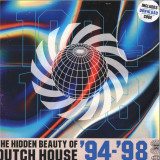
Chicago? Absolutely! Detroit? Definitely! For many, however, a significant chapter in the coming-of-age story of House music was also written in The Netherlands.
This 8-track compilation is the result of a nationwide search for lost Digital Audio Tapes (DAT’s), dusty home-studio recordings, and other relics from those early days. The distinctive "House" sound eventually evolved into a rainbow of local styles and grooves. Back then, DJ’s played their heart out and didn’t limit themselves to any particular musical genre. Following that spirit, this compilation contains everything that makes the Dutch sound so special, from energetic Breaks to atmospheric Deep House.
These are not your usual suspects, not even the most revered diggers have this collection at their fingertips. It's raw, pure material from the time when house parties were fresh and dirty at the same time. Back when the only dress code was a wide smile from ear to ear. Four sides with two tracks each, ensuring maximum DJ enjoyment. Now get out there and spread the Dutch 90's House vibes!
»Sound of Matter« is the debut album by Romanian sound artist and composer Simina Oprescu. The two pieces draw on research conducted with 15 historical church bells at the Märkisches Museum and the Stadtmuseum Berlin. After the artist had presented the results of her studies of the connection between matter and harmony in the form of a multi-channel installation, she has translated the underlying approach of this site-specific work into an album that unfolds slowly, consistently setting in motion subtle tonal changes that continuously change the mood of the two pieces. »Sound of Matter« is both minimalist and maximalist, creating an infinitely rich and multi-layered dronescape that modestly invites its audience to get lost in the sonic experience.
Oprescu has been fascinated by church bells since her childhood spent in Transilvania since the instruments were shrouded in mystery, as she explains in an in-depth essay that accompanies the album. Having received a Bachelor’s degree at UNArte in Bucharest and after studying at the Royal Conservatory of Mons in Belgium, Oprescu enrolled at Berlin’s Universität der Künste for an M.A. in Sound Studies and Sonic Arts. She started working with the archive of the Märkisches Museum, which included 15 historical church bells that were built between the 15th and the early 19th century.
Since every bell sounds different according to its shape, material, and density, Oprescu abstracted these qualities in the formula f = K1t/d^2√E/s(1-m^2). This enabled her to recreate the harmonic tone of the individual bells with Max/MSP. She then composed a piece with semi-overlayed tones, i.e. overlapping frequencies. Naturally, this resulted in a beating effect that provided the music with a sense of urgency, though the five second-long natural reverb of the Märkisches Museum’s Große Halle turned it into a »warm blanket of sound,« as the artist herself puts it. This is perfectly recreated on »Sound of Matter« due to the music being presented in mono, bringing out the intrinsic movement of the beatings with more nuance than a stereo version would.
»Sound of Matter« feels warm and welcoming even when different frequencies seem to create friction between each other or when the subtle beating effects turn into throbbing rhythms, like at the end of the record. It manages to explore both Oprescu’s personal fascination with church bells and psychological and psychoacoustic questions relating to them as well as philosophical issues connected with them. This music is profoundly physical, but also intellectually stimulating—perfectly at home in the catalog of the Swiss Hallow Ground label between records by Kali Malone, Lawrence English, or Siavash Amini.
The booklet features an in-depth essay on church bells by Simina Oprescu.
Marius Circus is well known and loved for a signature analogue sound and once again that is laid out for us all to enjoy here on a new EP that comes with a remix from men of the moment Jazxing. First up is the deep, unhurried and dubbed out 'Lost On A Path To Nowhere,' a subtle late-night sound with wispy synths and a muted bassline that grows ever more prominent. The Jazxing Pathfinder remix is more tropical and steamy, and on the flip 'No Way Home' douses you in more blissed-out chords before the downbeat boogie of 'Space Crumbs Trail'. This is yet more essential summer goodness from Is It Balearic.
Repress!
London based DJ and producer Dan Shake is set to announce details of his new EP ‘Mosquito’, due for release on 13th March 2020 via his Shake Records imprint.
Dan’s latest outing offers three driving, thoughtful Detroit house influenced club tracks: from the synth-heavy adrenaline rush of title track Mosquito, to the jacking, motoric resolve of The Deep
End, and Hide Seek’s kinetic, sample-driven house groove.
Since debuting on Moodymann’s Mahogani Music in 2014 with 3AM Jazz Club / Thinkin About U, Dan made it into a springboard for his ambitions to work crowds the world over. His love of groove – ranging from sparky acid to Brazilian samba, itchy funk to heavyweight house – fuels his drive to make those around him dance as keenly as he does. At a party, Dan Shake isn’t just loaded with peak time weapons: he is one.
This will be the seventh release on Dan’s Shake imprint, following a string of dance floor-igniting releases, the most recent of which continues to scorch the airwaves from Radio 1 to NTS, garnering DJ support from the likes of Annie Mac, Gilles Peterson, Honey Dijon and The Black Madonna, and a searing set of disco-house releases last year on his own Shake imprint and Denis Sulta’s Sulta Selects.
Dan’s infectious charm and expert ear has resulted in a truly international list of shows in locations as far flung from home as Beirut to Buenos Aires, plus armfuls of Balearic visits, including closing the main stage at Dimensions Festival and playing b2b shows with Jeremy Underground, Marcellus Pittman & DJ Boring to name a few. With a never-ending tour schedule ahead, including his debut U.S. and Australia tour, stops at Nuits Sonores, Love International, Printworks, Kingdom Festival, Fly, Boardmasters, Dimensions, Pikes Ibiza and more new music planned for 2020, Dan Shake is set to have an exceptional year.
2024 Repress
Kalte Liebe stirs up a storm, breathing new life into the rebellious spirit that once defined old punk bands and "against the system" attitude of iconic groups like DAF from the 80s. In a world where emotional depth in music is becoming increasingly rare without crossing into cheesy territory or losing the rave appeal, Kalte Liebe is a breath of fresh air. Their masterful fusion of New Wave, EBM, Electronic, and Techno is imbued with a melancholic touch that resonates on a deeply emotional level. The Schall & Schweiß EP showcases the versatility of their sound, perfect for listening experiences, at home, or in the club - it never disappoints and always strikes a chord.
- A1: Moon's Milk Or Under An Unquiet Skull (Part One)
- A2: Moon's Milk Or Under An Unquiet Skull (Part Two)
- B1: Bee Stings
- B2: Glowworms/Waveforms
- B3: Summer Substructures
- B4: A Warning From The Sun (For Fritz)
- C1: Regel
- C2: Rosa Decidua
- C3: Switches
- C4: The Auto-Asphyxiating Hierophant
- C5: Amethyst Deceivers
- D1: A White Rainbow
- D2: North
- D3: Magnetic North
- D4: Christmas Is Now Drawing Near * Featuring – Robert Lee, Rose Mcdowall
- E1: Copal
- E2: Bankside
- F1: The Coppice Meat
- F2: Ü Pel (Insense Offering)
Red in Clear Vinyl[57,35 €]
First compiled as a double CD in 2002, Moon's Milk (in Four Phases) is a suite of four EPs that Coil released seasonally via their in-house Eskaton imprint across 1998. The line-up for these sessions were John Balance, Peter "Sleazy" Christopherson, Drew McDowall, and William Breeze. Recorded primarily at their home studio in Chiswick, London on the eve of a permanent relocation to the small seaside town of Weston-Super-Mare, the collection has long loomed as a pivotal and pinnacle work in the group's discography, but has never been officially reissued, or repressed on vinyl. Time has only ripened its tapestry of regal strangeness. Arranged sequentially in tribute to the equinoxes and solstices, Moon's Milk captures Coil at a revelatory crossroads, leaning deeper into improvisation, spontaneity, and sound design. "Moon's Milk or Under an Unquiet Skull" initiates the proceedings on Spring Equinox, a two-part netherworld organ séance woven from vocal drones, cathedral keys, seasick strings, and opiated undertow. From there, Summer Solstice skews lighter but no less incantational, with Balance embracing his voice-as-instrument across lucid dream torch songs ("Bee Stings"), purgatorial spoken word ("Glowworms/Waveforms"), sultry chamber pieces ("Summer Substructures"), and falsetto ravings ("A Warning From The Sun (For Fritz)"). Autumn Equinox exudes more of a pensive and twilit mood, from the Rose McDowall-sung folk ballad "Rosa Decidua" ("I hear your voice sing near to me / I've put away the poisoned chalice (for now) / And lie down amongst the flowerbeds") to hall-of-lords hallucination "The Auto-Asphyxiating Hierophant" to the liminal string-plucked classic "Amethyst Deceivers," featuring excellent alien guitar by Breeze layered with Balance's oft-quoted couplet: "Pay your respects to the vultures / For they are your future." The album's final chapter, Winter Solstice, is its most swooning, remote, and ceremonial. Opener "A White Rainbow" stirs strings, layered choral vocals, and shivering rhythm into an imploding burial hymn. "North" oscillates bleakly, a ghost in the machine murmuring opaque prophecy ("This black dog has no owner / This black dog has no odour"), while "Magnetic North" is its inverse, a guided meditation of gently flickering software and surreal chakra poetics ("Red rose filling the skull / Yellow cube in the lower pelvis / Silver moon crescent below the navel"). The suite fades to grey with a traditional English carol ("Christmas Is Now Drawing Near"), rendered like an executioner's song by Rose McDowall's doomed, beautiful voice. The Dais box set includes the entirety of the rare Moon's Milk Bonus Disc CD-R / 2019 Threshold Archives Copal CD, which includes three collaborations with Thighpaulsandra. This material is as rich and intoxicating as the previous four phases, ranging from electro-acoustic singing bowl rituals ("Copal") to dissonant electronic recitations of visionary Angus MacLise poetry ("The Coppice Meat") to ominous classical melancholia ("Bankside"). Once again, Coil confirm the vastness of their confounding, infinite alchemy, explored and refined across decades of experimentation - both sonic and bodily. From postindustrial to post-everything, theirs is an art untethered, in the wilds of its own design.
The fresh-faced folk pop band Stornoway seem promising: They play with guileless vigor, have a light-stepping chemistry as a unit, harmonize well. Their lead singer Brian Briggs has a lovely, pure high tenor, the kind of voice that effortlessly conveys simple longing. And yet, on their second album, Tales from Terra Firma, they continue to be almost crushingly dull, making well-appointed and cheerfully empty music that successfully communicates next to nothing.
Their Achilles Heel is a simple and unfortunate one, the same on Tales as it was on 2010's Beachcombers Windowsill. Stornoway are clearly in love with Celtic and British folk, and yet they can't write a memorable melody to save their lives. Try to sing along to the verse melody of "Zorbing", their most well-known tune, and pay attention to what your face muscles are doing; most likely furrowing with the effort of recall. Each of Tales' painstakingly arranged nine songs sinks underneath the weight of this insurmountable problem, which is a shame.
If you're making folk-pop, an inability to write a catchy melody is a difficult deficiency to overcome. Stornoway try valiantly with their complex arrangements, which quickly grow exhausting. “You Take Me as I Am” is cluttered with horn charts and pointlessly banging piano. “(A Belated) Invite to Eternity” builds to a full Explosions in the Sky crescendo, with glimmering tremolo guitar and a “Tonight, Tonight”-style sweeping string section, but having built zero momentum and generated zero heat until that point, their planned fireworks display fizzles.
“Farewell Appalachia” follows the same pattern, with celesta, finger-picked acoustic and electric guitar all tracing an emptily pretty circle with nothing in the center. The melody of "The Great Procrastinator" is almost cleanly written enough to be memorable-- and then the ersatz Dixieland jazz interlude crashes in. Stornoway are deft players, and the transitions are tightly managed, but this is praise on the same order as praising the brushwork in a hotel-room painting.
Briggs’ lyrics are filled with uncomplicated images of the good old British countryside, but his lyrics trample over all these dew-covered fields with wordy, awkward phrasing: "And in the gathering dew, I was lucid as a floodlight,” goes a line from “(A Belated) Invitation to Eternity”. “There's a hunger in the air/ A lemon swollen in the trees" he bleats on “Knock Me on the Head”. On “The Great Procrastinator”, he sings that he is “a scientist with far too many metaphors and far too little data to conclude in time.” They don’t read particularly well, and they don’t sound much more natural when sung.
Tales From Terra Firma is a peculiar record-- carefree music that feels leaden; tuneful-sounding songs that offer no tunes to hold onto. They seem an odd fit for 4AD, a label mostly home to singular voices. They may be a mercenary signing, an attempt to ride the coattails of Mumford and Sons' success. But Mumford and Sons, as head-smack simple and pandering as they are, have a pretty crucial ingredient in their arsenal: they write anthems. In that regard, they have Stornoway pretty thoroughly beat.