I’m Jimmy Reed underlined the very raw nature of the recordings, yet it immediately showed
why his music was embraced so much by others as the songs offered more melody and variety
than other Blues players. Ain't That Lovin' You Baby has fine melodic hooks that could easily
be transcribed into rocking versions, while Boogie In The Dark set the template for so many
groups in the sixties. The slower tracks like You Got Me Crying and Little Rain provided useful
contrasts, while Honest I Do gives added meaning to the phrase 'stripped down'. Jimmy Reed
was easily the most commercially successful Bluesman in America during the 1950s, and as
such his material was readily available to be plundered by artists wanting to enrich their live
repertoire. This reached its height during the UK Beat boom when virtually every working group
included his songs in their sets. The Rolling Stones, The Yardbirds, Them and The Animals all
covered his songs liberally during the first half of the sixties. In his homeland, The Grateful
Dead, The Steve Miller Band, Johnny Winter, Wishbone Ash and, bizarrely, even Bill Cosby
followed suit!
Buscar:home recordings
The mastermind behind long-running Inner Sunset Recordings out of San Francisco and the elusive Imperial Pressings has once again resurfaced, and resurfaced with ferocity! Inaugurating the all-new imprint PDG Discs, Homero G.’s “March of the Mighty Club Heroes” is a superbly crafted 4-track E.P. that hearkens back to the days of old, when music had unforgettable stories to tell and partying went hand in hand with making memories that lasted a lifetime.
Blast off into outer space with A1, “Red Planet”. The bassline rumbles and the breaks roll with an intensity that propels you forward in a swirl of intergalactic pads. Track A2, “Rusty Robofriend”, is awesomely twinkly, grindy, happy-go-lucky breakbeat jam that your grandfather’s childhood toy robots secretly dance to when nobody is looking. B1’s “Triple Tab Fantasy” is a perky, skippy, stabby, organ-filled breakbeat delight that joyfully progresses with bursts of refreshing positivity around each and every corner. And B2, “March of the Mighty Club Heroes”, is a deep and rainy piano-adorned, break-laced anthem that gives a beautifully sentimental and heartfelt nod to all the true heads out there who will let absolutely nothing stand in their way of going to the club. Not even bad weather.
A fantastic record that’s 100% built for true connoisseurs of dance music, old-schoolers and all-around music lovers alike, “March of the Mighty Club Heroes” possesses a level of detail and emotion-filled storytelling that is rarely witnessed in electronic music these days.
Once again Homero G. delivers, and delivery massively. He’s notorious for not repressing prior releases, regardless of how sought after they may be later on, so grab your copy now. Because when it’s gone, it’s very likely gone for good.
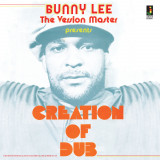
King Tubby and Producer Bunny ‘Striker’ Lee are intertwined in the birth of Dub Music. After discovering a mistake that made a ‘serious joke’ (more of which later...) they went on to release the first pressings of this new musical genre namely ‘Dub Music’. Tubby’s vast knowledge of electronics and Bunny’s vast catalogue of rhythms would lay the foundations of what today is taken as a standard... the Remix / Version cuts to an existing vocal tune.
Osbourne ‘King Tubby’ Ruddock was born in Kingston, Jamaica on 28th January 1941 and grew up in the High Holborn Street area of downtown Kingston. He studied electronics at Kingston’s National Technical College and also on two correspondence courses from the U.S.A... When he had qualified Tubby began repairing radios and other electrical appliances in a shack in the back yard of his mother’s home. His work in the early days included winding transformers and building amplifiers for Kingston’s Sound Systems. Tubby built his first Sound System in 1957 playing jazz and Rhythm & Blues at local weddings and birthday parties. His reputation as a man who knew and understood both electronics and music grew steadily and as the sixties drew to a close. Tubby purchased his own basic two track equipment. He installed this alongside his dub cutting machine, a homemade mixing console and his impressive collection of Jazz albums in the back bedroom of his home at 18 Dromilly Avenue which he christened his music room.
Tubby and Striker were at Treasure Isle Studio’s one day while Ruddy from Spanish Town was working with the engineer Byron Smith....
“Tubby and myself was talking when Ruddy was cutting some dub but Smithy (engineer) made a mistake through we were talking and forgot to put in the voice. It was two track recording in those days. Ruddy said ‘No Man! Make it stay! and so they cut the rhythm. When I went over to Ruddy’s that Saturday night a dance was in progress and when they played the vocal to the tune... then he said we’re going to play ‘Part Two’. They never called it ‘Version’..and then he played the rhythm track. The song was a catchy song and everybody started to sing along and the deejay started to toast so everything went down well. On Monday morning I went up and I said ‘Tubbs the mistake we made was a serious joke. It mash up Spanish Town! The people went wild. So you have to start to do that now ‘cause when the man put on the ‘Part Two’ everyone start singing this song. It played about twenty times. I said you try Tubbs!’...Well the next Saturday night now when Tubby strung up down the farm U Roy said he’s going to play ‘Part Two’ but Tubby did it different now. He started with the voice then dropped it out and let the rhythm run and then he brought in the voice in the middle and from there Tubby started to get really popular.’’
Bunny ‘Striker’ Lee
Dynamic Sounds upgraded to sixteen track recording in 1972 and Tubby purchased, again with the help of a deal brokered by Bunny Lee. The old four track equipment and the MCI console from their Studio B. The four tracks now gave him far wider scope to work with and he began to create a new musical form where the bass and drum parts were brought up while the faders allowed Tubby to ease the vocal and rhythm in and out of the mix. It was only a matter of time before Tubby’s dub plate experiments began to make it on to vinyl and the first ever long-playing King Tubby releases would feature a collection of his mixes to a selection of Strikers rhythms. So please sit back and enjoy this historic set of sounds, mixed by King Tubby and Mr Prince Phillip Smart and another set of scorcher Bunny Lee rhythms.
- A1: Overture (My Old Kentucky Home) (My Old Kentucky Home)
- A2: I Got Off The Plane Around Midnight
- A3: At The Airport Newsstand
- A4: The Next Day Was Heavy
- A5: The Governor, A Swinish Neo-Nazi Hack
- B1: Entr'acte
- B2: On Our Way Back To The Motel
- B3: It Was Saturday Morning, The Day Of The Big Race
- B4: In A Box Not Far From Ours
- B5: Some Time Around 10:30 Monday Morning
Brown vinyl LP. For the first time ever released on vinyl, this brilliant 2012 LP features an all-star cast of musicians and actors lead by Tim Robbins, Dr. John, Bill Frisell, Ralph Steadman, Annie Ross, John Joyce III and Will Forte.
Hunter S. Thompson's classic Gonzo reportage on the 1970 Kentucky Derby is summoned brilliantly to life through spoken word and musical composition. Conceived by executive producer Michael Minzer for his Paris Records label, the project was produced by Hal Willner, who brought Bill Frisell in as composer/arranger/conductor. Bill then assembled a stellar group of musicians including Curtis Fowlkes (trombone), Ron Miles (trumpet), Eyvind Kang (viola), Doug Weiselman (woodwinds), Jenny Scheinman (violin), Hank Roberts (cello) and Kenny Wolleson (drums, percussion).
Ralph Steadman does double duty portraying himself in the narration and contributing original artwork for the project. In 2021, Kramer re-Mastered the original audio for this historic re-release on limited-edition 'Horse-Shit Brown' vinyl for his Shimmy-Disc label.
The Idealist is one of the many projects of Joachim Nordwall who has a long history in Swedish experimental music running the quintessential iDEAL Recordings record label since 1998, as a member of the psych-drone duo Alvars Orkester, avant punk rock trio Kid Commando and ritual drone rock group The Skull Defekts and through his many solo recordings and collaborations with people such as John Duncan, Aaron Dilloway, Mika Vainio, Mats Gustafsson, Leif Elggren, Gabi Losoncy, Mark Wastell and Christine Abdelour.
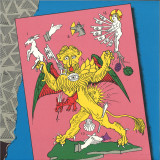
As The Idealist, he has been delving into an amalgam of experimental techno, dub and industrial music since 2006. His new A Lion Is A Lion And Not A Lamb continues this perspective unabatedly, conjuring up six tracks that shimmer with an almost psychotropic intensity, sometimes including acidic touches, dwelling in a confrontational minimalist musical stance where repetition, bursts of gorgeous noise and dubbed out skeletal rhythms make for wayward yet driving grooves at home on the dance floor and a set of headphones alike. The Idealist looks for engagement within rhythm, in its almost purest
form.
Renowned German artist Jonathan Kaspar will make an eagerly-awaited return to Kompakt next month via his Umfang EP, with the four-track offering acting as his first full-length solo release on the label since March 2021. “My third Kompakt EP feels particularly special as it is the first time I’m releasing on my home label with dancefloors being open again. The result is four different tracks producing four different vibes, each of which transport my pandemic desires into today’s world.” - Jonathan Kaspar.
The title track leads the way, taking the form of a retro-leaning cut that features whirring synth stabs throughout. Kupfer comes next, a track packed full of emotive chords and a delicate underlying bassline, before Am Raster leads us to the dancefloor and beyond courtesy of minimal-laced kick patterns. Gemach, Gemach Herr Rabe ends proceedings on an incandescent note, as symphonic keys combine with intermittent crow samples to form a slice of wholesome, nature-inspired musical bliss.
Hailing from Bonn, Germany, Jonathan Kaspar is an integral part of the scene in Cologne. He is a resident at the city’s renowned Gewölbe club and also one of the current main figures at the legendary Kompakt label. His discography boasts releases on some of contemporary dance music’s most esteemed labels, including Innervisions, Cocoon Recordings and Crosstown Rebels to name a few, whilst performances at Watergate (Berlin), NDSM (Amsterdam) and Extrema Festival (Hasselt) have brought his sound to global audiences. The Umfang EP proves exactly why he has become one of Germany’s most exciting prospects in recent times and with a highlight year ahead, the future certainly shines bright for Jonathan.
Jonathan Kaspar ist mit einer neuen EP zurück auf KOMPAKT. Die vier Tracks unter dem Titel “Umfang EP” sind seine erste Solo-Veröffentlichung auf dem Label seit März 2021.
"Meine dritte KOMPAKT EP fühlt sich als etwas ganz Besonderes an, weil es das erste Mal ist, dass ich etwas auf meinem Heimatlabel veröffentliche und die Clubs wieder geöffnet sind. Dabei herausgekommen sind vier verschiedene Tracks mit vier unterschiedlichen Stimmungen, die meine pandemischen Sehnsüchte in die Jetztzeit transportieren", so Jonathan Kaspar.
Den Anfang macht der Titeltrack, retro-orientiert und mit flirrenden Synth-Stabs. Es folgt “Kupfer”, ein Track voller gefühlvoller Akkorde und einer zarten Bassline, bevor “Am Raster” uns mit minimalistischen Patterns auf die Tanzfläche und darüber hinaus führt. Mit “Gemach, Gemach Herr Rabe” schließt sich der Kreis, ein Stück glühender musikalischer Glückseligkeit, in dem sich symphonische Keys mit hier und da eingestreuten Samples von Krähen verbinden.
Der aus Bonn stammende Jonathan Kaspar ist fester Bestandteil der Kölner Elektro-Szene. Er ist Resident im renommierten Gewölbe Club und einer der aktuellen Protagonisten des KOMPAKT Labels. Seine Diskographie umfasst Veröffentlichungen auf einigen der angesehensten Labels der zeitgenössischen elektronischen Tanzmusik, darunter Innervisions, Cocoon Recordings und Crosstown Rebels, um nur einige zu nennen. Als DJ ist Jonathan international in den wichtigsten Clubs und auf den renommiertesten Festivals unterwegs, um seinen Sound einem weltweiten Publikum nahezubringen. Die “Umfang EP” ist ein neuerlicher Beweis, warum Kaspar in letzter Zeit zu einem der aufregendsten Produzenten aus Deutschland geworden ist. Dass ihm als Künstler weiterhin Großes bevorsteht, dem sollte nichts entgegenstehen.
Available on vinyl for the first time in 10 years, with new cover design by Tim Rutilli Califone's earliest roots lie in the band Red Red Meat, from whence came Califone's founding members Tim Rutili and Ben Massarella and its longtime producer Brian Deck. The band's first release was a self-titled EP on Flydaddy in 1998, followed later by the full-length debut, Roomsound, in 2001 (later reissued on Thrill Jockey) and eventually the band's Thrill Jockey debut, Quicksand/ Cradlesnakes in 2003. After touring for the release of Roomsound, Califone had little time off to take in the impact of the music they were creating. In three years, they recorded four albums (two instrumental, two song-based including Heron King Blues) and toured heavily in between with Wilco, Modest Mouse, The Sea and Cake and others. After the tour for Heron King Blues in 2004, Califone finally took a breath and came back together in late 2005 to begin recordings. They worked on it in chunks at 4Deuces Studio in Chicago with Brian Deck, in Long Beach and Phoenix with Michael Krassner, and at home in Los Angeles and Chicago until May 2006. The time away and each member's individual work naturally brought new elements into the sound of Califone's music. Both Rutili's and Becker's soundtrack work are more atmospheric, however the challenge of enhancing a scene of film without cluttering it or overwhelming it informed their approach to the new recording. Similarly, the burglary of Califone's equipment during the band's last tour (including guitars, banjo, a 1917 violin, bells and more) altered the sound as they had to find new gear on a tight budget. The instruments are new partners, new sounds that forced them to stretch in new directions. Limitations, obstructions and darkness, and the new possibilities they illuminate; roots and crowns. "In that way", says Rutili, "this album is a conscious and resolved thing. It fully realizes ideas we touched on in the past and where we come from as a band, and takes us into our next phase of life."
Very limited pressing of 300 units only. Following on from the two sold out records together, Freschard and Stanley Brinks come together for 12 brand new tracks. Lion Heart is an irresistibly charming collection of late night tales, woozy ballads and uptempo sing-alongs. Clemence Freschard’s beautiful vocal tones lend this a rich, French indiepop/chanteuse vibe, complemented by Stan’s wistful timbre and characteristic warm instrumentation. Stanley Brinks is renowned for his unique anti-folk style: both playful and suggestive, insightful and entertaining. Brinks was born in Paris, France, in 1973. He studied a bit of biology and worked as a nurse for a while. Half Swedish, half Moroccan, strongly inclined to travel the world, he soon began spending most of his life on the road and developed a strong relationship with New York. By the late 90s he’d become a full time singer-songwriter – André Herman Düne – as part of three piece indie-rock band, Herman Düne. Several albums and Peel sessions later and after a decade of touring Europe, mostly with American songwriters such as Jeffrey Lewis, Calvin Johnson and early Arcade Fire he settled in Berlin. The early carnival music of Trinidad became a passion, and in the early 21st century he became the unquestioned master of European calypso, changing his name to Stanley Brinks. Under this moniker he has recorded more than 100 albums, collaborated with the New York Antifolk scene on several occasions, recorded and toured with traditional Norwegian musicians, and played a lot with The Wave Pictures. Freschard grew up in a farm in French Burgundy. Aged 18 she moved to Paris, where she baked pies and cakes in a cafe. There, a local musician and regular customer called Stanley Brinks wrote a few songs for her to sing. Homeless in Paris, she saved up just enough money to get herself a ticket to New York. There she found an old electric guitar and started writing her own songs. In 2004 she moved to Berlin, where she recorded her first LP, "Alien Duck". Her second album, "Click Click", recorded in 2006, features electric guitar by Stanley Brinks. On her third album, she plays the drums herself. On her fourth “Shh...” she also plays the flute, and she breaks out the washboard on her fifth “Boom Biddy Boom”. On Midnight Tequila, Freschard brings it back to just drums and vocals // “an absolute joy.” Q // “...a set that’s as wistful and charming as it is playful and self-concious.” Uncut // “quietly charming” Pitchfork
Sistrum Recordings returns with a new addition to the family, producer Riccardo Masi better known to dancefloors as Reekee. This alliance came together quite naturally, following up on a remix that label head Patrice Scott did for Reekee's Wrong Notes label. The sophisticated vibe of his productions is very much at home on Sistrum.
- 01: Intro (Dateline Ii)
- 02: Hometune
- 03: Vaders
- 04: Morning Papers
- 05: Dateline Iii
- 06: Tasty Leather Jackets
- 07: All Over London
- 08: Rolls Royce &Amp; A Big House
- 09: Beauty Contest
- 10: Dinner &Amp; Dance
- 11: Warehouse Experience
- 12: Rhythms Of The Universe
- 13: Roller Skating Session
- 14: Dedications
- 15: Lazerdrome
- 16: Heathens
- 17: Champagne Raffle
- 18: Legal Pulse
- 19: Opposite The Fridge
- 20: Wicked Entertainment
- 21: South East Fourteen
- 22: Kebab House
- 23: Monster Soundsystem
- 24: Family Fun Day
- 29: Big Roadblock
- 30: The Beginning
- 31: Dress To Impress
- 32: Fabulous Riches
- 33: Christmas Hardcore Bash
- 34: Soul &Amp; Reggae Alldayer
- 35: Spp
- 36: Come Get It
- 37: Reggae Awards
- 38: Nye &Apos;93
- 39: 100% Niceness Guaranteed
- 40: Spin Offs
- 25: La Plaza
- 26: Stunning Dimension
- 27: Redemption
- 28: Independence Celebration Dance
LP[11,35 €]
Limited 300 COPIES
PHONOREM: ITALIAN DJ, RECORD COLLECTOR AND BEAT-MAKER HE SPROUTS HIS ROOTS INTO GOLDEN-ERA HIP HOP. SINCE 2017 HE LEADS THE PHAT! RADIO SHOW, AT ROCKET RADIO VERONA, OCCASIONALLY WITH INTERNATIONAL HOSTS.
IN 2020 PHONOREM RELEASED A CASSETTE ALBUM “CRUISE CONTROL”, FUSING DOWNTEMPO BEATS, SYNTH AND SAMPLES MANIPULATIONS, INCLUDED ALSO A REMIX BY MAX GRAEF (TAX FREE RECORDS).
ALGORYTHM SHINES LIGHT ON HIS BACKGROUND IN ELECTRONIC MUSIC: SYNTH-WAVE SOUNDS ON WONKY HOMEMADE DOWNTEMPO BEATS, FUSED TOWARDS AMBIENT AND CINEMATIC ATMOSPHERES, WITH LIVE DRUM RECORDINGS, DRUM MACHINES AND FEW SAMPLES.
Music Produced by PHONOREM
Master by REEL MASTERING
Cover Artwork by AYCE BIO
Distributed by RUBADUB
All Rights Reserved to FUNCLAB RECORDS
The Deslondes are a five-piece band from New Orleans
The band splits up songwriting and lead vocal duties among its five members,
continuing its democratic ethos and musical versatility. Multiple members have
released solo recordings between their sophomore release, Hurry Home (2016)
and their latest release Ways & Means but throughout the time between albums
the Deslondes continued to build on their inventive take on New Orleans country
and R&B. Ways & Means finds the band leaning on the country-folk of their debut
along with the sometimes- psychedelic, electrified gospel- soul sound of Hurry
Home. The sound will continue to draw comparisons to the country-funkiness of
The Band, Link Wray and others but Ways & Means is the sound of a band that
understands the history of American music, while embracing their own
contemporary approach.
Pitchfork: https://pitchfork/news/the-deslondes-announce-new-album-waysand-means-share-new-song-south-dakota-wild-one-listen/ No Depression: nodepression/refreshed-from-hiatus-the-deslondes-announce-returnwith-ways-means
Scopitones will release Locked Down And Stripped Back Volume Two by The Wedding Present on 1 July 2022. The album will also be released on vinyl only in North America by HHBTM Records. Locked Down And Stripped Back Volume Two features home recordings of Wedding Present classics along with a previously unreleased song: ‘That Would Only Happen In A Movie’. The first volume in the series came about when David Gedge’s annual festival At The Edge Of The Sea went ‘virtual’ in 2020 and the band recorded semi-acoustic versions of songs to be streamed. An album of the tracks was compiled and released due to popular demand. The same thing happened the following year and so Volume Two features tracks initially recorded for 2021’s online festival. There’s a bevy of guest stars on this second album! Jon Stewart of Platinum-album-selling Sleeper fame reprises his new role as Wedding Present guitarist but is joined here by some Wedding Present members of old. Peter Solowka, from the band’s first line-up appears on ‘Nobody’s Twisting Your Arm’ playing his second instrument, the accordion, while Hit Parade guitarist Paul Dorrington contributes to a re-working of the Top 30 single ‘Blue Eyes’. Long-time Wedding Present bass player Terry de Castro returns to infuse the album with her own unique style, while current Wedding Present bass player Melanie Howard takes over the lead vocal duties on a beautiful version of 1986’s ‘At The Edge Of The Sea’. Last, but certainly not least, Amelia Fletcher – backing vocalist on George Best and Bizarro – also returns to the party! As on the first volume, each musician recorded and filmed their parts at home and, as before, it is fascinating to see how stripped-back arrangements bring out different aspects of these brilliant songs. Track-listing Brassneck / No / Careless / Nobody’s Twisting Your Arm / What Have I Said Now? / Perfect Blue / Everyone Thinks He Looks Daft / That Would Only Happen In A Movie / At The Edge Of The Sea / Blue Eyes / Dare / Octopussy
Felicia Atkinson’s music always puts the listener somewhere in particular. There are two categories of place that are important to »Image Langage«: the house and the landscape. Inside and outside, different ways of orienting a body towards the world. They are in dialogue, insofar as in the places Atkinson made this record—Leman Lake, during a residency at La Becque in Switzerland, and at her home on the wild coast of Normandy—the landscape is what is waiting for you when you leave the house, and vice-versa. Each threatens—or is it offers, kindly, even promises? —to dissolve the other. Recognizing the normalization of home studios these days, she revisited twentieth-century women artists who variously chose, and were chosen by, their homes as a place to work: the desert retreats of Agnes Martin and Georgia O’Keefe, the life and death of Sylvia Plath. Building a record is like building a house: a structure in which one can encounter oneself, each room a song with its own function in the project of everyday life.
At times listening to »Image Langage« is immediate, something like visiting a house by the sea, sharing the same ground, being invited to witness Atkinson’s acts of seeing, hearing, and reading in a sonic double of the places they occurred. In an aching moment of clarity in »The Lake is Speaking,« a pair of voices emerge out of the primordial murk of piano and organ, accompanying the listener to the edge of a reflective pool that makes a mirror of the cosmos. "I open my feet to fresh dirt, and the wet grass. I hold your hand. You hold his hand. In the distance without any distance. The comets, the stars." At other times, listening to »Image Langage« is more like being in a theatre, the composition a tangle of flickering forms and media that illuminate as best they can the darkness from which we experience it. On »Pieces of Sylvia,« a noirish orchestra drones and clatters beneath and around a montage of vocal images, stretching the listener across time, space, subjectivities. Atkinson says that "Image Langage" is like the fake title of a fake Godard film. There is indeed something cinematic about Atkinson’s work—not cinematic in the sense that it sounds like the score for someone else’s film, but cinematic in the sense that it produces its own images and langage and narratives, a kind of deliberate, dimensional world-building in sound.
»Image Langage« is built from instruments recorded as if field recordings, sound-images of instruments conjured from a keyboard, instruments Atkinson treats like characters, what she calls “a fantasy of an orchestra that doesn’t exist.” And then, speaking of Godard, there are the monologues, operating as both experimental-cinematic device and a literary style of narration. Voice can be a writerly anchor or a wisp of a textural presence. Atkinson’s capacious and slippery speech plunges into and out of the compositional depths, shifting shapes, channelling the voices of any number of beings, subjectivities, or elements of her surroundings—not unlike her midi keyboard, able to speak as a vast array of instruments.
»Image Langage« is an environmental record, in the vastest sense of the world. It is about getting lost in places imagined and real; it registers, too, the dizzying feeling of moving between such sites. It puts forth a concept of self that is hopelessly entangled with the rest of the world, born of both the ache of distance and the warmth of proximity.
For Félicia Atkinson, human voices inhabit an ecology alongside and within many other things that don’t speak, in the conventional sense: landscapes, images, books, memories, ideas. The French electro-acoustic composer and visual artist makes music that animates these other possible voices in conversation with her own, collaging field recording, MIDI instrumentation, and snippets of essayistic langage in both French and English. Her own voice, always shifting to make space, might whisper from the corner or assume another character’s tone. Atkinson uses composing as a way to process imaginative and creative life, frequently engaging with the work of visual artists, filmmakers, and novelists. Her layered compositions tell stories that alternately stretch and fold time and place, stories in which she is the narrator but not the protagonist.
Repress back in soon, now on black vinyl. Genre: Rock-Alternative; Dreampop, Indiepop, Lo-fi. RIYL: Jesus and Mary Chain, Galaxie 500, Belle and Sebastian, Sarah Records.
The purest a band can aim for is to present their milieu as a time capsule from the morning of. April Magazine deals deep in the hypnagogic charm of their surroundings. Since the 2018 release of “Shirley Don’t” a sneaky classic that first turned ears outside their SF Bay Area home the band has stirred out a handful of cryptic indie pop recordings nestled in warm aerosol hiss and scrappy hand-drawn cover art. Music that glints in the far back of an urban daydream where guitars could be bells, bells could be voices, and voices hardly find use in words. If The Ceiling Were A Kite is a document of things losing definition and time gone slack. The songs on If The Ceiling Were A Kite were recorded over a span of about two years, after Peter, Mike and Kati started playing together around a four track cassette player in Peter’s bedroom. Other kindred spirits like Julia Waves, Ian Collins, Anthony Comstock OBC, Zach Vito, and eventually David Diaz joined in on some of the recordings and live shows adding to the collective ‘whatever works’ ethos of April Magazine. April Magazine is Peter Hurley, Katiana Mashikian, Mike Ramos, David Diaz.
Joe Rainey is a Pow Wow singer. On his debut album Niineta he demonstrates his command of the Pow Wow style, descending from Indigenous singing that's been heard across the waters of what is now called Minnesota for centuries. Depending on the song, his voice can celebrate or console, welcome or intimidate, wake you up or lull your babies to sleep. Each note conveys a clear message, no matter the inflection: We're still here. We were here before you were, and we never left. On Niineta, Rainey finds himself in between cultures, collaborating with producer Andrew Broder, who brought his turntablist sensibility to the project. The two of them met backstage at Justin Vernon's hometown Eaux Claires music festival before crossing paths more through the 37d03d collective, and both contributed to the last Bon Iver album before partnering up. "At first I didn't know what I could add," Broder says. "I came to understand everything is rooted in the drum-even the songs on our record that have no drum." Each song started with Broder's beats, the two of them experimenting with various sounds and tempos before orchestrating and recontextualizing the ancient sounds in strange, new in-between places, also pulling from Rainey's vast sample folder of pow wow recordings, layering in slices of his life. Niineta is a short version of the Ojibwe term meaning, "just me," and Rainey is using the term only in the sense that he's taking sole responsibility for the music. He is protective of Pow Wow culture-once outlawed by the US government and maintained in secret-while trying to figure out where he fits and how he can be creative with it. "These are my creations, but they're pow wow songs, and our language is sacred," he says. Rainey suggests conceptualizing the album as him working the door at a Pow Wow after party. "If I'm answering that door, I want to say, hey, yeah, come on in. But there's fucking tons of us in here. It ain't just me."
‘Jim, I’m Still Here’ is the second album from James Righton under his own name; produced by David & Stephen Dewaele of Soulwax and released on their label DEEWEE, the album follows The Performer released in 2020. James’ musical past is well documented; as the frontman of the genre inventing Klaxons, he helped create a revolution in British music and spawned a youth subculture. ‘Jim, I’m Still Here’ is a captivating meditation on the artists experience of the pandemic as James looks to conceptualize the myriad of emotions and events into a fascinating third person narrative. One of the album tracks features Benny Andersson from Swedish pop legendary band ABBA, with whom James has been working on putting together their new live band.
"I wrote this record during the first few months of the pandemic. At the time I wasn’t intending to make any music. I’d just released ‘The Performer’ on what turned out to be the first week of lockdown. The outside world shut down and I was busy being Dad. Then. I started making notes on my phone. Just words. In moments stolen from family life I’d head downstairs to my garage studio and put the words to music. When I was happy with a song I’d send it to Dave and Stef. Demos and Pro Tools sessions were passed back and forth between my home studio and the Deewee studio in Ghent. I was nervous about their response to the music I was making. It was personal, raw: unlike anything I’d ever written before. A conversation with the outside world during these times of isolation. For the most part my life was centred on the domestic. Getting to spend so much time with my family was a blessing. Making music was my play time. Isolation opened me to memories and allowed me to dream of the future. As the outside world tried to adapt to the pandemic I was asked more and more to promote ‘The Performer’ in live stream concerts on various platforms. As the pandemic went on, demands on production increased (more camera angles, better lighting, higher quality audio recordings). It became a one man show. I’d head downstairs to my garage, put on my Gucci suit, comb my hair and become someone else. Jim. Jim the deluded rock star, living out his fantasies from the confines of his garage. A lonely stardom. And yet, Jim was part me. He made me feel like I still existed. Jim became the centre of the new album. Dave, Stef and I worked into the sessions over the following months. It was always exciting to see where they would take my initial demos. The working method and the restrictions of making music together but in separate spaces, separate countries shaped the sound and feel of the record.
I won’t make another record like this again”.James/Jim
Imperfect Stranger is the pseudonym of Glasgow based soundtrack composer and producer Kenny Inglis. “Everything Wrong is Right” is his debut solo album for Castles in Space.
Born in 1975, Kenny didn't listen to much music, unless it was the opening credits to a TV show or a film score that had caught his ear. "I loved the pre-title music on a lot of those 80's U.S. TV shows. From the family orientated stuff like The A-Team, to darker dramas such as The Equalizer. My mother would let me stay up to watch the opening sequence of the latter then send me to bed because the story would be too heavy for a kid. That left me with this hanging sense of ambiguity as to what would happen in that hour after the titles came up.”
Exposure to a work colleague’s tiny project studio in a kitchen cupboard was a lightbulb moment for him and the experience of utilising music technology as a way of writing and producing entire tracks stirred a wave of determination to chase a career in music using the opportunities that technology could offer. Kenny figured the best way to move forward was to start a small project studio and learn his craft as a recording engineer. "It was a bit of a shock to the system. I literally had no idea how to work any of the equipment. Kenny focused on learning as much about the craft as he could whilst winging his way through recording and mixing everyone from the likes of singer/songwriters to bands, to voiceovers artists and anything in between. "Eventually, I stopped writing the music I thought people would want to hear, and started writing the music I wanted to make. I didn't come from a music loving background, but I was always obsessed by the way music and film would interact - how music brings this atmosphere and tone to even the most mundane visual stuff. I wanted to capture that. I wanted to grab some of that ambiguity I felt from the TV shows of my childhood and make it into a project of some sort". That project was Spylab. A dark, downtempo project with a cinematic edge. The initial demo consisted of three tracks, with the melancholic 'This Utopia' leading the playlist.
"At the time you did demos on normal cassette tapes. I remember having this endless battle with the bias control to try and get the best sound I could on these little tapes. Ten went in the post one Monday morning, and the following Monday there were three offers from three different labels. Studio K7 were interested in a singles deal, as was Flying Rhino in London. But then there was an offer from a Chicago based label by the name of Guidance Recordings. They wanted an album, and were offering a $15,000 advance. It wasn't a difficult decision to make"
Writing and recording Spylab 'This Utopia' began in 1999. The album took a whole year to produce. The album was to catch the attention of Mary Anne Hobbs at Radio One. At the time Mary Anne was presenting The Breezeblock - a late Sunday night show with an eclectic playlist of alternative electronic music. Picking out the album's title track 'This Utopia', Mary Anne would go on to play it no less than 8 weeks in a row. A request for Spylab to DJ on the show was to follow. "I had never DJ'd before. I think I had a week to figure out how to do that and put a playlist together. I'm not entirely sure how I pulled that off.” In March 2001 the Spylab album was finally released to a hoard of excellent reviews. A North American live tour would follow. From the launch party in Los Angeles, to a sell out show at SXSW in Austin. "I then started a new project under the name Cinephile. It had some of the core elements of the Spylab sound but it was deeper, more cinematic.” Kenny received news that a track from the previous project Spylab had been requested by HBO for the first episode of a new TV drama called Six Feet Under. This was to become a major turning point in Kenny's career. The Spylab track 'Celluloid Hypnotic' dropped during a poignant party scene of the first Six Feet Under episode. Within a couple of days Kenny was getting requests for music from other music supervisors. "It was a chain reaction. The Six Feet Under sync was like the tip of an iceberg. One day I called CBS in America and they put me on to the CSI music supervisor and I managed to get on a call with him. I sent the Cinephile stuff out and within a few months I got this fax through from CBS - a quote request for one of the tracks for a potential use on CSI. It changed my life."
The tone and style of Kenny's music sat perfectly with the CSI score requirements. So much so he found himself part of a pool of incidental writers who worked on all three aspects of the franchise - CSI, CSI: NY, and CSI: Miami. This would continue until 2013, when the last of the series would come to an end.
"I was juggling a bunch of stuff for those ten years. Writing material for CSI, whilst releasing new Cinephile stuff and playing live. As Cinephile continued to gather pace, one of the tracks from Kenny's efforts on CSI was chosen for the Hollywood trailer for the Samuel L. Jackson film 'Lakeview Terrace'. Further trailers would follow, from Gangster Squad to Dead Man Down, Spike Lee's Undisputed Truth, to Fifty Shades Freed.
At the same time, Kenny picked up his first factual commissions in the UK, and this too would be the beginning of a regular run of fully scoring factuals and documentaries. By 2021, six of these had won BAFTAs. He also would find himself soundtracking adverts for the likes of Nike, Audi, and American AirlinesIn early 2020, Kenny made a return to focusing on his own music under the pseudonym Imperfect Stranger. A tweet from Colin Morrison from Castles In Space regarding a charity compilation album 'The Isolation Tapes' caught his eye. Kenny had made a start on his debut album as Imperfect Stranger and submitted the track 'Hymn To The Sun' (which would become the lead track on the album). Further discussions ensued, and the album found a home on CiS. "I had been doing TV and film stuff for almost ten years. It paid the bills and was as close to a 'real job' as I'd had, but I yearned to get back to writing for myself, so doing an album for Castles in Space was a joy.
“The music I write is like a diary. There's an authentic narrative to everything i do. I don't write tracks for the sake of writing. I write tracks to diarise and process the stuff that I've lived through, and the experiences that have come along with the passing years. That's what makes me tick. It's a very public and vulnerable way of expressing myself. If people want to know the real me, all they have to do is listen."
Owing to a focused period of growth as a home recordist and producer,
there is a distinct, refreshing current that charges outtakes from 'bad
summer', the latest full-length album from Philly-via-Portland's cool
original (FKA cool american)
What under other circumstances might have been a string of homespun indie
rock songs is instead an energized pop- focused collection of tracks born from
what Nathan Tucker describes as 'the contrast between total formlessness and
rigid claustrophobia'. As heard almost immediately on album opener 'monad, no
windows', an electric atmosphere envelops outtakes from 'bad summer'. Pitchshifted vocal samples and previously- scrapped drum recordings fill out the
overture, setting the table for a patchwork of repurposed, resampled ideas
shaped into songs that rarely end up in the same place they started. The
unhurried and sentimental 'i just need a second' boasts the full spectrum of cool
original's songwriting prowess: foregrounded, infectious melody over subtly
chopped and screwed drums comprise the foundation for Tucker's own take on a
classic road song'a marked contrast to 'breaking my own rules', an experimental
pop number unlike any previous cool original work. Similar contrasts abound
throughout outtakes, making for a listening experience that's equal parts
rejuvenating and unpredictable.