Having shared stages with artists like Efterklang and Ólafur Arnalds, Samson has long felt like an outsider, caught between being “too experimental” for some and “too indie” for others. His struggle to fit into a defined space has deeply influenced his music. After the pandemic derailed a major indie record deal, Samson grew disillusioned with the industry, reflecting on how his search for belonging had often been met with barriers.
His new album “Songs of Beginning & Belonging” are reflections on these experiences. Moving away from the themes of home and displacement that coloured his earlier works, the new album reflects a sense of inner peace and renewal. It is a delicate, meditative collection that underscores Samson’s growth as an artist and a person, driven by a desire to move past old wounds and start anew.
“Songs of Beginning & Belonging” is an album that feels at once delicately sparse, at times even symphonic, but is tied together by a repeated and palpable feeling of quiet liberation - a determination for things to move forward rather than reflecting back on what’s come before.
Recorded between November 2022 and May 2024 in Will’s former studio, a secluded spot on the River Tejo in Almada, which he shared with Casper Clausen of Efterklang), the album was made specifically for Dauw, who had asked Will to create a piece of music for them. The album was, as always, largely recorded using his 1970's 'Uher 4200' tape machine, plus a small collection of other tape machines that wind their way in and out of the recordings and shape in it in a beautifully singular way.
Cerca:home recordings
After Dull Boy Johnny's previous release, a double EP with a tropical A-side and an erotic B-side, this time the three gentlemen are out on the dance floor. After all, the neighbours decided as much.
Unlike the recordings of their previous work that took place abroad, this time they stayed in a steamy attic room in Belgium, where guitarist and producer Jan built a studio. Unable to record at night because of neighbours who did not (yet) appreciate Dull Boy Johnny's music, they dove into Antwerp's nightlife.
The group's previous work took you on a cinematic journey where every musical nuance takes you to a specific setting. Be it an erotic seventies scene, a beach party in the Bahamas, or a blood-curdling chase in the Wild West, Dull Boy Johnny covers it all. Nard Houdmeyers, Rik De Bal and Jan found each other in a shared interest in film genres such as blaxploitation, neo-noir and spaghetti westerns. And therefore also the artists inherent to these genres such as Isaac Hayes, Curtis Mayfield and Ennio Morricone. Dull Boy Johnny's conceptual approach to music can be traced back to this passion for cinema.
For the new EP, however, they traded that cosy movie-watching for turbulent nightlife (the angry neighbours, you know). Besides, it was about time to get their inspiration in the flesh. Dull Boy Johnny immersed himself in the pulses, flashes and swell of downtown Antwerp. Thunder chasing crept under their skin and then into their guitars. In grandfatherly fashion, they then turned to composing, first with just bass, guitar and vocals. In that small lineup and with the sounds of the night still reverberating in their minds, the first pieces of the puzzle were laid out. After that, the sound was opened up and a solid rhythm boost was added. This defined the catchy, up-tempo nature of the upcoming EP that centres on themes of dancing, flirting and partying. Expect rousing riffs, catchy hooks and swinging rhythms. Details were meticulously laid out and bricked into the songs with delicate grouting. The fine polishing of the songs was done with patient finesse and a constant attitude to serve the song. With songs like Suspicion, She Can Groove and Dynamite, it is immediately clear that the gentlemen got their mustard from the club: action, party and spunk! All without losing their typical sensuality.
Despite the different working methods for the third EP, there are a lot of recurring elements that define Johnny's fresh sound. The essence? Catchy high vocals contrasted with a sensual baritone voice, carried by a groovy bass and rhythm section. Around it, the details that give the songs the right atmosphere swirl.
Dull Boy Johnny's music prefers to function as a soundtrack to your own imagination. As you listen, you are invited to wander through the various landscapes of their musical world, regularly giving a nod to the more lustful side of your brain. The songs have already been praised for their compelling melodies and irresistible energy.
With this release, Dull Boy Johnny proves their ability to create timeless music that both touches the soul and moves the body. So surrender to Dull Boy Johnny's punchy grooves and dance the night away. Long live the neighbours!
While they’ve been active for more than two decades, it’s only been in recent years that the Berlin and New York based contemporary sonic arts platform, Soundwalk Collective, has begun to gather the accolades and attention that they rightfully deserve. Firmly rooted within a multi-disciplinary practice that engages the narrative potential of sound within the contexts of visual art, dance, music and film, as well as tapping anthropological, ethnographic, and psycho-geographic research, they’ve gained great note for collaborations with Jean-Luc Goddard, Nan Goldin, Sasha Waltz, Charlotte Gainsbourg, and numerous others.
Building on the back of 2023’s brilliant “All the Beauty and the Bloodshed”, Soundwalk Collective now returns with “Khandroma”, one of their most fascinating and singular endeavours to date, which re-engages their enduring creative partnerships with Patti Smith. Issued by Ubi Kū, a brand new imprint founded by the Italian Buddhist Union dedicated to the relationships between Buddhist cultures, music, and sound, across the album’s stunning two sides this incredible ensemble draws inspiration from and conjures Tibetan deities, the Himalayan Plateau, the valleys of Nepal and the highest peaks where the most ancient Buddhist temples reside, culminating as a sprawling sonic tapestry like little else. Issued as a beautifully produced, limited edition vinyl LP and CD, mixed and mastered by Giuseppe Ielasi, complete with a booklet featuring liner note essays penned by Chiara Bellini and Filippo Lunardo, and images by Stephan Crasneanscki, it’s hands down among our favourite releases by Soundwalk Collective to date and not to be missed!
An international experimental sound art collective founded in 2001 by the artists Stephan Crasneanscki, who was joined in 2008 by producer Simone Merli, Soundwalk Collective is a contemporary sonic arts platform, featuring a rotating constellation of artists and musicians, that, in vastly varied number of ways, has continuously explored the remarkable potential of sound within the contexts of visual art, dance, music and film, offering particular emphasis to anthropological, ethnographic, and psycho-geographic research, examining conceptual, literary or artistic themes. In addition to their many collaborations and accolades that attend to an increased ambitious catalog of releases, they scored Laura Poitras’ film, “All the Beauty and the Bloodshed”, which won the Golden Lion at the 2022 Venice Film Festival, as well performed and exhibited at Berghain, CTM Festival, documenta, Manifesta, New Museum, and Centre Pompidou, where they notably opened “Evidence”, a exhibition with Patti Smith comprising an audio-visual journey from the work of French poets Arthur Rimbaud, Antonin Artaud and René Daumal. While Soundwalk Collective’s output and use of sonority - sometimes original composition and others manipulated archival recordings - and context is varied, the project’s endeavours are unified by a focus on sound as material that is both tactile and poetic, pursuing layered narratives that address ideas of memory, time, love and loss. Their latest, “Khandroma”, enlisting Patti Smith’s contribution on one of its tracks, stands among the most exciting and rich of these explorations yet.
Perhaps the best way of approaching “Khandroma” is through Soundwalk Collective’s longstanding focus on the discipline of psycho-geography - a practice that interrogates the impact of an environment’s embedded histories and meanings on the psychology of the present - as well as the group’s integration of observations of nature, and uses of non-linear narrative, as a vehicle for recording and the synthesis of meaning. Like previous projects that have encountered them traveling extensively across the world, occupying diverse environments for long periods of investigation and fieldwork, during which they source materials for subsequent works, the material roots of “Khandroma” are a body of field recordings made by Crasneanscki, Francisco López, and Merli at altitudes between 2,760 and 4,500 meters, in varying locations across Upper Mustang during 2016.
Drawing the album’s title from the Tibetan feminine deity who reigns the skies, the album’s two compositions weave a stunning sonic tapestry from collaged sounds of nature, bells, drones, unplaceable tones and vocals, and in the case of its second piece, “Chasing the Demon”, the voice of Patti Smith, culminating as a deeply emotive and imagistic expanse that taps something far more profound than any of its single parts. As the collective states: “the album traces the continuous morphing of the wind into sound expressions. The Himalayan Plateau seems designed to amplify and echo the encounter of the breaths, the prayers, and the chants emerging from around and within those temples; amid the sounding of bells, the turning of prayer wheels, and the billowing of flags. A resonant musical body that we recorded so as to capture its boundless mutations; an unstoppable force that cries, whispers, and blows through and over stones, wood, empty halls and monastic robes, etching an ever-changing sonic landscape onto the surfaces it encounters.”
Immersive, stunningly beautiful, and haunting, “Khandroma” draws the ancient and distant into the consciousness of the present, close to home, bordering on the profound. Issued by Ubi Kū as a beautifully produced, limited edition vinyl LP and CD, mixed and mastered by Giuseppe Ielasi, complete with a booklet featuring liner note essays penned by Chiara Bellini and Filippo Lunardo, and images by Stephan Crasneanscki, we can’t recommend it enough.
Limited Edition White Vinyl
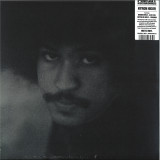
At the forefront of a rising wave of Brazilian artists captivating international audiences, Nyron Higor brings a quiet yet potent sense of wonder to his new self-titled album. Born in Maceió, Higor’s latest work is rooted in the traditions of Northeastern Brazilian music and golden-era MPB. Within the peaceful surroundings of his home, Higor weaves these roots together with global influences and contemporary production techniques, for a uniquely dreamlike vision of hope.
Following the success of his self-released debut Fio de Lâmina—an instrumental record of delicately balanced rhythmic and harmonic patterns, which earned support from tastemakers like Mr. Scruff, Gilles Peterson, and John Gomez—Higor’s new album is a move towards a more expansive, lyrical exploration of transcendence and triumph. As Higor explains, “This album is a test of resistance and a big event in my life as a young Black man from the Northeast and coming from a humble background, financially speaking, its context is political.”
Taking his demos and unfinished tracks to São Paulo, Higor worked alongside friends and collaborators from Brazil’s vibrant contemporary music scene—including fellow Maceioense artists Bruno Berle, Batata Boy, and New York-based Brazilian vocalist Alici Sol—assembling a rich musical landscape and a cutting edge development on the musical world from which he emerges.
For Higor, the process of recording and producing in close collaboration with Berle and Batata Boy allowed him to fully cultivate the emotive power of his compositions. Album opener "Ciranda" sets the tone with a slow frevo rhythm, as wistful trombone melodies and melancholic acoustic guitar harmonies create an atmosphere both intimate and grand. Lead single "São Só Palavras," featuring Alici Sol and Bruno Berle, captures both the lightness and depth of young love in an all too fleeting minute-and-a-half moment of soaring brilliance.
Building upon the instrumental sound of his debut, “Louro Cantador” with its playful organ, birdlike whistles and elegant acoustic guitar, emanates a kind of rare natural beauty, as each sound dances amidst the gentle pulse of Higor's bass—his main instrument.
Through ten carefully crafted tracks, Higor’s acuity for sound and silence draws listeners into a place that feels both deeply personal and universally resonant. “Above all, I value making music that brings me genuine satisfaction. I’m always looking for depth in the things I create.”
This album is a testament to the timeless themes that define Higor’s artistry, as well as his creative drive to overcome the obstacles he faces. Conveying his feelings of jubilance for his work, Higor notes, “This work is liberating, contemplative and victorious!” Each track invites the listener to experience the raw intimacy, the joy and longing, and the otherworldly ingenuity of Brazilian music, which seems to endlessly keep us coming back for more.
CREDITS
Ciranda (Nyron Higor)
Tico Lima: Trombone, Nyron Higor: Drums, Bass, Synthesizers, Electric Piano, Guitar, Molho de Jatobá, Ganzá, Caxixi, and Indigenous Whistle
Louro Cantador (Nyron Higor)
Nyron Higor: Drums, Bass, Keyboards, Guitar, Percussion, and Direct Sound
Demo Love (Nyron Higor)
Nyron Higor: Drums, Bass Synth, Keyboards, and Synthesizers
São Só Palavras feat. Alici, Bruno Berle (Nyron Higor, Batata Boy, Alici Sol, and Bruno Berle)
Alici Sol: Vocals, Bruno Berle: Vocals and Bass, Nyron Higor: Drums, Guitar, Keyboards, Synthesizers, and Whistles
Estou Pensando Em Você feat. Johanna (João Menezes, Rubens Adati)
Nyron Higor: Vocals, Johanna: Vocals. Bruno Berle: Vocals, Rubens Adati: Piano, Guitar, Programming, Stefan Costilhes: Bass, Batata Boy: Programming
Maravilhamento feat. Nathalia Grilo (Nyron Higor, Nathalia Grilo)
Nathalia Grilo: Vocals, Nyron Higor: Drums, Bass, Guitar, Keyboards, and Synthesizers
Som 24 (Nyron Higor)
Nyron Higor: Sampler, Keyboard, Bass Synth, Vocoder, and Steel Guitar
Pizzicato (Nyron Higor)
Nyron Higor: Double Bass and Keyboards
Eu Te Amo (João Menezes)
Nyron Higor: Vocals and Bass, João Menezes: Guitar, Batata Boy: Rhodes Piano, Bruno Berle: Xylophone
Me Vestir De Você feat. Johanna (Paulo Novaes and João Menezes)
Nyron Higor: Vocals, Johanna: Vocals, Bianca Godoi: Drums, Bruno Berle: Bass, Guitar, Percussion, and Rhodes Piano, Batata Boy: Rhodes Piano and Guitar
===================
Tracks 1, 2, 3, 4, 6, 7, and 8 were recorded by Nyron Higor in Maceió
Track 4: Bass and Synthesizers recorded by Ico dos Anjos. Vocals recorded by Batata Boy at Estúdio Rural
Track 5: Guitars, Bass, Programming, and Pianos recorded at Inhame Estúdio. Coproduced by Rubens Adati
Tracks 9 and 10 Recorded and Co produced by Ico dos Anjos
Mixed by Batata Boy, Ico dos Anjos, Bruno Berle, and Nyron Higor
Mastered by Batata Boy
Produced by Batata Boy, Bruno Berle, and Nyron Higor
Lacquer Cut by Caspar Sutton Jones @ Gearbox Records
Cover photo by Claudio Virginio
Vinyl centre label artwork by Tadáskía
Sleeve design by Alessandro Renaldin
Either Recordings welcomes Icelandic artist Hjalti onto its roster with the Skarðsheiði EP, accompanied by a remix from Thor under his Sanasol guise.
Jamie Clarke’s Either Recordings has moved from strength to strength since its inception back in 2020, acting predominantly as a home for the label bosses own music while also welcoming remixes from the likes of Barac, Silverlining and Ryan Crosson, plus original material from Jay Tripwire and now, Hjalti.
Title-track ‘Skarðsheiði’ opens, an eight minute dynamic excursion through delicately intertwined synth melodies, bass grooves and expansive effects before ‘One Small Step’ shifts gears into a more loop-led territory, fusing organic percussion with classic stab sequences, airy chord melodies and weighty subs.
Icelandic icon of Dub Techno Thor then steps up under his Sanasol alias to open the flip side, reworking ‘Skarðsheiði’ with their unique twist on the ‘Found Space Mix’, extracting fragments of the original and shaping it into something deep and atmospheric whilst still retaining a sturdy dance floor focused foundation. ‘Kjölur’ then concludes the EP, embracing minimalistic rhythms with cinematic electronica textures and classic stab sequences throughout.
Italian magic man Walter Del Vecchio aka Quiroga is back on Hell Yeah. After the success of his Acid Dropout EP here last year, this time he offers up a varied package of tasteful and timeless house music with a deep and Balearic twist.
Naples artist Del Vecchio is a Hell Yeah mainstay who has also released a fantastic LP here, Passages, and always takes inspiration from the Mediterranean energy of his hometown whether making late-night jams or house anthems.
The heartfelt 'French Kiss' opens this one with super smooth and classic deep house drums topped with a sweet female vocal and jazzy chord work. It oozes romance while the Baia Club Ambient Version is a blissed-out post-club comedown with soft acid lines, ambient pads, flutes and chords straight from a '90s afterparty.
'Ask Coppede' is another breezy and soulful house jam with live-sounding drums and percussion and golden chords that keep the good vibes flowing. Balearic bass gem 'Cala Ventosa' shuts down with gentle cosmic leads and glowing pads drifting through the night sky over supple electro rhythms.
You Are The Morning was formed amid personal upheaval in 2021. "I came out as trans to my nearest and dearest," she says, "Some did not accept me, but some did." Jasmine got divorced, and a difficult home life meant she was writing while experiencing homelessness and precarious housing, sleeping on friend's couches and relying on community support. Despite the pain of some of its background, the record is an uplifting look at t4t love. Jasmine describes her first trans romance as the first time she experienced joy in a deep sense, because of her experience of living as a woman. First single `Skin on Skin' explores the new joy of physical touch. Usually a quick writer, it's a rare song that grew over time, during which a close connection with a friend began to form. "Sticking to the physical boundaries we wanted to have with each other became increasingly difficult. We were spending lots of time together, then falling in love. This song became a celebration of healing and physical catharsis found through unrepressed queer love." The first UK signee on Saddest Factory Records, the album was produced by Julien Baker, Phoebe Bridgers and Lucy Dacus. Jasmine and her band travelled to L.A. to record at Sound City Studios. It was made across 12 days in a highly collaborative and emotional process, and because Jasmine sees her songs as fluid and ever-changing, the recordings carry that free and spontaneous spirit. jasmine.4.t is supported by an all-trans band, Phoenix Rousiamanis contributes piano and strings, with Eden O'Brien on drums and Emily Abbott on bass. With Jasmine's voice and songwriting at the centre, the record incorporates a wider cast of voices. `Best Friend's House' features a chorus including her bandmates, Julien Baker, Phoebe Bridgers and Lucy Dacus ("the girls and the boys"), Saddest Factory Records label-mate Claud, Becca Mancari and E.R. Fightmaster. The song carries the communal spirit of the record's creation. On the closing track, `Woman', she is backed by the Trans Chorus of Los Angeles, a cross-generational group of trans singers who, like Jasmine, use their voice as a source of communal power. The song blossoms from solo performance to wider group catharsis. All the while, Jasmine sings unwaveringly about the power of knowing yourself at a core level: "I am, in my soul, a woman". The writing of You Are The Morning pulled from dark moments to tell its story. Surrounded by friends, the recording process was full of light. Through her performances, activism and artistry, jasmine.4.t is ushering in a new dawn.
Marysia Osu’s debut album, “harp, beats & dreams,” is a captivating journey of self-exploration and emotional expression, blending classical harp with innovative electronic production. A graduate of Brownswood’s ‘Bubblers’ academy and a key member of Levitation Orchestra, Marysia brings a unique background, including a classical music degree from Trinity Laban. The album, entirely homemade, captures intimate moments and raw emotions, featuring notable tracks like “seatime,” which celebrates self-acceptance, and “memento mori,” inspired by stoic philosophy. Collaborations with artists such as Emma Barnaby (cello), YUIS (flute), and Plumm (clarinet) enrich the project, which reflects Marysia’s classical training infused with modern experimental sounds. The album offers an absorbing and elevating listening experience, perfect for those seeking a peaceful, calming sonic sanctuary in an uncertain world
Repress!
Charlotte de Witte marks the homecoming to her own imprint KNTXT with her brand new EP ‘Return to Nowhere’. The captivating record exists out of four long-awaited tracks called ‘Return to Nowhere, ‘Ensemble’, ‘Sgadi Li Mi’ and ‘What’s In The Past’.
Further exploring her sonic realm, the record features techno sound reminiscent of her ‘Selected’ EP, but switches out the acid stabs for haunting hymns. The result is a gripping dismal soundtrack that feels desolate yet hopeful. With this spellbinding EP which combines her iconic hard-punching techno with mesmerizing chants effortlessly, Charlotte proves once again why she remains at the forefront of the industry.
The release of ‘Return to Nowhere’ fits perfectly in these uncertain times. Charlotte says: “I made the EP before the current COVID-19 crisis. After being inspired by recordings of age-old traditional chants. So, I never intended it to be a “Corona record”. However, it did grow on me during this period of isolation.”
Berlin based artist TWINS debut album of home produced, world infused
Lo-FI Soul / Psychedelic Pop / Devotional tape recordings
The wide array of sounds pulsing through The Human Jazz reflect the diversity of
Neukölln as well as Denck's extensive library. Tracks like "Some Kind of Space"
wobble and groove, vintage '60s Philicorda organ vamping over the top a la
Zamrock and other East African styles. The sleigh bells and droning keys of
"Anatman", meanwhile, are pulled from the vibes of another African music
explorer: "Alice Coltrane is a goddess to me," Denck says. "I spend so much of my
time listening to spiritual, modal, and free jazz." And as the track ends on a bit of
warped tape, a smoky purple portal rips open, pulling a new world into focus..
Crackazat seamlessly blends contemporary electronica with dancefloor euphoria on his new record “In the sky”
Crackazat has had quite the run of amazing releases on Heist since his first outing back in 2021. Alfa, 2022 follow up Demucha and his mini album ‘Senses’ released last year have shown that Heist is the perfect label for him to show off his keyboard wizardry and broad musical influences. Whether he’s doing his ‘Monday Jams’ from his home for his dedicated Bandcamp followers, or he’s on the road to South Africa where he has a huge following, Crackazat always brings something special with his music. ‘In the sky’ hits you right in the feels and sees the talented musician navigate from synth-happy dancefloor cuts to electronic & jazzy deep house.
What might stand out most on his new record is how Crackazat feels totally at ease with all these different styles and how he blends his voice seamlessly in the tracks to add depth, meaning, and energy. This might be most apparent on the title track, which is built around a syncopated ‘Alfa-esque’ key loop (Crackazat fans will know what we’re talking about here). There’s gorgeous vocal chops and warm arpeggiated synths in the background that give the track lots of texture, while the percussion shuffles along in perfect swing with the song’s energy. Add some lovely strings, leads, and a moody breakdown, and you’ve got yourself a fine piece of dancefloor magic.
On “Burnin’”, Crackazat channels his inner raver with 90s inspired percussion, a honky
piano loop, and some very catchy & quirky vocal chops. He freely sprinkles claps and snares around like it’s Christmas and the big breakdown has the kind of madness-inducing energy that gets every clubber going!
EP closer ‘Dark’ is Crackazat in his most contemplative mode; a vibe he always loves to explore on his Heist outings. The bass is deep, the kick heavy, and the synth licks are mellow but powerful. His voice and effects give this track a beautiful extra dimension that would even make Fred Again jealous. The stripped-back percussion has clear influences from contemporary African dance music, which adds yet another layer to Crackazat’s broad sonic landscape. All in all, Dark is a track that makes you want to close your eyes and just sway into oblivion.
Crackazat once again manages to take us on a deep trip into his sonic world and showcases a level of craftsmanship that most of us can only dream of. ‘In the sky’ is a lovely end to our 2024 releases and we hope you enjoy the music.
As always, play it loud and dance, dance, dance!
Maarten & Lars
Roberto Musci, born in Milan in 1956, studied guitar, music and electronic instruments. From 1974 to 1985 he traveled the world studying African, Indian, Arabic and Oriental music, recording ethnic music “in the field,” studying and collecting ethnic musical instruments from all over the world. His self-produced debut album, “The Loa of Music,” is a seminal work of staggering originality and extraordinary beauty in which field recordings, musique concrète, electronics, synthesis and instrumentation are interwoven, drawing on the countless musics from around the world that he has recorded. The subsequent “Water messages on desert sand,” composed with Giovanni Venosta, was nominated for a Grammy in the UK in 1987. In the 1980s and 1990s he broadcast ethnic and electronic-experimental music from Rai and Radio Popolare radio stations. He has also composed and played music for videos, commercials, dance, poetry, theater, composed soundtracks and accompanied silent films live. From 1980 to the present, he has played with many Italian and European musicians: Giovanni Venosta, Claudio Gabbiani, Walter Prati, Giorgio Magnanensi, Massimo Cavallaro, Massimo Mariani, Moni Ovadia, Roberto Zorzi, Chris Cutler, Jon Rose David Moss, Steve Piccolo, Elliott Sharp, Keith Tippett and the Third Ear Band.
The theme of travel, ethnicities and mysticism are a pivotal point in this new album of his as well, demonstrating once again how music needs absolutely no sharp lines of demarcation. The music is one.
It goes from the search for deep meanings in a time spent in a Hindu monastery (Ashram) listening to mantras and studying Buddhist philosophy (The Principle Of Things) to space explorations and human settlements on the Moon or Mars wondering how man will live and what he will bring to the new worlds imagining that Sufism, an Islamic mystical religion, will accompany him in the discovery of new worlds (Derviches On Mars). In Goodbye Monsters, harmony and peace are sought. Memories Of A Piano Player is a tribute to Keith Tippett, a great pianist (King Crimson , Centipede, Mujician) with whom he played in several concerts and with whom I spent evenings talking about music, food and Italian wine. Quantum State focuses on how quantum mechanics is creating a revolution in the way of thinking and dividing reality into infinite Parallel Worlds. Panthalassa is the vast ocean that surrounded Pangea and blends South American marimba music and traditional Chinese music. Burn The Shadows is a tribute to the fascinating Indonesian shadow theater, from the stories told and the atmosphere created during the long plays told in the sacred Indian texts of Ramayana or Mahabharata. Shadows are also more or less pleasant memories to which one is attached, and to burn them is still to move on with one's life.
Torajan Funeral Chant: The Toraja are a people living in Sulawesi (Indonesia) who have a special worship of the dead. Funerals are festivals that last several days, the corpses are protected by Tau-Tau (small dolls that watch over cemeteries), and over the years, they exhume the corpses of their relatives and keep them in their homes with them for a time to remember them.
The experimentation goes all the way to modern Artificial Intelligence that 'interrogated' to create something new by inserting conflicting inputs joins them together but nonsensically creating interesting insights; hence A.I. In Confusion. Pangea, named after the continent that contained all the land that emerged between 540 and 200 million years ago, in the Paleozoic and Mesozoic periods, imagined as inhabited by man without divisions created by borders, wars, religions or ethnic groups, is also a tribute to Steve Reich, one of the fathers and a great musician of minimal music. Prophecies, a reading of sacred texts and religious songs from evangelical sects in the United States filtered into granular synthesis with percussion music from South India, closes.
Mona Lee aka Lissa Callens and WPH label man Red D go a long way back. Red D always knew it was a matter of time before Mona Lee would come up with some music he could not refuse. A gig together and the first notes of ‘The Reason’ and that was that.
Classic house that would make Kerri Chandler proud is the order of the title track. A bright piano melody, a good vocal hook and rough and ready beats in a crisp production that will shake up any dancefloor. Red D himself delivers a dub that focuses on the hooks and makes them shine even more on top of a killer funky bass line. For good U.S. house measure Atlanta’s finest Stefan Ringer steps up to deliver his trademark dusty twist on things. As a bonus you get ‘Spaces & Places’, a delicate organic deep house beauty with Mona Lee scatting ever so subtly to make you go out of your home and out of your head.
It’s house, it’s good and it will make you dance and sing.
Elektorni, based in Oulu, Northern Finland, lands with their second release, this time with three original cuts from the singular Finnish legend Mesak (Klakson, Orson) and a mesmerising remix from Århus-based Picture (Help Recordings, Kalahari Oyster Cult), who you might know from many different aliases as well.
The a-side opens with Mutella, a slapping electro track dripping with gothic emotion and powered by a growling bassline. Next up is Ei Damagea, a smooth slice of electrohypnotism calling to you from an otherworldly dimension inhabited by floaty rhythms and quirky synth stabs. Flip the record, and Mesak flexes his versatility with the 155bpm piece Musantropia, cruising top down and top speed somewhere between IDM, d&b and electro. Fresh! The journey ends with Picture’s remix taking Musantropia deep into an eight-minute techno meditation reminiscent of Basic Channel material, but with an Århusian take on the sound.
A bass heavy record with intricate detail, this is a release as ready for the club as it is for your home hi-fi system.
Anadol and Marie Klock have teamed up for a joint album, La Grande Accumulation. They met two years ago at a festival in England crowded with violent seagulls and outsider musicians. Klock being prone to barking on stage and Anadol not laughing at jokes she doesn’t find funny, they straight away had the intuition that they would meet again. And so they did, a few months later, at Anadol’s studio in Istanbul.
Today, the two Pingipung artists present the fruit of this musical friendship. La Grande Accumulation was born out of the peculiar atmosphere of the studio neighbourhood in Büyükada, an island where thousands of cats run free and humans randomly destroy things during apocalyptic times when parts of Turkey had just been turned into dust by terrible earthquakes. The French lyrics are inspired by hours of conversations, the music is consequently drenched in absurdity, overflowing with a strong urge to live and enjoy. According to the LP sticker, this album has been certified “Best handshake of 2024”, and stickers never lie.
La Grande Accumulation brings together Marie Klock's mysterious metaphors and Anadol's intriguing radiophonic psych-pop. Stretching forms beyond common sense to see how long they can resist is probably their favourite game. The result are six highly imaginative tracks that challenge the sub-3-minutes standards of Spotify pop.
Gözen Atila aka Anadol is well known to the Pingipung audience, with three solo LPs on the label. Her music follows a kind of collage logic, she interweaves countless styles, combining field and studio recordings with obscure quotation marks here and there. "I hope no one will come and explain this music to me, because it's the most beautiful music there is", says Kristoffer Cornils about her solo album Felicita.
Marie Klock is a French writer and musician who produces songs oscillating between synthpop and neo-folk, full of anarchic humour and existential dread. Her recent solo LP on Pingipung was a captivating tribute to the recently deceased poet Damien Schultz entitled Damien est vivant.
Marie Klock delivers her lyrics in song or spoken word, stream-of-consciousness musings on strange human adventures, and her rich keyboard melodies culminate in a nonchalant dialogue with the bass trombone (La Reine des Bordels). In the opulent opening piece (La Grande Accumulation), a woman is cursed to take home everything she kicks in the street; a bit later, we stumble upon a ghoul hiding in the gutter (Sirop amer), Mona Lisa loses her teeth (Sonate au Jambon) and a warthog struggles to climb the stairs of a silver tower (Sabots triviaux).
La Grande Accumulation was mixed and mastered by Jonas Romann at Chaos Compressor Club in Hamburg and cut to vinyl by Kassian Troyer at D&M in Berlin. It's an audiophile LP that invites to focus on every detail in this heap of musical ideas.
More brutal sounds from the thriving UK scum/noise rock underground.
LOUSE: purveyors of the finest cellar-dweller scum rock since 2020; a disgusting cocktail comprised of 4 parts Foot Hair (Box Records) and 2 parts The Shits (Rocket Recordings), served over a capsized cruise-liner.
Described as wielding “damp and sticky instruments”, being “rotten from the inside” and sonically “stinking drunk, shirtless with no shoes, crawling around in your head”, LOUSE gleefully pummel one riff into oblivion, deranged howls & punishing buzzsaw guitars growl over driving disco beats and slide bass. A carnival in an open sewer.
Creep Call – LOUSE’s debut LP, after various tapes, live recordings and a split 10” lathe cut with The Shits – is a true statement of intent. Presented by the magnificent Riot Season, the record is the result of a (wasted) life’s work honing and toning the platonic ideal of single-riff noise rock, all wrapped up in a grindhouse, Giallo-flick package.
Briefly elevated from the basement, Creep Call was recorded with James Atkinson at The Station House Studio in 2023 and mastered by S. Bishop, so the carnage has never sounded better. Perfectly balanced ugliness drenched in feedback, pumped up with Stooges keys and sax (honk honk) - the closest thing to experiencing the deafening, goofy, beer-soaked-undergarment chaos of a LOUSE show first hand.
Creep Call features wholesome ruminations on perpetual home invasion, road-side pornography addiction, perfecting a cannibalistic diet, and an unmistakable cowboy/line-dancing anthem. Do the wrong thing, and answer the call.
KAIZEN Label Boss MADAM X marks her debut into production & the record label's 10 YR reign with her self-released 'Homecoming' EP.
Early support from Hudson Mohawke, Bicep, James Blake, Mella Dee, TEED, Zed Bias, Florentino, and Sally C.
4 club functional bangers, designed for sweaty dark rooms and dingy basements.
The four-track release is a 'back-to-the-roots' call to the underground, with collaborations from DJ JM, Cartridge, Andy Martin & Doctor Jeep inside.
Based between Athens & London, Madam X’s debut EP ‘HOMECOMING’ honours the multi-disciplined artist’s musical roots in the UK, merging Dubstep, wobbly Bass, moody Techno, and playful club-driven aesthetics.
“I’m super pleased to share the product of many late-night studio sessions, Zoom calls, B2B voice memos and football-field recordings,” says Madam X.
"'HOMECOMING' is a back-to-the-roots call to the underground, celebrating everything I know and love about music, honouring my UK heritage and drawing influence from the styles and scenes that shaped my DJ journey. Each track is a collaboration with some of my favourite powerhouse producers. Couldn’t have done it without them.”
- A1: The Prelude
- A2: You Are Leaving My Mind
- A3: You Are The Other Reality And I Am This Reality Okay Okay No More Scary Faces
- A4: You Are Leaving My Mind Reprise
- A5: Mariko - The Finale Sands And Sun Inst
- A6: A Peeling Off Poster Part 2 Inst
- B1: Sha-La-La On The Hill A Dawn Poem
- B2: Bells Of Spring
- B3: Lipstick Boy
- B4: Love Gone To The Blue Sea Once Again On The Seaside Path
- B5: Twistar Sister Pylot Twinkle Star Patrol
Have you ever been to Miyazaki? It’s a prefecture on Japan’s southern island of Kyushu, facing the Pacific. Palm trees. Humid subtropical climate. This is the home of Maple Fyshh, a musical artist whose late-80s/early-90s recordings have been collected and reissued here. Liberated by the advent of 4-track cassette home recording technology, inspired by a love of 60s pop oddball production mavens like Phil Spector and Joe Meek, as well as American hot rod and surf music, these Maple Fyssh songs glow with an outsider’s love of the transformative power of newly-available sound technology, allowing him to pull his inspirations across decades and oceans to his 1990s Miyazaki home studio. The tracks here are a d.i.y. dream-pop wonderland, compiling songs from his first LP “Mariko” and second LP “Dokitto Station!!”, both self-produced, both released in 1995. The A-side of this release features tracks from the concept album “Mariko”, a masterpiece of daydream pop introspection, recorded in 1994-95, inspired by a poem submitted to a manga magazine. The B-side features tracks from “Dokitto Station!!”, slightly earlier recordings that draw inspiration from a range of 60s pop including girl groups, surf music and acid folk. All the music here demonstrates Maple Fyshh’s deep understanding and appreciation 60s pop moves, and also his mastery of the limited technology at his disposal.
Remastered in 2024, the sound of Miyazaki has been reborn for a new audience. Available on Vinyl LP and download, with a DL card, English/Japanese lyrics and entertaining and informative English/Japanese liner notes by the artist.
A sense of destiny hangs over Sentir Que No Sabes, Mabe Fratti’s fourth solo-credited album released in a five year span. Her work has always possessed a finely tuned sense of drama capable of expressing a range of emotional states, and across this new album, she conveys the struggle to process various relationships or situations–and the actions that come next. Sentir Que No Sabes is urgent and clear, poppy, generous and approachable, while showcasing a considerable emotional hinterland. It is also, as Fratti is quick to mention, “groovy.”
Written and recorded with her partner, multi-instrumentalist, and co-composer Héctor Tosta (I.La Católica, Titanic), Sentir Que No Sabes is the result of an intense, detail-oriented process. Fueled by a new confidence gained in their collaborative project, Titanic, and its critically acclaimed 2023 LP, Vidrio, the two hunkered down in the familiarity of their studio (aka Tinho Studios) to bash out the initial sonic coordinates of her new record. “We talked and talked, and discussed ways of playing and recording, until things became inevitable,” Fratti explains. “We recorded a bunch of demos at our home studio and that meant we had a lot of time to re-edit and experiment. We really dug in. We were super focused on detail.” Tosta also took up the controls as producer and arranger-in-chief for all additional instruments. The album was later completed at Willem Twee Studios in Den Bosch in the Netherlands, and Pedro y el Lobo Studios and Soy Sauce Studios, in Mexico City.
For the final studio recordings, the pair were joined by drummer Gibran Andrade and trumpetist Jacob Wick to fill out and expand on Tosta’s percussion and brass arrangements. This small group of friends were able to work quickly and openly, and without fear: a testament to the exhaustive groundwork put in at Tinho Studios. This can be heard in three short, intermediary tracks that also manage to be the most aggressive on the record: “Kitana” (a scratch-laden instrumental that acts as a strange prelude for the last track, “Angel nuevo”) and a pair of two-minute instrumental interludes, “Elastica” I and II. None are throwaway mood pieces; rather they act as emotional cue cards, and hint at the way Fratti and Tosta created the overall atmosphere of Sentir Que No Sabes.
A strong sense of rhythm irrigates the sound from the jump, as heard on the glorious opening track, “Kravitz.” Here, the brilliant plucked cello line acts as a bassline and props up the steady thump of the kick drum. The cello’s growl serves as a conduit for a set of slightly paranoid lyrics that tell us “Quizás haya oídos en el techo” (“maybe there are ears in the ceiling”), while the song also introduces another staple of the record: the clever brass stabs, whistles, parps, and other interjections that paint a canvas of traffic in a city. It’s a postmodern, widescreen sound that for some might recall The Blue Nile’s Hats.
Sentir Que No Sabes is a record full to the brim with a modern pop sensibility, invoked by the sort of magpie spirit that ensnares anything it can find, repositioning sounds for the here and now. The keys and melody on the melancholy “Pantalla azul” (“Blue screen error”) transport us back to the glossy mid-1980s. “Oídos” (“Ears”) is a beautiful slice of contemporary, hybrid pop, in which Fratti’s vocal lines delicately spin themselves around the lean structures erected by the brass and drums, and the descending “plink” of a set of piano chords. Then we have a gloriously strong ending with the swell of “Angel nuevo” (“New angel”), another cinematic track full of gentle, instrument-rich swells and eddies that manages to be almost endless in its range–and yet intensely personal, as Fratti’s voice is close, almost whispering in your ear. A much needed lullaby for our fractious times.
The lyrics, for their part, have a stop-start quality to them, and hint at the small, incremental emotional taxes we pay through just living our lives. They circle around the music like birds waiting to swoop. There is something of the spiritual in all of Fratti’s work that expresses itself in a form of yearning: she looks to new horizons while personal dramas find themselves internalized, contextualized, and then dealt with through metaphor. Here, she was keen to mention Tosta’s constant encouragement in her finding a path to best sing or phrase her words to impart their maximum effect. “Hector was super inquisitive about my lyrics and asked me questions about what I meant, which sometimes is something you don't wonder so much about in isolation,” Fratti explains. “Besides, he is a great poet, and you can see that in what he did on the Titanic record. This made me go deeper into my lyric writing and definitely transformed it into something that I feel super happy about now.”
Take “Enfrente” (“In Front”), a track that initially comes across as a languid, glossy number, with plucked cello strings standing in for a bass line and brittle synth parts. Soon we catch on to a brilliant minor chord switch, which mirrors the fear and doubt expressed in the lyrics as someone “trembles up to the podium” in a “search for meaning.” There’s also the startling introduction of a vocoder in “Quieras o no” (“Whether you want it or not”); it comes precisely at the point Fratti sings “Quieras o no es un desastre” (“Whether you want it or not, it's a disaster”). Moments like these leave room for interpretation and, over time, create a strong bond between the listener and the record.
In fact, across Sentir Que No Sabes, each phrase–whether instrumental or vocal–becomes at some level emblematic of acts and moods that impart deep emotional significance. We see this best on “Intento fallido” (“Failed attempt”), which could be the score to feeling trapped in self-doubt, only to suddenly be sprung free by the song’s gloriously upbeat ending. On “Márgen del índice” (“Index margin”), the quicksilver switch between initial disharmony and a beautiful melody is breathtaking, all augmented by evocative arrangements, textured production, and the slightly playful, gnomic lyrics. The track’s emotional ecosystem allows another brilliant ending, which uses the simple repeated phrase, “Cómo lo va a ver?” (“How are you going to see it?”).
So what to make of Sentir Que No Sabes? High gloss Pastoralism? The sound of a city-bound, post-post modern soulscape? No matter the emotions evoked, it's the work of an artist coming into their own, and creating a benchmark record.
Welcome on Vibes Addikt !!
Label Owned by N.O.B.A, An artist with a large number of tracks that have been lucky enough to top the Beatport Top 100, but also the support of big names such as Amelie Lens, Mark Sherry, Nusha, Frankyeffe, Klaudia Gawlas, Frank Biazzi, Charlotte De Witte, Mha Iri, Sebastian Groth, Steve Shaden, Yves Deruyter ... and many more...
This 3rd Vibes Addikt present Dimitri Cooman
Belgium Techno and Hard Techno artist who play on all events from the legendary Cherry Moon Club (Lokeren.Be)
Born near Brussels, Dimitri fell in love with music early on.
The interest in house –and techno music grew since the start of going out to small venues and raves at the age of 16.
Soon he visited one of the mayor Belgian clubs, Cherry Moon, there everything changed.
Impressed by the "the club, the people, the music" he quickly fell in love with 'The House of House' and that love for the club would not change until this day.
During this period he started mixing himself, playing the music he loved from his homebase.
Since a while ago he is an official resident and one of the driving forces behind the Cherry Moon events, runs the techno imprints Cherry Moon Records & Nachtkabarett Recordings, manages the brand and parties of 'Techno Avenue' and tours with all of this all over Belgium whilst also playing on numerous techno events.
His EP's and remixes have also been released on Cherry Moon Records, the Berlin based Db130,the italian labels No Response Records and SMR Underground, Strohm Records, Dark Distorted Signals, Bonzai & Ithica Records, Sonaxx Records and soon Reload Records, DIKI records and Vibes Addikt.
He present on Vibes Addikt "Vanished Technologies" an Underground EP including a remix from Fhase87, French Artist who have support by Mark Broom, Ben Sims, Dj Rush ... and others big name
EP already supported by Frank Biazzi, Frauleinz, Samuel Sanders ... and many more