2023 Repress
Frank Maston’s Tulips is a sample-ready film score to the best 70s movie never made. Originally a super-limited self-release on his Phonoscope label in late 2017, Tulips has already become incredibly sought-after. Be With were introduced to Maston by mutual friends Aquarium Drunkard and it didn’t take long before we decided this modern classic deserved a reissue.
Inspired by the deep-grooving soundtracks of Italian cinema - think Morricone, Umiliani and Alessandroni - Maston conceived the entire Tulips project as a continuation of these revered works. Frank designed the artwork and made two 16mm films to accompany the music: “It wasn’t just the LP… it was kind of a whole vibe I was trying to create. Not really trying to emulate the things that influenced me but more trying to make something that could sit alongside those records on a shelf. I’m still very proud of the project.”
There’s a distinct library music feel too, with wiry organ, spacey keyboards and loping 60s guitar hinting at KPM and DeWolfe. Like the best library music, Tulips creates a cinematic universe through sound alone, evoking moving images in the listener’s technicolour imagination. It turns out that was accidentally on purpose: “I was discovering a lot of library music for the first time… listening to a composer’s entire catalog or finding all this obscure stuff. I wasn’t entirely conscious of the influence until I started making this music and realized I was channeling the vibe. That’s when I began focusing more on weaving melodic themes throughout the record to make it function more like a soundtrack”.
Tulips was recorded between 2015 and 2017 in a small studio in a village called Zwaag in Holland, during downtime from Frank’s touring duties with Jacco Gardner’s band. “Tulips” comes from the title of the very first demo he made in Holland, it was the first thing that came to mind. Makes sense.
Recording in Europe with some very European influences in mind, Frank wanted to eschew any American influences. But we can still feel the studio wizardry of the likes of Brian Wilson and Harry Nilsson in there somewhere. A psychedelic bedroom-pop song-cycle, full of hypnotic hooks and dusty drums, Tulips manages to sound charmingly homemade yet wholly widescreen.
Dreamy opener “Swans” is an exquisite soul instrumental and recalls the soft-psych of Koushik, which Be With loves of course. Tropicalia influences abound in the cool and breezy “New Danger” and the KPM-references are loud and proud on the lush organ pop of “Old Habits”. Fast-paced “Chase Theme No. 1” manages to be both tense and laid back, decorated by acid-drenched spaghetti Western guitars. The glorious Gainsbourg-esque melancholia of “Infinite Bliss” is all gauzy flutes and happy-sad vocalizing and the title is almost perfect: it’s bliss, no question; *if only* it went on forever. Side A closes with “Evening”, a subtle bossa nova beat thing. Gorgeous.
Side B opens with the heat-shimmer guitars of “Rain Dance”, evoking an unreleased Byrds or Buffalo Springfield backing track. Yes, it’s that good. “Sure Thing” is music to accompany an elevator ride you never want to end, but in a good way! The ornate “Garçon Manqué” is as beautiful as the instrumentals on Pet Sounds (think “Let’s Go Away For A While”) and the wistful “Turning In” starts like a stroll in the park before Maston introduces a scorched-Earth guitar solo that would startle if it wasn’t so pitch-perfect. “Chase Theme No. 2” is a briefer, more keening counterpart to what we hear on side A. The head-nod bass-drums-keys funk of “Hues” rounds out this staggeringly assured set; still opening each phrase with a plaintive strum, but using vibrato and heavy reverb to accent the electric organ melody. Sublime.
All these top drawer musical references might sound like just more of the usual release notes hyperbole, but there’s a reason that this still-young LP already changes hands for big money. It really is that good. Of course that first pressing didn’t hang around for long and Frank’s regularly been asked about a re-press pretty much ever since.
Re-issuing Tulips on Be With made sense to Frank “because the record would fit in so well with the catalogue”. Having already delved into the archives of KPM and Themes, and beginning to do the same with Coloursound and Selected Sounds, the collaboration “just makes sense and seems inevitable”. We agree.
Frank wasn’t sure a record of instrumentals with obscure soundtrack references would be an easy sell when it was originally released, and was surprised when Tulips turned out to be exactly what some people wanted to hear. We reckon its timeless beauty ensures that it’ll *always* have an audience.
The record was originally cut to be played at 45rpm, a technical quirk that grants the home listener the opportunity to go deeper, for longer. Played at 33rpm, the more languid unfurling of the tracks proves just as wonderful a trip. As a psilocybin-soaked case study from Aquarium Drunkard back in January of 2019 describes, some of the songs sound as if they were intended to be heard that way. The slower speed allowing the listener to step inside and perhaps even “crack the code” of the music’s meaning.
Mastered for this vinyl reissue by Simon Francis and featuring alternative burnt orange artwork from Maston himself, this Be With pressing is limited to just 500 copies. Hypnagogic it may be, but please don’t sleep.
Buscar:homemade
For its ninth release, Dusk Notes invites 3 guest artists, each gifted and stylistically distinctive in their own right, to reinterpret tracks from Imagery's self-titled album. Wide-ranging and divergent in genre, the compilation closes out with a remix from the label founders.
Homemade Weapons' striking take on ''Asymmetric Information'' features his signature audio sculptures of precise and militant choppage. Viels' intricate rework of ''Don't Crush the Acid'' is marked by commanding breakbeats and ominous ambience. Fred P's version of ''Don't Crush the Acid'' embarks on a jazzy groove with musing and yearning melodies. Soramimi and Rondec take us inward at eventide with a hushed andintoxicating montage of ''Inner Sunset.''
The Sex featuring members of Mercenary God and No Suicide. A mixture of different elements with a rock substrate for an uncategorized result. Another Post-Punk gem from the 80's Italian North-Eastern scene.
My adventure buddies? The silent, enigmatic Patti, former singer of the mysterious No Suicide, and the young, faithful Chris, a passionate Police fan, we met on the battlefield and he immediately became my brother. For him, learning to play the bass was a way to get close to Sting, in other words, just one step below Paradise. Patti instead played keyboards as an extension of her mysterious and glacial presence, so still and distant that the audience sometimes wondered if she was real. And then there was my fixation for the drum machine, a futuristic device which could transform the drumming sweat into an invisible, yet physical, dreamlike pulsation. A particular combination of characters and a special astral conjunction, that’s what you need to get a nucleus source of sonic emotions, and in some ways this is what we were. You could clearly feel it during the concerts. When at the end of ‘81 My Mercenary God lost their drummer and had to disband, I felt clearly that the music had already changed.
Our old 70’s rock ‘n’ roll sound was no longer representative of the day. We were like some sort of yesterday’s newspaper. Thus I Sex was born (later The Sex). According to Freudian thought that sees sexual instinct as the driving force behind every (creative or destructive) human act. And in fact we immediately started creating, destroying, assembling and deconstructing our sound. Suddenly “tomorrow became now”. It was an outburst of creative independence in the form of homemade cassettes put together with makeshift tools, at least until the arrival of the legendary 4 track recorder. I was 19 years old, Chris was only 17. Nothing more than kids after all. Yet we were already veterans, veterans of a lost war. Wise, naive, disillusioned dreamers, everything and the opposite of everything. But, above all, we were totally devoted to our creative delirium up to the point of losing touch with reality, crossing limits, breaking down barriers and almost bordering on madness. Perhaps we were just too involved, especially if in relationship with what we could receive in return. We always spread our energies as if there was no future. We unconsciously felt that we had to live in the moment, now or never, and in retrospect it really was like that, and this is why these songs exist now. Songs created with the intent to tell an inner universe that is, now as then, far from any convention.
Keiji Haino/Jim O'rourke/Oren Ambarchi
With pats on the head, just one too few is evil one too many...
- My “Watashi Dake?” Is Definitely Not Included In This Unequal Treaty, Is It?
- Right Brain, Left Brain; Right, Left; Right Wing, Left Wing. Just How Many Combinations Can Be Made From These?
- “Critical Consciousness?” That’s Been Abandoned In Corner Of A Shower Room In A 53-Storey Apartment Building Inhabited By Extra-Terrestrial Lifeforms…
- I Thought I Had Pulverized It Summarily But There Are Just Too Many Who Lack Reality Or Who Are Cowards So I Cannot Change A Thing
- E1: Still Divided Into Pieces? Let’s Reconnect Them Recognise That You Are A Point And The Longest Line Let It Become Light
- I Can No Longer Sense That Sacred Feeling Of Expression Just The Loitering Of Vulgar Vibrations That Can Only Be Described As A Half-Hearted Class Reunion Will You Consent To This?
- There Are Always Things I Wish To Say But I Can Only Convey Them In This Language August 6 August 9
The heavyweight trio of Keiji Haino, Jim O’Rourke and Oren Ambarchi return with their 12th and most epic release to date, the triple LP With pats on the head, just one too few is evil one too many is good that's all it is. Documenting the entirety of their final performance at the dearly departed Roppongi home of Tokyo underground institution SuperDeluxe in November 2018, the music spread across these six sides splits the difference between the guitar-bass-drums power trio moves and experiments with novel instrumentation that have defined the trio’s decade of working together. Containing some of the most delicate music the three have committed to wax since the gorgeous 12-string acoustic guitar and dulcimer tones of Only wanting to melt beautifully away is it a lack of contentment that stirs affection for those things said to be as of yet unseen (BT011), this wide-ranging release also offers up some of their most blistering free rock performances yet.
The side-long opening piece finds Haino on a single snare drum in duet with O’Rourke on unamplified electric guitar, playing in the lovely post-Bailey vein heard on his classic 90s recordings with Henry Kaiser and Mats Gustafsson. Spiky dissonance and ringing harmonics interweave with flowing melodic fragments as Haino single-mindedly explores the resonance of the snare like an untutored Han Bennink. On ‘Right brain, left brain; right, left; right wing, left wing. Just how many combinations can be made from these?’, O’Rourke moves to synth and electronics, joined by Ambarchi on drums, who at first focuses on sizzle cymbals before hypnotic cycles of gentle tom rhythms combine with electronic burbles and flutters to suggest a dream collaboration between Masahiko Togashi and Jean Schwarz. Ambarchi’s percussion is then joined by Haino on wandering, overblown flute, before the man in black switches back to the snare for a bizarre, stuttering drum duet.
For the first trio performance, Haino makes another new addition to his seemingly infinite catalogue of instruments, this time a homemade contraption he refers to as ‘Strings of Dubious Reputation’. Joined by O’Rourke on increasingly spaced-out electric guitar and Ambarchi on skittering percussion, Haino’s wonky, slack strings adds a definite ‘musique brut’ edge to this side-long performance, certainly one of the most enchantingly odd in the trio’s discography. When the group reconvene for the second set, spread out across the final three sides, they seem ready to breathe fire from the first instant. O’Rourke slashes distorted chords on the six-string bass, Ambarchi breaks into his signature irregular caveman thump, and Haino squeals and squawks on heavily delayed oboe before unleashing an overpowering electrical storm when he first picks up the guitar. For over half an hour, the trio pound out one of their most relentless performances, a constantly rearranging kaleidoscope of tortured fuzz guitar, insanely busy bass riffing and propulsive, tumbling drums. A hushed atmosphere initially reigns on the final long piece, given the mournful title ‘There are always things I wish to say but I can only convey them in this language August 6 August 9’. Haino’s clean guitar strumming calls up the shimmering tones of his PSF classic Affection, gradually building to a surging wall of sound, bass and drums lumbering through a roar of jet-engine guitar. Arriving in a deluxe trifold package with photos by Lasse Marhaug alongside inner sleeves with extensive live images, this epic release is perhaps the most remarkable document yet of this unique trio’s stamina and continuing inventiveness.
Trip Hill is a one-man operation by Fabrizio Cecchi out of Florence, Italy. With a naïve approach to making music and inspiration from all over the world he is making his own homemade and original version of trippy psychedelia and krautrock. Fabrizio Cecchi played in various garage and psych rock bands in the early 90's but by 1994 he set his own cause and started to work alone and in his own universe. Originally a bass-player he since taught himself guitar, drums, keyboards and various other instruments to be able to find his own way in making psychedelic music. Ain't Trip Ceremony is the latest output in a long string of experimental home productions recorded in his basement studio. Until recently it was only available on his Bandcamp and as a very cool limited edition CD-R with covers printed on thick cardboard with a special linograph technique. But now it gets the proper release on vinyl via Bad Afro Records that these recordings deserve. 1st print is limited to 500 copies on black vinyl.
LP reissue of Collective Calls, the first duo LP from Evan Parker and percussionist Paul Lytton. Mythically alluded to as ‘An Improvised Urban Psychodrama In Eight Parts”, Collective Calls utilises electronics, pre-records and homemade instruments to wryly in/act self investigation. Having just recorded the cliff jumping Music Improvisation Company with Derek Bailey, Christine Jeffrey, Hugh Davies and Jamie Muir, Parker was at the point where he was thinking, ‘what’s the next thing?’ On Collective Calls, only the 5th release to appear on the newly minted Incus label, percussionist Paul Lytton arrives with an arsenal of sound making sources to push Parker into ever new territory. Recorded in the loft of The Standard Essenco Co on Southwark Street by Bob Woolford (Topography of the Lungs, AMM The Crypt), Collective Calls has more in common with noise or music concrete than with jazz; sitting comfortably alongside Italian messrs Gruppo di Improvvisazione Nuova Consonanza or the husband-wife duo of Anima Sound. According to Martin Davidson, it was a Folkways record that Lytton was obsessed with around the time of this release - Sounds of the Junkyard - its track titles like “Steel Saw Cutting Channel Iron in Two Places” working to give you a good idea of the atmosphere of Collective Calls. Paul Lytton had encountered the use of electronics in music in 1968 when he was invited to play drums on the recording of An Electric Storm by White Noise (along with David Vorhaus, Delia Derbyshire and Brian Hodgson). He had seen Hugh Davies using contact mics in the Music Improvisation Company, and soon set about assembling a Dexion frame akin to drummer John Stevens’, except that his own was armed with several single-coil electric guitar pickups, long wires and strings with connected foot-pedals to modulate pitch. Influenced as much by Stockhausen, Cage and David Tudor as he was by Max Roach and Milford Graves, Lytton’s percussion is abstract, expressionist and at times totally mutant. Sometimes rolling extremely fast, then screeching almost backwards over feedback, Lytton gives Parker room to play some of his weirdest work. Parker is listed as performing both saxophones, but also his own home made assemblages, including one dubbed the ‘Dopplerphone’ - a length of soft rubber tubing (activated by a saxophone mouthpiece and manipulated to alter the rate of airflow) attached to a longer length of clear plastic tubing (whirled around the head whilst being played) ending in a plastic funnel. Thickening the brew even more, Parker would also add a cassette recorder, on which he would play back collected sounds and previous recordings of the duo. Imagining the set up in a 70s loft, it’s an assemblage more akin to what today's free ears might see at a Sholto Dobie show, spread out on the floor of the Hundred Years Gallery, the shadow of Penultimate Press lurking in the corner. It’s a testament to Parker’s shape shifting sound - the ever present link to birdsong being at its most warped here - terrifically free and unfussy, wild and loose from any of the dogma that might come in later Brit-prov years
- A1: 助手席のSituation (Situation In The Passenger Seat)
- A2: Passing Scene
- A3: Miss Shooting
- A4: 灰色のひととき (A Gray Moment)
- A5: さらっとゆるして〜コーヒー通の恋人 (Forgiveness Without Reservation ~ Lover A6 And Coffee Connoisseur)
- B1: Wardrobeの中の夢 (A Dream In The Wardrobe)
- B2: 秋日和 (Clear Autumn Day)
- B3: 夜の海風 (Evening Sea Breeze)
- B4: Spouse-同行者- (Traveling Companion)
- B5: One By One
Satoshi Suzuki (鈴木慧) described his musical practice perfectly on the OBI strip of his 1987 privately pressed LP - Tokyo Contemporary! consisting of 40% Jazz, 30% Soul, 20% Brazil, and 10% Kayokyoku - a musical mixture not too far off from what is now referred to as City Pop.
However, this archival compilation of Satoshi Suzuki's works presents a perspective of the City Pop sound not from affluent 1980s Japanese bubble economy-era studios and highly paid studio musicians, but from a one-person band making the most of the instruments in their home studio, inspired by musical traditions from around the world.
With notes of city pop, AOR, jazz, soul, bossa, and kayōkyoku - Satoshi Suzuki's intimately recorded pop songs are charming and full of wit, with a seasonal and poetic approach to these musical forms using only a drum machine and an array of digital synthesizers. Sounding a little like Pacific Breeze played on a Casio keyboard and drum machine, Uku Kuut soundtracking a SEGA video game, or the wonderful lo-fi works of Suzuki’s lo-fi homemade pop & jazz contemporaries Ronald Langestraat, Lewis, and Joe Tossini — though most of all, SUZUKI's works show a new and singular perspective of the bubble-era city pop of the Showa period.
Distant Travel Companion (遠い旅の同行者) introduces Suzuki's musical works to a wide audience for the first time, featuring remastered songs originally released over three privately pressed LPs from the 1980s, as well as a previously unheard CD from 1993. The original works were released in an impossibly limited edition of 100 copies each - printed and assembled on printing equipment at Suzuki’s company office and scarcely distributed, recording these songs at his home studio in his free time. The compilation's design and accompanying OBI and liner notes are a direct homage to the original releases.
Satoshi SUZUKI is a Japanese keyboardist, singer, songwriter, and music arranger. He is also an author of literature and winner of the "Shin-nihon-bungaku" (New Japanese Literature) Award. He was born in 1958 in Tokyo, Japan.
“I hope you die by my side, the two of us at the exact same time, I hope we die not long from now, the two of us at the exact same time”
By the time Molly Nilsson released History, she had already established a fledgling cult status built on homemade YouTube videos and home-burnt Cdrs. Writing from a distance, it’s clear that History is the first classic album in her canon and arguably a classic of the 21st Century underground music panorama.While the methodology on History hadn’t changed from Nilsson’s previous 3 albums – it was recorded solo at The Lighthouse, Nilsson’s home studio based on a Berlin crossroads – on this record the songwriting reached a new peak and the emotional scythe cut deeper. Here, Nilsson managed to combine a cosmic, outward looking perspective with an intimate knowledge of the human condition and its place in these turbulent times. In truth, no other songwriter has excavated the modern psyche so clearly and perfectly.
The tracklist to Nilsson’s fourth album reads as an early greatest hits for Molly Nilsson followers and also serves as the perfect entry point to a whole world the artist has been building for the last 10 years. In Real Life crystalises the millenial obsession with relationships built online, with a generation paying for the baby boomer’s excesses with their anxiety towards the harshness of every day life. It’s a call to arms for a generation who fell in love on Skype. On I Hope You Die, one of Molly Nilsson’s most iconic songs, the songwriter flips the song title into a tale of doomed romance, a relationship based on discommunications and the thrill of the other. It’s also one of the most heartfelt songs full of pathos written by anyone, an ode to obsession. Doomed romance, life lived on the flipside of day and the role of the outsider in society are themes that crop up through-out History. On
Bottles Of Tomorrow, the narrator is sweeping up, in love with the night and examining the remains a society leaves behind.
On City Of Atlantis, Nilsson veers from the plaintive balladry she had begun to make her name with, embracing trance-like synth and dance music details to create an unlikely anthem using the mythological city as a means to comment on the patriarchal rendering of history by power. With by now trademark panache, she turns complicated subject matter into a glorious song that transforms into an ecstatic pop moment.
Hotel Home, another Nilsson classic, paints loneliness not as a debilitating anxiety, but as a powerful to that propels the artist forward through her travels. It’s a song that hints at an endearing self-awareness also; the writer is never at home, living life on the road, content that “the world will find me when the time is ripe.”
There’s never been a greater time.
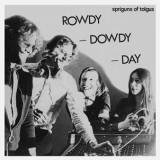
“Jack With A Feather” was the first vinyl album (after the private cassette only release of “Rowdy Dowdy Day”) by SPRIGUNS OF TOLGUS, just before they shortened their name to SPRIGUNS and signed to Decca, recording two classic progressive folk-rock albums.
Recorded in a cottage in the middle of nowhere, the album offers mostly traditional songs with charming homemade atmosphere, psychedelic touches, male / female vocals (by MANDY MORTON), acoustic/electric guitars, mandolin, dulcimer, fiddle… One of the tracks, “Seamus The Showman”, originally written by Tim Hart of Steeleye Span (future Spriguns producer), landed the band a deal with Decca Records.
Homemade, charming folk-rock with the lovely voice of MANDY MORTON, 12-string guitars, dulcimer, mandolin, fiddle… Fabulous covers of “Let No Man Steal Your Thyme”, “Matty Groves” and more!
Formed in the early 70s, Spriguns of Tolgus evolved from the folk duo of Mandy & Mike Morton and the scene centered around their Anchor Folk Club in Cambridge. In 1974, the band (Mike and Mandy plus Rick Thomas and Chris Russon) decided to produce a recording to raise funds for new equipment. Using a small tape recorder and mixing desk, “Rowdy Dowdy Day” was recorded live in the dining room at the band’s rented house. A small number of cassettes were produced and subsequently sold at the Anchor Folk Club.
With the original cassette impossible to find now, we’re glad to present a new vinyl edition.
“We grew up in the ’60s to the sound of The Beatles; we embraced flower power and all it brought with it; and we indulged ourselves in every type of music on offer. From America came The Byrds, Jefferson Airplane, Joni Mitchell and Bob Dylan, and here in the UK we celebrated our own heroes, Pentangle, Fairport Convention, The Incredible String Band and later Steeleye Span” – Mandy Morton
Catatonic Suns is Patrick Shields (guitar, vocals) , Jakob Christman (bass) and Caleb Strobl (drums) Catatonic Suns new album sees them blend the underground psychedelia of the late 80s / early 90s Pacific Northwest with the shimmering shoegazery of Britain from the same time. Heavy and soft guitars, songs that soar, these new recordings verge on the epic. For fans of The Verve (early), Screaming Trees, Truly, Ride, Slowdive, Alice In Chains. Pennsylvanian threepiece Catatonic Suns release their brand new album via Agitated records this autumn (Fall if you reside in the US), Patrick and Jake have known each other since birth, obsessing on punk rock, but the band actually formed in 2019. Vocalist / guitarist Patrick and fellow guitarist Llambro Llaguri began creating homemade psychedelic psychedelic 4 track cassette demos during the Winter of 2015, taking heavy inspiration from an eclectic mix of acts ranging from Ween to R.E.M. As these early songs were created, the duo sought other like minded individuals in their hometown of Allentown, PA to take these primitive demos to the next level. It was then that Patrick recruited another childhood friend, Jakob Christman, to fill the role of bass along with another mutual friend Caleb Strobl completing the rhythm section of Catatonic Suns. In 2019, the group put out their first release, the Catatonic Suns demo, a collection of lo-fi recordings made by Patrick over the years. During this period, the band began to make a name for itself by playing shows across eastern Pennsylvania including the Lehigh Valley where local garage rock heroes Original Sins hailed from. During the months of August and September of the same year, Catatonic Sun's reputation for wall of sound psych-grunge was really brought to life when the group teamed up with local record producer guru Matt Molchany of Shards Recording Studio to track their debut studio venture “Aphelion” (more an extended EP). Self -Released in the December, the album found an audience beyond the local music circuit of Pennsylvania, even reaching countries such as the U.K.,Germany and Japan. The band continued to play shows growing their fanbase and honing their skills as a cohesive unit resulting in radio airplay across the country and a feature on the compilation “Pedal Worship” by Bummer Recordings. During this same period, Matt Molchany once again helped the band carve their next album (a full length) “Saudade” along with mastering engineer Matt Poirier (War On Drugs), which was also self released, in February 2022. They played plenty more gigs, and ventured to the west coast for some shows in LA with local friends Laurel Canyon, one especially wild night was with both bands supporting Strawberry Alarm Clock at the Whiskey A Go Go. Now a three piece and into 2023 the band record the 7 original songs and one Original Sins cover for this new release.. Recorded early 2023 at Shards Recording Studio, Bethelem, PA with tracking and mixing once again by Matt Molchany. Mastered by Mikey Young. Agitated/ Catatonic Suns intend to remaster/ reissue Saudade on LP / CD formats in 2024, to coincide with debut UK shows.
The early days of "Baltimore Club Music" saw it played at popular venues like Club Fantasy, The Ozone, Hammerjack's, and Paradox. DJs Sean Marshall, Marc Henry, Shawn Caesar (at DJs Outlet in Old Towne Mall), Scottie B and Danny Class (at Inner City Records), Technics (at Music Liberated), DJ Patrick (at Sound of Baltimore), and Diamond K and Kenny B (at Electronics & More) all contributed to the mix of hip-hop, house music and homemade beats that made up this new sound. "Booty Mission" (1992) is a creation of Shawn Caesar and Ty "Flex" James and is considered one of the most influential releases, an essential for any Baltimore Club Music fan. It is sure to remain timeless.
. It started in a cafe in Chico, California, with a flier, covered in glitter, wires, feathers, and assorted melted items, with a three-word advertisement: “Noise person wanted.” It wasn’t a sign. It was a sample. A tiny piece lifted from the visionary environment that the band XDS would continue building over the next couple of decades, hoarding an eclectic stockpile of collage materials/influences/approaches for assembling psychedelic dance-punk jams played with homemade instruments, blown-out samples, off-kilter drumming and dub baselines. Shoko Horikawa had come from Japan to (the small, music-crazy college town) Chico for school, and responded to Jesse Hall’s mysterious flier and a pitch to collaborate on making interesting sounds. The partnership would end up featuring her syncopated polyrhythmic drums alongside his vocals (through a duct tape-and-PVC-pipe mic) and custom-built Guitar-o-bass, plus synths/samplers and various noise-making devices. The two-piece Experimental Dental School eventually morphed into XDS as the duo moved the operation from Chico to Oakland to Portland and back to Chico, touring the world (playing alongside the likes of Deerhoof and other innovators) and releasing 11 recordings (on Cochon Records, German label TCWGA, etc.) as they went. On the new XDS album, Bicycle Ripper, the band’s genre-bending roots are as deep as ever, but the goal now is to be less “noise” people and more “fun” people. The songs are weird yet cohesive, with jittery grooves and inventive hooks. Throw a dart at the album and hit “Hot Panther, Cold Moon” for one random sample: an unrelenting fuzzed-out bass dances with a insistent drums; a sharp turn into sparse tin-can-guitar break; then a return to the dance floor with a bonus overdriven bass riff and full-throttle drums. The Panther stays hot whether she’s under the “hot hot sun” or the “cold cold moon.” It’s all very irresistible and, yes, really really fun
Kombinat 100, the suspiciously band-like live act from northern shores, are set to unleash their eagerly awaited debut album ‚Wege Übers Land’ (ways across the land). Here, everything we know and love about these notorious dancefloor smashers reemerges from the studio, squeaky clean and freshly rinsed, polished and arranged. An irresistible retrospective of Kombinat 100’s countless live gigs, there is no other way this album could have come about: All of the four Mecklenburgers’ tracks have their origins on stage.
So don’t be surprised if you find yourself moshing along from beginning to end! Kombinat100’s eclectic mix and match of influences touches on more genres than you could possibly think of, from techno, house, dub and pop to jazz and beyond, interspersed with plenty of lovingly crafted moments of homemade bliss. And it is precisely those moments, when the boys reach for their acoustic sidekicks, from accordion and melodica to congas and hammond organ, that our hearts miss a beat. Unafraid to flaunt grand emotions, melancholic opener ‚Flieg kleine Taube’ (fly away, dove’) and the sun-drenched sounds of ‘Hanne Nüte’ meet their match in the rocking grooves of ‘Out Of My Space’. In-between, the boys invariably return to their gig-inspired dancefloor roots – ‘Woterfitz’, ‘Del Maritim’ and ‘Der Pomel’ are set to move your heart, feet and mind. So, finally: a breath of fresh, Open Air for your living room!
Kombinat 100, der bandverdächtige Liveact aus dem Norden, veröffentlicht nun mit "Wege übers Land" sein lang erwartetes Debüt- Album. Das, was bisher den Dancefloor zum Einstürzen brachte, bekommen wir nun sauber im Studio aufpoliert und arrangiert. Dabei handelt es sich um eine Retrospektive der unzähligen Live-Gigs der vier Jungs aus Mecklenburg. Ihre Tracks entstehen auf der Bühne, sind für die Bühne konzipiert. Deshalb muss es auch niemenaden verwundern, wenn man von Anfang bis Ende mitgeht. Kaum ein Genre wird ausgelassen, wenn Kombinat 100 seine Einflüsse aus Techno, House, Dub, Pop und Jazz reflektiert. Aber auch die heißgeliebten handgemachten musikalischen Augenblicke dürfen natürlich nicht fehlen. Denn genau dann, wenn sie ihre akustischen Instrumente, wie Akkordeon, Melodika, Conga`s und Hamond Orgel zum Einsatz bringen, schlägt unser Herz am höchsten. Diese Tracks stehen zu ihren großen Gefühlen, wie der melancholische Opener-Track "Flieg kleine weiße Taube" oder das sonnenverwöhnte Stück "Hanne Nüte". In der Mitte wirds dann mit "Out Of My Space" shufflig und rockig. Dominiert wird das Album jedoch durch die Tracks "Woterfitz", "Del Maritim" oder "Der Pomel", welche ganz klar für den großen Floor zugeschnittenen sind. Endlich: Kombinat 100 gibt uns ein Stück Open Air-Feeling für's Wohnzimmer!
Imperial f.f.r.r. was Unrest’s breakthrough album in 1992. It has withstood the test of time and is now considered an indie-rock classic and one of the best albums of the 1990s. Formed in 1984, at Wakefield High School in Arlington, Virginia, the band started releasing homemade cassettes on their own Teenbeat label. Imperial f.f.r.r. is their sixth album and marked the arrival of original Velocity Girl vocalist Bridget Cross joining drummer Phil Krauth and singer/guitarist Mark Robinson. It was recorded by Wharton Tiers (Sonic Youth) at his home studio in Manhattan. After the release of Imperial f.f.r.r., the band released singles on Sub Pop and K and soon thereafter signed to legendary U.K. indie 4AD, releasing their final studio album Perfect Teeth in 1993. This limited edition features the original design and layout of the very first pressing from 1992. All the details have been recreated including the lyric sheet, the blue box around the amplifier on the front, the label art, and even the Ajax and No.6 Records logos. The original didn't have a barcode, so we've created a spiffy new removeable OBI card for that featuring a photograph by Mike Galinsky (The Decline of Mall Civilization) of the band playing at New York's Spiral club in 1991.
Tel Aviv-based musician Eyal El Wahab uses homemade instrumentation, often made from repurposed household items and discarded junk, for his latest El Khat album Saadia Jefferson, which deconstructs Arabic musical traditions and examines his identity as a Yemeni Jew living in Israel.
- A1: Siamese
- A2: First Day On A New Planet
- A3: Pow R Ball
- A4: Kewpies Like Watermelon
- A5: Phasers On Stun/ Sola Kola
- A6: Black Hole Love
- B1: Velvy Blood
- B2: Plastic Ashtray
- B3: Death 2 Everyone
- B4: Pachinko
- B5: (-)
- B6: Kernel
- B7: Road Song
- C1: It Is
- C2: On Yr Mind
- C3: Teen Dream
- C4: Majesty
- C5: Burriko Girl
- C6: Got The Sun
- D1: Silver Krest
- D2: Sucker/ Kitty Litter
- D3: Lo-Fi Scary Balloons
- D4: The Power Of Negative Thinking/ The Love That Brings You Down
In the days before “landfill” indie, and in rebellion against a developing Britpop orthodoxy, there were some weird but melodic bands coming of age outside London that drew inspiration from the US underground and the sparkly retro-futurism of Japan. Primitive guitar noise with art rock leanings, post punk DIY and fanzine culture. The best known of these bands was maybe Urusei Yatsura; “noisy stars”, named in honour of Rumiko Takahashi, legendary manga creator.
Back in 1996, after several increasingly well-received 7’s, the band travelled to Leamington Spa to record their debut album with John Rivers, producer of Swell Maps and Glasgow scene godparents, The Pastels. The resulting album won the group legions of new fans and gained them their first Independent #1 chart placing, alongside peers Ash and Super Furry Animals.
“These were fertile years in Glasgow, a scene with no name, no single sound, where the magic thread tying everyone together was words and works so personal, they couldn’t be mistaken for anyone else’s. ‘We Are Urusei Yatsura’ is a cascade of ‘why not?’ thinking. The way ‘Phasers on Stun’ spirals into ‘Sola Kola’; the sunburned 23-second improv at the end of ‘Pachinko’; the slack-echoing strings of the outro to ‘Road Song’ sprayed with the shrapnel of toy electronics. Pure pop magic, Ren & Stimpy on upstairs, ray-guns, Ian’s homemade walkie-talkie speaker, a beatbox, all sealed with a “Talking Tina” doll’s emphatic endorsement: “I love it”” – Nick Soulsby
Belgian junk jazz trio schroothoop (which translates as 'junk yard') bring together multi-instrumentalists Rik Staelens (wind & string instruments), Timo Vantyghem (bass & thumb piano) and Margo Maex (percussion). Their new album called 'MACADAM' will be out April 7 via Sdban Records, home of many strongholds in the lively contemporary Belgian jazz and groove scene.
In 2020, schroothoop first emerged with their much-acclaimed and infectious debut album Klein Gevaarlijk Afval (Small Hazardous Waste). "Music on homemade instruments with a surprisingly good result" (De Standaard). "Schroothoop show that material limitation can be liberating and that sometimes the source of new sounds is just old junk."(Written in music). "We assure you that this "scrap heap" is worth gold!" (Le Grigri).
On their second album, to be released on April 7, schroothoop explore the vast sounds of discarded objects found on the macadam streets of Brussels. Wooden crates turn into guitars and lyres. Scrap metal becomes a thumb piano, a cimbalom, or percussion bells. Their compelling collection of semi-improvised songs is born out of several fruitful residencies and live performances during which Margo Maex, Rik Staelens and Timo Vantyghem dive deeper into the possibilities and unique timbres of their DIY instruments.
The junk jazz trio find inspiration in traditional Afro-Cuban and North-African rhythms, New Orleans second line grooves, and Arabic Hijaz scales. On Macadam, the band also explore the realms of electronic music, not shunning hints of drum and bass, dub riddims and ambient soundscapes, using pitch shifting delays or gauzy reverbs. The album delivers a mesmerizing trip through the most diverse capital of Europe, mixed and post-produced by none other than sound wizard Dijf Sanders.
The trio originally met in the Brussels street orchestra scene. One night they found themselves jamming on trash cans, buckets and other illegally dumped materials. Soon after, they started building their own DIY instruments from street trash. Imagine flutes made out of pvc pipes, a scrap metal drum kit, thumb pianos made out of old kitchen knives, a tin can violin, worn-out cutting discs as gongs, and a washtub bass. Delivering their own brand of "junk jazz", Schroothoop literally gives junk a second life by immortalizing a whole range of lost and found objects through music. The Brussels-based group effortlessly incorporates jazz, Northern African music, and Afro-Cuban rhythms, resulting in a danceable and hypnotic trip through the city's melting pot.
Belgian junk jazz trio schroothoop (which translates as 'junk yard') bring together multi-instrumentalists Rik Staelens (wind & string instruments), Timo Vantyghem (bass & thumb piano) and Margo Maex (percussion). Their new album called 'MACADAM' will be out April 7 via Sdban Records, home of many strongholds in the lively contemporary Belgian jazz and groove scene.
In 2020, schroothoop first emerged with their much-acclaimed and infectious debut album Klein Gevaarlijk Afval (Small Hazardous Waste). "Music on homemade instruments with a surprisingly good result" (De Standaard). "Schroothoop show that material limitation can be liberating and that sometimes the source of new sounds is just old junk."(Written in music). "We assure you that this "scrap heap" is worth gold!" (Le Grigri).
On their second album, to be released on April 7, schroothoop explore the vast sounds of discarded objects found on the macadam streets of Brussels. Wooden crates turn into guitars and lyres. Scrap metal becomes a thumb piano, a cimbalom, or percussion bells. Their compelling collection of semi-improvised songs is born out of several fruitful residencies and live performances during which Margo Maex, Rik Staelens and Timo Vantyghem dive deeper into the possibilities and unique timbres of their DIY instruments.
The junk jazz trio find inspiration in traditional Afro-Cuban and North-African rhythms, New Orleans second line grooves, and Arabic Hijaz scales. On Macadam, the band also explore the realms of electronic music, not shunning hints of drum and bass, dub riddims and ambient soundscapes, using pitch shifting delays or gauzy reverbs. The album delivers a mesmerizing trip through the most diverse capital of Europe, mixed and post-produced by none other than sound wizard Dijf Sanders.
The trio originally met in the Brussels street orchestra scene. One night they found themselves jamming on trash cans, buckets and other illegally dumped materials. Soon after, they started building their own DIY instruments from street trash. Imagine flutes made out of pvc pipes, a scrap metal drum kit, thumb pianos made out of old kitchen knives, a tin can violin, worn-out cutting discs as gongs, and a washtub bass. Delivering their own brand of "junk jazz", Schroothoop literally gives junk a second life by immortalizing a whole range of lost and found objects through music. The Brussels-based group effortlessly incorporates jazz, Northern African music, and Afro-Cuban rhythms, resulting in a danceable and hypnotic trip through the city's melting pot.
- 1: The Tangled Tree
- 2: Only Me Only
- 3: It Would Not Be A Rose
- 4: Ghost Light
- 5: Silverline
- 6: Bells Ring
- 7: Something Familiar
- 8: The Birds
- 9: Homemade Heartache
- 10: Chicago
- 11: Things I Didn’t Need
- 12: Bathed In Light
- 13: Anyone But Me
- 14: I Never Learned French
- 15: Done
- 16: Workhorse
- 17: Words Were Never The Answer
Auf 'Onliness' blickt Josienne Clarke retrospektiv auf ihre Karriere zurück - mit Neuinterpretation von Fan-Favoriten, Perlen aus ihrem Katalog und mit einem neuen Song zum Abschluss. Durch eine neue Linse und mit Liebe zum Detail liefert sie eine 17 Tracks umfassende Platte von Herzen für ihre Fans. Erhältlich auf CD und in limitierter Auflage als Doppel-LP.