Few bands are as primed to capture their ecstatic live energy in masterful sonic detail like Terry Gross. Composed of three renowned engineer/producers (recording artists like Wooden Shjips, Moon Duo, Earthless, Big Business, and more) whose studio doubles as their jam spot and communal gathering place, the trio"s penchant for longform psychedelic escapades is able to be recorded with granular precision. The potency of the fellowship formed by drummer Phil Becker (Lower Forty-Eight, Peace Creeps, Pins of Light), bassist Donny Newenhouse, and guitarist Phil Manley (Trans Am, Oneida, Life Coach) lies in their ability to utilize their prowess as both players and record engineers to translate feeling with immaculate clarity. On Huge Improvement, Terry Gross embody a complex web of emotion with songs as ferocious and precise as they are agile and care-free, delighting in the catharsis of excising tension alongside one"s most trusted peers. Huge Improvement"s tongue-in-cheek title is rightfully earned. Like their debut Soft Opening, the pieces on Huge Improvement began as improvised studio jam sessions without expectations. The trio"s ability to plug in, play and have each experiment thoroughly documented opens up unparalleled avenues for further exploration and honing. The four mammoth slabs that make up Huge Improvement are driving, unrelenting excursions into the unknown. Whether burning white-hot or smoldering in plumes of smoke, the pieces stretch as much inwardly as they do cosmically, embracing every surprising turn. Terry Gross"s Huge Improvement morphs the trio"s search for communal connection and reprieve into a transcendent respite, a burst of focused energy to be enveloped in while facing the senselessness around us with a smile.
Search:hot 4
- The Dirt (Est. 1981) 3:52
- Red Hot 3:21
- On With The Show 4:03
- Live Wire 3:14
- Merry-Go-Round 3:21
- Take Me To The Top 3:43
- Piece Of Your Action 4:39
- Shout At The Devil 3:14
- Looks That Kill 4:07
- Too Young To Fall In Love 3:32
- Home Sweet Home 3:58
- Girls, Girls, Girls 4:30
- Same Ol' Situation (S.o.s.) 4:13
- Kickstart My Heart 4:42
- Dr. Feelgood 4:50
- Ride With The Devil 3:41
- Crash And Burn 4:13
- Like A Virgin 3:08
"A Music from the Netflix Film THE DIRT A 14 Classics + 4 New Songs recorded for the Soundtrack A Including “The Dirt (Est. 1981)” Featuring Machine Gun Kelly
2LP Gatefold Jacket on Black Vinyl"
For years, Benjamin Herman has formed a frighteningly tight trio with Ernst Glerum and Joost Patočka. Whether its compositions from Misha Mengelberg, jazz evergreens or original works, these are all interpreted with vision and “rollicking virtuosity’’ (Volkskrant). Erupting from Herman's creative spirit and the two worlds of Glerum (ICP Orchestra) and Patočka (Rita Reys), the formation’s work is always of the highest class.
The new album Trouble with the young and exceptionally talented singer/pianist Daniel von Piekartz adds a new chapter to their collaboration. Songs from Fats Waller, Henry Mancini and Sly Stone get a postmodern make-over that will inspire many concert-goers to willingly miss that last tram home. And naturally, the musical fireworks that we’ve come accustomed are still
Mike Paradinas, veteran producer and Planet Mu label owner has written a new album called 'Grush' and it's full of weird bangers that reclaim the 'dance' part of the woeful term IDM. A back-to-first-principles record, inspired in part by the group of artists IDM was coined for; melodic dance music that didn't come out of urban scenes, but interpreted them from a distance. The tracks on 'Grush' are all road-tested live favorites developed with feedback from Mike's touring partner and visuals guy Mora (Jan Moravec). It's a detailed and energetic journey which replicates the flow of a live gig. A lot of the tracks have been made in hotel rooms in response to shows, 'Imperial Crescent' is named after a Japanese Hotel, as is 'Belvedere' in Prague, while some tracks such as 'Hyper Daddy' were created specifically to play live. Drums are confidently at the fore here and the album feels like it traces Mike's musical history and interests neatly around his sweetly nostalgic melodies, with atmospheres and structures which twist and turn with a charming softness which contrasts with the tension in the drums. Take 'Hyper Daddy's' spiralling notes and twinkling piano which remind one of early Black Dog or Omni Trio rushing alongside splashy jungle drums, or the aquatic acid footwork of the title track with its drums softly bubbling and kicking. Elsewhere there's territory which harks back to his Tusken Raiders pseudonym, like the heads down Drexciyan funk of 'Windsor Safari Park,' which transforms from moody electro into a sunny hardcore track midway. The album is interspersed with Reticulum A, B and C at the start middle and end of the album which suggest a theme which carries across the music in an effortless and joyful way. 'Grush' is a strong album that works both for listening and DJing and a great snapshot of where Mike Paradinas musical head is at in 2024.Tracklist Vinyl A: 1/Reticulum A 2/Hyper Daddy 3/Fogou B: 1/Magic Pony Ride (Pt.4) 2/Imperial Crescent 3/Reticulum B 4/Grush C: 1/Belvedere 2/Raver 3/Windsor Safari Park 4/Hastings D: 1/Manscape 2/Metaphonk 3/Reticulum C
- In A Deserted Landscape (Read By Richard Hamilton)
- In A Little Hotel By The Deserted Sea (Read By Dieter Roth)
- In A Little Hotel By The Deserted Sea - A Landscape (Read By Duncan Smith)
- In A Little Hotel By The Deserted Sea - A Landscape Excerpt (Read By Richard Hamilton & Dieter Roth)
- Die Grosse Bockwurst (Read By Richard Hamilton, Dieter Roth & Friends)
Recital presents an artists’ record from the two giants Richard Hamilton and Dieter Roth. Hamilton (1922-2011) is revered as the father of British Pop Art as both theorist and practitioner, in addition to famously designing the artwork for The Beatles’ White Album. Dieter Roth (1930-1998) was a Swiss German artist who blithely ignored all artistic boundaries and aesthetic dictums. His oeuvre includes hundreds of artist books, almost half a thousand prints, sculptures, multiples and records, all balanced between magnetic playfulness and self-deprecating paranoia. Roth also ran his own record/book press Dieter Roth's Verlag and was a major force in the reckless improvisational music group Selten Gehörte Musik (1973-1979).
The two artists most significant collaborations happened between 1976 and 1978, beginning with a series of 74 paintings in which they reworked each other’s art. The paintings were made for an exhibition for dogs (as suggested by the late Marcel Broodthaers, to whom the works were dedicated) in Cadaqués, Spain. Hamilton and Roth then produced the catalogue Collaborations of Ch. Rotham with reproductions of all the paintings alongside four brilliant new collaborative texts. The narrative of the texts sprung from the “fairy story” (Hamilton) quality that emerged from these dog paintings – a hallucinatory tapestry of sausages, gestating giants, Sancho Panza, Don Quixote, and a donkey. Together they gallop, humorous and beautifully absurd, across the wild field of an imaginary seaside backdrop with endless garbled iterations of ever-mutating names riddled with mad typos.
For these recordings the individual texts were read by Roth and Hamilton, actor friend Duncan Smith, and a huge cast of British artists for the final play Die Grosse Bockwurst, performed at the Whitechapel Gallery in London in 1977. The recordings were first released on cassette on the Audio Arts label in 1978, and have now been remastered from the original ¼″ tapes for this double vinyl edition.
Also included are two booklets: one is a new essay written for this edition by artist and co-producer Malcolm Green (Red Sphinx, Atlas Press), alongside full reproductions of the Roth / Hamilton collaborative Ch. Rotham texts. Thanks to Björn Roth, Rita Donagh, Hansjörg Mayer, William Furlong, Tate Modern, and Hauser & Wirth.
Limited edition double-vinyl record of 300 copies in full color gatefold sleeve with over 70 minutes of audio recordings. Including two booklets: a 16-page new essay on Roth & Hamilton by Malcolm Green that includes new Roth translations, and a 20-page complete reproduction of the collaborative Ch. Rotham texts.
Anna Erhard returns with her third Album Botanical Garden, on which she expertly deconstructs social mores with her trademark lightness of touch, seeking out the funny side of life's everyday's frustrations with a breeziness and genuine warmth. Available on 180g black Vinyl Side A 170 Botanical Garden B.M.G. Academy Spa Package Side B Hot Family Stash Not Rick Teeth on the King
Jade Hairpins waste no time fulfilling their second album's titular demand. From its harmony-drenched opening note to its baroque-anthemic conclusion, Get Me the Good Stuff is positively loaded with musical ideas, an absurdist buffet of sound and aesthetic that comes with one hell of a floorshow as the Hairpins stack those ideas higher and higher, almost daring them to crash to the floor. Instead, those elements - punksploitation, power pop, baggy, funk, and Italo disco are just some touchstones - are not only held aloft, they defy gravity and convention. These pyrotechnics are, in true Jade Hairpins fashion, something of a sleight of hand. While the music swaggers and gallops, Get Me the Good Stuff grapples with anxiety and self-doubt, obfuscating pain and alienation with sparkling wit and some straight-up ravers. Get Me the Good Stuff opens with one of those, "Let It Be Me," in which Jonah Falco shouts lyrics about being alone with one's shortcomings against guitars, synths, and harmonized vocals that are on the verge of closing in. The song is just over 90 seconds long, hitting with the gnarled-barb ferocity of punk and the gleeful insanity of theatrical art rock. It is, in other words, overwhelming. Or it would be if Jade Hairpins - Jonah Falco and Mike Haliechuk - weren't remarkably nimble in their ability to bring unity to sounds by placing them in competition against each other. When those sounds are adjacent, like the glam and disco that saturate "Drifting Superstition," the thrill of those universes colliding in the heat of an absolutely filthy clavichord line turns its lyrics, about the habit of solving personal problems by ignoring them, into a winner's anthem on the order of Bowie or Hot Chocolate. Get Me the Good Stuff arcs towards unequivocal joy as Falco, Jade Hairpins' primary lyricist, breaks these cycles and attempts to run away with his dreams. The arc is roughly analogous to how the album came to fruition. Four years removed from Harmony Avenue, an album of material that proved too strong to be contained within the narrative universe of Fucked Up's Dose Your Dreams, Jade Hairpins have gelled as a live act - with Tamsin M. Leach and Jack Goldstein centering them on stage - and planted their flag in the UK punk scene in which Falco has embedded himself. Working out new material live, Falco noticed that crowds were digging into his unfinished lyrics, and the album tightened around the anxieties of being in the spotlight, of being worthy of attention. At times, those songs are eager to please, like the album's title track in which a winking self-deprecation rubs up against the self-congratulatory bombast of Freddie Mercury, Falco simultaneously turning heads as a shooting star and a burning car. Elsewhere, as in "Better Here Than in Love," Jade Hairpins pitch themselves towards creating gorgeous soundscapes that exist nowhere else, channeling postpunk through the glimmering haze of '80s Japanese electronic music. Theatrical and personal, absurd and true-to-life, playful and serious, Get Me the Good Stuff is album of tremendous personal and artistic growth that signposts towards dozens of potential futures to come. It's not only worth the attention, it continuously rewards it.
WE ARE WINTER'S BLUE AND RADIANT CHILDREN (WAWBARC) is the new quartet of Mat Ball (BIG|BRAVE), Efrim Manuel Menuck (Godspeed You! Black Emperor, Thee Silver Mt. Zion), and Jonathan Downs and Patch (both Ada). On "NO MORE APOCALYPSE FATHER" they present six modal lullabies drenched in seared distortion, slathered across striding electronic pulses. Ball and Menuck began creating music in and for the bleakest moments of Montréal winters: "We're honoring that idea of winter, when you come inside and your house is warm, a place that only exists because of how cold it is outside," says Menuck. They later recruited Downs and Patch to flesh out their initial ideas. Menuck met them in 2015 when recording Ada's final album at Montréal's Hotel2Tango _ where they reconvened to make this record. "NO MORE APOCALYPSE FATHER" is an album about witnessing bleakness from a place of safety. Carrying newfound descriptive depth, thanks to the quartet's open-ended songs freeing him from writing in meter, Menuck likens his lyrics to photorealism. On opener `Rats and Roses' he sings of an unnamed city struck by an unknown cataclysm, but the details are local: specifically, his neighbors inadvertently poisoning birds when tackling a rat infestation. It's backed by blown out synths and guitars reaching a soaring crescendo. "Seeing things from a distance and not being able to intervene happens a lot on the record," Menuck explains. "If you're a feeling and thinking person, that's just part of the human condition. We watch horror unfolding from afar, unable to do anything concrete to change it." A powerless witness, able to describe but not intervene. `Dangling Blanket From A Balcony (White Phosphorous)' references Michael Jackson holding his child over a hotel balcony in 2002_the bizarre media spectacle still lodged in Menuck's psyche. This and the album's closing track also elegize white phosphorous, a technology of war designed to light up battlefields but capable of inflicting horrific burns on those it touches. Illumination and horror in one, here underpinning scenes picturesque and terrifying. "The last song `(Goodnight) White Phosphorous' is deliberately like a lullaby," says Menuck. "Written from the viewpoint of watching white phosphorous falling outside your window." Scorched and tarnished and laden with harrowing imagery, "NO MORE APOCALYPSE FATHER" is also a record bathed in light: the bewilderment of hopeful spirits witnessing despair, watching a blizzard of distress unfold outside from a place of relative shelter and comfort. You could call that emotional ambivalence, maybe numbness. But those words are too passive for the weight of conflicted feeling resonating through the album. "I never know how I feel on an overcast day when the sun is still bright despite the grayness and the light is very flat. The colours become more saturated, and you see a single flower, say a morning glory, whose colour is so vibrant beneath the gray, I don't know if that's a lovely sensation or a terrible sensation. It's both," says Menuck.
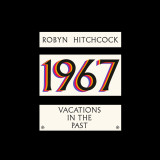
Robyn Hitchcock is a rock’n’roll surrealist. Born in London on March 3rd, 1953 he describes his songs as “pictures you can listen to”. As much a child of Dali, De Chirico, and JG Ballard as of his 1960s musical heroes, he is a master of the absurd, reveling in the beauty of the unexpected. His first publicly visible band The Soft Boys (1976 - 81) has remained an influential art-rock touchstone for generations of musicians. “I just want to be an obscure cult fringe,” he told the NME in 1978; the NME didn’t believe him, but he’s been true to his ambition. Without ever breaking the surface of pop culture Hitchcock has floated at a tangent to the mainstream for nearly 5 decades. His songs have been performed by REM, The Replacements, Neko Case, Gillian Welch & David Rawlings, Lou Barlow, Grant Lee Phillips, Sparklehorse, and Suzanne Vega with the Grateful Dead among others. A confirmed outsider, he nonetheless has devoted listeners around the world who attend his concerts, and also tune into the online streaming shows Robyn seasonally does with his wife, the singer Emma Swift. In 1996 he was the subject of Jonathan Demme’s in-concert film, ‘Storefront Hitchcock’. Robyn Hitchcock came of age in the 1960s when he attended Winchester College, an eccentric hothouse boarding school in the south of England. This is the subject of “1967”, which is both a memoir and an album, due for release in June this year. The memoir is a book “1967: How I Got There And Why I Never Left”, describing how the music of Bob Dylan, The Beatles, Jimi Hendrix and others drastically transformed the direction of his life when he left home for this strange new world. The companion record album “1967: Vacations In The Past” is a selection of the (mostly) hit songs of that year, re-recorded acoustically by Robyn with the help of some friends in Cambridge, San Francisco, and Sydney. He is currently preparing new material to release in 2025. “I like to keep busy”, he says: “We have all eternity to not exist”.
- Grow Wild
- Eskimo Song
- Fancy
- Harpers
- Scream Tall
- Country
- Eureka
- Second Skin
- My Favorite People
- Turtle Song
- Hot Day
- Martha
- Halfway Knowing
- 4: Brothers
- Ohio
- Jungle Jim
- Nevermind
- Blue Blanket
- Biding Your Time
- Shaking Your Head
- Simple Song
- Tell The Truth
- Fancy
- Gloria/Angels We Have Heard On High
- The Bathtub Song
- No Goodbyes
- Arms Akimbo
- May This Be Love
- Lie And Forget
To celebrate the 40th anniversary of their formation, Hugo Largo will release Huge, Large and Electric, a three LP set featuring all of the band’s studio output (1988’s Drum and 1989’s Mettle) including a full album of previously unreleased and live recordings (Hugo Largo Unreleased and Live 1984-1991). These albums are long out of print, and will be released on streaming services for the very first time. The set includes essays from Michael Stipe, who produced the band’s debut release Drum, along with Brian Eno and Hugo Largo member Tim Sommer.
Jade Hairpins waste no time fulfilling their second album's titular demand. From its harmony-drenched opening note to its baroque-anthemic conclusion, Get Me the Good Stuff is positively loaded with musical ideas, an absurdist buffet of sound and aesthetic that comes with one hell of a floorshow as the Hairpins stack those ideas higher and higher, almost daring them to crash to the floor. Instead, those elements_punksploitation, power pop, baggy, funk, and Italo disco are just some touchstones_are not only held aloft, they defy gravity and convention. These pyrotechnics are, in true Jade Hairpins fashion, something of a sleight of hand. While the music swaggers and gallops, Get Me the Good Stuff grapples with anxiety and self-doubt, obfuscating pain and alienation with sparkling wit and some straight-up ravers. Get Me the Good Stuff opens with one of those, "Let It Be Me," in which Jonah Falco shouts lyrics about being alone with one's shortcomings against guitars, synths, and harmonized vocals that are on the verge of closing in. The song is just over 90 seconds long, hitting with the gnarled-barb ferocity of punk and the gleeful insanity of theatrical art rock. It is, in other words, overwhelming. Or it would be if Jade Hairpins_Jonah Falco and Mike Haliechuk_weren't remarkably nimble in their ability to bring unity to sounds by placing them in competition against each other. When those sounds are adjacent, like the glam and disco that saturate "Drifting Superstition," the thrill of those universes colliding in the heat of an absolutely filthy clavichord line turns its lyrics, about the habit of solving personal problems by ignoring them, into a winner's anthem on the order of Bowie or Hot Chocolate. Get Me the Good Stuff arcs towards unequivocal joy as Falco, Jade Hairpins' primary lyricist, breaks these cycles and attempts to run away with his dreams. The arc is roughly analogous to how the album came to fruition. Four years removed from Harmony Avenue, an album of material that proved too strong to be contained within the narrative universe of Fucked Up's Dose Your Dreams, Jade Hairpins have gelled as a live act_with Tamsin M. Leach and Jack Goldstein centering them on stage_and planted their flag in the UK punk scene in which Falco has embedded himself. Working out new material live, Falco noticed that crowds were digging into his unfinished lyrics, and the album tightened around the anxieties of being in the spotlight, of being worthy of attention. At times, those songs are eager to please, like the album's title track in which a winking self-deprecation rubs up against the self-congratulatory bombast of Freddie Mercury, Falco simultaneously turning heads as a shooting star and a burning car. Elsewhere, as in "Better Here Than in Love," Jade Hairpins pitch themselves towards creating gorgeous soundscapes that exist nowhere else, channeling postpunk through the glimmering haze of '80s Japanese electronic music. Theatrical and personal, absurd and true-to-life, playful and serious, Get Me the Good Stuff is album of tremendous personal and artistic growth that signposts towards dozens of potential futures to come. It's not only worth the attention, it continuously rewards it.
Madonna is reissuing LIKE A PRAYER this summer to celebrate the acclaimed album’s 35th anniversary. Pressed on opaque silver vinyl, it will be the second release from the Silver Collection, a series of limited-edition vinyl reissues celebrating 40 years of Madonna’s illustrious career. The Silver Collection debuted last year with True Blue and will continue to spotlight other Madonna albums in the coming months.
Originally released on 21 March 1989, LIKE A PRAYER quickly became an iconic album, acclaimed by critics and cherished by fans. It was Madonna’s fourth studio release and one of the most personal albums of her career. The title track became Madonna’s seventh No. 1 hit in the US. In the UK, the album was a major success as well, topping the UK Albums Chart and solidifying Madonna's status as a global superstar. A massive international success, the album has sold 15 million copies worldwide and remains a favourite among fans.
The repress has been hotly anticipated from fans and we plan to run heavyweight online promotion including new content from the Madonna socials (FB 19m / IG 19m).
JOYCE ist das neue Projekt von Jimmy Watkins (ex-Future Of The Left) mit einer Reihe Musikerfreunde, darunter Phil Thornalley (The Cure), Joe Hicklin (BIG SPECIAL), Gwenllian Anthony (Adwaith) und Paul Broome (Fauxchisels). Ihr Debütalbum wurde von Thom Edward (God Damn) bei KK's Steel Mill produziert, dem Studio des Judas Priest-Gitarristen Kenneth 'K.K.' Downing Jr. VOYCE ist ein wahres Soundkaleidoskop mit schnellen Indie-Pop-Krachern, Hits mit herrlich ausgelassenem Noise-Rock und nachdenklichen Spoken Word-Momenten. Ltd. Auflage auf "Luna Yellow" Deluxe Eco Mix Vinyl. 10% der Einnahmen gehen an die Wohltätigkeitsorganisation Prostate Cymru.
- "Rejoice at the power of Joyce with Voyce!" - Craig Charles, BBC 6 Music
- "X-Posure Hot One" – John Kennedy, Radio X
Larry Mullins, langjähriger Mitarbeiter von Nick Cave and the Bad Seeds, Iggy Pop and The Stooges, Swans & The Residents, hat mit "Camissonia" ein einzigartiges und persönliches Soloalbum aus minimalen elektronischen Sci-Fi-Vignetten geschaffen, das lose auf den Schriften und dem Leben des deutschen Schriftstellers und Botanikers Adelbert von Chamisso basiert. Das Album ist nach der von Chamisso benannten Pflanzenart benannt, die von seinem Kollegen, dem Botaniker Johann Friedrich Eschscholtz, erstmals beschrieben wurde. Es ist größtenteils ein instrumentaler Soundtrack, der mehrere bemerkenswerte Ereignisse aus Chamissos Buch "Peter Schlemihls wundersame Geschichte (Der Mann, der seinen Schatten verkaufte, 1814)" sowie seine tatsächliche Überseereise an Bord von Otto von Kotzebues Schiff, der "Rurik", während der Jahre 1815-1818, als Botaniker, musikalisch illustriert. Das Artwork zum Album besteht überwiegend aus drei Holzschnitten, die zwischen 1915 und 1919 von Ernst Ludwig Kirchner geschaffen wurden. Kirchner hegte Anfang des 20. Jahrhunderts, also ca. 100 Jahre nach der Veröffentlichung von Chamissos Buch, eine ähnliche Faszination für das Werk wie Larry Mullins weitere 100 Jahre nach Erstellung von Kirchners expressionistischem Meisterwerkes - dem "Peter Schlemihl-Zyklus". Diesmal erweitert "Camissonia" das Chamisso-Erbe als Interpretation in Musik. Camissonia wurde 2020 während der Lockdown-Periode in Wien, Österreich, aufgenommen, die das belebte Zentrum Wiens in einen Zustand einer evakuierten Sci-Fi-Dystopie versetzte. Während Mullins als Musiker im Burgtheater arbeitete, fand er seine Sammlung von Instrumenten plötzlich für die kommenden Monate im Orchestergraben eingeschlossen. Er hatte jedoch eine kleine Auswahl an Elektronik in seiner Wohnung und hatte auch die Möglichkeit, sie aufzunehmen. Außerdem hatte er einen Stapel Bücher zum Lesen, und ganz oben lag - "Der Mann, der seinen Schatten verkaufte". "Die Bilder dieser Geschichte verließen meinen Geist weder bei Tag noch bei Nacht. Ich begann, Chamissos echtes Leben zu erforschen und fand ein wildes Abenteuer rund um die Welt auf einem Schiff! Eine parallele nächtliche Obsession mit den Sci-Fi-Filmen von Rainer Werner Fassbinder verschmolz schließlich zu einem bizarren Moment der Klarheit. Ich richtete mein karges Equipment ein, um zu sehen, welche Klänge ich erzeugen konnte, um die Bilder in meinem Kopf zu interpretieren. Ich entdeckte, dass die mir auferlegten Einschränkungen eine eigene Atmosphäre schufen, und so entstand jeden Tag ein neues Musikstück. Nach meiner Rückkehr nach Berlin wollte ich das Projekt so schnell wie möglich abschließen und keine weiteren Instrumente hinzufügen, um die seltsame Qualität zu bewahren. Ich lud zwei Sängerinnen ein, die ich in Berlin kannte, um bei zwei Stücken einen Chor zu singen, und ich fügte bei einem weiteren Stück selber einen Chor hinzu. Dann schloss ich die Tür und warf den Schlüssel weg."
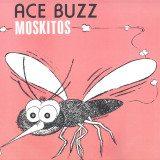
Ace Buzz is one of the various projects of Tony Baron and Gery Francois (the minds behind projects like "Teknokrat's" and others that would found their output on labels like Carrere). Potentially naive for some, but surely playful and raw, an exquisite example of the sound of Belgian "New Beat". Void of the usual aggressive temper known to the genre, "Moskitos" comes in with a slight juxtaposition of Balearic accents in the form of those classic, very simple, piano chords we might have heard enough of. The samples employed invoke the image of someone in a cheap hotel room in Ibiza without AC trying to kill the airborne vermin celebrated in the title while hallucinating from an August drug infused heatwave, who knows. On the B-side, things slow down into a deeper more serious mood, "Nuevo Mondo" departs from the usual New Beat potency into something a bit more digestible to the ear in a rather unique way, followed by a Remix that sounds more like a complete facelift of a cover version by studio maestro Anatolian Weapons.
Released on December 10, 1992, the song reached number one on the US Billboard Hot R&B/ Hip- Hop Songs chart and reached number eight on the Billboard Hot 100. Their second highest charting song behind "O.P.P.", the hit crushed any "one-hit wonder" labels and saw the group show appreciation to the genre that gave them their livelihoods.The b-side, "Written On Your Kitten," is the third and final single from the same album, 19 Naughty III.
- A1: Kotms Ii (Intro)
- A2: Ultra Shxt (Ft Key Nyata)
- A3: Set It (Ft Maxo Kream)
- A4: Hot One (Ft Tiacorine & A$Ap Ferg)
- A5: Black Flag Freestyle (Ft That Mexican Ot)
- A6: Headcrack (Interlude)
- A7: G'z Up (Ft 2 Chainz & Mike Dimes)
- A8: Lunatic (Interlude)
- B1: Sked (Ft Kenny Mason & Project Pat)
- B2: Choose Wisely (Interlude)
- B3: Cole Pimp (Ft Ty Dolla $Ign & Juicy J)
- B4: Wishlist (Ft Armani White)
- B5: 05 . Hit The Floor (Ft. Ski Mask The Slump God)
- B6: Hoodlumz (Ft A$Ap Rocky & Playthatboizay)
- B7: Kotms Ii (Outro)
Mit King Of The Mischievous South Vol. 2 präsentiert Denzel Curry eine Fortsetzung des Projekts und bringt den Sound zurück, der seine Karriere begründete. Während der erste Teil von King Of The Mischievous South aus der Perspektive seiner Raven Miyagi-Persönlichkeit entstand, einem Namen, den ihm
der Gründer des Raider Klan, SpaceGhostPurrp, gegeben hat, ist Curry in Volume 2 in seiner Big UltraPersönlichkeit zu hören - eine erweiterte Version von Raven Miyagi, die prahlerisch ist und in dem Erfolg schwelgt, den Curry in den letzten zehn Jahren seiner Karriere hatte. King Of The Mischievous South Vol. 2 zu machen, war schon seit einiger Zeit ein Ziel von Curry, obwohl seine ersten Versuche, dies zu tun, letztendlich in andere Projekte übergingen, nämlich sein Album Imperial von 2016 und 13LOOD 1N + 13LOOD OUT von 2020. Erst als er aufhörte, sich zu sehr um Volume 2 zu bemühen, entstanden die Songs von selbst.
Der Sound des Projekts ist eine Hommage an das große musikalische Erbe des Südens und enthält alte und neue Größen der Region sowie andere, deren Stil dem musikalischen Erbe des Südens verpflichtet ist. Nach all den weltfremden Abenteuern, auf die Denzel die Hörer/innen im Laufe seiner letzten konzeptionellen Alben mitgenommen hat, dient dieses Projekt als Schaufenster für den Spaß, die Spontaneität und die technische Meisterschaft, die ihn im Laufe des letzten Jahrzehnts zu einem der gefragtesten Talente
im Rap gemacht haben.