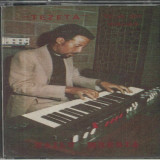
From their genesis as members of the Venus club in-house band in the early 70s, Hailu Mergia and the Walias Band were at the forefront of the musical revolution during an era where modern instruments and foreign styles superseded the traditional fare to become the staple sound of Ethiopia. No one would argue that the Walias were the trailblazing powerhouse of modern Ethiopian music. They were the first band to form independently without affiliation to a theatre house, a club or a hotel; unprecedented and risky as they had to raise all funding for expenses by themselves including buying equipment. They were the first to release full instrumental albums, considered to be commercially unviable at the time. They opened their own recording studio, with band members Melake Gebre and Mahmoud Aman doubling as technical buffs during sessions. They were also the first independent band to tour abroad. In short, they were the pioneers every band tried to emulate; some more successfully than others.
Odds are, any Ethiopian over the age of 35 who had access to TV or radio by the early 90s, will instantly recognize the sound of Walias. What is not a given is, how many would actually identify the band itself. Barely a day went by without hearing the Walias either in the background on radio or as an accompaniment to various programs on TV.
This Tezeta album, the band’s second recording, released in 1975, is one of those that have been impossible to find for nearly three decades. Sourced by Awesome Tapes From Africa and expertly remastered by Jessica Thompson, its unique and funky renditions of standards and popular songs of the day are so quintessentially Walias, flavorful and evocative. Hailu's melodic organ, unashamedly front and center in every track, makes even the complex pieces accessible.
Profoundly engaging; it's an immersive trip down memory lane for those of us getting reacquainted with it, while also an enthralling and gratifying experience for fresh ears.
Virtually unknown recording outside Ethiopia.
Documents Mergia & Walias legendary early period.
Follow-up to reissue of hugely popular seminal Ethiopian instrumentals LP Tche Belew (ATFA012)
Cassette-only, released in 1975 on the band’s in-house label to fund their record store.
Beautifully-rendered instrumentals of classic Ethiopian standards.
Buscar:hot source
Another year has passed, and so it’s time for the latest installment in TAU’s huge compilation series, Spektrum. The Adana Twins have been collecting and curating hot new productions from a variety of sources, new and more established, compiling a V/A that distills that ineffable TAU sound into 16 diverse cuts. A few familiar names are representing alongside some fresh faces, introducing new talent as we do with each Spektrum release. With this special release you’ll receive the Spektrum zine, a printed publication with features on all of the artists who’ve contributed to this release (+DL Code). As a record label it’s our intention to innovate and entertain our supporters with creative treats and alternate ways of reppin’ our artists and music. We hope you enjoy it, and we’re sure this Spektrum release will keep you rocking, whether you’re at home or on the dance floor...
From their genesis as members of the Venus club in-house band in the early 70s, Hailu Mergia and the Walias Band were at the forefront of the musical revolution during an era where modern instruments and foreign styles superseded the traditional fare to become the staple sound of Ethiopia. No one would argue that the Walias were the trailblazing powerhouse of modern Ethiopian music. They were the first band to form independently without affiliation to a theatre house, a club or a hotel; unprecedented and risky as they had to raise all funding for expenses by themselves including buying equipment. They were the first to release full instrumental albums, considered to be commercially unviable at the time. They opened their own recording studio, with band members Melake Gebre and Mahmoud Aman doubling as technical buffs during sessions. They were also the first independent band to tour abroad. In short, they were the pioneers every band tried to emulate; some more successfully than others.
Odds are, any Ethiopian over the age of 35 who had access to TV or radio by the early 90s, will instantly recognize the sound of Walias. What is not a given is, how many would actually identify the band itself. Barely a day went by without hearing the Walias either in the background on radio or as an accompaniment to various programs on TV.
This Tezeta album, the band’s second recording, released in 1975, is one of those that have been impossible to find for nearly three decades. Sourced by Awesome Tapes From Africa and expertly remastered by Jessica Thompson, its unique and funky renditions of standards and popular songs of the day are so quintessentially Walias, flavorful and evocative. Hailu's melodic organ, unashamedly front and center in every track, makes even the complex pieces accessible.
Profoundly engaging; it's an immersive trip down memory lane for those of us getting reacquainted with it, while also an enthralling and gratifying experience for fresh ears.
Virtually unknown recording outside Ethiopia.
Documents Mergia & Walias legendary early period.
Follow-up to reissue of hugely popular seminal Ethiopian instrumentals LP Tche Belew (ATFA012)
Cassette-only, released in 1975 on the band’s in-house label to fund their record store.
Beautifully-rendered instrumentals of classic Ethiopian standards.

London-based musician Harriet Zoe Pittard aka Zoee has been described as an artist who writes 'personal pop for people who don't fit in' (Huck Magazine). Previously, Zoee has released singles through Ryan Hemworth's 'Secret Songs' imprint and Vegyn's label Plz Make It Ruins, as well as guesting as a vocalist on tracks with Hot Chip's Joe Goddard and with hyper-pop collective PC Music.Over the past two years Zoee has taken some time to nurture her voice and her sound. Her debut album 'Flaw Flower' is due on June 25th. 'Flaw Flower' is an honest and vulnerable glimpse into Zoee's interior world, a world she creates through marrying her real-life phone notes with imagery taken from modern works of literature such as "The Flowering Corpse" by Djuna Barnes, Sylvia Plath's "A Winter Ship" and Maggie Nelson's "Bluets". Through these 11 new songs, Zoee delves deep into her own emotional life, combining aspects of the everyday with the surreal in order to uncover the beauty found in being flawed. The record nods to the avant pop of the 80s, an era that Zoee has always been drawn to thanks to the expressive and trailblazing music of women including Anne Clark, Joan Armatrading, Cyndi Lauper, Rose McDowall and Anna Domino. The album is characterised by a mix of hi-fi and lo-fi instrumentation. 'The Loft' features a free jazz solo from acclaimed experimental saxophonist Ben Vince alongside stock GarageBand synths. 'Host' combines home demo backing vocals with an elaborate baby grand piano solo. Zoee sources foley sounds from YouTube and pulls from her own domestic field recordings, such as a microwave buzzing in 'Microwave' and a shower running in 'Evening Primrose', often using these sounds as the starting point for the songs. Maintaining intimate bedroom elements whilst developing a more expansive band sound, felt integral to the project, since that's where Zoee's writing process often starts, sat on her bed with her laptop and midi keyboard. Writing for the album began in October 2018 when Zoee started working closely again with friend and long-term musical collaborator Rowan Martin. As the material for the record began to take shape the writing and recording process also evolved with the addition of bassist Kyrone Oak and keys player Laura Norman, as well as contributions from Ben Vince and London pop artist Saint Torrente. "I feel like the songs on this album took me deeper into myself, the sad song that I thought was about a boy is still about that but it's also about loss, about self-determination, about not losing hope, about memory, about domesticity, about detachment, about my dad, about my mum, about change, about feeling incredibly alone, about growing up."
Everything has its right moment in space and time. And Rhode & Brown’s debut album “Everything in Motion” is no exception to this rule.
But first things first:
Hailing from Munich, Germany, Friedrich Trede and Stephan Braun are the DJ and producer duo Rhode & Brown. Growing up in two neighbouring villages near Munich both of them had been music enthusiasts since their early childhood. Friedrich played drums in punk bands at school and recorded rap songs in his bedroom, while Stephan, as childhood friend of Harold Faltermeyer's son, had the chance to experiment in the impressive studio of the legendary Donna Summer producer in his early teens.
By the late 2000s older friends started supplying them with DJ mixtapes and helped them sneak into clubs they weren’t allowed to visit, yet – cultivating their love for electronic music and club culture. And, of course, the Internet was their go-to source for finding the latest blog house tunes back then, too.
It wasn’t until October 2009 that their paths would cross for the very first (but almost last) time when introduced by a mutual friend: Back then Stephan was selling his old CDJ-player and Friedrich, who wanted to hone his DJ skills, ended up buying it: „When I got home and unpacked the player I realized that it was the wrong model. I thought Stephan was trying to rip me off - so I called him in a rage and demanded my money back.“ Friedrich laughs. To cut a long story short, the two met again the same evening, money and CD-players were exchanged, but luckily so was their passion for house and disco music. It was at that very moment that Rhode & Brown was born.
A lot has happened since the two played their first gigs together and made baby steps in music production. In the past 10 years they established themselves as one of the most reliable house producers around with rock solid releases on Toy Tonics, Shall Not Fade, Public Possession or their own Slam City Jams imprint. As well as becoming a household name in the DJ world, sharing the booth with the likes of Palms Trax, Dam Swindle, Jamie Tiller or Octo Octa - spreading their infectious "Dancing Deejays" vibes around the globe.
Following the great reception of last years „Aku Aku“ EP, June 2021 will see the release of Rhode & Brown’s debut album on Permanent Vacation. A record that showcases their open minded approach to making music and a passion for the nuances between genres - „We found inspiration for this album in all corners of our record collection. That means we are as much influenced by disco or 80s synth-pop as by house and techno of the last decades or the latest viral trap hit on Spotify“, the guys say.
On "Everything In Motion" you'll hear piano house / Italo disco hybrids alongside dreamy Balearic soundscapes and '90s-infused acid breakbeats flawlessly accompanying '80s synth pop anthems. Always infused with that signature Rhode & Brown magic. The album also finds them collaborating with some of the finest vocalists of the moment: Peaking Lights' own Indra Dunis is lending her voice to the title track for this special laid back California vibe, while Berlin's hottest export DJ City evokes a neon light romance affair on "Memory Palace", with a longing poem that makes you wander the rainy streets at night with your walkman on.
At a time when suddenly everything seems to be standing still, Rhode & Brown undeterred moving forward... true to their LP’s title.
"Can you say it again" is the result of a multidisciplinary project between pieter dudal and brussels based photographer marlies van wielendaele. the latter offered a series of pictures taken on one of her trips to india with the initial aim of combining these with sounds recorded during the same trip. while working with these images and sounds, dudal found himself more and more alienating from the source material. the context in which these has been registered was unknown to him and made it almost impossible to create a set of new meanings within the Indian context surrounding the source material.
Hence, he radically erased and deleted all recordings he had and started all over again. instead of trying to understand the image and making connections with the sound material, dudal relied on the technique of free association to create his own narratives linked to the images. these small stories formed the basis to envision music and resulted in this album which heavily relies on tapeloops and piano recordings.
Dudal is the moniker of Belgian based musician pieter dudal. in 2014 he founded dauw, a label with a strong focus on the interaction between music and visual art. Beside running the label, he also makes music and has released his first ep in 2014 while individual tracks appeared on several compilations.
Unknown recording outside Ethiopia which documents Mergia Hailu & The Walias legendary early period. Beautifully-rendered instrumentals of classic Ethiopian standards, "Tezeta"is the follow-up reissue of the hugely popular seminal Ethiopian instrumentals LP "Tche Belew" (ATFA012). It was a Cassette-only release in 1975 on the band's in-house label, to fund their record store. From their genesis as members of the Venus club in-house band in the early 70s, Hailu Mergia and the Walias Band were at the forefront of the musical revolution during an era where modern instruments and foreign styles superseded the traditional fare to become the staple sound of Ethiopia. No one would argue that the Walias were the trailblazing powerhouse of modern Ethiopian music. They were the first band to form independently without affiliation to a theatre house, a club or a hotel; unprecedented and risky as they had to raise all funding for expenses by themselves including buying equipment. They were the first to release full instrumental albums, considered to be commercially unviable at the time. They opened their own recording studio, with band members Melake Gebre and Mahmoud Aman doubling as technical buffs during sessions. They were also the first independent band to tour abroad. In short, they were the pioneers every band tried to emulate; some more successfully than others. Odds are, any Ethiopian over the age of 35 who had access to TV or radio by the early 90s, will instantly recognize the sound of Walias. What is not a given is, how many would actually identify the band itself. Barely a day went by without hearing the Walias either in the background on radio or as an accompaniment to various programs on TV. This Tezeta album, the band's second recording, released in 1975, is one of those that have been impossible to find for nearly three decades. Sourced by Awesome Tapes From Africa and expertly remastered by Jessica Thompson, its unique and funky renditions of standards and popular songs of the day are so quintessentially Walias, flavorful and evocative. Hailu's melodic organ, unashamedly front and center in every track, makes even the complex pieces accessible. Profoundly engaging; it's an immersive trip down memory lane for those of us getting reacquainted with it, while also an enthralling and gratifying experience for fresh ears.
Drab Majesty's first ever release was the 2012 self-released cassette tape "Unarian Dances". Originally limited to 100 copies, tracks from this tape would eventually make their way onto the Completely Careless CD collection as bonus cuts. Now, along with the "Unknown to the I" 12" also released on March 26, these songs are finally made available on vinyl in 45 RPM 12" format, bringing all early Drab Majesty material from the Careless era (2012-2015) to vinyl. Mastered by Josh Bonati with beautiful new packaging by Nathaniel Young.
Drab Majesty is the project of Deb DeMure, the androgynous alter-ego of L.A.- based musician Andrew Clinco and partner Mona D. With its combination of reverb-drenched guitars, synth bass lines, commanding vocals, and rhythmic drum machine beats, this project is a stark departure from Clinco’s previous stints as drummer in Marriages and Black Mare. Dubbed “Tragic Wave” and “Mid-Fi” by DeMure, Drab Majesty eloquently blends classic 80s New Wave and hints of early 4AD with a futuristic originality.
Atalented multi-instrumentalist, DeMure composes all of the elements of DrabMajesty. However, rather than taking personal credit for the music, DeMure insists that the inspiration for the songs is received from an other-worldly source and that Deb is merely a vessel through which outside ideas flow inward. But Drab Majesty is more than just a musical project — it’s a methodical experiment in the identity of creativity. The character Deb DeMure is an enigma that eludes all expectations of gender and ego. When DeMure’s imposing 6’ 4” figure assumes the stage, Deb’s playful, harlequin-esque appearance, tempered by an ominous body language, and clashing with the dreamy, ethereal melodies comes across as a web of contrasts. The result is a perfect balance between seemingly conflicting messages, between the high and the low, the drab and the divine.
Australian award winning producer Plutonic Lab returns with a sophisticated, genre defying Double A Side Single ‘Blind Eyes’ and ‘Give It Up.’
Pluto brings together a strong list of talented artists: The soulful, smoky voice of Natalie Slade, New Zealand based Rwandan rapper Raiza Biza, and multi instrumentalist 8H.
The two tracks mark an intoxicating return for the producer, showcasing how he is able to bring together artists’ of diverse backgrounds and styles to display skills, restraint and synergy in a moment in time.
Plutonic Lab says, “I feel the sound of these two pieces have a great balance between electronic textures, acoustic instrumentation, jazz, tough beats and clout.”
The two songs are an example of Plutonic Lab’s collaborative, versatile nature and his ability to cross genres without limitations.
Plutonic Lab
Plutonic Lab has provided the backdrop for countless artists over a mammoth career spanning over two decades, collaborating with artists locally and internationally including Black Milk, Drapht, Hilltop Hoods, G-Love (US), Lanks, Guilty Simpson (US) and Wiley (UK).
Plutonic Lab’s 2016 LP “Deep Above The Noise” attained feature album status on Double J and Won “Best Hip-Hop Album’ at the AGE Music Victoria Awards 2016. Notably he produced Dialectrix’s 2013 album, “The Cold Light of Day” which was shortlisted for the Australian Music Prize, won the 2009 UK Mercury Prize for his work with Speech Debelle, and was nominated for ‘Best Urban Release’ at the 2008 ARIA Awards as half of the hip-hop duo Muph & Plutonic, who also placed 2 songs in the Triple J’s “Hottest 100.”
Pluto has toured across extensively across Australia, internationally and as tour drummer for Hilltop Hoods in the U.S, Canada, UK & Europe.
The latest from Mr. K and Most Excellent Unlimited pairs lowdown and stomping disco from an unlikely source with a funked-out floorfiller from some very familiar voices.
Minnie Riperton’s 1977 single “Stick Together” was an outlier in her catalog of smooth modern soul, an intentional nod in the direction of the prevailing disco sound. Co-written with Stevie Wonder, “Stick Together” in its original single release was divided into two parts, the first a fairly conventional uptempo cut with all the catchy qualities you’d expect from Stevie and the husband and wife team of Richard Rudolph and Minnie. It was the second half of the song that caught the ears of DJs who played for funkier dancefloors, however. Freddie Perren, a former member of Motown’s legendary Corporation collective of songwriters and producers, and a man then red-hot off his success with Tavares’ “Heaven Must Be Missing An Angel” and the Sylvers’ “Boogie Fever,” was on production duties, and the song clearly benefits from his disco-friendly touch. In Mr. K’s epic edit we are treated to a lengthy exploration of the second part of “Stick Together,” featuring keyboardist Sonny Burke (veteran of Marvin Gaye’s band and fresh from playing on Candi Staton’s disco smash “Young Hearts Run Free”) working out an irresistible Jingo-esque piano part, Riperton’s sensual ad-libs, and, as if that wasn’t enough, a cameo appearance by Pam Grier on finger snaps! Krivit’s 8-minute-plus edit passes way too quickly to get enough of the hypnotic groove — rewinds are called for!
Our flip side, “Body Language,” originated as an album cut on the Jackson Five’s last album of original material for Motown, Moving Violation, recorded before Jermaine left to go solo and the remaining brothers joined Epic Records in a new incarnation as the Jacksons. For such an obvious heater it’s puzzling why the label never released it as a single; but regardless of that apparent misstep, “Body Language” has long been a sure shot in many DJs’ bags. With his new edit, Mr. K presents the track in its ultimate form, loud, remastered, stretched out and rippling with energy over a full six minutes. With an iconic bass line that just doesn’t quit, and Michael and the boys in fine form, it’s impossible to imagine a situation where this wouldn’t set the room on fire.
Dehumanization is the only full length album from the band Crucifix. Recorded in 1983, it is considered a classic American hardcore album and a landmark of anarcho-punk.Dehumanization delivers a raging critique of war, violence, displacement, and the decimation of human rights and human dignity—themes at once global in scope and also completely endemic to Reagan-era America. The intensity of this message is matched only by the intensity of the sound: a heavy minimalist construction built on brutal guitar riffs, low-end distortion, hardcore fury and teenage speed. It is an album of pure raw power, a hot blast of personal and political outrage and musical adrenaline.Fusing California hardcore with metal and second wave British anarcho-punk, Crucifix carved out their own highly distinctive wall of sound on this release. Ignoring the rules of punk purism in favor of a well produced huge guitar sound, the album preceded much of the hardcore metal crossover of the mid-80s and played an influential but often unacknowledged role in the punk and metal subgenres that followed. “Annihilation,” the album’s opening track, has become iconic . Quoted often, it’s been sampled by Orbital and covered by A Perfect Circle and Sepultura. The original vinyl version of Dehumanization was released on the Crass Records offshoot label Corpus Christi in the UK, and has been out of print since the 1980s. This new Kustomized rerelease has been carefully remastered from an original vinyl source and adheres closely to the audio quality of the original. In addition, the six-panel foldout poster sleeve has been reproduced in its entirety. Taken together, the words, music and graphics of Dehumanization form a complete work and a resonant and enduring document of the period
We’ll get to the vocal content in a second, but first it’s time to acknowledge what a patchwork tapestry of genius ‘Peace is not the word to play’ is in terms of production. Large Professor being a prodigy on the SP-1200 is well established, but the way he flips parts of MFSB’s ‘TLC’ and Milly and Silly’s obscure ‘Gettin’ Down for Xmas’ with a sprinkling of Lyn Collins here establishes his credentials in the top tier.
Lyrically, it’s a tour de force, with Main Source taking exception with the misuse of the word ‘peace’ by the hip-hop fraternity. With even the most homicidal of gangster rappers dropping it at the end of tracks at the time, time was overdue for some regulation.
The album version makes its point pithily in a single verse, while the remix, included on the flip of this first ever 7” release, expands on the topic with new verses and some new samples too. It’s a welcome reminder of the time when remixes were remixes – not just the identical track with the latest hot rappers joining in.
Most of all, Main Source once again walk the fine line between lyrical lecture and head-nodding banger – the rare example of a track with a point to make that can still fill a dancefloor and get necks snapping.
• Samples MFSB’s ‘TLC’; Milly and Silly’s obscure ‘Gettin’ Down for Xmas’ and Lyn Collins
• First ever 7” release of the Remix
We’ll get to the vocal content in a second, but first it’s time to acknowledge what a patchwork tapestry of genius ‘Peace is not the word to play’ is in terms of production. Large Professor being a prodigy on the SP-1200 is well established, but the way he flips parts of MFSB’s ‘TLC’ and Milly and Silly’s obscure ‘Gettin’ Down for Xmas’ with a sprinkling of Lyn Collins here establishes his credentials in the top tier.
Lyrically, it’s a tour de force, with Main Source taking exception with the misuse of the word ‘peace’ by the hip-hop fraternity. With even the most homicidal of gangster rappers dropping it at the end of tracks at the time, time was overdue for some regulation.
The album version makes its point pithily in a single verse, while the remix, included on the flip of this first ever 7” release, expands on the topic with new verses and some new samples too. It’s a welcome reminder of the time when remixes were remixes – not just the identical track with the latest hot rappers joining in.
Most of all, Main Source once again walk the fine line between lyrical lecture and head-nodding banger – the rare example of a track with a point to make that can still fill a dancefloor and get necks snapping.
• Samples MFSB’s ‘TLC’; Milly and Silly’s obscure ‘Gettin’ Down for Xmas’ and Lyn Collins
• First ever 7” release of the Remix
FILM Recordings will release the debut LP from Denial of Service.
The album follows up EP's Sensou (2015), and more recently Contour & Shape (2017) - but marks the producer's most expansive release on the label thus far by some margin. Clocking in at 15 tracks, the lengthy opus draws from the same palette found on previous work - drum machine driven, heavily mutated Electro and IDM sit alongside low slung Techno cuts and arpeggiated EBM references. As ever, the production is stunning - crisp and plosive, as much a record for the club as it is a tempered headphone experience; whilst the mood channels that same dank, claustrophobic energy found on previous missives.
As a body of work, the LP displays the distinctive touch of a production veteran. The transformative shifts in structure on opener A Fine, New Mother Now belie a kind of boldness found less often across the contemporary electronic music landscape; and the drum programming on IDM-leaning explorations Autoimmune & Supercell bear the hallmarks of a perfectionist with time on his hands and in full control of his art. Space and the placement of sonic components plays a huge role in the artist's work and the 3 Stigmata of Palmer Eldritch displays this canny knack for generating both textural, wide angle soundscapes whilst maintaining that wrought-iron edge to drums and percussive elements - even more fervent, noisy compositions like Dr Manahattan manage to keep hold of this remarkable balance. It's impressive stuff, a fine and well worked meeting point between artistic vision and engineering prowess.
An elongated discussion, no doubt - but worth hearing every word. Each twist and bend, however sharp, remains carefully placed and beautifully recorded. Dryer works Slither & Junkie Foxtrot towards the LP finish offer a less introspective, more hard hitting angle to the work, and by the time the listener arrives at dual closer the Daisy Chain - Adults - they're ready for its heady catharsis.
The debut album from Denial of Service is a trip, and the line between club space and home listening environment is decidedly blurred - an emotive exploration of true psychedelic Electronica, delivered direct from the source.
WRWTFWW Records is feeling total bliss as it announces the full official reissue of two major works from the great Somei Satoh gathered into one LP: the mystic and meditative Emerald Tablet (1978) and Echoes (1981), sourced from original masters and available on vinyl with liner notes by passio-nate Japanese music connoisseur/collector/critic/dj Masaaki Hara.
Fall into the ambient vastness, let yourself go…
Originally released by highly respected label ALM, these pivotal pieces of late 70s / early 80s Ja-panese experimental music majestically showcase Satoh’s intuitive approach to composition and mastery of creating infinite worlds of sound from very, very little.
Emerald Tablet, recorded at the fabled NHK Studio of Electronic Music in 1978, is a spellbinding take on musique concrète meets tape music relying solely on sound harmonics from tubular bell, cymbals, and 'kin' (Buddhist standing bell) overdubbed endlessly, voyaging into vertiginous sonic depths.
Echoes was composed for the Mist, Sound, and Light Festival, a 10-day event organized by the hot spring tourist association of Kawaji, Tochigi Prefecture, held on May 20-29, 1981. It was played in the Kawaji hot spring's Ojika river valley, with 8 gigantic loudspeakers set up on hills surrounding the stream and connected to an octuple channel-tape system - thanks to a combined length of cables exceeding one kilometer - while artificial fog rose from a ravine and laser beams shot up on the mountains. Cinematic and resonating, this breathtaking piece from Somei Satoh is a transcending sonic experience.
Emerald Tablet / Echoes is reissued in conjunction with Somei Satoh’s Mandala Trilogy + 1 double LP, also available on WRWTFWW Records.
- A1: Volume (Lp1 Gyrate)
- A2: Feast On My Heart
- A3: Precaution
- A4: Weather Radio
- A5: The Human Body
- A6: Read A Book
- B1: Driving School
- B2: Gravity
- B3: Danger
- B4: Working Is No Problem
- B5: Stop It
- C1: K (Lp2 Chomp)
- C2: Yo-Yo
- C3: Beep
- C4: Italian Movie Theme
- C5: Crazy
- C6: M-Train
- D1: Buzz
- D2: No Clocks
- D3: Reptiles
- D4: Spider
- D5: Gyrate
- D6: Altitude
- E1: The Human Body (Lp3 Razz Tape)
- E4: Working Is No Problem
- E5: Precaution
- E6: Cool
- E7: Functionality
- F1: Efficiency
- F2: Information
- F3: Dub
- F4: Modern Day Fashion Woman (Version 2)
- F5: Danger
- F6: Feast On My Heart (Working Version)
- G1: Untitled (Lp4 Extra)
- G2: Cool
- G3: Dub
- G4: Recent Title
- G5: Danger!! (Danger Remix)
- H1: Crazy (Single Mix)
- H2: Reptiles (Channel One Version)
- H3: No Clocks (Channel One Version)
- H4: Spider (Alternative Mix)
- H5: 3 X 3 (Live)
- H6: Danger Iii (Live)
- E2: Modern Day Fashion Woman (Version 1)
- E3: Read A Book (Instrumental)
In the late-1970s Athens, Georgia was buzzing with a raw but sophisticated music scene. Traditional Southern rock had been the Georgia musical export for years before but the turn of the decade began producing new sounds from bands like the B-52’s, REM and Alt Rock luminaires Pylon.
Before they were a band, Pylon were art-school students at the University of Georgia: four kids invigorated by big ideas about art and creativity and society. However, Pylon were less of a band and more of an art project, which meant they had very specific goals in mind, as well as an expiration date.
While their time together as a band was short lived (1979-1983), Pylon had a lasting influence on the history of rock and roll. Throughout their brief history, they were able to create influential work that would help foster the post-punk and art-rock scene of the early 80s. Artists like R.E.M., Gang of Four, Sonic Youth, Sleater-Kinney, Interpol, Deerhunter and many more claim inspiration from the band.
Their 1979 single ‘Cool’ / ‘Dub’ reached legendary status, with Rolling Stone titling it one of the 100 Greatest Debut Singles Of All Time.
In 1980 the band released their first record, ‘Gyrate’, and began touring across the country in support of the release. The band would soon develop a following across the country and specifically in the bustling music scene in New York City. One of their earliest gigs was opening for the Gang of Four in the Big Apple.
Following the critical acclaim of their debut release, Pylon went back into the studio. They gleefully pulled their songs apart and put them back together in new shapes, revealing a band of self proclaimed nonmusicians who had transformed gradually but noticeably into real musicians. The resulting album, ‘Chomp’, was barely off the press when Pylon were booked to open a run of dates for a hot new Irish band called U2 (after previously playing two arena shows with them in the month leading to the album release). Most bands would have jumped at the opportunity but Pylon were sceptical. At a critical point in the life of Pylon, they opted to become a cult band rather than stretch their defining philosophy too far.
“We fully intended Pylon to be an almost seasonal thing that we were gonna do for a minute and then get on with our lives,” says Curtis Crowe, drummer for the band. “But it just never went away. It still doesn’t go away. There’s a new subterranean class of kids that are coming into this kind of music, and they’re just now discovering Pylon. That blows my mind. We didn’t see that coming.”
New West Records are proud to partner with Pylon to reissue ‘Chomp’ and ‘Gyrate’ back into the masses. Beautifully remastered from the original audio sources and pressed on vinyl (140g) for the first time in over 30 years.
New West Records also present ‘Pylon Box’, a comprehensive look at the band that features the remastered studio LPs ‘Gyrate’ and ‘Chomp’, the 11-song collection ‘Extra’ - which includes rarities and previously unreleased studio and live recordings - and ‘Razz Tape’, Pylon’s first ever recording: a 13-song unreleased session that pre-dates the band’s seminal ‘Cool’ / ‘Dub’ debut.
‘Pylon Box’ also includes a hardbound 200-page full colour book featuring pieces written by the members of R.E.M., Gang of Four, Steve Albini, Corin Tucker and Carrie Brownstein of Sleater-Kinney, Sonic Youth, Interpol, B-52’s, Bradford Cox of Deerhunter, Mission of Burma, Calvin Johnson of Beat Happening and K Records, Anthony DeCurtis, Chris Stamey of the dB’s, Steve Wynn of the Dream Syndicate and many more. Features an extensive essay chronicling the band’s history, with interviews with the surviving members of the band as well as members of R.E.M., B-52’s, Gang of Four, Method Actors and more. It also features never before seen images and artifacts from both the band’s personal archives as well as items now housed at the Special Collections Library at the University of Georgia and the Georgia Museum of Art, UGA.
In the late-1970s Athens, Georgia was buzzing with a raw but sophisticated music scene. Traditional Southern rock had been the Georgia musical export for years before but the turn of the decade began producing new sounds from bands like the B-52’s, REM and Alt Rock luminaires Pylon.
Before they were a band, Pylon were art-school students at the University of Georgia: four kids invigorated by big ideas about art and creativity and society. However, Pylon were less of a band and more of an art project, which meant they had very specific goals in mind, as well as an expiration date.
While their time together as a band was short lived (1979-1983), Pylon had a lasting influence on the history of rock and roll. Throughout their brief history, they were able to create influential work that would help foster the post-punk and art-rock scene of the early 80s. Artists like R.E.M., Gang of Four, Sonic Youth, Sleater-Kinney, Interpol, Deerhunter and many more claim inspiration from the band.
Their 1979 single ‘Cool’ / ‘Dub’ reached legendary status, with Rolling Stone titling it one of the 100 Greatest Debut Singles Of All Time.
In 1980 the band released their first record, ‘Gyrate’, and began touring across the country in support of the release. The band would soon develop a following across the country and specifically in the bustling music scene in New York City. One of their earliest gigs was opening for the Gang of Four in the Big Apple.
Following the critical acclaim of their debut release, Pylon went back into the studio. They gleefully pulled their songs apart and put them back together in new shapes, revealing a band of self proclaimed nonmusicians who had transformed gradually but noticeably into real musicians. The resulting album, ‘Chomp’, was barely off the press when Pylon were booked to open a run of dates for a hot new Irish band called U2 (after previously playing two arena shows with them in the month leading to the album release). Most bands would have jumped at the opportunity but Pylon were sceptical. At a critical point in the life of Pylon, they opted to become a cult band rather than stretch their defining philosophy too far.
“We fully intended Pylon to be an almost seasonal thing that we were gonna do for a minute and then get on with our lives,” says Curtis Crowe, drummer for the band. “But it just never went away. It still doesn’t go away. There’s a new subterranean class of kids that are coming into this kind of music, and they’re just now discovering Pylon. That blows my mind. We didn’t see that coming.”
New West Records are proud to partner with Pylon to reissue ‘Chomp’ and ‘Gyrate’ back into the masses. Beautifully remastered from the original audio sources and pressed on vinyl (140g) for the first time in over 30 years.
New West Records also present ‘Pylon Box’, a comprehensive look at the band that features the remastered studio LPs ‘Gyrate’ and ‘Chomp’, the 11-song collection ‘Extra’ - which includes rarities and previously unreleased studio and live recordings - and ‘Razz Tape’, Pylon’s first ever recording: a 13-song unreleased session that pre-dates the band’s seminal ‘Cool’ / ‘Dub’ debut.
‘Pylon Box’ also includes a hardbound 200-page full colour book featuring pieces written by the members of R.E.M., Gang of Four, Steve Albini, Corin Tucker and Carrie Brownstein of Sleater-Kinney, Sonic Youth, Interpol, B-52’s, Bradford Cox of Deerhunter, Mission of Burma, Calvin Johnson of Beat Happening and K Records, Anthony DeCurtis, Chris Stamey of the dB’s, Steve Wynn of the Dream Syndicate and many more. Features an extensive essay chronicling the band’s history, with interviews with the surviving members of the band as well as members of R.E.M., B-52’s, Gang of Four, Method Actors and more. It also features never before seen images and artifacts from both the band’s personal archives as well as items now housed at the Special Collections Library at the University of Georgia and the Georgia Museum of Art, UGA.
It's been four years since Sweatbox Dynasty, the fourth solo LP from Pennsylvanian experimentalist TOBACCO. In that time, Tom Fec's project has toured with Nine Inch Nails, provided the theme song to HBO series Silicon Valley, and teamed with Aesop Rock for a collaborative album as Malibu Ken. He now returns to Ghostly International for Hot Wet & Sassy, a full-length album oozing with his most playful and approachable songs to date, which, conversely, express notions of antilove, self-hate, and disappointment in others. Pop impulses have always surged beneath the surface of his sound - blown-out bass, analog synths, drum machines, and Fec's unmistakable analog gurgle and hiss - here they've bubbled to the top. "I feel like it's the most I've been able to refine what I'm doing," says Fec. "For the past decade I've had this motherfxcker on my shoulder that makes me pick away at structure and melody. Purposely covering up moments because I can. That really came to a peak on Sweatbox. So I wanted the opposite this time. Write the songs without ripping them in half. I went from 'what would the Butthole Surfers do?' to 'what would Cyndi Lauper do?'" And what would Trent Reznor do? Fec found his answer straight from the source. Their collaborative track, "Babysitter," fuses their voices into one deranged presence: "I'm the new babysitter," they alert, before pivoting into a menacingly saccharine bridge. The track tumbles on a tom fill, then a punishing synth line rips into a cacophony of drums and feedback like a lawnmower gnawing through the living room carpet. "This was new for me, but I wanted to write a song that was everything I am and have been, and then like one notch further. Trent was the notch further," adds Fec. The collaboration is a work of alchemy seamlessly blending TOBACCO's trademarks with Reznor's industrial rust and sonic gore. Downcast, sincere, woozy, "Jinmenken" might be the closest Fec has come to a ballad. "Maybe you can find me down the line," his vocoded delivery bounces along the beat. "It's me trying to write a Jets song," says Fec. Album opener "Centaur Skin" presents the stylistic concoction that has been the TOBACCO MO from the beginning, crossing dreamy melodic shimmer with the sinister tones and slime. This has become easier to digest, but also far more potent. A motorik beat steadies the track's galloping arpeggio, acting as a springboard for Fec's dark ruminations as well as an uncharacteristically crystalline synth solo. "It's my feel good self hate anthem. Don't worry, I'm good. It was fun to write." TOBACCO hasn't been reinvented, but it has been refined and distilled. Brighter, sharper, and far more dangerous because of it. Hot Wet & Sassy is practically staring at the sun without shades and feeling those corneas roast. Everything looks good as your vision fades. The pop-forward structures exert their undeniable hooks with baneful precision, pulling listeners into their clutches; once there, sugary melody rewards submission.
GES: Anthology of American Pop Music
Six great pop standards remembered: five pop songs are dissected by sampler, stretched, compressed, and re-collaged. In this way, their identity is lost. What remains is a vague concreteness: flashes of déjà vu and remote echoes that evoke the original.
GES (Gesellschaft zur Emanzipation des Samples)
-
Active members: Helmut Schmidt, Jan Jelinek
Founded: 2009
Headquarters: Federal Court of Justice, Karlsruhe, Germany
-
GES Glossary
Acoustic Surveillance Series
A 7-inch vinyl record series curated by GES focussing on historical methods of acoustic surveillance. Each record introduces a surveillance system from the past. Starting with Uguisubari in 2017, the series will continue with the release of Orecchio di Dionisio in 2021. GES is open to further suggestions on this subject.
Bundesgerichtshof (German Federal Court of Justice), Karlsruhe
“The use of audio samples as artistic practice may justify the infringement of copyright and intellectual property rights.” (ruling of the German Federal Court of Justice pertaining to Metall auf Metall II, 2016). The court is also the official headquarters of GES.
Circulations
What happens to copyright claims when music from a passing car is captured in a street recording? Is it legal to use this recording freely or is it necessary to obtain licensing rights? Circulations re-enacts this recording situation: audio players are placed in public spaces, where they reproduce the desired sample material. The acoustically choreographed space is then recorded, creating a field recording in which everyday noises circulate together with seemingly incidental music.
Emancipation of Sampling
Fuelled by its criminalization, the act of sampling existing recordings forfeited some of its artistic prestige (see Sampling). GES wishes to rehabilitate and re-emancipate the practice of sampling as a form of art in its own right. Strategy: 1. Name samples and sources explicitly. 2. Choose samples that are as popular and as recognizable as possible (Beatles, Carpenters, etc.). 3. The editing and manipulation of the sample must not compromise its recognizability (negotiable). 4. Use as many samples as possible. 5. Always name more sample sources than were actually used in the composition.
Field Recording
A compositional practice widely used in sound art and ethnomusicology that involves the recording of natural acoustical phenomena. Two additional requirements are usually imposed: The recording process should take place outside a studio environment, i.e. outdoors. And the person recording does not generate any of the acoustic material him/herself. GES expands this definition by introducing the concept of choreographed public space (see Circulations).
Gambling
An acoustic event favoured by GES, already used in numerous sound collages (must take place in public). The most popular option is thimblerig, a cup and ball gambling game commonly played in the street. Compositional instruction by GES: Place an audio playback device in the proximity of a thimblerigger. Play works for orchestra (by Debussy or Mahler). Move slowly towards the gamblers with a microphone.
Helmut Schmidt
Multiple identity and fictional character devised by GES. Figures variously within the semiotic system of GES as member, guest artist or public representative. Following the historical example of Subcommandante Marcos (EZLN).
Kraftwerk
The German band founded by electropop musicians Florian Schneider-Esleben and Ralf Hütter (a.k.a. Die Prozessoren) is the natural enemy of GES. Protected by computer-generated avatars, Kraftwerk operates a quote-hostile cultural hegemony. Their strategy: Install a special brand in the collective consciousness by means of a sophisticated system of quotations and references that may in turn not be quoted by anyone else. Other bands with such delusions of omnipotence: U2, Metallica.
Marcel Duchamp
As the inventor of the readymade, Duchamp may be viewed as a precursor to the art of sampling. However, the artist is appreciated above all for his sonorous qualities, as his vocal silence has often been sampled and processed. It was the inspiration for Jelinek's radio play Zwischen.
Orecchio di Dionisio
This 65-meter-deep limestone cave in the Sicilian town of Syracuse, carved out of a hillside in ancient times, has exceptional acoustics: A person standing at the cave entrance can hear every word whispered deep down inside it. The painter Michelangelo da Caravaggio gave it its name (The Ear of Dionysius) in 1608. The cave indeed resembles an ear and – according to Caravaggio – had a specific function: The tyrant Dionysius I imprisoned his political prisoners in the cave in order to spy on them. Orecchio di Dionisio will be featured in the Acoustic Surveillance Series in the near future.
Sampling
Compositional practice whereby recorded music is fragmented, turned into sound collages and transferred into different contexts of meaning. Since the advent of affordable sampling technology in the 1990s, the music industry has been trying to criminalize and/or promote the practice. Both strategies are driven by the same principle: Profit.
Uguisubari
Sound-making floorboards in Japanese temple and castle complexes, featured in the Acoustic Surveillance Series in 2017. In the Edo period, the “nightingale floor” (literal translation of uguisubari) was a popular acoustic warning system. The principle was straightforward: When someone stepped onto the boards, nails would rub against metal clamps beneath the floor, creating a tell-tale squeaky sound that was said to resemble the chirping of the Japanese nightingale.
Wind
A generator of acoustic events and an amplifier/transmitter of existing sounds. A meteorological form of energy appreciated by the GES on account of its unpredictability. A series about wind as an acoustic phenomenon is planned. Working title: Hotel Corridors.
Zwischen (Between)
Radio play by GES member Jan Jelinek based on recordings of various public interview situations. From the speech of the interviewees (all of them eloquent personalities) the pauses between coherent utterances were extracted and assembled. What we hear is an archaic body language: modes of breathing, word particles and onomatopoeic turmoil. A key question for GES: Which comes first, personal rights or artistic freedom? For Zwischen, Jelinek used only recordings by public figures that were already available to the public.
- A1: Azu Tiwaline - Violet Curves (Feat Cinna Peyghamy)
- A2: Khalab - Sorry
- A3: Dengue Dengue Dengue Aka Dngdngdng - Hiperborea (Quixosis Remix)
- A4: Jd Twitch - Agyapong
- A5: Bkclx - Sisters Brew
- B1: Edrix Puzzle - Jonny Buck Buck
- B2: Don Korto - Samosa Beat 2
- B3: Rebecca Vasmant - Teen Town
- B4: Uffe - City's Dead (Wrapped In Plastic) (Wrapped In Plastic)
- C1: Planet Battagon - Wezlee's Disco Inferno
- C2: Clive From Accounts - The Rain
- C3: Jose Marquez - La Negra Lorenza
- C4: Guedra Guedra Presents Taxi Kabir - Couscous Curtain
- D1: Tamar Collocutor V - Everywhere (Live - Black Classical Speedbump Mix)
- D2: Don Korto - Samosa Beat 1
- D3: Ariwo - Flameback Dance
- D4: Batida - Aquecedor (Feat Karlon)
- E1: Petwo Evans - Wheels
- E2: Dengue Dengue Dengue - Semillero (Nicola Cruz Remix)
- E3: Sunken Cages - Sounds For Zanzi (Iyer Remix)
- E4: Babani Soundsystem - Touni Minwi
- F1: Collocutor - Lost & Found (Afrikan Sciences Remix)
- F2: Dengue Dengue Dengue - Amnative
- F3: Tamar Collocutor & Tenesha The Wordsmith - Yemaya (Vasmant Mixmaster) (Vasmant Mixmaster)
On the Corner goes beyond being a record label. It is a story of innovative artists from hotbeds of ancient-future* music across the globe. This 'Door to the Cosmos' compilation is the 10th full release (and an eclectic array of 20 EPs). OtCs rawkus sonic explorations are brought to the fore via 24 tracks making a heady blend of label mainstays and fresh family recruits. The label is an inimitable mixture of Miles Davis' 'call it what you want' attitude, the afro centric futurism of Sun Ra and the evolving electronic frontier where black music kicks it to the dance floor. 'Door to the Cosmos' expresses On the Corner's adventure; future sounds referencing the source, be it Detroit, UK bass culture, New Orleans or the Niger delta. The title riffs off of the otherworldly, afro futurist jazzer Sun Ra's infamous chant 'dare to knock at the door to the cosmos'. Sun Ra's sound and narrative bending inspires us to kick at the rules and push at the infinite, the ecstatic and the unknown through music by knock, knock, knocking at the door to the cosmos. The compilation is the first outing for a new raft of artists who are celebrated by the label and welcomed to a creative space brimming with the tales of unsung pioneers of the past and champion sonic explorers of the future.


