New York Blues Hall of Fame inductee Bette Smith returns with her 3rd studio album – ‘Goodthing’ – a triumphant injection of soul music and gospel into rock & roll. Produced by Grammy-winning producer Jimmy Hogarth (Amy Winehouse, James Bay, Paulo Nutini, Sia), the album showcases Bette Smith’s penchant for anthemic, feel-good Soul Rock carried by her signature raspy, soulful vocals inspired by legends Tina Turner, Aretha Franklin and Etta James.
Tracing elements of her sound to her childhood in rough Bedford-Stuyvesant, Brooklyn, Bette connects the soul music she heard on the corners with the gospel music she heard in church and around the house every weekend - “My mother listened to nothing but gospel,” she recalls, citing Mahalia Jackson and Reverend James Cleveland as other influences.
The album sees her sound scale new heights, and build on the accolades she received on 2017’s debut ‘Jetlagger’ and 2020’s ‘The Good, The Bad, and The Bette’, and her tremendous range and power combined with ‘Goodthing’’s infectious energy, solidify her position as an authentic and dynamic rising soul artist, an iconic force in music.
Suche:house force
New Year, same old Omar S - turning out the top quality tunes on a regular basis, all with his own unique sonic imprint but always with a fresh twist each time. This first outing of 2024 on his own FXHE opens up with 'Life Force' which pairs Smith's unique drum sounds - brushed metal, scruffy, raw - with his super sweet synths that always bring the warmth and soul. 'All The Little Hand's Around' is another metallic sound tech house cut with celebratory chord loops up top and well-treated samples, then 'Evil J' shuts down with rasping basslines and glistening 80s keys. Another fine 12" from the Detroit don.
Jimpster dons his Franc Spangler cap and joins forces with up and coming London-based producer and DJ Hudson’s Choice for a four track EP entitled Myatts Field. Touching on trippy slo-mo electronic grooves, tropical moods and percussive house jams it brings a more experimental and left field sound to Delusions Of Grandeur which we’re sure you’re going to love!
Opening track AcidMan sets the tone of the EP with a bubbling 303 line taking centre stage while pitched down vocals add a hint of menace, heightening the psychedelic mood. Dubby FX and analogue synth lines drift in and out of focus and give a live jam feel to the arrangement reminding us of something that might grace the decks of A Love From Outer Space. Heavily Percussed continues offering up a crazy percussion tool loaded with wonky cross rhythms, glitchy found sounds and a hypnotic synth sequence for good measure.
Flip over for Myatts Field, another slower tempo mutant discoid house groove which takes us on a deep trip into the jungle. Echoing sax and hazy vocals transport us to another world where Weather Report experimented with rolling four on the floor grooves and spacious dub.
Closing out the EP Roots picks up the pace with another percussion-heavy slice of tropical sounds which doffs a cap to masters such as Gregory and Osunlade. Steel pan melodic lines intersperse with chiming synth sequences making for an unusual yet hooky club track which will lock the dancers into its incessant groove.
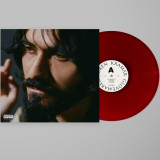
If the Chateau Marmont could sing. This would be it. Loren Kramar's voice vibrates with the shameless hum of a room after a celebrity exits Ecstatic aspiration. Doubt. Proximity. Desire. The album "Glovemaker" is about the skins we craft to be seen by the world, and Loren reminds us that we are all in drag. All exposed. No matter what gloves we slip on. "I'm a slut for all my dreams", Loren Kramar sings with Patti Smith brashness, "I'm a whore for them, I've got more of them". Loren's lyrics move like tinsel, shimmering bravely, then just as quickly, curling, fragile under the spotlight. Loren has always been obsessed with fame. Not with famous people, but with the electricity that perverts attention - the crushing desire to be truly seen. And all of Loren, and this obsession, is in this album. He grew up in the Valley, forced to hide his Barbies from his father, so the closet was a gorgeous Spanish ranch house on a gilded cul-de-sac crawling with celebrities. Naturally this gay boy wanted to be a child star so his mother secretly shuttled him to tap and jazz and figure skating lessons. "I've got hands and feet to put in the concrete", Loren croons, in "Hollywood Blvd", a song which clangs with brawny bravado. But "Gay Angels" reminds us that Loren's infatuation with stardom is inextricably linked with his queerness and his own desire to live outside of fear. To be famous is to be out. To be known. To be himself. "Glovemaker has become a kind of code for art making itself. A glove as a covering or mask that follows the contours of the life beneath it. As a song and a symbol, this is an album about studying and tracing a life - and then sharing what's there," Loren says. And his desire to share truth feels urgent. To listen to Loren is to understand there is no choice; the songs must tear through the air right now. This very second. "I see myself tearing and splitting and becoming a trampoline", he belts in "No Man," breaking our hearts right alongside his. Part poet, part theatrical diva, Loren loops together the tragedy of breathing on this planet, because like Eartha Kitt or Cat Stevens, Loren is at his core - an incredible story teller. This whole album is a shrine, a mantle atop a blazing fire of life, spread with the memorabilia of Loren; all of the pain and lust dazzling on unabashed view. This is a songwriter's album. Loren's lyrics are all his, and you feel it with every bright, Maraschino-cherry-like word that falls from his lips. "Like a lover, You scream and I shatter, I hit like a hammer" Loren sings. And we get to feel what Loren feels We live in his brain, riding his genre bending emotions, on a wave of modern pop. And the songs lift, they are anthems of belief, "Hollywood Blvd", "I'm a Slut", "Euphemism", "Gay Angels", are all odes to triumphing over the corroding powers of fear and doubt. And on this ride, Loren's voice is the guard rail, ever eager to stretch and transform, belting, talk-singing, multiplying, keeping us safe. "Glovemaker" slaps and soars. The album is an ecstatic overture to love and loneliness, to dreams and promises, to everything Los Angeles dangles. Buckle up. Loren knows how to craft space, how to move us through darkened bars, strobing arenas, beige carpeted bungalows and yellow lit highways. "How do you like LA?" Loren asks. I hope you love it.
Red Vinyl
If the Chateau Marmont could sing. This would be it. Loren Kramar's voice vibrates with the shameless hum of a room after a celebrity exits Ecstatic aspiration. Doubt. Proximity. Desire. The album "Glovemaker" is about the skins we craft to be seen by the world, and Loren reminds us that we are all in drag. All exposed. No matter what gloves we slip on. "I'm a slut for all my dreams", Loren Kramar sings with Patti Smith brashness, "I'm a whore for them, I've got more of them". Loren's lyrics move like tinsel, shimmering bravely, then just as quickly, curling, fragile under the spotlight. Loren has always been obsessed with fame. Not with famous people, but with the electricity that perverts attention - the crushing desire to be truly seen. And all of Loren, and this obsession, is in this album. He grew up in the Valley, forced to hide his Barbies from his father, so the closet was a gorgeous Spanish ranch house on a gilded cul-de-sac crawling with celebrities. Naturally this gay boy wanted to be a child star so his mother secretly shuttled him to tap and jazz and figure skating lessons. "I've got hands and feet to put in the concrete", Loren croons, in "Hollywood Blvd", a song which clangs with brawny bravado. But "Gay Angels" reminds us that Loren's infatuation with stardom is inextricably linked with his queerness and his own desire to live outside of fear. To be famous is to be out. To be known. To be himself. "Glovemaker has become a kind of code for art making itself. A glove as a covering or mask that follows the contours of the life beneath it. As a song and a symbol, this is an album about studying and tracing a life - and then sharing what's there," Loren says. And his desire to share truth feels urgent. To listen to Loren is to understand there is no choice; the songs must tear through the air right now. This very second. "I see myself tearing and splitting and becoming a trampoline", he belts in "No Man," breaking our hearts right alongside his. Part poet, part theatrical diva, Loren loops together the tragedy of breathing on this planet, because like Eartha Kitt or Cat Stevens, Loren is at his core - an incredible story teller. This whole album is a shrine, a mantle atop a blazing fire of life, spread with the memorabilia of Loren; all of the pain and lust dazzling on unabashed view. This is a songwriter's album. Loren's lyrics are all his, and you feel it with every bright, Maraschino-cherry-like word that falls from his lips. "Like a lover, You scream and I shatter, I hit like a hammer" Loren sings. And we get to feel what Loren feels We live in his brain, riding his genre bending emotions, on a wave of modern pop. And the songs lift, they are anthems of belief, "Hollywood Blvd", "I'm a Slut", "Euphemism", "Gay Angels", are all odes to triumphing over the corroding powers of fear and doubt. And on this ride, Loren's voice is the guard rail, ever eager to stretch and transform, belting, talk-singing, multiplying, keeping us safe. "Glovemaker" slaps and soars. The album is an ecstatic overture to love and loneliness, to dreams and promises, to everything Los Angeles dangles. Buckle up. Loren knows how to craft space, how to move us through darkened bars, strobing arenas, beige carpeted bungalows and yellow lit highways. "How do you like LA?" Loren asks. I hope you love it.
The collaborative project from Vincent Lemieux and Guillaume Coutu-Dumont, Flabbergast, returns this March with a new EP, entitled ‘Default Mode Network’ and coming via Swiss imprint Adam’s Bite.
Vincent Lemieux is a staple of the Montreal, Canada underground and a widely beloved DJ for his impeccable technique and selections, he’s also offered up productions on the Studio Club and DISDAT labels and a collaborative EP alongside Ohm Hourani for Jigit and co-founding the Musique Risquée alongside Akufen, Deadbeat and Stephen Beaupré.
Guillaume Coutu-Dumont, a fellow Montrealer has long been a prized producer for his unique spin on micro house and
deep house music with his music finding a home on the likes of Mule Musiq, Meander and Dokutoku among others. In 2015 the two joined forces for their Flabbergast debut on Circus Company, have gone on to release with Yoyaku and Copier/Coller, and here makes a triumphant return for Switzerland’s Adam’s Bite with four fresh original cuts.
Opening the EP is the playful ‘Peppermint Poddle’, fuelled by oscillating synth tones, twitchy percussion and saturated bass alongside a spoken word vocal. ‘Manger Du Bon Manger’ then
shifts focus to cinematic organ lines, jazzy drums and a snaking bass groove throughout.
‘Mou D’état’ kicks off the B-side and sees the duo dive deeper via ethereal atmospherics, their signature wonky, mind bending synths and an amalgamation of processed vocal murmurs. Lastly
‘Dans L’oeil’ sees César Merveille join the party, the trio working collectively to create a unique slice of percussion fueled microhouse with intricately intertwined organic percussion, dubby
synth flutters, cinematic pads and pulsating subs.
- The second album of hypnotic primordial music from Berlin-based harper/multi-instrumentalist/vocalist Andy Aquarius that explores the mystical fringes of ambient, folk, and classical music. Hush Hush is honoured to welcome back Berlin-based harper, multi-instrumentalist, and vocalist Andy Aquarius to the label to help present 'Golla Gorroppu,' his second album of hypnotic primordial music that explores the mystical fringes of ambient, folk, and classical music. A follow-up to his acclaimed 2021 debut album 'Chapel,' 'Golla Gorrupu' leans into the emotional natural sentiments of European Romanticism and American Transcendentalism and reveals itself as an animist take on an internal expedition of a mythological mountain range. The album’s title, 'Golla Gorroppu,' is a phrase coined by Andy that stems from his meditations on the Sardinian Gorropu mountain range, a territory he explored in between the autumn of 2020 and spring of 2021. His personal translation of the title is "The Throat of the Mountain.” With this transformative experience as his foundation, Andy found meaning in his latest work. He shares: “At the heart of the mountain range lies a massive gorge (Gola/Goia) which is said to house various creatures of the night, amongst them trolls, the 'mother of Goroppu' and the devil himself. The first half of the record is tuning into the moving forces of the mountain - first the Rains, Groundwaters and Rivers, then the animal kingdom, represented by the goat and inspired by a remarkable meeting with a Sardinian mouflon (a wild sheep) during a solitary hike.
The second half of the record channels the kingdom of rocks - moving from the mountains' murky intestines towards their loftiest peaks, covering all the mossy mysticism and crystalline vistas that lie in between.” Sounding as indomitable and spirited as the landscape it portrays, 'Golla Goroppu' is a wayward epic that cries for you to become the mountain goat you always dreamt to be. Through his lyrical harp expressions and gentle vocal accents, Andy Aquarius’ latest statement traverses a magical terrain full of intrigue, nuance, and beauty.
Two and a half years after their acclaimed last release 'Less Is Endless', De Beren Gieren ("The Bear Vultures") have finished their seventh full album. What Eludes Us is an ode to what escapes us and what we consciously want to look away from.
For this new full album, the band left aside the unimaginable beauty of the Norwegian fjords and crawled into a dusty recording studio in Bergen harbour. They did so with the celebrated and mysterious producer Jørgen Træen (a.o. Jaga Jazzist), who silently watched over the imperfections andinterference as a guiding force behind the adept playing of the electro-acoustic jazz trio.
The result turns out to be compelling music with deceptive rhythms, clear melodies and uninhibited electronics in a way that also managed to surprise them themselves. With De Beren Gieren, it is clear that there is still gold to be struck from the classic jazz piano format. Instead of changing direction, the band resolutely chooses to dig deeper.
LA based label Higher Ground debuts at Prime with London based artist and 'Semi Delicious' label head Demi Riquísimo, who has earned global recognition for his unique acid and italo house inspired sound. His first proper release on Higher Ground 'Windows 95 Anthem' follows recent notable tracks on Ninja Tune, DJ Tennis' Life & Death and his own label Semi Delicious, as well as collaborations with Carlita, UNKLE, TSHA, and more. The tracks receive remix treatments from tastemakers Spray and Chloe Caillet, with Chloe's remix arriving shortly after the launch of her own label imprint and global party series.
The truest Freaks Of Nature, Sleep D, are following up their hot ‘n’ heavy “F.O.N” series with Vol. 2; rammed start to finish with juiced up club exhilarations - you can’t afford to miss this.
Australia’s notoriously prolific duo are celebrating all things bass, the 3 tech-tinged party starters are a force to be reckoned with, an official warning of high voltage (and speed). Welcoming back Butter Sessions alumni Ivy Barkakati & Furious Frank, the sun kissed acid anthem Ahora Sí metamorphosizes into a peak-time prog punisher Border Control where sensual whispers weave their way through a slick sexy drum maze, a darker rendition merging past, present and futuristic fantasies. Post Pump elevates tech house to immaculate status, undeniable deep groove unlocked through their signature bump and bounce; a combination of wild A side audio energies finding their home on freaky finale Bass’d In Berlin. Close your eyes, strap in and surrender control, Sleep D once again showcasing what they do best; modern dance from down under.
Polycarp boss Simon Ferdinand delivers the cinematic electronica ‘Six Months’ EP in 2024, recorded across this time period and influenced by travels to Sicily, Baltimore and Zanzibar.
Hamburg, Germany’s Polycarp is the brainchild of Simon Ferdinand and has been active as a platform for the music of Simon under his own name, Basch and their music together as Bonn, as well as further notable artists such as Tilman and Johannes Albert. Here, Ferdinand returns to the imprint with another solo sonic adventure, traversing through a range of emotions and influences with elements of glitch, ambient, electro, breaks, EBM and more instilled within the project.
‘Broken’ leads the release and sets the tone through an amalgamation of hazy, glitched out jazz loops obscured and processed throughout. Title-track ‘Six Months’ then shifts towards a more ethereal deep house aesthetic with cossetting textures, stuttering synth
chords, elongated bass drones and jazzy organic drums. ‘In The Lab’ follows next and sees Basch join forces with Simon to create a haunting slice of broken beat deepness fuelled by murky low-end pulsations, saturated drums and gritty stab sequences.
First up on the flip-side is ‘The Beginning’, shifting gears towards classic electro tropes with boomy 808’s, unfurling arpeggios and twitchy resonant synth bleeps before ‘Santa Maria’ rounds out the release with a contemporary electronica feel, fusing fluttering square wave bass lines, crisp amen breaks and intricately intertwined textural elements.
Mood II Swing are giants of NY metro area club culture. On calibre with heavy-hitters like Masters At Work and Blaze, Lem Springsteen and John Ciafone's output boasts the bejeweled crown of deep house supremacy, spanning from the early 1990's to the latter part of the decade, molding and modeling a sound painstakingly tailored to the vanguard of minority and transgendered club scenes, pre-purge New York. One of their first and most explosive claims to the throne was 1992's "Wall of Sound" EP, a no-prisoners-taken masterpiece with the confidence and cockiness of two producers just out the gate and fully assured of their total domination of the craft. "I Need Your Luv" is, to this day, the indisputable measuring stick of cunty club tracks, opening as the curtain lifts with the outpouring of one fierce ruling diva, quickly picking up force in a storm of wide swinging-drum programs, punching bass drives and sparse, splitting synth stabs, all punctuated with unyielding vocal cut-ups and yearning cries. On the flip, "Penetration" delivers the same expert method, albeit with a more abstract, dreamy air about it, a bumping, endlessly ascending standard of the vocal-sample driven deep house track of the early 1990's, constantly building and morphing in its deceptive complexity. Brilliant, timeless and time-defying, "I Need Your Luv" & "Penetration" have finally been reissued for the first time since their original debut 21 years ago, the latest feature in Slow to Speak's ongoing CORE series, a testament to the formative years of NY house lore.
After winning three leading Belgian music awards with Humo's Rock Rally, De Nieuwe Lichting and Sound Track, girl band BLUAI is expanding its horizons. On their debut album Save It For Later, the trio leaves for a road trip through the sonorous areas populated by the likes of Big Thief, Pinegrove, Haim, and Alabama Shakes.
Save It For Later is a record not unlike a Polaroid picture. Belgian songwriter Catherine Smet captures the memories of her youth in lyrics with a perfume of Americana, country pop, and indie folk. The stories areset in her native Flanders, but close your eyes, and galloping horses on a ranch in Mississippi form the backdrop of BLUAI's debut album.
Catherine Smet (vocals, guitar), Mo Govaerts (drums), and Caitlin Talbut (bass) joined forces with producer Willem Ardui (blackwave.) for this record. BLUAI's instrumentation was expanded with banjo, twelve-string guitar, and lap steel. Engineer Tobie Speleman received 'Nashville tuning' as a briefing. BLUAI thus shifts the focus from indie rock to Americana and breaks open the band's frame of reference, with influences ranging from Maggie Rogers to Alabama Shakes to The Japanese House.
Save It For Later is the creation of a group that came together two years after the formation of BLUAI, found a common drive, and is now cruising at full speed. BLUAI is here to stay.
Australian DJ and producer James Mac joins forces with France based Vall for their Afro House rework of Aaliyah’s 2001 hit ‘Try Again’. This follows their debut hit single together 'The Boy Is Mine' which remained the #7 highest selling record on Beatport overall for 3 months. The vinyl includes official remixes from house music legend David Penn, French producer Holseek and Sydney based DJ/Producer on the rise Ben Miller, as well as the Sasson Remix of ‘The Boy Is Mine’.
The Rotation EP stands for a hypnotic journey through innovative soundscapes and is a manifesto for the creative evolution in electronic music between house and techno. The EP presents two dynamic tracks: 'Revolve' and 'Power'. The cyclical energy of 'Revolve' with the infectious remix by Sol Ortega and the electrifying force of 'Power', ampli¦ed by the unique sound of house legend Terrence Parker, unveils a new dimension of sonic diversity.
Rock & Roll, indeed. Ruth Brown’s sizzling full-length debut — also known by its eponymous title — symbolizes what was exciting, fresh, invigorating, and raw about the burgeoning style in its halcyon days. Originally released in 1957, and reissued here in audiophile quality for the first time in partnership with Atlantic Records’ 75th anniversary, the set remains a testament to one of the most pioneering and talented vocalists to ever command a stage.
Mastered on Mobile Fidelity Sound Lab's renowned mastering system in California, pressed at RTI, housed in a Stoughton jacket, and strictly limited to 2,000 numbered copies, Mobile Fidelity’s 180g mono LP of Rock & Roll plays with an immediacy, vibrancy, and fullness that showcase the reach, power, and emotionalism of Brown’s voice. The sound of her support musicians — brassy horns, swinging rhythm combos, echoing backing vocalists, rollicking pianists, jaunty guitarists — is made clear and vivid, helping the upbeat fare to jump, juke, and jive with newfound energy and exuberance. In a related manner, Brown’s slower, more understated material crackles with an intimacy and passion that let you know you're in the presence of a woman who has lived what she sings. The longtime Rock and Roll Hall of Fame member deserves nothing less.
In an era dominated by big-throated vocalists, few — if any — came grander than Brown. The singer, whose repeat million-selling ‘50s success with Atlantic Records led many to call the then-indie label “The House That Ruth Built,” charted two dozen R&B hits in the span of a decade for the fledgling imprint. Rightly coined “Miss Rhythm,” the extroverted Brown put Atlantic on the national map, became the best-selling female musician of the ‘50s, and established a precedent that would ultimately lead to Grammy and Tony Awards. Her early works have lost none of their fire or flair.
Akin to many full-length LPs of its era, Rock & Roll doubles as a collection. Its 14 tracks comprise some of the more famous sides Brown recorded for Atlantic, beginning in 1949 with the all-time-great rendition of the ballad “So Long,” and continuing through 1956. After the song caught the public’s ear, the Virginia native briefly became known for her smoldering style with lovelorn material and torch songs, approaching them (see “Oh What a Dream,” “Old Man River”) with a combination of pained sadness and hardened resilience that had no contemporary equal. Encouraged to pursue the style by Atlantic Records co-founder Ahmt Ertegun, her R&B-driven material soon made her a constant chart presence.
Demonstrating what fellow legend Bonnie Raitt deemed “sex with class and dignity,” Brown merges blues and jazz, swing and gospel in electrifying fashion. She dares you not to move, dance, and get on your feet. A majority of Rock & Roll explodes with uptempo runs and jaunty readings of hot-blooded R&B numbers. Sweaty and sultry, bawdy and bold, Brown eclipses the anthemic blare of the saxophones and joyful clatter of the 88s, singing with a slight catch in her voice and hurricane-gale force that threatens to blow the roof off whatever room her voice occupies.
Evidence abounds. Listen to her prod the band and encourage the band members to blow a fuse on a sizzling “Hello Little Boy,” complete with cries and wails; stretch her phrasing to the heavens on the swaying “Wild Wild Young Men,” laden with romp-and-stomp beats; plead and persuade on the snaking “5-10-15 Hours,” which flips the script on the age’s notions of dominance; use her raspy tones, high notes, and breath control to mesmerizing effect on the smash “Mama He Treats Your Daughter Mean,” recorded with a group led by Ray Charles; survey the scene and take charge on the steaming “As Long as I’m Moving”; and tap a classy albeit flirtatious vein on “Lucky Lips,” which dented the pop charts as her first crossover hit.
Throughout Rock & Roll, Brown knows the lyrical connotations and spirited architecture of the songs inside-out. Her assertive voice — never harsh, strident, or false — is the epitome of the passionate desires and sonic strains that turned into nascent rock ’n’ roll. Brown played a pivotal role in helping the style develop, the record a timeless reminder of a lasting legacy that will never be forgotten.
Miles Davis' A Tribute to Jack Johnson is the best jazz-rock record ever made. Equally inspired by the leader's desire to assemble the "greatest rock and roll band you have ever heard,” his adoration of Johnson, and Black Power politics, Davis created a hard-hitting set that surges with excitement, intensity, majesty, and power. Bridging the electric fusion he'd pursued on earlier efforts with a funkier, dirtier rhythmic approach, Davis zeroes in on concepts of spontaneity, freedom, and identity seldom achieved in the studio — and just as infrequently accepted by the mainstream.
Sourced from the original analog master tapes, pressed on MoFi SuperVinyl, and housed in a Stoughton jacket, Mobile Fidelity's 180g LP reissue brings it all to fore with startling realism. Benefitting from SuperVinyl’s nearly inaudible noise floor, superb groove definition, and clean, ultra-quiet surfaces, this 180g LP showcases everything — from the bold tonality of the headliner's white-hot trumpet solos to the decay of crashing cymbals, carry of wiry guitar notes, and echoes of the studio — in reference fashion.
Bristling with exuberance, Davis' high-register passages explode with authority and commanding presence. Around him, a barrage of urgent backbeats, knifing riffs, and supple bass lines emerge amidst black backgrounds. One of the most prominent differences long-time fans will notice is how much more aggressive, immediate, and vibrant the music sounds, with those aspects central to the composer's original desires.
Utilizing wah-wah and distortion, the go-to instrumentalist of the performances— guitarist John McLaughlin — attacks with a nasty edge, slashing style, and vicious streak that allows A Tribute to Jack Johnson< cross the until-then-impenetrable divide between rock and jazz. Davis puts both feet in the former camp and erases any gap. The stories of the record’s creation are nearly as legendary as the sounds within: Two sessions, multiple jams, different sets of musicians (several uncredited), and near-miraculous production perfectionism that made it all appear cohesive.
The least-well-known masterpiece of Davis' career, the 1971 record — seamlessly assembled and spliced together by producer Teo Macero — was a victim of limited record-label promotion. Audiences also didn’t immediately know what to make of its original cover art — faithfully replicated here. In addition, the powers that be at Columbia Records were directing the public’s attention to Miles at Fillmore, a completely different kind of album guided by two keyboardists. A Tribute to Jack Johnson practically lives in a different universe, one from the future. To many listeners who did manage to hear it — among them critic/musician Robert Quine, Stooges leader Iggy Pop, and renowned critic Robert Christgau — it surpassed everything that came before.
Indeed, Davis treated it as a personal manifesto: An opportunity to salute the Black championship boxer admired for his threatening image to the establishment and impeccable taste in clothes, cars, women and music. Davis explains in the liner notes his affinity for Johnson — a stance mirrored by the defiant music, which hits with a prize fighter's force and reflects the graceful elegance with which a pugilist navigates the ring — and closes the album with a Johnson quote read by Brock Peters.
Inspired not only by Johnson but by Jimi Hendrix and Sly Stone, Davis changed his approach and his band. He surrounds himself with a cadre of musicians in their 20s and, in the case of bassist Michael Henderson, a 19-year-old fresh from touring with Stevie Wonder. Henderson gives Davis what he requested: boogie-based grooves that don’t lose shape or direction. Soprano saxophonist Steve Grossman, drummer Billy Cobham, and organist Herbie Hancock adhere to a similar aesthetic that prizes brazenness, innovation, and energy.
In that vein, during a portion of “Yesternow,” Davis segues into a separate performance (which became known in its entirety as “Willie Nelson”) played by guitarists McLaughlin and Sonny Sharrock, bass clarinetist Bernie Maupin, keyboardist Chick Corea, bassist Dave Holland, and drummer Jack DeJohnette. Dig it!
Talking with jazz scholar Bill Milkowski — who himself noted how McLaughlin’s unrestrained style, decibel-forward volumes, and rapid-fire power chords engendered himself to the rock crowd at the same time that his harmonics and syncopation still definitely made him a jazz player — guitarist Henry Kaiser summed up part of the appeal of A Tribute to Jack Johnson as well as anyone, saying: “It’s a jazz record that way way more open than other jazz records at the time, but still not free jazz. McLaughlin’s rhythm guitar playing on ‘Right Off’ — the use of different chords in a rock shuffle than what anybody had used before — was revolutionary.”
And to think that’s just one aspect of a record that contains multitudes. “Never let them forget it.” Indeed.
HJirok is a mythical figure, conceived as a fictional character by Iranian-born Kurdish singer and artist Hani Mojahedy. Together with versatile music producer And Toma of Mouse On Mars, she combined a variety of sounds collected during their joint travels to Iraqi Kurdistan and elsewhere with heavily processed recordings of Sufi drum rhythms and setar melodies. The result is a driving, dubbed-out, and deeply intricate soundscape that perfectly sets the stage for Mojahedy's extended, unconventional vocal techniques and polyglot lyrics. Both informed by tradition and rigorously forward-looking, »Hjirok« (with a lowercase J) is at once a profoundly personal album and a universal utopian promise. As a ghost from the past, HJirok draws on Mojtahedy's memories to mould a new future out of them.
The foundation for »Hjirok« was laid in the city of Erbil in the Kurdish part of Iraq. During one of their stays in the region, Mojahedy and Toma recorded the three percussionists Hadi Alizadeh, Jawad Salkhordeh and Serdar Saydan as well as setar player Ali Choolaei from Motahedy's backing band while they were playingthe rhythms and notes that she had grown up with in the house of her grandfather in the Iranian city of Sanandaj. Her memories of that place revolve around hypnotic Sufi music, dervishes in deep trance, and ecstatic singing. Much like this music seemed to open a portal to other dimensions, the inhabitants of the house lived in a sort of alternative reality: It provided them with a hideaway from political circumstances. Following the Iranian revolution in 1979, a Kurdish rebellion ensued but was met with the utmost brutality by the new regime, which resulted in the death of thousands.
It is no coincidence that the music on »Hirok« would draw on rhythmic patterns that were passed on from one generation to the next for hundreds of years. »The project is rooted in the figures of the Sufi dervishes and thus a culture that precedes today's political, social, cultural, and religious systems,« explains Mohtahedy. »The Sufi sound travelled around the entire world. I like to think of it as a dialogue between peoples-one based on the rhythms of the drums and the sound of their voices.« Toma adds that by electronically transforming the recordings and enriching them with field recordings from both rural and urban spaces, they were able to use the stories told by the drums and the setar to create an entirely new narrative.
The story told by these eight pieces is hence a deeply personal, but also inherently political one. Moitahedy herself left Iran in 2004 and relocated to Berlin in 2010. Having continued to use her art as a platform to tirelessly advocate for the rights of the Kurdish people and women under oppressive regimes, she has not been allowed to return to her country of origin ever since. »Hani is singing for equality and there are people who are afraid of that-her femininity, her strength.« Toma says. Much like earlier Hirok sound installations addressed human-made climate change and other systemic ills, also »Hjirok« can hardly be disconnected from far-reaching struggles for liberation and equality.
This is also true on a thematic and even linguistic level. »The lyrics are about a promise,« Mojahedy says, citing Kurdish writer Ebdulla Pesêw as an inspiration. »At their core, these are about that day on which violence and fear become a thing of the past; what they tell you is ot not give up, to keep hoping,« she adds. The promise embedded in them is an emancipatory one. These contents are mirrored on a linguistic level: The lyrics were written in both Kurdish and Farsi, blurring the lines between the two languages and thus, Kurdish and Persian cultures.
Mojahedy, or rather HJirok, conveys these philosophical themes with elegance. Herversatile vocal performance is only loosely basedo n established styles. »Of course everything started with traditional rhythms, but we kept pushing things further and further, so Idid the same with my voice,« Mojahedy explains. »There were no boundaries.« The same can be said of the field recordings that she and Toma used. Whether it's conversations between members of the Pesmerge, the Kurdish armed forces, having a chat in meadow full of bunnies or the humming and buzzing of metropolises like Tehran: »Hirok« paints a sonic picture that is quite literally autopian one; that of a non-place in which different soundscapes, cultures and ways of life coexist peacefully.
What the album conjures up from Mojahedy's memory is not only a very specific place during a unique time in history as experienced by a single person. It is also ametaphorical home open to anyone who wishes to enter - promise of a better, more egalitarian future for everyone. Hence, HJirok will bring it on tour, presenting the material as an audio-visual live show that makes use of the photo and video material that Mojahedy and Toma have collected during their travels through Kurdistan.ja
Delicate and beautiful music from the combined forced of the recently ubiquitous East-Coast psychedelic combo Elkhorn and Pelt’s Mike Gangloff, laying down two epic raga-like performances captured on a 2022 collaborative tour. Gangloff—fresh from the triumph of his VHF solo fiddle album Evening Measures—has found a distinct instrumental voice, blending drone music and trad influences in way that really advances the tradition into new areas. “East Dauphin Suite” builds patiently on the interlocking acoustic guitars of the Elkhorn duo, with Gangloff’s hardanger fiddle carrying the melody over the top. The sound is a neat riff on American primitive, with just enough Appalachian-style touches via Gangloff’s careful glissandos cutting through the Vuh-type chords and patterns to create a unique and supremely melodic hybrid. “Summerfield Raga” takes things further out, with more microtonal variation in the embroidery, with assertive bowing and an increased energy level. Pressed in Chicago and housed in an amazing jacket by Jake Blanchard.