Aural architect Skygaze follows his 2022 ‘Astral Trip EP’ for Flumo Recordings, offering an advanced fusion of house, broken boogie, and future jazz, with five brand new reinterpretations from the extended Flumo family.
Skygaze’s diverse sound, breaking down barriers between house and techno, broken beat, jazz, ambient, hip hop, jungle, and even esoteric IDM, has been showcased across a growing catalogue of releases across Guayaba records, Riverette, Flumo and Thirty Three Circular, and remixes for Ed is Dead and Contours & Yadava; earning the producer support from the likes of Mr. Scruff, Simbad, k15, Bandcamp’s Andrew Jervis, and Gilles Peterson.
Feted singer, musician and producer Alysha Joy, rising producer Divorce From New York, ones-to-watch, Footnote and Karmasound, and Skygaze himself under his Jailed Jamie guise, joined by Lorenzo Soria, put a new spin on ‘Astral Trip’, whilst staying true to the originals’ spirit.
The multi-talented Allysha Joy, of 30/70 Collective & LCSM fame, remixes ‘’Night Heat’’, enhancing the groove with broken beats and her undeniable first-rate vocals.
Jailed Jamie & Lorenzo Soria, reshape ‘’Gimme Five’’ with rough synths and jacking bassline driven “Think” beats.
Divorce From New York boosts the tempo and infuses ‘’Wagwan’’ with Latin rhythms, perfectly balanced by high-energy synth lines.
Italian producers, Footnote and SofaTalk, delve deeper into ‘’Minor Mood’’, adding softer, retro-infused sound structures in a broken boogie mould.
Barcelona’s Karmasound explores the ruminating nature of ‘’City Cathedratics’’ and its counterbalance between broken beat and house.
The diverse but complementary set of remixes is sure to move bodies on sophisticated dance-floors this year and shed further light not only Skygaze’s production but also his talent for melody and song-writing. A feather in his and Flumo’s bow.
DJ Support:
Ashley Beedle (Back To The World Records)
Bolam (Lobster Theremin)
Crazy P (Hot Toddy / 2020 Vision)
Dan Curtin (Mobilee)
Fouk (Heist / Toy Tonics)
Joshua James (XOYO, Glorias, Rinse)
Laurent Garnier (F Communications)
Severino / Horse Meat Disco (Strut / !K7 Records)
Speaking Minds (Circoloco, Italy)
Поиск:house is dead
Все
- A1: Talkin’ Sh*T - Dj Paul & Juicy J
- A2: Triple Six Club House - Lord Infamous
- A3: Murderer, Robber - The Kaze
- A4: Orange Mound - M-Child
- A5: Left’em Dead - Crunchy Black & Tha Kaze
- B1: Nothin’ But Pimp Sh*T - Droopy Drew Dog
- B2: Bout The South - Dayton Family & Project Pat
- B3: Turn Into Killaz - Dj Paul & Nigga Creep
- B4: Notha Nigga Car/Clothes - Three 6 Mafifia & The Kaze
- B5: Drinkin’ N Thinkin’ - Indo G & K-Rock
- C1: What’s Next - Dj Paul & Juicy J
- C2: Favorite Scary Movie - Three 6 Mafifia
- C3: Catch A Blast - T-Rock & M-Child
- C4: Judgement Night - Koopsta Knicca
- C5: All For One - Gangsta Boo
- D1: Smoked Out, Loced Out - Three 6 Mafia, K-Rock & Project Pat
- D2: Bullet With Yo Name On It - T-Rock
- D3: Bitches On My Jock - D.j. Paul, Indo G & Gangsta Boo
- D4: After Dark - Juicy J
- D5: Life In Bondage - Koopsta Knicca
Body Parts is the debut studio album by Prophet Posse, a collaboration side-project of Three 6 Mafia with members of its then-label, Prophet Entertainment. The Prophet Posse group was known as a larger, “offshoot” version of Three 6 Mafia, as it included each member of Three 6 Mafia as well as all the artists signed to Prophet Entertainment. All the artists featured on the album were Prophet Entertainment artists with the exception of guest act Dayton Family.
- A1: The Great Hen-Yuan’ River
- A2: Summer Will Not Come
- A3: Six Coral Devils (Part Ii)
- A4: Six Coral Devils (Part Iii)
- A5: Six Coral Devils (Part Iv)
- A6: Six Coral Devils (Part V)
- A7: Six Coral Devils (Part Vii)
- A8: Definitely That Ketsal
- A9: The Waltz Windows On The Floor
- B1: Blue
- B2: Kwolyj Twist (Slow Twist)
- B3: Argolida (Part I)
- B4: Argolida (Part Ii)
- B5: Argolida (Part Iii)
- B6: Argolida (Part V)
- B7: Argolida (Part Vi)
- B8: Argolida (Part Vii)
- B9: Argolida (Part Viii)
- C1: All Secrets Of A Poem (Part Iii)
- C2: All Secrets Of A Poem (Part Iv)
- C3: All Secrets Of A Poem (Part Vi)
- C4: All Secrets Of A Poem (Part Vii)
- C5: Poliuwannia (The Hunt)
- C6: Smilywo Chodit’ Do Zymy (Walk Brave To The Winter)
- D2: Widen Spyt’ (Vienna Is Sleeping)
- D3: Wartowyj (The Stand Guard)
- D4: Procesija Mertwych (Dead Ceremony)
- D5: Na Skryni (On The Basket)
- D6: Untitled (Bonus Track)
- C7: Zradnyky (The Traitors)
- D1: Obminaj Misce (Around This Place)
The founders of Cukor Bila Smert’ (Ukrainian: Цукор– Біла Смерть, English: Sugar – White Death) band were Svitlana Okhrimenko (a.k.a. Svitlana Nianio), Oleksandr Kohanovs’kyi, and Tamila Mazur, who studied at the Reinhold Glier Kyiv Academy of Music in 1984-1988. In the summer of 1988, they got acquainted with Eugene Taran, a young guitarist and artist. He joined the band and also became the ideologist of Sugar – White Death. Moreover, Eugene coined the name for the band: the irony towards the Yellow Press. The musicians gathered at Kohanovs’kyi’s house, where they spent their free time not only playing music but also listening to and discussing new records and thinking about the conception of their new project.
For two years, the band recorded a few home-made albums, such as “Rhododendrons Coral Aspides” in 1988 (which is considered lost), where Kostyantyn Dovzhenko took part as a guitarist and sound engineer. He also replaced Taran during the recording session because Eugene was passing an exam at that time. The band also recorded another album – “Lilies and Amaralises,” in 1989, which is also considered lost. Eugene remembers that the band made a lot of recordings but did not pay so much attention to them. Sugar – White Death played live occasionally but spent more time creating their own sound, which was named by Oleksii Dekhtyar (a founder of “Ivanov Down”) as a “sugar calypso sound.” At that time, the music was mostly created by Oleksandr Kohanovs’kyi, and the lyrics were written by Svitlana Okhrimenko and Eugene Taran.
In February 1990, a quartet came to the Scientists House Studio in Kyiv, where they had one studio session only, recorded by Valerii Papchenko. Musicians played live for about one take. This session was represented on the “Mannered Music” compilation by several blocks – “Venus with Long Neck,” “The New Sissies,” and “Rhododendrons Coral Aspides,” which was shortened to “Rhododendrons” on the cassette (two songs from which – “Summer Will Not Come” and “The Great Hen-Yuan’ River,” dedicated to Grigorii Khoroshylov, the sinologist from Kyiv). The compilation cover design was created by Eugene Taran. Later, this tape got to Vlodek Nakonechnyj, the founder of Koka Records, a young Polish label, who released “Mannered Music” on cassettes and made efforts to invite Sugar – White Death to play several gigs in Poland.
In November 1990, Sugar – White Death played their last gig as a quartet in Kharkiv. They were invited by Sergii Myasoyedov, who curated the art association “Nova Scena” (The New Scene). The band played selected tracks from the albums “The New Sissies” and “The Shellfishes in Gold Wrappers” (the last one is also considered lost). Due to Sergii Myasoyedov's efforts, the performance was documented: he saved a lot of photos and fragments of soundboard recordings on reel-to-reel tape.
Later, Oleksandr Kohanovs’kyi and Tamila Mazur left Sugar – White Death: Oleksandr founded his own project Pan Kifared, and Tamila became a bass player of Shake Hi-Fi (whose co-founder was Eugene Taran). Sugar became a duo of Svitlana and Eugene. They started to focus on their next work: “Antinoy Is Leaving” in late 1990.
In 1992, they were also invited by Sergii Myasoyedov for a studio session in Kharkiv, where due to the efforts of Oleksandr Vakulenko, Sugar recorded the new album called “All Secrets Of A Poem”. Some tracks from the work (“Dead Ceremony,” “Vienna Is Sleeping,” and “Untitled”) were released on their next and last album, “Selo” (“The Village”). The rest compositions were published as a part of the compilation for the first time.
In the autumn of 1992, the musicians went to Poland, where Vlodek Nakonechnyj, who wanted Sugar to come to a “real” studio, organized their last recording session. Although the journey’s beginning was unsuccessful (Eugene’s guitar was taken away by a customs officer when crossing the border), the musicians worked fast during the session at the Arek Was studio at Marki on an 8-track reel-to-reel machine. Boleslav Blazhchyk took part as a cellist, playing the parts created by Svitlana. The album was completed in three days – the musicians spent two days recording and one-day mixing, mostly done by Eugene Taran. In 1993, this work was released as “Selo” (“The Village”) album on cassette tapes by Koka Records (remastered by Tadeusz Sudnik). Later, Sugar – White Death was disbanded.
Credits:
Cukor Bila Smert’: Svitlana Okhrimenko (lyrics, keyboards, piano, vocals), Eugene Taran (lyrics, keyboards, guitar), Oleksandr Kohanovs’kyi (piano, A1-B2), Tamila Mazur (cello, A1-B2), Boleslaw Blaszczyk (cello, C5-D6)
Cover photo by Vlad Urazovs’kiy
Photo archive courtesy: Vlad Urazovs’kiy, Vlodek Nakonechnyj (Koka Records),
Oleh Yuhrinov, Sergii Myasoyedov
Audio archive courtesy: Vlodek Nakonechnyj (Koka Records), Guido Erfen,
Sergii Myasoyedov
Liner notes: Vlad Yakovlev
Compiled by Dmytro Nikolaienko, Dmytro Prutkin and Sasha Tsapenko
© ? Shukai / Cukor Bila Smert’
2024
For the five members of Punchlove - multi-instrumentalists Jillian Olesen, Ethan Williams, Joey Machina, Ian Lange-McPherson, and visual artist Viz Wel - moving into a maze of a house in Brooklyn together was the transition that created the album they had been writing their whole lives. Quietly evolving from a bedroom project to a headlining live phenom, Punchlove has geared up a densely layered bed of emotionally serrated pain-pop songs that coalesce around a digitally-stimulated, emotional brand of modern neoshoegaze. Channels, out March 1st on Kanine Records, is an album of deeply prepared sounds, sharply honed instrumentals, and a band performing them that knows each other all the way through. Having met studying music technology in college, multiple members of Punchlove work mixing live bands at prominent NYC venues and in the studio. Using that expertise, the inhouse production, mixing, and recording is a palpable highlight; mastered by 2000s shoegaze stalwart Kurt Feldman (The Depreciation Guild), the record melds DIY recording and experimental sonic visions with studio quality. Punchlove is dedicated to pushing the envelope of experimental sonic practices in live performances, where they can be seen performing with real-time audio reactive analog visuals, executing real-time sampling and looping, self-mixing onstage, running radios and tape loops through effects, improvising, and playing guitar with everything from double bass bows to vibrators. In their home recording environment, experimentation is at the core of their creative process, where they integrate self-programmed digital signal processing systems, psychoacoustic phenomena, tailored feedback, elements of 3D audio, immersive field recording soundscapes, early electronic instruments, and experimental recording and mixing techniques into the greater backdrop of pop songwriting. FOR FANS OF: Radiohead, Wednesday, Hum, DIIV, my bloody valentine, The Smashing Pumpkins, bdrmm, A Place to Bury Strangers
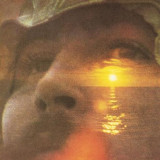
If I Could Only Remember My Name was the debut solo record from David Crosby. Recorded in 1970 after the passing of his girlfriend Christine and released in February of 1971, the album explores themes including loss and disorientation. The album features a who's who of contributors from the San Francisco Bay area including Paul Kantner and Grace Slick of Jefferson Airplane, Jerry Garcia of the Grateful Dead, and Santana, and his cohort from Los Angeles including Graham Nash, Neil Young, and Joni Mitchell.
The album has attained a cult status throughout the last 50 years, hailed for its spooky, psychedelic, and truly unique sounds.
AllMusic gave the album 4.5 stars, with reviewer Stanton Swihart writing: "With his ringing, velvety voice — the epitome of hippie crooning — and inspired songwriting, he turns If I Could Only Remember My Name into a one-shot wonder of dreamy but ominous California ambience."
All the hallmarks of a top-notch Analogue Productions reissue are here for you to savor: Mastered directly from the original master tape by Bernie Grundman and cut at 45 RPM. Pressed on 180-gram vinyl at Quality Record Pressings, and housed in tip-on old style gatefold double pocket jackets with film lamination by Stoughton Printing.
Chicago hip-hop outfit Angry Blackmen made up of Quentin Branch & Brian Warren (ABM) have been stretching their arms and tapping into different sounds since they smashed onto the scene with their debut single “OK!” in 2017. A prime introduction starring two emcees showing they deserve to wield the microphone and do so with good cause. Then barely a month later ABM released sophomore single ‘Riot!’ a complete shift in sound that still housed the foundation set in ‘OK!’ A few years later the duo would drop their debut project ‘Talkshit!’ which saw them amass the following they have today.
‘The Legend of ABM’ immediately smacks the listener in the eardrum leaving no second wasted and jumping straight to the point. The 11-track adventure truly presents an expression of hip-hop that we haven’t seen before, infusing multiple sounds with the 50-year old genre. To go even deeper, Quentin Branch & Brian Warren are teaching a masterclass in top-notch poetic lyricism, creating both accessible and mind-bending music. “Stanley Kubrick” has both heroes shattering the beat with their braggadocio for what is just the appetizer to prepare the listener for what’s to come in the next ten tracks. ‘Sabotage’ tells the story of two Black men hustling through the trenches of capitalism and the effect that this journey has on them. While the album exudes catchy wordplay and spine-splitting production, if you lift up the hood, ABM is spinning a tale of depression, existentialism and self-reflection that isn’t always pretty. “Dead Men Tell No Lies” is another mutation in sound for the duo, where the industrial sounds clash, violently yet perfectly together with a blistering hook harkening to the end of time. Warren & Branch’s raw poetry educates the listener of the pre-apocalyptic world we’re already living in throughout this project. ‘The Legend of ABM’ is not an excursion for the weak, the production is meant to snap your spine in half, the lyrics from Quentin & Brian are pathos-infused and relatable to anyone simply trying to survive.
- The Black Angels' classic sophomore album - Special color edition pressed on Metallic Silver Wax. - Triple LP housed in a Stoughton tri-fold gatefold jacket // "The Black Angels bring the aura of mid-1966 the drilling guitars of early Velvet Underground shows, the raga inflections of late-show Fillmore jams, the acid-prayer stomp of Austin avatars the 13th Floor Elevators everywhere they go, including the levitations on their second album, Directions to See a Ghost. Mid-Eighties echoes of Spacemen 3 and the Jesus and Mary Chain also roll through the scoured-guitar sustain and Alex Maas' rocker-monk incantations. But he knows what time it is. 'You say the Beatles stopped the war," Maas sings in `Never/Ever.' `They might've helped to find a cure/But it's still not over.' Even so, this medicine works wonders." - David Fricke, Rolling Stone Last time we met The Black Angels, they were staring into the desert sun somewhere outside of Austin, Texas. Two years later, night has fallen and the spirits have come out. It's time for The Black Angels to provide Directions On How To See A Ghost. If you're familiar with Passover, the band's 2006 debut, you'll know that The Black Angels's music alone is enough to invoke spirits. There's a name for the band's sound; they call it `hypno-drone 'n roll'. It's the sound of long nights on peyote, of dreams of a new world order, and of half-invented memories of the seamy side of '60s psychedelia. While the Iraq war is still a major influence on the band's lyrics, there are new forces at work here, including Eugene Zamyatin's dystopian novel We and in Christian Bland's words "psychic information from the past and future." See, The Black Angels really are in contact with ghosts. "Civil War battlefields are prime spots for seeing ghosts," says Bland. "One time at Kennesaw mountain in Georgia, I was climbing the mountain in the middle of June and it must have been close to 100 degrees, but in this one particular spot it was very cold. The hairs on my neck stood up and I knew something strange was happening. Then the wind whispered something like `retreat,' and I did. I later learned that the spot where I was on the battlefield was known as `the dead angle', the place where the fiercest fighting took place. The confederates ended up retreating from the mountain towards Peachtree Creek." The Black Angels formed in Austin, Texas, in 2004, comprising from six people (now five) from very different backgrounds. Singer/vocalist Christian Bland is the son of a Presbyterian Pastor and was raised in a devoutly religious household. Bassist / guitarist Nate Ryan was born on a cult compound and drummer Stephanie Bailey claims she's a descendent of Davy Crocket. She and Alex Maas (vocals/guitar) believe a little girl in a red linen dress haunts the group's home. The band released Passover in 2006 to critical acclaim for both the album and the song "The First Vietnamese War". Most of all, Passover established The Black Angels as a band with brains, balls and a strong message. And this time around, the message is there to read in a 16-page booklet that comes with the album. "Our central theme is that people need to open up their minds and let everything come through, and to learn from past mistakes," says Christian. "Only then will we understand the reality of this world and progress beyond where we are now as humans. We've built upon that theme with Directions to See a Ghost. We want people to study the booklet we are providing with the album in hopes that they will be able to relate each song to something in their life." _"War is Peace. Freedom is Slavery. Ignorance is Strength. Keep Music Evil."_
Das Debütalbum "Nostalchic" des britischen Künstlers Lapalux alias Stuart Howard wurde 2013 veröffentlicht. In einer Ära, in der aufstrebende DIY-Talente die Pforten der elektronischen Musik überfluteten, war Howards Stimme einzigartig, wie es ein brillanter Künstler immer sein sollte. Flying Lotus erkannte schnell sein verblüffendes Talent, denn Howards "Shot-in-the-dark"-Demo-E-Mail an Brainfeeder Records wurde sofort vom Labelchef selbst beantwortet, der ihn schnell unter Vertrag nahm. Nostalchic" gilt heute als ein Klassiker dieser Ära und ist eine Platte, die sich durch ihre verheerende emotionale Kraft auszeichnet, indem sie seinen geliebten R&B und Soul mit Elementen von House und Hip-Hop verschmilzt, und das alles mit dem typischen Lapalux-Finish: ansteckender, schräger Swing und schmerzhaft tiefe Textur. Ein Jahrzehnt nach seiner ursprünglichen Veröffentlichung klingt das Album so vital, zeitgemäß und ansteckend wie damals. Ein Beispiel dafür ist der Erfolg von "Without You" mit Kerry Leatham - ein schwermütiger R&B-Klassiker und Fan-Favorit, der schon eine Trillion Mal gestreamt wurde und eine Trillion Klone hervorgebracht hat. Der verregnete, herzzerreißende Blues wird durch den verlangsamten und beschleunigten Gesang noch kraftvoller. Direkt gesungen, hätte er nicht das Gefühl von zerrütteten, widersprüchlichen Emotionen, das er hat.
A lot of water has flown under the bridge since Błoto released their last album. Sadly, in Polish rivers it wasn't just water flowing, but also all sorts of sewage of unknown origin, which destroyed the condition of these once vibrant bodies of water; it eventually led to a real catastrophe on the Odra River, which, after all, surrounds the entire city of Wroclaw, the band's birthplace. It is time for a decisive response. Błoto is making a comeback with a seven-inch vinyl and their first singles in over two years - "Szlam" and "Ścieki".
Climate change had already led to a permanent hydrological drought, which was echoed on Erozje LP. Today, as many as 91.5 percent of Poland's rivers are in very poor condition. It is not only drought that threatens rivers, but also excessive salinity. This is precisely the kind of disaster that happened on the Odra river. It resulted in 360 tonnes of dead fish and death of the river along a stretch of almost 500 km, and the reason for that was short-sighted human activity that could have been avoided. Still, the decision was made to turn the river into a cesspool.
Two years of hiatus is far too long. During this time, reality has not let up for a moment, providing new inspiration. Szlam (eng. sludge) is the sediment that forms on the river bed and sometimes the river banks. The Polish word derives from German (Schlamm), which means swamp - or mud. Szlam is therefore a sticky and unsettling remorse that rests somewhere at the bottom of the human consciousness.
In "Szlam" and "Ścieki" tracks, you will not only hear references to Erozje, but also to Kwasy i Zasady LP. For it is also a metaphor for everything that pours out of the media, smartphones, and then flows into one's head. The constant bickering, conflicts and dirty play in political campaigns, scandals to which we are already numb. On top of this, hate speech, low-quality stupefying influencer content, resulting in an ever-decreasing cultural capital of a society that breeds conformists, individualistically-minded egoists and mindless consumers. This state of affairs spawns a society of egoists, incapable of critical reflection, questioning and rebelling against reality.
The sound and genres explored by the band are, as usual, difficult to pigeonhole. These two musical miniatures contain a lot of anxious and neurotic sounds, as well as synth glitches evoking emotions such as fear, anger, sadness and guilt. The quartet consisting of Wuja HZG, OlafSaxx, Cancer G and Latarnik managed to distill this mental state by encapsulating it in shades of breakbeat ("Szlam"), and broadly defined house music ("Ścieki").
The 7" vinyl will be released on January 08th 2024 by Astigmatic Records.
Julian Cannonball Adderley's only Blue Note album, Somethin' Else, would likely forever be famous in music lore if just for the presence of Miles Davis. The iconic composer/trumpeter steps into the role of sideman on the 1958 set, one of just a handful of times he'd make such a move after the calendar passed the mid-1950s. Yet evaluating Somethin' Else strictly on Davis' involvement misses the big picture. Plain and simple, Adderley's jubilant work remains a jazz landmark due to the chemistry of its Hall of Fame personnel, enthusiasm of its participants, and sophistication of its arrangements – not to mention the reference-grade production and inclusion of the definitive renditions of two all-time jazz standards.
Limited to 6,000 numbered copies, pressed on dead-quiet MoFi SuperVinyl at RTI, and mastered from the original master tapes, Mobile Fidelity's ultra-hi-fi UltraDisc One-Step 180g 45RPM 2LP collector's edition pays tribute to the record's merit and includes the bonus track "Allison's Uncle." Offering reference-calibre sonics, this spectacular collector's version provides a clear, transparent, ultra-dynamic, and up-close view of a cornerstone effort that witnesses Adderley and Davis sharing horn duty alone for the only time in their fabled careers – an arrangement that occurred as a result of Adderley having joined Davis' majestic sextet a year prior. The premium packaging and beautiful presentation of the UD1S Somethin' Else pressing befit its extremely select status. Housed in a deluxe slipcase, it features special foil-stamped jackets and faithful-to-the-original graphics that illuminate the splendour of the recording. No expense has been spared. Aurally and visually, this UD1S reissue exists as a curatorial artefact meant to be preserved, touched, and examined. It is made for discerning listeners that prize sound quality and production, and who desire to fully immerse themselves in the art – and everything involved with the album, from the iconic photos to the gorgeous finishes.
"Whiskey For The Holy Ghost" ist das zweite Soloalbum von MARK LANEGAN und erschien ursprünglich am 18. Januar 1994. Es baut auf dem Roots Music Fundamet auf, das LANEGAN mit seinem Solodebüt "The Winding Sheet" errichtete. Veröffentlicht während der Grunge Explosion der frühen Neunziger ist das Album ein schöner Anhaltspunkt, um LANEGANs wachsende Reife als Songwriter und Sänger in den Vordergrund zu stellen. Auf der textlichen Ebene taucht LANEGAN weiter in die düstere Seite der menschlichen Existenz ein - so wie bei "Borracho" und dem biblischen "Pendulum". "House A Home" erschien seinerzeit als Single mit dem passenden Video. Dan Peters von MUDHONEY taucht als Gast auf dem Album auf und spielt Schlagzeug bei den Songs "Borracho" und "House A Home".
UK-Singer-Songwriter Conchúr White kündigt sein Debütalbum “Swirling Violets” an, das über Bella Union erscheint.
Der aus der Grafschaft Armagh stammende Act bewegt sich auf seinem Debütalbum auf den elf Songs zwischen Dream-Pop und Folk, die allesamt Sehnsucht, tragische Romanzen und merkwürdige Parallelwelten zum Thema machen. Das intime, facettenreiche Debüt ist an einigen Stellen mitunter sogar unheimlich und doch sofort zugänglich und berührend.
Zur Ankündigung hat Conchúr White die Single “I Did Good Today” veröffentlicht. Die verträumten Melodien lösen sich voller Sehnsucht in einem emotionalen Refrain auf, der teils zwanghaftes Bekenntnis, teils Plädoyer ist. “I Did Good Today is a song about craving validation but understanding that such approval can come at the expense of honesty or integrity. Musically I reference the likes of Midlake, Aldous Harding and Bleachers.”
Van Halen did more than announce to the world the earthshaking arrival of a revolutionary guitarist. Performed by an enterprising California quartet that took its name from two of its principal members, the 1978 debut ripped headlines away from punk, injected fresh energy into a then-moribund rock 'n' roll scene, reimagined how heavy music and throwback pop could coexist, and invited everyone to experience the top-down pleasures of a beach-front Saturday night every day of the week no matter where they lived. Painstakingly restored by Mobile Fidelity Sound Lab, and the first of a multi-album series in an exciting partnership between the famous reissue label and Van Halen, Van Halen delivers feel-good thrills and hormonally charged desires like never before.
Limited to 12,000 numbered copies, pressed on dead-quiet MoFi SuperVinyl at RTI, and mastered from the original analogue master tapes, Mobile Fidelity's ultra-hi-fi UltraDisc One-Step 180g 45RPM 2LP collector's edition pays tribute to the record's merit and allows fans to experience Van Halen's original blend of raw power, Hollywood flair, and vaudeville fun for generations to come. Playing with reference-setting sonics that elevate a 10-times-platinum landmark whose importance cannot be quantitatively measured, this definitive version provides a clear, clean, transparent, balanced, and turn-the-volume-up-to-11 view of an album that birthed entirely new styles. Since MoFi's unique SuperVinyl compound allows you to crank the decibels to your wildest desires without risking noise-floor interference, prepare to not only hear but feel Van Halen in your chest, no fifth-row concert seat necessary.
The premium packaging and gorgeous presentation of the UD1S Van Halen pressing befit its extremely select status. Housed in a deluxe box, it features special foil-stamped jackets and faithful-to-the-original graphics that illuminate the splendor of the recording. No expense has been spared. Aurally and visually, this UD1S reissue exists as a curatorial artefact meant to be preserved, touched, and examined. It is made for discerning listeners that prize sound quality and production, and who desire to fully immerse themselves in the art – and everything involved with the album, from the iconic cover art to the meticulous finishes and, yes, of course, Eddie Van Halen's pioneering fretwork and his brother Alex's double-bass percussion.
Indeed, could a piece of music that transformed how countless guitarists approached their instrument be more fittingly named than "Eruption"? Likely not, and in just 102 seconds, Eddie Van Halen rewrote, reimagined, and reconfigured a vocabulary last significantly updated a decade earlier by fellow six-string wizard Jimi Hendrix. Akin to the Washington State legend, Eddie Van Halen developed his own techniques and tones all the while making his seismic accomplishments seem effortless. Devoid of the pretence, ego, and showiness that infected many of his imitators, the Dutch native sticks to a straightforward approach that underlines the authority, prowess, and visionary scope of his playing and then-unheard-of finger-tapping skills. Throughout Van Halen, he establishes himself as an instant idol – a savant whose otherworldly combination of breadth, poise, feel, speed, force, and melody seems beamed in from another galaxy.
As does nearly every song on the record, whose cohesiveness and dynamic put into perspective the advanced chemistry and one-for-all spirit the youthful band had out of the gates. Having paid its dues for years in bars and clubs – going as far as recording a 24-track demo for Kiss bassist Gene Simmons at Village Recorders only to be spurned by management companies that felt its music wouldn't go anywhere – Van Halen finally got a deserved break when Warner Bros. executives signed the group in 1977. The subsequent recording sessions further testify on behalf of the band's synergy and alignment. Completed in just a few weeks with producer Ted Templeman, Van Halen was primarily cut live in the studio with minimal overdubs and edits. The explosiveness, energy, and electricity remain definitive, and as heard on this UD1S set, put the group on a private stage – humming amplifiers, Frankenstrat guitar, bright spotlights, sweaty headbands, and then some.
Van Halen yielded just one hit in the form of a Top 40 single (a breathless cover of the Kinks' "You Really Got Me") but practically every song on the revered LP has become a staple. Named the 202nd Greatest Album of All Time by Rolling Stone and considered by countless experts as one of the best debuts in history, the record displays what can happen with four distinct talents gel and strive for the same purposes. In Van Halen's case, the latter almost always involved partying, freedom, sex, and, in the immortal words of singer David Lee Roth, living "life like there's no tomorrow." The celebration manifests from the opening notes of the strutting "Runnin' with the Devil" – announced with the blare of droning car horns, Michael Anthony's robust bass line, and Alex Van Halen's thumping drumming – and continues through the conclusion of the white-hot "On Fire," goosed by Eddie Van Halen's race-track-ready lines, Roth's flamboyant deliveries, and the rhythm section's cat-like pounce.
Picking out individual highlights on Van Halen is akin to trying to count all the stars in a clear nighttime desert sky: There are far too many to identify, once you see one you notice another dozen you didn't spot before, and the cluster is best enjoyed as a whole. What's evident over repeat listens is the sheer diversity, a fact that's often overlooked: The high harmonies and background funk of "Jamie's Cryin'"; the insistent cane-and-a-tophat shuffle and doo-wop shoo-bop vocal break on "I'm the One"; the throwback acoustic blues that spreads into fast-paced, single-entendre wildfire on the Roth-led standout interpretation of John Brim's "Ice Cream Man." Like the man says, on Van Halen, all the flavours are guaranteed to satisfy.
More About Mobile Fidelity UltraDisc One-Step and Why It Is Superior
Instead of utilizing the industry-standard three-step lacquer process, Mobile Fidelity Sound Lab's new UltraDisc One-Step (UD1S) uses only one step, bypassing two processes of generational loss. While three-step processing is designed for optimum yield and efficiency, UD1S is created for the ultimate in sound quality. Just as Mobile Fidelity pioneered the UHQR (Ultra High-Quality Record) with JVC in the 1980s, UD1S again represents another state-of-the-art advance in the record-manufacturing process. MFSL engineers begin with the original master recordings, painstakingly transfer them to DSD 256, and meticulously cut a set of lacquers. These lacquers are used to create a very fragile, pristine UD1S stamper called a "convert." Delicate "converts" are then formed into the actual record stampers, producing a final product that literally and figuratively brings you closer to the music. By skipping the additional steps of pulling another positive and an additional negative, as done in the three-step process used in standard pressings, UD1S produces a final LP with the lowest noise floor possible today. The removal of the additional two steps of generational loss in the plating process reveals tremendous amounts of extra musical detail and dynamics, which are otherwise lost due to the standard copying process. Every conceivable aspect of vinyl production is optimized to produce the most perfect record album available today.
MoFi SuperVinyl
Developed by NEOTECH and RTI, MoFi SuperVinyl is the most exacting-to-specification vinyl compound ever devised. Analogue lovers have never seen (or heard) anything like it. Extraordinarily expensive and extremely painstaking to produce, the special proprietary compound addresses two specific areas of improvement: noise floor reduction and enhanced groove definition. The vinyl composition features a new carbonless dye (hold the disc up to the light and see) and produces the world's quietest surfaces. This high-definition formula also allows for the creation of cleaner grooves that are indistinguishable from the original lacquer. MoFi SuperVinyl provides the closest approximation of what the label's engineers hear in the mastering lab.
Seven Steps to Heaven arrived at a crucial junction in Miles Davis' career. Recorded at two separate locations in spring 1963, it served as Davis' first release in more than a year – a layoff that was then unprecedented for the jazz visionary who had issued at least one LP a year since debuting in the early '50s. Equally notable, Seven Steps to Heaven marks the point at which the core of Davis' Second Great Quintet started to assemble. The twice Grammy-nominated effort is also Davis' final studio record to blend standards with originals. And it happens to be one of the expressive, well-played albums in the jazz canon.
Sourced from the original master tapes, pressed at RTI, and housed in a Stoughton gatefold jacket, Mobile Fidelity's 180g SuperVinyl LP of Seven Steps to Heaven adds yet another step (or more) towards the bliss suggested by the album title. Playing with standout clarity, detail, tone, and balance, this audiophile reissue pulls back the curtain on the instrumentalists. Afforded the tremendous advantages of SuperVinyl – including a nearly inaudible noise floor, dead-quiet surfaces, and superb groove definition – this numbered-edition version presents Davis and Co. amid a wide, deep soundstage whose dimensions and solidity help bring the record's historical importance and musical merit into focus. Warm, organic, and present, the SuperVinyl LP of Seven Steps to Heaven is what great-sounding hi-fi is all about.
And there's nary a passage on this 1963 landmark that isn't great. That Davis manages to make it feel so cohesive and seamless is a testament to the inspired performances and engaging compositions. Davis didn't draw it up the way it unfolded. No matter. He held trump cards that stayed up his sleeve for the next three decades: A drive to be nothing less than superb, a refusal to settle for mediocrity, and standards to which nearly no other composer or player could match. "The toughest critic I got, and the only one I worry about, is myself," Davis wrote in the liner notes. "The music has to get past me."
Davis' demanding approach partly explains why he switched up his band between the first and second sessions – and underscores how fast his mind was racing with new ideas. Seven Steps to Heaven acts as the stable bridge between the transitional period that followed the dissolution of his First Great Quintet and formation of the Second; without it, Davis perhaps doesn't invite then-23-year-old Herbie Hancock and a still-teenage Tony Williams into the fold. The trumpeter not only got his men – he preserved in amber for the only time (well, magnetic tape anyway) the chemistry and vibe he achieved with pianist Victor Feldman, drummer Frank Butler, tenor saxophonist George Coleman, and bassist Ron Carter.
That line-up gels for half of the six songs on Seven Steps to Heaven. Captured in Los Angeles April '63, the quintet stretches out on a luxurious reading of the late '20s New Orleans staple "Basin Street Blues"; lays on the romance for a candlelit stroll through the '40s standard "I Fall in Love Too Easily"; and explores the rounded contours and melodic crevices of the early blues "Baby Won't You Please Come Home." The performances are refined, elegant, emotional; the band lets the feelings linger and gives the listener time to absorb the colours and textures.
A month later, Davis returned to New York City with Coleman and Carter, and partnered them with Hancock and Williams. Tellingly, the quintet tried its collective hand at the title track and "Joshua" – Feldman-penned songs already recorded in Los Angeles – as well as the yearning "So Near, So Far." Those are the tunes that comprise the other piece of Seven Steps to Heaven, with the revised quintet's liquid pulse, articulate dynamics, and timing shifts a harbinger of things to come.
It's also worth mentioning that the interpretations of the bounding "Seven Steps to Heaven" – a showcase for Davis' trumpet – and interlocking "Joshua" netted considerable radio airplay and attracted the attention of other contemporaries who covered the songs. Keeping Carter and Williams as the rhythmic engine, and Hancock as the anchor between solo flights and structural motifs, Davis would soon soon welcome Wayne Shorter into the family and transform jazz. Again. The aptly – and, in hindsight, perhaps prophetically titled Seven Steps to Heaven – is how he got there.
Sourced from the Original Master Tapes and Presented in Audiophile Sound for the First Time: Mobile Fidelity’s Numbered-Edition 180g SuperVinyl LP Plays with Riveting Detail
Three decades before he released The Philosophy of Modern Song — an insightful book devoted to 66 tunes that both impacted his career and the music world at large — Bob Dylan issued Good As I Been to You. The under-heralded 1992 album, Dylan’s first solo acoustic album in nearly 30 years and first all-covers effort in nearly 20 years, can be seen as a prophetic prelude to what has become the Nobel Laureate’s celebrated late-career arc. It’s also an absorbing continuation of the custom Dylan has embraced since he first picked up a guitar.
Sourced from the original master tapes, pressed at RTI, and housed in a Stoughton jacket, Mobile Fidelity's numbered-edition 180g SuperVinyl LP of Good As I Been to You reveals the immediacy, detail, and stripped-down nature of recording sessions that took place in Dylan’s garage studio in California. Simple, raw, and unplugged, the record presents Dylan in peak form — and showcases a diversity of vocal phrasing, soulful chording, harmonica accents, and close-up ambience that on this reissue emerge like never before. As the first-ever audiophile edition of this almost-lost classic, this LP also benefits from SuperVinyl’s extraordinary properties: a nearly inaudible noise floor, superb groove definition, and dead-quiet surfaces among them.
Recorded and mixed by Micajah Ryan, and supervised by Debbie Gold, Good As I Been to You took shape at Dylan’s home shortly after the singer-songwriter completed sessions in Chicago with a full band. Unaccompanied, he again gravitated to existing works — in this case, traditional folk music — and, with Gold serving as a trusted advisor, performed the songs in multiple keys and tempos until he arrived at what he desired. That careful, determined albeit loose, organic approach emanates from this reissue, on which each note, movement, and space come across more directly, fully, and immediately than on the original formats. It helps draw a through-line to Another Side of Bob Dylan (1964) as well as the similarly themed follow-up, World Gone Wrong (1993) and immersive old-world storytelling of Tempest (2012) and Rough and Rowdy Ways (2020).
Well before Dylan made those renowned 21st century LPs, however, he needed to find a way out of a funk that — save for his 1989 collaboration with Daniel Lanois, Oh Mercy — followed him for years. As author Clinton Heylin reported Dylan admitting in 1997: “My influences have not changed — and any time they have done, the music goes off to a wrong place. That’s why I recorded two LPs of old songs, so I could personally get back to the music that’s true for me.”
Truth: Few, if any, concepts better encapsulate Good As I Been to You. It resonates with the same originality, honesty, resolve, and age- and time-defying relevance as the seminal Anthology of American Folk Music that fired Dylan’s imagination as a kid in small-town Minnesota and, later, per Greil Marcus’ That Old Weird America book, informed Dylan and the Band’s Basement Tapes sessions. This record also contains the type of music Dylan was playing during his acoustic sets at his period Never Ending Tour shows; within a year of the record’s release, Dylan would play half the album’s songs live.
As for those songs: Rife with strange mystery, common circumstance, and epic adventure, the stories appeal to our base instincts. Their themes — jealousy, temptation, sacrifice, love, revenge, identity, opportunity — operate on a fundamentally human level immune to trends, generations, or eras. They’re ancient and modern, serious and comical, open and disguised, simple and multi-layered. They talk of vengeance and justice (“Frankie & Albert”; “Jim Jones”), romance and tenderness (“Tomorrow Night,” “Froggie Went a Courtin’”), the troubled and trouble-free (“Hard Times,” “Sittin’ on Top of the World”). They lend voice to lovers scorned and freed (“Blackjack Davey”), the used and users (“Diamond Joe”), the powerful and powerless (“Arthur McBride,” “Canadee-I-O”), the followed and followers (“Little Maggie”). And akin to much of Dylan’s finest output, things are not always what they appear to be.
Spanning country, folk, sea shanty, bluegrass, and blues motifs, Good As I Been to You re-confirms Dylan’s position as an elite interpreter and sculptor — not of just structure but emotion. Dylan delivers the tunes as if he’s known them forever. He plays with a subtle sense of mischievousness and retains a largely upbeat demeanour; his eyes seemingly twinkle as he sings and picks. His guitar serves as the guidepost for shuffles, boogies, ballads, and mess-arounds while his innate feel for each specific arrangement and melody helps inform pacing, tone, attack.
Like a great author, he understands the importance of adhering to concision, luring an audience, holding their attention, and maximizing the impact of details, actions, and unexpected turns. Though already coarse and ragged, his voice feels ideal for the subject matter and his phrasing — from the clever ways he stretches syllables to underline meanings on the surprise twists of “Canadee-I-O” to the sheer delight he gets from singing “rowdy-dow-dow” on the protest song “Arthur McBride” — outstanding.
After a stellar release on Saoirse's label trUst—which caught the attention of DJs like Ben UFO, rRoxymore and dBridge—Ryan Aitchison aka Mella Dee is back on the dials for another outing of quality tech ‘aus fodder.
Rug Cutters Vol. 1 kicks off a slew of upcoming dancefloor weapons from the Warehouse Music boss. Visually underlined by his own original artworks, the EP shows off Mella Dee’s signature flair for whipping up raw, no-nonsense ingredients into irresistibly infectious grooves.
Vol. 1 starts strong with ‘Cutting Snakes (Keep on Moving)’, a track that screams instant classic with its shuffling beat and fat, sassy synthline. A2 track ‘Bumps (You Say)’ dives deep into those bassbin vibrations—it’s big, rude, and dead set on shaking up even the swampiest of dancefloors. Together, these cuts are not messing around.
On the flip, ‘Cutters (They Don't Get It)’ plays with the more futuristic, percussive end of the techno continuum. Drum breaks slither over each other, while a minimal vocal and bass hook locks everything down. Finally, ‘Pay No Mind (Who Am I)’ pulls the EP back to euphoria. This one will have the club cruising to its cocktail of flirty chord stabs and soulful house vocals—you’ll never want to go home.
Luckily, it won’t be long before we get one more tune from Ryan Aitchison—with plenty on the horizon, ‘Rug Cutters Vol. 1’ is also a taste of what’s to come. Stay tuned!
Temple, Bassey, MacLaine and now, Hurt; in a world of Shirleys, the name Sophia Ruby Katz has chosen for her music is perhaps prophetic as it captures her stunningly emotive vocal approach. And whilst Shirley Hurt might be the perfect nom de plume for the creative Toronto-based artist, it’s her self-titled debut album which positions her as protagonist of her own universe.
Traversing sonic landscapes, Shirley Hurt’s vocals ebb and flow like lyrical Ley lines tracking the contours of her own well-travelled map. By the age of 18, Hurt had travelled extensively, having lived in upwards of 20 different apartments and houses, as a result never really feeling “at home” anywhere. At this age was when Hurt found herself in New York, dipping her toes into various scenes and musical realms. The first and only place she ever felt at home, and a partial home-base for her, she travelled between Toronto and New York until the age of 26.When the project she was working on in New York reached a dead-end she returned West, moving in with musicians Harrison Forman (Hieronymus Harry, Zones) and Patrick Lefler (Roy, Possum). Being surrounded by their improvising at all hours, a new approach emerged. “Harrison is a virtuosic guitar player, and I hadn't picked up a guitar in any serious way since I was 16,” she says, “by osmosis I started playing again for fun.” Without agenda, the process grew organically from there.
Hurt and Forman decided to travel across the US and Canada in a trailer for half a year, with the entire album written in the final months of their trip. Hurt had been writing loose ideas here and there but felt blocked creatively. When the pair reached Berkley, they wound up house-sitting for a tuned-in friend who recommended she pray, in a very direct way, to remove the block. “I took her advice and to my surprise it worked. The album was conceptualized and finished within a couple of months.” Shapeshifting in tone and phrasing, Hurt’s music alchemizes the furthest corners of experimental indie folk, pop, and country into a singular sound with elegant unpredictability.
Whilst Shirley Hurt’s lyrical and structural ideas may have emerged on the road, the album was self-produced and recorded at Joseph Shabason (The War on Drugs)’s Aytche studio in Toronto’s West End. It was engineered by Nathan Vanderwielen and Chris Shannon (Bart), and Hurt enlisted collaborators Jason Bhattacharya, Nick Dourado, Patrick Lefler, and Harrison Forman to hone her vision. “I wasn’t sure what was going to happen with the songs until we returned to Toronto,” she recalls. “Joseph and I had been talking about working together after sending across some demos and Jason happened to recommend his studio at the exact same time, so everything came together naturally at that point.”
Whilst her most recent adventures may have seen Shirley Hurt bound for Texas as an official SXSW artist (hand-picked by Gorilla Vs Bear to perform at their own showcase), she currently resides in her native Canada, more specifically rural Ontario, close to friends and family, and is already working on her second album. The ties to lineage are interwoven in the fabric of the music. Hurt’s mother, artist Leala Hewak, instilled a lust for life and innate value of creativity in her from a young age as she explored the role of gallery owner, vintage jewellery show host, mid-century modern furniture expert, real estate agent, painter. Hurt’s father, a civil litigation lawyer and new-wave obsessed music lover with an extensive vinyl collection, introduced Hurt to a wide-range of artists at a young age such as Nina Hagen, Laurie Anderson, Tom Tom Club, and endless others.
In her video for ‘Problem Child’ Hurt’s grandmother walks her through a generationally revered pie-making process. One would be tempted to hear this, and other songs, as autobiographical. Yet, Hurt’s lyrics are rarely pulled from her relationships or personal history––at least not consciously. Rather, they arise from somewhere less tangible or defined. “Lyrics tend to come to me when I am doing non-musical things - washing dishes, brushing my dogs, walking to the grocery store. I have a lot of voice memos on my phone and half-filled notebooks and when I hear something, I have to stop what I'm doing to get the idea down. Usually it’s bits and pieces. It's rare a full song comes to me in one go, but it's great when they do, and those are often my favourites.”
Carving out a space of her own in an all-encompassing universe, Shirley Hurt is the introduction to a long artistic story, and if the journey so far is anything to go by, it will be stippled with evermore unpredictable chapters.
- A1: The Kryptic Krew - Jazzy Sensation (Feat Tina B - Manhattan Version - Remix
- A2: Afrika Bambaataa & The Soulsonic Force - Planet Rock (Vocal & Bonus Beats I)
- A3: Planet Patrol - Play At Your Own Risk
- B1: Jonzun Crew - Pack Jam (Look Out For The Ovc) (Look Out For The Ovc)
- B2: Afrika Bambaataa & The Soulsonic Force - Looking For The Perfect Beat (Vocal)
- B3: Pressure Drop - Rock The House (You'll Never Be) (You'll Never Be)
- B4: Globe & Whiz Kid - Play That Beat Mr Dj
- C1: Force Md's - Itchin' For A Scratch (Lp2 1984-1985)
- C2: Globe & Whiz Kid - This Beat Is From The Bronx (Edit)
- C3: Rock Squad - Facts Of Life
- C4: Double Cross Mc's - Believe In Yourself
- D1: Sweet Trio - Non-Stop
- D2: Globe & Pow Wow - Celebrate! (Everybody) (Everybody)
- D3: Force Md's - Force Md's Meet The Fat Boys (Feat Fat Boys)
- D4: Stetsasonic - Just Say Stet
- E1: Stetsasonic - Go Stetsa I (Lp3 1986-1989)
- E2: Chilly Reds - Chilly Reds
- E3: Ss2 - It's Time (Edit)
- E4: Mc Globe - Get Ridiculous (Edit)
- F1: Stetsasonic - Talkin' All That Jazz (Radio Version)
- F2: Digital Underground - The Humpty Dance (Album Version - Edit)
- F3: De La Soul - Plug Tunin' (Last Chance To Comprehend) (Last Chance To Comprehend)
- F4: Queen Latifah - Ladies First (Feat Monie Love - Radio Edit)
- F5: Digital Underground - Doowutchyalike (Radio Mix)
- G1: De La Soul - Me Myself & I
- G2: Queen Latifah - Come Into My House
- G3: Digital Underground - Kiss You Back (Smack On The Cheek Mix)
- G4: Prince Rakeem - Ooh I Love You Rakeem (Baggin' Ladies Mix)
- G5: Naughty By Nature - Opp
- H1: Naughty By Nature - Uptown Anthem
- H2: Queen Latifah - Latifah's Had It Up 2 Here
- H3: House Of Pain - Jump Around
- H4: Apache - Gangsta Bitch
- H5: Naughty By Nature - Hip Hop Hooray
- I1: K7 - Come Baby Come (Lp5 1993-1996)
- I2: Leshaun - Wild Thang
- I3: House Of Pain - Back From The Dead
- I4: Coolio - Fantastic Voyage (Timber Mix)
- J1: Lord Finesse - Hip 2 Da Game
- J2: Naughty By Nature - Feel Me Flow
- J3: Coolio - Gangsta's Paradise (Feat. Lv)
- J4: Capone N Noreaga - La, La (Feat Mobb Deep & Tragedy Khadafi - Kuwait Mix)
- K1: Capone N Noreaga - Tony (Top Of New York) (Top Of New York)
- K2: Coolio - C U When U Get There (Feat 40 Thevz)
- K3: Everlast - Money (Dollar Bill) (Dollar Bill)
- K4: Prince Paul - More Than U Know (Feat De La Soul)
- L1: Noreaga - Superthug
- L2: Above The Law - Deep Az The Root
- L3: Handsome Boy Modeling School - Once Again (Here To Kick One For You) (Here To Kick One For You)
- L4: Coo Coo Cal - My Projects
Tommy Boy Music veröffentlicht ein Compilation-Projekt mit dem Titel "... And You Don't Stop", um das 50-jährige Jubiläum des Hip Hop mit einem 6 LP Box-Set zu feiern. Es wird einige der größten Hits aus dem Katalog enthalten, von den kultigen Naughty By Nature, De La Soul, Digital Underground und Queen Latifah bis hin zu digital unveröffentlichten Hits von G.L.O.B.E & Whiz Kid, Sweet Trio und mehr.
Atack’s founder member and lead guitarist Keith Atack has a long pedigree in the rock music scene. He grew up during the sixties and was influenced from an early age by bands like The Beatles, Rolling Stones, Yardbirds and then on to Jimmy Page and Ritchie Blackmore. He has also toured with many pop acts like Bonnie Tyler, Rick Astley and many others. He has a rock / funk / soul style as well as a jazz and blues influence. He is joined by band members that also have strong roots in the rock scene such as Bob Richards on drums who has rubbed shoulders with members of bands like Iron Maiden, Survivor, Asia and Shy. Bassist Chris Childs is well respected and is the bass player with UK stalwarts “Thunder/ Lonerider/Tyketto”, he is an ideal addition to the line-up along with seasoned vocalist Lee Small (Shy/Phenomena/Lionheart and many more). Finishing off the quintet is Nick Foley whose keyboard prowess is ever present throughout the album. The sound of the Hammond for which he is known gives the whole album a feel of Deep Purple and Rainbow with a true classic British Rock sound. “Nine Lives” is an exciting addition to the escape music roster and available in limited edition vinyl and CD formats, something very much to look forward to.
- A1 60: Feet Tall 5 : 33
- A2: Hang You From The Heavens 3 : 37
- A3: I Cut Like A Buffalo 3 : 28
- A4: So Far From Your Weapon 3 : 40
- B1: Treat Me Like Your Mother 4 : 10
- B2: Rocking Horse 2 : 59
- B3: New Pony 3 : 57
- C1: Bone House 3 : 27
- C2 3: Birds 3 : 44
- C3: No Hassle Night 2 : 51
- C4: Will There Be Enough Water? 6 : 18
Wenn kurz vor dem Ende einer Tour die Stimme des Sängers versagt, würden die meisten Musiker wohl abbrechen. Jack White bat auf der letzten Raconteurs-Tour lieber The Kills-Sängerin Alison Mosshart, für ihn einzuspringen. Diese provisorische Lösung kann heute mit Fug und Recht als die Geburtsstunde der First-Indie-All-Star-Super-Group The Dead Weather gesehen werden. Eigentlich wollten Jack und Alison gemeinsam mit Raconteurs-Bassist Jack Lawrence und Queens of the Stoneage-Gitarrist Dean Fertita nur eine gemeinsame Single aufnehmen. Nach nur drei Wochen war daraus ein ganzes Album geworden. Die elf Songs auf Horehound bieten mehr als nur die Summe der verschiedenen Bandmitglieder. Völlig ohne Zwang spielt jeder von ihnen das, wonach ihm ist. Hart, aggressiv, schmutzig und sexy trifft die Musik auf Alisons unterkühlte Stimme und Jack White hat endlich wieder die Gelegenheit genutzt, sich ans Schlagzeug zu setzen.