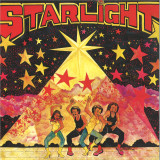
'Transplant Rejection’ is the second in a trilogy of cassette albums released via Muscut in the latter half of 2022. The work of Estonian artist and IDA Radio co-founder Robert Nikolajev, this collection of seven ‘almost’ dark ambient tracks embody the melancholy of autumn whilst hinting at the forthcoming eternal winter. A man with many hats, Nikolajev operates on the fringes of the leftfield house underground for labels such as Incienso, Collect-Call and Sad Fun as well as being one half of the sporadic DIMA DISK act with Ragnar Rahouja. Eschewing the more rhythmic side of his productions for this Muscut tape, Nikolajev taps into the fictional soundtrack atmospheres the label is known for and brings his own brand of wistful, introspective world-building by way of machine harmony to the now Tallinn based imprint.
There’s a lo-fi, grainy quality running throughout the collection, a kind of sepia-toned nostalgia that envelops the listener and disorientates any perception of time or place. Buried vocal fragments sit in the mix on ‘Stifled’ alongside decaying synthesiser drones whilst ‘DDM’ channels an edgy post-rock dirge with its use of sagged bass guitar. Overall, an inspired look into the more ‘at home’ side of this increasingly prolific Estonian artist.
Search:house machine
EDO8 aka Mr. Portamento, part of Doubledutch and half of the Cosmic Force (who had their debut on Clone Records in 1998!). Edo8 comes back with solo work on the Clone West Coats Series! After years of relative silence the dutch electro master hits back hard with this funked up 6 tracker of pure machine funk! Techno, House and Electro rooted in the classics.... the undoubtable influences of early Detroit techno, Kraftwerk and 80's electro are present and stirred to a unique blend which results in Edo8's signature sound carefully developed and crafted over the last 25 years.
Moody Blue Vinyl. RIYL: Codeine, Mazzy Star, Bedhead, Red House Painters, Low & American Music Club. Previously unreleased 16-track recordings that predates Spain’s 1995's landmark “The Blue Moods Of Spain". Includes original studio version of "World Of Blue" featuring Petra Haden on violin. Re-mixed and re-imagined by Kramer for Shimmy-Disc. The LP “World of Blue” features Merlo Podlewski on guitar. I first met Merlo in 1994. My sister Rachel Haden, who had been working with him at the Rhino Records store in Westwood, knew I was looking for a new guitarist for my band, and introduced us. Merlo is one of those guitarists whose playing is so smooth and effortless he makes anyone feel like they can play. He had an instinctual grasp of harmony and theory, which brought a great counterpoint to the technical knowledge and finesse of lead guitarist Ken. Spain played their first official L.A. gig with Merlo at a club called Pan, which shortly thereafter changed its name to Spaceland. We opened for Beck and That Dog. We played at Spaceland a lot and at other small clubs and coffee joints like the Troy Cafe (owned by Beck’s mom), Congo Square Coffee House in Santa Monica, Alligator Lounge, and others. At a certain point that year we were ready to record our first 7” single, and I reserved some time at Poop Alley. Poop Alley didn’t seem like the ideal recording setting. The walls and floors were made of concrete, and there was no soundproofing. The mixing board was in a loft up this steep staircase with no guard rails. But it worked somehow. On the particular day we recorded basics there was a rain storm which you can clearly hear in the background. The ceiling was so high there almost wasn’t a ceiling. A steep curving staircase with no guardrail led up to a loft area where the console was located, and next to it, on a custom-built, guardrail-less ledge, a queen-sized bed where Tom slept. I paid for the session with weed I grew in my closet. We set up and it started raining. Tom put a microphone outside. After tracking was finished, Petra came over and overdubbed violin. There was a cushioned area where I remember sitting during mixdown. We stayed good friends with Tom. We recorded a couple more songs with him the following year. Tom recorded lots of bands at Poop Alley. My sisters’ band That Dog, Beck, the Rentals, Rod Poole, Tom’s band Waldo the Dog Faced Boy, and many others. There were parties in the alley. There would be a keg of beer. Everyone was well-behaved. The most dangerous it got was when Kenny asked Beck if he was a Scientologist. I remember laughter and happiness the most from those parties. Not long afterwards Tom shut down the studio. Luckily for us, the tapes still exist. On those tapes are five songs, all of which are represented here. “I Lied” and “Her Used-To-Been” were released on the 7”, the remaining three have never been released before now. I can’t remember who I sent copies of the 7” to but shortly after it came out I got a call from an A&R executive at Geffen inviting me to their offices to talk. “I love your songs,” I remember him saying to me, “but my boss David Geffen won’t let me sign you because he doesn’t know how to market you.” Eventually a label that did want to sign us got in touch with me. Restless Records, they had decent distribution, so I said to myself, “Why not?”. This eventually led to the recording that produced our debut LP “Blue Moods of Spain”. Track listing: A1. Her Used-To-Been A2. Phone Machine A3. I Lied B1. Dreaming of Love B2. World of Blue
Far over on the west coast of the USA we find a room full of drum
machines, samplers and keyboards. Hard at work is Israel ‘Iz’ Gravning aka Tone Scientist, who’s been using this Seattle studio to produce genre-defying future music for more than 25 years.
An avid student of jazz fusion, hip hop, house, techno and others, he
was galvanised to build his own studio after hearing jungle and drum & bass on a trip to London in 1995. His musical course thus intersected with the collectives then pushing new dancefloor sonics rooted in the rich tradition of Black music – like Nuyorican Soul over on the east coast, and the new broken beats of IG Culture, Dego and Bugz In The Attic in London. Then, in the early 2000s, Iz put out a handful of EPs under different aliases, including ‘Lion Dub’ on the Guidance sublabel Subtitled, but soon stepped back from the public stage. That’s not to say he stopped making or playing music, though. Far from it. Fast forward two decades and our very own Walrus, chilly but happy in the depths of a Toronto winter, happened across ‘Lion Dub’ in the legendary Play The Record store. Intrigued, he tracked Iz down and discovered he had been active all this time. A short email exchange later and this 2xLP of archive material was born.
These six tracks explain fully why Iz calls his studio the ‘Time Machine’: vintage equipment and instruments converse with up-to-date software; classic sounds and textures twist into fresh configurations; and Iz’s own creativity and musicality sings to us from a location beyond the trappings of time or genre.
All music written, produced and mixed by Israel Gravning aka Tone
Scientist in Seattle/Washington between 2005 - 2008 except for “Things
BROWN VINYL VARIANT
"Flight of the Behemoth" is the third album by sunn O))).
The band collaborated with legendary Japanese noise artist Merzbow, who mixed tracks 3 and 4. The first ever use of a drum machine on a sunn O))) track is heard on "F.W.T.B.T.", a deconstructive interpretation of Metallica's "For Whom the Bell Tolls”.
This punisher also features the first ever vocals heard as evoked from the band themselves.
Contains full color 24”x36” folded poster and all this grimness is housed in a glorious case-wrapped gatefold jacket. Also contains the vinyl only bonus track: "Grimm & Bear It”.
Vinyl/metal cut by Matt Colton (Alchemy Mastering) who also cut the vinyl for the bands 2019 releases: “Life Metal” & “Pyroclasts.
Reissue of the breakthrough sophomore album by the rising Belarussian post-punk/synthpop band // The second LP by Belarussian trio Molchat Doma, Etazhi, meaning "Floors", was first released in 2018 on Berlin-based Detriti Records. It became a viral hit, garnering over one million views on YouTube and becoming a legitimate phenomenon on Bandcamp. The band may fly under the radar in their native Belarus, but they've reached huge audiences across Europe and beyond. Six separate vinyl pressings of the album have sold out in quick succession, and Sacred Bones Records is now thrilled to bring the record back in print for good. Molchat Doma (translated as "Houses Are Silent"), founded in 2017 in Minsk, Belarus, stands at the intersection of post-punk, new-wave and synth-pop. Dark yet danceable, and with a heavy dose of goth ethos, their music is reminiscent of the masters that predate them, but make no mistake: Molchat Doma creates a sound and meaning that is immediately recognizable as all their own. The band is comprised of Egor Shkutko, who sings the Russian lyrics in his deep monotone, Roman Komogortsev on guitar, synths, and drum machine, and Pavel Kozlov on bass and synths. RiYL: Depeche Mode, New Order, Drab Majesty, Black Marble
- A1: Rock This Mother
- A2: Talk To Me Girl
- A3: You Can Find Me
- A4: Check This Out
- A5: Jesus Going To Clean House
- A6: Hope You Understood
- A7: Is It What You Want
- A8: Love Is Everlasting
- A9: This Is Hip-Hop Art
- A10: Opposite Of Love
- A11: Do You Know What I Mean
- B1: Saving All My Love For You
- B2: Look Out Here I Come
- B3: Girl You Always Talking
- B4: Have A Great Day
- B5: Take My Hand
- B6: I Need Your Love
- B7: Your Town
- B8: Talk Around Town
- B9: Booty Head/Take A Little Walk
- B10: I Love My Mama
- B11: I Never Found Anyone Like You
Vinyl LP[23,49 €]
As the sun sets on a quaint East Nashville house, a young man bares a piece of his soul. Facing the camera, sporting a silky suit jacket/shirt/slacks/fingerless gloves ensemble that announces "singer" before he's even opened his mouth, Lee Tracy Johnson settles onto his stage, the front yard. He sways to the dirge-like drum machine pulse of a synth-soaked slow jam, extends his arms as if gaining his balance, and croons in affecting, fragile earnest, "I need your love… oh baby…"
Dogs in the yard next door begin barking. A mysterious cardboard robot figure, beamed in from galaxies unknown and affixed to a tree, is less vocal. Lee doesn't acknowledge either's presence. He's busy feeling it, arms and hands gesticulating. His voice rises in falsetto over the now-quiet dogs, over the ambient noise from the street that seeps into the handheld camcorder's microphone, over the recording of his own voice played back from a boombox off-camera. After six minutes the single, continuous shot ends. In this intimate creative universe there are no re-takes. There are many more music videos to shoot, and as Lee later puts it, "The first time you do it is actually the best. Because you can never get that again. You expressing yourself from within."
"I Need Your Love" dates from a lost heyday. From some time in the '80s or early '90s, when Lee Tracy (as he was known in performance) and his music partner/producer/manager Isaac Manning committed hours upon hours of their sonic and visual ideas to tape. Embracing drum machines and synthesizers – electronics that made their personal futurism palpable – they recorded exclusively at home, live in a room into a simple cassette deck. Soul, funk, electro and new wave informed their songs, yet Lee and Isaac eschewed the confinement of conventional categories and genres, preferring to let experimentation guide them.
"Anytime somebody put out a new record they had the same instruments or the same sound," explains Isaac. "So I basically wanted to find something that's really gonna stand out away from all of the rest of 'em." Their ethos meant that every idea they came up with was at least worth trying: echoed out half-rapped exhortations over frantic techno-style beats, gospel synth soul, modal electro-funk, oddball pop reinterpretations, emo AOR balladry, nods to Prince and the Fat Boys, or arrangements that might collapse mid-song into a mess of arcade game-ish blips before rallying to reach the finish line. All of it conjoined by consistent tape hiss, and most vitally, Lee's chameleonic voice, which managed to wildly shape shift and still evoke something sincere – whether toggling between falsetto and tenor exalting Jesus's return, or punctuating a melismatic romantic adlib with a succinct, "We all know how it feels to be alone."
"People think we went to a studio," says Isaac derisively. "We never went to no studio. We didn't have the money to go to no studio! We did this stuff at home. I shot videos in my front yard with whatever we could to get things together." Sometimes Isaac would just put on an instrumental record, be it "Planet Rock" or "Don't Cry For Me Argentina" (from Evita), press "record," and let Lee improvise over it, yielding peculiar love songs, would-be patriotic anthems, or Elvis Presley or Marilyn Monroe tributes. Technical limitations and a lack of professional polish never dissuaded them. They believed they were onto something.
"That struggle," Isaac says, "made that sound sound good to me."
In the parlance of modern music criticism Lee and Isaac's dizzying DIY efforts would inevitably be described as "outsider." But "outsider" carries the burden of untold additional layers of meaning if you're Black and from the South, creating on a budget, and trying to get someone, anyone within the country music capital of the world to take your vision seriously. "What category should we put it in?" Isaac asks rhetorically. "I don't know. All I know is feeling. I ain't gonna name it nothing. It's music. If it grabs your soul and touch your heart that's what it basically is supposed to do."
=
Born in 1963, the baby boy of nine siblings, Lee Tracy spent his earliest years living amidst the shotgun houses on Nashville's south side. "We was poor, man!" he says, recalling the outhouse his family used for a bathroom and the blocks of ice they kept in the kitchen to chill perishables. "But I actually don't think I really realized I was in poverty until I got grown and started thinking about it." Lee's mom worked at the Holiday Inn; his dad did whatever he had to do, from selling fruit from a horse drawn cart to bootlegging. "We didn't have much," Lee continues, "but my mother and my father got us the things we needed, the clothes on our back." By the end of the decade with the city's urban renewal programs razing entire neighborhoods to accommodate construction of the Interstate, the family moved to Edgehill Projects. Lee remembers music and art as a constant source of inspiration for he and his brothers and sisters – especially after seeing the Jackson 5 perform on Ed Sullivan. "As a small child I just knew that was what I wanted to do."
His older brother Don began musically mentoring him, introducing Lee to a variety of instruments and sounds. "He would never play one particular type of music, like R&B," says Lee. "I was surrounded by jazz, hard rock and roll, easy listening, gospel, reggae, country music; I mean I was a sponge absorbing all of that." Lee taught himself to play drums by beating on cardboard boxes, gaining a rep around the way for his timekeeping, and his singing voice. Emulating his favorites, Earth Wind & Fire and Cameo, he formed groups with other kids with era-evocative band names like Concept and TNT Connection, and emerged as the leader of disciplined rehearsals. "I made them practice," says Lee. "We practiced and practiced and practiced. Because I wanted that perfection." By high school the most accomplished of these bands would take top prize in a prominent local talent show. It was a big moment for Lee, and he felt ready to take things to the next level. But his band-mates had other ideas.
"I don't know what happened," he says, still miffed at the memory. "It must have blew they mind after we won and people started showing notice, because it's like everybody quit! I was like, where the hell did everybody go?" Lee had always made a point of interrogating prospective musicians about their intentions before joining his groups: were they really serious or just looking for a way to pick up girls? Now he understood even more the importance of finding a collaborator just as committed to the music as he was.
=
Isaac Manning had spent much of his life immersed in music and the arts – singing in the church choir with his family on Nashville's north side, writing, painting, dancing, and working various gigs within the entertainment industry. After serving in the armed forces, in the early '70s he ran The Teenage Place, a music and performance venue that catered to the local youth. But he was forced out of town when word of one of his recreational routines created a stir beyond the safe haven of his bohemian circles.
"I was growing marijuana," Isaac explains. "It wasn't no business, I was smoking it myself… I would put marijuana in scrambled eggs, cornbread and stuff." His weed use originated as a form of self-medication to combat severe tooth pain. But when he began sharing it with some of the other young people he hung out with, some of who just so happened to be the kids of Nashville politicians, the cops came calling. "When I got busted," he remembers, "they were talking about how they were gonna get rid of me because they didn't want me saying nothing about they children because of the politics and stuff. So I got my family, took two raggedy cars, and left Nashville and went to Vegas."
Out in the desert, Isaac happened to meet Chubby Checker of "The Twist" fame while the singer was gigging at The Flamingo. Impressed by Isaac's zeal, Checker invited him to go on the road with him as his tour manager/roadie/valet. The experience gave Isaac a window into a part of the entertainment world he'd never encountered – a glimpse of what a true pop act's audience looked like. "Chubby Checker, none of his shows were played for Black folks," he remembers. "All his gigs were done at high-class white people areas." Returning home after a few years with Chubby, Isaac was properly motivated to make it in Music City. He began writing songs and scouting around Nashville for local talent anywhere he could find it with an expressed goal: "Find someone who can deliver your songs the way you want 'em delivered and make people feel what you want them to feel."
One day while walking through Edgehill Projects Isaac heard someone playing the drums in a way that made him stop and take notice. "The music was so tight, just the drums made me feel like, oh I'm-a find this person," he recalls. "So I circled through the projects until I found who it was.
"That's how I met him – Lee Tracy. When I found him and he started singing and stuff, I said, ohhh, this is somebody different."
=
Theirs was a true complementary partnership: young Lee possessed the raw talent, the older Isaac the belief. "He's really the only one besides my brother and my family that really seen the potential in me," says Lee. "He made me see that I could do it."
Isaac long being a night owl, his house also made for a fertile collaborative environment – a space where there always seemed to be a new piece of his visual art on display: paintings, illustrations, and dolls and figures (including an enigmatic cardboard robot). Lee and Issac would hang out together and talk, listen to music, conjure ideas, and smoke the herb Isaac had resumed growing in his yard. "It got to where I could trust him, he could trust me," Isaac says of their bond. They also worked together for hours on drawings, spreading larges rolls of paper on the walls and sketching faces with abstract patterns and imagery: alien-like beings, tri-horned horse heads, inverted Janus-like characters where one visage blurred into the other.
Soon it became apparent that they didn't need other collaborators; self-sufficiency was the natural way forward. At Isaac's behest Lee, already fed up with dealing with band musicians, began playing around with a poly-sonic Yamaha keyboard at the local music store. "It had everything on it – trumpet, bass, drums, organ," remembers Lee. "And that's when I started recording my own stuff."
The technology afforded Lee the flexibility and independence he craved, setting him on a path other bedroom musicians and producers around the world were simultaneously following through the '80s into the early '90s. Saving up money from day jobs, he eventually supplemented the Yamaha Isaac had gotten him with Roland and Casio drum machines and a Moog. Lee was living in an apartment in Hillside at that point caring for his dad, who'd been partially paralyzed since early in life. In the evenings up in his second floor room, the music put him in a zone where he could tune out everything and lose himself in his ideas.
"Oh I loved it," he recalls. "I would really experiment with the instruments and use a lot of different sound effects. I was looking for something nobody else had. I wanted something totally different. And once I found the sound I was looking for, I would just smoke me a good joint and just let it go, hit the record button." More potent a creative stimulant than even Isaac's weed was the holistic flow and spontaneity of recording. Between sessions at Isaac's place and Lee's apartment, their volume of output quickly ballooned.
"We was always recording," says Lee. "That's why we have so much music. Even when I went to Isaac's and we start creating, I get home, my mind is racing, I gotta start creating, creating, creating. I remember there were times when I took a 90-minute tape from front to back and just filled it up."
"We never practiced," says Isaac. "See, that was just so odd about the whole thing. I could relate to him, and tell him about the songs I had ideas for and everything and stuff. And then he would bring it back or whatever, and we'd get together and put it down." Once the taskmaster hell bent on rehearsing, Lee had flipped a full 180. Perfection was no longer an aspiration, but the enemy of inspiration.
"I seen where practicing and practicing got me," says Lee. "A lot of musicians you get to playing and they gotta stop, they have to analyze the music. But while you analyzing you losing a lot of the greatness of what you creating. Stop analyzing what you play, just play! And it'll all take shape."
=
"I hope you understood the beginning of the record because this was invented from a dream I had today… (You tell me, I'll tell you, we'll figure it out together)" – Lee Tracy and Isaac Manning, "Hope You Understand"
Lee lets loose a maniacal cackle when he acknowledges that the material that he and Isaac recorded was by anyone's estimation pretty out there. It's the same laugh that commences "Hope You Understand" – a chaotic transmission that encapsulates the duality at the heart of their music: a stated desire to reach people and a compulsion to go as leftfield as they saw fit.
"We just did it," says Lee. "We cut the music on and cut loose. I don't sit around and write. I do it by listening, get a feeling, play the music, and the lyrics and stuff just come out of me."
The approach proved adaptable to interpreting other artists' material. While recording a cover of Whitney Houston's pop ballad "Saving All My Love For You," Lee played Whitney's version in his headphones as he laid down his own vocals – partially following the lyrics, partially using them as a departure point. The end result is barely recognizable compared with the original, Lee and Isaac having switched up the time signature and reinvented the melody along the way towards morphing a slick mainstream radio standard into something that sounds solely their own.
"I really used that song to get me started," says Lee. "Then I said, well I need something else, something is missing. Something just came over me. That's when I came up with 'Is It What You Want.'"
The song would become the centerpiece of Lee and Isaac's repertoire. Pushed along by a percolating metronomic Rhythm King style beat somewhere between a military march and a samba, "Is It What You Want" finds Lee pleading the sincerity of his commitment to a potential love interest embellished by vocal tics and hiccups subtlely reminiscent of his childhood hero MJ. Absent chord changes, only synth riffs gliding in and out like apparitions, the song achieves a lingering lo-fi power that leaves you feeling like it's still playing, somewhere, even after the fade out.
"I don't know, it's like a real spiritual song," Lee reflects. "But it's not just spiritual. To me the more I listen to it it's like about everything that you do in your everyday life, period. Is it what you want? Do you want a car or you don't want a car? Do you want Jesus or do you want the Devil? It's basically asking you the question. Can't nobody answer the question but you yourself."
In 1989 Lee won a lawsuit stemming from injuries sustained from a fight he'd gotten into. He took part of the settlement money and with Isaac pressed up "Saving All My Love For You" b/w "Is It What You Want" as a 45 single. Isaac christened the label One Chance Records. "Because that's all we wanted," he says with a laugh, "one chance."
Isaac sent the record out to radio stations and major labels, hoping for it to make enough noise to get picked up nationally. But the response he and Lee were hoping for never materialized. According to Isaac the closest the single got to getting played on the radio is when a disk jock from a local station made a highly unusual announcement on air: "The dude said on the radio, 107.5 – 'We are not gonna play 'Is It What You Want.' We cracked up! Wow, that's deep.
"It was a whole racist thing that was going on," he reflects. "So we just looked over and kept on going. That was it. That was about the way it goes… If you were Black and you were living in Nashville and stuff, that's the way you got treated." Isaac already knew as much from all the times he'd brought he and Lee's tapes (even their cache of country music tunes) over to Music Row to try to drum up interest to no avail.
"Isaac, he really worked his ass off," says Lee. "He probably been to every record place down on Music Row." Nashville's famed recording and music business corridor wasn't but a few blocks from where Lee grew up. Close enough, he remembers, for him to ride his bike along its back alleys and stumble upon the occasional random treasure, like a discarded box of harmonicas. Getting in through the front door, however, still felt a world away.
"I just don't think at the time our music fell into a category for them," he concedes. "It was before its time."
=
Lee stopped making music some time in the latter part of the '90s, around the time his mom passed away and life became increasingly tough to manage. "When my mother died I had a nervous breakdown," he says, "So I shut down for a long time. I was in such a sadness frame of mind. That's why nobody seen me. I had just disappeared off the map." He fell out of touch with Isaac, and in an indication of just how bad things had gotten for him, lost track of all the recordings they'd made together. Music became a distant memory.
Fortunately, Isaac kept the faith. In a self-published collection of his poetry – paeans to some of his favorite entertainment and public figures entitled Friends and Dick Clark – he'd written that he believed "music has a life of its own." But his prescience and presence of mind were truly manifested in the fact that he kept an archive of he and Lee's work. As perfectly imperfect as "Is It What You Want" now sounds in a post-Personal Space world, Lee and Isaac's lone official release was in fact just a taste. The bulk of the Is It What You Want album is culled from the pair's essentially unheard home recordings – complete songs, half-realized experiments, Isaac's blue monologues and pronouncements et al – compiled, mixed and programmed in the loose and impulsive creative spirit of their regular get-togethers from decades ago. The rest of us, it seems, may have finally caught up to them.
On the prospect of at long last reaching a wider audience, Isaac says simply, "I been trying for a long time, it feels good." Ever the survivor, he adds, "The only way I know how to make it to the top is to keep climbing. If one leg break on the ladder, hey, you gotta fix it and keep on going… That's where I be at. I'll kill death to make it out there."
For Lee it all feels akin to a personal resurrection: "It's like I was in a tomb and the tomb was opened and I'm back… Man, it feels so great. I feel like I'm gonna jump out of my skin." Success at this stage of his life, he realizes, probably means something different than what it did back when he was singing and dancing in Isaac's front yard. "What I really mean by 'making it,'" he explains isn't just the music being heard but, "the story being told."
Occasionally Lee will pull up "Is It What You Want" on YouTube on his phone, put on his headphones, and listen. He remembers the first time he heard his recorded voice. How surreal it was, how he thought to himself, "Is that really me?" What would he say to that younger version of himself now?
"I would probably tell myself, hang in there, don't give up. Keep striving for the goal. And everything will work out."
Despite what's printed on the record label, sometimes you do get more than one chance.
- 1: Killer Klowns (From Outer Space)
- 2: Hidden Klown Ship
- 3: Mike And Debbie's Discovery
- 4: Escape From The Klown Ship
- 5: Killer Klown March
- 6: Visit To The Drugstore
- 7: Glactic Globetheater
- 8: The Empty Forest
- 9: Knock My Block Off
- 10: Little Girl Too Klose
- 11: Top Of The World
- 12: Muscle Klown Kar March
- 13: Growing Korn
- 14: Shadow Show
- 15: Officer Mooney
- 16: Dave And The Aftermath
- 17: Ventriloquist Mooney
- 18: The Inevitable Part I
- 19: The Inevitable Part Ii
- 20: Debbi'es Been Kaught
- 21: Amusement Park / Death Pies
- 22: The Fun House Part I
- 23: The Fun House Part Ii
- 24: Escape Into Klown Kathedral
- 25: Klownfrontation
- 26: Truck Escape And Klownzila
- 27: Final Konfrontation & Reunion
- 28: Klowns Kidnap
- 1: 29Galactic Globe Theater (Extended)
- The Complete 1988 Film Score by John Massari - Available For The First Time On Vinyl 180 Gram Violet and Blue Vinyl (Light In The Attic Exclusive Variant) - Exclusive Liner Notes by Composer John Massari - Exclusive Liner Notes by Killer Klowns Co-Creator Stephen Chiodo - Heavyweight 12" x 12" Art Print - Old-Style Tip-On Jackets with Matte Satin Coating // KILLER KLOWNS FROM OUTER SPACE have finally landed at Waxwork Records! After much anticipation, we are thrilled to present the official 1988 Original Motion Picture Soundtrack by John Massari for the very first time on vinyl! Would you believe someone if they told you a circus tent-shaped spaceship landed in your small town and was abducting your neighbors to store them in cotton candy cocoons? In this '80's cult classic, teens Mike Tobacco (Grant Cramer) and Debbie Stone (Suzanne Snyder) have to fight both the diabolical bozos and the local law enforcement's disbelief to save themselves and their community! The original score to Killer Klowns From Outer Space is kicked off by the classic 80's horror movie theme track, Killer Klowns (From Outer Space) by California punk band, The Dickies. The 'nightmare merry-go-round' continues with a smattering of menacing electronic brass sections, electric guitar, bombastic drum machine beats, & harpsichord combined with sci-fi synth elements to capture the ultra-specific origins of the antagonists. Massari's score to Klowns is a retro-synth joyride from start to finish featuring immediately recognizable cues from the beloved 80's cult-classic! Waxwork Records is thrilled to present the official Killer Klowns From Outer Space double LP, released for the first time on vinyl. Complete with 180 gram "Cotton Candy" and "Popcorn" vinyl, deluxe packaging, new artwork by Ruiz Burgos, old-style tip-on jackets with matte coating, a heavyweight 12"x12" art print, and liner notes by composer Massari and Klowns co-creator Stephen Chiodo!
When James Pepper met Riccardo Paffetti (Black Loops) a bromance was quick to bloom. After touring the Berlin-based Italian across Australia, the two soon realised they not only loved each others company but records too.
Following Black Loops maiden trip down under, the dudes stayed in touch and led to Pep crashing on Riccardo’s sofa bed for a week in Berlin. The duo went to work in the studio, brewing up some gems that were released on classy imprints Neovinyl Recordings and Haŵs.
It was on Paffetti’s most recent trip to Oz (well before the world shutdown) that brought about their most anticipated tracks to date. Bunkering down in a Marrickville studio, the cross-continent pairing got up close and personal with some neat hardware. Experimenting with an array of compressors, a TR8 and the Elektron Analog Four MKII ‘Three Drops’ EP was born.
The EP is a lively affair. A rampant message to club folk far and wide. Founded on lo-fi percussion, a crunchy kick and echoed key sections ‘Three Drops’ throws a flurry of punches. Varied combinations of electro, acid and techno rolling together just right. Here we have a welcome jab of adrenaline. You can almost visualise the duo grinning from ear-to-ear, as they bring in each piece of machinery.
'Three Drops’ made its live debut at Pepper’s recent Boiler Room in Sydney and has since taken the interwebs by storm. Hundred’s of ID requests later and the time is right to share this gem as the clubs open back up across the globe.
The B side and new single has arrived in ‘Arp Love’. A frantically beautiful dose of techno. Soaring risers make way for pulsating chords and shimmering TR8 patterns, as we’re led deep into a clubby rabbit hole. In signature Black Loops style, a spoken word sample on the disappointment of love breaks the piece in two.
For a burgeoning Sydney producer like Pep it must be truly amazing to co-write alongside Riccardo - an artist who’s clocked tens of millions of streams worldwide, claimed Deep House Artist of The Year (2017) via Traxsouce plus released weaponry on revered labels such as Shall Not Fade, Toy Tonics, Gruuv and Good Ratio.
We’re grateful James Pepper and Black Loops got together. These two on tracks makes sense.
- A1: Dr D Rising
- A2: Spectrangle
- A3: Migera
- A4: Rockwood Riddim
- B1: Sametime Frameline
- B2: Swampland
- B3: Cava
- B4: Stadterboy
- B5: Low End
- B6: Crucial Drone
- C1: Fez
- C2: Wolkenfabrik
- C3: Otherworld
- C4: Scarfacekiller
- C5: Froopy
- C6: Produce Sojuce
- D1: Adventure Time
- D2: Flip Flop Blaster
- D3: Glipglop
- D4: Mr Hyde
- D5: Soft Herbs
- D6: House On Fire
- D7: Roast
First album from Cologne based Jazz / Hip-Hop band for Melting Pot
Music home to artists such as FloFilz, Twit One, Summers Sons,
Pachakuti & young.vishnu, etc.
Bokoya is a four-piece jazz/hip-hop band from Cologne who plays
improvised beat music. Like a four-headed human drum machine, Bokoya improvise, shape, and develop beats in the electric field of repetition and variation. It's impossible to put a tag on Bokoya's music.
BADBADNOTGOOD, Dilla, Krautrock, Ambient and dub might work as
rough reference points for the music but don't do it justice. After a sling of releases on Wadada Records, Bokoya are now signed to Melting Pot Music where they will release their forthcoming projects.
The Perth-based psychedelic rock n roll machine rip through a full platter of their high-speed tunes, shot in two locations and heralding their new LP, Night Gnomes. Crunchy riffage, addictive melodies and no-holds barred psychedelia is on tap. Get it at the link below! "Thank you Levitation for getting us out the house! Absolute pleasure to be asked to collaborate on something together. There’s a brilliant story involving an angry local and a bulldozer if you’re won-dering why the location changes, but for the minutes we were filming it was magical. Gnomes till we die! Thanks to Jelly, Tay, Jared, Dima, & the McEwan crew for helping us put this together, love you all." – PPC
3am Recordings brings you its debut album, from label boss Al Bradley. While it would be much easier to get some huge name in for this who is previously unrelated to 3am, it was never going to be like that here. Staying true to the ethos of the label, it was important that this milestone was a reection of the label and what it has always stood for. The move back to vinyl in 2015 has rmly planted the label back
in its place as one of the UK's most consistent for house music, retaining its value of working with artists who have been involved with the label over its 19-year history, or who have been rm supporters of 3am during its time. Over the 9 cuts there are a variety of vibes, 'Little Treasures' aims to cover a selection of sounds that represent Al's inuences & styles, having been buying records since the mid-80s &
playing vinyl as DJ since he got his decks in 1991. The past is important as it represents where we started, the future is equally important, as it's the area of the unknown & we have to embrace it...
Covering deep house, dub techno, broken beats, raw machine funk, beatless ambience & more, the album is one that is danceoor-aimed, but works beyond that area too. With support from the likes of Placid (We're Going Deep), Carlo Gambino (We_R_House), Lolu Menayed
(Rawtrax), Lars Behrenroth (Deeper Shades of House), Loz Goddard (Oath), James Reid (Sonet), Moodymanc (2020Vision) & many more, the album reaches right across the spectrum of electronic music.
- 1: The Ending
- 2: Evil World Machine
- 3: Wolf Totem (Feat Jacoby Shaddix Of Papa Roach)
- 4: This Is Mongol
- 5: If Tomorrow Never Comes (Feat Spencer Charnas Of Ice Nine Kills)
- 6: Blow (Feat Spencer Charnas Of Ice Nine Kills)
- 7: Scars That I'm Hiding (Feat Anders Fridén Of In Flames)
- 8: Burn It Up
- 9: Who's That Playing On The Radio? (Feat Danny Worsnop And Mick Mars)
- 10: Faded Out (Feat Within Temptation)
- 11: Tops (Feat Push Push)
- 12: Blame It On The Double (Feat Tyler Connolly Of Theory Of A Deadman And Jason Hook)
- 13: For The Glory (Feat Hollywood Undead)
- 14: Classless Act (Feat Vince Neil Of Mötley Crüe)
- 15: Retaliators Theme (21 Bullets) (W/Mötley Crüe, Asking Alexandria, Ice Nine Kills, From Ashes To New)
- 16: Darkness Settles In
- 17: Tired Of Winning
THE RETALIATORS MOTION PICTURE SOUNDTRACK is the high-octane original soundtrack from the award-winning horror-thriller THE RETALIATORS. It includes special appearances from some of the biggest names in rock music such as Five Finger Death Punch, Tommy Lee, Papa Roach, The Hu, Ice Nine Kills, Escape The Fate and more, both on screen and on the original soundtrack. The album is available on a limited collectors edition 180gm red & black splatter vinyl pressing housed in a gatefold sleeve with exclusive movie stills, a 24x36 movie poster collectable, blood spattered o-card and including a digital download. It is also available on digipak CD and cassette formats.
- A1: The Braen's Machine - Fall Out
- A2: Chakachas - Stories
- A3: Roy Ayers - The Fuzz
- A4: Ju-Par Universal Orchestra - Flute Salad
- A5: Flash & The Dynamics - Electric Latin Soul
- B1: Wolker Kriegel - Zoom
- B2: Wild Havana - The Peacock
- B3: Placebo - Balek
- B4: The Chubukus - House Of Rising Funk
- C1: Cymade - Dove
- C2: Ugo Busoni - Nebbie Misteriose
- C3: The Kuhn Brothers & The Mad Rockers - Misty Purple
- C4: Mystic Moods - Cosmic Sea
- D1: Eddie Hazel - California Dreamin
- D2: Demon Fuzz - Past, Present & Future
- D3: Stone Coal White - Stone Coal White
Psychedelic Funk: this is the musical mood of the new Sexopolis. For those who enjoyed in the 70s or those who jus discover them today, will find in this last release internationa and very rare historical songs shuch as “Flute Salad” from JuPar Universal Orchestra, “Misty Purple” by Rolf Kühn, “Dove” by Cymande, and also some Italian gem
such as “Fall out” by The Braen's Machine (Alessandro Alessandroni ), “Nebbie misteriose” by Ugo Busoni.
16 tracks, 80 minutes of a music journey between the mystic and psychedelic, funk and afrofuturism, as always original versions gently remastered, and pressed on limited light blue splattered double vinyl.
Clear Vinyl
The second release in the three-part Greatest Hit series starts off with the cleverly named bangy banger 'Emergency Loop'. Ghost in the Machine probably put this track on there so that no one would notice that the rhythms in the second track 'Drunken Master' are so weird that probably not even the best DJs in the world can play it. Not quite triplet, not quite dotted. Your problem, not ours. Obviously. Hidden away on the entire b-side is Ghost in the Machine's beautiful remix of Torgue's 'A Night at the Opera', available on vinyl for the first time ever. Another very obvious money-grab which you absolutely can't live without.
Luca LTJ Trevisi (LTJ Xperience) began his dj/producer career in the 80s. As resident dj in two of the most famous Italian clubs of the time, Kinky in Bologna and Cap Creus in Imola, he was one of the first Italian jocks to spin House and to re-propose those black music, jazz and latin-bossa classics from the 70s that at the end of the same decade would have given birth to the Acid Jazz and Rare Groove movements. His first single release in 1988, titled First Job, together with Kekkotronics, was also the first release ever on Bologna based Irma Records. It was featured in a lot of compilations of the time and entered several playlists, rapidly reaching cult status for many UK and US djs. During the early 90s LTJ delivered a couple of singles in a kind of pre-breakbeat style: Dont Stop The Sax, released all over Europe, and Funky Superfly. He also produced US singer Tameka Starrs single Going In Circles, always for Irma Records, still a classic in the downtempo/r&b field. In the second half of the nineties Luca began to produce acid jazz bands like Bossa Nostra, still today one of Irma Records main acts. Their first album had Vicky Anderson as special
guest and today is still considered one of the most important European acid jazz albums. In the following years he concentrated on developing his activity as collector and rare vinyl merchant, which gave him the chance to get in touch with djs from all over the World and to discover many forgotten gems from the past years. Thanks to this experience he was able to create two extremely successful rarities series on Irma Records:
Groovy and Suono Libero. In the meanwhile LTJ started to dj outside Italy too, performing in important venues like the Blue Note and Jazz Café in London, Giant Step in New York and Montreux Jazz Festival in Switzerland. In 1999 saw the release of his first solo album under the LTJ Xperience moniker. The album was produced with the collaboration of fellow Irma artist and producer Ohm Guru and had Taka Boom and Jackson Sloan among the guests. Two of the main tracks on the album are brazil house classic Sombre Guitar and title track Moon Beat, which became a true hit of the Chill Out genre, featured in dozens of important compilations.
After making countless productions for Irma Records, including their second album When The Rain Begins To Fall (with the participation of the historic Spanish-American singer Joe Bataan), and the recents singles as ORGAN MIND / I LOVE YOU (favorite track by Larry Heard ) & ON THE FLOOR / SOUND MACHINE, LTJ is devoted almost exclusively to re-edit and reconstruct tracks from the past with the addition of sounds and rhythms in post production for labels like SUPER VALUE, SMALL WORLD DISCO, HOT GROOVY RECORDS, OH CRISTO! increasing the production of this new musical genre that is currently defined as beatdown/slo-mo, working with international labels such as Far Out Recordings, Sleazy Beats, Future Classics, E.A.R. Music For Dreams, Apersonal Music, Roam Recordings, !K7.
- A1: Rock This Mother
- A2: Talk To Me Girl
- A3: You Can Find Me
- A4: Check This Out
- A5: Jesus Going To Clean House
- A6: Hope You Understood
- A7: Is It What You Want
- A8: Love Is Everlasting
- A9: This Is Hip-Hop Art
- A10: Opposite Of Love
- A11: Do You Know What I Mean
- B1: Saving All My Love For You
- B2: Look Out Here I Come
- B3: Girl You Always Talking
- B4: Have A Great Day
- B5: Take My Hand
- B6: I Need Your Love
- B7: Your Town
- B8: Talk Around Town
- B9: Booty Head/Take A Little Walk
- B10: I Love My Mama
- B11: I Never Found Anyone Like You
Cassette[11,72 €]
As the sun sets on a quaint East Nashville house, a young man bares a piece of his soul. Facing the camera, sporting a silky suit jacket/shirt/slacks/fingerless gloves ensemble that announces "singer" before he's even opened his mouth, Lee Tracy Johnson settles onto his stage, the front yard. He sways to the dirge-like drum machine pulse of a synth-soaked slow jam, extends his arms as if gaining his balance, and croons in affecting, fragile earnest, "I need your love… oh baby…"
Dogs in the yard next door begin barking. A mysterious cardboard robot figure, beamed in from galaxies unknown and affixed to a tree, is less vocal. Lee doesn't acknowledge either's presence. He's busy feeling it, arms and hands gesticulating. His voice rises in falsetto over the now-quiet dogs, over the ambient noise from the street that seeps into the handheld camcorder's microphone, over the recording of his own voice played back from a boombox off-camera. After six minutes the single, continuous shot ends. In this intimate creative universe there are no re-takes. There are many more music videos to shoot, and as Lee later puts it, "The first time you do it is actually the best. Because you can never get that again. You expressing yourself from within."
"I Need Your Love" dates from a lost heyday. From some time in the '80s or early '90s, when Lee Tracy (as he was known in performance) and his music partner/producer/manager Isaac Manning committed hours upon hours of their sonic and visual ideas to tape. Embracing drum machines and synthesizers – electronics that made their personal futurism palpable – they recorded exclusively at home, live in a room into a simple cassette deck. Soul, funk, electro and new wave informed their songs, yet Lee and Isaac eschewed the confinement of conventional categories and genres, preferring to let experimentation guide them.
"Anytime somebody put out a new record they had the same instruments or the same sound," explains Isaac. "So I basically wanted to find something that's really gonna stand out away from all of the rest of 'em." Their ethos meant that every idea they came up with was at least worth trying: echoed out half-rapped exhortations over frantic techno-style beats, gospel synth soul, modal electro-funk, oddball pop reinterpretations, emo AOR balladry, nods to Prince and the Fat Boys, or arrangements that might collapse mid-song into a mess of arcade game-ish blips before rallying to reach the finish line. All of it conjoined by consistent tape hiss, and most vitally, Lee's chameleonic voice, which managed to wildly shape shift and still evoke something sincere – whether toggling between falsetto and tenor exalting Jesus's return, or punctuating a melismatic romantic adlib with a succinct, "We all know how it feels to be alone."
"People think we went to a studio," says Isaac derisively. "We never went to no studio. We didn't have the money to go to no studio! We did this stuff at home. I shot videos in my front yard with whatever we could to get things together." Sometimes Isaac would just put on an instrumental record, be it "Planet Rock" or "Don't Cry For Me Argentina" (from Evita), press "record," and let Lee improvise over it, yielding peculiar love songs, would-be patriotic anthems, or Elvis Presley or Marilyn Monroe tributes. Technical limitations and a lack of professional polish never dissuaded them. They believed they were onto something.
"That struggle," Isaac says, "made that sound sound good to me."
In the parlance of modern music criticism Lee and Isaac's dizzying DIY efforts would inevitably be described as "outsider." But "outsider" carries the burden of untold additional layers of meaning if you're Black and from the South, creating on a budget, and trying to get someone, anyone within the country music capital of the world to take your vision seriously. "What category should we put it in?" Isaac asks rhetorically. "I don't know. All I know is feeling. I ain't gonna name it nothing. It's music. If it grabs your soul and touch your heart that's what it basically is supposed to do."
=
Born in 1963, the baby boy of nine siblings, Lee Tracy spent his earliest years living amidst the shotgun houses on Nashville's south side. "We was poor, man!" he says, recalling the outhouse his family used for a bathroom and the blocks of ice they kept in the kitchen to chill perishables. "But I actually don't think I really realized I was in poverty until I got grown and started thinking about it." Lee's mom worked at the Holiday Inn; his dad did whatever he had to do, from selling fruit from a horse drawn cart to bootlegging. "We didn't have much," Lee continues, "but my mother and my father got us the things we needed, the clothes on our back." By the end of the decade with the city's urban renewal programs razing entire neighborhoods to accommodate construction of the Interstate, the family moved to Edgehill Projects. Lee remembers music and art as a constant source of inspiration for he and his brothers and sisters – especially after seeing the Jackson 5 perform on Ed Sullivan. "As a small child I just knew that was what I wanted to do."
His older brother Don began musically mentoring him, introducing Lee to a variety of instruments and sounds. "He would never play one particular type of music, like R&B," says Lee. "I was surrounded by jazz, hard rock and roll, easy listening, gospel, reggae, country music; I mean I was a sponge absorbing all of that." Lee taught himself to play drums by beating on cardboard boxes, gaining a rep around the way for his timekeeping, and his singing voice. Emulating his favorites, Earth Wind & Fire and Cameo, he formed groups with other kids with era-evocative band names like Concept and TNT Connection, and emerged as the leader of disciplined rehearsals. "I made them practice," says Lee. "We practiced and practiced and practiced. Because I wanted that perfection." By high school the most accomplished of these bands would take top prize in a prominent local talent show. It was a big moment for Lee, and he felt ready to take things to the next level. But his band-mates had other ideas.
"I don't know what happened," he says, still miffed at the memory. "It must have blew they mind after we won and people started showing notice, because it's like everybody quit! I was like, where the hell did everybody go?" Lee had always made a point of interrogating prospective musicians about their intentions before joining his groups: were they really serious or just looking for a way to pick up girls? Now he understood even more the importance of finding a collaborator just as committed to the music as he was.
=
Isaac Manning had spent much of his life immersed in music and the arts – singing in the church choir with his family on Nashville's north side, writing, painting, dancing, and working various gigs within the entertainment industry. After serving in the armed forces, in the early '70s he ran The Teenage Place, a music and performance venue that catered to the local youth. But he was forced out of town when word of one of his recreational routines created a stir beyond the safe haven of his bohemian circles.
"I was growing marijuana," Isaac explains. "It wasn't no business, I was smoking it myself… I would put marijuana in scrambled eggs, cornbread and stuff." His weed use originated as a form of self-medication to combat severe tooth pain. But when he began sharing it with some of the other young people he hung out with, some of who just so happened to be the kids of Nashville politicians, the cops came calling. "When I got busted," he remembers, "they were talking about how they were gonna get rid of me because they didn't want me saying nothing about they children because of the politics and stuff. So I got my family, took two raggedy cars, and left Nashville and went to Vegas."
Out in the desert, Isaac happened to meet Chubby Checker of "The Twist" fame while the singer was gigging at The Flamingo. Impressed by Isaac's zeal, Checker invited him to go on the road with him as his tour manager/roadie/valet. The experience gave Isaac a window into a part of the entertainment world he'd never encountered – a glimpse of what a true pop act's audience looked like. "Chubby Checker, none of his shows were played for Black folks," he remembers. "All his gigs were done at high-class white people areas." Returning home after a few years with Chubby, Isaac was properly motivated to make it in Music City. He began writing songs and scouting around Nashville for local talent anywhere he could find it with an expressed goal: "Find someone who can deliver your songs the way you want 'em delivered and make people feel what you want them to feel."
One day while walking through Edgehill Projects Isaac heard someone playing the drums in a way that made him stop and take notice. "The music was so tight, just the drums made me feel like, oh I'm-a find this person," he recalls. "So I circled through the projects until I found who it was.
"That's how I met him – Lee Tracy. When I found him and he started singing and stuff, I said, ohhh, this is somebody different."
=
Theirs was a true complementary partnership: young Lee possessed the raw talent, the older Isaac the belief. "He's really the only one besides my brother and my family that really seen the potential in me," says Lee. "He made me see that I could do it."
Isaac long being a night owl, his house also made for a fertile collaborative environment – a space where there always seemed to be a new piece of his visual art on display: paintings, illustrations, and dolls and figures (including an enigmatic cardboard robot). Lee and Issac would hang out together and talk, listen to music, conjure ideas, and smoke the herb Isaac had resumed growing in his yard. "It got to where I could trust him, he could trust me," Isaac says of their bond. They also worked together for hours on drawings, spreading larges rolls of paper on the walls and sketching faces with abstract patterns and imagery: alien-like beings, tri-horned horse heads, inverted Janus-like characters where one visage blurred into the other.
Soon it became apparent that they didn't need other collaborators; self-sufficiency was the natural way forward. At Isaac's behest Lee, already fed up with dealing with band musicians, began playing around with a poly-sonic Yamaha keyboard at the local music store. "It had everything on it – trumpet, bass, drums, organ," remembers Lee. "And that's when I started recording my own stuff."
The technology afforded Lee the flexibility and independence he craved, setting him on a path other bedroom musicians and producers around the world were simultaneously following through the '80s into the early '90s. Saving up money from day jobs, he eventually supplemented the Yamaha Isaac had gotten him with Roland and Casio drum machines and a Moog. Lee was living in an apartment in Hillside at that point caring for his dad, who'd been partially paralyzed since early in life. In the evenings up in his second floor room, the music put him in a zone where he could tune out everything and lose himself in his ideas.
"Oh I loved it," he recalls. "I would really experiment with the instruments and use a lot of different sound effects. I was looking for something nobody else had. I wanted something totally different. And once I found the sound I was looking for, I would just smoke me a good joint and just let it go, hit the record button." More potent a creative stimulant than even Isaac's weed was the holistic flow and spontaneity of recording. Between sessions at Isaac's place and Lee's apartment, their volume of output quickly ballooned.
"We was always recording," says Lee. "That's why we have so much music. Even when I went to Isaac's and we start creating, I get home, my mind is racing, I gotta start creating, creating, creating. I remember there were times when I took a 90-minute tape from front to back and just filled it up."
"We never practiced," says Isaac. "See, that was just so odd about the whole thing. I could relate to him, and tell him about the songs I had ideas for and everything and stuff. And then he would bring it back or whatever, and we'd get together and put it down." Once the taskmaster hell bent on rehearsing, Lee had flipped a full 180. Perfection was no longer an aspiration, but the enemy of inspiration.
"I seen where practicing and practicing got me," says Lee. "A lot of musicians you get to playing and they gotta stop, they have to analyze the music. But while you analyzing you losing a lot of the greatness of what you creating. Stop analyzing what you play, just play! And it'll all take shape."
=
"I hope you understood the beginning of the record because this was invented from a dream I had today… (You tell me, I'll tell you, we'll figure it out together)" – Lee Tracy and Isaac Manning, "Hope You Understand"
Lee lets loose a maniacal cackle when he acknowledges that the material that he and Isaac recorded was by anyone's estimation pretty out there. It's the same laugh that commences "Hope You Understand" – a chaotic transmission that encapsulates the duality at the heart of their music: a stated desire to reach people and a compulsion to go as leftfield as they saw fit.
"We just did it," says Lee. "We cut the music on and cut loose. I don't sit around and write. I do it by listening, get a feeling, play the music, and the lyrics and stuff just come out of me."
The approach proved adaptable to interpreting other artists' material. While recording a cover of Whitney Houston's pop ballad "Saving All My Love For You," Lee played Whitney's version in his headphones as he laid down his own vocals – partially following the lyrics, partially using them as a departure point. The end result is barely recognizable compared with the original, Lee and Isaac having switched up the time signature and reinvented the melody along the way towards morphing a slick mainstream radio standard into something that sounds solely their own.
"I really used that song to get me started," says Lee. "Then I said, well I need something else, something is missing. Something just came over me. That's when I came up with 'Is It What You Want.'"
The song would become the centerpiece of Lee and Isaac's repertoire. Pushed along by a percolating metronomic Rhythm King style beat somewhere between a military march and a samba, "Is It What You Want" finds Lee pleading the sincerity of his commitment to a potential love interest embellished by vocal tics and hiccups subtlely reminiscent of his childhood hero MJ. Absent chord changes, only synth riffs gliding in and out like apparitions, the song achieves a lingering lo-fi power that leaves you feeling like it's still playing, somewhere, even after the fade out.
"I don't know, it's like a real spiritual song," Lee reflects. "But it's not just spiritual. To me the more I listen to it it's like about everything that you do in your everyday life, period. Is it what you want? Do you want a car or you don't want a car? Do you want Jesus or do you want the Devil? It's basically asking you the question. Can't nobody answer the question but you yourself."
In 1989 Lee won a lawsuit stemming from injuries sustained from a fight he'd gotten into. He took part of the settlement money and with Isaac pressed up "Saving All My Love For You" b/w "Is It What You Want" as a 45 single. Isaac christened the label One Chance Records. "Because that's all we wanted," he says with a laugh, "one chance."
Isaac sent the record out to radio stations and major labels, hoping for it to make enough noise to get picked up nationally. But the response he and Lee were hoping for never materialized. According to Isaac the closest the single got to getting played on the radio is when a disk jock from a local station made a highly unusual announcement on air: "The dude said on the radio, 107.5 – 'We are not gonna play 'Is It What You Want.' We cracked up! Wow, that's deep.
"It was a whole racist thing that was going on," he reflects. "So we just looked over and kept on going. That was it. That was about the way it goes… If you were Black and you were living in Nashville and stuff, that's the way you got treated." Isaac already knew as much from all the times he'd brought he and Lee's tapes (even their cache of country music tunes) over to Music Row to try to drum up interest to no avail.
"Isaac, he really worked his ass off," says Lee. "He probably been to every record place down on Music Row." Nashville's famed recording and music business corridor wasn't but a few blocks from where Lee grew up. Close enough, he remembers, for him to ride his bike along its back alleys and stumble upon the occasional random treasure, like a discarded box of harmonicas. Getting in through the front door, however, still felt a world away.
"I just don't think at the time our music fell into a category for them," he concedes. "It was before its time."
=
Lee stopped making music some time in the latter part of the '90s, around the time his mom passed away and life became increasingly tough to manage. "When my mother died I had a nervous breakdown," he says, "So I shut down for a long time. I was in such a sadness frame of mind. That's why nobody seen me. I had just disappeared off the map." He fell out of touch with Isaac, and in an indication of just how bad things had gotten for him, lost track of all the recordings they'd made together. Music became a distant memory.
Fortunately, Isaac kept the faith. In a self-published collection of his poetry – paeans to some of his favorite entertainment and public figures entitled Friends and Dick Clark – he'd written that he believed "music has a life of its own." But his prescience and presence of mind were truly manifested in the fact that he kept an archive of he and Lee's work. As perfectly imperfect as "Is It What You Want" now sounds in a post-Personal Space world, Lee and Isaac's lone official release was in fact just a taste. The bulk of the Is It What You Want album is culled from the pair's essentially unheard home recordings – complete songs, half-realized experiments, Isaac's blue monologues and pronouncements et al – compiled, mixed and programmed in the loose and impulsive creative spirit of their regular get-togethers from decades ago. The rest of us, it seems, may have finally caught up to them.
On the prospect of at long last reaching a wider audience, Isaac says simply, "I been trying for a long time, it feels good." Ever the survivor, he adds, "The only way I know how to make it to the top is to keep climbing. If one leg break on the ladder, hey, you gotta fix it and keep on going… That's where I be at. I'll kill death to make it out there."
For Lee it all feels akin to a personal resurrection: "It's like I was in a tomb and the tomb was opened and I'm back… Man, it feels so great. I feel like I'm gonna jump out of my skin." Success at this stage of his life, he realizes, probably means something different than what it did back when he was singing and dancing in Isaac's front yard. "What I really mean by 'making it,'" he explains isn't just the music being heard but, "the story being told."
Occasionally Lee will pull up "Is It What You Want" on YouTube on his phone, put on his headphones, and listen. He remembers the first time he heard his recorded voice. How surreal it was, how he thought to himself, "Is that really me?" What would he say to that younger version of himself now?
"I would probably tell myself, hang in there, don't give up. Keep striving for the goal. And everything will work out."
Despite what's printed on the record label, sometimes you do get more than one chance.
Big name pile up alert! Frankie Knuckles and fellow Chicago producer Ricky Sinz team up for a funky house outing that has classic written all over from the moment its R&B-slanted vocal starts to wind your around its little finger and the pumping, stripped down 80s groove kicks into life. Orlando Voorn delves even further back for inspiration on his remix, shimmering in disco strings, before Ben Sims carves out two harder-edged mixes that nestle neatly on the house/divide, both playing a single bass note off against restless rhythms.
Deeply ingrained into the fabric of the British electronic music landscape, Luke Vibert shows no sign of slowing down, after an illustrious career spanning three decades (to date!). Vibert returns to Hypercolour after 2020’s hugely successful trilogy series (Amen Andrews/Modern Rave/Rave Hop) with his 18th album (not counting albums released under his other monikers Kerrier District, Plug, Wagon Christ et al).
‘GRIT.’ finds Vibert in playful mode (and, let’s face it, whenever isn’t he!), as twelve tracks of acidic and squelching drum machine tracks come rolling out to play. Bouncy and hypnotising 303 jams of the highest order are served up here, with rhythms pulled from the electro, garage and house pools, all delivered in Vibert’s inimitable style.