Following up some big recent tunes on Noire & Blanche and Scruniversal Tunes, Juravlove is back with more party starting and sample-heavy jams. These are DJ and dancer-friendly tunes suited to a range of settings. First up classic vocal samples define the fresh beats of 'Eleonora' then 'Crystal Cave' is all silky disco loops and 'Stoner Doner' slips into a sunset vibe for beach parties and open-air dancing. There is more of heady feel to the deep house grooves of 'Warm Gate' while 'Tap Water' goes for the peak time and the EP highlight comes at the end with 'Grand Delux'.
quête:house of disco
New Zealand disco-boogie outfit Flamingo Pier plant some Brooklyn roots with their fresh new ‘Beneath the Neon EP’ on Razor-N-Tape. Known for parties in East London and their massive hometown festival, as well as previous releases on Soundway, the Kiwi collective deliver a trio of new songs that solidify and expand their signature danceable blue-eyed indie-soul sound.
Lead off single 'How 2 Feel' shows a clubbier side of the band, with a pulsating house rhythm track and layers of angular synth stabs, vibey horn lines, and vocal chants. 'Beneath the Neon' and 'Remedy' are more familiar Flamingo Pier territory, upbeat indie disco anthems that boast incendiary vocal hooks, funky guitar work, and crisp production by Luke Walker.
Rounding out the EP are remixes by Chicago house legend Glenn Underground, and RNT co-head JKriv, whose mix features a guest appearance by Afro-boogie royalty Steve Monite.
Oozing with hazy sun, Beneath the Neon is the perfect soundtrack to soak up the dog days of summer.
: Daft Punk, SAULT, BADBADNOTGOOD, Surprise Chef. Eraserhood Sound's mysterious, intergalactic house band Fantasy 15 are finally ready to unleash their debut LP, Zoltandia. After years of rising anticipation which saw the group release a handful of now-sold out, highly sought-after 45s, Fantasy 15 have delivered a modern synth-funk opus. The album, named after the group's remote home planet, is a dazzling display, and features an audacious blend of soul, funk, disco, boogie, house, hip hop, New Wave, and much more. Zoltandia is a true sonic journey, a concept album that tells the fantastical tale of the beloved freedom fighters Fantasy 15. The group, whose true identity has always been a mystery, push the limits of their musical experimentation further than ever. Leading single "Interplanetary Lover" features the show-stopping Kendra Morris on lead vocals, and serves as the group’s first proper love song. Elsewhere, the title track "Zoltandia" features chanting group vocals and a disco-boogie groove that nods to legends like William Onyeabor and Kiki Gyan.
Pierre-Alain Dahan & Slim Pezin's Neo Rythmiques is an absolute KILLER Tele Music library classic from 1976. It's absolutely sensational throughout, all scorching, uptempo jazzy soul funk that Mr James Brown himself would've been envious of. This is serious business with breaks for days. French drummer, percussionist and composer Pierre-Alain Dahan was a key member of the legendary Arpadys, Disco & Co, Voyage, Tumblack (with Wally Badarou, Mallia et al!) and Jef Gilson Septet. With Neo Rhythmiques, he's joined by his eternal guitar colleague Slim Pezin (Voyage, Manu Dibango, Nino Ferrer), so you know this Be With reissue is fundamentally vital.
Opener "Soul Car" is a swaggering, horn-drenched jazz-funk beast whilst the slick JBs funk of "Happy Penalty" is just plain irresistible. Definitely influenced by American funk flavours, it stands alone on its own right as a brilliant piece of music, no question about that. The blazing "Kuzi-Kuza" is again horn-fuelled but has a more exotic, Latino feel, all loose grooves and bastard blues with funky organ and shredding guitars. The stomping, proto-disco of "Mercy Boa" is a guitar-sizzled Bohannon-esque hypno-groove for adventurous dance floors the world over. Outstanding. And if all that wasn't enough from one half of a 70s French library LP, the A side ends with the monumental, stratospheric "Slim Bertha"! I mean, what can you even say about this absolute monster?! Slo-motion, deep drama funk breaks with jazzy guitar and gleaming percussion. Just sensational.
Side B opens with "Country + Country", a rather forgettable slice of piano driven bluegrass funk (?!) Aaaaannyway, "Super Airship" follows and is a driving fuzz-guitar psych-rock workout of the highest order. We're back on track now. The brilliantly titled "Electronic Mutation" is a total highlight, the funk most definitely returning and, indeed, strong in this one with its deep clean breaks (with some particularly ace hi-hats), echoey effects and funky clavs. "Africa Semper" follows, all funky percussion, trippy echo and distorted, psychy guitar licks. To close out the set, "Neo Rythmiques 1 and 2" form a great salvo of top-tier, percussion-heavy synthy-funk-fusion. For our money, the bugged-out echoey space-soul of "N° 2" just about edges it.
One of the very best French drummers ever, Pierre-Alain Dahan began his career at the Blue Note in Paris with Sonny Stitt, Dexter Gordon and Daniel Humair. Some start, eh?! He also participated in the recording of Serge Gainsbourg's cult album 'La Ballade de Melody Nelson' before going on to make countless KILLER library funk records and be a key member - alongside his partner here, Slim Pezin - in the legendary Arpadys, Disco & Co and Voyage. Dahan also featured in Tumblack (with Wally Badarou, Sauveur Mallia et al) and Jef Gilson Septet (alongside Henri Texier), whilst the CCCP Pezin backed, among others, Manu Dibango and Nino Ferrer. Some pedigree.
The audio for Neo Rythmiques has been remastered by Be With regular Simon Francis, ensuring this release sounds better than ever. Cicely Balston's expert skills have made sure nothing is lost in the cut whilst the original, iconic Tele Music house sleeve has been restored here at Be With HQ as the finishing touch to this long overdue re-issue.
- A1: Rock Extra 3 00
- A2: Slowrama 2 10
- A3: Latin Pop Sound 3 30
- A4: Morning Melody 1 12
- A5: Islam Blues 0 55
- A6: Phasing Drums N° 1 1 10
- A7: Phasing Drums N° 2 1 16
- A8: Phasing Drums N° 3 1 25
- B1: Pacific Rock 2 25
- B2: Quasimodo Pop 3 16
- B3: Carmel Beach 3 25
- B4: Auto Moto Rallye 1 32
- B5: V S.o.p Rock 2 10
- B6: Rythmiques N° 1 0 53
- B7: Rythmiques N° 2 0 45
- B8: Rythmiques N° 3 0 53
A Tele Music CLASSIC from 1972, Pierre-Alain Dahan's Continental Pop Sound is of those library albums with something for everyone. Breaks? Check. Fuzz guitar? Check. Slower, jazzy stuff? Double check. It's a stunning collection of psychedelic rock, soulful funk and retro pop stylings that's currently going for over £200 on Discogs. And with good reason. French drummer, percussionist and composer Pierre-Alain Dahan was a key member of the legendary Arpadys, Disco & Co, Voyage, Tumblack (with Wally Badarou and Sauveur Mallia) and Jef Gilson Septet. So, you know this Be With reissue is nailed on essential.
Skip the by-numbers opener "Rock Extra" and head straight to the deeeeeep, minimalist groove of "Slowrama", a humid masterclass in low-slung, creeping crime funk with weighty breaks and beefy bass complimented by hypnotic wah-wah and warm electric piano. Sensational. It was sampled by Prince Po in 2004 for his "Love Thang" track. The galloping "Latin Pop Sound" is a percussive, Santana-esque tour de force featuring fantastic guitar shreds over a bassline to die for. "Morning Melody" is a lightweight amble whereas the brief but deliciously psych-rock heavy "Islam Blues" is a must for your mixes when requiring short segue tracks. The A-Side closes out with "Phasing Drums N° 1, 2 & 3", all completely ace. For us, N° 3 is the pick of the bunch, with particularly slooooow and deliberate drums underpinned by a droning, sinister organ. Hip-hop, before hip-hop, no less.
The genuine monster "Pacific Rock" blasts out the gate to usher in Side B, a thrilling and unrelenting pop-rock instrumental that really drives. "Quasimodo Pop" contains great slow mo funk breaks and scratchy guitars that alternate with pretty heavy riffing to create a compelling base track. "Carmel Beach" is as beautiful as the location it's named after, as insouciant guitars glide over super slo-mo beats and dramatic organ before it breaks down to a laconic, reflective electric piano showcase. Sumptuous. "Auto Moto Rallye" is a brief driving funk gem, as you might expect, complete with revved up guitars tuned and played to emulate the irresistible sound of growling race cars.
The upbeat, piano-led rock stomper "V.S.O.P Rock" is all well and good but, what you might really be here for is the trio of tracks that ensure the LP ends on an almighty high. The three most famous tracks “Rythmiques 1, 2 & 3” all come complete with *ultra*-dope breaks. N° 2 is probably our favourite, with the shuffling bassline and breaks combo augmented by the wonderful cowbell. Though on any other day, it could be N° 3! This album is often considered as the “baby brother” to Tele Music's Rythmiques, and this triptych is all the proof you need. Outstanding.
One of the very best French drummers ever, Pierre-Alain Dahan began his career at the Blue Note in Paris with Sonny Stitt, Dexter Gordon and Daniel Humair. Some start, eh?! He also participated in the recording of Serge Gainsbourg's cult album 'La Ballade de Melody Nelson' before going on to make countless KILLER library funk records and be a key member in the legendary Arpadys, Disco & Co, Voyage, Tumblack (with Wally Badarou, Sauveur Mallia et al), Jef Gilson Septet (alongside Henri Texier) and many more. Some pedigree.
The audio for Continental Pop Sound has been remastered by Be With regular Simon Francis, ensuring this release sounds better than ever. Cicely Balston's expert skills have made sure nothing is lost in the cut whilst the original, iconic Tele Music house sleeve has been restored here at Be With HQ as the finishing touch to this long overdue re-issue.
- A1: Rythmiques N° 4 2 03
- A2: Rythmiques N° 5 2 03
- A3: Rythmiques N° 6 2 10
- A4: Rythmiques N° 7 1 48
- A5: Rythmiques N° 8 3 50
- A6: Rythmiques N° 9 2 45
- A7: Piano + Piano 2 30
- B1: Auto Rythmiques 3 45
- B2: Rythmiques N° 10 2 00
- B3: Rythmiques N° 11 2 10
- B4: Océan Horizon 2 45
- B5: Super Carrousel 1 40
- B6: Gay Shopping 2 10
- B7: Suspense N° 1 3 50
Part of Tele Music Reissue Campaign, 2023 first time reissue, 140g vinyl
Wow! Pierre-Alain Dahan & Mat Camison's Rythmiques is another iconic release in the hallowed Tele Music catalogue. First appearing in 1973, it features tense funk, blunted jazz and heavy breaks all the way. Considered the rightful sequel to Continental Pop Sound, it's a vital album for producers and DJs; and you can probably guess that RHYTHM is central to the record's presentation. And you can really taste what's rhythm, to borrow a phrase. French drummer, percussionist and composer Pierre-Alain Dahan was a key member of the legendary Arpadys, Disco & Co, Voyage, Tumblack (with Wally Badarou, Mallia et al!) and Jef Gilson Septet whilst his partner here, Mat Camison, was a pioneering synth LORD. So, you know this Be With reissue is absolutely crucial.
The album picks up from where Continental Pop Sound left us, opening with the tense, stabbing thriller-funk of "Rythmiques N° 4". The dubbier "Rythmiques N° 5" is no less electric and definitely has a spacey air of wonky funk about it with the slightly off-kilter rolling piano. "Rythmiques N° 6" is more percussive-focussed with a brilliantly hypnotic opening that really stretches the drama out. “Rythmique N° 7” alternates between fast-paced, skipping drums and slo-mo funk, always with the clavinet high up in the mix. Wicked. The dope jazz of “Rythmique N° 8” truly mesmerises with licks of electric piano, funky bass flourishes and varied percussion. “Rythmique N° 9” has great, sloppy-yet-hard intro drums which sound like something Daft Punk could've pilfered circa Human After All, punctuated by a guitar rock refrain that repeats til the end but is never overdone. The A-Side closes with the beautiful, melancholic "Piano + Piano", a reflective jazzy piano track which could easily open a wide-ranging set this autumn and many after it. Stunning.
Opening Side B, "Auto Rythmiques" is a hectic yet compelling funk workout but it's all about the frankly devastating breakbeats on “Rythmiques N° 10 & N° 11” with effortlessly twisted funk bass lines over open drum breaks and enough tension and rhythmic switch-ups to keep your neck-snapping and your mind lifted. Downright essential. Taking leave from the heavy funk break action, the pastoral "Océan Horizon" is perhaps an unfairly overlooked highlight. A gorgeous, softly-aquatic, ambient gem, it's gently percussive with warm, floaty keys decorating the mellow rhythmic bed. The mercifully brief "Super Carrousel" is harmless fun-fair-funk but perhaps best skipped over whilst the intriguingly titled "Gay Shopping" is another throwaway exercise in inexcusable jaunt whilst. To close out this memorable set, thankfully, we're left with "Suspense N° 1" to get us back on course with its unsurprisingly tense mix of urgent stringed instruments that flirt with rhythm and melody yet the longer the track goes on. Deep.
One of the very best French drummers ever, Pierre-Alain Dahan began his career at the Blue Note in Paris with Sonny Stitt, Dexter Gordon and Daniel Humair. Some start, eh?! He also participated in the recording of Serge Gainsbourg's cult album 'La Ballade de Melody Nelson' before going on to make countless KILLER library funk records and be a key member in the legendary Arpadys, Disco & Co, Voyage, Tumblack (with Wally Badarou, Sauveur Mallia et al), Jef Gilson Septet (alongside Henri Texier) and many more. Some pedigree.
The audio for Rythmiques has been remastered by Be With regular Simon Francis, ensuring this release sounds better than ever. Cicely Balston's expert skills have made sure nothing is lost in the cut whilst the original, iconic Tele Music house sleeve has been restored here at Be With HQ as the finishing touch to this long overdue re-issue.
teely Dan's gold-selling third studio album Pretzel Logic, charted at No. 8 on the Billboard 200 and restored the group's radio presence with the single "Rikki Don't Lose That Number," which became the biggest pop hit of their career and peaked at No. 4 on the Billboard Hot 100. The 1974 album was produced by Gary Katz and was written primarily by Walter Becker (bass) and bandleader Donald Fagen (vocals, keyboards). The album marked the beginning of Becker and Fagen's roles as Steely Dan's principal members.
They enlisted prominent Los Angeles-based studio musicians to record Pretzel Logic, but used them only for occasional overdubs, except for drums, where founding drummer Jim Hodder was reduced to a backing singer, replaced by Jim Gordon and Jeff Porcaro on the drum kit for all of the songs on the album. Steely Dan's Jeff "Skunk" Baxter played pedal steel guitar and hand drums.
Pretzel Logic has shorter songs and fewer instrumental jams than the group's 1973 album Countdown to Ecstasy. Steely Dan considered it the band's attempt at complete musical statements within the three-minute pop-song format. The album's music is characterized by harmonies, counter-melodies, and bop phrasing. It also relies often on straightforward pop influences. The syncopated piano line that opens "Rikki Don't Lose That Number" develops into a pop melody, and the title track transitions from a blues song to a jazzy chorus.
Other standout tracks include "Any Major Dude Will Tell You," a reflective ballad with lush harmonies, and "Parker's Band," a playful ode to the jazz great Charlie Parker.
Lyrically, the album explores themes of nostalgia, lost love, and the struggles of the creative process. In "Barrytown," the band reflects on their early days as struggling musicians, while in "Through with Buzz," they offer a biting critique of the music industry and the pressure to conform to commercial expectations.
One of the defining characteristics of Pretzel Logic is its use of unusual chord progressions and unexpected musical twists and turns. The band's intricate arrangements and skilled musicianship are on full display throughout the album.
Rolling Stone praised the album, calling Steely Dan the "most improbable hit-singles band to emerge in ages."
"When the band doesn't undulate to samba rhythms (as it did on 'Do It Again,' its first Top Ten single), it pushes itself to a full gallop (as it did on 'Reelin' in the Years,' its second). These two rhythmic preferences persist and sometimes intermingle, as on 'Rikki Don't Lose That Number,' which jumps in mid-chorus from 'Hernando's Hideaway' into 'Honky Tonk Women.' Great transition." — the review said.
AllMusic gave the album 5 stars, with reviewer Stephen Thomas Erlewine noting that "instead of relying on easy hooks, Walter Becker and Donald Fagen assembled their most complex and cynical set of songs to date." Dense with harmonics, countermelodies, and bop phrasing, Pretzel Logic is vibrant with unpredictable musical juxtapositions and snide, but very funny, wordplay.
The album's cover photo featuring a New York pretzel vendor was taken by Raeanne Rubenstein, a photographer of musicians and Hollywood celebrities. She shot the photo on the west side of Fifth Avenue and 79th Street, just above the 79th Street Transverse (the road through Central Park), at the park entrance called "Miners' Gate."
After a brief battle with esophageal cancer, Walter Becker died on September 3, 2017 at the age of 67. Steely Dan has sold more than 40 million albums worldwide and were inducted into the Rock and Roll Hall of Fame in March 2001. VH1 ranked Steely Dan at No. 82 on their list of the 100 Greatest Musical Artists of All Time. Rolling Stone ranked them No. 15 on its list of the 20 Greatest Duos of All Time.
This stereo UHQR reissue will be limited to 20,000 copies, with gold foil individually numbered jackets, housed in a premium slipcase with a wooden dowel spine.
Overall, Pretzel Logic is a standout album in Steely Dan's discography. The album's blend of catchy hooks, complex arrangements, and thoughtful lyrics has made it a favorite among fans of classic rock and pop music.
You have said too much to a stranger in a bar bathroom; your back is killing you because of everything you haven’t said; you’ve overwatered your houseplants again. Small Million is here for you. Flowing from the collaboration of longtime creative partners Ryan Linder and Malachi Graham, the Portland-based indie pop outfit welds deeply affecting sonic production to smart lyrics about intuition and inhibition, losing control and ending up in unexpected places, being willing to fuck up, bodies hurt and bodies joyful.
The effect is both intimate and epic, delicate and fierce. Listen to it to ache, dance to it to heal. In the time since Small Million's last release, years of chronic pain have led lead vocalist and lyricist Malachi Graham to deep explorations of embodiment that have changed everything from her singing voice to her dance moves to her observation of human frailty. “There’s one side of chronic pain that leads you towards intuition, self-discovery, and listening closely to yourself. But it also means you end up sitting on the side of the room a lot, watching people and paying attention. Also you’re pissed,” notes Graham. Producer and instrumentalist Ryan Linder’s background as a filmmaker informs the textured richness and intelligent restraint of his song building. He approaches production with obsessive technical rigor that’s always in service of centering intense emotion.
Graham’s clear, unadulterated vocals breathe at the heart of Linder’s rich sonic terrain, drawing comparisons to The Cranberries and Florence + the Machine. Linder and Graham have been writing as a duo for a decade, but for their newest chapter they've expanded the band, enlisting Ben Tyler (Small Skies) on drums and Kale Chesney (Lo Pony) on bass and harmonies.
Small Million's evolution into a four-piece has expanded the band’s sound from their synth pop origins to encompass more organic, raw indie rock energy. Small Million has played with artists like Fakear, IDER, Hatchie, HÆLOS, Lo Moon, and Loch Lomond, and their tracks have been featured on compilations by Tender Loving Empire, PDX Pop Now!, and Vortex Music Magazine. They released their debut EP Before the Fall in June 2016, their follow-up, Young Fools, in Fall 2018, and singles “Saintly” and “Tarot” in 2019. Their newest music is dropping throughout 2022.
- A1: We Crossed The Atlantic
- A2: The Love You Bring
- A3: When I Was Howard Hughes
- A4: Failed Adventure
- B1: Stars (Twilight Mix)
- B2: Grand Central
- B3: International Exiles
- B4: Merry-Go-Round
- B5: Radios Appear
- C1: City Terminus
- C2: Min Min Light
- C3: Oregon Snow
- C4: Cherry Lake
- C5: Blackout
- D1: Please Don’t Say Goodbye
- D2: Museum Station
- D3: Blue Train
- D4: You Were There
- D5: Something Better Beginning
Selected Songs 1997-2003 compiles some of the finest moments in the recording history of Hydroplane, the Melbourne-based indie-pop three-piece that operated alongside The Cat’s Miaow through the second half of the nineties. It’s the third release in what feels, now, like a loosely planned series by World Of Echo, documenting the music made by this group of friends in Melbourne sharehouses (The Cat’s Miaow’s Songs ’94-’98, 2022), or in the case of The Shapiros (Gone By Fall, 2023), while traversing the International Pop Underground.
Hydroplane would be familiar to anyone already following these breadcrumb trails – Andrew Withycombe, Bart Cummings and Kerrie Bolton were the group’s core, all members of The Cat’s Miaow. With Cat’s Miaow drummer Cameron Smith itinerant, having moved to London, the trio used this opportunity to expand their music. It’s a subtle, but important shift. If The Cat’s Miaow was about the perfect, minimalist, two-minute pop song, Hydroplane’s music was far more open-ended, embracing the loops and drones, sampled house-y shuffle beats, the burbling of a Roland Jupiter-4 synth, all of which the trio joined, effortlessly, to their endless capacity for moving, elegant melodicism.
They may have only planned to release one seven-inch single, but the sound Hydroplane created was so bewitching, so compelling, that the project’s lifespan ran for around half a decade, and they ended up releasing three albums, including a self-titled debut recently reissued by Efficient Space, and seven singles. There are all kinds of compelling things happening in the music compiled here – the hazy repetition of the gentler side of Krautrock is in here, somewhere, which also suggests Stereolab at their most intimate and disarmed; the gently drifting guitars, gauzy and oneiric, set the songs adrift and floating, each one lost in its own imagined, distracted world. Songs like “The Love You Bring” set indistinct tonal floats across dance rhythms, in a way not quite heard since My Bloody Valentine’s “Instrumental” – but with the added gift of Bolton’s gorgeous voice.
This loose coalition with dance music, and the quiet experimentalism at the heart of Hydroplane, also gestures towards peers like Hood, Acetate Zero and Other People’s Children, and releases on renegade labels like Wurlitzer Jukebox and Enraptured. Like those groups and labels, The Cat’s Miaow were reconciling independent pop music’s past – sweet melody and melancholy, chiming and droning guitars – with the futures promised by DIY electronics and nascent digitalia, the interface of indie and IDM that led to some of the underground’s most blissful, texturally swoonsome music. All that is here, but also, the poise of the melodies is pure Cat’s Miaow, though, with Bolton’s voice sailing, pacifically, over some of the most pared-down, gorgeous music made during their decade.
It was a time, too, when such music could make waves – “We Crossed The Atlantic”, one of their early singles, was picked up by John Peel, who played it repeatedly on his legendary radio show, the song reaching #13 on his 1997 Festive 50. That the song itself was a cover of a tune by 1960s Australian beatnik-pop-poet Pip Proud felt even more perfect – a group of outsiders paying tribute to another outsider, played on the radio one of the few broadcasters brave and human enough to take a chance on this music. But it was a time where everything was up for grabs, and genres were flowing into each other: folk songs went drone; indie re-discovered noise; ambient pop floated, again, out onto the dancefloor. And while they may have been sequestered away in Melbourne, Australia, Hydroplane felt core to that scene, a quietly driving force.
Compiling material from across their brief but mercurial career, this double album perfectly captures the magic and mystery of Hydroplane’s dreamlike, perfect pop songs.
Mysteries Of The World is the stunning final studio album from legendary Philly supergroup MFSB. Expertly co-written and produced with the mighty Dexter Wansel, it features the untouchable, sparkling masterpiece "Mysteries Of The World". The whole album is truly exquisite; a stylish, classy collection of pure Philly soul and orchestral jazz-funk.
MFSB, an acronym for Mother, Father, Sister, Brother, was formed by producers Gamble & Huff of Philadelphia International Records. The band's roots can be traced back to the house band at the legendary Sigma Sound Studios, where they played on numerous hit records by artists like The O'Jays, Harold Melvin & The Blue Notes and The Stylistics. Mysteries Of The World comprises slick jazz-funk grooves, mostly penned by Wansel, who produced a fair chunk of the album in a similar style to his space-funk records. MFSB's smooth sound is retained but it receives a fresh, elegant and jazzy upgrade. While this album is as mellow as the rest of the latter-period MFSB recordings, it never forgets the group's soul music underpinnings.
Swaggering, well-timed horn blasts, sweeping strings and a percolating, hard thumping slap-bassline combine to devastating effect on amazing opener "Manhattan Skyline". It's a sexy mid-tempo instrumental which sets us up nicely for what follows. Essays could be written analysing the perfection of title track. Arguably the finest jazz-funk instrumental ever made, it's absolutely magnificent. Featuring musicianship of the highest calibre, the band play with their trademark tight discipline, cooking up a syncopating rhythm with an array of exploratory keyboard riffs wrapped around a punchy bassline sent from heaven. It sounds like house music, it's that ahead of its time. The string intro is sumptuous, hypnotic and divine and that's all before the beat hits. The track fuses classical, jazz and funk into a musical journey that you never want to end. Absolutely flawless, it's a dramatic disco dancefloor killer.
Says Dexter Wansel himself: "You know, of all the songs I wrote/produced/arranged for MFSB, this is for me the most different. I think it's an experiment in rhythmic, soft sonic synth and live string and harp combinations. I composed it in an effort to blend a funky groove, along with synthesis, and orchestral sounds. There are 3 synthesizers: Oberheim 4 voice, Polymoog, and of course Arp 2600v. And, as I remember, I recorded the track with the rhythm section, string, harp and flute players first. Then I added synthesis."
The profound elegance remains in abundance on the slinky, harp-laced "Tell Me Why"; Carla Benson's beautiful voice truly shines on this sophisticated cut. The side closes out in dramatic style with the string-drenched "Metamorphosis". It's a staccato, Blaxploitation groove workout featuring wah-wah guitar, creeping basslines, rich horn solos and soulful vocals drifting in and out of the mix. The bouncy, irrepressible "Fortune Teller" opens the B side in the bass-heavy orchestral funk style before the beautiful "Old San Juan" glides in, a Balearic-adjacent track with intricate arrangements, building its mellow soul groove around an atypical flamenco guitar hook. Melancholy, guitar-led instrumental "Thank You Miss Scott" is a real highlight, with gorgeous flute, string and percussive elements whilst closer "In the Shadow" works an otherworldly synth line into its bossa nova groove.
An essential record for fans of Philly soul and groovy jazz-funk, Mysteries Of The World was mastered for vinyl by Simon Francis and cut by Cicely Ralston for Alchemy at AIR Studios. The stunning artwork, the work of renowned illustrator Robert Giusti, was restored at Be With HQ to round out this beautiful reissue.
Jonny 5 is known for his superlative edits as well as heading up the Bahnsteig 23 label and here he returns from time out becoming a father to kick off this new one from Duca Bianco. 'Joy riding' is loopy disco-post-punk for a peak-time trip. Multi Culti man Dreems then brings the Afro party vibes with his 'Bususua' which is packed with dub fx and steeped in fun. Miserymix then throws in his Italo-licked post-disco and punk sounds on 'Adjust Your Love' before a big finale by Black Bones. He offers deep and dubby house that has been a secret edit for a while but finally gets unveiled here to great effect as it worms its way into your brain.
- 1: Summertime In London
- 2: I've Been Watching You / You've Been Watching Me
- 3: Jim
- 4: Like A Face That's Been Starved Of A Kiss
- 5: It's A Brand New Morning
- 6: Me & My Old Guitar
- 7: A Town Called Home
- 8: Bob & Veronica's Big Move
- 9: It Isn't Easy Being An Angel
- 10: If I Make It Back To Mary's House
- 11: Together Through The Rain
They drift with phantom ease from spare, intimate, literate alt-country to a nuanced, weighted music bearing the marks of rock'n'roll history..." Classic Rock 8/10 // ”...slow burning, emotional intensity" Mojo **** // ”Alluring and seductive." Uncut **** // Morton Valence’s eighth, and eponymously titled album, comes to you, courtesy of Cow Pie Recordings, featuring 11 new songs, produced by the legendary BJ Cole. Robert ‘Hacker’ Jessett and Anne Gilpin, who form the nucleus of Morton Valence, effortlessly take the country music genre, which is generally considered a uniquely American musical form, and create something uniquely English, without ever compromising their authenticity. The atmosphere that BJ Cole brings to the album is palpable, in both production values, and his unmistakable pedal steel guitar performances, on songs such as the plaintive ‘Together Through the Rain’, where an estranged Anne and Hacker reunite under the shelter of an umbrella, walking through the rain and trading verses along the way. Or the more upbeat country rock of ‘I’ve Been Watching You/You’ve Been Watching Me’, which is almost as if Richard and Linda Thompson had touched down in some Nashville backbar before heading for the bright lights. And of course, the scintillatingly down-beat opener, and instant urban-country classic; ‘Summertime in London’, where Hacker reflects on his home city from afar, through simultaneously tear-stained and rose-tinted glasses. What gives the album its country hallmark, are the narratives in the songs. However, they forego the typical Americana for an altogether more kitchen-sink aesthetic. We see the return of MV alter egos Bob and Veronica in ‘Bob and Veronica’s Big Move’, as they make their way from the big city to what could only be the arcadian blue-collar tranquillity of Hastings, or Skegness perhaps? There’s the bewildered small-town homecoming of a wannabe prodigal son in ‘A Town Called Home’. And a conversation with ‘Jim’, a seemingly old-school kind of bloke, with a penchant for midday drinking and late-night city shenanigans. As well as BJ Cole’s steel guitar, there are other collaborations too. ‘Like a Face that’s Been Starved of a Kiss’, co-written with Band of Holy Joy front man, and lyrical visionary Johny Brown. Flamenco guitar genius, Amir John Haddad, sits in on the urban-cowboy ballad, ‘Me & My Old Guitar’, the skewed violin of Dylan Bates brings something of the vaudeville to songs such as ‘It Isn’t Easy Being an Angel’, Guy Jackson adds his sublime keyboards throughout, and the whole thing is held together by unsung rhythm section heroes Jamie Shaw on drums and Josh De Mita on bass. As with all Morton Valence albums, along with the shade, there is always some light, in particular the escapist cosmic romp of ‘It’s a Brand-New Morning’, or the wryly observant, ‘It Isn’t Easy Being an Angel’, where the protagonist discovers that he’s living in some weird kind of purgatory where even the late Johnny Thunders has quit smoking. This is an ambitious album, formed through a unique symbiosis of musical characters, which is ready to redefine UK country music, put ‘urban country’ centre-stage, and should be heard by everyone
Unidisc 40th anniversary continues with a Saturday Night Band classic featuring brand new Dave Lee remixes!
"Come On Dance, Dance" is a disco funk track by the Saturday Night Band, originally released in 1978. The song features an upbeat tempo and groovy bassline, with brass and string sections adding to the lively and energetic vibe. The catchy chorus invites listeners to join in the dancefloor, with the lead singer's soulful vocals urging everyone to let loose and have a good time. The song is a quintessential disco anthem, with its infectious rhythm and joyous spirit capturing the essence of the era's dance music. "Come On Dance, Dance" has become a classic of its genre and continues to be a popular choice for parties and events.
Dave Lee, also known by his stage names Joey Negro and Jakatta, is a British DJ, remixer, and producer known for his contributions to the house, disco, and dance music scenes. Lee has been active in the music industry since the late 1980s and has released numerous singles and albums under his various aliases.
Throughout his career, Lee has been a champion of disco and funk music, often incorporating these genres into his productions and remixes. He is also known for his expertise in crate-digging and his extensive record collection, which he has used to source samples and inspiration for his music.
Repress!
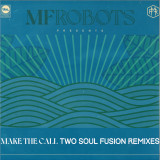
‘Make The Call’ comes with an extended version and remixes from the legendary Two Soul Fusion duo of Louie Vega and Josh Milan. These remixes bring something new and special to the track with each creating a subtly different mood for the dance floor, for the radio and for the house party.
MF Robots is a songwriting, production and performing duo created by former Brand New Heavies founder Jan Kincaid and BNH vocalist and multi-instrumentalist Dawn Joseph. The pair left the Heavies in 2014 to record their own compositions and have been wowing audiences and record buyers with their effortless blending of Soul, RnB, Funk, Disco and Jazz ever since.
Louie Vega is one half of the House music dons Masters at Work and Josh Milan is a Grammy nominated vocalist, musician and composer who also collaborate in Vega’s collective ‘Elements of Life’. With both at the forefront of production, composition and remixing for more than three decades, the House, Boogie and Instrumental versions they have produced for ‘Make the Call’ are off the scale here.
- An Anxious Host Is Described
- A Grift Is Detailed
- One Man's Trash Is Another Man's Garbage
- Skull Of Cortázar
- The Aftermath Of Post Office Arson Is Described
- The Sunken Cost Is Detailed
- Goes Reptile
- The Other Side Of The Coin Of The Confession Of The Medievalist
- Cart Dog
- Tired To The Bone
- Spanish House Is Described
Since the early 2010s, Josh Mason has slowly amassed an enchanting discography, publishing recordings on labels such as Florabelle, Dauw, Longform Editions, and his retired Sunshine Ltd. imprint. Whether focusing on electric guitar or modular synthesizer, Mason approaches his music with intentionality, tenderness, and a keen ear for detail, resulting in an exceptional and enduring oeuvre.
His workmanlike approach to craft and monomaniacal interest in circuit design culminated in 2021’s “Utility Music,” a daunting book/CD project that documents and unpacks a yearlong exploration of a Doepfer A-100 Eurorack system. The irony of such a project is that it might lead listeners to believe that academic technique and synthesis technology are the animating principles of his practice, but the reality is that this is only part of the story. Listening to Mason’s music one gets the sense that, like a good novelist, he truly cares about his characters, which take the forms of the textures and timbres of archaic wavetable oscillators, idiosyncratic filters, pulverized samples, and exotic noise sources.
“An Anxious Host” feels like a pivotal release in Mason’s catalog. It’s his first vinyl outing since 2019’s astounding “Coquina Dose,” and it may be the most succinct and potent album he’s made. The track titles function like stage directions in a play, intimating a hazy, filmic narrative populated by schemers, dreamers, and lost souls. As ever with Mason’s work, place is paramount, and this record is thoroughly shot through with the humidity, warmth, and “end of the line”-ness of the state of Florida. Seasick swells and sunken melodies; swampy, sputtering loops; sonic flotsam pooling together and flowing out, beckoning the listener to come have a soak.
Tullio De Piscopo is an Italian drummer, percussionist and singer- songwriter born in Naples, Italy. During his musical career he began working as a session drummer, playing with international artists, including Chet Baker, Gil Evans, Gato Barbieri, Eumir Deodato and many others.
His 6th solo album Acqua E Viento, released in 1983, includes the Italian #1 single “Stop Bajon (Primavera)” which also ranked to #58 in the UK Singles Chart of that same year. “Stop Bajon (Primavera)” was a favourite in Rimini (Italy) Discotheques, a Balearic Islands classic, a Chicago favourite during the early house days, and became an anthem of the Italo Disco movement. The album includes guest musicians Don Cherry on trumpet, percussionst Famoudou Don Moye and composer and songwriter Pino Daniele.
Factory Benelux presents a limited (500 copies only) orange vinyl edition of Retrofit, the seventh studio album from post-punk trailblazers Section 25, originally released in 2010. First time on vinyl.
Recorded before the untimely death of founder member Lawrence Cassidy in February 2010, Retrofit saw cult Factory Records group Section 25 revisit key tracks from their 1980s back catalogue, remade and remodelled for the 21 st century using an appropriate mix of new and old technology.
‘Gathered here is a selection of Section 25 faves, re-recorded and re-thought. The idea is born from their invigorating live set – compelling use of technology to lift them (almost) free from the familiar shards of 80s underground. Shockingly, this newattack works. All this tightening appears to have tugged the band into a sense of Now, gloriously at odds with the contemporary norm’ (The Quietus)
‘Audacious and innovative’ (Record Collector)
‘Section 25 might just be the best band in the world. Since 1980 they’ve been forging music that is as beautiful as it is challenging, from the monochrome psychedelia of their first album through Zen guitarscapes, electronic epiphanies, the arguable invention of Acid House, and on to an unexpected rebirth in 2006. Even within the narrative of such an unusual band, Retrofit is an odd confection: not a best-of or remix album, but a retrospective in which tracks are remodelled as gleaming technosculptures with the most human of hearts.’ (Glasgow Herald)
Now released on vinyl for the very first time, FBN 140 is limited to just 500 copies pressed on orange vinyl. The digital copy contains 5 bonus tracks, including a blistering re-boot of Looking From A Hilltop by Stephen Morris of Joy Division/New Order.
How sad, if timely: this stunning reissue of the 1994 live album arrived in the very week that trumpeter Masekela passed away. One of the most successful ambassadors ever for African music, his fusing of the continent's rhythms and instruments with contemporary jazz and rock proved irresistible. Nearly every one of you has heard him, thanks to guess spots with The Byrds and Paul Simon. His breakthough hit from 1968 — the infectious "Grazing In The Grass" — is here, along with another 11 tracks recorded at Blues Alley, the U.S. club that gave us Eva Cassidy. Notably, despite its early-1990s origins, this is all-analogue." — Sound Quality = 90% - Ken Kessler, HiFi News, May 2018
"...Hope is one of those intensely visceral, large as life, and immediately present recordings that will make pretty much any system sound at least very good, and will cause better ones to raise goose bumps." - Wayne Garcia, The Absolute Sound, August 2008
"...The high quality original mix plus Analogue Productions' superb mastering has resulted in a terrific, very transparent sonic with great impact." - John Henry, Audiophile Audition
What more can be captured from the masterpiece that the late trumpet great Hugh Masekela left devoted fans, the effervescent Hope. Now cut at 45 RPM and spread over four 200-gram premium LPs, you're about to discover the answer to that question. The eight sides of vinyl reduce distortion and high frequency loss as the wider-spaced grooves let your stereo cartridge track more accurately. And this set is plated and pressed at Quality Record Pressings, Acoustic Sounds' own industry-lauded LP manufacturer. Virtually silent surfaces coupled with sharp delineation of musical detail are QRP pressing hallmarks.
Two Stoughton Printing old-style tip-on gatefold jackets house the four LPs, which are contained in a custom-designed slipcase reproducing the original artwork.
A longtime audiophile demonstration disc. Hope will show off your system's dynamic range as well as any record ever released. Hugh Masekela, the outstanding South African trumpeter, assembled a seven-piece group and recorded this great set live at Washington, D.C.'s Blues Alley. The songs stretch over a period of nearly five decades and serve as an informal guided tour of Masekela's life. The songs are honest and bare, and as for the sound — WOW!
Unlike a prior 45 RPM version that included seven songs, this 45 RPM reissue contains the full program as originally recorded with all 12 tracks included! Plus, as an added bonus, we've included a special insert — featuring an exclusive interview with Grammy/Emmy Award-winning engineer David Hewitt, who recorded Hope originally.
"Hugh's record is right up near the top for a lot of reasons," Hewitt says.
Hewitt and his team were afforded the time they needed, and they pulled out all the stops to pull off what's now recognized as an all-time great recording. They used better-quality microphones, they were mic-ing the room for ambient sound, and Masekela was performing for a sophisticated and appreciative audience.
"We used stuff from our stash of mics as opposed to what you'd find typically at a jazz club. We actually had control via the record label and producers, so we could take our time. We had the ability to mic the room for abient sound. ... you've got people that actually know and appreciate the music and respond accordingly. What you've got there is all the right stuff at the right time and the right people, and then something magical happens."
Listen to that magic unfold — put on this Analogue Productions 45 RPM 4LP reissue of Hope, and be transported.