Natural Element proudly presents the long-awaited album The Paradigm Shift by one of Amsterdam’s finest and most prolific producers, Kid Sublime. Following on from the 12” single ‘You Got Me Runnin’’ which dropped in the summer, this 8 track, double LP offering is a special piece of work crafted during the pandemic years and Turbulence recording sessions with maestros Beka Gochiashvili and Mishulino.
The album showcases the evolution of Kid Sublime’s sound and the influence of London’s vibrant broken beat scene, with him having connected with some of the artists around the time of the passing of the legendary Phil Asher. It touches on house, bruk and even techno, with his signature soulful touch palpable across the whole record. Features include talented London artist Oliver Night, Sydney-based vocalist Natalie Slade and long time collaborator, flautist Han Litz, amongst others.
The Paradigm Shift takes you on a deep sonic journey straight from the heart, celebrating love, connection, spirituality and human evolution. There’s introspective moments with the jazzy house drifter ‘The Awakening’ and the dubbed out bass of ‘Kingz’, as well as joyful moments such as the uplifting ‘Heaven’s Glory’ and the romantic ‘Stay Over’, which is as soulful as it gets. ‘Bring It Come’ brings some minimal bruk flavours reminiscent of Bugz in the Attic, and the title track takes things a bit darker with a club-ready roller.
Sitting somewhere between the living room and the dancefloor, this album is sure to enliven the spirits of many a discerning listener and bring some much needed radiance and hope into people’s lives.
Suche:house of people
Plastik People keep it deep once more with a new outing of their ongoing Collections series. There is plenty of ol' school nostalgia in the opening cut, Ricky Montanari's 'Back To Love', with its US garage snares and dusty piano stabs making for a great mix of drive and soul. There's a pared-back dub version too plus an amped up and sweaty Dave Charlesworth dub of Aurora B's 'Good Love.' Last of all is the hurried and soulful house whomp of 'Hard Times' (original 96 mix). Four very useful jams.
2025 Repress
“UR wonders” What happens to jazz if combined with the current electronic sound tools used to make Detroit techno now?
What might Jazz sound like if the inspirational pioneers of fusion ie; Return to Forever, Astral Pirates or Weather Report had access to the music production technology available now or in the future?
The artform called Jazz was a unique reflection of “The African American experience here in the United States.Unfortunately by the 90″s it had been compromised by major record companies and made “smoother” for mainstream consumption and more profits.
Born in America’s rural black south Rock & Roll had suffered the same fate years earlier. Original artists eventually replaced by well studied clones and corporate mega profits!! Also happening the original artform of jazz appeared to be caught, processed & throughly EXPLAINED by people who sought to intellectualize “struggle & human emotion” into mere words and then benefit immensely financially by being authorities on the subject.
Hmm sound familiar?
As you watch the current intellectual colonization of the urban inner city African American art forms house music, hip-hop, Jungle & Detroit techno get studied, bent, twisted renamed and turned into EDM profit formulas.
There stands records like Nation 2 Nation that defy these definitions and inspire the next generation of Pioneers who continue the undefined exploration of Jazz like Derek Jamerson, Jon Dixon, Raphael Merriweathers, Desean Jones, Timeline, Galaxy 2 Galaxy, Raphael Statin & Ian Finkelstein. Mother to daughter, Father to son,
Nation 2 Nation a work inspired and that inspired what’s next.
- A1: Zen Experience - People Won't You Come Along
- A2: Motion Blue - Scream
- B1: Direct 2 Disc - Excuse Me (Stab Mix)
- B2: Darwin Chamber & Dj Utopia - Tribute (Dj Utopia's Mix)
- B3: Octo Octa - Cabin Dance
- C1: Eris Drew - Hope In A Smoke Filled Room
- C2: Toka Project - Toka Love Project
- D1: Eskimos & Egypt - Fall From Grace (Moby Mix - Distresse
- D2: Eris Drew - Momentary Phase Transition
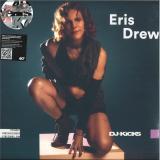
The next instalment in the classic DJ-Kicks series is a selection of rapturous house, blissed-out breaks, and transcendent rave from the high priestess of the motherbeat herself, Chicago"s Eris Drew. DJ, producer, musician, long-time resident at Chicago"s Smartbar, and co-creator of the T4T LUV NRG party and label, Eris Drew has been DJing since the early 90s, and has since taken her ecstatic house and high-energy, uncompromising mixing style to clubs, raves, and festivals worldwide. Eris" DJ-Kicks mix is 79 minutes of, as she puts it "the funky, emotional, ecstatic house-and-breaks backbone that defines my sound", and includes tracks, remixes, and exclusives by Moby, Calisto, DJ Garth, Onionz, DJ Who, Kair, Hoof, and Toka Project, as well as from Eris herself and partner Octo Octa. The result of countless hours of digging, her selection delves into the rattling breaks, rave stabs, and haunting strings of classic and lost "90s hybrid house-and-breaks jams, and matches them with more recent digs, the mix moving back and forth between emotive, bittersweet, and evocative, to raw, tough, and twisted with consummate ease.
One of London’s underground dance music hero’s, founder of The Utopia Project and Love Fever Discotheque, Alex Bradley presents a fresh moniker, Dreamphaze, for People & Place’s 004. The ‘Glow EP’ is a four-track dive into the London-based artist’s psychedelic take on blissful house & techno, moving between trance-tinged dreamscapes and playful grooves to soundtrack the halcyon days of a summer gone by.
- A1: Words Drenched In Acid
- A2: South Still Speaking (Feat. Killer Mike)
- A3: Broadcasting
- B1: Mirror Discussions
- B2: Native Tongues
- B3: Shredded Speach (Feat. Bun B)
- B4: Talk Of Mane And Bruh
- C1: Strange Slanguistics (Feat. Termanology)
- C2: Concrete Idioms (Feat. Passport Rav & Propain)
- C3: Wine Glass Remark (Feat. Jay Worthy)
- D1: A Love Language (Feat. Everyday Saints)
- D2: Monologue For My Dogs (Feat. Stooky Bros & Everyday Saints)
- D3: My Sermon (Feat. 8Ball)
- D4: Power Dialogue (Feat. Adajyo)
Lukah’s unprecedented trajectory shatters new heights with A Lost Language Found, his most thoughtful, sonically-diverse record yet. With the multiplatinum OG Statik Selektah on production duties, Lukah’s by now iconic, razor-sharp pen-game goes toe-to-toe with some of the best. Trading verses with Houston innovator Bun B, Memphis legend 8 Ball, and the larger than life Killer Mike, all parties involved operate at the peak of their skill. The first of what will be multiple collaborations with heavyweight hip-hop producers, this new LP establishes what we already knew in our hearts: Lukah is here to take over.
The stage set to deliver this latest opus is intensely personal: in the heart of his community, Lukah holds court with his trusted fellows at his great grandmother’s house in French Fort, Memphis, a historically black neighborhood long rec-ognized as a stately, proud vision of Black suburbia in a city still healing from deep racial trauma. Recently laid to rest in Elmwood Cemetery, the pain and strength of mourning her influence is present in the deep lyrics of A Lost Lan-guage Found, where Lukah traces not just his own legacy, but that of the linguistically rich and diverse dialects of his people. The cover image depicts the game room of the house, a place that once hosted civil rights leaders and revolu-tionaries, now a monument both to a history of leadership and to its future. For the first time, Lukah himself appears on the album art to mark this significant occasion, flanked by his partners, the symbolic source of knowledge in his hand. Listening to Lukah spit has always been a privilege and a revelation. His artistic power lies in uncovering secrets thru torrents of lucid, poetic rhymes. The listener is invited to share in this bountiful feast. Witness the real god expansion.
The album is available as a limited edition vinyl release of 500 copies in gatefold jacket.
- A1: Greenteeth
- A2: Fen Creatures
- A3: War Ditches
- B1: The Promise
- B2: Fable Of Beauty
- B3: Another Eden
- B4: Descent
Cambridge’s acclaimed psych-folk quintet Fuzzy Lights return with their fifth album ‘Fen Creatures’. Following on from 2021’s critically lauded ‘Burials’ the band have created their most conceptually focussed work to date – a mediation on environmental crises that uses the folklore and history of East Anglia as a lens to examine humanity’s fractured relationship with the natural world.
The album operates across multiple historical timelines, from Iron Age hill forts to medieval plague houses, from Byron's Romantic-era environmental warnings to the immediate threat of rising sea levels, creating a temporal tapestry that weaves ancient stories with contemporary concerns.
Musically, the quintet, Rachel Watkins (vocals/violin), Xavier Watkins (guitar/electronics), Chris Rogers (guitar), Daniel Carney (bass), and Mark Blay (drums), have pushed deeper into experimental drone territories while maintaining the crystalline folk sensibilities that have become their signature.
Lead track ‘Greenteeth transforms the traditional cautionary tale of Jenny Greenteeth, the water spirit who lures children to their deaths. "When I read this story to my daughter, she was instantly drawn into it," Watkins notes. "There's something timeless about these tales and the way they speak to fundamental fears and connections that span generations."
Elsewhere, 'War Ditches' imagines the Iron Age dead of a Cambridge hill fort keeping watch over the land, their vigil ending as modern people lose connection with the earth. 'The Promise' creates an imaginary encounter with the ghosts of Landbeach village across multiple eras, connecting the 1665 plague with our recent pandemic experience through shared narratives of community resilience and loss.
Critics praised ‘Burials’ as "way beyond folk and folk in essence all at once" (Backseat Mafia) and "folk-rock looking back squarely at the early 1970s" (Financial Times), and 'Fen Creatures' promises to cement Fuzzy Lights' reputation as one of Britain's most vital contemporary folk acts. The album positions them firmly within the lineage of artists like Fairport Convention, Trees, and Comus who understood that engaging with tradition isn't nostalgic escapism, but a way of accessing older wisdoms about how to live in the world.
‘Burials’ press:
“...the musical battle between the fuzzy and the light makes Fuzzy Lights special.” MOJO ★★★★
“...a simmering, sinister undercurrent which often explodes with apocalyptic fervour.” SHINDIG ★★★★
“...subverting genre expectations and folk melodies.” FINANCIAL TIMES ★★★★
“Way beyond folk and folk in essence all at once, it's a record that’ll bring you much reward.” BACKSEATMAFIA - 8.3/10
“a genuine delight....a stirring and unsettling listen, goosebumps adding to the pleasure of timeless music played well, with perfect precision. Don’t leave it another eight years, eh?” FOLK RADIO
“...re-inventing the folk-rock playbook and dragging it screaming through an array of influences...Fuzzy Lights’ most unique, reflective and ambitious record to date” FOR THE RABBITS
Debut solo album from guitar player of Calicos. The result is a record that balances melancholy and raw intensity, where vulnerability is never far from power.Aäron Koch's voice cuts straight through, while the band builds a sound that feels both timeless and urgent, echoing The Veils, My Morning Jacket and Strand of Oaks.
For years, Aäron Koch was the guitarist in other people's bands. Writing intricate riffs and odd time signatures came naturally, but the thought of writing a simple song, a verse, a chorus, a melody that could stand on its own, felt out of reach. He tried and failed, discarded demos, and pushed himself through the humbling exercise of writing "bad songs" just to learn the craft.
'For Once', his debut album (out via Unday Records), is the unexpected outcome of that long struggle. What began as an exercise became a set of songs that refused to stay in the drawer. Months after recording rough sketches, Koch listened back and realized they weren't throwaways after all. With a small heart, he shared them with friends, musicians from bands like Calicos, Uma Chine and Tin Fingers, who immediately heard their potential and joined the project.
The result is a record that balances melancholy and raw intensity, where vulnerability is never far from power. Koch's voice cuts straight through, while the band builds a sound that feels both timeless and urgent, echoing The Veils, My Morning Jacket and Strand of Oaks.
"This music is about weaknesses and vulnerability," Koch says. "Autobiographical really, something I only realized once the album took shape."
That honesty struck a chord. In 2024, after only a handful of shows, Aäron Koch reached the finals of Humo's Rock Rally and was invited to open for Belle & Sebastian at a sold-out Ancienne Belgique. Now 'For Once' shows why: it's the sound of someone learning to write songs the hard way, and discovering in the process that he has something entirely his own to say.
- 01: Two Former Friends (Original)
- 02: Dance Of The Silver Beetles (Original)
- 03: Miniature White Deer (Original)
- 04: All The Goodbyes (You Tried To Defer)
- 05: Regretful Polar Bear (Original)
- 06: Anxious Shadow Puppets (Original)
- 07: Failed Space Walk (Original)
- 08: Devils (Original)
- 09: A Leopard With No Spots (Original)
- 10: Abandoned Boy (Left In Charge Of The Family Business)
- 11: Metal Mosquitos (Original)
- 12: A Cat Left To His Own Devices (Original)
- 13: Well-Heeled Human Driftwood (Original)
- 14: Flamingo With Bandaged Neck (Original)
Chris Menist pares his sound right back for A book of imaginary beings, his fourth Awkward Corners outing with a project of electronic and abstracted global grooves. Experimenting with simple melodies and uncluttered arrangements, as well as taking inspiration from the Borges' short stories alluded to in the title, the project took shape in the early part of 2025, in the shorter days and dark evenings of January.
The initial challenge was to knock a basic track into shape each evening after work, then refine it later. There's a melancholy in the air in late winter, compounded by the creeping threat of national and geopolitical instability. Ulla, Natural Information Society, Jabu, Torso and Dawuna formed some of the background soundtrack as each tune took shape.
The track titles came after sitting with the sounds for a while, giving shape to images of people, creatures and their stories for a book that is yet to be written.
Two former friends sets the tone for the album perfectly as a minimal electronic piece with a slowly simmering synth bassline underpinning the groove whilst the trademark Awkward sound of the Shahi Baaja enters drenched in effects. It's the first demonstration of Chris' unique ability to create a world from apparently very little.
Dance of the silver beetles is completely unique in that we can hear chopped up Illimba samples seemingly playing backwards and forewords sometimes alone, sometimes together in duet with Chris' conga rhythms. Add to that a more conventional Illimba melody and added shaker percussion and you have one of A book of imaginary beings most curious chapters.
Anxious shadow puppets is closer to the Awkward Corners sound from previous albums as electronic pulses move around the arrangement with the urgency that the track title suggests. Chris' percussive roots move to the fore with the congas that tie down the Paradise Bangkok Molam International Band's sound. Here, the bassline is more playful and works together with one of Chris' many African Illimbas.
Fans of Chris' adventures on his Roland 808 will dig A leopard with no spots, although the minimal mood continues to flow through on this track. The lolloping, but hard-hitting rhythm track provides the grounding for strange and twisting feedback-sounding tones to work the soundscape.
Abandoned boy (left in charge of the family business) is Awkward Corners at his atmospheric best. Drift off to the sublime sounds of Chris exploring the Shahi Baaja, whilst a soft, repetitive synth line and abstracted pads give the listener that feeling of meditation and peace.
Flamingo with bandaged neck is A book of imaginary beings' perfect coda and is exclusively Shahi Baaja draped in reverbs and delays. It feels like the resolution and the closing of a book that – as of yet – remains unwritten.
Awkward Corners is Chris Menist, a musician, DJ and writer. It started life as a small project in Islamabad, where Chris was living at the time. Initial recordings were made with local musicians in Pakistan and then subsequently in Thailand. This culminated in the Sweet Decay LP that came out on Finders Keepers' Disposable Music in 2014, and in turn led to a limited tape release on Boomkat/Reel Torque of original compositions and re-edits of Thai 45s the same year. Chris released – Dislocation Songs – his second LP proper with Shapes of Rhythm in May 2020, collaborating on many of the tracks with award-winning performer Sarathy Korwar. The LP was picked up by many radio stations including NTS, Resonance FM, BBC 6 Music, Balamii and many more. It made Tom Ravenscroft's LPs of 2020. Amateur Dramatics, Chris' second LP arrived just a year later in 2021 and was a more ambitious project featuring more jazz-focussed compositions and featuring Tamar Osborn and Kitty Whitelaw. Shortly after that came another pivot with the heavier, dancefloor-friendly EP Somebody Somewhere. Somebody Somewhere is Dancing in a Field brought the House (yes House!) vibes, whilst Hector Plimmer turned in a remix of No Words in the same club mood.
As one of NTS Radio's longest-standing presenters, Chris continues to hold down the Paradise Bangkok show. Playing drums and percussion since he was a kid, Chris is the percussionist for The Paradise Bangkok Molam International Band as well as co-founding the record label of the same name. Chris has curated compilations for labels such as Finders Keepers, Soundway and Dust-To-Digital. He has been featured on the Boiler Room, Vinyl Factory Collections, played at the Four Tet curated Nuits Sonores festival, and has put together an edition of Volumes which featured unreleased Awkward Corners compositions.
[d] 04: All the Goodbyes (You Tried to Defer) [Original]
[j] 10: Abandoned Boy (Left in Charge of the Family Business) [Original]
Utter presents Marshall Jefferson's previously unreleased meditation opus 'Yellow Meditation For The Dance Generation' alongside two remixes from French production maestro Joakim.
Marshall Jefferson: Chicago House music pioneer, creator of the anthemic ‘Move My Body’, an original collaborator of Adonis, Ce Ce Rogers and Roy Davis Jr., production mastermind of countless dancefloor classics such as Phuture’s ‘Acid Tracks’, Sterling Void’s ’It’s All Right’, Hercules’ ‘7 Ways’… and the soothing voice behind a 36 minute healing meditation guide. Yes, really.
But let’s rewind, slightly.
In 2017, Marshall was approached and encouraged by Ian ‘Snowy’ Snowball to write his autobiography and the pair set about putting Marshall’s account of the history of House music together. The book, ‘Marshall Jefferson: Diary of a DJ’ was published in 2019.
Following the book’s release, Ian and Marshall's collaboration continued and during the pandemic an outlandish idea arose to create a piece of music combining Ian's interest in meditation (he runs Club Chi specialising in Shibashi Qigong - a form of Tai Chi Qigong - which is a gentle form of movement therapy/exercise) and Marshall's willingness to experiment musically to see what might be possible.
The result is ‘Yellow Meditation For The Dance Generation’, where Marshall vocalises Ian’s lyrics in his instantly recognisable voice. The keen-eared out there may also recognise aspects of the music itself as a stripped back, lengthened and far mellower version of Marshall’s 1985 obscurity ‘Vibe’:
“I would take tapes to the Music Box and Ron Hardy would play my music. ‘Vibe’ was one of those tracks. I recorded ‘Vibe’ in 1985, but it became one of my tracks that I just forgot about until some guy on Facebook sent me a recording of it that was taken from a club. The only person who I ever gave a recording of ‘Vibe’ to was Ron Hardy. The other people I know who had copies of the track were Gene Hunt and Emanuel Pippin (DJ Spookie).
"The original version of ‘Vibe’ was made using a Roland 707, Roland JX-8P keyboard and a Roland 727 drum machine. I was still working at the Post Office at the time, and this was pre-‘Move Your Body (The House Music Anthem)’. ‘Vibe’ has the building blocks for ‘Move Your Body’ because it was using the instruments on the track that I discovered what I could do with the bass sound, to make a track like ‘Move Your Body’.”
Still, Ian’s initial intention for ‘Yellow Meditation’ was function and it was designed to be a ‘Sequential Relaxation Exercise’ focusing on the Solar Plexus. Bearing this in mind, Marshall took a bare-bones and hypnotic approach to this particular re-recording of ‘Vibe’ so that the voice takes centre stage and listeners (hopefully) find themselves on a meditative journey. In fact, this long-form track was always intended as a private tool purely for meditation at Club Chi rather than released to the public - after all, Marshall had also created and released a more drum heavy, ’traditional’ club-focused 'Vibe Three' instrumental version for that very purpose - but a chance airing of the full 36 minute version changed its path.
Much like those 1985 ‘Vibe’ cassettes, Marshall had sent the track to a few close contacts, one of whom was Kieran at Phonica Records who aired it over the shop’s basement soundsystem. Its unorthodox nature caught the ear of colleague Alex (of Utter) and the seeds of a physical release were planted.
Eventually, with the full-version carefully whittled down to a vinyl friendly length of 24 minutes, full track parts in hand and a b-side to fill, Alex sought out one of his favourite producers to take up the remix reigns: Joakim. The Tigersushi co-founder and Crowdspacer boss has a long history of boundary-pushing remixes that straddle both dancefloor functionality and experimentation. This time the original material resulted in Joakim coming up with a number of ideas and he finally delivered two versions - one club focused (‘Vertical’), the other more introspective and meditative (‘Horizontal’), both of which appear on the final 12”.
The limited edition 12” also includes a download code giving buyers access to all of the vinyl tracks plus an 18 minute extended version of Joakim’s ‘Horizontal’ remix, its instrumental counterpart (for those who can live without Marshall's voice) and full 12 minute acapella (for those who can't!)
Alex
a A1. Yellow Meditation For The Dance Generation (Edit) 24:00
b B1. Yellow Meditation For The Dance Generation (Joakim's Vertical Remix) 9:09
9:05
"Imagine More is the follow-up to Lophae's acclaimed debut Perfect Strangers (January 2025).
Recorded live to 2-inch,16-track analogue tape with the band all in one room, engineered and mixed by Benedic Lamdin (Nostalgia 77), and mastered by Caspar Sutton-Jones (Gearbox Studios), this second offering from guitarist and composer Greg Sanders' quartet ventures deeper into their distinctive blend of modern jazz, psychedelic exploration, and world music flourishes.
Four gifted improvisers navigate Sanders' compositions with mercurial dialogue and musical communion, weaving melodic elegance with rhythmic complexity, creating sound-worlds that echo Jeff Parker, Joao Gilberto, and Blake Mills while channeling the sophistication of Stan Getz, Bill Frisell, and Edu Lobo.
Fizzing electric guitar, flowing saxophone lines, and skittering rhythmic interplay transport listeners from north-west London's Fish Factory recording studio to the musical capitals of New York, New Orleans, Rio De Janeiro, Bamako, and Johannesburg - anchored by Sanders' unmistakable compositional voice and the quartet's intuitive sensitivity."
Phylipe Nunes Araújo's songs are as rich and varied as the diverse landscapes they were written in. The hills of Pernambuco, the lagoons of Alagoas, and the beaches of Bahia are all woven into his stripped-back, folk-inspired Brazilian songwriting. As part of a wider movement of musicians originating from Brazil's Northeast, Phylipe sees the process of music-making as the search for beauty itself.
Collaborating with fellow Northeastern artists Bruno Berle, Batata Boy and Nyron Higor among others, Phylipe's debut album represents the latest flowering of this exceptionally talented community's creative search.
The Northeast holds an almost sacred importance in Brazil's collective cultural imagination. The region bore witness to the brutal histories of Portuguese colonization and the African slave trade, while simultaneously amalgamating the diverse cultures, religions and traditions of those who have called it home. Countless Brazilian music greats - Gilberto Gil, Caetano Veloso, Hermeto Pascoal, Djavan and Luiz Gonzaga - have emerged from this vast cultural melting pot.
Born in Caruaru, Pernambuco state, and raised in the city of Santa Cruz do Capibaribe (famed for its textiles industry), Phylipe describes his music simply as "Brazilian music from the Agreste of Pernambuco". His masterful compositions thread together regional rhythm, folk poetry and sophisticated harmony.
Phylipe's musical foundations were laid in youth, listening to the local elders rehearsing their forrós, attending São João street parties in front of his house and watching the Junina Quadrilhas dance through his neighborhood. At street fairs he would read the Literatura de Cordel (handcrafted pamphlets of Brazilian folk literature), and watch the rhyme battles between cantadores, violeiros, and repentistas, who improvise verses on daily life, social commentary and philosophy. This tradition of Northeastern folk poetry proved particularly formative for Phylipe as a lyricist. "I always try to write things as simply as possible. I believe that beauty must be easily understood. If I can facilitate the path to the message, there's no reason not to. It's something I learned from the traditional poetry here: it's more beautiful if everyone understands."
At the age of 11, Phylipe first got access to the internet. As he explains: "Still in adolescence I was also able to discover things like The Beatles and Nick Drake - I started to get to know music from the rest of the world and later to correlate that with my local musical experiences." Rich with extended chords and artful dissonances, it's clear from his compositions that jazz and bossa nova also took hold, but he's quick to eschew stereotypes. "Inevitably, people associate a Brazilian musician playing a nylon-string guitar with bossa nova..." "But the foundation is another story," he asserts, "It's the Northeast."
On the guitar Phylipe experiments with the binary rhythms inherent in traditional Northeastern music. Coco, frevo, maracatu and baião are recontextualised, placed alongside Brazilian popular music (MPB), gentle lullabies and stunning ballads. "In these 10 songs, I am experimenting with making pop music on a nylon-string guitar with my foundation in the Northeastern songbook."
The contemporary musical community which Phylipe belongs to developed initially in Pernambuco's neighbouring state Alagoas. Phylipe lived in its capital Maceió for three years, where he built friendships and musical bonds with Bruno Berle and Batata Boy who together produced his album. Bruno also sings in unison with Phylipe on the duet "Valise", a song Phylipe wrote aged just 15.
In recent years, Phylipe, Bruno and Batata have migrated south to São Paulo, where the majority of the album was recorded. Other collaborators on the album include Alici, who provides vocals for the ebb and flow of "Temperim", Nyron Higor who plays drums on lead single "Asa" and the sweet indie moment "Ziz"", bassist Meno Del Picchia who plays on the mystical baião "Bixin" and the propulsive "Subindo a Ladeira", and Raphael Coelho who joins Bruno and Batata on percussion for "Santa Cruz", Phylipe's hypnotically powerful portrait of his hometown.
- 1: I'm Not Getting Excited - Live
- 2: Great No One - Live
- 3: Whatever - Live
- 4: Mars, The God Of War - Live
- 5: Future Me Hates Me - Live
- 6: Introduction
- 7: Jump Rope Gazers - Live
- 8: Uptown Girl - Live
- 9: Bird Talk
- 10: Happy Unhappy - Live
- 11: Out Of Sight - Live
- 12: Thank You
- 13: Don't Go Away - Live
- 14: Little Death - Live
- 15: Dying To Believe - Live
- 16: River Run - Live
The anticipation is there in Elizabeth Stokes’ solo guitar riff under the opening lines of “I’m Not Getting Excited”: a frenetic, driving force daring a packed Auckland Town Hall to do exactly the opposite of what the track title suggests.
As the opener of The Beths’ Auckland, New Zealand, 2020 expands to include the full band, the crowd screeches and bellows. It’s a collective exhalation, in one of the few countries where live music is still possible.
The album title, and film of the same name, deliberately include the date and location, lead guitarist Jonathan Pearce says. “That’s the sensational part of what we actually did.” In a mid-pandemic world, playing to a heaving, enraptured home crowd feels miraculous.
In March 2020, everything seemed on track for another huge year for The Beths. Home after an 18-month northern hemisphere tour, they had just finished recording sophomore album Jump Rope Gazers and were primed for more extensive touring. But within days, New Zealand’s lockdown split the band between three separate houses. All touring was cancelled.
“It was existentially bad,” Stokes says. As well as worrying about economic survival, they lost something crucial to the band’s identity: live performance. “It's a huge part of how we see ourselves... What does it mean, if we can't play live?”
The band found an outlet through live-streaming, returning to the do-it-yourself mentality of their early days to connect with a global audience. The album and film have their genesis in that urge to share the now-rare experience of a live show, as widely as possible.
The fuzzy-round-the-edges live-streams pointed the way aesthetically. Native birds, wonkily crafted by the band from tissue paper and wire, festoon the venue’s cavernous ceiling while house plants soften and disguise the imposing pipes of an organ. The presence of the film crew isn’t disguised: much of the camerawork is handheld; full of fast zooms and pans.
With much of the material still fresh, the band was less focused on re-invention than playing “a good, fast rock show”, Pearce says. The tempo is up on crowd favourites “Whatever” and “Future Me Hates Me” (released as a live single on its third anniversary) as both band and audience feed off the mutual energy in the room.
Certain songs have taken on special resonance post-Covid. Pearce has found “Out Of Sight”, a tender rumination on long-distance relationships, hits particularly hard with live audiences.
Album closer “River Run” visibly brings Stokes to tears as a mix of achievement and relief kicks in. “You can finally relax at that point … You play the last note, breathe out a sigh and look up - and you’re in a giant room full of people happy and smiling.”
- A1: Anuradha Paudwal – Gayatari Mantra
- A2: Baba Zula – Arsiz Saksagan (Cheeky Magpie)
- A3: Orchestra Tout Puissant Marcel Duchamp – So Many Things (To Feel Guilty About)
- A4: Christopher Martin – Playing Games With My Heart
- B1: Geir Sundstøl – C’est Vide En Ville
- B2: Brother Ah – Transcendental March (Creation Song)
- B3: Les Abranis – Therrza Rathwenza
- B4: Sparkels – That Boy Of Mine
- C1: Maximum Joy – Stretch (7” Mix)
- C2: Chillera – Schax
- C3: Elijah Minnelli – I Hope The Goats Come Back (Ze-Hood De-Sham Lichdal)
- C4: Siti Muharam – Pakistan
- D1: Muriel Grossmann – Traneing In
- D2: Catford Gyrations – Land Of 1000 Presets **
- D3: Living Daylights – Let’s Live For Today
- D4: Natalie Bergman – Shine Your Light On Me
Orange Vinyl[41,98 €]
Crate digger and music enthusiast James Endeacott compiles ‘Unlock Your Mind With Morning Glory’ for Two-Piers Records – A glorious heady mix of the weird and wonderful eclectic music from his radio show ‘Morning Glory’
“One weekday afternoon towards the end of 2017 I sat in The Lyric pub on Great Windmill Street, Soho with my dear friend Raf. I’d just finished another of my weekly Soho Radio shows and was starting to think about the next one. Raf had been on as a guest playing some of his favourite tunes of the day. We had a few drinks, told a few stories and started to plot and scheme. It was always a dream of mine to have a daily radio show. Radio had always informed and excited me from my early teens listening to John Peel under the blanket when I should’ve been either sleeping or revising right up to the present-day musical excursions of NTS, WFMU and numerous internet based stations.
We decided to speak to Adrian and Dan who ran Soho Radio to see if they’d be up for us doing a daily morning show. To our surprise they were into the idea and within 5 minutes Adrain came up with the name Morning Glory. We all liked it. We were all excited. It was all systems go. In December 2017 Raf and myself started a daily 2 hour show. We did the show together, got guests in and the musical policy was whatever we felt like that day. After several months Raf found the mornings too much. Off he went into the distance occasionally coming back with a smile, and a bag of new music. I carried on alone and then suddenly in March 2020 the world stopped, and we went into lockdown.
We set up in my house in Catford, Southeast London and carried on. The show became 3 hours a day and I started to invite friends, record labels, record shops, bands etc.. to supply me with hour long mixes that I played every day. The show took off during this time. My musical tastes expanded as I spent all day long searching for new sounds from around the globe. People started to send me more and more music. I became obsessed with the show. The audience started to take to social media and ask for certain tracks or artists to be played. I got listeners to make me mixes to play on the show and I did several phone interviews with musicians while playing some of their favourite tunes.
I was grateful that Soho Radio left me to my own devices. They never told me what to do or what to play – they trusted ma and I trusted my instincts.
The music on this compilation is not a ‘best of’ it’s just how I felt when I compiled it at the start of 2025. Apart from a couple of tracks they are all things I’ve come across since the show started in December 2017. If I did a list of tracks now I’m sure it would be completely different. Surely that’s the point. We never stick in one place. We are always moving and searching. Always trying to unlock our minds. Put it on. Take your time and let it take you somewhere” James Endeacott 2025
- 1: Manuel (7:43)
- 2: Building Pyramids (8:5)
- 3: Fennel (07:14)
- 4: Selma (8:31)
- 5: Not Erotic / Cop Film (13:41)
East London based quintet IAN bring a sense of jovial camaraderie through their heavy, loud and droning post-rock dirges on debut album 'Come On Everybody, Let’s Do Nothing!' through UK charitable label Human Worth.
IAN (the band) are refreshing newcomers in the UK's heavy underground. The East London based quintet will be releasing their stirring debut album Come On Everybody, Let's Do Nothing! on Vinyl and Digital via independent label Human Worth on October 17th – a labour of love between five old friends and ex-bandmates from Exeter’s fertile early '00s DIY punk scene.
Self-described as "a band that appreciates the peaks and troughs of post-rock as much as the crunch of the riff," IAN's striking debut delivers five dirges that merge earth swallowing riffs with the atmospheres and dynamics of their post-rock heroes, such as Godspeed You! Black Emperor, with the bite and visceral heft of Cult Of Luna and Amenra. Thoughtfully captured by Wayne Adams (Petbrick, Big Lad) at his London based Bear Bites Horse studio, IAN craft slowly mounting riffs, with anguished screams, woven with elegant cello playing, field recordings and earthy timbres. Come On Everybody Let’s Do Nothing!, and the band IAN as a whole, is the culmination of 25 years of musical comradeship and the need to find inspiration in films, noise and the drudgery of middle-aged life.
Rising UK independent label Human Worth have pressed up a limited run of Eco Mix Vinyl, housed in a stunning sleeve designed by guitarist Craig Murray, with a very small batch of Bandcamp Exclusive Signed Prints. 10% of all profits will be donated to charity Mermaids – supporting trans, non-binary and gender-diverse children, young people and their families since 1995.
"A harsh mix of post-rock aggression and dark ambience. As jovial as they were incredible." ~ The Sleeping Shaman
Plastik People's limited series hits double figures with a personal collection of standout tunes from label boss Marc Cotterell, including a licensed remix originally released through Defected Records that made a big impact last year and is now finally available on vinyl. Alongside that is the much-loved trumpet track, which is perfect for sunny outdoor dances, and a massive remix by Mikey More & Andy Tee from Groove Culture. Rounding out the release are two more quality tracks that showcase the artist's range and sound - the shuffling garage undercurrent of 'Searching For Your Love' and deep garage-house bounce of 'Get To It'.
STANDFIRST Titanic, the project spearheaded by Mabe Fratti and Hector Tosta (aka I. la Católica), return with a sumptuous and life-affirming new album.
In her sensational 1929 biography Tiger Woman, dancer and socialite Betty May claimed her ‘coster’s eye’ meant she liked to wear as many colours as possible. “Colours to me are like children to a loving mother. Each is my favourite, yet I can never bring myself to deny the others by preferring one.” May’s bold and inclusive strategy is one that manages to transfer itself, almost a century later, to Hagen, the new record by Titanic.
Many will know Titanic as the Mexico City-based brainchild of cellist and singer Mabe Fratti and multiinstrumentalist Hector Tosta who is now operating under the pseudonym, I. la Católica, (taken, rather unusually, from the name of the street the pair live on). With Hagen, and their previous release, Vidrio, (2023), the pair are creating a distinctive signature sound in modern alternative pop music. Nobody else sounds quite like them. Both records have an open hearted nature and simple, winning melodies that play off against a taste for drama, spectacular orchestration and a feeling of otherworldly mystery. Hagen is the more ambitious, sometimes more mystical effort. From the opening handclaps of ‘Lágrima del Sol’, (a wonderfully uptempo playground chant translating as a tear from the sun but, surely, not referencing the brand of pineapple wine?), the record dances its way through various mid-to-late-eighties inspirations, lush and widescreen passages of melancholy and vertiginous contrasts.
Mystery is often found in the simple but slightly odd song titles. English translations of various track titles give, ‘you swallowed the gum’, ‘leak’, ‘a tear from the sun’, ‘raising the trophy’ ‘digging dimensions’, ‘the owner’, ‘the decapitated hen’ and ‘the trap is exposed’. All denote striking images, metaphysical hints and emotional cues or simple, even childlike actions. Though Fratti and Tosta don’t reveal its provenance, the album’s title could even be a crafty play on words: the listener would be forgiven in thinking the moments of brash contrast and eyebrow raising theatricalism in the music constitute a musical nod to German punk chanteuse, Nina Hagen.
On Hagen, singer and cellist Mabe Fratti once again displays her brilliant knack of speaking to us directly. There is never the suspicion of her playing to the gallery, and the directness of many of the lyrics don’t allow it. Parallel to this, Fratti has an almost magical ability to give Hector Tosta’s melodies, and her and Tosta’s lyrics ones imbued with an insight and meaning that feels otherworldly. Tosta admitted it was “pretty wild to hear Mabe take the interpretations to a different place” and the listener can pick up on the delight Fratti takes in (literally) adding a voice to the many narratives.
Two examples can be shown here: ‘Gotera’ (Leak) uses harsh slashes of cello and tough, gunfire-like guitars and drums and multiple vocal lines that could be acting as a Greek chorus. They play off brilliantly against Fratti’s soft, slightly baleful vocal take that delivers lyrics such as: ‘nobody knows where the leak is / but I know where it is / they fight in front of the door and / nobody can go in’. With ‘La Gallina Degollada’ the somewhat blithe melody melody line, sung with what could be sarcastic brio by Fratti, plays against an itchting rhythm and rasping guitar part. The punch comes when you see that the song is about a chicken that has been decapitated and read lyrics such as: ‘I already saw it, it moved, the decapitated chicken’ / ‘could it be that I'm broken’ and ‘Two people hurt each other by thinking that they no longer agree’/ ‘Hours pass and the chicken represents what scares me’.
There may be death and fights to deal with, but there is also a quality of chirpy self-reliance about Hagen that is a key part of its nature. Like Betty May and her colourful outfits, Hagen’s sound often revels in its own sense of richness. Throughout, the record delivers vaulting string sections or glutinous guitar squeals that could, like the powerful, driving ‘Escarbo Dimensiones’ (Digging Dimensions) have come directly from a glossy 1980s TV series. Fratti sees this “glam sound” developed by Tosta on the aforementioned track and ‘Te Tragaste el Chicle’ (You Swallowed The Gum), as moments that were truly “revealing” for the album as a whole during its making.
What else? The thud and thump of ‘La Trampa Sale’ (The Trap is Exposed), and its sudden change of tempo and mood betrays a monstrously ambitious piece of music, the players almost greedily creating the sounds. Other moments are heart wrenching: ‘Libra’ ends on a poppy chord switch that cleverly ramps up the emotion inherent in the music’s notation. You could almost imagine a teenager in a bedroom forty years ago, rewinding the track over and over on a small, cheap cassette player, unable to get enough of that sugarsweet switch. Elsewhere, Oneohtrix Point Never adds stardust and an unearthly sense of space on the changeable, slightly moody meditation, ‘Pájaro de Fuego’ (Firebird). The record ends with ‘Alzando el Trofeo’ (Lifting the Trophy), a track that could soundtrack a state wedding, what with its beautiful cascading piano parts, a sugary vocal and short triumphal guitar riffs that add a rich patina to the overall sound. Fratti: “When I doubled those vocals on ‘Alzando el Trofeo’ I felt there was an epiphany happening, right at that moment.”
Making a good record is a team game. Tosta and Fratti recall seeing Randall from Circular Ruin Studios in NYC “tweak the drums in ‘Libra’ to make that amazing effect of the gated reverb”, or the shaping of ‘Gotera’, “when (recording engineer) Nate Salon added some synths to the track.” Drummer Eli Keszler, “an amazing and versatile player” had the songs down pat in a couple of days” and, according to Tosta, Oneohtrix Point Never “just came to one of the sessions and we hung out, and after all the recordings he and Nate were together in some studio and out of nowhere they sent us some beautiful tracks for ‘Pájaro de Fuego’! Fratti concurs. “He decided that he wanted to record because he was listening to the record (Nate works closely with him) and he really liked it! It was a total honour, indeed!”
Bedazzled by the playing, the skyscraping ambition in the arrangements and the giddy moments of contrast thrown up by Hagen, we could allow ourselves a brief moment of flippancy and state that Titanic’s new record is Yacht Rock meets Aeschylus, full-on. It’s also worth speculating that, in this hyper-sensitive, intemperate age, Titanic’s music has the power, however fleetingly, to heal hurts. Hagen is a brilliant showcase for a fresh and enriching form of pop music: displaying a magpie eye for what glints and plundering what has gone before.
Like Vidrio, Hagen was partially and additionally recorded at Fratti and Tosta’s house, aka Tinho Studios in Mexico City, as well as Golden Girl Studios & Circular Ruin Studios in New York City. Mixing was done by Santiago Parra in Pedro y el Lobo Studios, Mexico City and mastered by Rafael Anton Irisarri at Black Knoll Studios, New York City. The recording engineer was Nate Salon.
Hagen featured Mabe Fratti on cello, vocals & backing vocals, I. la Católica on guitar, keyboards, prepared piano, bass & backing vocals, drums by Eli Keszler and synths in ‘Pájaro de Fuego’ from Daniel Lopatin and Nate Salon.
All compositions on Hagen are written by I. la Católica, except ‘Escarbo Dimensiones’ & ‘Pájaro de Fuego’, which were composed by I. la Católica and Mabe Fratti. The record was produced by I. la Católica and co-produced by Nate Salon & Mabe Fratti. And all lyrics are by I. la Católica except ‘Escarbo Dimensiones’, ‘Gotera’, ‘Gallina degollada’ & ‘Pájaro de Fuego’, which were written by I. la Católica & Mabe Fratti.
STANDFIRST Titanic, the project spearheaded by Mabe Fratti and Hector Tosta (aka I. la Católica), return with a sumptuous and life-affirming new album.
In her sensational 1929 biography Tiger Woman, dancer and socialite Betty May claimed her ‘coster’s eye’ meant she liked to wear as many colours as possible. “Colours to me are like children to a loving mother. Each is my favourite, yet I can never bring myself to deny the others by preferring one.” May’s bold and inclusive strategy is one that manages to transfer itself, almost a century later, to Hagen, the new record by Titanic.
Many will know Titanic as the Mexico City-based brainchild of cellist and singer Mabe Fratti and multiinstrumentalist Hector Tosta who is now operating under the pseudonym, I. la Católica, (taken, rather unusually, from the name of the street the pair live on). With Hagen, and their previous release, Vidrio, (2023), the pair are creating a distinctive signature sound in modern alternative pop music. Nobody else sounds quite like them. Both records have an open hearted nature and simple, winning melodies that play off against a taste for drama, spectacular orchestration and a feeling of otherworldly mystery. Hagen is the more ambitious, sometimes more mystical effort. From the opening handclaps of ‘Lágrima del Sol’, (a wonderfully uptempo playground chant translating as a tear from the sun but, surely, not referencing the brand of pineapple wine?), the record dances its way through various mid-to-late-eighties inspirations, lush and widescreen passages of melancholy and vertiginous contrasts.
Mystery is often found in the simple but slightly odd song titles. English translations of various track titles give, ‘you swallowed the gum’, ‘leak’, ‘a tear from the sun’, ‘raising the trophy’ ‘digging dimensions’, ‘the owner’, ‘the decapitated hen’ and ‘the trap is exposed’. All denote striking images, metaphysical hints and emotional cues or simple, even childlike actions. Though Fratti and Tosta don’t reveal its provenance, the album’s title could even be a crafty play on words: the listener would be forgiven in thinking the moments of brash contrast and eyebrow raising theatricalism in the music constitute a musical nod to German punk chanteuse, Nina Hagen.
On Hagen, singer and cellist Mabe Fratti once again displays her brilliant knack of speaking to us directly. There is never the suspicion of her playing to the gallery, and the directness of many of the lyrics don’t allow it. Parallel to this, Fratti has an almost magical ability to give Hector Tosta’s melodies, and her and Tosta’s lyrics ones imbued with an insight and meaning that feels otherworldly. Tosta admitted it was “pretty wild to hear Mabe take the interpretations to a different place” and the listener can pick up on the delight Fratti takes in (literally) adding a voice to the many narratives.
Two examples can be shown here: ‘Gotera’ (Leak) uses harsh slashes of cello and tough, gunfire-like guitars and drums and multiple vocal lines that could be acting as a Greek chorus. They play off brilliantly against Fratti’s soft, slightly baleful vocal take that delivers lyrics such as: ‘nobody knows where the leak is / but I know where it is / they fight in front of the door and / nobody can go in’. With ‘La Gallina Degollada’ the somewhat blithe melody melody line, sung with what could be sarcastic brio by Fratti, plays against an itchting rhythm and rasping guitar part. The punch comes when you see that the song is about a chicken that has been decapitated and read lyrics such as: ‘I already saw it, it moved, the decapitated chicken’ / ‘could it be that I'm broken’ and ‘Two people hurt each other by thinking that they no longer agree’/ ‘Hours pass and the chicken represents what scares me’.
There may be death and fights to deal with, but there is also a quality of chirpy self-reliance about Hagen that is a key part of its nature. Like Betty May and her colourful outfits, Hagen’s sound often revels in its own sense of richness. Throughout, the record delivers vaulting string sections or glutinous guitar squeals that could, like the powerful, driving ‘Escarbo Dimensiones’ (Digging Dimensions) have come directly from a glossy 1980s TV series. Fratti sees this “glam sound” developed by Tosta on the aforementioned track and ‘Te Tragaste el Chicle’ (You Swallowed The Gum), as moments that were truly “revealing” for the album as a whole during its making.
What else? The thud and thump of ‘La Trampa Sale’ (The Trap is Exposed), and its sudden change of tempo and mood betrays a monstrously ambitious piece of music, the players almost greedily creating the sounds. Other moments are heart wrenching: ‘Libra’ ends on a poppy chord switch that cleverly ramps up the emotion inherent in the music’s notation. You could almost imagine a teenager in a bedroom forty years ago, rewinding the track over and over on a small, cheap cassette player, unable to get enough of that sugarsweet switch. Elsewhere, Oneohtrix Point Never adds stardust and an unearthly sense of space on the changeable, slightly moody meditation, ‘Pájaro de Fuego’ (Firebird). The record ends with ‘Alzando el Trofeo’ (Lifting the Trophy), a track that could soundtrack a state wedding, what with its beautiful cascading piano parts, a sugary vocal and short triumphal guitar riffs that add a rich patina to the overall sound. Fratti: “When I doubled those vocals on ‘Alzando el Trofeo’ I felt there was an epiphany happening, right at that moment.”
Making a good record is a team game. Tosta and Fratti recall seeing Randall from Circular Ruin Studios in NYC “tweak the drums in ‘Libra’ to make that amazing effect of the gated reverb”, or the shaping of ‘Gotera’, “when (recording engineer) Nate Salon added some synths to the track.” Drummer Eli Keszler, “an amazing and versatile player” had the songs down pat in a couple of days” and, according to Tosta, Oneohtrix Point Never “just came to one of the sessions and we hung out, and after all the recordings he and Nate were together in some studio and out of nowhere they sent us some beautiful tracks for ‘Pájaro de Fuego’! Fratti concurs. “He decided that he wanted to record because he was listening to the record (Nate works closely with him) and he really liked it! It was a total honour, indeed!”
Bedazzled by the playing, the skyscraping ambition in the arrangements and the giddy moments of contrast thrown up by Hagen, we could allow ourselves a brief moment of flippancy and state that Titanic’s new record is Yacht Rock meets Aeschylus, full-on. It’s also worth speculating that, in this hyper-sensitive, intemperate age, Titanic’s music has the power, however fleetingly, to heal hurts. Hagen is a brilliant showcase for a fresh and enriching form of pop music: displaying a magpie eye for what glints and plundering what has gone before.
Like Vidrio, Hagen was partially and additionally recorded at Fratti and Tosta’s house, aka Tinho Studios in Mexico City, as well as Golden Girl Studios & Circular Ruin Studios in New York City. Mixing was done by Santiago Parra in Pedro y el Lobo Studios, Mexico City and mastered by Rafael Anton Irisarri at Black Knoll Studios, New York City. The recording engineer was Nate Salon.
Hagen featured Mabe Fratti on cello, vocals & backing vocals, I. la Católica on guitar, keyboards, prepared piano, bass & backing vocals, drums by Eli Keszler and synths in ‘Pájaro de Fuego’ from Daniel Lopatin and Nate Salon.
All compositions on Hagen are written by I. la Católica, except ‘Escarbo Dimensiones’ & ‘Pájaro de Fuego’, which were composed by I. la Católica and Mabe Fratti. The record was produced by I. la Católica and co-produced by Nate Salon & Mabe Fratti. And all lyrics are by I. la Católica except ‘Escarbo Dimensiones’, ‘Gotera’, ‘Gallina degollada’ & ‘Pájaro de Fuego’, which were written by I. la Católica & Mabe Fratti.
- Hot Rotten Grass Smell
- Bull Believer
- Got Shocked
- Formula One
- Chosen To Deserve
- Bath County
- Quarry
- Turkey Vultures
- What's So Funny
- Tv In The Gas Pump
END[GER] Die Band Wednesday aus Asheville, North Carolina errichtet im Laufe der zehn Songs von "Rat Saw God" einen Schrein voller aufregender Details: Halb lustige, halb tragische Botschaften aus den Südstaaten, die sich klanglich irgendwo zwischen dem wimmernden Skuzz von Neunzigerjahre-Shoegaze und klassischem Country-Twang entfalten - mit verzerrter Pedal Steel und Frontfrau Karly Hartzman, die mit ihrer Stimme, den Lärm durchschneidet. Ein Song von Wednesday ist wie ein Quilt. Eine Kurzgeschichtensammlung, eine verschwommene Erinnerung, ein Flickenteppich aus Porträts des amerikanischen Südens, der disparate Momente einfängt und als Ganzes doch irgendwie einen Sinn ergibt. Karly Hartzman, die Songschreiberin, Sängerin, Gitarristin und Leiterin der Band, ist eine Geschichtensammlerin als auch eine Geschichtenerzählerin: Eine aufmerksame Beobachterin von Menschen und witzigen Bemerkungen. "Rat Saw God", das neue und beste Album des Quintetts aus Asheville, ist ekphrastisch, aber ebenso autobiografisch und vor allem sehr einfühlsam. Es wurde in den Monaten unmittelbar nach der Fertigstellung von dem zweiten Album der Band, "Twin Plagues", geschrieben und innerhalb einer Woche im Drop Of Sun Studio in Asheville aufgenommen. Die Songs auf "Rat Saw God" erzählen keine Epen, sondern das Alltägliche. Sie sind lebensnah, erzählen vom wahren Leben, sie sind verschwommen und chaotisch und seltsam zugleich - was Hartzmans eigenem Ethos entspricht: "Everyone's story is worthy. Literally every life story is worth writing down, because people are so fascinating." A Wednesday song is a quilt. A short story collection, a half-memory, a patchwork of portraits of the American south, disparate moments that somehow make sense as a whole. Karly Hartzman, the songwriter/ vocalist/guitarist at the helm of the project, is a story collector as much as she is a storyteller: a scholar of people and one-liners. Rat Saw God, the Asheville quintet's new and best record, is ekphrastic but autobiographical and above all, deeply empathetic. Across the album's ten tracks Hartzman, guitarist MJ Lenderman, bassist Margo Shultz, drummer Alan Miller, and lap/pedal steel player Xandy Chelmis build a shrine to minutiae. Half-funny, half-tragic dispatches from North Carolina unfurling somewhere between the wailing skuzz of Nineties shoegaze and classic country twang, that distorted lap steel and Hartzman's voice slicing through the din. Rat Saw God is an album about riding a bike down a suburban stretch in Greensboro while listening to My Bloody Valentine for the first time on an iPod Nano, past a creek that runs through the neighborhood riddled with broken glass bottles and condoms, a front yard filled with broken and rusted car parts, a lonely and dilapidated house reclaimed by kudzu. Four Lokos and rodeo clowns and a kid who burns down a corn field. Roadside monuments, church marquees, poppers and vodka in a plastic water bottle, the shit you get away with at Jewish summer camp, strange sentimental family heirlooms at the thrift stores. The way the South hums alive all night in the summers and into fall, the sound of high school football games, the halo effect from the lights polluting the darkness. It's not really bright enough to see in front of you, but in that stretch of inky void - somehow - you see everything. The songs on Rat Saw God don't recount epics, just the everyday. They're true, they're real life, blurry and chaotic and strange - which is in-line with Hartzman's own ethos: "Everyone's story is worthy," she says, plainly. "Literally every life story is worth writing down, because people are so fascinating." But the thing about Rat Saw God - and about any Wednesday song, really - is you don't necessarily even need all the references to get it, the weirdly specific elation of a song that really hits. Yeah, it's all in the details - how fucked up you got or get, how you break a heart, how you fall in love, how you make yourself and others feel seen - but it's mostly the way those tiny moments add up into a song or album or a person.
There's no denying that 3 Chairs sole self-titled album, first released in 2004 and now reissued in a fresh 2025 edition, is a high watermark in Detroit electronic music culture: a decidedly dusty and ultra-deep collective endeavour from Motor City heavyweights Kenny Dixon Jr (AKA Moodymann), Malik Pittman, Rick Wilhite and Theo Parrish that somehow managed to sound even better than their respective solo productions. Highlights include the chugging, Rhodes-laden beatdown sweetness of '3 Chairs Theme' (featuring Norma Jean Bell), the ultra-deep and gently jazzy dustiness of 17-minute epic 'Blackbone Waltz', the organic deep house excellence of 'Dance of Nubia' (which sounds like it could have featured on the St Germain album Boulevard) and the sample-rich, slow-motion shuffle of 'Underwater People'.