Repress
Tiga's drops BUGATTI. Another irresistible one-liner on the dance-floor that can't be missed or forgotten.
So much sex and attitude, so few elements. A staccato kick-snare rhythm, a robo-funk synth line, a futuristic pad, a detuned ride, a cheeky vocal hook and a one-note acid line that brings it all together. That's it. All you need if you know what you're doing and have an experienced pair of Canadian Electro-godfather balls intact. Tiga has made a career out of being catchy: from Sunglasses to Mind Dimension, from Plush to Pleasure From the Bass, from You Gonna Want Me to Let's Go Dancing. How does he do it
It's his ability to drop a clever turn of phrase that separates him from the pack, but the strength and character of his production choices keep things clear of kitsch and make him a perennially hot-tipped cool-commodity everywhere from the great American EDM stage to the hallowed-haus of Panorama's deep underground credibility. His career is like a Veyron - stable AND insane.
So listen to it, get it stuck in your head. This track is crazy dope, it doesn't sound like anyone else, and it's the most hip-hop thing all you house DJs are likely to fit into your sets this weekend so go on, get loose and take it for a ride.
This is what Tiga had to say about the Vinyl-Only remixes 12" :
For this, my most personal record, i hand selected remixers of the highest order. Cliff Lothar, absolute legend, and current king of the enigma groove, delivers an absolute masterpiece. It's seriously a 10 on 10, and I never say that. Vinyl only bitches. Perth Drug Legend, somebody else who I kinda know and yet totally don't know (or I guess I just thought I knew) slams the 'gatti with raw tribal funk: again suitable for a warehouse or a particularly forward-thinking car dealership. Rebolledo, one of the few men i actually trust, comes in with a slightly electrofied extended party mix. God I'm happy. Full disclosure: there were a few people who did remixes that were rejected. I will reveal their names publicly in good time. Good day. T.
Поиск:house of people
Все
Fake Laugh & Tarquin first became acquainted a very long time ago, before they were either Fake Laugh or Tarquin. Two humans in their late teens with a keen interest in sound, they would indulge each other in whatever conversation they could muster while loitering in the corridors of their sixth-form college. Their place of learning existed in a sleepy Sussex town where once a year, the skies are filled with explosions, while burning effigies are carried through the cobbled streets by inebriated locals. The two did not suspect that much would become of their light friendship - but in good time that would all change…
In the years that followed, the two young artists moved to London and embarked upon their own totally distinct musical journeys - Fake Laugh was playing in venues with ‘rock bands’, while Tarquin was carving out a niche for himself in the bubbling, lava-like instrumental grime scene, which brought a new kind of heat to the clubs of the city. His vibrant, unapologetically obtuse (and at times absurd) brand of club-music delighted the ears of listeners, the feet of dance-floor dwellers and the brains of music theorists - all in one fell swoop. Having released with Mr. Mitch’s crucial Gobstopper imprint as well as big-guns Rinse, Tarquin has become a household name in the homes of those that know. All the while, Fake Laugh was in his bedroom writing scores of songs and occasionally releasing collections of the strongest cuts on a variety of indie labels who believed in his talent for timeless melody, focussed through his own rose-misted, yet modern lens.
It wasn’t until the fabled summer of 2019 that Fake Laugh & Tarquin would make music together in the same room. The first session resulted in album opener Slow, a song which for the previous two years, lay dormant in an acoustic form on a dusty Fake Laugh hard-drive. Fake Laugh had the idea that perhaps the song could be transformed into something far bigger and better in the hands of Tarquin - a theory which was proven correct.
Throughout Fake Laugh & Tarquin the pair continuously confound the listener, fusing sharp and glacial synthetic elements with warm organic tones and heartfelt vocal performances. Money was written at the start of the global pandemic, a time in which people had more financial concerns than usual. Rejecting total doom and gloom, Fake Laugh & Tarquin turn this dystopian angst on its head and create a one-of-a-kind club mover that pulls inspiration from the super-slick grooves of early noughties stalwarts Moloko and Groove Armada. The album twists, turns, morphs and mutates until it’s peaceful conclusion in the form of existential piano-ballad Meaningless Thin
Music in Exile is excited to announce a new 12” maxi-single release from the “King of Music”, GORDON KOANG. Titled Coronavirus / Disco, this double-A-side release share’s Gordon’s messages of peace, love and positivity, and is his first original offering since his acclaimed Unity album was released in late 2020.
The first single, Coronavirus, was penned by Koang in July 2020 as a response to his personal experiences of the global pandemic. As his hometown of Melbourne went into lockdown, Gordon resided in the outer suburbs of Melbourne with his cousin, Paul, and his four-stringed, guitar-like instrument, the thom. Throughout this single, Gordon offers his condolences to those affected by the pandemic, alongside messages of his faith in frontline workers and the hope that circumstances will improve soon. “People suffer a lot. I ask that God gives the doctors the big wisdom to defeat the coronavirus. When people hear my song, I hope that this music counsels them. The song has a lot of meaning, it is telling them to be hopeful.”
With the cancellation of a national tour and numerous festival appearances, Covid-19 had not only impacted Gordon’s career here in Australia but also his opportunity to visit family he hadn’t seen in five years. After receiving Australian permanent residency, Gordon and Paul were now able to visit family in Uganda, however this was made incredibly difficult due to border closures and the potential health risks. Taking a last minute opportunity, Gordon and Paul travelled to Africa and whilst excited to visit their families, they also experienced the impact of the pandemic on their home communities. “In Africa, it is not like us here, there is no medicine and in Africa there is also no Centrelink if you are in lockdown. It is difficult getting services. Even getting food is difficult.”
After two weeks in hotel quarantine, Gordon and Paul returned to Melbourne, eager to record music once more. With lockdown lifting, Gordon headed to the studio with a new band featuring Zak Olsen (ORB, Traffik Island) Jack Kong (Baked Beans, Traffik Island), David “Daff” Gravolin (ORB), and Jesse Williams (Leah Senior, Girlatones). This new release is the result of these studio sessions, jamming and recording at Button Pusher in Preston, Melbourne.
For the DJ’s out there, both tracks will feature on a limited edition, 12” maxi single vinyl complete with pull-out poster from Gordon, encouraging listeners to stay positive during this difficult time.
“My condolences to you, my audience in lockdown. We are all suffering from coronavirus. Let us stand firm and be strong. Let us look after each other, until the time comes when God brings us together. I give my condolences to people who have died of coronavirus, in aged care and disability. We are heartbroken for everyone. Let us take it easy, and pray in our houses, all around the world. If you believe in God, pray to the God you believe in, and they will help you. God will give us the chance to go back to normal and open all events. Even if it is a bad time now, there will be a change and it will be a good time for us. Thank you to everyone.” - Gordon Koang
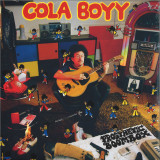
There’s liberation on the dance floor in the songs of Matthew Urango – glimpses of revolution that glimmer beneath the disco ball. “I want my music to bring people together,” says the Californian pop innovator, best known as Cola Boyy. “Because standing together is our best chance at fighting this shit show.” The shit show in question is a broken, brutal system the acclaimed multi-instrumentalist has witnessed up-close. Urango was born with spina bifida and scoliosis in Oxnard, California: a town in which almost 30,000 are estimated to live in poverty. Prosthetic Boombox, his eagerly awaited debut album, might at first glance seem a joyous confetti-burst of pop eclecticism, engineered to sound like “scanning between stations on a car radio, landing on all these different sounds and styles” as Urango puts it. Dig deeper, though, and you’ll discover a simmering sense of rebellion. “The working class are injured, struggling to pay rent and struggling to put food on the table,” he says. “I want to represent that.” Prosthetic Boombox
achieves that goal in a thrilling flurry of inventive indie, funk and soul: take Urango’s car radio analogy, place it in a time-travelling Delorean with Prince in the passenger seat, and you’re half-way there.
Look no closer than Prosthetic Boombox’s euphoric opener, the Avalanches-assisted ‘Don’t Forget Your Neighbourhood.’ The track – which Urango says mixes “the Beach Boys, French disco, house keys and ragtime piano, kinda like the Cheers soundtrack!” – ends with lyrics urging listeners to “fight for your town with your fist closed, strike it and make it more than just a memory.” It’s a reminder that the working classes need to “turn our fists against our oppressors instead of each other,” he explains. After that emphatic introduction comes a horn-laced funk wig-out titled ‘Mailbox’ – a song that gives Dua Lipa’s Future Nostalgia a run for its Studio 54-themed money, featuring rising Londoner JGrrey. Elsewhere, ‘Song for the Mister’ ventures into smooth R&B territory, before ‘Roses’ – a collaboration with Myd of Ed Banger fame – offers a bouquet of bustling disco guitars and infinite bisous of Connan Mockasin’s band drops in on the immaculate ‘Go the Mile’. Urango saves his most introspective moment for the album’s starry closer. ‘Kid Born in Space’, a cosmic collaboration with MGMT frontman Andrew VanWyngarden, sees the artist reflect on what he once had to overcome as a disabled person of colour. “I see them looking down on my dreams of being,” he sings tenderly. “I hear them making fun of my voice, but I keep on moving forward, I refuse to live in anyone else’s shadow.” Prosthetic Boombox, on this subject, is more than an album title – it’s a statement of intent.
“The message of my music is that our class is exploited, oppressed and murdered on the daily. That’s not right, and the system that enables that deserves to be wiped off the face of the earth,” he says. “The only way that happens is if we’re united. That’s the point of my music – to relate to people and unite them.” And what unites more than raucous, irresistibly danceable pop? Prosthetic Boombox is a riot of joyous grooves and catchy hooks for good reason. “I want to reach and spread my message to as many people as possible. You can’t do that if you’re some obscure motherfucker, you know?” he laughs. Don’t bet on him being an “obscure motherfucker” for long.
Thirty years after his disappearance, Miles Davis, both the man and his character, is still a subject for debate and controversy. And haven’t we heard that before with all artists? But when it comes to the importance of his contribution to music in the 20th century there is only unanimity.
Everyone says, sure, he was the greatest trumpeter. Other opinions are that he left the world of jazz behind him in 1965. It’s also said he was the catalyst of every decade from 1949 to 1989; that he revolutionised jazz, and brought it out of the ghetto; that he buried jazz; that he was the most important musician of his century... Each of those statements has its share of truth. Whichever way
you look at him, he remains a major figure in jazz and in 20th century music overall. Miles surpassed (or at least equalled) the importance of both Louis Armstrong and Duke Ellington for the simple reason that he addressed not only the jazz world but all worlds of music, and that he created (among other things) a fusion of the spheres people knew as jazz, blues, rock and pop, and spoke to every audience, either in turn or collectively.
There was a dinner at the White House during which a perfectly respectable lady, married to a politician no doubt, asked Miles what he did for a living. With some annoyance Miles replied, “Well I’ve changed music five or six times, so I guess that’s what I’ve done ... now tell me what have you done of any importance, other than be white? [...] You tell me what your claim to fame is.” The provocative tone in Miles’ words lifted the veil over his refusal to be hassled, his revulsion against America’s treatment of Black people, and Miles’ awareness of his own importance in the world of music. Even when speaking, Miles maintained the art of synthesis.
In the beginning – this was 1944 – there was a concert in St Louis, Missouri where Miles heard Charlie Parker and Dizzy Gillespie for the first time. “Man, that shit was terrible, I mean Dizzy Gillespie, Charlie ‘Yardbird' Parker, Buddy Anderson, Gene Ammons, Lucky Thompson and Art Blakey, all together in one band [...] that shit was all up in my body and that’s what I wanted to hear [...] and me up there playing with them.1” Miles was 18, he’d been playing trumpet for years and now he knew that this was what he wanted to play, and nothing else: to play with Bird! A year later he’d turned 19 and he was in New York, where he learned it all, up there alongside Bird and Dizzy.
Eamon Harkin, 1/2 of Mister Saturday Night Records and Nowadays in NYC, brings us a balmy 4 track EP, simultaneously full of longing, bliss, and hope. Adeptly oscillating between techno and house, these ear-worm, tastefully catchy tracks will find themselves perfectly at home both on reopened, outdoor summer dance floors as well as on bedroom stereo systems. If you do find yourself on a reopened dance floor, you may end up shedding a joyful tear to one of these.
Limited edition of 300 copies on black vinyl. Mastered by Dietrich Schoenemann. Design by Nick Owen. Photography by Frank Harkin.
- A1: All Ausländer Go To Heaven (Reprise) 05 42
- A2: Deutsche Pässe 02 01
- A3: Professional People 01 53
- A4: The Price Of Teilhabe 03 02
- A5: Automobile Love 02 27
- B1: Bürogebäude In Und Um Frankfurt 04 57
- B2: Dark Boys 01 52
- B3: Freizeit ´20 03 15
- B4: The Good Policeman 03 01
- B5: Proposal For A Worker`s Anthem At Dmu2 Daglfing 02 44
- C1: Doggerland 03 43
- C2: All We'll Ever Need 03 18
- C3: In Every City, In Every Aldi The Blood Of My Brothers And Sisters Taints Your Spargel 03 11
- C4: The Crowd 02 12
- C5: Home 02 59
- D1: Soziokultur 02 10
- D2: Transatlantic Ideology 02 58
- D3: Mjunikcentral Is A Dangerous Place, We Need More Guns To Keep You Safe 3 45
- D4: Wohlfahrt 03 45
In view of the immense Black Lives Matter mobilisation in reaction to the murder of George Floyd and the comparatively meagre societal reaction to the attack in Hanau, the question arises: How come our society does not show the same empathy and solidarity towards its own fellow citizens with Kurdish, Turkish, Bulgarian, Bosnian, Afghan migrant backgrounds or members of the Roma and Sinti?
How limited is our postcolonial discourse if we are unable to address the racist exploitation of those who repair our cars, deliver our parcels or harvest our asparagus?
It’s all a sham. Shake it off like a biometric photograph. Shake off that false consciousness. The Black Diaspora is a transatlantic lie invented by music curators and journalists. Embrace this nuanced return to structures and superstructures, to articulations and historical constellations as analytical tools.
Allow me to dampen your expectations. This is not the sound of decolonisation. This is no compilation of BLM protest songs. This is no celebration of Black emancipatory struggles. You will not be able to play this at your hip post-pandemic house party. This will not go down well with your woke friends. This is music for the square in the room. For that reluctant BAME/Person of Color repelled by your fetishisation of the African-American experience.
This is music for gated communities. This is Fehler Kuti singing of class relations, not of identities and positionalities. This is Fehler Kuti resisting.
Listen to these songs of infrastructure and appraisal of the welfare state. Join me in mourning the broken promises of prosperity for all. Send that “Ausländer“ of your mind to heaven. Colonialism fucked you up. Platform Capitalism is keeping you in chains. Are we to unionise all human and non-human workers at Amazon? Will modernity always have that "forever nigger“? What about those dispossessed field hands harvesting your asparagus?
All is lost. The system is rigged. Because all histories, gestures and identities have been absorbed into this late capitalist apparatus we call diversity. It can integrate anything and anyone. It made me. It is the price of the ticket. And it is unable to challenge its own premise of an atomised society. As if you and I had so little in common.
They will try and help you. They will build a museum for your history and a scholarship program for your future. I warn you. Don‘t let them give you a name. Resist appellation. Don’t get that German passport. Don‘t eat asparagus.
Fehler Kuti, Spring 2021
All songs by Julian Warner. Produced by Markus Acher and Tobias Siegert.
Markus Acher – drums, percussion, backing vocals Micha Acher – sousaphone, trumpet Cico Beck – synthesizer Jenny Bohn – backing vocals Pacifico Boy – vocals Katja Kobolt – spoken word Theresa Loibl – bass clarinet, backing vocals Sascha Schwegeler – steeldrum, kalimba, percussion, backing vocals Tobias Siegert – bass, synthesizers, percussion, backing vocals Julian Warner – piano, memotron, vocals
recorded and mixed by Tobias Siegert at Minga Records, july – december 2020 mastered by Moritz Illner at Duophonic
Cover art and photography by Andreas Neumeister. Layout by Sascha Schwegeler.
Fehler Kuti “Professional People” is part of the same multiverse as “The History of the Federal Republic of Germany as told by Fehler Kuti und die Polizei”. A production by Julian Warner. In cooperation with Münchner Kammerspiele. Funded by the Department of Arts and Culture of the City of Munich. Released by Alien Transistor.
Nimbus West spirit jazz essential: the Creative Arts Ensemble's classic debut One Step Out. One of the most sought after and highly-regarded titles to have appeared on Tom Albach's celebrated Nimbus West imprint, One Step Out is a timeless work of spiritualized jazz. A true gem from the Los Angeles jazz underground, the album was pianist and composer Kaeef Ruzadun Ali's first recording as leader of the Creative Arts Ensemble, the only large ensemble group that emerged directly from Horace Tapscott's legendary Pan Afrikan Peoples Arkestra community jazz group. A Los Angeles native, Kaeef was introduced to the Tapscott circle in the late 1970s. His first experience of the Arkestra's ethos was through PAPA tenorist Michael Session, who took him to the famous "Great House" at 2412 South Western Ave., LA -- a large mansion house which members of the Arkestra had taken over as a space for communal living. Life in the Great House was a continuous stream of music, dance and community events. "When I walked in there," recalled Kaeef, "it was like this whole rush came over me, just from going in the front door -- It was like a very, very warm feeling of love. I went and I came out with 'Flashback Of Time', and that was my first arrangement." Kaeef quickly became a significant contributor of compositions to the Arkestra's songbook -- his piece "New Horizon" would be recorded by Horace Tapscott for the latter's Tapscott Sessions series. But "Flashback Of Time" would eventually appear on One Step Out, played by the new group he had put together from stalwart Arkestra members. Inspired by both Tapscott's example and by the Art Ensemble of Chicago, Kaeef had wanted to follow their lead by assembling a larger unit. Featuring seasoned Arkestra regulars including reedsman Dadisi Komolafe, drummer Woody "Sonship" Theus and altoist Gary Bias, with veterans Henry "The Skipper" Franklin on bass and George Bohannon on trombone, One Step Out is a key document of the Los Angeles radical jazz underground. Featuring the sanctified vocals of Kaeef's sister, B. J. Crowley, the album is a tour de force of spiritually energized independent jazz music.
- A1: Good Times
- A2: Fabulous Ping Pong
- A3: Jean Sefunk
- A4: Nvr
- A5: My Left Foot
- A6: The Bump
- A7: Jam On It
- A8: Lookout Rhythm
- A9: Play That Sing
- A10: Torrid Drums
- A11: Got That Boing
- B1: The New Beat
- B2: The People Groove
- B3: Say You
- B4: Lost It
- B5: Bread & Jam
- B6: Larry Lenore
- B7: Party Party
- B8: High
- B9: Wellness & Bad
- B10: You Can't Hide Your Love
- B11: Plays Higher
- B12: We Are The Freaks
For his third full-length album, Jacques Renault explores his craft through the format of the classic late-night radio megamix. It's a tour de force that finds him blending his quick-cutting DJ sensibilities with his crate-digging, drum-chopping disco-chemist bonafides into one wham-bam party of pastiche. This is Renault as we know him—but at hyperspeed, tearing through twenty- three tracks in under half an hour. And while it's a head rush of his trademark funky drums, sassy horns, playful synths, it's arranged as an album, with songwriting and structure at the fore. Imagine it as a flip on the script for Renault's most loved club 12-inches of the past, which luxuriate in long-form, stretched-out grooves that burn for hours, fills that ride for days. Instead of on pulling a thread for six, seven minutes, he romps around in a bouncy ball pit, plucking out whatever captures his imagination for a moment, then diving back in to discover another buried
nugget. It's Jacques Renault as we've always known him, but this time through a suite of bite-size vignettes instead of slow-burn grooves.
Take a ride down to São Paulo, Brazil for a remarkable one-off recording session between Colombia's Romperayo and Brazilian producer / musician DJ Tudo. Featuring the latter's suitably titled house band, Sua Gente de Todo Lugar (the People From Everywhere) as well as the wild boys of Romperayo, including band leader and drummer mastermind Pedro Ojeda. The music captured at this meeting is a truly unique combinati..
Kojaque follows his critically acclaimed cult concept record, ‘Deli Daydreams’, with an
expansive, urgent debut album. In this landmark debut, Kojaque mines both his
emotional interior as an artist, and the external forces of a love triangle barrelling
towards chaos. ‘Town’s Dead’ is a mind-bending, explosive and expansive trip,
documenting a tumultuous love triangle that unfolds across New Year’s Eve in a
place where gentrification poses as much a threat as the violence of street dealers.
Sonically, the record smashes any previous expectations, stretching an aural palate
that leaps from rage to solace, from clattering musical combustions to tender
ruminations. The tremendous scope and scale of ‘Town’s Dead’ demonstrates an
artist utterly untethered to assumptions about what a particular voice or genre should
be, and instead explores radical musical territory. Dark corners of parks, bedrooms,
clubs, streets and psyches are excavated and pouring over the rubble is an artist
who refuses to conform, unafraid of the vulnerabilities that are exposed when the
voice rings true, because there’s just no point in being anything else.
Kojaque is part of a new wave of Irish artists flooding the world with blistering and
sophisticated literature, film and music - ideas and work that emerged from a social
revolution stonewalled by late-stage capitalism. Welcome to that state of mind, where
the path less travelled is the only one worth taking.
On the announcement of his debut album Kojaque has said: “‘Town’s Dead’ comes
from the potential that I see in Dublin and in the people I’m surrounded by day in and
day out. There’s nothing but talent and ambition among young people, I’m constantly
reminded of that through the art and music that I see being made but I think so often
the city grinds you down, it takes your hope and your ambition. I know that it can
change because so many of my friends express the exact same wants, desires and
frustrations with living in Ireland. If so many of us are on the same page then I know
that things can change, there just needs to be some sort of catalyst to kick start that
change and for me that’s always been art and music. Time and time again, amazing
art continues to be made in spite of the struggles and setbacks that are presented
when living here. The title track and the album is a fight against what can sometimes
feel inevitable, it’s a rejection of what people tell you is your destiny as a young
person in the city, Town’s NOT dead it’s just Dormant.”
CD housed in digisleeve containing 12-page lyric and photo booklet.
Black double vinyl housed in 5mm wide spine single sleeve with 12-page lyric and
photo booklet.
“Hints of Odd Future and its offspring... Kojaque is not your average rapper” - i-D
“Dublin’s hip-hop community are making waves right now... an intimate introduction
to the world this bold artist inhabits” - Clash
“Social realist rhymes set to silky hip-hop” - NME
“Likeable and funny” - Trench
“The Dublin MC forcing us to face real life; both the gory and the glory” - Wonderland
“Ireland’s freshest hip-hop hope, Kojaque, serves ‘soft hip hop’ with a side order of
poetry and performance art” - Notion
- A1: Anthony
- A2: The Rest Of My Life
- A3: For Colette
- A4: The Next Time
- B1: Beautiful Lies
- B2: My Irascible Friend
- B3: Believe In Me
- B4: Fermina
- C1: Where I Should Be
- C2: Fado
- C3: Madre Mio
- C4: Blue Period
- C5: War Torn
- D1: Picking Guitar For The Shrimp
- D2: The Celestial Bar
- D3: Jumble Drums, Growling Bass & The Whammy Bar
- D4: For Cameron De La Isla
Factory Benelux presents an expanded double vinyl edition of Sex and Death, the 11th studio album by lauded Factory Records ensemble The Durutti Column.
Originally released in 1994 on CD only, the album has now been re-mastered with 5 bonus tracks and appears on vinyl for the VERY FIRST TIME in a coloured vinyl edition limited to 1500 copies.
The vinyl edition is housed in a gatefold sleeve . Disc 1 is pressed in blue vinyl, and disc 2 in silver. A 2xCD edition is also available (FBN 201 CD).
The writing and recording of Sex and Death closed an uncertain period for Vini Reilly and the group following the collapse of Factory Records in 1992. Factory founder Tony Wilson remained in post as manager of the band, but Sex and Death would be their last album with producer Stephen Street, famed for his work with Morrissey, The Smiths and Blur.
Writer and master guitarist Vini Reilly remained philosophical. “People say the Durutti Column is this or that. I don’t care, so long as we make good music. There’s screaming feedback on some tracks, heavy metal guitar, Spanish picking. It’s not just this ethereal trip. Don’t listen to the form, never listen to the form. Listen to the content.”
Stand-out tracks include Anthony (dedicated to Wilson), The Rest of My Life, and Believe In Me. Guest musicians include viola player John Metcalfe, vocalist Ruth-Ann Boyle (later to form hitmakers Olive with Tim Kellett), programmer Martin Jackson (Magazine, Swing Out Sister) and bassist Peter Hook, then on furlough from New Order post-Republic.
All 5 bonus tracks are previously unreleased, having been retrieved from a long-lost DAT tape located in Tony Wilson’s personal archive. All tracks on the album have been newly re-mastered in 2020 by Peter Beckmann and Technology Works.
Repress
Next round for Another Picture. After exploring the highs in electricity and the lows of the deep grounds we go further into things. Sensing vibration of the fire below and turning it into a never-ending evolution of sound and groove. This is what you might know about Losoul tracks - and here you can't go wrong either. There are scattered artefacts of the city bringing vibe and inspiration - the streets, the people, the concrete, the action - it's all in between. Then there's the ever-changing beauty of nature out there on a day to just leave things as they are. Soul, movement and emotion. Again Losoul gives a strong example of experience from his longterm career in house and techno production and performing. Two pieces of music timeless in many ways. See you on the dancefloor. And everywhere else.
- A1: Invitation To Jamaica – Lord Tanamo
- A2: Fat Man – Derrick Morgan
- A3: Tell Me Darling – Jackie Edwards
- A4: Running Around – Owen Gray
- A5: Miss Jamaica – Jimmy Cliff
- A6: Housewife’s Choice – Derrick And Patsy
- A7: Give Me All Of Your Love – The Continentals
- A8: Darling Patricia – Owen Gray
- B1: Rough And Tough – Stranger Cole
- B2: Man To Man – Kentrick Patrick
- B3: Uno-Dos-Tres – Stranger & Ken
- B4: Slow Boat – Al T. Joe
- B5: Rude Boy – Duke Reid’s Group
- B6: Gone Is Yesterday – Higgs & Wilson
- B7: I'm In The Mood For Ska – Lord Tanamo
- B8: Virginia Ska – The Baba Brooks Band
- B9: Satan – Justin Hinds & The Dominoes
- C1: One Eyed Giant – Baba Brooks & His Band
- C2: Every Night – Joe White And Chuck
- C3: King Size – Baba Brooks & His Band
- C4: Syncopate – The Astronauts
- C5: Keep The Pressure On – Winston & George
- C6: Oh Babe – The Techniques
- C7: Train To Skaville – The Ethiopians
- C8: Rudy, A Message To You - Dandy Livingstone
- D1: Dreader Than Dread – Honey Boy Martin & The Voices
- D2: It's Raining – The Three Tops
- D3: The Whip – The Ethiopians
- D4: Pretty Africa – Desmond Dekker & The Aces
- D5: Rock Steady – Alton Ellis & The Flames
- D6: Rock Steady Train – Ewan & Jerry
- D7: King Without A Throne – Sugar Simone
- D8: Perfidia – Phyllis Dillon
- E1: Musical Train – Roy Shirley
- E2: Do The Beng Beng – Derrick Morgan
- E3: Way Of Life - Lynn Taitt & The Jets
- E4: Second Fiddle – Tommy Mccook & The Supersonics
- E5: People Funny Boy – Lee ‘Scratch’ Perry
- E6: I've Got To Get You Off My Mind – The Tennors
- E7: Do The Reggay – The Maytals
- E8: Nana – The Slickers
- F1: Tell Me Baby – Delano Stewart
- F2: Mama Look Deh – The Reggae Boys
- F3: Hong Kong Flu – The Ethiopians
- F4: Pressure Drop – The Maytals
- F5: Them A Laugh And A Ki Ki – The Soul Mates
- F6: Walking In The Rain – The Melodiansf
- F7: Satisfaction – Carl Dawkins
- F8: Black And White – The Maytones
- F9: Rasta Never Fails – The Charmers
One of the most significant collections in Trojan’s immense catalogue, the ‘The Trojan Story’ album dramatically changed the perception of Jamaican music among the general British public outside of the country’s Afro-Caribbean population.
Prior to its release in 1971 there had never been an attempt to present a comprehensive anthology of the island’s musical development, with vintage ska, rock steady and reggae widely regarded as obsolete and of precious little merit.
The treble disc set, which became an instant best-seller, had been the brainchild of Trojan’s label manager and Black Music fan, Rob Bell, who, assisted by Trojan stalwarts, Dandy, Webster Shrowder and Joe Sinclair, produced arguably the most significant Jamaican music retrospectives of all time.
Now, 50 years following its original release, this hugely influential album has been revisited by Bell, along with reggae musician, Rusty Zinn, who have succeeded in improving what was already an almost perfect collection.
Presented in the original eye-catching artwork, the set is further enhanced by a highly illustrated 50-page booklet in which Bell relates the stories behind the release and the 50 tracks featured on the compilation.
- 01-01: Jiu Yue Noge _ September Song
- 01-02: Jia _ A House
- 01-03: Jian Wei Inoshi _ The Fruit Of Errata
- 01-04: Qiang Ifeng _ Storm
- 01-05: Keki _ Cake
- 01-06: Samishii _ Lonely
- 01-07: Aruri Yi Jiang , Sonota _ Since A Certain Day, Others
- 01-08: Gan Ikuai _ The Sweetest Mass
- 01-09: Shibuyakun _ Shibuya-Kun (Vinyl Bonus Track)
- 02-01: Sahuin _ Surfin (Vinyl Bonus Track)
- 02-02: Koregaxian Shi Da _ Thats Reality
- 02-03: Lai Tare, Si Yo _ Come Away, Death
- 02-04: Shi Gajiang Ru _ Raining Stones
- 02-05: Gui Huo _ Onibi
- 02-06: E Mo Noge _ The Devil Song (12_ Edit)
- 02-07: Shi Bai Wobao Kishimeyou _ Lets Hug Failure (Vinyl Bonus Track)
- 02-08: Ren _Nosan _ Umbrella People
- 02-09: Shi Zai Surushi Nozhong _ The World Exists
Following in the footsteps of the pathbreaking Minna Miteru compilation of Japanese indie music, Morr Music and Alien Transistor have again joined forces to release The Fruit Of Errata, a compilation introducing the world to the intimate DIY pop of yumbo. Led by songwriter, pianist, and occasional vocalist Koji Shibuya, the Japanese band has released four albums since forming in 1998. This compilation draws fifteen songs (eighteen on vinyl) from those albums, and some ancillary releases, to uncover a biographical narrative of yumbo, showing how Shibuya’s songwriting, and the group’s limber, sensitive playing, has developed over the decades. It also places them squarely within a tradition of home-spun but ambitious Japanese pop that takes in Maher Shalal Hash Baz, Tenniscoats, Nagisa Ni Te, Yuzo Iwata, Kazumi Nikaido and more.
yumbo is very much the vision of Shibuya, an amiable iconoclast whose songs seem informed by some of his early listening – there’s the playful seriousness of Maher Shalal Hash Baz’s Tori Kudo here, an avowed long-time hero for Shibuya, but also the flexibility of freely improvised music. You can also hear Shibuya’s fondness for Mayo Thompson and The Red Crayola in both the idiosyncracies of the writing and the egalitarian looseness of the playing. Shibuya also carries those energies into the group’s membership – there are fantastic stories of him having a conversation at a record shop, or overhearing someone speaking, and asking the person in question to join yumbo as one of their various singers. He seems open to chance as a driving force, as a way to make space for unexpected possibilities to blossom.
The great achievement of yumbo and Shibuya, though, is translating all of this into beautiful, unpredictable pop songs. There’s a gorgeous soul-inflected lilt to “A House” that makes it delightfully affecting; the swaying brass on “Storm” propels its melody to a moody, dreamlike conclusion; the nakedness of “The Sweetest Mass” is slightly reminiscent of Carla Bley’s more pop-focused writing, crossed with the classicism of the songs that spilled from the Brill Building in the ‘60s. Throughout, Shibuya renders pop a deeply personal experience; you can hear musings here on friendship, family, intimacy, the complexity of relationships, mortality, and imbalances of power. These musings are also shadowed by real-life events: the effects and impact of the Great East Japan Earthquake of 2011 are captured in songs like “Umbrella People” from Onibi.
Throughout the performances on The Fruit Of Errata, Shibuya and the group play with tenderness; they also often draw on other players to flesh out the music even further, two such guests being the aforementioned Tori Kudo (on “Umbrella People”) and Olympia, Washington’s LAKE (on “The Devil Song”). Community-minded and generous in approach, the writing of Shibuya and the music of yumbo is never less than lovely, and The Fruit Of Errata is a welcome introduction to their world. Open and gentle, confident and generous, these pop songs are filled with charm and spirit.
- A1: Jayda G - All I Need
- A2: Fred Again - Diana (You Don't Even Know) (You Don't Even Know)
- B1: Lns - Bitumen
- B2: Jennifer Loveless - In 10.000 Places
- B3: Haai - Good Ol'fashioned Rugs
- C1: Dj Boring - Gardenia
- C2: House Of Jazz - Hold Your Head Up
- D1: Glass Beams - Taurus
- D2: Royale - I Want Your Body
- D3: Benny Sings - Summerlude
Orange Vinyl[24,33 €]
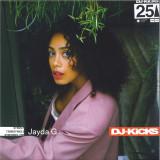
For Jayda G, joy is a state of mind. Whether she transmits it through her upbeat productions or magnetic energy at the decks, the Canadian-born DJ and producer, real name Jayda Guy, is a beacon of empathy on the dancefloor. It's no surprise, then, that Jayda G's DJ-Kicks mix captures the buoyant spirit of the music that has influenced her most. "DJ-Kicks has been a personal goal of mine for a really long time. I've been a fan for decades now. I remember there was one mix by Chromeo and it had some French disco on it that always stood out in my mind," she remembers. Clocking in at just over an hour, Guy's mixtakes you on a journey that moves through loved classics and new bubblers. The mix contains Jayda's Brand new single "All I Need", the follow up to Grammy Nominated breakthrough single "Both Of Us", a slinky house tune co-produced with James Ford that fizzes with shimmering energy. A rallying cry for kinship and understanding, Guy's insouciant vocals insist "all I need is you to hear me", gliding across the perfectly swung house beat. "Because the mix was made during the pandemic, I thought, 'What music makes me happy?' I want people to feel like they know me. I wanted it to be approachable, still honouring the disco and soul music that I love. I hope that translates in some shape or form."
- A1: Jayda G - All I Need
- A2: Fred Again - Diana (You Don't Even Know) (You Don't Even Know)
- B1: Lns - Bitumen
- B2: Jennifer Loveless - In 10.000 Places
- B3: Haai - Good Ol'fashioned Rugs
- C1: Dj Boring - Gardenia
- C2: House Of Jazz - Hold Your Head Up
- D1: Glass Beams - Taurus
- D2: Royale - I Want Your Body
- D3: Benny Sings - Summerlude
2LP+Dwn[24,75 €]
TRANSPARENT ORANGE VINYL
For Jayda G, joy is a state of mind. Whether she transmits it through her upbeat productions or magnetic energy at the decks, the Canadian-born DJ and producer, real name Jayda Guy, is a beacon of empathy on the dancefloor. It's no surprise, then, that Jayda G's DJ-Kicks mix captures the buoyant spirit of the music that has influenced her most. "DJ-Kicks has been a personal goal of mine for a really long time. I've been a fan for decades now. I remember there was one mix by Chromeo and it had some French disco on it that always stood out in my mind," she remembers. Clocking in at just over an hour, Guy's mixtakes you on a journey that moves through loved classics and new bubblers. The mix contains Jayda's Brand new single "All I Need", the follow up to Grammy Nominated breakthrough single "Both Of Us", a slinky house tune co-produced with James Ford that fizzes with shimmering energy. A rallying cry for kinship and understanding, Guy's insouciant vocals insist "all I need is you to hear me", gliding across the perfectly swung house beat. "Because the mix was made during the pandemic, I thought, 'What music makes me happy?' I want people to feel like they know me. I wanted it to be approachable, still honouring the disco and soul music that I love. I hope that translates in some shape or form."
Silent Room, the duo formed by Enzo Carniel and Filippo Vignato is a conversation.
Between the piano of the first and the trombone of the second, two living forces of the
European jazz scene; between France and Italy; between acoustics and electronics. A
patient dialogue initiated on the benches of the conservatory in Paris, which was nourished
by the music of German trombonist Albert Mangelsdorff (to whom the duo paid homage for a
concert at the Cité des Arts in 2014), musical moments shared as a group (Enzo Carniel's
sextet at the Jazz à la Villette festival in particular) and in pairs - for numerous concerts
given on both sides of the Alps - before perfecting their common grammar, giving birth to
their own repertoire, creating their own space.
This first album, Aria, released on the Franco-Japanese label MENACE, was recorded in the
setting of the Villa Cicaletto in Tuscany, whose Silent Room the duo made their own in
September 2019. Carniel had just released Wallsdown, the third elegiac disc of his House of
Echo project (Jazz & People, 2020) and Vignato of an intense live duo recorded with
American cellist Hank Roberts (Ghost Dance, on CamJazz in 2019).
The album is carried by simple melodies, tenuous threads on which the two improvisers who
have slowly got to know each other crisscross and let their voices express themselves. Aria
can refer to the opening of Bach's Goldberg variations, to sung opera arias, but above all to
any expressive melody that develops the imagination. Aria is also the air in Italian: the air
that comes from the breath, the air that fills the room, the air that vibrates and is transformed
into sound. The repertoire is therefore this collection of Arias composed by Enzo Carniel and
Filippo Vignato.
If the duo advocates with this album its jazz heritage - that of improvisation and
conversation, of freedom and virtuosity - and claims to be Carla and Paul Bley, Keith Jarrett,
Gary Valente, Albert Mangelsdorff, Ornette Coleman or John Surman; it also explores the
contemporary colors of electronic music, ambient and Japanese minimalism. The use of the
prepared piano, Fender Rhodes and synthesizers colors the sound space of the acoustic
piano and trombone. The eponymous composition that opens the album in acoustic, closes
it in an electronic version, illuminating the path of the duo between the two universes.
In the almost plant-like composition "In All Nilautpaula", Enzo Carniel evokes the water lily
(in Sanskrit) coming to purify the water around him. On "Babele", Filippo Vignato invokes the
great question of language: thanks to Arias, and therefore melodies, language becomes
universal through music, and only the sensory experience counts.
Born from Carniel and Vignato's desire to create a sound space that would be filled with as
many melodies as silence, a place for listening, dialogue and meditation, Aria is one of those
rare records that contain entire worlds.
- A1: For Pauline
- A2: Tomorrow
- A3: Dance Ii
- A4: For Hilary
- A5: Street Fight
- B1: Royal Infirmary
- B2: Black Horses
- B3: Dance I
- C1: Blind Elevator Girl – Osaka
- C2: The Aftermath
- C3: Our Lady Of The Angels (Stu ‘Jammer’ James Mix)
- D1: Florence Sunset
- D2: All That Love And Maths Can Do
- D3: San Giovanni Dawn
- D4: For Friends In Italy
Clear / Orange Vinyl
Factory Benelux presents a remastered 2xLP coloured vinyl edition of Circuses and Bread, the seventh studio album by Manchester ensemble The Durutti Column. Originally released by Factory Benelux and Factory in 1986, the original 9 tracks have now been expanded with 6 bonus pieces.
The cover art retains the original design by 8vo. The remastered limited edition CLEAR+ORANGE vinyl set is housed in gatefold sleeve, with liner notes and rare band images. A CD version is also available (FBN 154 CD).
Self-produced by Vini Reilly at Strawberry and Revolution studios, the album saw Durutti playing as a quartet, with Reilly on guitar, vocals and keyboards, Bruce Mitchell in drums and percussion, John Metcalfe (viola) and Tim Kellett (trumpet).
‘The music ends up being very simple,’ Vini told NME. ‘People can dismiss it as being very simplistic, easy listening or whatever. It’s very honest, it’s very personal. People say it’s ambient, and it’s like Eno. I don’t like that, because the music’s made to be listened to, it’s not wallpaper.’
Of extended piece Blind Elevator Girl – Osaka, Vini adds: ‘The music really writes itself. For example, we’re in Osaka, in Japan, getting in this elevator. It’s very crowded with all these Japanese businessmen talking about distribution deals, and going on and on. On this lift was a beautiful Japanese girl, in an immaculate uniform. Each floor we arrived at, she’s starting talking Japanese, obviously saying what was on each floor. We went higher and higher, and finally we get to the top. And then, sort of walking out of the elevator, I suddenly realised she was blind... It got to me, this girl. It was incredible. So maybe a day later, I was thinking about that, and the whole tune came out. And every single piece of music is like that.’
Bonus tracks include Italian-only EP Greetings Three, scarce compilation track The Aftermath, and a previously unreleased working version of 1987 single Our Lady of the Angels produced by the late Stuart ‘Jammer’ James.