Sinnamon's '83 NYC boogie scorcher 'I Need You Now' gets the official remastered, reissue treatment - complete with the 'Fierce Reprise' dub mix alongside the accapella, providing essential sampling material.
Marrying the old with the new, 'I Need You Now' is drenched in funk bass slickness and colourful chords, yet embraces a wealth of synthesized sounds from electro sequencers to synth-based strings, giving it that early '80s post disco, boogie feel. Bernard Fowler of Peech Boys fame steps up on guest vocals bringing a deep, R&B tone to proceedings, complimented by the all-female vocal prowess of Sinnamon adding their trademark feminine touch to the track.
First up on the flip side, the six minute 'Fierce Reprise' mix. Reversed rides that suck back into the skull, tape delayed vocals and spacey synth echoes blend together, as elements are overlaid and dubbed out for maximum, heavyweight, proto house vibrations.
Last up, a favourite and much used vocal accapella that's been sampled by a whole host of early house, hardcore and garage producers from 808 State and Criminal House to Ray Keith and Paul Johnson.
An essential bit of kit for anyone with a penchant for that early '80s boogie flavour.
Search:house sounds
Process Blue was formed in the fall of 1981, at Antioch College near Dayton, Ohio. The group essentially consists of Chel White (tapes, keyboards, percussion) and Dan Gediman (keyboards, vocals, bass). Additional members contributed at various points to both recorded works and live performance. Process Blue's original interest was in electronic music and the interfacing of electronic sounds with acoustic instruments, non-musical instruments, and tape-manipulated sounds. The group's primary objective has been to strive for creative experimentation within the format of contemporary pop music.
We are proud to release a 12-song LP featuring music recorded between 1981 and 1982. 7 of the tracks were originally self released on a cassette album in 1982. The only song in this batch to ever appear on vinyl is 'Control Panel' released on a French LP compilation called 'Folie Distinguee Alternative Funk.' The songs range from experimental dance music to quieter, more melodically-oriented pieces. They used an array of synthesizers used were Moog Sonic-Six, Casiotone MT-30, Korg MS10, Roland SH 101, Casio VL Tone. Analog instruments included electric guitar and bass, and drums. Guest musicians included Gil Belton (melodic rototoms percussion and synthesizer bird sounds) on Industrial Park, Eric Zimmerman (Korg synthesizer) on Up to $100 and Subterrania, Patricia Yarborough (vocals) on Pink Razor and Air, Mike Pummel (engineer) on Control Panel, and John Flansburgh (of They Might Be Giants) engineer on Up to $100. All songs have been remastered by George Horn at Fantasy Studios. Each LP is housed in a jacket designed by Maycec featuring original drawings by Chel White and include a double-sided insert with photos and lyrics.
ndio was a short lived but influential trio of John Beltran, Sam McQueen and Seth Taylor. They released an album and three EPs of hi tech ambient techno on Derrick May's Transmat and the Rhythmic Tech label between 1999 and 2010. Here, three tracks from their self titled 2003 EP and one that was released on Styrax get put together, remastered and recut for the next Delsin reissue. Opener 'Winter Long' is classy techno cut that looks into the future. A symphony or gorgeous strings lights up the backdrop as scintillating drums dance and shimmery in the foreground. A Detroit sense of melody adds colour and ensures utter timelessness. 'Blue Fantasy' is another track that show off the power of machines to make music that touches your soul with its gorgeous strong stabs and masterful drum programming, and 'Inca' then slips more into a house groove, with busy, shuffling drums driving along beneath acidic twitches and broad, heavenly pads. It's slick, urgent and compelling and 'Nolita' closes things with more delicate dancing machines, rueful synth work and rubber bass. It's archetypal Detroit techno that sounds as good and forward facing now as it ever did.
Marco Faraone returns to Drumcode with some of his most inspired work ever, comprising of four tracks crossing the Techno spectrum.Growing up Marco was surrounded by 90s Italo house and techno, which have all had a part in the current sound he produces today. Never one to stick to any individual style, he can often surprise his fans with a set pumping out peak time beats to down tempo house cuts with catchy vocals.
'With this release, I took some inspiration from listening back to some old Vitalic sounds and giving some extra power to the use of synths in each track. It's got a festival vibe to it, which is something I wanted to achieve' - Marco His last Drumcode EP was back in 2016, so this October he makes a welcome return showing his multiskilled productions at their full potential on this mega 4 tracker, opening with the gargantuan 'Never Forget'.Mutating rhythmic synths hark back to the good ol' days of BXR and the limitless talent of the Italian Techno scene in the late 90s. Boiling over in the main break this is crowd-pleasing dance music at its finest.
'Cruiser' is a bumpy upbeat ride with a strong melodic hook that will have the hands raised and the feet stomping.Title track 'Lunar Eclipse' is a dense, at times claustrophobic roller. Menacing to begin with, the addition of the main melodic motifs lifts the mood midway. 'Take This Trip' rounds out an incendiary EP. Lighter and more musical that the previous three, it offers a joyful, softer message. 'This is a special release for me, I wanted this to have explosive power yet the perfect balance of melodies and sounds to create a different and unique atmosphere for each track'
- Marco Faraone
Santo Sangre is a project by San Francisco-based artist, producer and DJ Gonzo Manuel. On its first release, Quetzal, perhaps a reference to the central-American bird with bright, ornate plumage Gonzo taps into a Latin-accented, tribal feel that is ably carried on rolling, syncopated percussion with an organic essence, a birdsong-like chant, sporadic and light bursts of actual song and haunting string chords that cut across the sound spectrum, adding dark energy and urgency to the track. This one will sit nicely out on its own, bringing a hybrid organic/robotic essence to the dance or would work equally well rinsed around in the mix, with all its elements appearing and disappearing at just the right time as a transition ascends and peaks.
Oakland producer Indy Nyles remix builds on the tribal theme by enhancing the syncopated aspect of the percussion. He augments this further with a pretty and drifting melody line composed of glassy keyboard sounds. The sense of drama this creates is boosted further by a breathy and repetitive voice sample. This concoction drives along nicely until around the 5 minute mark when Nyles drops a menacing, snaking thread of 303 bass, stabs of icey strings and echo and delay effects that amplify the shadowy, seductive allure of his remix. Its a new sounding track but the acid line and syncopation bring to mind some of the psychedelic, breakbeat classics of San Franciscos halcyon, rave era.
Rounding things up is the Slope 114 Remix. Here Dmitri Ponce and partner
Elise Gargalikis take the track on a house journey that is, like Indys mix, brand new sounding but possessed by the spirits of the classics. Elises vocal flourishes bring to the mind the Latin house, tribalist dynamism of Louie Vega and Indias River Ocean numbers while Dmitri nudges the bassline from chunk and funk to acid and massive without sacrifcing the subtlety of the maneuver. The subtle aspect being that a techno, a tech-house and a straight up house heads will be able to bounce this one to the box without leaving her generic comfort zone: the true mark of a classic.
This release is a strong start for this new artist, look out for more fire from this Bay Area talent
Todd Osborn. For Many, The Name Conjures Up Myths, Tall Tales Told Within The World Of Electronic Music. Todd: Makes Hovercrafts, Repairs Motorcycles Out Of His Garage, Fixes Vintage Jukeboxes, Creates Handmade Components For Espresso Machines, Flies Fighter Jets, Is A Lego Expert, Owns A Record Label With His Son That Releases Music By Aphex Twin, Madlib And Underground Resistance, Has A Stunning Collection Of Rare Whiskeys. True All Of It, Of Course. Reviewing A Cv Of The Varied Styles And Sounds Of Todd Osborn Is Like A Museum-grade Survey Of Records From Electronic Music's Ultimate Outsider Artist. Yet, Todd Osborn Has Never Been Outside. From Releasing Jungle On Rephlex With Tadd Mullinix As Soundmurderer & Sk-1 To House And Jacking Club Music As Osborne On Ghostly International, To Bright, Chiptuned Boogie As Superstructure, Todd Osborn Has Done It All. From There We Haven't Yet Scratched The Surface. For Over 20 Years, Todd Osborn Has Been A Permanent Fixture In Music, Touring Internationally At Music Festivals, Warehouse Raves, Gabber Parties In Fields To Giving Lectures At Red Bull Music Academy And In Turn Hosting The Most Diverse Programme On Red Bull Radio. To Boot Todd Osborn Opened The Best Record Store In The Usa, In Ypsilanti, Mi. Portage Garage Sounds Is Thrilled, Humbled, To Present This Three Song Ep, Superdisc.
Lost Futures is a new label that explores experimental and often radical approaches to dance music from the past. In a musical landscape that increasingly claims to seek and reward new forms and ideas, Lost Futures delves into the recent past to revisit forward-thinking, optimistic projects that, owing to the social, musical or outright political climate, perhaps struggled to find an audience. Allowing only time to re-contextualise these leftfield, sometimes misunderstood and ultimately human bodies of work, Lost Futures taps into the inherent idealism of rave.
LF001 trips back until the early nineties to revisit the alternative scene emerging from the Dutch city of Utrecht. Here, three young men - DJ Zero One (Sander Friedeman), TJ Tape TV (Arno Peeters) and DJ White Delight (Richard van der Giessen) - joined forces to form 'The Awax Foundation'. Inspired by the transcendent and revolutionary electronic music arriving on their shores imported from Chicago and Detroit, combining their knowledge, gear and ever-expanding vinyl collection allowed additional freedom in paying sincere tribute to these intoxicating sounds, while also developing their tastes in a more personal, eclectic direction.
The musical flavours of Awax initially leaned toward acid house and the roots of techno. However, with three different mindsets in the mix, their tastes were rarely fixed. One thing each shared in common was a devotion to collecting rare sounds, specifically more adventurous and international samples than those emanating from the increasingly-hard, masculine dance music emerging from the Netherlands during the period. Inspired by the cross-over global sound of bands like Suns of Arqa, or 'World Music', as it was perhaps patronisingly termed at the time, the trio became interested in the idea of making techno with 'ethnic instruments'.
Of course, this being 1992, none of The Awax Foundation had access to such instruments, instead, they had a vast, collective library of samples from all over the world. There were no collaborations and no clear plan. Instead, they set to work using a Yamaha TX16W sampler, the legendary Atari 1040ST computer, a cheap mixing desk and a couple of low-end synths and FX machines. When Richard mentioned the project to his friend, Akin Fernandez, the London DJ and owner of cult label Irdial Discs, Fernandez was intrigued enough to invite the trio to record a one-hour show for his 'Monster Music Radio' series on London's then-burgeoning Kiss FM.
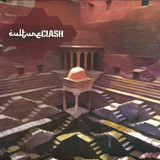
Forced to come up with a name, 'CultureClash' seemed like the obvious choice, even if the members of Awax were only creatively sparring among themselves. Along with the term 'ethno-techno', slightly dubious to a hopefully more conscious Western audience in 2017, these were the only guiding principles to the quietly ambitious project that soon combined cutting-edge machine rhythms with samples sourced from everywhere from Bolivia to Togo, and inspired by everything from Ravi Shankar's epic soundtrack to the Oscar-winning movie Ghandi, to the technical limits of their own setup requiring a dazzling degree of cut-and-paste work. Some tracks even emerged out of academic studies within the ethnomusicology department at The University of Amsterdam.
The show aired on October 2nd, 1992, recorded in one blistering take and without any rehearsals, traversing a huge variety of tempos and styles. If the performance wasn't seamless, it was undeniably thrilling, fresh and ambitious. As such, several labels, including Fernandez's aforementioned Irdial Discs expressed an interesting in commercially releasing CultureClash, while another imprint proposed a series of twelve-inches and an album. But the sheer complexity of the project meant that it never saw the light of day, while the trio embarked on different journeys ahead, both creative and personal.
Twenty five years later, and the original CultureClash lineup and founding members of The Awax Foundation provide the sound of the first release from Lost Futures. An otherworldly, ambitious and optimistic compilation, accompanied by extensive sleeve notes from the trio, CultureClash is a timeless ode to experimentation in dance music's ever-overlapping culture.
Rise black - Agressor EP Moustache Records 038 delivers us 5 tracks from the dark side of Spain! The first is named: "Black snake" this is a dark pumping electro track with 808 snares topped off with some evil voices and other trippy scapes.The A2 track: "Jack in the box" is where the true mental madness starts, a drum minimal groove electrobass track that could go on forever and ever till the loony house. On the flip side B1 "Sulfrico" deadly acid electro for the retards. B2 Mythos is the sound from Sparta Greece 100 v.c. Distorted kicks and snare drums that could deliver you a bloodnose. The last EP track is the title track of the EP called: "Agressor" this song is a story about the sheeps of Satan, very raw noisy percussion drum sounds, space bleebs and other aggressive electro sounds. Let the magic and madness begin... Welcome to the Moustache Records family. Rise Black is rising..
Berlins premiere Bass Collective continue their march into history with yet another TKO vinyl from regular contributor Bridge Guy. His 4 originals are joined by an absolute hammer of Deepness from Jesse Bru who steps up to remix Psilocybin.
Bridge Guy is exploring Deeper sounds in this EP and Isopropyl opens proceedings with a trip of clattering percussion and synth work, all with a laid back slant. Deep enough for the heads but with a sound that just pulls you in.
The theme is somewhat continued in Lone Frenchman, but where the previous track takes a step to the left, The Lone Frenchman turns right and gets his rhythmic jam on. Tightening up the groove and laying the dancefloor to waste.
Psilocybin really pulls the bass and groove centre stage, bouncy and warm and with a whole load of rhythm in the boot. This one is for the turning point right in the middle of the night where things start to get a little more freaky.
Cheese on Toast, drops things back a touch. Thick tones and a more relaxing vibe perfect for losing yourself in, as the last of Bridge Guys originals rounds out a remarkably vibey EP.
Closing out the package we have Jesse Bru's storming remix of Psilocybin, easily up their with some of the best lo-fi House of the past few years. Jesse rings his own vocal work and really heats things up. Peak time killer.
Simple, effective and downright deadly. Mella Dee serves up the perfect sountrack built for basements, dimmed lights and late nights.
Mella Dee's solo sound has evolved from a true passion for all things garage, a perpetual dedication to Hip Hop, combined with a love for house music which was heavily influenced by the darkness of UK funky and Dubstep.
Together these influences have enabled Mella Dee to develop a unique approach to the fusion of these sounds, into one bumpy soundscape that is simultaneously house, garage and techno.
OMENA Omena is finnish for apple. It's also a record label set up by Tobias Lidstrom aka Tooli.
DJ & co-running Local Talk Records & OneOffs.
Fina's next release comes from Mathew Ferness, an exciting and already hotly tipped rising star for just his second ever EP. It features three tracks that showcase his musical house style with a remix from Helsinki's Saine.
Ferness hails from a small town near Montreal in Quebec, where he was an outcast obsessed with music. With no access to record shops, parties or scenes Mathew started taking matters into his own hands DJing in his teens taking inspiration from J Dilla, he soon began producing his own beats on a sampler and drum machine.
An exploration of analogue sounds, DAWS and most recently electronic music have all lead him to the rich sound he has now. His last EP on Beat changers was championed by Rhythm Section International and Radio 1 tastemaker Bradley Zero and this latest EP is likely to prove just as popular.
Pad laced opener 'Escapade' is a summery deep house jam with breezy acoustic guitar and warm, punchy drums of the sort to get any floor cutting loose. 'Solitude' is more paired back, with thoughtful piano keys laid over deep rolling drums. There is a musical romance and beauty to the synths that elevate this one above purely functional fodder, and then 'At First Sight' awakens your senses once more with broad synth smears and perfectly rough-edged drums which create pure deep house soul.
Saine is a producer with a range that goes from hazy hip hop to dusty house on labels like Odd Socks, Andy Hart's Voyage and this one before now. After his 2017 EP Mint, he returns with a remix that is bubbly and laden with colourful melodies and open-air house grooves.
This is EP full of rich house music that is for mind, body and soul.
- A1: Konzert Für Sig-Pressluftwerkzeuge (1971, Mix February 2018) 3:36
- A2: Rollin' (1973, Master February 2018) 2:42
- A3: Waves Of Montreux (1977, Master February 2018) (Pm Music) 9:17
- A4: Baustellenmusik (1979) 10:29
- A5: Swisspack (1979) (Pm Music) 2:28
- B1: Rhythm'n Bees (1980) 3:02
- B2: Birds Of Cochin (1998) 4:00
- B3: Coalburner's Delight (1998) 4:32
- B4: Printit (1998) 5:04
- B5: Paradise Garden (1998) 4:35
- B6: Stony Broke Night (1998) 5:52
11 never-heard tracks from Synthzerland pioneer Bruno Spoerri, released for the first time on vinyl, with liner notes by the artist. WRWTFWW Records is very delighted to announce the release of Rare & Unreleased 1971-1998, a collection of never-heard and hard-to-find works by Swiss music pioneer and synth super wizard Bruno Spoerri. The album is sourced from original masters and available on a vinyl LP cut at Emil Berliner Studios (formerly the in-house recording department of Deutsche Grammophon), housed in a 350g sleeve with a superb artwork by Nicolas Eigenheer, and packed with track-by-track liner notes by Mr. Spoerri. Rare & Unreleased 1971-1998 gives a fascinating glimpse into Bruno Spoerri's incredibly inventive repertoire, collecting tracks from projects as diverse as commissioned music for trade fairs, the Swiss railroads, or the union of Swiss cheese makers(!), soundtracks for TV shows about ecology, live synth improvisations at Montreux Jazz Festival, and sound installations for art exhibitions. Always the adventurer, Spoerri records a pneumatic drill for the irresistible electronic bossa of 'Konzert für SIG-Pressluftwerkzeuge", mixes train sounds and the EMS Synthi-100 for the joyful lo-fi funk of 'Rollin'", lets overheating synthesizers take a life of their own to create the sci-fi ambient of 'Waves of Montreux", and works with bees, pigs and various birds for the environmental music bliss of 'Rhythm'n bees' and 'Birds of Cochin". Synthzerland rejoice, it's time for another captivating journey of sound exploration on Planet Spoerri! Bruno Spoerri celebrated his 83th birthday in August this year. He is still experimenting, recording, customizing audio gear, improvising on stage and in the studio, collaborating (Julian Sartorius, Franz Treichler of Young Gods, Marco Repetto of Grauzone, Roger Girod...), inventing new sounds and finding new creative outlets.
After a remix and a compilation track for Quintessentials, it's the third time that KRL appears on the label and also his third full EP. Following on from his previous releases on Wolf Music Recordings (yes, he can even be found on the first ever Wolf Music release!) this EP is a mixture of two older ideas started in 2014 and two completely new tracks playing on a mixture of samples and field-recorded sounds. - Third' is multistyle. It's got proper house with - never leave', a track that features the beautiful voice of Janine Small. It's got rough deepness with - rhodes to nowhere'. It's got a bit of beat madness with - confession beat'. And it's got sublime, fragile electronics with - glacier'. We love that!
- A1: As I Breathe On The T. T. C
- A2: Anna King
- A3: Space Age Punks
- A4: God Is A Machine
- A5: Feable
- A6: Got To Get Off The Earth
- B1: *Electronic Pink Panther
- B2: Human Question
- B3: Traffic
- B4: Loneliness
- B5: Jungle Chant
- B6: Hidden Melodies
- C1: This Time
- C2: Come On Over
- C3: Old Hollywood
- C4: A Kiss Without Lust
- C5: You Are The Special One
- C6: The Movement
- C7: Nuclear Waste
- D1: Fusion
- D2: Shadows
- D3: Interlude (Demo)
- D4: Feable (Demo)
- D5: Anna King (Demo)
- D6: Come On Over (Alt Version
Drama were the Canadian duo of Eric Simpson (Vocals, Bass Guitar, Guitar) and Don Stagg (Keyboards). Formed in in Mississauga, Ontario in 1978, the pair had previously played together in progressive psych bands Majik and VIIth Temple. Almost every Saturday, Eric and Don would record one song on a TEAC 4 track tape recorder after a couple of takes with very little over dubbing. The pair were influenced by what was playing on the radio during the recording sessions. Everyone else at that time was in a rock or pop band yet Drama were making electronic music. The pair released their debut LP 'Loneliness' on Psycho Records in 1979. There were 500 albums made and about 200 ended up in the garbage as band members shuffled from apartment to apartment. This was followed by a 4-track 7' later that year featuring live drums and additional guitar.
Seance Centre says it best, 'On Loneliness, the pair traded in their velvet and chord charts for thin ties and a cheap drum-machine. The LP still carries a whiff of patchouli, but the sound stings of solder and electricity, and inhabits a nascent zone somewhere between krautrock and new-wave. The vocal cuts are all clustered on the A-side, starting with an ode to the inefficiency of the Toronto Transit Commission - some things never change! The dystopian sci-fi themes are par for the League, and highlights are the love ballad 'Anna King' and the charming 'Feable'. The instrumentals on the B-side feel decidedly more Teutonic, and have a certain CBC charm that sounds like JP Decerf recording for Parry Music. It even opens with a slinky stoned Pink Panther.' For this first time vinyl reissue we've expanded to a double LP with a bonus album of the 4 songs from Old Hollywood 7' and 9 previously unreleased tracks and demo versions. All songs are remastered for vinyl by George Horn at Fantasy Studios in Berkeley. The vinyl comes housed in a jacket with original photo by Don Stagg taken from his apartment rooftop overlooking Toronto of a young teenager sniffing glue and includes an insert with photos and liner notes by Drama.
SJ Tequilla continues to build on his small but well formed discography with a new EP on Bright Sounds. His three originals come backed with a remix from cult producer SW. SJ Tequilla has released on his own Shot Of T imprint and DJ Fett Burger s Freakout Cult since debuting in 2017. The Japanese born, Berlin based artist is also close to Sex Tags Mania and regularly holds it down at OHM Club as well as for busking on his live, vintage hardware jams around the streets of Kreuzberg.
The opener is a six minute house bumper with a classic lead acid line and plenty of Detroit pads. The pinging analogue drums are lively and elastic while more thoughtful keys are draped over the top. SUED man SW. steps up to remix and brings a mixture of pad laced serenity old school rave basslines to his hard hitting drums. The B1 is another rugged mix of live sounding drums, acid snuggles and rueful keys while ambient synths stretch off to infinity. Last but not least, B2 sinks into a blissed out dub house vibe, rolling deep and smooth and showing off Tequilla s ability to cook up far sighted synths that have real emotion. This is an EP well school in traditionalism but that also brings some fresh skills and ideas to the grooves.
Neville Watson returns to DBA with The Midnight Orchard, his first full-length in five years. Watson is a key figure on the electronic music scene at large and has made regular appearances on Don't Be Afraid, as well as on celebrated imprints such as Crème Organization, Clone and Rush Hour, where he released some of his best-known work alongside Kink.
In a crowded landscape of factory-line jack trax and synthesis for the sake-of-it, it's little surprise that Watson's physical, arresting takes on house and techno have been such a staple in the record bags of the world's leading DJs for the past twenty years. Throughout The Midnight Orchard, Watson seamlessly bridges his futurist leanings gleaned from a lifelong commitment to electronic music with the anarchic spirit of his acid-house heritage.
The record still finds catharsis in the relentless pulse that has defined Watson's life since his early residencies where he peddled ecstatic escapism to towns on the commuter belts of London, notably via his involvement in seminal Reading party Checkpoint Charlie. However, there's a more somber, arguably introspective and perhaps even somewhat wistful tone at play throughout. This might surprise those who've invested their feet and hearts in tracks with titles like Night Of The Inflatable Muscleheads and Everything I Know About House (I Learned on Facebook).
In a move away from his previous musical leanings, The Midnight Orchard embraces a distinctly more UK sound, unapologetically chronicling the paranoia that can be found skirting the euphoria of rave. And while Watson has avoided the eyebrow-arching pitfalls of the self-serious DJ full-length, it must be noted that the rhythms here are more skittering, the atmosphere less jubilant and the signature lo-fi hiss, fully popularised and bastardised since Watson's last album, has taken on a more fore-boding tone.
Meanwhile, the atmosphere elsewhere harks to a more idealistic world, particularly on the cascading and subdued Eine Kleine Emusik, and the euphoric We Own The Night. Twin Tub and Reet Dux provide dubby, sensual moments of escapism. There's uncompromising, hard-nosed rhythms on Dee Sides, and cosmic electro throughout 4am in the Trees. The album then concludes in a bold fashion with Displays of Brotherly Love and the resolutely hopeful atmosphere of Phosphorescent.
Reflecting decades of immersion in club culture and taking inspiration from wider-found sounds, The Midnight Orchard is loaded with thrilling parallels and a sense of genuine unpredictability. Tracks like Come On In and Anarcho Midnight are layered with unease, utilising pitch dark arpeggios and skittish, growling electronics to devastating effect.
Having dedicated the last eighteen months of his life to the studio, Watson has rec-orded what is undeniably the most unexpected music of his career. Amid the dark-ness, The Midnight Orchard has borne fruit.
For the last 20 years London-based author and party organiser Tim Lawrence has dedicated himself to excavating the history of New York City party culture and bringing some of the most powerful aspects of that culture to London's dance scene, from where it has ricocheted around the world. Having conducted the first set of major interviews with David Mancuso, Lawrence started to put on Loft-style Lucky Cloud Sound System parties with David and friends in London in June 2003. In early 2004 he published Love Saves the Day: A History of American Dance Music Culture, 1970-79, which tracked the influence of the Loft on the wider New York DJ, dance and disco scene. In 2009 his biography of the iconic musician Arthur Russell became the first book to map the wider downtown music scene. These beautifully written and politically insightful histories have educated, inspired and celebrated the previously overlooked foundations of contemporary dance music.
Lawrence's most recent publication, Life & Death On The New York Dancefloor, 1980 - 1983, published in late 2016, shines a light on 'one of the most dynamic and creative periods in the history of New York City'. Falling between the more regularly celebrated sounds of disco, house and techno, the period produced a uniquely hybrid series of sounds that never acquired a settled name. This led them to be largely ignored by historians and even DJs, yet the power of the period's music and the scenes it birthed, Lawrence argues, remains undeniable. Met with a rapturous response, Life and Death On The New York Dance Floor saw Lawrence on the road for most of the next year as he spread the word about the characters, the records, the clubs and the bands that shaped the post-Disco, post-Punk, and burgeoning Hip Hop landscapes of New York City during the early 1980s—a period when freedom still ruled.
This, the first of a 2-part sonic tribute to the 1980 - 1983 era as well as a musical companion piece to Life & Death On The New York Dance Floor sees recognised musicians (David Byrne of Talking Heads) nestle up alongside the belatedly recognised (Arthur Russell's Dinosaur L and Loose Joints, and Suicide's Alan Vega) and the downright obscure (Gray, 2 Teens Kill 4 and Tuxedomoon). An indication of what's to follow, Dinosaur L's original album version of 'Go Bang' has been dramatically overshadowed by the definitive François Kevorkian remix yet received regular play by David Mancuso and remains an enthralling experimental Arthur Russell jam.
Lovingly curated across 2 slabs of vinyl, the album introduces listeners to a stunning array of sounds, styles, vibes and feelings that encapsulate this most fertile and forward-thinking era, when music, fashion, sound system innovations, leaps in music technology, a DIY attitude and a freedom from corporate politics combined with extraordinary expressivity. All music contained within this album has been hand-picked and programmed by Tim Lawrence. It represents a selective yet rich introduction to one of the most extraordinary periods in New York City's epic musical history.
This is the first release on Reappearing Records, a label led by Tim Lawrence and distributed worldwide by Above Board distribution. Licensing courtesy of Tracksuit Music. Mastering by Optimum Mastering, Bristol UK. Artwork & design courtesy of Atelier Superplus. 2018.
We are excited to release a 6-track EP from San Francisco based DJ, producer, and remixer Sepehr Alimagham. The San Jose native has been a fixture in the Bay Area house and techno scene for quite awhile now — on the dance-floor, behind the decks, in the studio, or all of the above. Early influences like Boards of Canada, Aphex Twin and post-hardcore bands later in high school started his affinity for off-kilter, underground music. In 2017 he began performing live PA sets, utilizing his immense production backlog to perform vivid and electric sets, from potent dance music to psychedelic and esoteric soundscapes.
"Body Mechanics" is six tracks of acid drenched dance music that ebb and flow from floor filling club thumpers to more cerebral soundscapes. Inspired by the new wave of the acid sound as well as nostalgia from his formative years in the San Francisco music scene, 'Body Mechanics' takes a functional, yet psychedelic approach to 303 styled techno and electronica. Attention demanding basslines, indiosyncratic structures and hallucinatory atmospheres provide an effective framework for Sepehr's vision. The themes of the track titles take root from a series of dreams Sepehr had with a common atmosphere of strange characters and textures, akin to scenes from David Lynch's 'Twin Peaks'. All songs have been mastered by George Horn at Fantasy Studios in Berkeley. The vinyl comes housed in a jacket featuring a dark and inviting cyborg hand holding a rose designed by Nicole Ginelli.
Ever since Onom Agemo & The Disco Jumpers broke the dreaded curse of the difficult second album by releasing "Liquid Love", a cocktail so spicy and delectable that it could warm the cockles of the grumpiest man alive's heart, even in the most Arctic conditions, everybody wondered how the Onom crew could top that one. But now you have an opportunity to whip out your "Magic Polaroid" as proof that this wasn't an impossible Project. Never before has the band so successfully captured their full-on live sound as they do here, thanks to three days of recording frenzy at Daniel Nentwig and Sebastian Maschat's Butterama studio, a haven of analog hardware hidden in a remote part of Berlin's Neukölln district. The exploding kaleidoscope of styles that make up this album, perfectly reflected by the stunning cover artwork from Nick Henderson and photography by Christoph Rothmeier, means that they can no longer be confined to their early description as an "Afro-Funk Quintet" or merely described as a lively tribute to the artists which have influenced them: their sound is 100 per cent pure uncut Onom Agemo, even though every track feels like a new beginning. The presence of a charismatic in-house vocalist who brought her own lyrics along has also boosted their confidence considerably and provided a further knock-out punch to their onstage performances.
And no one will be disappointed as soon as the first bars of "The Trumpets Of Denmark" stomp on stage like a boisterous fanfare, with Johannes Schleiermacher's impressive wall of sound production making the musicians sound like a much bigger band than what their line-up suggests (with Maria Schneider from Andromeda Mega Express Orchestra adding some extra percussive clout) and just the right amount of dizzying cross-rhythms to steer it away from potential bombast. When Onom Agemo's powerhouse vocalist Natalie Greffel starts chanting what at first sounds like a string of Onomatopoeia, it soon becomes clear that she's laying down her manifesto for a nostalgic Space-Age yet to come, with a few key words serving as Mantra (Focus, patience, tears and creation): an invitation to drive off the Information Superhighway and its endless litany of polite noises, to redirect our gaze inside ourselves and learn to understand and sometimes question how others perceive us.
'Sounds from the Great House! Outernational Sounds proudly presents a Nimbus West spirit jazz essential: the Creative Arts Ensemble's classic debut One Step Out. Mastered at 45rpm on double vinyl for enhanced sound, this release features all tracks at full length for the first time on wax.
One of the most sought after and highly regarded titles to have appeared on Tom Albach's celebrated Nimbus West imprint, the Creative Art Ensemble's One Step Out is a timeless work of spiritualised jazz. A true gem from the Los Angeles jazz underground, the album was pianist and composer Kaeef Ruzadun Ali's first recording as leader of the Creative Arts Ensemble, the only large ensemble group that emerged directly from Horace Tapscott's legendary Pan Afrikan Peoples Arkestra community jazz group.
A Los Angeles native, Kaeef was introduced to the Tapscott circle in the late 1970s. His first experience of the Arkestra's ethos was through PAPA tenorist Michael Session, who took him to the famous 'Great House' at 2412 South Western Ave., LA - a large mansion house which members of the Arkestra had taken over as a space for communal living. Life in the Great House was a continuous stream of music, dance and community events. 'When I walked in there,' recalled Kaeef, 'it was like this whole rush came over me, just from going in the front door...It was like a very, very warm feeling of love. I went and I came out with 'Flashback of Time', and that was my first arrangement.'
Kaeef quickly became a significant contributor of compositions to the Arkestra's songbook - his piece 'New Horizon' would be recorded by Horace Tapscott for the latter's Tapscott Sessions series. But 'Flashback of Time' would eventually appear on One Step Out, played by the new group he had put together from stalwart Arkestra members. Inspired by both Tapscott's example and by the Art Ensemble of Chicago, Kaeef had wanted to follow their lead by assembling a larger unit. 'I would like to form a group that would be an extension of the Pan Afrikan Peoples Arkestra,' he told Tapscott. The group was to be known as the Creative Arts Ensemble, and One Step Out, released in 1981 by Nimbus West, was their debut.
Featuring seasoned Arkestra regulars including reedsman Dadisi Komolafe, drummer Woody 'Sonship' Theus and altoist Gary Bias, with veterans Henry 'The Skipper' Franklin on bass and George Bohannon on trombone, One Step Out is a key document of the Los Angeles radical jazz underground. Featuring the sanctified vocals of Kaeef's sister, B. J. Crowley, the album is a tour de force of spiritually energised independent jazz music. Community uplift and sacred vision straight from the Great House, back on vinyl for the first time since 1981!