Easttown, one of Europe’s hottest talents returns with his third release on Cécille Records.
After making waves with his Chaos EP and following up with the acclaimed Timeless EP, Dutch producer Easttown now
delivers his third release on Cécille – the Get Ready EP. With his distinctive house sound that blends groove, depth and
uplifting energy, Easttown has already landed on respected labels such as Franky Rizardo’s LTF Records, Folamour’s House
Of Love, and most recently Jamie Jones’ iconic Hot Creations.
His tracks have become regular weapons in the sets of leading DJs across Europe, establishing him as one of the most
exciting rising talents on the continent. The Get Ready EP features four original tracks plus a digital bonus, showcasing
Easttown’s ability to fuse deep grooves, lush textures and playful energy into timeless, club-ready cuts.
Easttown is an integral member of the Cécille family and a constant presence at our Cécille Events. We’re happy to have
him with us and excited to continue this journey together.
Cerca:house
NYC house legend Joaquin “Joe” Claussell steps up for a fantastic remix of Arp Frique’s 'Save Your Soul' taken from the recent album “The Gospel Of Jesamy”. Support from Floating Points, Palms Trax, Antal and Hunee amongst others. Big TIP!
Sticking to the gospel roots, the 'Sacred Rhythm Praise Version' opens with an organ and piano solo before the iconic "Claussell drums" kick in followed by additional disco strings. Powerful vocals provided by Rocq-E Harrell, Muriel Blijd and Brandon Delagraentiss whilst Arp Frique’s instrumentation glues the whole track together.
Remix on the A-side and original mix on the B-side, pressed at 45RPM.
Peach Discs’ first EP of the post-summer season comes from DJ, producer, and our good pal Amaliah.
The five tracks that make up the Hypnosis EP are a true showcase of Amaliah's rapidly growing skills as a producer, as she picks thoughtfully from her inspirations and flips them into a uniquely Amaliah-coded record – leaning into the housier side of her sound while incorporating elements of bass, garage, UK funky, and prog that have become her calling card.
Lead track "Hypnosis" draws a line straight back to her early UK raving days, with tuff, speed-garage-indebted drums bouncing off prowling subs and emosh, pinging synth lines, while "Watch This" harnesses a similarly heaving bassline but dips towards classic UKG territory with its swinging, broken beat and disembodied vocal chops.
The closest thing to straight-up house on the EP, "Hold Me Closer," features Amaliah's vocals for the first time, as well as additional production from Shanti – an influence evident in the tight, ascending bassline that wraps itself around the stomping percussion.
"Laser Tag" and "Earthling" are maybe the most Amaliah-coded tracks on the record – a pair of highly percussive, UK funky inspired tunes that balance shoulder-bumping drums with wild, arcing synths that prowl across the stereo field, trippy and screwface inducing in equal measure.
Amaliah is also the founder of Borne Fruits, an independent label, event series, and monthly Rinse FM show, showcasing new sounds and emerging talent. This record follows neatly in that vein, as her own emerging talent marries forward-thinking sound design with her roots in raving and soundsystem culture for an EP that's all her own, and one we're thrilled to release.
Dancing & Crying is a club, just outside Carmel Vista, that is open 24/7. Here you can dance and cry on your favorite Emotional Dance Music. Producer Palmbomen II (Kai Hugo) teams up with different performers to release a series of EP's made for the fictional Dancing & Crying club. Music that makes you dance and cry. The music has been recorded over the last few years; from COVID-19 confinement up till now, while Kai was building a new recording studio, during which he made a small temporary studio in a hallway of his house and while doing soundtracks for films and series. In this edition singer Naiara Trivino takes a special spot and sings in French, Spanish, and English and she features in the music video made around this EP. This EP ranges from dramatic French synthwave ('Tes Yeux'), touching the world of Kai's other project Cindy, to proto-techno 'Darker Days' (with Antenna) to dreamy breakbeat ('Your Eyes Are Empty'). Welcome to Dancing & Crying.
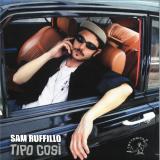
Italian producer, musician, DJ, and groove architect Sam Ruffillo drops his long-awaited debut album Tipo Così on Toy Tonics – a sun-drenched, genre-blurring statement that blends classic house with Mediterranean flair, romantic funk, and tongue-in-cheek Italo vibes. Over 11 expertly crafted tracks, Ruffillo delivers a dancefloor-ready, emotionally rich LP that connects deep musicality with irresistible rhythm and light-hearted elegance.
After three acclaimed EPs and collaborations with revered artists such as Barbara Boeing, Kapote, and Fimiani, Ruffillo has firmly cemented himself as a core artist on the Berlin-based label. Known for his unmistakable signature sound — a warm mix of vintage disco, 90s house, and Italian vocals — Sam’s music has garnered widespread DJ support from tastemakers like Gerd Janson, Palms Trax, Seth Troxler, and DJ Tennis, while becoming a staple on Italian airwaves. His infectious summer anthems like Danza Organica and Perfetta Così have soundtracked countless club nights and festivals, creating a loyal following that eagerly awaited this full-length debut.
Tipo Così is the natural culmination of a musical journey that’s both playful and profound — a travel diary written in grooves, synth stabs, and melodies that feel like postcards from a parallel Mediterranean universe. The album expands and deepens Ruffillo’s world into a fully immersive experience: lush emotional chords meet tight syncopated grooves, vintage synth textures collide with irresistibly catchy pop refrains, and the boundary between sincerity and playful irony is exquisitely blurred.
Entirely written, produced, and recorded in Italy, in his beloved hometown of Bologna, the album finds Ruffillo at the helm on keys, drum machines, and production, supported by a talented cast of musicians contributing live bass, guitar, and other organic elements — further enriching his trademark fusion of electronic grooves and natural instrumentation. There’s a tactile warmth in these tracks, a hands-on feel that adds soul and depth to every beat.
This album also marks Ruffillo’s heartfelt return to singing in Italian, with standout tracks like House Tipo Così, Mi Fa Volare, Ancora, and Dentro Di Me, where romantic naïveté meets pulsing club energy in a way that feels both timeless and refreshingly new. The vocal performances add an intimate, human touch to the music, reinforcing the personal stories woven into each song. There’s poetry in the casual, a bittersweet elegance in the way the lyrics float over groove-heavy production.
Having toured extensively across Europe, Australia, Indonesia, New Zealand, and Mexico — with sets at iconic venues like Panorama Bar and festivals such as Sónar Barcelona — Ruffillo has fine-tuned much of this album in front of live audiences. The real-world testing ground infused the record with a dynamic energy and immediacy that only comes from genuine crowd interaction. These songs weren’t just made in the studio — they were lived on dancefloors around the world.
Tipo Così is not just a collection of tracks. It’s a philosophy — playful, stylish and unmistakably personal. A modern club album bursting with heartfelt emotion and sophistication. Music for dancers with taste; for lovers of beauty, rhythm, and the little imperfections that make things feel real.
But what exactly is Tipo Così? More than just a phrase, it’s a way of being. It’s about embracing elegance without effort, mixing irony with sincerity, and letting nostalgia slip into the room without taking over the party. It’s Sam Ruffillo’s signature language: relaxed, confident, meticulous yet never rigid — where a chord progression can say as much as a lyric, and every beat carries intention.
The album’s visual identity complements this vision perfectly. The artwork and promotional materials lovingly reference Italian design from the ’80s and ’90s, combining bold graphic elements with playful pop culture nods. This aesthetic mirrors Ruffillo’s music — a fusion of vintage warmth and contemporary freshness, delivered with authenticity and charm.
Sam Ruffillo belongs to a new generation of European artists who are reshaping electronic music by blending past and present, analog and digital, groove and emotion — without nostalgia or pose. His artistic universe is coherent, vibrant, and alive; a rich tapestry of sound, images, and stories that coexist with lightness, precision, and a distinctive voice.
Reflecting on his artistic journey, Sam describes music as a vital, deeply human impulse — a tribal connection to rhythm and body that has driven him since he was a teenager. His creative process balances meticulous planning with room for spontaneity, usually sparked by clear melodic ideas that evolve naturally. Collaborations with close friends, especially vocalists like Ninfa, add warmth and authenticity, exemplified in tracks like “House Tipo Così.” For Sam, music is honest self-expression — crafted for listeners who crave memorable melodies and rhythms imbued with genuine feeling.
While technical perfection is tempting, Sam prioritizes emotion, knowing that what truly resonates is the soul behind the sounds. His long-standing partnership with Toy Tonics has been key in nurturing his vision, offering a blend of creative freedom and professional support. Looking ahead, Sam Ruffillo is excited to broaden his live performances, and release new projects that continue to blend electronic grooves with organic, heartfelt sounds — maintaining the delicate balance between playful irony and sincere emotion that defines Tipo Così.
Kurzversion:
Italian DJ, producer and musician Sam Ruffillo drops his debut album Tipo Così on Toy Tonics - a sunny blend of house, funk, Italo and pop, full of groove and emotion. Written and recorded in Bologna with live instruments and Italian vocals, it’s a playful, elegant journey shaped on dancefloors worldwide. A stylish, sincere club album where nostalgia, irony and rhythm meet in perfect harmony.
- Mi Fa Volare
Road-tested across continents and now finally released, “Mi Fa Volare” channels 90s uplifting euphoria with big breakbeats, lush chords, and Italian vocals built to stick. Somewhere between balearic bliss and piano house nostalgia, it’s a feel-good club weapon made for peak-time moments - already sung back by crowds after just one listen.
- Ancora
“Ancora” is a vibrant hi-NRG track inspired by 80s Italo disco, sung entirely in Italian. It blends driving rhythms with dreamy melodies, capturing the radiant spirit of the decade. This fresh yet nostalgic song delivers euphoric vibes and timeless energy, making it a perfect fit for both dancefloors and reflective listening moments worldwide.
- Dentro Di Me
“Dentro Di Me” channels ‘90s sensuality through a fast-paced, UK house-inspired lens. Entirely in Italian, it’s a bold and contemporary dance track where hypnotic vocals meet high-energy grooves. Blending nostalgic textures with forward-thinking production, the result is a seductive and euphoric trip - equal parts emotional and club-ready.
- Amigo
“Amigo” blends Latin groove, acoustic guitar-driven rhythm, and Mediterranean flair into a warm, magnetic, cross-cultural dance anthem. Sung in Spanish and Italian, it celebrates connection, inclusivity, and the joy of moving together - whether stranger or friend. With its unstoppable rhythm and vibrant energy, it’s a feel-good track with a unifying spirit.
- Ma Sei Fuori
“Ma Sei Fuori” is a tongue-in-cheek dancefloor bomb blending raw house energy with catchy vocal phrases and a nod to classic French touch. Driven by hypnotic vocal lines and a playful attitude, it doesn’t take itself too seriously - while still proving serious club impact. Built for late-night moments, it’s bold, bouncy, and impossible to ignore.
After turning heads with their much-loved "Monaco EP" on Roy Davis Jr.'s legendary Undaground Therapy Muzik, the duo is back with a release that bridges deep-rooted house sensibilities and forward-thinking production.
To mark their 10-year anniversary, the boys return to their label roots with a 5-track vinyl-only EP - full of dusty samples, deep grooves & nods to early French house.
The Fun House sessions give an unfiltered look at The Stooges' creative process. Side One features Down on the Street (Take 1), Loose (Take 2), T.V. Eye (Takes 7 & 8), and Dirt (Take 10). Side Two includes 1970 (Take 3), Fun House (Take 3), and Freak (L.A. Blues) (Take 1). These raw, unreleased takes highlight the band’s raw energy and proto-punk sound, offering insight into a record that would go on to shape punk, noise rock, and underground music for decades
- A1: Saw My Mama Cryin’
- A2: Lonely
- A3: The Sky Is Fallin’ Down
- A4: Blues For My Baby
- B1: You Can’t Go Home Again
- B2: Recovery_
- B3: Turn Off Your Tv
- C1: Lifestyle Of The Rich And Famous
- C2: Never Knew You Well
- C3: Puppet Master
- C4: Money Rules The World
- D1: All I Want Is You
- D2: Brother’s Keeper
- D3: Blues For The Modern Daze
- D4: Pray For Rain
Blues for the Modern Daze is an album by American blues rock musician Walter Trout, focussing more on the "traditional" blues, and taking a more straightforward approach to songwriting. The album reached #1 on the UK Jazz & Blues Chart and #4 on the Billboard Blues Chart.
It was produced by Trout himself together with Grammy-nominated producer Eric Corne. Some of the highlights on this album include the tracks "Saw My Mama Cryin'", "The Sky Is Fallin' Down" and "Pray For Rain"._x000d__x000a_Blues for the Modern Daze is available as a limited edition of 1000 numbered copies of translucent pink & blue marbled vinyl. It is housed in a gatefold sleeve and includes a 4-page booklet with lyrics.
LINKS
- A1: Almost Gone
- A2: Omaha Prelude
- A3: Omaha
- A4: Tomorrow Seems So Far Away
- B1: Please Take Me Home
- B2: Playin’ Hideaway
- C1: Haunted By The Night
- C2: Fly Away
- C3: Move On
- D1: My Ship Came In
- D2: Cold, Cold Ground
- D3: Gonna Live Again
- D4: Sammy Sammy
Battle Scars by American blues rock musician Walter Trout is a studio album originally released in 2015. The album is a deeply personal one, as it chronicles Trout's battle with a life-threatening liver disease and transplant. It serves as a reflection on his illness, hospitalization, and survival, including lyrics that document key moments during this period. Battle Scars was produced by Grammy-nominated producer Eric Corne and features the tracks "Almost Gone", "Playin' Hideaway", "Omaha" and "Gonna Live Again", amongst others._x000d__x000a_Battle Scars is available as a 10th anniversary edition of 1000 individually numbered copies on aquamarine coloured vinyl and is housed in a gatefold sleeve.
- A1: Etude No. 1
- A2: Etude No. 2
- A3: Etude No. 3
- B1: Etude No. 4
- B2: Etude No. 5
- B3: Etude No. 6
- C1: Etude No. 7
- C2: Etude No. 8
- D1: Etude No. 9
- D2: Etude No. 10
- D3: Etude No. 11
- E1: Etude No. 12
- E2: Etude No. 13
- E3: Etude No. 14
- F1: Etude No. 15
- F2: Etude No. 16
- G1: Etude No. 17
- G2: Etude No. 18
- H1: Etude No. 19
- H2: Etude No. 20
The Complete Piano Etudes of Philip Glass available for the first time on vinyl, housed in a 4LP Box set (also available as a 2CD format).
After more than thirty years of working with and performing the great repertoire, the music of Philip Glass has, in a way, almost revolutionized my life as a musician,” confides Vanessa Wagner.
An emblematic artist on the French music scene, winner of a Victoire de la musique award and director of the Chambord and Giverny festivals, Vanessa Wagner is as inspired in her interpretation of Mozart, Debussy, Tchaikovsky and Dusapin as she is alongside Murcof and Rone.
With her innovative and daring approach, she has established herself as a major influence on the classical music landscape, crossing boundaries and blazing inspiring trails.
A tireless pioneer of new repertoires, she has been exploring the repertoire of minimalist composers for several years. For InFiné, she has dedicated 4 albums to the major figures of this movement, John Adams, Meredith Monk, Brian Eno, Ryūichi Sakamoto, as well as to the new generation Caroline Shaw, Bryce Dessner and Nico Muhly.
After giving numerous concerts based on these works, she felt the need to record in their entirety this essential monument in the history of music, which bridges the gap between the 20th and 21st centuries: Philip Glass's 20 Etudes for piano
by Philip Glass.
His approach helps to place these two books in the great repertoire, alongside the great cycles of studies by Ligeti, Debussy, Dusapin, and before them, Chopin and Liszt.
Philip Glass was born in 1937 and grew up in Baltimore. He studied at the University of Chicago, the Juilliard School and in Aspen with Darius Milhaud. Dissatisfied with much of what was then considered modern music, he moved to Europe, where he studied with the legendary pedagogue Nadia Boulanger (who also taught Aaron Copland, Virgil Thomson and Quincy Jones) and worked closely with sitar virtuoso and composer Ravi Shankar.
The thread linking Philip Glass to Vanessa Wagner may be as simple as a detail: a moment, a pedagogy, a way of looking at the piano. In Words Without Music, Glass recalls his apprenticeship with Nadia Boulanger in Paris - a lesson in rigorous received just as the Nouvelle Vague was about to shatter the conventions of cinema the conventions of cinema, just as the composers of the minimalist movement had done with with the language of music. Nurtured by Ravel and Debussy, the great French pedagogue disciplined yet inquisitive minds, capable of embracing modernity without denying modernity without denying their heritage.
- 1: Calling Ghostly Nations
- 2: Chemin De La Baie
- 3: Carried It All Around
- 4: In Hollywood
- 5: Pontiac Spirits
- 6: Battle Lines
- 7: The Clouds Are Casting Shadows From The Sunlight
- 8: Give Us Our Dominion
Metallic Gold Transparent Vinyl[26,01 €]
On their new album The Besnard Lakes are the Ghost Nation, Montreal’s The Besnard Lakes return with their post-rock psych; but this time around, with a lightness and optimism at play.
Unique among their furrowed brow peers, The Besnard Lakes are unafraid to marry textured, questing headphone sonics to the honeyed pleasure of radio hits past: the rapture of My Bloody Valentine entwined with the romance of Fleetwood Mac. Imagine dreamy Beach House riding Led Zeppelin dynamics, with unabashedly androgynous vocal harmonies; a melodic yet mountainous sound world.
In a crowded leaderboard of their own making, The Besnard Lakes are the Ghost Nation might just be their best album yet; a strive for hope when it is needed most.
Jessica93, prodigal bastard of our glorious french squat scene, relocated on Born Bad : this is no picnic. Geoffroy Laporte, alone against all odds, alternates bass and guitar to build harsh loops with a drum machine spitting pre-Gulf War patterns. That’s where it gets tricky : every musical posse claims him. Grunge, sure, but Jessica doesn’t indulge in necrophilia. His circuit is punk, he doesn’t dress the part though. Cold wave, the atmosphere fits somehow, but the gear does not. The self-confident rock horde saw him playing with hair in his eyes… but he never joined the Party. Metal had something to say but sadly, nobody listened. Maybe it's time to give it a rest and let Jessica93 cook his great misery broth on her own, called « 666 tours de périph’ » (666 laps on the beltway). Witnessing Jessica93 live makes you dread that he'll get up the next morning, drive 200 miles and one nap later kick it again, when it takes us a good week to recover from the bad half of that same evening. Like so many other unknown soldiers during our very own world war of music, he patrols small venues relentlessly.
At the heart of this cultural pentacle painted by french weirdos Bryan's Magic Tears, and Carine Krinator, Jessica93 has built a sound validated by years of chosen vagrancy, birthing bands with joyously stupid monikers, in the humid jungle of small labels. Jessica93's debut album had a track celebrating Omar Little, HBO’s gay bandit from Baltimore. This story begins on the beltway, where Florence Rey, accidental copkiller turned to political icon of the 90’s. Geoffroy offers his brilliant analysis : " C’est la police qui nous tire d’ssus / C’est mon trou d’balle qui leur chie d’ssus « (Police shoots us down / my dripping asshole gets the job done).
A previous album was haunted by bedbugs, this one is essentially about love, a delicious scourge just as hard to eradicate. Two black diamonds peek out of the LP : ’’La colline du crack’’, heartbreak song about the ultimate temptation of violent delights, located on crackhead central in Paris. The brilliant chorus, ‘Take my hand and come with me to Crack Hill’ will put an end to the rumours, almost everything was really false. And Bébé Requin, alternative obituary that’ll make you shiver, where our nice couple states ‘’on kiffe la drogue dure et les ptits chiens’ (‘we love hard drugs and little dogs’). And that is the reason we face the wall of sound jostled by unnecessary shoulder thrusts: those nice fat chunks of charcoal poetry, hidden under light sarcasm.
The rest of the record demonstrates the know-how acquired in loop-by-loop construction of ruins that are pleasant to squat in together. There’s your classic doom delicatessen, with bits of heavy metal inside, crafted with the manic care typical of hard wankers. Arthur Satàn, who produced and mixed the album at home in Bordeaux, helped him get his head out of the reverb safe house. And Jessica93 took the opportunity to switch to the dark side of the language : french at last. Worth the wait ! Sing along : « nique sa mère / nique sa grosse mère » (translate that yourself).
In a changing, unpredictable and turbulent world, something we can always rely on is a new Orb album, with the next holiday-for-the-head never far away. On what is quite possibly the millionth longplayer helmed by electronic lifer Alex Paterson; partnered with the now firmly-entrenched boy wonder Michael Rendall; the inspirationally productive outfit yet again deliver the goods, with one of their best yet.
After his 2024 album The Spirit Continues, Tilman returns with Altered Spaces, a tightly focused four-track EP that distills his signature sound into a concise, club-ready format.
Opening track Make My Body Move sets the tone with soulful vocals, warm piano stabs, a rolling bassline and a breezy Balearic vibe. The Last Resort deepens the mood, layering pads, organ hits and shimmering strings over a steady, driving groove. Rounding out the EP are two reimagined cuts from The Spirit Continues. Dance Department (Spirit Mix) smooths out the rougher edges of the original, adding organ stabs and a more melodic sensibility.
Need It (Dance Dub) transforms the track into a softer, dub-tinged version - hypnotic, restrained and full of subtle movement. Altered Spaces is classic Tilman: warm, understated house music that's rich in detail and groove - made for dancers and deep listeners alike.
- A1: Rampers Music
- B1: Version
A mythical tune for all serious digital reggae collectors, finally reissued. The obscure Junior Khadaffy (various spellings!) released only a handful of tunes in the mid-late '80s, but all are fantastic. This one was cut for E&F Studios in the Bronx, ran by the late artist I-Plee. Stereo Fletcher happens to be family to I-Plee, producing several records by the artist for his own labels. But the works went both ways, and Stereo produced this one for release on E&F's in-house label. Slick but killer digital reggae, this one has always reminded us of the production style of Little Kirk's "Weed Them Out", a fantastic arrangement, great vocals and a complex head-nodding rhythm. The original press is extremely rare and the tune is simply too good to remain that way, so here it is, top top top shelf '80s digital, now available for all.
- A1: From Darkness 01 18
- A2: Disappearance 04 34
- A3: Past Into Presence 02 32
- A4: Search Party 02 58
- A5: Forest Manipulations 03 22
- A6: Miscarriage 01 17
- A7: Who’s There? 00 59
- A8: The Pond 02 02
- A9: Mindfuck 01 20
- A10: I'll Take Noah 00 55
- A11: Wall Paintings 02 45
- B1: Death And Confusion 04 23
- B2: Visions 01 20
- B3: The House 03 55
- B4: What Have You Become? 01 41
- B5: Alone In The Dark 01 50
- B6: Ritual 02 07
- B7: Theo 02 29
- B8: Reunification 03 58
- B9: Open Eyes 02 25
- B10: Past Darkness 04 11
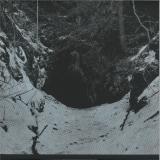
Erik K Skodvin summons his alter ego Svarte Greiner for a dive into the dark, wintery Swedish forest with the score to the psychological thriller/horror film “From Darkness” (orig: Ur Mörkret).
The film is director Philip W. Da Silva's debut and is set largely at night, deep in a Swedish nature reserve where mining used to take place. Loss, mental health and Nordic mythology come together in a story that revolves around the search for a missing woman. The score follows an eclectic and atmospherical path throughout the narrative with an uneasy underlaying vibe; although one with occasional points of refuge in the otherwise vast darkness. There is a gloomy, barely tangible sound of Nordic folk tradition buried in the music, even if it comes across in a different, more abstract way, where the various instruments are often used more as sound sources that are improvised (and abused) into becoming their own element. Skodvin performed and recorded the majority himself. In addition, he commissioned free improviser Axel Dörner to participate with his unique, custom-built electro-acoustic interface, which, along with Claudio Puntin's processed reeds and additional electronics, has been built into the elaborate backdrops to create an entire world that balances on the border between the approachable and the elusive - not unlike the journey of the protagonists. Skodvin's partner in Deaf Center, Otto A Totland, appears on piano in the stand out piece “What have you become?”.
The result is a harrowing yet deeply melancholic journey through the human psyche. One that echoes through the dark forests, cabins and lost mines of the desolate Swedish woodlands.
“It is presumed that as humans mined ore in the 1800s, they had many mishaps and dug too deep, leading them to assume they had unleashed some evil spirit that was guarding the ore. She was referred to as "Cave Wraith". It was said that she employed darkness to lure miners to their deaths. They prohibited villagers from visiting during the darkest months of the year. Some used sacrifices to subdue the evil entity.”
The vinyl is released in an edition of 150 numbered copies, with screenprinted artwork on black cardboard inside a screenprinted PVC sleeve, incl. Riso-printed insert with liner notes by Mike Lazarev, 180g vinyl.
On their new album The Besnard Lakes are the Ghost Nation, Montreal’s The Besnard Lakes return with their post-rock psych; but this time around, with a lightness and optimism at play.
Unique among their furrowed brow peers, The Besnard Lakes are unafraid to marry textured, questing headphone sonics to the honeyed pleasure of radio hits past: the rapture of My Bloody Valentine entwined with the romance of Fleetwood Mac. Imagine dreamy Beach House riding Led Zeppelin dynamics, with unabashedly androgynous vocal harmonies; a melodic yet mountainous sound world.
In a crowded leaderboard of their own making, The Besnard Lakes are the Ghost Nation might just be their best album yet; a strive for hope when it is needed most.