In the late '70s, The Avengers established themselves as one of the US's preeminent punk bands. Fusing incisive guitar hooks, explosive rhythms and adolescent venom, the group forged some of the most in-your-face songs of the era. Their live shows were legendary, playing up and down the West Coast and even blowing Sex Pistols off the stage at the latter's final performance.
As Byron Coley writes in the liner notes, "Of the best bands of San Francisco's first wave in 1977, The Avengers were by far the coolest and youngest sounding. They roared without irony, as though this were indeed Year Zero (and, for a moment, it was) with history being overwritten by the new. The honesty of their belief was carried by their sound. And it was convincing!"
Originally released in 1983, four years after the band's dissolution, The Avengers' self-titled LP is often referred to as "The Pink Album" for its magenta-hued cover design. Frontwoman Penelope Houston's iconic voice and razor-sharp lyrics resonate on anthems "We Are The One" and "The American In Me," while penetrating ballads like "Corpus Christi" reveal a truly out-of-body euphony.
The Pink Album remains The Avengers' definitive statement - collecting their classic Dangerhouse EP, sessions recorded with the Pistols' Steve Jones and a half-dozen revelatory demos. While much has been written about The Avengers in the past three decades, rock critic Greil Marcus puts it succinctly, "The word I always come back to is mystical, and that remains almost theirs alone."
Suche:houston
For over two decades Jonathan Katsav has used his Crave project to fray rap at its fringes, using Memphis and Houston's low-and-slow legacy to inform sounds that have as much in common with Merzbow as they do Tommy Wright III. Working under a variety of different monikers such as Lieu Noir, Sniper Bait and Soul Collector, the French producer is most prolific as Crave, and "Inner War Delirium" is a substantial and broadly cinematic addition to his canon. Katsav approaches each track as if it's a scene from a movie, using real life experiences to explore separate characters and contrasting emotions. Using different narrators and disparate vocal styles, he navigates grim, blown-out landscapes, driving neon drenched trap synths and horror choirs against overdriven kicks and waterlogged industrial atmospheres. Mangled field recordings, squealing static and gurgling synthesized bass opens 'PHYLLIS', goading the cautious with serrated, carnival synths and cacophonous vocals that sway lugubriously between rap and grindcore. The relationship between dark and light, death and rebirth, is at the heart of "Inner War Delirium", rippling through every track's oozing amalgamation of inebriated hip-hop and buzzsaw noise. Katsav's sounds are an attempt to subject us to the physicality of his own life's puzzle, and he cuts them into vignettes like a director. On the album's final track, listeners are swiped from in front of the speakers and bundled into the trunk of a car, rain rattling on the metal and the album playing on in the distance. It's a way for the producer to turn the camera back on the audience and ask them to consider their own complicated reality - it's Crave's story, but everyone's a part of it.
Joshua Ray Walker announces NEW RECORD “What Is It Even?” - lending his signature alt-country style to iconic pop songs - paying homage to female-identified powerhouse vocalists and their influence on global culture. Launching with his reimagination of Lizzo’s “Cuz I Love You,” Walker pushes himself and his band to respectfully and artfully build a bridge between two seemingly polar styles of music. What Is It Even? Album Rollout 6/2 - “What Is It Even?” Preorder launch & IG1 “Cuz I love You” 7/7 - "Linger" 8/4 - “What Is It Even?” Street Date The catalyst of Joshua Ray Walker’s new album, What Is It Even?, was sparked on the patio of the Tulsa, Oklahoma music venue and dive bar Mercury Lounge, a fitting origin story for any country record. But this is far from an ordinary country record. It was on that Tulsa patio, deep into tour, when Walker and drummer Trey Pendergrass were half joking about what their gospel jump blues version of Whitney Houston’s “I Wanna Dance With Somebody” would sound like, wondering “what if the Blues Brothers covered a Whitney Houston song?” At that point, it was still unclear how the Dallas native would follow up his trio of critically acclaimed, interconnected albums, all of which were packed tight with character-driven songs that put multiple national-tours worth of crowds on the precipice of staining their shirts with either beers or tears, depending on the song. The third of the trio, See You Next Time, led to Walker appearing on The Tonight Show and CBS Saturday Morning, brought with it performances at the Ryman Auditorium in Nashville and Gruene Hall in Texas, landed him on Rolling Stone’s “Best of 2021” list, and prompted SPIN to call him “one of country’s most exciting storytellers.” Those stories about dive bar dwellers running out of last chances made listeners feel a gauntlet of emotions. What Is It Even?, a 10-track covers album consisting of songs made famous by female pop acts, produced with John Pedigo and arranged alongside his touring band of Pendergrass, bassist Billy Bones, and pedal-steel player Adam Kurtz, was born out of wanting to make people feel joy.
- A1: Frankie Knuckles Pres. Director’s Cut – The Whistle Song (Re-Directed)
- A2: Frankie Knuckles Pres. Director’s Cut Feat. Jamie Principle – Your Love (Director's Cut
- B1: Frankie Knuckles Pres. Director’s Cut Feat. B. Slade – Get Over U (Director's Cut Mix
- B2: Frankie Knuckles Pres. Director’s Cut Feat. Jamie Principle – I'll Take You There
- C1: Ashford & Simpson - Bourgie Bourgie (A Director's Cut Exclusive)
- C2: Joey Negro & The Sunburst Band Feat. Donna Gardier & Diane Charlemagne – The
- D1: Artful & Ridney Feat. Terri Walker - Missing You (Eric Kupper’s ‘Director's Cut Tribute To
- D2: Marshall Jefferson Feat. Curtis Mcclain – The House Music Anthem (Move Your Body)
There are few people across the globe, who will have not been touched by the work of Frankie Knuckles. Forever regarded as ‘The Godfather of House’ for his unrivalled contribution to the house music we know today; what started as an underground movement in Chicago has grown to international heights thanks to Frankie. His records earned him recognition on a global scale, allowing him to work with some of the globes biggest names including the likes of Diana Ross, Whitney Houston and Michael Jackson.
Five years ago, Frankie passed away in Chicago on 31st March 2014 leaving behind one of the greatest house music legacies spanning almost four decades. Now he is commemorated by long time writing and production partner Eric Kupper. Eric, himself a seasoned DJ producer and writer, has worked on over 116 Billboard #1 Dance Records and played a pivotal role in a many of Frankie’s productions. Having both worked together for many years they established themselves at ‘Director’s Cut’ from 2011 and set about producing original releases and remixes based on the classic ‘Def Mix’ sound while sharing equal credits for their creations.
Together they re-produced and re-purpose classic cuts for modern dancefloors, with reworks including tracks from Marshall Jefferson, Ashford & Simpson, Artful & Ridney and The Sunburst Band, alongside Frankie Knuckles originals. These releases have now been brought together by Eric to feature on special album called ‘The Directors Cut Collection’ on SoSure Music. It includes the Director’s Cut reworks of Frankie’s classic cuts such as ‘Your Love’ and ‘Take You There’ with Jamie Principle, alongside Frankie’s first #1 single - ‘The Whistle Song’ on which Eric shares writing credits.
Within a multitude of classic reworks, highlights include a previously unreleased version of Ashford & Simpson’s ‘Bourgie Bourgie’ and a huge Director’s Cut Retro Signature mix of Marshall Jefferson’s 'The House Music Anthem (Move Your Body)' featuring Curtis McClain.
The Director’s Cut Collection is a fitting tribute to commemorate the fifth anniversary of Frankie’s passing whilst giving Eric a platform to tell his side of the creative story. This album is to be released in collaboration with The Frankie Knuckles Foundation who work to continuing Frankie’s legacy well into the future.
Rare Detroit Jazz-Funk Fusion Album from 1988.
Wendell delivers a unique and different sound compared to his earlier body of work.
First ever vinyl reissue. Mastered on 45 RPM for an optimal audiophile experience.
Featuring an all-star line-up including Tribe alumni Marcus Belgrave & Duke Billingslea.
180g BLACK vinyl limited to 500 copies (w/obi strip). Non-Returnable.
Wendell Harrison was born in Detroit in 1942 where he began formal jazz studies for piano, clarinet and tenor saxophone. At 14, while still in high school, Harrison started performing & recording professionally with artists such as Marvin Gaye, Grant Green, Sun Ra, Hank Crawford … and many others.
In 1971, Harrison began teaching music at Metro Arts (a multi-arts complex for youth) where he also connected with Marcus Belgrave, Harold McKinney and Phil Ranelin…soon after they formed the (now legendary) Afro-centric TRIBErecord label and artist collective. TRIBE used the Metro Arts complex as a vehicle to convey a growing black political consciousness. Wendell Harrison also published the very popular TRIBE magazine, a publication dedicated to local and national social and political issues, as well as featuring artistic contributions such as poetry and visual pieces.
In 1978 Harrison and McKinney co-founded REBIRTH, a non-profit jazz performance and education organization, in which many notable jazz artists have participated. Around the same time Wendell Harrison also created the WENHArecord label and publishing company, which released many of his (now classic) recordings as well as those of other artists, such as Phil Ranelin, Doug Hammond and Reggie Fields (The Real ShooBeeDoo).
In the early 1990s, Wendell Harrison was awarded the title of “Jazz Master” by Arts Midwest. This distinction led Harrison to collaborate with fellow honorees and gave him the chance to tour throughout the United States, Middle East and Africa. Even to this day Wendell Harrison’s recordings for the TRIBE, WENHA and REBIRTH labels have a large worldwide fanbase.
It is on REBIRTH that Harrison released the opus: THE CARNIVOROUS LADY (1988), which we are proudly presenting you today.
‘The Carnivorous Lady’ is a monster of an album featuring an all-star line-up that includes Marcus Belgrave (Ray Charles, Houston Person, Charlie Mingus) on guitar, Duke Billingslea (Martha Reeves) & Pamela Wise (Tribe) on keyboards, Larry Fratangelo (Fred Wesley, Dennis Coffey) on percussion and Shirley Hayden (Parliament/Funkadelic) on vocals.
On this fantastic sounding album (produced by the maestro himself) the listener is invited to experience a synthesis of what has been and what is now. The record shows Wendell’s trademark proficiency on saxophone, flute and clarinet. Although you can hear the 80ies creeping in with a smoother fusion sound, infectious boogie synths, R&B vocals and a lot of mind-blowing Jazz-Funk percussions…this album remains a very spiritual (and soulful) hard bop jazz record. From the first to the last note you get an irresistible blend of so
Texas born guitarist Melvin Sparks is one of the godfathers of Acid Jazz. He first came to prominence in the bands of Jack McDuff and Lou Donaldson, providing an essential element in their funky groove-based classics of the late 60s. He then became part of the Prestige Records funk team, under the tutelage of producer Bob Porter. He made his debut LP “Sparks”, for the label in 1970, alongside Idris Muhammad, Leon Spencer and Houston Person. Two further exciting albums appeared on the label with “Spark Plug” and “Akilah” and over a dozen side-man appearances.
When Porter left to set up Eastbound Records in Detroit - as part of Westbound Records - Sparks followed, recording his label debut "Texas Twister” in 1973. The following year, after Porter left, he recorded the album that became “’75” with some of the label’s top session players, including members of Funkadelic and vocalist Jimmy D Scott, who sang on ‘I Got To Have You’ and ‘If You Want My Love’. The nine tracks featured a slicker sound, that mirrored the contemporary soul jazz of the time and included club classics like 'Get Ya Some' and 'Get Down With The Get Down’.
Sparks began recording one more album for the label which languished in the vaults for decades and then mostly concentrated on session work before he was rediscovered by the acid jazz scene in the late 80s, and was brought over to Europe to tour as part of the BGP All-Stars and this late revival saw him record five further albums.
This is the first vinyl reissue of this album since 1975.
An incredible 45 of Latin disco – recorded in Peru during the late 70s by funk pioneers Black Sugar, and right up there with the best from New York and LA of that era! It’s taken over four decades 'Baila' to become a winner spin at international events in the soul and disco scenes, a sought-after collector's item and, above all, the dancefloor hit that should have always been. First time reissue. Black Sugar is a Peruvian band, considered a pioneer group in Latin America in mixing funk influences with rock and Latin rhythms. In 1976, following their gig at Coliseo Amauta in Lima, opening the night for the legendary Spanish band Barrabás, they started to show a growing interest in disco music, resulting in some line up changes with members leaving the project due to their lack of interest in the new sound and new ones joining in. Word is that Sono Radio, home to a bunch of local Tamla MoTown releases for the Peruvian market, thought that Black Sugar's prestige, and their credibility in the new orientation towards disco sound, would benefit from seeing their new single pressed with the labels of the famous record company from Detroit. And so it was. Under certain lights and shadows, ‘Baila’ was finally released in Peru only in 1978, sporting the same look as the releases of the likes of Marvin Gaye, Diana Ross, Commodores or Thelma Houston. A clever marketing ploy that however failed in boosting the sales of the single…Only a few original copies have survived to this day, of either the first and the second edition from 1979 released on the US label Libra, and reached the collectors market. It’s now, over four decades later, when the interest on this recording has gone stronger and ‘Baila’ is getting regular spins at international soul/disco scene events, having become a very sought-after collectors item and, on top of that, the dance floor anthem that should have always been. The stunning piano arrangements of the intro, the outstanding brass sections —faithfully copied from the disco recordings coming from the States—, a very catchy chorus… ‘Baila’ has all the necessary ingredients to become an addictive invitation to join the dance floor. On the B side, a cover version of Barry White’s hit ‘Sha La La (Means I Love You)’ —as appeared on the original issue of this record— shows what the interest of the band was at the time. First time reissue. TRACKLIST Side A Baila Side B Sha La La (Means I Love You)
The best R&B songwriter and soul singer that most people have never heard of, Sam Dees has written songs for countless artists, including Gladys Knight, Aretha Franklin, Whitney Houston, George Benson, the Temptations, Teddy Pendergrass, Millie Jackson, Jackie Wilson, the Manhattans, Regina Belle, KC & the Sunshine Band, Willie Clayton, and many others. He's also a pretty fine singer, having recorded for the Chess, Atlantic, Polydor, and SSS labels, and he had a nice string of his own hits in the 1970s. His 1975 Atlantic album The Show Must Go On has long been regarded by Southern soul aficionados as one of the best of the genre. Sounding a bit like a deeper-voiced Curtis Mayfield (in both style and theme), Dees sings with assurance, wisdom, passion, and a whole lot of soul here. Songs like "Child of the Streets", "Troubled Child," & "What's It Gonna Be," share Mayfield's commitment to social commentary, and Dees knows his way around a love song, too. It's absolutely essential.
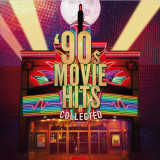
90's Movie Hits Collected is a throwback to the glory days of movies like Batman Forever, Man On The Moon, GoldenEye, Young Guns II, Pretty Woman, Godzilla, The Bodyguard, Trainspotting and many more blockbusters. The 2LP 90's Movie Hits Collected includes classics from U2, R.E.M., Tina Turner, Jon Bon Jovi, Roxette, UB40, Jamiroquai, Whitney Houston. Seal, and Lenny Kravitz amongst others.
This film music compilation album is part of the Collected compilation series, which is a collaboration between Universal Music and Music On Vinyl. The compilations bring together the biggest and best names of its genre, combined with forgotten hits and less discovered gems, giving the listener an experience of both nostalgia and uncovering new musical grounds at the same time.
90's Movie Hits Collected is available on black vinyl and includes an insert with photos.
- 1: Lovesickness
- 2: Let Her Go (Feat. James Blake)
- 3: Leave The Club (Feat. Lil Durk & Glorilla)
- 4: Me (Feat. Kali Uchis)
- 5: Go Down (Feat. Tisakorean)
- 6: Time Heals All
- 7: Leather Coat
- 8: Honeymoon
- 9: Private Landing (Feat. Justin Bieber & Future)
- 10: Slow Motion (Feat. Wizkid)
- 11: Do It Right
- 12: If I Had (Feat. Charlie Wilson)
- 13: Company Pt. 3
- 14: Bus Stop (Feat. Brent Faiyaz)
- 15: Cinderella (Feat. Toro Y Moi)
- 16: Encouragement
Regeln sind dazu da, gebrochen zu werden, und Grenzen existieren, damit man sie überschreiten kann.
Wer wüsste das besser als Caleb Zackery Toliver alias Don Toliver , der alle Hürden und Hindernisse in Lichtgeschwindigkeit überquert. Der vielfach Platin-ausgezeichnete Sänger, Songwriter und Künstler aus Houston, Texas hat sich von einer Underground-Instanz zum Superstar entwickelt - unbestreitbar, unzähmbar und mit einem unnachahmlichen Stil ausgestattet, der von Hip-Hop-Hochglanz, intergalaktischem R&B, progressivem Pop und einem guten Schuss Rockstar-Attitüde geprägt ist. Selbst in dieser Branche voller extrovertierter Sonderlinge gibt es niemanden, der klingt, aussieht und sich anfühlt wie Don.
Sein Vehikel für den nächsten Überschalltrip: das neue Album "LOVE SICK" . Auf seinem dritten Werk stellt Toliver visuelle Anleihen aus der Disco-Kultur, Mafia-Filmen und dem opulenten Design der 70er-Jahre in einen zeitgemäßen Kontext. Das Album erzählt die Geschichte von Don, der ein Speiselokal führt, das "Love Sick Diner", und nun plant, in die Nachtclubszene einzusteigen. Dabei gerät er jedoch mit dem Gesetz in Konflikt. "LOVE SICK" nimmt uns mit in eine Welt, die so facettenreich und einzigartig ist wie der Künstler Don Toliver selbst.
- A1: George Michael - Too Funky
- A2: The Shamen - Ebeneezer Goode
- A3: U2 - Even Better Than The Real Thing (The Perfecto Mix)
- A4: Annie Lennox - Why
- A5: Richard Marx - Hazard
- A6: Bon Jovi - Keep The Faith
- B1: The Klf - America What Time Is Love?
- B2: The Cure - Friday I'm In Love
- B3: Heaven 17 - Temptation (Brothers In Rhythm Remix)
- B4: Electronic - Dissapointed
- B5: Boy George - The Crying Game
- B6: Marc Almond - The Days Of Pearly Spencer
- B7: Elton John - The One
- C1: Bruce Springsteen - Human Touch
- C2: Sophie B. Hawkins - Damn I Wish I Was Your Lover (Radio Version)
- C3: Patty Smyth & Don Henley - Sometimes Love Just Ain't Enough
- C4: Manic Street Preachers - Motorcycle Emptiness
- C5: Paul Weller - Uh Huh Oh Yeh! (Always There To Fool You!) (Always There To Fool You!)
- C6: Simple Minds - Love Song
- C7: Tears For Fears - Laid So Low (Tears Roll Down) (Tears Roll Down)
- D1: Snap! - Rhythm Is A Dancer
- D2: Dr. Alban - It's My Life
- D3: Charles & Eddie - Would I Lie To You?
- D4: Shanice - I Love Your Smile (Driza Bone Remix)
- E3: Tori Amos - Crucify (Remix)
- E4: Crowded House - Weather With You
- E5: Ten Sharp - You
- E6: Simply Red - For Your Babies
- E7: Lisa Stansfield - All Woman
- F1: Jimmy Nail - Ain't No Doubt
- F2: Take That - Coult It Be Magic (Rapino Radio Mix)
- F3: Kylie Minogue - Give Me Just A Little More Time
- F4: Roxette - How Do You Do!
- F5: Go West - Faithful
- F6: Wet Wet Wet - Goodnight Girl
- F7: Vanessa Williams - Save The Best For Last
- F8: Whitney Houston - I Will Always Love You
- D5: En Vogue - My Lovin' (You're Never Gonna Get It) (You're Never Gonna Get It)
- D6: Cece Peniston - Finally
- D7: Dina Carroll - Ain't No Man
- D8: Lionel Richie - My Destiny
- E1: Shakespears Sister - Stay
- E2: Tasmin Archer - Sleeping Satellite
NOW Music is proud to present the next instalment in our ongoing ‘Yearbook’ series – and our first to celebrate the ‘90s, NOW – Yearbook 1992; 79 tracks from a brilliant year in Pop! Available as a Special Edition CD housed in ‘hard-back-book’ packaging, including a 28-page booklet featuring a summary of the year, a track-by-track guide, a quiz, and original singles artwork, a standard 4CD package, and a Limited edition 3-LP set pressed on green vinyl.
Tief im glühenden Kessel von Texas haben die Alchemisten von Necrofier (mit Mitgliedern von Night Cobra, Oceans of Slumber, Venomous Maximus, etc.) mit ihrem zweiten Album "Burning Shadows in the Southern Night" eine weitere starke Dosis amerikanischen Black Metals gebraut. Das Vierergespann aus Houston besinnt sich auf die bewährten Tugenden des traditionellen Black und Heavy Metal und wählt einen organischen Klangansatz, indem es den siebenfach Grammy-nominierten Produzenten und Tontechniker Joel Hamilton (Unsane, Tom Waits, Tyler Bryant & The Shakedown, etc.) engagiert, um einen natürlichen Sound zu erzeugen. "Burning Shadows in the Southern Night" wird bei all jenen, die es wagen, dieses bösartige neue Werk zu hören, mit Sicherheit ein Gefühl der Nostalgie hervorrufen.
FFV: Immortal, Rotting Christ, Blackbraid, Uada, Cloak
Tief im glühenden Kessel von Texas haben die Alchemisten von Necrofier (mit Mitgliedern von Night Cobra, Oceans of Slumber, Venomous Maximus, etc.) mit ihrem zweiten Album "Burning Shadows in the Southern Night" eine weitere starke Dosis amerikanischen Black Metals gebraut. Das Vierergespann aus Houston besinnt sich auf die bewährten Tugenden des traditionellen Black und Heavy Metal und wählt einen organischen Klangansatz, indem es den siebenfach Grammy-nominierten Produzenten und Tontechniker Joel Hamilton (Unsane, Tom Waits, Tyler Bryant & The Shakedown, etc.) engagiert, um einen natürlichen Sound zu erzeugen. "Burning Shadows in the Southern Night" wird bei all jenen, die es wagen, dieses bösartige neue Werk zu hören, mit Sicherheit ein Gefühl der Nostalgie hervorrufen.
FFV: Immortal, Rotting Christ, Blackbraid, Uada, Cloak
“Crystal Motion” were a vocal quartet of Cape Verdean descendancy from New Bedford Massachusetts. The group’s original members being lead vocalist “Kevin Gomes”, Kevin’ s cousin, Rodney “Skeeta” Santos, Daniel “Buddy” Monterio and John Paris, the man responsible for coining the group’s eventual performing name “Crystal Motion”.
Entering a local now defunct recording studio “Metcalf’s” the grouped recorded the Kevin Gomes penned demonstration song, the sweet soul ballad “There’ll Be Another”.
A copy of this song was eventually submitted to the recently formed Independent Recording Studio, “Omega Sound Productions” in Philadelphia, PA. The label was owned by Frank Fioravanti who having just hit paydirt with William DeVaughn’s smash hit “Be Thankful For What You Got” continued with his policy of supporting up and coming talent and upon hearing Crystal Motion’s demo decided to offer them a recording contract. Although deciding against using their submitted demonstration song (which was to remain unissued) Fioravanti chose to record the group on a song he had co-written with another Philly writer and recording artist Pal Rakes, the title of the song was “You’re My Main Squeeze (Part 1 & 2)” an exciting disco dance orientated song that Frank released on them in 1975 on his Sound Gems label imprint. The song became a minor hit in Boston MA, Providence RI and Philadelphia areas also receiving extensive airplay in Atlanta GA and Houston TX. John Paris was to leave the group being replaced by a longtime friend of the other group members Douglas “Dougie” Mendes. With attention coming from the producers of “American Band Stand” and “Soul Train” the group toured the East coast circuit throughout 1975 and 1976 in preparation for an upcoming album project which was never finished before lead singer Kevin Gomes left for unforeseen personal reasons and ultimately the group broke up. Little did “Crystal Motion” know at the time but their solitary 45 release was finding a new audience across the pond in the UK with “You’re My Main Squeeze” being championed by inspirational DJ Colin Curtis in the hallowed halls of Blackpool Mecca, a timeless classic that never fails to bring a smile to the listening audiences faces even to this day.
Returning to the groups unfinished Sounds Gems album project only one track was ever completed, the Fioravanti/Rakes composition “Million Dollar Baby” which along with “There’ll Be Another” has been licensed from their respective owners and paired together for a long overdue 45 release for your delectation. With ‘Crystal Motion’s’ “You’re My Main Squeeze” cult and anthemic status being forever assured with Northern/Modern Soul devotees we’d like to think the discovery and release of these two slightly differing Sweet Soul offerings will garner and enhance the group’s wider appeal with the growing aficionados of the Chicano, Group Harmony and Lowrider genres, Enjoy.
Reflections is a recording of Sufjan Stevens' sixth collaboration with acclaimed ballet and dance choreographer Justin Peck. Originally composed for World Premiere and performances (May 17-26, 2019) by Houston Ballet, the piano duet was recorded at Oktaven Studios by Ryan Streber and performed by pianists Timo Andres and Conor Hanick. Reflections is imbued with Stevens' memorable and emotionally resonant melodies and arrangements and continues to establish Stevens as a contemporary composer.
- A1: The Four Tops - Baby I Need Your Loving
- A2: Smokey Robinson & The Miracles - Going To A Go-Go
- A3: Martha Reeves & The Vandellas - Nowhere To Run
- A4: Kim Weston - Take Me In Your Arms (Rock Me A Little While)
- A5: Earl Van Dyke & The Soulbrothers - All For You
- A6: Jimmy Ruffin - What Becomes Of The Brokenhearted
- A7: The Elgins - Heaven Must Have Sent You
- A8: The Supremes - You Keep Me Hangin' On
- A9: The Isley Brothers - Behind A Painted Smile
- B1: Stevie Wonder - For Once In My Life
- B2: Tammi Terrell - Come On And See Me
- B3: Edwin Starr - Twenty Five Miles
- B4: The Temptations - Ball Of Confusion (That's What The World Is Today)
- B5: Marvin Gaye - Mercy Mercy Me (The Ecology)
- B6: The Jackson 5 - Maybe Tomorrow
- B7: Diana Ross - Remember Me
- B8: Michael Jackson - Ben
- C1: Stoney & Meat Loaf - The Way You Do The Things You Do
- C2: Thelma Houston - Me And Bobby Mcgee
- C3: Eddie Kendricks - Keep On Truckin' / Pt. 1
- C4: The Undisputed Truth - Papa Was A Rollin' Stone
- C5: The Miracles - Love Machine / Pt. 1
- C6: Commodores - Brick House
- C7: Mary Wilson - Red Hot
- D3: Dazz Band - Let It All Blow
- D4: Rockwell - Somebody's Watching Me
- D5: Mary Jane Girls - In My House
- D6: Bruce Willis - Under The Boardwalk
- D1: Rick James - Mary Jane
- D2: Lionel Richie - You Are
An unmissable pairing of Texan-born soul queens! Ruby Wilson was Memphis based for most of her life whilst Emily spent her formative years in Houston before relocating to Stockton, CA, to raise her family. Both were signed to Malaco Records in Jackson, MS, where these two timeless example of Southern Soul were recorded nearly 30 years apart and now appear on 7” vinyl for the first time.
Ruby Wilson first came to our attention in the mid-70s with two singles on T.K. subsidiary Glades, with Number One In Your Heart and the funkier Sky High both still sounding good today. She signed to Malaco during their most fruitful period, and her self-titled album in 1981, from which this classy below-midpaced selection comes, despite being a typically polished affair never reached the highs with the label that Jewel Bass, Fern Kinney, and of course Dorothy Moore had set over the previous few years. It remained her only outing with them, but she went on to make a further three albums in the late 80s with the Hot Cotton Jazz Band, one with the Climax Jazz Band, and finally back on her own A Song For You (2000 Cadre Ent.) and Show You A Good Time (2005 Unkut Music). She became an accomplished actress and was also known as the Queen Of Beale Street for her many club performances in Memphis. Sadly, Ruby died in 2016, but hopefully this release on Jai Alai will help us remember what a talent she really was.
Not only is Emily David an extraordinary talent, she is a remarkable woman too. Her only album Queen Emily was a direct result of her finishing as a semi-finalist of America’s Got Talent in 2008 at the tender age of 40. She was no stranger to talent shows having won a Sammy Davis Jr award in 1999, but back then, as a single-mother decided to put her singing career on hold to bring up her two daughters. One day her troubled sister arrived to stay but left without taking her two boys with her, so Emily felt she had to bring up her nephews as well. Her dreams of a musical career had evaporated but years later her daughters encouraged her to try once again.
It was almost a year after America’s Got Talent that Malaco boss Tommy Couch Jr. called out of the blue and offered her a contract without meeting her. As Queen Emily, a digital 4-track EP was released in the US, but her eponymous CD album, bizarrely released by Malaco in the UK before the US, is one of the best examples of 21st century Southern Soul, steeped with the label’s trademark live instrumentation by the Muscle Shoals Horns Rhythm Section and contains a number of polished standards such as Use Me, Angel In Your Arms, I Betcha Didn’t Know That and Going Crazy. However, it is the George Jackson-penned ballad Throw Away Me that really stands out and deservedly received critical acclaim in the UK at the time. It now gets a very welcome vinyl debut on Jai Alai and makes for a fabulous pairing.
Speedbeforedeath is the debut album from Misteriseparli "the duo with an enigmatic name".
Many influences emerge across Speedbeforedeath. They populate Misteriseparli multiverse where electronic music, funk, ambient, surf, house, psychedelic, disco, exotica and who knows what else, always find an easy way-in to the club.
- A1: St*Rfucker
- A2: Real Super Dark
- A3: Funeral Grey
- A4: Brainwashed
- A5: 2 Best Friends
- A6: End Of The Water (Feel)
- B1: Self-Sabotage
- B2: Ritual
- B3: Fuck About It
- B4: Closer
- B5: A Night Out On Earth
So sehr Waterparks auch ein Genre sprengendes Kollektiv von drei Freunden ist, die Musik machen und abhängen, repräsentiert Waterparks wirklich eine größere, wagen wir es zu sagen, Bewegung. Das Trio aus Houston - Awsten Knight Gesang, Gitarre, Otto Wood
Schlagzeug und Geoff Wigington [Gitarre] - hat dem Rock auf bescheidene Weise wieder Lebendigkeit verliehen. Ihre seltsame magnetische Anziehungskraft hat eine wachsende Schar hingebungsvoller Fans angezogen, die ausverkaufte Shows besuchen, ihre Songs wie verrückt streamen und sie sogar in mehrere
Billboard-Charts befördert haben. Jetzt starten sie mit ihrem fünften Album in voller Länge INTELLECTUAL PROPERTY eine neue Ära.
Neu auf Blue Note: Walter Smith III, 1980 in Houston, Texas, geborener US-amerikanischer Jazz-Tenorsaxofonist, der bereits mit Roy Haynes, Bilal, Destiny’s Child, Herbie Hancock, Wayne Shorter u.a. zu hören war.
2006 erschien sein erstes Soloalbum „Casually Introducing“, 2007 spielte er auf Christian Scotts Album „Rewind That“, das für einen Grammy nominiert wurde. Mit “Return To Casual” greift Smith jetzt erneut sein 2014 veröffentlichtes Album “Still Casual” auf und stellte dafür ein Spitzenensemble zusammen, in dem auch die Blue-Note-Kollegen Ambrose Akinmusire und Kendrick Scott glänzen.
Slow Meadow is ambient compositions from multi-instrumentalist Matt Kidd. After working as a touring / session musician since the early 2000s, Matt took a serious interest in creating music focused less on performance and more on inner experience. Slow Meadow began when Kidd befriended Marc Byrd of Hammock, who signed Slow Meadow to his label, Hammock Music, and released his debut in 2015. Available for the first time on vinyl, Singles Vol. 1 features a collection of nine Slow Meadow singles recorded between 2016-2018, containing some of the Houston multi-instrumentalist's most popular pieces. To connect these compositions, new segues/crossfades were written from song to song in both the vinyl and digital versions, allowing the pieces to be experienced in one cohesive and harmonious flow.
- A1: Johnny "Hammond" Smith - Dig On It
- A2: Sonny Philips - Sure 'Nuff Sure 'Nuff
- A3: Houston Person - Soul Dance
- B1: Billy Butler - The Twang Thang
- B2: Boogaloo Joe Jones - What It Is
- B3: Charles Earland - Spinky
- C1: Idris Muhammad - Super Bad
- C2: Ivan "Boogaloo" Joe Jones - Hoochie Coo Chickie
- C3: Charles Kynard - Reelin' With The Feelin
- D1: Cal Tjader & Bernard Purdie - Mamblues
- D2: Funk Inc - Bowlegs
- D3: Bernard Purdie - Cold Sweat
- D4: The Round Robin Monopoly - Life Is Funky
Freestyle puts out another reissue 12" in their drive to unearth rare and classic UK funk, soul & boogie records - this time a much needed pressing of the late Candy McKenzie's heavy boogie-funk cover of Patrice Rushen's classic Remind Me. Produced by Candy's late cousin, and seasoned session bass player, John McKenzie (and licensed from the family estate) this was originally released in 1983 - and comes with an excellent dubbed-out 'Different Style' instrumental version on the flip.
-----------------------
Candy McKenzie (1953-2003) was a North West London-based vocalist from a Guyanese family heavily steeped in musicianship . She began learning the piano at a young age, picking up vocal harmony from her father, a jazz bass player. Her brothers Bunny & Binky, were also celebrated bassists. Candy would marry young in 1970 at the age of 17, though just one year later her brother Binky (who played with the likes of Cream, Alexis Korner & John Mclaughlin in the late 60s) tragically killed her mother and father, along with Candy's husband in an attack at the family home to which Candy was present. Candy was also injured but escaped with her life.
In the years that followed the tragedy Candy, regularly accompanied by her brother Bunny, would find reggae vocal session work - often at the Chalk Farm Studios frequented by many key producers & acts. She found her way onto Aswad's first album and Keith Hudson's legendary Flesh Of My Skin Blood Of My Blood LP - and a little while later on a couple of sessions with Bob Marley for Island, under the supervision of Lee Perry.
The latter two parties took a keen interest in Candy, with Island wisking her away to Jamaica in 1977 to record an album at the legendary Black Ark. Her vocals found their way onto The Congos seminal Heart of the Congos LP, but the album she recorded with Perry was shelved - with just the Black Art holy grail 12" Disco Fits / Breakfast in Bed finding it's way to release at the time.
Back in London, Candy spent the early to mid 80s recording various lovers and funk/soul 12"s, including this fantastic cover of Patrice Rushen's Remind Me, produced by her cousin John. She went on to record singles for labels like Elite & Cooltempo throughout the '80s and early '90s, and appeared as backing vocalist with the likes of Leonard Cohen, Whitney Houston, Elton John and Diana Ross. She passed away in 2003, with her one and only album recorded at the Black Ark finally seeing release on Trojan in 2011.
Candy's cousin John McKenzie got his starts in the music industry in the mid 70s as part of prog group Man and communal festival rockers Global Village Trucking Co., as well as playing with the likes of Annette Peacock and Steve Hillage. His father Mike McKenzie was also a key Carribbean jazz figure in the UK throughout the early 1950s, through to the '60s and '70s. John would become a heavily in-demand session musician - playing with everyone from the Eurhythmics to Bob Dylan - while also finding time to produce this record, alongside a couple of excellent 12"s with Mel Gaynor as Finesse, between 1982 and '83. He would regularly tour the world as a live musician for a huge array of headline acts, appearing on multiple chart hits, and in his later years was a member of the excellent group Ibibio Sound Machine. He lost his battle with cancer in 2020.
This reissue is dedicated to the memory of both John & Candy McKenzie.
In the late 1980s, the renowned American jazz pianist, composer, and arranger John Hicks formed one of the most influential ensembles consisting of musicians that had played music at the highest level all their lives and gained their status as both stand-alone artists and important sidemen. Each of them had participated in many of jazz’s great moments and all shared the ability, documented on many albums, to inspire their fellow musicians to even greater heights. The ‘John Hicks Trio’ had several line-up changes over the years that included greats such as Clifford Barbaro (Strata East, Blue Note, Sun Ra Arkestra, Charles Tolliver), Clint Houston (Prestige, Nina Simone, Roy Ayers, Azar Lawrence), Ray Drummond (Freddie Hubbard, Art Blakey, Lalo Schifrin), Marcus McLaurine (Muse, Verve, Weldon Irvine, Kool & The Gang) and Victor Lewis (Steve Grossman, Stan Getz, Charles Mingus, Cedar Walton, Chet Baker).
On the album we are presenting you today (I’ll Give You Something To Remember Me By from 1988) the trio consists out of some of the biggest and best players in the jazz, funk and soul scenes:
On piano we have the Atlanta based trio’s bandleader JOHN HICKS (1941-2006). He served as a leader on more than 30 albums and played as a sideman on more than 300 other recordings. After being taught piano by his mother, Hicks went on to study at Lincoln University of Missouri, Berklee College of Music, and the Juilliard School. After playing with a number of different artists during the early ’60s (including Oliver Nelson and being part of Pharoah Sanders’s first band) he joined Art Blakey & The Jazz Messengers in 1964. In the early ’70s he taught jazz history and improvisation at Southern Illinois University before resuming his career as a recording artist. Next to his many solo recordings for labels such as Strata East and Concord, Hicks would collaborate with all the big names in the scene, including Archie Shepp, Mingus and Alvin Queen. In 2014 & 2015, J Dilla paid homage to John Hicks by sampling two of his songs.
On drums we have the legendary IDRIS MUHAMMAD (1939-2014) who to this day is still considered as one of the most influential drummers covering a multitude of genre-transcending styles. Born in New Orleans, he showed early talent as a percussionist and began his professional career while still a teenager, playing on Fats Domino’s ‘Blueberry Hill’. He then toured with Sam Cooke and would later go on to work with Curtis Mayfield. Next to his landmark solo recordings for Prestige Records, Idris would collaborate with iconic musicians and acts from the likes of Manu Dibango, Ahmad Jamal, Melvin Sparks, Charles Earland, Walter Bishop, Ceasar Frazier, Roberta Flack, Gato Barbieri, Nathan Davis, Sonny Rollins, Lou Donaldson, Galt MacDermot, Lonnie Smith…and countless others. Idris Muhammad’s work was sampled by renowned performers such as Drake, Beastie Boys and Fatboy Slim.
On bass we have CURTIS LUNDY (born 1955) who originates from Florida. Lundy is a well-respected bass player (and a master of his instrument), choir director, arranger, composer and producer who was part of performances and recordings of renowned acts and artists such as Pharoah Sanders, Frank Morgan, Cole Porter, Chico Freeman, Khan Jamal… and many others!
On I’ll Give You Something To Remember Me By (recorded at the legendary Dutch Studio 44 in March 1987 and released on Limetree Records in 1988) the listener is treated to eight majestic tracks of the highest caliber (including an excellent Thelonious Monk cover-tune) and features a remarkable outing of advanced musicianship by three jazz-giants in their prime, delivering an inspirational gem of an album.
These recordings sound as successful, young and vibrant as ever! Expect supercharged ragtime Post Bop with striking notes, no-holds-barred musicianship, high swinging solos, screaming choruses and plenty of solid virtuosity to spare. The up tempo none stop Latin beat is complimented by the terrific drum solos of Idris Muhammad and the rhythmic bass strokes of Curtis Lundy. This electrifying set of tracks makes this release a bonafide hit and a must have for any self-respecting jazz fan or collector.
First time ever on vinyl - limited gatefold edition, 180-gram audiophile
pressing. One of the most highly acclaimed trio albums by New York pianist Bill Charlap,
originally released in 1997 on CD by Criss Cross and now reissued for the very first time on vinyl.
Widely known for his work on the Blue Note and Venus labels, his résumé includes performing with many of the leading artists of our time, ranging from Phil Woods, Gerry Mulligan, Wynton Marsalis, Freddy Cole and Houston Person, to singers Tony Bennett and Barbra Streisand. Charlap's album with Tony Bennett,The Silver Lining, The Songs of Jerome Kernwon them both Best Traditional Pop Vocal Album in the 58th Annual Grammy Awards.
Known also for his interpretations of American popular songs, Charlap he has recorded albums featuring the music of Hoagy Carmichael, Leonard Bernstein and George Gershwin.
Jazz critic Scott Yanow gave All Through The Night 4.5 stars on the online jazz platform AllMusic and described it as a superior modern mainstream set.
Bill Charlap: piano
Peter Washington: bass
Kenny Washington: drums
Two classic Anita Baker tunes rerecorded from scratch for today’s dancefloor. As soulful as house can get!
The A side sees Houston’s Sheleah Monae bringing the heat and her vocal skills on ‘Sweet Love’, in 2 variations.
The flip side has the incredible Nimiwari shining on ‘Whatever It Takes’. With rave reviews from DJ Spen and Booker T and a digital release on Quantize, this is a future house classic. Krewcial’s production once again blends lush sophisticated live strings and live bass and keys to his swinging drum programming.
With ‘Wille’, their second album, the Vincent Meissner
Trio show that young, complex, crisp piano trio jazz
does not have to come from the USA, England or
Scandinavia, like many famous current
representatives.
Totally contemporary music with heart and brain,
whether in the form of original compositions or reconstructions of Whitney Houston, Louis Cole or The
Beatles.
What the Vincent Meissner Trio are able to do above
all is to convince with its fundamental honesty and
authenticity. Yes, the trio is being proactive in
determining how it wants to present its art, and also its
members as individuals. “It’s nice to have people
listening to us,” says Vincent Meissner, with the live
experiences of the last few months very much in mind.
He understands his pieces as a framework to be filled,
as a space to be walked through as a group together.
It is all about conveying impressions of the present
beyond words, about evoking emotional experiences
which go beyond the tangible moment in a way that is
completely natural. ‘Wille’ is an important step forward
for the Vincent Meissner Trio, and it will already make
listeners want more. This band are well on their way
Bislang gab Blue-Note-Schlagzeuger Kendrick Scott in seiner Band Oracle den Ton an. Jetzt hat er sie zu einem schlagkräftigen Trio geschrumpft!
“Kendrick Scott ist zum Art Blakey, Elvin Jones und Tony Williams seiner Generation geworden”, hat Trompeter Terence Blanchard einmal gesagt, in dessen Band der Schlagzeuger lange spielte. “Er ist ein brillanter Kopf, der nicht nur die Musik erneuert, sondern in seiner Band auch jungen Talenten Gelegenheit gibt, sich zu entwickeln und zu wachsen.”
Mit der Band Oracle hat Kendrick Scott bislang zwei Blue-Note-Alben eingespielt, “We Are The Drum” (2015) und “A Wall Becomes A Bridge” (2019).
Mit dem dritten Werk “Corridors“ geht der in Houston
geborene Schlagzeuger und Komponist einen neuen Weg, indem er erstmals auf die beiden melodieprägenden Instrumente Piano und Gitarre verzichtet und allein auf ein Trio mit Saxofonist Walter Smith III und Bassist Reuben Rogers setzt.
London producer SusTrapperazzi has been busy making a name for himself with productions for the likes of frequent-collaborator Novelist (inclding the pairs latest track 'Mercy'), K-Trap, BXKS & Tiny Boost, viral production videos, live sets alongside D Double E, not to mention his EP for German label Illan Tape. Here, SusTrapperazzi lands on London label Astral Black with 6-essential instrumentals in the form of his 'Rationale' EP.
The sample at the top of EP opener 'Gospel Trappin' asserts the listener to "Listen to this!" before the prolific producer flips an anthemic gospel sample into a mesmorising trap instrumental. Elsehwhere on 'What's Wrong' - the producer stitches a a triumphant new jack swing sample together into a Houston-inspired pop ballad. Meanwhile on tracks like 'Through To You' & 'Gold Rain' Sus sits well and truly in his bag, fusing together all the elements of his sound into expertly crafter 808 laced trap instrumentals.
SusTrapperazzi's 'Rationale' EP kicks off the labels 10 year anniversary which is set to see a string of releases ncluding a EP's from Jossy Mitsu (Rinse FM), Bruised Skies (Hoover Sounds) & NigelThreeTimes (Fractal Fantasy) as well as sample warper Eahwee's follow up to his 'Solitude' LP & a collaborative LP from prolific producer Samuel Organ & folk crooner LAUCAN.
Within any creative expression about love there's a shared experience, a sentiment hard to articulate but understood through emotion. One of the defining examples of a song that holds such sincerity is 'My Heart Is Broken' by 'The Four Dudes'.
Charles 'Pooky' Russell, the lead singer of 'The Four Dudes' shares his story of a broken heart; his ambition to pursue a life immersed in music is what led Charles to leave his hometown of San Antonio for Houston and in doing so, leaving his lady. Charles' music career began whilst studying at Sam Houston High during the mid-60s. During choir is where he met Reginald Whitaker & Lawrence Alexander, and the trio would go on to establish their first vocal harmony group, 'The Three Dudes'. The Dudes, inspired by groups such as The Cadillacs & The Platters, would gain a strong local following that led to their first single 'Sad Little Boy' & 'I'm Beggin' You' produced & released in 1967 on E.J. Henke's 'Satin' label.
By 1969, 'The Three Dudes' had become 'The Four Dudes' with the addition of Kenneth Ball. The Dudes had made the decision to pursue a full time career with their music and the opportunities available Houston propelled the move. Within the first year 'The Four Dudes' had found themselves a manager, James Davis, whom pieced the vocal group with Houston's own 'The Heavy Accents Band'. The group were gaining notoriety around town, performing several times a week, which led Davis to bring the outfit into the studio to release a single on his independent label, 'Sivad-J'. It was when Davis heard 'My Heart Is Broken' for the first time that they decided this would be the single, and within the same year would be recorded at SugarHill Studios & released as a 7" single.
The sincerity of the song is what serenaded Houston across the airwaves in 69', a staple for George 'Boogaloo' Frazier on his show for KYOK 1590 AM amongst many others. The single became a local hit however, due to the lack of distribution and small pressing, the single barely made it out the city limits. 'The Four Dudes' continued to perform in Houston for 3/4 more years before heading to Philadelphia and forming a group called 'Image'.
For the first time since its 1969 release, 'The Four Dudes' single is once again available through Symphonical Records as a limited 7" pressing. Licensed directly through the Davis family with the approval of Charles Russell.
- A1: This Version Of You (Feat Julianna Barwick)
- A2: Wide Awake (Feat Charlie Houston)
- A3: Love Letter (Feat The Knocks)
- A4: Behind The Sun
- B1: Forgive Me (Feat Izzy Bizu)
- B2: North Garden
- B3: Better Now (Feat Maro)
- C1: The Last Goodbye (Feat Bettye Lavette)
- C2: All My Life
- C3: Equal (Feat Lapsley)
- D1: Healing Grid
- D2: I Can't Sleep
- D3: Light Of Day (Feat Olafur Arnalds)
- Mintgrünes Doppelvinyl (140g) inklusive Downloadcode und exklusivem 12” Art Print.
ODESZA veröffentlichen ihr viertes Album auf Ninja Tune inklusive Features von The Knocks, Bettye LaVette, Låpsley, Izzy Bizu, MARO, Ólafur Arnalds, Julianna Barwick & Charlie Houston.
ODESZA veröffentlichen ihr viertes Album ’The Last Goodbye’ auf Foreign Family Collective/ Ninja Tune. Es ist das bisher ambitionierteste & emotional mitreißendste Album des Grammy nominierten Duos. Ein Projekt voller Glanz und Emotionen, nostalgisch und doch in der Gegenwart verwurzelt, ist es ein mitreißendes Klangerlebnis, das Themen wie Verbindung, Erinnerungen und den Einfluss, den wir aufeinander ausüben, anspricht. Es ist eine lebhafte Feier der Menschen und Momente, die unsere Fingerabdrücke hinterlassen haben und die in der gesamten Platte widerhallen. Es ist das bisher persönlichste Album des Duos und eine brillante Sammlung, die Vergangenheit und Gegenwart auf euphorische Weise miteinander verwebt. Neben The Knocks, Bettye LaVette und MARO werden auf „The Last Goodbye“ auch Julianna Barwick, Låpsley, Ólafur Arnalds, Izzy Bizu und Charlie Houston zu hören sein. Das Produzentenduo ODESZA besteht aus Harrison Mills und Clayton Knight, die zusammen Musik zu machen begannen, nachdem sie sich an der Universität in Washington, USA, kennengelernt hatten. 2012 veröffentlichten sie ihr von der Kritik gefeiertes Debütalbum „Summer's Gone“, gefolgt von der 2014 mit Gold ausgezeichneten Platte, „In Return“, die an der Spitze der Billboard Dance-/ Electronic-Charts debütierte und die Platin-Single „Say My Name“ enthielt - ein Remix des Tracks von RAC wurde später für einen GRAMMY 2016 nominiert. Ihr drittes Album, „A Moment Apart“, wurde 2017 veröffentlicht, ebenfalls mit Gold zertifiziert und brachte ihnen zwei GRAMMY-Nominierungen für das beste Dance-/ Electronic-Album und die beste Dance-Aufnahme für die Gold-Single „Line Of Sight“ ein. Das Album erreichte Platz 2 in den UK-Dance-Album-Top 40 Charts und Platz 2 in den iTunes-Electronic-Charts im Vereinigten Königreich und debütierte auf Platz 3 der Billboard Top 200 in den USA.
- A1: Blk Vintage (Intro) (Feat. Grace Sorenson)
- A2: Funkentology
- A3: Nineteen Eighty
- A4: Benny’s Got A Gun (Feat. Benny The Butcher & George Clinton)
- B1: Suicide Doors
- B2: Hang Low (Feat. James Robinson)
- B3: Big Bad Wolf/Sober (Feat. Eimaral Sol)
- B4: Ya No Podia Salir
- C1: Murda
- C2: Ghost Ride (Feat. Mereba)
- C3: Blk Revolution
- C4: Complex Of A Killing A Man (Feat. Baby Rose)
- D1: The Reprise (Feat. Charlie Stacey)
- D2: Daisies
- D3: Drinking Good (Feat. Eimaral Sol)
BLK ODYSSY seamless fuse Alternative soul with elements of 70s Rock & Roll into a new fresh sound. Front man, singer-songwriter & producer Sam Houston & Guitarist Alejandro Rios bring two opposite ends of the Music spectrum to one stage to deliver a sanctifying musical experience. Growing up in the urban city of Plainfield New Jersey, Sam was exposed to Neo-Soul, Funk as well as the Life lessons that brought this music about early on.
Es ist soweit: Nach dem großen Erfolg der ersten Staffel und langem, ungeduldigen Warten auf die zweite Staffel der
Netflix-Serie, konnten Fans jetzt bereits mehrere Monate lang die zweite Season Bridgerton genießen. Neben der
für diese Zeit typischen klassischen Musik begleiten die Coverversionen aktueller Hits die mitreißende Handlung.
Wie schon in den ersten acht Folgen sind die Quartett-Versionen und -Interpretationen vom Vitamin String
Quartet, Kris Bowers und Duomo und die neu hinzugekommenen Künstler, Hannah V & Joe Rodwell, Midnite
String Quartet und Krisis Houston dabei und unterstützen den Soundtrack.
Erhältlich ist der Soundtrack ab dem 09.12.2022 als 2LPerhältlich.
Who is Robert Ellis? At first glance, he's simply a smiling, longhaired,
twenty-two-year old in a hand-stitched western shirt and Dwight Yoakamtight blue jeans - But there's more to this youthful Houston, Texas native
than meets the eye
The young songwriter's second release and debut for New West Records is an
impressive and diverse concept album split between five breathtaking folk songs
and five soon- to- be country standards. Listening to Photographs, one finds it
difficult to pigeonhole Robert Ellis. It's even harder to remember that he's barely
just begun.
repress
Levon Vincent returns with his fourth full-length studio album Silent Cities a striking departure from his previous records. This, his first release experimenting with the cassette format, Silent Cities is a kind of mixtape through more private moods and personal pitches (literally given Levon’s non-standard tunings).
While Levon has always pro
duced dance floor jams with the intention of raising people’s heart rates, Silent Cities began with 72 bpm: his average resting heart rate, and the concept of tuning the music he was making to his own body rather than increasing anything. This brought the tempos down to 72 bpm or even half of that, at 36bpm. Programming the record during the empty cityscape of Berlin lockdowns, this is the first time Levon’s created an album for the home stereo or for headphone listening whilst navigating through a city. A mixtape specialist in his youth; he was always wanted to play with the cassette format. The results are sure to delight any listener, with the ever-present ambient, krautrock, shoegaze, hip-hop and electro influences coming to the foreground on this work.
“I was expanding further along the lines of a surprise favourite from my previous LP, a song called She Likes To Wave To Passing Boats which was not a 4 on-the-floor piece to play in clubs but a more impressionistic piece of music that I wrote to expound some emotions one day” says Levon. “It was a song written using just intonation. I really love how warm the pure 4ths sound, so when working on the new LP Silent Cities I decided to use my own tunings”.
Historically, the use of just intonation has meant that such instruments could sound "in tune" in one key but at the expense of more dissonance in the other keys. None of the songs on Silent Cities use standard Western equal temperament, Levon created his own scale designs coupled with the ancient ratios found in just intonation.
Born in Houston in 1975, Levon’s life changed dramatically when his parents moved their family to New York in 1981, uprooted from what he knew, the shock, the change from Houston to New York at 6 years old, is referred to constantly in Levon’s Musical output over the years. Levon's family moved houses in and around NYC from 1981 -2010, never more than a mile or two from the WTC. He lived on the Lower East Side during his teenage years and early 20s. This time period and this locale are also a big theme recurrent in his music as he tries to convey how the "downtown" lifestyle and culture-melding affected him so much at a tender age. He cut his teeth working in record shops around lower Manhattan, and while working at the Halcyon Record shop in Brooklyn he (alongside DJ Jus-Ed) was instrumental in creating the wave that came to be known as the "NYC House Renaissance" circa 2010. During the Y2K years he studied 20th C post-minimalism at Purchase college of New York under James McElwaine (who tangentially produced Man Parrish’s Self-Titled proto-hip-hop debt LP). Levon was fortunate to study theory with avant-garde composer Dary John Mizelle and orchestration under conductor Joel Thome. He undertook masterclasses with Philip Glass and also served as intern for John Kilgore, engineer for Steve Reich, where he was present for notable mix sessions such as “Violin Phase.”
Post-minimalism clearly remains an influence not to mention the early sampler stars of 80s freestyle and synth pop. Mixing such far-reaching influences is something Levon executes tremendously well. The first track Everlasting Joy moves at a head nodding 96 BPM tempo, reflecting formative influences like Paul Hardcastle’s Rainforest or Art Of Noise’s Moments in Love. “Those types of songs were a big eye opener for me as a youth, because it was where I realised songs in popular culture didn’t have to be kept to just 3 minutes, and they didn’t require vocals either. So, Everlasting Joy is a song with that intention, one that might be radio-friendly, despite the long arrangement and without vocals. You could say it was inspired by 107.5 in NY because that was a station I listened to a lot in the 1980’s.”
The majority of demos on Silent Cities were recorded before Covid-19 hit the world - when Levon had found a studio space outside of home in his adopted city of Berlin. It was a career first - working on music outside the bedroom. This riding the train or bicycling ‘going to work’ in Berlin opened up a new mood in his music, using the time back and forth to be inspired - commuting as an NYC transplant who still feels as a tourist in Berlin, with a pair of headphones, looking out the window on the train, or stopping on bridges and parking his bike to enjoy Berlin's skyline and horizon. Then, the pandemic struck and “work” came to a halt. Levon had recorded so much material during that year in the studio out of house it seemed like an inflection point for him to lighten the burden of the possessions he was carrying.
“People close to me have watched me give away synths and hardware regularly and I have given away my record collection every few years for my whole life. As a struggling artist in my 20s who had worked in record stores that whole time, I learned that moving constantly with 12k records just wasn't the way to live. So, in light of the pandemic, I set up a shop online, and sold all my music equipment. I also created a separate shop for all my sneakers and clothes. Easy come, Easy go. This provided me with a slow drip type of income that carried me quite well through the pandemic and it allowed me to focus on my own art and music. Getting rid of all my possessions felt like a weight being lifted from my shoulders and I was able to stay the course and remain committed to the music. I needed a further 2 years to mix and arrange the LP. If it weren’t for the pandemic, I would not been able to make this type of LP, so in light of everything, I was able to turn a depressing time in to something lasting and musically very positive.”
You can hear how his approach to a cassette release retains the "Medium is the Message." ethos. Silent Cities is a spooling, warm piece about life memories and embodiment.
Confunktion Records very own Mr. Confuse returns with a cover version of Carmen's 80s Boogie/Electro funk classic "Time To Move" in true organic funk style. The songs kicks off with heavy funk drums, an incredible horn section, funky guitar sound and soulful vocals by Houston / Texas soul singer Alicia Cibola.
On the flip side you have the Instrumental of the track with feature of Hammond C3 player Hakan Türközü who plays the lead vocal line on his organ.
Don't miss this release on Confunktion Records as the 7 Inch vinyl version is limited to 300. Be quick on this one!
Murderers & Robbers is the first album by American rapper Project Pat (Patrick Houston). Pat is the brother of Juicy J (Jordan Houston) of the Three 6 Mafia. The album was released on July 25, 2000, through Project Records. Labeled as an “underground album”, it is mainly a compilation of the rapper’s mixtape material from the early 1990s before a prison sentence interrupted his career.
It’s similar to Three 6 Mafia’s Underground series of compilation albums released from 1999-2000.
Produced by Juicy J & DJ Paul.
Featuring: Lord Infamous. Juicy J, DJ Paul and T-Rock
- A1: Rock This Mother
- A2: Talk To Me Girl
- A3: You Can Find Me
- A4: Check This Out
- A5: Jesus Going To Clean House
- A6: Hope You Understood
- A7: Is It What You Want
- A8: Love Is Everlasting
- A9: This Is Hip-Hop Art
- A10: Opposite Of Love
- A11: Do You Know What I Mean
- B1: Saving All My Love For You
- B2: Look Out Here I Come
- B3: Girl You Always Talking
- B4: Have A Great Day
- B5: Take My Hand
- B6: I Need Your Love
- B7: Your Town
- B8: Talk Around Town
- B9: Booty Head/Take A Little Walk
- B10: I Love My Mama
- B11: I Never Found Anyone Like You
Vinyl LP[23,49 €]
As the sun sets on a quaint East Nashville house, a young man bares a piece of his soul. Facing the camera, sporting a silky suit jacket/shirt/slacks/fingerless gloves ensemble that announces "singer" before he's even opened his mouth, Lee Tracy Johnson settles onto his stage, the front yard. He sways to the dirge-like drum machine pulse of a synth-soaked slow jam, extends his arms as if gaining his balance, and croons in affecting, fragile earnest, "I need your love… oh baby…"
Dogs in the yard next door begin barking. A mysterious cardboard robot figure, beamed in from galaxies unknown and affixed to a tree, is less vocal. Lee doesn't acknowledge either's presence. He's busy feeling it, arms and hands gesticulating. His voice rises in falsetto over the now-quiet dogs, over the ambient noise from the street that seeps into the handheld camcorder's microphone, over the recording of his own voice played back from a boombox off-camera. After six minutes the single, continuous shot ends. In this intimate creative universe there are no re-takes. There are many more music videos to shoot, and as Lee later puts it, "The first time you do it is actually the best. Because you can never get that again. You expressing yourself from within."
"I Need Your Love" dates from a lost heyday. From some time in the '80s or early '90s, when Lee Tracy (as he was known in performance) and his music partner/producer/manager Isaac Manning committed hours upon hours of their sonic and visual ideas to tape. Embracing drum machines and synthesizers – electronics that made their personal futurism palpable – they recorded exclusively at home, live in a room into a simple cassette deck. Soul, funk, electro and new wave informed their songs, yet Lee and Isaac eschewed the confinement of conventional categories and genres, preferring to let experimentation guide them.
"Anytime somebody put out a new record they had the same instruments or the same sound," explains Isaac. "So I basically wanted to find something that's really gonna stand out away from all of the rest of 'em." Their ethos meant that every idea they came up with was at least worth trying: echoed out half-rapped exhortations over frantic techno-style beats, gospel synth soul, modal electro-funk, oddball pop reinterpretations, emo AOR balladry, nods to Prince and the Fat Boys, or arrangements that might collapse mid-song into a mess of arcade game-ish blips before rallying to reach the finish line. All of it conjoined by consistent tape hiss, and most vitally, Lee's chameleonic voice, which managed to wildly shape shift and still evoke something sincere – whether toggling between falsetto and tenor exalting Jesus's return, or punctuating a melismatic romantic adlib with a succinct, "We all know how it feels to be alone."
"People think we went to a studio," says Isaac derisively. "We never went to no studio. We didn't have the money to go to no studio! We did this stuff at home. I shot videos in my front yard with whatever we could to get things together." Sometimes Isaac would just put on an instrumental record, be it "Planet Rock" or "Don't Cry For Me Argentina" (from Evita), press "record," and let Lee improvise over it, yielding peculiar love songs, would-be patriotic anthems, or Elvis Presley or Marilyn Monroe tributes. Technical limitations and a lack of professional polish never dissuaded them. They believed they were onto something.
"That struggle," Isaac says, "made that sound sound good to me."
In the parlance of modern music criticism Lee and Isaac's dizzying DIY efforts would inevitably be described as "outsider." But "outsider" carries the burden of untold additional layers of meaning if you're Black and from the South, creating on a budget, and trying to get someone, anyone within the country music capital of the world to take your vision seriously. "What category should we put it in?" Isaac asks rhetorically. "I don't know. All I know is feeling. I ain't gonna name it nothing. It's music. If it grabs your soul and touch your heart that's what it basically is supposed to do."
=
Born in 1963, the baby boy of nine siblings, Lee Tracy spent his earliest years living amidst the shotgun houses on Nashville's south side. "We was poor, man!" he says, recalling the outhouse his family used for a bathroom and the blocks of ice they kept in the kitchen to chill perishables. "But I actually don't think I really realized I was in poverty until I got grown and started thinking about it." Lee's mom worked at the Holiday Inn; his dad did whatever he had to do, from selling fruit from a horse drawn cart to bootlegging. "We didn't have much," Lee continues, "but my mother and my father got us the things we needed, the clothes on our back." By the end of the decade with the city's urban renewal programs razing entire neighborhoods to accommodate construction of the Interstate, the family moved to Edgehill Projects. Lee remembers music and art as a constant source of inspiration for he and his brothers and sisters – especially after seeing the Jackson 5 perform on Ed Sullivan. "As a small child I just knew that was what I wanted to do."
His older brother Don began musically mentoring him, introducing Lee to a variety of instruments and sounds. "He would never play one particular type of music, like R&B," says Lee. "I was surrounded by jazz, hard rock and roll, easy listening, gospel, reggae, country music; I mean I was a sponge absorbing all of that." Lee taught himself to play drums by beating on cardboard boxes, gaining a rep around the way for his timekeeping, and his singing voice. Emulating his favorites, Earth Wind & Fire and Cameo, he formed groups with other kids with era-evocative band names like Concept and TNT Connection, and emerged as the leader of disciplined rehearsals. "I made them practice," says Lee. "We practiced and practiced and practiced. Because I wanted that perfection." By high school the most accomplished of these bands would take top prize in a prominent local talent show. It was a big moment for Lee, and he felt ready to take things to the next level. But his band-mates had other ideas.
"I don't know what happened," he says, still miffed at the memory. "It must have blew they mind after we won and people started showing notice, because it's like everybody quit! I was like, where the hell did everybody go?" Lee had always made a point of interrogating prospective musicians about their intentions before joining his groups: were they really serious or just looking for a way to pick up girls? Now he understood even more the importance of finding a collaborator just as committed to the music as he was.
=
Isaac Manning had spent much of his life immersed in music and the arts – singing in the church choir with his family on Nashville's north side, writing, painting, dancing, and working various gigs within the entertainment industry. After serving in the armed forces, in the early '70s he ran The Teenage Place, a music and performance venue that catered to the local youth. But he was forced out of town when word of one of his recreational routines created a stir beyond the safe haven of his bohemian circles.
"I was growing marijuana," Isaac explains. "It wasn't no business, I was smoking it myself… I would put marijuana in scrambled eggs, cornbread and stuff." His weed use originated as a form of self-medication to combat severe tooth pain. But when he began sharing it with some of the other young people he hung out with, some of who just so happened to be the kids of Nashville politicians, the cops came calling. "When I got busted," he remembers, "they were talking about how they were gonna get rid of me because they didn't want me saying nothing about they children because of the politics and stuff. So I got my family, took two raggedy cars, and left Nashville and went to Vegas."
Out in the desert, Isaac happened to meet Chubby Checker of "The Twist" fame while the singer was gigging at The Flamingo. Impressed by Isaac's zeal, Checker invited him to go on the road with him as his tour manager/roadie/valet. The experience gave Isaac a window into a part of the entertainment world he'd never encountered – a glimpse of what a true pop act's audience looked like. "Chubby Checker, none of his shows were played for Black folks," he remembers. "All his gigs were done at high-class white people areas." Returning home after a few years with Chubby, Isaac was properly motivated to make it in Music City. He began writing songs and scouting around Nashville for local talent anywhere he could find it with an expressed goal: "Find someone who can deliver your songs the way you want 'em delivered and make people feel what you want them to feel."
One day while walking through Edgehill Projects Isaac heard someone playing the drums in a way that made him stop and take notice. "The music was so tight, just the drums made me feel like, oh I'm-a find this person," he recalls. "So I circled through the projects until I found who it was.
"That's how I met him – Lee Tracy. When I found him and he started singing and stuff, I said, ohhh, this is somebody different."
=
Theirs was a true complementary partnership: young Lee possessed the raw talent, the older Isaac the belief. "He's really the only one besides my brother and my family that really seen the potential in me," says Lee. "He made me see that I could do it."
Isaac long being a night owl, his house also made for a fertile collaborative environment – a space where there always seemed to be a new piece of his visual art on display: paintings, illustrations, and dolls and figures (including an enigmatic cardboard robot). Lee and Issac would hang out together and talk, listen to music, conjure ideas, and smoke the herb Isaac had resumed growing in his yard. "It got to where I could trust him, he could trust me," Isaac says of their bond. They also worked together for hours on drawings, spreading larges rolls of paper on the walls and sketching faces with abstract patterns and imagery: alien-like beings, tri-horned horse heads, inverted Janus-like characters where one visage blurred into the other.
Soon it became apparent that they didn't need other collaborators; self-sufficiency was the natural way forward. At Isaac's behest Lee, already fed up with dealing with band musicians, began playing around with a poly-sonic Yamaha keyboard at the local music store. "It had everything on it – trumpet, bass, drums, organ," remembers Lee. "And that's when I started recording my own stuff."
The technology afforded Lee the flexibility and independence he craved, setting him on a path other bedroom musicians and producers around the world were simultaneously following through the '80s into the early '90s. Saving up money from day jobs, he eventually supplemented the Yamaha Isaac had gotten him with Roland and Casio drum machines and a Moog. Lee was living in an apartment in Hillside at that point caring for his dad, who'd been partially paralyzed since early in life. In the evenings up in his second floor room, the music put him in a zone where he could tune out everything and lose himself in his ideas.
"Oh I loved it," he recalls. "I would really experiment with the instruments and use a lot of different sound effects. I was looking for something nobody else had. I wanted something totally different. And once I found the sound I was looking for, I would just smoke me a good joint and just let it go, hit the record button." More potent a creative stimulant than even Isaac's weed was the holistic flow and spontaneity of recording. Between sessions at Isaac's place and Lee's apartment, their volume of output quickly ballooned.
"We was always recording," says Lee. "That's why we have so much music. Even when I went to Isaac's and we start creating, I get home, my mind is racing, I gotta start creating, creating, creating. I remember there were times when I took a 90-minute tape from front to back and just filled it up."
"We never practiced," says Isaac. "See, that was just so odd about the whole thing. I could relate to him, and tell him about the songs I had ideas for and everything and stuff. And then he would bring it back or whatever, and we'd get together and put it down." Once the taskmaster hell bent on rehearsing, Lee had flipped a full 180. Perfection was no longer an aspiration, but the enemy of inspiration.
"I seen where practicing and practicing got me," says Lee. "A lot of musicians you get to playing and they gotta stop, they have to analyze the music. But while you analyzing you losing a lot of the greatness of what you creating. Stop analyzing what you play, just play! And it'll all take shape."
=
"I hope you understood the beginning of the record because this was invented from a dream I had today… (You tell me, I'll tell you, we'll figure it out together)" – Lee Tracy and Isaac Manning, "Hope You Understand"
Lee lets loose a maniacal cackle when he acknowledges that the material that he and Isaac recorded was by anyone's estimation pretty out there. It's the same laugh that commences "Hope You Understand" – a chaotic transmission that encapsulates the duality at the heart of their music: a stated desire to reach people and a compulsion to go as leftfield as they saw fit.
"We just did it," says Lee. "We cut the music on and cut loose. I don't sit around and write. I do it by listening, get a feeling, play the music, and the lyrics and stuff just come out of me."
The approach proved adaptable to interpreting other artists' material. While recording a cover of Whitney Houston's pop ballad "Saving All My Love For You," Lee played Whitney's version in his headphones as he laid down his own vocals – partially following the lyrics, partially using them as a departure point. The end result is barely recognizable compared with the original, Lee and Isaac having switched up the time signature and reinvented the melody along the way towards morphing a slick mainstream radio standard into something that sounds solely their own.
"I really used that song to get me started," says Lee. "Then I said, well I need something else, something is missing. Something just came over me. That's when I came up with 'Is It What You Want.'"
The song would become the centerpiece of Lee and Isaac's repertoire. Pushed along by a percolating metronomic Rhythm King style beat somewhere between a military march and a samba, "Is It What You Want" finds Lee pleading the sincerity of his commitment to a potential love interest embellished by vocal tics and hiccups subtlely reminiscent of his childhood hero MJ. Absent chord changes, only synth riffs gliding in and out like apparitions, the song achieves a lingering lo-fi power that leaves you feeling like it's still playing, somewhere, even after the fade out.
"I don't know, it's like a real spiritual song," Lee reflects. "But it's not just spiritual. To me the more I listen to it it's like about everything that you do in your everyday life, period. Is it what you want? Do you want a car or you don't want a car? Do you want Jesus or do you want the Devil? It's basically asking you the question. Can't nobody answer the question but you yourself."
In 1989 Lee won a lawsuit stemming from injuries sustained from a fight he'd gotten into. He took part of the settlement money and with Isaac pressed up "Saving All My Love For You" b/w "Is It What You Want" as a 45 single. Isaac christened the label One Chance Records. "Because that's all we wanted," he says with a laugh, "one chance."
Isaac sent the record out to radio stations and major labels, hoping for it to make enough noise to get picked up nationally. But the response he and Lee were hoping for never materialized. According to Isaac the closest the single got to getting played on the radio is when a disk jock from a local station made a highly unusual announcement on air: "The dude said on the radio, 107.5 – 'We are not gonna play 'Is It What You Want.' We cracked up! Wow, that's deep.
"It was a whole racist thing that was going on," he reflects. "So we just looked over and kept on going. That was it. That was about the way it goes… If you were Black and you were living in Nashville and stuff, that's the way you got treated." Isaac already knew as much from all the times he'd brought he and Lee's tapes (even their cache of country music tunes) over to Music Row to try to drum up interest to no avail.
"Isaac, he really worked his ass off," says Lee. "He probably been to every record place down on Music Row." Nashville's famed recording and music business corridor wasn't but a few blocks from where Lee grew up. Close enough, he remembers, for him to ride his bike along its back alleys and stumble upon the occasional random treasure, like a discarded box of harmonicas. Getting in through the front door, however, still felt a world away.
"I just don't think at the time our music fell into a category for them," he concedes. "It was before its time."
=
Lee stopped making music some time in the latter part of the '90s, around the time his mom passed away and life became increasingly tough to manage. "When my mother died I had a nervous breakdown," he says, "So I shut down for a long time. I was in such a sadness frame of mind. That's why nobody seen me. I had just disappeared off the map." He fell out of touch with Isaac, and in an indication of just how bad things had gotten for him, lost track of all the recordings they'd made together. Music became a distant memory.
Fortunately, Isaac kept the faith. In a self-published collection of his poetry – paeans to some of his favorite entertainment and public figures entitled Friends and Dick Clark – he'd written that he believed "music has a life of its own." But his prescience and presence of mind were truly manifested in the fact that he kept an archive of he and Lee's work. As perfectly imperfect as "Is It What You Want" now sounds in a post-Personal Space world, Lee and Isaac's lone official release was in fact just a taste. The bulk of the Is It What You Want album is culled from the pair's essentially unheard home recordings – complete songs, half-realized experiments, Isaac's blue monologues and pronouncements et al – compiled, mixed and programmed in the loose and impulsive creative spirit of their regular get-togethers from decades ago. The rest of us, it seems, may have finally caught up to them.
On the prospect of at long last reaching a wider audience, Isaac says simply, "I been trying for a long time, it feels good." Ever the survivor, he adds, "The only way I know how to make it to the top is to keep climbing. If one leg break on the ladder, hey, you gotta fix it and keep on going… That's where I be at. I'll kill death to make it out there."
For Lee it all feels akin to a personal resurrection: "It's like I was in a tomb and the tomb was opened and I'm back… Man, it feels so great. I feel like I'm gonna jump out of my skin." Success at this stage of his life, he realizes, probably means something different than what it did back when he was singing and dancing in Isaac's front yard. "What I really mean by 'making it,'" he explains isn't just the music being heard but, "the story being told."
Occasionally Lee will pull up "Is It What You Want" on YouTube on his phone, put on his headphones, and listen. He remembers the first time he heard his recorded voice. How surreal it was, how he thought to himself, "Is that really me?" What would he say to that younger version of himself now?
"I would probably tell myself, hang in there, don't give up. Keep striving for the goal. And everything will work out."
Despite what's printed on the record label, sometimes you do get more than one chance.