“We go through life. We shed our skins. We become ourselves.”
This line from Patti Smith was going round and round Felix Manuel’s head as he gradually constructed Under Tangled Silence, his first album in six years and a record of a literal creative rebirth. Felix originally began it in earnest in 2020 Covid lockdown, but a catastrophic hard-drive meltdown destroyed almost all his work and sent him close to psychic collapse himself. However, ultimately this pushed him to rebuild from scratch and in so doing to confront and reassess every part of his musical and psychological processes.
The result is utterly extraordinary. Felix was a child prodigy as an instrumentalist and his advanced musicality has always been prominent in his music, but here he has put himself front and centre as pianist, harpist and more. And this sense of exposure as a performer interweaves with an unflinching emotional openness too. Where sometimes electronic production as advanced as this can use intellect and techniques as shields from soul-baring, this is the sound of someone who can boldly say “I feel things, I cry all the time, and I'm not afraid to say it or show it in the music.”
But this doesn’t mean there’s a move away from the soundsystems and dancefloors where Felix made his name as a uniquely innovative vinyl DJ. Even just in the opening track “A Tune for Us”, minimalist piano ripples and jazz drumming flow into the breaks of vintage jungle – and as the structure of the LP unfolds, a deep ambient meditation like “Hold” can sit very naturally in between the futurist dancehall of “L’Ancienne” and the high-definition acid house mind movie of “Galaxy in Silence”. In fact, as with the hands-on musicianship, that gutsy big-speaker electronic impact is delivered with more certainty, more expertise, more personal flourishes than ever. And all of those elements are more integrated than ever too: the sound of a total musical personality emerging afresh is truly something to behold. An already remarkable talent has been refreshed, reborn and is making the music of his life.
Buscar:how hard
- A1: Dawn/Go Within
- A2: Carnaval
- A3: Let The Children Play
- A4: Jugando
- A5: I’ll Be Waiting
- A6: Zulu
- B1: Bahia
- B2: Black Magic Woman/Gypsy Queen
- B3: Dance Sister Dance (Baila Mi Hermana)
- B4: Europa (Earth’s Cry Heaven’s Smile)
- C1: She’s Not There
- C2: Flor D’luna (Moonflower)
- C3: Soul Sacrifice/Head, Hands & Feet
- D1: El Morocco
- D2: Transcendence
- D3: Savor/Toussaint L’overture
Santana Bridges the Divide Between Live and Studio Material on Moonflower: 1977 Double Album Features Extraordinary Performances, Soulful Vibes, and Dynamic Mix of Latin, Rock, Funk, and Blues
Sourced from the Original Master Tapes and Strictly Limited to 3,000 Numbered Copies: Mobile Fidelity’s 180g 33RPM 2LP Set Plays with Audiophile-Quality Detail, Balance, and Imaging
1/4” / 15 IPS original analogue non-Dolby master to DSD 256 to analogue console to lathe
Though it may seem strange now, Moonflower stood for nearly 15 years as Santana’s first and only live record released in the United States. This despite the fact that roughly half of the double album consists of new studio songs, including a zesty cover of the Zombies classic “She’s Not There” that reached the Top 30 of the singles charts.
However unconventional, the “split” strategy went over like gangbusters. Moonflower reached the Top 10 of the Billboard Top 200 and achieved double-platinum status — feats the group would not again replicate for 22 years. These, and the beautiful quality of the program itself, are among the reasons why the 1977 effort remains viewed by critics and fans alike as must-have Santana.
Sourced from the original master tapes, pressed at Fidelity Record Pressing in California, housed in a Stoughton jacket, and strictly limited to 3,000 numbered copies, Mobile Fidelity’s 180g 33RPM 2LP set of Moonflower presents the record in audiophile sound for the first time on a domestic reissue. Part of the MoFi’s Santana catalog restoration series, this collectible version features quiet surfaces and black backgrounds that expose the critical details, liquid tones, and dynamic interplay central to Santana’s music.
The enhanced sonics extend not only to Carlos Santana’s six-string wizardry, but to the rhythmic, melodic, and vocal elements that course throughout both the studio and live cuts on Moonflower. The grip and depth of the bass lines; the wash of the organ; the scope and carry of the vocals; the extension and weight of the low-end frequencies; the rich textures of the guitars, percussive devices, and keyboards: all appear amid wide, balanced soundstages and image with right-sized dimensionality.
Significantly rooted in the styles and approaches that inform the group’s first three records, Moonflower captures the final appearances of iconic percussionist Jose “Chepito” Areas and go-to keyboardist Tom Coster on a Santana album. As he did during the preceding five-year stretch, Coster inhabits a large role here, sharing songwriting credits on a majority of the new cuts and helping steer the arrangements toward spiritually minded albeit concise directions that encompass vibrant Latin, rock, and blues themes that began to escape the ensemble shortly after his departure.
Close your eyes and feel the warmth of the sun on the R&B-kissed “I’ll Be Waiting,” anchored by Carlos Santana’s gliding fretwork and Greg Walker’s creamy vocals. Enter the cosmic universe of “Zulu,” on which Coster’s nimble phrasing opens the gate to polyrhythmic beats, knotty grooves, and interlocking funk. Grab the album cover and drift off to paradise amid the equally evocative “Flor d’Luna (Moonflower),” a romantic slow dance that Carlos Santana ensures tiptoes en route to its blissful destination. Channeling a different spirit animal, the guitarist later lets loose on the hard-hitting “El Morocco,” on which he seemingly engages in a shootout with himself and wades into the rippling psychedelia that elevated the band’s early material.
Speaking of the past, Moonflower triumphs on that level as well. In more ways than one, the live selections — and the caliber of the performances — chosen for inclusion represent an abbreviated greatest-hits survey of the band up to that point. And, at the very least, a convincing argument about why Santana had progressed into one of the most formidable bands you could hope to see on a stage in the mid ‘70s.
Simultaneously representative and illustrative of the group’s breadth, tracks stem from the collective’s eponymous debut, Abraxas, and Santana III as well as the then-more recent Amigos and Festival. Whether you fall for the sidewinding spell of a spicy rendition of “Black Magic Woman/Gypsy Queen,” lose your head to the positively epic momentum of “Soul Sacrifice/Head, Hands & Feet,” or keep dropping the needle on the savory grace of the brilliant reading of “Europa (Earth’s Cry Heaven’s Smile),” this pressing of Moonflower puts you — and Santana’s first-chapter legacy — in good hands.
- A1: Pharoah Jones
- A2: Ghost Gospel
- A3: Ill Feeling
- A4: Capital Punishment
- A5: Do Not Adjust
- A6: Cool Green Trees
- A7: Chill Scratch
- A8: Poisonous Fumes
- A9: Welcome Aboard The Starship
- B1: Keep On Runnin
- B2: Sounds Impossible
- B3: Painted Faces
- B4: The Knew Style
- B5: Chicken Wing Blues Sauce
- B6: Kool Breeze
- B7: Sexx Bullets
- B8: Soul Child
- B9: Take Off Runnin
- B10: Centurian
- B11: Bozack
- B12: Church
- B13: Splash One
- B14: Hank
- B15: 73 Goatee
"Chasing the funky symphonies that filled my head and my dreams..."
December 25th, 2023 - an Instagram post. Stimulator Jones shared half a dozen FIRE tracks from his beat tape archive. We were immediately drawn to the rough hewn boom bap.
"I'd release that", Rob commented.
Hours of material was shared and the result is this: Cool Green Trees (1999-2005). A collection of beats and loops Stimulator Jones created between the ages of 14-20 at home in his basement, bedroom and computer room in Roanoke, Virginia.
You will not believe the profound soulful genius contained within these naive schoolboy melodies.
December 25th, 1998 - 25 years ago to the day and his much-coveted Yamaha SU10 sampler was finally bestowed upon young Stimmy AKA Sam Lunsford: "I immediately hooked up a CD Walkman to the input jack and looped the beginning two bars of Grover Washington Jr.'s "Mercy Mercy Me". I don't know what exactly was so thrilling about hearing two measures of music repeating over and over but it was so infectious and hypnotizing and enthralling to me. I'll never forget that ecstatic rush of making my first loop - an uncontrollable, gleeful smile plastered all over my face." When you hear the pocket breakbeat symphonies featured here on Cool Green Trees, you'll feel the same sense of frisson.
In the wake of his Stones Throw breakthrough - Exotic Worlds & Master Treasures - Stimulator Jones was pegged by many as a 90s throwback artist. However, he literally IS a 90s artist. He's been recording music most of his life and he's now 40. He created the bulk of Cool Green Trees as a teenager. Everything before 2004 was recorded when Sam was still in school. He was in 8th grade when he made the 1999 tracks - he didn't even have his learner's permit. This album is a snapshot of a young man in a simpler time. Things were still mysterious back then and he was flying blind, relying on his ears and having to figure things out for himself: "I had no road map for becoming a beatmaker. I have been collecting music since I was a kid, I am a lifelong digger and seeker of cool and interesting sounds. I was there in the golden age of Hip Hop, and while I may have been a suburban white kid in Roanoke, Virginia, I was tuned in and I bought so many classic albums when they came out. I was attracted to Hip Hop because of the musical and poetic quality. I was hypnotized by the rhythms, partially because I was a drummer. I didn't brag about collecting my breakbeat records or making beats - it was something I did in isolation. It wasn't something I generally wanted to bring attention to and it didn't really score me any cool points. I certainly wasn't flexing on social media about it."
Hell, he can do that now!
Opener "Pharoah Jones" was inspired by Yesterday's New Quintet and Madlib's ability to capture that classic 70s sound whilst playing all the instruments. Sam created this one stoned afternoon by laying down a 2 bar loop and a shaker loop on his Yamaha SU700 sampler. He hung a microphone from the ceiling and played his Yamaha Stage Custom drum kit over the top before adding ender Rhodes and playing his dad's Selmer tenor sax through an Electro Harmonix Memory Man echo pedal. Yes! Up next, "Ghost Gospel" utilises a dope loop from a gospel record and adds some soul-funk drums overtop, whilst working that filter knob. Says Sam: "The loop reminded me of something Ghostface would rap over. The sample was in 3/4 waltz time but I flipped it for a 4/4 groove, a technique I picked up from RZA. "Ill Feeling" uses sped-up pieces from a dusty old funk record and putting them over a classic NOLA drum loop; gain chopping up a slow, bluesy 3/4 time signature and bending it to a 4/4 groove. Classy shit. "Capital Punishment" features drums tapped in live, inspired by MF Doom's Special Herbs series. "Do Not Adjust" consists loops found on a compilation of 70s French music at Happy's Flea Market, a classic Roanoke digging spot.
The sublime, evocative title track, "Cool Green Trees" was created when Sam was still living at home. He dumped samples off his SU10 into the family desktop and arranged them in a demo version of Pro Tools: "This track was sort of my ode to the DJ Shadow style of sample based production. Super spacey, slow, and moody. The heavily filtered drums were inspired by Alec Empire's 'Low on Ice' album. I later added some scratches and sounds from a Spider Man storybook record." "Chill Scratch" snags the final bit of a bossanova record and pairs it with a drum loop before adding experimental scratching run through an Electro Harmonix Memory Man echo pedal. "Poisonous Fumes" was made using a sampler, mixer and a turntable; a kind of mixtape beat collage with added scratches and sounds from various records. Using dialogue from superhero records was a nod to Madlib. "Welcome Aboard The Starship" is dark, downtempo trip-hop with a spooky bent. Sam paired a slow, hard drum loop with a guitar sample grabbed off a psychedelic rock record. To finish, he added various backwards sounds and weird atmospheric effects and a little scratching. Swoon.
Side B opens with "Keep On Runnin", made on a borrowed Roland SP202 sampler. Having always loved the sound of the Lo-Fi filter on those machines, reminiscent of the Emu SP1200, Sam always imagined Del or another of the Hieroglyphics crew rapping over this beat. You can certainly hear why. "Sounds Impossible" sees Sam experimenting with layering multiple kick samples at different volumes to create patterns similar to those heard by Showbiz and Lord Finesse during their God-level 1995 period. "Painted Faces" was made by chopping up a REDACTED record which he had gotten from Happy's Flea Market and paired it with a REDACTED drum loop. By the time Sam recorded "The Knew Style", he had acquired a shitty old 1960s portable turntable off eBay. It didn't function properly when he bought it but his brother opened it up, cleaned it out and got it working: "I remember he told me that there was a bunch of sand inside of it when he opened it up, as if its previous owner had taken it to the beach. I would take that turntable on my Happy's Flea Market digs so I could preview records...that's how I found this loop."
"Chicken Wing Blues Sauce" loops up a classic blues joint and pairs it with some REDACTED drums. A bit of filtering and arranging et voilà! "Kool Breeze", from 1999, is one of Sam's oldest surviving beats, as is "Sexx Bullets". The Roots sampled the same record, leaving Sam frustrated yet vindicated. "Soul Child" was an early SU10 creation, looping a dusty old Soul Children 45 and pairing it with 70s rock drum loops to great effect. "Take Off Runnin" was another loop found digging with a portable turntable. Paired with some boom bap drums it makes for a hypnotic head-nod groove. "Centurian" was intended to be a little beat interlude a la Pete Rock. The sample is from a sun-dappled soft-psych record and it's paired with a Robin Trower drum loop that just happens to fit perfectly. Sometimes you slap things together kind of haphazardly and magic happens. "Bozack" was the first beat Sam made using Pro Tools, his first foray into using chopped sounds instead of loops, an exciting new world. "Church" is beat interlude using a Phil Upchurch loop with the "Long Red" drums - a favourite break of Dilla et al. Sam was really on a tear in late 2004, probably because he was unemployed and phoneless and able to just make beats all day. He made "Splash One" on a borrowed Yamaha SU700 and again was experimenting with tapping the drums in live with his fingers, instead of using a loop or sequenced pattern. Channeling 9th Wonder, Sam used a water splash sound effect from a Batman record as a percussive element, hence the title (also a 13th Floor Elevators reference). The main loop is a backwards portion of one of his favourite Roy Ayers songs.
"Hank" is another fun little beat interlude thing, created on a borrowed Roland SP202 sampler with the fantastic Lo-Fi effect that resembled the Emu SP1200 at a fraction of the price. "73 goatee", from 99, is another of his oldest surviving beats, created in his bedroom with his Yamaha SU10 and his brother's Vestax MR-300 4-track recorder: "This one will always feel special. I can remember having a feeling all the way back then on the night that I created it that this was a solid beat with a catchy loop. There was something in the Fender Rhodes melody that resonated with me emotionally, and I had never heard a producer sample that portion before. I felt like I had found my own unique sound, my own unique loop. It came from an Ahmad Jamal '73. I actually even recorded myself rapping and scratching over this beat way back then, I still have that version in all its imperfect sloppy glory."
Sam explains just how much these tracks mean to him: "They all have immense historical and sentimental value and I'm proud of them. These beats come from an innocent, simple time when I was just figuring out how to craft these sounds. They're something very personal to me. They are the initial part of a journey that I really was taking *alone*. There was no YouTube. I couldn't Google shit. I didn't even know any other beatmakers, producers or DJs in my town that could teach me anything. It was always just me, alone, in a room with some equipment - chasing the funky symphonies that filled my head and my dreams. What I was doing wasn't cool. Most of my peers thought I was a weirdo and couldn't care less. Creating these sounds was an anti-social endeavour. In a sense, I felt like it was me against the world, and all I had to instruct and assist me were the recordings produced by my heroes - RZA, DJ Premier, Erick Sermon, Beatminerz, Showbiz, Diamond D, Beatnuts, Prince Paul, The Bomb Squad, Pete Rock, Q-Tip, E-Swift, Mista Lawnge, DJ Shadow, Cut Chemist, Peanut Butter Wolf, El-P and so many more...I dedicate this collection to them, and to my older brother Joe who has always been a musical and technical guiding light for me.
This was a time before every kid was a self-described producer and beatmaker, before everyone had a DAW, before Kanye and "chipmunk soul", before Red Bull beat battles, before there was any social media beyond chat rooms and AOL Instant Messenger, before Soundcloud, before SP-404 mania, before lo-fi beats to study to, before Splice, before targeted ads for MIDI chord packs, etc. In 99 when I told people that I had a sampler and made beats I was mostly met with bewildered confusion and indifference. Kids and adults alike would wonder why I got this weird machine for Christmas instead of something worthwhile like a Playstation or a mountain bike or even a guitar for that matter because at least that could be used to make "real music". Back then, sampling was still not widely respected as an art form - it was seen as lazy, talentless and unoriginal at best and outright criminal theft at worst. I had gotten respect for playing drums and guitar and things of that nature but this was a step in the wrong direction in the eyes of many."
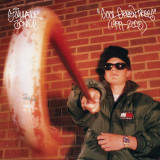
The cover photo is a picture of Sam standing on his back porch in the latter part of 1998, just before he got his first sampler. He was 13 years old, in 8th grade. His dad took the picture with his 35mm film camera: "I actually wanted to be pointing my dad's .22 pistol at the camera lens but he wouldn't let me. He gave me an old walking cane to use instead. The Tommy Hilfiger puffer jacket came from the lost and found at William Fleming High School where my mom worked as a secretary. I was thrilled when she brought it home because we never spent money on expensive name brand clothing like that - we were for the most part strictly a sale rack, bargain bin, thrift store, yard sale, flea market kind of family when it came to clothes. My watch is some cheap off-brand fake gold department store watch." Mastering for this vinyl edition was overseen by Be With regular Simon Francis and it was cut by the esteemed Cicely Balston at Abbey Road Studios to be pressed in the Netherlands by Record Industry.
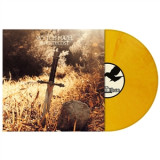
Over the past near-decade, Lancashire's medieval metal phenomenon WYTCH HAZEL have been honing an uncommonly wholesome, rustic and devotional brand of timewarped hard rock that's all their own, with 2016's Prelude and 2018's II: Sojourn summoning to mind fevered images of Robin Hood and his Merry Men grooving to Jethro Tull and Thin Lizzy. Yet within moments of pressing play on their third LP, III: Pentecost, the musty mystical minstrelsy takes a back seat in favour of a rich, sumptuous, anthemic late-night drivetime vibe, passionately embracing the most high-end smash-hit classic rock and metal circa its late 1970s heyday. "I thought I put a lot into the second album, but this album has been an absolute obsession," stresses the band leader, Colin Hendra. "Every aspect had to be as good as possible. We've gone back and forth, Ed was tinkering with it for months on end. There's quadruple tracking going on with the rhythm parts, then we've doubled, tripled and quadrupled all our lead parts to get that richness and fullness of sound, all meticulously planned with pages and pages of organisational notes. It wasn't just `get in the studio and see how it goes!'" he laughs. "One day I did 14 hours of vocal recording. All vocals are double-tracked, I can't express how much hard work that is. The last album feels like a breeze compared to what we've done with this - and I don't plan on ramping it down!" Musically there are gorgeous self-professed touches of Black Sabbath, Blue Öyster Cult, AC/DC and early Scorpions_"With the soloing I was trying to go for Michael Schenker" beams Colin_while the scampering headbanger I Will Not initially took a nod from Angel Witch, who Hendra was helping out on second guitar back in 2015 when the track was composed, before studio treatment made it sound "a lot more Wytch Hazelly". But perhaps the most lateral comparison is to a band from the opposite spiritual realm, with Archangel an explicit homage to Swedish faux-Satanic devil cult Ghost. "I find them fascinating, Ghost; musically great, the songwriting is spot-on," enthuses the frontman. "We share an intrinsic connection, with Bad Omen honcho Will Palmer being the person who discovered us both. "Music is created for all, it's a common grace for everyone," he affirms, "which is why the music that shows the glory of God the most, in my opinion, is not music created by Christians. It's Black Sabbath!"
VERY LIMITED 2025 REPRESS ON BEAM OF LIGHT VINYL .
Everything changed for The Beths when they released their debut album, Future Me Hates Me, in 2018. The indie rock band had long been nurtured within Auckland, New Zealand’s tight-knit music scene, working full-time during the day and playing music with friends after hours. Full of uptempo pop rock songs with bright, indelible hooks, the LP garnered them critical acclaim from outlets like Pitchfork and Rolling Stone, and they set out for their first string of shows overseas. They quit their jobs, said goodbye to their home town, and devoted themselves entirely to performing across North America and Europe. They found themselves playing to crowds of devoted fans and opening for acts like Pixies and Death Cab for Cutie. Almost instantly, The Beths turned from a passion project into a full-time career in music.
Songwriter and lead vocalist Elizabeth Stokes worked on what would become The Beths’ second LP, Jump Rope Gazers, in between these intense periods of touring. Like the group’s earlier music, the album tackles themes of anxiety and self-doubt with effervescent power pop choruses and rousing backup vocals, zeroing in on the communality and catharsis that can come from sharing stressful situations with some of your best friends. Stokes’s writing on Jump Rope Gazers grapples with the uneasy proposition of leaving everything and everyone you know behind on another continent, chasing your dreams while struggling to stay close with loved ones back home.
"If you're at a certain age, all your friends scatter to the four winds,” Stokes says. “We did the same thing. When you're home, you miss everybody, and when you're away, you miss everybody. We were just missing people all the time.”
With songs like the rambunctious “Dying To Believe” and the tender, shoegazey “Out of Sight,” The Beths reckon with the distance that life necessarily drives between people over time. People who love each other inevitably fail each other. “I’m sorry for the way that I can’t hold conversations/They’re such a fragile thing to try to support the weight of,” Stokes sings on “Dying to Believe.” The best way to repair that failure, in The Beths’ view, is with abundant and unconditional love, no matter how far it has to travel. On “Out of Sight,” she pledges devotion to a dearly missed friend: “If your world collapses/I’ll be down in the rubble/I’d build you another,” she sings.
“It was a rough year in general, and I found myself saying the words, 'wish you were here, wish I was there,’ over and over again,” she says of the time period in which the album was written. Touring far from home, The Beths committed themselves to taking care of each other as they were trying at the same time to take care of friends living thousands of miles away. They encouraged each other to communicate whenever things got hard, and to pay forward acts of kindness whenever they could. That care and attention shines through on Jump Rope Gazers, where the quartet sounds more locked in than ever. Their most emotive and heartfelt work to date, Jump Rope Gazers stares down all the hard parts of living in communion with other people, even at a distance, while celebrating the ferocious joy that makes it all worth it -- a sentiment we need now more than ever.
- The Devil Is Here
- Save My Life
- Still We Fight
- Wait On The Wind
- See My Demons
- Barrow Hill
- Chorale/Slaves To Righteousness
- Victory
- Angel Take Me
Wytch Hazel's stellar 2016 debut Prelude confirmed these Lancastrian apprentice wizards to be Britain's most promising new hard rock band. Two years on, that promise comes to abundant fruition on II: Sojourn, an album that moves Wytch Hazel on from the innocence and exuberance of the debut to a darker, more profound and complex place, carefully wrought into optimum shape by the band's singer, guitarist, songwriter and mastermind Colin Hendra. "I'm really into the idea of an album," notes Colin. "I don't do mix-tapes, I don't listen to singles, I'm interested in albums. I want to make a good, listenable, cohesive work, that is the whole thing." Asked what inspirations were brought to bear this time, Colin has good news, and even better taste: "I was listening to plenty of Judas Priest, Thin Lizzy and Wishbone Ash last year," remarks the frontman. "This seems to be more of a hard rock album, where the last one was more rock-folk. It's definitely more rock than folk!" The most crucial influence fully expresses itself via Les Paul guitars in sweet twin harmony through cranked Super Lead Marshalls - "Exactly the same type of amp that Thin Lizzy would have used," beams Colin - a benefit of working in James Atkinson's Hand Of Law Studio, a converted gaolhouse in Leeds. "We knew there would be a lot more great gear, more amps, more options," enthuses Colin of this productive new work environment. "We were more prepared, we planned better. I had a lot more vocals to record on this album, pretty much every song has at least three harmonies, but James is a really chilled out guy, he made it easy for us. I had a very clear idea of how I wanted each song to sound, I thought about every single aspect. I probably over-prepared for this album, and it paid off!" Wytch Hazel's proud, avowed Protestant Christianity continues to set them apart from the occult hocus-pocus of their peers, and the very title Sojourn has a Biblical inspiration: "It's used a lot in the Old Testament, people would travel somewhere to stay for a short period of time," explains Colin, comparing the idea to Wytch Hazel's development since Prelude. "We're going to reside here with this sound for a while, and the next album might not sound the same. Come and have a listen to this aspect of Wytch Hazel - it's a temporary stay. We'll be here for a while, then there will be something else. I'm always writing, it's a constant stream, but I'm always trying to raise the bar, because I don't want the next album to be not as good as the other ones!"
- Tired Of It
- Reality Is Calling
- Graveyard Island
- Look Up
- Murder Town
- Don't Look Back
- Johnny Aggro
- Bowling Green Lane
- Dover Street
- Jsa
- Monsters
- On The Radar
LTD. US EDIT.[21,22 €]
Grade 2 is a UK punk band from the Isle of Wight, formed in 2013. The young three-piece is made up of Sid Ryan - Bass & Lead Vocals, Jack Chatfield - Guitar & Vocals and Jacob Hull - Drums. Their music can be described as a classic punk sound, hard and fast whilst also including melodic guitar and vocal parts. Influence taken from classics such as The Clash, The Jam and The Stranglers. While touring, the band met Lars Frederiksen (Rancid) who took an interest in Grade 2 and ultimately played some of their music videos to his bandmate Tim Armstrong. Armstrong liked what he saw and not only agreed to produce the band"s forthcoming record but signed them to his label, Hellcat Records. Last December, Grade 2 flew to Los Angeles, and over the course of two weeks, tracked the dozen songs that comprise Graveyard Island. "He"s one of the most efficient people we"ve ever worked with. He knows exactly what he wants. In the studio, he wanted to capture how we sound onstage, so we were tracking songs live with a scratch vocal," vocalist/bassist Sid Ryan said on working with Armstrong.
- Things
- Train On A Hill
- King Of A Land
- Son Of Mary
- Highness
- Pagan Run
- The Boy Who Knew How To Climb Walls
- He Is True
- All Nights, All Days
- How Good It Feels
- Take The World Apart
- Another Night In The Rain
Limitierte Auflage, weißes Vinyl + 36-seitiges Booklet. „King of a Land“ ist ein tiefgründiges und bewegendes Selbstporträt eines der beständigsten und beliebtesten Songwriter der Popmusik. Einzigartig und mitreißend zeichnen Yusufs neue Musik, Texte und Melodien ein lebendiges Bild einer Welt, in der kindliche Träume wieder in greifbare Nähe gerückt sind. Sein poetisches Geschichtenerzählen lädt den Hörer auf eine Reise zu den Toren eines alternativen Universums ein – in dem es durchaus Happy Ends gibt. Von der herrlich unerwarteten Hardrock-Intensität von „Pagan Run“ über die Tschaikowsky-inspirierte Orchestrierung von „How Good It Feels“, die zarte Akustikballade von „He Is True“ bis hin zum treibenden Phil-Spector-Gospel-Vibe von „Highness“, dem rollen-Americana-Groove im Stil der Traveling Wilburys von „All Nights, All Days“ und dem kunstvollen, atmosphärischen „Son Of Mary“ ist „King of a Land“ ein episches Werk. Das Album-Artwork stammt von Peter H. Reynolds, dem preisgekrönten Kinderbuchillustrator.
Neben dem Cover hat Peter für jeden Song Illustrationen zu den lyrischen Themen des Albums erstellt, die im 36-seitigen Vinyl-Booklet enthalten sind.
- 1: Dernier Recours
- 2: Cercle Vicieux
- 3: Lève-Toi
- 4: Per La Vita
- 5: Montréal
- 6: Pfa
- 7: Chemin De Croix
- 8: Sans Limite
- 9: La Nuit
- 10: Combattre
- 11: Territoire Hostile
Initially influenced by the skinhead scenes of France and Italy, their new LP “Renaissance” borrows from sounds outside the subculture, orchestrating harmonies to unite the punks, skins and moshers. The comparison to L’INFANTERIE SAUVAGE is undeniable with odd song structures switching from slow melodies to fast punchy pogo beats. However on this LP, there is a subtle influence of early American hardcore bands, adding more stomping rhythms and upping the pace of the songs. Renaissance is an excellent example of how a band can evolve their sound without losing the aspects that define them: razor sharps riffs, unexpected disco drum syncopations and, of course, orchestral “Ohhs”. Every song verges on an anthem that will get stuck in your head for days.
- Un Pays
- Une Reine Et Un Roi
- La Nuit Me Mord
- Buisson Ardent
- Mon Amie
- Et J'en Oublie
- Entre Le Oui, Le Non
- Dans Les Gares
- Tout Ce Que Je Sais De Toi
- La Sentence
- Faut-Il
- L'onde
Few lovers stay together for life-and beyond. Just as rare are the artists who manage to keep alive the burning flame of their creative desire. Areski Belkacem is one of those who nurtures in his heart a fire that never dies out, a passion that burns just as intensely for music as it does for his beloved. As long as the message eventually reaches its intended recipient, he cares little for how long the journey takes. His new album, Long courrier, is proof of this: twelve unreleased songs that flow like a love letter set to music. In nearly 60 years of career, Areski Belkacem has released only three solo albums-intimate and deeply personal works that feel like whispered confidences to a loved one. In an era where commercial demands shape much of music production, these records exist solely to fulfill his need for expression. The late music lover and producer Jean-Philippe Allard once said, "Areski goes against the tide-he always seems to enjoy taking forbidden paths!" In Long courrier, Areski tenderly expresses love for his homeland and his beloved. He believes in the power of sensuality, the sacredness of pleasure, and the hidden beauty in every person despite life's hardships. He shows a fraternal gaze toward outsiders and sings of inner journeys, doubt, vows, eternal bonds-with a voice as warm and bright as a loving smile. He honors the mystery of the union between music and the French language. Blending his familiar chaabi rhythms and guitar with piano, accordion, bass, and electric guitar, he plays alongside the same musicians who have accompanied him for over two decades on stage-supporting the woman he shares both stage and life with: the incomparable Brigitte Fontaine.
- 1: Little More Rope
- 2: Automobile
- 3: Evil Eye
- 4: Hurting Side Of Love
- 5: Hard To See
- 6: Last Time You Let Me Down
- 7: Can’t Call That Love
- 8: Ransom
- 9: Changed Her Mind Again
- 10: The Neighborhood
- 11: Mighty High
Part 1[30,21 €]
The Cold Stares are from Evansville, Indiana, formed in 2009. The duo (now recently a trio) has
released seven studio albums. The band's 2012 release A Cold Wet Night and a Howling Wind sold 25,000 copies and reached #1 on Amazon Music's Blues Rock albums chart. For almost ten years, The Cold Stares had toured the world relentlessly as a duo, blowing away
audiences across the US and Europe with a fierce, blistering live show that belied their bare bones,
guitar-and-drums setup. In 2023 the band began embracing a whole new kind of chemistry and
launched into their next chapter, adding a third member and channeling the classic power trio sound they grew up on with their explosive acclaimed album,
Voices. Working off the international success of Voices which was voted one of the best albums of 2023 by Classic Rock Magazine, The Cold Stares went into Memphis Magnetic Studio
in Memphis Tennessee and recorded the band’s next chapter and progression, the sprawling album The Southern. Now they are back with The Southern Part 2
which has already bolstered the
blues rocking tracks “Automobile”
and “Little More Rope”.
- A1: Crashing Cars
- B1: Never Smile
‘You are behind the damn wheel every day and you don’t even know it’ , weightily remarks Powerplant’s band leader Theo Zhykharyev on the reading of his latest single. London-based project signals the return to signature formula of marching drum machines and wailing synthesisers, matured by life experiencing of prolonged touring. ’Car is life, brother. Sometimes you drive it, other times - the car drives you. And, statistically, we’ll all see the airbags go off sooner than later as consequence of choices made by us or onto us, consciously or not.’
Crashing Cars breaks out the gates to the heavy low end driven dance floor. ‘I was listening to a lot of Bladee when I wrote it and needed a similar thick kick to get you moving’, says Theo. Its an emotionally loaded cannon of a track that will keep you in its grip until it has run its course and told its story. Yearning from connection unfulfilled, rings out through the heartbroken and weeping synth and choir lines. The ever-morphing and dynamic bass works in tandem with razor sharp guitars. The instrumentation, through combined ‘no looking back’ forward charge and immediacy, conjure a manic and emotional forward momentum, which rings out in the song’s lyrics. The vocal performance ranges from the trademark Powerplant goblin squeaks, to more mature, tour-hardened singing. On a sonic aesthetic level, Crashing Cars vibrates in a familiar fashion to Powerplant’s biggest hit Dungen. However, this time far less playful and harder hitting. Described as the fallout of “avoiding, chasing and running away”, lyrically it paints a dead end in human relationships concluding it car-crash heading for the scrapyard. The song concludes with a loaded four line spoken word poetry segment, that hangs over the fleeting outro.
The B side of the single, Never Smile, rolls the speed back, but throws in jangly guitar hooks and bouncy bass lines. Zhykharyev’s vocals sit in a lower register, hence are more stoic and melancholic. If this track had to be a day of the week, it would be a calm, introspective Sunday. With lyrics about looking into evil omens, the sky and reading people as ‘not something different’, it paints an ambiguous, but heavy conclusion about the world and its people. It tells a story about circumstantially settling into an identity and playing the assigned part for the convenience of the external world. It’s easier to fit than to stand apart. It's a perfect balance of mid-tempo radio-rock that builds and changes, before exploding into a shaggy guitar solo, only to go into an unexpected ethereal outro and this 7”s crescendo.
‘Both of these songs are kinda old now, sitting at around 4 years old. And although I haven’t changed the lyrics since then, I somehow find new meaning in them as time goes on. Being Ukrainian and going into the fourth year of the full scale Russian invasion back home, the chorus “my death to you - a better price to pay” makes a lot of sense looking at how the world powers are trying to spin the devastation of my people for a quick profit and an easier life for themselves. This single coming out now at this very point in my life feels both profound and very ironic. Life never ends’, summarises Zhykharyev.
2025 Repress
A tale of paramount love for machines and the inextinguishable power of subjugation that lies in these button-studded boxes teeming with cabled bowels that feel so intimidating to the uninitiated, Italo Brutalo's longed-for debut album "Heartware" is a 12-track voyage across 25 years of intense synth collecting, fiddling,
composing and endless loving for audio synthesis and the art of how robots make human bodies jack.
Throughout the twelve cuts that compose "Heartware", a feeling of retro-gazing, candidly playful glee prevails. Looking right in the eye of the era when dazzling flipper visuals and static-filled VHS glitches
reigned supreme, Italo Brutalo invites us to witness first-hand his own textbook smorgasbord of fast-wheeling arpeggios and vocodized hoodoo ("Heartware", "Reach Horizon"), dystopian digital sunsets by the beach ("I Feel Lonely"), early hip-hop-informed whackin' n' thumpin' ("Analog Bars") and the slo but hard churn of a robot heist score ("Nobody Moves").
A lush tapestry of woozy exotic pads set in contrast with a deft and aggro drum programming ("As Above So Below"), followed by a new-beat oriented hammer-drop that shall leave no raver unscathed ("Heat of the Knight"), Italo Brutalo shifts the scope to radical effect whilst maintaining that cohesive headspace flush with the iconic 80s-to-90s-sourced assets. The hardware used in the making of "Heartware" is obviously the star here, and the inner sleeve pays tribute to that: the ideas behind the album have been there waiting to find their way out for over twenty years!
From adrenalin-boosting fractals of keyboard razzle-dazzle ("Chemical Element") to straight out pumping EBM primed for hi-octane mosh pits down the basement ("You Are Welcome"), via polyrhytmic percs-driven assaults and sizzling hot synth-smithery ("Into a Sampler"), the pressure levels never falter. Yet, Italo Brutalo sure knows how to weave further oneiric, softer narratives for your mind to frolic in unhindered ("Dream Machine") and rounds it all off with a total, space-opera'esque epic bound to have you spinning out of orbit into the great unknown ("Eternia").
"Heartware" is released in a neat double-vinyl gatefold package presenting the concept and machines involved in its making, including a twelve-page booklet featuring Italo Brutalo's key pieces of gear.
- A1: Pluto
- A2: Lucky
- A3: Rise
- A4: Every Color
- B1: Baby Mama
- B2: Junebug (Feat. Jpegmafia)
- B3: Lose My Focus
- B4: We Should Move Somewhere Beautiful (Feat. Arima Ederra)
- B5: Kid
- C1: 16 Candles (Feat. Ganavya)
- C2: Smile For Me
- C3: Afternoon Tea With The Auroras (Interlude)
- C4: Little Bird
- C5: Water
- D1: Sun Don't Leave Me
- D2: Lose My Focus (Feat. Umi)
- D3: You're So Good To Me
Where the Butterflies Go in the Rain is the third studio album from the enchanting songstress, Raveena. Blending powerful storytelling with early 2000s pop, Where the Butterflies Go in the Rain sees music continuing to play the central role as both a catalyst and medium in her personal and creative growth. With newfound clarity, Raveena delves into themes of new love, maturity, comfort, and domesticity that reflect the peace of mind she currently inhabits. Speaking on this evolution and how it informed the album’s creative, she shares, “Butterflies are so delicate that they have to hide in leaves and flowers until the rain passes so that their wings don’t get crushed in the rain. I felt like that was kind of a metaphor for where I was in my life. I needed to go back to comfort—to deep rest—and stop weathering storms.” On the most instinctual level it’s an album that should conjure simple pleasures like the joy of a summer road trip with loved ones.
Embracing the sounds of classic artists like Fleetwood Mac, Brandy, Bob Marley, Joni Mitchell, and Marvin Gaye, to name a few, Where the Butterflies Go in the Rain draws inspiration from people who, “are really good at capturing the beauty and loss of life in the same breath,” she describes. In her signature style, Raveena seamlessly unites that expansive songwriting with traditional Indian instruments and feel-good early 2000s pop hits —putting forth a work that’s more unabashedly herself than any that’s come before.
Raveena reflects on her forthcoming album, “I don't think I've ever understood a record so well before—It wasn’t like the process I used to have with past albums where I was more anxious about being at my best. This time, it was all intuition, and I knew the album was right when I finally had the feeling of rest.”
The deluxe release sees the addition of 3 tracks. Sun Don't Leave Me - contemplating the feeling of wanting to hold onto one more beautiful sunset, one more passionate embrace, before things change again and hard times strike again - and a reimagined version of Lose My Focus with UMI, bringing fresh energy to an album that’s more unapologetically Raveena than ever.
- 1: Cheryl!
- 2: Brutalised Robotics
- 3: Talk, Clown
- 4: Notopia
- 5: Your Love Shines Down Like A Supernova’s Death
- 6: Rights Down 50
- 7: What Ya Gonna Do With Yr Days
- 8: Light Touch Of The Man Spreader
- 9: Golden Cerebellum
- 10: I Only Cry From A Distance X Time = Frustration
- 11: Blistered Eyeballs
Dez Dare launches into 2025 with his 5th album, ‘CHERYL! Your Love Shines Down Like A Supernova's Death'. Blending his unique mix of existential wordplay and experimental riffage to create an album that is at arms with itself while cohesive; cheeky and upbeat, simultaneously breaking our hearts. How often do we think about what we miss when we are distracted by shiny things? While fencing with social media, long winded stories, dreams of other lives, unnecessary toys, and irrelevant social experiments with happiness, we miss the things that make up our world. This album looks at those morsels of time and the bits that fill them, soaking existence… as well as manspreaders. Those people should be added to the 7th circle of hell… or suburbia. Either is probably a similar commute!
Dez Dare (AKA Darren Smallman of labels God Unknown, BATTLE WORLDWIDE, Low Transit Industries, and bands Thee Vinyl Creatures, The Sound Platform, Warped) grew up in Geelong, Australia, where he became involved in the local punk and rock scene in 1990. Sharing stages with the likes of 5678s, Cosmic Psychos, Fugazi, The Dirty Three and the Hard-ons, before shifting his focus to running record labels. In the 2020s we see Dez Dare take form in a spare room in Brighton, UK, where Dez starts building his own studio and producing music and videos that have been described as "sounds like MONSTER MAGNET and DEVO caught in a drug bust… highly unique and highly recommended" by MAXIMUM ROCKNROLL Nick Odorizzi to The Wire’s Edwin Pouncey "dynamically armed with a ten-pronged set of lyrical barbs and musical hooks that, once heard, sink deep and hold fast" to Crossfire Metal "minimalistic, electronic psychedelic hippie poop that is only bearable with a hell of a lot of acid, angel dust and LSD". On this album Dez was joined by Laura Loriga on backing vocals and Jonny Halifax on backing vocals and lap steel, expanding on the sound of previous records and adding a new dimension to his trademark weird-n-roll.
[a] 1.Cheryl! [Loading...
- 1: Solastalgia
- 2: Dark Harvest
- 3: Radical Tenderness
- 4: Hey, How Was Your Day
- 5: River To The Real
- 6: Holy Days
- 7: My Maker
- 8: Death Doula
- 9: No More “I Love You’s”
- 10: Glowed
- 11: Nothing Lasts Forever
DESCRIPTION
Nick Mulvey’s fourth studio album, Dark Harvest (Pt. 1), out 6th June via Nick’s own independent label titled ‘Supernatural Records’. It also marks the release of its first single, ‘Radical Tenderness’, and the announcement of the Dark Harvest - World Tour, with dates across UK, Ireland, Europe, North America and Australia. Arriving three years after his previous album, New Mythology, Nick Mulvey is back with Dark Harvest (Pt. 1). The intervening time has been one defined by loss, challenge, independence and empowerment for Nick, who has undergone a transformative period to arrive here, embarking on the release of some of his most profound songs to date. Speaking on the album, Nick explains: “For me, Dark Harvest Pt. 1 tracks the descent and grief that hit me in the last three years, during the losses and challenges I faced. Often brutal, these years have tenderised me, as I know they have others. Making this music carried me through.”He continues, “Back when I was at the hardest point, when I was on my knees, a friend said to me, ‘there will be a ‘dark harvest’ to all of this Nick, there will be treasure from these struggles.’ And she was right.”
Repress!
On New Year's morning, Cousin took a weary-eyed walk... ‘HomeSoon’ he thought, whilst cutting to the path by the Angophora Forest. As he made it down to the overgrown sidewalk, he caught a sudden sense of warmth from the surrounding flora. On closer focus, it was as if the plants and flowers had come alive...pulsing forward down the path as they bounced, smiled, and sneered all around him. Against logic, he was struck by an almost Garsonian desire to communicate with them.
This feeling lingered, persisting through several studio sessions. The music written over this period makes up this EP. How directly this experience informed the music is hard to say. What effect it had on the surrounding plant life is even harder to tell… we do hope, however, through listening to it, you’re a little more tuned in to them.
Originally released in 1973 by New York-born soul singer Melvin Bliss, 'Synthetic Substitution' was never meant to change music. A B-side to his single 'Reward', it quietly slipped out on Sunburst Records i and then, years later, exploded.
With 'Funky Drummer' sticksman Bernard Purdie's drums at its core, it became one of the most sampled tracks in hip-hop history, forming the rhythmic backbone of cuts by De La Soul, Mobb Deep, LL Cool J, Justin Bieber and hundreds more. This new release gives the track its due, with a sharp remaster and a respectful rework from Just Blaze. The original still hits hard i a slinky, minimal soul groove with impeccable swing and eerie vocal calm. On the flip, the 'Just Blaze Take 6 Master Mix' lifts that legendary break into widescreen, looping and layering it with warmth and flair. It's not flashy, just smart i honouring the DNA while letting it breathe. It's a fresh pressing of a foundational beat, and a timely reminder of how deep hip-hop's roots run. Whether you're crate-digging or just craving drums with history, this is as vital as it gets.