ISAN’s Robin Saville reveals an ambient album, which merges the Electronica aesthetics of his main project with field recordings, drones and acoustic instrumentation.
A lot of things have been written about what happens to the mind when the body starts moving. Instead of reciting poems of the inevitable self-help books, let’s get straight to the point: For many, taking walks on a regular basis is both liberating and empowering. It is not necessarily so much about the exercise, but rather finding one’s own rhythm in life. Robin Saville – of ISAN fame – is such an ambler His walks inspired him to base his third solo album – his first one for Morr Music – on the out of the way places he came to see and experience while being out and about.
Clocking in at just under 40 minutes in total, "Build A Diorama" is both a subtle culmination and a poignant antipode to what Saville has achieved together with Antony Ryan as ISAN. While the aesthetics might seem similar in places, Saville opts for a decisively different pace when it comes to writing and producing. Progress is steady, and change, however, is slow – like looking at a diorama for a long period of time in the ever so slightly changing light or as a flaneur focussing on one particular spot, a found object so-to-speak, waiting for the mind to orchestrate it appropriately, giving it sense and meaning.
Built around quiet field recordings, Saville’s six compositions transform this highly personal and, therefore, difficult-to-convey experience into a comprehensible exploration of beauty. Where ISAN almost exclusively uses electronics, Saville deliberately expands this well-established palette with acoustic instruments like bass guitar, chimes and glockenspiel, aiming for an even more suitable musical manifestation of what the walker sees and feels once he fully engages in his passion. Ranging from blissfully pulsing pads allowing for complete associative freedom ("The Deepdale Halophyte Economy") to the playful minimalism of an orchestra dominated by busy bells ("Bosky"), Saville’s "Build A Diorama" is not just a valuable addition to his musical output, but an essential audio guide for those striving to explore, learn and understand.
Cerca:howe
Bram De Looze is a Belgian pianist and composer whose distinct musical vision has found its way through both solo projects and collaborations. His unique technical skill and musical maturity have earned him considerable critical acclaim back home as his work spotlights his far-ranging interests - from traditional classical piano music, to solo improvisations that have often been compared to Keith Jarrett and Jason Moran. On the 21st February 2020, Sdban Ultra will release his highly anticipated new solo album, 'Colour Talk'.
De Looze made his entrance onto the national jazz scene with LABtrio, formed in 2007 with Anneleen Boehme and Lander Gyselinck, and he immediately impressed, flirting with urban jazz, electronics and hip hop.
After a period of studying abroad at the New School for Jazz and Contemporary Music in New York, where he studied with Uri Caine and Marc Copland, in 2014, De Looze launched the international septet, Septych, that once again stressed his affinity for jazz, classical music and improvisation. With diverse and astounding improvisors like Daniel Levin, Lester St-Louis, Robin Verheyen, Gebhard Ullman, Bo Van Der Werf and Flin Van Hemmen, it was the start of an explorative musical journey.
Over the past few years, De Looze could frequently be heard with kindred spirits like Stephane Galland, Dre Hocevar and Antoine Pierre but it was a visit to the historical collection of pianofortes of Chris Maene that inspired De Looze to release his first solo album 'Piano e Forte' (2017), and it received critical acclaim for its creativity, spontaneity and passion. He would later garner further acclaim working alongside fellow Belgian Robin Verheyen and American rhythm painter Joey Baron with whom he recorded 'MixMonk' (2019), a tribute to the legendary jazz pianist Thelonius Monk.
Bram De Looze's solo career took off in an unexpected way with 'Piano e Forte', a project for which he approached historical instruments from a contemporary perspective. The switch to the Chris Maene Straight Strung Grand Piano for 'Switch The Stream' (2018) indicated a renewed search for movement, evolution and introspection. His latest solo project 'Colour Talk', continues this trajectory with another revolutionary piano model, designed by lauded architect Rafael Vinoly, and a continued attempt to renew from within.
On 'Colour Talk', what you hear is a musician who has freed himself from stylistic constraints and limitations. While still rooted in jazz, classical music and free improvisation have found a new balance, a coexistence that enables the pianist to express himself with a new vigour. Switching between shorter pieces that feel like curious, unresolved puzzles and more extended explorations, 'Colour Talk' is once again an ode to (re)invention in the grey zone were the classical idiom and improvisatory urges meet, with the 13-minute tour-de-force of 'Hypnosis' as one of several undisputed highlights.
If you asked De Looze about his current position as an artist, he would probably tell you that it's all about forward movement and the need to keep evolving, about a trajectory as work-in-progress. However, if you consider 'Colour Talk' as a freeze frame of where De Looze is at, it is hard not to consider it a highlight in a career that should have some more surprises in store.
Zenit is a jazz ensemble from Krems in Lower Austria, founded in 1976 by Hannes Treiber and Willi Langer. Their music was celebrated locally, but to reduce them to their local fame would be a shame: After all, their first two LPs, Stimmungswechsel (Change of Moods) and Früchte (Fruits), quickly gained them a much wider audience of discerning listeners. Arguably, however, Zenit’s third and final LP Straight Ahead is the most special of their records. It initially came out in 1986 on the producer’s label Spray Records, and is today one of the hardest-to-find Austrian jazz records. Its centrepiece is the infectious slow-motion disco piece “Waiting,” with vocals by American jazz singer Linda Sharrock. Effortlessly bringing together pop, soul and new age vibes, this is a record that is as unique as it is difficult to date. Does it sound like from the 80s? We’re not sure. To our minds at least, it could also be from the future.
The second EP of remixes from Man Jumping's reissue on Emotional Rescue features luminaries Bullion, Reckonwrong, Gengahr and William Doyle with their reversions of songs from the Jumpcut album.
Nathan Jenkins aka Bullion follows his recent rerub of Thomas Leer (ERC072) to provide two remixes. His remake of In The Jungle keeps the originals (leftfield) dance floor roots, but sprinkles the ubiquitous warm glow and off kilter fun(k) that he evokes; while his retake of Walk On, Bye drifts back, highlighting intricate percussion; congas, bass and vocal atmospherics along some breezy swing.
Reckonwrong is next; turning the bossa vibes of Sqeezi into his own new wave meets italo reversion; topped with his unique 'under the cupboard stairs' vocals. Funky, driving, this overlooked star adds to his cannon for Whities, Pinkman and DEEK.
After a string of impressive releases for Trangressive / Beggars, Gengahr make a surprise addition, lifting Down The Locale from deceptive beginnings to anthemic heights, adding echo-laden guitar and vocals to the original's underbelly, before a bass break and return lifts to the heavens.
Finally, William Doyle provides perfect closure. Moving away from his East India Youth moniker (XL Recordings), his output has drifted towards ambient introspection, however, here points to addtional layers; rebuilding Belle Dux On The Beach with added bass, guitar, drums and finally vocals that culminate in a prefect 'to the skies' outrospection.
Paella Hair Sex is the beginning of a new chapter in Alexis Raphael’s musical story. The first two EPs will be from the label boss himself, kicking off with ‘Digital Music Almost Killed Me EP’. Then attention turns to new artists joining the PHS family - please email demos to paellahairsex
Alexis came to prominence in 2011 with his seminal track ‘Spaceship’ and followed with a series of lush, sexy and warm house records that gained universal praise and put Alexis’ sound all around the world with fans from Australia to Peru. As the music and scene evolved, so too did Alexis’ sound becoming somewhat harder whilst still retaining some of his signature elements; references to acid house, hardcore and jungle, deep pads and sweet vocals.
However, by 2016, Alexis had become somewhat disconnected with the path of the music and scene he was involved in. It took a long time to put together what was wrong, but what followed was a three year path to this point now of launching PHS.
A return to and playing vinyl at the end of 2016 was the first step to finding his love again and feeling good about the music. This was followed by a halt to gigs where the music expected from him was different from what he wanted to play and a feeling of disconnect from the crowd. Then came the gradual move away from constant social media output.
The final and most important part of this transition was going back to making music simply without any thought of where it can fit or who can play it, or what label it will go into. In essence this is a return to how Alexis started - making music solely from the feeling inside.
And so PHS returns to some of that more sexy, emotive house music that Alexis was originally known for, but with a fresh sound for the new decade.
Paella Hair Sex is set to be a representation of the music Alexis loves, both his own and other artists.
The first EP: PHS001 – Digital Music Nearly Killed Me kicks off with the main room groover ‘Respect & Belief’ . A jazz-infused bass line underpins chunky rolling beats, punctuated with vocal samples calling for unity and love and laden with floating classical pianos and warm pads. A definite party banger !
.
The second A side track “Sex Appeal” references back to Alexis’ original signature House sound. An emotive and sexy track bound to get temperatures rising on the dance floor .
Flip to the B-side and find the after party brother of Respect & Belief - ‘Liberty’. A seminal minute long speech paves the way to the single breakdown moment of the track when lush Jupiter-8 chords make way for an epic moment as the beats drop back in. A unique piece of minimalistic House music for the after hours .
The bonus track, House of Chorge. ends the EP with a bang. An upbeat cheeky groove that stays in your head long after the turntable stops spinning. But who is Chorge.?
Cocada, a project which emerged as a diffuser of the musical talent present throughout Latin America, quickly spread its sounds to the four corners of the world, becoming a great initiative for electronic music. We couldn't be happier by this time, Cocada's first release as a record label is born with some respected artists and a beautiful story behind.
The wonderful artwork was illustrated by the Brazilian artist Paula Dornelles, who dedicates herself to the production of experimental artworks, she was able to convey through all her creative potential the depth of the meaning present in the word "freedom", a small sample of Latin American talent also in the visual arts.
On the album, who begins the work is the Brazilian duo, Diogo Vaille and Marcelo Abreu aka Bruce Leroys, with "Liberdade" (Original Vocal Version), a rework of a classic MPB song. The artists managed to perfectly merge the melancholy voice present in the song with a deep and dense bass line, bringing all the emotion present in the lyrics, causing goosebumps.
However, the duo isn't alone in this release. None other than Ricardo Villalobos has also left his trademark with a great remix, featuring fuller grooves and inserting multiple textures for the track.
Dauw welcomes back the California based r beny to the label for his new album “echo’s verse”. It forms the follow-up of his acclaimed “saudade” album (selected as one of the best ambient albums of 2018 by Fact Magazine).
“Echo’s verse” forms no exception on that regard and continues along the same melancholic lines of his previous work. However, whereas the initial albums were much more centred around feelings of loneliness, isolation and solitude, the new album clearly moves away from a sole focus on sad and distressing emotions. “echo’s verse” touches the other side of the spectrum as it is about emotional connections, bonds and not feeling alone in the universe.
- A1: Brian Bennett - Canvas
- A2: Wil Malone - Death Line
- A3: Syd Dale - Huckleberry Fine
- A4: The Harry Roche Constellation - Spiral
- B1: The Ivor & Basil Kirchin Band - Jungle Fire Dance
- B2: The Laurie Johnson Orchestra - The New Avengers Theme
- B3: James Clarke & Sounds - Folk Song
- B4: The Reg Tilsley Orchestra - Strike Rich
- B5: The Barry Gray Orchestra - Joe 90
- C1: Keith Mansfield - Soul Thing
- C2: Ccs - Whole Lotta Love
- C3: Syd Dale - Artful Dodger
- C4: John Gregory & His Orchestra - Jaguar
- D1: Nick Ingman - Down Home
- D2: Barbara Moore - Steam Heat
- D3: Alan Parker - Angels
- D4: Alan Moorhouse - Face Up
The 36 track 2CD album comes with 50-page book featuring text, biographies and photography. It also comes in a limited run two volume double-vinyl super-loud super-heavy gatefold sleeve editions. Compiled by Stuart Baker (Soul Jazz Records) and sleevenotes biographies by Jonny Trunk (Trunk Records).
TV Sound and Image features British composers who worked in television, film and music libraries the second half of the 20th century.
Aside from John Barry, whose work on the James Bond films made him a household name, or Tony Hatch and Laurie Johnson, the majority of composers featured here - Simon Park, Keith Mansfield, Reg Tilsley, Syd Dale, Keith Papworth – remain relatively unknown. And yet ironically they have created some of the most recognisable songs in British popular culture, their music widely disseminated on television.
A quick role call of these would include Neil Richardson (who composed the theme tune to Mastermind) and Barry Stoller (who wrote Match of the Day). The Simon Park Orchestra’s Eye Level, theme song to the BBC series Van der Valk, reached number one in 1973. CCS’s cover of Led Zeppelin’s Whole Lotta Love was the theme tune to Top of the Pops. And so on.
This album is not however a stroll through the TV memories of the mind, but an exploration of the serious contribution that these creative musicians have on the landscape of popular music in Britain.
Here then is a guide to the amazing music of many of the composers (both well-known and obscure) responsible for some of the most widely known music ever to come out of Britain in the second-half of the 20th century.
Reviews:
Quietus
Der Spiegel: "spannende Klänge ... die oft funky und immer lässig klingen"
"thrilling sounds.... often funky and always chilled"
New Zealand Herald: ***** "Every track is a killer... This is more than just music to mooch too."
Irish Times: **** "downright funky"
Volkskrant: "Ze leverden spanning op maat, die onbekende makers van fenomenale Britse film en tv-muziek. Door de cd TV Sound and Image opnieuw in de aandacht"
Evening Standard: "deeply funky"
Uncut Magazine "excellent 36 track set ... welcome additions to your collection"
Q Magazine: ****
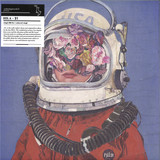
"21" is the well-crafted, sharp and original first album by the duo HILA, composed by American cellist Artyom Manukyan (who already worked with Kamasi Washington, Daedalus, Flying Lotus, Run DMC, Gretchen Parlato, Raphael Saadiq, Clive Lowe Mark...) and french producer Dawatile.
The combination of jazz, Los Angeles beat-scene and the vibrations of 80s and 90s Soviet Armenia make it a striking and unprecedented fusion. These kind of nostalgic and unconventional references forcefully shake the codes of mainstream culture to create a sincere, raw and intimate expression.
"HILA" was born from a spontaneous and intense creative impulse between Artyom Manukyan, a Los Angeles-based Armenian celloist and his partner in crime, David Kiledjian aka Dawatile, a French multi-instrumentist of Armenian descent. This project is proving to be a true master stroke given that it only took 21 days for the duo to make it a reality.
"HILA" was made in less a moon cycle but captivates and electrifies audiences upon its first outings. "H.I.L.A" colors the warmth of the Californian "High" with Armenian vibes. The artists chose this name for their creation since both have a close and valuable connection to these locales. This journey began in 2007, on the day Dawatile went to Yerevan, the capital of this small country in the Caucasus mountain to realize a first fusion project centered around local folkloric music genres.
There he was introduced to local musicians including the Armenian Navy Band, one of the country's foremost groups in which Artyom played the bass and cello. In this context, he also met many musicians such as Tigran Hamasyan and Norayr Kartashyan. This will be the beginning of connections between Lyon, Yerevan and Los Angeles. The following year, the two artists will be be seen performing next to Taylor Mc Ferrin at the Jazz à Vienne festival. More recently, they partnered up again when the cellist, who had freshly relocated in California, invited Dawatile to produce his album. As soon as the studio’s threshold was crossed, they decided to postpone this record and create a joint project: Hay (as the Armenians call themselves) / High In Los Angeles. HILA was born at the end of these 21 days of intense creation. The association of Artyom Manukyan and Dawatile is the combination of two visions, two versions of Armenia, two personalities, the reunion of the Eastern and Western blocs.
One grew up nurtured by the sounds of hip-hop and jazz in Europe and the other by art music and Russian-influenced 1980s Armenian folkloric music before moving to L. A., Ca. The cornerstone of it all, the glue that unites everything : Armenia and music. They generate a new identity synthesizing two perceptions, their complicity transcending these cultural discrepencies. To achieve this, they will scour through images of Artyom’s childhood, within the popular culture of Soviet Armenia. Together, they revisit this decidedly retro vibe, based on the work of Caucasian groups inspired by African American music. This background is rehashed and fused with ancestral Armenian sounds. The DNA of the album "21" is molded by these dear influences.
We can also hear the ancestral sounds of Armenia, a country at the edges of both Europe and Asia. The presence on two tracks of Armenian music Master Norayr Kartashyan, infuses the languor of past melodies and traditions. These purposeful anachronistic sounds offer a fantastic depth to this powerful opus. Listening to the album, one can appreciate the successful fusion of styles and influences. Those combinations, however, manage to preserve individual identities only to enhance the art through an adamant musical dialogue.
Being driven by the urge to transpose Armenian musical traditions into a unique universe, the daring artists, offer an innovative combination by blending, for the first time, these ancestral sounds with the world of Los Angeles beat-scene and jazz. An invention largely fueled by the magic strings of Artyom and maestro Miguel Atwood-Ferguson, a pillar of the genre in Los Angeles combined. These associations resonate with a triumphant equilibrium. HILA is musical uncharted territory in which Artyom's cello strings intertwine to ignite the harmonies of keyboards, the machines, the vocals and electronic layers Dawatile pieced together. HILA plays the soundtrack of an adventure set between Armenia around the end of the Soviet era and a mysterious near future.
Artyom Manukyan grew up in Armenia in the 90s. At the time, he studied Russian classical music while learning jazz with assistance by his father, a music journalist. Being an unconditional music lover, he went on to sharpen his skills at the prestigious Berkelee College of Music. Subsequently, he’s been lucky enough to travel the world touring with numerous acts and mainly with the Armenian Navy Band. The group has fostered alacritous success honored by a BBC Award as a crowning achievement. He moved on 10 years ago and made his way to L.A. with his cello on his back. In the City of Angels, he quickly became a popular figure of the jazz and hip-hop scenes thanks to his first album "Citizen". He’s accompanied prestigious musicians such as Kamasi Washington, Melody Gardot, Daedalus, Flying Lotus, Run DMC, Gretchen Parlato, Raphael Saadiq, Clive Lowe Mark, or Vulfpeck. He released his solo album on the cello, "Alone" in October 2019.
Dawatile is a bold producer and multi-instrumentist as well as a passionate and resolute musician molded by jazz. As a versatile artist, he handles and juggles the saxophone, the keys, the bass and composition. Simultaneously, Dawatile produces cross-over projects and soundtracks for the movie industry. He, as well, has had the opportunity to be a part of many tours, including with his electro hip-hop band, Fowatile and more recently with the "Future Kreyol" trio, Dowdelin. Being the ever workaholic, he has under his belt a string of prestigious collaborations with the likes of Talib Kweli, Foreign Beggars, Roy Ayers, Tigran Hamasyan, Mathieu Boogaerts, Voodoo Game and Piers Faccini. His taste for developing new musical recipes and his know-how in production make him a much sought-after album producer. In concert, the HILA duo offers a sober, precise and rhythmic performance. "21" is an aerial and lively album taking the audience on an at times joyous and sometimes melancholic dreamlike journey. The magic of "HILA" operates at the speed of light and positions it already as an avoidable group.
Pacific Express emerged from Cape Town, South Africa in the 1970s. The band were from the so called "Coloured" community and were ground breakers in both musical and political arenas. The founder members Paul Abrahams (Bass), Jack Momple (Drums) and Issy Ariefdien (Guitar) were joined by Chris Schilder (Piano), Vic Higgins (Pecussion), Barney Rachabane (Alto Sax), Stompie Manana (Trumpet) and Zayn Adams & Kitty Tshikana on vocals for their second album "On Time" in 1978.
On several occasions the group fell foul of Apartheid laws and discrimination by the state broadcaster, SABC. On one occasion they were asked to leave the stage of an international tour by Australian act John Paul Young, because the law forbade racially mixed performers on the same stage. The promoter, management and band members all resisted and once he incident made the Australian newspapers the authorities had little choice and turned a blind eye.
And so to the music. The most important thing. The LP opens up with the slick jazz-boogie funk of "We Got A Good Thing Going On", a perfect vehicle for the vocals of Zayn and the statement-of-intent, on-point musicianship of the band.
"I Hear Music" is the first of three smooth sweet string-laden ballads to feature on the LP. The majority of the songs on the LP were written by keyboard player Chris Schilder. As well as high-craft songwriting Chris also contributes layers of effortless musicality with his Rhodes and piano. "Good Old Days" (the only cover on the LP) is next and its smooth-rock grooves swing effortlessly to the fore. The A-Side of the vinyl closes with the instrumental jazz funk of "Saturday Night".
The flip side of the album opens with the bands biggest commercial success. A sweet soul ballad penned "Give a Little Love". Stepping outside their usual sound. This hit however was not without controversy as the video was removed from the TV airways after the South Africa Broadcasting Corp realised that the group were of mixed race, which was against rules for so called local artists in public performance at the time.
"Dream" follows on with the driving jazz rock and travelling keyboard solos. "Reaching Out For Love" is a power-pop boogie groover powered by guest vocalists Erica Lundy and Kitty.
"Say The Last Goodbye" is the last of the trio of ballads. A smooth style moment sounding all the bit like a 70's US TV drama closing theme. The LP features with a funky workout where the band show off their chops and slick level of musicianship.
Besides the success in southern Africa this album became a regional hit as a pirated music cassette in Nigeria. It was also released in France and Japan.
The band would go on to record one further LP in 1979 and a single in 1981. They carried on performing however well pass that. Throughout their years together the band acted as central hub for Jazz musicians within the Cape Town area. Players as Tony Cedras, Jonathan Butler and Alvin Dyers gaining experience alongside established names such as trumpeter Stompie Manana and alto saxman Barney Rachabane.
Here at World Seven we are ever so pleased to be re-releasing what we consider the bands finest album moment.
After a digital single on Optimo Music Digital Danceforce, Optimo Music welcomes Bergsonist to the main label with a full album. Ridiculously talented and prolific, Bergsonist is one of thee most interesting, thoughtful and important artists of our times.
Bergsonist aka Selwa Abd is a New York–based artist and musician originally from Morocco. She is the founder of Bizaarbazaar, a music platform and publication that publishes podcasts and interviews by DJs and producers from around the world.
Under the guise Bergsonist (derived from Deleuze’s Bergsonism),
she uses a variety of media to investigate social resonance through divergent conceptual aesthetics (minimalism, techno, and music concrete, to name a few). Through her work, she explores notions of identity, memory, and social politics.
In 2017, she started Pick Up The Flow, a resource to promote congregation and exchange between peers. Currently, co-run with Stephen Decker. In 2019, she co-founded 3afak with DJ Sanna, a collective that aims to empower Arab women’s creative vision in
New York.
Words about the album:
Middle Ouest is an ode to my history, present and future self. Like a sonic autobiography, It’s the first body of work that realistically depicts my identity. It’s a statement towards all the people who tried to put me into a box. I’m not a box but a genre-less ocean. I don’t make genres, I just make music I feel making in the moment.
It’s all about capturing the moment in a given time. If the aesthetic happens to be house or techno then it is. But I’m not a techno artist... I’m just a free sonic ‘voyageur’. I make music as i feel the world; it can be dark, jovial, weird… I mirror the feelings into sonic compositions. However, the only variables that never change in this equation are the message and intention.
Rockets Audio starts the saga with 4 finest minimal house trackers by Matheiu, Denis Kaznacheev and the master trio Wareika. A rocket (from Italian rocchetto "bobbin" is a missile, spacecraft, aircraft or other vehicle that obtains thrust from a rocket engine. Rocket engine exhaust is formed entirely from propellant carried within the rocket before use. Rocket engines work by action and reaction and push rockets forward simply by expelling their exhaust in the opposite direction at high speed, and can therefore work in the vacuum of space.
In fact, rockets work more efficiently in space than in an atmosphere. Multistage rockets are capable of attaining escape velocity from Earth and therefore can achieve unlimited maximum altitude. Compared with airbreathing engines, rockets are lightweight and powerful and capable of generating large accelerations. To control their flight,
rockets rely on momentum, airfoils, auxiliary reaction engines, gimballed thrust, momentum wheels, deflection of the exhaust stream, propellant flow, spin, and/or gravity.
Rockets for military and recreational uses date back to at least 13th century China. Significant scientific, interplanetary and industrial use did not occur until the 20th century, when rocketry was the enabling technology for the Space Age, including setting foot on the Earth's moon. Rockets are now used for fireworks, weaponry, ejection seats, launch vehicles for artificial satellites, human spaceflight, and space exploration.
SOUND rockets are the most common type of high power rocket, typically creating a high speed pitch by the wave of rythm with an oxilator. The stored delay can be a simple pressurized detune or a single filter delay that disassociates in the presence of a curve (EQ + FILTER ), two hats that spontaneously react on contact (RANDOMIZER), two snares that must be ignited to react, a solid combination of effects with oxidizer (solid GROOVE), or solid fuel with liquid oxidizer (hybrid FILTER BAND DELAY). Chemical rockets store a large amount of energy in an easily released form, and can be very dangerous. However, careful design, testing, construction and use minimizes risks.
Havazelet's story is both fascinating and mysterious. She was born in Aden, Yemen, in 1936 as Havazelet Damari, she immigrated to Israel when she was 8 years old and grew up in the disadvantaged Ezra neighborhood, in south Tel Aviv. Havazelet discovered her love for singing when she was a teen, when she would sing at feasts and family events. At one of these events she was discovered by an impresario who decided to take her under his wing.
He asked her to change her family name from Damari to Ron, as there was already a young singer called Shoshana Damari in Israel, who was becoming quite popular. In March 1960 Havazelet Ron's only Israeli album, "The Music of the Desert" was released, produced by the "Makolit" label, featuring Yemenite folk songs. Both songs on this 7" are from that album. The identity of the promoter, the album's recording date and location, and the identity of the musicians, could not be found.The album was ahead of it's time in that it introduced an innovative sound, comprised of drums, electric guitar and an organ, making it one of the first albums in Israel to record this type of composition.
... However, it confused the Israeli audience of the time: The vocals were in Yemeni-Arabic, preventing it from being played on the radio, which mainly played Hebrew music, moreover, it was too innovative and far from traditional music for the Yemenite scene. The album fell between the cracks and her big breakthrough to mainstream did not happen.
Following the album's failure, Havazelet left Israel in 1963 and went to Germany, where she performed in festivals, TV shows and recorded several more albums. All of this was made possible by her unique singing talent in five languages - Hebrew, Yemeni-Arabic, German, English and Yiddish, her impressive appearance and remarkable stage charisma. The European audience enjoyed the original music she produced and her Yemenite-style cover versions of Hebrew songs.
In 1968 Havazelet married and a year later retired from the music scene. In 1980 she returned to Israel but she left again four years later, this time to Los Angeles, where she worked as a kindergarten teacher. Havazelet Ron passed away in Los Angeles, in 2013, after a long battle with cancer. In Israel, her name is almost unknown among music lovers in general and among record collectors in particular.
- A1: Pinta Manta - António Sanches
- A2: Dia Ja Manche - Dionisio Maio
- A3: Morti Sta Bidjàcu - José Casimiro
- A4: Pontin & Pontin - Bana
- B1: That Day - Fany Havest
- B2: Odio Sem Valor - Pedrinho
- B3: Mino Di Mama - Quirino Do Canto
- B4: Mundo D'margura - Tchiss Lopes
- C1: Po D'terra - Joao Cirilo
- C2: Corre Riba, Corre Baxo - Abel Lima
- C3: Ilyne - Os Apolos
- C4: Sintado Na Pracinha - Americo Brito
- D1: Capchona - Elisio Vieira
- D2: Djal Bai Si Camin - Antonio Dos Santos
- D3: Stebo Cu Anabela - Abel Lima
repress
2LP 140G VINYL + 12 PAGE BOOKLET.
"Space Echo - The mystery behind the "Cosmic Sound" of Cabo Verde finally revealed!" is the 20th release by the fabulous Analog Africa Label.
In the spring of 1968 a cargo ship was preparing to leave the port of Baltimore with an important shipment of musical instruments. Its final destination was Rio De Janeiro, where the EMSE Exhibition (Exposição Mundial Do Son Eletrônico) was going to be held.
It was the first expo of its kind to take place in the Southern Hemisphere and many of the leading companies in were all eager to present their newest synthesisers and other gadgets to a growing and promising South American market, spearheaded by Brazil and Colombia.
The ship with the goods set sail on the 20th of March on a calm morning and mysteriously disappeared from the radar on the very same day.
One can only imagine the surprise of the villagers of Cachaço, on the Sao Nicolau island of Cabo Verde, when a few months later they woke up and found a ship stranded in their fields, in the middle of nowhere, 8 km from any coastline.
After consulting with the village elders, the locals had decided to open the containers to see what was inside - however gossip as scintillating as this travels fast and colonial police had already arrived and secured the area.
Portuguese scientists and physicians were ordered to the scene and after weeks of thorough studies and research, it was concluded that the ship had fallen from the sky. One of the less plausible theories was that it might have fallen from a Russian military air carrier. The locals joked that again the government had wasted their tax money on a useless exercise, as a simple look at the crater generated by the impact could explain the phenomena. "No need for Portuguese rocket scientists to explain this!" they laughed.
What the villagers didn't know, was that traces of cosmic particles were discovered on the boat. The bow of the ship showed traces of extreme heat, very similar to traces found on meteors, suggesting that the ship had penetrated the hemisphere at high speed. That theory also didn't make sense as such an impact would have reduced the ship to dust. Mystery permeated the event.
Finally, a team of welders arrived to open the containers and the whole village waited impatiently.
The atmosphere, which had been filled with joy and excitement, quickly gave way to astonishment. Hundreds of boxes conjured, all containing keyboards and other instruments which they had never seen before: and all useless in an area devoid of electricity. Disappointment was palpable. The goods were temporarily stored in the local church and the women of the village had insisted a solution be found before Sunday mass.
It is said that charismatic anti-colonial leader Amílcar Cabral had ordered for the instruments to be distributed equally in places that had access to electricity, which placed them mainly in schools.
This distribution was best thing that could have happened - keyboards found fertile grounds in the hands of curious children, born with an innate sense of rhythm who picked up the ready-to-use instruments. This in turn facilitated the modernisation of local rhythms such as Mornas, Coladeras and the highly danceable music style called Funaná, which had been banned by the Portuguese colonial rulers until 1975 due to its sensuality!
The observation was made that the children who came into contact with the instruments found on the ship inherited prodigious capabilities to understand music and learn instruments. One of them was the musical genius Paulino Vieira, who by the end of the 70s would become the country´s most important music arranger. 8 out of the 15 songs presented in this compilation had been recorded with the backing of the band Voz de Cabo Verde, lead by Paulino Vieira, the mastermind behind the creation and promulgation of what is known today as "The Cosmic Sound of Cabo Verde".
The field of electronic music were involved. Rhodes, Moog, Farfisa, Hammond and Korg, just to name a few.
So what’s the deal now - are we all just going under? And if so, what will we find below? On his second EP for the label, Leibniz immerses himself deeply in the subject matter with three tracks that draw on the titular »Hydron« as an alternative source of energy, with three tracks offering more water displacement than a regular Typhoon-class submarine - it’s that cold, clear bottle of Fuji in a desert full of uninspired memes.
The hundert co-founder overtakes the discussion about electric cars and those damn scooters by cruising down the aquabahn with his hydrogen car at 132 to 134 knots per minute. There’s a coming changeover of power to be felt in the air here for sure, yet there is much more to be gained from the water - the fuel for your deep dive into the unknown once we’ve gone under. In the meanwhile however, you have two options: become conscious of the impact that we as a species have on this planet or find the one gadget that will serve as a fix for everything. Just remember to stay hydrated along the way.
- A1: Ghosts
- A2: Late Night City
- A3: One By One
- A4: Tvc 15
- A5: All Ways
- A6: Summer In The City
- B1: Nightmare
- B2: Strangler
- B3: Overseas
- B4: The Munsters Theme
- B5: Raceway
- B6: Keep The Pace
- C1: Get Off My Case
- C2: The Late Mistake
- C3: Ice Machine
- C4: Comateens
- C5: Pictures On A String
- C6: Garbanzo
- D1: Uptown
- D2: Cinnamon
- D3: Cold Eyes
- D4: Desert Song
- D5: Donna
- D6: Crime Time
- E1: Resist Her
- E2: Confessions
- E3: Love Will Follow You
- E4: Satin Hop
- E5: Deal With It
- F1: Nightmare
- F2: Walking Watching
- F3: Don't Come Back
- F4: Jo-Ni
- F5: Ask Yourself
In the fall of 1978, after working with a series of bands, New York-based musician and composer NickWest became interested in experimenting with minimalism, collaborating with guitarist and songwriter Ramona Jan and Lyn Byrd. They decided to play pure pop but to substitute a primitive electronic beatbox for a human drummer. The result was Comateens, becoming one of the first groups to discard the traditional sounds and line-ups used by everyone else in New York City’s downtown music scene of
the late 1970s. In 1980 Nick’s brother Oliver joined them as guitarist, and after going on to release three major label albums (Comateens, Pictures On A String, and Deal With It), and with some
successful tours and dance-club hits behind them, the band split up following the terribly untimely death of Oliver in June 1987.
However in 1988 Virgin Records issued another LP entitled West & Byrd, recorded by Nick and Lyn as a duo, and in 1991 released a retrospective compilation called ‘One By One: Best Of Comateens’, now a rare and much sought-after record among collectors of new wave music. Acclaimed by Etienne Daho, the band has made a name for itself with the singles “Late Night City“, “Get Off My Case“ and “Don't Come Back“.
Die Orangen back on the adventurous Malka Tuti with their sophomore album ZWEI ORANGEN. It’s been two years since their debut album Zest animated the underground scene, merging obscure samples, field- recordings, krautrock motifs and a spattering of humour and self-perception into their newly forged genre: Krautback. The Australian duo - Kris Baha & Dreems - return with 2 more years of wisdom tucked under their hats to deliver a matured, developed sound. The industrial sonics & propen- sity for a dusty bush-beaten tone remain, however the sam- ples and ambience take a backseat, handing the map over to the guitar riffs, vocals and song writing to navigate the al- bums vast terrain. Collaborators Jono Ma (of Jagwar Ma), Alex Akers (of Forces) and Hayley Morgan expand the al- bum into a diverse journey across zones and styles, offering their own observation of the spacious musical world of Die Orangen. These 11 tracks will make you contemplate, they’ll will make you reminisce, they’ll give you friendly advice, they’ll ask you to dance, and they’ll question the direction of your compass... Fear not, however, this is music for everybody. As the Oranges say "Saft für alle”
‘Still Strange’ reaches back into the prized loft tapes of Jeff Sharp aka Orior following the revelatory discovery of his overlooked early ‘80s gems on 2016’s ‘Strange Dream’ collection, as coaxed out by
DDS dons Miles Whittaker and Sean Canty.
Huddling another sublime, dusty set of analogue tapes freshly baked and remarkably well-restored by Andy Popplewell, ’Still Strange’ contains four gorgeous flashbacks to the era 1979-1983
surrounding and even pre-dating ‘Strange Beauty’, and then shifts focus to recordings that Orior made around the early ‘90s.
As with its predecessor, Orior is not alone on the material in ’Still Strange.’ From those feted early tapes we find Phil Hollis returning to lend jagged guitar on the drum machine sizzle of ‘Feels Like
Summer’, while the mysterious synth player New Cross John makes vital contribution to ‘Invium.’
Along with the aching synth sigh of ‘To Return’, which pre-dated all of these recordings, and the nine minutes of haunting bedsit strums in ‘Larbico Alt Mix’ which came from the first batch, the
early material is all arguably worth the price of admission alone for seekers of lost synth treasures - really this stuff is just so good..
However, the album’s other six tracks expand knowledge of Orior’s work into the ‘90s and also contain some extraordinary material. Salvaged from further loft tapes found in various states of degradation, and subsequently mixed down between London’s Goldsmiths College and Miles Whittaker’s Whalley Range attic (and elsewhere), they are decidedly more blunt and gloaming, especially in the Deathprod-like ‘Under Shadow’ and the near static witching hour ambience of ‘Endless’, while shorter vignettes such as ‘Unknown Future’, ‘Gothic’ and ‘Another’ point to pre-echoes of BoC’s crepuscular scapes and even Bladerunner-esque sci-fi noir soundscapes
Limited Edition Vinyl
Vinyl + Digital Ep
Vinyl includes a Bandcamp download
released Oct 25, 2019
The new release of Dusk & Waves is starring by Vicky Montefusco, Dj and producer from Italy, resident in Berlin for a few years. This EP is presented as his first work on vinyl with great force and originality. Whit a style, synthetic, analog, crude and influenced by the legacy of the 80s, has allowed him collaborating on labels such as Ninefont, Clouded Vision or Items & Things.
The EP begins with 'Justice', a low revolution techno track that with its line of acid bass and Martian sounds, added to the speech sampler of JFK, leads us to a state of deeply hypnosis. On the other hand, 'Roar' goes deeper into EBM territory. Above the starting of the arpeggio, it is built a dark track full of synthetic sounds and a nightmare atmosphere (somber, gloomy, baleful). 'During' keeps the darkness of the other two tracks; however in this case, the rhythmic guitar at the beginning adds a more 'funk' touch to the track. It is “a funk” with a narcotic and somber flavor thanks to the vocal and the synth sounds that accompany it. On the B side of the vinyl we find Blacknob's remix to 'Justice', which gives him a re-interpretation more club raising the bpms and creating a perfect track for dance in the late night. Finally, Jamie Braid´s remix offers a reconstruction of the track 'During' with electro beat, generating an odyssey of textures with a development that goes beyond the standard structures of dance music. Timeless!
This is already EP number three of these two techno heavy weights from Zagreb and Germany, Petar Dundov and Marc Romboy.
After „Caper Tran“ and „Dimension D“ it´s time again for real techno music:
„Upiter“ shows us how musically the Croatian-German friendship team is able to create dark and deep tech tunes. The warm and catchy arpeggio combined with a shuffling 808 groove takes us to a journey of spacy and trippy speres.
„Ex machina“ is forward thinking techno music however with the spirit as it was made in the 90s when the machines were the masters of the music and ruled the structure of the song. The track surprises with unexpected turning points and moving sound synthesis.