Faitiche releases the album Improvisations And Edits, Tokyo 26.09.2001 on vinyl for the first time. For the original 2002 CD on Soup-Disk and Sub Rosa (Audiosphere), Jan Jelinek and the Japanese trio Computer Soup (Satoru Hori - trumpet, Osamu Okubo - toys & electronics, Kei Ikeda - toys & electronics) presented eight tracks all recorded one afternoon in the trio's living room in Tokyo. They are excerpts from a joint group improvisation that subsequently underwent rudimentary editing, on which Jelinek and Computer Soup worked separately.
Jelinek met the three musicians at his first concert in Japan in 2001, at Tokyo's Yellow club, where Computer Soup performed as the support act. Delighted by their free improvisation on pocket-sized electronic toys, trumpet and oscillators, he arranged to meet Hori, Okubo and Ikeda a few days later for a session at their apartment. The resulting three-hour recording, made on their living room floor, formed the basis for Improvisations and Edits. A few days later, Jelinek returned to Berlin. Over the following months, they separately chose passages from the recording that were then edited and assembled into an album.
Formed in Tokyo in 1996 as a quintet (including Shusaku Hariya and Daisuke Oishi), Computer Soup began by performing with acoustic instruments on the streets of Shibuya. Ikeda und Okubo soon switched instruments, and from then on the group's minimalistic but densely woven sound was defined by electronic toys, oscillators and Satoru Hori's trumpet. Their first album was released in 1997 on the Japanese label Soup Disk. Eight further releases followed.
From the reviews of Improvisations and Edits, Tokyo 26.09.2001 in 2003:
"The mind-blowing first track Straight Life is perhaps the best example of what the album has to offer. Jelinek's trademark smears and washes occupy the midrange, like ghosted images of Joe Zawinul's electric piano floating quietly in the wind. DSP jazz modes are set against a walking bassline (possibly computer generated) and a gently tooted trumpet complete with Harmon mute, a dead ringer for Miles Davis' Prestige-era ballads. The effect is something like a three-dimensional film, with different realities on each layer, images of what jazz was manage to interact with a real-time demonstration of all it could be."
pitchfork, 2003
"Improvisations and Edits is a warm and mellow Ambient release with beautiful glitch fragments, static noise bursts and real trumpet intersections. However, there are times where it is the exact opposite, mainly effect-laden, overdriven and bouncy with a lack of melodies and focus, so be aware of these specific tracks."
ambientexotica, 2003
"Often deliciously dreamy and hazy, Improvisations and Edits is like listening to an exceptional instrumental jazz performance while half-conscious or under some sort of chemical influence. Computerised blips and bleeps, loops and treatments and murky sonic skips curl up around desolate horn notes and scattered instrumental noises that culminate in elegant music."
exclaim.ca, 2003
Search:howe
Another fierce and unique act from the depths of the Glasgow underground appear on Optimo Music with their debut Green Door studios recorded four track EP.
Keyboard player Jim McKinven was previously in Altered Images, worked for many years in Martin Rushent's Genetic Studios, was in One Dove and previously appeared on Optimo Music as one half of Organs Of Love. He is however but one component of this transgenerational band.
They describe their music far better than we could - "Seedy Electronica, consisting of 2 Basses, Electronic Drums, Synths and Dark Vocals. Inspired by the avant-garde that influenced the electronic music scene of the late '70's and early '80's.'
The optimum effect of Music of the Five Elements will be achieved if each side of this recording is played through, from beginning to end without interruption. Music of the Five Elements, when used as a meditational or body work tool, rather than entertainment, will increase in effect over time. Overplaying or improper use, however, may eventually diminish its designed effect'
.
Music is the healing force of the universe. It's an ancient idea bandied about by Pythagoras and Plato. In the last century, music as medication has been explored by musicians as diverse as Albert Ayler, Spacemen 3 and Pauline Oliveros. Nowhere did this concept gain more traction than in the so-called realm of New Age Music, an entire movement of synth droners and echoey flautists recording home-baked healing mantras on 4-track. In recent years, thanks to cassette collecting devotees and open-minded music journalists, New Age has shed its flowing robes and is being mined for the truly incredible music that swells under its pastel surface. Musician/acupressurist Sam McClellan's 1982 Music of the Five Elements is one of those revelatory discoveries, an unrivalled work of intense research and focus, simultaneously a near perfect work of art and a scientifically sound elixir for body and mind.
After studying electronic composition at Hampshire College with Randall McClellan (no relation), Sam McClellan became intrigued with the possibilities of healing through music. He explored this idea by applying the ancient Chinese philosophy of medicine to the principles of musical composition. Using the pentatonic scale (the traditional scale of Chinese music), McClellan related each of the notes to one of the five elements (Wood, Fire, Earth, Metal Water), and created five variations for each. He experimented with tempo, beat, pitch, duration, and sound quality, studying the effect on people's energy levels. Using the results of his tests he developed a comprehensive theory of sonic healing and spent the next year composing an album designed to help people achieve inner balance, reducing anxiety and energy depletion.
Music of the Five Elements is not only the acoustic massage' that McClellan set out to make, but is a fully realized and peerless piece of music. Taking cues from Minimalism, American Primitive guitar (Fahey & Basho) and even psychedelia, the album is a continuous sound voyage for voice, synthesizer, guitar, bowed bass, piano, effects and ciao (Chinese flute) all played by McClellan himself. Although divided into sections, the journey is best undertaken as a whole, without distraction.
A wonderful companion piece to the totemic Fed, we proudly announce the first ever vinyl edition of Korp Sole Roller by Plush. Liam Hayes' magical fourth full-length LP was previously only available on a rare Japanese import CD. Produced and arranged in 2010 by Pat Sansone (Wilco / The Autumn Defense), it finally arrives in a limited edition of 500 copies.
The common impression of Plush is that of an underground rock myth, lent greater poignancy by the lofty vision that galvanised his music. Yet while he has long been a cult concern, clued-up celebrity fans periodically declare their profound love for Hayes' maverick genius. Indeed, after Jason Schwartzman introduced Plush to Roman Coppola, several stunning songs from Korp Sole Roller soundtracked Coppola's A Glimpse Inside The Mind Of Charles Swan III.
As ever with Plush, it's easy to imagine you are listening to a privately pressed rarity from the mid-late 1970s. Or one of the criminally neglected jewels from the discography of Jimmy Webb or Burt Bacharach. The sound on Korp Sole Roller does differ crucially from Fed, however. It is more streamlined. These 10 gorgeously seductive creations careen around ornate string and wind instrument arrangements and producer Sansone's deft work is likely the reason for this. Yet, brilliantly, it still possesses that sun-warped take on classic pop-rock, that Plush specialises in. That peculiar "down-lifting" phenomenon of performing upbeat songs in an enigmatically mournful way.
Upon completion, Korp Sole Roller barely received anything resembling a release. Press coverage was zero because none of the major magazines or blogs knew of its existence. His management at the time essentially buried the album in order to concentrate on other releases. Looking back on this decision, it really made little sense. Everyone involved in its creation of these near-perfect gems is extremely proud of it. Liam himself has described it as the favourite of his albums. Pat's delicate work is astounding. Remastered especially for this special limited edition, it is presented in a sumptuous gatefold jacket with high-end art photography throughout, including full colour inner sleeves. Finally, here's your chance to own a slice of kaleidoscopic pop history.
Amsterdam based label Anagram readies label co-founder Sinfol's first solo release in three years entitled 'Pull Back'. The release, which features four passionate tracks, sees the light of day in the beginning of April. Since the launch of Anagram three years ago the label has put out a steady flow of releases from artists such as Anetha, Octual, Stefan Vincent, Elad Magdasi and Haze. However, the imprint has also acted as the main platform for Sinfol's own productions. Blurring the line between various subgenres, the Dutch artist is an eclectic one and meanders between acid, house, techno and more. The chords and arpeggios set the mood in 'Life Off Measure' where robotic elements rise to meet them, carving the way for 'Result' with its oscillating tones, clap fueled percussion and three-o-three licks. 'Pull Back' is packed with a thunderous energy that's intertwined with Sinfol's soulful vocals and ethereal synths, before swaying into deep house territory with 'Exhale'. The track's rolling bass, broken drums and twinkling melodies round off the latest instalment on the rising Amsterdam label off in a graceful manner.
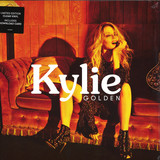
Limited Edition Clear Vinyl
Includes 12' Vinyl and Deluxe CD album, 30 page hard back book
Now that I've been to Nashville,' Kylie Minogue says with audible affection, I understand. It's like some sort of musical ley-line...'
Golden, Kylie's fourteenth studio album, is the result of an intensive working trip to the home of Country music, a city whose influence lingered on long after the pop legend and her team returned to London to finish the record: We definitely brought a bit of Nashville back with us,' she states. The album is a vibrant hybrid, blending Kylie's familiar pop-dance sound with an unmistakeable Tennessee twang. It was Jamie Nelson, Kylie's long-serving A&R man, who first came up with the concept of incorporating a Country element' into Kylie's tried-and-trusted style. That idea sat there for a little while, with Minogue and her team initially unsure about how to bring it to life. Then, when Grammy-winning songwriter Amy Wadge's publisher suggested Kylie should come over to collaborate in Nashville, a city Kylie had previously never visited, something clicked. You know when you're so excited about something,' she recalls, that you repeat it an octave higher and double the decibels I was like that. 'Nashville! Yes! Of course I would!'. I hoped it would help the album to reveal itself. I thought 'If I don't get it in Nashville, I'm not going to get it anywhere.''
Kylie's Nashville trip involved working alongside two key writers, both with homes in the city. One was British-born songwriter Steve McEwan (whose credits include huge Country hits for Keith Urban, Kenny Chesney and Carrie Underwood), and the other was the aforementioned Amy Wadge, another Brit (best known for her mega-selling work with Ed Sheeran). It was then a truly international project: Golden was mainly created with African-German producer Sky Adams and a list of contributors including Jesse Frasure, Eg White, Jon Green, Biff Stannard, Samuel Dixon, Danny Shah and Lindsay Rimes, and there's a duet with English singer Jack Savoretti.
However, the album's agenda-setting lead single Dancing was, significantly, first demoed with Nathan Chapman, the man who guided Taylor Swift's transition from Country starlet to Pop megastar. If anyone knows how to mix those two genres, Chapman does. Nathan was the only actual Nashvillean I worked with. He's got a huge studio in his house, which is probably due to his success with Taylor... there's plenty of platinum discs of her, and others on his walls.' There's something of the spirit of Peggy Lee's Is That All There Is, of Dylan Thomas' Do Not Go Gentle Into That Good Night, even of Liza Minnelli's Cabaret about Dancing, a song which not only opens the album but sets out its stall, providing a microcosm of what is to come. You've got the lyrical edge, that Country feel, mixed with some sampling of the voice and electronic elements, so it does what it says on the label. And I love that it's called 'Dancing', it's immediately accessible and seemingly so obvious, but there's depth within the song.'
The experience of simply being in Nashville was an overwhelming one, before Kylie had even arrived. Once I knew I was going to Nashville, people talked about the place with such enthusiasm. They said without doubt I would love it and, I would come back with songs. They were sending lists of restaurants, coffee shops and bars. It really was a beautiful and genuine response and it felt like I was about to have a life changing experience and in a way, I did.' The reality came as something of a surprise, when she found a far more modern metropolis than the vintage one she'd envisaged. I thought it would be like New Orleans: little houses and bars, with music spilling out onto the street. It reminded me more of Melbourne: apartment blocks going up everywhere! The main strip, Broadway, where the honky tonk bars are, that's where the street was filled with music and it was just amazing.' Mainly, Minogue remembers the heat and humidity. It was 100 degrees. It was like it was raining with no rain.' She also relished the chance to wander around unrecognised, visit a few venerable music bars and soak in the atmosphere. I didn't get to the Grand Ole Opry or the music museums but I managed to go to a couple of the institutions there like The Bluebird Cafe and The Listening Room, and just by being there, through some kind of osmosis, you get this rejuvenated respect for The Song, and the writing of The Song. There's no hoo-hah around it. There's a singer-songwriter there, talking about the song and singing the song, to an audience who are there to listen. Although, I have to confess I was guilty of starting to clap too soon during a long pause at the end of one of the songs. The guy made a bit of a joke out of it and got a laugh from it, but I thought 'Of all people in the audience, no...''
It's probably no coincidence, therefore, that every track on Golden is a Kylie co-write, making it arguably her most personal album to date. The end of 2016 was not a good time for me,' she says, referring to well-documented personal upheavals, so when I started working on the album in 2017, it was, in many ways, a great escape. Making this album was a kind of saviour. I'd been through some turmoil and was quite fragile when I started work on it, but being able to express myself in the studio made quick work of regaining my sense of self. Writing about various aspects of my life, the highs and lows, with a real sense of knowing and of truth. And irony. And joy!'
The songwriting process allowed Kylie to get a few things out of her system. Initially, she admits, it was cathartic, but it also wasn't very good. I think I was writing too literally. But I reached a point where I was writing about the bigger-picture, and that was a breakthrough. It made way for songs like Stop Me From Falling and One Last Kiss. It also meant I had enough distance to write an autobiographical song, like A Lifetime To Repair, with a certain amount of humour. The countdown in that song: 'Six-five-four-three, too many times...'. I don't know if that will be a single, but I can just imagine a girl with framed pictures of past boyfriends, and kind of going 'Oh god, when am I going to get this right'' When she listens back to Golden, Kylie can vividly hear the Nashville in it. It is, she'll agree, probably the first time that a Kylie album has sounded like the place it was made. You wouldn't normally relate my songs to the cities. Can't Get You Out Of My Head sounds more like Outer Space than London. But Shelby '68, for example, was written in London but it was done with Nashville in mind. It's about my Dad's car, and my brother recorded Dad driving it! I don't think I'd have written a number of the songs, including Shelby '68 and Radio On without having had that Nashville experience.'
The latter, she says, is about music being the one to save you.' Throwing herself into the making of the record, she says, crystallised that idea. If there's one love that will always be there for you, it's music. Well, it is for me, anyway.' That song, in particular, carries nostalgic echoes of the golden age of Country, as heard through Medium Wave transistors and tinny home stereos in the distant past. Like any child of the Seventies, Kylie had a basic grounding in Country music, mainly absorbed from older family members. My Step-Grandfather was born in Kentucky and though he lived most of his adult life in Australia, he never stopped listening to his beloved Country artists.' If there's any classic Country singer whose imprint can be heard on Golden, it's Dolly Parton.
Kylie saw Dolly live for the first time at the end of 2016, at the Hollywood Bowl. It was like seeing the light,' she beams. It was incredible. Everyone, whether they know it or not, is a Dolly Parton fan. When I was in Nashville, I did pick up a T-shirt that said 'What Would Dolly Do' Maybe that should be my mantra.' And, whether consciously or otherwise, there's a timbre and trill to Kylie's vocals on Radio On that is distinctly Parton-esque. My delivery is quite different on this album,' she says. A lot of things are 'sung' less. The first time I did that was with Where The Wild Roses Grow. On the day I met Nick Cave, when I recorded my vocals, he said 'Just sing it less. Talk it through, tell the story.' This album wasn't quite to that extreme, but a lot of the songs were done in fewer takes, to just capture the moment and keep imperfections that add to the song. I remember on my last album, a lot of producers were trying to take out literally every vibrato they heard. And that's not natural to my voice. I mean, I can make myself sound like a robot, but it's nice to sound like a human!' Working within the Country genre also gave Kylie permission to write in the Nashville vernacular. Because we were going there, I wasn't afraid to have lines like 'When he's fallen off the wagon we'd still dance to our favourite slow song', 'Ten sheets to the wind, I was all confused', 'I'll take the ride if it's your rodeo'. The challenge of bringing a Country element to the album made the process feel very fresh to me, kind of like starting over. I started to look at writing a different way, singing a different way.'
If ever Kylie lost confidence in the Country-Pop concept, and found herself pondering This is great, but back in the real world - my real world - how will this work', Jamie Nelson was there to badger her into sticking to the path. We found a way to make it a hybrid with what we'll call my 'usual' sound. It had to stay 'pop' enough to stay authentic to me, but country enough to be a new sound for this album. The closer we zoomed in, and the more we honed it, I knew Jamie was right. We sacrificed good songs that weren't right for this album, because we wanted it to be as cohesive as possible. The songs that were hitting the mark were these ones, so we decided to be strong, and that's how we wrapped up the album. What he said, that stuck with me, was that 'I'd hate to get to the end of this and really wish we'd gone for it.'' Having worked with Kylie for so long, Nelson was able to put this latest shift of direction into perspective. He said 'You've traditionally done it throughout your career. You had your PWL time, then you did a complete turn when you went to deConstruction, then another complete turn with Spinning Around, and R&B dance-pop, and then another turn with Can't Get You Out Of My Head, icy synth-pop, and this is another one.' He was right. It felt like the right time to have a change sonically. New label, new stories to tell, and a new decade almost upon me.'
Kylie Minogue will, it's scarcely believable, turn 50 this year. This looming milestone is partly behind the album's title, and title track. I had this line that I wanted to use: 'We're not young, we're not old, we're golden' because I'm asked so often about being my age in this industry. This year, I'll be 50. And I get it, I get the interest, but I don't know how to answer it. And that line, for my personal satisfaction, says it as succinctly as possible. We can't be anyone else, we can't be younger or older than we are, we can only be ourselves. We're golden. And the album title, Golden, reflects all of this. I liked the idea of everyone being golden, shining in their own way. The sun shines in daylight, the moon shines in darkness. Wherever we are in life, we are still golden.' One of the album's shiniest moments is Raining Glitter, an exuberant banger which ventures closest to Kylie's traditional dance-pop comfort zone. Eg White, who is one of the producers and writers and a great character, was talking about disco one day. I said 'I love disco, but you know the brief.' We needed to be going down the Country lane, so to speak. But we managed to bring them both together. When I wrote it, I was thinking about the Jacksons video for Can You Feel It where they're sprinkling glitter over everyone. And I think there's a Donna Summer record that's got that feel to it. I think that's my job: I basically leave a trail of glitter after every show I do anyway.'
Kylie is looking forward to the challenge of incorporating the Golden material into her live shows. Mixing these songs in with my existing catalogue is going to be fun. And it could be fun to do some of those songs with just a guitar. It'll make my acoustic set interesting...'Her incredibly loyal fans - to whom one Golden song, Sincerely Yours, is intended as a love letter' - will, she believes, have no problem with her latest stylistic shift. My audience have been with me on the journey, so I shouldn't be afraid that they won't come with me on this part. I've had fun with it, and I'm sure they will too.'
The time spent making Golden has, Kylie says, been a time of creative and personal renewal. I've met some amazing people, truly inspiring writers and musicians. My passion for music has never gone away, but it's got bigger and stronger.' And if there's an overriding theme to the record, it is one of acceptance. We're all human and it's OK to make mistakes, get it wrong, to want to run, to want to belong, to love, to dream. To be ourselves.'
I was able to both lose and find myself whilst making this album.'
- A1: Tizita (10:00)
- A2: Addis Nat (04:34)
- A3: Gum Gum (06:47)
- B1: Anchihoye Lene (07:06)
- B2: Lala Belu (04:42)
- B3: Yefikir Engurguro (06:15)
First new LP in over 15 years. Builds on 3 successful ATFA reissues of Mergia's music. Legendary artist still active after decades of historic work. Modern Ethiopian jazz built on ancient scales and standards. Capping several successful years traveling the world performing to audiences big and small, Hailu Mergia's Lala Belu has been a long time coming. It builds on Mergia's remarkable career resurgence over the past few years. Beginning in 2013 with the reissue of his dreamy Hailu Mergia and His Classical Instrument followed by the enormous success of his seminal Ethio-jazz masterpiece Tche Belew and continuing with last year's widely acclaimed Wede Harer Guzo, Mergia has received considerable accolades from listeners and press globally, including The New York Times, Pitchfork and The Wire. His old recordings are cherished revelations for Ethiopian music fans; however, Mergia's return to the stage has been just as inspiring and electrifying. Mergia's vintage recordings are known for an inherently mysterious and worn-in quality, while his new recordings echo his band's 21st century live show with modern instrumental interpretations of crucial Ethiopian standards and Mergia's own original compositions. Tony Buck (drums) and Mike Majkowski (bass), who have backed Mergia on tour throughout Europe and Australia, form the bass-drums trio on the recording. Having played venues from Radio City Music Hall and the Kennedy Center to jazz festivals, rock clubs and DIY spaces all over North America, Europe and Australia, Mergia and Awesome Tapes From Africa want to document this moment in his landmark career with a snapshot of Mergia's current sound. Since he emigrated from Ethiopia and built a life in Washington, D.C. around 1981—where he remains working as an airport taxi driver when he is not on tour—Mergia's career has followed a humble trajectory. He made a few recordings in America but they didn't easily reach fans back home. He kept making music on his own and with friends but after the early 80's his gigs in the U.S. mostly dried up. It wasn't until he began working with Awesome Tapes From Africa and putting together bands with the help of booking agents and musicians in Europe and the U.S., that he was able to chart a new path. With a broad audience of young listeners in diverse venues and distant locales, at age 71, Mergia is enjoying his comeback and is not slowing down.
- A1: Never
- A2: Rocksteady
- A3: Sedated Private
- A4: Transmission 1
- A5: Psychology Of Destructive Cult Leaders
- A6: Hake
- B1: Dominocro
- B2: Bigger Heads
- B3: Here
- B4: Still Yours
- B5: Untitled
- B6: Wolfe
- C1: Anye
- C2: Stare
- C3: Oh, Won't You
- C4: Transmission 2
- C5: Red Dot, Green Light
- C6: Baron
- D1: Oran
- D2: Nothing
- D3: Home
- D4: Kidney Punch
- D5: Grid Lock
- D6: Wicked Ones
Spread across two 180g discs, spanning 24 cuts and served in a gatefold sleeve designed by members and affiliates, the Young Echo LP is a capsule intended for cementation through time.
It's been almost five years since their last album. As a group, extended radio submissions, prolonged studio sessions and notorious club nights make up the cogs of time. Over the course of these years, the network has grown continually, both as one, and with singular, multi-directional paths from each of the 11 artists that make up the Young Echo collective, counting Jabu, Vessel, Kahn, Neek, Ishan Sound, Ossia, Manonmars, Bogues, Rider Shafique, chester giles and Jasmine towards the crew, with projects such as Bandulu, FuckPunk, O$VMV$M, Gorgon Sound and ASDA adding to the table in their individual ways.However, this record aims not to be judged on any single producer or vocalist. It is most effective as a whole, simply titled Young Echo. Of course each of the artists has an important part to play, but it is very much about the act of balance, accepting individualism to form a greater whole.A good example is the welcome addition of new energy coming from Jasmine (1/3 of Jabu) who injects endless space with her vocals, perfectly answered by the cool-killin' wordplay of Manonmars - who makes his long awaited debut here - sharing stage with the immediate poetry of ASDA's very own chester giles, along the mighty sound of Rider Shafique, and Bogues' versatile style that can flit between rap & song within seconds. Five very different vocalists that could've tried to find a compromise, but instead choose to connect in different ways, finding their niche in the equal range of rhythms and sounds that sprawl in this shared space, the juxtaposition.
Detuned soundsystem stylings, love songs swaying in hacked up ambience, skeletal dancehall, microphone technique, dread electronics, outsider pop, this record manifests the outcome of the shapeshifting anarchy which rears it's head when no one idea can rule, embracing the diversities when one path must be made up of many.
There are some records that manage to sound both of a time and utterly timeless and Bon Voyage Organisation's Jungle Quelle Jungle (a nod to Supertramp's Crisis What Crisis) is one of those albums. Its silken-smooth production, irresistible grooves, funk-tinged guitars, lush soundscapes and general glowing presence could easily lead one to believe that have dug up a lost disco gem from the 1970s. However, behind the disco-pop gleam lies eerie dystopian sci-fi ruminations of a futuristic bent and tones that can often feel as French as they do Asian or African.
This sort of cross-continental exploration is an expansion on BVO's previous two EPs, the man behind the Organisation, Adrien Durand, says. 'I tried to continue the musical expedition between dystopian Science-Fiction Haunted Africa - plus Haitian Vaudou on 'Soleil Dieu' - and futuristic Asia. Addressing, in a double entendre manner, some of the political issues that I am sensitive to.' In fact the jungle in question in the album's title is a metaphorical one and one that creates a vast series of environments for Durand to explore such subjects as world trade, utopian ideals and themes of idols, as well as of time and communication. However, one will need to speak French to decipher such explorations, as well as shake off the natural impulse to move with every glorious beat on its 13 tracks, of which are moved along by Maud Nadal and Agathe Bonitzer's golden vocals.
Durand is a full-time producer based in Paris, working with the likes of Amadou & Mariam, so it makes sense that this record would absolutely sparkle in this department. Durand feeds off the variety of musicians coming and going during recording sessions as well as the rotating members and numbers of people involved with the band but fundamentally he writes all songs on piano first before bringing them to record live. 'We recorded a rhythm section of five - drums, percussion, guitar and myself on bass/synth bass and keyboards - at La Frette which is a studio located in a mansion outside of Paris and fitted with a beautiful 1973 NEVE desk. We only used analogue gear, by taste really, and found it a pretty reliable way of doing things. This simply consists of putting good players together in a room and waiting for the right take to happen.' Two four-day sessions and a 'cooling off' period (to let the recordings settle) soon followed before Durand picked the material back up to give it a final polish.
The resulting album is one loaded with intricacies and idiosyncrasies, something that Durand puts down to his own unique approach. 'I don't consider myself much of a songwriter but I love arranging rhythm sections and I'm pretty proud of the ones on this record.' This applies when it comes to working with such musicians as Inor Sotolongo Zapata, who with Durand used traditional Cuban percussive instruments and explored Haitian rhythms. When Durand expands on some of the ideas and influences that were funnelled into the record, you begin to get a sense of the vastness of the sounds that fill his world, from Trevor Horn's production work on ABC's Lexicon of Love, to the literary work of JG Ballard to the visual flair of the original Blade Runner and even the Tuareg sounds of Tinariwen, due to the fact that his studio neighbours their manager's and he would hear their rhythms bleeding through the walls. You therefore end up with an album that offers tracks such as 'GOMA' that fuses Chinese and African rhythms as well as 'SI D'Adventure' a piece of pop music that is dazzlingly hook-laden.
As a result of this cooking pot of sounds, influences, thoughts and creations, Durand has more of a gumbo approach to making this music than a set-out scientific formula. 'There is no definite recipe for me to like the production of a record,' he says. 'Of course it really sticks out that my work is really influenced by the 1978-1983 period, the golden age and last stand of analogue studios and session musicians.' Whilst Durand adores the traditional and conventional music, he really views this as something bigger and wider. 'I have a taste for the otherworldly vibe from records coming from less sought-after musical scenes, particularly Poland, Haiti, Ethiopia, Somalia, Congo and early Cantonese pop. Languages and the rapport of the people involved in the making of those records really inspires me. I particularly hate the use of the word 'World Music' as a potpourri for everything that doesn't sound quite western enough.'
Tim (aka Jean Marie Tiam)and the sadly departed Maurice Foty who died in 2011. The musical cousins hails from Bafoussam in Cameroon. Their signature vocal harmony sound may be the first thing you hear, however they also have produced a host of funkiest African funk around. They sing in their native language Ngomâlah, as well as Duala and English.
We start the album off slowly with the scene-setting and largely instrumental "Douala By Night". Tight guitar and choppy clavi drive this song along. The groove is so deep even Missy Elliot couldn't resist a cheeky sample. "Funky Bafoussam" carries on the theme and expands it to include a kick-ass horn section. "More And More" is next and here the vocals burst forth over this up tempo punchy pop-funk track. With "Love Is Light" the pair show their versatility with a smooth English-sung soul ballad.
The hopelessly upbeat "Aie" is next with its earworm keyboard riff, slice guitar and catchy falsetto vocal. "Not So Bad" brings on the boogie. "I Love Yaounde" is a smooth swinging boogie-ballad with a killer chorus hook. "Eda" is a hit from early in their career. We close of the comp with the disco funk of "Funky Boogie Love" and synth grooves of "Eya Mba".
The songs on the comp represent only a 2 year period but some of the finest from the duo. These days Tim keeps the Tim and Foty flame alive. He currently lives between France and Cameroon. A musical flame that most definitely is burning bright.
In an interview with Jazz Magazine in the early 1970s, Dharma, as a collective voice, outlined their method: 'we try to reach, within free jazz, the same sort of rhythmic cohesion as in Bop, a cohesion based not exactly on tempo, but something which feels like tempo. A kind of underlying pulse'. Evidence of these ideas can be heard immediately on listening to Mr Robinson, the first album by the Dharma Quintet, for whom community living seemed obvious, in order to add to the aforementioned cohesion. Through this, the group members played together on a daily basis, trying out things which were worked on day in, day out. They were also listening to a lot of records, with of course a preference for free jazz, but not forgetting Miles Davis in his electric period, notably for the keyboards of Keith Jarrett and Chick Corea. To which should be added esthetical-political concerns based on a refusal of hierarchy, and a desire to escape from a restrictive academic approach... It was within this framework that Jef Sicard and Gérard Coppéré (saxophones, flute, bass clarinet), Patricio Villarroel (electric and acoustic piano), Michel Gladieux (bass) and Jacques Mahieux (drums) formed the first version of a collective united by structured intentions. Because, within Dharma, individual improvisation cannot be envisaged outside of a clearly designated framework, even non-tempo. The result is a beneficial cohesion, and moments of great beauty born of a collective excitement and giving rise to ambiances which seemed almost possessed. The use of modes could seem to link Mr Robinson to the spiritual jazz of the past but that is without taking into account the fact that the benevolent spirit of Eric Dolphy seems to watch over this album. In France, a similar desire for cohesion could be found in the Cohelmec Ensemble, who had parallel preoccupations, to the point where their bassist, François Méchali, ended up by joining Dharma: there is unfortunately no recorded trace of this, just the memories. As a quintet, with however some personnel changes, Dharma recorded three albums (there is also one as a trio, under the name of Dharma Trio), which are all of fundamental importance (Dharma would also accompany, and to great effect, the songs of Jean-Marie Vivier and Colette Magny). Individually, the members would record with musicians passing through (notably Anthony Ortega, Dave Burrell) and participated in other key groups including Machi Oul and Full Moon Ensemble.
Pillow Person is the new solo adventure from Sarah Jones who has previously made her name in showbiz from playing traps with the likes of Hot Chip et al. For her debut solo slab on Acid Waxa however, Pillow Person's catchy-as-owt digi-singles are given the remix treatment by 4 giants of modern darnce! Those being: Bogdan Raczynski (10 releases on Rephlex, 7 bad jokes, 4 mixes, 2 game soundtracks, 1 production with Bjork & 0 bad haircuts) Lechuga Zafiro (Co founder of Uruguyan, Afro-Latin label Salviatek) IYDES (aka London based badman Joe Brooks) and cellist/composer/producer Oliver Coates, who has collaborated with everyone from Leo Abrahams to Radiohead. 2 be filed (if you must) under: haus, Latin, klasical, phuture grime, jungle, electronic pop musique and so on!
Out of nowhere, here comes Villee with his debut EP chock full of dancefloor gems. From the very first listen we knew we had something special that we needed to release on Pressed For Time. It's a difficult thing to reference classic tracks and artists without sounding like a carbon copy - however Villee manages this with aplomb. Referencing Larry Heard (check the chords on 'The Inventor'), Cajual records, french house and the DIY free party sound - we think this EP is fantastic! Think warm, analogue, looped up, MPC house with swing and you're on the right track
It is Melodies International's greatest pleasure to bring forth its latest reissue comprising two stripped-back, reflective pieces of US folk soul.
Largely forgotten for the past forty-odd years, Bobby Wright (now Abu Talib)'s "Blood Of An American" and "Everyone Should Have His Day" resurface as politically-infused works that shine bright and still hold meaning to this day.
The 60s and 70s constituted an exceptional era for its unique blend of popular culture and political radicalism. Household names such as Sly Stone, Marvin Gaye and Gil Scott-Heron used art to express their discontent with the current state of affairs, namely the US government's involvement in warfare and their inability to deal with critical social issues of the time. Though not a musician, Muhammad Ali (born Cassius Clay Jr) was advocating a similar anti-government stance in the boxing ring, and his objection to serving in the Vietnam War sealed his status as an icon for the wider counterculture generation.
Meanwhile in Queens, New York City, Abu used to work several jobs as a construction worker and cab driver - but still found time to play with his band in clubs for $100 a night to support his family. Against the backdrop of international conflict and violence, most of his surroundings failed to listen to how he felt. However, he considered music to be the greatest form of communication with the world and it was his belief that a positive message should be spread to future generations.
After one band member was killed in Vietnam and another went into the service, Abu resolved to pick up his guitar and record these songs as a duet in 1974 with his bassist - the only other remaining band member. Combining guitar, bass and a voice that quavers with emotion he self-released the record in 1974, one which holds its own alongside the all-time greats.
These songs of introspection remind us of the beauty there is in simplicity and how moving art can be when the feelings expressed come from the heart. MEL009 will be released in its original 7" format alongside a 16-page Melozine, featuring words from Abu Talib, social studies professor Paul Rekret and much more.
- A1: Egyptian Kings
- A2: Jardins
- A3: Rainbow
- A4: Era Of Technology
- B1: To Another Universe
- B2: The Space Between
- B3: Cosmic Wind
- B4: Visions
1973s brilliant Celestial Ocean, by the legendary Swiss krautrock band BRAINTICKET, is a concept album that details an ancient pharoahs journey into the afterlife (substitute the word "journey" for "trip" and youll get what they were driving at). However, Brainticket were not mere products of their time, they explored some truly compelling musical territory and produced a superlative blanket of sound-featuring a pioneering mix of early synthesizers, flute, zither, sitar, and male / female stream-of-consciousness spoken word vocals-that ebbs and flows in the same general cosmos as classic Gong. This reissue is fully remastered from the original master tapes.
A multi-platform production that explores the overlap between the digital and the organic through field recordings of Inuit throat singing may sound, on surface level, to be something that is a rather niche. However, Zoe Mc Pherson's exploration of this world on String Figures is a deeply rhythmic, immersive and forward-thinking piece of electronic- leaning music that remains just as danceable as it does experimental.
The album is fundamentally one of duality, exploring the traditional and the contemporary, organic and electronic, audio and visual, history and the future. Rooted in this duality is also a core theme around string being one of the most ancient and playful art forms and the seemingly infinite possibilities it offers in terms of shapes, structures and figures lines up with this as a trans-global art project. One that over time will involve video art, choreography, 3D motion design, macro film, instrumental and electronic sound. Although for now is being presented through an AV performance, films and a record with Mc Pherson collaborating with director Alessandra Leone.!
Over the seven tracks (which are laid out as chapters) the record explores glitchy electronics, dub-tinged grooves, polyrhythms, and a huge array of instruments that takes in quiet blasts of atonal sax alongside wonky synths. This of course cross-pollinates with the throat singing and experimental field recordings to create an utterly inimitable sonic sphere. For Mc Pherson it's about mixing worlds, histories and timeframes and she uses a 1991 quote from Laurie Spiegel to hit home how she has elaborated upon this original thought of history and future overlapping. 'Folk music is considered anonymous common property in a culture and that's what a lot of computer music and other kinds of music data may end up becoming.' However, there's also a purer reason for the exploration of these worlds and colliding them together. 'Basically I thought that electronic music that is only digital is a bit boring and as I'm connected to jazz music for many reasons, I wanted it to sound organic: real instrumentation, field recordings.'
- A1: 2094
- A2: Trippin
- A3: Need It (Ft Dj Manny)
- A4: Smokeout (Ft Dj Lucky)
- A5: Same Sound (Ft Odile Myrtil)
- B1: 9090
- B2: Anotha4 (Ft Dj Manny)
- B3: Bonfire (Ft Dj Paypal)
- B4: The Matrixx (Ft Dj Manny)
- C1: Get It Jukin' (Ft Chuck Inglish)
- C2: Pop Drop (Ft Dj Paypal)
- C3: Gimme Some Mo (Ft Uniiqu3)
- D1: Truu (Ft Dj Paypal)
- D2: Closer
- D3: I'm Trippin
- D4: I Don't Know (Ft Fabi Reyna)
A generation younger than the founders of the Teklife crew, DJ Rashad and DJ Spinn, DJ Taye was originally a rapper and beat maker before hooking up with the collective and jumping into the world of footwork production and DJing.
However, it was Rashad's untimely passing in 2014 that was the unlikely catalyst for developing the sounds and ideas for this album. He says, "When Rashad passed away I felt inspired to continue evolving the music that I loved so much coming up in this world. So, I had to do something...make something brand new."
100% committed to pushing further the potential of the footwork template, Still Trippin' is ambitious in its range and scope. Taking two years to formulate, the record broadens the possibilities of the sound, forcing it to adapt to songwriting, and also revives Taye's talent for MCing and producing beats to which he can rap and sing. Furthermore Taye definitely ups the ante with his complex and precise drum programming, never losing sight of footwork's ability to confound. The album features a range of guests that span contemporary music, the eccentric, instructive rapping of Chuck Inglish of Detroit duo the Cool Kids is featured on 'Get It Jukin', Odile Myrtil, a young vocalist from Montreal, lends her smokey soul to 'Same Sound', Fabi Reyna, the editor of the celebrated women's guitar magazine She Shreds, sings and plays bass and rhythm guitar on 'I Don't Know' and Jersey club queen UNIIQU3 offers production and rapping on 'Gimme Some Mo'.Also, Teklife members DJ PayPal and DJ Manny assist on production, and DJ Lucky is a guest MC on 'Smokeout'. Taye is ambitious in his hopes for the album, "I took this as an opportunity to not have boundaries with footwork. Different approaches to our 'underground' sound to make it broader. It's only underground until it crosses that visible threshold.' This album brings all of this to the forefront.
For a label that wasn't around long, Strata East achieved the same sort of label recognition that Impulse! or Blue Note managed to build. In other words, you knew what you were getting when you bought a record on the label, even if you didn't know the names on the outside of the cover. This is no exception. Who is Shamek Farrah Who knows Who cares It's the music that's important. This is the standard spiritually intense new jazz one learns to expect from the label, soaked in some Eastern influences but always with its ear to the street. Musicians took their roles as leaders and spokesmen very seriously back then. This very adult statement from a group of very serious men is no exception. However, what might be an average, forgettable session is rescued by the propulsive engine of Milton Suggs' bass. He adds the fire and the drive that keeps things interesting and prevents the music from wandering into a circular spiritual morass. For fans of the sound or the label, this can be heartily recommended.
Rebolledo's YOU AND YOUR HIPPIE FRIENDS imprint grows its groove footprint on international dance floors with the full-length debut of GÜERO, the latest vinyl outing from the Hippie Dance sister label and also its first fully fledged album project. To attentive hippie friends, the artist name should ring a big, funky bell - one that sounds exactly like the cut 'Convertible Ride' from the notorious 'A Very Nice Combinado Volume Uno' 12' release (YAYHF 01).
Back then, our hero was travelling under the somewhat more convoluted 'El Güero Fresa' monicker, but has since dropped some of those conceptual pounds in an effort to reach maximum sleekness. In the same vein, his debut album is a testament to ultimate funk-a-ficiency, digging deep into fizzy arpeggios and chunky basslines - and the occasional guitar cameo, giving tracks such as bubbling synth opener ELEKTRONIQUE, the neon-lit NIGHT CRUISING, bouncing electro disco roller ALTO FINAL or the programmatic SPACE DRIFTER just that little extra riff.
GUITAR MAYHEM, however, is anything but - you'll discover a pretty dank bouncer and certainly not the squealing meltdown one would expect. TECHNO MINIMAL doesn't do what it says on the tin, either, opting for an energetic bass 'n' organ workout instead. By now, you'll begin to understand why the album's called MY WAY MY RULES: GÜERO takes whatever sonic path he desires, no matter what - which is precisely why he chimes so well with YOU AND YOUR HIPPIE FRIENDS's steadily expanding motley crew of rave misfits and studio drop-outs. The way of the hippie is indeed a mysterious one.
Well before Shuggie Otis (Born Johnny Alexander Veliotes, Jr.) cut his debut album, musicianship and performance had long been a part of his life. The son of rhythm and blues legend Johnny Otis, Shuggie learned to play guitar as early as the age of two, and performed professionally with his father's band at eleven. Throughout his long and illustrious career he'd performed on records for the
likes of Frank Zappa, Al Kooper, Etta James, and George Duke, to name a few. In spite of all this, widespread mainstream success eluded Shuggie for much of his career. His most famous release to date is his 1974 album Inspiration/Information, which would experience new resurgent life in 2001. Those willing to dig a little deeper however, would discover hidden gold in his earlier releases, especially in the album directly before Inspiration/Information, his sophomore 1971 release Freedom Flight. As with his debut, Freedom Flight was produced by Shuggie's father Johnny Otis, and built upon the distinct sounds of his debut album: lush, baroque, string section arrangements, paired with hard funk rhythms, and funky blues melodies, with the majority of the instruments once again performed by Shuggie himself. The album also featured backing from premium session greats like George Duke and Aynsley Dunbar, and the track "Strawberry Letter 23". which became a Billboard hit for The Brothers Johnson 3 years later. An unearthed treasure of deft, technical skill, and virtuosic composition.