Lost Futures is a new label that explores experimental and often radical approaches to dance music from the past. In a musical landscape that increasingly claims to seek and reward new forms and ideas, Lost Futures delves into the recent past to revisit forward-thinking, optimistic projects that, owing to the social, musical or outright political climate, perhaps struggled to find an audience. Allowing only time to re-contextualise these leftfield, sometimes misunderstood and ultimately human bodies of work, Lost Futures taps into the inherent idealism of rave.
LF001 trips back until the early nineties to revisit the alternative scene emerging from the Dutch city of Utrecht. Here, three young men - DJ Zero One (Sander Friedeman), TJ Tape TV (Arno Peeters) and DJ White Delight (Richard van der Giessen) - joined forces to form 'The Awax Foundation'. Inspired by the transcendent and revolutionary electronic music arriving on their shores imported from Chicago and Detroit, combining their knowledge, gear and ever-expanding vinyl collection allowed additional freedom in paying sincere tribute to these intoxicating sounds, while also developing their tastes in a more personal, eclectic direction.
The musical flavours of Awax initially leaned toward acid house and the roots of techno. However, with three different mindsets in the mix, their tastes were rarely fixed. One thing each shared in common was a devotion to collecting rare sounds, specifically more adventurous and international samples than those emanating from the increasingly-hard, masculine dance music emerging from the Netherlands during the period. Inspired by the cross-over global sound of bands like Suns of Arqa, or 'World Music', as it was perhaps patronisingly termed at the time, the trio became interested in the idea of making techno with 'ethnic instruments'.
Of course, this being 1992, none of The Awax Foundation had access to such instruments, instead, they had a vast, collective library of samples from all over the world. There were no collaborations and no clear plan. Instead, they set to work using a Yamaha TX16W sampler, the legendary Atari 1040ST computer, a cheap mixing desk and a couple of low-end synths and FX machines. When Richard mentioned the project to his friend, Akin Fernandez, the London DJ and owner of cult label Irdial Discs, Fernandez was intrigued enough to invite the trio to record a one-hour show for his 'Monster Music Radio' series on London's then-burgeoning Kiss FM.
Forced to come up with a name, 'CultureClash' seemed like the obvious choice, even if the members of Awax were only creatively sparring among themselves. Along with the term 'ethno-techno', slightly dubious to a hopefully more conscious Western audience in 2017, these were the only guiding principles to the quietly ambitious project that soon combined cutting-edge machine rhythms with samples sourced from everywhere from Bolivia to Togo, and inspired by everything from Ravi Shankar's epic soundtrack to the Oscar-winning movie Ghandi, to the technical limits of their own setup requiring a dazzling degree of cut-and-paste work. Some tracks even emerged out of academic studies within the ethnomusicology department at The University of Amsterdam.
The show aired on October 2nd, 1992, recorded in one blistering take and without any rehearsals, traversing a huge variety of tempos and styles. If the performance wasn't seamless, it was undeniably thrilling, fresh and ambitious. As such, several labels, including Fernandez's aforementioned Irdial Discs expressed an interesting in commercially releasing CultureClash, while another imprint proposed a series of twelve-inches and an album. But the sheer complexity of the project meant that it never saw the light of day, while the trio embarked on different journeys ahead, both creative and personal.
Twenty five years later, and the original CultureClash lineup and founding members of The Awax Foundation provide the sound of the first release from Lost Futures. An otherworldly, ambitious and optimistic compilation, accompanied by extensive sleeve notes from the trio, CultureClash is a timeless ode to experimentation in dance music's ever-overlapping culture.
Search:howe
Arguably one of the most acclaimed and loved bands of the past 20 years, by both fans and their musical peers alike, The Beta Band formed in St. Andrews, Scotland, in 1996. Innovative and singular, their unique musical and aesthetic approach to everything they did set them far apart from their musical contemporaries. Together for a relatively short period of time, the three albums and three EPs they released between 1996 and 2004 would nonetheless help define them as one of the most exciting and cherished bands of their generation. Released in 1999, the album The Beta Band' followed the critically acclaimed compilation The Three E.P.'s' (1998). With high anticipation for The Beta Band, the band originally planned to record the album in four separate continents, but financial constraints slimmed the recording locations down, however, the album was still recorded in a variety of locations and pulling inspiration from sources as diverse as Jamaican reggae, Disney's movie The Black Hole' and Bonnie Tyler's Total Eclipse of the Heart".
German electronic originator Gudrun Gut's latest solo collection distills a lifetime of persuasions and obsessions into a compelling 14-track statement: "Moment." Stark, somber, sultry, and clever, the sides slide between ballad and lament, synth-pop and spoken word, anthemic and abstract.
Gut's background as a key figure in Berlin's first-wave industrial uprising still casts an aura in the music's mechanized rhythms and frozen emotional palette but decades of improvisation and collaboration have deepened her sense of composition and melody beyond any easy genre categorization.
If anything "Moment" finds Gut's muse at its most enigmatic, threading shades of motorik hypnosis, technoid laboratory, coldwave pop, glitchy gauze, and even a gender-bent Bowie cover ('Boys Keep Swinging') into its eclectic web. It also showcases the depth and detail of her voice, reserved but suggestive, intoning blunt truths and opaque poetry in both German and English.
This is music of history and heartache, modernity and desire, alienation and expression, by a singular creative committed to the complexities of sound. - Britt Brown
Gudrun Gut's story spans many years, scenes, and sounds, from the 'ingenious dilettantes' subculture of early 1980's Berlin as part of Mania D, Einstürzende Neubauten, and Malaria! to her twilit industrial pop trio Matador into an expansive solo catalog of later work scoring films, videos, and radio plays. Her talents extend beyond musician, however, to include founding record labels (the influential imprints Moabit Musik and Monika Enterprise), club nights (progressive electronic pop collective Oceanclub), and experimental feminist collaborations (Monika Werkstatt).
Gut also works extensively in the technical sector of the recording industry, as a producer. Recent projects have included collaborations with Antye Greie (AGF) and Hans-Joachim Irmler of Faust, participating on the advisory committee for Musicboard Berlin, and performing at The Royal Albert Hall with Âme as part of an Innervisions label night.
It is with great honour that Emotional Rescue comes back to the music of Jaki Whitren & John Cartwright for a special 7" of two previously unreleased songs on to vinyl for the first time in That Will Be That and This Time. Originally part of the International Times reissue project (ERC004) in 2013, the songs have previously only been available on CD and digital formats as 'out-takes'. However, all that time the plan was to release the songs as a stand-alone vinyl release at some point.
Discussion with John continued over the years and the plan was for a release as part of the label's fifth anniversary, until sadly the project was put on hold due to the untimely loss of both Jaki and John in late 2016. The recent repress of their masterpiece that is their privately pressed album, International Times, led to these songs being revisited for the first time since and so here at last are both available together, as much in homage to these two wonderful musicians. More than studio-plus recordings, That Will Be That actually appeared in rerecorded form on the couple's Rhythm Hymn album of 1983. Here though is the original (and superior) version, with all the hallmarks of classic Whitren and Cartwright song writing craft, musicianship and production skill. Again remastered by their son (and at the time, teenage drummer) Joby Baker, the song drips with a confidence of masters of their instruments, full heartfelt, righteous and as relevant today as then lyrics, all backed with some deep white funk and enough soul to move mountains. This is accompanied by one of their greatest compositions in the spine-tingling This Time. Only ever known on this live recording from Glastonbury Hall, Jaki's vocals and light accompaniment from John's keys let the song shine. If the sheer power of her voice and words don't move you, then something is missing in life. A pure, sad, joyous way to thank and remember this wonderful music and people.
Neville Watson returns to DBA with The Midnight Orchard, his first full-length in five years. Watson is a key figure on the electronic music scene at large and has made regular appearances on Don't Be Afraid, as well as on celebrated imprints such as Crème Organization, Clone and Rush Hour, where he released some of his best-known work alongside Kink.
In a crowded landscape of factory-line jack trax and synthesis for the sake-of-it, it's little surprise that Watson's physical, arresting takes on house and techno have been such a staple in the record bags of the world's leading DJs for the past twenty years. Throughout The Midnight Orchard, Watson seamlessly bridges his futurist leanings gleaned from a lifelong commitment to electronic music with the anarchic spirit of his acid-house heritage.
The record still finds catharsis in the relentless pulse that has defined Watson's life since his early residencies where he peddled ecstatic escapism to towns on the commuter belts of London, notably via his involvement in seminal Reading party Checkpoint Charlie. However, there's a more somber, arguably introspective and perhaps even somewhat wistful tone at play throughout. This might surprise those who've invested their feet and hearts in tracks with titles like Night Of The Inflatable Muscleheads and Everything I Know About House (I Learned on Facebook).
In a move away from his previous musical leanings, The Midnight Orchard embraces a distinctly more UK sound, unapologetically chronicling the paranoia that can be found skirting the euphoria of rave. And while Watson has avoided the eyebrow-arching pitfalls of the self-serious DJ full-length, it must be noted that the rhythms here are more skittering, the atmosphere less jubilant and the signature lo-fi hiss, fully popularised and bastardised since Watson's last album, has taken on a more fore-boding tone.
Meanwhile, the atmosphere elsewhere harks to a more idealistic world, particularly on the cascading and subdued Eine Kleine Emusik, and the euphoric We Own The Night. Twin Tub and Reet Dux provide dubby, sensual moments of escapism. There's uncompromising, hard-nosed rhythms on Dee Sides, and cosmic electro throughout 4am in the Trees. The album then concludes in a bold fashion with Displays of Brotherly Love and the resolutely hopeful atmosphere of Phosphorescent.
Reflecting decades of immersion in club culture and taking inspiration from wider-found sounds, The Midnight Orchard is loaded with thrilling parallels and a sense of genuine unpredictability. Tracks like Come On In and Anarcho Midnight are layered with unease, utilising pitch dark arpeggios and skittish, growling electronics to devastating effect.
Having dedicated the last eighteen months of his life to the studio, Watson has rec-orded what is undeniably the most unexpected music of his career. Amid the dark-ness, The Midnight Orchard has borne fruit.
"In 1978, Nova performed for Obama. Well, kind of: Nova was the band for the Punahou School prom in Honolulu, Hawaii, and a young student named Barack (known then as 'Barry') was in attendance.
Backtrack to 1976, and Nova was the opening band for Donald Byrd at the nearby Blaisdell Arena. The day was Sunday, June 27. The following day, Isaac Hayes would perform on island for the admission price of $1.
Nova, led by singer Checo Tohomaso, was one of several go-to party bands during the golden era of Hawaii funk and soul music in the mid-1970s through early 1980s.
The band's infectious gospel-funk-disco can be heard on their sole release, a self-titled 1980 LP that feels like one big party recorded live in the studio. (Check out the Marvin Gaye-inspired 'I Feel Like Getting Down' on the 2016 'Aloha Got Soul' compilation on Strut Records).
The story is all too familiar, however: funk band releases LP, the music goes dormant in years to follow, and today original copies sell for hundreds online.
Not long after the album's 1980 release, Checo met Marvin Gaye, who was living on Maui (where George Benson also resided). Shortly after, Marvin invited Checo and his counterparts to join his multi-city tour across Europe. Videos of Checo rocking keyboards, percussion and singing background vocals for Marvin Gaye's last European tour can be found online.
Checo, born in Florida yet raised in lush Manoa Valley as well as Okinawa, Japan, now resides in Vancouver, Canada, where he leads the VOC Sweet Soul Gospel Choir and continues to deliver his signature sound: high energy, positive, 'sweet soul' music.
AGS-7010 features two non-stop groovers with a 7' edit by Roger Bong on the A-side. LP reissue in the works!"
Re-mastering by: Ray Staff at Air Mastering, Lyndhurst Hall, London
John Gordon, a trombone master, brings us another gem from that most renowned of 70's record labels, Strata-East. The trombone is a difficult instrument. In the hands of an artist like John Gordon, however, it can create vivid images and conjure up beautiful music. And when the cohort of other players includes the likes of Charles Tolliver & Stanley Cowell, you know you're in for an extra treat.
Arguably One Of The Most Acclaimed And Loved Bands Of The Past 20 Years, By Both Fans And Their Musical Peers Alike, The Beta Band Formed In St. Andrews, Scotland, In 1996. Innovative And Singular, Their Unique Musical And Aesthetic Approach To Everything They Did Set Them Far Apart From Their Musical Contemporaries. Together For A Relatively Short Period Of Time, The Three Albums And Three Eps They Released Between 1996 And 2004 Would Nonetheless Help Define Them As One Of The Most Exciting And Cherished Bands Of Their Generation. After A Short Hiatus The Band Gradually Gravitated Back Into The Studio And Recruited Noted Uk Producer Colin Emmanuel, Aka C-swing, To Oversee The Process Of hot Shots Ii' Which Was Released In Mid 2001. Notoriously The Band Had Intended To Release squares", Which Featured A Sample From The Günter Kallmann Choir's 1970 Version Of Wallace Collection's daydream", As The Lead Single. However After Filming The Music Video And Taking The Single To Radio It Suddenly Transpired That Another Single daydream In Blue' By I Monster Featuring The Sample From Günter Kallmann Choir Recording Was Also To Be Released At The Same Time Causing The Band To Release broke' Instead. Touring Extensively And Supporting Radiohead In August 2002, They Made No. 3 On Q Magazine's List Of 50 Bands To See Before You Die".
- A1: Mystery Prelude
- A2: Car Patrol - Title Sequence
- A3: Breathless
- A4: Breathless - Short Version
- A5: Waiting Game
- A6: Mystery Moll
- A7: Mystery Movement
- A8: The Heavies
- A9: Dirty Scene
- B1: Study In Fear
- B2: Empty Streets
- B3: Night Watch
- B4: Foot Patrol
- B5: Quiet Girl
- B6: Relaxed Scene
- B7: Routine Procedure
- B8: Quietness Sustained
LP,180g, 2018 REISSUE - REMASTERED FROM ORIGINAL TAPES, CAREFULLY REPRODUCED ORIGINAL ART
James Clarke's Mystery Movie was released in 1974 as modern, small group compositions in various moods. Ideally suited to the new Americanised style of T.V. and cinema flm where music is used to create the mood and carry the action'.
So this collection covers a lot of bases, but it does so brilliantly and has absolutely no right to be such a fantastic listen from start to fnish.Mystery Movie is best known for the slick drum breaks underpinning the top-notch jazz-funk chase theme Car Patrol', the fuzz rifng and ARP soloing of The Heavies' and the slow-mo strut of Mystery Moll'. Study In Fear' and Empty Streets' are horror soundtrack fodder of the fnest sort.
However, it's the understated, plaintive pieces that we fnd the most rewarding.
Ambient feels and strung-out fried-folk treats, full of cyclical naïve melodies.
Music that evokes the 'downlifting' Ronnie Lane and Ron Wood instrumentals from their great Mahoney's Last Stand LP, as well as the beautiful soundtrack work of Jack Nitzsche and Ry Cooder. You might also recognise Waiting Game' from being sampled by melodic downbeat masters Express Rising.
Check Relaxed Theme', Quiet Girl', Routine Procedure' and Quietness Sustained' for a melodic, melancholic set, with the last three performed on just acoustic guitar and harp. Gorgeous work.
As with all ten re-issues, the audio for Mystery Movie comes from the original analogue tapes and has been remastered for vinyl by Be With regular Simon Francis. We've taken the same care with the sleeves, handing the reproduction duties over to Richard Robinson, the current custodian of KPM's brand identity.
- A1: Muriel - Alton & Eddie
- A2: Dearest Darling - Jiving Juniors
- A3: Are You Mine - The Echoes & Celestials
- A4: Dearest Beverley - Jimmy Cliff
- A5: Send Me - Keith & Enid
- A6: Midnight Love - The Downbeats
- A7: Til The End Of Time - Chuck & Dobby
- B1: Album Of Memory - The Mellowlarks
- B2: True Love - Horthens & Stranger
- B3: Diamonds & Pearls - Dobby Dobson
- B4: I'm Going Back - The Charmers
- B5: Pleading For Mercy - The Blues Busters
- B6: Do You Know - Owen & Millie
- B7: Heavenly Angel - Laurel Aitken
A collection of Jamaican doo wop & R&B records taken from the late 50s and early 60s. These records represent a period in which soundsystems were just starting to dominate the island, with Duke Reid and Sir Coxsone stepping up their rivalry by beginning to make and release their own records rather than rely on US imports for use in their dances. Many of these records are definitely more-or-less imitations of the American records, as the uniquely Jamaican ska sound was yet to take hold - however many of the future stars of ska, rocksteady and reggae were beginning to cut their teeth in the industry on these records, incl. Jimmy Cliff, Derrick Harriott, Alton Ellis and more, and they provide a unique view into the fledgling independent record industry culture in Jamaica that would prove to be unbelievably proflific and unparalleled for an island of it's size.
With MEL013, Melodies International are extremely proud to bring you at last, a disco anthem from Detroit that was originally recorded in 1980 and dedicated to the 'King Of The Champion Fighters': Le Stim - A Tribute to Muhammad Ali (We Crown The King).
Le Stim was a band formed by lead vocalist Donald Jennings in the late 70s. Now an ordained deacon back in Detroit, Jennings was brought up in a gospel environment and was said to be born to sing. Growing up picking up songs from the likes of Nat King Cole, Ella Fitzgerald or Sam Cooke, Jennings frequently performed for family and friends and went on to sing for audiences in New York, St. Louis and all around Detroit.
We Crown The King is a song written in the mid 70s by the late Herbert Andrei Duncan, also from Detroit. Duncan approached Jennings with the song who was initially reluctant to sing it because it took him out of his usual vocal range. However, Duncan finally (thankfully!) managed to persuade Jennings after five years to record a tune that would prove to become a party anthem decades later.
Remembering Duncan, Jennings says: 'Andrei was positive..inquisitive.... and determined. I was only 18 or 19 years old at the time and remember Andrei coming over to my house.... He had a cellphone in his car!.. I remember going to Andrei's house, and he said he wanted to do the track. Andrei did not take no for an answer! The answer had to be yes! However Andrei didn't have any money to record the song with. So we made a deal. In exchange for the use of his P.A., Loc (the drummer) provided the seventeen musicians for Le Stim to record 'We Crown The King'. The session itself was recorded at a studio in Southfield, Michigan.
According to Jennings, Muhammad Ali did hear the track back then and liked it! Le Stim were in touch with Ali's management and were about to meet him on a number of occasions which unfortunately didn't work out.
Licensing this record has proven to be Melodies' biggest research effort as of yet and has involved visiting it's author, Duncan's former house in Detroit only to discover it had burned down and that his family had moved years ago. It wouldn't have been possible without the invaluable help of Jeremy from Rain&Shine records (NZ) who then managed to track down the family back in Texas!
Officially licensed, remastered and cut to half-speed lacquers at 45rpm (instead of it's original 33rpm format) to bring the shine out of the top end - MEL013 comes forth in it's original 12' vinyl format with exclusive Melodies stickers and digitally too.
After two visionary LPs for his own tiny Nodlew label, Weldon Irvine signed to RCA for Cosmic Vortex (Justice Divine), exploring the deeply spiritual and political terrain of his previous efforts on the kind of grand musical scale that major-label funding accommodates.
This is a big, bold record by any measure, with a startlingly pronounced focus on lyrics and vocals. At the same time, however, the melodies spread out like tentacles, informed by the improvisational sensibilities of jazz and the deep-groove spirit of funk. Jason Ankeny/AMG
CODY BLACK was born and raised in Cincinnati in the shadow of King Records where he cut this landmark Northern Soul 45 'I'm Slowly Molding' in 1968. However, it didn't impact on the UK soul scene until the mid-Eighties when, at last, it finally hit at the ground-breaking 'Top Of The World' club in Stafford. Still a mainstay of the All-Nighter scene to this day and commanding prices in the region of $1,000. Black recorded a string of 45s for as many labels including the highly prized 'It's Our Time To Fall In Love' on 'GIG' and the sublime 'Mr Blue' on 'D-Town'.
CHARLES SPURLING was a fellow Cincinnati music hustler working as an A&R man at King Records when he cut this pounding Northern Soul dancer in 1967. AWESOME!
SHIRLEY WAHLS had a remarkably short lived solo recording career for someone with such a strong, emotive, deep soul voice. However, her debut single for King Records has to be regarded as one of the greatest double-header Northern Soul 45s of all time. When Shirley's voice kicks in at around 15 seconds you know, in that spine-tingling instant, that you're listening to something very special. At the hands of producer Bill 'Bunky' Sheppard Shirley delivers an incredibly emotional performance straight out of the church where she was somewhat of a star working with the likes of the Argo and Ward Singers. And the B-side is equally stunning!
Arguably One Of The Most Acclaimed And Loved Bands Of The Past 20 Years, By Both Fans And Their Musical Peers Alike, The Beta Band Formed In St. Andrews, Scotland, In 1996. Innovative And Singular, Their Unique Musical And Aesthetic Approach To Everything They Did Set Them Far Apart From Their Musical Contemporaries. Together For A Relatively Short Period Of Time, The Three Albums And Three Eps They Released Between 1996 And 2004 Would Nonetheless Help Define Them As One Of The Most Exciting And Cherished Bands Of Their Generation. After A Short Hiatus The Band Gradually Gravitated Back Into The Studio And Recruited Noted Uk Producer Colin Emmanuel, Aka C-swing, To Oversee The Process Of hot Shots Ii' Which Was Released In Mid 2001. Notoriously The Band Had Intended To Release squares", Which Featured A Sample From The Günter Kallmann Choir's 1970 Version Of Wallace Collection's daydream", As The Lead Single. However After Filming The Music Video And Taking The Single To Radio It Suddenly Transpired That Another Single daydream In Blue' By I Monster Featuring The Sample From Günter Kallmann Choir Recording Was Also To Be Released At The Same Time Causing The Band To Release broke' Instead. Touring Extensively And Supporting Radiohead In August 2002, They Made No. 3 On Q Magazine's List Of 50 Bands To See Before You Die".
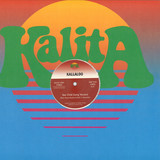
Kalita Records are proud and honoured to announce the first
ever and official reissue of Kallaloo's sought-after 1982
disco single 'Star Child', accompanied by interview-based
liner notes. Originally released on Jeffrey Turpin's
Trinidadian record label IDA, 'Star Child' has since become
highly sought-after by both DJs and collectors alike as an
invisible, yet astonishing piece of Caribbean disco. Unable
at the time to gain the traction and success that it deserved,
we hope that this re-release provides an opportunity to bring
such a great record to a much wider audience.
Kallaloo consisted of various Trinidadian musicians including
Keith Alexander and Peter Wayne Barkley. Keith had been
well-respected as a member of the Trinidadian group Impact, and
was later to become an in-demand producer and composer under
the name of Keith Diamond, responsible for various hits by Billy
Ocean, Donna Summer, Starpoint and Melba Moore. In contrast,
Peter was a well-known recording session drummer, but after
'Star Child's' release he moved to North Carolina to pursue other
interests and 'was never heard from again'.
'Star Child' was recorded at Right Track Recording, in mid-town
Manhattan, New York. As Jeffrey recalls, the atmosphere in the
studio was 'great', with 'everyone upbeat, the cream of the crop
just looking for that break... everyone was talented and just
wanted the chance to express their own ideas'. Five hundred
copies of the record were released on IDA with a white label
design, and they were sold both in Brooklyn, New York and Port
of Spain, Trinidad. It was also released on a red label, however
this was not to Jeffrey's knowledge at the time.
Jeffrey explains that the reason why the record didn't fare well at
the time was because of the difficulty in getting the song played
on the radio. As he recalls, radio stations were much more likely
to play 'radio versions' of songs which lasted for a couple of
minutes, rather than five or seven minute 'extended' versions
such as 'Star Child', which were more suitable to a club
environment. In addition, as Jeffrey explains, radio airplay is a
'political business', and also within a short while band members
such as Keith got their own breaks, and the Kallaloo era was over
as quickly as it had started.
Milton Bradley debuts on AVION's Crossing with three ferocious techno cuts under his Doomsday Device moniker this November.
Since its launch in 2013, Crossing has mainly acted as a platform for its founder, Index Marcel Fengler and Stress Research producer AVION, however the imprint has also hosted techno artists like Thomas Hessler, Pfirter, Doka, The Automatic Message and Stefan Rein. The label now presents a full release from Milton Bradley, appearing under his Doomsday Device guise. Founder of Do Not Resist The Beat!, the German producer has also appeared on labels like Prologue, MDR, Ann Aimee, and many more.
First up, The X-Planet' uses relentless drums, arcane vocal murmurs and bursts of white noise to
set the tone for a truly militant release. Device 4' is then a twisted journey from start to finish, with its pitter- patter sequences and oscillating sci-fi inspired atmospherics, making way for The Yesterday Machine' with its menacing aesthetic complete with ebbing synths, crashing hats and off-beat snares.
- A1: Arcueil
- A2: Gymnopedie Iii - 1888
- A3: Etre Jaloux De Son Camarada Qui A Une Grosse Tete - 1913
- A4: Gnossienne I - 1890
- A5: Lui Manger Sa Tartine - 1913
- A6: L'initiation Fragmento - 1891
- A7: Valse Du Chocolate Aux Amandes - 1913
- A8: Gnossienne Ii - 1890
- B1: Gymnopedie I - 1888
- B2: Gymnopedie Ii - 1888
- B3: Gnossienne Ii - 1890
- B4: Le Chant Guerrier Du Roi Des Haricorts - 1913
- B5: Profiter De Cel Qui'il A Des Cors Aux Pied Pour Lui Pendre Son Cerceu - 1913
- B6: Petite Prelude A La Journee - 1913
- B7: Prelude A La Porte Heroque Du Ciel Fragmento - 1894
- B8: Arcueil
Originally released in 1986 under Luis Delgado's cult imprint El Cometa de Madrid'
Produced by Luis Delgado (Finnis Africae, Mecánica Popular) and performed by Patricia Escudero, this beautiful record dives into Erik Satie's compositional work thru an experimental optic.
Entirely recorded on Synthesizers, and making heavy use of FX and timbral manipulation, this recording brings out a Satie that's never heard before.
-This record was remastered and cut from the original tapes. However, those tapes were highly affected for what is known as the Sticky Shed Syndrome, and were very deteriorated.
Even though that was professionally taken care of, it was a very long process to get a result that exceeded our standards to be pressed. That being said, there are very few parts were you might find an slight change on sound that was impossible to eliminate completely, due to the above mentioned issue
Life is simple. Sometimes you have some big idea, then you produce good music staff and this process needs no cooperation at all. It happens especially if your name is Jacek Sienkiewicz. Then You just make your very own EP with you original mixes only. Thi s is it, so simple.
What can you expect this time
You know, as usual on IDO label, carefully crafted, superior sound quality and music that every techno junkie can't miss.
How can we describe the music Is it this time a deep space journey or just long travel to land of ice and rocks Well. Maybe we'll leave all synesthetic experiences to you...
Some things, however, can be predicted. If you're familiar with Jacek's creations, listening the tracks from this EP will make on you at lest two impressions. First of all, you'll be charmed because you'll find the music here for which you love Jacek so much. Then another tracks and the second impression that will make you say out loud "Wow this is really Jacek's music". So, boys ang girls, isn't it a double win situation And for the end of this story we have a short advice related to experiencing this EP. Just play whole EP once and then... do it again.
Debuting in 2014, DJ BEATATTACK has constantly been a highly-rated rookie on the Japanese scene. Using his huge vinyl collection, he takes samples from his records then magically cooks them to build up a beat with his buddy, MPC, which is a bit like making Sushi. DJ BEATATTACK has released 4 7-inch vinyls since he debuted in 2014, helping to build his reputation.
The 5th 7-inch is 'MASTERPLAN'. Side-A brings the true groove of what real hiphop fans nodded their heads to with a combination of addictively thick drum programings with smooth base lines and horn samples throughout.
'MUCHO GUSTO', Side-B, was first released as one of the tracks from DJ Beatattack's debut CD album, 'FUNDAMENTAL ELEMENTS'.
However, with huge demand for a 7-inch from fans, it's been decided to press it on the 7. Salsa based sampling makes you feel like you are somewhere in the Caribbean islands and urges you to want to dance to it's funky sound
* Belia Winnewisser is returning to Präsens Editionen with Radikale Akzeptanz. The record is her debut album as a solo artist and it marks her second release on 'the curious label arm of Lucerne's zweikommasieben magazine.'
* Radikale Akzeptanz, a furious amalgamation of (synth-)pop references and more abstract sounds, combines long running traits from Winnewisser's practice in various band projects with rather new interests from her studies in sound art. Thus, bittersweet off-pop-hymns with bubble-y melodies can be found next to austere examinations. Add a good amount of time spent in clubs and you get a Skull Disco-esque banger at the end of this gutsy album.
The title Radikale Akzeptanz—or radical acceptance—stems from a concept in evidence-based psychotherapy. Even more than the concept as such that is about accepting uncompromisingly your situation, however, it is the expression's mere sound that is of interest to Winnewisser. Homey and adventurous, gentle and challenging, at ease with itself and full of tension(s).
Edition of 300copies, artwork (incl. booklet) by Vinzenz Meyner.
Quotes:
'Interesting stuff! It has a surprising bit of post-rock language in it to my ears, just executed with electronics.' - Byron Westbrook (Hands In The Dark, Umor Rex)
'A pleasant listen! Especially 'III,' 'Trapped In My Mind,' 'The View' and 'Albasty.' Also, found that the idea behind the title is weighty to the extent it can be related to relevant issues of today's ways of interaction!' - Arcagelo de Castris (Macao, Dance Affliction)
'Sounds like John T Gast, Caterina Barbieri and Klara Lewis making tunes on a space ship!' - James Marrs of Laura Lies In
'This is really good.' - Hypermedium's Timos Alexandropoulos
Press / Promotion*Airplays on NTS Radio by Flora Yin-Wong, Hypermedium and more, airplay on Radio Raheem by Arcagelo, feature on Noods RadioVarious (release) events upcoming, incl. a show at London's Café Oto, an exhibition in Lucerne and gigs next to Lorenzo Senni, Puce Mary and more.
Premiere of 'WAHDWTH' on Bizaarbazaar.PE / zweikommasieben mailing list = 2000 subscribers
Social NetworkingPräsens Editionen - Facebook = 550 likes / Insta = 500 / Spotify = 350 subscriberszweikommasieben - Facebook = 5200 likes / Insta = 2000 / Twitter: = 680 followers
Circle Sky is an electronic band and communications network.
Based in London, with operatives working worldwide, the network is anonymous by nature, but inclusive and open source by design.Iris is the current voice of the network, its messenger, its communicator and its focal point. She is always in the present.
The network is evolving in real time and its actions are guided by the response from its members, for whom all like minds are welcome to participate.The network has started online but will continue offline as connections are made IRL with performances and transmissions. Circle Sky represents positive use of technology. There will inevitably be glitches in the network however. Which is where the fun starts...
The objective is to create a world and inclusive communications network around the band, using current and future technology.
Circle Sky is music first. The network is brought together by the music, and is there to support the musical connection with fans around the world. Circle Sky is a network.
Harlem's legendary Disco label Queen Constance has long been a cult favourite among fans of underground dance music for decades.
One of many labels operating under the equally legendary P&P family of imprints Queen Constance was operated by one Peter Brown, a truly colossal figure in NYC's music scene, it's catalogue still fascinates music lovers to this day. Covering a wide range of styles including Gospel, early Rap and Disco the label's output continually finds it way into the playlists of respected DJ's and selectors across the globe. Wayne Forde's super heavyweight 'Dance To The Music Freakout' is the second reissue from the label for 2018!
Yet again, not much is known about Wayne Forde, or his band 'Stereo'. Could it be another Peter and Patrick studio project Another selection of local, neighbourhood players and singers Who knows What we do know, however, is that this record is a TOTAL disco bomb. All of what you want from a Queen Constance record is here, it's dripping in funk, raw and soulful. Essential stuff for anyone with even a passing interest in disco or anything funky. These jams are super long, percussive dance-floor melters that will do damage! Super rare, too. You won't find one of these nestled in the racks in your local chazzer, which is exactly why these (legit) represses should be in your cart. Essential.
This is a 100% legit reissue, made in conjunction with Above Board distribution and the Demon Music group, lovingly remastered with love by Optimum Mastering, Bristol UK.
To put it simply, 'True Meanings', the fourteenth Paul Weller solo album, the twenty sixth studio album of his entire career, is a record unlike any he has ever made before.
'True Meanings', is released on September 14th and is an album characterised by grandiose-yet-delicate, lush orchestration: an aesthetic to which Paul's better-than-ever voice, singing some of his most nakedly honest words, is perfectly suited. A dreamy, peaceful, pastoral set of songs to get lost in, it is both an album that a lot of his faithful audience have been wanting him to make for a long time, and an album that many new people outside of that audience will relate to.
On the 25th May this year, Paul Weller turned 60: a milestone that has unquestionably had an impact on the feel, both lyrically and musically, of 'True Meanings' which comes across being the most singer-songwriter-style album he has ever made. However, it is also the most collaborative: with more guests than any record he's been involved in before.
As well as all the members of Weller's band, Rod Argent of the Zombies provides Hammond organ on 'The Soul Searchers' and piano and Mellotron on 'White Horses'; folk legends Martin Carthy and Danny Thompson add picked guitar and double bass respectively to 'Come Along'; Little Barrie plays lead guitar on 'Old Castles'; Lucy Rose sings backup on 'Books'; and 'Movin On' is the result of a 'scratchy demo'on Paul's phone that was sent to Tom Doyle of the White Label project. Even Noel Gallagher makes a sneaky appearance.
Perhaps most surprisingly of all, especially given how personal and introspective 'True Meanings' feels, lyrics for four of the fourteen songs here were written, to Weller's melodies, by others. Connor O'Brien from Villagers came up with the words to opener 'The Soul Searchers', while 'Bowie', 'Wishing Well' and the closing 'White Horses' are all the work, lyrically, of Erland Cooper from Erland & The Carnival.
'True Meanings' was produced by Paul Weller except 'The Soul Searchers', which was co-produced by Paul and Conor O'Brien and 'Movin On' which was co-produced by Weller and White Label. The album was engineered and recorded by Charles Rees and mixed by Jan Stan Kybert.
The album was recorded in just over 3 weeks at Paul's own Black Barn Studio, with the aforementioned, revolving cast of characters dropping in for a day here and there. The orchestration was added soon after, and that was that. It is always a good sign when the recording of an album is swift, and here you can just hear that the man at the centre of these songs is as focused and inspired - more inspired, even - than he has ever been.
In July 2014, Jungle released their self-titled debut album. Featuring the singles 'Platoon', 'Busy Earnin'', 'Time', 'The Heat' and 'Julia', neo-soul classics all, it was the aspirational sound of young London, a soundtrack of escapism, an unmistakable Jungle sound and a unique, vivid, visual Jungle world. The whole thing was dreamed up by Josh 'J' Lloyd-Watson and Tom 'T' McFarland, a production and multi-instrumentalist duo who never expected to leave their bedroom studios, far less become the core of a talent-filled seven-strong collective that morphed into a killer live outfit. Cue online word-of-mouth and IRL buzz, rave reviews, a Mercury Music Prize nomination, songs of the summer (two summers, even), viral videos, Noel Gallagher declaring the album 'fucking amazing', half a million sales, burgeoning DJ careers, a global tour that lasted two solid years. It all just happened.
Today, Jungle announce news of the follow-up to that defining debut record. The album is titled For Ever and will be released on 14th September via XL Recordings. If Jungle's first album was their imaginary soundtrack to the places they had never been, For Ever is inspired by real life experiences of the places they'd dreamed of for so long. Swapping Shepherds Bush for the Hollywood Hills, J and T set up camp in Los Angeles to write and record the album. Over time however, their romanticization of The Californian Dream clashed with the reality of actually living it, the feeling of being adrift on the West Coast compounded by the collapse of long-term relationships. Returning home to London, they teamed up with highly regarded young producer Inflo where they sought to create a "post-apocalyptic radio station playing break up songs', whittling down loads of ideas this concept spawned into the core 13 tracks you have before you. That station and those songs and that journey are the sound of Jungle's second album For Ever. They had to go away to come home. And what J and T lost in love, they gained in music. For Ever is for real, deeper and higher, more intimate and more expansive, feelgood and, just occasionally, feelbad. It is, then, a proper second album.
Spectral Empire are George Thompson (aka Black Merlin / Karamika) and Kyle Martin (Vactrol Park / Land of Light). With the release of Iron Muscle they are celebrating 10 years since their debut ep Innerfearence saw the light of day in 2008 on the now defunct THISISNOTANEXIT record label. Legend tells all track were made around the same time (2008-2009), at what was back then Kyle's studio in Archway, London, however opinions remain divided over the validity of this info. What is remembered for a fact is that they'v used practically every home appliance and improvised noise they could find, record and harness, in order to create the feeling of what they describe as a ' Robot walking' for the title track Iron Muscle. Anything from kitchen drawers to DVD's and cutlery was sampled and then drenched in effects and manipulated in order to create what came out as a cinematic futuristic piece to dive into again and again, a soundtrack for an unwritten sci-fi movie, or just a dramatic soundtrack for your everyday lives.. With See the invisible, rules do not apply. An arpeggiated groove sitting on a steady half time 60bpm beat, its like the perfect soundtrack to the perfect car chase. Mediterranean riverbed guitars- not-guitars, sirens, and a heavy (dreamy) atmosphere fill the voids and keeps the track pushing forward throughout... The 4th track on the record is a never before seen the light of day epic remix by Die Wilde Jagd, that back then still included Ralf Beck (Unit 4) as an active member of the band (back when they were still known as Der Rau¨ber und Der Prinz). The release will be a vinyl only release, and is already getting massive support from the likes of Vladimir Ivkovic, Michael Mayer, John Talabot, Red Axes, Manfredas, Trevor Jackson, Lena Wilikkens, Man Power and many more...
Peak Time Business Is Good Time Business. Rave Signals, Some Repeating Vocal And What An Unsophisticated Kicki Drum. We Gonna Make You Sweat Since 'we Got Something'. The Obvious Sure Thang. Tool Added. For Fans Of Dj Haus & Rekids. On The Flip However We Go Frank De Wulf All The Way. Throw Yourself Into The Waters Of Youth. In Other Words: Trance Dance Music With A Touch Of Classic Belgium. Icing On The Cake: Marlon Hoffstadt Adds A Broken Electro Future Remix.
Marti Caine's infamous Point Of View is a groovy blend of slow-mo funk, dark disco and precise pop. Originally released on BBC Records in 1981, it has attracted a considerable cult following this century. The odd charity shop score aside, it has been impossible to find a copy for less than eye-watering sums (often selling for over £200) and, as such, it's an honour to present the first officially licensed vinyl reissue of this sublime record. Featuring expert liner notes written by Bill Brewster - perhaps the record's most notable champion - this lovingly curated release is limited to just 500 copies.
Marti Caine was a popular UK TV entertainer in the late 1970s onwards and Point Of View presented her with an opportunity to proceed in a hip direction by working with British R&B heavyweight Barry Blue. His legendary reputation was secured with a string of great records, among them the first three Heatwave albums, the Balearic hit "Afro Dizzi Act" by Cry Cisco and the cult smash "Breakin' In" by Javaroo. However, despite the array of talent working on the album, Point Of View sank without trace at the time. It's something that Blue attributes to the bizarre way BBC Records worked, and he entertainingly expands upon this within the liner notes.
Musically, the highlights are many and memorable. Its most notorious track is the sublime soul stepper "Love The Way You Love Me", the reason most people covet this album so profoundly. However, from the dark dubby disco of "Snowbird City" to the moody ballad "Love Is Running Through Me", the lesser heralded tracks are nothing short of exquisite. Indeed, the chugging elegance of sleazy disco opener "Can I Speak To The World Please" showcases a string-drenched strutting-funk that would've been enviable the world over. It's that good.
The outlandish artwork - presenting a striking, green-eyed Marti treating a tiger to a headlock - has been faithfully restored and is arguably worth the price of admission alone. With access to the original tape transfers, Simon Francis' sensitive mastering elevates the sound throughout and, as ever, it has been pressed at a reassuringly weighty 180g. Sadly, Marti died of lymphatic cancer at the tragically early age of 50 in 1995, so is not here to experience what we hope will be a long overdue reappraisal of the hitherto underheard genius of Marti Caine, the singer
Produced by Jenn Wasner of Wye Oak. LP is on coloured coke bottle green vinyl + inclues download code and 12x12' lyric sheet/ liner note insert.
Madeline will be on tour throughout the UK and Europe this Autumn.
'Building from understated beauty to dense guitar theatrics. It reminds me of Chicago circa '93 as remembered in a dream — a little bit of Liz Phair 'Exile In Guyville' - rendered in soft-focus with the graceful confidence of a young master. ' STEREOGUM
In January of 2018, five months after the release of her debut album Night Night at the First Landing, Madeline Kenney traveled from Oakland, California to the woods outside of Durham, North Carolina to record her sophomore album with a new collaborator, Wye Oak's Jenn Wasner.
The choice was a conscious decision to explore new methodology in writing, recording, production and even genre. Perfect Shapes sees Kenney leaping headfirst into fresh and adventurous territory, largely eschewing conventional rock structures in favor of theme and melody. Its ten songs are full of surprises big and small - from vibrant synth lines to taut bass figures and subtly modulated vocals - that instead of feeling fussed over, reveal Kenney's penchant for elegant and abstract composition.
Kenney's 2017 debut, Night Night at the First Landing, was a guitar-centric rock album, produced by friend and collaborator Chaz Bear of Toro Y Moi, Perfect Shapes leans on the foundational pieces of Night Night - fuzzed-out guitar tones, coy wordplay and Kenney's notably strong voice - but with an unconventional approach that allows them to bloom, reincarnated. Perfect Shapes marks Wasner's first foray into producing another artist's work and is permeated by the pair's collaborative spirit. Both Wasner and Kenney play multiple instruments on the record, and engineered the session alongside Kenney's touring percussionist, Camille Lewis.
An eagerness to explore and experiment is apparent from start to finish, as Kenney and Wasner weave endless sonic curve balls into the arrangements. From the delightfully warped percussion on opening track 'Overhead' to the burbling synths on the R&B-tinted 'The Flavor of the Fruit Tree' and the left-field trumpet solo in 'Your Art,' these rich and inventive ideas echo Yo La Tengo's everything-but-the-kitchen-sink mentality, as well as the surging soundscapes of Tame Impala and Wye Oak at their most impressionistic. Lead single "Cut Me Off" is a surprise of its own - the most pop-forward song Kenney has written yet. 'Bad Idea,' finds her balancing fragility as foil; later, 'I Went Home' manages to evoke both frustration and affection in a single breath.
The complex and open-ended questions that lay at the core of Perfect Shapes mark Kenney's arrival into a hard-hitting reflective space: How do you love another when it hurts to do so What is the physical limit to which one can carry the emotions of others How does a modern female artist reckon with the expectations demanded of her femininity Yet for all the notes of doubt and fear that Kenney raises, she delivers each song with confidence and poise, grounded by the pointedly laid and surging soundscape.
Kenney has always had a penchant for curiosity and experimentation. Raised in the Pacific Northwest, she began studying classical piano and dance in kindergarten, and grew to believe her future lay in modern dance choreography. Not one to be tied to a singular pursuit, however, Kenney took a hard left in college, studying Interpersonal Neurobiology and supporting herself with a career in baking. Music remained a constant however, and after moving to the Bay Area in 2013, Kenney quickly found footing in the supportive arts community in Oakland. There, she met and began collaborating with Chaz Bear (Toro Y Moi), which led to the production of her Signals EP and later her debut album, Night Night at the First Landing. Both releases were received with great critical acclaim, and saw Kenney exploring the sounds within her self-proclaimed twang-haze genre, defined by cathartic fuzz breakdowns and lyrical sensitivity.
- Silent Night
- O Come O Come Emmanuel
- We're Goin' To The Country
- Lo How A Rose E'er Blooming
- It's Christmas! Let's Be Glad!
- Holy, Holy, Etc
- Amazing Grace
- Angels We Have Heard On High
- Put The Lights On The Tree
- Come Thou Font Of Every Blessing
- I Saw Three Ships
- Only At Christmas Time
- Once In David's Royal City
- Hark! The Herald Angels Sing!
- What Child Is This Anyway?
- Bring A Torch, Jeanette, Isabella
- O Come, O Come Emmanuel
- Come On! Let's Boogey To The Elf Dance!
- We Three Kings
- O Holy Night
- That Was The Worst Christmas Ever!
- Ding! Dong!
- All The King's Horns
- The Friendly Beasts
- The Little Drummer Boy
- Away In A Manger
- Hey Guys! It's Christmas Time!
- The First Noel
- Did I Make You Cry On Christmas Day? (Well You Deserved It!)
- The Incarnation
- Joy To The World
- Once In Royal David's City
- Get Behind Me, Santa!
- Jingle Bells
- Christmas In July
- Lo! How A Rose E'er Blooming
- Jupiter Winter
- Volume 5, Side B
- Sister Winter
- O Come, O Come Emmanuel
- Star Of Wonder
- Holy, Holy, Holy
- The Winter Solstice
For over a decade and almost every Christmas, Sufjan
Stevens recorded a Christmas album that he gifted to
friends and family. The recording process took place
every December, for one week, usually at home,
provoking collaborations with friends, roommates and
musical peers. In 2006, Stevens' label, Asthmatic Kitty
Records, released 'Songs For Christmas', a CD boxset
compiling the first five of these albums, Volumes I-V.
And in 2012, the label released 'Silver & Gold', a CD
and vinyl boxset compiling of Volumes VI-X. However,
the first five volumes have never been released to
vinyl.
This holiday season, Asthmatic Kitty Records are
finally releasing 'Songs for Christmas' (Volumes I-V) as
a 5xLP vinyl boxset. The boxset includes fan favourites
like 'Sister Winter', 'That Was The Worst Christmas
Ever', 'Only At Christmas Time' and 'Put The Lights On
The Tree'.
'Hardly a straight-ahead Christmas album, then...
Whatever, it's Sufjan Stevens. He's a modern wonder,
and now he's just made Christmas better as well!' -
BBC
'The season's most thrilling holiday release.' -
Entertainment Weekly
'There are moments of quirky holiday splendour -
moments akin to some of the best material on
'Greetings From Michigan And Illinois' - that make
plowing through the entire five-EP set a pleasure.' -
Allmusic
Limited Edition 400 Only Translucent Violet Coloured Vinyl Lp. Housed In A Full Colour Outer Sleeve With Mind Bending Artwork And Download Code.
Third Earthling Society Album For Riot Season Following The Previous And Now Sold Out 'england Have My Bones' (2014) & 'ascent To Godhead' (2017)
'mo - The Demon' Was Recorded At Leeds College Of Music Between November 2017 - February 2018. The Basis Of The Album Was To Record An Imaginary Soundtrack To The Shaw Brothers Bat Shit Psychedicrazy Kung Fu Horror 'the Boxer's Omen' Aka Mo Or Demon.
The Story Is An Everyday One.
After A Hong Kong Kick Boxer Is Paralysed By A Cheating Thai Competitor, His Mobster Brother Vows Revenge And Journeys To Thailand For A Duel. Along The Way, Our Hero Is Met By Bizarre Visions, Entered Into A Buddhist Monastery, And Begins A Quest To Save The Soul Of A Deceased Monk (his Twin Brother In A Past Life) Who Died At The Hands Of A Powerful Black Magician.
We've All Been There. However The Movie Descends Into A Kind Of Spiritual Jodorowsky Mushroom Fest That Is Completely Deranged And Is Therefore One Of Those Perfect Midnight Movies.
So We Got Free Studio Time At Lcm In November And Just Went 'fuck It' Lets Make An Imaginary Soundtrack In Homage To Such A Great Movie.
Taking Inspiration From All The Things Musical That Have Inspired Us Over The Years. Berlin Era Bowie, Prime Magazine Circa 'correct Use Of Soap', Electric Funk Miles, 'caravanserai' Santana, Embryo And God Knows What Else (it Doesn't Really Matter As It All Ends Up Earthling Society), We Think We've Made A Groovy As Fuck Concept.
Then, Invited Back In February We Decided To Record 2 Stand Alone Pieces 'spring Snow' And 'jetavina Grove' And Bring All Our Space Rock Elements And Psych Raga Back Into The Fray. Throw In Some Super Cool Korean Vocals Courtesy Of Bomi Seo Of Tirikiliatops And Run The Guitars Through A Harmonizer H910 (as Used By Visconti On Low An Heroes) And Its The Perfect Swansong To The Last 14 Years Of Playing Live And Recording Together.
The spiritual and uplifting music of Clifford White is highlighted with two of his most sought after songs, taken from his 1989 album The Lifespring, and presented here in a special extended 12" for the first time. Starting in music production at just 15, White could be described as a protegee, however his take is that they were part of a music journey that continues today. With a centre found in electronic music and spirituality, his progress, from simple home use 4-track stereo to working in professional 16-tracks studios was swift, but matched by a deeper appreciation, greater confidence and wider palette of music styles. Utilising his love of early samplers, his first use of the Akai S612 to accompany and expand his keyboard recordings saw continued development from his debut album at just 17 with Ascension (1985), to the follow up Spring Fantasy (1987) and on to The Lifespring (1989). A small review in the local paper literally led to a knock at the door and offer of a deal from the Start (State Of The Art ) label to record his next album. With a subsequent advance, professional studio equipment was hired and out of these sessions his sound expanded to include ambient, orchestral, synth pop and even ballads. From this both Lifestream and Rain Trek emerged. With a love of Jean Michel Jarre's Oxygene in mind, Lifestream's smooth beginning soon gives way to the pulse of an arpeggio driven groove. Aiming for "relaxation with an edge", the track has become a secret play for the more Balearic minded DJ in the decades since and now sees the LP trade for dizzying sums. However, the original is achingly brief, gracefully fading as part of the album's journey. Here though, with DJs and collectors in mind, White returns to the song to craft a specially extended version that completes the song and will be appreciated at sunsets across the globe. Seeking to take the music and listener to another place, Rain Trek took White's interest in Sci-Fi and the mystic powers of water to a rightful conclusion. The healing nature of his music is apparent, the mystery, yearning and travelling, all emotions evident, but with a kick that will grace the more enlightened dance.
DESCRIPTION
FALK Records will be releasing 'Spaces' from Icelandic experimental producer AAIIEENN this August.
AAIIEENN is the solo project of electronic musician Hallmar Gauti Halldórsson. Halldórsson first came to
music though being a mover and shaker in Iceland's punk and hardcore scene where he was the 'harsh
noise guy' with local band Distill the World. With AAIIEENN however, Halldórsson moved away from the
guitars and screaming to a fully electronic world of experimental synth music and gorging on the
mathematical possibilities and expanses of arpeggio/sequencer driven ambient music.
'Calab-Yau' and 'Continuous Property 1' drip shards of pure crystalline sound into deep crevasses as
harmonic droplets ping of gleaming surfaces coated with spongiform bass. The light and effervescent
'Euclidean' evokes classic Ambient Works Aphex Twin, while 'Manifold' is more direct with a muscular and
sturdy bassline. Spaces closes with the fluttering and lush ambient sounds of 'Zariksi' that are carried into
the skies by a pulsing and gliding techno beat.
Powel returns to All Day I Dream with an EP that perfectly encapsulates the label's emotive sound.
Beautiful and dreamy journeys to close your eyes to and float. Ever the perfectionist Powel's tracks have been heard at the events in various revised forms until, finally, he was happy. That makes us happy too.
If you're expecting peak time bangers please move on immediately. However, if you love tinkling bells, smooth flourishes of emotion and great beats then you've come to the right place.
The free fall, to dive head first into something, is scary for most people.
For some it is the most exciting thing however and the only possible path anyways. Florian is one of those driven artists who never sounds the same, his signature tone is the free fall into new soundscapes, new ways of using his analog electronic instruments and carving out the essence for the dancing individual.
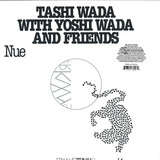
Composer Tashi Wada has performed for years with his father Yoshi Wada—artist, composer, and early member of the Fluxus movement. However, they have rarely appeared together in studio settings. Nue, the fourteenth entry in RVNG Intl.'s intergenerational FRKWYS series, finally brings Tashi and Yoshi, along with an eclectic group of close friends and extended family, together on tape.
Nue draws on aspects of Tashi's background for his widest vision to date—among them the minimalist bagpipe music of Yoshi, who co-composed three of the tracks, the psychoacoustic and perceptual explorations of his mentor, composer James Tenney, and reimagined forms of ancient and devotional music. The album, however, is not a tribute to the past or a recapitulation of familiar sounds. Instead, Nue is an intertwining of people and ideas as a means of growing, of looking inward to move outward, and of looking back to move forward.
To achieve this growth, Tashi assembled a core group of fellow travelers, including Yoshi, composer Julia Holter, producer Cole MGN, and percussionist Corey Fogel, to give life to this multifaceted suite. As an experience, Nue subtly navigates the interactions, intimacy and spaciousness of this group.
The album's title itself is a nod to Tashi's abiding interest in duality and the unknown: nue is a mythological Japanese chimera with the face of a monkey, the legs of a tiger, and a snake for a tail, a composite form, at once disturbing and otherworldly. But, as the composer points out, nue is also French for naked—stripped of complexity, bare and exposed, but also raw and essential.
From the doubling of tones—and the world of harmonic nuances such an action produces—to the rich interplay between individual musicians, all baring their own personalities and experiences through shared performance, Tashi's compositions allow space for these elements to join and grow. The multipartite creature that is an ensemble melds in the simplicity and purity of the music itself.
As explained by Tashi, each part was written with an individual in mind, not simply an instrument. And each individual performer makes their mark, from Holter's vocal performances on the cresting, oceanic 'Mutable Signs' and 'Ondine' with guest vocalists Simone Forti, Jessika Kenney and Laura Steenberge, to Fogel's resonant, precise percussion on 'Bottom of the Sky.' Producer Cole MGN, who has worked extensively with artists like Beck and Ariel Pink, helped to create a world of sound with minimal yet multi-dimensional materials. Like many of its influences, Nue uses deceivingly simple means to create complex, coherent worlds and narratives.
Tashi notes the influence of legendary Brazilian writer Clarice Lispector, whose work looked inward, investigating memory and emotion and dream, to understand the often overwhelming world outside the self. Like Lispector's classic novel Near to the Wild Heart, Nue cleaves these archetypal dualities—world/self, old/new, complex/simple—to create a work that allows them to coalesce into something singular.
As Tashi states in his liner notes: 'My desire was to create something both old and new sounding—ancient and futuristic—and ultimately something of its own world and other. Nue is a vision, an endless night of dreams, and a personal history of sorts, full of joys and demons.'
Those of you who have followed Lucky Brown's tireless efforts since joining the Tramp family in 2007 can hear without a doubt the progress he and his various ensembles have made in almost every musical aspect. His songwriting skills amazed us right from the start of our relationship. What deserves much more respect is that during the past years he has proved to be probably one of the most authentic and steady but at the same time most innovative creative minds on the contemporary funk scene. Sure, many of today's funk bands are able to deliver a two-and-a-half minute funk killer, what distinguishes Lucky Brown, however, is his ability to create compositions which also employ the idiom as a means to deliver an artistic message, a hard-to describe feeling, or a conscious concept, just like James Brown and Fela Kuti mastered in the 1970s. Furthermore, Lucky has developed his own trademark production and sound whose depth and honesty form a basis from which his work will ever remain timeless.
But that's nothing new as you can hear on both of his first two albums for Tamp ("Lucky Brown's Space Dream, 2011 and "Mystery Road", 2015) On "Mesquite Suite" he is forging new paths by soaking up musical styles from all over the world to infuse with his own totally unique way of producing. Perfect examples are the Mulatu Astatke-ish tracks "Pauraque" and "Mother Corn Stalk" with its distinctive New Orleans Swamp-Jazz flavor. Fans of the Menahan Street Band or El Michels Affair may see in "Taterbug" and "Estrellas De La Tierra" their favourite tracks. But it's the entirety which makes this album standout.
It has been Lucky Brown's aim to paint for the world a picture of the vernacular jazz that America's neighborhoods once crafted as their own homegrown cultural heritage. Lucky Brown's music is a rejection of the elitism, classism, and status of the music industrial complex and is an antitoxin to it's resultant homogeneity. He wants with his heart and his art to transmit an everyday people's sound, made by everyday people, dedicated to the upliftment of all people.
Tobias Kirmayer, August 2018
key-selling points:
- limited to 500 hand-numbered copies
- incl. full album download code
- double vinyl LP with deluxe gatefold cover
If you check the credits of The Rolling Stones' Goats Head Soup LP from 1973 you'll find a certain "Pascal" listed on the percussion section. That is none other than Los Angeles based artist Nicolas Pascal Raicevik (1933-1994), aka 107-34-8933, aka Head, aka Nik Pascal, aka Nik Raicevic. Besides his hitting the bongoes on the Stones album, Nik was a great artist on his own, both as a painter and as a musician. As a musician, he was a pioneer in the use of synthesizers, preceeding the Berlin school by some years when his Head LP was released on on Buddah in 1970. Buddah probably saw in Head the opportunity to cash in some money from the remains of the psychedelic scene - the three tracks on the LP are named after drugs used in the late sixties. The sounds, however, are accomplished works that show Raicevic as one of the most interesting pioneers in the use of synths. The album probably didn't do too well, since Buddah didn't renew the contract with Raicevic, who instead took his own way releasing his works on his very own Narco Records and Tapes label. Between 1968 and 1975 Narco would issue 4 LPs credited either to Nik Raicevic (Beyond The End... Eternity) or Nik Pascal (The Sixth Ear, Magnetic Web and Zero Gravity) plus one credited to 107-34-8933 (Numbers, which is in fact the same LP as Buddah's Head, albeit with different cover art). Copies of these LPs came with an ironic sticker over the shrinkwrap that read "Do not listen to this LP if you are stoned".
1972 saw the release of The Sixth Ear (Narco NR666), this time credited to Nik Pascal. A more complex work than Beyond The End..., it adds consistent rhythmic patterns to the mix with the addition of bongoes and also explores some interesting chord progressions.
Besides his musical explorations, Nik was also an interesting painter. His paintings are auctioned from time to time, and are consciousness expanding works influenced by abstract cubism and surrealism, some kind of Salvador Dalí on drugs exploring the outter and inner space. All the artwork on the sleeves of his LPs is done by himself. Spacey landscapes and psychedelic colours that fit perfectly to the music they contain.
"Nik Raicevic's music is at the intersection of radical psycho-electronic weirdness and kraut kosmische music (in particular the scifi-hypno-minimal modules of Conrad Schnitzler in Grun, Rot and Blau). It presents mega epic & tripped out electronic improvisations.
"This is an absolute must for collectors and fans of visceral, neurotic soundscapes." (progarchives)
"As far as late-60s / early-70s American Bedroom' Electronic Music goes, these LPS have to be among the first transmissions from this sector, made all the more attractive when coupled with Raicevic's alien topographIes - the covers are high-color portrayals of Venusian lanes, knotted growths, & future-past architecture in a style you might equate with Vintage' sci-fi pulp-novel covers - & copious Downer' sentiment. This music is imbued with a sort of lonely, anti-social sensibility that's about as far as you can get from the Academic' Early Electronic vector. I will say that if the Steve Birchall, Cellutron & the Invisible, and/or Pythagoron™ seed your garden, this will likely do the same." (twoheadeddog)
Never reissued before on vinyl format, the Wah Wah reissue features original sleeve artwork made of paintings and drawings by Nik himself and reproduction of the famous ironic "Do not listen if you are stoned" sticker. Limited edition, 500 copies only.
If you check the credits of The Rolling Stones' Goats Head Soup LP from 1973 you'll find a certain "Pascal" listed on the percussion section. That is none other than Los Angeles based artist Nicolas Pascal Raicevik (1933-1994), aka 107-34-8933, aka Head, aka Nik Pascal, aka Nik Raicevic. Besides his hitting the bongoes on the Stones album, Nik was a great artist on his own, both as a painter and as a musician. As a musician, he was a pioneer in the use of synthesizers, preceeding the Berlin school by some years when his Head LP was released on on Buddah in 1970. Buddah probably saw in Head the opportunity to cash in some money from the remains of the psychedelic scene - the three tracks on the LP are named after drugs used in the late sixties. The sounds, however, are accomplished works that show Raicevic as one of the most interesting pioneers in the use of synths. The album probably didn't do too well, since Buddah didn't renew the contract with Raicevic, who instead took his own way releasing his works on his very own Narco Records and Tapes label. Between 1968 and 1975 Narco would issue 4 LPs credited either to Nik Raicevic (Beyond The End... Eternity) or Nik Pascal (The Sixth Ear, Magnetic Web and Zero Gravity) plus one credited to 107-34-8933 (Numbers, which is in fact the same LP as Buddah's Head, albeit with different cover art). Copies of these LPs came with an ironic sticker over the shrinkwrap that read "Do not listen to this LP if you are stoned".
Magnetic Web was released in 1973. It appeared under the Nik Pascal monicker and showed a clear evolution in sound, favoured by the addition of an Arp 2600 and some rhythm boxes. It also included percussions and cymbals. The Two Headed Dog site thinks "this is his masterpiece in all of its acid-laced glory."
Besides his musical explorations, Nik was also an interesting painter. His paintings are auctioned from time to time, and are consciousness expanding works influenced by abstract cubism and surrealism, some kind of Salvador Dalí on drugs exploring the outter and inner space. All the artwork on the sleeves of his LPs is done by himself. Spacey landscapes and psychedelic colours that fit perfectly to the music they contain.
"Nik Raicevic's music is at the intersection of radical psycho-electronic weirdness and kraut kosmische music (in particular the scifi-hypno-minimal modules of Conrad Schnitzler in Grun, Rot and Blau). It presents mega epic & tripped out electronic improvisations.
"This is an absolute must for collectors and fans of visceral, neurotic soundscapes."
"As far as late-60s / early-70s American Bedroom' Electronic Music goes, these LPS have to be among the first transmissions from this sector, made all the more attractive when coupled with Raicevic's alien topographIes - the covers are high-color portrayals of Venusian lanes, knotted growths, & future-past architecture in a style you might equate with Vintage' sci-fi pulp-novel covers - & copious Downer' sentiment. This music is imbued with a sort of lonely, anti-social sensibility that's about as far as you can get from the Academic' Early Electronic vector. I will say that if the Steve Birchall, Cellutron & the Invisible, and/or Pythagoron™ seed your garden, this will likely do the same."
Never reissued before on vinyl format, the Wah Wah reissue features original sleeve artwork made of paintings and drawings by Nik himself, and reproduction of the famous ironic "Do not listen if you are stoned" sticker. Limited edition, 500 copies only.
If you check the credits of The Rolling Stones' Goats Head Soup LP from 1973 you'll find a certain "Pascal" listed on the percussion section. That is none other than Los Angeles based artist Nicolas Pascal Raicevik (1933-1994), aka 107-34-8933, aka Head, aka Nik Pascal, aka Nik Raicevic. Besides his hitting the bongoes on the Stones album, Nik was a great artist on his own, both as a painter and as a musician. As a musician, he was a pioneer in the use of synthesizers, preceeding the Berlin school by some years when his Head LP was released on on Buddah in 1970. Buddah probably saw in Head the opportunity to cash in some money from the remains of the psychedelic scene - the three tracks on the LP are named after drugs used in the late sixties. The sounds, however, are accomplished works that show Raicevic as one of the most interesting pioneers in the use of synths. The album probably didn't do too well, since Buddah didn't renew the contract with Raicevic, who instead took his own way releasing his works on his very own Narco Records and Tapes label. Between 1968 and 1975 Narco would issue 4 LPs credited either to Nik Raicevic (Beyond The End... Eternity) or Nik Pascal (The Sixth Ear, Magnetic Web and Zero Gravity) plus one credited to 107-34-8933 (Numbers, which is in fact the same LP as Buddah's Head, albeit with different cover art). Copies of these LPs came with an ironic sticker over the shrinkwrap that read "Do not listen to this LP if you are stoned".
Nik's last album, Zero Gravity (Narco NR123) came under the Nik Pascal name and had a fantastic side long piece on the title track which reminisces of the works of Cluster. B side features four tracks that also bear some Conrad Schnitzler reminiscences. This was to be Nik's last LP before he would sell all his synths to ex car racer and future electronic/ambient music star Steve Roach.
Besides his musical explorations, Nik was also an interesting painter. His paintings are auctioned from time to time, and are consciousness expanding works influenced by abstract cubism and surrealism, some kind of Salvador Dalí on drugs exploring the outter and inner space. All the artwork on the sleeves of his LPs is done by himself. Spacey landscapes and psychedelic colours that fit perfectly to the music they contain.
"Nik Raicevic's music is at the intersection of radical psycho-electronic weirdness and kraut kosmische music (in particular the scifi-hypno-minimal modules of Conrad Schnitzler in Grun, Rot and Blau). It presents mega epic & tripped out electronic improvisations.
"This is an absolute must for collectors and fans of visceral, neurotic soundscapes."
"As far as late-60s / early-70s American Bedroom' Electronic Music goes, these LPS have to be among the first transmissions from this sector, made all the more attractive when coupled with Raicevic's alien topographIes - the covers are high-color portrayals of Venusian lanes, knotted growths, & future-past architecture in a style you might equate with Vintage' sci-fi pulp-novel covers - & copious Downer' sentiment. This music is imbued with a sort of lonely, anti-social sensibility that's about as far as you can get from the Academic' Early Electronic vector. I will say that if the Steve Birchall, Cellutron & the Invisible, and/or Pythagoron™ seed your garden, this will likely do the same."
Never reissued before on vinyl format, the Wah Wah reissue features original sleeve artwork made of paintings and drawings by Nik himself, and reproduction of the famous ironic "Do not listen if you are stoned" sticker. Limited edition, 500 copies only.
Since the late 80s, Mudhoney - the Seattle-based foursome
whose muck-crusted version of rock, shot through with caustic
wit and battened down by a ferocious low end - has been a
high-pH tonic against the ludicrous and the insipid. Thirty years
later, the world is experiencing a particularly high-water
moment for both those ideals. Just in time, vocalist Mark Arm,
guitarist Steve Turner, bassist Guy Maddison and drummer Dan
Peters are back with 'Digital Garbage', a barbed-wire-trimmed
collection of sonic brickbats.
Arm's raw yawp and his bandmates' long-honed chemistry
make 'Digital Garbage' an ideal release valve for the 2018
pressure cooker. 'My sense of humor is dark, and these are
dark times,' says Arm. 'I suppose it's only getting darker.'
'I would've really just loved to write songs about just hanging
out on the beach, and going on a nice vacation,' says Arm.
'But, you know, that probably doesn't make for great rock.'
Mudhoney, however, know what does make great rock - and
the riffs and fury of 'Digital Garbage' will stand the test of time,
even if the particulars fade away. 'I've tried to keep things
somewhat universal, so that this album doesn't just seem like
of this time - hopefully some of this stuff will go away,' Arm
laughs. 'You don't want to say in the future, 'Hey, those lyrics
are still relevant. Great!''
Mudhoney will be touring Europe in 2018.
CD in die-cut gatefold digipak with custom dust sleeve. LP in
die-cut gatefold jacket with custom dust sleeve and digital
download coupon. Cassette in four-panel J-card in clear case.
Digital download album.
In recent years, Annelie lended her vocal talents, instrumental proficiency and musical versatility to other artists. On her debut album After Midnight, she deliberately explores and gravitates within the limitations of a single instrument. The album originated in some measure from half-finished songs and loose fragments of melodies. These impressions, however, continued to resonate with Annelie over a longer period and eventually forged into beautiful abstraction. 'At Night', the record's opening cut, lasts nine minutes and thirteen seconds; yet the sense of time immediately disappears once you get acquainted with the music's deft, spiralling progressions.
The After Midnight vinyl package includes an insert.
- A1: Salute (Feat Mc Gq)
- A2: Better Life (Feat Maduk & I-Kay)
- A3: Holy Star
- A4: Hold Up The Crown (Feat Ky Lenz)
- B1: Just A Step Away (Feat Ownglow)
- B2: Starting It Over (Feat Hannah Symons)
- B3: Devil's Drop
- B4: Money Calling Me (Feat Times X Two)
- C1: Many Signs (Feat Pete Josef)
- C2: Roll The Drums
- C3: Lizard Steppa
- D1: Idragon
- D2: Supreme
- D3: Atomic Funk
- D4: Tranquility (Feat Scarboy)
Drum & bass pioneer and Hospital Record's crown jewel Danny Byrd is back! He's set 2018 ablaze with monolith anthems 'Devil's Drop', 'Salute' ft MC GQ and 'Hold Up The Crown' ft Ky Lenz, now he proudly presents his first album in five years.
A 15-track funk-fuelled compendium of rolling dancefloor-fillers that tributes to the jungle foundation moulding his early discography. Collaborations with the likes of I-Kay, Maduk, Ownglow, Times x Two and MC GQ, fuse with powerful
doses of Danny's hip-hop and R&B infused 174BPM productions. 'Atomic Funk' is undoubtedly Mr Byrd's finest work to date and includes one of the biggest future D+B anthems 'Holy Star' that's brought to life with vocal delights from MC Foxy.
'Just A Step Away' (ft. Ownglow) has become a silver bullet for the Byrd, taking a spotlight in his DJ sets as his finishing move. With its gorgeous vocals, volatile rave synths and humming sub-bass, it's not hard to see why. However, that's
far from the only weapon in this legend's locker. 'Roll The Drums' is a certified sub shaker bringing a fierce bassline and thundering percussion, plus there's raw jungle madness with 'In The Meantime' (ft. Hannah Symons). With fifteen incredible tracks from Hospital Records' longest standing signing, 'Atomic Funk'
is Danny Byrd at his best. Crafted for the dancefloor and Feel-good from start to finish, a must-have for a true Hospital fan.
The 8 track album features new collaborations with DJ Phil, Gantman, DJ Paypal, and Sirr Tmo, and a previously unreleased classic from 2013, co-written with DJ Rashad. WFM will be available in Vinyl and digital formats on September 7th 2018. Listening to WFM, the first thing that jumps out at you is Heavee's masterful use of synthesizers and sound design. You get the sense that these elements have been lovingly crafted during countless hours of sonic experimentation and invention in the studio. As Heavee explains, the primary focus on synths represents a departure from his usual creative process: 'Usually in my method of production, synths or sounds come somewhat close to last, likely after I find structure or rhythm. Basically, it's not something I particularly go for first, but this time around they became the building blocks'. Heavee has made a conscious decision to challenge himself, adopting a different approach to his past productions. In doing so, he moves away from the familiar sampling techniques which characterised his earlier work: 'I am a child of the last days of ghetto house culture as it shifted into juke/footwork. My parents, aunties, and uncles played house and ghetto house music at family functions, BBQs and house parties. That's my roots and where I came from. However, on this record, I chose to stray away from vocal samples, to give myself room to grow in different areas.' Heavee finds his voice in emphatic fashion on Cloud Ride feat. DJ Phil. His lyrical content and flow are on point as the track flips seamlessly from hip hop to footwork and back again. DJ Phil features on 3 tracks in total, a reflection of Heavee and Phil's close friendship and musical connection. As Heavee explains: 'Phil's studio is a safe space for me. Whether he is in the room or not, I don't feel weird about trying something that might be silly, taking it to the next level, or coming from a place of pure inspiration. Phil has historical, musical and cultural knowledge relevant to Chicago. He shares a lot of invaluable knowledge with me' WFM features It's Wack a classic collaboration with DJ Rashad that still sounds fresh today. Heavee remembers how Rashad would always stay connected, even during his relentless touring schedule: 'We'd get calls no matter where he was. We would talk about everything! He ALWAYS had new info; what new music was popping, scenes that were really accepting or supportive of what we were doing, blends that made the party go off, sites, adventures and just fuel us with support from him and give us living proof of the global support that was to come and the journey that was ahead of us.' Although Heavee makes music with the dancefloor firmly in mind, the sheer quality of his music transcends that space. So sit back and enjoy the next chapter in the Teklife story. All that remains is for Heavee to sign out with a message for the worldwide Teklife family: 'First, Thank you to everyone who supports what I do as an Individual, and Teklife Music as an entirety. You don't understand how much your support means to us, it literally keeps us moving. The takeover is far from over! Second, thank you to everyone involved in this project, I couldn't have made it without you. This process taught me so much about what it takes to become the person you want to be. It starts inside of you, and you have to really work for it, you can't wait and wonder. I feel beyond blessed to present this gift to the world, walking this journey of self -discovery through music with you!!!
Texas-based electronic music producer Phillip Washington aka Cygnus was on bit of a hiatus since his phenomenal "Cosmos" long play on Fundamental Records, released near the end of 2016. With this EP, titled "ne0 ge0", he's breaking the silence and we're extremely happy to see it happening through Barba imprint. The record consists of 4 cuts; "Zone Shifting", "Vertexing", "ne0-ge0" and "Astronoot" which all share common qualities of his previous work - deep, spacey, richly textured and really well crafted. "Zone Shifting" is what electro in 2018 should sound like. Deep, emotional and futuristic but well grounded in the human condition through the vocal line which seems to haunt from the distance. "Vertexing" is a slightly more paced, moodier affair with slow enveloping Vangelis-esque synth lines bleeding all over traditional electro sounding beat. However, in this case that's exactly what's needed. Title track, "ne0-ge0" is the first one on the flip side and the busiest one. Creasing of multiple synth lines and pads is done in such an expertly elegant manner that you just can't resist but play it loud on a big soundsystem and see what it does to the dancefloor. And finally, record closes with "Astronoot", and as B2 tracks usually are - it's the deepest of them all, reserved for those heady moments when you need something to bring the magic to the next level.
The keeping of pets marks humans' attempt at taking possession of a part of reality that is not at his disposal. Dressing a piece of the real that lives according to entirely non-human rules and which only in the saddest case does not resist the discipline of the human symbolic order vehemently and in a sustained matter, is a violent act of protection. Because in the non-place of the real, all that which we are helpless in the face of looms: the non-logical and the nameless, the violence and the noise, yet also the unrestrained and unfiltered desire.The innocuous figure of the pet marks a gateway to an investigation of these eerie milieus, while electronic dance music lends itself to this investigation in an outstanding way. This constellation marks the subject of Column's 'Pets II.'
Column is the name of Cologne based renaissance man Jan Philipp Janzen, who, as chief emissary of Cologne's pop internationalism, has been playing the field in various functions for Von Spar, Cologne Tapes, Urlaub in Polen, Owen Pallett, Scout Niblett or The Field, and who has also, in one way or another, been involved in most relevant records coming out of Cologne for the past number of years. After his excellent solo debut 'Pets I' (Areal, 2016), Janzen presents another extraordinary record in 'Pets II,' perfectly complemented by another ghostly oil work of Burkhard Mönnich on the cover.Sonically, 'Pets II' marks a clear development for Column. In its exploration of the thresholds of the real, it sets two points of focus, corresponding with the split in sides A and B.
Side A, on which Janzen teams up with long-time friend myr. (PNN), explores the uncanny as a fissure of the symbolic order, and the subsequent breaking in of the real. It opens with two peaktime rockets that have their wooden, nether-regional groove narrated by grim, down-pitched vocals. The ethereal remix by Leibniz (hundert) seems to be observing the situation from a hiding place, and is the side's clandestine and no less dark closer.
Side B, for which Janzen invited studiomate Marvin Horsch (Dorfjungs/Beats in Space) along, delivers two swaying synthesizer workouts, the second of which, 'Molly and Swerve,' is directed firmly at the dancefloor again. What is at stake here is the transition between a free, undirected jouissance of the real and a more ordered becoming-lust. Here, as in Map.ache's (Kann/Giegling/Altin Village) remix which closes out 'Pets II,' it becomes clear what connections dance music can foster between a free, impersonal desire and the sphere of interpersonal wanting, but also the losses that are negotiated in it. Above all, however, it becomes evident what a courageous daring project 'Pets II' is in all of its conceptual and aesthetic determination; with Von Spar's standout 'Garzweiler' 12' (Altin Village & Mine, 2017), it documents a New Cologne Realism.
Columbus, Ohio may not be spoken of in the same glowing terms as Detroit when it comes to '90s Techno from the Mid-West. However, the Columbus-based 21/22 Corp label was responsible for some of Future Primitive's favourite techno from this era. We've tracked down the multi-genre 'president and production manager' behind 21/22 Corp, Charles Noel, for our next release. Formed of two exclusive productions, this Archetype 12" is the essence of techno at its most individual
The young virtuoso producer Prins Emanuel follows up his acclaimed debut album on Music For Dreams with something quite different than what we're used to hearing from him. While Arbete & Fritid was an epic odyssey into the furthest corners of disco with an array of studio wizardry and complex rhythms, Diagonal Musik is a sparse and delicate exploration of the acoustic guitar. Steering away from his comfort zone, the Prins follows his intuition for experimentation and lands somewhere in a field of genre-defiant folk-jazz meditations; a development that fits like hand in glove for the eccentric nature of Music For Dreams. The album reads like a soundtrack to the country house Emanuel shares with his family and friends, a place on the map called Oran. From atop a hillside overlooking a lake, Oran is lodged deep in the heart of the Skåne landscape, the southern part of Sweden that once belonged to Denmark. This place encompasses the whole of the album, as the track titles all pinpoint crucial locations on the courtyard and its surroundings. 'Orön' which opens the album is named after the small half-island that sits in the centre of the lake. There's the hand-built sauna ("Bastun") at the edge of the yard, and behind that in a slope the old root cellar ("Jordkällaren"). While the nature here is anything but balearic, the overwhelming calm of the country life seems to inspire the same laid-back attitude and passion for all things organic (and not just musically, as this is where Emanuel also makes cider from local apples according to the vin naturel school). Upon listening to Diagonal Musik one might be keen to draw references to works in similar style, such as the output of late 80's new age label Windham Hill or the dreamy lullabies of long-time friend and Music For Dreams affiliate 55 Cancri e. This is all circumstantial however, surprising as it may seem.
In search of the sublime, contemporary electronic musician Steve Hauschildt has designed grids and panoramas of sound across multiple releases through the rise and dissolution of his former band, Emeralds, an American touchstone of 2000s home-recorded psychedelic noise music. Consistent with his solo work is Hauschildt's ability to coil his craft in precise, varied, and distinctly physical forms. Gently spinning arpeggios converse with post-industrial decay. Sonic bers sway like pendulums from static melancholy to motorik bliss. Dissolvi, the artist's rst full-length with Ghostly International, engages sublimation from an ontological perspective: by dissociating the self. Hauschildt steps out from the singular path, for the rst time in a traditional studio, to compose and arrange contributions from friends. As a result, his most collaborative work to date extends a vast, vibrating framework in which to consider the state of being.
The album's title — a reference to cupio dissolvi, the Latin phrase meaning "I wish to be dissolved" — needn't be taken one-dimensionally or as purely solipsistic. It does, however, serve an apt reference. Physiological phenomena are of interest to Hauschildt. These back-of-mind ruminations nd their way out. Songs are cerebral in orientation, but beyond explanation, the music is truly visceral.
Involuntary eye movement inspires the serene, sanguine-nearing-suspicious "Saccade." Hauschildt feathers soft percussion beneath the echoed refrains of Los Angeles musician Julianna Barwick, together shaping a svelte suggestion of the anxieties brought about by modern-day surveillance; if everyone is being watched constantly, there is no individual, no self, only a broadly monitored and clumsily cataloged populous. The work of Chicago poet Carl Sandburg comes to mind: 'I am the people—the mob—the crowd—the mass.' The individual dissolves into the taxonomic crowd.
Minimalist techno impulses provide a stylistic through-line for Dissolvi. Understated synth phrases and drum grooves take hold in selective moments, like synchronistic structures onto which nebulous mists, like the rapturous voice of Gabrielle Herbst aka GABI on "Syncope," cling to and cloud, producing a dazzling rift in consciousness. The 7-minute centerpiece "Alienself" reiterates this creative logic, burbling like an amorphous body of water on a low-gravity planet, on the verge of dissolving, but never fully dematerializing.
The album was constructed in Chicago (where Hauschildt now resides) and partially in New York. "Much of it was recorded in a windowless studio which removed elemental or seasonal references to time in the music," says Hauschildt. "The focus this time was on mixing the album and incorporating a broader set of instrumentation. I describe my compositional approach as being quasi-generative." Embracing new methods and philosophical curiosities, and in turn, expanding the range of his repertoire, Hauschildt proposes a fascinating and profoundly rich experience in listening, being, and deliquescing.
Seilscheibenpfeiler 003 comes from Canadian native Graham Douglas via his moniker Nautiluss. Having released several EPs on Turbo and Hemlock, he's now bringing his bass influenced sound from Toronto to Berlin.
In Liquid Sky and Reak, Nautiluss puts his skillful use of percussive elements into action, completed by playful synth lines and thus creating heavy bass vibes which won't let you keep your feet still. However, there's no such thing as a comfort-zone for him! Inky, surely the hidden gem on this EP, shows a different side of his production skills: Starting like a 4/4 warehouse banger, it gets a full on twist a` la Nautiluss. An energetic ending to his first release on Seilscheibenpfeiler...
Set for release on June 23 via Asylum Records, x (multiply) is the hugely anticipated new album by Ed Sheeran.
It follows his critically acclaimed and hugely successful 2011 debut +; an album that was certified 6 times platinum in the UK alone and has achieved worldwide sales of over 4 million copies to date. It also saw Ed asthe recipient of various awards for the record, including 2 Brits, an Ivor Novello and multiple Grammy nominations.
Never an artist to stand still, Ed recorded x at various locations around the globe (all the while drawing on experiences and influences encountered on his over three years of unrelenting touring) with such luminary producers as Rick Rubin (Eminem, Jay-Z, Red Hot Chilli Peppers), Pharrell Williams (Daft Punk, Robin Thicke, N.E.R.D), Benny Blanco (Rhianna, Wiz Khalifa) and Jeff Bhasker (Alicia Keys, Jay-Z) adding new flavours to the classy work of key collaborators Johnny McDaid (Snow Patrol) and Jake Gosling (who produced +). xhas the musical ingredients to make it one of the most important global releases of this year.
The new set showcases the exponential growth (both vocally and musically) of an incredible artist, who at 23 exhibits the poise of a seasoned veteran. The songs for x came together whilst touring + and, in the same way as the latter was a snapshot of his life and relationship to-date, x charts his loves and life since. Only 'One', the perfect album opener and first song written for the record (in 2011 whilst on tour in Australia) looks back to that time and is the link between the two records. With 'One' under his belt, almost before he noticed he was writing, Ed had ten new songs and counting.
The breath-taking album-closer 'Afire Love' was written about his grandfather who passed away last Christmas. 'Always the hero of the family - such a cool guy - he'd been suffering with Alzheimer's for some time and I actually started writing that song two weeks before he passed away," Ed says. "I was thinking 'What if' and then he did...' Then there is the timeless ballad 'Photograph' written in May 2012 in a hotel room in Kansas whilst on tour with Snow Patrol. McDaid had a piano loop playing on his laptop while Ed was making a Lego X-wing Fighter to give to a charity auction. He just started singing as he put the pieces together and the song grew from there. 'Don't' started life as a riff on his phone and grew into another of x's massive moments. The deluxe version of the album also includes the original song, 'I See Fire', which Ed wrote, produced and recorded for the second Hobbit movie. This was after Academy award-winning filmmaker Peter Jackson personally commissioned him. With no promotion besides 3 tweets from his personal twitter account, it reached #2 on the UK iTunes chart.
However it's the Pharrell-produced lead single 'Sing', due out in the UK on June 1, that's pushing the envelope for Ed. #Sing was the number one trend on twitter globally ahead of launch with the track immediately tearing up airwaves nationwide including a 7-week add to Radio 1 and an unprecedented addition straight to the Super Hit list at Capital FM and Kiss Network. The audio upload on YouTube was Ed's biggest ever video launch, clocking 650k views in its first 24 hours. Already i-tunes Top 5 in 15 different countries (number 3 in the US), Top 20 in 36 countries and with all chart positions climbing, 'Sing' is well on the way to being a global smash.
On the back of 'Sing's' launch, x reached No.7 in the UK iTunes chart on pre-order alone with that success mirrored internationally with No.1 positions in the US and Canada, Top 5 in New Zealand, Sweden, Australia and Top 10 in 20 countries.
'I'm really proud of my new album and can't wait for people to hear it.' Ed says. 'It's definitely my best work.'
The second of Polytechnic Youth's ace new LPs for July, sees a mighty set from Austria based synth pop duo Mitra Mitra. Following previous releases on Peripheral Minimal and their own Micromort label, not to mention a lathe cut right here on PY that sold out in 20 minutes in Dec. 2015.
The band was formed in Vienna in late 2014 by Violet Candide and Mahk Rumbae. Originally from New Zealand, Violet Candide is a founding member of the Crazy Hospital DJ collective, and one of the organisers of the legendary 'Future Echo' club night in Vienna, and is one half of 'Anesthetic Hairpins'; whilst British musician Mahk Rumbae is known for his work as a member of the industrial/experimental project 'Konstruktivists', 'Oppenheimer MkII' (with Andy Oppenheimer of Oppenheimer Analysis) and his solo techno project 'Codex Empire'.
After working together on one of Violet's solo songs, 'Heat', the pair decided to continue working together and formed Mitra Mitra as a more full time project, with the aim of writing electronic songs not tied to any particular influence or style. However, if there was such a thing as a signature PY sound- arguably this LP (alongside last year's Vorderhaus full length), encapsulates it most. Beautifully icy cold synth pop straight outta' early prime era Mute / Blackwing studios output. Serene yet melodic, edgy, dry icy hooks and delicious grooves aplenty all over this record. Eight wonderful tracks where quality and sheer melodic guile of the song writing never dips and attention truly is held across the whole set, ....no mean feat indeed.
Available as a 300 pressing LP only, destined to sell out rapid style as have all previous releases by both artist and label.
At first, it's difficult to pinpoint exactly what makes Our Girl so special, or why the Brighton-formed, London-based trio's music stands out within a busy crowd of fellow guitar-wielding-types. But if an explanation didn't jump out when they first emerged with a debut EP of mighty fuzz-soaked songs in November 2016, it surfaces with 'Stranger Today', a debut album of personal, emotional juggernauts that could have only been made by these three people: Guitarist / vocalist Soph Nathan, bassist Josh Tyler and drummer Lauren Wilson.
Since forming in Nathan and Tyler's Brighton home four years ago - Wilson joining as a late recruit when she was wowed by a demo of their self-titled debut track, and 'Stranger Today''s opener - Our Girl's members have only had pockets of time to work together. A day booked in a local studio here, a soundcheck there, full-time jobs and other projects meant the three rarely had a concentrated, collective patch. This changed in September 2017, when they stayed in Eve Studios in Stockport for a week, recording with Bill Ryder-Jones. Their week in Stockport became a crucial catalyst for what would follow. Ryder-Jones is a guitar virtuoso himself ('He did stuff neither me or Soph had ever seen anyone do before,' Tyler remarks), and he became an unofficial fourth member of the group.
'Stranger Today' is a special debut for several reasons: First, because it's the sound of a band beginning to grasp their own value and place in the world. Secondly, because you can hear the trio's hunger to finally get in the same room and put to tape years' worth of scrapbooks, half-finished ideas, and a slowly-forming feel for how their first album would actually sound. 'What band isn't itching to make their debut But it's quite frightening, knowing you're about to do it,' Wilson remembers.
The real clincher, however, is Our Girl's dynamic, and how it plays out across 'Stranger Today'. Best friends in person, the trio share the same close kinship and chemistry on record. On one side is Nathan's visceral lyricism, which has a habit of detailing and chipping away at precise moments; the first heart-flutter of a new crush; the moment a long-term friendship begins to ebb away. Around her, Tyler and Wilson's rhythm section carefully mirrors each feeling Nathan conveys. When she sings pointedly about love ('I Really Like It'), she's backed by a major-key afterglow. When the subject turns on its head ('Josephine'), out steps a wall of taut, earth-shaking noise. They each 'serve the song,' in Wilson's words, moving in sync but with their own personal slant. Not least on the closer 'Boring', where all restraint is thrown aside and the trio let out one final, violent thrash. They inhabit a space bigger than the first loves, sleepless nights and growing pains that define this record.
Nathan remembers being in Brighton four years ago, shortly after Our Girl formed, and realising, 'I was finally in the band I wanted to be in.' Almost half a decade later, and this eureka moment is sewn up on 'Stranger Today'. It's the sound of three friends totally at ease in their own space, discontent with being anywhere else; a vibrant document of what it's like to be young, invigorated and amongst people who feel the same.
Apollo is proud to welcome Paul Frick to the fold. Frick is a Berlin-born music composer primarily known as one part of the group Brandt Brauer Frick. Stunningly despite a 20+ year history of making music 'Second Yard Botanicals' is his debut album. With BBF keeping Frick inspired and busy since 2009, other ideas had piled up until a temporary break allowed him to fully dive into them - "While it took so long until I made my first album, it took about two months once I started.Exploring a vast number of instruments, field recording and deconstructed breakbeats woven with undulating filters and gossamer melodies, the album sees Frick drawing on the world around him in a free associative style ; "A word I sometimes had in mind was - Alltagspoesie', the poetry of everyday life," he explains. "The thought that however small and unimportant things and people are, they - or we - all hint towards each other, if not to say towards the whole. The fact that half of the pieces on the record are short miniatures has to do with that. Throwing something in and hearing what it tells.
- A1: Music From Installations 1 (Lp 1)
- C1: Music From Installations 2 (Lp 2)
- E1: Million Paintings (Lp 3)
- G1: Lightless - Music For The Marble Palace 1 (Lp 4)
- I1: Lightless - Music For The Marble Palace 2 (Lp 5)
- K1: Dormienti (Lp 6)
- M1: Kite Stories (Lp 7)
- O1: Making Space (Lp 8)
- Q1: Music For Installations (Lp 9)
If you think of music as a moving, changing form, and painting as a still form, what I'm trying to do is make very still music and paintings that move. I'm trying to find in both of those forms, the space in between the traditional concept of music and the traditional concept of painting.' Brian Eno.
Musician, artist, thinker, activist Brian Eno first came to international prominence in the early '70s as a founding member of Roxy Music, and immediately followed by a series of highly acclaimed solo albums. His visionary production work includes albums with U2, David Bowie, Talking Heads, Coldplay and many others.
His recordings and other collaborations are endless and endlessly known, however his visual experiments with light and video covers an even longer span of time and have been exhibited all over the globe - from the Venice Biennale to the Marble Palace in St. Petersburg, from Beijing's Ritan Park to the Sydney Opera House. Eno's installations are the fertile ground from which so much of his other work has grown and continue to parallel his musical career.
Music For Installations is a collection of original recordings from these installations with new and unreleased work covering the period from 1986 until the present and beyond.
________________________________________________
Designed by Brian and long-time collaborator Nick Robertson, this limited edition 9LP Vinyl boxset comes with a 64-page booklet featuring rare and unseen exhibition photographs and a new essay written by Eno.
- 12 x 12 rigid box set of 9 LPs containing music from Brian Eno's installations past, present and future.
- 64 Page book containing a brand new essay by Eno plus rare and previously unseen photographs from his various exhibitions from 1997 to the present.
- Each album is housed in a beautiful die-cut sleeve designed with long-time collaborator Nick Robertson and all music is guaranteed first time on vinyl.
- 50% of the music contained in the box set has never been available in any format and the rest has only ever had very limited cd release direct to consumer release.
- Vinyl mastered and cut by Matt Colton at Alchemy Mastering, London
- 100 % First time on vinyl, strictly limited edition
Underworld And Iggy Pop Announce Details Of A 4 Track Ep, Teatime Dub Encounters, Due For
Release On July 27th Via Caroline International.
While Overseeing The Soundtrack For T2 Trainspotting, Underworld's Rick Smith Arranged A
Meeting With Iggy Pop In A Room At The Savoy Hotel On London's Strand To Discuss Working On
Collaborative Music For The Filmhe first track from Teatime Dub Encounters - Bells & Circles - was premiered live as part of
Underworld's recent headline performance at the BBC Biggest Weekend Belfast. A second track -
I'll See Big - is streaming everywhere now. Something of a flipside to Bells & Circles, I'll See Big is a
wash of gorgeous ambient sound that features Iggy recounting how friends - however
dysfunctional - have saved him from a lifetime of bad decisions. The lyric for I'll See Big was
inspired by a conversation Iggy had with Danny Boyle about the subtext of both Trainspotting films.
Opening track 'In The B' kicks off proceedings in no uncertain fashion. It's 100% wall shaker material, the type of techno music best paired with strobe lights and towering speaker stacks. It mesmerises with its low-slung undulating bassline and Detroit rhythms before giving way to some riotous old school Essex stabs and sharp claps. No messing, this is a certified 3 AM red light burner! Track 2 'Chocolate Biscuit' accelerates proceedings! Beginning with unfussy drums and a robotic, bleep-heavy melody driving it off into a wonderfully off-kilter direction. Its arpreggio'd rhythms may be brutish and wrestle a growling sense of menace out of the track, but the overall feel, however, suggests considerable care and attention has been paid to make it sound this way. There's clearly an uncommon musicality at play here to make something this complex feel so simple.
The BPM drops next on 'Jenny's Hall' but from the offset, there's enough funk and thrust in the motorised synth line to get bodies gently grooving without the beauty getting lost in the slower loop. This is blissed out, psychotropic techno - the kind of track where it feels like you're floating and falling at the same time, but all the while making sure you still remain fit for purpose on the dancefloor. Ian Blevins takes on remix duties this time and the Berlin-based DJ/producer offers up a sleek peak-time banger that fizzes, bubbles and percolates. He gives the rhythm on 'Jenny's Hall' less space to swing and ties it to a tight motorik beat turning it into a slice of shiny, modern techno but with extra shoulder-checking force. Its vibe drawing from a sense of outsider-party fun with a wry smile, and a knowing wink running throughout before bringing the package to a suitably left of field crescendo.
Warsaw based duo Private Press join Rekids Special Projects this July with four deep techno cuts entitled 'Zero Sum EP'.
Hailing from Poland, Adam Brocki and Jan Wóycicki make up Private Press - a project that's released sought after cuts on labels like Technosoul and Indigo Aera. The duo is also known by the name Raw Feelings, however many will be familiar with Brocki's Newborn Jr. alias, which has dropped releases on Rhythm Section, Echovolt, Dopeness Galore and Les Yeux Orange. 'Miracle Man sets the tone with delayed resonant synths accompanied by crunchy and distorted snares before 'Becomes The Prime' opts for a lo-fi sound with filtered synth blips and enigmatic vocal slices. On the flip side 'Tooms' delivers heavily reverberated horn-like stabs, modulated synth lines and an underpinning bass that rumbles throughout as 'Clan' offers a fast paced cut with high pitched whistling that echoes alongside a thumping kick drum and organic percussion to bring the package to a close..
"For the final part of SchleiBen 5 - 8, Emotional Response welcomes two Scottish based artists to close out the series. In Jon Keliehor you have a world and music traveler with history from psychedelic rock to fourth world exposure, alongside one of the best electronic producers of the last decade, Lord Of The Isles. As the drummer of West Coast folk rock / psychedelic band The Daily Flash, Keleihor spent much of the mid-60 based in and out of Seattle and Los Angles, playing alongside the likes of Jefferson Airplane, Cream and The Doors, before an increasing interest in meditation and philosophies outside of the 'rock' realm led him to England in the early 70s where he become involved in dance theatre. Teaching Advanced Rhythmic Music Studies at the London Contemporary Dance School, his music composition style became influenced by his studies of world music. Finally settling in Glasgow for over 20 years, while running the Luminous Music label and Gamelan Naga Mas, his earlier recordings for labels like Indipop, Touch and Bruton have seen a recent revival, with music appearing recently on contemporaries Optimo Music and Invisible Inc. The wonderful recordings included here span over 3 decades, from sessions at the Luminous Studio at The Diorama Theatre, London in the early 80s, through to recent field-work based recordings in the Cairngorms. Reconfigured and updated, a common thread appears through the pieces - a sense of longing and appreciation - as Jon's knowledge of outer-national instrumentation alongside equally extensive travels around the globe gives the recordings a seamless blend of organic craft. The tonal consonances within unlikely combinations of instruments, with tuned glasses (tarang), tabla, jaw harps, clay flutes and ocarinas, Chinese instruments that include Xiao-Bo and Xiao-Ping, large Noah bells, small and larges gongs all employed, the recordings have been reconstructed, edited and updated via sampling and digital processing. Featuring the playing of John "Jhalib" Millar - the extraordinarily gifted musician and tabla player - who has appeared with an EP on sister label, Emotional Rescue (ERC029), sadly recently deceased, the contribution acts as a tribute and more. To close, the music of Lord Of The Isles is an excellent companion to Jon's work. Neil McDonald's list of club-based releases on labels CockTail D'Amor, Ene, Firecracker, Permanent Vacation, ESP Institute and Phonica is comprehensive and exemplary, however within his productions has often been an other-worldly element, a space between the beats and occasional fully ambient pieces. Approached originally for series one of SchleiBen, the 7 pieces included were worth the wait, a journey in themselves and the perfect completion. Spanning almost 5 years, the majority were written during an extended exile in the Cairngorms. The lifting, ethereal, but melodic nature of the music fits that aesthetic. Blue skies, snow, long walks, space to think, but with a longing and appreciation of family and friends. The solitary nature found in SchleiBen 8 and the geographical incidence of both artist's recordings including sessions in the Scottish Highlands fits the series ideals and is a nice closure. Enjoy and listen. "
Dalmata Daniel continue their work with the 7th release in the main flow, and this time they assigned the new experiment to the Teslasonic lab.
In this research, Teslasonic examined the case of 'Quantum Paradox' with the help of another well-known scientist: The Hacker.
The code name of the project is DD007, in which Teslasonic, a citizen of the world, has invented certain new and useful tracks. These tracks are not just sounds, they also create visions, because while we're listening to 'Quantum Paradox' and 'Aether', we feel the energy of the melody, and in our minds, we travel with them through space and time to discover new things. Furthermore, through Blitz Ciphers' and Unified Field Theory's dark and raw electro sound, we find ourselves in the cold and sterile laboratory of the spaceship, where the miracle is born and science is cultivated.
However, thanks to The Hacker, we get a new viewpoint, as in his remix, he re-examines the main theme and at the same time he invents something different - a perfect echo of the original 'Quantum Paradox'.
Pietro 'Bingo' De Lisi and Alex Carpentieri aka Italian duo System of Survival, have long been renowned for their raucous live cuts, the likes of which have firmly established their name amongst fans of discerning house and techno. Regulars at Ibiza institution, Circoloco at DC10, the boys knack for a tune has also brought them to the attention of respected label outlets such as Bpitch Control, Freak n'Chic, Moodmusic, Rawax and Get Physical. However, their latest release - released here via the emerging Deset Music - might just be their best yet. The label's inaugural release sees the boys perk up with two stunning originals and are back by remixes from none other than two Chi-town legends, Boo Williams and Ricardo Miranda.
Opening up the sounds of the release is 'Nu Soul Era'. A raucous, deep cut that displays all that's excellent about System of Survival, this one goes firmly down the rabbit hole in search of kicks. Characterised by its quite brilliant and catchy baseline, the action is dark and trippy throughout, with a firm emphasis placed on a groove that never lets its guard down throughout. A majestic start to the EP, it gets us underway with some distinction.
System of Survival's other original is 'Funky Left Funky Right'. Again, the duo expertly showcase their penchant for melodic structures, this time via a bleepy baseline that's perfectly suited to peak-time floors. Ricardo Miranda's interpretation goes deep and off-kilter, but remains true to the original's full-on characteristics. A stunning indication of the producer's eclecticism and studio mastery, it's an intoxicating take on a track that's never lacking in suspense.
Seeing us out the door is Boo Williams' remix of 'Nu Soul Era'. The 'Mortal Trance' producer can always be relied on to bring the heat in his own inimitable way, and he does so here with the sort of panache for which he's best renowned. Injecting the original with every more bounce, he wastes no time in getting down to business, setting his stall out via an acid-led, 909-flavoured remix that offers up a tantalising version of what's arrived before. An all-round stunning EP of various shapes and sizes, there's plenty here for fans of discerning house and techno to get stuck into on this one.
Laura Jones returns for another EP outing on her label. Despite weighing in with an incendiary first release that found Mandar's SAM remixing Infuse's Karousel and a follow up from Jones that included one of the sadly departed Trevino's final remixes, the label took a backseat to the birth of her daugter in 2017. A year on however and the pace has picked up with an EP from renowned modular wizzard Kamran Sadeghi at the start of the year and this latest EP from the label boss. The two originals are a snapshot of her evolving style. Pathway places skippy beats and sub heavy kicks under a soaring chord sequence, abstract vocal samples and ethereal pad riff. Tough Crowd takes a moodier approach with a menacing sub bass and drum arrangement, bubbling filters building to a hook that unfolds halfway through to create a moment of formidable intensity. Lee Renacre's recent revival of his 100 Hz alias courtesy of well received outings on Slow Life and Bosconi among others, has found the producer on career-best form and he turns in a sublime remix that makes deft use of delicate top lines and bubbling oscillators to create a powerfully heady atmosphere.
Recorded in Cleveland, OH October 2017 by Andrew Veres.
Artwork by Ren Schofield.
Ren Schofield has returned with a new installment in his notorious "LP" series for Spectrum Spools. "LP" has all the earmarks of the classic Container sound with it's uber-mangled, saturated tape garble and headlong tempo macabre. However, this new set of tracks feature an attention to composition unlike much of the Container we've previously heard. While the tracks unfurl across two sides of wax the contours and jagged edges of each sonic sculpture display a new refinement while maintaining the full capacity to vaporize any club floor with Container's traditional recklessness.
Miraculously, this new "LP" manages to incorporate some more traditionally 'musical' elements thus far untouched upon in the projects output while simultaneously delivering it's most damaged and blown out offering yet. Despite leaving a trail of albums that get more intense with each passing year, this "LP" is bar none the most loaded. The tracks feature a trajectory with narrative, surrounded by broken acid basslines grating against disintegrating tape loops. This is the infectious and singular hypnosis Container has become well-known for. Overloaded drum patterns, washes of feedback, and dying melodies - it's all here and somehow it's restructured to be different and better than ever before. With this latest installment, there are no longer shambles but merely dust left behind.
As Container continues to evolve in an upward motion, "LP" presents a refreshing and welcome new chapter.
"Things take a psychedelic turn for SchleiBen 7 with a welcome to the label of arch exponents of mind expansion in NYC's Georgia and the unlikely but no less diverse inclusion of Balearic stalwarts A Man Called Adam. Having Georgia in the series might not now be a surprise, however discussions with this open, genuine duo started during a visit to New York over 3 years ago and so here, finally realised in this fluid journey of confident pace and harmony, is the best of their freeform evocations. A duo in the everyday sense, Brian Close and Justin Tripp are video / music production teamsters of unnatural talent. Having gained a status of their own that has seen them release for the likes of Palto Flats and FTD, the five pieces that form their contribution drip with psychedelic intent. Culled from archives, the interest is how the tracks - made over different years, locations and situations in life - meld in to something poetic simply by being placed within a specific format. Avant-chimes ebb to rhythmic pulses and erudite teachings before dark percussion and Eastern melodies reach a clattering, but gentle finale. With an upcoming collaborative album with Secret Circuit due on the label later in 2018, as well as recent works with RVNG Intl's Matt Werth and recordings for Sacred Summits' brethren Firecracker Recordings, it's a warm, effusive glow of a welcome. In contrast, the inclusion of A Man Called Adam in the series may indeed surprise but is a false comprehension. The "Sketches" included here show AMCA away from their Balearic pop incarnation of the last thirty years and towards the academia that both members Sally Rodgers and Steve Jones have pursued in the last decade. With both completing PHDs, Sally ('The Diachronic Impact of Technology-Led Abstraction in Oral, Written and Music-based Poetries') is a senior lecturer at Leeds College Of Music, while Steve ('Mobilise: The Carry Principle, Sound and Mobile Media') is based out of de Montfort University, now is the perfect time to highlight the diverse sound environments they have been working in. The music that makes up these recordings are drawn from sound works and audio experiments completed in recent years. From sound toys and apps to home made glass organs and electro-acoustic sound, custom patches to spoken word manipulations, the sketches are excerpts - some evolved from commissions for the National Science Museum, BBC Radio 4 and live performances with the world renowned video artist Milosh JL - fused especially for this release. Bringing these generated pieces in to an audible "mix" creates a discourse of their work in performance, interactions and visual media. An intellectualised album therefore, but still in the premise of the series to allow artists to present something new, unique, discrete, hidden even, all with the aim of giving the recipient the chance to sit back and (un)listen. "
Austin Based Experimental Collective Thousand Foot Whale Claw Is Back With The New Cosmic Full Length black Hole Party, Out June 29, 2018. Featuring Members Of S U R V I V E, Troller, Single Lash And Future Museums, This Is The Supergroup's Second Lp And Their Most Accomplished Work To Date. Inspired By Progressive 70's German Kraut-rock, Thousand Foot Whale Claw Maintains A Classic Style While Establishing An Original Voice. With Album Art By Renowned Contemporary Sci-fi/fantasy Illustrator Kilian Ang, black Hole Party's Aesthetic Is Cohesively Curated Throughout Its Dense, Multi-layered Track List, Ranging From Serene Sound Baths To Driving Dance Beats.
Tfwc Was Founded In San Marcos, Tx By A Core Group Of College Friends Who Bonded Over Loose Collaborative Jams Of Effects Driven Improvisations. Eventually These Unstructured Practices Evolved Into Refined Studio Sessions And Intense Live Performances, Leading To A Rich Discography And Enthusiastic Fanbase. Balancing Repetition With The Unexpected, Tfwc's Sustained Motifs Slowly Reveal The Band's Signature Free-form Experimentation. Known For Heavy Walls Of Guitar And Electronic Drones, Tfwc Spirals Into Circular Rhythms And Looping Riffs Stacked With Shredding Guitar Solos And Ambient Soundscapes. Explorations Spurring From A Central Theme Is The Basis For The Band's Compositional Approach, Always Seeking New Instruments, Sound Sources And Production Techniques For Each Piece. Recorded And Engineered At Stassney Studios In Austin, Tx With Producer/artist Dylan Cameron, black Hole Party Has Become The Band's Most Defining Body Of Work Thus Far.
On black Hole Party, The Polished Structure And Acute Development Of All Six Tracks Is Distinct And Tangible, Making This Record More Composed Than Any Of Their Previous Releases. Propulsive Songs Such As deridium Rail' And The Album's Title Track Are Driven By Four-on-the-floor Dance Beats And Arpeggiated Synthesizers, Contrasting Songs Like genesis Effect' That Predominantly Features The Natural Tones Of 12-string Acoustic Guitar And Harmonium. The Wide Variety Of Sonic Flavors Is Reflective Of Tfwc's Vast Musical Tastes, Refusing To Settle On One Approach And Allowing The Band's Idiosyncrasies To Shine Regardless Of Genre. To Classify Tfwc As An Instrumental Psych Band Is Only Partially Accurate, However There Are A Lack Of Proper Terms To Fully Encapsulate The Band's Broad Scope. Black Hole Party Is The Latest And Brightest Collection Of Songs From Thousand Foot Whale Claw, Meant To Be Enjoyed In A Multitude Of Environments For All Fans Of Expansive Listening.
3x12"
Mark Archer aka DJ Nex returns to Music Mondays for a limited edition, bespoke, shrink wrapped, collector's item, triple pack vinyl album of his legendry DJ Nex EP's.
Originally released in 1992 and 1993 The Nex EP and Poundstretcher EP have become incredibly sort after on vinyl. However, The Poundstretcher EP was always cut to low with 4 tracks aside. We are now taking both EP's and remastering them to 3 loud pieces of vinyl.
The sleeve will be a specially designed piece of art just for this project, while the label on the 3 records will represent the original releases, keeping that authentic DJ Nex vibe!!!
* Arikon is a solo project of Berlin-based drummer & producer, Arik Hayut - half of doom-tech duo Gainstage with Pierce Warnecke. Loyal to the sonic concepts of Gainstage, Arikon presents The Prophet's Blood Is Boiling, a solo enterprise into deepest 'drum & drone'. Hypnotizing distorted polyrhythms puncture through shards of fragmented melodies, producing potent mixtures of desperate tin can banging, a panoramic sonic scope, and the bleakest of soundsystem nightmares. Across the album, Arikon deploys an arsenal of samples plus electronic, acoustic, and self-constructed percussion instruments, constructing eight powerful productions that manage to embody both brute force and delicate decay.
* Formerly active in Tel Aviv's leftfield experimental scene during the 90's, Hayut made Berlin his permanent home for working on his own projects while composing and performing music for off-theater and contemporary dance. In 2004, a severe health crisis initially threw Hayut into crisis, slowing down his activity to a standstill. However, the precarious process of his fortunate recovery contributed to Hayut involving himself more deeply with concepts of time, death, and decay.
* Inspired by the decadent still life paintings of the Flemish Baroque, the cover artwork for The Prophet's Blood Is Boiling comprises a bowl of decomposing fruit. Like the music, its aim is to illustrate the beauty and perfection of the decay process, whilst also referring to the West's hyper-capitalistic, technology-centric culture. In recent years a new form of 'digital life' has been born, whereby all data - regardless of its worth or importance - is mummified, reproduced, and distributed with no real disintegration or loss in quality. This new digital life is resulting in a sort of 'frozen death', ending the hitherto natural cycle of life.
* The songs on themselves are inspired by the 'beasts of holiness' - mythological monsters that appear in the Hebrew bible and the Jewish apocrypha (non-canonical scriptures). There's the punching of bassy thuds out of an oceanic ambient swell throughout 'Tanin Gadol', named after the ancient water monster of Babylonian times. The dense net of fumbling scrapes and amp-busting hits of noise on 'Nahash Akalaton' similarly refer to a titular sea-snake monster, its tendrils lashing out of the speakers aggressively. These demons symbolize a force of evil equal in power, yet in direct opposition to the monotheistic deity of their time. They were therefore neither acknowledged nor canonized in much dominant scripture. Arikon invokes these demons across The Prophet's Blood Is Boiling, setting them loose across these gnarled noisy chambers of pummeling percussion and cracked sampled detritus.
WHITE RING mark a triumphant return with a brand new full-length Gate Of Grief, due out on Rocket Girl on 22 June 2018. Their debut album arrives a full eight years since their benchmark EP, Black Earth That Made Me, which sold out almost instantly, making their records some of the most highly sought after on the underground scene and earning them a cult following across the globe. Swerving from aggressively abrasive to beautifully ethereal, musically they draw from varied and challenging palette, whilst tackling themes of loss and acceptance due to struggles with drug addiction and existential dread on a broader scope.
WHITE RING were originally formed by Bryan Kurkimilis and Kendra Malia, before they were joined by Adina Viarengo, with Bryan and Adina currently touring as a duo. One of the most acclaimed proponents of the "Witch House" movement, WHITE RING blend heavy, distorted electronics with eerie, unsettling vocals. However, their new material, created over the course of seven years, pushes the boundaries further, subverting genre ideas and mashing them all together, with industrial, metal, rave, chopped and screwed, rap, grunge, neo folk, post punk and new wave all in the mix. As Bryan Kurkimilis explains; 'We treat our influences like tools to create a certain feeling. We are interested in covering more ground than sticking to a certain formula.'
Bryan and Kendra originally met on Myspace in 2006. At the time Bryan lived in New Orleans and Kendra was in New York, and they didn't even meet face-to-face until 2008 after they had already released a few singles. In 2010 they released the EP Black Earth That Made Me, which was a collection of songs that they mostly recorded before they met in person. The record confounded expectations by selling out immediately on pre-order, making it very rare and highly sought after, with copies going on Ebay for large sums. It was reissued by Rocket Girl in 2011 and still continues to sell in voluminous amounts.
They started playing live in 2009 and rapidly grew a reputation for their captivating performances, usually bringing their own lighting equipment and putting on a spectacular laser show. They have played for large crowds in their hometown of NYC and toured the UK in 2010 in support of their sold out split 7" with oOoOO, playing InTheCity and SWN festivals - which were their first shows outside of New York. They have since shared the stage with the likes of Cold Cave, araabMUZIK, Liturgy, Blank Dogs, Gatekeeper, Blondes, oOoOO, Clams Casino, and others.
They started recording Gate Of Grief in 2010, with the hope of exploring new musical territory, however they took a while to find their path. Bryan and Kendra had some tough personal battles to fight, a sense that pervades the whole album. Thematically it delves in to some pretty dark places whilst exploring the concept of time and what it does to people, relationships and society. As Bryan explains; 'There is a lot of tragedy in this album but there is also hope at the end of it.'
By 2016 pressure was building to finish recording, however due to Kendra's ill health, they needed to bring in someone new to assist with vocals. Fortunately they found Adina Viarengo, who had played in various bands and gave them the impetus needed to complete the album. Shortly after meeting in Brooklyn, Bryan and Adina moved to Joshua Tree, California to finish recording the album, before settling in Massachusetts. Her vocal style fitted in seamlessly with what Kendra had been doing, and although she sang on half the songs, it's almost impossible to tell who is singing on which track, thus making her the perfect addition to the band.
Gate of Grief can be considered the second part of Black Earth That Made Me, or rather, they are the first two chapters in an overarching trilogy about evolution. As Bryan explains; 'First you are born but then you realize what you are and what is against you and it's a flood of emotion that you can only hope to hold on for and let it pass.'
The album title, Gate of Grief, refers to the real gate between Africa and Saudi Arabia that is believed to be the spot where the first humans migrated out of Africa and went on to populate the rest of the world. The album art ties in with this concept, with an image depicting a group of settlers in the USA in early 1900 during a parade. They were actually from a cult in the early 1900s in Bryan's hometown of Fort Myers, Florida.
M 13) Burn It Down
Max Loderbauer, who has so far made consistently engaging contributions to the Arjunamusic family, is back to lend his unique interpretive skills to the master recordings for the Brightbird album by João Paulo Esteves da Silva, Mário Franco and Samuel Rohrer. Loderbauer has set himself up for a chal- lenge, since the original album's completely improvised flow of small-ensemble, conversational jazz feels complete enough without outside intervention. However, Loderbauer's role as electronics operator in the similarly attuned Ambiq trio has already shown that, through his mastery of tone color, he has a talent for teasing out the additional hidden details within an apparently 'complete' sonic environment. It's a task he mana- ges to accomplish without ever overriding or contradicting the cohesive message provided by his collaborators.
Adding to the challenge here, Loderbauer chooses to re- mix using only sounds from the original recordings. By doing so, it might seem he is willfully denying himself the chance to use his own signature tools and turn Brightbird's source materi- al into stunningly new electro-acoustic hybrid blooms. Yet Loderbauer succeeds here by becoming something more like a translator than an augmenter - he finds a way to make mea- ningful syntactical changes to the trio's rich and versatile vo- cabulary, and once again unveils a verdant world of hidden details in the process.
The A-side 'Trusting Heart/Cosmos' has an anxious tone introduced by a set of Doppler-effected piano notes that seem to melt in the sun, and is soon complemented by a va- riegated, chattering rhythm line. Here Loderbauer builds up a tactile tension between rhythmic certainty and sharp-angled, de-tuned, and occasionally scrambled instrumentation, framing a disorienting (yet engaging) virtual space where ob- jects' bright hues rapidly change as they contract and expand along multiple dimensions. For the b-side 'Noontide', Lo- derbauer switches to a more focused and streamlined idiom with an uncanny ease, riding along steady waves of sequencer patterning and silvery, resonant shiverings. Reverberating, ho- lographic piano again provides the tonal center here, and the notes ring with a forward-thinking optimism not far removed from classics of the 'Krautrock' era.
Current supporters of all the artists involved will find this to be an invigorating synopsis of their work to date, while newcomers will be treated to a soundworld where skillful fu- sion (the act itself, rather than the music genre with the same name) is constantly on display.
- A1: Princess Of Dawn
- A2: Winter Sun
- A3: Triad
- A4: Tom Bombadills Dance
- A5: Pearls
- A6: Arabia
- A7: Cray-Fish
- A8: Deep Sea
- A9: Starlight
- B1: Phoenix
- B2: Hoodle-Doodle
- B3: Gotic Velvet
- B4: Green Cherub
- B5: Desert-Rock
- B6: Synthi-Effect
- B7: Flea-Dance
- B8: Flea-Dance Ii
- B9: Laser
- B10: Up And Down
- B11: Desert-Rock Ii
- B12: Kolibri
- B13: Elefantentempel
- B14: Reed
- B15: Singing Bell
- B16: Evening
- B17: Together
New Lp-edition of a private press library recordings of the early '70s.
Together with Florian Fricke and Peter Michael Hamel, Deuter is certainly the main responsible of a fruitful encounter between European sensibility and Eastern aesthetics in the German music of the 1970s. Soundtrack was originally produced by Kuckuck in 1973 not for an official and public release, but as a library' to be used for films, TV and radio. As a library it respects the canonical and typological structure of the genre with 26 short sonic fragments, sequences imagined and conceived like fulminating illuminations. There's still a solid electronic vocation that, however, has put aside the most disruptive effluvia of D (1971) of pure kraut' ancestry. In fact, the album is more like an ideal passing bridge between some ritual instances of the previous Aum (1972) and the following successful phase of Deuter during the period when he stays in the Bhagwan Shree Rajneesh's ashram in Poona realizing, in parallel to a renewed inner life, masterpieces like Celebration, Haleakala, Ecstasy and Silence is the Answer. Musically speaking, Soundtrack presents itself as a heterogeneous work with nocturnal, cinematic, galactic and atmospheric-environmental implications. Electronics remains the predominant factor but can vary from mantra drones of more ceremonial and meditative space-relax' tones of some tracks (Triad, Deep Sea, Gothic Velvet or Evening) to the most amused formulations of pulsating analog synths that in the hands of Deuter become toy-equipement' to modulate and explore (Desert Rock, Synth Effect, Flea Dance or Laser). There is no lack of acoustic moments more ethnically inspired with Arabian and Indian (Reed, Arabia) or devotionally solar themes (Tom Bombaddils Dance), so evoking an air of diffuse peace then completely conquered in the beloved India.
Recorded in Philadelphia in 1969, The Deirdre Wilson Tabac's sole album is a beautiful blend of funk, jazz and soulful pop. Possessing the complex grooves, thrilling breaks and ethereal weirdness that The Rotary Connection pedalled so brilliantly, the LP failed to connect with audiences upon its original release.
In the decades since, it has deservedly attracted a considerable cult following. However, almost inevitably, it has become increasingly tricky to pick up a copy in good condition for anything less than eye-watering sums. As such, we're delighted to present the first officially licensed vinyl reissue of this undoubted masterpiece of freaky funk-rock, limited to just 500 copies.
The Tabac were, in fact, a trio. Discovered, managed and produced by Svengali Sonny Casella (who'd earlier managed garage band The Magic Mushrooms), they comprised Deirdre Wilson, Stu Freeman (formerly of said Mushrooms) and Barbara Payne (formerly with the James Brown Revue). They were backed by session players including jazz guitarist Chuck Anderson, bassist Hugh McDonald and keyboardist Roy Bittan (who went on to be a long-term Bruce Springsteen sideman).
Their first single coupled two fine Casella compositions, each featuring powerhouse vocal workouts, the supremely funk-fuelled blues beat of "The Other Side Of Life" and the psychedelic-flavoured "Look In My Face" - both of which are featured here. This 7" picked enough up airplay to merit an album, which duly appeared early the following year, but, as is often the way with these lost classics, it received barely any press. Correspondingly, sales where low and the trio didn't last long.
And herein lies the real tragedy. The rest of the LP deserves to be heard from start-to-finish - it's that good. A beguiling mix of funky folk and rocky jazz tracks, with some deep, string-drenched harmony soul ballads and a handful of remarkable covers elegantly presented througout. Indeed, they put some sauntered head-nod funk into The Beatles' "Get Back" whilst tearing through a version of "Sittin' On The Dock Of The Bay" which gives Otis' original a real run for its money.
But the real standout cut for most - with its soulful, haunting vocals, swinging hammond organ and stabbing horns, is the incredible 6/8 time jazz dancer "I Can't Keep From Cryin' Sometimes." Staggering.
Since his 2015 Night School debut E.P. Nouveauree, James Donadio - aka Prostitutes - has been traveling stages and rigs from Los Angeles to Berlin, from prestigious festival slots to slimy Glasgow basements, burning his own path through the modern techno and electronic scenes. On Aluminum Garage, Donadio is at his most playful, laying down unmistakably mid-tempo BPM early-electro jams indebted to early sampling before crashing the soundsystem with frantic, detourned Gabber. Unlike his previous LP for Spectrum Spools or indeed his Night School debut which rankled with austerity and minimalism, here Prostitutes is instinctive, multi-layered and unashamedly, brilliantly borrowing from myriad genres.
In past 3 years, Donadio has racked up critically praised releases on labels like Diagonal and CGI, refining his wares into a precise, bludgeoning toolkit that surprises and develops with each release. Aluminum Garage creeps into life with Born Wanderer, before a sub-heavy kick and bongo pattern blasts into a heavy break that feels like the earth moving from under your feet. With the utmost clarity, the track builds disparate layers - a white noise solo, warped sample piano chords straight from 1986 - into a Rave-o-matic climax, holding steady with the BPMs and immeasurably funky. Jah Elegant further blows apart any image we have of Prostitutes' music as austere' with a loping intro based on teased drum samples and a ghost MC. The Jungle break comes in by stealth before the heavy drop blasts the music into Drum + Bass momentum. It's both blistering fun and undeniably cheeky, a driving track that cuts up Remarc on a dimly lit table in suburban Ohio.
On Side 2, Errant Seagull takes the genre mess into techno territory though put through a heavily distorted grinder. Built around a skeleton of sampled bass guitar and thumping kick, the track layers drums upon drums, building in saturation until a searing synth strafes the criss-crossing rhythms. The effect is dizzying, insuring both a propellant, heavy forward motion and a grimey, angst-ridden climax. Before we're at the end of the track, the stereo field is so filthy with distortion and analogue muck the listener is desperate for a palette cleanser. Final track Shroud of Cellophane however, doesn't let up. With a ramped up BPM we're in a Cyberpunk Gabber club, nothing but 160 beats per minute, layers of frequency-tweaked noise and the light at the end of the tunnel racing towards us. It's sweet oblivion and we've earned it.
Following the U.S. Army's liberation of Munich in May 1945, the world's first Amerikahaus was inaugurated there with a library, a magazine reading room, a children's library, a record and lm department, and lecture and seminar rooms, together with a concert hall and exhibition space. Up to 80,000 people a month utilized the offerings of Amerikahaus during its early years. Beginning in 1953, the United States Information Agency (USIA), an institution founded as an instrument of the Cold War, began to finance Amerikahaus. In addition to representing the U.S., its principal task in West Germany was to democratize and denazify the postwar population. After the beginning of the Cold War, many of these re-educative measures also served as propaganda in a programmatic linking of democratic and economic principles meant to strengthen transatlantic relations against the Communist Bloc. In 1997, the U.S. government concluded its work at Amerikahaus in Munich and shipped almost all its items back to the States. However, 1,630 long-playing vinyl records from the library were left behind in cardboard boxes in the basement. When Michaela Melián looked through this forgotten collection, one of the first things she came across was Don Gillis' 1940 tone poem »Portrait of a Frontier Town«, whose second movement is entitled »Where the West Begins«. Don Gillis, a composer and radio producer, used the musical styles and genres of that decade to create an explicitly American program music. Michaela Melián's »Music from a Frontier Town« is fueled by the diverse sonic material of this extensive record collection once considered as an instrument of cultural education. This record has been produced in addition to Melián's twenty-four hour performative music installation »Music from a Frontier Town« in the garage of what is now the Bavarian Center for Transatlantic Relations at Karolinenplatz, Munich (4-5 May 2018).
On The 50th Anniversary Of The Band's Inception At An Event In Harlem, Ny To Commemorate Malcolm X's Birthday On 19 May 1968, Influential Spoken Word Artists, Poets And Commentators The Last Poets Are Set To Make A Glorious And Relevant Return With Their First Album In Over 20 Years, 'understand What Black Is'.
Produced By Ben Lamdin (nostaglia 77) And Brighton Legend Prince Fatty, Whose Speciality Is Traditional Reggae And Dub Production's, 'understand What Black Is' Is A Ten-track Album Which Speaks Of A Revolutionary Struggle Defined By Both Race And Identity, That Has Never Sounded More Relevant. Released On Studio Rockers, There Will Also Be An Accompanying Single Featuring Remixes Of The Title Track "understand What Black Is" By Mala (south London Collective Digital Mystikz) And Uk Dance Music Innovators Dego And Kaidi.
Since The Initial Line-up Of Dahveed Nelson, Gylan Kain And Felipe Luciano Formed In East Harlem's Marcus Garvey Park, The Last Poets Have Produced Under Various Guises Over The Subsequent Years. However, It Was Their Seminal Output, Namely 1970's 'the Last Poets' Under Both Umar Bin Hassan And Abiodun Oyewole That Secured Their Legacy, Becoming One Of The Most Important Influences In Early Hip Hop.
Throughout The Last 20 Years, The Band Have Remained Largely On Hiatus. But Their Influence Could Still Be Felt With Their Tracks Being Sampled By The Notorious B.i.g, Nwa, A Tribe Called Quest, Dr.dre And Snoop Dogg. Umar Has Recorded Various Solo Albums And Featured On Common And Kanye West's Grammy Nominated 'the Corner'. Abiodun Appeared On The Red Hot Organization's Album, Stolen Moments Which Was Named "album Of The Year" By Time. He Also Conducts Weekly Open House Poetry Readings, Where He Constructively Critiques Upcoming Poets, Helping To Nurture Them. He Has Also Conducted Classes At Columbia University, Where He Teaches Creative Writing.
The Inauguration Of Donald Trump As Us President In 2016 Inspired Hassan And Oyewole To Resurrect The Group To Create A Brand New Record, Modern And Edgy, And Deeply Relevant And Reflective Of Our Times.
Tracks On 'understand What Black Is' Include 'how Many Bullets', Which Bridles With Defiance As Oyewole Works Through A Litany Of Injustices Suffered By Black People In The Us: " You've Tried
To Blow My Brains Out With Bigotry, Chopped Off My Wings, So I Couldn't Fly Free, And Dared Me To Be Me, Took My Drum, Broke My Hands, Yanked My Roots Right Up Out Of The Land, And Riddled My Soul With Jesus" 'what I Want To See' Describes A Utopia - A Refuge From Hurt And Those Who'd Make "our Vision Blurred, And Our Faith Obscure", Whilst The Title Track 'understand What Black Is' Aims To Transcend Ethnicity: "understand What Black Is....it's The Source From Which All Things Come...black Is A Hero, Not A Villain."
The Album Even Takes Reference From Prince's 2003 Album Of Instrumentals, 'news', Which Hassan Drew Comparisons From With His Own Childhood Experiences: "that Poem Took Me About A Year To Write....i Just Kept Writing And Writing But Not Getting Too Far And Then I Heard That Album And The Musicianship Was Amazing. I Was Left Wondering If It Was Jazz, Classical, Rock Or Maybe Something New But All Those Images That I Write About Came To Me From Listening To That Album. I Loved Prince In That Movie Purple Rain Because My Father Was A Talented Musician But He Was Into Brutalising Mama At Times And In The Movie There's A Jerome And My Name Is Jerome, So It Was Like He Was Telling My Life Story As Well."
The Album Acts As A Body Of Work Between Individual Members Each Speaking Of Their Own Personal Journeys, But Feeding Into The Much Larger Narrative Of Struggle And Oppression, Alongside A Fervent Hunger For Social Change. These Are Struggles And Tests Of Personal Resolve That Have Directly Shaped And Moulded The Bands' Unique Sound Over The Course Of An Impressive 50 Years, And Their Powerful And Influential Commentary Remains As Relevant As Ever.
Renato Cohen is one of those names that you can freely utter anywhere and it will get instant recognition, especially among seasoned Techno lovers who enjoyed his powerfully legendary tracks of yore. However, this is not the main reason why he is helming the fifth installment on Gop Tun's label. This has more to do with the relentless drive and irresistible swing that he can imprint onto any of his works, regardless of genre.
"Party Jam", as the name aptly suggests, packs the type of torque and wit that, wrapped in a bubbling bassline, delivers what it's simply expected from it: pure danceable energy.
A force intensified greatly on Whatever Whatever's reinterpretation, where these elements are enhanced by the experient ears and hands of Justin Strauss, a man whose knowledge and expertise on that kind of job is as vast as the Amazon jungle."Dynadisco" is another forthcoming statement for the dancefloor whose qualities rely heavily on its rhythmic dynamics, creating a gargantuan groove that will likely leave few survivors on any dancing space where it is unleashed.unleashed."
"Emotional Response returns to the SchleiBen series, with another offering of 4 split albums. Again artists are given free reign, encouraged to push the boundaries of their studio and live experimentation in form and texture.For parts 5 - 8 the net is cast wide, from the psychedelic moons of Tomaga to Matthewdavid's meditative live improvisation, a collection of A Man Called Adam's commissioned sound-works to Jon Keliehor's new age visions.
First Tomaga, a duo that grew out of engine of psychedelic rock outfit, The Oscillation, to become a respected entity of it's own. Featuring long time friend of the label, Tom Relleen and drummer extraordinaire Valentine Ma, the project has grown to become greater than the sum of its parts. With 4 albums in 3 years and one more upcoming - plus their ridiculously overlooked solitary remix of Not Waving for the label - the output doesn't come close to matching their live "events", from almost constant touring.
The 2 pieces were recorded in an improvised session as an interzone between their last album, which was recorded entirely in non-studio spaces and their newer material. Featuring heavily processed long form studio recordings, the pieces, with Tom's bass and audio manipulation set over Valentine's exemplarily, intricate percussive interplay, provide a perfect, brooding introduction to the second series of SchleiBen.
This is contrasted with the first 'official' solo output of Neil Tolliday. As Nail, he has gained respect for over 25 years crafting deep, bumpin' House music on labels like DiY Discs, Remote and Classic, including the sought after Big D's Lounge album. After a sojourn as one of half of off-kilter pop duo, Bent, the Nail moniker has been recently resurrected for a new generation of followers.
Throughout this time Neil has recorded more personal music, initially for his own consumption, however some recently starting surfacing under various pseudonyms via digital portals. No press, no information about who was really behind the music was given before being deleted soon after. After some encouragement, here then marks the first appearance of Neil Tolliday.
On the two tracks included, these drawn out, eastern influenced, drone ragas are pure meditation from Tolliday's 4/4 output. With an upcoming album on Emotional Response, more is to come.
A welcome return to SchleiBen then, due course to pause and reflect, emptying the moment to (un)listen.
Crown Of Brahma are Charles Stella, Nicole Willis & Daniel Wyatt. The songs An Angel On My Shoulder & And I'll Be Free As A Bird were recorded in the period between 1995-1997, originally set for release on an LP on Rawkus Records in 1997. This album would have followed the release of the group, Repercussions, album Charmed Life (Pony Canyon, 1997).
Nicole Willis was the lead singer / songwriter of this group. Charles Stella & Daniel Wyatt worked together at Temple Of Soul in New York City, where some of Charmed Life was also recorded. These two vocal tracks have never been commercially released, however were heard by Tommi Grönlund of Sähkö Recordings and Leftfield, who requested to work with Ms Willis in result.
The two tracks have been remastered in 2017 by Charles Stella.
Faitiche releases the album Improvisations And Edits, Tokyo 26.09.2001 on vinyl for the first time. For the original 2002 CD on Soup-Disk and Sub Rosa (Audiosphere), Jan Jelinek and the Japanese trio Computer Soup (Satoru Hori - trumpet, Osamu Okubo - toys & electronics, Kei Ikeda - toys & electronics) presented eight tracks all recorded one afternoon in the trio's living room in Tokyo. They are excerpts from a joint group improvisation that subsequently underwent rudimentary editing, on which Jelinek and Computer Soup worked separately.
Jelinek met the three musicians at his first concert in Japan in 2001, at Tokyo's Yellow club, where Computer Soup performed as the support act. Delighted by their free improvisation on pocket-sized electronic toys, trumpet and oscillators, he arranged to meet Hori, Okubo and Ikeda a few days later for a session at their apartment. The resulting three-hour recording, made on their living room floor, formed the basis for Improvisations and Edits. A few days later, Jelinek returned to Berlin. Over the following months, they separately chose passages from the recording that were then edited and assembled into an album.
Formed in Tokyo in 1996 as a quintet (including Shusaku Hariya and Daisuke Oishi), Computer Soup began by performing with acoustic instruments on the streets of Shibuya. Ikeda und Okubo soon switched instruments, and from then on the group's minimalistic but densely woven sound was defined by electronic toys, oscillators and Satoru Hori's trumpet. Their first album was released in 1997 on the Japanese label Soup Disk. Eight further releases followed.
From the reviews of Improvisations and Edits, Tokyo 26.09.2001 in 2003:
"The mind-blowing first track Straight Life is perhaps the best example of what the album has to offer. Jelinek's trademark smears and washes occupy the midrange, like ghosted images of Joe Zawinul's electric piano floating quietly in the wind. DSP jazz modes are set against a walking bassline (possibly computer generated) and a gently tooted trumpet complete with Harmon mute, a dead ringer for Miles Davis' Prestige-era ballads. The effect is something like a three-dimensional film, with different realities on each layer, images of what jazz was manage to interact with a real-time demonstration of all it could be."
pitchfork, 2003
"Improvisations and Edits is a warm and mellow Ambient release with beautiful glitch fragments, static noise bursts and real trumpet intersections. However, there are times where it is the exact opposite, mainly effect-laden, overdriven and bouncy with a lack of melodies and focus, so be aware of these specific tracks."
ambientexotica, 2003
"Often deliciously dreamy and hazy, Improvisations and Edits is like listening to an exceptional instrumental jazz performance while half-conscious or under some sort of chemical influence. Computerised blips and bleeps, loops and treatments and murky sonic skips curl up around desolate horn notes and scattered instrumental noises that culminate in elegant music."
exclaim.ca, 2003
Another fierce and unique act from the depths of the Glasgow underground appear on Optimo Music with their debut Green Door studios recorded four track EP.
Keyboard player Jim McKinven was previously in Altered Images, worked for many years in Martin Rushent's Genetic Studios, was in One Dove and previously appeared on Optimo Music as one half of Organs Of Love. He is however but one component of this transgenerational band.
They describe their music far better than we could - "Seedy Electronica, consisting of 2 Basses, Electronic Drums, Synths and Dark Vocals. Inspired by the avant-garde that influenced the electronic music scene of the late '70's and early '80's.'
The optimum effect of Music of the Five Elements will be achieved if each side of this recording is played through, from beginning to end without interruption. Music of the Five Elements, when used as a meditational or body work tool, rather than entertainment, will increase in effect over time. Overplaying or improper use, however, may eventually diminish its designed effect'
.
Music is the healing force of the universe. It's an ancient idea bandied about by Pythagoras and Plato. In the last century, music as medication has been explored by musicians as diverse as Albert Ayler, Spacemen 3 and Pauline Oliveros. Nowhere did this concept gain more traction than in the so-called realm of New Age Music, an entire movement of synth droners and echoey flautists recording home-baked healing mantras on 4-track. In recent years, thanks to cassette collecting devotees and open-minded music journalists, New Age has shed its flowing robes and is being mined for the truly incredible music that swells under its pastel surface. Musician/acupressurist Sam McClellan's 1982 Music of the Five Elements is one of those revelatory discoveries, an unrivalled work of intense research and focus, simultaneously a near perfect work of art and a scientifically sound elixir for body and mind.
After studying electronic composition at Hampshire College with Randall McClellan (no relation), Sam McClellan became intrigued with the possibilities of healing through music. He explored this idea by applying the ancient Chinese philosophy of medicine to the principles of musical composition. Using the pentatonic scale (the traditional scale of Chinese music), McClellan related each of the notes to one of the five elements (Wood, Fire, Earth, Metal Water), and created five variations for each. He experimented with tempo, beat, pitch, duration, and sound quality, studying the effect on people's energy levels. Using the results of his tests he developed a comprehensive theory of sonic healing and spent the next year composing an album designed to help people achieve inner balance, reducing anxiety and energy depletion.
Music of the Five Elements is not only the acoustic massage' that McClellan set out to make, but is a fully realized and peerless piece of music. Taking cues from Minimalism, American Primitive guitar (Fahey & Basho) and even psychedelia, the album is a continuous sound voyage for voice, synthesizer, guitar, bowed bass, piano, effects and ciao (Chinese flute) all played by McClellan himself. Although divided into sections, the journey is best undertaken as a whole, without distraction.
A wonderful companion piece to the totemic Fed, we proudly announce the first ever vinyl edition of Korp Sole Roller by Plush. Liam Hayes' magical fourth full-length LP was previously only available on a rare Japanese import CD. Produced and arranged in 2010 by Pat Sansone (Wilco / The Autumn Defense), it finally arrives in a limited edition of 500 copies.
The common impression of Plush is that of an underground rock myth, lent greater poignancy by the lofty vision that galvanised his music. Yet while he has long been a cult concern, clued-up celebrity fans periodically declare their profound love for Hayes' maverick genius. Indeed, after Jason Schwartzman introduced Plush to Roman Coppola, several stunning songs from Korp Sole Roller soundtracked Coppola's A Glimpse Inside The Mind Of Charles Swan III.
As ever with Plush, it's easy to imagine you are listening to a privately pressed rarity from the mid-late 1970s. Or one of the criminally neglected jewels from the discography of Jimmy Webb or Burt Bacharach. The sound on Korp Sole Roller does differ crucially from Fed, however. It is more streamlined. These 10 gorgeously seductive creations careen around ornate string and wind instrument arrangements and producer Sansone's deft work is likely the reason for this. Yet, brilliantly, it still possesses that sun-warped take on classic pop-rock, that Plush specialises in. That peculiar "down-lifting" phenomenon of performing upbeat songs in an enigmatically mournful way.
Upon completion, Korp Sole Roller barely received anything resembling a release. Press coverage was zero because none of the major magazines or blogs knew of its existence. His management at the time essentially buried the album in order to concentrate on other releases. Looking back on this decision, it really made little sense. Everyone involved in its creation of these near-perfect gems is extremely proud of it. Liam himself has described it as the favourite of his albums. Pat's delicate work is astounding. Remastered especially for this special limited edition, it is presented in a sumptuous gatefold jacket with high-end art photography throughout, including full colour inner sleeves. Finally, here's your chance to own a slice of kaleidoscopic pop history.
Amsterdam based label Anagram readies label co-founder Sinfol's first solo release in three years entitled 'Pull Back'. The release, which features four passionate tracks, sees the light of day in the beginning of April. Since the launch of Anagram three years ago the label has put out a steady flow of releases from artists such as Anetha, Octual, Stefan Vincent, Elad Magdasi and Haze. However, the imprint has also acted as the main platform for Sinfol's own productions. Blurring the line between various subgenres, the Dutch artist is an eclectic one and meanders between acid, house, techno and more. The chords and arpeggios set the mood in 'Life Off Measure' where robotic elements rise to meet them, carving the way for 'Result' with its oscillating tones, clap fueled percussion and three-o-three licks. 'Pull Back' is packed with a thunderous energy that's intertwined with Sinfol's soulful vocals and ethereal synths, before swaying into deep house territory with 'Exhale'. The track's rolling bass, broken drums and twinkling melodies round off the latest instalment on the rising Amsterdam label off in a graceful manner.
Limited Edition Clear Vinyl
Includes 12' Vinyl and Deluxe CD album, 30 page hard back book
Now that I've been to Nashville,' Kylie Minogue says with audible affection, I understand. It's like some sort of musical ley-line...'
Golden, Kylie's fourteenth studio album, is the result of an intensive working trip to the home of Country music, a city whose influence lingered on long after the pop legend and her team returned to London to finish the record: We definitely brought a bit of Nashville back with us,' she states. The album is a vibrant hybrid, blending Kylie's familiar pop-dance sound with an unmistakeable Tennessee twang. It was Jamie Nelson, Kylie's long-serving A&R man, who first came up with the concept of incorporating a Country element' into Kylie's tried-and-trusted style. That idea sat there for a little while, with Minogue and her team initially unsure about how to bring it to life. Then, when Grammy-winning songwriter Amy Wadge's publisher suggested Kylie should come over to collaborate in Nashville, a city Kylie had previously never visited, something clicked. You know when you're so excited about something,' she recalls, that you repeat it an octave higher and double the decibels I was like that. 'Nashville! Yes! Of course I would!'. I hoped it would help the album to reveal itself. I thought 'If I don't get it in Nashville, I'm not going to get it anywhere.''
Kylie's Nashville trip involved working alongside two key writers, both with homes in the city. One was British-born songwriter Steve McEwan (whose credits include huge Country hits for Keith Urban, Kenny Chesney and Carrie Underwood), and the other was the aforementioned Amy Wadge, another Brit (best known for her mega-selling work with Ed Sheeran). It was then a truly international project: Golden was mainly created with African-German producer Sky Adams and a list of contributors including Jesse Frasure, Eg White, Jon Green, Biff Stannard, Samuel Dixon, Danny Shah and Lindsay Rimes, and there's a duet with English singer Jack Savoretti.
However, the album's agenda-setting lead single Dancing was, significantly, first demoed with Nathan Chapman, the man who guided Taylor Swift's transition from Country starlet to Pop megastar. If anyone knows how to mix those two genres, Chapman does. Nathan was the only actual Nashvillean I worked with. He's got a huge studio in his house, which is probably due to his success with Taylor... there's plenty of platinum discs of her, and others on his walls.' There's something of the spirit of Peggy Lee's Is That All There Is, of Dylan Thomas' Do Not Go Gentle Into That Good Night, even of Liza Minnelli's Cabaret about Dancing, a song which not only opens the album but sets out its stall, providing a microcosm of what is to come. You've got the lyrical edge, that Country feel, mixed with some sampling of the voice and electronic elements, so it does what it says on the label. And I love that it's called 'Dancing', it's immediately accessible and seemingly so obvious, but there's depth within the song.'
The experience of simply being in Nashville was an overwhelming one, before Kylie had even arrived. Once I knew I was going to Nashville, people talked about the place with such enthusiasm. They said without doubt I would love it and, I would come back with songs. They were sending lists of restaurants, coffee shops and bars. It really was a beautiful and genuine response and it felt like I was about to have a life changing experience and in a way, I did.' The reality came as something of a surprise, when she found a far more modern metropolis than the vintage one she'd envisaged. I thought it would be like New Orleans: little houses and bars, with music spilling out onto the street. It reminded me more of Melbourne: apartment blocks going up everywhere! The main strip, Broadway, where the honky tonk bars are, that's where the street was filled with music and it was just amazing.' Mainly, Minogue remembers the heat and humidity. It was 100 degrees. It was like it was raining with no rain.' She also relished the chance to wander around unrecognised, visit a few venerable music bars and soak in the atmosphere. I didn't get to the Grand Ole Opry or the music museums but I managed to go to a couple of the institutions there like The Bluebird Cafe and The Listening Room, and just by being there, through some kind of osmosis, you get this rejuvenated respect for The Song, and the writing of The Song. There's no hoo-hah around it. There's a singer-songwriter there, talking about the song and singing the song, to an audience who are there to listen. Although, I have to confess I was guilty of starting to clap too soon during a long pause at the end of one of the songs. The guy made a bit of a joke out of it and got a laugh from it, but I thought 'Of all people in the audience, no...''
It's probably no coincidence, therefore, that every track on Golden is a Kylie co-write, making it arguably her most personal album to date. The end of 2016 was not a good time for me,' she says, referring to well-documented personal upheavals, so when I started working on the album in 2017, it was, in many ways, a great escape. Making this album was a kind of saviour. I'd been through some turmoil and was quite fragile when I started work on it, but being able to express myself in the studio made quick work of regaining my sense of self. Writing about various aspects of my life, the highs and lows, with a real sense of knowing and of truth. And irony. And joy!'
The songwriting process allowed Kylie to get a few things out of her system. Initially, she admits, it was cathartic, but it also wasn't very good. I think I was writing too literally. But I reached a point where I was writing about the bigger-picture, and that was a breakthrough. It made way for songs like Stop Me From Falling and One Last Kiss. It also meant I had enough distance to write an autobiographical song, like A Lifetime To Repair, with a certain amount of humour. The countdown in that song: 'Six-five-four-three, too many times...'. I don't know if that will be a single, but I can just imagine a girl with framed pictures of past boyfriends, and kind of going 'Oh god, when am I going to get this right'' When she listens back to Golden, Kylie can vividly hear the Nashville in it. It is, she'll agree, probably the first time that a Kylie album has sounded like the place it was made. You wouldn't normally relate my songs to the cities. Can't Get You Out Of My Head sounds more like Outer Space than London. But Shelby '68, for example, was written in London but it was done with Nashville in mind. It's about my Dad's car, and my brother recorded Dad driving it! I don't think I'd have written a number of the songs, including Shelby '68 and Radio On without having had that Nashville experience.'
The latter, she says, is about music being the one to save you.' Throwing herself into the making of the record, she says, crystallised that idea. If there's one love that will always be there for you, it's music. Well, it is for me, anyway.' That song, in particular, carries nostalgic echoes of the golden age of Country, as heard through Medium Wave transistors and tinny home stereos in the distant past. Like any child of the Seventies, Kylie had a basic grounding in Country music, mainly absorbed from older family members. My Step-Grandfather was born in Kentucky and though he lived most of his adult life in Australia, he never stopped listening to his beloved Country artists.' If there's any classic Country singer whose imprint can be heard on Golden, it's Dolly Parton.
Kylie saw Dolly live for the first time at the end of 2016, at the Hollywood Bowl. It was like seeing the light,' she beams. It was incredible. Everyone, whether they know it or not, is a Dolly Parton fan. When I was in Nashville, I did pick up a T-shirt that said 'What Would Dolly Do' Maybe that should be my mantra.' And, whether consciously or otherwise, there's a timbre and trill to Kylie's vocals on Radio On that is distinctly Parton-esque. My delivery is quite different on this album,' she says. A lot of things are 'sung' less. The first time I did that was with Where The Wild Roses Grow. On the day I met Nick Cave, when I recorded my vocals, he said 'Just sing it less. Talk it through, tell the story.' This album wasn't quite to that extreme, but a lot of the songs were done in fewer takes, to just capture the moment and keep imperfections that add to the song. I remember on my last album, a lot of producers were trying to take out literally every vibrato they heard. And that's not natural to my voice. I mean, I can make myself sound like a robot, but it's nice to sound like a human!' Working within the Country genre also gave Kylie permission to write in the Nashville vernacular. Because we were going there, I wasn't afraid to have lines like 'When he's fallen off the wagon we'd still dance to our favourite slow song', 'Ten sheets to the wind, I was all confused', 'I'll take the ride if it's your rodeo'. The challenge of bringing a Country element to the album made the process feel very fresh to me, kind of like starting over. I started to look at writing a different way, singing a different way.'
If ever Kylie lost confidence in the Country-Pop concept, and found herself pondering This is great, but back in the real world - my real world - how will this work', Jamie Nelson was there to badger her into sticking to the path. We found a way to make it a hybrid with what we'll call my 'usual' sound. It had to stay 'pop' enough to stay authentic to me, but country enough to be a new sound for this album. The closer we zoomed in, and the more we honed it, I knew Jamie was right. We sacrificed good songs that weren't right for this album, because we wanted it to be as cohesive as possible. The songs that were hitting the mark were these ones, so we decided to be strong, and that's how we wrapped up the album. What he said, that stuck with me, was that 'I'd hate to get to the end of this and really wish we'd gone for it.'' Having worked with Kylie for so long, Nelson was able to put this latest shift of direction into perspective. He said 'You've traditionally done it throughout your career. You had your PWL time, then you did a complete turn when you went to deConstruction, then another complete turn with Spinning Around, and R&B dance-pop, and then another turn with Can't Get You Out Of My Head, icy synth-pop, and this is another one.' He was right. It felt like the right time to have a change sonically. New label, new stories to tell, and a new decade almost upon me.'
Kylie Minogue will, it's scarcely believable, turn 50 this year. This looming milestone is partly behind the album's title, and title track. I had this line that I wanted to use: 'We're not young, we're not old, we're golden' because I'm asked so often about being my age in this industry. This year, I'll be 50. And I get it, I get the interest, but I don't know how to answer it. And that line, for my personal satisfaction, says it as succinctly as possible. We can't be anyone else, we can't be younger or older than we are, we can only be ourselves. We're golden. And the album title, Golden, reflects all of this. I liked the idea of everyone being golden, shining in their own way. The sun shines in daylight, the moon shines in darkness. Wherever we are in life, we are still golden.' One of the album's shiniest moments is Raining Glitter, an exuberant banger which ventures closest to Kylie's traditional dance-pop comfort zone. Eg White, who is one of the producers and writers and a great character, was talking about disco one day. I said 'I love disco, but you know the brief.' We needed to be going down the Country lane, so to speak. But we managed to bring them both together. When I wrote it, I was thinking about the Jacksons video for Can You Feel It where they're sprinkling glitter over everyone. And I think there's a Donna Summer record that's got that feel to it. I think that's my job: I basically leave a trail of glitter after every show I do anyway.'
Kylie is looking forward to the challenge of incorporating the Golden material into her live shows. Mixing these songs in with my existing catalogue is going to be fun. And it could be fun to do some of those songs with just a guitar. It'll make my acoustic set interesting...'Her incredibly loyal fans - to whom one Golden song, Sincerely Yours, is intended as a love letter' - will, she believes, have no problem with her latest stylistic shift. My audience have been with me on the journey, so I shouldn't be afraid that they won't come with me on this part. I've had fun with it, and I'm sure they will too.'
The time spent making Golden has, Kylie says, been a time of creative and personal renewal. I've met some amazing people, truly inspiring writers and musicians. My passion for music has never gone away, but it's got bigger and stronger.' And if there's an overriding theme to the record, it is one of acceptance. We're all human and it's OK to make mistakes, get it wrong, to want to run, to want to belong, to love, to dream. To be ourselves.'
I was able to both lose and find myself whilst making this album.'
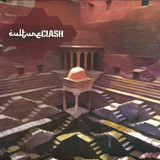
- A1: Tizita (10:00)
- A2: Addis Nat (04:34)
- A3: Gum Gum (06:47)
- B1: Anchihoye Lene (07:06)
- B2: Lala Belu (04:42)
- B3: Yefikir Engurguro (06:15)
First new LP in over 15 years. Builds on 3 successful ATFA reissues of Mergia's music. Legendary artist still active after decades of historic work. Modern Ethiopian jazz built on ancient scales and standards. Capping several successful years traveling the world performing to audiences big and small, Hailu Mergia's Lala Belu has been a long time coming. It builds on Mergia's remarkable career resurgence over the past few years. Beginning in 2013 with the reissue of his dreamy Hailu Mergia and His Classical Instrument followed by the enormous success of his seminal Ethio-jazz masterpiece Tche Belew and continuing with last year's widely acclaimed Wede Harer Guzo, Mergia has received considerable accolades from listeners and press globally, including The New York Times, Pitchfork and The Wire. His old recordings are cherished revelations for Ethiopian music fans; however, Mergia's return to the stage has been just as inspiring and electrifying. Mergia's vintage recordings are known for an inherently mysterious and worn-in quality, while his new recordings echo his band's 21st century live show with modern instrumental interpretations of crucial Ethiopian standards and Mergia's own original compositions. Tony Buck (drums) and Mike Majkowski (bass), who have backed Mergia on tour throughout Europe and Australia, form the bass-drums trio on the recording. Having played venues from Radio City Music Hall and the Kennedy Center to jazz festivals, rock clubs and DIY spaces all over North America, Europe and Australia, Mergia and Awesome Tapes From Africa want to document this moment in his landmark career with a snapshot of Mergia's current sound. Since he emigrated from Ethiopia and built a life in Washington, D.C. around 1981—where he remains working as an airport taxi driver when he is not on tour—Mergia's career has followed a humble trajectory. He made a few recordings in America but they didn't easily reach fans back home. He kept making music on his own and with friends but after the early 80's his gigs in the U.S. mostly dried up. It wasn't until he began working with Awesome Tapes From Africa and putting together bands with the help of booking agents and musicians in Europe and the U.S., that he was able to chart a new path. With a broad audience of young listeners in diverse venues and distant locales, at age 71, Mergia is enjoying his comeback and is not slowing down.
- A1: Never
- A2: Rocksteady
- A3: Sedated Private
- A4: Transmission 1
- A5: Psychology Of Destructive Cult Leaders
- A6: Hake
- B1: Dominocro
- B2: Bigger Heads
- B3: Here
- B4: Still Yours
- B5: Untitled
- B6: Wolfe
- C1: Anye
- C2: Stare
- C3: Oh, Won't You
- C4: Transmission 2
- C5: Red Dot, Green Light
- C6: Baron
- D1: Oran
- D2: Nothing
- D3: Home
- D4: Kidney Punch
- D5: Grid Lock
- D6: Wicked Ones
Spread across two 180g discs, spanning 24 cuts and served in a gatefold sleeve designed by members and affiliates, the Young Echo LP is a capsule intended for cementation through time.
It's been almost five years since their last album. As a group, extended radio submissions, prolonged studio sessions and notorious club nights make up the cogs of time. Over the course of these years, the network has grown continually, both as one, and with singular, multi-directional paths from each of the 11 artists that make up the Young Echo collective, counting Jabu, Vessel, Kahn, Neek, Ishan Sound, Ossia, Manonmars, Bogues, Rider Shafique, chester giles and Jasmine towards the crew, with projects such as Bandulu, FuckPunk, O$VMV$M, Gorgon Sound and ASDA adding to the table in their individual ways.However, this record aims not to be judged on any single producer or vocalist. It is most effective as a whole, simply titled Young Echo. Of course each of the artists has an important part to play, but it is very much about the act of balance, accepting individualism to form a greater whole.A good example is the welcome addition of new energy coming from Jasmine (1/3 of Jabu) who injects endless space with her vocals, perfectly answered by the cool-killin' wordplay of Manonmars - who makes his long awaited debut here - sharing stage with the immediate poetry of ASDA's very own chester giles, along the mighty sound of Rider Shafique, and Bogues' versatile style that can flit between rap & song within seconds. Five very different vocalists that could've tried to find a compromise, but instead choose to connect in different ways, finding their niche in the equal range of rhythms and sounds that sprawl in this shared space, the juxtaposition.
Detuned soundsystem stylings, love songs swaying in hacked up ambience, skeletal dancehall, microphone technique, dread electronics, outsider pop, this record manifests the outcome of the shapeshifting anarchy which rears it's head when no one idea can rule, embracing the diversities when one path must be made up of many.
There are some records that manage to sound both of a time and utterly timeless and Bon Voyage Organisation's Jungle Quelle Jungle (a nod to Supertramp's Crisis What Crisis) is one of those albums. Its silken-smooth production, irresistible grooves, funk-tinged guitars, lush soundscapes and general glowing presence could easily lead one to believe that have dug up a lost disco gem from the 1970s. However, behind the disco-pop gleam lies eerie dystopian sci-fi ruminations of a futuristic bent and tones that can often feel as French as they do Asian or African.
This sort of cross-continental exploration is an expansion on BVO's previous two EPs, the man behind the Organisation, Adrien Durand, says. 'I tried to continue the musical expedition between dystopian Science-Fiction Haunted Africa - plus Haitian Vaudou on 'Soleil Dieu' - and futuristic Asia. Addressing, in a double entendre manner, some of the political issues that I am sensitive to.' In fact the jungle in question in the album's title is a metaphorical one and one that creates a vast series of environments for Durand to explore such subjects as world trade, utopian ideals and themes of idols, as well as of time and communication. However, one will need to speak French to decipher such explorations, as well as shake off the natural impulse to move with every glorious beat on its 13 tracks, of which are moved along by Maud Nadal and Agathe Bonitzer's golden vocals.
Durand is a full-time producer based in Paris, working with the likes of Amadou & Mariam, so it makes sense that this record would absolutely sparkle in this department. Durand feeds off the variety of musicians coming and going during recording sessions as well as the rotating members and numbers of people involved with the band but fundamentally he writes all songs on piano first before bringing them to record live. 'We recorded a rhythm section of five - drums, percussion, guitar and myself on bass/synth bass and keyboards - at La Frette which is a studio located in a mansion outside of Paris and fitted with a beautiful 1973 NEVE desk. We only used analogue gear, by taste really, and found it a pretty reliable way of doing things. This simply consists of putting good players together in a room and waiting for the right take to happen.' Two four-day sessions and a 'cooling off' period (to let the recordings settle) soon followed before Durand picked the material back up to give it a final polish.
The resulting album is one loaded with intricacies and idiosyncrasies, something that Durand puts down to his own unique approach. 'I don't consider myself much of a songwriter but I love arranging rhythm sections and I'm pretty proud of the ones on this record.' This applies when it comes to working with such musicians as Inor Sotolongo Zapata, who with Durand used traditional Cuban percussive instruments and explored Haitian rhythms. When Durand expands on some of the ideas and influences that were funnelled into the record, you begin to get a sense of the vastness of the sounds that fill his world, from Trevor Horn's production work on ABC's Lexicon of Love, to the literary work of JG Ballard to the visual flair of the original Blade Runner and even the Tuareg sounds of Tinariwen, due to the fact that his studio neighbours their manager's and he would hear their rhythms bleeding through the walls. You therefore end up with an album that offers tracks such as 'GOMA' that fuses Chinese and African rhythms as well as 'SI D'Adventure' a piece of pop music that is dazzlingly hook-laden.
As a result of this cooking pot of sounds, influences, thoughts and creations, Durand has more of a gumbo approach to making this music than a set-out scientific formula. 'There is no definite recipe for me to like the production of a record,' he says. 'Of course it really sticks out that my work is really influenced by the 1978-1983 period, the golden age and last stand of analogue studios and session musicians.' Whilst Durand adores the traditional and conventional music, he really views this as something bigger and wider. 'I have a taste for the otherworldly vibe from records coming from less sought-after musical scenes, particularly Poland, Haiti, Ethiopia, Somalia, Congo and early Cantonese pop. Languages and the rapport of the people involved in the making of those records really inspires me. I particularly hate the use of the word 'World Music' as a potpourri for everything that doesn't sound quite western enough.'
Tim (aka Jean Marie Tiam)and the sadly departed Maurice Foty who died in 2011. The musical cousins hails from Bafoussam in Cameroon. Their signature vocal harmony sound may be the first thing you hear, however they also have produced a host of funkiest African funk around. They sing in their native language Ngomâlah, as well as Duala and English.
We start the album off slowly with the scene-setting and largely instrumental "Douala By Night". Tight guitar and choppy clavi drive this song along. The groove is so deep even Missy Elliot couldn't resist a cheeky sample. "Funky Bafoussam" carries on the theme and expands it to include a kick-ass horn section. "More And More" is next and here the vocals burst forth over this up tempo punchy pop-funk track. With "Love Is Light" the pair show their versatility with a smooth English-sung soul ballad.
The hopelessly upbeat "Aie" is next with its earworm keyboard riff, slice guitar and catchy falsetto vocal. "Not So Bad" brings on the boogie. "I Love Yaounde" is a smooth swinging boogie-ballad with a killer chorus hook. "Eda" is a hit from early in their career. We close of the comp with the disco funk of "Funky Boogie Love" and synth grooves of "Eya Mba".
The songs on the comp represent only a 2 year period but some of the finest from the duo. These days Tim keeps the Tim and Foty flame alive. He currently lives between France and Cameroon. A musical flame that most definitely is burning bright.
In an interview with Jazz Magazine in the early 1970s, Dharma, as a collective voice, outlined their method: 'we try to reach, within free jazz, the same sort of rhythmic cohesion as in Bop, a cohesion based not exactly on tempo, but something which feels like tempo. A kind of underlying pulse'. Evidence of these ideas can be heard immediately on listening to Mr Robinson, the first album by the Dharma Quintet, for whom community living seemed obvious, in order to add to the aforementioned cohesion. Through this, the group members played together on a daily basis, trying out things which were worked on day in, day out. They were also listening to a lot of records, with of course a preference for free jazz, but not forgetting Miles Davis in his electric period, notably for the keyboards of Keith Jarrett and Chick Corea. To which should be added esthetical-political concerns based on a refusal of hierarchy, and a desire to escape from a restrictive academic approach... It was within this framework that Jef Sicard and Gérard Coppéré (saxophones, flute, bass clarinet), Patricio Villarroel (electric and acoustic piano), Michel Gladieux (bass) and Jacques Mahieux (drums) formed the first version of a collective united by structured intentions. Because, within Dharma, individual improvisation cannot be envisaged outside of a clearly designated framework, even non-tempo. The result is a beneficial cohesion, and moments of great beauty born of a collective excitement and giving rise to ambiances which seemed almost possessed. The use of modes could seem to link Mr Robinson to the spiritual jazz of the past but that is without taking into account the fact that the benevolent spirit of Eric Dolphy seems to watch over this album. In France, a similar desire for cohesion could be found in the Cohelmec Ensemble, who had parallel preoccupations, to the point where their bassist, François Méchali, ended up by joining Dharma: there is unfortunately no recorded trace of this, just the memories. As a quintet, with however some personnel changes, Dharma recorded three albums (there is also one as a trio, under the name of Dharma Trio), which are all of fundamental importance (Dharma would also accompany, and to great effect, the songs of Jean-Marie Vivier and Colette Magny). Individually, the members would record with musicians passing through (notably Anthony Ortega, Dave Burrell) and participated in other key groups including Machi Oul and Full Moon Ensemble.
Pillow Person is the new solo adventure from Sarah Jones who has previously made her name in showbiz from playing traps with the likes of Hot Chip et al. For her debut solo slab on Acid Waxa however, Pillow Person's catchy-as-owt digi-singles are given the remix treatment by 4 giants of modern darnce! Those being: Bogdan Raczynski (10 releases on Rephlex, 7 bad jokes, 4 mixes, 2 game soundtracks, 1 production with Bjork & 0 bad haircuts) Lechuga Zafiro (Co founder of Uruguyan, Afro-Latin label Salviatek) IYDES (aka London based badman Joe Brooks) and cellist/composer/producer Oliver Coates, who has collaborated with everyone from Leo Abrahams to Radiohead. 2 be filed (if you must) under: haus, Latin, klasical, phuture grime, jungle, electronic pop musique and so on!
Out of nowhere, here comes Villee with his debut EP chock full of dancefloor gems. From the very first listen we knew we had something special that we needed to release on Pressed For Time. It's a difficult thing to reference classic tracks and artists without sounding like a carbon copy - however Villee manages this with aplomb. Referencing Larry Heard (check the chords on 'The Inventor'), Cajual records, french house and the DIY free party sound - we think this EP is fantastic! Think warm, analogue, looped up, MPC house with swing and you're on the right track
It is Melodies International's greatest pleasure to bring forth its latest reissue comprising two stripped-back, reflective pieces of US folk soul.
Largely forgotten for the past forty-odd years, Bobby Wright (now Abu Talib)'s "Blood Of An American" and "Everyone Should Have His Day" resurface as politically-infused works that shine bright and still hold meaning to this day.
The 60s and 70s constituted an exceptional era for its unique blend of popular culture and political radicalism. Household names such as Sly Stone, Marvin Gaye and Gil Scott-Heron used art to express their discontent with the current state of affairs, namely the US government's involvement in warfare and their inability to deal with critical social issues of the time. Though not a musician, Muhammad Ali (born Cassius Clay Jr) was advocating a similar anti-government stance in the boxing ring, and his objection to serving in the Vietnam War sealed his status as an icon for the wider counterculture generation.
Meanwhile in Queens, New York City, Abu used to work several jobs as a construction worker and cab driver - but still found time to play with his band in clubs for $100 a night to support his family. Against the backdrop of international conflict and violence, most of his surroundings failed to listen to how he felt. However, he considered music to be the greatest form of communication with the world and it was his belief that a positive message should be spread to future generations.
After one band member was killed in Vietnam and another went into the service, Abu resolved to pick up his guitar and record these songs as a duet in 1974 with his bassist - the only other remaining band member. Combining guitar, bass and a voice that quavers with emotion he self-released the record in 1974, one which holds its own alongside the all-time greats.
These songs of introspection remind us of the beauty there is in simplicity and how moving art can be when the feelings expressed come from the heart. MEL009 will be released in its original 7" format alongside a 16-page Melozine, featuring words from Abu Talib, social studies professor Paul Rekret and much more.
- A1: Egyptian Kings
- A2: Jardins
- A3: Rainbow
- A4: Era Of Technology
- B1: To Another Universe
- B2: The Space Between
- B3: Cosmic Wind
- B4: Visions
1973s brilliant Celestial Ocean, by the legendary Swiss krautrock band BRAINTICKET, is a concept album that details an ancient pharoahs journey into the afterlife (substitute the word "journey" for "trip" and youll get what they were driving at). However, Brainticket were not mere products of their time, they explored some truly compelling musical territory and produced a superlative blanket of sound-featuring a pioneering mix of early synthesizers, flute, zither, sitar, and male / female stream-of-consciousness spoken word vocals-that ebbs and flows in the same general cosmos as classic Gong. This reissue is fully remastered from the original master tapes.
A multi-platform production that explores the overlap between the digital and the organic through field recordings of Inuit throat singing may sound, on surface level, to be something that is a rather niche. However, Zoe Mc Pherson's exploration of this world on String Figures is a deeply rhythmic, immersive and forward-thinking piece of electronic- leaning music that remains just as danceable as it does experimental.
The album is fundamentally one of duality, exploring the traditional and the contemporary, organic and electronic, audio and visual, history and the future. Rooted in this duality is also a core theme around string being one of the most ancient and playful art forms and the seemingly infinite possibilities it offers in terms of shapes, structures and figures lines up with this as a trans-global art project. One that over time will involve video art, choreography, 3D motion design, macro film, instrumental and electronic sound. Although for now is being presented through an AV performance, films and a record with Mc Pherson collaborating with director Alessandra Leone.!
Over the seven tracks (which are laid out as chapters) the record explores glitchy electronics, dub-tinged grooves, polyrhythms, and a huge array of instruments that takes in quiet blasts of atonal sax alongside wonky synths. This of course cross-pollinates with the throat singing and experimental field recordings to create an utterly inimitable sonic sphere. For Mc Pherson it's about mixing worlds, histories and timeframes and she uses a 1991 quote from Laurie Spiegel to hit home how she has elaborated upon this original thought of history and future overlapping. 'Folk music is considered anonymous common property in a culture and that's what a lot of computer music and other kinds of music data may end up becoming.' However, there's also a purer reason for the exploration of these worlds and colliding them together. 'Basically I thought that electronic music that is only digital is a bit boring and as I'm connected to jazz music for many reasons, I wanted it to sound organic: real instrumentation, field recordings.'
- A1: 2094
- A2: Trippin
- A3: Need It (Ft Dj Manny)
- A4: Smokeout (Ft Dj Lucky)
- A5: Same Sound (Ft Odile Myrtil)
- B1: 9090
- B2: Anotha4 (Ft Dj Manny)
- B3: Bonfire (Ft Dj Paypal)
- B4: The Matrixx (Ft Dj Manny)
- C1: Get It Jukin' (Ft Chuck Inglish)
- C2: Pop Drop (Ft Dj Paypal)
- C3: Gimme Some Mo (Ft Uniiqu3)
- D1: Truu (Ft Dj Paypal)
- D2: Closer
- D3: I'm Trippin
- D4: I Don't Know (Ft Fabi Reyna)
A generation younger than the founders of the Teklife crew, DJ Rashad and DJ Spinn, DJ Taye was originally a rapper and beat maker before hooking up with the collective and jumping into the world of footwork production and DJing.
However, it was Rashad's untimely passing in 2014 that was the unlikely catalyst for developing the sounds and ideas for this album. He says, "When Rashad passed away I felt inspired to continue evolving the music that I loved so much coming up in this world. So, I had to do something...make something brand new."
100% committed to pushing further the potential of the footwork template, Still Trippin' is ambitious in its range and scope. Taking two years to formulate, the record broadens the possibilities of the sound, forcing it to adapt to songwriting, and also revives Taye's talent for MCing and producing beats to which he can rap and sing. Furthermore Taye definitely ups the ante with his complex and precise drum programming, never losing sight of footwork's ability to confound. The album features a range of guests that span contemporary music, the eccentric, instructive rapping of Chuck Inglish of Detroit duo the Cool Kids is featured on 'Get It Jukin', Odile Myrtil, a young vocalist from Montreal, lends her smokey soul to 'Same Sound', Fabi Reyna, the editor of the celebrated women's guitar magazine She Shreds, sings and plays bass and rhythm guitar on 'I Don't Know' and Jersey club queen UNIIQU3 offers production and rapping on 'Gimme Some Mo'.Also, Teklife members DJ PayPal and DJ Manny assist on production, and DJ Lucky is a guest MC on 'Smokeout'. Taye is ambitious in his hopes for the album, "I took this as an opportunity to not have boundaries with footwork. Different approaches to our 'underground' sound to make it broader. It's only underground until it crosses that visible threshold.' This album brings all of this to the forefront.
For a label that wasn't around long, Strata East achieved the same sort of label recognition that Impulse! or Blue Note managed to build. In other words, you knew what you were getting when you bought a record on the label, even if you didn't know the names on the outside of the cover. This is no exception. Who is Shamek Farrah Who knows Who cares It's the music that's important. This is the standard spiritually intense new jazz one learns to expect from the label, soaked in some Eastern influences but always with its ear to the street. Musicians took their roles as leaders and spokesmen very seriously back then. This very adult statement from a group of very serious men is no exception. However, what might be an average, forgettable session is rescued by the propulsive engine of Milton Suggs' bass. He adds the fire and the drive that keeps things interesting and prevents the music from wandering into a circular spiritual morass. For fans of the sound or the label, this can be heartily recommended.
Rebolledo's YOU AND YOUR HIPPIE FRIENDS imprint grows its groove footprint on international dance floors with the full-length debut of GÜERO, the latest vinyl outing from the Hippie Dance sister label and also its first fully fledged album project. To attentive hippie friends, the artist name should ring a big, funky bell - one that sounds exactly like the cut 'Convertible Ride' from the notorious 'A Very Nice Combinado Volume Uno' 12' release (YAYHF 01).
Back then, our hero was travelling under the somewhat more convoluted 'El Güero Fresa' monicker, but has since dropped some of those conceptual pounds in an effort to reach maximum sleekness. In the same vein, his debut album is a testament to ultimate funk-a-ficiency, digging deep into fizzy arpeggios and chunky basslines - and the occasional guitar cameo, giving tracks such as bubbling synth opener ELEKTRONIQUE, the neon-lit NIGHT CRUISING, bouncing electro disco roller ALTO FINAL or the programmatic SPACE DRIFTER just that little extra riff.
GUITAR MAYHEM, however, is anything but - you'll discover a pretty dank bouncer and certainly not the squealing meltdown one would expect. TECHNO MINIMAL doesn't do what it says on the tin, either, opting for an energetic bass 'n' organ workout instead. By now, you'll begin to understand why the album's called MY WAY MY RULES: GÜERO takes whatever sonic path he desires, no matter what - which is precisely why he chimes so well with YOU AND YOUR HIPPIE FRIENDS's steadily expanding motley crew of rave misfits and studio drop-outs. The way of the hippie is indeed a mysterious one.
Well before Shuggie Otis (Born Johnny Alexander Veliotes, Jr.) cut his debut album, musicianship and performance had long been a part of his life. The son of rhythm and blues legend Johnny Otis, Shuggie learned to play guitar as early as the age of two, and performed professionally with his father's band at eleven. Throughout his long and illustrious career he'd performed on records for the
likes of Frank Zappa, Al Kooper, Etta James, and George Duke, to name a few. In spite of all this, widespread mainstream success eluded Shuggie for much of his career. His most famous release to date is his 1974 album Inspiration/Information, which would experience new resurgent life in 2001. Those willing to dig a little deeper however, would discover hidden gold in his earlier releases, especially in the album directly before Inspiration/Information, his sophomore 1971 release Freedom Flight. As with his debut, Freedom Flight was produced by Shuggie's father Johnny Otis, and built upon the distinct sounds of his debut album: lush, baroque, string section arrangements, paired with hard funk rhythms, and funky blues melodies, with the majority of the instruments once again performed by Shuggie himself. The album also featured backing from premium session greats like George Duke and Aynsley Dunbar, and the track "Strawberry Letter 23". which became a Billboard hit for The Brothers Johnson 3 years later. An unearthed treasure of deft, technical skill, and virtuosic composition.
We are proud to announce the kick-off of a new Dynamic Reflections subseries: Dynamic Reflection LTD. A series that is set to explore a broad spectrum of electronic music, and aims to cross the barrier between the club floors and home listening. And to start in a proper fashion, we launch the LTD-series with a very special vinyl + full digital album package by Jonas Korbl.
Three years in the making, this anticipated album chronicles the musical, and in many ways, spiritual coming-of-age of Jonas Korbl. Having started producing house music at a very young age, this debut album under his birth name signifies a new direction for the young Dutchman. In these pieces you hear him shaking off the restraints of formulaic working, opting for more experimental paths instead. You could say Discovered 5 is a story about learning about music; An expression of the author's experience in broadening his horizons.
In the full release Korbl presents nine tracks with a sleek and undeniably dark aesthetic, taking you from ambient soundscapes to main room techno and back, touching down in Berlin and London along the way. Downtempo excursions comfortably rub shoulders with rough-and-tumble club destroyers, but as varied and idiosyncratic as the album is, the music feels far from contrived. Instead, the variation keeps you engaged, with the quieter moments acting as a counterweight to the pieces with a more straightforward approach. Somehow he manages to make all these different places and moods uniquely his own.
The most remarkable thing about this LP is Korbl's uncanny ability to take familiar elements and bending them to his will, creating a new context for the listener to experience his personal brand of electronic music in. The adventurous DJ will surely find a track to create that special dance floor moment on the vinyl release, containing four club-ready tracks. However, for the full experience the entire album is a must-listen, connecting the dots between the highlights placed on the physical LP. All in all, this debut bodes very well. With skills and experience beyond his years, Korbl's star is sure to only rise from here.
Preservation Records dug out two killer blue eyed soul tracks from the Mirage vault.
Here is the original version of "Just Cause I'm Guilty", taken from the unissed tracks from the group. Shelved for over 40 years.
The soulful B side is another sureshot killer soulful track, you have probably heard it by Ruben Howell and Carl Carlton. This version made it to a mega limited demo 7" run on Warner Brothers, but never had an official release. The track is so good that it deserved a place on our Mirage releases.
Carefully remastered and cut by Timmion for Preservation Records.
The Make Mistakes ethos is one of diversity and evolution, and that is showcased in full on our newest vinyl release Need Your Luvin'. House, Acid, Techno, Roy England, Jarvi, Fredy Grogan. One track, three styles, all dance floor bounders.
Roy England's original mix is a jackin' house jam with a timeless vibe. A classic house sound propelled forward by the titular vocal sample, England manages to deliver a track that would work equally in the lounge, as well as late night in the big room.
On the B side Jarvi's Acid Workout strips the original down even further, and fills it back up, with a wandering, hypnotic acid line to stitch it all together. An old school party sound, both familiar and fresh. Fredy Grogan deconstructs the original into its component parts, building it back up into his dark, and driving dub techno remix. Drawing it out over nearly 8 minutes, this'll have the heads bouncing off the walls.
House, Acid, Techno, pillars of dance music, mixed together, given the ol' razzle dazzle, and served up hot and ready for mind, body, and soul. Grab Need Your Luvin', stick it in the crate, and never worry, because you'll always have the Luvin' you need.
'Beware the irrational, however seductive. Shun the 'transcendent' and all who invite you to subordinate or annihilate yourself. Distrust compassion; prefer dignity for yourself and others. Don't be afraid to be thought arrogant or selfish. Picture all experts as if they were mammals. Never be a spectator of unfairness or stupidity. Seek out argument and disputation for their own sake; the grave will supply plenty of time for silence. Suspect your own motives, and all excuses. Do not live for others any more than you would expect others to live for you.'
---Christopher Hitchens, Letters to a Young Contrarian
The band project Drums Off Chaos was one of the central and on-going projects of the recently deceased drummer Jaki Liebezeit (who is normally associated first and foremost with the Cologne-based band CAN). In the early 1980s he had initiated an - at first - loose collective of drummers, who created a rhythmic concept on the basis of simple, strictly binding codes that enabled expansive improvisations.
Over the years the ensemble became smaller and refined its collaboration marked by repetitive patterns and their variation. You have to play monotonous,' a membr of the audience had already told Liebezeit in the 1960s. He took this to heart and there was hardly any other formation where he could bring this concept to life as regularly and with as much inspiration as in Drums Off Chaos.
During a development spanning more than three decades, this extra-ordinary band, which never saw itself as such, made numerous recordings but rarely any releases. However, in the last few months of his life Jaki Liebezeit, with colleagues Reiner Linke, Maf Retter and Manos Tsangaris, earmarked some tracks for imminent release on vinyl and CD - on different compilations. Liebezeit's death is all the more reason to go ahead with this plan.
Avant Garde, Repetitive, Minimal, Stoner Rock, Religious.
A french trio called France, using drums, bass and amplified hurdy-gurdy. They perform only live, in the middle of the audience - turned in to face each other - full on smoke machines and strobes. And they play only one 'song' for the duration of their hour-long set. And it's the most transfixing live experience of intense physical and mental focus. The distorted hurdy gurdy plugs France's sound into the country's history of folk music and popular festivities, of communal trance and immersive pleasure. The rhythmic basis is pretty much the same throughout the whole live. One doesn't need to actually be tripping balls for the auditory illusions to start coming thick and fast. Those who've stayed for the whole duration of their performances know they've shared something. However disparate the phantom forms each might have discerned in the midst of the howls and groans. Gigs like this you leave feeling you're not quite the same person who went in, even though you'd be hard-pressed to pinpoint precisely what has changed. One certainty remains at least, that there is still a France we can believe in. David McKenna (The Quietus). The Release: Initially released as a 50 copies CD-r in 2009, swiss Mental Groove has teamed with french Standard-Infi to reissue this classic live performance onto glorious vinyl edition. The 45 minutes are radically sliced onto the two sides. The recording is raw and the mastering is fat. The first two pressings made in 2014 and 2015 were distributed confidentially and during the numerous live performances of the band. They are long time sold out and sought after.
- A1: Boogie Man Skank
- A2: Don´t Stop Jammin
- A3: Full Time
- A4: Natural Resource
- A5: Snap Back
- B1: Zip Bag
- B2: Good Morning Midnight
- B3: Dewey Like This
- B4: Holiday Hold Up
- B5: Wild World
- C1: Gutta Love
- C2: Confession
- C3: Mi Nah Easy
- C4: Cheese Cake
- C5: Big City Dweller
- D1: Buck A Shot
- D2: Kingston Chronic
- D3: Bad To The Bone
- D4: Bubble Like Perrier
- D5: This Wall Will Fall
"Good Morning Midnight" is the second studio album of French MC Biga*Ranx. Driven by the unstoppable flow of the artist, this album drags us into his special universe navigating between Reggae Digital, Hip Hop and Bass Music. As he says so well, Biga*Ranx wanted to "invent his own music". This album has 20 surprising songs from the artistic melting pot of Biga*Ranx. The proof is with the title Cumbia "Buck A Shot" which transports us directly to Colombia, or "Bad To The Bone" with Reggae-Trap influences. However the Reggae soul is still present on the entire record, as evidenced by "Boogie Man Skank" or "Confession". For the composition he used different talented beat-makers like the English of Vibronics or the Danish producers of Maffi. The French scene is also well represented by Manudigital, Tom Fire, Atili Bandalero or Barbés.D. Biga*Ranx loves to sing life simply, always in a personal approach. He approaches the themes of his generation by adding a touch of positivism and fighting spirit, approaching the original message of reggae.
In the spirit of cultural pride, Rune Lindbaek provides the audio tour guide into the unexplored back streets of Norwegian Disco
His deep knowledge of Disco delicacies from the frozen north may be a revelation to those who've heard his more mediterranean outings,
however here we have an extended EP on untapped treats, leading with three hefty slabs of late seventies, matured Brunost on the A &
moving into more obscure territory on the flip, where the sought after I Dekning is followed by two more idiosyncratic jams, which possess the dancefloor heft of a well roasted reindeer shank
SUPER LIMITED !
The latest release from Bjarki Runar's bbbbbb label sees Bjarki delving back into his vast archives and shines a light on a bizarre detour during the early days of the label that involved
a peculiar commission from the Icelandic state. Bjarki introduces the story; 'It was back in 2015 and we were only just putting together the original plans towards making bbbbbb a label. While this was happening, I got a call from a friend who was
working for a local tech start-up and marketing company. They'd been contacted by the Icelandic Ministry of Fisheries and Agriculture who came to them with a weird proposition.
They were looking at the idea of marketing Icelandic lamb as this user-exclusive commodity for high end restaurants, the same way they do with Kobe beef in Japan. His marketing company was going all in with this idea of creating an elite herd of sheep that would get the 5-star treatment - fresh food and beer, shampoo and geothermal baths for their fleece, and entertainment such as TV and music for when they were in the hills. That's where I came in'. The initial meeting between Bjarki and the marketeers however didn't go as smoothly as they hoped; 'When I met my friend and his team, they were going to have music pumped through a series of remote speakers across the hillside' Bjarki explains. 'But when they showed me what they were going to play to them, I almost fell of my chair laughing! It was all this
cheesy, easy listening, orchestral Icelandic bullshit. I said to them 'This is nonsense! Why are you bringing me into this project if that's all you're going to be playing' In the end, I told
them I would completely redo all the sounds and music they were going to be using. I was going to drag the Icelandic sheep into the 21st Century'. Bjarki was as good as his word. Over the summer of 2015, he spent several weeks at farm
locations near Kirkjubæjarklaustur and Reykholtsdalur, walking the hills and playing a variety of sounds and beats to various flocks of sheep to see what the best approach was. It
was tough going at first; 'At the beginning, I was working totally blind', Bjarki explains. 'Imean how can you possibly know what sort of modern music and sounds Icelandic sheep
would go for' But Bjarki persevered and he found certain sounds and tones made the sheep more active and engaged.
From this point, he began to make tracks that would encapsulate what the lambs were drawn to the most. 'A track like Soda 'Sugarlicious' for example, came about when I started
playing Candy Crush on the hillside. As I kept playing, the sheep began to gather around me showing interest in the bright chintzy sounds coming from my laptop and that deep voice that
would keep speaking to you. I simply put together a track that was all shiny colours and heavy on the chimes. The sheep fucking loved it!' A track like 'Drab' meanwhile was suited
for less sunny moments. 'I got caught in a nasty rainstorm, so I started playing these synth lines I had made, along with an improvised kick drum. The mix of the softness of the tones
along with the hit of the bass cased the sheep to follow me all the way back to the farm I was staying at. The farmer wasn't too impressed with that, but the flock was completely
hypnotized'. In the end Bjarki, amassed several tracks ranging from soft ambient to gnarly hardcore bangers to present to the Ministry. But in the end, they decided not to go with the whole
proposal. 'These people were fools', Bjarki says. 'They just couldn't get their heads around doing something completely different, that was a bit of fun yes, but was completely done in a
serious manner. We all spent weeks doing this stuff so yeah, it was a bit gutting'. In the end though, there is a silver lining to this story as these efforts were not wasted for we can now hear the best of Bjarki's efforts from this admittedly weird project on a limited 12'release that marks a storming 2017 for the bbbbbb label.
Melodies International proudly moves forward with an elusive piece of mid-tempo Chicago soul originally performed by Gloria J. Jennings in 1977.
Gloria was signed to Stage Productions as a gospel singer with pure and raw talent she had developed in the choir of her father's Southern Baptist Church. She was 16 years old at the time. To tutor her for R&B vocals, Willie C. Nance of Stage Productions spent 3 months taking the artist back and forth for vocal training 25 miles each way, 3 days per week.
At the time, Mr. Nance had made plans to work with singer and songwriter Theresa Eagins to record Know What You Want'. However, two days before the recording was set to begin, Ms. Eagins refused to move forward with the recording as she chose to take her religious faith more seriously and forgo the singing of secular music. Hence, Stage Productions turned to Gloria Jay to perform a song that would go on to move people thousands of miles away, many years later.
One of them was Patrick Forge: Back around 1990 I had a residency upstairs at the Wag Club on a Friday night alongside Paul Martin (he was Gilles P's A&R right hand man at Talkin Loud), the night was called Respect and we played mainly Soul, Boogie and Jazz-Funk. Many years later I bumped into Paul at a record shop and he quizzed me about a tune I used to play at the end of the night at Respect. Hhe described it as being an independent Soul seven inch on a red label, slow to mid tempo... and more to the point a bullet of a record. It piqued my curiosity so much I burrowed through my seven inches and even made Paul a compilation of likely contenders, his response was lovely selection, but it's not on there!'. Damn, a mystery! Many moons later whilst I was living in Japan, my tenant in my London flat said she'd found an old mixtape I'd done for her way back when and was desperate to know the identity of something she was calling the choo choo song'. Eventually when I was back in London she played the mixtape and I quickly identified her tune as Fabrica' by Cesar Mariano, however letting the tape play some time later a familiar descending chord sequence catapulted me back to those Friday nights at The Wag, and Gloria Jay's plaintive vocals reminded me of a record that had been absent from my life for far too long. I've no idea what happened to my original copy, I hunted another one down straight away, and I've kept it close ever since. Know What You Want' is a song that goes deep in such a simple, unaffected, almost naive way, Gloria's voice is both sweet and raw, it's built on simple chords and obvious instrumentation, but it's so much greater than the sum of its parts.
Know What You Want' is soul music, pure and unadulterated, there's nothing getting in the way of the feeling, it's straight from the heart.' Carefully re-mastered from the tapes, MEL008 comes forth in its original 7' format with a 14'x14' poster.
After collaborations with Merzbow and Daniel Avery, Alessandro Cortini (Modwheelmood, Nine Inch Nails) moves to The Point Of Departure for his third solo full length album. Alessandro Cortini today announces his third solo LP, AVANTI, due for release on 6 October via The Point of Departure Recording Co. Speaking about 'Perdonare', the first single to be taken from AVANTI, Cortini says: Perdonare embodies the often strenuous search for strength to forgive someone for their behaviour, when it becomes apparent that such behaviour is not conscious nor wanted, but merely a by-product of one's upbringing.There are few more potent examples of the power that music holds over our memories than hearing a song and being instantly transported back to a specific time or place. But what if we could change the soundtrack retrospectively If the scenes from our life played out on a big screen, how would we choose to score them It's an idea that Italian multi-instrumentalist Alessandro Cortini found himself preoccupied with on his latest album AVANTI.
Prior to making the record, Cortini rediscovered an archive of home videos made by his grandfather, who passed away a few years previously. Among the cache were several Super 8 films of family gatherings as well as hours of dinner-time conversations recorded on cassette for posterity. It was as if Cortini had unearthed a perfect fossil of his childhood. The films, however, were missing one crucial element - the sound. So Cortini decided he would restore the miss-ing audio in his own way, by composing a musical accompaniment to the footage.
As it turned out, Cortini had a few blanks to fill in himself. The films exposed some inconsistencies in his memories, moments that he romanticised or misremembered. But what surprised him the most was that the recordings appeared to be almost as fallible as his recollections - both showed signs of degradation. I really like that about memory and music, both from an instrumentation and playback point of view, I like imperfection,' he says.
AVANTI is rich in anomalies and irregularities - much like our memories - which Cortini let creep into his compositions by recording live on a single synthesiser, the EMS Synthi AKS, without overdubs. Just like the films, there are errors and mistakes in the music, some of which became the theme and some which are peculiar things that happen once or twice,' he says.
The 'industry' of dance music can be as soul-crushing as any other. Those thrills and spills of late, loud nights come with a best-before expiry date, after which even the most seasoned selector-producer-scenemaker begins to wrinkle their nose. To have experienced it all over 15+ years and seek to see it unfold again through fresh eyes, what sort of lunatic would willingly put themselves through that V would. So it's a new character, but who was the mysterious V in a past life Make your own conclusions. A little digging will lead you toward the origin story, but sometimes the pleasure comes from the unknowing. Opt to enjoy the Silence. Silence, however, is not the focal point for V. In fact, this new form is a way to discard baggage and revitalise the process of music making. Tremors had become to show up in recent years on record labels in Glasgow and London, flickers of subterranean volcanic activity. Yet what proved to be rising was no big bang, nor even a phoenix from the ashes - but closer perhaps to a Nautilus. A relic by some standards but a pretty point of curiosity to others, slowly bobbing to the surface. Something ever-present and familiar to thousands, yet with mysteries left to be revealed. But hey - what does V stand for anyhow For Vilnius By origin and by where the heart lies, yes, although V for Vedett is also an acceptable answer given the artist's transposed second home of Belgium; so too is V for Volkswagen, given the production work put in around Frankfurt as of late. For Vendetta Too strong, although V does bear a grudge match against hobbyists and dilettantes. If you're going to be a new name in town, you may as well be a new name in town with years of hidden history, right For Vishnu Perhaps this is the one. V's tangle of arms extend forward in many directions: some clutching 303s and LinnDrums; others pushing fingers i
Everybody who knows Connaisseur, will probably be aware of the fact that we simply love the concept of remixes. To fnd the right person for a specifc track in order to turn an already amazing original into a new direction, is always an exciting challenge. Of course, there is always some wishful thinking on our side about what it will turn out to be like. Usually, we are completely wrong, which however doesn't mean that we are not happy with the result. Usually, we love the result even more than our own brainchild. In April, we released Of Norway's sophomore album
"The Loneliest Man In Space", a diverse masterpiece.
Since then, we have been searching for remixers whom we personally really like and of whom we are sure they can turn the track into a direction we can't even imagine. It was a bit of a journey, but now after the product ist completed, we are more than happy that we were able to bring such a group of remixers
together on one product.
As every remixer has delivered such a great interpretation, we decided to give each of themenough space to be discovered, which is why we will be releasing one remix per week over the course of two months. A selection of these remixes can be found
on a 12" extract. One extra remix is exclusively for radio and streaming.
For the vinyl extract we picked the interpretations by Lauer, Panthera Krause, Legowelt, Davis & Zopelar and Roy Of The Ravers.
Acts like Legion & Logam have been pivotal for bringing the Ram Records sound transatlantic. Becoming the first US act into break their renowned roster, the trio have time and time again delivered hard-driving riddims and melodic rollers for Ram's sought after compilation series and their genre defining sister labelProgram. However, this time they've recieved their first standalone single on Ram, which is set to establish them as an even more integral part of drum & basses expansion throughout America. From the tearaway success of 'House of Cards', their first single on Program, to the release of 'Coming Home / When Stars Fall' on Ram Records, Legion & Logam are continuing their meteoric ascent. Following the same carefully strung melodies and voice overtures which has become a signature for the production outfit, 'Coming Home' takes you on a heartfelt journey underpinned by its tightly knit composition. A wavering bassline pitches between each signature of eight, helping to create a more driving force perfect for the dancefloor and bolstering the mix, whilst keeping its softer touch with 'House of Cards' Adam Wrightreturning on vocals.
On the flipside 'When Stars Fall' featuring Wendy Johnson follows the same vibe, with intricately layered instrumentals helping to set out a journey which flips between more percussive elements and well-orchestrated breakdowns. Each segment builds on the next until you're once again left with a record which exemplifies the producers' stellar song writing ability. Together both tracks help to pedestal an act whose versatility can be seen across each addition to Program, and now Ram's, vast back catalogue. Legion & Logam's story on Ram has only just begun - with more releases scheduled for the coming year, it's an exciting time for US drum & bass and its growth.
After two hip-hop albums (Got To Get Down in 2016 and Impact in 2017), the unpredictable Afro Latin Vintage Orchestra comes back to its fundamentals with a new instrumental album:
MORPHEUS which repositions the band in the spirit of their previous spatial, almost cosmic albums Last Odyssey (2012) and Pulsion (2015), both released on Ubiquity Records and acclaimed by spiritual and fusion jazz lovers, library music fans, as well as rare grooves diggers (ALVO's first 4 vinyl albums now being out of stock).
Each new ALVO new release is a millesimal which evolved and learned from its predecessors.
Masta Conga, who's still leading the herd, has for main purpose to explore the musical space-time, gaining ground on never before revealed tracks, followed by his now faithful team of atypical and
farseeing musicians.
Compared to Miles Davis and his On The Corner by Wax Poetics, the band dives again in this realm of psychedelia and beyond', in particular with the contribution of Indian musicians. Twirling
around violins, superimposed patchy keyboards and effects, just as if their conductor wasn't already sufficiently influenced by Pierre Boulez and others such as Hiroshi Murakami... The result is however more uncluttered and loaded with multiple vibes than its predecessor Pulsion, which already carried the ceremonial characteristics of cult movie soundtracks. Tracks Moksha',
Air' and Morpheus' are the perfect demonstration, and far beyond their names. Simple grooves, lunar, but terribly efficient, emphasized by a mix that puts focus on these fiddly contributions of ethnic instruments, on percussions and horns on a drip of delay, reverbs and other space-echoes.
On the other side, the very rhythmic Descarga Uno', Descarga Dos' and Super Dopamine' show that the Parisian crew hasn't lost its good habit to look around latin, ternary, and syncopated
rhythms, in the ALVO only style! A new millésime, a Grand Cru maybe, but for sure to taste and appreciate in all weathers including space ones.
- A1: Demi Paradise
- A2: The Sounds Of Earth
- A3: Cloud Cuckoo Land
- A4: Stardust
- A5: Orbit Unknown
- A6: Ready For The Moon Trip
- A7: The Girl From The Green Planet
- A8: Jerusalem
- A9: A La Luna
- A10: Magic In The Dark
- B1: Early Machines
- B2: Since You Went Away
- B3: Sixties Twist
- B4: Innocenti
- B5: Love It Baby
- B6: Loving In The Fine Light
- B7: If I Close My Eyes
- B8: This Light, This Light
- B9: Voice In The Night
- B10: Sad Hearts
- B11: Nazca Lines
- B12: Worry Beads
For the label's 50th release, Emotional Rescue returns to the music of Woo to close a trilogy of reissue collaboration albums, in A La Luna. Following Whichever Way You Are Going (1982) and Into The Heart Of Love (1990), their opus A La Luna (1991) was the last of the bands song based albums and represents a wonderful way to close this association.
Reworked, re-ordered and remastered especially for this first time vinyl release, brothers Mark and Clive Ives again present their unique, ground-breaking and at the time, heart-wrenchingly overlooked music, that seems to fit the folk-new age-electronics of today as well, if not better, than when first released.
Across 20 plus songs Mark's guitar, clarinet and vocals are as ever drenched in Clive's mixing desk mastery. Echo and reverb shimmer as the short pieces rise and fall like the wind blowing across nighttime trees. With no song going much beyond three minutes, A La Luna flows as one piece. The unmistaken sound of Woo wraps itself around you in an essence, warmth and glow that is addictive, meditative and uplifting.
Featuring the original vocal performance of Mark's love ode, Magic In The Dark stands as a centerpiece where, as with all their albums, vocals appear at a minimum, as part of the musical journey.
The underlying somber nature of the album comes as the band ended more than a decade of recording with little critical or commercial success. The fact they did not release a full album again and moved towards a more meditation outlook was a loss, however, their recent rediscovery and the excellent releases by Drag City and Palto Flats included, has finally given the Ive's brothers not just a place in appreciation, but has shown that there really is no one like Woo. Enjoy the magic.
For the fourth release on 6dimensions, Steve Bicknell has delved into the catalogue of the Lost Recordings series on his previous imprint; Cosmic.Steve Bicknell's Awakening The Past feature three tracks from Why And For Whom, the first of Bicknell's Lost Recordings releases. Originally released in 1996, Why And For Whom Has been named one of the best UK Techno records of all time with Bicknell being billed as a 'criminally underrated producer'.With the re-release of these tracks in 2017, it is clear to see that the tracks have stood the test of time. All four-tracks on Awakening The Past were previously untitled but have been renamed with a focus on the human condition. With the 6dimensions label being founded on the principles of the 'human mind's natural make-up' it seems a natural decision to rename the tracks to suite the label ethos. Although one quarter of Awakening The Past was released 20 years ago, Bicknell's focus on mood shows coherence between his work then and now. The era of production can be distinguished in the EP, however, this is only eminent through a difference in recording technique. More importantly, the mood of older and newer productions are indistinguishable from each other and display Bicknell's unrelenting dedication to his own focus on concept of aesthetic. Physical Life' opens the EP with a rawness that is carried through the EP. With tape hiss underpinning the track, Bicknell's signature bass grumbles hold together hi-hats which progressively filter in and out over the course of the track. Bicknell's use of filters carries through onto the second track of EP, 'Natural Vibrations' boasts an erratic and high-pitched 303 sequence that shows a bit of experimentalism before the EP steps back into Bicknell's more familiar techno odysseys. 'Fearing The Minds Fears' paints a tense atmosphere, lashings of motoric modular synth are added with little fuss as the track title confirms its significance. Finally, 'Conscious Awakening' drives the EP to a close with dizzying pace: it's here that Bicknell's ability to control the emotion of the listener is really evident.
Between the end of the 70's and the early 80's, a new sound appeared in London and its surroundings, a unique mix of Funk, Jazz-Funk and Disco labelled as Britfunk. Characterized by its raw energy that can put the needle In The Red, this up-tempo sound was a match for the UK's dancers and Jazz-Funk clubs.
This first release by French label Chuwanaga features some of the most exciting, rare and powerful tracks from that era compiled by the Parisian DJ and activist Saint-James, with bands such as Equa, Potion, Inch by Inch, Congress, Index and Spookey. It features also an insert with an in-depth focus on this musical era.
These young British musicians were equally inspired by the American Jazz-Funk productions and by Dub music and Reggae pushed by the Afro-Caribbean community who were at the heart of Britfunk's development. They gave Funk a unique British flavor. However, more than just a music genre or an enclosed expression of black Britishness, it was part of a genuine musical and social movement with its own dedicated labels, fashion sense and most importantly its own set of values that fueled the whole scene. Britfunk built itself within a multicultural evolution: black people, white people, straight and queer, all dancing in the same room to the same loud sound.
Despite his low profile, Ken Karter might be one of Berlin's most influential artists in the techno scene. Karter is known as a mastering engineer for the seminal M_REC LTD, however his own productions have gone largely unnoticed until his 2015 EP on Stroboscopic Artefact's Monad series. His EP turned heads and gained him well-deserved attention. Two years later, his follow-up EP on Escapism exemplifies his focus on quality over quantity. His passion for mathematical formulas combined with his intricate knowledge of sound created an outstanding record set to satisfy both fans of experimental and dancefloor techno.
2022 Repress
HQ Gatefold, 3x12 140g Vinyl, black innersleeve, download code
EXTRAWELT are back! Although in fairness, they were never gone. On the contrary, since their first release on James Holden's Border Community Label dropped in 2005, Arne Schaffhausen and Wayan Raabe have been responsible for a plethora of classics including "Schöne Neue Extrawelt" and "In Aufruhr", their two seminal albums on Cocoon Recordings. The duo are one of the most booked live acts worldwide, commanding a huge fan base. Their performances are the stuff of legend, making them the absolute highlight at every club and festival they play. So it's with great pride and respect, that we can announce the release of Extrawelt's third album for Cocoon Recordings. "Fear Of An Extra Planet" completes the Cocoon trilogy and the excitement growing among their fans represents a new high in the history of EXTRAWELT!
Musically, of course, there's enormous pressure on EXTRAWELT to deliver, but this is dismissed with a playful disregard and they are clearly focused on the job in hand. The album title "Fear Of An Extra Planet" sounds cinematic, like some art-house science fiction film, without giving too much away.
However, from the first seconds of the opening track "Superposition", the album title makes 100% sense and sets the scene for the rest of the trip. We are immersed in wide open spaces and invited to explore dark and dusky worlds that transport us back to their Border Community years. Timeless and elegant, "Superposition" perfectly captures the epic, dream like quality that made James Holden's label so influential.
New Release Information Second up, "Gott ist Schrott" takes a much more minimalist approach with its retro 80s drum programming, monster bass lurking in the breaks and playful Rhodes/synth riffs that span the divide between early German techno and deep Detroit electro with a distinctive film soundtrack aesthetic. "Oddification" continues this theme, adding extra spice reminiscent of the techno-synth vibe of Detroit with a punchy, almost Prodigy-style breakbeat complete with shredded vocal samples that gives us a taste of what's in store. "Gentle Venom" then takes the breakbeat motif to the next stage. The main focus here is the classy sprinter of a bassline, peppered with a flurry of intricate and subtle effects and modulations, that immediately trigger an intense, movie-like 'in pursuit' feeling.
With - Das Grosse Flimmern" we cautiously approach the album's high point. It's still in keeping with the soundtrack aesthetics, but faster and with more urgency. Almost hypnotically, Extrawelt invade us with an energy and impetus that always radiates from their music. Next in line is "Silly Idol" and here Arne Schaffhausen and Wayan Raabe opt again for a more minimal tack, focusing even more intensely on the dance floor to reveal a pulsing, twisted heart to the album.
"Punch The Dragon" is the hidden gem of the collection, utilising and melting together the most bombastic and playful elements. This one is totally off the hook, a sensory overload in an acoustic widescreen format! Then we have the title track "Fear Of An Extra Planet" which perfectly sums up the album concept. It opens up like a film score, with minimal passages following dark sequences that morph into dreamy melodies, all grounded by cool, constantly alternating analogue drum patterns. If you're not listening closely, you might get the impression that three or four different titles are mixed together; such is the effortless flow of the album.
As we near our destination, "The Friendly Coroner" really does honour its name. The morbid charm of the title is captured by a fluid bassline and melodic arrangements that border on the absurd, until the funky drum beat finally drops. In our mind's eye we see a cheerful medical doctor removing his bloody gloves, hanging his smock in the closet and vibing out in his neon drenched workspace. And there we sit, glued to our cinema seat, submerged in the different textures EXTRAWELT have conjured up on "Fear Of An Extra Planet". Over the course of the last title, the strings usher in the final acknowledgments as the credits roll. The dramatic end of "2084" leaves us transfixed in front of a black screen in a large, dark room safe in the knowledge that we've just witnessed a science fiction epic.
Musique par Andrew Chalk & Timo van Luijk
avec:
Tom James Scott - piano
Jean-Noël Rebilly - clarinette
Daniel Morris - guitare pedal steel
Mastered & cut by Rashad Becker at Dubplates & Mastering, Berlin 0417.
Having been entranced by both Andrew Chalk's work with MIRROR (and back to his solo works as FERIAL CONFINE, plus multiple collaborations with David Jackman, The New Blockaders, Daisuke Suzuki, etc ) and Timo van Luijk (as Af Ursin, In Camera, La Poupée Vivante, and collaborations with Kris Vanderstraeten and others) for many years, I was naturally intrigued to hear about and hear their duo project ELODIE. The project formed in 2010, and has spanned eleven beautiful albums already, to date.
"Vieux Silence" for Ideologic Organ is their first release presented outside of their own record publishing nook, Faraway Press & La Scie Dorée. However this is not the first encounter between Ideologic Organ & ELODIE, they performed at a night in London I curated in February 2012, alongside Jessika Kenney & Eyvind Kang. Elodie's performance was among the most delicately engaging and savant I have witnessed... so very quiet, with snow falling in London outside Cafe Oto's windows, the audience palpably entered a high intensity listening focus. The impression of this vivid memory is striking, considering how spare each of the individual elements present that night were.
"Vieux Silence", and ELODIE in general provoke a visual imagination in an instant, perhaps filtered through aged watercolour, tape grain, antique lenses, forgotten levels of listening and observational patience. On this gorgeous album Chalk & van Luijk also collaborate with piano, pedal steel and clarinet (played by , Tom James Scott, Daniel Morris and Jean-Noel Rebilly, respectively).
Each detail carefully considered and colouring step by step, like an impressionist watercolour.
- Stephen O'Malley, Les Lilas 2017
After the first successful record, Danish label front man Gaze ill pursues another excursion through the ever-growing Dubstep-spectrum. He returns to his own physical outline of Cue Line Records with four hefty cuts that surely make up another stellar record, however he s not alone. Last time it was his partner in crime RDG, this time its frontline support from the Dutchman & bass mammoth TMSV , who s given Space-Time a completely different spin.
CLV002 opens up with a serious wobbler: one that is reminiscent to the golden days of the fundamental Dubstep sound, but housed in a completely different straightjacket. It swiftly sets the pace, as the wobbles escalate into the leading element of the destructive Space- Time . The second cut by the Danish producer adds the step to dub music so to speak and lively resembles King Tubby on a Dubstep flex. Watch out for that naughty second drop, which holds
nothing but booming vibrations that ll hang fans upside down. Spirit Of The Forces unveils an equally refreshing take on bass music thanks to the creative structuring of both low-and-high melodies. This allows listeners to take flight
easily and fly away from what we call reality an excellent track for both spring and summer time. TMSV s spin-off is as bright as its forerunner, but far more up-tempo and hypnotic. Utrecht s producer instigates a spacious stepper that defeats time & momentum by incorporating his raw remix techniques. The right remixer for the right record: Cue Line Records at its best!
Formed in Washington, D.C. in January of 2014, the EFFECTS are Devin Ocampo, Matthew Dowling, and David Rich.
A multi-instrumentalist, Ocampo is a former member of the bands Faraquet, Medications, Smart Went Crazy, and Deathfix, all of whom released music on Dischord. He has also toured and recorded with Mary Timony, Beauty Pill, and J. Robbins.
Dowling was the bassist and co-leader of Deleted Scenes, while Rich was the drummer in the instrumental group, Buildings. Both released music on the experimental-minded (and now defunct) local record label, Sock- ets. Devin met both Matt and David years before and while there had been talk of a possible collaboration everyone had their own projects at the time. However, by 2014 all were between bands and it finally made sense to get together and start something new.
For the trio, playing together was a nice change in routine. It was a new configuration of musicians, rather than a recombination of old friends and former bandmates, which happens regularly in the close-knit music scene of Washington D.C. Matt and David offered a fresh perspective and (possibly) gave the Devin a nudge out of his comfort zone.
Since then, the EFFECTS have performed sporadically throughout the East Coast and digitally released four two-song singles. Their full-length debut, Eyes to the Light, will be out this fall on Dischord.
Mick has been active in the seedier corners of electronic music for more than 30 years, first immersing himself in the world of hi-NRG and new wave before embracing the house, techno, acid and electro explosion of the late 1980s. Aligned with DJ Hell in the 90s and more recently the Intergalactic FM crew, he's the quintessential selector. A life spent digging in the undergrowth for deviant dance music has given him the edge that makes a truly gifted spinner, without riding on hype or studio productions. However, Mick isn't adverse to the odd outing on vinyl, having previously appeared on International DJ Gigolos both solo and as The Kinky Lovers with sometime partner Isabella Venis, but these moments are few and far between. For this release on Arma, Mick has given us two edits that speak to his distinctive style as a DJ - the original tracks are cult choices re-moulded into deadly, subversive club weapons. The brooding darkwave of 'Himmelfahrt 89' is enough to turn the most indifferent bar crowd into swaying, baying denizens of the night, while 'Stay Silent' pummels out a relentless electro motif that teeters on the edge of destruction for 11 thrilling minutes. These aren't crowd-pleasing DJ tools, and neither are they slick and easy edits of obvious classics. This is a peek into the inner workings of a man with decades of experience working masses of flesh into a sweaty fever pitch using sounds you've never heard before. The mastering on Mick's edits was undertaken by none other than Dutch electro legend Rude 66, while the striking artwork on the sleeve sees Arma reach out for the first time to French artist Judex. The nerve-shredding, broken Op-Art assault was originally found in a book published by cult illustrator Sam Rictus. Cover Artwork by J
On Arise , Zara McFarlane returns to a buoyant UK jazz scene with a head-turning third album. Exploring the musical possibilities of British-Jamaican identity, it's a cultural exchange that's born of London's current musical climate. Released on Gilles Peterson's Brownswood Recordings, it sees her working with much-feted drummer and producer Moses Boyd. Both rose through London's Tomorrow's Warriors programme, a finishing school for many young vanguards of the live, ascendant jazz scene springing up across the UK capital. Sharing Caribbean family heritages, it's a product of their joint exploration of the meeting points between jazz and the rhythms of Jamaica, reggae, Kumina, calypso and nyabinghi, shaded with hints of the psychedelic.
Zara's breakthrough 2012 track, a jazz cover of Junior Murvin's 'Police and Thieves', provided a jumping off point to further explore the blurred, colourful territory in between jazz and roots-reggae. Covering Nora Dean's 'Peace Begins Within', she breathes a syncopated groove into a soulful, reggae classic. A beautifully poised version of the Congos' Fisherman teases out the poignant lyrical content of the 1977 classic. Meanwhile new, original compositions from Zara, like 'Fussin' and Fightin'' and 'Freedom Chain', combine a deep, reverberating bass with a steady-stepping roots rhythm. Album opener 'Ode To Kumina' touches on the kumina tradition brought to Jamaica by indentured labourers from The Congo in the later part of the 19th Century. Part of Zara's deeper research into her Caribbean heritage, it alludes to a deep-rooted culture encompassing music, dance and religion.
Similarly, 'Silhouette' arose from that same research, in this case, however, it was about how records and documents often get lost in Jamaica. It kind of came out of the idea of black history and blackness and feeling like you're trying to find yourself,' she explains. Trying to be proud of your history and who you are. And never forgetting the things that brought you to where you are.' Alongside drummer Moses Boyd on production, the album features a stellar line up of some of the key players on the London scene Binker Golding on tenor sax, Peter Edwards on piano, Shirley Tetteh on guitar, Nathaniel Cross on Trombone and an unusually restrained turn on Clarinet from Shabaka Hutchings.
Shared between all of them is a tendency to find the common points between different musical ilks: from US hard bop jazz, to dub and London-rooted hybrids and permutations, the band on Arise reflect the musical diversity of their home. Boosted by new platforms, like East London showcase Church of Sound and a newly-refreshed Jazz Café, the record surfs the momentum currently propelling jazz-influenced music in the UK.
For Zara, Jamaica's musical legacy is deeply intertwined with her sense of the place itself. Spending whole summers in the hills of Jamaica, it's the sounds and smells which she most vividly associates with her stays there. In particular the local sound systems which were an everyday feature of the local area, be it in shops or bars, each of the small local shacks would have a sound system where they'd play music through the day and evening.
From where my nan used to live, in Cauldwell there's a sound system almost opposite her house,' she says. So you feel this boom of the bass, and then all the smells of the hills and the greenery of Hanover. When you land in Jamaica and you go to walk off of the plane, the heat and the smells hit you and it feels like home away from home for me. When I hear Jamaican music, these are the senses that come.'
- Apollo are proud to welcome Sieren, AKA Matthias Frick back to the fold with his new Ascension EP.
- Features collaboration with fellow Apollo artist Synkro
A software engineer at Ableton by day, Sieren's love for UK influenced bass music and field recording and experimental soundscaping resulted in his Apollo debut 'Static Polymorphism' a masterly EP of spaced out street-rave soul.
Now returning with the five track Ascension EP, Frick has tightened and toughened up his sound somewhat (see the caustic bass glower of 'Slinger'), augmenting his starry eyed wonder with a firmer percussive underpinning and more driving tempos. However still present are his preternatural grasp of emotion and atmosphere that marked him out as one to watch - perfectly underscored by the heartbreaking beauty of the title track.
Fellow Apollo cohort Synkro AKA Joe McBride was instrumental in the curation of Sieren's debut Static Polymorphism EP on Apollo, hand picking the tracks, as well as road testing them in his DJ sets. This time McBride goes one further, collaborating with Frick on the track 'Lost You' to memorable effect - the beautiful pads and ghostly piano are a perfect synergy of their complimentary skill sets. This is richly textured and intricately programmed post-bass music that is sure to satisfy fans of Burial, dBridge, Akkord with its soulful sincerity and warmth.
After releases on the Ninja Tune-backed label R'COUP'D, the mysterious Prequel Tapes surfaces with an EP for Midnight Shift. Composed of 3 tracks and 2 locked grooves, SHIFT LTD 003 fossilises transient moments in between gridlocks of tight grooves. Like a scan of light sweeping surreptitiously across a dungeon of darkness or a blinking throb pulsating from the corner of one's eye, these are the brief but blinding moments of illumination that capture time suspended on the edge of two worlds. Memory capsules slow-releasing an industrial mythos back into the clubbing consciousness. Prequel Tapes is a work of deep synthesis. Teenage recordings orchestrated into densely layered tapestries; a deeply emotional study on a life characterised by a shifting relationship to electronics. The pieces serve as a chronology of desire and reflection, reconciling a nascent passion for industrial music with a history in the club. There is a temptation to draw comparisons to Mark Leckey's excavation of UK rave culture, Lee Gamble's junglist memories or the hauntological approach of the Ghost Box label, however this is clearly a personal trajectory aesthetically distant from an English past. Oscillating between utopian to claustrophobic, the evolving synth work, deep techno atmospheres and traces of the clangorous energy of early European ambient and industrial tell a distinctly German tale, forged between the forest and the autobahn.
Juxta Position returns once more to his own imprint with two slices of epic techno. Kinaesthesia is a subtle tool track with added depth, as waves of synth chords wash over deep percussion in increasing intensity. Barrier Block however hits straight between the eyes, with its fusion of varying styles. A half breakbeat rhythm section builds in intensity before an early 90's Frankfurt influenced melodic synth construction reveals itself, culminating in a spectacular crescendo. Two more essential cuts for your box, do not miss!
- A1: Love Is Serious Business
- B1: Knock On Any Door
ALFIE DAVISON first came to prominence in the early seventies as a DJ on the New York dance scene breaking cutting edge singles such as Soul Makossa' by Manu Dibango. Eventually he hit with his own song -- Who's Gonna Love Me' -- recorded by The Imperials and breaking the U.K. Top 20 in December 1977. Davison did record his own version which saw a release in the U.S.A. on the RCA imprint, but it failed to chart.
However, it was his sublime single - Love Is Serious Business' - that propelled him into the Northern Soul Hall of Fame. Released on Mercury Records in 1979, in both 7 and 12-inch formats, it was an instant hit in the North of England where it packed the floor at Wigan Casino courtesy of the forward-thinking DJ Richard Searling who, at the time, favoured the rare 12-inch import.
Sadly, the song failed to chart despite a favourable reception in the trade magazine Billboard, although, oddly, it was reviewed in the Pop', rather than the Soul' section. Davison was completely unaware of the serious' club action that the song received in the U.K. and he never performed it in public, until Ian Levine met up with him at the dawn of the new millennium, in Brooklyn, for the filming of The Strange World Of Northern Soul'.
Alfie Davison passed away in 2014 and leaves behind a small but precious legacy that will be forever cherished in the Hearts and Souls of Northern Soul fans worldwide.
Roman producer (and a force behind MinimalRome label) Valerio Lombardozzi known as Heinrich Dressel returns to Barba with a second release for our label, titled "The Styx Swamp". Heinrich has a unique way of combining classic techno and electro sounds with elements from the beloved Drexcyan universe and John Carpenter leitmotifs, and making them come together in a manner that both moves your body and pushes your mind beyond the point of awareness. As with the previous record, "Lurking Underwater", here he pulls off the move with the same efficiency and without sounding like he's repeating himself. "Gray Slope", "Sailing The Nether Waterways" and "The Styx Swamp" are all quite moody and deep, rich with sound and thick with vibe. However, the tracks feel equally at home in 4 am techno situation and a heady afterhours affair. He truly is a master of crafting hybrids whose influences get so flawlessly embedded that it's hard to point them out. If that's not enough, "The Styx Swamp" got a treatment by Nigel Rogers aka Perseus Traxx, a multi-faceted producer and a mighty live act performer. Nigel stayed respectful to the original but made the original's bouncy groove into something more direct and reduced, while retaining the same feel conditioned by lead synth's hypnotic quality. We're known to give a little bit of extra love to our releases so (as all before) this one's pressed onto a heavy duty 180 gram vinyl and beautifully packaged in an original artwork by EmaEmaEma.
A new piece by Australian artist Tarquin Manek, devised in collaboration with poet Martina Quake of Canvey Island, UK and recorded at M.E.S.S. (Melbourne Electronic Sound Studio), utilising EMS VCS3, Oberheim OB-Xa and ARP 2600 in combination with cheap, contemporary consumer electronics. It is, to all intents and purposes, a short, cautionary story about love. It is also a folk-tale, a science fiction, a suicide note. Unusually for a long-form spoken word piece, it is immediate in its impact, and lasting in its effect. Our narrator is damaged and unreliable: Quake's voice, digitally processed into a flat, AI affectlessness, conveys this all too well. Is this the vernacular poetry of the Uncanny Valley, or is it just that loss makes robots - numb and listless not-quite-humans - of us all Locks revels in the space between the spontaneous and the programmed (what is a poem if not a programme). It's part Tales Of The Unexpected, part Susan Howe, part Ruth Rendell, part HAL (or Holly). Manek's music is widescreen but understated...a becalmed landscape populated by distant drones, just-out-of-focus field recordings, and phased, minimalistic, Rhodes-style keys. A sort of sombre, lunar jazz. Space-age bachelor pad music, maybe, for a bachelor at the edge of space and the end of his tether. Just as Quake's words are cumulative in their tragedy, so the music grows more agitated and turbulent, at certain points harking back to the smoked-out psycho-acoustics of Manek's 2015 Blackest Ever Black LP, Tarquin Magnet, and his work in F ingers with Samuel Karmel and Carla dal Forno.
Two years on from the release of his debut album called 'Natureboy', Dario Rojo Guerra, aka Natureboy Flako, is back with a new six-song Mini Album EP on Five Easy Pieces.
Two years on from the release of his debut album called 'Natureboy', Dario Rojo Guerra, aka Natureboy Flako, is back with a new six-song EP on Five Easy Pieces. 'Natureboy Flako' is a self-titled collection of music culled from over 200 recording sessions since Guerra moved from London to Berlin in late 2015. It's the first work that unites the artistic identity of Flako with that of the Natureboy persona at the heart of his debut album, and is the debut for a new artist name: Natureboy Flako. Moving away from the live instrumentation of his debut LP, 'Natureboy Flako' is the most electronic-sounding record he's made, using old analogue equipment such as Korg's MS-20, ARP Odyssey and Roland's SH-2000 synthesisers, as well as new instruments such as Arturia's MiniBrute. Where previous songs relied on overdubs, most of these songs were recorded in one take, with little overdubbing, making it his most live record to date. As with 2015's album 'Natureboy', the six-song EP sees Guerra searching for musical balance. Both sides of the record offer contrasting energies, with the A-side featuring some of the heaviest tracks he's made and the cinematic B-side made up of more reflective compositions. However, both sides are equally propulsive, with driving arpeggios forming the backbone of much of the EP.
Cardiff's Chain of Flowers return to Alter with their first new material since 2015's self-titled debut album. A double A sided single, 'Let Your Light In' and 'Flesh, Blood and Bone' are two tracks which see the band moving beyond the dense shoegaze sonics of their debut, bringing forward a more spacious and streamlined sound that emphasises the powerful urgency of their live performances.
Despite 'Let Your Light In' offering a more optimistic tone to what fans of their debut may be used to, the charismatic guitar hooks, hazy vocals and fist-to-the-horizon anthemic qualities of the group are no less present. On this new found optimism, vocalist Josh explains: "Relationships of all kinds keep this world moving. We live in times of profound darkness, though I somehow find myself lucky enough to be surrounded by people that pour some light and inspiration back in to my life and this is not to be taken for granted. This song is an ode to love and companionship around the world, a gratuitous nod to the better aspects of the human race. A thank you for being you."
'Flesh, Blood and Bone' on the other side appears to follow a darker and more pensive path at first with Josh singing at his most baritone and ominous. However when the chorus hits with its searing synthesiser melody, a switch is flipped. Musically it channels perfectly the bombastic new wave ambition of early Simple Minds, alongside the dramatic post-punk melancholy of the Chameleons. With this, Chain of Flowers are evidently making an effort to find a light within the darkness of the world and their own collective souls.
- A1: Mahalangur
- A2: Proto Fish (Tiago Denis Mpunga & Paul K - Criola
- A3: Mal - A Letter From Yellowland
- A4: Zazou & Biyake - Komba
- A5: Bene Gesserit - Broken Toy
- A6: La Caida De La Casa Usher - Caballos
- A7: Kastrieste Philosophen - Heroina
- B1: Danny Alias - Big Brother-The Answer
- B2: Image Pour Image - Where Is The Love In This World
- B3: Attrition - Beast Of Burden
- B4: Zazou, Nodland, Lema - Stranger In The New Light
- B5: Det Whiel - Lakota
- B6: Instead Of - Bad Angelsremix)
Emotional Rescue starts its 5th year by shining a light on one of Europe's best underground 80s' label in Spain's Auxilio De Ciento. Their Terra Incognita Volumes I and II collated an international mix of synth-pop, new wave, world and industrial sounds to a small but appreciative following. Released in 1985 and 1986, the Volumes have become highly regarded and rightly sought after, finding a place in discerning playlists from London to Amsterdam and Dusseldorf to Glasgow. Here, taking a premise of avoiding the songs unearthed on other recent reissues, is a unique album itself. Starting with Denis Mpunga & Paul K's esoteric Criola, a fusion of fourth world ideals and poly-rhythmic funk. The music of Mal, Bene Gesserit and La Caida De La Casa Usher, however, soon highlight that the decade also belonged to dark, minimal synth as to shiny balearic ideals. The inclusion of Hector Zazou with Bony Biyake and their contribution Komba, is a fitting continuation from their cult Noir Et Blanc LP before, things continue with US avant-artist Danny Alias and his humorous Big Brother "response" to Laurie Anderson's Superman O. Image Pour Image loose indie-pop and the inclusion of seminal Beast Of Burden lead again to a Zazou contribution, this time in his collaborative Stranger In A New Light, before the compilation eclectically ends with the dadaesque Lakota and the post punk dub of Instead Of's closer, Angels .
- A1: Intro
- A2: Soufflé
- A3: Cobra Water
- A4: Mungo's Groove
- A5: The Rubaiyat Of Leisure
- A6: Obsidian Eyes
- A7: Stanis
- A8: Relish Interlude
- A9: Cha Cha Dum Dum
- A10: Ottoman Bounce
- A11: Can You Dig That
- A12: Tartu Moonshine
- A13: Dem Bones
- B1: Mr. Sweet Potato Pie
- B2: Yesterday For Tomorrow
- B3: Proper Weirdo
- B4: Plot Thinner
- B5: Soul Control Trio
- B6: Capricorns
- B7: Jubilee Arts
- B8: Nougat
- B9: Morning Dub
- B10: Thing's Tip Beat
- B11: Tell Me
- B12: Outro
This is a journey into sound. A series of journeys across the globe, in-fact. This time with Don Leisure from Darkhouse Family. Let us tell you a story. Firstly, we first need to answer a question. Who is Shaboo
It began in Africa. Nasser Barwani was the son of Shabudin. At the age of 15, Nasser (Don's Uncle) left Kenya and hitch-hiked his way to London. Nasser entered the movie business, occasionally finding himself in front of the camera, acting in Bollywood films. It was then that Nasser changed his surname to adopt a screen name - Shaboo.
According to Don, "Shaboo was the most colourful character in my family. I have fond memories of him playing tabla at family parties. When I was about 17, I was on a journey with my Uncle. Whilst Shaboo drove me around, he was playing the steering wheel as if it were a tabla. It was then I nervously asked "do you think, one day, I'd be able to make music too...". Shaboo was so furious he nearly crashed the car, slamming his hand hard against the wheel. He screamed "OF COURSE YOU WILL!! IT IS IN YOUR BLOOOOOD!!!"...
A week later, inspired by the creative energy of my Uncle, I acquired some music software, and began an all new journey. A journey through the beats..."
Long family car journeys were a constant in Don Leisure's life growing up. "We'd take frequent trips from Wales to London to visit family in the late 80s / early 90s. There I'd mainline into my cousin's record collections, and make full use of the signal radiance to the M4, searching the airwaves for pirate radio stations. However, I wasn't the only one to make use of this. Every trip, my parents would routinely tune their dial into Sunrise Radio - the only Asian radio station around back then.
The soundtrack of these road trips were somewhat unique. Whilst I tried to learn the lyrics to 90s hip hop songs taped off my cousins, my Mum would constantly interrupt, interspersing my boom bap with bonkers Indian radio ads. And here we have the premise of this album. An attempt to recreate this sonic mix, with sounds pulled in from dusty crates and breaks dug from all over the globe."
25 instrumental Hip Hop tracks, linked together in a truly unique style and fashion, this is much more than a beat tape. This is a journey into sound. For real.
Dedicated to Nasser 'Shaboo' Bharwani.
Here comes Argoman, the antihero of disco music. Inspired by the 1960s b movie super hero Argoman, the name literally means lazy man, however it's also a combination of three Italian producers' names, who started the project about one year ago. The track Chimicalissimo merges the vibrant rhythms of disco with the emotional approach of modern electronic music. It's a peak-time dancefloor banger completely produced with analog synths and drum machines. The tune is a proper voyage between syncopated rhythms and heavy basslines soaked with synth melodies that often recall IDM progressions. The dub version gives more space to a melancholic piano melody that culminates through analog arpeggios to an unstoppable build. Black Spuma remix finally turns the track into a slow burning disco monster.
Inner8 is Daniele Antezza, a multi-faceted thinker and electronic music producer, member of Dadub duo, co-founder of Artefacts Mastering Studio, Dadub Studio owner and Holotone label manager, whose regular invocation of the term praxis begins to hint at his creative aims: a primary synthesis of contemplation and action that, in turn, encourages a secondary and entirely unpredictable set of syntheses dependent upon the listener's unique interpretation. Though the Inner8 moniker has been in existence for several years as a private nickname for, as Antezza puts it, his 'experimental anarchist sounds,' his recent releases are just now surfacing which will reveal just how much this project has to communicate.
Like many transplants to Berlin's pulsating sonic underground (Antezza moved there from Italy in 2009), his past work seems to communicate traces of the ecstatic with the argot of technical precision and / or scientific rigour. However, Antezza is not what one would call a 'Berlin artist' despite sharing these traits in common with the city's most visionary producers: his work gives off an impression of restless nomadism that has little to do with representing a localized scene. Rather than carrying on the territorial / parochial projects of reinforcing an arts scene's geographic boundaries (or even redefining the boundaries of a musical genre), Inner8 is more concerned with a holistic 'deconstructive approach' through which 'it's possible to reveal the paradoxes of the dominant thought, the paradoxes behind the status quo.' His fascination with concepts as diverse as asymptotes and particle physics, though often trendy among those looking for a seat at the table of the avant-garde, is a heartfelt fascination - moreover, these interests merge perfectly with his relentless theoretical questing.
Antezza's relationship with that city's Stroboscopic Artefacts techno label has been a particularly fruitful one, to the point where his sound work prior to Inner8 is almost synonymous with SA's own development. As one half of the psychonaut duo Dadub along with Marco Donnarumma, Antezza has sculpted deep and immense tracks that mesmerize with their harmonious interplay of force and ambiguity. After having co-founded and managed for years Artefacts Mastering Studio, he recently launched his brand new audio postproduction Studio (Dadub Studio), where Antezza lends his sonic signature to an eclectic variety of electronic recordings. That signature can be identified by its hyperreal sense of presence and immediacy, qualities that have become crucial to the presentation of a music that generally relies on only a few sonic elements per track to communicate its message.
Antezza also takes pride in the ritualistic quality of Inner8's live sets; a mobile laboratory of dynamic tension in which his theories manifest as massive physical vibrations (here we can also see / hear / feel just how well Daniele has absorbed the lessons of the dub 'sound system' aesthetic).
- A1: Antonio Arena - Magic Door
- A2: Space Craft's Men - Crossing
- A3: Elageron - Week-End Playback
- A4: Alberto Baldan Bembo - Nitrogen
- A5: Fabio Fabor & Antonio Arena - Screw Driver
- A6: Domenico Di Vito - Spensieratamente
- B1: Albert Verrecchia - In The Space
- B2: Lamberto Macchi - Vision (Feat. Anthony Sidney)
- B3: Modern Sound Quartet - Sagittarius
- B4: Flip Flop Group - Music
- B5: King Zérand Orchestra - Blue Magnolia
- B6: The Astral Dimension - Stella Nova
With FBNM now celebrating their fifth year of operation, Lorenzo has marked the occasion by assembling his biggest project to date - an impeccably curated collection of obscure Italian production music circa 1974 - 1985. The project, nearly a year in the making, has been very close to Lorenzo's heart - beginning unexpectedly in the record fairs of Buenos Aires and leading him on several trips to Rome and Milan, tracking down the original musicians and licensors.
"In this compilation, I have tried to include some of the most interesting cuts I have collected over the years. Tracks like the entirely electronic "Nitrogen" from Alberto Baldan Bembo's "Sound Orchestra" LP on Star Track Records, featuring a wild evolving bassline leading us through frantic rhythmic experimentations. "In the Space", by French born composer Albert Verrecchia and taken from Italian poliziesco drama 'Il Tempo Degli Assasini' (Season for Assasins), tells the tale of wistful longing, played out with serenity on strings and keys, but unexpected interruption from its stop-start arrangement brings an unforeseen tension into the mix... And how could I not include the wonderfully charming "Screw Driver" by Fabio Fabor, from his collaborative album "Superman" with a young Antonio Arena. Featuring an orchestra of beautifully programmed ARP and Oberheim sonorities alongside the Commodore 64 programmed graphical artwork by Antonio Arena himself."
The music itself was partly sourced from Lorenzo's own collection, archived and then restored especially for this release. Where possible, tracks (such as "Vision", "Nitrogen" and "Blue Magnolia") have been lifted directly from the original master tapes kindly lent by the repertoire owners. Every track, however, has been carefully restored, remastered and cut for vinyl by the cautious hands of Andreas (LUPO) Lubich at Calyx Mastering, Berlin.
Hedonism in its purest form means nothing but adjusting one s life and ambition towards pleasure and joy as well as the prevention of pain and sorrow. Following that concept, Wice s first EP takes the listener along on a journey of extremes: persistently strolling between sensual desire, ecstasy and lust as well as the deepest abysses of human sensitivities.
Coherently, just kiddin drags the listener right into Wice s universe of fabulous oppositions without any prior warning: the Peak Time Killer, inspired by the love of Detroit Techno of the 90ies, exhibits irrepressible energy, velocity and surprising twists and turns. Driven by the progressive drive of the drum patterns, the voyager, trapped in a mesh of percussions, wanders confused and disoriented on dance floors looking for support and, as if out of the blue, finally gets released by the warm synthline and gently taken by the hand. Simply just kiddin.
When legs are broken, things have to be done can be described as a small masterpiece of urban, intelligent dance music. The composition, which ranges in between complexity and simplicity, with its breaking beats in combination with spheric pads shows up the necessity that one should, despite setbacks, consistently remind oneself that life, love and music reveal their most beautiful aspects in a balanced and smooth flow.
The eponymous track hedonism draws a painting of obscure and rugged techno landscapes, which attract the listener magically, even though their beauty and grace can only be assumed at first glance. Once identified, the shimmering pads, the forceful bassline and the impulsive percussions unfold a world riddled with the most beautiful abysses and animality hedonism in its purest and most sinful form alike.
With blind certainty a downtempo piece rounds off the EP, which is supposed to be comprehended as a reminder for all hedonists that blind trust may have positive as well as negative consequences.
The hopeful basic mood of the song, however, always lets the light at the end of the tunnel shine through, which emphasizes the optimistic exit of Wice s world of hedonism.
Roots In Heaven is a Berlin-based act that could very easily capitalize on his past accomplishments within the world of intrepid electronic music. As a label owner, resident DJ at cutting-edge clubs, and accomplished solo artist behind a number of conceptually unique full-length albums, the conceiver of this project won't likely need any introduction to the intrepid fans of electronic music. As an extension of this artist's already solid commitment to deep sound, Roots in Heaven represents a new voyage without the help of biographical cues to his listeners: hidden behind an evocative mesh mask lined with obsidian feathers, Roots in Heaven ignores the need to provide 'social proof' or self-justification. He communicates purely through the language of concentrated sensory impression, for which reason he has titled his debut, 'Petites Madeleines,' after one of the most memorable descriptive sequences in literary history (the famous meditation on the madeleine from Proust's À la recherche du temps perdu). As a prelude to the first full-length, Roots In Heaven has issued an untitled EP as a resounding 'shot across the bow'. However, this record is no half-conceived experiment to see what works and what doesn't, nor does it even feel like an 'EP' (in the traditional meaning of being a précis whose full report is available elsewhere). Attentive listening to its contents can cause a kind of time dilation, and a mysterious feeling of entering a world where familiar dualities (nature vs. technology, action vs. contemplation) are replaced by a feeling of total immanence. The A-side, 'Sang des Betes", accomplishes this with cascading, viscous layers of electronic tones that narrow and widen, rise and fall like the breath of some ancient entity. Periodically, bright flashes of tone arc across the horizon of the sound space, emphatically present but also elusive.
This highly anticipated release by Los Angeles based artist, AXKAN, delivers a powerful message to the techno underground, letting everyone know this record hasn't come to this point by mistake. With powerful remixes by Luis Flores, Pinion and RolandoHödar to support, AXKAN delivers a strong statement with 'Tension', a techno masterpiece with broken industrial rhythms that is bound to shake floors, and crack the surface. He masterfully creates some true and raw emotion, with his dark, sinister and gritty sounds that is guaranteed to grab attention from the beginning. Axkan's self-confident creativity, however didn't come alone. Techno heavyweight Luis Flores provided a remix that is nothing short of spectacular. He encapsulates Axkan's raw, dark noises, and completely manipulates them into a gnarled and twisted rendition. Pinion's remix perfectly complements the release in a cohesive way to get the dance floor moving. His unique characteristics include a deadly vicious groove with glitchy vocals combined with deep melodies. Aerotek founder, RolandoHödar, had to get his hands in there, with his industrial techno breaks remix to add to this ferocious ride. With all tracks united together, this EP is rooted with serious energy and will undoubtedly tear speakers apart. It exploits experimental to traditional 4X4 percussion workouts and is definitely worth listening.
- A1: Domenique Dumont - 371
- A2: Stéphane Laporte - Timbuktu
- A3: Raphael Top-Secret - Maurilia
- B1: Antoine Kogut & Nico Motte - Jungle Dweller
- B2: Inoue Shirabe - Warm & Easy
- B3: Nico Motte - Cap De Creus
- C1: Iueke - Giza
- C2: Tolouse Low Trax - Raut
- C3: Leonardo Martelli - 03 23 (Notte)
- D1: Geena - Metromind
- D2: Natsukashii
- D3: The Simplists - Ambiance 9
- D4: Alek Lee Featuring Or Edry & Yovav - Plastic
5th Birthday comp featuring a host of artistst who've graced the label over the perioid.. Exclusives from Tolouse Lowtrax, Geena, Iueke, Domenique Dumont, . Inoue Shirabe, Raphael Top-Secret and more... Gatefold Sleeve. TIP!
.
Made of 14 sketches - each reflecting one of the many shades of the label's catalogue - Five years of Loving Notes features new names as well as those of artists who have been involved with the label since it's very beginning, like Geena or Iueke - responsible for the first 12' released on Antinote.
The music on this compilation covers a wide spectrum of moods and atmospheres, from the dark and raw excursions from Tolouse Low Trax or Iueke to the lush instrumental crafted by Nico Motte and Syracuse's Antoine Kogut; however as the listener gets deeper into the compilation, the whole of the tunes, sitting side by side on the records, start to make sense as they all seem to point towards the same direction. If one should try isolating a common trait from all these songs, one might come to the conclusion that it lies in the way they all speak directly to the listener's emotional receptors, unvarnished and without abusing of producer's 'tricks'.
We'll let the tricky question mentioned before in your hands once you will have been through this 63-minute long testimony of exclusive music by the artists who have been shaping Antinote's sound for five years; from the opening Latvian arabesques from Domenique Dumont to the Pink-Floyd-ian ending from the latest addition to the label, Alek Lee, via Leonardo Martelli's smoggy electro and Raphael Top Secret's ominous talk-over.
Brendon Moeller has essentially spent almost everyday of his life since 1994 in a home recording studio. Through research and practice he has evolved into a prolific producer with 10 full length albums under his belt and dozens of singles and remixes. He has performed live and DJ'ed at Fabric, Berghain and Cielo and then some. His love of a hybrid of hardware and digital resources for production shines through. His music has been championed by the likes of Francois K, Speedy J, Danny Howells, amongst others. An eclectic sensibility stemming from a love of many genres of music is always evident in Brendon's work. - - - SSX represents the Silent Season 10 Year Anniversary Compilation, a series of 12"s celebrating a decade of deeper electronic music. The series features artists whose music continues to inspire the Silent Season journey.
Damon Yates, AKA martianMan, set up 4th Planet Recordings to release music by people which includes some of his more favorite artists. Artist that simply need to have more music released. It involves the same basic idea that he had when starting up the martianMan volumes which is to release original, high quality jungle with a completely underground feel. Not only the bass and drums are important for the vibes but the whole feel of the music is in play. It can be completely futuristic sounding or full of old school vibes though out. However it's served up just know that it is underground.
Following on from the very robust debut of his own label Failsafe, Juxta Position deviates back to the more melancholic aesthetic with which he initially made his mark back in 2013 on Mistress Recordings. Drawing palpable influence from ambient electronica like Boards Of Canada, he then reframes the aesthetic, with the help of rhythmic anchoring, on the 12 minute opening opus 'Eureka". However, not to disappoint lovers of the slightly harder, more uptempo, electronic beat, the flip then dishes up two significantly more pressurised techno pieces, the former 'Made In Belgrade' more linear, the latter 'Reimagined' more flamboyant.
004[11,35 €]
Coming off of EP releases on Dynamic Reflection and 100% Pure, Uun returns to his label Ego Death for it's third release, and it's first on vinyl. The title track references Carl Sagan's classic work of skepticism Demon Haunted World. It features a percussive attack that builds into a swirling tornado of distorted synths and hihats. The Scarlet Martyr takes a different approach that is heavy on pads and atmospheric elements all over a bed of field recordings. The B side starts with NX1's remix of the title track. This interpretation chops up the synth and percussive elements into a broken beat onslaught that builds into the track being deconstructed piece by piece. The final track Dominions continues in the broken beat direction with a more straightforward dancefloor approach. "It is far better to grasp the universe as it really is than to persist in delusion, however satisfying and reassuring." -Carl Sagan
- A1: Vincent Feit - X04
- A2: Chinaski - Half Life
- B1: Lauer - Okinase
- B2: Massimiliano Pagliara - Forever What
- C1: Benjamin Milz - Electric Current
- C2: Felix Strahd - Puppies
- D1: Orson Wells & Benjamin Milz - Transient Field
- D2: Roman Flügel - Good News From Another Planet
- E2: 10 Rolande Garros - Nickpack
- F1: Bendedikt Frey - Bells
- F2: Fort Romeau - Lost, Again
Some try it with mouth-to-mouth insufflation and cardiac massage. Others with
psychopharmaceuticals or group therapy. Still others with divorce. By going cold turkey. With a new profile pic and a matching hairstyle. Seen it all at Robert Johnson, already endorsed everything - at least as long as it helps: as a lifesaving measure.
But since the year dot, the Offenbach-based club with its affiliated label recommends to all which are undecided or have doubts particularly one thing: Music. And dance.
Every two years, when life newly blossoms during spring, Live At Robert Johnson opens its windows widely, lets new music out and fresh air into the house. The beguiling scent of nature and aviation fuel blends with the scent of sweat and dry ice fog - and causes sundry healing confusion. As soon as the first tone of the Lifesaver Compilation 3 is heard, the swelling grunt of Vincent Feit's 'X04', the scenery of the dancefloor right at the Main river appears before one's eyes.
On Saint Monday Iconoclasts rebel against the age of self-optimization. A crack goes through the parquet of the dance floor (or the dancing party itself). The post-unambiguities era is beginning. The images become blurred. Bass case. Alternative facts. Resonance hole. No reception. And then it's only the queue answering the club emergency hotline. Finally there is a buzz on the line. 'Just drop the images!', it says.
'It's all not that tragic.' This helps.
The Lifesaver 3 Compilation, the yet most comprehensive package of the lifesaver history, sounds like electro, sharp-edged like the vault in a Hague bunker (Lauer), provides data pop with piano crescendo (Fort Romeau), brings the style characteristics of German Schlager music to the breakdance mat (Rolande Garros), lets the bulky lily-of-the-valley bells clang and sends the reverb tails away with the wind (Benedikt Frey). There are several new names to discover: Felix Strahd, Benjamin Milz, Vincent Feit; and of course there a many old acquaintances: Massimiliano Pagliara, Orson Wells, TCB, Chinaski. Roman Flügel brings us 'Good News', however: 'From Another Planet.' And Fort Romeau feels 'Lost, Again', but in such somnambulistically beautiful manner that you want to get lost with him instantly and jointly find the great joy.
Again and again there are mysterious chants. It's not required to decipher the specific words in order to get the message: Salvation is near. Salvation is here:
[)] e1 | Roman Fügel - Chang
Cologne's electronic music community keeps on giving, drawing on a dense plethora of fresh talent ready to shake up our little big grassroots industry. The latest ace up the city's sleeve must be Tim Engelhardt, part of a new breed of incredibly versatile young producers that get their cues from all sorts of genres and listening situations, combining profound musical knowledge with intuitive playfulness and multiple perspectives on sound. In Tim's case, we're dealing with a solid pianist background - which becomes rather obvious in the great care he takes over harmonies and an expanded melodic structure. However, that's just one side of the story, as the organic fluidity and atmospheric dexterity of his music most certainly hark back to an upbringing among the rolling hills and sprawling forests of Germany's Westerwald - one of the country's best known mountain ranges that has already inspired artists such as Dominik Eulberg or Gabriel Ananda. Having released your first recordings at the tender age of 14 - as Tim did in 2012 - might put you in a 'wunderkind' category - a flattering, but ultimately risky proposition, finding many a prodigy overwhelmed with the dubious honour. Not so much our hero, who chose to put his skills to work: in only four years, he grew his portfolio with plenty outings on labels such as Traum Schallplatten, WIR, Babiczstyle, Amuse Gueule, Ostwind Records, Popart Music, Playmusic Productions, Parquet Recordings, Manual Music and more - but his breakthrough release was hands-down the 2015 EP 'Everything Is All You Have' on Steve Bug's iconic Poker Flat imprint, followed by 'Enigmatism' on the same label.
- A1: Jack Sels - African Dance
- A2: Jon Eardley - Subtroyan Influence
- A3: René Thomas-Bobby Jaspar Quintet - Bernie's Taste
- A4: Jacques Pelzer And His Young Stars - Don't Smile
- A5: Philip Catherine & Robert Pernet - Grelots
- B1: Francy Boland - Dark Eyes
- B2: Saxorama & Jack Sels - Minor 5
- B3: Herman Sandy Quartet - Digging Chick
- B4: Fats Sadi Quartet - Ensadinado
- B5: Bobby Jaspar Quintet - Clarinescapade
- C1: The Clouds - Cecilia
- C2: Lucky Thompson & Jack Sels Sextet - Minor Works
- C3: Francy Boland Trio - Night Lady
- C4: Bobby Jaspar - Coraline
- C5: Jacques Pelzer Sextet - There'll Never Be Another You
- D1: René Goldstein And His Group - Witch Of Salem
- D2: The Clouds - Hall's Blues
- D3: René Thomas Et Son Modern Group - Get Happy
- D4: Jacques Pelzer Quartet - Work Song
- D5: The St. Tropez Jazz Octet - Let's Get Swinging
2LP in gatefold with liner notes. 180gr vinyl. Download code included. A new, twenty-track compilation focussing on a twenty-year period (1950-1970) of modern jazz in the little kingdom, featuring the leading players from that era.
Due to the absence of its main players during the heydays of modern jazz, Belgium will not be remembered for a unique jazz sound or an extensive discography. However, the little country produced a number of highly talented musicians who played lead roles on the international jazz scene.
'Let's Get Swinging: Modern Jazz in Belgium 1950-1970' retraces their steps and presents some of their finest works, including guitarist Philip Catherine, saxophonist Jack Sels, multi-instrumentalist Jacques Pelzer and vibraphone player, percussionist and vocalist 'Fats' Sadi Lallemand.^
Musically and emotionally, Superpitcher's third full-length studio album, The Golden Ravedays is a one sound autobiography that exhibits the skill, feeling and style that the artist has honed over a period of twenty years, musically, and forty-plus-years, emotionally.
And full-length it is:
The Golden Ravedays is an epic album of 24 tracks that was released in January 2017 and is stretching over 12 respective chapter albums during a one-year period.
The fourth chapter of The Golden Ravedays saga will be released on Hippie Dance in April 2017.
Number 4 of the series introduces two further tracks of the sound adventure that Superpitcher is taking us on this year.
Side A features Blood and Berry.
It is a captivating track that reminds one of the very first years when Superpitcher made music under the alias Sir Positive.
The beat is broken and the going is slow and rolling and the listening is a warm bath. There are flutes there that one never wants to stop and they almost don't. However essentially sweet this track is, like a berry on the tongue, it might lead to some blood on the dance floor!
Listening to Side B of this Golden Ravedays edition is entering a ghost town, alone, under a full moon.
Howl is a confluence of melodies and rhythms from Africa to Arabia where the snakes are being charmed out of their baskets and it is downright creepy.
A spooky voice is saying something but we don't know what exactly and it is bothersome because deep down we know that tonight when we are alone in the dark, we should be ready with the answer - or else.
All we can do is wonder:
Did Superpitcher sell his soul to the vampires for the vocals he let lose in this track
He answers by howling at the full moon behind thorn trees, in the shadows.
Entertaining, thoughtful and brave!
We salute the wolves and their master.
Hooo-oooowl!
- A1: Smith & Mudd - Mhor (Lexx Mix)
- A2: Freshro! - Pacifc State (Phil Mison Mix)
- B1: Okinawa Delays Feat. Satoko Ishimine - Nariyama Ayagu (Max Essa Dub)
- B2: Mudd & Pollard - Far Away (Ron Trent Mix)
- C1: Paraíso -Teu Sorriso (Jex Opolis Remix)
- C2: Bison - Familiar Stranger (Baldelli & Dionigi Remix)
- D1: Jack Cutter (Feat. David Harks) - Serpent Strut (Fingers Deep Mix)
- E1: Paqua - Ruby Running Faker (Emperor Machine Extended Vocal)
- F1: Smith & Mudd - The Surveyor (40 Thieves Remix)
- F2: Bison - Salmon Spungcake
- G1: Smith & Mudd - Nether (Bjørn Torske Extended Mix)
- H1: Paqua - Late Train (Mushrooms Project Remix)
- H2: Zee Erf - Southern Freeez (Sean P's India Navigation Mix)
- I1: Holger Czukay - Music To Be Murdered By
- I2: Leo 'Almunia' Ceccanti - Andromeda Bound
- J1: U-She - Blue Sky (Mudd Mix)
- J2: Statues - River Darkness
10 Years Boxset
In the spring of 2007, musician and producer Paul 'Mudd'
Murphy decided to launch his own label. Named after the house
he grew up in, Claremont 56 would release beautiful music by
friends, associates, collaborators and like-minded musicians.
In the 10 years that have passed since, Claremont 56 has more
than surpassed Murphy's modest expectations. It has built up
a cult following around the world, with listeners responding
positively to the label's combination of magical music, beautiful
artwork, and impeccable packaging.
To mark the label's frst decade, Murphy has put together
a sumptuous vinyl box set of previously unheard material,
produced and presented with the same attention to detail that
listeners have come to expect.
Each copy of Claremont 56: 10 Years contains fve weighty slabs
of wax and a bespoke info sheet, housed in a specially designed,
hand-numbered box with debossed logos on the front and rear.
However impressive the packaging, it's the music that makes
Claremont 56: 10 Years stand out. Featuring a mixture of
unreleased tracks and brand new remixes of vintage label
releases, the highlights come thick and fast.
As you'd expect, some of the most impressive contributions
come from those artists you could describe as legendary',
including Chicago deep house originators Larry Heard and Ron
Trent. Can legend Holger Czukay kindly contributes one of the
standout moments, the eccentric 'Music To Be Murdered By',
from his own unreleased catalogue, while Afro-cosmic pioneer
Daniele Baldelli joins forces with Marco Dionigi to deliver a
typically spacey remix of Bison's 'Familiar Stranger'. There's also
an epic, Afro-tinged dub disco remix of Smith & Mudd's 'Nether'
by Norwegian scene founder Bjorn Torske.
Elsewhere, Good Timin' man Jex Opolis turns an overlooked
track by Paraiso into a samba-boogie killer, Sean P dubs out
Zee Erf's beautiful cover of 'Southern Freeez', and Phil Mison
turns FreshRo's laidback electrofunk cut 'Pacifc State' into a
breezy, Balearic gem. Look out too, for the emotion-rich beauty
of Statues' 'River Darkness' - a track arguably worth the cost
of the box set on its own - and the deep space explorations of
Almunia's Leo Ceccanti.
We could go on, but we're running out of space. Sufce to say,
Claremont 56: 10 Years is a lovingly compiled, curated and
presented celebration of the label's frst decade.
Although this wasn't directed by but Sergio Leone, but by the less known Giulio Petroni, "Tepepa" is one of the best films in the spaghetti western genre, thanks to a perfect synopsis - even if as set in the 'abused' Mexican Revolution of the early '900 - to a trio of exceptional actors and, finally, to Ennio Morricone's soundtrack. The protagonists are in fact the immovable doctor John Steiner, the histrionic revolutionary Tomas Milian and the massive Colonel Orson Welles, a unique and practically unrepeatable combination, however directed in a 'leone-ish' way by Petroni, who often focuses on large panoramas and close-ups on the character's faces. As always, Morricone means quality: for "Tepepa" the Maestro creates a memorable soundtrack, dominated by strings and, curiously, by the acoustic guitar! Reissued several times on CD, this album has awaited for a vinyl reprint for 35 long years! When the film was premiered in the theatres (1969) just a the single 45rpm "Viva la Revolucion / In Mexico I would like" had been released, both songs are of course included here, the second of which is sung by Christy (stage name of Mary Cristina Brancucci) in a very felt and compelling way.
Under the moniker Shed, Pawlowitz published three highly ambitious albums in which he defined his work more and more as his own way of musical narration. 'The Final Experiment' is definitely the temporary highlight of this evolution. As musical work it does establish Shed conclusively as one of the most interesting and substantial electronic music artists of our time. It carries a vibe, that links Shed to other boundary breaking artists such as Ryuichi Nakamoto, Brian Eno and Carsten Nicolai. However, Shed found a way to develop a highly individual way of communicating electronic music, that is self-sufficient. 'The Last Experiment' is a mostly homogeneous piece of work, a meditation, where the stylistic confusion seems less important than then musical statement that it represents.
An object resists changing its state of motion with inertia. What pushes back must then be even more vigorous in order to create a uid movement. An example of the force that embodies this dynamic can be found clearly on the appropriately titled Inertia, Aiken's much anticipated return to Chronicle. The Spanish artist has been spending years honing his craft, focusing on sharp, distinct sounds that create a pure sense of kinetic energy. The title track of
the EP bolsters a erce disarray of carefully (de)constructed atonal synthwork and a rhythm section that is set to detonate. It is then followed by 'Axial', a track that stays as true to modular miscalculations as it does to stripped down techno, combining both in a subliminal cessation of sanity. However Aiken isn't done there. He continues with 'Magnetism', which throws a brick in the glass of conventionality with its earth-shaking layers of textured momentum. Phased pads then wash over 'Soul Drama', bringing the entire experience
to an emotionally laced denouement. After the potency of his last record on Chronicle as well as his releases on imprints such as his own label Timeline and the Spanish powerhouse Semantica, Inertia marks a de nitive step forward for an already exceptionally de ned artist.
Muyei Power or Orchestre Muyei (muyei means 'our country') was one of the top dance bands of the1970s in Sierra Leone. Soundway Records' first collection of music from this West African country ('Muyei Power: Sierra Leone in 1970s USA') is an album of rock-infused, 'afro' music from a group that traveled the world throughout the mid 1970s. Fusing elements of electric Congolese and Nigerian music with fast, syncopated, uptempo modernised arrangements of traditional music, Muyei Power produced a series of unique single-only releases that have been unavailable for 35 years. The rare recordings featured here are a glimpse of a dynamic and powerful band at the very height of its powers.
Even though lyrically Orchestre Muyei focused on traditional themes and songs, the arrangements and formulation of the instrumental side of things still very much reflected the mixed nature of urban Sierra Leone music, exemplified by a small collection of bands that also included Afro National, Sabanoh 75 and Super Combo.
For the early part of 1970s the band toured extensively throughout Sierra Leone, Liberia and Côte d'Ivoire before making a handful of 45s in local TV and radio studios. The recordings featured here however come from a period of touring the college circuit in California during late 1975 and early 1976. Later that year, as they played the colleges of the east coast, they gave the tracks to the owner of the African Record Centre in Brooklyn, New York. He initially released two of them on his in-house Makossa Records label as 7-inch 45rpm singles in 1976. The tracks from 1975/6 were then not heard of again until 1979/80 when the African Record Centre released many of them on a series of Makossa Records 12's that sounded far superior than the records that had been released a few years earlier.
Orchestre Muyei Power finally split up in 1979 leaving no proper album releases and only a handful of recordings for us to enjoy all these years later.
Rico Puestel is in charge for our Cocoon Recordings 144th release. Rico is an 'producer animal' who released more than 100 tracks & remixes since 2005 under various project names such as Dinamoe, Central Scrutinizer and of course under his main moniker Rico Puestel. The enormous amount of productions shaped Rico's knowledge and taste and his new cocoon release 'Neyst' and 'Enokid' seems to be the logical result of his long journey through the techno-universe. Puestels style is very unique and merges elements of dark and hypnotic mainfloor techno as well as orchestral sounds and even industrial elements. 'Neyst' is the perfect hypnotic and dark techno circle that keeps on progressing and building up into sheer madness. No fast food, no leightweight, this is heavy techno business! 'Enokid' comes with a little more of a Chicago house vibe however it is again still deep in Puestels very own style. We especially fancy the crazy break in the middle with the spaced out room effect part and the melody coming in after the break. As stompy and musclepacked this track is, it still seems to be very musical and deep at the same time - what a trip! This one demands a good and proper sound system, well what other Cocoon Release doesn't
The third release on Ascorbite's own Corseque Records is not for the faint-hearted. Advance the flight and Inadequate Demeanor are clearly twins, delivered from the darkest corners of Ascorbite's mind. The bold, pounding quality of the EP brings Adam X or Grovskopa to mind but Ascorbite has a dystopian touch that's entirely his own. Advance the flight is like a battle track for an intergalactic armada being attacked by an infinite horde of swarming space ants. Inadequate Demeanor, on the other hand, is a grim steampunk fantasy of a black, shining locomotive plainly out of control, raging on red hot rails towards the end of the line. However, while both tracks are rough and unforgiving, Ascorbite manages to invigorate them by the use of subtle melancholic atmospheres - like rainy skies over a concrete desert. A balance between brutalism and vitality. A trademark of Ascorbite and Corseque Records.
2x12"
Optimo Music are delighted to present the second full-length from The Golden Filter, "STILL // ALONE".
After relocating to London and playing shows around Europe for a year and a half, self-imposed pariahs Penelope Trappes and Stephen Hindman delved into creating a two-sided existential opus by renting out old studio spaces around the UK and using mostly analog 80's instruments, machines and effects.
An album about being in love with pure solitude, when STILL // Optimo Music are delighted to present the second full-length from The Golden Filter, "STILL // ALONE".
After relocating to London and playing shows around Europe for a year and a half, self-imposed pariahs Penelope Trappes and Stephen Hindman delved into creating a two-sided existential opus by renting out old studio spaces around the UK and using mostly analog 80's instruments, machines and effects.
An album about being in love with pure solitude, when STILL // ALONE is separated into two distinct sides, record one, STILL, is a hypnotic meditation for the nightclub. Wavy patterns of sound and light bounce off of Penelope's literary vocal bursts, layered over the ominous deep synths and arpeggiators, held together only by a strict 4/4 beat. The rhythm, ironically forcing the body to move, however internally focused and mindful, still.
Record two, ALONE, takes the club offline and into the fringes of raw, odd pop.
Ever-prominent drum machine beats rule, while love and loss permeate the four atmospheric goth songs. Music for dancing alone.
"Behind the cotton wool is hidden a pattern... the whole world is a work of art... there is no Shakespeare... no Beethoven... no God; we are the words; we are the music; we are the thing itself." - Virginia Woolf
- A1: 52Nd Street Can't Afford
- A2: Section 25 Looking From A Hilltop (Megamix)
- A3: The Beat Club Security (Remix)
- B1: Marcel King Reach For Love
- B2: Quando Quango Love Tempo
- B3: Nyam Nyam Fate/Hate
- C1: A Certain Ratio Bootsy (Swingfire Mix)
- C2: Factory Floor ~(Real Love)
- C3: Marnie The Hunter (Remix)
- D1: The Other Two Inside
- D2: Fujiya & Miyagi Daggers (Remix)
- D3: Tim Burgess Oh Men (02 Mix)
New Order Presents Be Music is a compilation of productions by members of iconic Manchester group New Order, including classic dance and electro tracks released on Factory Records between 1982 and 1985, as well as more recent remixes for current artists such as Factory Floor, Marnie, Tim Burgess and Fujiya & Miyagi.
The generic tag Be Music was first used in 1981 and covered studio production work by all four members of New Order: Bernard Sumner, Peter Hook, Stephen Morris and Gillian Gilbert. Sumner often teamed with Donald 'Dojo' Johnson of A Certain Ratio, including the pioneering electro cuts featured here by Quando Quango, 52nd Street, Marcel King, Paul Haig and Surprize. Morris and Gilbert worked with Thick Pigeon, Life, Red Turns To and also 52nd Street. Although more rock orientated, Hook proved he was no slouch on the dancefloor either with the mighty Fate/Hate by Nyam Nyam.
'Producing was a really important sideline,' recalls Bernard Sumner of the Factory era. 'It's OK doing it because although all the groups are skint, you learn a lot and you're helping somebody.'
After 1985 the band focused more on producing their own records, both as New Order and solo projects such as Electronic, Revenge, The Other Two, Monaco and Bad Lieutenant. However in recent years Stephen Morris in particular has remixed several newer artists, notably London industrialists Factory Floor, as well as former Factory workers A Certain Ratio and Section 25.
Bonus tracks on the 3xCD box set include Knew Noise by Section 25, produced by Ian Curtis and Rob Gretton of Joy Division way back in 1979, and the complete 22 minute version of Video 586, recorded by New Order themselves in 1982.
All tracks (12 on vinyl, 36 on the CD) are newly remastered. The liner notes feature commentary on the tracks by the artists and the members of New Order. Design and packaging are by Matt Robertson/Peter Saville Studio.
TS07 is the 4th EP of the TONE SERIES project and in line with the previous three releases TS08, -09 and -10. However, while MACHINE DREAM freezes you up with its winter grooves whilst on your way to the club, KEEP THE BOMB warms you up as soon as you get inside. Whereas MACHINE DREAM unveals shamanik percussions driving a tribal acid vibe with a big amount of pads that make the track ramping crescendo up, KEEP THE BOMB establishes itself as a major dance floor tune with its killer beast, cruising vibe and staccato voice percussion. With regard to the artwork, as shown on the cover, each track has its own colour. There is neither a A nor a B-side. The same applies to the record vinyl itself. Each track stands on it own. As a result, MACHINE DREAM and KEEP THE BOMB distinguish themselves from each other through their vibes and colours, although they remain in the same spirit. In summary, TONE SERIES brings together the idea of interdependence between music and design: what colour follows on from music and, in return, which musicality comes out of colours.TONE SERIES was born from the collaboration between late Villa's former bouncer (one of the most underground clubs of Berlin) Wolfram, French music producer, live performer and DJ David K, and LumièresLaNuit's co-founder and An der Grenze's founder.
Following releases on labels such as Greco-Roman, TTT and Templar Sound, Dro Carey (Eugene Ward) returns to the scene with his new offering, the industrious yet delicate track 'Queensberry Rules' featuring the vocals of KUCKA, taken from his Dark Zoo EP, out now via Australian label Soothsayer.
Where his previous releases have been firmly focused on the smoke-riddled clubs, Queensberry Rules sees Dro Carey traverse new territory. Working with KUCKA and Collarbones' Marcus Whale on the track, 'Queensberry Rules' sees the Sydney producer creating a unique pop sound, however maintain the gritty DNA that he is so distinctively known for.
As Dro states ''Queensberry Rules' are the set of rules that outline the general code for boxing matches. It's a document about fairness and sportsmanship in a pretty violent activity. That immediately struck me as a great title for a demo. Working with KUCKA and Marcus Whale (of Collarbones) as a co-writer, I think their lyrics perfectly hit upon the sense of irony that I wanted the song to have.'
The track was the first official taste from his Dark Zoo EP which sees Ward push the limits even further within his musical explorations. Whether it's the pop moments of 'Queensberry Rules' and 'Dark Zoo' where he employs the vocals of both KUCKA and FKL respectively to elevate the sonic sensory overload to new levels, to the brooding club explorations that are 'Grow Lithe' and 'Hidden Halls'; the EP is his musical coup d'état from the outset - simultaneously sinister, restrained and intoxicating.
We are absolutely thrilled to present this little gem on Vinyl. This special vinyl release also includes not only the single, but two remixes from heavy weights Mall Grab and Cassius, and a very special new track titled 'Under' which is and will always only be available on the vinyl release of this. Dive in!
New entrant to the Bare Hands stable, Bocksrucker delivers a potent three tracker adding another layer to the labels discography.
Bocksrucker, spearheading the labels fling with slower and off kilter sounds, showcases a warped sense of straightness and furtive percussion on the A sides "Card XIII". The B side however, starts with the docile track "Peace of Mind", clocking the dance floor to sudden bursts of rimshots, yet leaving space for subtle droning harmonics. Odd stepper "Assisted Suicide" concludes the EP, offering an electro touch on a roland flavoured drum workout.
EP comes with future telling Tarot card if you are lucky.
Lessismore (formerly Lessismorecordings) was launched 10 years ago, and has been on hold for a few years. At the time the transition from vinyl to digital didn't feel right and now that the vinyl market is coming up again the love and faith to release a beautiful product (vinyl with cool artwork) is back.This 10 year anniversary is a good reason to revive from hibernation state and to start sharing great music again. The first few releases from the relaunch will represent re-releases of the strongest EP's from the back catalogue with remixes by respected artists.
The Alexis Tyrel remix of Estroe's Taxotere has a palpable energy which comes from the masterful fusion of pounding kicks and luminous synth stabs that swell and bulge out through the mix like bright flashes of summer lightning.
The Advent remix of MBC's Zeitlupe starts with a galloping synth that builds in intensity. Just as one is lulled into a "false feel" of the track, the synth part transforms into the syncopated groove of the original version. The track fluctuates between both patterns periodically. With several intriguing modifications of the main sound throughout, and with a pacey aggression, this track is both fierce and deep.
Gideon also remixes Zeitlupe and in his version the intensity is increased a little more. The main groove is prevalent again which drives this remix. However, the real profound sections are where the beat breaks down and yields to the resonantly electrifying lead synth which consumes all in its path. Conspicuously powerful and driving.
Once more on remix duties, this time Gideon interprets Alexis Tyrel's H for Hustler. Rhythm and percussion based, it exemplifies Lessismore's ethic - it is both fundamental and bold. Strong and steady machine like beats push the track along relentlessly while industrial scrapes grind away on top. The "Hustler" sample is sporadically placed but is still used enough to give a hypnotic feel to its use.
The original version of H for Hustler by Alexis Tyrel focuses on the basic elements that are at the core of timeless dance classics. The captivating and hypnotizing beat powers its way throughout. The "Hustler" sample is used rhythmically to great effect while the perfectly aimed machine-gun snares find their mark and are perfectly positioned to hold attention and build atmosphere where needed.
Virginia-born singer/songwriter Nicole Wray has everything you'd want in a singer: an infectious Jackson-5-family-member flare, a range like Aretha's, and a church upbringing that's brought a pure, healing texture to her voice. But the struggle she's been through has made her more than a singer. Nicole Wray is an artist. When talking about Queen Alone, her first solo album in some time, Nicole explains, It's a reflection of my soul. It's who I am today.' And aptly so. Nicole is writing and singing songs about her life. And yet to even start to know her soul, you have to go back to the beginning. Growing up in Portsmouth was tough at times for Nicole. However, at the age of fifteen, life opened up quickly when Missy Elliot paid a visit to Nicole's family home to audition her on the spot. Missy was there on the rumored strength and quality of her voice. Instantly blowing her away, she signed and left with Missy that night. Two years later, at age 17, she had a hit gold single off a solid debut album (Make It Hot). Suddenly she was part of a team that included late '90s R&B and rap royalty: Missy, Aaliyah, Ginuwine, Playa, Timbaland and Magoo. She made it, and fast. However, as rapidly as she achieved success, Nicole then found herself needing to re-make it. By late 2001, her time with Missy and company had run its course. They amicably parted ways and Nicole, once on top of the R&B world, was unsure of what was next. It was a very low, but important, point in her life. While neck-deep in this struggle, Damon Dash and Roc-A-Fella Records called. They signed an album deal and by 2004, in what was starting to be a pattern, just as things were looking up Roc-A-Fella suddenly (famously) split. Nicole found herself in a familiar situation. In 2013, Nicole paired up with London vocalist Terri Walker and released the album Lady. Once again, Nicole was tested. Terri parted ways with the group to pursue her own projects shortly after the album's release. Fast forward to now-the transformation from singer-for-hire to pure artist is evident in this new full-length solo release, Queen Alone. The record was written and recorded in 10 days at the legendary Diamond Mine Studios, in Queens NY with Leon Michels and Tom Brenneck handling production. Nicole says she is Singing out loud now-singing from the stomach.' Back in 1998 she was coached how to sing, and told to stay in a pocket that never let her show her range, power, and passion. Today, after stutter-stepping in and out of the industry, there is a new soul and substance to her songs-all of it from her life. They Don't Hang Around", tells the story of her post Roc-a-Fella days, Guilty", is about her brother's incarceration, Make Me Over" tells the relatable story of being broke with expensive taste, and 'Let It Go', a perfect way to end the record, is about the simple act of letting go and moving on. Almost echoing her new record, Nicole says, You have to go through something for it to be real.' She has been living with one foot in fame and the other in real life. The result is clear: she's feeling something real in her music again. And it's hard for us as listeners not to follow suit.