»Even The Horizon Knows Its Bounds« explores sound’s relationship with architecture, inspired by the Naala Badu building at the Art Gallery of NSW. Created from sound prompts responded to by artists like Jim O’Rourke and claire rousay, the work reflects on space, collaboration, and the fluid nature of sonic environments.
I like to think that sound haunts architecture.
It’s one of the truly magical interactions afforded by sound’s immateriality. It’s also something that has captivated us from the earliest times. It’s not difficult to imagine the exhilaration of our early ancestors calling to one another in the dark cathedral like caves which held wonder, and security, for them.
Today the ways in which sound occupies space, the so-called liquid architecture, holds just as much wonder, albeit one that is often dominated by functionality and form. Beyond those constraints however, how sound operates in the material world is something that exists at the fundament of our understanding of music, and moreover within the broad church we know as the canon of sound arts.
Even The Horizon Knows Its Bounds is a record born out of these relations. In a direct sense, the record is the product of an invitation by curator Jonathan Wilson to create a sound environment, reflecting on the Naala Badu building at the Art Gallery Of NSW. The building’s name, which translates from the Gadigal language to ‘seeing water’, was opened in 2022 and this piece was offered as an atmospheric tint to visitors walking through the building throughout the year following its opening.
It’s also a record born out of a recognition for the porousness sound affords, especially as a device for collaborative endeavour. This composition is one born out of generosity and acoustic solidarity. Even The Horizon Knows Its Bounds is comprised not just of my sounds, but also that of an incredible array of artists who have also operated in the orbit of the Art Gallery Of NSW. The players include Amby Downs, Chris Abrahams, Chuck Johnson, Claire Rousay, Dean Hurley, Jim O’Rourke, JW Paton, Madeleine Cocolas, Norman Westberg, Stephen Vitiello and Vanessa Tomlinson.
The piece was constructed around two long form sound prompts that each musician responded and contributed to. These materials there when digested into the final piece you hear. The work could not exist without the substantial offerings these artists made, and I am immensely grateful to each of them.
I’ll finish with a little note that appears on the LP itself.
Place is an evolving, subjective experience of space. Spaces hold the opportunity for place, which we create moment to moment, shaped by our ways of sense-making.
Whilst the architectural and material features of space might remain somewhat constant, the people, objects, atmospheres, and encounters that fill them are forever collapsing into memory.
Lawrence English
Performed by Amby Downs, Chris Abrahams, Chuck Johnson, Claire Rousay, Dean Hurley, Jim O’Rourke, JW Paton, Madeleine Cocolas, Norman Westberg, Stephen Vitiello, Vanessa Tomlinson
Cerca:howe
The Vault: 1983[24,16 €]
"1984 was a truly incredible year in pop music, and we have included a fabulous selection of tracks on the 1984 Yearbook and the 80-84 Final Chapter as part of our appreciation of the year.
Those tracks were generally the bigger hits of the year, with their chart achievement a factor in their inclusion. However, that’s not the whole singles story of the year, and our celebration of 1984 wouldn’t be complete without shining a light on some of the years’ singles that have been compiled much less frequently over the past 40 years…Welcome to THE VAULT for 1984… Some of the tracks included were Top 40 hits, some missed the chart completely. Some were representative of massive selling albums, and some were big hits in the U.S. and not in the U.K…. but all are part of the wonderful pop story of 1984. Released on a LTD edition pressing of a stunning 3LP transparent blue vinyl with 45 tracks.
Patrick Conway crossed the threshold to find a new hope. This is his third offering for the ESP Institute. On side A, 'Loss' sets an overall melancholic tone for the record. A single repeating high note on the piano establishes a guiding element, which is eventually supported by a tear-jerking yet resolving chord progression, a trailing choir of angelic voices, and a filter-modulating synth that pads the widest zones of the mix with the occasional counter-melody. Robust in and of itself, Patrick’s melodic arrangement floats gracefully over an otherwise antagonistic rhythm section built from his signature corroded dancehall arsenal. This hornets nest of boxed live kick drums, piccolo snares, and high-pitched toms is held together by a dry veneer of saturation, sitting at safe distance from but in natural harmony with the bulbous low-frequency atmospherics. On the flip, 'Silencio' employs a similar statement at the top of each measure, this time an anthemic polyphonic synth stab as opposed to the singular piano note, however, unlike the layered melodies throughout 'Lost', here Patrick explores the narrative possibility of negative space—call and response, rhythmic dialogue, and the implied notes that leave the listener’s or dancer’s intuition to complete a phrase. In the game “musical chairs,” children run around manically until signaled to find a chair, at which point their diverse personalties must urgently synchronize, until set free to run again and repeat the process. Patrick's approach for 'Silencio' conjures said metaphor—his melody and rhythm are unleashed to meander and spasm within the confines of each respective bar, until that anticipated synth stab unifies everything “on the one”—controlling the chaos, calling on muscle memory and affirming logic. These two songs will be with you always as they always have been.
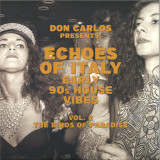
- A1: Montego Bay - Everything (Paradise Mix) 04 59
- A2: Atelier - Got To Live Together (Club Mix) 06 06
- A3: Golem - Music Sensations 04 56
- B1: The True Underground Sound Of Rome Feat. Stefano Di Carlo - Gladiators 05 26
- B2: Eagle Parade - I Believe 04 26
- C1: Dj Le Roi - Bocachica (Detroit Version) 05 28
- C2: Green Baize - Synthetic Rhythm 01 41
- C3: M.c.j. Feat. Sima - Sexitivity (Deep Mix) 05 30
- D1: Kwanzaa Posse Feat. Funk Master Sweat - Wicked Funk (Afro Ambient Mix) 06 31
- D2: Progetto Tribale - The Bird Of Paradise 06 29
- D3: Mbg - The Quite 06 59
Vol 1[28,99 €]
Googling “paradise house”, the first results to pop up are an endless list of European b&b’s with whitewashed lime façades, all of them promising “…an unmatched travel experience a few steps from the sea”. Next, a little further down, are the institutional websites of a few select semi-luxury retirement homes (no photos shown, but lots of stock images of smiling nurses with reassuring looks). To find the “paradise house” we’re after, we have to scroll even further down. Much further down.
It feels like yesterday, and at the same time it seems like a million years ago. The Eighties had just ended, and it was still unclear what to expect from the Nineties. Mobile phones that were not the size of a briefcase and did not cost as much as a car? A frightening economic crisis? The guitar-rock revival?! Certainly, the best place to observe that moment of transition was the dancefloor. Truly epochal transformations were happening there. From America, within a short distance one from the other, two revolutionary new musical styles had arrived: the first one sounded a bit like an “on a budget” version of the best Seventies disco-music – Philly sound made with a set of piano-bar keyboards! – the other was even more sparse, futuristic and extraterrestrial. It was a music with a quite distinct “physical” component, which at the same time, to be fully grasped, seemed to call for the knotty theories of certain French post-modern philosophers: Gilles Deleuze, Félix Guattari, Paul Virilio... Both those genres – we would learn shortly after – were born in the black communities of Chicago and Detroit, although listening to those vinyl 12” (often wrapped in generic white covers, and with little indication in the label) you could not easily guess whether behind them there was a black boy from somewhere in the Usa, or a girl from Berlin, or a pale kid from a Cornish coastal town.
Quickly, similar sounds began to show up from all corners of Europe. A thousand variations of the same intuition: leaner, less lean, happier, slightly less intoxicated, more broken, slower, faster, much faster... Boom! From the dancefloors – the London ones at least, whose chronicles we eagerly read every month in the pages of The Face and i-D – came tales of a new generation of clubbers who had completely stopped “dressing up” to go dancing; of hot tempered hooligans bursting into tears and hugging everyone under the strobe lights as the notes of Strings of Life rose up through the fumes of dry ice (certain “smiling” pills were also involved, sure). At this point, however, we must move on to Switzerland.
In Switzerland, in the quiet and diligent town of Lugano, between the 1980s and 1990s there was a club called “Morandi”. Its hot night was on Wednesdays, when the audience also came from Milan, Como, Varese and Zurich. Legend goes that, one night, none less than Prince and Sheila E were spotted hiding among the sofas, on a day-off of the Italian dates of the Nude Tour… The Wednesday resident and superstar was an Italian dj with an exotic name: Don Carlos. The soundtrack he devised was a mixture of Chicago, Detroit, the most progressive R&B and certain forgotten classics of old disco music: practically, what the Paradise Garage in New York might have sounded like had it not closed in 1987. In between, Don Carlos also managed to squeeze in some tracks he had worked on in his studio on Lago Maggiore. One in particular: a track that was rather slow compared to the BPM in fashion at the time, but which was a perfect bridge between house and R&B. The title was Alone: Don Carlos would explain years later that it had to be intended both in the English meaning of “by itself” and like the Italian word meaning “halo”. That wasn’t the only double entendre about the song, anyway. Its own very deep nature was, indeed, double. On the one hand, Alone was built around an angelic keyboard pattern and a romantic piano riff that took you straight to heaven; on the other, it showcased enough electronic squelches (plus a sax part that sounded like it had been dissolved by acid rain) to pigeonhole the tune into the “junk modernity” section, aka the hallmark of all the most innovative sounds of the time: music that sounded like it was hand-crafted from the scraps of glittering overground pop.
No one knows who was the first to call it “paradise house”, nor when it happened. Alternative definitions on the same topic one happened to hear included “ambient house”, “dream house”, “Mediterranean progressive”… but of course none were as good (and alluring) as “paradise house”. What is certain is that such inclination for sounds that were in equal measure angelic and neurotic, romantic and unaffective, quickly became the trademark of the second generation of Italian house. Music that seemed shyly equidistant from all the rhythmic and electronic revolutions that had happened up to that moment (“Music perfectly adept at going nowhere slowly” as noted by English journalist Craig McLean in a legendary field report for Blah Blah Blah magazine). Music that to a inattentive ear might have sounded as anonymous as a snapshot of a random group of passers-by at 10AM in the centre of any major city, but perfectly described the (slow) awakening in the real world after the universal love binge of the so-called Second Summer of Love.
For a brief but unforgettable season, in Italy “paradise house” was the official soundtrack of interminable weekends spent inside the car, darting from one club to another, cutting the peninsula from North to centre, from East to West coast in pursuit of the latest after-hours disco, trading kilometres per hour with beats per minute: practically, a new New Year’s Eve every Friday and Saturday night. This too was no small transformation, as well as a shock for an adult Italy that was encountering for the first time – thanks to its sons and daughters – the wild side of industrial modernity. The clubbers of the so-called “fuoriorario” scene were the balls gone mad in the pinball machine most feared by newspapers, magazines and TV pundits. What they did each and every weekend, apart from going crazy to the sound of the current white labels, was linking distant geographical points and non-places (thank you Marc Augé!) – old dance halls, farmhouses and business centres – transformed for one night into house music heaven. As Marco D’Eramo wrote in his 1995 essay on Chicago, Il maiale e il grattacielo: “Four-wheeled capitalism distorts our age-old image of the city, it allows the suburbs to be connected to each other, whereas before they were connected only by the centre (…) It makes possible a metropolitan area without a metropolis, without a city centre, without downtown. The periphery is no longer a periphery of any centre, but is self-centred”.
“Paradise house” perfectly understood all of this and turned it into a sort of cyber-blues that didn’t even need words, and unexpectedly brought back a drop of melancholic (post?)-humanity within a world that by then – as we would wholly realise in the decades to come – was fully inhuman and heartless. A world where we were all alone, and surrounded by a sinister yellowish halo, like a neon at the end of its life cycle. But, for one night at least, happy."
Summertime Whiteout is a debut Bleach Cult album - the quirky ambient pop record that
fantasizes about 1960s surf culture and romanticizes the neverending dilemmas of teen
life. It is all about raw imperfections and beautiful spontaneity, captured live on a
modular synthesizer, often relying on single takes and instinctive executions of tracks
that leave little to no room for extensive tweaking and post-processing. Recorded in the
living room at night it shies away from sophistication and complexity instead employing
rough, rock and roll inspired ideas. Raw drifting analog sequences, pulsating textures
and polychromatic vocals. No guitars or drum machines, however.
The Italian 80s avant garde / anarcho scene is explored in this limited 12” release presenting Nengue and their previously unreleased cover version of the new wave classic Los Ninos Del Parque and the electro pop wave African Beat.
The tumultuous political climate of the 1960s through 1980s inspired Italian artists to craft an introspective, psychological musical landscape. As civil unrest, violent demonstrations, and political murders became commonplace, Italy's centres of intellect vibrated with activist energy. This atmosphere gave birth to a unique, mechanized sound that blended electronic elements with a raw, discordant aesthetic, reflecting the chaotic spirit of the times.
Through vintage forms of social networking and music sharing, a community led process steered the scene, publishing zines and records that grasped alternative concepts of music and lifestyle.
Nengue, were similar to many of these lo-fi, retro-future electronic music pioneers. Based in Rome, their music / art backgrounds flowed with anti-art, extreme noise, futurism, industrial, experimental, martial, folk, free jazz and exotica.
With a couple of releases as a duo, as was often the case, they appeared in numerous other projects and the music was a mixture of their individual backgrounds.
Extraordinarily, only appearing on a couple of obscure cassette compilations, indicative of the time, the quality of Nengue’s productions stands testament. Originally approached to reissue their Cosmic meets Kraftwerk inspired African Beat, a wonderful yet simple electronic idiom, layers of electronica rising, each element an addition flow, vocals the release’s waves.
However, the discovery of their cover of Los Ninos Del Parque – describing it as ‘powerful anarchic nonsense’ – is rightfully now the primary focus.
Acting as some Brutalist interpretation, its sharp electronics and industrial vocals, propel you to a brick-strewn squat party and a place in anarcho folklore.
These are matched with a remix / remake by Berlin’s Bionda e Lupo. Presenting a ‘Neumisch’, Sneaker’s exacting studio mastery and Sano’s additional vocals are a blessing – a new duo version – dynamic and wonderfully special.
To complete, the powerful dub of African Beat closes. Stepping out of his time as one half of Romanian duo Khidja (DFA / Hivern Discs), Andrei Rusu builds on his recent solo releases / remixes for Malka Tuti with a fantastic, bottom heavy version, perfectly building with expertise, an EP for the basements of today that was made in the dark times of the past.
Apollo / R&S are delighted to welcome back The Primitive Painter, aka the duo of Roman Flügel and Jörn Elling Wuttke for a timely reissue of their 1994 lost classic self-titled album of sonorous IDM.
Growing up in Frankfurt, in the 80s and 90s the duo met at an indie rock club in their home town of Darmstadt, bonding over their shared obsession with the first wave of acid, Chicago house and early Detroit techno as well as their patronage of now iconic Frankfurt club nights like The Omen or Dorian Gray or the infamous Delirium Record shop run by scene stalwarts Ata (Robert Johnson) and Heiko MSO (Playhouse).
Taking inspiration from the likes of The Black Dog and Transmat as well as seminal compilations such as Planet E’s Intergalactic Beats and Warp’s Artificial intelligence compilation the duo honed their inventive take on the Detroit techno blueprint under the monicker Acid Jesus, debuting on their freshly minted Klang Elektronik label. The label was started in conjunction with Ata and Heiko after Fluegel & Wuttke (regular patrons of the Delirium store) pressed a demo on them, muttering the immortal line; “Please listen to the tape, we are big Mr. Fingers fans.”
Through the mid ’90s the project flourished giving rise to a classic album and a brace of singles that number amongst the best of the era’s techno, winning them a influential fans most notably Sven Väth, David Holmes and Andrew Weatherall who invited them to play live at one of the legendary Sabresonic parties in London.
Alongside the success of the Acid Jesus project, the duo found great inspiration in outside of the club, including an ambient happening when the KLF came to play Frankfurt; “There were live sheep eating grass on stage while they played at Mark Spoon’s club XS”, as well as cinematic influence from the likes of Jim Jarmush and Wim Wenders. It was however the euphonic IDM grandeur of Apollo Recordings self titled compilation of 1993 that really got their creative juices flowing: “It was a ten track compilation with artists like David Morley, Model 500, Aphex Twin which still sounds so good today,” Jörn enthuses. “ It was really the trigger to go away from the Detroit sound and more towards the big melodies of B12 etc.”
Deciding to make their tribute to this style of music the duo turned out 10 tracks of gauzy, melodious electronica in a white hot fever, one after another over the ensuing months. Settling on a name for the new project they picked ‘The Primitive Painters’ taking inspiration from the band Felt. “We are both children of the C86 movement,” explains Jörn. “this attitude of noisy art school influenced rock like Primal Scream, MBV, The Jesus & Mary Chain really inspired us to take a DIY approach to our music.”
They sent the resulting demo cassette to Renaat at R&S / Apollo. “We really had no expectations,” Jörn explains. “So we were shocked and delighted when we received a fax saying that he wanted to release it”.
The resulting release was bungled by an R&S mix up that attributed the album to the duo’s own Klang Elektronik label which confused both fans and distributors alike, denying the release the critical boost and attention that it so richly deserved. Accordingly the release slipped out without much fanfare, with a chastened Fluegel & Wuttke returning to their Acid Jesus activities which would eventually lead to their blockbusting success as Alter Ego.
Over the ensuing years the reputation of The Primitive Painter album has only grown, with second hand copies (only 500 vinyl were pressed) changing hands for exorbitant amounts on Discogs, leading us to this opportune moment of a richly deserved ‘first’ release on the label for which the project was started, Apollo / R&S.
“This really brings us full circle,” says Jörn. “Apollo / R&S meant and means so much to us as artists and so it was bittersweet to not have the official release - to put that right all these years later feels really good.”
This new vinyl release comes in re-created original gatefold artwork and includes all original 10 tracks (Stoned Soul Picnic was previously on the CD only).
2025 Repress
"Hydroplane reinstate their formidable 1997 debut of sublime guitar atmospherics, fragile lyricism and droning incidentals with an overdue vinyl and digital reissue.
An offshoot of the now-féted The Cat’s Miaow, the trio formed after drummer Cameron Smith decamped to London, charting new territory with tape loops, manipulated samples and a borrowed Jupiter 4 in the wake of Endtroducing. Adopting a handle that Dean Wareham once considered calling Luna, Hydroplane intended to only ever release Excerpts From Forthcoming LP, a single-sided 7” sonic collage, before imploding in mystery. Their label however insisted they deliver their taunted album. From the comfort of a Brunswick flat, they continued to record soaring melodies and restrained song structures to 4-track, sculpting dramatic Radiophonic Workshop cues weighted in reverb and near-perfect dream pop lead by Kerrie Bolton’s empyrean vocals.
Bored of industry expectation and largely ignored by local audiences, the reluctant performers followed the way of The Cannanes and formed meaningful overseas alliances by mail and phone, securing releases on Michigan outpost Drive-In and Broadcast launching pad Wurlitzer Jukebox. Championed by John Peel with twenty spins on his converted Radio One slot and even polling in Festive Fifty of 1997, the humble three-piece still walked to their neighbourhood shops undetected.
After establishing the Serebii project with several albums’ worth of trancing neo-soul, much of it done in collaboration with fellow New Zealander Arjuna Oakes, Callum Mower had no lack of confidence in his musical abilities. But much of Mower’s focus in the past was on instruments and production—swirling, cinematic instrumentals under his own name or funky art-pop jams with others on vocals. On Dime, however, Mower knew he wanted to push forward with his own singing placed center stage.
- Lament
- Meet At Midnight
- Excile
- The Order
- Militum Christ
- Mary
- Vive Dieu .. Saint Amour
- The Power And The Glory
- Chain Reaction
- Vox In Excelso
- Where Was Their God
- Priory Of Zion
Saracen's initial reign was in the late 70s and early 80s, which saw the release of their now legendary debut album “Heroes, Saints & Fools”. Some twenty years later, in 2003, they surprised & delighted fans with the release of Red Sky. Both albums, plus bonus tracks, featured in a special boxed set, with new artwork and mastering, released in January 2006 on the Escape Music label. The main focus of the signing, however, was Saracen's eagerly awaited release of their 2006 album – “Vox In Excelso”. “Vox In Excelso” is a concept album, based on the mysterious and controversial history of the Knights Templar – a medieval body of warrior monks, who grew to become one of the most powerful military & financial organizations in Europe. Their story goes far beyond battlefield exploits – the Knights Templar were guardians of Ancient Knowledge; secrets that had major implications for the nations and religions of the western world... secrets that are still cherished and protected even to this day. “Vox In Excelso” (pronounced Ex-chel-so) is laced with poignant narration, linking the tracks, and thereby helping the listener to navigate this turbulent yet touching epic story. The combination of original members, vocalist Steve Bettney and guitarist Rob Bendelow, new blood, former HELLOWEEN drummer Mark Cross amongst others, proved to be an exciting combination on this now classic album.
- 01: Black Fairy Meets Johnny (Live)
- 02: Please Give Me Some Magic (Live)
- 03: Black Fairy Meets Black Bird (Live)
- 04: Tell Them They Are Beautiful (Live)
- 05: Travel To Afrika-Instrumental (Live)
- 06: Black Fairy Meets Queen Mother (Live)
- 07: Afrika&Apos;S My Home (Live)
- 08: Black Land Of The Nile (Live)
- 09: Trip To America (Live)
- 10: Go Down Moses (Live)
- 11: Did You Feed My Cow (Live)
- 12: The Streets Of Harlem (Live)
- 13: Afrikan Children (Live)
- 14: Black Men Can Be Beautiful (Live)
- 15: Black Fairy (Live)
- 16: Eulogy For Black Fairy (Live)
- 17: Black Fairy Returns (Live)
- 18: Hey, Black Child (Live)
- 19: Johnny &Amp; Black Fairy (Live)
Black Fairy is a fairy tale, but not in the traditional sense. When writing this play, i did not want to re-create the types of fantasies which are so common in Childrens theater. There is no kind of magic that can relieve black children from the oppression that retards their development. However, i do feel giving them a better understanding of their heritage can help them achieve their true potential. And those of us who are concerned with their development should try to expose them to knowledge that gives them a positive sense of identity. Although i do feel a chldren's play should be entertaining, I also feel it should be educational. Also, because there are so few children's plays which reflect the black experience, I wanted to write a play that Black children could identify with.
"Black Fairy" is a musical drama about a black fairy who lacks pride in herself and feels she has to offer Black children. But when she meets Black Bird and Queen Mother (Who take her to ancient Egypt, East Afrika, a southern slave plantation and the streets of Harlem) she begins toget a better understanding of her heritage. Her journey through the past enables Black Fairy to meet Aesop, Brer Rabbit, Brer Fox, Uncle Remus, Stag-o-lee, Leadbelly and many other characters in Black folklore and Black history. At the end of her journey, Black fairy realizes that "Being Black is nothing to be ashamed of" and is then able to share her knowledge with other Black children. Even though Black Fairy doesn't completely resolve her dilemma, having a knowledge of her heritage does give her more confidence to cope with the future.
During ther summer of 1974 "Black Fairy" was performed for over four thousand children in Chicago. And, in April of 1975, it played to over two thousand children in Detroit at Mercy College.
"Black Fairy" is the only the first of many children's plays we hope to produce at the Better Boys Foundation. There is an Afrikan proverb which says: "Children are the reward of life". We at Better Boys Foundationm are dedicated to this belief, and feel that helping childrren to appreciate their heritage is one means of showing our concern for their development.
Originally released in 1971, produced by the legendary Sandy Roberton and featuring the likes of Richard & Danny Thompson, Keith Christmas and members of Mighty Baby & Fotheringay, the album has been talked about in glowing terms by an ever increasing fanbase over the years & is highly sought after. It’s a beautiful mixture of folk, psychedelic flourishes and adventurous production combining majestically with Shelagh’s exquisite songwriting and purity of voice. It will immediately appeal to fans of Pentangle, Incredible String Band and Joni Mitchell, as well as the solo records from members of some of the biggest U.S. bands of the 1970s; David Crosby’s ‘If Only I Could remember My Name’ and Gene Clark’s ‘No Other’, and is presented here for the first time ever on vinyl re-issue.
Born in Edinburgh in 1948 before moving to Glasgow and attending the Glasgow School of Art, Shelagh McDonald’s reputation grew rapidly on the London and Bristol folk circuit, gaining a cult following. In her early twenties she cut her first album titled simply ‘Shelagh McDonald’, the following year entering the studio with producer Sandy Roberton (Ian Matthews, John Martyn, Chocolate Watch Band, Steeleye Span) to cut ‘Stargazer’. Unfortunately for Shelagh, following a bad LSD experience, she withdrew from not only the music industry but public life shortly before commencing work on her third album.
However, it is ‘Stargazer’ that continues to grow its reputation, with original copies changing hands for hundreds of pounds.
Imbued with the finest instrumentation and vocal delicacy in late ‘60s folk, the record is heightened by a progressive production approach; the slow organ grooviness in the traditional ‘Dowie Dens of Yarrow’, uplifting gospel overtones of ‘Odyssey’ and the perfect match of melancholic piano and haunting strings by Robert Kirby on the title track. These sublime arrangements all serve Shelagh’s songwriting and soulful voice that invoke the finest folk traditions but at the same time look forward.
The album is the inaugural release on new label Different Strokes For Different Folks with more genre bending, rare and cult records scheduled for 2025.
It has been over a decade since Anthony Mills created Wildcookie, his most celebrated project. With tracks like Heroine and Serious Drug, the album Cookie Dough gained worldwide recognition, landing on numerous radio playlists, including Gilles Peterson’s show. Even after all these years, it remains a favorite on streaming platforms. Now, fourteen years later, Mills returns, teaming up with Marek “Latarnik” Pędziwiatr to create Crack Rock—a bold evolution of Wildcookie’s legacy.
While Wildcookie’s signature warm, jazzy Fender Rhodes sound defined its identity, Crack Rock shifts toward 1980s-inspired compositions crafted by Pędziwiatr, known for his work with EABS, Błoto, and Zima Stulecia. The duo explored yacht rock, drawing inspiration from Fleetwood Mac and Michael McDonald, maintaining the genre’s clean vocals and catchy melodies. However, their experimental spirit pushed the sound further, distorting the polished yacht rock aesthetic—leading to Crack Rock, a clever wordplay reflecting both the music and its themes.
Anthony Mills is known for layered wordplay, and the album’s name nods to deeper personal struggles. “I listened to the song Crack on repeat—it brought me to tears. Growing up in the crack era was painful. The PTSD I endured is now a powerful source of inspiration.” This raw emotional backdrop adds an edge to Crack Rock’s themes of love and human relationships—what Mills calls “cold love”: alluring, grand, yet ultimately destructive. Like an addiction, you keep coming back for more.
This idea of addiction shapes the duo’s sonic exploration—beneath the catchy melodies lie deeper, pain-laden themes wrapped in metaphor. “I see this album as therapy, a testament to the magic we create in the studio,” says Pędziwiatr. “Our process is a mix of musical mastery and deep conversations about life. For me, it feels like soul cleansing.
Bad news: Not much is known about pdqb, and what we do know is most likely either wrong or made up. The man who is credited for the productions is said to have gone insane due to being possessed by an alien parasite. His whereabouts remain unknown. Good news: Fortunately, Synaptic Cliffs owns about a dozen releases from whoever or whatever is behind the mysterious abbreviation and will publish every single one of them…because they are ultra awesome.
With the original tapes of this Mini-LP, pdqb left a fragmented note in the '90s stating that he decoded eight tracks originally produced with the NCO6.27 for test subjects who were all given some strange form of brain implants, and that a certain wetware could be unveiled in that manner, and that he conducted that research long before he developed a machine capable of hacking into the dreams of everyone who has ever lived.
However, the music could best be described as playful and dark, old-school Techno/Electro/Industrial blended with Chiptunes, IDM/Braindance, and Electronica. It is pressed on a beautiful green splatter vinyl.
The first 150 customers will be rewarded with a free leftover flexi disc from the '80s featuring two exclusive tracks composed by pdqb while he worked for Silvio Berlusconi's Mediaset TV production company. The flexi was originally included in the November 1985 issue of the Italian Playboy Magazine (cover girl: Grace Jones) and is extremely sought after.
It’s been 20 years since Hinder’s major label debut Extreme Behavior was released, and we’re still not sure the music industry has recovered. Seldom have commercial and critical success been poles apart to this degree; this record went TRIPLE platinum and scored, what, four major hit singles (more if you count the international charts)?! Yet, critical scorn was unrelenting, one reviewer commenting Hinder “appeal not to fans of music, but fans of high fives.” Which is pretty funny…but this Oklahoma City band laughed all the way to the bank, as songs like “Get Stoned,” “Lips of an Angel” (#3 on the Hot 100), “How Long,” and “Better Than Me” were worldwide hits.
Part of this was due to the undeniable charisma of lead vocalist Austin John Winkler; producer Brian Howes also deserves credit for co-writing the songs. But a big part of Hinder’s allure (aside from the fetching cover photo taken straight from the cover of the book How to Tell a Naked Man What to Do: Sex Advice from a Woman Who Knows) was the band’s devil-may-care attitude. Fans of Jackass found their party-hearty soundtrack right here; Extreme Behavior is good, unclean fun. Remastered for its firstever vinyl reissue on its 20th birthday by Mike Milchner from Sonic Vision, and pressed in blackberry vinyl!
- You've Got What I Need
- Don't Stop Now
- Higher
- Just Friends
- Bring It On
- Tonight
- Rainfall
- Midnight Man
- Stranger
- Last Chance
CLEAR VINYL[26,01 €]
Clear marble vinyl. Hailing from Kansas City, Missouri, Shooting Star made history as the first American band signed to Virgin Records. Their 1980 self-titled debut, produced by Gus Dudgeon (renowned for his work with Elton John), showcased a powerful blend of melodic rock, soaring harmonies, and violin-infused arrangements. Recorded in England in 1979, the album gained national attention with AOR radio staples like "You Got What I Need," "Bring It On," and "Tonight." However, it was "Last Chance" that truly stood out_later praised by AllMusic as "one of the finest songs ever." With a lineup featuring Van McLain, Gary West, Charles Waltz, Bill Guffey, Ron Verlin, and Steve Thomas, Shooting Star blended classic rock with orchestral textures, crafting a unique and memorable sound. Though they never reached mainstream superstardom, their debut album remains a hidden gem of heartland rock, capturing the energy and ambition of a band on the rise.
Clear Vinyl. Hailing from Kansas City, Missouri, Shooting Star made history as the first American band signed to Virgin Records. Their 1980 self-titled debut, produced by Gus Dudgeon (renowned for his work with Elton John), showcased a powerful blend of melodic rock, soaring harmonies, and violin-infused arrangements. Recorded in England in 1979, the album gained national attention with AOR radio staples like "You Got What I Need," "Bring It On," and "Tonight." However, it was "Last Chance" that truly stood out_later praised by AllMusic as "one of the finest songs ever." With a lineup featuring Van McLain, Gary West, Charles Waltz, Bill Guffey, Ron Verlin, and Steve Thomas, Shooting Star blended classic rock with orchestral textures, crafting a unique and memorable sound. Though they never reached mainstream superstardom, their debut album remains a hidden gem of heartland rock, capturing the energy and ambition of a band on the rise.
When it comes to musical discovery, sometimes the stars just align. DJ and record collector, Steve KIW, put Mr Bongo onto this amazing Chilean cover version of Jamie Principle & Frankie Knuckles' all-time classic 'Your Love'. Despite being originally released 13 years ago, it had recently started to prick the ears of house and Balearic connoisseurs in the UK, further cemented by inclusions in the Idjut Boys epic sets. Steve heard them play it, tipped us off and it soon became a favourite at Mr Bongo HQ.
By pure chance when the Mr Bongo DJs joined Luke Una to play at La Paloma ballroom in Barcelona a few weeks later, Luke dropped this incredible interpretation at the peak of his set. A good friend of his, Michelle from Huddersfield, had also put him onto the track and he instantly fell in love. A serendipitous coming together, 'Tu Amor' seemed like the perfect next instalment in the E Soul Cultura discography. The version in question was released in 2012 as part of a digital-only EP.
It came courtesy of the Chilean DJ, producer and singer Mamacita (Carolina Vallejos) and producer Sebastian Roman, aka Persona RS. Meeting Sebastian while out partying in Santiago during a boom time for electronic music in Chile, their shared passion for making house music in Spanish and their admiration for Frankie Knuckles led to the creation of this raw and unique cover version. Recorded on lo-fi equipment, including an old Windows laptop and a borrowed Neumann microphone, it nods to the DIY ethos of the early Chicago productions. The result is a stripped-back, quirky cosmic take on a stone-cold classic, full of squelching synthlines and Carolina's stunning Spanish vocals, that became a club hit on Chile's underground circuit. However, aside from some Latin American and US DJs picking it up, it never got the international recognition it deserved.
Fast forward to 2025, and E Soul Cultura is proud to present the glorious 'Tu Amor' on vinyl for the first time, backed with a new, extended, club re-edit by E Soul Cultura captain Luke Una and Luke Solomon (Classic Music). On first hearing 'Tu Amor' Luke Una recalls, There was a real charm to it, it was quite an unorthodox arrangement, a huge wonkiness and just sounded so DIY in a brilliant way. I was chatting to Luke (Solomon) about how much we loved it and we decided to re-edit it together. Accentuating the wonk of those crazy synths, we've extended it to make a fiercer underground club tool, without taking away that very charming cosmic feel.
- Soulville
- Late Date
- Time On My Hands
- Lover Come Back To Me
- Where Are You?
- Makin' Whoopee
- Ill Wind
The complete album - pressed on limited edition 180g vinyl
Tenor saxophonist Ben Webster (1909 - 1973) had already enjoyed a long and fruitful
career by the time this 1957 session was recorded. However, as Bob Blumenthal
explains in the original liner notes, he still wasn't known for the sensual ballad feeling
that became his trademark during the last two decades of his life. At that time, he was
still recognized for the hard blowing fast tenor sax style he played with both the Duke
Ellington Orchestra and his own multiple small groups.
Even though his repertoire was generally linked to that of Duke Ellington, this classic
Norman Granz produced session presents Webster playing four popular ballads and
two of his own bluesy compositions, Soulville and Late Date. On hand in support are
the incredible Oscar Peterson Trio (Herb Ellis, Ray Brown), and drummer Stan Levey.
"The by turns grizzled and vaporous-toned Webster really hit his stride on the Verve
label. This 1957 date with the Oscar Peterson Trio is one of the highlights of that
golden '50s run. After starting off with two bluesy originals, Webster gets to the heart
of things on five wistful ballads. Providing sympathetic counterpoint, Peterson
forgoes his usual pyrotechnics for some leisurely compact solos; his cohorts -
guitarist Herb Ellis, bassist Ray Brown, and drummer Stan Levey - are equally assured
and splendid. Newcomers shouldn't hesitate to start here." - ***** Stephen Cook,
AllMusic
Members went on to Sinkane, and Pompeii, This Morning. Originally recorded in the
summer of 2005 out west, while on tour, by Vince Tennant. The recording had been
shelved and unreleased. In 2023, Expert Work Records reached out to Sweetheart and
got the recording re-mastered. It will be released on limited vinyl and digital.
This is also a companion piece/ record with EW018 (Sweetheart- The Process of
Making Us Well). We highly suggest getting both records.
Sweetheart's "The Unbearable Tightness Of Being" is one of those records you should
put on your radar as soon as possible. A rediscovered artifact from 2005, the album is
a sonic panorama that intricately incorporates post- hardcore, noise rock, punk,
screamo, and indie elements into an innovative and complex sonic landscape. The
guitars, wielded with finesse, serve as the driving force behind Sweetheart's sonic
assault. From the opening chords to the closing refrains, they deliver a relentless
barrage of riffs that defy predictability. The interplay between the two guitarists
manifests as a dynamic dialogue - a musical conversation that seamlessly transitions
from chaotic dissonance to moments of clarity. Catchy, intricate, and hypnotic chord
progressions unfold, evoking the spirit of At The Drive-In and Fugazi while carving a
distinct sonic identity.
However, it's not merely about sonic assault; Sweetheart infuses the album with a
nuanced approach to melody. Amidst the aggressive riffage, this material treats
listeners with moments of harmonic beauty and unexpected melodic twists. Themes,
leads, melodies, and harmonies intermingle, creating a rich auditory experience that
transcends the boundaries of conventional post-hardcore.
The production quality of this long- lost gem further accentuates its brilliance.
Recorded in 2005 but kept in the shadows due to financial constraints and a desire for
perfection, the album has now found its moment in the sun. Expert Work's decision to
release the LP in 2024 has allowed audiences to appreciate the intelligent
craftsmanship that went into its creation.
"The Unbearable Tightness Of Being" is more than a musical journey; it's a sonic
exploration transcending all the possible sonic boundaries. Sweetheart's commitment
to experimentation and honesty, as emphasized by band members reflecting on their
creative process, is palpable. The act of listening, treated as a discipline, is evident in
the careful construction of each track - a result of repetitive practice, internalization,
and an unwavering dedication to their craft. In the grander narrative of the album's
release, the band's reflections on the passage of time and the meaning of their work
imbue the music with a poignant depth.
"The Unbearable Tightness Of Being" is a mandatory addition to any record collection.
It's not just a revival of the early 2000s scene; it's a sheer example of Sweetheart's
enduring brilliance and a celebration of a significant part of their musical legacy.