DEENAMIC steps up with 4 deep hitters for Syncro65. Raw dubtech pressure,future echoes and machine soul straight outta Madrid. Don't sleep — this one's got that late-night basement grip
Francois Kevorkian (Wave) : The whole EP is nice, "HAL 2024" is the standout track for me on first listen.
Laurent Garnier : Lovely deep organic dubs
Jaye Ward (Dalston Super Store / Netil Radio) : synchrophone is rockin' 4 fab tracks moonbus is heavy!
Eddie Richards (Evil Eddie Richards) : 800 mistakes
Danny Howells (Dig Deeper) : Sheer quality .. all four sound ace and up my street. Especially HAL 2024
Luke Solomon (Classic / Freaks / Music For Freaks) : hot hot hot
Bake (All Caps/Rinse FM) : love! thank you
Marcel Dettmann : thx
Harri (Sub Club) : liking, will play and support
Domenic Cappello (Subclub) : nice release
Pat Hyland (Northside Loft Society) : Loving these deep and dubby vibes.
Colin Dale : Excellent EP. All 4 cuts rock!
Ame (Innervisions) : thanks
Suche:howe
An immersive long-form composition in two parts that seamlessly blends a collage of spoken word, field recordings and drones with elements of dub, jazz, fourth world and ambient music.
Son Of Chi is the latest project of Rotterdam-based multi-instrumentalist, composer and producer Hanyo van Oosterom. Van Oosterom’s prolific career spans multiple decades and genres; among countless projects he has been involved in, he is known for founding the Dutch ambient collective CHI in the early eighties, and in recent years for his prolific collaboration with CHI co-founder Jacobus Derwort as Chi Factory. Following Derwort’s passing in 2019, van Oosterom decided to close the CHI circle with the birth of Son Of Chi.
Sonically, the world of ‘We Carry Eden’ is fully immersive; it ripples with depth and shimmers in detail. Motifs, ideas and fragments, arise and disappear like passing thoughts, drawing the listener deeper and deeper inwards. For those familiar with Oosterom’s work as Chi Factory, the depth and meditative nature of the work will come as no surprise; however it is Oosterom’s skill with grooves that shines equally bright here; his infectiously dubby basslines and percussion rise up from the ether, grounding the listener to the earth. ‘We Carry Eden’ at times invokes the fourth world landscapes of Jon Hassell, (with whom Oosterom has collaborated) but as a whole, it remains the unique work of an artist fully in tune with their vision.
Thematically, storytelling traditions lie at the heart of ‘We Carry Eden’, with van Oosterom’s long-time collaborator Omar Ka playing a central role. Ka, who hails from the West African nomadic Fulani tradition of storytelling, responds to the collage of field recordings and sounds collected by Oosterom. His voice is woven throughout ‘We Carry Eden’, creating a narrative that binds the multiple sound sources of the album together.
As with much of van Oosterom’s musical output, inspiration is drawn from the Greek Island of Patmos and the wisdom and prophecies of the Native American Hopi Tribe. Since his work with CHI in the early eighties, van Oosterom has often incorporated quotes from Hopi Elders into his music. Gods, spirits, animals and humans, all existing in one unchangeable relationship tied to nature; ‘We Carry Eden’ is rooted in this philosophy, serving as a peaceful message of beauty, harmony and respect for the wisdom of the Elders and ancient traditions.
Sleeve art and design by Michael Willis.
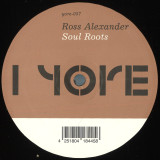
Yore returns with an unusual one for us. This first EP by Ross Alexander is more Techy than what you would expect on Yore – However, its still somewhere between the slim lines of House and Techno – more Techno in a Detroit way. Well, Ofcourse – what else would it be, right?
All four tracks are ready for your dancefloor – so grab yours, as these very limited copies, will be gone in no time.
Strictly limited to 200 Copies worldwide (no repress).
Hitting release number three, Slush Records remaster and reissue Spacer IV aka James Zeiter’s sought-after 1997 EP on Pleasure Records. The man behind a slew of lauded records under a variety of different aliases, his sound is one that is cherished for orbiting the spheres of progressive trance and atmospheric dub techno. This four-track EP, however, saw James venture into unchartered territory, exploring a more melodic, house-tinted spectrum, before flipping back into the progressive techno-trance underbelly.
Having started life in 1995, Spacer IV had already gone from the leagues of limited white labels, to being the name stamped on one of Pleasure’s biggest-selling records by the time this EP came out. With only 195 white labels of his first record ARC 1/ARC 2 pressed, a copy was passed to Pete Robinson at Robs Records. ‘ARC 2’ was plucked from that release, supplemented with a new cut ‘ARC 3’ and given a proper pressing on Robs Records offshoot label Pleasure to notable success.
Fast forward to 1997 and James chose to depart the trance-infused techno sound of those first releases. Absorbing elements by osmosis, this EP sees James dipping his toes into fresh waters. Using what limited hardware he had available, including an Akai S950 sampler, Ensoniq ESQ-1 and Novation Bass Station 1, James laid down four distinctive and versatile club cuts.
‘Sirocco’ opens the EP, a tingling hit of endorphins that only the most timeless of tracks can elicit. Echoing pads feed acid murmurings, that sit atop dusty breakbeats and rattling sub-bass. An aural exploration, that is equal parts ethereal and empowering, taking cues from breaks, ambient, chill out and house. It’s one of those rare tracks that has the power to float you away or fuel your buzz, giving a healthy tug on the heartstrings in the process.
‘Mono’ follows, merging heads-down dancefloors with the embrace of warmer climates. It’s deep and Detroit-infused yet bolstered by a dream house bassline straight out of the Italian riviera. A dose of eyes-closed euphoria that hits just right.
The flipside sees James in more familiar territory with ‘Jetson’ and ‘Dust’. The former is a hit of space-age progressive house. Trippy, hypnotising, driving goodness, showcasing James’ ability to lock your body into a groove, yet send your mind to another world. The latter rounds out the EP, serving up an acid-swirling club stomper, forever building in intensity before dropping you into the vacuum of deep space.
- A1: Patrick Bernard - Interieurs
- A2: Cecilia Angeles - Climax Our First Day Of Love Its A Love Day
- A3: Carla Music Orchestra - A Meet With Bond
- A4: Remy Boussengui - Coco Lando
- B1: Francisco Et Son Orchestre - Cafe Rete
- B2: Francis Bebey - Crocodile Crocodile Crocodile
- B3: Michel Lorentz - Zantye An Metro
- B4: Egide Sadey - High Emotion
- B5: Princess Erika - Trop De Bla Bla Dub Version
Isle of Jura teams up with French digger Switch Groove on the next compilation titled ‘Archipelago – Cosmic Fusion Gems from France (1978-1988)’.
Switch Groove explains the concept “When I seriously began to search for and collect records, I was mostly interested in sounds from african-american, afro-latin and UK contemporary scenes. Sounds from distant territories, faraway from my native Massif Central, a highland region in the middle of France. The grass is always greener, I guess however, as I was digging in fleamarkets in the early sunday morning light, as well as spending regular sessions in second hands record shops, I began to discover hidden treasures, underground gems and side-projects of an unknown French musical repertoire.
French music is often reduced to its most famous musical forms, characters and signatures : French songwriting and voices, 60s yéyé, prog rock concept albums and soundtrack explorations, 80’s indie rock scene or more recently electronic French touch. All these sounds have a common feature : a geographical link, forged on mainland French territory, following the contour of the so-called Hexagone, the border that shapes the grounds for an homogeneous cultural expression. But beyond this showcase lie more complex, hybrid and global French productions. From French Caribbean Antilles to Parisian suburbs - especially during the ‘Sono Mondiale’ era -, in French areas outside urban cultural centers, musicians have created fusion and cosmic musical expressions. As the mid-seventies meant a greater freedom to make and record music, a wider use of electronic instruments like synthesizers and drum machines helped to deliver some magical projects you could only find lost in the middle of cheap records during a sunny record digging session. I selected these tracks, in an attempt to shape an ARCHIPELAGO that highlights significative contributions of African diasporas and ultramarine territories into French musical borders. It is the map of a land I have gradually drawn, thanks to deep listening of amazing cosmic and fusion tunes. I hope you enjoy the journey.”
Repress!
Emotional Rescue and Utopia Originals join forces to release the pop, new wave, funk of Obscure Desire, a one-off project and EP from effervescent 80s Auckland, New Zealand that saw three friends come together to make a perfect piece of club pop history.
Revolving around the musical talent of Andrew Waldergrave, a trained pianist, music degree drop-out, who moved to the island’s cultural centre of Auckland and emersed himself in the arts and nightlife scene the city had to offer.
Working at Obscure Desire, a Fashion Boutique meets Salon, he became friends with Grant Mitchell and Giselle Trezevant, together forming not a band, but as they saw it, a project to make a record for their scene and beyond.
Coming from outside of the established band route of endless rehearsals, local gigs, growing a fan base and home recordings, they fell did not have the support network of indigenous New Zealand labels. As so often the case in unearthing these lost reissue gems, the artists took matters into their own hands, seeking to write, record and release themselves.
After meeting Trevor Reekie, head of the local Pagan Records label, he took on production duties. Collating the necessary musicians, the project grew from the one song to become a full EP, recording between a home 16 track studio and a full 24 track desk at Harlequin Studios.
Centred around the title song, it is a perfect pop moment. Waldergrave’s piano leads into an infectious groove of slap bass, gated drums, Reekie’s acoustic guitar and cut vocals, before Trezevant’s vocals propel the song to an 80s swing out vibrations. Coming in Extended, Harlequin and Instrumental (digital only) mixes, this was an overload of White Funk.
Here reduced to the best two versions, more room is given to let the other recordings breathe, first the gloriously anthemic instrumental Bullet. Intricate programming and production, lead into the pop sensibility of I Wonder, some kind of wonderful antipodean reimagining of Chris & Cosey finest pop moments, an optimistic paene that permeates the whole EP. Closing 4A, espouses the Jazz Funk, with Trezevant’s simple French lyrics telling of dreams of a lover’s image.
Released in 1986 with no local support from radio and TV, it became something of a “hit” record in New Zealand’s more discerning clubs, however the members soon moved to London and the project remained a one-off moment. Over time the EP has gained cult status to become globally desired that sees copies of the original 12” selling for $000s. Now at last available for a global reach, while remaining a personal, uplifting moment of time.
Selador’s Magic Black Plastic series returns with our seventh instalment and this one is all about one of our most treasured artists here at Selador, the one and only Danny Howells.
Long time friend of the label, DJ extraordinaire and one of the nicest guys in the business, Danny has been flexing his production muscle again much more frequently over the last 12 months and we’re delighted to be hosting two brand new tracks from him on this vinyl release.
The lead track ‘Powershow’ features here as a ‘vinyl only’ version, a 12+ minute extravaganza of authentic house vibes. Oozing class and quality from every groove. Just beautiful.
Following in its considerable slipstream like a season wingman, for the first time on vinyl, comes Danny’s first release for the label from 2018, one of our best selling digital releases, the classic ‘Earthlings X’, still sounding as fresh as the day it was made.
And finally, another fresh for 2025 Production, the majestic ‘Stereodrama’ picks up the pace for a driving, rumbunctious workout, that once again has Danny’s stamp written all over it.
Three absolute pearlers then from a man who can.
Get’ em down ya!
50th ANNIVERSARY EDITION
Heavyweight Vinyl 45 RPM Cut / Original glued prints on Thick Cardboard 700 gram / 2 Separated parts hand-glued / Glossy lamination / PVC outer / 30x30 cm insert with interview to Steve Kuhn by Tony Higgins printed on 250 gram Favini Lanilla Yellow / 20 Pages 21 x 30 cm "Real Book" with transcripts of the songs in the "Real Book" style, handwritten by The Maestro Carlo Spanò with main theme, chords and lyrics printed on 120 gram Shiro Eco paper, 100 gram Favini Crush Alghe. Carlo also edited an introduction with technical analysis of the session, which solves some of the little mysteries around this music gem.
Personnel:
Steve Kuhn - Vocals, Piano
Airto Moreira - Percussions
Billy Cobham - Drums
Ron Carter - Bass
Gary McFarland - Arranged by
Notes:
The album features the group playing Gary McFarland arrangements of Kuhn's compositions, accompanied by a string section on several tracks, with Kuhn delivering stream of consciousness lyrics in an unplanned and largely improvised fashion in the studio. However, that wasn't the only surprising aspect to the session. Airto Moreira's appearance was more by chance than design, he having just popped by the studio, again, unplanned. The 'Steve Kuhn' album is all the stronger for these extemporaneous and serendipitous elements and showcases a band at the top of their game; tight and funky yet relaxed and flowing like molten gold, with stabs and washes of keyboard from Kuhn. Splashes of free playing enter the session, but the band never stray too far from a melodic and harmonious centre of gravity. Kuhn's deft keyboard skills provide melodic embroidery to the impressive rhythmic textures and tonal colours of Carter, Cobham and Moreira. As if the music wasn't enough, the album is given extra significance by the fact that, within a few months of the recording, McFarland would die after being mysteriously poisoned by methadone in a New York bar. In a sense, it is a valedictory album from McFarland, channeled by Kuhn and the band.
It's among the hardest of Kuhn's albums to find so this reissue is most welcome. Luxuriate in the glow of Kuhn's Fender Rhodes and the pliant funky bass of Ron Carter; immerse yourself in the percussive interplay of Moreira and Cobham, a pairing that has rarely sounded so good. This is such an exquisite album; you will lose yourself in its delicate power and find yourself coming back to it again and again.
- A1: Montego Bay - Everything (Paradise Mix) 04 59
- A2: Atelier - Got To Live Together (Club Mix) 06 06
- A3: Golem - Music Sensations 04 56
- B1: The True Underground Sound Of Rome Feat. Stefano Di Carlo - Gladiators 05 26
- B2: Eagle Parade - I Believe 04 26
- C1: Dj Le Roi - Bocachica (Detroit Version) 05 28
- C2: Green Baize - Synthetic Rhythm 01 41
- C3: M.c.j. Feat. Sima - Sexitivity (Deep Mix) 05 30
- D1: Kwanzaa Posse Feat. Funk Master Sweat - Wicked Funk (Afro Ambient Mix) 06 31
- D2: Progetto Tribale - The Bird Of Paradise 06 29
- D3: Mbg - The Quite 06 59
Vol 1[28,99 €]
Googling “paradise house”, the first results to pop up are an endless list of European b&b’s with whitewashed lime façades, all of them promising “…an unmatched travel experience a few steps from the sea”. Next, a little further down, are the institutional websites of a few select semi-luxury retirement homes (no photos shown, but lots of stock images of smiling nurses with reassuring looks). To find the “paradise house” we’re after, we have to scroll even further down. Much further down.
It feels like yesterday, and at the same time it seems like a million years ago. The Eighties had just ended, and it was still unclear what to expect from the Nineties. Mobile phones that were not the size of a briefcase and did not cost as much as a car? A frightening economic crisis? The guitar-rock revival?! Certainly, the best place to observe that moment of transition was the dancefloor. Truly epochal transformations were happening there. From America, within a short distance one from the other, two revolutionary new musical styles had arrived: the first one sounded a bit like an “on a budget” version of the best Seventies disco-music – Philly sound made with a set of piano-bar keyboards! – the other was even more sparse, futuristic and extraterrestrial. It was a music with a quite distinct “physical” component, which at the same time, to be fully grasped, seemed to call for the knotty theories of certain French post-modern philosophers: Gilles Deleuze, Félix Guattari, Paul Virilio... Both those genres – we would learn shortly after – were born in the black communities of Chicago and Detroit, although listening to those vinyl 12” (often wrapped in generic white covers, and with little indication in the label) you could not easily guess whether behind them there was a black boy from somewhere in the Usa, or a girl from Berlin, or a pale kid from a Cornish coastal town.
Quickly, similar sounds began to show up from all corners of Europe. A thousand variations of the same intuition: leaner, less lean, happier, slightly less intoxicated, more broken, slower, faster, much faster... Boom! From the dancefloors – the London ones at least, whose chronicles we eagerly read every month in the pages of The Face and i-D – came tales of a new generation of clubbers who had completely stopped “dressing up” to go dancing; of hot tempered hooligans bursting into tears and hugging everyone under the strobe lights as the notes of Strings of Life rose up through the fumes of dry ice (certain “smiling” pills were also involved, sure). At this point, however, we must move on to Switzerland.
In Switzerland, in the quiet and diligent town of Lugano, between the 1980s and 1990s there was a club called “Morandi”. Its hot night was on Wednesdays, when the audience also came from Milan, Como, Varese and Zurich. Legend goes that, one night, none less than Prince and Sheila E were spotted hiding among the sofas, on a day-off of the Italian dates of the Nude Tour… The Wednesday resident and superstar was an Italian dj with an exotic name: Don Carlos. The soundtrack he devised was a mixture of Chicago, Detroit, the most progressive R&B and certain forgotten classics of old disco music: practically, what the Paradise Garage in New York might have sounded like had it not closed in 1987. In between, Don Carlos also managed to squeeze in some tracks he had worked on in his studio on Lago Maggiore. One in particular: a track that was rather slow compared to the BPM in fashion at the time, but which was a perfect bridge between house and R&B. The title was Alone: Don Carlos would explain years later that it had to be intended both in the English meaning of “by itself” and like the Italian word meaning “halo”. That wasn’t the only double entendre about the song, anyway. Its own very deep nature was, indeed, double. On the one hand, Alone was built around an angelic keyboard pattern and a romantic piano riff that took you straight to heaven; on the other, it showcased enough electronic squelches (plus a sax part that sounded like it had been dissolved by acid rain) to pigeonhole the tune into the “junk modernity” section, aka the hallmark of all the most innovative sounds of the time: music that sounded like it was hand-crafted from the scraps of glittering overground pop.
No one knows who was the first to call it “paradise house”, nor when it happened. Alternative definitions on the same topic one happened to hear included “ambient house”, “dream house”, “Mediterranean progressive”… but of course none were as good (and alluring) as “paradise house”. What is certain is that such inclination for sounds that were in equal measure angelic and neurotic, romantic and unaffective, quickly became the trademark of the second generation of Italian house. Music that seemed shyly equidistant from all the rhythmic and electronic revolutions that had happened up to that moment (“Music perfectly adept at going nowhere slowly” as noted by English journalist Craig McLean in a legendary field report for Blah Blah Blah magazine). Music that to a inattentive ear might have sounded as anonymous as a snapshot of a random group of passers-by at 10AM in the centre of any major city, but perfectly described the (slow) awakening in the real world after the universal love binge of the so-called Second Summer of Love.
For a brief but unforgettable season, in Italy “paradise house” was the official soundtrack of interminable weekends spent inside the car, darting from one club to another, cutting the peninsula from North to centre, from East to West coast in pursuit of the latest after-hours disco, trading kilometres per hour with beats per minute: practically, a new New Year’s Eve every Friday and Saturday night. This too was no small transformation, as well as a shock for an adult Italy that was encountering for the first time – thanks to its sons and daughters – the wild side of industrial modernity. The clubbers of the so-called “fuoriorario” scene were the balls gone mad in the pinball machine most feared by newspapers, magazines and TV pundits. What they did each and every weekend, apart from going crazy to the sound of the current white labels, was linking distant geographical points and non-places (thank you Marc Augé!) – old dance halls, farmhouses and business centres – transformed for one night into house music heaven. As Marco D’Eramo wrote in his 1995 essay on Chicago, Il maiale e il grattacielo: “Four-wheeled capitalism distorts our age-old image of the city, it allows the suburbs to be connected to each other, whereas before they were connected only by the centre (…) It makes possible a metropolitan area without a metropolis, without a city centre, without downtown. The periphery is no longer a periphery of any centre, but is self-centred”.
“Paradise house” perfectly understood all of this and turned it into a sort of cyber-blues that didn’t even need words, and unexpectedly brought back a drop of melancholic (post?)-humanity within a world that by then – as we would wholly realise in the decades to come – was fully inhuman and heartless. A world where we were all alone, and surrounded by a sinister yellowish halo, like a neon at the end of its life cycle. But, for one night at least, happy."
“… it was dance music, it had lyrics, it had songs, it wasn’t all instrumental, it was basically uptempo soul music, to be exact.”*
This quote from Timmy Regisford already sums up everything you need to know about his remix of Basic Black’s “Don’t Make Me Fall In Love.” Signed to Motown during Regisford’s reign as vice president and A&R, their self-titled debut album from 1990 is a testament to the massive popularity of new jack swing at the time. In his remix, the co-founder, resident DJ, and key figure of Club Shelter reconfigures the song’s structure with the signature sounds of New York’s prime dance floor scene, while preserving the heartfelt storytelling of the lyrics and the group’s voices on top of an irresistible groove and a bassline to die for.
At the time, it was only available in the record crates of the Big Apple’s DJ elite and later on as a white label in specialist shops. This soulful, yet driving piece, however, never saw an official single release—until now. Lifted from a DAT tape in Tony Humphries’ archive and carefully and faithfully restored, it now even features a condensed, never-before-released instrumental version of the remix, as well as a bass-and-beats-only edit for mixing purposes by yours truly. New jack swing transformed into New York club music by a king. This remix is a testament to Timmy Regisford’s prowess in the studio, but also honors the roots of the music he loves and grew up on—serving as a perpetual piece of the city’s vast history in underground dance music.
Gerd Janson
Synaptic Cliffs is committed to discovering unknown and unreleased music in the future, testing it in the past, and selling it in the present. This is the only way to ensure that art is timeless. The recordings on this cassette, however, were purchased in 2073 from a beautiful woman named pdqb at the Marché aux Puces in Paris for only 0.0000000000000000001 Bitcoin, but on the condition that all the material is distributed on one cassette, namely exactly as described hereinafter: The short tracks from the years 1984 to 1989 are on the A-side, and one of these recordings must be supplemented with vocals by Max Müller, the singer of the infamous Berlin band Mutter. On the B-side, there will be a binaural 16.7-tone music composition from the year 2047. Furthermore, all recordings must be mastered by Mike Grinser. Last but not least, only high-quality chrome tape may be used for production. In August 2027, the music magazine Melody Maker, which will be published again from 2026, will write: " ' Vor dem Punkt ist nach dem Punkt' is a surprisingly singular work with a creative force of near-unprecedented degree. It is one of the most beautiful and best-sounding post-punk albums of the last 40 years, and it is certainly the main reason why we are currently experiencing a huge comeback of post-punk, shoegaze, and goth rock."
Unspecified Enemies, the project led by Louis Digital (Numbers, Counterattack, Arcola) present their debut album Romance in the Age of Adaptive Feedback.
Written and produced by Louis Digital, the album incorporates fragments of music data generated by long-time collaborator CiM (Ann Aimee, Delsin). Describing the title track, Louis Digital states:
“It’s the microelectronic sound of a city playing strange light games with itself, evoking bitcrushed desires and floating images, an urban phantasy stored on the broken circuits of an Ensoniq ASR-10.”
The origins of Romance in the Age of Adaptive Feedback trace back to 2006, when Louis Digital launched Diamond Sea, a series of events at London’s ICA that introduced the Unspecified Enemies project and a label called City of Quartz. The vision was to merge the hi-tech electronic textures of contemporary R&B with the sampling and sequencing techniques of pioneers like Anthony Shakir and Soundhack. However, the music was lost in time, and City of Quartz never released a single record.
Yet, the story took an unexpected turn. At one of these events, Spencer from Numbers received a CD containing early recordings. Years later, Numbers encouraged Louis Digital to reconstruct the lost music for an album. The result is a work resurrected from the past and reimagined for the future—retrieved in fragments from a broken Iomega Jazz SCSI Drive.
Expanding on the album’s themes, Louis Digital reflects:
“By the late ’90s the cinematic image of Los Angeles and the sound of Detroit techno had crystallised a new style of living in time and space. In 1997 Mike Davis — the political activist, urbanist, writer and historian of Los Angeles — suggested that it all had “something to do with a microelectronic aesthetic of very transient and decaying states”. It was a romantic vision — one where the city’s glass surfaces reflected a musical desire for futurity not yet dominated by data-driven corporate life. These were strange days to live through. This album evokes the embers of this fibre-optic moment, when urban revolution in an age of digital reification still felt possible.”
The album features full sleeve artwork and a poster designed by Ben Drury. In support of the release, an NTS show titled Romance and Reification will explore the cinematic and electronic music influences behind the album.
This is long time overdue. Hugo Danin is one of Porto’s most recognizable drummers with a huge importance in the local scene. Wether it is because of the many projects he lends his skills to or the work he has developed with the Porto Drum Show this record has been on our calendar almost ever since we started this journey as Jazzego. At the time Hugo was drumming for the Minus & MRDolly live show and we had this idea of re-releasing his record from (at the time) 10 years ago as kick starting point for new path of his as drummer within the jazz scene. This kind of makes this record an one off in our catalogue as re-issues and re-releases are not really our thing and we are always on the lookout for something new. However we felt from the get go that this would be a good fit in our roadmap and decided to do this straight away and in order to bring some of this “new flavor” that is so dear to us we decided to bring Azar Azar and Divorce From New York with Piek on board to remix two of the tracks and make them available on this Gatefold Vinyl edition.
This album represents a significant evolution in the musical journey of Nick Viola, transitioning from the powernoise and heavy industrial sounds of his previous project, Fractured Transmission, into a techno-framed landscape. Spanning seven tracks, including remixes, the album features recurring sounds sourced from machinery, field recordings, and personal travels. These elements create an uneasy atmosphere oscillating between slight discomfort and absolute dread, offering a dystopian sonic experience fitting for the times we unfortunately live in.
The opening track, ‘A Ghost in Your World,’ sets an intense tone with distorted atmospheres and ‘It’s Still Real’ follows with a relentless pulse and swirling mechanical sounds, seamlessly flowing into Kenny Campbell’s remix of ‘A Ghost In Your World’, providing a cathartic release for the A side.
‘Drop Out,’ guides listeners on a psychedelic journey into the B side of the record, while ‘Negative Nancy’ ramps up the energy with an aggressive industrial techno assault offering an antagonistic jab at the current trend within the genre. Substencia’s remix of “Drop Out” delves deeper into psychedelia, offering an immersive trance-like experience relieving the tension of “Negative Nancy”.
The digital-only bonus track, ‘Tensor,’ maintains the album’s heavy industrial techno feel of a well-oiled machine, ready to pummel any underground sound system.
About Artist:
Nick Viola is a versatile electronic music producer known for his distinctive blend of industrial and techno music, drawing inspiration from a wide range of influences spanning from the gritty sounds of powernoise to the pulsating energy of techno.
Born and raised in Los Angeles, Nick began his musical journey immersed in the industrial club scene, where he cut his teeth performing at the legendary Los Angeles industrial club Das Bunker. Here, he honed his craft and developed a deep appreciation for the raw, aggressive textures of industrial music. As the driving force behind the project Fractured Transmission, he made a name for himself with his uncompromising approach to power and rhythmic noise, earning recognition for his intense live performances and relentless sonic assaults.
However, Nick was always drawn to the rhythms and sounds of techno, and in a bold move, he embarked on a new chapter in his musical career, transitioning from the abrasive sounds and rhythms of powernoise to recontextualizing those sounds into a more techno landscape. With this album, “A Ghost In your World”, he showcases his evolution as an artist, seamlessly blending the industrial aesthetics of his past with the pulsating energy and frame of techno.
Spanning six tracks, “A Ghost In Your World” is a sonic journey through dark, dystopian landscapes and pulsating dance floors, where distorted atmospheres and mechanical rhythms collide to create a mesmerizing and immersive experience. From the haunting textures of “A Ghost in Your World” to the relentless energy of “Negative Nancy,” each track offers a unique glimpse into Nick’s sonic universe, inviting listeners to explore new depths with each listen.
Written + Produced by: Nick Viola
Mastered by: Tim Vitek
Artwork: Permian Designs
Design by: Elaine Stam
Since the first releases of ECHT!, one question has been on everyone's lips: does this act belong on a live stage, or is their music best experienced through a set of powerful speakers in a packed, sweaty club? With their third album, 'Boilerism', the band finally settles the debate, diving headfirst into the heart of club culture and bringing the ecstatic energy of the dance floor to the live stage.
Since their debut with the EP DOUF (2019), followed by the full-length albums Inwane (2021) and Sink-Along (2023), ECHT! has consistently been building a reputation for redefining their musical standards, blending deep grooves and adding raw textures. With 'Boilerism', they pick up the pace, exploring genres like acid, drum & bass, footwork, and UK garage. all while retaining their signature love for the unexpected. The album features tracks filled with sudden shifts and twists that keep listeners on their toes. Known for transforming electronic, hip-hop, and jazz influences into live-performed compositions, ECHT! continues to deliver a fresh perspective on electronic music that feels both innovative and uncompromising.
The album's title, a nod to the underground club scene and its unifying energy, captures the album's spirit: music that challenges limits, encourages experimentation, and unites through its intensity.
Opening with tracks like Boilerbeek, Wacky Wave, and the single Highed, the band builds upon the foundations of their two previous albums. However, it's with Mtwk Parts 3 & 4, a direct continuation of earlier chapters, that the energy kicks into higher gear. Midway, the album ventures into harder, more intense territory, showcasing the band's confident evolution. A brief but intricate interlude, Black Sablon, offers a layered moment of respite before the intensity returns. From there, ECHT! fully embraces their club-oriented sound with acid-infused bangers like Klaas Rescue and the provocatively titled BK-hole. These tracks leave no doubt about their intent, delivering straight-up, relentless dancefloor energy that captures the essence of their live performances.
The album concludes with Penguin Alfred, a thoughtful and emotive finale that seamlessly transitions between ambient soundscapes and delicate breakbeats, highlighting the band's dynamic range and creative depth.
It's been three years since ECHT!'s debut album Inwane, followed by their second LP Sink-Along in 2023, both released on Sdban Ultra. Their music has garnered acclaimfrom notable outlets such as Mixmag, DJ Mag, and Tsugi while earning support from respected DJs including Lefto, Gilles Peterson, and Jamz Supernova on BBC Radio 6. ECHT! has performed at iconic venues such as the Jazz Café (London), AB (Brussels), Melkweg & Paradiso (Amsterdam), and Gretchen (Berlin). Their most recent tour spanned 14 countries, including Mexico and India.
** Single Sided LP Edition** BIG TIP!
"Light Decline is mostly built from manipulated samples. The lyrics are inspired by and addressed to those who have pissed me off. Bass is the only played instrument.
The songs sound sad, even though ‘sad’ has no real existence - it’s just a sensation produced by atoms ricocheting off each other mechanistically in an otherwise empty void. However this record has a natural tendency towards sad, and it’s worth recognising the significance of that. "
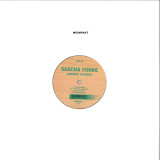
ascha Funke is creating a long overdue monument to an almost forgotten cultural artefact of the GDR: the ‘Germina Speeder’ was the only skateboard made in East Germany before reunification and was launched in 1986. It was produced by VEB Schokoladen-Verarbeitungsmaschinen (a state-owned chocolate processing machine factory) in Wernigerode and was therefore affectionately known as the ‘chocolate board’. However, it was hardly suitable for actual skateboarding due to technical inadequacies. It is not known whether Sascha himself owned such a board, but the tracks on the ‘Germina Speeder’ EP definitely roll better than the original. The opener ‘Blaupunkt’ breathes the euphoric spirit of the legendary Berlin club ‘E-Werk’, while the title track would have been more at home at the ‘Dubmission’ parties in the Turbine. Sascha leaves the 90s behind with radiant positivism; ‘Bo Knows’ sounds more like a 2000s open air at Café Schönbrunn. The EP closes with ‘Mastermind’, a high-octane psy-proghouse banger that, like all four tracks, quotes the past but still has both feet on today’s dance floors. Or rather, is dancing. 4:1 for love!
Sascha Funke setzt einem nahezu vergessenen Kulturgut der DDR ein längst überfälliges Denkmal: Der “Germina Speeder” war vor der Wende das einzige in Ostdeutschland hergestellte Skateboard und kam im Jahre 1986 auf den Markt. Es war ein Erzeugnis des VEB Schokoladen-Verarbeitungsmaschinen aus Wernigerode und wurde daher liebevoll auch als “Schoko-Board” bezeichnet. Zum eigentlichen Skateboardfahren war es allerdings aufgrund von technischen Unzulänglichkeiten kaum zu gebrauchen. Ob Sascha selbst ein solches Board besaß ist nicht überliefert, aber die Tracks auf der “Germina Speeder” EP rollen allemal besser als das Original. Der Opener “Blaupunkt” atmet den euphorischen Geist des legendären Berliner Clubs “E-Werk”, während der Titeltrack eher bei den “Dubmission” Parties in der Turbine gelaufen wäre. Mit strahlendem Positivismus verlässt Sascha die 90er; “Bo Knows” klingt eher nach einem 2000er Open Air am Café Schönbrunn im Volkspark Friedrichshain. Die EP schließt mit “Mastermind”, einem hochoktanigen Psy-Proghouse Knaller, der wie alle vier Tracks zwar das Vergangene zitiert, aber dennoch mit beiden Füßen auf den Tanzflächen von heute steht. Beziehungsweise tanzt. 4:1 für die Liebe!
“Sonically, the Swedish duo SHXCXCHCXSH distort the club context they work from by rendering functionality with an exceptionally refined and idiosyncratic palette. As logophiles, they contort the little descriptive context they afford audiences by imploding language into splintered and barely comprehensible character sequences. The impression is that each is the result of mutual process-driven experiments.
This is all true of '......t', their new album and debut recording for Northern Electronics.
However, working at this scale, SHXCXCHCXSH play with wider parameters and explore broader functions to produce their most comprehensive and focused work to date.
Across fifteen tracks, their bespoke dark matter is stacked with drone pyrotechnics, shredded vocals, and oblique, snatched sounds that eddy into frantic melodic storms. Sublime intensity is spiked with effervescent yet brooding intermissions throughout, staking '......t' as the most crucial volume of their catalogue as it gestures toward new references. ”
Over three years in the making, Needle Mythology Records is delighted to announce a super deluxe, expanded remastered reissue of The Lilac Time’s 1991 masterpiece, Astronauts. Released as a triple vinyl, triple CD or single vinyl, only 1000 copies of each format will be produced, there will be no further pressings. Both the 3LP and 3CD editions will come with an extensive 11,000 word oral history of Astronauts and liner notes by Needle Mythology co-founder and longtime Stephen Duffy fan, Pete Paphides.
All three albums including a 2024 remaster, a collection of works in progress entitled‘Softened By Rain The Making Of Astronauts’ and a live compilation ‘Any Road Up The Lilac Time Live 1990/91’ have been mastered for vinyl by Miles Showell at Abbey Roadand will be housed in a triple gatefold sleeve with a colour inner sleeve and new artwork for each disc, which has been especially created by designer Mike Storey. The main sleeve for Astronauts itself will replicate the original artwork but with the four distinctive “blobs” rendered in a red “foil” texture. In addition to these three disc sets, 1000 single vinyl remastered copies of Astronauts will also be made available, in a cherry red vinyl edition to match the outer sleeve.
With the shoegaze and baggy movements at their zenith, The Lilac Time’s fourth album was released at a moment when the left-field music zeitgeist was shaped by the nascent shoegaze, baggy and grunge movements. Whilst Astronauts conformed to none of those trends, neither was it the record Stephen had in his head when he finally finished working on it. We’ll never know how that record would have sounded, but it’s hard to imagine a better version of the album he did end up making. The songwriter who brought ‘A Taste of Honey’ and ‘Hats Off, Here Comes The Girl’ into the world envisaged the sort of choruses that would jump from the single speaker of your favourite transistor and lodge themselves into the collective memory bank.
But while he really was writing some of his most beautiful melodies, Astronauts is a family of songs that demands to be kept together in the sundazed cloud of inspiration that created it. It constitutes a partial retreat from the outwardfacing utopianism of its predecessors, choosing instead to dwell on the journey taken to get to this point. That this is an audibly different band to the pastoral expeditionaries of the group’s previous releases is almost entirely down to the departure of Nick Duffy and the arrival of Sagat Guirey. Suddenly, accordions, banjos and mandolins are out; jazz guitar is in. Sagat’s filigree work on the outro of ‘A Taste for Honey’ acts as a sublime parting shot to a lyric which acts as a wiser, wistful companion piece to Stephen’s 1985 solo hit ‘Kiss Me’, something tantamount to the camera retreating to reveal the years elapsed between the time depicted and the present day. The distance between the carefree youth of pop stardom and the first intimations of mortality can be measured between the first and second verses of the quietly devastating ‘Madresfield’; from the depiction of the deserted cricket pavilion obscured by fresh snowfall to the sudden shift in perspective from subject to protagonist: ‘No one ever told me/That killing time is harmful/For time cannot recover/What soon the ground will offer.’ For all of that, however, the resulting album didn’t correspond to the vision its creator had for it. At a loss as to what to do with it, Stephen surrendered Astronauts to Creation with no plans to promote or draw attention to it. The consciousness shift of which Stephen had hoped The Lilac Time might be a precursor hadn’t happened. Or, rather, it had – but it had happened elsewhere, in the Haçienda and Shoom and in Ibiza. Not on the hills of Herefordshire. In a nod to that sea change, Stephen handed over one song, ‘Dreaming’ to Hypnotone, who
Dear Friends, Shouldn’t we all take a moment to reect on ourselves from time to time, break away from habits, and venture down new paths? Simon Hinter, widely recognised as a house producer with releases on renowned labels such as Freerange, Quintessentials, and Kerri Chandler’s Madhouse Records, is now daring to explore something new with us, while embracing something old: Drum’n’Bass is his great old love, now rekindled with his Confusion EP.
Unsurprisingly, this comes with intense emotions, and the four tracks of the EP oscillate between profound euphoria and melancholia. You can sense both, the beginning and the end of a party night at the same time. These tracks, however, defy the current listening habits shaped by the need for instant grati¬cation. Instead, they are an ode to the loop. Here, the mind is invited to engage, to actively listen and perceptually complete the experience. We hope you enjoy this rollercoaster of emotions! Sincerly yours, Brombért P.S.: The physical release comes with handcrafted, screen-printed artwork by the fabulous graphic artist Zatina Kessl
The year is 1974 and we are in Kingston, Jamaica: Lee Scratch Perry has just presented Susan Cadogan's album 'Sexy Suzy' on his Upsetters label. The Jamaican singer, who is just under 25, sees her cover of 'Hurt So Good' flirt with the top of the UK and JA charts but has no idea that 50 years later, she would still be a household name among Jamaican music fanatics.
On the B-side of this LP, produced by Mr Perry himself, the penultimate track is a cover of Little Willie John’s "Fever". Over the years this song has taken an unshakable place in the hearts of reggae lovers worldwide. With nearly 700 different versions referenced to date, Fever already enjoyed classic status at the time, mainly thanks to the success of Peggy Lee’s version released in 1958. Since then, in all styles, across all continents, the song has been reinterpreted, so much so that it's rare to find a year since 1956 without a new version hitting the market! Universal, timeless, this love song is known to all music enthusiasts, but in the reggae scene, it’s Susan Cadogan and Lee Scratch Perry’s version that still reigns supreme.
50 years after its release, Stand High Patrol offer us their own version. Recorded at the end of 2023, the Susan Cadogan / Stand High Patrol collaboration wasn’t initially meant to move beyond its dubplate status. However, due to the track’s success in the dance and a growing demand, it became the first pressed collaboration on record between a Jamaican artist and the Dubadub Musketeerz. Accompanied by its dub version, Stand High’s take on Fever is a creative reimagining and brings to mind that classic 90s UK dub style. Its sits firmly on its foundations, a stepper roots-flavored drum beat. Some might find the interpretation ‘more jazzy’ than Lee Perry’s, but everyone will have their own take. One thing’s for sure—its impact on the dancefloors is undeniable!
BDQ Records are super happy to finally be releasing this absolute banger, we recorded this 25 years ago but for some reason we never released it, fast forward 25 years and whilst tidying up the studio we found the original tape, which we thought was lost, transferring it from tape was a mission, however we did it and then set about re-recording it. Currently both sides are being played out across the clubs and on radio, we’re getting some seriously good feedback from everyone. Also, it’s been our fastest selling preorder on Bandcamp.
Side one is a cover of the Timebox classic Beggin’ with fabulous vocals from the wonderful Sarah Orpen. its a Banger.
On the flip is Take me for a little While originally penned by Trade Martin, this fantastic slice of pure Northern Soul is getting some amazing reactions from Djs and folk on the dance floor, again Sarah knocked the vocal out of the park.
Released on limited Vinyl 45 this one is gonna be an instant classic.
After Dull Boy Johnny's previous release, a double EP with a tropical A-side and an erotic B-side, this time the three gentlemen are out on the dance floor. After all, the neighbours decided as much.
Unlike the recordings of their previous work that took place abroad, this time they stayed in a steamy attic room in Belgium, where guitarist and producer Jan built a studio. Unable to record at night because of neighbours who did not (yet) appreciate Dull Boy Johnny's music, they dove into Antwerp's nightlife.
The group's previous work took you on a cinematic journey where every musical nuance takes you to a specific setting. Be it an erotic seventies scene, a beach party in the Bahamas, or a blood-curdling chase in the Wild West, Dull Boy Johnny covers it all. Nard Houdmeyers, Rik De Bal and Jan found each other in a shared interest in film genres such as blaxploitation, neo-noir and spaghetti westerns. And therefore also the artists inherent to these genres such as Isaac Hayes, Curtis Mayfield and Ennio Morricone. Dull Boy Johnny's conceptual approach to music can be traced back to this passion for cinema.
For the new EP, however, they traded that cosy movie-watching for turbulent nightlife (the angry neighbours, you know). Besides, it was about time to get their inspiration in the flesh. Dull Boy Johnny immersed himself in the pulses, flashes and swell of downtown Antwerp. Thunder chasing crept under their skin and then into their guitars. In grandfatherly fashion, they then turned to composing, first with just bass, guitar and vocals. In that small lineup and with the sounds of the night still reverberating in their minds, the first pieces of the puzzle were laid out. After that, the sound was opened up and a solid rhythm boost was added. This defined the catchy, up-tempo nature of the upcoming EP that centres on themes of dancing, flirting and partying. Expect rousing riffs, catchy hooks and swinging rhythms. Details were meticulously laid out and bricked into the songs with delicate grouting. The fine polishing of the songs was done with patient finesse and a constant attitude to serve the song. With songs like Suspicion, She Can Groove and Dynamite, it is immediately clear that the gentlemen got their mustard from the club: action, party and spunk! All without losing their typical sensuality.
Despite the different working methods for the third EP, there are a lot of recurring elements that define Johnny's fresh sound. The essence? Catchy high vocals contrasted with a sensual baritone voice, carried by a groovy bass and rhythm section. Around it, the details that give the songs the right atmosphere swirl.
Dull Boy Johnny's music prefers to function as a soundtrack to your own imagination. As you listen, you are invited to wander through the various landscapes of their musical world, regularly giving a nod to the more lustful side of your brain. The songs have already been praised for their compelling melodies and irresistible energy.
With this release, Dull Boy Johnny proves their ability to create timeless music that both touches the soul and moves the body. So surrender to Dull Boy Johnny's punchy grooves and dance the night away. Long live the neighbours!
Bash Mans ‘Bash to Basics’ EP marks a major milestone for Scotlands Underground Techno scene.
Edinburgh, Scotland - Stepback Records proudly announce the highly anticipated release of ‘Bash to Basics ‘ EP the debut 12” vinyl from Glasgows own BASH MAN, aka Jamie Morrison. Dropping on Jan 31st 2025, the records captures the essence of raw, unfiltered techno and embodies Bash Mans unwavering dedication to the underground music scene.
With previous digital releases on labels like Scott-Fear Es Posh End Music, and Tom Carruthers Non Stop Rhythm and Data Sync labels, Bash Man has already carved out a name in the dance music world. However, this 12’ release promises to be a transformative highlight, cementing his reputations a force to be reckoned with in the techno community.
‘One of the finest jazz guitarists of her generation, Halvorson is possessed of a questing, restless spirit.’ – Jazzwise
‘With an album of string quartet music as strong as this one, she is worthy of as much renown in the classical field as she holds in the jazz community.’ – New York Times
‘One of America’s finest guitarists. Halvorson’s musicianship is open-minded, demanding and richly engaging.’ – Uncut
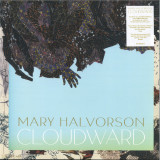
Nonesuch Records releases Cloudward by Brooklyn-based guitarist, composer, and MacArthur fellow Mary Halvorson on January 19. The album features eight new compositions by Halvorson, performed with her sextet Amaryllis, the improvisatory band that performed on her critically praised 2022 albums Amaryllis and Belladonna comprising Halvorson, Patricia Brennan (vibraphone), Nick Dunston (bass), Tomas Fujiwara (drums), Jacob Garchik (trombone), and Adam O’Farrill (trumpet). Labelmate Laurie Anderson also is featured on the album track ‘Incarnadine’. Halvorson and Amaryllis will tour internationally following the release of the new album, including January dates in Europe, as well as at the Big Ears Festival as part of Nonesuch’s 60th anniversary celebration.
Halvorson says, “All of the music on Amaryllis was written in 2020, during the thick of the pandemic, in one of the more bizarre time periods I’ve experienced in my life. While composing for Amaryllis, I expanded upon certain musical concepts I’d developed in my life up until that point—the ones that felt fruitful—and left others behind, hitting the reset button and attempting to build from scratch. Two years later, after the release of the first album, I was still writing music for Amaryllis.
“All the music on Cloudward was written in 2022, mostly in the fall and winter, when things started moving forward. Life felt like a creaky machine starting up again,” she continues. “Air travel, however chaotic, had resumed, and we were once again cloudward. Performances and tours and recordings were happening after a long hiatus and with a renewed sense of gratitude. This band, for me, was quite simply working, both musically and personally, and the main thing I felt while writing the music was optimism.”
The Guardian said Halvorson’s 2022 double release “shows how far this single-minded original has come, and affords a glimpse of how far she may go. Both sessions confirm how years of jaggedly lyrical solo and ensemble improvising and a quirkily subversive affection for mainstream music have now nurtured a composer of unpredictable but warmly expressive character… These are new landmarks in Halvorson’s already inimitable discography.” Pitchfork said, “Amaryllis and Belladonna are distinct statements; one could hear either album on its own without a sense that something is missing. But they are most powerful when taken together, like a landscape and its reflection in rippling water.”
Halvorson has released a series of critically acclaimed albums, from Dragon’s Head (2008), her trio debut featuring bassist John Hébert and drummer Ches Smith, expanding to a quintet with trumpeter Jonathan Finlayson and alto saxophonist Jon Irabagon on Saturn Sings (2010) and Bending Bridges (2012), a septet with tenor saxophonist Ingrid Laubrock and trombonist Jacob Garchik on Illusionary Sea (2014), and finally an octet with pedal steel guitarist Susan Alcorn on Away With You (2016). She also released the solo recording Meltframe (2015), and most recently debuted Code Girl (2018, 2020), a new ensemble featuring vocalist Amirtha Kidambi (singing Halvorson’s own lyrics), trumpeter Adam O’Farrill, saxophonist and vocalist María Grand, bassist Michael Formanek, and drummer Tomas Fujiwara.
One of New York City’s most in-demand guitarists, over the past decade Halvorson has worked with such diverse musicians as Tim Berne, Anthony Braxton, Taylor Ho Bynum, John Dieterich, Trevor Dunn, Bill Frisell, Ingrid Laubrock, Jason Moran, Joe Morris, Tom Rainey, Jessica Pavone, Tomeka Reid, Marc Ribot, and John Zorn. She is also part of several collaborative projects, most notably the longstanding trio Thumbscrew with Michael Formanek on bass and Tomas Fujiwara on drums.
The Dancefloor Records reissues on Emotional Rescue comes in the form a true House classic. Produced and released by the Chicago legend Andrew Komis, It’s You is an original Deep House bomb and an education to those increasingly misusing the term today.
Essentially a cover / updated version of the all-time early House classic in ESP’s Its You, this 1989 update shows how much the scene was progressing in just 3 years with a tougher, heavier and deeper 12” that was all about rocking club sound systems.
Coming out on Komis’ own (Dancefloor subsidiary) Big Shot Records, this might not of been as big as Dionne’s Come Get My Lovin’, but has long been an ‘in the bag’ record for the likes of Derrick Carter and Solar. Just one listen spread across the time-defining “Mixes” and it’s clear why.
The stepping bass of the New York – London Mix was so indicative of the time. As the latter’s ascent as a clubbing capital took hold, ears were pinned to what was emanating from across the seas, especially the clubs of NYC and ‘Windy City’. Trademark Komis bass and hats ride are all here to allow the breathy vocals space to do their magic.
However it is the Free House Mix that really shows where things were at. Skipping hats, electro-meets-Belgian bass and a dark synth line pull the track down before acid touches take the song to a much deeper place and has long been the favourite version for the discerning DJ.
Ending with what was indicative of the time, the title says it all with the NU Style Mix. A drum heavy work out, taking in elements of successful records of the time, we get Break 4 Love percussion arranged around a NYC influenced Konder’s style quick cut-up editing for a more 'freestyle' mix to round out what is simply, an underground bomb and therefore, worthy of what this label has always been about, bringing great records to new ears.
- A1: Vajolet (Feat Lukas Lauermann, Wolfgang Pfistermüller & Flip Philipp)
- A2: Autostrada Del Brennero (Feat Diggory Kenrick)
- A3: Latzfonser Kreuz (Feat Mamadou Diabate & Hamidou Koita)
- A4: Lago Di Garda (Feat Roger Robinson)
- A5: Alfa Romeo 145 (Feat Kwame Yeboah)
- A6: Feltuner Hütte (Feat Osman Murat Ertel)
- A7: Avrupa Köprüsü (Feat Osman Murat Ertel)
- A8: Europabrücke (Feat Susanna Gartmayer)
- B1: Ancient Atoll (Feat Reinhilde Gamper, Martin Mallaun & Flip Philipp)
- B2: Latemar (Feat Reinhilde Gamper & Martin Mallaun)
- B3: Brennerautobahn (Feat Taka Noda)
- B4: Echoes Part I (Feat Flip Philipp)
- B5: Echoes Part Ii (Feat Flip Philipp)
- B6: Transit Tribe (Feat Didi Kern)
- B7: Latemar (Reprise)
12"[23,49 €]
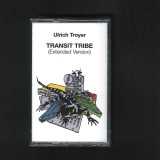
Ulrich Troyer has been producing music now solidly for over twenty years within a largely genre free framework, but whilst navigating forms such as avant-garde, techno, leftfield, field recording, electronica, glitch and ambient it is the aesthetics of dub that guide his creative direction. Not really recognisable in an orthodox form as remixed versions of roots reggae songs but in the way sonics are manipulated with space, the application and layering of delay, reverb and echo that fixes his output well within the scope of what might be called futurist dub.
The nearest comparisons to his new album TRANSIT TRIBE can only be established by a synthesis of some of the more adventurous explorations in modern music such as African Head Charge, Jon Hassell, Pole (Stefan Betke), Bill Laswell or even Miles Davis; featuring a diverse selection of artists and friends not only from Vienna and environs but also from around the world, sounds are not so much fused but allowed to float along the continuous flowing tide of warm waves of bass.
Rather than to allow the names of Ulrich Troyer's collaborators be merely listed in the album credits, what they bring to this joyful affair needs to be outlined, albeit briefly: Co-producer credits go to Osman Murat Ertel from Istanbul, who employed a variation on the old foolproof Nick Lowe method for checking out the impact quality of his own sound productions by playing tracks through his car sound system speakers!
Murat is a member of the electro-psych-folk group Baba Zula where he plays electric saz, oscillators and theremin and played a key part in the creative development of the album. Mamadou Diabate, the balafon master originally from Burkina Faso and now resident in Vienna, has developed his own unique technique of playing solos that replicate the sound of three instruments playing in unison; however the multi-talented Mamadou is engaged here on singing and playing the talking drum. From South Tyrol Reinhilde Gamper is a member of the experimental trio Greifer who are bringing the sound of the zither into the twenty-first century using new playing techniques and electronic gadgets. Susanna Gartmayer is an Austrian composer and bass clarinetist specialising in improv and multimedia sound research. Diggory Kenrick has been engaged with creating new dub fusions and also re-energising classic rocksteady and roots reggae classics, renowned for his interventions on flute. Didi Kern is an electronic dance musician and drummer from Vienna with a focus on free improvised music. Hamidou Koita, a singer and multi-instrumentalist, is from a traditional Griot family in Burkina Faso but now resident in Vienna and a regular musical partner of Mamadou Diabate playing drums and calabash. Austrian Lukas Lauermann is both a studio and live musician playing cello, also working on electronic sound design and writing string arrangements. He has recorded extensively and appeared on stage with both Mark Lanegan and Hans-Joachim Roedelius. Martin Mallaun is a Tyrol-born specialist in both the development of the zither in modern music and also as a researcher in the effects of climate change on the vegetation of Alpine ecosystems. Mystica Tribe is the musical alias of Tokyo-based dub/techno producer Taka (Takafumi) Noda. He collaborated with Vienna's own Vegetable Orchestra on 2020's "Transplants (Mystica Tribe Version)". After studying classical percussion Flip Philipp is now a jazz vibraphone player and member of the Vienna Symphony Orchestra. Wolfgang Pfistermüller is a member of the Vienna Trombone Quartet and the developer of the incredible bass-trombone Aurora with its uniquely warm and resonant sound. Roger Robinson is a renowned British poet, winner of many contemporary poetry prizes and member of the experimental music group King Midas Sound. Kwame Yeboah is a Ghanaian born UK based keyboard wizard who tours regularly with Yusuf / Cat Stevens, Ms. Dynamite and Pat Thomas.
So contained on the album is an astonishing mix of musicians and instruments: sounds of cowbells recorded in the South Tyrolean alps processed by modular synthesizers and heavy analogue bass synths combined with instruments such as zither, bass-zither, electro saz, flute, talking drum, trombone, cello, vibraphone, marimba, djembe, contra-alto clarinet, melodica, Farfisa - all bound together by organic live-drums and dub effects.
Liner notes by Steve Barker
Repress!
Charlotte de Witte marks the homecoming to her own imprint KNTXT with her brand new EP ‘Return to Nowhere’. The captivating record exists out of four long-awaited tracks called ‘Return to Nowhere, ‘Ensemble’, ‘Sgadi Li Mi’ and ‘What’s In The Past’.
Further exploring her sonic realm, the record features techno sound reminiscent of her ‘Selected’ EP, but switches out the acid stabs for haunting hymns. The result is a gripping dismal soundtrack that feels desolate yet hopeful. With this spellbinding EP which combines her iconic hard-punching techno with mesmerizing chants effortlessly, Charlotte proves once again why she remains at the forefront of the industry.
The release of ‘Return to Nowhere’ fits perfectly in these uncertain times. Charlotte says: “I made the EP before the current COVID-19 crisis. After being inspired by recordings of age-old traditional chants. So, I never intended it to be a “Corona record”. However, it did grow on me during this period of isolation.”
pdqb is a strange entity that claims to live in a sonic vessel and that only communicates via specifically organized sounds. Little to nothing is known about its wetware yet. However, just in time for Christmas, Synaptic Cliffs hereby reveals its first proof of existence with an übergroovy and supernatural Giallo Disco track that could easily be the brainchild of Claudio Simonetti and John Carpenter. The second track will bring you back to technoid earth again. But the journey isn't over then, because now no other than every producer's favorite producer Danny Wolfers takes over and chips in 2 outlandish electro-eargasm Legowelt remixes on the flip-side, just to ensure even more quality time under the tree. Happy holidays, Ho ho ho!
Forest Jams continues the journey into the great beyond with Mori Ra’s Mantra–an EP composed of four edits created for any inquisitive earthling and forest wanderer.
Mori Ra is a DJ based in Osaka, Japan his sets are a witches brew composed of balearic, cosmic, and electronic disco ingredients. He has released on other labels such as Rotating Souls, Macadam Mambo, Berceuse Heroique, MM Discos and more. In Mantra, Mori Ra acts as a mysterious wanderer who has stumbled upon the doors of our minds in the middle of the night. When we answer the door he is bearing gifts of creative glory and all we need to do is provide shelter in return. We invite him in so that he can rest, recharge, and continue his journey.
During his visit in our minds Mori Ra shares “Mantra” the secrets of the universe disguised as parables packaged neatly into four tracks. Catharsis begins the journey and immediately throws us into a sound that feels like we are driving a spaceship in Gran Turismo 37, the spaceship simulator. Now that we have successfully crossed the plane and have entered the digital unknown, Seinn O! becomes the story of communication. Seinn O! gave the smoke leaving my mouth color and the shamanistic chants placed me in an atmospheric state with the ability to cross over and communicate in the digital space. Then comes 孫行者 the Grandson Traveler, which embodies the story of the simulation. Imagine the sound of a bustling dystopian city in the matrix–neon signs, dancing billboards, talking vending machines, radioactive wildlife, and overgrown foliage leaking in from the jungle the city is carved into. Mori Ra seems to have melded all of those sounds together to create the soundtrack of the big city where everyone is lost. Finally, before leaving our minds Mori Ra offers the final parable, あの星 That Star. Which becomes the story of realization, the journey back home from the exploration of the mind. That Star brought me into a cave and I could see the opening at the end of it, all I had to do was walk towards it. However, I couldn’t walk. I could only galumph forward, while bouncing up and down to the beat. My arms slivered and guided my body forward as the vocals came in. As I moved forward the opening, the clearing, the destination remained the same distance away. The endless tunnel of the mind gave me a feeling of comfort because I did not want this journey to end.
The EP ends and we will never know who visited our minds that night, but we know we loved the journey. Mori Ra is the steward of our journey through consciousness, and the vessel is “Mantra”.
In the late 1980s, three young musicians – Rick and Remon Melsert, along with Paul Nieuwenhuijsen – approached Michiel van der Kuy with a demo titled “She.” Their collaborative project, dubbed Kick The Habit, was poised to blend their talents with Michiel’s signature touch, infused with a hint of early house music. However, for reasons unknown, the project was shelved and remained hidden for over three decades.
Now, 35 years later, thanks to the efforts of Michiel Van Der Kuy, Sergi Elias and Vintage Pleasure Boutique label, this long-lost gem is finally seeing the light of day. The maxi single not only resurrects the original track but also features remixes by the amazing Prospero duo, adding a nostalgic layer of Michiel’s classic 1980s sound. The release includes five stunning versions of “She,” including the original, making this a must-listen for fans of vocal space synth, vocoders, Laser Dance, Michiel van de Kuy talent and vintage synth-driven music.
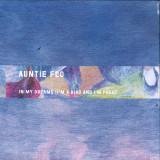
Brian d’Souza, better known as Auntie Flo, delivers his brand-new fourth studio album, ‘In My Dreams (I’m A Bird and I’m Free)’, set for release on 21st November. The album, a rich blend of electronic music, live instrumentation, and global influences features collaborations with the likes of Nicola Cruz, Joshua Idehen, Shingai Shoniwa, Yohan Kebede (Kokoroko) and even his Goan Auntie Florie, where the Auntie Flo moniker is derived from. Each track on the album transports you to a different location: Goa, Istanbul, Nairobi, Mexico City, Waiheke Island, Rio De Janeiro, Havana, Seoul are all destinations to nest in across its ten tracks. It will be available in both digital and vinyl formats on his own label, A State of Flo Records.
Auntie Flo’s latest body of work is the culmination of a five-year journey that has seen d’Souza expand both personally and musically. Known for his unique ability to fuse electronic sounds with rhythms and influences from across the globe, d’Souza takes his craft to new heights in this album, offering listeners an intimate look into the experiences, places, and stories that have shaped his artistic evolution. The groundbreaking DJ and producer presents an expansive, deeply personal exploration of global sounds, collaboration, and migration.
Following the success of the Afro-disco single Green City—a dynamic tribute to the legendary Fela Kuti and Luke Una’s ‘track of the year’—In My Dreams (I’m A Bird and I’m Free) ventures further into uncharted musical territory. The album, however, is more than just a continuation of Auntie Flo’s signature sound. It is a reflection of d’Souza’s life and career, capturing his exploration of identity, migration, and cultural fusion. With tracks that draw inspiration from field recordings collected around the world, the album resonates with a profound sense of place and memory.
In My Dreams (I’m A Bird and I’m Free) is not only a reflection of d’Souza’s creative journey but also a commentary on migration—both human and musical. The album draws on the freedom of birds to migrate across borders as a metaphor for artistic and personal freedom, juxtaposed with the challenges that political barriers impose on human migration. As d’Souza explains, “Birds have the freedom to migrate wherever they choose, while humans face constant barriers”.
A State of Flo supports Earth Percent. 10% of the revenue generated from this release will be paid to environmental charities.
Darone Sassounian’s debut album, ‘Synthetic Instincts’ is a full length journey that will allow you to be familiar with Darone Sassounian’s unique ability of sound sculpting. It’s an album that may seem pleasant on the surface, but becomes thought provoking and more revealing the longer you listen. Grounded on reality, the album takes from the world’s political landscape, loss of life and native land, and the trajectory humanity is walking towards. However, there is a sense of hope lingering, for the future may hold brighter days. Transcending borders and limitations, ‘Synthetic Instincts’ is Darone Sassounian’s deepest and most spirited milestone to date. Forward motion with a touch of history meant to move you, whether it is physically, mentally, or emotionally.
- A1: Vajolet Feat Lukas Lauermann, Wolfgang Pfistermüller & Flip Philipp
- A2: Autostrada Del Brennero Feat Diggory Kenrick
- A3: Latzfonser Kreuz Feat Mamadou Diabate & Hamidou Koita
- A4: Lago Di Garda Feat Roger Robinson
- A5: Alfa Romeo 145 Feat Kwame Yeboah
- B1: Feltuner Hütte Feat Osman Murat Ertel
- B2: Avrupa Köprüsü Feat Osman Murat Ertel
- B3: Europabrücke Feat Susanna Gartmayer
- B4: Ancient Atoll Feat Reinhilde Gamper, Martin Mallaun & Flip Philipp
Cassette[14,92 €]
Ulrich Troyer has been producing music now solidly for over twenty years within a largely genre free framework, but whilst navigating forms such as avant-garde, techno, leftfield, field recording, electronica, glitch and ambient it is the aesthetics of dub that guide his creative direction. Not really recognisable in an orthodox form as remixed versions of roots reggae songs but in the way sonics are manipulated with space, the application and layering of delay, reverb and echo that fixes his output well within the scope of what might be called futurist dub.
The nearest comparisons to his new album TRANSIT TRIBE can only be established by a synthesis of some of the more adventurous explorations in modern music such as African Head Charge, Jon Hassell, Pole (Stefan Betke), Bill Laswell or even Miles Davis; featuring a diverse selection of artists and friends not only from Vienna and environs but also from around the world, sounds are not so much fused but allowed to float along the continuous flowing tide of warm waves of bass.
Rather than to allow the names of Ulrich Troyer's collaborators be merely listed in the album credits, what they bring to this joyful affair needs to be outlined, albeit briefly: Co-producer credits go to Osman Murat Ertel from Istanbul, who employed a variation on the old foolproof Nick Lowe method for checking out the impact quality of his own sound productions by playing tracks through his car sound system speakers!
Murat is a member of the electro-psych-folk group Baba Zula where he plays electric saz, oscillators and theremin and played a key part in the creative development of the album. Mamadou Diabate, the balafon master originally from Burkina Faso and now resident in Vienna, has developed his own unique technique of playing solos that replicate the sound of three instruments playing in unison; however the multi-talented Mamadou is engaged here on singing and playing the talking drum. From South Tyrol Reinhilde Gamper is a member of the experimental trio Greifer who are bringing the sound of the zither into the twenty-first century using new playing techniques and electronic gadgets. Susanna Gartmayer is an Austrian composer and bass clarinetist specialising in improv and multimedia sound research. Diggory Kenrick has been engaged with creating new dub fusions and also re-energising classic rocksteady and roots reggae classics, renowned for his interventions on flute. Didi Kern is an electronic dance musician and drummer from Vienna with a focus on free improvised music. Hamidou Koita, a singer and multi-instrumentalist, is from a traditional Griot family in Burkina Faso but now resident in Vienna and a regular musical partner of Mamadou Diabate playing drums and calabash. Austrian Lukas Lauermann is both a studio and live musician playing cello, also working on electronic sound design and writing string arrangements. He has recorded extensively and appeared on stage with both Mark Lanegan and Hans-Joachim Roedelius. Martin Mallaun is a Tyrol-born specialist in both the development of the zither in modern music and also as a researcher in the effects of climate change on the vegetation of Alpine ecosystems. After studying classical percussion Flip Philipp is now a jazz vibraphone player and member of the Vienna Symphony Orchestra. Wolfgang Pfistermüller is a member of the Vienna Trombone Quartet and the developer of the incredible bass-trombone Aurora with its uniquely warm and resonant sound. Roger Robinson is a renowned British poet, winner of many contemporary poetry prizes and member of the experimental music group King Midas Sound. Kwame Yeboah is a Ghanaian born UK based keyboard wizard who tours regularly with Yusuf / Cat Stevens, Ms. Dynamite and Pat Thomas.
So contained on the album is an astonishing mix of musicians and instruments: sounds of cowbells recorded in the South Tyrolean alps processed by modular synthesizers and heavy analogue bass synths combined with instruments such as zither, bass-zither, electro saz, flute, talking drum, trombone, cello, marimba, djembe, contra-alto clarinet, Farfisa - all bound together by organic live-drums and dub effects.
DJ Support: Gilles Peterson, Yogi Haughton, Rocky, Greg Belson
Moton takes its time to select the best tracks for it’s loyal but hungry fan base, however, this EP was worth the wait. A killer 3 tracker cleverly edited from vaults of much respected don of the scene, Ghosted Edits, aka David Hill. The A side is an 80’s style boogie disco dancer to destroy the better floors, flipped with an infectious gospel vocal dancer that will have you singing out loud, alongside a wonderful soul 2 stepper with a touch of Balearic goodness! Proper pool side vibe. Enjoy.
"Subluminal" was conceived and recorded during the unique and uncertain period of March-April 2020, when the world was at a standstill. Created using a few analog devices, the album captures the raw and evolving nature of working with feral analog instruments. Electric currents traverse intricate obstacle courses, creating a distinctive and eclectic sonic landscape.
Despite being pressed on high-quality 180g vinyl, the record sat unreleased for four years. The decision to withhold its release was driven by contemplation and uncertainty. However, the time has come for "Subluminal" to see the light of day.
The term "Subluminal" means having a speed slower than the speed of light or existing under light. This concept reflects the album's exploration of how matter bends light, gives space its time, and creates a world through the interplay of sound and light.
"Subluminal" marks my first strictly electronic music project after years of working exclusively with field recordings. This record represents a significant shift in my musical journey and I'm thrilled to finally share it with you. Thank you for your patience and support. Enjoy the sounds of "Subluminal."
- A1: Flore
- B1: John Iii
- B2: Us
- C1: Just-Test
- D1: We The Blessed
- E1: Mother Africa
- F1: Sweet Evil Miss" Kisianga
- F2: Virginia
- G1: C Marianne Alicia
- G2: Dr Oliver W. Lancaster
- H1: Palm Sunday
- H2: Prima - Mr A.a
- I1: Keno - Exactement
- I2: Providence Baptiste Church
- J1: Just Test
- J2: Work And Pray
- J3: Rib Crib I
- K1: Rib Crib Ii
- K2: Loving Kindness
- K3: Dogtown
- L1: Love Always
Souffle Continu records presents Byard Lancaster – The Complete Palm Recordings 1973-1974, the definitive package of Philadelphia-born jazz wizard Byard Lancaster including his 4 legendary albums released on Jef Gilson’s Palm Records in the 1970s, Us, Mother Africa, Exactement and Funny Funky Rib Crib, along with the first ever standalone edition of Love Always, a fifteen minute modal jazz beauty plus a 20 page booklet with rare photos and in-depth article about Byard Lancaster’s Parisian years by Pierre Crépon.
At the beginning of the 1960s, at the Berklee College of Music, Byard Lancaster met some feisty friends: Sonny Sharrock, Dave Burrell and Ted Daniel. It is easy to see why he rapidly became involved in free jazz. Once he was settled in New York, he appeared on Sunny Murray Quintet, recorded under the leadership of the drum crazy colleague of Albert Ayler.
In 1968, the saxophonist and flutist recorded his first album under his own name: It’s Not Up To Us. The following year he came to Paris in the wake of... Sunny Murray. He would come back to France in 1971 (again with Murray) and in 1973 (without Murray for a change). This is when he met Jef Gilson, the pianist and producer who encouraged him to record under his own name again. On Palm Records (Gilson’s label), he would release four albums: Us, Mother Africa, Exactement and Funny Funky Rib Crib.
“Us”, the first of the four records was recorded on November 24th, 1973 with Sylvin Marc on electric bass (a Fender... Lancaster?) and the evergreen Steve McCall on drums.
On the album, the trio works from the John Coltrane model; free jazz shook up by the timely contributions of the bassist, followed by a mesmerizing atmospheric music. Then, Lancaster delivers a sinuous solo path, which is a reminder of his unique tone. On the album’s companion single, the trio launches into great black music of a different genre which would lead the clairvoyant François Tusques to claim that Byard Lancaster is an “authentic representative of soul/free jazz”, to sum up this is Great Black Music! A few months after recording “Us”, Lancaster recorded “Mother Africa” along with Clint Jackson III, a trumpeter, partner of Khan Jamal or Noah Howard on other recordings.
On march 8th, 1974, Lancaster and Jackson headed up a group composed of Jean-François Catoire (electric and double bass), Keno Speller (percussion) and Jonathan Dickinson (drums). Together, they create an immediate impression. From the first seconds of “We The Blessed”, they develop a free jazz which rapidly abandons any virulence under the effect of blues and soul based interventions. When Gilson’s composition “Mother Africa” begins, listeners are transported into the studio, listening to the musicians setting up: chatting and joking... Then comes the melody: a dozen or so notes of a repeated theme which is accelerated and deformed according to their whims... The jazz played by the association Byard Lancaster / Clint Jackson III is rare: creative AND recreational. “We the blessed”, is apt listening to this again today!
The recording of “Exactement” required two sessions in the studio: February 1st and May 18th 1974 – in between the two dates, Lancaster recorded, alongside Clint Jackson, the excellent Mother Africa.
Two names appear on the cover of “Exactement”: Lancaster (Byard) and Speller (Keno). Byard Lancaster wanted to be precise, moving regularly from one instrument to another: first on piano, which was the first instrument he learned. On “Sweet Evil Miss Kisianga”, his inspiration is first and foremost Coltrane (even if leaning more towards Alice than John), this announces the storm to follow.
It is Lancaster’s horn-playing which really stands out: on alto (the sound of which is transformed by an octavoice on one track, "Dr. Oliver W. Lancaster") or soprano saxophones, as well as on flute or bass clarinet, the musician walks a tightrope making the most of all the risks he takes. Using the full register of his instruments, he has fun with the possibilities.
Then, Lancaster invokes or evokes Ornette Coleman, Eric Dolphy and even Prokofiev, before going into a danse alongside Keno Speller on percussion. Above all, he has a unique sound. Byard Lancaster, on whatever instrument he plays and by continually seeking, always ends up hitting the right note... ends up by playing exactement the note he had to play.
“Funny Funky Rib Crib” is an unforgettable recording (made up of several sessions dating from the middle of 1974) of creative jazz overwhelmed by funk and soul. If Lancaster had already made successful albums in the same genre – notably New Horizons, under the name Sounds Of Liberation which he co-led with Khan Jamal –, this one is an homage to James Brown and Sammy Davis enjoying the company of a host of guests including François Tusques (electric piano), Clint Jackson III (trumpet), François Nyombo (guitar), Joseph Traindl (trombone)...
Funny Funky Rib Crib’s cover is a three-quarter profile portrait of the saxophonist (who can also be heard on flute, piano and even vocals), however, on the record, it is the whole group, inspired and frenetic, that tests the melodies of “Just Test”, “Dogtown” or “Rib Crib” – the two versions of which display leader Lancaster’s art of nuance. On both sides of the album, the group also moves into a calmer groove, infused by blues and soul, “Work And Pray” and “Loving Kindness” are meditative tracks where listeners can lay back and relax before asking for more: Funny Funky Rib Crib!
The magnificent “Love Always” was originally released on the fourth (and last) volume of the Jef Gilson Anthology series released in 1975.
Recorded on 8th March 1974, it is a beautiful 15-minute-long modal jazz piece. Four notes from the bass (the relentless Jean-François Catoire, who makes up the rhythm section alongside drummer Jonathan Dickinson and percussionist Keno Speller), and the group is up and running!
On piano, Gilson shows the subtle tact of a sideman, leaving the lions’ share of the place to the horns. This allows us to hear the trumpet of Clint Jackson III and the alto (which sometimes sounds almost flute-like) of Byard Lancaster each staking their claim in a long hallucinatory march which moves from moments of direct exaltation to profoundly sensitive collective playing. And if further proof was required of the confidence that Byard Lancaster and Jef Gilson inspire, “Love Always” provides it on this one sided release exclusive to the box set.
"A Seamless Symphony of Harmonious Electronica" - Jazziz
Emerging from over a year of creative hibernation following their debut album, Stavroz's upcoming EP "Kick Up the Dust" jolts them back into action. The EP flows gently, yet the overall mood of the journey isn’t always easy to pinpoint. There’s a certain vagueness to Stavroz’ sound which allows for bizarre experiments to seep through without interrupting the course. “We like to keep it lightly twisted, like a wink with a frown,” says the band.
In the title track however, Stavroz boldly steers towards the heart of the dance floor: efficient, remorseless, powerful, intense and most of all... elegant. Guiding you harmoniously through the club is a delightful duet of trumpet and saxophone, timed perfectly to heal you where it hurts most.
"Her Eyes Were Red" does what it says on the cover. There's melancholy - without sadness. Power - without force. Love - without lust. Stavroz's music possesses a distinct power that feels both natural and organic, never resorting to brute force or aggression. In their own way, the Belgian quartet offers an astonishing journey of saxophone & duduk, supported by broken beats and chopped vocals.
In Dae-El, a track featuring the Brussels-based producer and sound designer Poltrock, ethereal-sounding synths and duduk are combined with ghostly high-pitch distortions. Despite a backbone of muffled beats, the tune has vaporous qualities, reverberations that wobble and tinkle into space – it’s an easy listening experience but in a trippy, spaced-out way. “We’re trying to go for the sweet spot between the couch and the club”.
Adding further depth to their EP, Stavroz collaborates with Brazilian singer and composer Castello Branco in "Valente." Here, intimate Sade-like vocals harmonize with rubbery scratches, acoustic guitar, and horn segments, crafting a lush lounge piece that seamlessly balances both relaxation and empowerment, transparency and provocation. It's a testament to Stavroz's versatility and their knack for creating music that defies easy definition, leaving listeners eagerly anticipating the next twist and turn in their captivating musical journey.
The Błoto quartet had made a comeback six months ago with their first singles in over two years dropping “Szlam” and “Ścieki”. These tracks were pressed on a 7-inch vinyl by Astigmatic Records, but this only whetted the appetites of the band’s mud-loving fans, as the singles sold out instantly. And so, the band's musical onslaught continues. Ahead of their upcoming LP “Grzybnia” set to release in autumn 2024, Błoto is putting out another bacteria-laden 7-inch to conclude this brief series of singles. This time, the release features a remix by none other than the modern funk maestro DāM-FunK, hailing from sunny Pasadena, California.
Wading through the sludge of sewage, one can encounter colonies of bacteria. They are well-known for their dark side – causing serious diseases. Nevertheless, they are with us all the time. They exist in humans and all other living organisms – fungi, plants, and animals. They can be found in soil and water. They are even present in radioactive areas, proving that they are truly hard to eliminate. Such is the music of Błoto. Like a post-apocalyptic bacterium, it’s capable of surviving in the harshest conditions.
Sinister, biting, and primitive – just like colonies of microorganisms. This is Błoto's latest single. Drawing heavily from classic acid house, it can truly infect the mind, inviting you to join a rave in Błoto on the eastern flank of Europe. Quartet’s “Bakteria” is a direct continuation of their first 7-inch release. However, this time, during their collective improvisation at Studio Pasterka, the band has entirely forsaken acoustic instruments in favor of a full array of synthesizers accompanied by drums.
Certainly, the dichotomous nature of these organisms presents a paradox. While capable of causing harm, without bacteria, life as we know it would cease to exist, and human civilization would not have reached its current state. Bacteria fulfill numerous essential roles. They serve as decomposers, crucial in maintaining biogeochemical cycles, and contribute to processes such as fermentation and decay. As symbiotic organisms living within other organisms, they are vital for functions like digestion. Their versatility extends to diverse applications, from biological wastewater treatment to the production of various food products.
Such are the properties of the beneficial probiotic titled “Bakteria Re-Freak” by DāM-FunK (renowned for his classic albums released on Stones Throw, like “Toeachizown” and “7 Days of Funk” with Snoop Dogg). It offers a 180-degree transformation of the dark atmosphere of the original version. The track evolves towards G-Funk, brimming with sunny synths and a drum machine. It portrays a vision of a biopharmaceutical bacterium lazily roaming the streets of warm yet perilous Los Angeles.
The 7-inch will be released on July 19, 2024, by Astigmatic Records. The vinyl single is limited to 700 copies.
Kolida Babo is the collaboration between two Greek woodwind musicians from separate regions - Socratis Votskos is from Pella, and Harris P. is from Athens. Their self-titled debut album was recorded in improvised live-take sessions beginning on the night of the “Kolida Babo” folk rituals of music and dance in northern Greece in winter 2013. They explore the ancient music of Armenia and the folk traditions of northern Greece’s Epirus and Thrace regions alongside abstract electronics and free jazz.
Their debut album was released by MIC Records (London) in 2019 to rave reviews. Other notable releases include the Jazzman Records jazz45 series and the soundtrack for the documentary ''Gospel of Michiel'' and "Loxy". Their music was supported by BBC 6Music, BBC Radio 3 - Late Junction, NTS, Soho Radio, WorldWide Fm as well as the Greek National Radio. Last but not least, they have performed in various places around Greece and Europe including festivals like CTM, Archipelago Festival and Vinterjazz Festival.
In their second full-length album Spirits of Mauronoros set to be released in 27/09/2024 by Veego Records, Kolida Babo revisit an old forgotten place in northern Epirus Greece, near the Greek-Albanian borders.
A spiritual music journey dedicated to the old village of Mauronoros (Black Mountain) and its people. This village is one of the many villages in Greece that is totally abandoned as a result of the economic crises and cultural changes that Greece faced in the last century. This profound depopulation of the area left behind ruins that echo its past trials and tribulations. However the traditional sounds of the village keep reappearing in urban centers like ghosts that haunt everyday life. This sonic dialogue between "modern" and "traditional", between "the peaceful countryside" and " turbulent urban centers" sometimes looks irrelevant and outdated but is of great consequence. It transports the listener in an unspecified time and place devoid of any cultural and geopolitical connotations and thus leaves them wondering for a freer and more authentic way of life.