FJAAK return with a powerful remix package, delivering fresh takes on a selection of tracks from their unforgettable 2024 album 'FJAAK THE SYSTEM'. Welcoming three standout remixes from some of techno's most respected names, 'REMIX02' sees offerings from Robert Hood, Shed and West Code, as well as some surprise Bandcamp digital only remixes selected from the participants of FJAAK's latest remix competition. Kicking off the main remix package release, Detroit legend Robert Hood brings his unmistakable raw, relentless and pioneering sound to the table as he reimagines FJAAK's 'Breathe Underwater'. The genre-defining godfather serves up an undeniably signature cut flooded with euphoric energy, thumping grooves, rippling musicality and spaced-out vocal injections, carving out an authentic Floorplan-esque peak-time jam. Berlin-based artist Shed (one of the many monikers of established electronic stalwart Ren? Pawlowitz) is next to feature, delivering another impressive spin on FJAAK's work, this time exploring his vision on 'Micro Expressions'. An impressive blend of hypnotism and electricity, this bold remix echoes FJAAK's preference for cultivating huge dancefloor heaters that thrive on live instrumentalism and limitless energy. It's racy, groovy and raw, building around rolling rhythms, warping layers of analogue sound and intricate breaks throughout. Argentinian talent West Code was the winner of the 'Redemption' remix competition and rounds off the main package with a huge interpretation of FJAAK's original mix. Almost bordering into tribal techno in places, its emphasis on groove and subtle South American influences create a unique remix, overflowing with boomy low-end drive, piercing percussive drive and mind-bending melodics - a real gem for the height of the party and irresistibly sinister from start to finish. The remix competition of 'Redemption' drew an overwhelming response from producers worldwide, which made it very difficult to choose a winner. Even though West Code's interpretation was the chosen remix, four other interpretations were so good that FJAAK decided to showcase the talent of Helsmoortel, Genex, Ay Din and Your friend daao by including their reworks on an exclusive Bandcamp-only EP, highlighting the duo's ongoing commitment to to the underground.
Buscar:huge a
Issued in May 2000, Toploader’s debut album was a major success, reaching number four on the UK chart and going multi platinum within a matter of months. It was mostly written by lead singer and keyboard player Joseph Washbourn, with the exception of ‘Just Hold On’ and the huge worldwide hit ‘Dancing In the Moonlight’, which had been a success across the pond for King Harvest in 1972. A retro-sounding record upon release, with an impressive vitality and soulfulness, it remains a highly enjoyable experience; an album that evokes some of the best sounds of the 1970s and blends them all together with great skill.
Black[40,38 €]
JADE has announced the release of her hugely anticipated debut solo album 'THAT’S SHOWBIZ BABY!'. The record will be released on September 12th and sees JADE work with a variety of A list collaborators on the project including Mike Sabath, Lostboy, Cirkut, RAYE and Pablo Bowman. The album includes previously released singles ‘Angel Of My Dreams’, ‘Fantasy’, ‘FUFN (Fuck You For Now)’, ‘IT gir’l and ‘Midnight Cowboy’.
JADE has described this project as being about discovery, finding herself again and a love letter to little JADE.
Black[28,53 €]
JADE has announced the release of her hugely anticipated debut solo album 'THAT’S SHOWBIZ BABY!'. The record will be released on September 12th and sees JADE work with a variety of A list collaborators on the project including Mike Sabath, Lostboy, Cirkut, RAYE and Pablo Bowman. The album includes previously released singles ‘Angel Of My Dreams’, ‘Fantasy’, ‘FUFN (Fuck You For Now)’, ‘IT gir’l and ‘Midnight Cowboy’.
JADE has described this project as being about discovery, finding herself again and a love letter to little JADE.
- Krystal Ball
- Psychosis Is Just A Number
- Ceo Of Personal & Pleasure
- Life's A Zoo
- Red Flag To Angry Bull
- Panglossian Mannequin
- Deep Sight
- When Dogs Bark
- Crocodile Cloud
- Favorite Sun
When NYC-based experimental dance punks Guerilla Toss, active since 2011, were in Vermont recording their new full-length album You're Weird Now, frontwoman Kassie Carlson would prepare what she called 'punk lunch': a communal meal made by raiding the studio fridge for whatever was left and assembling a sandwich from the most random ingredients imaginable. Regularly joining punk lunch were two legends from their own corners of the weird music world: Stephen Malkmus (Pavement, The Jicks) and Trey Anastasio, Phish guitarist and owner of The Barn; the recording studio where Guerilla Toss were making You're Weird Now, with Malkmus in the producer's seat. Engineer Bryce Goggin, who has worked with Malkmus since Crooked Rain, Crooked Rain, and Ben Collette, Phish's longtime engineer at The Barn, were also part of the crew. While the idea of the guy from Phish and the guy from Pavement sitting around with Guerilla Toss, congenially assembling sandwiches from random foodstuffs dug up from the depths of a studio fridge, might seem absurd, it also makes total sense. Because really, if there's any band that serves as the natural bridge between slacker punks who saw Pavement way before you did, wild-eyed wooks who've seen Phish more times than you ever will, and even the eccentrics in '90s drip following former GT tourmates Primus-it's Guerilla Toss. A band so imaginative and unapologetically themselves, they're basically the real-life manifestation of a utopian, post-snob world where all musical ideas are worthy of expression and everyone is welcome. You're Weird Now powers this message. Guerilla Toss' fifth album and second for Sub Pop is a hugely creative and joyful statement about the joy of creativity. With You're Weird Now Guerilla Toss reclaim the word "weird" for everyone brave enough to let their freak flag fly and stay true to their artistic vision no matter what-a way riskier act than it's ever given credit for, and one that requires a certain amount of serene self-confidence that it takes time and effort to cultivate and sustain. And they do so with the enthusiastic support of their musical predecessors: a standout moment arrives with "Red Flag to Angry Bull," which builds to a campfire sing-along-worthy outro featuring Malkmus and Carlson duetting over a chatty, classically Phish-y (there's really no better word for it) solo from Anastasio. The band hopes the message of You're Weird Now will resonate not only with music heads but anyone who struggles with feeling weird in a world where it will always be hard to be different. At the end of the day, it's all about the spirit of punk lunch: there's room for everyone because music is for everyone. "Everyone loves and appreciates music," says Carlson. "If you don't like music, you're kind of an asshole." That's not weird-that's just true.
Bushbaby's mixtape, 'EVERY TIME', is a statement piece from one of the UK's most exciting club producers.
Known for blending UKG, house, and raw rave energy, this 10-track project showcases the full scope of his sound.
The mixtape lands off the back of a huge 12 months. 'Shake and Slide' went viral on socials, 'Feel The Rush' showed his melodic side, and his DJ sets have lit up dancefloors across the UK, Europe, USA and Australia. With major support from Four Tet, Disclosure, Danny Howard, Chris Stussy, bullet tooth, DJ Seinfeld, NOTION, Y U QT, Ben UFO, Diffrent, Hamdi, Interplanetary Criminal and Sammy Virji, Bushbaby is leading a new wave.
Pressed to vinyl and backed by a full world tour, 'EVERY TIME' marks the start of a new chapter.
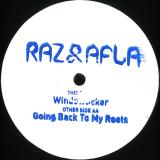
Wah Wah 45s present two very special cover versions from our beloved Afro-electronic duo, Raz & Afla, available on 12" vinyl for the very first time! Having recently released their sophomore LP, Echoes Of Resistance, to great acclaim and support ranging from Nick Grimshaw on BBC 6 Music to Tash LC on BBC Radio 1, and the follow up remix project Remixes Of Resistance, the pair offer up their unique takes on two very different slices of club culture on twelve inches of wax.
First up, the pair tackle Aphex Twin's sleazy and sinister turn-of-the-century dance floor bomb Windowlicker and take it somewhere completely unexpected, as Raz explains:
"We wanted to go to a different place from our influences for this one. When we told people we will cover this tune everyone said 'but how?!' In Raz & Afla style. We had an idea of what elements to recreate from the original and how we can reference it within our spectrum of sounds. It was so much fun to do and really kicks off at our live shows."
It's a heavily percussive reinterpretation, replete with spooky wordless vocals, funky guitars and spine tingling synths that builds into something of a future Afro-house anthem, whilst respecting the genius of the original recording.
On the flip, Going Back To My Roots has become a mainstay in Raz & Afla's live sets, and means a lot to them personally, as Raz once again explains:
"We love this song. The lyrics resonate with us, talking about the meaning of connection to a land and its people. The history of this song is also fascinating, from Hugh Masekela and Orlando Julius through Odyssey and Richie Havens. We wanted to give it our own flavour. You can't choose your heritage and where you are born. It is always a part of you and we like to celebrate that."
Written and first recorded by Lamont Dozier in 1977, Going Back To My Roots was famously covered by Richie Havens in 1980 before becoming a huge crossover hit when interpreted by disco outfit Odyssey in 1981. Raz & Afla very much give their version their own unique dance floor feeling. It's one which has received much support on BBC 6 Music.
- A1: Malavoi - Te Traigo Guajira
- A2: Los Caraibes - Donde
- A3: Tropicana - Amor En Chachacha
- A4: Ryco Jazz - Wachi Wara
- A5: Eugene Balthazar - Dap Pignan
- A6: Roger Jaffort - Oye Mi Consejo
- A7: Les Kings - Oriza
- B1: Les Supers Jaguars - Tatalibaba
- B2: Super Combo De Pointe A Pitre - Serrana
- B3: L'ensemble Abricot - Se Quedo Boogaloo
- B4: Henri Guedon - Bilonga
- B5: Les Aiglons - Pensando En Ti
- B6: Los Martiniquenos - Caterate
In Guadeloupe, many people think that jazz and ka music are like a ring and a finger. To some extent, the same could be said about so called Latin music and the music played in the French West Indies.
Both aesthetics were born in the Caribbean and bear so many connections that they can easily be considered cousins. In constant dialogue, there are lots of examples of their fruitful alliance and have been for a while. The English country dance that used to be practiced in European lounges came to be called kadrille in Martinique and contradanza in Cuba. They both featured additional percussion instruments inherited from the transatlantic deportation. Drawing from shared feelings about the same traumatized identity – later to be creolized – it would be hard not to assume that they were meant to inspire each other. The golden age of the orchestras that graced the Pigalle nights during the interwar period further proves the point. As soon as the 1930s, Havana-born Don Barreto naturally mixed danzón and biguine music in a combo based at Melody's Bar. In the following decade, Félix Valvert, a conductor who was born and raised in Basse-Terre in Guadelupe, also worked wonders in Montparnasse with La Coupole, which was an orchestra made up of eclectic musicians. Afro- Caribbean performers of various origins were often hired on rhythm and brass sections in jazz bands, which used to enliven the typical French balls of the capital. In the 1930s and onwards, Rico’s Creole Band was one of them.
Martinican violinist-clarinettist Ernest Léardée, who would become the king of biguine music as well as the main figure of French Uncle Ben's TV commercials (a dark stigma of post-colonial stereotypes), had musicians from the whole Caribbean sphere play at his Bal Blomet – and they all enchanted "ces Zazous-là" (according the words of Léardée's biguine-calypso piece). In les Antilles (French for French West Indies), music history started to speed up in the 1950s, when trade expanded and radio stations grew bigger. The Guadelupean and Martiniquais youth tuned in their old galena radio sets to South American and Caribbean music. As for the women traders, les pacotilleuses, they bought and sold goods across different islands (the "passing of items through various hands" was thought to be most pleasurable) and brought back countless sounds in their luggage. Such was the case of Madame Balthazar, who once returned from Puerto Rico with the first 45rpm and 33rpm to ever enter Martinique.
Out of this adventure was created the famous Martinican label La Maison des Merengues, a music business she opened and undertook with her husband and which proved to be a major landmark. At the end of the 1950s, in Puerto Rico, Marius Cultier competed in the Piano International Contest playing a version of Monk's Round 'Midnight. He won the first prize and this distinction foreshadowed everything that was to come. Cultier, the heretic Monk of jazz, was quickly praised for writing superb melodies, always tinged with a twist that conferred a unique sound to his music. It didn't take long for the gifted self-taught musician to get to play with Los Cubanos, making a name for himself thanks to his impressive maestria on merengues.
The rest is history. Besides, in the late 1950s, Frantz Charles-Denis, born into the upper middle class in Saint-Pierre and better known by his first name Francisco, went back home after working at La Cabane Cubaine – a club located rue Fontaine where he had caught the Latin fever. Francisco's music was therefore heavily marked by his Cuban cousins' influence, which gave the combos he led a specific style and also led to renewal. Things were swinging hard in La Savane, located in the main square in Fort-de-France. He set up the Shango club close by and tested out the biguine lélé there, a new music formula spiced up with Latin rhythms. Soon afterwards, fate had him fly to Puerto Rico and Venezuela.
As for percussionist Henri Guédon (percussions were only a part of his many talents), he was born in Fort-de-France in May 22nd 1944, the day marking the celebration of the abolition of slavery. As an old man, he could remember that in " his father's Teppaz, a lot of hectic 6/8 music was constantly playing...". In the opening lines of his Lettre à Dizzy, a small illustrated collection of writings published by Del Arco, he highlighted the huge impact that cubop had on him as a teenage boy, around 1960. He eventually turned out to be the lider maximo in La Contesta, a big band steeped in Latin jazz. He was also the one who originated the word zouk to describe music which brought the sound of the New York barrio to Paris. It was the culmination of a journey that started in Sainte-Marie: "a mythical place for bélé, the equivalent of Cuban guaguancó". In the early 1960s, the tertiary economy developed to the detriment of agriculture. Yet rural life was where roots music emerged in Martinique and in Guadeloupe.
Record companies played a major part in the process of Latin versions sweeping across the islands – before reaching everywhere else. Producer Célini, boss of the great Aux Ondes label, and Marcel Mavounzy, both the head of Émeraude records - a firm which was founded in 1953 - as well as the brother of famous saxophonist Robert Mavounzy, were big names to bear in mind. Although there were many of them - all of whom are featured on this record - Henri Debs was definitely the major figure in the recording adventure. He proved to be so influential that he even got compared to Berry Gordy. In the mid 1950s, when he acquired his first Teppaz, he worked on his first compositions: a bolero and a chachacha. Then, he became the one man who made people discover Caribbean music, from calypso to merengue. He was among the first ones to rush out to San Juan, Puerto Rico, to buy records and distribute them through a store run by one of his brothers in Fort-de-France. He had members of the Fania All Star come and perform there, which he was madly proud about. He was also the first one to pay attention to Haitian music, such as compas direct and various other rhythms which would soon flood the market. As a result, many of the combos hitting his legendary studio would end up boosted by widespread "Afro-Latin" rhythms. However, he never denied his identity: gwo ka drums were given a major role, although they were instruments which had long been banned from the "official" music spheres. The present selection bears witness to such a creative swarming. Here are fourteen tracks of untimely yet unprecedented cross-fertilization: all types of music rooted in the Creole archipelago have found their way, whatsoever, to the tracklisting. Whether originating from the city or being more rural, they all go back to what Edouard Glissant, in an interview about the place of West Indian music in the Afro-American scope, called "the trace of singing, the one which got erased by slavery." "It is so in jazz, but also in reggae, calypso, biguine, salsa... This trace also manifests through the drums, whether Guadelupean, Dominican, Jamaican or Cuban... None of them being quite the same. They all point to the idea of a trace, seeking it out and connecting to each other through it. This is the hallmark of the African diaspora: its ability to create something new, in relation to itself, out of a trace. It may be the memory of a rhythm, the crafting of a drum, a means of expression which doesn't resort to an old language but to the modalities of it." The opening track features one of the emblematic orchestras of this aesthetic identity, criscrossing many music types from the archipelago. The 1974 Ray Barretto guajira – Ray Barretto was a major New York drummer influenced by Charlie Parker and Chano Pozzo – is magnificently performed by Malavoi, a legendary Fayolais group (i.e from Fort-de-France). Additionally, the compilation ends on a piece by Los Martiniqueños de Francisco. It symbolically closes the circle as it is a genuine potomitan of Martinique culture which also functions as a tireless campaigner for Afro-Caribbean music. Practicing the danmyé rounds (a kind of capoeiria) to the rhythm of the bèlè drum, it delivers a terrific Caterete, a kind of champeta of Afro- Colombian obedience which was originally composed by Colombian Fabián Ramón Veloz Fernández for the group Wgenda Kenya. The icing on the cake is Brazilian Marku Ribas, who found refuge in Martinique in the early 1970s, bringing his singing to the last trance-inducing track. These two "versions" convey the whole tone of a selection composed of rarities and classics of the tropicalized genre, swarming with tonic accents and convoluted rhythms. It is the sort of cocktail that the West Indians never failed to spice up with their own ingredients. For instance, the Los Caraïbes cover of Dónde, a famous Cuban theme composed by producer Ernesto Duarte Brito, has a typical violin and features renowned Martinique singer Joby Valente and his piquant voice.
The track used to be – or so we think – their only existing 45rpm. The meaningful Amor en chachachá by L'Ensemble Tropicana, a band which included Haitian musicians among whom was composer and leader Michel Desgrotte, also recalls how Latin music was pervasive in the tropics in the mid-1960s. They were the ones keeping people dancing at Le Cocoteraie in Guadelupe and La Bananeraie in Martinique. Around the same time, another "foreign" band, Congolese Freddy Mars N'Kounkou's Ryco Jazz, achieved some success on both islands by covering Latin jazz classics – such as their adaptation of Wachi Wara, a "soul sauce" by Dizzy Gillespie and Chano Pozo whose interweaving of strings and percussions can have anyone hit the dancefloor. How can you resist Dap Pinian indeed, a powerful guaguancó by Eugene Balthazar, performed by the Tropicana Orchestra and published by the Martinique-founded La Maison des Merengues? It also acts as a symbol of the maelstrom at work. Going by the name Paco et L'orchestre Cachunga, Roger Jaffory used to play guaguancó too: his Fania-inspired Oye mi consejo is one example of his style. Baila!!!!! Dancing was also one of the Kings' focus points. Oriza is a Puerto Rican bomba and a "classic" originally composed by Nuevayorquino trumpeter Ernie Agosto, which reserves major space for brasses, giving it a special sheen.
Emerging from the New York barrios crucible was also La Perfecta, a Martinique group originating from Trinidad, whose name directly references the totemic Eddie Palmieri figure as well as his own band, also called La Perfecta. Here they borrow Toumbadora from Colombian producer and composer Efraín Lancheros and interpret it by emphasizing percussions, which set fire to the track even more than the wind instruments. The same goes for Martinique's Super Jaguars, who use Tatalibaba – a composition by Cuban guitarist Florencio "Picolo" Santana which was made famous by Celia Cruz & La Sonora Matencera – as a pretext for sending their cadences into a frenzy. In a more typically salsa vein, the Super Combo, a famous Guadelupean orchestra from Pointe-Noire that was formed around the Desplan family and had Roger Plonquitte and Elie Bianay on board, adapt Serana, a theme by Roberto Angleró Pepín, a Puerto Rican composer, singer and musician also known for his song Soy Boricua. Here again, their vision comes close to surpassing the original. In the 1970s, L'Ensemble Abricot provided a handful of tracks of different syles, hence reaching the pinnacle of the art of achieving variety and giving pleasure. They played boleros, biguines, compas direct, guaguancó and even a good old boogaloo - the type they wanted to keep close to their hearts for ever, "pour toujours", as they sang along together in one of their songs. Léon Bertide's Martinican ensemble excelled at the boogaloo which had been composed by Puerto Rican saxophonist Hector Santos for the legendary El Gran Combo.
Three years later, in 1972, Henri Guédon, with the help of Paul Rosine on the vibraphone, tackled the Bilongo made famous by Eddie Palmieri. Such a classic!!!!! And so were the Aiglons, the band from Guadelupe: choosing to execute Pensando en tí, a composition by Dominican Aniceto Batista, on a cooler tempo than the original, they noticeably used a wonderfully (un)tuned keyboard in place of the accordion. On the high-value collectible single – the first one released by Les Aiglons under the Duli Disc label – there is a sticker classifying the track under the generic name "Afro". Now that is what we call a symbol. Jacques Denis
Plastik People Collections dropped this one back in 2019, and it became an instant classic that soon sold out. It has since rocketed in price on the second-hand markets, so thankfully, the label is reissuing it this summer. Cultured Pearls's 'Mother Earth' is effortlessly cool garage-house with bumpy drums and expressive piano jams perfect for outdoor dancing. Night Society's 'You Turn Me On' has an authentic US edge and hot and humid groove with passionate vocal cries, then JJ Can's 'I Don't Know Why' is a dubby and low-slung deep garage sound with chopped vocals and a timeless appeal. Three vital cuts that will be huge all over again this year.
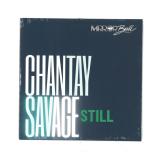
Legendary R&B vocalist Chantay Savage returns with "Still", a stunning new single released on Mirror Ball Recordings. Known for her timeless voice and emotive delivery, Chantay brings soulful elegance to a modern groove—blending classic R&B sensibilities with contemporary production.
This release marks a powerful moment of reflection, resilience, and growth, perfectly suited for lovers of real soul music and fans of artists like Jill Scott, Angie Stone, and H.E.R. • Return of legendary 90's R&B talent Chantay Savage. • Still is a certified modern soul classic gaining huge support from the scene since it's digital release. • Produced by Chicago house music legend Terry Hunter & James Poyser (The Roots)
- A1: Time Was
- B1: Sometime World
- B2: Blowin' Free
- C1: The King Will Come
- C2: Leaf And Stream
- D1: Warrior
- D2: Throw Down The Sword
Wishbone Ash reigned supreme through the 1970s — centered on inspired musicianship, joyful spirit and inventive songs. Their concerts were uplifting and their recorded work sublime. Argus remains a stunning high point in the band's startling repertoire. Argus was a 1972 tour de force, a hard-rocking masterpiece that has gone on to have a huge impact on rock bands moving forward. If you've never heard Argus, you've surely heard music that it inspired.
The British quartet's trademark harmony guitars became a touchstone for many: Thin Lizzy, Iron Maiden, Opeth, and Lynyrd Skynyrd have all acknowledged an Ash influence, and tracks such as Lizzy's "The Boys Are Back in Town," Maiden's "The Trooper," and even Steely Dan's "Reeling in the Years" all have twin-guitar moments that hark back to Argus. But Wishbone Ash were different from the start. They were never strictly a hard rock band; their soaring vocal harmonies and musical grandeur placed them close to progressive rock.
But they weren't strictly prog either: They had no keyboards, no real classical influence and weren't into side-long suites. Their roots were in the blues, and their calling card was twin lead guitars in harmony (played in the original lineup by Ted Turner and Andy Powell). Even the hardest Ash rockers — like "Blowin' Free," the most famous track from Argus — had an ethereal touch. They could rock the big stages, but they did it with subtlety and grace. This is reflected perfectly in the classic album sleeve by prog-associated designers Hipgnosis: The front cover shows a Greek sentry — the "argus" of the title — staring off into the distance. It's a mythic, old-world kind of image until you look closely at the back cover, and see that he's heralding the arrival (or perhaps watching the departure) of a spaceship.
Two worlds colliding. Exactly what the band and album were all about. By the time of Argus, Wishbone Ash were stars in England and cult heroes among Anglophiles in the US. What made Argus a step forward was its flow of moods. The songs don't run together, but there's an emotional connecting thread from the album's somber beginning to its heroic end. The band insisted at the time that lyrics were something of an afterthought: Shortly after its release, main lyricist Martin Turner told NME that he wrote them mainly to fit the mood of the music: "The music that was coming out was very English, very medieval, and the lyrics had to reflect that." Added Powell at the time, "The expression comes out in the guitars. We wouldn't play it if it didn't express something." Now, Analogue Productions has applied all of its vaunted craft and technical expertise to make this epic album shine! Two 45 RPM LPs pressed on virtually silent 180-gram vinyl at Quality Record Pressings make the remastered audio sparkle. Quieter lyrical sentiments and softer musical passages are rendered precisely, while majestic riffs and fist-waving anthems fully reveal the energy of the music! Argus isn't just another rock record — it's a journey through a sonic landscape rich with depth, emotion and technical prowess. It's the album that solidified Wishbone Ash as masters of twin guitar harmony. Discerning audiophiles will find Argus an essential addition to their record collection. It's a masterclass in sound engineering that fully captures the intricate interplay of dual guitars with pristine clarity and a warmth that only analog recordings can provide.
The rediscovery of Terry Callier is of the high points of in the history of Acid Jazz Records, who present the reissue of the 7” version of the song that started it all - ‘I Don’t Want To See Myself (Without You)’. A true classic of the modern soul scene.
‘I Don’t Want To See Myself…’ was the final release from Callier, whose career encompassed recording for Prestige, Chess’s Cadet label and Elektra, before this one- off single on the independent Erect label.
Despite the record fetching huge sums by the 1990s, his career had been largely unexplored, until Acid Jazz founder Eddie Piller decided to track him down. After several attempts, Eddie finally found him working as a computer programmer, and in July 1990 Acid Jazz reissued the single.
Over the next decade Terry resumed his recording and performing career, releasing new music, and was finally recognised for his brilliance as an artist. In 2006 Eddie found himself once more in conversation with Terry and they agreed on releasing a 7-inch version of the single, with an edit created by Andy Lewis.
This single is long since deleted, and now sells for upwards of £30, so with the full co-operation of his daughter Sundiata and licensed from Terry Callier Music, it is set for reissue in March 2025, backed with ‘If I Could Make You’.
Repress!
Bristol music Godfather Rob Smith (Smith & Mighty) was a major force in the 1st wave Bristol Dubstep scene, not only as a huge musical influence on the likes of Pinch and Peverelist but also as a producer in his own right. This typically dubwise 12' is one of his best from that era, repressed for 2016.
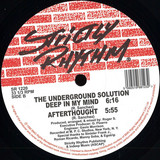
Absolutely ESSENTIAL record right here - The Underground Solution aka The 'S' Man aka the legendary Roger Sanchez is a name that you should all be familiar with by now, and his 1990 ANTHEM 'Luv Dancin' is an NYC deep house benchmark. That's right, this originally came out in 1990. That's a heck of a long time ago. Thing is, this record, when played at the right time will still cause maximum damage in the club. Riffing on disco classic 'Is it all over my face' and with elements of 'The bottle' interspersed with a deep, rolling garage bassline and dreamy keys and pads Sanchez crafted a solid gold cut, a timeless piece of dance music that still inspires today and is often imitated yet obviously never bettered! The flipside cuts 'Deep in my mind' and 'Afterthought' are also sublime exercises in the deepness, The 'S' Man's trademark eerie pads, bleeps and dope drum programming evident throughout, making these tracks huge hits from NYC to Sheffield and beyond! This whole EP is flawless and if you dig the deeper side of this stuff then you're in for a treat - Now's your chance to bag a bonafide, hands down classic record!
'Luv Dancin' has been skilfully remastered from all original master sources and fully licensed and reissued officially for 2017.
White LP. Born out of the early 1980's Austin noise punk scene, Scratch Acid deliberately eschewed the loud, fast rules of hardcore as everything they didn't want to be and embraced a weirder, artier sound. Prior to the release of their 1984 debut S/T EP, someone gave Touch and Go Records owner Corey Rusk a cassette of the recording, and he was instantly a huge fan. Rusk was immediately interested in releasing the EP and contacted the band to express his admiration. At the time, Scratch Acid had already committed to working with Rabid Cat Records, who released the band's debut release S/T EP (1984) and their only full-length album, Just Keep Eating (1986). The group quickly developed a riveting performance aesthetic, and, as the debut S/T EP made its way around the country via fanzines, college radio, and word-of-mouth, the band mounted short tours to the Midwest and the East Coast. After playing a total of 146 shows, Scratch Acid broke up after the long tour that followed the release of the Berserker EP (Touch and Go Records, 1987). Since that time, the band have had many imitators, and many alternative bands have cited Scratch Acid as one of their influences.
Born out of the early 1980's Austin noise punk scene, Scratch Acid deliberately eschewed the loud, fast rules of hardcore as everything they didn't want to be and embraced a weirder, artier sound. Prior to the release of their 1984 debut S/T EP, someone gave Touch and Go Records owner Corey Rusk a cassette of the recording, and he was instantly a huge fan. Rusk was immediately interested in releasing the EP and contacted the band to express his admiration. At the time, Scratch Acid had already committed to working with Rabid Cat Records. The group quickly developed a riveting performance aesthetic, and, as the debut S/T EP made its way around the country via fanzines, college radio, and word-of-mouth, the band mounted short tours to the Midwest and the East Coast. While he was not able to work with Scratch Acid directly through Touch and Go, Rusk had begun booking shows with Scratch Acid in Detroit, so he could see them live and meet them. A friendship formed, and Touch and Go Records would eventually release the band's second EP, Berserker, in 1987.
ULURU is a large sandstone rock formation in Australia. It's sacred to the Anangu, the local Indigenous of the area. For many years it had been deprived of its spiritual significance, due to mass tourism, capitalism, as well as greedy and selfishness of people who just want to make money out of it. However, as a result of the Anangu’s resilience, care and staunchness, huge changes took place in the national park around Uluru as well as in the broader public's consciousness, giving again to the Uluru the sacred identity that had been lost.
You might be reading and thinking now: so what's the point? Actually, there's no real point. I would rather say, there’s hope. The hope of seeing humans all around the world following the example of the Anangu. The hope of seeing humans finally stopping to treat the earth and all what’s part of it, what’s on and what’s in it, as a slave without soul. The hope of changing today, and if not today at latest by tomorrow. This system is failing. It's no longer sustainable, and there's no much time left. So everybody, don't sleep, be critical.
ULURU is a large sandstone rock formation in Australia. It's sacred to the Anangu, the local Indigenous of the area. For many years it had been deprived of its spiritual significance, due to mass tourism, capitalism, as well as greedy and selfishness of people who just want to make money out of it. However, as a result of the Anangu’s resilience, care and staunchness, huge changes took place in the national park around Uluru as well as in the broader public's consciousness, giving again to the Uluru the sacred identity that had been lost.
You might be reading and thinking now: so what's the point? Actually, there's no real point. I would rather say, there’s hope. The hope of seeing humans all around the world following the example of the Anangu. The hope of seeing humans finally stopping to treat the earth and all what’s part of it, what’s on and what’s in it, as a slave without soul. The hope of changing today, and if not today at latest by tomorrow. This system is failing. It's no longer sustainable, and there's no much time left. So everybody, don't sleep, be critical.
- Still (7" Mix)
- Still (7" Instrumental Mix)
Known for her timeless voice and emotive delivery, Chantay brings soulful elegance to
a modern groove - blending classic R&B sensibilities with contemporary production.
This release marks a powerful moment of refection, resilience, and growth, perfectly
suited for lovers of real soul music and fans of artists like Jill Scott, Angie Stone, and
H.E.R.
Return of legendary 90's R&B talent Chantay Savage.
Still is a certifed modern soul classic gaining huge support from the scene since
it's digital release.
Produced by Chicago house music legend Terry Hunter & James Poyser (The
Roots)
- 1: The Doomsday Book
- 2: Jaded Apostles
- 3: A Million Random Digits
- 4: Lie Without A Liar
- 5: The Ghost Within
- 6: The Dragonfly Queen
- 7: How To Avoid Huge Ships
- 8: Bus Lines
- 9: Lost In The Grand Scheme
- 10: Like Summer Tempests Came His Tears
- 11: Sound Of The Silk
…And You Will Know Us By The Trail Of Dead (also known as Trail Of Dead) is an American alternative rock band best known for their wild, energetic live shows. The chief members of the band are Jason Reece and Conrad Keely, who alternate between drumming, guitar and lead vocals, both on recordings and live shows. Since their formation in 1994, they have released ten studio albums, including the 2014 IX. The album features favourites “The Ghost Within” and “The Doomsday Book” amongst others. During the time of these recordings, the band also featured Autry Fulbright II on bass and vocals and Jamie Miller on drums and guitar. IX is available as a limited edition of 500 numbered copies on pink marbled vinyl and includes a 4-page booklet.