Search:hum

Styles
All
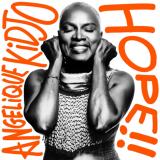
Angelique Kidjo - HOPE!! (2x12")

Angelique Kidjo

HOPE!! (2x12")

2x12inch5026854805634
Parlophone
24.04.2026
  • 1: Bando (Feat. Pharrell & Quavo)
  • 2: Aye Kan (Feat. Ayra Starr)
  • 3: No Stopping Us
  • 4: Fall On Me (Feat. Pj Morton)
  • 5: Oyaya (Feat. Nile Rodgers & Iza)
  • 6: Superwoman (Feat. Dadju)
  • 7: I'm On Fire (Feat. The Cavemen)
  • 8: You Can
  • 9: Kakua (Feat. Diamond Platnumz)
  • 10: Sunlight To My Soul (Feat. Soweto Gospel Choir)
  • 11: For Me (Feat. Charlie Wilson)
  • 12: Big Heart
  • 13: Jerusalema
  • 14: Joy (Feat. Davido)
  • 15: Nadi Balance (Feat. Fally Ipupa, The Cavemen, Sheila Maurice-Grey)
  • 16: Malaika (Feat. Florent Pagny)

Global icon and five-time GRAMMY® winner Angelique Kidjo returns with HOPE!!, a revelatory 16-track collection that serves as a vibrant antidote to the times. Following her 2021 success Mother Nature, this album bridges continents and genres, featuring a star-studded lineup including Pharrell Williams, Quavo, Ayra Starr, Nile Rodgers, and Davido among other A-listers

Produced by Pharrell and Shizzi, and featuring songwriting by the legendary Diane Warren, HOPE!! is more than an album—it’s a global musical movement dedicated to the resilience of the human spirit.

pre-order now24.04.2026

expected to be published on 24.04.2026

38,61
Mike Zito - Outside Or the Eastside 2x12
  • 1: Outside Or The Eastside
  • 2: Don't Take Advantage Of Me
  • 3: Kiss You All Over
  • 4: Downtown At Midnight
  • 5: Grand Avenue
  • 6: Too Broke To Spend The Night
  • 7: Just Like I Treat You
  • 8: Don't Bother Me
  • 9: Do I Move You
  • 10: Close To You
  • 11: The Blues Lover

A personal record for Mike shaped by memory, places, and renewal. Walking the streets of his birthplace, St. Louis, Zito reconnects with the sounds, stories, and hard lessons that forged his signature blend of soul-driven blues and fearless storytelling. Thirteen years after Gone to Texas, this album feels like a defining moment, marking a new chapter for Mike, his family, and a life reclaimed in the city that started it all. The songs paint vivid snapshots of city life and personal reckoning, from late- night regret and self-awareness to raw portraits of neighbourhood survival and street-level truth. Tracks like "Downtown at Midnight" and "Grand Avenue" capture the grit, temptation, and consequences of the past with unflinching honesty, grounding the album in lived experience and emotional weight . Zito's writing is direct and cinematic, pairing tough reflection with compassion and hard-earned wisdom.

At its heart, Outside Or The Eastside is a celebration of second chances, an album dedicated to better days, family, friendship, love, and joy found in everyday moments. Life's unpredictable paths open doors you never expect, and for Mike Zito, this record embraces that truth with warmth, humour, and swagger. It's a record about choosing connection over chaos and moving forward with gratitude, purpose, and the volume turned up

pre-order now24.04.2026

expected to be published on 24.04.2026

30,46
Armed for Apocalypse - The Earth Is Breathing Beneath Me LP
  • 1: Drown
  • 2: Ashes Of The Night
  • 3: Spellbound
  • 4: Fists Like Feathers
  • 5: Beyond The Mirage
  • 6: Immortal
  • 7: Lost Without A Light
  • 8: Keep Up Appearances
  • 9: Lurk
  • 10: Bathed In A Tepid Pool Of My Own Filth
  • 11: The Earth Is Breathing Beneath Me

It's a realisation that the ground beneath our feet is alive, and we're all just passengers on its pulse. It's that hum of dread and wonder that defines Armed For Apocalypse's fourth full- length album: a towering, grooved- out, post- metal monolith carved from grief, power, and purpose. Formed in Chico, California between longtime friends Nick Harris (drums) and Cayle Hunter (guitar), Armed For Apocalypse is a what- if turned war machine. Over the years, the band has endured enough shakeups and setbacks to bury most acts: relocations, divorces, day jobs, family changes and not to mention complete lineup overhauls. But where others fractured, AFA sharpened.

pre-order now24.04.2026

expected to be published on 24.04.2026

30,46
The 1975 - Being Funny In A Foreign Language
  • 1: The 975
  • 2: Happiness
  • 3: Looking For Somebody (To Love)
  • 4: Part Of The Band
  • 5: Oh Caroline
  • 6: I’m In Love With You
  • 7: All I Need To Hear
  • 8: Wintering
  • 9: Human Too
  • 10: About You
  • 11: When We Are Together

'The 1975 return new album, ‘Being Funny In A Foreign Language’, which will be released on 14th October via Dirty Hit.

The band’s fifth studio album was written by Matthew Healy & George Daniel and recorded at Real World Studios in Wiltshire, United Kingdom and Electric Lady Studios in New York.

Formed in Manchester in 2002, The 1975 have established themselves as one of the defining bands of their generation with their distinctive aesthetic, ardent fanbase and unique sonic approach.

The band’s previous album, 2020’s ‘Notes On A Conditional Form’, became their fourth consecutive No. 1 album in the UK. The band were named NME’s ‘Band of the Decade’ in 2020 after being crowned ‘Best Group’ at the BRIT Awards in both 2017 & 2019. Their third studio album, ‘A Brief Inquiry Into Online Relationships’, also won ‘Mastercard British Album of the Year’ at the 2019 ceremony.

pre-order now24.04.2026

expected to be published on 24.04.2026

22,48
Niklas Paschburg - L'Ècho De Bretagne LP
  • 01: Paimpol
  • 02: Marché
  • 03: Le Port
  • 04: À La Maison
  • 05: La Vie Lente
  • 06: Bandes
  • 07: Adieu

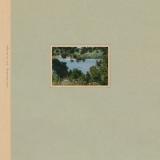
A century-old grand piano, a secluded house surrounded by the greenery of Brittany, no internet connection, and a reel-to-reel recorder.L'Écho de Bretagne, the new EP by Niklas Paschburg, set for release from fall 2025 via Nettwerk Music Group, is a solo piano record as essential as it is intense. An album made of silences, space, slowness. A music that doesn't chase impact, but truth.

the album release is march 26th - 2026.

If his previous work, Mexican Alps (2025), marked the first time the German composer and producer created an ambient-electronic album without his instrument of choice, the piano, L'Écho de Bretagne emerges as a direct response to that absence. "It was exactly the lack of piano that brought about the need for this new record, which instead puts that instrument, so vital to me, at the very center, stripping everything else away," Niklas explains.

Born in 1994, Paschburg has shaped over the years a musical path deeply connected to travel, nature, and introspection. From his debutTuur Mang Welten(2016) toOceanic(2018),Svalbard(2020),Panta Rhei(2023), and the aforementionedMexican Alps— alongside soundtracks, remixes, and collaborations with artists like RY X, Hania Rani, Ásgeir, and Bryan Senti — his sound bridges neoclassical, electronic, ambient, and pop-driven composition.

WithL'Écho de Bretagne, the Hamburg-born, Berlin-based musician continues his exploration by seeking solitude in nature, much like he did onSvalbard, but this time with an even more radical choice: disconnecting completely from the internet, and switching off both computer and smartphone for a while, in order to fully immerse himself in his new music. "I rented an old cottage in Paimpol, Brittany, where I knew there was a grand piano," he recounts. "When I got there, I discovered that not only was the piano more than a hundred years old, but it was also of an unknown brand, never restored, and quite difficult to play. But that gave it a unique character, and I didn't give up. Sure, it was an instrument left to its own fate, I couldn't play anything too fast. But how fascinating was that? I'm convinced that setting limits, instead of giving yourself total freedom when composing, can become an extraordinary source of inspiration."

As for the decision to temporarily detach from a life that demands we stay constantly connected, Niklas describes it as both a creative and human experiment. "I had my laptop and phone with me, just in case, but I kept them turned off. That choice made me wantL'Écho de Bretagneto be a fully analog work, even in how it was recorded." A way of clearing the mind. "I don't think I've ever been as calm as I was during those days in Paimpol. Even though I was working on a very specific project and didn't have much time, that period was more relaxing than any vacation."

Not that it was free of hiccups. "I'd borrowed a reel-to-reel recorder small enough to travel with me, but after recording a session on the piano, I realized it wasn't working properly, the sound was distorted, full of crackles. I got worried, because I wasn't near any big city where I could find a technician. Luckily, I figured out the problem was the old tape reels I had brought along. That was the only time I had to go online, to order new ones. But it was just for a moment. I shut everything off again right after." At that point, Niklas was waiting for the new tapes to arrive. He found out, completely by chance, from a local UPS courier that they had been delivered to a nearby village. "Since my phone was off, I couldn't track the shipment. So one day I asked this delivery guy, who didn't know anything about it. But from that point on, we'd see each other daily and talk… That's what being disconnected also means: reconnecting with people around you, even strangers. It was thanks to that courier that I found out where the tapes had ended up. And he even helped me get them back, writing directions for me on a scrap of paper."

But there's another element that makes this new EP unique.L'Écho de Bretagnewas recorded entirely live; its tracks are all improvised, complete with their imperfections. This approach leads to a sound that is pure, profoundly organic, and deeply authentic, intentionally preserved to give the listener the feeling of a live performance happening in their own living room. The touch of fingers on the keys, the breath of the wood, the tension of the vibrating string, all become part of the music. There is no construction, only expression. "Even now, when I listen back to it, I feel that moment I gave myself to step away from everything: from reality, from words, from noise." The result is a collection of suspended melodies and atmospheres, reflecting a state of the soul. A refuge from the rush of time. A pause from the world.

pre-order now24.04.2026

expected to be published on 24.04.2026

25,00
DJ DEXTRO - PROCESSING RANGE EP

Following the success of the first vinyl release from the Moroccan label Sotor Records, featuring Zadig, Perc & Oscar Mulero, Sotor writes a new chapter in its discography with its second vinyl release. Meaning "lines" in Arabic, Sotor reflects its commitment to championing the diversity of the techno genre.
The label's ninth release, "Processing Range," is a musical ode to the lines of space-time. With four original tracks from the Portuguese producer, Sotor invites you on a techno journey between mental tension and physical release.
The album opens with DJ Dextro's "Controle," which delivers a massive, sharp rhythm, dystopian synths, and a true immersion into a techno black hole.
The journey continues with the second track on side A. This time, DJ Dextro unleashes an uncompromising version of "Blue Dot," achieving a precarious balance while showcasing his signature percussive style. The Portuguese artist delivers the perfect track to unleash a crowd.
On the B-side, DJ Dextro offers us the eponymous track, "Processing Range." We're quickly drawn into an allegory of this decadent modern world where humanity is rushing towards its own destruction. Expect dusty techno rhythms and that sumptuous synth that sounds like the end of times. Probably a future classic!
And you'll finish on a gentler but no less dynamic note from DJ Dextro. He concludes the EP with "31 Atlas," which will leave you weightless with its galloping bassline and abyssal synth.

out of Stock

Order now and we will order the item for you at our supplier.

11,35

Last In: 22 days ago
Joe Fujinoki - Glass Torso LP

Joe Fujinoki

Glass Torso LP

12inchENMB-19
enmossed
23.04.2026

Joe Fujinoki centered the compositions of his latest album Glass Torso round the idea of the fragility of the human body. Fujinoki described the narrative thread of the album as that of “holding the shape of a human body as if it might shatter like glass”. The precariousness of the body, the essence of the body as defined by Fujinoki as the torso, and the object relations between the boundaries of dialectical exercises pack themselves into his creative process.

Fujinoki recorded Glass Torso exclusively with analog synthesizers, stumbling in and out of structural loops to find space for accidental discoveries. The ten pieces of recorded material feel somewhere on the edge of typified form, feeling like a vascular system pumping in and out its undulating liquidities. Maybe this is the hollowed space held together by Fujinoki’s notion of the torso where you hear a microscopic world, dubby and generative. Fujinoki is adept at organizing this realm of subtle sound sources, giving proper considerations of shared tonal space. Seemingly, this handling of the precarity of sonic material elucidates Fujinoki’s mature attention to detail.

Ambient music genre tropes often affirm the listeners vessel for escape and dissociation. It provides an intoxicating allure by respite from an overwhelming exterior reality far outside the listeners controls. Here this space becomes apolitical, or its protest vocabulary softer and subtle. Fujinoki does not aim to tackle hyperobject topics on how to course correct the world, but he does something increasingly rarer to come across. On Glass Torso an alternative space is created not as shelter, but as a meditation on negotiation and compromise. This twenty eight minutes of audio lays down a foundation for imagination, for imagining how to negotiate the fragility of the self. Zoomed out, the implications of his negotiative sonics can be a playground for broader reflections on distributive care and attention.

Fujinoki says he feels “alert” to his physicality and placement in the world amidst vast digital cultures creating impositions on him and his surroundings. On Glass Torso he creates a concretized space on a vinyl record, where the virtual and the tangible antagonize one another that create the spectacle of the listening experience. This spectacle is a soft one, a considered one, and an utmost enjoyable one. Fujinoki juggles opposing forces brilliantly, and formulates an exquisite palette of soft passing music so he can also help the listener with the exquisite burden of their own Glass Torso.”

- Nick Klein, January 2026

pre-order now23.04.2026

expected to be published on 23.04.2026

26,85
IMMERSION - WTF??

IMMERSION

WTF??

12inchWMLP60
Swim
23.04.2026

What the fuck?? What the fucking fuck?? It's the only realistic response to these dark, divisive and dangerous times. How do you react? How do you feel? How do you soundtrack? Immersion is the project of post punk musical architects Colin Newman (Wire) and Malka Spigel (Minimal Compact) and Matt Schulz (Holy Fuck, Savak & Lake Ruth). Since the pandemic, Immersion has been mainly working on their Nanocluster collaborations, but they have now re-engaged with the core project after a UK and USA tour gave them a shot of musical urgency and lyrical immediacy. If the Nanocluster project is about collaboration, then Immersion in 2025 is a response to where humanity finds itself in the second decade of the 21st century. It reacts to not only that relentless rhetoric of these times but also how we as humans should respond. Music is the message, the medium, the massage and the moment. This song collection manages to combine the unease with hope, minimally hypnotic songwriting with taut melodies and inventiveness with groove. The lead off track released on July 28th is "Use It Don't Lose It" which they describe as `An expression of us both together, saying the same thing for ourselves & for others. The words are so direct they need no explanation. Anyone could join in with the chanting!

out of Stock

Order now and we will order the item for you at our supplier.

23,49

Last In: 23 days ago
Dave N.A. - Sky City

Dave N.A.

Sky City

12inchEVIGHET005
Evighet
23.04.2026

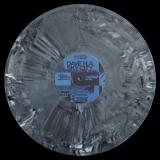
Evighet proudly unveils its fifth release, EVIGHET005, featuring the Sky City EP by Dave N.A., the prolific producer from Yerevan known for his refined sound design and emotionally resonant compositions. With a catalog that spans labels such as Typeless Records and Uppers & Downers, his work continues to bridge precision and sensitivity, exploring the borders between rhythmic architecture and ambient introspection. On Sky City EP, Dave N.A. constructs an intricate sonic landscape where lush atmospheres coexist with fractured breaks and IDM-inspired rhythms. Rooted in the traditions of Jungle and Breakbeat yet unbound by genre, each piece reveals a narrative built from texture, movement and space. His music invites reflection while maintaining a dynamic forward energy, evoking the sense of motion through memory and dreamlike transitions. A central moment in the release is “Bloom”, which features a collaboration with Hayk Karoyi on flute. His performance adds an organic depth and melodic fluidity, weaving through electronic layers with warmth and clarity. The result is a delicate interplay between human breath and machine pulse, blurring the boundary between the natural and the synthetic. Sky City EP marks a new chapter for Evighet, reaffirming the label’s dedication to sound as a medium of exploration and storytelling. Through this release, Dave N.A. captures both emotional immediacy and compositional detail, expanding the label’s evolving narrative with a vision that feels deeply personal yet universally resonant.

out of Stock

Order now and we will order the item for you at our supplier.

13,03

Last In: 9 days ago
Dosis - Ritmo Animal

Dosis

Ritmo Animal

12inchHT-3
Honey Trap
22.04.2026

For its third release, Honey Trap turns toward the instinctual. Ritmo Animal is a record driven by body memory, where rhythm becomes language and movement becomes communion. Vancouver- and Colombian-rooted duo Dosis weave club music with lived histories, drawing from punk ethics, soundsystem culture, and a deep commitment to collaboration.

Formed by Daniel Rincon and Zachary Treble, Dosis operates in the space between structure and looseness, where grooves feel hand-built and edges remain intentionally rough. Across five tracks, Ritmo Animal resists clean categorization. House mutates into dub-soaked psychedelia, vocals surface and dissolve, and percussion swings between discipline and abandon.

The A-side opens with “I Want To Be Your Dog”, a low-slung, hypnotic burner featuring Alien D, setting the tone through repetition and restraint. The title track, “Ritmo Animal,” anchors the record in motion, with saxophone lines from Dave Biddle threading through percussive momentum and grounding the track in something tactile and human.

On the flip, “Malibu” offers a softer pull, with Hannah Acton’s vocals drifting through warm, unhurried rhythm. “Humo,” featuring Hashman Deejay, leans deeper into smoke and sway, while closer “Sancocho” stretches time entirely, favoring communal simmer over destination.

Ritmo Animal is music made for shared space. It is not concerned with polish or purity, but with connection, between scenes, cities, and bodies on a floor. Another chapter in Honey Trap’s ongoing exploration of intimacy, pleasure, and rhythm as refuge.

out of Stock

Order now and we will order the item for you at our supplier.

13,87
Human Space Machine - Perception Field

With our 12th anniversary approaching, we invited Dutch artist Human Space Machine, who delivered Perception Field, a five track EP built around the idea that perception is never fixed.
Across a wide tempo range, the record explores how the same material can shift depending on focus and context. Foreground and background exchange roles. Subtle textures and negative space shape the impact as much as the main rhythmic elements. Perception Field approaches club music as something fluid and responsive, where meaning forms through the act of listening itself. It’s an impressive showcase from an artist that shows once again he’s capable of merging layers of his excellent sound design with deeper feelings.

out of Stock

Order now and we will order the item for you at our supplier.

14,71

Last In: 25 days ago
Human Space Machine - Perception Field

With our 12th anniversary approaching, we invited Dutch artist Human Space Machine, who delivered Perception Field, a five track EP built around the idea that perception is never fixed.
Across a wide tempo range, the record explores how the same material can shift depending on focus and context. Foreground and background exchange roles. Subtle textures and negative space shape the impact as much as the main rhythmic elements. Perception Field approaches club music as something fluid and responsive, where meaning forms through the act of listening itself. It’s an impressive showcase from an artist that shows once again he’s capable of merging layers of his excellent sound design with deeper feelings.

out of Stock

Order now and we will order the item for you at our supplier.

14,71

Last In: 25 days ago
PEOPLE IN ORBIT - VIEWPOINT

PEOPLE IN ORBIT

VIEWPOINT

12inchAPRLP157
APRIL RECORDS
17.04.2026
  • 1: Synchronized Whalestuff
  • 2: Prelude To Cycles - Particles
  • 3: Cycle
  • 4: Cycle
  • 5: Cycle
  • 6: Cycle
  • 7: Cycle
  • 8: Cycle
  • 9: Spinning Downwards

Leading outlet for forward-thinking Scandinavian jazz, April Records, proudly presents the new album from Malmö-based quintet People In Orbit. A followup to their critically acclaimed 2023 release Close/Away (Naxos Prophone), the group continues to explore Scandinavia"s jazz tradition through a contemporary lens, blending acoustic interplay with electronics and a focus on collective improvisation. Led by trumpeter and composer Adam Sass, People In Orbit were formed in late 2020 with the intention of reimagining the classic jazz quintet with a contemporary edge. The group prioritises space, interaction, and ensemble balance, allowing composed material and collective responsiveness to shape the music. Alongside Sass, the band features Edvin Ekman (tenor saxophone, effects), Niklas Bergström (piano, Moog, keyboards), Edvin Elmersson (double bass), and Frank William Reis (drums). Viewpoint is a concept-driven album centred on perspective; how different viewpoints influence the way events are interpreted, and how perspective can foster connection or distance. Much of the album is built around Cycles, a four-part suite composed from a graphic score, with each section representing a different human life and its relationship to the surrounding world. The album moves through shifting emotional and psychological states, from curiosity and tension to reflection and release. Perspective is explored not only through human experience, but also via non-human viewpoints - including music inspired by deep-ocean communication between whales and slow, drifting motion. Musically, Viewpoint continues People In Orbit"s blend of modern jazz-rock and electronics, while drawing influence from the Scandinavian jazz quintet tradition of the 1960s. The music balances structured composition with openness, allowing individual voices to exist within a clearly defined collective sound. With Viewpoint, People In Orbit presents a focused and cohesive statement - an album shaped by shared intent, conceptual clarity, and a continued commitment to collective expression.

pre-order now17.04.2026

expected to be published on 17.04.2026

23,11
The Last Ten Seconds of Life - The Dead Ones
  • 1: The Dead Ones
  • 2: Make It To Heaven
  • 3: Rat Trap
  • 4: Freak Reflection
  • 5: 1-800-Do You Want To Die?
  • 6: Stiletto
  • 7: Stereo
  • 8: Dollar To A Dime
  • 9: Corruption Concerto
  • 10: Xxxxxxxxxx

Intense and intensely personal, The Dead Ones marks The Last Ten Seconds of Life’s Metal Blade label debut. 10 original tracks of pulverizing deathcore produced by Carson Slovak and Grant McFarland of Pennsylvania’s Atrium Audio. In creating The Dead Ones, “everyone took what we learned from the past two releases and assembled what we thought would bring out the best of us from song structure, tonality of instruments, the mix/master, and the lyrical themes,” furthers McLaughlin.

The end result reflects a more personal and human experience rather than the philosophical and fictional approach used on earlier releases. The Dead Ones follows 2024’s acclaimed No Name Graves in the theme of death and rebirth, but in contrast, is directly focused on the human experience and the band members’ own struggles.

pre-order now17.04.2026

expected to be published on 17.04.2026

25,17
Christina Kubisch - TUNING

Christina Kubisch

TUNING

12inchFAIT-41LP
Faitiche
17.04.2026

Faitiche welcomes a new artist: Christina Kubisch belongs to the first generation of sound artists. Her practice ranges from performances, concerts, to works with video and visual art, but she is best known for her sound installations and electro-acoustic compositions.

TUNING brings together three pieces by Christina Kubisch from different periods of her oeuvre. What they have in common is the way they transform sound phenomena originally considered “non-music” into compositions.

Jan Jelinek: Gaming in Silence (2024) is the most recent work on this compilation. It’s a collage of electromagnetic waves, voice, and abstract sound textures. How did this combination come about?

Christina Kubisch: Gaming was commissioned as a fixed-media composition for the Sound Dome at ZKM Karlsruhe. Since Resonances: The Electromagnetic Bodies Project (2005), I’ve been making recordings in the old and new server rooms at the ZKM and in their permanent collection of historical computer games. Computer games like Asteroids (Atari, 1979) and Poly-Play (VEB Polytechnik, 1986) have specially generated analogue electromagnetic waves that interest me in particular on account of their density, rhythms and textures. I originally studied painting and to me the work of composition often feels like painting an abstract picture. I alter my source material as little as possible, layering and overlapping until a distinctive sound space emerges. In recent pieces, I sometimes combine magnetic waves with field recordings or live instruments. In Gaming it’s my recording of a Chinese song about silence.

JJ: Two persons walking through a street in Madrid (2004) is a recording from your Electrical Walks series. Here we should give a brief explanation of one of your best known works: participants in an Electrical Walk move through public spaces wearing prepared headphones that allow them to receive electromagnetic waves from their surroundings – for example from security gates, ATMs or neon signs. They discover a situation that normally is inaudible to the human ear and they can actively shape it by choreographing their movements. I really admire this piece, not least because there’s no clear dividing line between participants and artist. What exactly do we hear in Two persons walking through a street in Madrid (2004)?

CK: With this early work, I wanted to understand what is heard by people participating in an Electrical Walk in the same place but moving in different ways. The Spanish composer Miguel Alvarez-Fernàndez and I set off from opposite ends of a major shopping street in Madrid, met briefly in the middle, and then continued to the end. We both recorded our walks and I then layered them over one another. You might call it a work of electromagnetic conceptualism.

JJ: Diapason (2009 version) is an installation that plays a composition based on sounds from fifteen tuning forks. This setting is audible in the recording: there’s no dramatic arc, no beginning or end – instead, it recalls a piece of aleatoric music focussing on the decay phase. How did you come to make this work and could you tell us something about your compositional method?

CK: Diapason is part of a series of three pieces that deal with “non-instruments” or instruments that no longer exist: electrical mine bells used to send signals to the workers underground; a historical glass harmonica originally used for medicinal purposes; and tuning forks that were used by doctors to test people’s hearing. All of these methods are no longer in use. The sound of the tuning forks, audible only if held close to the ear, was recorded at the electronic studio at Berlin’s Technical University in such a way that even their decay remained audible. The frequencies range between 64 and 2048 Hertz and they can be adjusted at micro-intervals using small movable weights. The sequence and the duration of the pauses are dictated by chance and were not defined in advance. The 2009 version was created for an installation in the historic Holy Cross Church (Korskirken) in Bergen. Visitors could enter and leave the space at any time, deciding for themselves where and for how long they wished to listen to the sounds played back over an array of small loudspeakers placed on the floor of the apse.

Credits:

Gaming in Silence: commission of the ZKM/Hertzlab, Karlsruhe 2023
elektronic sound processing: Tom Thiel
sound engineering and mixing: Eckehard Güther

Diapason: produced at Elektronisches Studio of TU Berlin
rearrangement: Eckehard Güther

Christina Kubisch, published by Edition Christina Kubisch / Random Musick Publishing

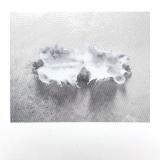
image front: Transitionen 2021 by C. Kubisch, sonagrams of electronic waves (courtesy: Galerie Mazzoli Berlin)
image back: Diapason Tuning Fork, property of Folkmar Hein, Photo: Archiv Christina Kubisch

design by Tim Tetzner
mastered by Giuseppe Ielasi
Thanks to Miguel Álvarez-Fernández, Folkmar Hein, Dominik Kautz and Mario Mazzoli

pre-order now17.04.2026

expected to be published on 17.04.2026

27,31
ADRIAN YOUNGE - YOUNGE

ADRIAN YOUNGE

YOUNGE

12inchLLLP191
Linear Labs
17.04.2026
  • Portschute
  • Human Absence
  • Galt
  • Moon Traveling
  • Different Directions
  • Visual Assualt
  • Respond To Sound
  • Clockwise
  • Il Mattino

YOUNGE ist Adrian Younges Meisterwerk: ein Orchesteralbum, das aus der Perspektive eines Hip-Hop-Produzenten geschrieben wurde, und eine Hip-Hop-Platte, die mit der Disziplin klassischer und filmischer Musik komponiert wurde. Inspiriert von Komponisten wie Lalo Schifrin, David Axelrod, Ennio Morricone, Galt MacDermot und Geoff Barrow von Portishead, knüpft das Album an eine Tradition emotional aufgeladener, zukunftsweisender Musik an, die Jahrzehnte später durch Sampling still und leise den Hip-Hop geprägt hat.

pre-order now17.04.2026

expected to be published on 17.04.2026

23,49
Various - Tchic Tchic: French Bossa Nova 1963-1974  Colored Edition LP 2x12"
  • A1: Les Masques - Il Faut Tenir (1969)
  • A2: Isabelle Aubret - Casa Forte (1971)
  • A3: Christianne Legrand - Hlm Et Ciné Roman (1972)
  • A4: Jean Constantin - Pas Tant D'chichi Ponpon (1972)
  • A5: Billy Nencioli & Baden Powell - Si Rien Ne Va (1969)
  • B1-: Marpessa Dawn - Le Petit Cuica (1963)
  • B2: Jean-Pierre Sabar - Vai Vai (1974)
  • B3: Sophia Loren - De Jour En Jour (1963)
  • B4: Isabelle - Jusqu’à La Tombée Du Jour (1969)
  • B5: Sylvia Fels - Corto Maltesse (1974)
  • C1: Frank Gérard - Comme Une Samba (1972)
  • C2: Ann Sorel - La Poupée Des Favellas (1971)
  • C3: Charles Level - Un Enfant Café Au Lait (1971)
  • C4: Andrea Parisy - Les Mains Qui Font Du Bien (1970)
  • C5: Audrey Arno - Quand Jean-Paul Rentrera (1969)
  • C6: Aldo Frank - T’as Vu Ce Printemps (1970)
  • D1: Christianne Legrand - Cent Mille Poissons Dans Ton Filet (1972)
  • D2: Clarinha - Lemenja (1970)
  • D3: Hit Parade Des Enfants - Aquarela (1976)
  • D4: Jean-Pierre Lang - Tendresse (1965)
  • D5: Magalie Noël - Une Énorme Samba (1970)
  • D6: Françoise Legrand - La Lune

Ever since the late 1950s bossa-nova revolution, Brazil’s influence on French music has been undeniable. Pierre Barouh, Georges Moustaki and a vast array of lesser known artists, all made the Musica Popular Brasileira (MPB) an axis of promotion at the service of a cool and metaphysical, modern and mixed Brazilian lifestyle. Some were seduced by the poetic languors of the bossa, some were looking for fun, and others just loved the American hybridization of jazz-bossa, jazz-samba.


What is bossa nova? One of its creators, Joao Gilberto said: "Its style, cadence, everything is samba. At the very start, we didn't call it bossa nova, we sang a little samba made up of a single note - Samba de uma nota so .... The discussion around the origins of bossa nova is therefore useless”. It is nevertheless useful to remember that these magnificent Brazilian songs, which the guitarist describes as samba, were shifted and balanced around improbable chords. "I like things that lean, the in-betweens that limp with grace," said Pierre Barrouh, quoting Jean Cocteau.


With emotion, arrangements for violin and supple guitar licks, bossa nova rapidly changed. A transformation that can be heard in the Tchic, tchic, French Bossa Nova 1963-1974 compilation, the result of a cultural reappropriation, which traveled through the United States and supplemented itself in France.

A musical revolution that has remained significant, bossa nova was born in Rio. From 1956 to 1961, Brazil lived through its golden years. In five years, the country had invented its modernist style. Elected president in 1956, Juscelino Kubitschek de Oliveira, an elegant man with a broad forehead, brandished a promising slogan: "Fifty years of progress in five years". He quickly got to work. Not worried about increasing debt, he launched the project for a new federal capital, Brasilia, designed by the communist architect Oscar Niemeyer. Volkswagen opened state-of-the-art factories and created the “fusquinha”, the Beetle. In Rio, the Vespa made its first appearance. The Arpoador Surf Club crew run into the “girl” from Ipanema, Helô Pinheiro - the tanned garota ("chick"), between a flower and mermaid, who at 17 walked by the Veloso bar, where the fiery author and composer, Tom Jobim and Vinicius de Moraes, were getting drunk on whiskey. From then on, bossa symbolized cool.

In 1958, Joao Gilberto recorded Chega de Saudade, which the directors of Philips denied, calling it "music for fagots". The marketing director, who believed in it, secretly pressed 3000 78-inch vinyls and distributed them at schools around Rio, creating a tidal wave.

American jazzmen then took over. In particular, trumpeter Dizzy Gillespie and guitarist Charlie Byrd. In November 1962, the Brazilian Ministry of Foreign Affairs funded a "Bossa-Nova" concert at Carnegie Hall in New York, inviting the genre’s pioneers. Unprepared, the show soon turned to disaster. But the troupe was invited to the White House by Jackie Kennedy. The first lady loved "the new beat" and in particular Maria Ninguem, a song by Carlos Lyra, later covered by Brigitte Bardot.

In Brazil, the 1964 military coup quickly ended this euphoria. The destructive atmosphere that ensued pushed many Brazilian musicians to leave, if not to exile. Thus, Tom Jobim, Sergio Mendes and Joao Gilberto arrived to the United States. In New York, Joao Gilberto met saxophonist Stan Getz. At the time, he was married to the Bahianese Astrud Weinert Gilberto, who had a German father. She had never sung before, but she knew how to speak English. Getz therefore asked her to replace her husband on The Girl From Ipanema. The Getz/Gilberto record with Tom Jobim on piano, was released in March 1964. Phil Ramone, the "pope of pop" was in charge of sound.

Bossa nova arrived in Paris through the classic “guitar-voice” channel (Pierre Barouh, Baden Powell, Moustaki…) But France loved jazz and Paris had already welcomed its American contributors. All these good people were to pass through Saint-Germain-des-Prés. The cabaret l'Escale became the Mecca of Latin American sound where one could find Pierre Barrouh and his friends, such as the Camara Trio, samba-jazz aces, whose only record was published by the Saravah label. With a band strangely called Les Masques (a band that included Nicole Croisille and Pierre Vassiliu, among others), the Camara Trio recorded an interesting Brazilian Sound, including the track Il faut tenir which is present on this tasty compilation of rarities.

Other enlightened musicians can also be found on the compilation, such as Jean-Pierre Sabar (songwriter for Hardy, Auffray, Leforestier ...) and the French pop rock organist Balthazar. In 1975, Sabar recorded Aurinkoinen Musiikkimatka on a Finnish label, which featured the crazy Vai, Vai, included on this record. We are now following the footsteps of Brazilian electronic musicians such as Sergio Mendes, Eumir Deodato or Marcos Valle who created funk and disco sounds on their keyboards and synthesizers. A style that influenced Véronique Sanson when she wrote Jusqu’à la Tombée de la nuit in 1969 for Isabelle de Funès, the niece of Louis and a great friend of Michel Berger - Sanson did end up singing this track on her 1992 Sans Regret record.


The pinnacle of exoticism and travel, Sylvia Fels’ Corto Maltese includes bongos, sea mist and ocean sounds. The title was taken from Jacky Chalard’s concept album written in 1974, Je suis vivant, mais j’ai peur (I am alive, but I am scared), based on Gilbert Deflez’s science fiction novel.


However, bossa nova extended the scope of popularity. "In the 1970s, I was a fan of Sergio Mendes, Getz / Gilberto. I fell in love with this music that I knew because I had been an orchestral singer, " explained Isabelle Aubret, who in 1971 delivered a composite record of covers by the very funky Jorge Ben, Orfeu Negro, Tom Jobim, Vinicius de Morais and Jean Ferrat. "I recorded this album for Meys Records in Paris, far from Brazil, with wonderful musicians, François Raubert, Roland Vincent, Alain Goraguer...". The latter wrote the arrangements for Casa Forte, a very percussive title borrowed from Edu Lobo, one of the initiators of the bossa who spent time in California. "Jazz and bossa came together and produced very rhythmic music. I love singing, it allows me to dream, to have fun, to feel a high on stage, and these songs brought me joy, made me swing, my singing felt like a dance.”


The world tours of French singers and their desire for the tropics, often brought them to Rio with its hills, forests, caipirinhas and tanned bodies. There are surprises though, like this Iemenja (Iemenja is the goddess of the sea in the Afro-Brazilian candomblé religion). Not unlike the composer and musician Jean-Pierre Lang, based in Sao Paulo, Claire Chevalier taught Brazil to Brazil. In 1970, the singer and painter published a 45-inch vinyl, Mon mari et mes amants (My husband and my lovers), under the improbable pseudonym of Clarinha (little Claire). She was then living in Rio, with her husband, Joël Leibovitz, who founded a band called Azimuth, and who owned a record label specialized in "sambas enredos" songs for samba school parades.


For its B side, she asked Pierre Perret to come up with lyrics for a song composed by Carlos Imperial: "Oh goddess of the sea, o goddess Iemenja, I bring a white rose to adorn your long hair ..." . "Perret came to see us, and we had fun, remembers Joël Leibovitz. We wrote Lemenja for fun, we recorded it at the Havaí studio, behind the Central do Brasil the central station. Erlon Chaves, the arranger who worked with Elis Regina, joined us" adding his share of Afro-Brazilian percussions and funky brass to the mix.

There is a common misunderstanding in Franco-Brazilian history: that bossa, admittedly hedonistic, is perceived as funny, even though the poets who wrote the texts are often philosophizing on the human condition. Its French interpreters pull it towards a carnival inspired universe, far removed from its fundamental essence. Thus, Jean Constantin covered the famous Samba da minha terra, an ode to the art of samba written by the classic Bahian composer Dorival Caymmi, renaming it with the enticing title of Pas tant de tchi tchi pompon: "On your pier there is no tchi tchi / when you arch your back, you know everything is alright ”(lyrics by Gérard Calvi). This expedited bossa aims for the absurd, but retains a certain elegance.

Indeed, Jean Constantin was not an idiot, the rather large man had a huge mustache and liked fantasy, (Les pantoufles à papa, Le pacha, inspired by cha-cha-cha-cha, salsa and jazz) but he was also the lyricist of Mon manège à moi interpreted by Edith Piaf, the composer of Mon Truc en plume by Zizi Jeanmaire and the soundtrack of François Truffaut’s 400 Blows. Le Poulpe, published in 1970, from which this bossa is extract, was arranged by Jean-Claude Vannier, an accomplice of Serge Gainsbourg’s Melody Nelson. In short: "There is enough of samba / By looking at the parasol / Because my poor cabeza / Is going to die in the sun".

Even the American actress Marpessa Down, who was at the heart of the bossa nova revolution with her role as Euridyce in Marcel Camus’ film Orfeu Negro, winner of the 1959 Cannes Palme d'or, fed the clichée with Je voudrais parler au petit cuica - "Tell me how you manage to always make people want to dance / It's true, I must admit that I cannot resist your magic" - in consequence, once can hear the cuica, a little drum inherited from the Bantu.


But bossa nova had many angles. Societal, of course, pushing actresses who were symbols of women's liberation like Brigitte Bardot, Jeanne Moreau, or Sophia Loren to engage in the exercise of accelerated bossa. In February of 1963, Sophia Loren made a record in French in Rome, Je ne t'aime plus, featuring the song De jour en jour, a bossa written by two Italians, Armando Trovajoli and Tino Fornai, which was released a little later by Barclay. Bossa accompanied the 1960s, a decade of moral liberation. Ann Sorel, who interpreted La Poupée des favellas, caused a sensation with L’amour à plusieurs, a provocative song written by Frédéric Bottom and Jean-Claude Vannier. As for the actress Andrea Parisy, she displayed her bourgeois cheekiness in Marcel Carné's Les Tricheurs before interpreting Les mains qui font du bien. And Magalie Noël, the friend of Boris Vian, who sung Johnny fais-moi mal, was hired to sing Une énorme Samba, composed by Alain Goraguer (arranger to Gainsbourg, Bobby Lapointe and Jean Ferrat) with lyrics by Frédéric Botton.

But in the end, of what wood is bossa nova made of? The answer is given by Christianne Legrand, daughter of Raymond the conductor, and sister to Michel the composer: "With me, with jà" - jà means "immediately" in Portuguese. In 1972, the singer, an expert in vocal jazz and a member of the Double Six, published Le Brésil de Christianne Legrand. Two songs included on the Tchic Tchic compilation that demonstrate how bossa, jazz, funk, rock, etc. work like a swiss army knife: the music is used to denounce broken systems, or miracles, HLM et ciné roman, Cent mille poissons dans ton filet, two songs from the O Cafona soundtrack, a successful telenovela broadcast, at the time in black and white, on TV Globo. The first was adapted in French by the fighter and friend of the Legrand tribe, Agnès Varda. The second is content with a play on words, jostling them into a summer fun.


Véronique Mortaigne
pre-order now17.04.2026

expected to be published on 17.04.2026

27,31
ATTWENGER - WOS

ATTWENGER

WOS

12inchUSLE5751
Trikont
17.04.2026
  • 1: Sozialismus In Discos
  • 2: Bleibm
  • 3: Muv
  • 4: Entnazifiziert
  • 5: Du&I
  • 6: Sei
  • 7: Regen
  • 8: Mau
  • 9: Wos
  • 10: Hendihenga
  • 11: Feministische Gstanzln
  • 12: Kum Vorbei
  • 13: Muast Ned
  • 14: Zwiefacher Nachts

Mit "wos" legen Attwenger ihr zehntes Studioalbum vor - ein Werk, das erneut beweist, warum diese Band seit fast vier Jahrzehnten wie ein Naturphänomen durch die deutschsprachige Musiklandschaft fegt. Was 1991 mit einer Kassette, einem VHS-Tape und dem legendären Satz "Attwenger heißt im Dialekt denken, heißt den Schädel in den Most tunken" begann, hat sich zu einem der eigenständigsten Projekte des Landes entwickelt: Slangpunk, Dialekt-Avantgarde und anarchischer Groove, der keine Schublade akzeptiert. Auf "wos" treffen elektrisch aufgeladene Ziehharmonika-Linien auf treibende Drum- und Sequenzer-Beats. Worte fransen aus, Geschichten wirbeln herum, Sprache wird gebogen, gedehnt, zerlegt - und wieder zusammengesetzt zu einem Sound, der gleichzeitig tief verwurzelt und radikal zeitgenössisch ist. Attwenger kommentieren den Zustand einer überhitzten Gesellschaft, ohne den moralischen Zeigefinger zu heben. Stattdessen öffnen sie Räume zwischen den Zeilen: Orte für Humor, Auswege, Widerstand und befreiende Bewegungen jenseits der Erwartung. "wos is. is wos." - dieses Album lässt keinen kalt. Es fordert heraus, groovt, fräst, fragt, widerspricht. Und es zeigt einmal mehr: Attwenger bleiben unkopierbar.

pre-order now17.04.2026

expected to be published on 17.04.2026

22,27
PETER KARP - JERSEY TOWN

PETER KARP

JERSEY TOWN

12inchMMD199
Make My Day
17.04.2026
  • 1: Mojo Jam (Special Guest Dennis Gruenling)
  • 2: Baby Hold Tight
  • 3: House Full Of Love
  • 4: That Smile (Special Guest Sue Foley)
  • 5: The Man I Used To Be
  • 6: Faith
  • 7: Tooth And Nail (Special Guest Rick Vito)
  • 8: Fate Is A Train
  • 9: This Road (Special Guest Rick Vito)
  • 10: What Has Happened Here?
  • 11: Without You (Special Guests John Ginty And Mark Johnson

Peter Karp gehört zu den unverwechselbaren Stimmen der amerikanischen Americana-, Blues- und Roots-Szene. Seine Musik verbindet kraftvolle Emotionen, feines Storytelling und eine tiefe Verwurzelung in den Klangtraditionen des amerikanischen Südens. Aufgewachsen zwischen New Jersey, New York City und Alabama, entwickelte er früh ein Gespür für die Energie urbaner Songkultur ebenso wie für die Ursprünglichkeit des Blues. Künstler wie Robert Johnson, Muddy Waters oder Howlin" Wolf prägten ihn ebenso wie die poetische Kraft von John Prine und die erdige Direktheit von Joe Ely. Karp schreibt Songs, die das Leben so zeigen, wie es ist: ehrlich, rau, humorvoll und voller beobachteter Details. Seine markante Stimme, sein expressives Gitarren- und Pianospiel und sein Gespür für melodische Hooks machen ihn zu einem der respektiertesten Songwriter seines Genres. Kritiker loben seine Fähigkeit, Blues, Folk, R&B und Americana zu einem eigenen, zeitlosen Stil zu verbinden. Peter Karp steht für authentische amerikanische Musik - tiefgründig, mitreißend und voller Charakter. Ein Künstler, der die große Tradition des Songwritings fortführt und gleichzeitig seine ganz eigene Handschrift setzt.

pre-order now17.04.2026

expected to be published on 17.04.2026

21,43
Items per Page:
N/ABPM
Vinyl