
En stock
Disponible en stock et prêt pour l'expédition
Derniere entrée: 18 jours
31,05 €
Disponible en stock et prêt pour l'expédition

Denmark s forward forward-thinking trio Human Being Human return with a luminous new collaboration featuring acclaimed American saxophonist Chris Cheek. Rooted in lyricism, groove, and connection, Being captures the essence of what it means to create music as a shared act of humanity. Formed by bassist Torben Bjornskov, pianist Esben Tjalve, and drummer Frederik Bülow, Human Being Human have quickly earned a reputation as one of Europe s most distinctive piano trios. Their blend of Nordic lyricism and modern rhythmic vitality has drawn international acclaim for its compositional voice and cohesive ensemble sound. On Being , the trio expand their world through the unmistakable voice of Chris Cheek - a player known for his warm tone and intuitive lyricism, whose credits include work with Paul Motian, Brad Mehldau, and Charlie Haden. A long long-time admirer of Cheek s work and humility, Bjornskov reached out and invited him to Denmark to collaborate with the trio. In the studio, the chemistry was undeniable, as most of the album s tracks were captured in just one or two takes, preserving a sense of immediacy and spontaneity. Reflecting on what it means to be human, our capacity to make decisions and shape the world around us, as well as the damage our species has done to our planet, the quartet channels a spirit of contemplation and rediscovery through elegant, organic compositions. Tracks like Human Rights showcase the group s deft interplay and melodic clarity, while the tender ballad Being highlights Cheek s burnished tone and Tjalve s spacious harmonic sense. On Filia , a duo between bass and saxophone, the music unfolds in weightless dialogue and pure musical empathy. True to the group s name, Being reflects on what it means to live, connect, and create as humans in a complex world. The essence of music is working together, being open, being positive, and wanting to experience new things, things," says Bjornskov. That s essentially what jazz is - it s influenced by any and every culture in the world, every kind of music and race, and every person is part of it.
il devrait être publié sur 20.02.2026

Oxblood & Blood Red[42,82 €]
Full of collaborations with fellow artists, incl. Thor Harris, Meredith Yayanos, Matt Lebofsky, Dominique Leroni Persi, & members of Kitka Eastern European Women’s Choir. RIYL: Primus, King Crimson, Frank Zappa, Mastodon, Bauhaus. After thirteen years of hibernation, Sleepytime Gorilla Museum, the most gloriously uncategorizable American band in existence, has emerged from stasis to proudly announce the imminent release of their fourth studio album, of the Last Human Being. The album marks the first release of AVANT NIGHT - a new imprint headed by Nick Ohler and facilitated by Joyful Noise Recordings. Sleepytime Gorilla Museum, comprised of multi-instrumentalists and rotating vocalists Nils Frykdahl, Carla Kihlstedt, Michael "Iago" Mellender, Matthias Bossi, and Dan Rathbun, plays an arsenal of instruments ranging from the somewhat standard (drums, electric guitars, bass, electric violin) to the rare (bass harmonica, nyckelharpa, marxophone) to the homemade (Slide-Piano Log, Electric Pancreas, Pedal-Action Wiggler). The group has consistently evaded easy categorization, garnering accolades from across the aisles of contemporary classical music, prog rock, industrial music, metal, avant-garde improv, and more. Their music, in turns bashing and bucolic, enveloping and unsettling, tends towards long-form epics interspersed with mysterious field recordings. "As this slow-rolling planetwide Anthropocene Extinction event deepens, Sleepytime's work has only grown more resonant, more prescient," offers Mer Yayanos, current symposiarch and secretary of the Museum's long standing social math club, the John Kane Society. "What better time for them to Bring Back the Apocalypse than right now, with a new full-length record that integrates the past and the future?" "SGM creates a cohesive statement of virtuoso metal musicianship with the avant garde focus of an art-rock collective." Pitchfork // “I love this style of music –it has great power, great musicianship and great bass playing by Dan Rathbun, sometimes on instruments he built himself. One thing you gotta love about music: this band may have been influenced a bit by King Crimson, but then I, a member of King Crimson, was very much influenced by them” Tony Levin (bassist, King Crimson
il devrait être publié sur 03.03.2024

Gold Nugget[42,82 €]
Full of collaborations with fellow artists, incl. Thor Harris, Meredith Yayanos, Matt Lebofsky, Dominique Leroni Persi, & members of Kitka Eastern European Women’s Choir. RIYL: Primus, King Crimson, Frank Zappa, Mastodon, Bauhaus. After thirteen years of hibernation, Sleepytime Gorilla Museum, the most gloriously uncategorizable American band in existence, has emerged from stasis to proudly announce the imminent release of their fourth studio album, of the Last Human Being. The album marks the first release of AVANT NIGHT - a new imprint headed by Nick Ohler and facilitated by Joyful Noise Recordings. Sleepytime Gorilla Museum, comprised of multi-instrumentalists and rotating vocalists Nils Frykdahl, Carla Kihlstedt, Michael "Iago" Mellender, Matthias Bossi, and Dan Rathbun, plays an arsenal of instruments ranging from the somewhat standard (drums, electric guitars, bass, electric violin) to the rare (bass harmonica, nyckelharpa, marxophone) to the homemade (Slide-Piano Log, Electric Pancreas, Pedal-Action Wiggler). The group has consistently evaded easy categorization, garnering accolades from across the aisles of contemporary classical music, prog rock, industrial music, metal, avant-garde improv, and more. Their music, in turns bashing and bucolic, enveloping and unsettling, tends towards long-form epics interspersed with mysterious field recordings. "As this slow-rolling planetwide Anthropocene Extinction event deepens, Sleepytime's work has only grown more resonant, more prescient," offers Mer Yayanos, current symposiarch and secretary of the Museum's long standing social math club, the John Kane Society. "What better time for them to Bring Back the Apocalypse than right now, with a new full-length record that integrates the past and the future?" "SGM creates a cohesive statement of virtuoso metal musicianship with the avant garde focus of an art-rock collective." Pitchfork // “I love this style of music –it has great power, great musicianship and great bass playing by Dan Rathbun, sometimes on instruments he built himself. One thing you gotta love about music: this band may have been influenced a bit by King Crimson, but then I, a member of King Crimson, was very much influenced by them” Tony Levin (bassist, King Crimson
il devrait être publié sur 03.03.2024

First Word kicks off 2018 with the welcome return of Quiet Dawn, and a new EP, 'Human Being: The Short Story of The Reed'. A suitably ice-thawing six-track opus to compliment the change of seasons, dedicated to the winter blooming plant's desire to be human.
Parisian Will Galland first appeared on the label in late 2014, releasing his debut album 'The First Day' the following year. Collaborations on that album and subsequent mixes since have included offerings from Oddisee, Miles Bonny, Eric Lau, Bastien Keb, Sauce81 (Eglo), Mayaka McCraven and Sarah Williams White.
Evolving his music from a palette accumulated over the years of Hip Hop, Broken Beat and House, he has expanded his talents for arranging and composing, and now drafted in a wealth of musicians for this sublime new EP, his most ambitious yet. Strings glide effervescently atop of Quiet Dawn's assorted analogue synths, and an array of percussive organics combine to build the tale of The Reed. In-places, the set transcends into the kind of grooves that saunter somewhere between the land of Bonobo and Quantic, and the cinematic library record craft of Alan Hawkshaw et al. Deep, organic and epic.
"The reed from the earth and waters,
Human by the flesh and bones,
Bring by the love and others,
Now, you're not alone."
Each track of the EP tells a different chapter of the story. In the words of Quiet Dawn, "This record is about human behaviour, relationships, happiness, sadness, peace, anger, sex, love, birth, death... But as viewed by The Reed. The Reed is a plant that wants to be human, after observing them all around her. Over the course of the record, The Reed evolves and desires to feel feelings, gradually learning that becoming human is not so simple... ."
Also with artwork by Sophie Bass and Grégoire Marty, this glorious six-track vinyl and digital EP is released February 2018 on First Word Records.
Commandez maintenant et nous commanderons l'article pour vous chez notre fournisseur.

And so Solar Phenomena's astral adventures continue into the furthest corners of the technoid galaxy Having executed a safe and successful take-off earlier this summer with Echoplex' s 'Solar Experience', the new label continues to explore the stars with rising Roman Antonio Ruscito.
Following releases on Who Whom and Edit Select earlier this year, Ruscito navigates us through a conceptual suite that questions ideas of existence and loneliness within a reality that blurs with virtuality at such a pace we have to question everything. One thing that doesn't need questioning is the forthright and stark nature of these constructions.
'Seclusion One' plays the role of the rocket-fuelled take-off track. Setting the scene and plotting the route, there's a subtly evolving and mutating feel while the end-point remains focused with a consistent feel of elevation thanks to the rich textures entwined into every element of the rhythm and energy.
Onward we travel: 'Seclusion Two' takes much more of an introspective route as it rolls out a much more stripped back evocative journey that s creative subverted by Rephlex-affiliate and respected Finnish artist Aleksi Perala one his electro-referencing remix.
Finally we're brought back down to our home asteroid with the beautiful harmonics and hazed aesthetics of 'Seclusion Three'. Presented in two different forms one star-struck instrumental and one featuring the redolent dulcets of Sam the message and overall experience is one of hope and unity, glaring in the face of personal, technological and cultural isolation. It s time to come together
Commandez maintenant et nous commanderons l'article pour vous chez notre fournisseur.

Syberian is a new pattern by Sergey Yakovlev. As his first project called Gedevaan this another also focused and keep on the fine tune electronic music entering deeper to techno, house and experimental constructions among them. Syberian is pitched hypnotic, cosmogonic shade of melancholy which sincerely looks on the world background. It has an authentic perception imprint and a set of sedate witness. The first release by Syberian 'An Object by a Human Being' contains four basic tracks.
Opening with 'God Race Female' which gloomy drifts you with a distant fibrous structures. Industrial howl and clave push stream over dope endless barrel strokes. That is sound what reach out to a child inside a female womb.
Next one is 'Male of Human Race' with a resilient stained beat that works with onground greasy texture. Ambient flutter set you a synthetic tranquil mood.
On a flip side 'Secret Alien Video Tape' is a kind of hypnotic and scholastic spacewrap abyss. Drag inland thru distortions and imaginary vortexes your mind still contemplates.
Conclusive back to the home track 'Harmonic 343' is game way to keep junctions with a physical world. Body is only part of a human. Understanding the principles supply the workflow.
Commandez maintenant et nous commanderons l'article pour vous chez notre fournisseur.

Arguably One Of The Most Acclaimed And Loved Bands Of The Past 20 Years, By Both Fans And Their Musical Peers Alike, The Beta Band Formed In St. Andrews, Scotland, In 1996. Innovative And Singular, Their Unique Musical And Aesthetic Approach To Everything They Did Set Them Far Apart From Their Musical Contemporaries. Together For A Relatively Short Period Of Time, The Three Albums And Three Eps They Released Between 1996 And 2004 Would Nonetheless Help Define Them As One Of The Most Exciting And Cherished Bands Of Their Generation. After A Short Hiatus The Band Gradually Gravitated Back Into The Studio And Recruited Noted Uk Producer Colin Emmanuel, Aka C-swing, To Oversee The Process Of hot Shots Ii' Which Was Released In Mid 2001. Notoriously The Band Had Intended To Release squares", Which Featured A Sample From The Günter Kallmann Choir's 1970 Version Of Wallace Collection's daydream", As The Lead Single. However After Filming The Music Video And Taking The Single To Radio It Suddenly Transpired That Another Single daydream In Blue' By I Monster Featuring The Sample From Günter Kallmann Choir Recording Was Also To Be Released At The Same Time Causing The Band To Release broke' Instead. Touring Extensively And Supporting Radiohead In August 2002, They Made No. 3 On Q Magazine's List Of 50 Bands To See Before You Die".
Commandez maintenant et nous commanderons l'article pour vous chez notre fournisseur.

Arguably One Of The Most Acclaimed And Loved Bands Of The Past 20 Years, By Both Fans And Their Musical Peers Alike, The Beta Band Formed In St. Andrews, Scotland, In 1996. Innovative And Singular, Their Unique Musical And Aesthetic Approach To Everything They Did Set Them Far Apart From Their Musical Contemporaries. Together For A Relatively Short Period Of Time, The Three Albums And Three Eps They Released Between 1996 And 2004 Would Nonetheless Help Define Them As One Of The Most Exciting And Cherished Bands Of Their Generation. After A Short Hiatus The Band Gradually Gravitated Back Into The Studio And Recruited Noted Uk Producer Colin Emmanuel, Aka C-swing, To Oversee The Process Of hot Shots Ii' Which Was Released In Mid 2001. Notoriously The Band Had Intended To Release squares", Which Featured A Sample From The Günter Kallmann Choir's 1970 Version Of Wallace Collection's daydream", As The Lead Single. However After Filming The Music Video And Taking The Single To Radio It Suddenly Transpired That Another Single daydream In Blue' By I Monster Featuring The Sample From Günter Kallmann Choir Recording Was Also To Be Released At The Same Time Causing The Band To Release broke' Instead. Touring Extensively And Supporting Radiohead In August 2002, They Made No. 3 On Q Magazine's List Of 50 Bands To See Before You Die".
il devrait être publié sur 19.11.2018

Optimo Music is delighted to release the new album from Lia Mice, Australian-born but UK-residing DJ, producer and instrument designer.
Here's a few words from Lia - "When I moved to London in 2015, many things changed at once - I started going to more techno and electro nights, I changed my live-set setup, and I had access to a fully-equipped recording studio through my music masters programme. At the same time I was reading a lot of books on time travel, not just science fiction but also psychology and neuroscience - like how the human brain perceives time from moment to moment, how we can experience overlapping time, and how we interact with our past and future through memory and imagination. 'The Sampler As A Time Machine' is the result of all these new influences coming together. The tracks were developed out of ongoing studio experiments interpreting these different ideas of time travel by using samplers and tape to re-sample and manipulate original music performed by me on various instruments including my voice."
Commandez maintenant et nous commanderons l'article pour vous chez notre fournisseur.

CRS ltd 005, "Gray Fox" is the first Ep from the Polish producer Michal Jablonsky on VSK's label, following The last Ep from the duo Scalamerija and VSK himself.
"Find God" opens the release with an organic broken beat , which meet an evil cinematic voice.
"Post Human Being" is the hypnotic element of the release with a dark tribal groove.
"Gray Fox" has a strong 4/4 kickdrum combined to a sound design High frequency scream.
"Phantom Pain" is a madness slow beat rhythm with outstanding
soundscape layers.
CRS ltd is really glad to welcome this amazing talent on the label.
Commandez maintenant et nous commanderons l'article pour vous chez notre fournisseur.

Daniela La Luz announces her highly anticipated 3rd album, 'System Reset'. For the first time, Daniela has compiled all the music and artworks featured in the album, showcasing her genre-blending style in this 11-track collection rooted in electronic dance music.
Recognized and celebrated for her exceptional live sets and productions, Daniela has garnered support from some of the industry's most esteemed DJs, including Solomun, Adam Port, and Sven Väth. Her track 'Did You Ever', featured on Moodymann's 'DJ Kicks' mix, has amassed nearly 3 million plays on Spotify, proof of her growing influence and popularity.
'System Reset' is a testament to Daniela's ability to reflect on personal crises and global issues through her music. The album features dancefloor-oriented tracks with influences from a diverse range of genres including house, techno, dub, electro, wave, jazz, and breakbeat. The linguistic diversity of the songs, in English, Polish, and Arabic, further adds to the album's global nuance. The AI-generated artworks are a unique visual representation of the music. The tracks were mixed by Tobi Neumann and J Manuel at Apollo Studio Berlin and mastered by Manmade in Berlin.
Daniela's music serves as a powerful call to action against climate catastrophe, underlining her belief in the unifying and inspiring power of music for a sustainable future. The album will be released on double vinyl on June 14th and digitally on June 21st via her label, Dimension Of Being Human.
Disponible en stock et prêt pour l'expédition
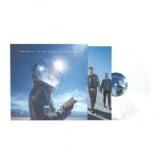
Das Talent von The Script, Songs voller berauschender Emotionen und immer monumentalerer Melodien
zu schreiben, hat Fans auf der ganzen Welt in seinen Bann gezogen – ein Erfolg, der zu einem Katalog
weltweiter Hits wie „Hall of Fame“, „The Man Who Can’t Be Moved“ und „Breakeven“ führte. Auf
ihrem nunmehr achten Studioalbum arbeitet Danny O’Donoghue wieder mit seinen Songwriting-Partnern
Andrew Frampton und Steve Kipner zusammen – jenen Hit-Garanten, mit denen er und Mark Sheehan
eine ganze Reihe der bekanntesten Songs von The Script schufen, darunter „Breakeven“ und „The Man
Who Can’t Be Moved“. Ebenfalls mit von der Partie ist Produzent und Songwriter Jimbo Barry („Hall
of Fame“, „Superheroes“, „The Last Time“). Die Lead-Single „Man In The Arena“ ist eine mitreißende,
trotzige Hymne – untermalt von packenden, martialischen Trommelrhythmen –, die all die Erfahrungen und
weltweiten Erfolge der Band aus den letzten zwei Jahrzehnten aufgreift und ihren Status als unumstrittene
Pop-Rock-Giganten festigt. Wie ihre leidenschaftliche und treue Fangemeinde nur zu gut weiß, besitzen
The Script zudem jene entscheidende Qualität: eine echte, emotionale und tief in der Seele verankerte
Verbindung. Genau diese belebende und verbindende Idee bildet das Herzstück von *The User’s Guide to
Being Human* – jenes Element, das in der Musik, im Leben und bei The Script über allem anderen steht.
Denn schließlich gilt: „Sag mir, was zur Hölle wir eigentlich tun, wenn wir als Menschen nicht einfach nur
menschlich sind.“
il devrait être publié sur 14.08.2026

il devrait être publié sur 18.08.2023

The Bratislava-based band 52 Hertz Whale release their new album Present Sense Impression in a collaboration of the labels Weltschmerzen and Full Moon Forum.
Three years since their album I've Met a Lot of People, the band brings forth a lot of new ideas, finding a new resonant space, and utilising the fierceness // savageness of their live shows, in an intimate stare at contemporary guitar music.
52 Hertz Whale is a band well known in the Central European music context. Their ferocious sound, mixing the intensity of post-punk, heavy guitar wails, and melancholic // stark vocals of Dominik Prok has been tearing down the fixtures of many festivals and venues, all the while being a great example of a band driving at 200mph nonstop. On Present Sense Impression, the band, composed of Dominik Prok, Dominik Fabian, Patrik Nagy, Tomáš Tabiš and Adrián Krišák, have arrived at a record full of manifold manifestations of their live sound, but at times recalling the more marginal waves of 80s pop // rock sound. Resolute drums, heavyweight guitar and bass riffs now deem closer to the lightness of early ethereal darkwave, just to indulge in the classic melancholic heaviness they are known for only seconds after.
Some of the songs have been produced by "Prague's favorite rock'n'roll enfant terrible" Lazer Viking as well as Pulp Studio's Jakub Hríbik, and one features a special guest - the cemballo virtuoso Marcel Comendant. The traditionally stunning artwork was created by the accomplished Martin Mesaroš.
Present Sense Impression is the 20th album released under the Slovak romantic // experimental label Weltschmerzen focused on emotionally hypercharged, humanely intertwined, and acutely sounding contemporary music. This time in collaboration with the czech label Full Moon Forum. It releases August 26th on limited edition baby pink, standard edition black vinyl and on all streaming platforms.
The creation and release of this record have been supported using public funding by the Slovak Arts Council, and SOZA. Fullmoon Forum project was supported by the Ministry of Culture of the Czech Republic.
L'article est déjà en route pour nous et devrait être expédié de 01.10.2026.
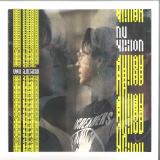
Nu Vision is the latest project of Duke Cooper, band leader and label boss of Nation, Kode and DirtyBlends. There are three humans who make up Nu Vision, and they all have their own stories and discographies, records released on labels you might know, gigs played in Chicago or Berlin or someone’s loft, lives lived, friends made, sleep lost - fighting for theirart, standing by truths, defending voices, honoring progenitors, whilst pushing a new paradigm. Time is both fleeting and heavy for us all, but it is not without receipts.
Nu Vision is a band in the classic do-you-believe-in-alchemy sense - equal parts rhythm, damage, and deep feeling. Drenched in nostalgia and futurism, The Seed is a singularity of sound + vision; as if heavily rotated by VJ Dave Kendall on MTV’s 120 Minutes but materialized via today’s technology.
The Seed 10 inch provides additional music inspired significant icons Section 25, Liaisons Dangeruses and Adrian Sherwood having paved the way with their prior successes..- this package of The Seed is no freshman effort; but rather, a masterclass in continuing sonic education, delivering a unified experience from beginning to end. A NU VISION.
The Seed 10 inch provides additional music inspired significant icon band: Section 25 from the period of 1981-1984 with a more electronic-dance direction, process which culminated in the album ' From the Hip ' and remix single "Looking From A Hilltop", both released in 1984 as "Insecure Man is about being true to manhood with Robert Lane leading the charge with his vocabulary message of the current state of society.
Insecure Dub focuses on the period of 1981-1984 with an alternative electronic-dance direction process as an inspired blueprint from Nu Vision inspired from Adrian Sherwood having paved the way with his individual success.
Inspired from electrifying songs produced by Chrislo Haas (DAF) and Beate Bartel (Mania D. / Matador) reinforced by Krishna Goineau’s French and Spanish Speech-Attack-Lyrics Liaisons Dangereuses created a unique style anything other than a Berlin or Düsseldorf ‘thing’ – that was propelled to an international underground phenomenon of fame.
Nu VIsion was inspired to create a blueprint from the period of their productions of 1981-1982 with an electronic-dance direction paying homage with passionate craftsmanship utilizing what equipment was possible in the studio at the time of this recording featuring new members; Zoe Murphy & Fletch The Stranger on vocals and James Chazz on Saxaphone with a Ring Modulator.
L'article est déjà en route pour nous et devrait être expédié de 01.10.2026.
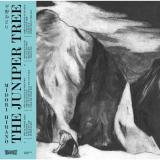
While composing the music for The Juniper Tree, Hirano drew on her own memories of touring Iceland, which included a stop at a waterfall featured in the film and rendered in sound on “Mother’s Path.” Folktales, like the origins of The Juniper Tree, are often attempts to contend with humans’ place in the natural world, with all its mysteries and intricacies, and both the film and Hirano’s soundtrack draw their sense of breathless wonder in part from the sensation of being engulfed by one’s environment. Margit, played by Björk, possesses a sublime sensitivity to her environment that allows her to receive messages from her mother, who was murdered for their shared inheritance of witchcraft. Hirano captures the relationship between the transcendental awe that is felt as supernatural and the private feelings of being immersed in that experience, creating a musical dialogue between the self and what lies beyond.
In the final sentences of her liner notes describing the film’s philosophical and feminist throughlines, Anna Bogutskaya says, “what we call Margit’s witchcraft is maybe just her willingness to listen.” This is the magic of music, and Hirano composes with an alchemist’s pen. Just as Keene seems to break down barriers between binary poles, Hirano uses both electronic and acoustic means to communicate the film’s emotive cues, uniting approaches she has explored under her own name and the alias MimiCof. There is an understanding that stillness can be understood as peaceful or foreboding, that dissonance and consonance are contextual, that efforts to protect one’s own kin can lead to tragic ends. At the film’s end we see Margit enthralled with birdsong, understanding it as something deeper, a connection to those she has lost. Through sound, we understand what lies beyond sight, beyond convention, and with this new soundtrack we hear the story anew.
il devrait être publié sur 02.10.2026

2026 Repress
'Quiet Pieces' initiates Abul Mogard’s personal imprint Soft Echoes with a definitive self-portrait of calm, contemplative, and discreet inner landscapes made audible. It is the first solo album on vinyl in four years. RIYL Alessandro Cortini, William Basinski, The Caretaker.
While sifting through archived material left idle from earlier projects, a chance encounter with a late uncle’s trove of beloved 78rpm classical and opera records prompted the reworking and completion of what would eventually become the album. Spinning dusty records at 33 and 45rpm, Abul Mogard recombined their enduring spectres with unfinished sketches from his archive. The resulting soundscape blurs distinctions between his memories and those of another, exquisitely short-circuiting the senses with its waking, dream-like lucidity.
This was a process I hadn’t explored in my earlier works. I began sampling brief moments from these records, altering them with studio effects and playing them at slower speeds. In many cases, I wasn’t entirely sure how the original music sounded. These fragments, once further processed, became a source of inspiration for my new compositions. Over time, I realised that the old pieces from the archive and the new material derived from the samples naturally complemented each other.”
The resulting pieces hover over a threshold, a liminal space that harmonises the old and older material. Voluminous waves of quiet and loud undulate between consonance and dissonance, conjuring imagery of a decaying grandeur that humanity’s decadence has surrendered to the elements. Abul Mogard’s seemingly abandoned yet vast landscapes are nevertheless intimate with timbral frissons of red-lined distortion. Elusive, yet as tangible as sea spray or smog, they affect the olfactory senses with a rarified, synesthetic quality that modestly engages one’s emotional register – a hypnotic, distinguishing feature long hailed as one of the hallmarks of his work. A fidelity to memory and dream recall is sensitively probed in the journey from the stately symphonic stasis of 'Following a dream' to the almost industrial, untethered brutality evoked by a looming silhouette that’s never fully visible in 'Constantly slipping away', culminating in the foreboding coda of 'Like a bird'. Those pieces appear to shield the album’s sentimental core, where the tempestuous play of light and shadow of 'In a studded procession' escalates to breathtaking, panoramic climax, while 'Through whispers' evokes an out-of-body-like experience encountered with visceral poignancy.
Looking back, Mogard notes an unexpected influence: “I realise being inspired by Phill Niblock, whose work I had barely known at the time but explored after his passing in 2024. His album 'Boston Tenor Index' changed the way I approached dissonance. It encouraged me to push my sound further, to the edge of a space where I began to feel uncomfortable.”
The album artwork, created by longtime collaborator Marja de Sanctis, features a photograph taken at the Temple of Jupiter Anxur, an archaeological site overlooking the Mediterranean Sea. Captured with an iPhone, the image traces the residual presence of construction techniques and architectural forms of the Romans, where material history is transcribed through contemporary tools. The convergence of ancient and modern technology aims to reverberate the site’s lasting spiritual presence – an echo persisting in what is now perceived as a quiet, emptied space. The spiral gestures towards infinity and light. Past and present dissolve into one another, reflecting 'Quiet Pieces' meditation on sound, memory, and time.
RIYL Alessandro Cortini, William Basinski, The Caretaker
il devrait être publié sur 02.10.2026
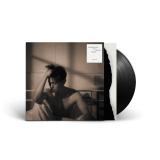
Confessions of a Lonely Heart follows the journey of a heart searching for connection. Across nine tracks, including “Miss Me More,” “Someday” and “Psycho,” Eric Nam shares deeply personal confessions of heartbreak, yearning, obsession and self-discovery. While the stories are his own, the emotions behind them are universal: the desire to love, be loved and feel understood. “Loneliness can make us feel as though we’re the only person experiencing it, when in reality, it’s one of the most universal parts of being human,” Eric shares. “This album gave me a place to be honest about emotions that can be difficult to admit and confess things we often keep to ourselves. My hope is that people can hear pieces of their own stories in these songs and feel understood by them. When we’re willing to share what’s in our hearts, we remind one another that none of us is truly alone, and together, we can all be a little less lonely.”
il devrait être publié sur 02.10.2026

2x12"[30,21 €]
Often credited as the father of multi-media theatre, Alwin Nikolais (1910-1993) took complete creative control over his productions - including cutting-edge approaches to lighting and costume that transformed human bodies into shifting sculptural shapes, while also composing wildly innovative electro-acoustic and synth-based audio as accompaniment.
After initially experimenting with musique concrète and tape manipulation (as demonstrated on the 1959 LP Choreosonic Music of the New Dance Theatre of Alwin Nikolais) Nikolais became the first owner of Robert Moog's synthesizer at the Audio Engineering Society convention in New York in late 1964. Relying heavily on the Moog and later the Synclavier synth/sampler, these 21 tracks document Nikolais' highly-prescient compositions across the mid 1960s through to the late 1980s - existing not only as extensions of his other-worldly choreographic productions, but standalone pieces of foundational mid-century American electronic and experimental music.
"Born in Southington, Connecticut in 1910, Nikolais’s early years and early career were in acting, music and puppetry. It was not until the late 1930s that he began his work as dancer/choreographer in Hartford, Connecticut, where he was commissioned by the Avery Memorial Theatre, a part of the Wadsworth Atheneum, to create an evening-length work to the music of Ernst Krenek. Previously his work and study as a pianist-organist found him accompanying silent films. This sort of accompaniment required from the musician not only a playing skill but also a versatility in improvisation, matching movement to sound, and evoking mood to situation.
Nik was drawn initially to dance by his involvement with the percussion scores used by the illustrious early twentieth century German dancer Mary Wigman. In trying to learn more about percussion, he was lured into dance class and thus his career began. His development of music and dance occurred simultaneously. His introduction to the twelve-tone technique opened his mind to the expanding areas of atonal music, and his dealing with music as sound per se. In 1948, after being appointed director of the Henry Street Playhouse in New York, Nikolais formed the Playhouse Dance Company, later known as the Nikolais Dance Theater, and began his aesthetic orientation toward dance as a study of motion. By the 1950s, he had ceased creating literal dances and began his explorations and eventual milieu as an abstractionist.
Sound became an important part of his abstract theatre. For his first dances, which involved his new thinking of dance as both a visual and kinetic art, he used live percussion scores in which he directed his dancers to play instruments of all nature. There was a combination of children’s toy instruments as well as harsh and resonant automobile brake drums, and other pitched auto parts which he also used to accompany classes. Once he installed his own tape recording machines, he quickly used the limited range these instruments provided in a new way, slowing and increasing speed and reversing sound. He also made the sounds adhere to the choreographic structure (not the other way around), thereby giving the dance its independence from the musical phrasing. But the real need remained: the search for new sound. Nik made a sound library, recording noises and percussion and vocal sounds, which the French aptly called musique concrète. Needless to say, he became a master at splicing bits and pieces.
From 1956 to 1962 Nikolais composed eleven major scores for his theatre pieces using such techniques. In 1963, James Seawright, who at the time was assisting Nik in his productions and also working at the Columbia-Princeton Center for Electronic Music, recorded a sound bank for the production Imago (1963). With this material, Nikolais created his first synthesizer score. Imago won the Paris Grand Prix in 1968 and launched the Nikolais Dance Theatre towards its national and primarily international acclaim.
During the same period, Seawright came to Nik and told him of a young man who had invented and constructed a simplified synthesizer and insisted that Nik visit the electronic fair currently being held in New York. Nik did so and met Robert Moog. He was completely taken by the new machine and after making some suggestions to Moog, (which Moog made), Nik bought the inventor’s first machine with the aid of a Guggenheim Fellowship. Moog himself was astonished by what his machine could produce for Nik. This machine was later acquired by the Museum of Musical Instruments at the University of Michigan at Ann Arbor as the first Moog synthesizer. The Synclavier was Nik’s next source of sound and since the mid-1970s remained the major instrument in the Nikolais soundroom.
Alwin Nikolais has been honored and awarded throughout the world. He has received the French Legion of Honor, the Kennedy Center Honors, National Medal of the Arts, two Guggenheim Fellowships, as well as Mellon, Ford, and Rockefeller grants. He has been a recipient of NEA grants since 1966, been awarded five honorary doctorates, all for his remarkable achievements in Dance Theater. His genius has influenced several generations of artists."
—Murray Louis
il devrait être publié sur 05.10.2026

2026 Repress
Ezra Feinberg's third album Soft Power sees the composer-guitarist enlist an impressive array of fellow musicians including Mary Lattimore, David Moore (Bing & Ruth), Jefre Cantu-Ledesma, Robbie Lee and share the life affirming lead single 'Future Sand'.
Defined by its abundance of melodies, repeating figures and ecstatic improvisations, Soft Power exudes an enlightened and transformative spirit to empower the listener. Feinberg, a practising psychoanalyst and former founding member of the San Francisco psychedelic collective Citay (Dead Oceans / Important Records) resides in the artistic enclave of upstate New York's Hudson River valley. Initial recordings emerged in the late summer of 2020, before added synthesis with collaborator John Thayer (Arp, Sunwatchers) during early 2021. Soft Power follows previous albums 'Recumbent Speech' (2020) and 'Pentimento and Others' (2018).
Feinberg artfully transcends the listener to an enriched place, his compositions distinguished by the deep humanity that lies at their core, plugging the listener into a state of wide eyed being, open and alive. Soft Power then is Ezra's own mantra but also one of power giving - a colourful catharsis translated into music.
Feinberg's music always speaks to the listener, but Soft Power, in whispering, speaks loudest.
"Much like everyday life, I wanted to convey these very plain, simple, tranquil, nearly quotidian aspects, but each piece contains this arc in which that form expands, is broken out of, so what starts out like a painting of flowers in a seaside motel turns into a riot of color and sound, or you feel slipped into a dream that feels like it could go on forever"
Disponible en stock et prêt pour l'expédition

Moulded By Industry is William D Drake's six album, his first for ten years and a return to the richly layered sonic texture and epic production of his majestic Briny Hooves. He is joined by long time collaborators James Larcombe, Dean Gaisburgh-Watkyn and Steve Jackson, with the addition of a new crew member, singer Treana Morris. Moving on from his nine years of pianistic and compositional duties in Cardiacs, Drake's solo work has been known for its synthesis of Mellotron-driven grandeur with a surreal playfulness.
But the deep heart of Drake's work is in its powerful evocation of the landscape of the countryside and its connection with love, longing and loss. To this end, his own enigmatic lyrics have rubbed shoulders with poetry drawn from across the centuries. From obscure sources such as Samuel Spree to the poetry of Thomas Hardy and Rupert Brooke, his settings make old words shimmer with human emotion. The texture of his music also reflects an inspirational lack of concern for distances of time. The earthy breath of his harmonium is interwoven with tones teased from archaic instruments by James Larcombe – hurdy-gurdy, dulcitone and melodeon.
But Drake's sound-world is no museum. Here, ancient words and the timbres of ancient instruments become one with the rush of a moment's emotion. Moulded By Industry brings this approach a new sonic depth, intoxicatingly shaded by Treana's lush vocal harmonies and underpinned by Steve's rhythm. Dean's evocative guitar textures give an oceanic sense, tinged with Americana, recalling his work with Drake in their alt country band Nervous. These many layers of sound are drawn together into vivid soundscapes by the painterly mixing of producer Ott. Renowned for his work in electronica and dub, Ott's two decades of experience working with artists such as Sinéad O'Connor, the Orb and Brian Eno bring an organic touch here, more akin to the elemental forces of land and sky than grid electricity. More than any of Drake's previous albums, Moulded By Industry reignites the emotional urgency of old texts. The gorgeous single The Flickering Shade, haunted by glimmers of lost possibilities, is set from words by Thomas Ashe. Turtledove's heady evocation of the blissful madness of love sets the words of an anonymous 17th century ballad. above all, the album is a testament to Drake's love of John Clare, 'The Northamptonshire Peasant Poet'. Clare wrote as the centuries old process of enclosure, in which wild and common land was appropriated commercially, was accelerating.
His works, rather than representing simple sentimentality, are passionate love poems to the landscape and cries from a soul reeling from the creeping unfamiliarity devouring it. This sense of the tension between passion and ill-ease has its most potent expression in Green Shadows. The brooding, slow-tempo energy of Steve's drums drive a horizon-wide lament, alternately lulled by Treana's vocal textures and made restless by James' plaintive hurdy-gurdy and the emotive pull of Dean's slide guitar. The present moment is also a time of enclosure, both metaphorically, as our lives, memories and emotions are drawn into the commercial space of social media, and literally as land and water are swallowed by vast data centre developments. Moulded By Industry celebrates a regained sense of being in the moment in the landscape, in life and in love. The album closes with the utterly delightful single Love In The Universe. The kind of song that could make a cynic use the word 'joyous' without irony, this Harry Nilsson-esque romp reassures us, with a wink, that 'in an infinite universe everything has its place ... even the human race'.
il devrait être publié sur 09.10.2026

SMOKY WHITE VINYL[22,27 €]
With Lost Lost Lost, Pratt & Moody gather the defining moments of their journey and package it with fresh soul gold into one cohesive, slow- burning statement. What began as a series of cult 7” vinyl releases – often mistaken online for forgotten soul classics from another era – now finds its natural home in album form. Written and recorded with Timmion’s trusted house band Cold Diamond & Mink, the record captures the duo’s unmistakable chemistry: emotionally rich songwriting wrapped in warm, analog textures that blur past and present.
From the velvet sway of “Addictive Touch” to the cinematic tension of “You Bring Me Joy” and the beat ballad ache of “Hard Way To Live,” the album moves effortlessly between bedroom-soul intimacy and widescreen drama. “Hang Tight” opens with a blissful piano figure that nods to gospel-tinged 1970s soul before unfolding into a full-bodied groove, while “Hooked On Your Love” glows with golden-age group soul harmony sweetness. Across both sides, Pratt’s finely tuned vocals and Moody’s expressive guitar work anchor songs that feel timeless rather than nostalgic.
At its core, Lost Lost Lost is an album steeped in atmosphere – lush downtempo moments sit alongside sweet harmony-driven soul, cinematic builds dissolve into dark restrained grooves. Analog string synthesizers, vibraphone accents, tremolo guitar, and deep-pocket rhythms create emotional tension without excess. Pratt & Moody’s strength lies in their melodic instinct: songs that feel big without being pompous or losing their human quality. The result is a record that feels cohesive, immersive, and that real thing – reaffirming the duo as key architects of the contemporary lowrider soul revival.
il devrait être publié sur 09.10.2026

With Lost Lost Lost, Pratt & Moody gather the defining moments of their journey and package it with fresh soul gold into one cohesive, slow- burning statement. What began as a series of cult 7” vinyl releases – often mistaken online for forgotten soul classics from another era – now finds its natural home in album form. Written and recorded with Timmion’s trusted house band Cold Diamond & Mink, the record captures the duo’s unmistakable chemistry: emotionally rich songwriting wrapped in warm, analog textures that blur past and present.
From the velvet sway of “Addictive Touch” to the cinematic tension of “You Bring Me Joy” and the beat ballad ache of “Hard Way To Live,” the album moves effortlessly between bedroom-soul intimacy and widescreen drama. “Hang Tight” opens with a blissful piano figure that nods to gospel-tinged 1970s soul before unfolding into a full-bodied groove, while “Hooked On Your Love” glows with golden-age group soul harmony sweetness. Across both sides, Pratt’s finely tuned vocals and Moody’s expressive guitar work anchor songs that feel timeless rather than nostalgic.
At its core, Lost Lost Lost is an album steeped in atmosphere – lush downtempo moments sit alongside sweet harmony-driven soul, cinematic builds dissolve into dark restrained grooves. Analog string synthesizers, vibraphone accents, tremolo guitar, and deep-pocket rhythms create emotional tension without excess. Pratt & Moody’s strength lies in their melodic instinct: songs that feel big without being pompous or losing their human quality. The result is a record that feels cohesive, immersive, and that real thing – reaffirming the duo as key architects of the contemporary lowrider soul revival.
il devrait être publié sur 09.10.2026

“Sacred Aeolian music capturing and harnessing the divine power of the wind”
Aeolian Harp is somewhere between a string instrument and a receiver. Its strings are agitated by the wind without any human interference, producing tones entirely of its own volition. Archer toured the British Isles setting up his harp in various sacred and loosely mystical locations. Where he let the Devaharp transmit an otherwise unknown sacred music that has ALWAYS existed around us.
Listening to the natural swells of the strings and their unusual tonalities, the billowing wind and bird song overhead, it feels divinely calm and comforting. Something like tapping into the natural resonance of Mother Gaia or being back inside the womb.
DELUXE 2LP REISSUE
Housed in it’s original gatefold sleeve with original inserts, 2 new special colour inner sleeves, a new 2026 insert and a BONUS UNRELEASED album recorded in 1983 on Robert’s previously UNHEARD pyramid-shaped Aeolian harp the DEVAHARP 2.
il devrait être publié sur 09.10.2026
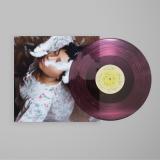
Black Vinyl[22,48 €]
There is a hush most of us only knew as children, the warm drift between familiar household sounds and being carried to bed, a place that belongs to you and to some self you have not met yet. June McDoom’s debut full-length, Follow the Light, lives in that dream space and then keeps walking, slipping out of time and waking somewhere new, barely familiar enough to feel like home yet wholly your own. She came up in a Jamaican household on the edge of the Florida Everglades, an existence built of extended family, communal care, bass and harmonics. Her father, a carpenter and a student of sound, built his own speakers and kept three sound systems going across as many rooms. His low end would rise through her bedroom floor like some wayward cat while she lay above it with folk records, finding harmonies that were new and hers alone. Two musics in one room. Lushness as past and premonition. She found folk on her own, somewhere between the cast recording of The Sound of Music and Simon and Garfunkel, while everyone around her called it sleepy music. She did not mind being the only one. The solitude let her fall for harmony first, before words, before anything else, and harmony is still the thing she reaches for. Generationally speaking, the music was already in the air. Her grandfather, Colin Smith, is a distinguished mento man who played banjo and guitar and built his own rumba boxes, worked to keep Jamaica’s oldest acoustic folk form alive. Mento is the root of all of it: ska, rock steady, reggae, dub and everything after. He is the one who put a guitar in her hands. An inheritance, a gift and a map. Even her name is part of it, though she will tell you she landed on it more by feel than reason. She records as June McDoom, born Alyssa, June being a nickname one of her grandmothers, Joan, went by, a name she thought was cool to carry and simply liked the sound of. An etheric channel that reverberates all the same. A dub all its own.
Made slowly and by hand with her longtime partner Evan Wright, Follow the Light lays the harmony of folk over the rhythm of dub, with Dionne Warwick, Minnie Riperton, Pentangle and the washed guitars of Cocteau Twins haunting its outer edges. Voice and guitar seeking each other out first, then everything else stacked across long days in the studio they keep at home, restraint kept on purpose. The lead single “Without You” is the whole method surfacing, split open and sparkling like a geode in a creek bed. Angelic heroics, and nothing less.
At the heart is family. Her grandmother Aggie, the light behind “Memory,” guiding still. And underneath, the quieter truth the record keeps: none of us are only one person, but a continuum of selves, the ones who shaped us and the ones we have yet to meet. Future you is an ancestor your current self gets to greet. Press play and the same invitation is yours: A few minutes out of time, a place that turns familiar the longer you stay until you surface somewhere new and find it was yours all along
il devrait être publié sur 16.10.2026
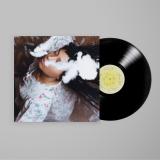
There is a hush most of us only knew as children, the warm drift between familiar household sounds and being carried to bed, a place that belongs to you and to some self you have not met yet. June McDoom’s debut full-length, Follow the Light, lives in that dream space and then keeps walking, slipping out of time and waking somewhere new, barely familiar enough to feel like home yet wholly your own. She came up in a Jamaican household on the edge of the Florida Everglades, an existence built of extended family, communal care, bass and harmonics. Her father, a carpenter and a student of sound, built his own speakers and kept three sound systems going across as many rooms. His low end would rise through her bedroom floor like some wayward cat while she lay above it with folk records, finding harmonies that were new and hers alone. Two musics in one room. Lushness as past and premonition. She found folk on her own, somewhere between the cast recording of The Sound of Music and Simon and Garfunkel, while everyone around her called it sleepy music. She did not mind being the only one. The solitude let her fall for harmony first, before words, before anything else, and harmony is still the thing she reaches for. Generationally speaking, the music was already in the air. Her grandfather, Colin Smith, is a distinguished mento man who played banjo and guitar and built his own rumba boxes, worked to keep Jamaica’s oldest acoustic folk form alive. Mento is the root of all of it: ska, rock steady, reggae, dub and everything after. He is the one who put a guitar in her hands. An inheritance, a gift and a map. Even her name is part of it, though she will tell you she landed on it more by feel than reason. She records as June McDoom, born Alyssa, June being a nickname one of her grandmothers, Joan, went by, a name she thought was cool to carry and simply liked the sound of. An etheric channel that reverberates all the same. A dub all its own.
Made slowly and by hand with her longtime partner Evan Wright, Follow the Light lays the harmony of folk over the rhythm of dub, with Dionne Warwick, Minnie Riperton, Pentangle and the washed guitars of Cocteau Twins haunting its outer edges. Voice and guitar seeking each other out first, then everything else stacked across long days in the studio they keep at home, restraint kept on purpose. The lead single “Without You” is the whole method surfacing, split open and sparkling like a geode in a creek bed. Angelic heroics, and nothing less.
At the heart is family. Her grandmother Aggie, the light behind “Memory,” guiding still. And underneath, the quieter truth the record keeps: none of us are only one person, but a continuum of selves, the ones who shaped us and the ones we have yet to meet. Future you is an ancestor your current self gets to greet. Press play and the same invitation is yours: A few minutes out of time, a place that turns familiar the longer you stay until you surface somewhere new and find it was yours all along
il devrait être publié sur 16.10.2026
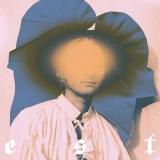
It's hard to explain an album when one listen is enough. All the more so with MaMaMa: there's no room to stay passive. Listening to his new album, EST, means immersing yourself in an atmosphere that's softly psychedelic, comforting and organic all at once. A dreamy, electronic pop that proves this Strasbourg-at-heart, Paris-by-adoption musician, arranger, singer, songwriter and producer never stops reinventing himself. After changing his name — formerly Petit Prince — and delivering two critically acclaimed albums ("MaMaMa-gnificent." / "Hooks you carry in your head for a long time" / "sumptuous arrangements"), Elliott Diener now offers an even more sincere record. Real songs in French, after two albums where production sometimes took up all the space: "when you make heavily produced music, once you strip away the layers of sound, there's no fruit left underneath. On EST, I don't need makeup for the songs to work," he admits.
That's what this new album is about: the song and the French language first, then the pleasure of sound. An album less concerned with talking about its own making, more inhabited, more embodied, within a contemporary folklore. With this new album, don't expect to be bored: EST is his best record yet.
No pretense
Entirely conceived in his studio in Pantin — a room of his own, at last — imagined as a space free of any daydream, open to every sonic landscape, MaMaMa offers a record that's both hazy and downy soft. Often composed very early in the morning, it has become nostalgic without being dark, melancholic without being sad, with a few lineages showing through: Flavien Berger, Moodoïd, Feu! Chatterton for the taste for words and unease, Mount Kimbie for the approach to sound and rhythm. Unsurprising, given that EST was finalized with the British duo's producer. Live, MaMaMa is preparing a show in the style of Nicolas Jaar or UTO. Hypnotic and immersive.
The most liberating thing is that EST is an album without pretense. With it, we move through perseverance (in Aussi loin qu'il tiendra debout), the small arrangements we make to avoid facing reality (Tout sauf la vérité), and the fragility of bonds we thought were solid (Si bien ensemble). We also touch on lasting conflicts with the people we love (Anywhere You Are, There You Are), misunderstanding (Elle me parle une langue), and the erosion of friendships (S'envoler). EST draws an intimate and redemptive map of human relationships, in a body of work that's both lucid and sensitive — like when he also addresses social masks such as filial love (in Beau garçon, dedicated to his son) or relationships that have become impossible.
"It's really the album that sounds most like me, in terms of sonic landscape," Elliott points out. A record that rises above the noise of an imperfect, shifting world — like us — joyful in its words, liberating in its production. A true gem.
il devrait être publié sur 16.10.2026
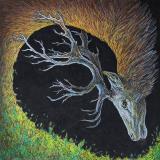
Seven years after 2019’s ‘The Dusk Loom’, Petrels returns with a pair of new albums, Infangthief and Outfangthief. The first of these releases, Infangthief, was originally written and recorded in 2022, before being reworked in light of a subsequent album, Outfangthief, due to be released later this year.
The two albums act as companion pieces, mirrors revealing facets of the other, overlapping in sound and subject matter. Though Outfangthief may have been written after Infangthief, it is no mere follow-up, with it's own creation causing a re-visiting and re-working of the earlier album, which in turn informed the writing of its twin.
Taking their titles from Old English legal terms ("thief seized without" and "thief seized within”), the central thread running through both albums is the illusion of assumed human authority - that which is given and that which is taken by force. With Western society seemingly hellbent on willingly embracing a brutally destructive economic model (even in its death throes), these albums attempt - in their own small way - to undertake the essential task of imagining alternative ways of being.
Petrels is the solo project of musician and artist, Oliver Barrett. Since releasing his debut, Haeligewielle, in 2011 (#9 in A Closer Listen's Best Albums of the Decade), Petrels has toured across Europe and shared a stage with the likes of Jóhann Jóhannsson, Tim Hecker, FIRE!, Nate Young (Wolf Eyes), Trouble Books, Demdike Stare, Nadja, and Hans-Joachim Roedelius (Cluster). Working from his home in Somerset, UK, Barrett has released numerous albums through his Floating Limb imprint, as well as mixing and/or mastering hundreds of releases for the likes of Keiji Haino, Loren Connors & Alan Licht, Judith Hamann, Incapacitants, Mette Rasmussen & Sofia Jernberg, Yasunao Tone and more
“Petrels sidesteps the chilliness found in much of the music of his peers, replacing it instead with an almost spiritual ecstasy, his ravishing synths and almost choral vocal treatments calling out in cosmic, wide eyed wonder at the universe.” – Paul Margree, Louder Than War
il devrait être publié sur 16.10.2026
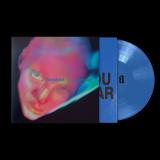
Fontaines D.C. announce their fifth studio album, Dopamine Chamber, released on 16th October via XL Recordings. Produced by James Ford, it is the follow-up to 2024’s UK platinum-certified Romance – and the sound of a band moving decisively away from the guitar language of their early records into something colder, stranger and more synthetic. It arrives today alongside lead single “Marianne” and its accompanying video, directed by Dave Meyers.
Dopamine Chamber arrives like a constellation behind undulating sighs of smog: potent balladry, anthemic melodies glinting through the murk. In a world tipping towards collapse, it asks how pleasure mutates amid peril—and what our pursuit of it reveals about us. Across the album, Fontaines D.C. – Grian Chatten, Carlos O’Connell, Conor Curley, Conor Deegan and Tom Coll – move between gratification and dread until the two meld together, reflecting the overwhelm of artificial intelligence, environmental collapse and political violence all riding the same algorithms as memes, jokes and celebrity culture. “The album itself is a dopamine chamber,” says Chatten. “You step inside and we test these different mind- or mood-altering pieces of music on you.”
Where Romance held its tension in balance, this record tips it. “I think Romance was maybe 60 per cent human and 40 per cent corrupted by automation, and a loss of feeling,” says Chatten, who spent time among the faded grandeur of Venice, Vienna and Sicily in search of lyrical inspiration. “This one feels more like 60 per cent corrupted — the mask is wearing the face a little more.” He resisted any pull towards easy optimism: “I felt it would be more powerful to leave the hope out and reflect the ugliness honestly. This one needed to feel more like a catastrophic warning.”
“Our albums have always questioned a sense of place,” says bassist Conor Deegan. “First Dublin, then being away from Dublin, and then trying to find the romance elsewhere. On this record, the question became: where do you escape to?” Into the self, perhaps – or hedonism, fantasy, cosmetic perfection, eternal youth or the endless refresh of a screen.
Fontaines D.C. have spent five albums refusing to repeat themselves – from Dogrel (2019) through A Hero’s Death (2020), the No. 1 Skinty Fia (2022) and the anarchic, kaleidoscopic Romance (2024). Dopamine Chamber is their most radical turn yet: cold synthesiser tones, marching drums, samples and triggers, several songs with no guitars at all, and the swooning strings of 1960s Italian pop pulled into something synthetic. For guitarist Conor Curley, the aim was to break from the band’s own reference points: “I was trying to find stuff that pointed into the future.” It was made with James Ford between London, the English countryside and Palermo, where Chatten recorded vocals in a makeshift booth built from mattresses and cushions.
“There’s a poignant sense of us being on the brink of some other kind of form of humanity, or non-humanity,” says Chatten. For their fifth album, Fontaines D.C. have built the chamber. What happens to the listener inside it will be the experiment.
il devrait être publié sur 16.10.2026
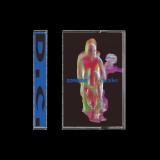
Fontaines D.C. announce their fifth studio album, Dopamine Chamber, released on 16th October via XL Recordings. Produced by James Ford, it is the follow-up to 2024’s UK platinum-certified Romance – and the sound of a band moving decisively away from the guitar language of their early records into something colder, stranger and more synthetic. It arrives today alongside lead single “Marianne” and its accompanying video, directed by Dave Meyers.
Dopamine Chamber arrives like a constellation behind undulating sighs of smog: potent balladry, anthemic melodies glinting through the murk. In a world tipping towards collapse, it asks how pleasure mutates amid peril—and what our pursuit of it reveals about us. Across the album, Fontaines D.C. – Grian Chatten, Carlos O’Connell, Conor Curley, Conor Deegan and Tom Coll – move between gratification and dread until the two meld together, reflecting the overwhelm of artificial intelligence, environmental collapse and political violence all riding the same algorithms as memes, jokes and celebrity culture. “The album itself is a dopamine chamber,” says Chatten. “You step inside and we test these different mind- or mood-altering pieces of music on you.”
Where Romance held its tension in balance, this record tips it. “I think Romance was maybe 60 per cent human and 40 per cent corrupted by automation, and a loss of feeling,” says Chatten, who spent time among the faded grandeur of Venice, Vienna and Sicily in search of lyrical inspiration. “This one feels more like 60 per cent corrupted — the mask is wearing the face a little more.” He resisted any pull towards easy optimism: “I felt it would be more powerful to leave the hope out and reflect the ugliness honestly. This one needed to feel more like a catastrophic warning.”
“Our albums have always questioned a sense of place,” says bassist Conor Deegan. “First Dublin, then being away from Dublin, and then trying to find the romance elsewhere. On this record, the question became: where do you escape to?” Into the self, perhaps – or hedonism, fantasy, cosmetic perfection, eternal youth or the endless refresh of a screen.
Fontaines D.C. have spent five albums refusing to repeat themselves – from Dogrel (2019) through A Hero’s Death (2020), the No. 1 Skinty Fia (2022) and the anarchic, kaleidoscopic Romance (2024). Dopamine Chamber is their most radical turn yet: cold synthesiser tones, marching drums, samples and triggers, several songs with no guitars at all, and the swooning strings of 1960s Italian pop pulled into something synthetic. For guitarist Conor Curley, the aim was to break from the band’s own reference points: “I was trying to find stuff that pointed into the future.” It was made with James Ford between London, the English countryside and Palermo, where Chatten recorded vocals in a makeshift booth built from mattresses and cushions.
“There’s a poignant sense of us being on the brink of some other kind of form of humanity, or non-humanity,” says Chatten. For their fifth album, Fontaines D.C. have built the chamber. What happens to the listener inside it will be the experiment.
il devrait être publié sur 16.10.2026

For more than two decades, AJJ has been writing albums that attempt to make sense of an increasingly confusing world. And the Arizona band has repeatedly succeeded, somehow managing to find the small traces of hope and beauty buried in the wreckage of a decaying planet. But on their ninth album, Dirty Old Power, they are coming to terms with the fact that they may no longer have the words to express it all. In fact, the proper words of communication may not even exist anymore.
Dirty Old Power takes stock of this surreal moment in American history where the post-World War II power structures of capitalism have given rise to full-on techno-fascism, and where humanity is being displaced by data centers, VR headsets, doomscrolling, and artificial versions of our loved ones.
To capture the disparate array of unique styles that make up Dirty Old Power, AJJ returned to Animal Rites studio in Los Angeles to record with their pal, Grammy-winning producer John Congleton, who also produced 2014’s Christmas Island and 2016’s The Bible 2. And for the cover artwork, the band turned to Winston Smith, the legendary visual artist known most famously for his iconic designs and logo for Dead Kennedys.
il devrait être publié sur 16.10.2026

2026 Repress
Few producers embody the soulful heart of House Music quite like Move D. Being a mentor of the label since day one, All That Jelly brings together two defining and desirable cuts from David Moufang’s recent history to one record.
'To The Disco ’77' 2013 original version for the A-side and the 2017 live rework finds its way to the B-side, both freshly remastered by the amazing and sought after Andreas Kauffelt. 'To The Disco ’77', opens with a clean, electro-styled beat that has a restrained power and a controlled tension that gradually blooms as the keys start to lift the mood into something lighter. When the iconic 'to the disco' vocal sample cuts through, it’s like a wink
from the past, threading disco’s golden exuberance through the disciplined swing of classic house. The track is a seamless blend of Funk, Disco, House and Electro with each element raw yet playful, woven into a groove that never stops urging you forward. It’s a masterclass in balance: sleek but deeply human, nostalgic but alive in the moment. It's like listening to the history of dance music in one special track.
'To The Disco ’77 (Move D Live Rework)' stretches the idea out into something even more fluid. The groove loosens, the funk rises to the surface and the extended runtime gives space for guitar and bass lines to share center stage, riffing around each other with organic warmth. The 'to the disco' mantra remains, grounding the track in its celebratory intent. It’s the kind of tune that closes a night perfectly and makes you not want to leave the dancefloor. Reissued together, these versions show Move D’s masterful ability to bridge eras and genres, reminding listeners that the dancefloor is as much about emotion as it is about motion.
Disponible en stock et prêt pour l'expédition

Season Two continues with its fifth edition - a shift south this time, from KiF's English hedgerows to the island of Lutruwita, Tasmania, and the work of Soda Lite.
A gooseberry plant took root in the sand between the bricks of Alex's back patio - nutrient-deficient leaves and all - and fruited regardless. That's most of the appeal: "I'm drawn to species that survive in the interstices of human industrialisation." The husk itself carries the same idea, shielding the berry until it's ready to be let go.
Past Soda Lite records - Earthbound, Aqua Solar Cura, Vale & Stone - built outward from field recordings first. Here that flipped: you can't field-record a plant, only the noise around it, so only two tracks (Vibrant Matter and An Sí Gaoithe) carry field sound at all. The rest came from narrowing to a single species instead of the wider non-human world, and "trying to create and replicate sound and energy on the level of the plant and its perceptive world."
Two more things worth knowing. ‘Bryn Celli Ddu’ takes its name from a Neolithic burial chamber in Wales, aligned so the summer solstice sunlight reaches its back wall - the sun turning up again as its own recurring character. And ‘An Sí Gaoithe (Return)’ is a reworking of a Vale & Stone title, old fragments reprocessed into something new - "a bit like composting."
Soda Lite is the recording project of Alex Last, a gardener and composer working from Lutruwita on unceded Palawa land. Their music moves through field recordings gathered directly from the island's own biomes - coastline, forest, alkaline lake bed - alongside slow, warbling synth work, built less as backdrop than as document: proof of a specific place, at a specific time, being listened to closely. Past records have taken their titles and themes from geology and land relationships as often as botany - Aqua Solar Cura, Earthbound, Vale & Stone - so a plant with its own mineral-adjacent etymology (soda, found in dried alkaline lakebeds; lite, from the Greek for stone) suits the pairing.
il devrait être publié sur 21.10.2026

'Life As A Duck' marks the return of Fergus Sweetland's imprint Pressure Systems and the label's first vinyl release. The title originates from a joke between two friends - friends that are ducks. These ducks found one another whilst discovering themselves, trying to navigate a world built for humans. Being a duck is another way of saying neurodivergent; existing adjacent to everything whilst trying to make sense of a strange planet, determined to remain as true to themselves at the same time as trying to be accepted in society. The tracks were made in direct response to a challenge presented to Fergus from a close friend: strip it back. The test was to apply brain-licking sound design to as few elements as possible and work them into functional club tracks. 'Tickle My Tism' meets the challenge. Fergus' signature low end captures the hips as the tension builds, expanding into an unexpected soundscape with precise smoothness. 'Trouble In The Bubble' is a dark yet dubby rolling club track full of texture and soundscapes. Nørbak's remix of 'Trouble In The Bubble' strips things down further with the Portuguese Garage (PTG) version, providing a more club-focused slant to the tune. 'Mind Easer' closes out the EP. The concluding track was written to ease the mind of a fellow duck when their feathers were ruffled by life. Its soothing focus allows one to melt into the sound and calm their mind. It tells you that everything is going to be okay. Expect the unexpected as Fergus' distinct sound design carries you through a four-track journey that emphasises that less is more - from a duck just trying to do his best.
Disponible en stock et prêt pour l'expédition

Ilija Rudman is marking the 30th release on our musical town of Sakskøbing. The Croatian artist has told this particular story how he wanted with 4 tracks crucially being together on this disc so it would be a complete tale of “Egg of the Sun”. From heavenly pads & guitar riffs he has given birth to this particular disc which is ready to enter into the vast world of music. The artist has been putting out discs since the early 2000’s and has developed a vast discography behind his name that only deserves respect and admiration whether he is working solo or in collaborations with other musical souls. The label is welcoming a true visionary to its roster and it can only yield the feelings of excitement, admiration and proudness. The egg is so close to the sun like Icarus used to be in his time however instead of burning it only shines with brilliance.
Disponible en stock et prêt pour l'expédition
Hanne Lippard and Renato Grieco's Today's Special is a suite of language works synthesising melody and diction that integrates the literary and the audible in a repertoire of songs that bask in the melody of voice and the punctuations of structured composition. Working with methods of reduction rather than opulence in both tonal composition and rhetoric, each piece pegs the poetic to the musical with compositional schematics and methods. It is important to state that there is little to none improvisation here, instead, the duo set up matrices, rules and structural links that facilitated meaningful locus of exchange between their two practices. Lippard's texts are a collection of new and previously completed works. In these, as is typical for her work, she enjoys the easy pleasure of wordplay, iterative language, and decontextualised anecdote, as in opener Portrait of a Betrayal, a piece about the loss of a phone and the way it haunted the owner who dropped it, based on a lived experience. Grieco's instrumentation works with Lippard's language art as a form of acoustic typography. "I studied graphic design and I think about how you can express typography through voice," she says. "Renato's use of the viola da gamba becomes like an underline, or a font's brushstrokes, in ways that feel typographical." In this, the classically-trained composer Grieco often finds and echoes the pitch movements of Lippard's voice, intonation mirrored and revealed, linguistic meaning doubled and shadowed by plucked, strummed or bowed strings. His main instrument is the viola da gamba, the instrument considered closest to the human voice for its tonal range and ability to mimic inflections and timbre, and here he brings it even closer to the voice, building systems by which it moves with and around Lippard. He also plays piano and Wurlitzer, and joins her in speaking on Receiver and in conversation for final track The Black Rose. "Hanne's voice is an artist's voice, embodied as the artwork itself," he says. "But where my approach is from the perspective of a composer, hers is around rhetoric and language. We worked towards each other in this sense, Hanne finding a space to welcome my voice, and me designing an acoustic space to enhance her vocal persona." In some tracks the structural connections are obvious - the matched tumbling delivery and stepped pitches of voice and piano in Aficionado sounding like two tipsy friends descending a staircase. In others, like the triptych of tracks Three Rungs Ladder, structured with rules derived from nursery rhymes, or cumulative song (akin to the 12 Days of Christmas). For the Colour 1 and Colour 2 pieces, the duo worked from palettes of colours connected to clusters of harmonies, which underlined the power of the word and its articulation. The absurd Labradorable personifies a people pleaser, A Story About Being Blue is an imagined playful monologue from the Deep Blue supercomputer - requesting in sing-song stop motion to be called Debbie, and Larry - as Grieco echoes in factual reportage. Hurtbeat unpacks and recomposes a tweeted non-apology by a Russian art collector about owning a piece of racist art, Grieco shadowing Lippard's generating a third `drop-shadow' performer from the resonances between the duo, typographic re-articulation of the source material. The Receiver includes lines from Robert Ashley's Improvement (Don Leaves Linda), Ashley existing as a spiritual parent of sorts to the practices contained on Today's Special, and here interpolated as if he is being quoted and written through within the audible world of the piece in a palimpsest of borrowed sentences. Closing track The Black Rose contains its own self-aware comedy, a lightly distorted conversation sourced from a Reddit thread about whether black roses exist, recorded as if it were an internet radio or a low budget podcast, the casual exchange stilted in the delivery of platitudes as scripted speech. Today's Special was developed in person over the course of a series of small residencies - at Deutsche Akademie Rom Villa Massimo, Rome; Fondazione Morra, Napoli; Callie's, Berlin. In these limited periods that rarely stretched beyond a week, Lippard and Grieco developed strategies for the works, keeping tightly locked to musical concepts. This, for Grieco, is about maintaining a solid, meaningful connection within the compositions, and committing to everything having a purpose for existing within the work. Each element pulls its weight; has something to say, literally and metaphorically speaking. In the same way that Lippard's work leaves nowhere for her to hide, he wants the music to exist with its own naked purpose: "It's is about exposing nudity via reduced materials," says Grieco. "This is a form of courage we want to embrace. Once we take off everything, it needs to be extremely precise to maintain a connection with the audience. We have a lot of tools to hide behind now, to protect ourselves and our identities as artists, performers, and in life more generally. It's something I don't want to do. I want extreme reduction: no hiding."
il devrait être publié sur 30.10.2026
For Luca, Cuylan’s new album of elegant modern classical, globally informed folk and gentle electronic music, is in part a tribute to his dearly departed dog. Luca came into Cuylan’s life like a key unlocking a door, leading to experiences and experiments simultaneously new and familiar. Back then the Turkish-born musician was living in LA with his wife, leading a busy creative life, writing and recording scores for films and Netflix series, and suddenly with the adoption of Luca here’s this bouncy, furry being demanding constant attention. Cuylan accepted the responsibility like a father welcoming a child. He grew closer to his wife. He started psychoanalysis. He returned to acoustic guitar, his original instrument, waylaid for 20 years in favor of synthesizers and electronics, pulsing post-rock and skittering jazz. Luca was there in the studio when Cuylan recorded his first solo album, 2021’s No Such Thing As Free Will, which The Guardian said “seems to invent new languages for the guitar.” Without a doubt, Luca the dog made Deniz the musician more expressive and more vulnerable. Better at his craft. Better at his humanity. Luca was just five years old when bone cancer struck. He exited far too quickly, a comet of joy passing into the dark, unfathomable universe. Cuylan found his absence very hard to process–he was just right here! It took a couple years, but inevitably Luca, the catalyst for Cuylan’s current chapter, inspired new artistry after his death–from Cuylan, and from a host of collaborators from around the world who contributed to For Luca. All of them share an abiding compassion for the more-than-human creatures with whom we share this planet–dogs, cats, whales, ants, trees. The entire menagerie, humankind’s kindred. The album is a collective meditation on–and celebration of–their immeasurable essence. It was born not from despair but from a transcendent love that burns all the brighter for its brevity.
il devrait être publié sur 30.10.2026

Continuing its mission to bring classic records to a modern audience, Tresor Records celebrates the 30th anniversary of The Infiniti Collection with a remastered & expanded edition of this classic compilation from Infiniti, an alias of Detroit originator Juan Atkins, available on vinyl for the very first time.
First gathered together in the mid-'90s, The Infiniti Collection draws together tracks Atkins cut under the Infiniti name across a number of labels into a single, cohesive listen. Where his Model 500 work pushed toward the electro-funk that built Detroit techno's foundation, Infiniti was always the deeper, more
playful persona concentrated on what was then a nascent yet burgeoning techno sound. The collection stands as a document of Atkins at his most exploratory: futurist, hypnotic, and unmistakably human despite its machine architecture.
This collection brings together some of Atkins’ most essential work with tracks like "Sunlight", "Flash Flood", fan favourite "Game One", and the deep dub of the Moritz von Oswald remix of "Think Quick". Alongside Infiniti's Skynet reissue, a significant part of the Infiniti catalogue now lives in Tresor
catalogue, forming the ultimate archive.
The Infiniti Collection will be available from 30th October on triple vinyl and digitally with a cassette version being available exclusively through Tresor.
il devrait être publié sur 30.10.2026

Tape[16,60 €]
Often credited as the father of multi-media theatre, Alwin Nikolais (1910-1993) took complete creative control over his productions - including cutting-edge approaches to lighting and costume that transformed human bodies into shifting sculptural shapes, while also composing wildly innovative electro-acoustic and synth-based audio as accompaniment.
After initially experimenting with musique concrète and tape manipulation (as demonstrated on the 1959 LP Choreosonic Music of the New Dance Theatre of Alwin Nikolais) Nikolais became the first owner of Robert Moog's synthesizer at the Audio Engineering Society convention in New York in late 1964. Relying heavily on the Moog and later the Synclavier synth/sampler, these 21 tracks document Nikolais' highly-prescient compositions across the mid 1960s through to the late 1980s - existing not only as extensions of his other-worldly choreographic productions, but standalone pieces of foundational mid-century American electronic and experimental music.
"Born in Southington, Connecticut in 1910, Nikolais’s early years and early career were in acting, music and puppetry. It was not until the late 1930s that he began his work as dancer/choreographer in Hartford, Connecticut, where he was commissioned by the Avery Memorial Theatre, a part of the Wadsworth Atheneum, to create an evening-length work to the music of Ernst Krenek. Previously his work and study as a pianist-organist found him accompanying silent films. This sort of accompaniment required from the musician not only a playing skill but also a versatility in improvisation, matching movement to sound, and evoking mood to situation.
Nik was drawn initially to dance by his involvement with the percussion scores used by the illustrious early twentieth century German dancer Mary Wigman. In trying to learn more about percussion, he was lured into dance class and thus his career began. His development of music and dance occurred simultaneously. His introduction to the twelve-tone technique opened his mind to the expanding areas of atonal music, and his dealing with music as sound per se. In 1948, after being appointed director of the Henry Street Playhouse in New York, Nikolais formed the Playhouse Dance Company, later known as the Nikolais Dance Theater, and began his aesthetic orientation toward dance as a study of motion. By the 1950s, he had ceased creating literal dances and began his explorations and eventual milieu as an abstractionist.
Sound became an important part of his abstract theatre. For his first dances, which involved his new thinking of dance as both a visual and kinetic art, he used live percussion scores in which he directed his dancers to play instruments of all nature. There was a combination of children’s toy instruments as well as harsh and resonant automobile brake drums, and other pitched auto parts which he also used to accompany classes. Once he installed his own tape recording machines, he quickly used the limited range these instruments provided in a new way, slowing and increasing speed and reversing sound. He also made the sounds adhere to the choreographic structure (not the other way around), thereby giving the dance its independence from the musical phrasing. But the real need remained: the search for new sound. Nik made a sound library, recording noises and percussion and vocal sounds, which the French aptly called musique concrète. Needless to say, he became a master at splicing bits and pieces.
From 1956 to 1962 Nikolais composed eleven major scores for his theatre pieces using such techniques. In 1963, James Seawright, who at the time was assisting Nik in his productions and also working at the Columbia-Princeton Center for Electronic Music, recorded a sound bank for the production Imago (1963). With this material, Nikolais created his first synthesizer score. Imago won the Paris Grand Prix in 1968 and launched the Nikolais Dance Theatre towards its national and primarily international acclaim.
During the same period, Seawright came to Nik and told him of a young man who had invented and constructed a simplified synthesizer and insisted that Nik visit the electronic fair currently being held in New York. Nik did so and met Robert Moog. He was completely taken by the new machine and after making some suggestions to Moog, (which Moog made), Nik bought the inventor’s first machine with the aid of a Guggenheim Fellowship. Moog himself was astonished by what his machine could produce for Nik. This machine was later acquired by the Museum of Musical Instruments at the University of Michigan at Ann Arbor as the first Moog synthesizer. The Synclavier was Nik’s next source of sound and since the mid-1970s remained the major instrument in the Nikolais soundroom.
Alwin Nikolais has been honored and awarded throughout the world. He has received the French Legion of Honor, the Kennedy Center Honors, National Medal of the Arts, two Guggenheim Fellowships, as well as Mellon, Ford, and Rockefeller grants. He has been a recipient of NEA grants since 1966, been awarded five honorary doctorates, all for his remarkable achievements in Dance Theater. His genius has influenced several generations of artists."
—Murray Louis
Disponible en stock et prêt pour l'expédition
