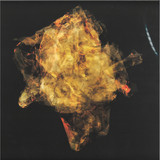
Marilyn Manson returns with his eleventh studio album WE ARE CHAOS via Loma Vista Recordings. Co-produced by Manson and GRAMMY® Award winner Shooter Jennings Brandi Carlile, Tanya Tucker, the ten-track opus was written, recorded, and finished before the global pandemic. Manson heralds the record’s arrival with the title track and lead single “WE ARE CHAOS.”
Manson’s painting, Infinite Darkness, which can be seen on the album cover, was specifically created to accompany the music. His fine art paintings continue to be shown all over the world, including gallery and museum exhibitions from Miami to Vienna to Moscow.
Manson says of the album, “When I listen to WE ARE CHAOS now, it seems like just yesterday or as if the world repeated itself, as it always does, making the title track and the stories seem as if we wrote them today. This was recorded to its completion without anyone hearing it until it was finished. There is most definitely a side A and side B in the traditional sense. But just like an LP, it is a flat circle and it’s up to the listener to put the last piece of the puzzle into the picture of songs.
“This concept album is the mirror Shooter and I built for the listener - it’s the one we won’t stare into. There are so many rooms, closets, safes and drawers. But in the soul or your museum of memories, the worst are always the mirrors. Shards and slivers of ghosts haunted my hands when I wrote most of these lyrics.
“Making this record, I had to think to myself: ‘Tame your crazy, stitch your suit. And try to pretend that you are not an animal’ but I knew that mankind is the worst of them all. Making mercy is like making murder. Tears are the human body’s largest export.”
Search:human body
Bing & Ruth, the ever-evolving project helmed by New York composer David Moore, has announced details of a new album, scheduled for release this summer. Entitled Species, the 7-track, 49-min record will be released via 4AD.
While on a surface level, Species is an exploration of the sonic possibilities of the Farfisa organ, aided only
by a clarinet and double bass (played respectively by
founding members Jeremy Viner and Jeff Ratner), the
title Species is a nod to both humanity and humility –
a devotion to the godly intuition with which we are all
endowed, and the humbleness required of us to
perceive it. It’s also about suspended time and trance;
not just a steady movement from A to B, but as
something that flows, meanders and eddies, like
water.
Species, and the transcendental state it embodies,
was inspired by two recent loves of Moore’s: the
desert and long-distance running. Briefly relocating
from his New York base to Point Dume, between the
Pacific Ocean and the desert, Moore was able to
indulge in both passions, which in turn provided
stimulus for new work. He says, “I’d found myself in
places unfamiliar enough that I could easily lose all
sense of direction, size and, more than anything, all
sense of time. The music I was making became a kind
of reflection of these intentional detachments - and a
place to mirror that feeling of trance that had pushed
them out in the first place.”
Night Gaunt Recordings is pleased to announce “Ambitions of Guilt”, the newest offering from Brighton, UK based producer L/F/D/M. L/F/D/M is Richard Smith who first emerged in 2013 and has been steadily cranking out the hits ever since. Following his stellar release on Cititrax titled “Dream Bleeds”, Richard Smith is back with a new batch of misshapen heaters. A master of blending fucked up rhythms with chiseled body music that’s both danceable yet also makes you question humanity. Every track crafted to hit deep in the bowels of any warehouse, “Ambitions of Guilt” seeps with acid, techno, noise, and anything in between. With sleazy dance hitters that bring to mind midwest acid/techno, such as Gene Hunt, and also taking from British and Japanese industrialists by the likes early Richard H. Kirk and Sympathy Nervous, Smith creates a feeling that’s both familiar yet still wildly unnerving. L/F/D/M consistently seems to know how to explore emotions in this sphere of cold, repetitive machines, creating an exciting soundtrack to a contorted world.
Tilman Robinson’s third album, CULTURECIDE, is an investigation of the anthropocene; a seven part lamentation for our chaotic world.
Tilman Robinson is an Australian composer and sound designer creating electro-acoustic music across a range of genres including classical minimalism, improvised, experimental, electronic and ambient. Tilman’s diverse output focuses on the psychological impact of dense sound employing acousmatic and psychoacoustic principles. His third album CULTURECIDE will be released on Iceland’s Bedroom Community label in April 2020.
CULTURECIDE: “...processes that have usually been purposely introduced that result in the decline or demise of a culture, without necessarily resulting in the physical destruction of its bearers.” D Stein
CULTURECIDE is a rich sonic collage, harvesting sounds from a range sources including field recordings, medical machines that monitor the human body, traditional instruments and synthesisers, often melted electronically. The result is an unsettling paradox with sounds constantly on the edge of recognition. Each piece references a specific socio- political issue ranging from colonialism to neo-liberalism to climate change and the impending singularity of humans and machines. Far from an answer to these questions, CULTURECIDE invites us to meditate on their place in our life and approach personal understanding.
Recorded and produced almost completely in Australia, a land at the forefront of the devastation of climate change, CULTURECIDE was an attempt at catharsis for its author frequently appalled at his country’s incredible apathy and inaction. Mixed by Bedroom Community regular Daniel Rejmer and mastered by Lawrence English, works from the ambitious and unsettling record saw Tilman nominated for the 2019 Melbourne Prize for Music.
Protoelectronics psychedelic Mexican Holy Grail rediscovered by Glossy Mistakes. Inspired by Vangelis, Tomita or Kraftwerk, this unknown rarity gets a second life sounding fresh and pioneering today.
Tito was born in 1946 in Ciudad de México, the son of two Spaniards. Since he was a youngster, he had felt the passion for music and instruments. In the meantime, he started a career as architect. Since his early years, he joined various teen rock bands, where he played bass and guitar. Slowly but surely, his interest in synthesizers started to grow. And the rest is history. Tito defines himself as an “electronic sounds fanatic”. Quetzalcóatl is a truly authentic cornerstone in those terms: an inspired and eclectic artist gives shape to a unique sound through legendary synthesizers such as the MiniMoog or the Arp Odyssey. His passion was so embedded that he even built his own guitars and equalizers; some of which appear on this LP.
Quetzalcóatl, his debut solo album, was originally recorded in 1977 (now remastered) in his bedroom using a four-channel Sony recorder in a truly DIY way. This álbum could be considered as a rarity. But if we listen hard enough, we find a pioneering treasure. Somehow, Quetzalcoátl anticipated the sounds of future decades with simple but inspired compositions. It is a mythological trip to the Pre-Hispanic México. This album is an allegory of the Aztec world. Quetzalcoátl is the most important God for Mesoamerican cultures: it represents the inherent human dualism between the body (represented by the snake) and soul (the feathers). In the song “Profecía”, Quetzalcoátl emerges, announcing the end of the world at the hand Spanish colonialism. Limited edition, 600 copies, remastered in Amsterdam by Wouter Brandenburg.
Samuel Rohrer CONTINUAL DECENTERING With his Arjunamusic label and a growing catalog of categorydefying releases, Samuel Rohrer continues to quietly, yet confidently, make a name for himself as a genuinely unique Gigure within the European electronic music realm. In the current era, talk of blurring boundaries between musical genres and attitudes is more the rule than the exception, but not always something done with any degree of success. Rohrer is one of those rare alchemical explorers to have truly created a hybrid which is all his own, one that does not just exist to melt distinctions for its own sake, but is a natural result of years of experimentation with both the determination of electronic music and the ludic spirit of ‘free improvisation.’ On his newest offering, Continual Decentering, this vision is applied to a set of mostly in real time (live) performed explorations. In keeping with his many years’ worth of fruitful collaborations, the tonal palette on this new record is one that is expectedly rich for those familiar with his work, yet still surprising in terms of how exactly the differing tonal colors come together. Representative tracks like Spondee and The Fringe are brimming with dub pulses, noir shivers and blooming timbral variations that are in many places carefully isolated / focused and in other places blended together in vivid fusions. In terms of the emotional atmosphere created here, the pensive and questioning tone hearkens back to the ‘wide open’ state of electronic music in the mid-late 1990s, yet with a greater clarity and maturity of vision that makes this music feel like a possible answer to aesthetic questions being raised at that time. As with Rohrer’s most recent solo work, like the Range of Regularity LP, Continual Decentering showcases the artist’s skill in turning the drum kit into a lead instrument. While the term “lead instrument” denotes a kind of exuberant “Glash,” or a clear separation from the rest of the voices in an ensemble, we can take the term to mean something different throughout this listening program of 13 short vignettes: that is to say, everything else within the audible environment exists to complement the character of the percussive playing rather than to stand apart from it. It helps that Rohrer has, in fact, developed a unique and complex hybrid system in which drum hits trigger modular synthesizer processes, the use of which makes for an incredibly fluid response time between distinct sonic events. In contrast to the previous Range... LP, this new offering is propelled less by interlacing threads of intensity and more by a shared sense of deep listening. As displayed on pieces like All Too Human, there is a profound sense of attention to silences or thoughtful pauses that maybe hints at another crucial aspect of Rohrer’s style: over the course of this program, we tend to hear the player not only playing but listening, an activity which makes perfect sense given the sense of instrumental dialogue already mentioned. All of the above come together to give Continual Decentering a “live”-ness that will easily translate from recorded document to dynamic performance.
What are the best non-physical landfills for discarded thought? Do waves transition between naturally occurring substrates and audio signals? Does adrenal fatigue and replenishment in the human brain relate to cycles of euphoria and dysphoria in music? What is the mental effect of visual versus aural repetition? Is all music fictional? Can the language of objects and memories impregnate sound? Are bodies out of fashion? What is the music production equivalent to a green screen in film? What is the best non-physical preservation method for sound? Is film editing a way of ordering memories? Is repetition therapeutic? Are all films fictional? Have physical forms slipped into obsolescence? Did Erik Satie have an anxiety disorder? Is background music parasympathetic? Are physical players more virtuosic than virtual instruments? Is thought finite? Is physical music a fetish? Is reality fictional? What is the most elegant way to float between corporeal and ethereal forms? Do memories deteriorate and fade like audio signals exposed to the elements? Can thought exist without the body?
Free Love, the artists formerly known as Happy Meals return to Optimo Music with ‘Extreme Dance Anthems’ a phantasmic mini album from their hearts to yours.
They say – “We recorded EXTREME DANCE ANTHEMS in our recently moved studio, ‘Full Ashram Celestial Garden’ which is now situated in a building that holds both a church below us and a sex club next door. Most of the tracks were formed from late-night sessions that we started to kind of ritualistically hold inspired from a particular thought or idea that we later cut down and did a live mixdown of. The music is about physicality and the metaphysical – it is about a recontextualisation of the ineffable as a centre point of existence which in turn influences how we engage with everything around us. A celebration of the unquantifiable, unspeakable, indivisible EXPERIENCE as the throne from which all ideas are derived. Even though the world is fucked- we are here.
On the face of it – I realise that this description might just seem like apolitical hippy bullshit but fuck that – as a deliberate result of the modern political landscape, our societies’ individual and collective disengagement with the metaphysical has led us to treat other humans, animals and our environment like resourceful statistics rather than something that actually holds any inherent value. An Inner Revolution of the foundations of our reality in a way that reintroduces the essence of existence, and not merely its describable derivatives, into the conversation of how we should live our lives INFORMS our perception of the world in a way that demands us to ACT. The record is about a kind of gradual awakening between the two of us – a reconnection with the magic around us.
The ineffable is not without moments of illumination- mostly in the form of immediate absurdity: ONE DAY WE WILL ALL BE DEAD BUT HERE WE ARE ALIVE INSTEAD.
The record is called EXTREME DANCE ANTHEMS because it made us both laugh”.
- A1: True Lies One
- A2: Sidewalk Sinner
- A3: Breathing
- A4: Give It To Me
- A5: Two Faced Man
- B1: Be Yourself
- B2: Dreamhunter
- B3: Voodoo Child
- B4: Are You Awake
- B5: True Lies Two
- C1: Waiting And Burning
- C2: Blindness
- C3: In The Glasshouse
- C4: The Human Race
- C5: Skullscraper
- D1: Obsession
- D2: Cheree
- D3: Warm Leatherette
- D4: Moving Hands
- D5: Ghostrider
“True Lies” was originally released in 1999 on Daft Records and showed Dirk Ivens (The Klinik, Absolute Body Control) once again changing the game to create another refreshing and groundbreaking album. Suggestive industrial with distorted vocals, metallic rhythms and noises perfectly balanced with up tempo dance beats and technoid rhythms.
Production on this work is shared with the talent of Ivan Iusco (Minus Habens Records, Nightmare Lodge) and Eric Van Wonterghem (Insekt, Monolith).
"True Lies" is available for the first time on vinyl record with all original songs plus extra tracks from the singles "Two Faced Man" and "Broken Meat", some old compilations and a bunch of cover versions to classics by Suicide, The Normal and The Klinik. Limited edition of 550 copies on double blue colour vinyl with gatefold sleeve, printed inner sleeves and numbered card.
Having collaborated over the years in several projects, Endless Illusion and brokntoys join forces for a trilogy of EPs to showcase unique talent across the globe. Meeting somewhere across both label's middle grounds, the first volume of Human Abstracts captures an array of international players operating at the fringes of the 'floor'. Colombian duo Vltra Delta Drive kick off the EP with the tense, body-propelled El Complot. Santoine builds up the drama with the uneasy, percussive Transmission. Closing the Aside, Outermost brings his trademark ominous sounds in Mystic River. On the flip, cult favourite Konsistent weaves narcotic grooves on Paranoid Humanoid. After his knockout contribution for Move's launch EP, Black Propaganda brings the EP to a close with the utopian Instrument Of Liberation.
- A1: Tidal Wave
- B1: Tidal Wave (Instrumental)
- A2: Tidal Wave (Boot Remix)
- A3: Tidal Wave (Nasa Remix)
- A4: Tidal Wave (R.e.d.a. Remix)
- A5: Tidal Wave (Lex Boogie Remix)
- B2: Tidal Wave (Boot Remix Instrumental)
- B3: Tidal Wave (Nasa Remix Instrumental)
- B4: Tidal Wave (R.e.d.a. Remix Instrumental)
- B5: Tidal Wave (Lex Boogie Remix Instrumental)
- B6: Fool\'S Gold (Feat. J Lawson)
Claiming Montreal as his new home town, Brussels-born Senz Beats has been building an impressive body of work with underground veterans from both coasts of the US (Dave Dub, Megabusive, Lex Boogie From the Bronx..) and beyond. Cappo, Nottingham's very own veteran MC, needs no introduction having already made waves at home and abroad with his impeccable string of solo albums as well as his work with the Nottingham super group VVV.
Here, Senz Beats and Cappo join forces to present a stark reminder of where humanity is headed if we continue to place our values in capitalist ideals. The raw, driving energy of the beat offers the perfect backdrop for Cappo to deliver his warning to those caught up in the materialistic rat-race: the tidal wave is close approaching.
4 experts in their field offer up remixes of this epic track. Boot Records very own Jazz-T (Jehst, Lee Scott, J-Zone...), ex-Def Jux engineer and artist Uncommon Nasa (Vast Aire, Aesop Rock, Mr. Lif...), Lex Boogie From The Bronx (Marq Spekt, Rass Kass, Vordul Mega...), and R.E.D.A. (Insight, Main Flow, M. Sayyid...) each give this track their own distinctive flavour to devastating effect.
Lastly, on the bonus track Fool's Gold, J Lawson echos Cappo's Tidal Wave warnings concerning lusting after riches at the expense of everything else, also produced by Senz Beats. One of the few remaining songs from over 2 years of collaboration roughly 10 years ago, this song has stood the test of time and is ready and eager to be presented to the world.
[a] 1. Tidal Wave [clip]
[f] 6. Tidal Wave (Instrumental) [clip]
Mount Liberation Unlimited are Tom and Niklas, two Swedes from space who have spent the last 5 years
carving out a particularly vivid niche in contemporary electronic music. Their previous work has seen them
connect with an impressive list of global dance powerhouses: New York's Beats In Space, Melbourne's
Superconscious and Munich's Permanent Vacation have all released 12'' heat from the duo, while their
hometown buddies at Studio Barnhus provided an outlet for what has been perhaps their biggest and boldest
release yet, 2017's double smash single Double Dance Lover. Their live shows are fervent, fast-paced and very
multi-instrumental affairs, performed non-stop at an increasingly prestigious list of clubs and festivals, serving
as prime examples of the MLU boys' core obsession: the interaction of human rhythm and electronic pulse.
They have their own great little radio show on Gilles Peterson's Worldwide FM! Australia loves them! They
got their artist friend Tom-Hadar Elde to sculpt their heads for their debut album cover!
That self-titled debut, to be released May 31 on Studio Barnhus, has been in progress since the very formation
of the MLU project in 2014. It contains some of their earliest work and of course their very latest – all perfected
at the Neve desk of legendary Gothenburg studio Svenska Grammofonstudion, in cahoots with mix engineer
Christoffer Berg (Depeche Mode, Robyn, Fever Ray).
The result is a sonically fascinating, endlessly generous and straight up FUN record that takes the listener on a
joyride through bittersweet stoner disco, frenzied scando-kraut jams and some of the sweetest dance pop to
come out of Sweden this side of Super Trouper.
The record is preceded by a limited 10'' release of album track Climb Me Up, complete with an exclusive club
mix of the song.
Independent record label YGAM presents "Les Bergers du Galetas", Magnétisme Animal's debut EP, in which they share their intimate view of society. Formed by brg and Catartsis, the French duo invites the listeners to dive into a journey through the density of the modern metropolis. In a time of materialistic fetishism, where superficial occurrences and capitalism rule, the 4-track EP acts in opposition to these current matters. However, rather than trying to create a contrasting sonic landscape, Magnétisme Animal use sounds recorded in their environment to elaborate pieces that bear the heavy and frenetic industrial atmosphere of our urban sceneries. All sorts of clanging metal, steam discharge, electromagnetic static noise, train rails frictions, sirens and distant traffic, are combined with breathing, footsteps and vocal humming to create an oddly industrial as much as organic soundscape. The EP starts with a noise track that recalls some of the compositional processes of musique concrète, to then slowly drifts towards rhythmically oriented pieces. "Être c’est être coincé", with its ponderous bass and distortion work, appears as a peculiar blending of noise and techno, while "L’Enthousiasme des statues" displays a more traditional and dance floor approach to rhythm and drums, but still leaves space for an uncanny sound decor to unfold. The project ends with "La Toute-Toute", a repetitive ambient track filled with subtle sounds, where one can wander as spoken words underline a sense of melancholy. "Les Bergers du Galetas" is an unsettling industrial tapestry, a strange study of noises, that depicts the contemporary frenzy of the artists’ environments they referred to as the urban jungle. A landscape where one is a witness of the disparity of human conditions, where mind and body coexist with difficulty, where one is subject to conformism, where one is lost in the smog while carried by the masses through the cemented maze.
Malik Hendricks is a rhythmically inclined aesthetic enthusiast born in the 80's, and raised in the 90's. A DJ for over a decade, he has always approached music with a rigorous curiosity and views the dancefloor as the ideal arena for collective cultural appreciation, a place where the quest for knowledge meets the quest for experience. Dance is the true language of the body, and a gateway to the recognition of our shared humanity.
Money Cat Records - Round black records bringing good luck. Linking motion with emotion, dance unites the body and soul of all who participate. Music from Brooklyn to the world. Established in 2018.
Since Danielle Mana's 2017 debut EP for Hyperdub, 'Creature', which was a taut, evocative suite of beatless, almost neo-classical electronics, we now find his music has caught an alien virus and started hallucinating. On 'Seven Steps Behind', the borders between reality and the weird have collapsed on each other, and with each listen through its zigzagging course, you're rewarded by its strange twists and turns. 'Seven Steps Behind' is an electronic album that doesn't always sound electronic; a great deal of the record has been created to sound like prepared pianos, harpsichords, cellos and flutes. At other times, sampled acoustic instruments and specially recorded sessions have been processed through software and careful editing. It's this sophisticated layering of contrasting versions of the same sources that help give this record its uncanny balance. The album also plays with your sense of time in its mostly drum-free hall of mirrors, pulling from minimalism, chamber music, dark jazz, and synthesiser experiments. Mana's singing voice also makes it's debut here, albeit adorned by abrasive FXs. His lyrics are encrypted in noise, in fitting with the music's chimeric character, casting images for the listener to decipher. His heavily manipulated voice enters on second track 'Myopia For The Future', sounding something like a singing motorbike pitched over bouncing ostinatos, or on 'No Body's inhuman, word-less range, where it's impossible to tell where the human finishes and the machine starts. Or in the case of 'Leverage For Survival' it's animal and machine. Here, as with the album's eponymous final track, a sensory assault subsides to reveal a heart-wrenching melancholy that anchors the record. Listening to 'Seven Steps Behind' is like stepping into a dream, with all the curious emotions and buried meaning that involves. Yet for all its restless, shifting energy it manages to hold both dissonance and melody in sweet proportion.
Transversales Disques presents KSHATRYA, (The Eye Of The Bird), never released before
recording by french avant-garde electronic composer Igor Wakhevitch, who composed a bunch of
major experimental albums in the 70's such as Logos, Docteur Faust, Hathor, Les Fous d'Or,
Nagual and Let's Start.
During this 10 years period, Wakhevitch was close to Jean-Michel Jarre, the Pink Floyd, the Soft
Machine, and legendary choreographer Maurice Bejart having with him many conversations around
dance and music, human body and soul, spiritual path, collective life, new society, human evolution.
As a composer Igor Wakhevitch collaborated with Salvador Dali, Carolyn Carlson, and Terry Riley to
name a few. He's considered as one of the first French composer using synthesizers like Synthi
AKS, ARP2600 or Moog modular systems.
After spending almost 30 years in India, Igor Wakhevitch dug in his archives this unreleased work
recorded in 1999 on his 'Mysterious Island 88' system. Esotheric, sacred and cosmic, KSHATRYA,
(The Eye Of The Bird) is the logical follow up of Igor's early works and a monumental piece of
electronic music. A must!
Lakker Return To R&s With Their Stunning New Album, Época. Following 2016's Conceptual 8 Track Maxi-ep struggle And Emerge' (using Field Recordings Of Tv And Radio Broadcasts From The Dutch National Av Archive) Época Is A Bracing Return To Form, Combining Caustic Electronics With Fresh Inspiration From The Prepared Piano Of John Cage, Plaintive Folk Melodies, The Explorative Label Sublime Frequencies And The Raw Rhythms Of Kampala's Nyege Nyege Tapes.
Following A Restorative Creative Break To Pursue Their Own Solo Projects (as Arad And Eomac Respectively) The Duo Finally Returned To The Studio, Finding Themselves Working More Closely Than Ever Before. "we Wrote This Record Together, In The Studio As A Duo." Ian Explains "previous Records Involved A Lot Of Time Working On Tracks Individually, But Época Was Written Almost Entirely Together In The Studio - It Felt Much More Fun, More Organic And Democratic." We Allowed It To Happen Rather Than Push Or Pressure It" Dara Adds.
The Natural Evolution Of The Tracks And Their Rougher, Looser Production Sound Parallels The Duo's Interest In Two Separate Ideas: Ambient And Natural Sound, Especially The Background Noise - A Sense Of Time And Place - That Is Inherent In Old Recordings Of Folk And Classical Music, And An Interest In Herd Dynamics And Flock Patterns / Murmurations, Both In The Natural World And In Human Society. The Movements Which Affect The World At Large Through Cultural And Political Shifts. "like The First Starling That Causes A Wave In A Murmuration," Ian Explains "we Are Really Interested In How This Is Also Reflected In Human Society - A New Idea Appears And Then Reaches Critical Mass And Resonates Through Society As A Whole, And Change Happens (positive Or Negative)."
The Rich And Deep Work Of Época Finds The Duo Reinvigorated From Their Hiatus, Using Their Own Voices Extensively For The First Time, Alongsides Regular Vocal Collaborator Eileen Carpio. As Dara Explains "we Had Been Experimenting With Our Own Voices In Our Solo Music, So It Felt Like This Was The Moment To Step Out From Behind The Curtain And Put Our Own Vocals Front And Centre In A More Natural Way". This Leads To An At Times More Melodic And Poppier Feeling, Balanced Out By The Off Kilter Rhythms And Blasts Of Feedback And Weathered Reverbs That Intertwine Throughout The Record.
Once Again The Duo Look To The Outside World For Sonic Inspiration. Alongside The Use Of Physical Modelling Synths The Album Contains Recordings And Samples Of Violin, Guitar And Bodhrán, The Stringboard Of A Piano At Ems Stockholm, Phone Recordings Of Family Gatherings In Dublin And 1970's Dance Music From Jaipur.
'época' Is A Rich, Challenging Album Of Diverse And Intense Soundscapes That Expands On The Scope Of Lakker's Already Multifaceted Music That Finds Them At The Peak Of Their Artistic Powers.
'we Are Living Through Volatile Times, And As Musicians It Is Impossible To Avoid That Being Reflected In Our Work. Época Is A Our Personal Response To The Atmosphere Of These Times And The External Political And Cultural Events That Are Shaping Our World. Some Positive And Hopeful, Some Despondent And Angry, And Some Reflective And Introspective.'
As humans living on the planet today, we have become so removed from our original, natural habitat—the forest—that we forget our wild roots, our primal, animal origins. Music is one of the things that can bring us back to that place, that can put us in contact with a felt world of instinct, immediacy, and presence: a world where language and the problem-solving mind are not needed, where the music keeps your mind and body in the present moment, and the point of dancing becomes the dance of our inner wildness and animality itself. Hans Berg's Sounds of the Forest Forgotten affirms that music can bring us to a state of mind and body that can help us feel what we've forgotten from the forest. The overlaying project of the album is to conjure musical and conceptual resonances between mysticism and nature, summoning the incredible depth and force of nature that we usually miss, especially living in contemporary urban cities. Sounds of the Forest Forgotten channels the creativity, playfulness, and freedom of a life both before and beyond ours through the sounds of analog and digital synthesizers, a modular system, drum machines, and computers. Recorded between Hans's studios in Berlin and on the Swedish countryside, the album similarly shuttles between contemplative and ecstatic, between delicate and powerful, mixing sublime psychedelic techno compositions like 'Emerald Sea' with acidic dance-floor bangers like 'Storm' and 'Milk Thistle,' all nestled between contemplative and textural ambient compositions like 'Butterfly' and 'Glow Worm.' Berg is known for his enthralling productions and energetic livesets that capture dance floors with his particular brand of hypnotic techno, replete with angular lines, affecting melodies, pulsating basslines, and big drums. He also produces atmospheric scores and ambient soundscapes to accompany the video art and installations of long-term collaborator and celebrated artist Nathalie Djurberg. Berg's live sets have found a home in nightclubs around the world, with recent gigs in Berlin, Stockholm, New York, Tokyo, and Melbourne, to name a few. In addition to 2MR, he has released his solo work on record labels including Ian Pooley's imprint Montage, Klasse Recordings, and The Vinyl Factory. His ongoing collaboration with fellow Swede Johanna Knutsson - as Knutsson/Berg - has led them to start the label UFO Station Recordings, on which they release their own material. The duo also has released on labels such as Idle Hands, Default Position, Kann, and Random Island.
Corey Fuller Is One Half Of The Duo Illuha On 12k And Break Is His Frst Solo Recording For 12k. A Crashing Wave, The Breaking Dawn, An Impact, The Crushing Of Emotional Spirit... The Breaking Of A Storm. These Are All Relevant Ideas Behind His Choice Of A Title For This Highly Emotional Abum. Fuller Has Addressed The Universality Of Human Struggle Without Going Into Specifcs Of His Own Personal Waves. The Ideas That We As Humans All Share Many Of The Same Diffculties Is Both A Launching Point And A Message He Wishes To Share With Break — The Catharsis.
While Illuha's Music Is Known For Its Attention To Small Sounds And Light Textures, Break, While Equally As Fragile, Sees Fuller Working With Much Heavier Elements. Still Highly Melodic, The Work Pulls And Churns Between Harmony And Tension, Weight And Air, The Crash Of A Wave, The Pull Of The Undertoe. The Album Is Focused Intensely On Melody And Harmony, Progressions More Carefully Composed Than The Serendipitous Found Sound Of His Work With Illuha.
The Piano Is Often At The Center Of These Songs, An Instrument (his Own) That Has Become Much An Extension Of His Own Body. His Own Voice Plays An Important Role As Well, Sometimes Lyrically Ethereal And Sometimes Just A Breath Signifying The Ever-fragile Thread Of Life. Beautifully Recorded
In His Tokyo Studio, The Sounds Are Captured With All Of Their Inherent Physical Faws. As Fuller Himself States About The Piano Being recorded In A Way That You Can Hear The Bones, Like An Open Ribcage, Moving Contorting...' Everything On Break Is There For A Reason, Not Just The Sound And Soul Of The Piano But The Electronic Elements As Well, Rattling Bass Tones And Dramatic, Emotional Waves Of Synthesizer Rising And Dissolving.
If A Single Word Can Be Used To Describe Break It Is Physical. From The Instruments And Techniques Used To Produce The Album To The Concepts Of Vulnerability Of The Human Body. Break Is An Emotional Riptide Where Violence And Rest Struggle To Be The Last Voice.
i) Adrift
ii) Asunder
iii) Aground