Estimated shipping date: 18.01.2019
In 2012 Important Records released a historic 12 CD box set compiling much of Pauline Oliveros' early and unreleased electronic work. Reverberations 1 is the first release in an ongoing series dedicated to releasing the entire 12 CD box set on vinyl.
Organized chronologically by studio (here: Pauline Oliveros Home Electronic Music Studio, 1961 & San Francisco Tape Music Center, 1964-1966), the complete Reverberations not only documents Pauline's earliest electronic music but it also functions as an early history of electronic music itself.
Pauline Oliveros, composer, performer and humanitarian was an important pioneer in American Music. Acclaimed internationally, for four decades she explored found, forging new ground for herself and others. Through improvisation, electronic music, ritual, teaching and meditation she has created a body of work with such breadth of vision that it profoundly effects those who experience it and it eludes many who try to write about it.
In partnership with the Pauline Oliveros Trust, Imprec will be releasing essential titles from Pauline Oliveros' catalog on vinyl including the complete Reverberations box set, Tara's Room, Sounding/Way (with Guy Klucevsek) and many more.
"On some level, music, sound consciousness and religion are all one, and she would seem to be very close to that level." John Rockwell
"Through Pauline Oliveros and Deep Listening, I now know what harmony is. It's about the pleasure of making music." John Cage
Buscar:human body
Domestic Exile are proud to present the devastatingly deplorable and malevolent recordings (that are sure to corrode yet electrify your ears) by Glasgow's very own KLEFT.
KLEFT aka Vickie McDonald is rooted in and has actively propagated the underground DIY radical queer punk and feminist movement here in Glasgow. Their projects have included the skull crushing sludge doom of Cartilage, the unflinching and infamous multi- membered hard core stars that were DIVORCE and the sacrificial, druid drone glitch of MOURN. Alongside these projects they have uncompromisingly disrupted, motivated and facilitated collective endeavors to take down the capital power structure of the dominant system of patriarchal club venues and abhorrent fuckers in this town.
For this record 'H+ Sexualis', KLEFT explores the neo-modern space where flesh is left behind. Negotiating, analyzing and tearing to shreds the relationship and balance between flesh and technology. KLEFT's expansive and palpable sonic offerings delve into themes of transhumanism and body hacking and seep into our collective skin begging the question; can flesh ever be created digitally. Does a lack of physicality alienate human experience in a post transhumanism society Are we all destined to be skinless yet digitally connected Will the body become superfluous Toward "the utopian dream of the hope for a monstrous world without gender," as stated on Donna Haraway's essay ''A Cyborg Manifesto.'
From the opening track 'Ossein' the listener grasps a foreboding lethargic build up, lurking out of the spatial ritualistic shadows into a sea of suffocating nothingness. A void where there is no gravity. Skeletal and brittle shattering rhythms which echo DMZ / Skull Disco dubstep alongside the more frozen, glacial ominous explorations of grime are often felt proving KLEFT is an artist whose inspirations run deep and wide and generally exist in the darkest recesses of our subconscious. These fearful, disjointed rhythms are set against weightless atmospheric oscillated synths, as if roaming through bleakly opaque, claustrophobic narrow corridors on a first person survival horror video game such as Resident Evil.
Moving through to 'CMBR', KLEFT's dissonant, degrading soundscape ferociously ascends. The resilient kick drum is propulsive and pulverizing akin to 'ardcore tekno - or intense gabba if you have the guts to adjust the tempo up to +8 - aesthetics that overwhelm and agitate finally revealing it's grotesque biological / amorphous bio structure. Elevating the repetitive 4/4 kick to a destructive, distorted banger of a track as layers of converging atonal noise and sound design simultaneously further enhances the sense of imminent radioactive contamination.
Next is 'Writhe, Squirm, Broken' continuing the convulsive, nauseating permutations of the prior track but reconfigured like a mangled, gruesome Cronenberg-esque parasite that has infiltrated an open wound, excruciatingly feeding off of the inner anatomy of it's hosts body from within. Repulsively reformulating the shape and dimension. The intro is akin to a panic stricken bouncy ball contracting and expanding, the spring reverb building momentum and traveling further away in distance and speed.
'Hackfleisch Deluxe' is a muuurrderous stomper and is one of the more grime / bass orientated tracks that deconstructs and disrupts the tempo familiar to sub-low producers on Black Ops / Jon E Cash / DJ Dread D. The crawling, plummeting frequency of the synth is a nauseating rush of coagulating blood to the heed; a deep throbbing sensory depravation in sharp, paradoxical contrast with the driving harmony layered on top which proves to be infectiously addictive. Furthermore are splintering programmed vocal samples that gives a sense of artificial disorientation, mind over matter, a possible hint at our evolving sentient cognition within a nightmarish simulated, augmented reality
Second to last we have 'Keratin' which is filled with the near fatal dissolving thud of Djax-Up acid that gives the impression that you're a biologist peering through a microscope into a petrie dish and witnessing the rapid and furious genetic cellular replication of bacterial and viral organisms.
Culminating in 'Bruised and Bleeding Hands' where the squashed density of a deflated and depressurized helium filled balloon and elastic umbilical cords, barbed wire and copper wires grind n' coil around the lens of a zooming camera. Taking no prisoners, this is a punishing grime weapon. A phat, surgical kick drum bulldozes its way thru causing carnage, syncopated punching snares after every rave stab and dizzying third beat. It won't be long until ye hear this on Silver Drizzle's youtube channel in the near future.
This record transports us to the hyperkinetic mutation scene on the cult cyberpunk film Tetsuo The Iron Man where the organic flesh / mechanical rust of the Iron Man metamorphoses with the Metal Fetishist during the rebirth sequence and we say 'LONG LIVE THE NEW FLESH!''.
Part II The title of the project is: "An Intermediary Plane of Existence", an in-between world, a shadow zone, two universes, the place between the entrance and exit of a portal. Most electronic music producers probably know the feeling where they, after producing and recording a track they are extremely content with, are suddenly overcome with a slight fear: "what if my computer crashes, what if the file of the recording gets lost somehow and the music gets lost, it's gone forever...". That feeling and the fact that all music, ever written and even the music that has yet to be written, is "somewhere" when it's not
being played or made. It's either written down in notes, stored in
someone's mind, cut into a piece of vinyl, recorded on tape, converted into 0's and 1's hiding somewhere on a hard drive, a cloud, a CD or a USB stick. It's been taken form the place it was before it was made and stored in another place, in an intermediary plane of existence, waiting to be played, to come back to life and listened to again. We wanted to do this various artists album not with just any talented artist, but with people we've met the past years who became our friends and people we admire for their music and personalities. Friendship is also something that most of the time resides in an intermediary plane of existence. When a friend is not in the same room, city or even country it doesn't mean the friendship is not still there. If you've never even met
someone in person, it doesn't mean you can't be friends. Even if you haven't spoken to your friend for a long period of time, it doesn't mean the friendship doesn't exist anymore. The same goes for love I believe.
Some people you will never stop loving, alive, or dead. Both owners of P-RT-L lost their fathers within a week from each other last year, but I also know people who haven't seen or spoken to their dads or moms in over a year, yet somehow it feels completely different not seeing someone for a long time if you know a person is still alive, even though it's not sure you will ever see him or her again. Their dads went back to the place they were before they were born and they will never come back the way they knew them. Just like all music that went lost before we as humans had the ability to write it down, store it on a medium or pass it on otherwise. That exact music, just like their dads, is lost forever. I know this will probably sound a bit too philosophical for some of you readers, but it's something that keeps me awake at night, sometimes. This albums is a way for us to celebrate the fact that the music on it, will never be lost because we as humans have found a way to store and contain it in a place where we can easily reach it, for ever. We hope you will enjoy the music! P-RT-L Featuring artists: Alex Bau ,AnD,Anouk De Vos, D-Leria, Daniel Kane, Dasha Rush, Frame Six Micol Danieli
Following a first compilation in 2016 and a series of parties, Rinse France & Piu Piu join forces for the first release of her own label : Grooveboxx Records.
Together, they present 'Memorias', the first EP of her new imprint.
Quite explicit through its title, Grooveboxx catalogue stands for an exploration of the grooves across its modern shapes, it embodies the quest of trance throughout music and question the body and the individuals on the dancefloor.
The first release is composed of 5 percussive tracks from producers and DJs Aleqs Notal, Myako and Geena.
All tracks are exploring samples coming from the Musee du Quai Branly's ethnos collection along with some some field recordings captured in a garden in Paris where south American tribes were exhibited during the ""Universal Exposition"" in Paris.
With Salvia Cosmica Myako takes us to a progressive voyage surrounded by all kinds of spirits whispering melodies to our soul while the tribe's marching band marks our footsteps with its strong percussions. Enter the forest.
Influenced by Chicago & Detroit, house producer Aleqs Notal graces us with a percussive jam baptized Finger Prints.
6:45 of pure rhythmics honoring the roots of the music its been sampled from. The rite begins.
La Dansa Del Risa is a conversation between birds and humans overlooking at the tension one night in the forest can impose on our western fears of nature. Stay close to the flames.
Antinote senior, Geena blesses us with Selva Spirit, a slowjam reverie filled with eerie pads and peculiar drum sequences.
We're almost there.
Last but not least, Jungla Encantada seals the EP with a deep wisdom and mastership of the jungle's best kept secrets. It's slow pace and flute melodies appease our senses while mysterious dialects becomes our native language.
The journey is complete.
- A1: A Winter In Los Angeles Feat. Private Agenda
- A2: Trust The Direction Of The Wind Feat. Peaking Lights
- A3: Feel Live
- B1: Villaggio Paradiso (On Acid)
- B2: I Promise
- B3: Geometric Crystal Spaces
- C1: Endless Change
- C2: Raving At The Acropolis
- C3: Fare Spazio
- D1: Properties Of Distance
- D2: Floating Room Feat. Fort Romeau
- D3: Two Weeks Later Feat. Kim Anh
The body never lies. Every dance is a graph of the heart. Nothing is more revealing than movement.
These are the words of Martha Graham, one of the greatest American dancers and choreographers of the 20th century. Massimiliano Pagliara might as well have them tattooed on his chest, close to his heart, being an accomplished dancer, too. He has studied contemporary dance in Milan and Berlin, and went on to dedicate his life to transforming experience into movement, be it musical, physical, or spiritual. Massimilano's message is clear: Don't stand still. Don't keep looking back. Know where you are coming from, but don't remain petrified by the past. Take a chance at Endless Change, instead. Move on! Just like Massimilano did.
Stemming from Lecce province, an area at the south-eastern-most tip of Italy, Massimilano has been based in Berlin for several years where he's been one of the main forces behind recombining the city's hardboiled techno scene with an often overlooked sensibility for the soft and the tender. Call it underground disco passion. Massimilano's last and sophomore album, With One Another, released in 2014, was about celebrating the joy of human encounters and in parts seemed like a big get-together with like-minded artists and friends (among them nd_baumecker, Lee Douglas, and Credit 00). The record quickly hit the number one spot in Groove magazine's album chart - and its creator hit the road.
Besides his busy DJ schedule and far from the usual club circuit routines, Massimilano dedicated himself to intense travelling and exploring the world anew. 'I felt like I have lived more than ever,' he states. 'Getting to discover all these beautiful places around the world and meeting so many lovely interesting people, has inspired me in many different ways. I feel enriched.'
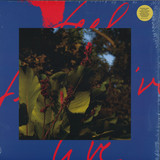
The result of these experiences is Feel Live, Massimiliano's third full-length endeavour. It was recorded in several intimate, sometimes improvised studio settings between Los Angeles, Portland, and Massimiliano's homebase in Berlin as well as at airports and on intercontinental flights high up in the sky. Featuring vocals by Private Agenda, Peaking Lights, Kim Anh and instrumental contributions by Fort Romeau, Tim K, and Jules Etienne, Feel Live is Massimilano's most playful and imaginative work to date. It's as emotional as sensual, as vibrant as the first ray of light after a thunderstorm has cleared the air.
Is it awkward or odd to call this record jazzy Presumptuous to pinpoint its spacial, almost orchestral qualities Unfair on the ruling Cosmic powers to highlight its aspirations of founding a new land of Balearic Harmonia and getting down at a huge fertility rite with electro enthusiasts and house lovers Not one bit. Feel Live is pure grandeur and elegance. It feels like an eternal movement.
Martha Graham has dedicated her whole life to dancing. 'It's permitting life to use you in a very intense way,' she said. 'Sometimes it is not pleasant. Sometimes it is fearful. But nevertheless it is inevitable.' Massimilano couldn't agree more. His advice when facing the inevitable: 'Live what you are feeling, feel what you are experiencing, good or bad, it is an experience.'
ADULT. '20 years ODD.'
Over the course of the last two decades, Detroit-based duo ADULT. (Nicola Kuperus and Adam Lee Miller) have released six albums and nineteen EPs and singles across some of our favorite labels: Mute, Ghostly International, Thrill Jockey, Clone Records, Third Man Records, and their own label, the revered Ersatz Audio. November 1998 marked their first release: the five-song 12" 'Dispassionate Furniture'. This September, twenty years later, Dais Records is proud to announce ADULT.'s seventh full length album: THIS BEHAVIOR.
The album began as 23 demos written and recorded in a remote cabin in the woods of Northern Michigan during the dead of winter. In total isolation, and with a reduced amount of gear (a modified version of their live setup) on the cabin's kitchen table, the duo were completely immersed in an incessant inescapable studio of their own making - looping, repetitive analogue sequences grinding away day and night. At the end of the intense demo session, a handful of peers were enlisted by the band for the difficult task of paring down the demos into the final album.
The result is 10 tracks of uncompromising dark electronics, showcasing ADULT.'s return to aggressive and energetic dancefloor mastery. Album opener 'This Behavior' alongside the follow-up 'Violent Shakes' (which ascends into synths wailing like warning sirens over Kuperus's commanding vocals) set the stage for an on-edge listen, while the heartbreaking 'Silent Exchange' unfolds as a beautiful sad synth dirge. 'Perversions of Humankind' breaks the mood - driving the listener into a slow and low groove before the frantic album midpoint of 'Irregular Pleasure'. 'Does The Body Know' is the album's post-punk anthem, with irresistible singalong 'we're out of order - we're undefined!' The latter half of the album drives forward with 'On The Edge (You Put Me...)' and 'Lick Out The Content', refusing rest and demanding movement and response. 'Everything & Nothing' emerges slowly from sparkling synth textures, snowballing with nervous energy into an acid techno stomper before the album comes to a close on the icy landscape of 'In All The Debris', a goose-bump inducing slow electronic mantra that closes the curtain on a massive album.
Artist statement on the album's writing process:
'It's confounding how often we negate the importance of disconnecting, getting weird, getting lost. Discomfort and joy intertwined. Day to day, theatrical self-presentation set to rest in our frantic social world. Public becomes private, almost too private. Looking out into frozen woods as you deliver your vocals. For who For what Taking walks along icy shorelines as you try to overcome writer's block, as you try to overcome yourself. Not seeing anyone for days and weeks on end. Overwhelming thoughts and feelings come rushing in; anxiety, fear, purpose, banality, futility of task, power structures, power struggles, pointlessness, collapse.You're faced to face yourself. Your awareness is heightened. You are neither here nor there. You are in a liminal state As you work in this isolated cabin your windows become mirrors.'
"Are we distortions. Are we distortions, perversions of humankind.Are we distortions. Are we distortions, twisted somewhere in time."
ADULT. '20 years ODD.'
Over the course of the last two decades, Detroit-based duo ADULT. (Nicola Kuperus and Adam Lee Miller) have released six albums and nineteen EPs and singles across some of our favorite labels: Mute, Ghostly International, Thrill Jockey, Clone Records, Third Man Records, and their own label, the revered Ersatz Audio. November 1998 marked their first release: the five-song 12" 'Dispassionate Furniture'. This September, twenty years later, Dais Records is proud to announce ADULT.'s seventh full length album: THIS BEHAVIOR.
The album began as 23 demos written and recorded in a remote cabin in the woods of Northern Michigan during the dead of winter. In total isolation, and with a reduced amount of gear (a modified version of their live setup) on the cabin's kitchen table, the duo were completely immersed in an incessant inescapable studio of their own making - looping, repetitive analogue sequences grinding away day and night. At the end of the intense demo session, a handful of peers were enlisted by the band for the difficult task of paring down the demos into the final album.
The result is 10 tracks of uncompromising dark electronics, showcasing ADULT.'s return to aggressive and energetic dancefloor mastery. Album opener 'This Behavior' alongside the follow-up 'Violent Shakes' (which ascends into synths wailing like warning sirens over Kuperus's commanding vocals) set the stage for an on-edge listen, while the heartbreaking 'Silent Exchange' unfolds as a beautiful sad synth dirge. 'Perversions of Humankind' breaks the mood - driving the listener into a slow and low groove before the frantic album midpoint of 'Irregular Pleasure'. 'Does The Body Know' is the album's post-punk anthem, with irresistible singalong 'we're out of order - we're undefined!' The latter half of the album drives forward with 'On The Edge (You Put Me...)' and 'Lick Out The Content', refusing rest and demanding movement and response. 'Everything & Nothing' emerges slowly from sparkling synth textures, snowballing with nervous energy into an acid techno stomper before the album comes to a close on the icy landscape of 'In All The Debris', a goose-bump inducing slow electronic mantra that closes the curtain on a massive album.
Artist statement on the album's writing process:
'It's confounding how often we negate the importance of disconnecting, getting weird, getting lost. Discomfort and joy intertwined. Day to day, theatrical self-presentation set to rest in our frantic social world. Public becomes private, almost too private. Looking out into frozen woods as you deliver your vocals. For who For what Taking walks along icy shorelines as you try to overcome writer's block, as you try to overcome yourself. Not seeing anyone for days and weeks on end. Overwhelming thoughts and feelings come rushing in; anxiety, fear, purpose, banality, futility of task, power structures, power struggles, pointlessness, collapse.You're faced to face yourself. Your awareness is heightened. You are neither here nor there. You are in a liminal state As you work in this isolated cabin your windows become mirrors.'
"Are we distortions. Are we distortions, perversions of humankind.Are we distortions. Are we distortions, twisted somewhere in time."
On her Unterton debut, Their Specters, Borusiade offers four different takes on atmospheric, industrial electronics and chopped rhythms, composed around the themes of ecological and human self-destruction. 2018 has already been an active year for the Romanian-born, Berlin-based electronic musician, who released her debut LP A Body on Co´meme in March and has since toured her live set throughout Europe. Known for a hybrid sound between noisy electronics, techno, post-punk, and dark disco, she has also released EPs and 12's on labels such as Minimal Wave sublabel Cititrax and Jennifer Cardini's Correspondant. EP opener 'Forewarned Is Forearmed' sets the tone as a massive drum march, stomping forward between rolling snares, clanging metal percussion and guttural drones, while evolution-themed 'Common Ancestor' is a tribal head-nodder, with booming sustained kicks offset by overdriven snare brushes and fluttering synths. New forms from a primordial sonic pool. On 'Doublethink' wailing synths and stuttering rhythms vie for dominance in a storm of off-kilter techno, while the mammoth, slow melodic closer 'Atlas' moves to the pace of waves crashing and hypnotic, detuned, interwoven melodies. Big sounds for the end of days.
A warm human hand sculpts the icy machine-like sounds into a meticulous harmony over undulating bass and entrancing snares, clasps and industrial heartbeats. This continuous circulation of sound and its ever beating rumbling-flexed sub bass found in Rebecca Goldberg's newest batch of acid-techno arrangements effectively replicate the natural functions of omega 3, or -3, fatty acids albeit in musical-form. Whereas ingesting the special carboxylic acids found in plant and marine oils woll fortify your vascular system into a well-oiled machine, Goldberg is using a table of various analog machines to manifest a similar, yet uniquely propulsive flow of energy through a composite of frenetic hi-hats and trudling kick drums, looping under spacey Rolands waving out reverb splashed frequencies coiling synthetic intonations.
The beats reach the feet, the bass unlocks the hips and the synths pull and twist the shoulders, staving off stagnation or decimating a collective clotting - we are loosened in restorative ways to the sleek assemblages of one of Detroit's leading DJs/composers on the electronic music scene. Goldberg's 25-minute odyssey is unceasing in its sinuous stream of mesmeric techno music, as if powered on by relentless agents found in the healthful acids for which this EP gets its title.
Goldberg has distinguished herself by cultivating the seeds of techno into something that designedly meditates on the enduring vitality of the organic and the holistic in our lives--even as our socialization, and maybe even our dance floors, are predominantly digital in character and operation. -3 continues to stimulate our brains in two ways, just like 2017's 313 Acid Queen. Her previous record used field recordings and found sounds from the shores of Detroit's Belle Isle and other neighborhood sidestreets to thread the simple majesty of the flora and fauna that sustains even if at the corners of a concrete metropolis. -3 is bringing you from the outdoors into the inner workings of your body--particularly the blood cells that act as fuel for your limbs, your lungs and your brain. It's the -3 fatty acids that keep your system strong and smooth. It's Rebecca Goldberg's latest acid techno fever dream that keeps you perceiving that (and other things) even as you dance...
Prairie is the project of multi-instrumentalist and producer Marc Jacobs, hailing from Brussels with roots in The Netherlands. He previously released an EP (I'm so in love I almost forgot I survived a Disaster - 2013) and an LP (Like a Pack of Hounds - 2015) on the Berlin imprint Shitkatapult. On stage, Prairie plays with two or three musicians and together they re-create a free association of musical ideas and atmospheres. Prairie has played in selected venues and festivals across Europe and toured with Apparat in 2016.If the apocalypse was painted in several layers of pastel gouache, its soundtrack might be PRAIRIE's Flash Flood. Listening to the album, we drift through a series of frozen landscapes that gesture at a post-apocalyptic ambience. This is a kind of blackened music that has been left to sediment, excavated from traces in ice core samples. Flash Flood showcases a deep sensitivity to narrative and rich cinematic textures as Marc Jacobs returns with palimpsestic sonic layers. It has been three years since PRAIRIE's last release—the 2015 Cormac McCarthy-inspired Like a Pack of Hounds—and it is clear that it has been several years of pensive reflection. Now, PRAIRIE takes the sentiment of his 2012 debut, I'm So In Love I Almost Forgot I Survived A Disaster, several steps further: it is after the apocalypse, and no one has survived. And yet with Flash Flood, we can hear the hum of this impossible future.
'After the Flash Flood' introduces the sonic ruins of distorted guitars, field recordings, drum programming and synths that create the textures of the entire album. The melancholic and subdued black metal churn of 'Raindeath' becomes the cold backdrop for unnerving, paranoiac speech. The third track, 'Sisters', foregrounds this coldness while slowly moving away toward alternate vistas where the acoustic timbres of the saz-driven 'A Permanent War Economy' take over. 'Underwater Body Hunting' and 'Rabid Ibrahim' are hard hitting beat-oriented tracks that insist on burning slow. There is a patience with PRAIRIE's FLASH FLOOD that is difficult to deny. The lamentation of 'Elephants Will Rise Again' perhaps signals that it is not only the human that is lost after catastrophe. The album closes with 'Hard Water: Cracked Ice' and 'Hayashi Clock'. The former is a beautiful coalescence of clean harmonious tones and softly overdriven drums, while the latter brings us back to a meditative state, drifting through the final pastel tapestry.
"... his cosmos is located somewhere between Bohren & der Club of Gore and Sunn O))), ambient is as familiar to him as brachial sounds, and he is as much acquainted with guitars as with synths and modern technology" (GROOVE)
"... Like Ben Frost, (Prairie) exudes a certain harshness while tempering his work with moments of sublime beauty. This isn't club material, it's music for the hammer in one's hand, the confrontation of the demon, the soul-shattering revelation." (A Closer Listen)
'It is now clear that humans are no longer the most important things in the universe, that their knowledge, creativity and intelligence are ultimately limited.'
The Posthuman realises that the ultimate questions about existence and being do not require answers and accepts that humans have a finite capacity to understand and control nature. Even just to know the ultimate nature of the universe would require knowing everything about the universe, everything that has happened and everything that will happen. If one thing were not known it would imply that all knowledge of the universe is partial, potentially incomplete and, therefore, not ultimate.
Humans privilege to order over disorder on the assumption that the essential laws of nature are gradually being discovered. This is a fundamental error; nature is neither essentially ordered or disordered. What we perceive as regular, patterned information we classify as order; what we perceive as irregular, unpatterned information we classify as disorder. The appearance of order and disorder implies more about the way in which we process information than the intrinsic presence of order or disorder in nature.
The humanist era was characterized by certainty about the operation of the universe and the place of humans within it. The Posthuman era is characterized by uncertainty about the operation of the universe and about what it is to be human.
What is a human Is there such a thing
No finite division can be drawn between the environment, the body and the brain. The human is identifiable, but not definable.
Consciousness, (the interaction body-brain) and the environment (reality) cannot be separated; they are continuous that defines the being.
All technological progress of human society is geared towards the transformation of the human species as we currently know it; the posthumans regard their own being as embodied in an extended technological world. In such 'synthetik' reality power no longer needs to impose physical regulations, as it is able to manipulate and shape up the minds directly, becoming part of it.
There won't be any resistance from the individual, as he will have embodied the needs of the system in his own being, and their ambition will serve the economy.
Currently the output of machines is predictable; the Posthuman era fully starts when the output of machines becomes unpredictable, so that complex machines, apparatus whose workings we do not fully understand or control, become an emerging form of life.
In the Posthuman era, the future never arrives.
..from ´The Posthuman Manifesto´, Robert Pepperel, 1995
Since composer Sean McBride unveiled his first utterance as Martial Canterel almost 2 decades ago, he has produced a body of work both substantial and alluring within the field of live analogue electronic music. Effortlessly fusing a variety of styles and influences, Martial Canterel is one of the premiere outfits utilizing analogue electronics and modular synthesizers. In particular FM synthesis is employed to produce clustered polyphonies and organic atmospheres - a staple of his signature style.Three years have passed since Martial Canterel's last full length album Gyors, Lassù was released on Dais Records. During this down time, McBride found himself in a state of flux, ebbing back and forth between material displacement and musical aestheticism. His expert pedigree in electronic sound and arrangement bridges the gap created by an undecidability between life at home and abroad - his new album, Lost At Sea, is an attempt for the artist to locate common ground, mutating fable with reality, exteriority and interiority.
The album's introductory track, Giving Up, has all of the hallmarks that Martial Canterel has utilized in the past...melodic chorus, upbeat rhythm and classic sequential dynamism. Where the song diverges is in its core theme of nature: nature's return to a period of restoration after the failures and recklessness of humankind. Although this first glance refamiliarizes one with the tight, upbeat appeal typically found within the genre, Lost at Sea quickly takes a more serious and sobering tone.The slower pace of songs like Scampia and Puszta yearn for McBride's complex love affair with far flung destinations. Re-evaluating the political strife and social unrest in these historical locations, McBride delves deeper into political and geological reference points creating symbolic representations using mechanized percussion, white noise and various sine waves.The conceptual nature of Lost at Sea reaches even deeper depths within the waveforms of Astralize, a track based upon academic Donna Haraway's pre-civilized theories of human neglect after the 'azstralization'.
- A1: Pink Elln - Human Perc
- A2: Karen Marks - Cold Cafe
- A3: Disque Omo - Toujours L'amour
- A4: Vorgruppe - Mensch Im Eis
- A5: Iham/Echo - Eagle
- A6: Perfect Mother - Dark-Disco-Da-Da-Da-Da-Run
- B1: Arvid Tuba - The Seasons Are Sitting On Chairs
- B2: Subject - Don't Be Blind
- B3: Denial - California Dreaming
- B4: Unovidual - Dit Is Pas Het Begin
- B5: Aural Indifference - Park
- B6: Autumn - You Are You Are
2023 Backstock
A Compilation of Minimal Wave From Around The World (1980-1991), The Bedroom Tapes features rare, unreleased, and licensed tracks all the way from Belgium to Australia to Japan. The Bedroom Tapes excitedly marks Minimal Wave's 66th release and is a follow up in the series to The Lost Tapes, The Found Tapes, The Hidden Tapes and of course The Minimal Wave Tapes. The twelve artists on this compilation mostly recorded their music onto 4-track tape in their bedroom studios. The sounds on this record range from German new wave to experimental electronic, to early industrial body music from the Swedish countryside, to dreary melodic minimal synth. The theme is music recorded in the bedroom for listening in the bedroom. The Bedroom Tapes presents songs from Pink Elln, Karen Marks, Disque Omo, Vorgruppe, Iham/Echo, Perfect Mother, Arvid Tuba, Subject, Denial, Unovidual, Aural indifference, and Autumn all lovingly remastered.
Limited edition of 999 numbered copies, pressed on 180 gram vinyl, and housed in heavy printed jacket accompanied by printed inner jacket with artists photos and info.
Autotomy is a collaboration between Belgium's Sleeperhold Publications, Brooklyn-based musician Patricia (Max Ravitz) and the Dutch artist Louis Reith. This output is the result of a long process of contemplation, discussion and elimination which gave us a record that encapsulates both Patricia's sense for hardware production and dance floor rawness. Describing this release is not a simple task. So we'll just tell it like it is: it's a record that slows down and, in this process, reveals its mystery. Referencing the title of this release, wunderkind Max Ravitz seems to provide the listener with the possibility of transformation, a way to shed part of your own being.When running though the tracks, one discovers the essentials of Patricia's sound architecture: the presence of lightness, of longing, mixed with the ability to deny it in the next instant. Sonically, there's a careful balance in these productions that belies their fundamental function as body music. It's ambient yet danceable, approachable despite it's often deconstructed layout, and ultimately warm and inviting.The entire record is made using Ravitz collection of hardware, which gives it its uncompromising texture. The presence of kicks, beats and soundscapes does not originate from a clean digital source but from a physical action, an excerpt of movement, a tick of the human hand. It is floating versus rhythmical movement, visceral versus strict. But above all, it is alive.The artwork used for Autotomy's sleeve design and the etching on the B-side was provided by Louis Reith. (All three tracks feature on the record's A-side.) Just as Patricia, Reith tries to resist technology in favour of physical and craft-based media, though the contrast between digital and analog is always present.Dutch artist Louis Reith produces works through a variety of different media, ranging from collages to wood sculptures, to paper objects and ink on paper works, always keeping an interest in simple abstract shapes and their combination. With an interest in materiality Louis resurrects found footage and creates new landscapes of shape and color, celebrating the human hand at work. Deliberate compositions form an illegible visual language where hidden words are portrayed as abstract sculptures.Reith also co-runs Jordskred, an independent publishing company worth checking out.Ravitz certainly is unstoppable and releases in a relentless and uncompromising fashion.Besides many collaborative projects with an array of artists (released under monikers such as Masks, Pulpo, Inhalants, DSR.MR...) he's released music on labels like Opal Tapes, L.I.E.S., Russian Torrent Versions, Ghostly Intl.,... 2017 has been quite a year for him so far. He not only founded his own imprint, Active Cultures, but also released a triple LP. Ghostly Intl. describes the release as a 'kaleidoscopic, a multi-faceted techno trip' and we couldn't agree more.
Native Response returns with another 12-inch record with NR002: Shaman Among The Machines by Deltitnu.
Deltitnu is a homegrown Native Response project, debuting with three tracks that all share a certain feeling of mystery, accompanied by a steady grooving remix by Roger Gerressen. A1 is titled Sorry , a sweet and sincere record, that starts off with lyrical pianos drifting into space, while elegant drum machine rhythms build up more and more, developing a more club ready feel. This one is easy to lose yourself into, as the song progresses into vulnerable pads and a vocal stating Sorry, symbolising an apology from us humans to planet earth, for all we ve done. Continuing on to A2 Shaman Among The Machines we find ourselves in a whole different spectrum of the EP. It s hard to define where the kick ends and the bassline begins. A whole oozing of bass covers your body, and a miraculous atmosphere embraces you while the song effortlessly develops into a peaktime killer track. It moves on to a sexy acid line and playful drum rhythms on top, that when you think you almost understand them, they turn around again and show they were fooling around with you all along.
Flipping over the record; we start off with B1: Foundation Was Laid.
This meditative and hypnotising record shows that techno doesn t always have to be dark and dystopian. First of all the disco bass supported by the 303 massages the listener into a mindstate ready to take off. Once you re ready the atmospherical pads will take over and move you deeper into the comforting ambience of the track. The drums keep you grounded all the time, making sure no energy is lost on the dancefloor. Foundation Was Laid represents the start of the record label, Native Response. We conclude with B2, the Roger Gerressen Response of Shaman Among The Machines. Roger Gerressen does what he does best; giving the record a dubby and groovy spin.
He more or less adapts the qualities of a chameleon, resulting in a track that easily blends into the groove of the night, at any timeslot.
Panorama Bar resident Nick Ho¨ppner gets to Work on his second solo album on Ostgut Ton, connecting the territories of House music with the ease of Alt-Pop.
Work as in labor. An axiom that fuels the capitalist system just as the Techno/House scene economy says that one needs to keep oneself busy to make a living. As a musician, things are complicated of course. It's a long way from the romantic idea of creating music simply for the sake of art to becoming a full time musician. Those who have accomplished this feat often find themselves in a professional loop of writing the music, producing it, promoting it (with an info text like this), releasing it and then hopefully selling it. After leaving his full time job as Ostgut Ton's label manager in 2012, Nick Ho¨ppner went fully freelance, focusing on his musically diverse, deep and dynamic DJing in and outside Berghain's Panorama Bar, but more importantly spending more time in the studio. The result was his critically acclaimed debut album Folk (Ostgut Ton, 2015), various 12' releases and remixes, and now his sophomore LP, Work, which, more than ever, lays out his refined production skills and his talent to work the machines until they reveal their inner ghosts: nine new songs that now dodge the dance floor, then fully embrace it.
Work as in body of work. A record is more than the sum of clocked up hours at the studio, but the result of an artistic-creative process. On Work, Ho¨ppner shows his everlasting lust for musical detail, his increasing technical skills and compositional finesse. Work is a very personal, soulful and deep record that breaks through the usual club/dancefloor narrative by documenting Nick's interest for hybrid sounds and combining elements from varying musical genres. Work's lead single 'All By Themselves (My Belle)' is a very atmospheric, intimate and steadily unfurling IDM piece with ethereal synth and vocal pads; on the album it's contrasted by 'Clean Living' with Tram 78, a modern Ho¨ppner club classic: powerful, kick-heavy, muscular, cheerful and uplifting. It's a very personal track resulting from a recent reencounter with an old friend. Having spent countless hours together in Berlin's clubs in ever changing states of mind a decade ago or longer, things have since changed for both towards a more - clean living'. Connecting to this musical vibe 'In My Mind' follows with a slightly darker tone putting emphasis on bassline, percussion and squeaky sound detailing. 'Hole Head' pays tongue-in-cheek homage to Nick's love for UK club music, when a dashing melody of synths and vibraphone is matched with clattering breaks and syncopation. The dubby, mesmerizing 'The Dark Segment' not only impresses with its hypnotic synth figurines, but also by morphing to a shuffling Jazz rhythm towards it's middle part; 'Forced Resonance' uses Oberheim synth brass stabs to dramatic effect; the percussion- and clap-laden 'Fly Your Colours' comes with an irresistible piano melody atop an energetic kick; and finally the album-closing, shuffling but rhythmic, noisy yet bluesy 'Three Is A Charm' featuring the duo Randweg on clarinet, cajo´n and acoustic guitar is a coherent departure heading towards Indie Pop territory. It sees Nick collaborating with acoustic instrumentalists for the first time in his ten-year- spanning Ostgut Ton release catalogue.
Work as in artwork. Staying in line with the Folk album, the visual companion for this record comes from German collage artist Frank Bubenzer. As with the artwork at hand, Bankentsunami, and his other works, Bubenzer cuts up print magazine advertisements and recontextualizes them into new motifs, removing all human depiction from the source material, here as a commentary on the world of business, big money and the banking crisis.
Work as in work it. As a slogan 'work' has always been one of the genre's most utilized paroles, coined and put on wax by pioneers like LNR, Blake Baxter or Steve Poindexter, to name a few. Not only calling for the crowds to get moving on the floor but also to fully express themselves and their unique individuality inside an all embracing environment. A mindset rooted in House Music that has been an integral part of Nick Ho¨ppner's identity as a DJ and producer from the beginning and all through his decade-spanning residency at Panorama Bar. Work it!
Stirred up from deep within, from an abstract spiral of sound and movement, from a sensation of time and space absolving and converging at once, the Black Flower musicians have molded a tangible matter: the album Artifacts. Their second full album sounds international and ageless. Eastern influences, Ethiodub and jazz effortlessly merge. Fantasy and reality seem to fuse. In a word: nourishment for body and soul.
"Psyche-delicious and accessible 20th century Ethiodubjazz. As if John Zorn put on Fela Kuti's shoes and imbibed Mulatu Astatke's whirls."
Piloted by saxophonist /flutist /composer Nathan Daems (Ragini Trio, Dijf Sanders, Antwerp Gipsy-Ska Orkestra), this instrumental band aims for originality. Fellow musicians and 'brothers down the road' are Jon Birdsong (dEUS, Beck, Calexico) on cornet, Simon Segers (Absynthe Minded, De Beren Gieren, Stadt) at the drums, Filip Vandebril (Lady Linn, The Valerie Solanas, Antwerp Gipsy-Ska Orkestra) at the bass and Wouter Haest (Los Callejeros, Voodoo Boogie) playing keys.
For many of us, the Ethiopian aspect once made known to the world by Mulatu Astatke will stand out. Still, Black Flower further adds oriental scales, Afrobeat à la Fela Kuti, jazz in a John Zorn way and varied western music traditions such as rock and dub. The resulting melting pot is undoubtedly inspired by Nathan's distant travels and the multifariously colorful city of Brussels.
...Pretty legit if you ask me - LeFto, Studio Brussel
After their well-received debut album Abyssinia Afterlife (2014, W.E.R.F. / Zephyrus Records) that created an atmosphere of mythical figures and psychedelia, Black Flower now reflects on ancient and modern cultures. The album title Artifacts refers to centuries-old fragile objects or tools that empowered the development of human culture. The world today would look entirely different without those artifacts. The seemingly brittle suddenly becomes a powerful welding cornerstone. Add the musicians' personal musical backgrounds and the result is an album with an ageless mystique. Artifacts is the synthesis of different cultures, of the past and present, and personal and collective memories. It is the soundtrack to modern reality, based on the elements that connect us.
Brilliant - Gilles Peterson, BBC Radio 6
One of Belgium's Best Bands of these past years (...) Black Flower does not simply play a tune, they always groove! - Kurt Overbergh, Ancienne Belgique
Uncomplicated originality, plenty of space for fantasy and an organic tone: those are the ingredients for Black Flower to lay claim to an age-old human ritual: dancing! Still, Black Flower also stands out in various other settings. Their audience at a jazz club will have felt exalted, their audience at a late-night show will not have resisted dancing. The band wields influence over their surroundings in a way only heart-and-soul musicians can. This mastery has repeatedly taken them to United Kingdom, France, the Netherlands and Germany.
Savage Grounds return to Lux Rec for the third time, with their third record. Atrocities comes after Unpleasant Music for Unpleasant People, released in 2015, and Over Fences, 2014. It is, as much as the previous 2, the result of investigations in music, live, composed with a minimum amount of instruments. The duo, comprised of CCO and Daniele Cosmo, worked with a Roland 606, a Roland 909 and a modular synthesiser. Experimenting with FM modulation and loose sequences. The result is concrete noise, anger, ghostly voices, and above all, the sheer conscience of human failures.
THE ASSISTENZ is the culmination of a four year creative hot streak as vivid as any part of CRISTAN VOGEL's long career. The trio of dance oor-oriented records formed by 2012's The Inertials, 2014's Polyphonic Beings and now THE ASSISTENZ are sensual pleasures rst and foremost: a lifetime of study of frequencies and rhythms on the frontline of the world's clubs has been put into the creation of sounds that interface with the nervous system and emotional re- sponses with extraordinary immediacy. But there's much more too: together with the more ab- stracted album Eselsbru¨cke, these form an enticing sonic narrative, encoded themes running through them, each part revealing more about the whole. THE ASSISTENZ, then, is many things: a personal document, a tribute to Copenhagen where it was recorded and after whose famous cemetery it is named - but also the nal piece in this bigger puzzle, which unlocks untold secrets from the previous three records.
There's a deeper history, of course. CRISTIAN's productions going back to the start of the 1990s have woven their way into the fabric of underground culture. His own recent remasters of his early albums, and the Sub Rosa Classics 1993-1998 collections have shown just how potent his early work remains. But his new work exists in a very different world to those past works, and is far removed from the recent electronic generations who he has in uenced too. In fact, as you listen to THE ASSISTENZ, you realise that there's no point making comparisons with other elec- tronic producers at all. While you will certainly hear some of the most fundamental and enduring vectors of underground music - dub, electro, acid, funk - owing through the tracks, even those things are rebuilt from the molecular level, created completely afresh with new, precise, but some- what skewed vision.
CRISTIAN's understanding of music now is spectral. That is to say, with every step through his exploration of sound over the years, he has made more and more detailed analyses of the specif- ic frequencies that make up speci c sounds and produce speci c effects on the human mind and body. And as a result, his own sound synthesis - increasingly done via the Kyma programming platform - is more and more able to reach beyond the 'synthetic' and impact in uncanny and wonderful ways. The most obvious sense of this is the way his sounds touch on the human voice: not just in the chattering, shimmering, singing tones of THE ASSISTENZ's ghostly centrepiece 'Barefoot Agnete', in the alien radio signals of 'The Merman's Dream' or even in the subliminal 'aaah's hiding in the background of the noisy 'Vessels', but in the way any sound, anywhere in any track can sound peculiarly vocal, heard from the right angle.
And it's not just the boundary between human and non-human, or that between acoustic and synthetic, that get blurred to the point of non-existence. CRISTAN's creative methodology now is all about leaving you so uncertain about where anything came from, or what scale the sounds are operating on, that you have no choice but to let go of preconceptions and standardised criti- cal faculties and go with it. Sometimes that can take you to places where darkness and physical- ity close in on you as on 'Vessels' or 'Telemorphosis', or into haunted spaces on the edge of the void like those of 'Snowcrunch' and 'Barefoot Agnete', but even in those, there is euphoria. And in the voluptuousness of 'Hold' or the body-rocking funk of 'Cubic Haze', all the abstraction is grounded in the sheer pleasure of your own bodily responses to the sound.
So many of the science ction dreams of the 1990s are now (virtual) reality. We live in a time when social networks consciously manipulate our emotions, where data is money, where ma- chines learn, where images can't be trusted, and where the synthetic can feel more real than real. Over some 25 years, CRISTIAN's experiments have traced much of this weirdness and evolved with it, and his understanding of synthesis and algorithmic processes to create structure makes him one of the most important composers working today. But THE ASSISTENZ doesn't just ex- periment with the interfaces between mind, body and machine: it expresses those relationships in ways that are beautiful, troubling, moving and scary, and which even make you want to dance. Together with the preceding three albums it enacts a glorious, endlessly-explorable mapping of just what electronic music can do.
Syberian is a new pattern by Sergey Yakovlev. As his first project called Gedevaan this another also focused and keep on the fine tune electronic music entering deeper to techno, house and experimental constructions among them. Syberian is pitched hypnotic, cosmogonic shade of melancholy which sincerely looks on the world background. It has an authentic perception imprint and a set of sedate witness. The first release by Syberian 'An Object by a Human Being' contains four basic tracks.
Opening with 'God Race Female' which gloomy drifts you with a distant fibrous structures. Industrial howl and clave push stream over dope endless barrel strokes. That is sound what reach out to a child inside a female womb.
Next one is 'Male of Human Race' with a resilient stained beat that works with onground greasy texture. Ambient flutter set you a synthetic tranquil mood.
On a flip side 'Secret Alien Video Tape' is a kind of hypnotic and scholastic spacewrap abyss. Drag inland thru distortions and imaginary vortexes your mind still contemplates.
Conclusive back to the home track 'Harmonic 343' is game way to keep junctions with a physical world. Body is only part of a human. Understanding the principles supply the workflow.