
3LP Eco vinyl reprint: made out of 100% recycled material) in opaque marble look in eco-friendly packaging (sugar cane, flax and hemp fibre) Limited to: 1.600
3LP Eco vinyl reprint: made out of 100% recycled material) in opaque marble look in eco-friendly packaging (sugar cane, flax and hemp fibre) Limited to: 1.600


Vaal announces the release of debut album 'Nosferatu' via new label Pale Blue Dot.
A dark, cinematic triumph, title track 'Nosferatu' was the first song to be released from the record, following a huge few years of touring and underground releases, including one of 2016's most ubiquitous tracks 'Wander To Hell' and 'Monument' on Afterlife.
Vaal has established a sterling reputation as one of the key members of the Afterlife family. Steadily cultivating a strong identity and sound, merging a crossover of techno and breaks, traces of 'Bachian' melodies and UK rave culture.

The recordings on Volume II were captured in Copenhagen, Denmark on January 18, 2020. Guided as much by human instinct as by musical intention, the ensemble moved through the evening with a shared sensitivity…listening, responding, and trusting the moment as it unfolded. Though Morten McCoy admits to having felt quite ill that evening, nothing in the music suggests restraint. Instead, what remains is a vivid, playful exchange, where McCoy and Johannes Wamberg carry both Part I and Part II as a flowing conversation, speaking through sound rather than words.
Part I begins abruptly, almost throwing the listener back in time to the exact moment the improvisation was born. Jonathan Bremer steps to the forefront, providing a solid, melodic bassline as Kristoffer and Eliel, perfectly in sync, lay down a steady foundation for whichever voice chooses to rise above the rhythm.
This is also one of the few I Am An Instrument recordings to feature two guitarists. Johannes Wamberg leads the way, shaping the harmonic direction, while Steven Jess Borth II adds subtle rhythmic textures through muted palm work, deepening the groove without ever stepping into the foreground.
Part II unfolds with Morten McCoy on his Moog One, delivering a beautiful, expansive solo. Using a carefully chosen patch, the sound pulses through the rhythm, moving with the groove rather than above it, riding the beat like a wave through the ocean.
Shaped by trust, presence, and collective improvisation, Volume II captures a group deeply attuned to one another, allowing intuition and momentum to guide the unfolding form.
——
Volume III was recorded in Copenhagen on March 5, 2020. Little did anyone know that only days later, the world would be placed on pause for years. Captured just before that moment of global stillness, this session carries a heightened sense of presence, a final gathering before silence reshaped everything. Recorded in a space more commonly associated with a club atmosphere, the music draws on a different kind of energy and immediacy. With Eliel Lazo unable to attend, the group invited Victor Dybbroe of Girls In Airports to join on percussion, subtly reshaping the ensemble while preserving its core spirit. Part I opens with Steven Jess Borth II calling out on tenor saxophone, answered by Morten McCoy on Wurlitzer electric piano. The piece gradually unfolds into a meditative groove, patient and expansive, carrying the listener through an eight-minute journey of layered rhythm and restraint.
Part II begins with Jonathan Bremer on stand up bass, slowly joined by the rest of the ensemble as each voice enters with intention. Midway through, an unexpected vocal melody from Borth emerges, drenched in reverb and delay, later reappearing as a melodic line on the tenor saxophone.
Part III is led by Morten McCoy on Wurlitzer electric piano. His signature melodic language sets the direction, guiding the ensemble while leaving ample space for the music to breathe and evolve through collective improvisation. Reprise returns to the closing moments of Part II, its title reflecting its origin. The familiar groove reappears, transformed into a distinctly Jamaican-influenced rhythm, over which Borth delivers a final tenor saxophone solo, bringing the conversation to rest.
Any questions about any of these products feel free to get in touch and we'll help you out!
[a] a1. Part I [Vol.2]
[b] a2. Part II [Vol.2]
[c] a3. Part I [Vol.3]
[d] b1. Part II [Vol.3]
[e] b2. Part III [Vol.3]
[f] b3. Reprise [Vol.3]
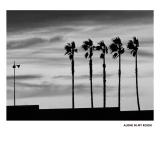
“II” is the second album by Californian post-punk heroes Alone in My Room. Continuing their exploration of isolation and urban tension, the band sharpens their stark, stripped-down sound, blending cold-wave severity with lo-fi intimacy. Pulsed basslines, detached vocals, and raw, close-mic’d production create an atmosphere that feels oppressive yet deeply personal. Following their 2020 debut Alone in My Room—a claustrophobic, late-night statement—the band pushes further into darker, more confrontational territory, solidifying their place in modern underground post-punk. Presented in ONE-OFF truly limited edition of 300 copies lacquered pressed on 180 gr. high quality solid WHITE vinyl. All tracks have been specially remastered and mastered for vinyl by Daniel Hallhuber at Young and Cold Studios (Germany).

Pulitzer Prize-winning American composer John Luther Adams wrote this piece for the Australian Chamber Orchestra. Inspired by his recent relocation to Australia and his travels across the continent - from the Northern Territory and the Red Centre all the way to Tasmania - 'Horizon' is an immersive audio experience exploring the relationship between the visible horizon, with its trees, its mountains and its human structures, and the true horizon: the enveloping circle where the sky meets the earth. How long might it take us to traverse that distance, from where we are to as far as we can see? And what lies beyond that edge of the known? The Australian Chamber Orchestra brings its passion, its virtuosity and its vibrant energy to this exquisitely unique musical experience.
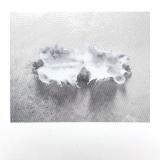
Joe Fujinoki centered the compositions of his latest album Glass Torso round the idea of the fragility of the human body. Fujinoki described the narrative thread of the album as that of “holding the shape of a human body as if it might shatter like glass”. The precariousness of the body, the essence of the body as defined by Fujinoki as the torso, and the object relations between the boundaries of dialectical exercises pack themselves into his creative process.
Fujinoki recorded Glass Torso exclusively with analog synthesizers, stumbling in and out of structural loops to find space for accidental discoveries. The ten pieces of recorded material feel somewhere on the edge of typified form, feeling like a vascular system pumping in and out its undulating liquidities. Maybe this is the hollowed space held together by Fujinoki’s notion of the torso where you hear a microscopic world, dubby and generative. Fujinoki is adept at organizing this realm of subtle sound sources, giving proper considerations of shared tonal space. Seemingly, this handling of the precarity of sonic material elucidates Fujinoki’s mature attention to detail.
Ambient music genre tropes often affirm the listeners vessel for escape and dissociation. It provides an intoxicating allure by respite from an overwhelming exterior reality far outside the listeners controls. Here this space becomes apolitical, or its protest vocabulary softer and subtle. Fujinoki does not aim to tackle hyperobject topics on how to course correct the world, but he does something increasingly rarer to come across. On Glass Torso an alternative space is created not as shelter, but as a meditation on negotiation and compromise. This twenty eight minutes of audio lays down a foundation for imagination, for imagining how to negotiate the fragility of the self. Zoomed out, the implications of his negotiative sonics can be a playground for broader reflections on distributive care and attention.
Fujinoki says he feels “alert” to his physicality and placement in the world amidst vast digital cultures creating impositions on him and his surroundings. On Glass Torso he creates a concretized space on a vinyl record, where the virtual and the tangible antagonize one another that create the spectacle of the listening experience. This spectacle is a soft one, a considered one, and an utmost enjoyable one. Fujinoki juggles opposing forces brilliantly, and formulates an exquisite palette of soft passing music so he can also help the listener with the exquisite burden of their own Glass Torso.”
- Nick Klein, January 2026
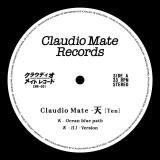
Claudio Mate announces the launch of his new solo imprint, Claudio Mate Records.
As the name suggests, the label serves as a personal platform where Claudio explores his past, present and future works, shaping his sound into a more spiritual and meditative direction.
The imprint will also feature collaborations with friends, artists and creative connections established over the years across the globe, while carrying his typical forward-thinking approach and a distinctive imprint sound trademark.
Over the past two decades, Claudio Mate’s music has received recognition and support within the electronic music scene, from main stage artists while remaining rooted in more underground circles.
Claudio Mate Records marks a new chapter in his artistic journey — a dedicated space where sound becomes introspective, evolving and deeply connected to emotion.
--------------------------------------------------------------------------------------------------------------
天 (Ten) CMR - 001
The Japanese kanji 天 (Ten) means “heaven”, “sky”, and the natural order of the universe — something vast, unseen, and beyond human control.
For the Japanese, 天 is more than a symbol: it embodies the connection between humans and the cosmos, the divine order that guides life, and the higher realms where sacred forces reside. In Japanese Buddhism, it refers to celestial realms and higher states of existence; in Shinto, it evokes the sacred heavens of the kami. But TEN is not about reaching heaven.
It's a deep, dub techno journey through shadow and space — obscure, hypnotic, and timeless. Sound that drifts between worlds, suspended in something greater than the sky itself.
The EP also features Atarashii Hi (“a new day”), a classic deep Detroit techno cut in true Claudio Mate style.

DISPLACES represents Fabris' most personal musical journey to date, inspired by the concept of hyperobjects and cartographic practices. The album sculpts a high-dimensional phased time-space composed of concrete materials and digital archetypes in a state of constant displacement. It delves into the symbolic and philosophical realms of mapping as one of the greatest sense-making mechanisms for life, in dialogue with object-oriented environments, superimposition and non-locality applied to cosmic, temporal, and emotional memory.
The sonic ecosystem expands on the image of navigating a path through a set of places, from the microcosm of quanta to the macro force of dark matter, from underwater depths to overland terrains, encapsulating the cyclical flow between birth and death, both in ecological and anthropological sense. The intersection of these shifting states is explored through the extensive processing of the langspil, Iceland's only traditional instrument, intertwined with manipulated field recordings of biophonies and geophonies captured across Icelandic and Venetian territories. These recordings form the backdrop for a meditative process that relocate familiar objects into unfamiliar realms, reflecting on the transformative power of self-reflection while encapsulating the fragmentation and entanglement found in nature and the human state. The record plunges the listener into a disconcerting and physical soundscape, as a “ghostly spectrality that comes in and out of phase with normalized human spacetime,” evoking sensations of suffocation and release as each layer continuously unfolds the palimpsest of the enclosed labyrinth.
“Extraction of the I” embodies a subatomic reaction—erupting as a molecular force that rises, only to re-submerge with a solitary exhale underwater. In this mutated dark space, beluga whales breathe into "Xanadu Phasing," creating a pulsating tension that releases only to unveil a frozen landscape.
In “Barricading the Ice Sheets” the glacial material morphs into a liquid tunnel of digital artifacts, building a wall of noise that shatters into scattered fragments of ice, resembling bird calls from another world.
A moment of stasis is offered with the appearance of an asymmetrical loop in Monolith I, evoking a primitive rite before an unknown force emerges.
The physical intensity of subsonic material in "A Quake in Being" interrupts the hieratic tone, detuning into polluted sonic matter sourced from relics of the First World War in the Venetian Prealps. The geography of this place reconciles with the original homeland in "The Map is the Territory," blending negative space with anthropogenic elements and exploited sounds of the langspil.
The burning density of "Wolf-Rayet" projects into the void, echoing the residual sounds of a local church as relics of fossilized religions. Wolf tones are the remains in Monolith II, introducing the final track, "Topography of Extinction," where evolving psilocin textures invite the listener to uncover deeper layers of meaning and dislocation.

With 'Tangkoa II', Belgian producer and multi-instrumentalist Dijf Sanders invites listeners into a vibrant and immersive sonic world shaped by travel, collaboration and instinct. Released via Unday Records, the album grew out of field recordings captured during a journey through Vietnam, later transformed into rhythmic, colourful compositions that feel both intimate and expansive.
Rather than building tracks piece by piece on a screen, Sanders approaches music as something alive and unfolding. Sounds are performed and reshaped in real time, giving the album a spontaneous energy, as if the music is discovering itself while you listen. Together with drummer and producer Simon Segers, he creates a fluid dialogue between electronic sounds and human rhythm, balancing precision with freedom.
Improvisation lies at the heart of 'Tangkoa II'. Contributions from Vitja Pauwels (guitar), Viktor Perdieus (saxophone) and Louise van den Heuvel (bass) bring a subtle jazz sensibility to the music, pushing it toward hypnotic grooves and unexpected turns.
The result is an album that feels warm, physical and constantly in motion. Electronic music that breathes, pulses and draws you fully into its atmosphere.
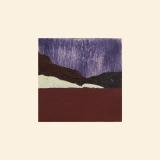
Passages in Time, the third album from Kasper Bjørke Quartet, traces the contours of a blend of spiritual jazz reverence and the calming grandeur of '80s ambient. Inspired by Christopher Nolan's observation that "time is the most fundamental part of our human experience," the compositions are approached as fragments of time and memory. Meditations on the elusive nature of time form the heart of the work, merging freeform jazz improvisations with cyclical synthesizer patterns that mirror its quiet undulations.
Dreamy synths intertwine with guitar, harp, trumpet, flugelhorn, saxophone, and flute, creating a spacious environment for contemplation. The music invites reflection on the choices that shape our lives and the lives of those closest to us, and on the quiet weight of our priorities within the brief span we call life on this planet. Each passage unfolds as a fleeting moment suspended in time. The subtitles hint at fragments from someone's diary, tender observations of love, parenthood, and connection. Together, the passages form a musical memoir of sorts, where memory and emotion are gently woven into the compositions.
Passages in Time does not impose structure or meaning, it reflects them, offering an open space as the instruments drift in and out of focus, tracing time's subtle rhythms and inviting the listener to infuse their own memories and meaning into these passages.
The album also marks a transformation for the Quartet project itself. Langstrakt (Claus Noreen), part of the original ensemble, continues to operate the synthesizers alongside Bjørke, while the wider constellation of contributing musicians has evolved. Strings and piano give way to flute and saxophone by Oilly Wallace, guitars by Danish ambient composer Anna Roemer, trumpet and flugelhorn by Malthe Kaptain, and cascading orchestral harp by Katie Buckley, principal harpist with the Icelandic Symphony Orchestra.
The cover painting is by American artist Marcus Leslie Singleton, courtesy of V1 Gallery, and reflects the meditative and timeless atmosphere of the music.
Passages in Time is released on Bjørke's own imprint, Sensitive Records, following the two previous Quartet albums released on Kompakt Records: The Fifty Eleven Project (2018), a debut that introduced Bjørke's ambient and neoclassical explorations, and Mother (2022), which expanded the ensemble's sound with emotive choir compositions and guest appearance by Sofie Birch (Unsound / Stroom). Together, these three albums trace a journey of artistic growth, from introspective experimentation to a fully realized, contemplative expression of time, memory, and human connection.
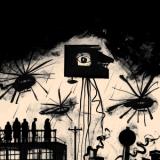
In an age that demands hyper acceleration, kinetic flashes and byte voracity, Blak Saagan sticks out like a sore thumb with a sprawling body of work that requires attention and unlocks profound symbols and meaning with every passage. After a 5 year gap, the Venetian composer returns with his most personal and openly political statement yet, ‘Un Sequestro Lungo 10.000 Anni’, a staggering 108 minute triple album soundtracking a dystopian city through flashes of futuristic fourth world visions, warehouse 80s rave-ups, meditative trance and dark rumblings. Following his acclaimed ‘Se Ci Fosse La Luce Sarebbe Bellissimo’ was never going to be an easy feat but Samuele Gottardello (Blak Saagan) approached the fresh canvas with a renewed sense of commitment sparking a dense parallel world inhabited by paranoia, control and repression. A world that is relieved by the figure of a woman with the body of a bird emerging from the asphalt and freeing humanity from the “sequestro” (kidnapping) to which it has long been subjected. Dystopia pushed to the limits and sadly close to our current affairs.
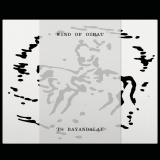
Wind of Oirat is the full length debut by Mongolian independent musician and sound artist Ts Bayandalai. Following his acclaimed 2020 EP Kimel, he now presents a further matured, composed and refined version of his signature sound, which combines traditional Mongolian music and instruments with influences from experimental music and post-rock. Deeply rooted in the cultural traditions of his homeland, Ts Bayandalai, who grew up in a nomadic family in the Mongolian steppe, explores nature and its myths, his ancestral roots, and the relationship between humans, animals and nature.
Artist Bio:
Ts Bayandalai is a Mongolian independent musician and sound artist. His childhood on the steppes shaped a deep sensitivity to natural and ethnic sound. To create his individual, deeply rooted yet modern soundscape, he combines traditional Mongolian musical elements with post-rock, experimental and electronic music, as well as from outernational music influences.
Born into a nomadic family on the steppes, Ts Bayandalai grew up wandering the vast grasslands with shepherds, absorbing the resonances of the horse fiddle and guitar — experiences that remain a primordial source of inspiration in his work.
Founder of the avantgarde band Horse Radio (2012) and the experimental project December3AM (2015), his compositions navigate cultural memory and contemporary aesthetics, reconstructing pastoral landscapes, temporal layers, and emotional spaces through sound.
His EP Kimel, released in 2020, manifested a delicate sculpting of sound, space, and cultural motifs, presenting a listening experience that is at once primal and modern.
Ts Bayandalai’s performances span China, Mongolia, and major independent music venues and festivals across Asia. His artistic vitality and creative autonomy have earned him critical acclaim and a devoted following in the international folk music and experimental music communities.

■ Human is a deeply “human” cover album by Gota Nishidera (NONA REEVES), focusing on the world of 80s–90s Japanese kayokyoku and new music.
Following his well received 2023 solo cover album Sunset Rain, this new release features an unprecedentedly wide ranging selection of songs spanning works
by Kyohei Tsutsumi, Reiko Yugawa, and Eiichi Ohtaki, all of whom Nishidera either learned from directly or profoundly respects for their devotion to the study and
practice of pop music.
■ After experiencing major success across Asia including two China tours with NONA REEVES and solo performances in Taiwan Gota Nishidera revisited the essence
of Japanese pop music from a renewed perspective. The result is a meticulously crafted collection of eight ultimate tracks, tightly packed with the charm of Japanese
pop. Born in 1973, Nishidera absorbed the new wave of Japanese music that began in 1980 in real time, and here he updates that experience for the present day.
With arrangements and vocals filled with deep affection for the originals, he offers a modern and fresh reinterpretation of these classics.
■ The album is produced by long time collaborators Yuzuru Tomita, Tomoya Yamagata, and rising talent Yudai Ohi. On the track “Woman (from W’s Tragedy)”,
Nishidera performs a duet with Megumi Mashiro of Hicksville, a vocalist he has worked with for many years on NONA REEVES recordings and live shows.
■ Mastering is handled by ambient/balearic maestro Calm, delivering a stunning final sound.
■ The jacket design is created by Keita Fukumi, producer of the YouTube channel Gota Nishidera Channel NGC. Shot at Nishidera’s local barbershop in Sangenjaya
during his usual haircut, the artwork vividly captures the “human” essence at the heart of this project."
WRWTFWW Records is thrilled to announce their 5th archival release taken from cult Tokyo label FORM@ RECORDS' catalogue, this time with the first-ever vinyl edition of Re-Form Ver-1.0. The remarkable, yet not widely known, 1999 remix compilation is now available as a limited edition 45rpm cut double LP housed in a heavyweight sleeve, as well as in digital format.
Originally only available on CD in extremely limited quantities, Re-Form Ver-1.0 resurfaces as a fascinating document of FORM@ RECORDS' late-1990s creative peak. Re-imagining key pieces from the label's catalogue, the remix collection offers a rare glimpse into Tokyo's electronic underground, where techno, house, ambient, and IDM breathe freely through FORM@'s soulful and exploratory vision.
Highlights include two remixes of Missing Project's adored gem "Poisson D'Avril" (including its well known ethereal ambient Galaxy Dub which appeared on Music From Memory's Virtual Dreams II) as well as the otherworldly Fossil (aka the legend Virgo) Mix of Penance's "Cure & Soul". Throughout, the compilation balances dancefloor sensibility with introspective listening, embodying the warm human approach to machine music FORM@ RECORDS excels in.
Another essential time capsule from a crucial era of underground music, Re-Form Ver-1.0 echoes the spirit of Warp's Artificial Intelligence era, alongside the forward-thinking energy of Ken Ishii, Carl Craig, The Black Dog, and Ian O'Brien, while keeping its feet and individuality firmly rooted in local context - the magic recipe for creating a universal, timeless language of electronic expression.
Re-Form Ver-1.0 follows the vinyl edition of Virgo's Landform Code (1998) and Remnants (1999), as well as the FORM@ compilations Art Form I (1997) and Art Form 2 (1998), further expanding WRWTFWW's archival series dedicated to uncovering hidden gems of late '90s Japanese electronic music.
David August's most expansive, ambitious album to date, the Italian – German composer and producer lets his vast sonic universe collapse, rediscovering in its wake an instrument that's been a constant presence in his life. 'Hymns' is a deeply personal set of candid piano – led reflections that tell a simpler but far more distinctive story; rather than concentrate on the life cycle of humanity and civilization, August narrows his field of vision, tracing his own background and re - asserting his relationship with a musical language he'd tried hard to unlearn. An intimate, instinctual album that emerged from isolation and contemplation, 'Hymns' is also a surprisingly hopeful suite of soft hued, evocative improvisations that well up from the depths of the soul. In August's own words, "it should recall light, not darkness."

VIER - IIII, a project by: Machinedrum x Thys x Holly x Salvador Breed.
Across its eleven tracks, 'IIII' dissolves borders between breakbeat, trap-meets-gabber, skippy UK shuffle, halftime, jungle and cinematic electronica, music that shifts from serious voltage to full-colour euphoria. What ties it together is philosophy, not genre.
The group's working method began playfully in the studio with a ten-minute egg timer: each member would sketch for ten minutes, then pass it on. That rule became a ritual, a way to keep things human, spontaneous and shared. In VIER, every track passes through four sets of hands; every decision is a test of trust. What could have been chaos instead became a flow state, a cycle of surrender and discovery thatdefines their sound.
Following singles such as Frankfurt, Control, Where Were You, Solitu and Vai Pulando, 'IIII' stands as VIER's first full statement, a body of work that feels both playful and deeply considered. Moments of quiet bloom into distorted joy; melody drifts through broken percussion; endings turn into new beginnings.

Gold Vinyl Represss
*A MODERN JAZZ REINTERPRETATION OF THE MUSIC FROM THE LEGEND OF ZELDA*
WRWTFWW Records is happy to announce the release of Casimir Liberski ReTRio's The Z Suites, a full-length jazz album reinterpreting the music from iconic Nintendo video game series The Legend of Zelda. The epic Z-Jazz journey is available in the following formats: limited edition 180g half speed mastered vinyl double LP housed in a heavyweight sleeve with obi, digipack CD with cavalier, and digital.
Casimir Liberski reimagines the golden era of video game soundtracks with jazz versions of Zelda favorites The Legend of Zelda (1986), A Link to the Past (1991), Link's Awakening (1993), and Oscarina of Time (1998) - plus a few Easter eggs! Dancing between nostalgia and avant-garde, the Brussels-born pianist and composer crafts a sonic world of pixelated folklore where melody and improvisation coexist in harmony.
Music critic Arthur Meurant perfectly explains:
For many video games are a journey of the mind. Since its inception - dating back to the early seventies - this avant-garde artistic medium has nourished the imaginations of a digital age. Casimir, like many others, has been fed a steady diet of pixels from an early age. From simple squares to cultural cornerstones they have become the trail on which playful travelers of the mind retrace the steppes of history. A shared universe, familiar yet endless, of pocket-sized mythology. Its name? Hyrule. Its goal? To amaze. In these few tracks - selected with care - the Casimir Liberski ReTRio invites you, finally, to visit a space which does not exist yet holds us all. A land where all feel welcome. Where all are happy. But also... to rediscover under another timbre the classical compositions of Master Composer K?ji Kond?. A man who, unbeknownst to him, composed our dreams as well as music. That single noble pursuit, where an artist gives soul without losing his own, is yet again a statement of humanity in its purest of forms: art as that which brings us together and makes us whole in a world eroded by modernity. Pick up your key. Gather your maps. Open the door. Adventure calls.
Long live Hyrule jazz!

Following Volume 1, this second instalment of Classic’s 30th Anniversary series dives even deeper into the label’s visionary, genre-bending catalogue—balancing pioneering remixes, cult favourites, and future classics.
Once again, this 2x12” release is beautifully presented in a raw reverse board sleeve, a tactile nod to Classic’s earliest releases. Inside, are deep teal and green GMUND card stock inner sleeves with embossed detailing elevate the package into a collector’s item worthy of the music it holds.
Record One opens with one of the most revered remixes in house history. Isolee’s ‘Beau Mot Plage’ (Freeform Reform Parts 1 & 2), originally licensed from Germany’s Playhouse and lovingly reworked by Freeform Five’s Anu Pillai with a live ensemble. It’s a sprawling, euphoric journey that helped define Classic’s international reach and is still widely regarded as one of the greatest house records ever pressed.
Up next is Greenskeepers’ off-kilter banger ‘Bang in Your Face?’, showcasing the quirky, ‘G-swing’ sound for which James Curd and his crew became known for during their long-standing relationship with the label.
On the flip, Pépé Bradock’s jaw-dropping rework of Iz & Diz’s ‘Mouth’ takes center stage—a remix composed entirely from human sounds, equal parts sensual and surreal. Universally praised, it’s a masterclass in sonic innovation and remains one of the most acclaimed house remixes of all time.
The side closes with Markus Nikolai’s beloved ‘Bushes’, The First Re-Creation (Version 1.2) by Classic co founder Derrick Carter—a distinctive and maximalist edit that draws out the Latin horns, strings, and quirky vocals, turning a cult hit into a distinctly ‘Classic’ anthem.
Record Two captures Classic’s renewed energy in the 2010s.
Folamour’s ‘Devoted To U’ from his Umami LP is a 10-minute odyssey in groove—warm, progressive, and cinematic, with soaring piano lines and narrative richness.
Then comes Crazy P’s ‘One True Light’, shimmering with spacey textures, cosmic energy, and the deep, effortless groove the band has perfected over decades.
On Side D, we have Girls of the Internet’s lush and emotionally rich ‘When U Go’, blending soulful vocals with clean, spacious production that balances melancholy with movement.
Closing out Volume 2 is Sophie Lloyd’s now iconic ‘Calling Out’, featuring the unstoppable vocal force of Dames Brown. A modern gospel-disco-house anthem, the track glows with raw energy, live instrumentation, and spiritual fire—cementing its place as one of Classic’s defining moments of the last decade.
d B2. Markus Nikolai - Bushes (Derrick Carter's First Re-Creation) Version 1.2
d B2. Markus Nikolai - Bushes (Derrick Carter's First Re-Creation) Version 1.2
d B2. Markus Nikolai - Bushes (Derrick Carter's First Re-Creation) Version 1.2
d B2. Markus Nikolai - Bushes (Derrick Carter's First Re-Creation) Version 1.2
d B2. Markus Nikolai - Bushes (Derrick Carter's First Re-Creation) Version 1.2

After two albums inspired by vast northern landscapes, the forces of nature, and an ever-present sense of duality, Glass Museum shifts gears. The Brussels-based group-originally formed in 2016 by pianist Antoine Flipo and drummer Martin Grégoire-welcomes bassist Issam Labbene as an official third member, opening up a richer, more immersive sound and setting its sights on the rhythms of the modern city.
A true turning point in Glass Museum's career, the new album 4N4LOG CITY twists the codes of electronic music, explores the depths of jazz, and asserts its eclecticism through a fresh and infectious groove.
Signed to the forward-thinking Belgian label Sdban Records, the group shapes its identity within the vaulted ceilings of Volta, a creative hub in Brussels frequented by the vanguard of Belgium's "new scene." Sharing space with acts like ECHT!, Lander & Adriaan, and Tukan, the band continues to push its boundaries through collaboration and reinvention.
Recorded between the French countryside of Drôme, the industrial edges of Brussels, and Volta, 4N4LOG CITY features striking guest appearances. Swiss drummer Arthur Hnatek-known for his work with Tigran Hamasyan and Erik Truffaz, and praised by Gilles Peterson and Laurent Garnier-drives the opener "GATE 1" into hypnotic, krautrock-inspired territory. Meanwhile, rising vocalist JDS lends soulful grace to "Call Me Names", evoking the emotive textures and elegance of vintage soul-jazz reminiscent of the likes of Jordan Rakei or Tom Misch & Yussef Dayes.
Without abandoning their melodic roots and foundational approach, the trio takes daring steps into new terrain. The experimental centerpiece "III" explores the piano as a textural and rhythmic force, drifting between ambient and breakbeat. Elsewhere, the gritty "VAN GLAS"-a hip-hop-tinged track featuring rapper JAZZ BRAK of STIKSTOF-the band ventures far beyond their comfort zone, injecting streetwise lyricism in their mix of electronics and jazz.
Fueled by the heartbeat of the city, 4N4LOG CITY captures the mechanical ebb and flow beneath concrete towers-the anonymous rhythms of daily life moving over the asphalt, and the fleeting, meaningful connections made along the way. Produced by Antoine Flipo and mixed by Elsa Grelot (Avalanche Kaito), the album stands at the intersection of human emotion and urban architecture-a post-modern, deeply cinematic work that asserts Glass Museum's place at the cutting edge of European music.
