serenitatem, the fifteenth installment of FRKWYS, RVNG Intl.'s collaboration series pairing intergenerational artists in creative conversation, joins Visible Cloaks with Yoshio Ojima and Satsuki Shibano, two trailblazers of the Japanese avantgarde music and visual arts scenes of the 1980s and 90s.
Yoshio Ojima began his career as a composer of environmental and ambient music, with a particular interest, and optimism, in the possibilities of generative software. His compositional pursuit of human synthesis with computerized forms was realized in its fullest potential alongside Satsuki Shibano, a pianist renowned for her interpretations of Erik Satie and Claude Debussy. Together, they were among a handful of influential Japanese artists whose innovations still resonate, if not more vibrantly than ever, well beyond the tightly-knit scene's original core. In the early 90s, Ojima was among the programmers of the influential satellite radio experiment St. Giga, a constantly-evolving sonic landscape that combined field recordings and sound collage with occasional readings of Japanese poetry. Satsuki was a regular reader for the station. This musical terrarium bloomed out of sight in a small Tokyo studio, a greenhouse of sound with no set start or finish time that audiences could tune into, absorb, and immerse.
The perpetual flow state of St. Giga — recordings of which Ojima shared with Visible Cloaks — would be highly influential to serenitatem's constitution. As Visible Cloaks, the Portland, Oregon duo of Spencer Doran and Ryan Carlile have developed their own set of creative strategies that form an aesthetic fuse point between human intention, aleatoric composition, and improvisation.
These are notions most recently reflected in 2017's Reassemblage and Lex, a respective album and EP in which the duo combined generative software and virtual representations of global instruments into lacy, interlocking patterns. Long time admirers of Ojima's work on albums like 1988's Une Collection Des Chainons, Doran and Carlile discovered after an online introduction that they shared with Yoshio and Satsuki an abiding interest in pre-classical composers, the Lovely Music, Ltd. label, and the British avant-garde, as well as a mutual respect for one another's techniques and processes.
The four musicians met in Tokyo, Japan at Sounduno Studios in December 2017, at the tail end of Visible Cloaks' first Japanese tour, to commence work on serenitatem. Leading up to the studio sessions, Doran and Carlile sent Ojima processed sound sketches recorded while on a European tour, which Yoshio would add to and return. Visible Cloaks would then fold Yoshio's edits back into the original compositions, which Doran and Carlile brought to the exploratory recording session. During that week together in Tokyo, the quartet made use of a number of creative strategies — 'echoing sound together,' as Yoshio puts it. Among the strategies, MIDI randomization gave the quartet melodic lines and what Doran calls 'randomized clouds,' or 'tightly grouped notes that become smeared tonal clusters functioning more like chords in themselves.' Carlile would also feed Ojima and Satsuki's text into Wotja, a generative music software which produced a MIDI language around which the quartet expanded their compositions.
'The aim,' Doran says of serenitatem, 'was to make a work that was not specifically ambient (or environmental), but something more multi-hued, weaving these deconstructive concepts into an album that has a deeper architecture underpinning it.' Accordingly, serenitatem is a marvelously sharp record, its sutures between human and machine virtually impossible to find but suggested everywhere you turn. The collaboration among Ojima, Satsuki, and Visible Cloaks is both musically and conceptually inseparable from the technology that made it possible. Throughout the album, Shibano's playing resonates like Satie's, her rhythms cascading like drops from leaves an hour after the rain. Overtones are stretched and warped like modeling clay, then spun around and shown off from multiple angles.
A single soaring note might seem to be suddenly plunged underwater, its richness of sound made shallow and its sharp edges blunted. Pittering chimes and rapidly warping vocal samples hang in the luxuriously glossy space, water trickles from ear-toear, familiar melodies rise from nothing and dissolve before they can be traced. With the depth of its emotional charge, serenitatem burns away the easy cynicism of the day, presenting itself as the kind of delocalized work of art the internet promised us decades ago — a synthesis of artistic visions, technological sophistication, futurist ambition, and, occasionally, ancient polyphony. Listening to it can feel a bit like tuning in to a 21st Century version of St. Giga: It's a place where the future still grows.
Visible Cloaks, Yoshio Ojima, and Satsuki Shibano's serenitatem, FRKWYS Vol. 15, will be available across LP, CD, and digital formats on April 5, 2019. The quartet will perform select live shows throughout 2019.
quête:human machine
A world premiere of AI-generated symphonic music!
All three audio files are compiled from two live recordings with different microphone settings. The cover image is generated by algorithms trained with the following image searches: migration, mediterranean, boat, Libyan coast, EU. Different search engines were used. »Land der Musik« celebrated its world premiere on 7 October 2018 at steirischer herbst '18 - volksfronten in Graz, Austria. Commissioned and produced by steirischer herbst in cooperation with ORF Musikprotokoll.
A1. soundalikeStrauss (an audio reverse-engineering tool is used after the initial cross-fade) A2. AIstrauss (algorithms are trained with midi-files of Johann Strauss waltzes) B1. AImahler (algorithms trained with midi-files of Gustav Mahler symphonies) B2. (untitled)
A new standard of beauty. Artificial intelligence (AI) algorithms can now group photo pixels or audio waves into meaningful categories. This is similar to how our brain operates, yet the outcome seems distinctively non-human. At the same time it appears that the sphere of our appreciation and imagination may just have expanded. The question of whether we are still able to see and hear the difference between automated and so-called autonomous artifacts should be left to historians. On the other hand, producing this analog audio record with this image on the front cover really is an antagonism. A more appropriate medium might be a tracking chip of your online and offline activities generating customized results in real time—be it images, music, or whatever.
If AI is communist (to quote the libertarian Silicon Valley entrepreneur Peter Thiel), then this statistics-based technology might actually reinforce centralized monopoly capitalism and the coming crisis of inequality, just as it might accelerate into Deleuze's notion of the Society of Control. But it might also be seen and heard as a demo, a new standard of beauty, for the redistribution of wealth and for solidarity; in short as a utopia freed from exploitation, nationalism, and racism, liberating us from our own perception of this world. »Land der musik - The Graz AI Score« demonstrates how machine learning might help us to finally create the perfect Austrian national music identity. Yet in doing so, our ultimate aim is to get rid of the construction of national identities all together.
»God created man because he dreamed him. / But man forgot God and created the machine because he dreamed it. / At the end of the twentieth century, however, the machine has forgotten man. / Who could predict who or what she dreams of« (Friedrich Kittler)
Transversales Disques presents KSHATRYA, (The Eye Of The Bird), never released before
recording by french avant-garde electronic composer Igor Wakhevitch, who composed a bunch of
major experimental albums in the 70's such as Logos, Docteur Faust, Hathor, Les Fous d'Or,
Nagual and Let's Start.
During this 10 years period, Wakhevitch was close to Jean-Michel Jarre, the Pink Floyd, the Soft
Machine, and legendary choreographer Maurice Bejart having with him many conversations around
dance and music, human body and soul, spiritual path, collective life, new society, human evolution.
As a composer Igor Wakhevitch collaborated with Salvador Dali, Carolyn Carlson, and Terry Riley to
name a few. He's considered as one of the first French composer using synthesizers like Synthi
AKS, ARP2600 or Moog modular systems.
After spending almost 30 years in India, Igor Wakhevitch dug in his archives this unreleased work
recorded in 1999 on his 'Mysterious Island 88' system. Esotheric, sacred and cosmic, KSHATRYA,
(The Eye Of The Bird) is the logical follow up of Igor's early works and a monumental piece of
electronic music. A must!
- Limited vinyl only release - Including postcard with download code for another new album from Jacek Sienkiewicz.
IMOW, or 'In My Own Wave' - Atmospheric, cinematic, stirring and utterly engaging, this is surely Sienkiewicz's most personal work to date and very possibly his best!
IMOW, or 'In My Own Wave' is a moody record. Although overtly experimental in form, it's quite different to Sienkiewicz's abstract, improvisational albums recorded with Max Loderbauer or AtomTM. Clocking in only 35 minutes and comprising of eight tracks, 'IMOW' is several years of work distilled into a dense, concise whole. Atmospheric, cinematic, stirring and utterly engaging, this is surely Sienkiewicz's most personal work to date and very possibly his best: his constant struggle to find a perfect balance of flesh and machine, or to translate human emotions to sound by means of a modern studio is manifested here in its purest, most consistent and, surprisingly, very accessible form. From subtle drones, through chants and rhythms echoing in mountainous chambers, to innumerable insect-like sounds and tiny details, it's an encephalogram recorded to tape (or disk). With all its complexity, it's not overwhelming: the meticulously constructed compositions leave both space for the sounds to breathe, and for the listener to fully experience it, without being bored, tired, wishing for less or being hungry for more. And there's beauty in this record, and hope - in the world of overpowering darkness and constant noise 'IMOW' feels like a peaceful trip into the untouched nature with all its wonders - offering in equal parts rest, strength and inspiration.
SC-164 is a new label based out of Brooklyn, NY, run by Greg Schappert aka Donor.
The Channel series is set to include a run of electro and experimental EPs under his SC-164 alias. For the second installment, he presents inventive, rough-edged future music with no signs of human life, and it's utterly thrilling.
The first track is a blizzard of frosty, serrated synths and hard drums that are designed for dance floor destruction. 002-002 continues this way, an intergalactic face-off, with laser synths firing across the face of jittery, punch drum programming. Textured and raw, it's pure and powerful machine music. Next up, 003 layers up ghoulish white noise and synth bleeps that are brilliantly bleak and dystopian. The closer is a roaming electro cut, with menacing bass and groaning synths taking you to the heart of a stone-lit frenzy.
Khaliphonic 11 Is A Truly Epic Release From One Of Our Most Prolific Artists, Brendon Moeller Aka Echologist, Aka Beat Pharmacy. In Just The Last Two Years, Moeller Has Released On Labels As Varied As Echocord, Silent Season, Kynant, And Rohs!, To Name Only The Most Well-known. Recognized Globally For A Singularly Organic And Dubwise Approach To Techno, We Are Proud To Have A Close Working Relationship With An Artist Who Coaxes Humanity And Warmth From Machines Like Few Others. The Dub Purpose Ep Is One Of His Finest Achievements.
As We Planned A Third Zamzam Release From Our Favorite Well Of Hardware Sonics, Four Tracks Emerged As Comprising A Set That Simply Did Not Want To Be Separated. The Four Tunes That Make Up This Ep Felt Like Chapters In A Single Gorgeous Narrative, And So A 12' Was Born.
We Asked Brendon How Dub Influences His Process, And What This Ep Specifically Is About. He Replied:
"dub Facilitates Whatever Vision I Have With Music, Which Is One Of The Reasons I Incorporate A Dub Approach In Everything I Do. Whether Infusing Nyabinghi Rhythms With Epic Strings, Roots Dub With Industrial Dread Or Grungy Modular Antics With Stepping Vibes, Dub Is The Glue That Keeps It Together. The Inspiration Behind These Tracks Are On-u Sound, Wordsound And Bill Laswell, Travellers Who Understood The Possibilities Of Dub."
The Dub Purpose Ep Does In Four Tunes What Many Lps Struggle To Do In Eight - It Builds A Cohesive Narrative Arc That Moves From Menace, To Exploration, Through Mystery, Closing With Beauty. And Just Wait Til You Hear It On A Proper Sound...
Mastered By Sam Precise.
As humans living on the planet today, we have become so removed from our original, natural habitat—the forest—that we forget our wild roots, our primal, animal origins. Music is one of the things that can bring us back to that place, that can put us in contact with a felt world of instinct, immediacy, and presence: a world where language and the problem-solving mind are not needed, where the music keeps your mind and body in the present moment, and the point of dancing becomes the dance of our inner wildness and animality itself. Hans Berg's Sounds of the Forest Forgotten affirms that music can bring us to a state of mind and body that can help us feel what we've forgotten from the forest. The overlaying project of the album is to conjure musical and conceptual resonances between mysticism and nature, summoning the incredible depth and force of nature that we usually miss, especially living in contemporary urban cities. Sounds of the Forest Forgotten channels the creativity, playfulness, and freedom of a life both before and beyond ours through the sounds of analog and digital synthesizers, a modular system, drum machines, and computers. Recorded between Hans's studios in Berlin and on the Swedish countryside, the album similarly shuttles between contemplative and ecstatic, between delicate and powerful, mixing sublime psychedelic techno compositions like 'Emerald Sea' with acidic dance-floor bangers like 'Storm' and 'Milk Thistle,' all nestled between contemplative and textural ambient compositions like 'Butterfly' and 'Glow Worm.' Berg is known for his enthralling productions and energetic livesets that capture dance floors with his particular brand of hypnotic techno, replete with angular lines, affecting melodies, pulsating basslines, and big drums. He also produces atmospheric scores and ambient soundscapes to accompany the video art and installations of long-term collaborator and celebrated artist Nathalie Djurberg. Berg's live sets have found a home in nightclubs around the world, with recent gigs in Berlin, Stockholm, New York, Tokyo, and Melbourne, to name a few. In addition to 2MR, he has released his solo work on record labels including Ian Pooley's imprint Montage, Klasse Recordings, and The Vinyl Factory. His ongoing collaboration with fellow Swede Johanna Knutsson - as Knutsson/Berg - has led them to start the label UFO Station Recordings, on which they release their own material. The duo also has released on labels such as Idle Hands, Default Position, Kann, and Random Island.
Line Explorations present its first release - a compilation consisting of six tracks by six national artists, producing under the names of T'iwu, HTL, PX, emme, AMSH and Mensaje Sanador, serving as a sampler for what's to come in the future on the label and the sounds the label will evoke such as techno, IDM, ambient, noise, drone and experimental vibrations from the further avant-garde,
The first track focuses on growing an organic and everyday sonic scape with the use of chords and melodies filled with light touch - reminiscent of clear skies and sunshine - which creates an ambient feel similar to that of daily vibrations of life as presented and explored by T'iwu.
HTL enhances the depth of the reflections of today's emotions one can feel by delving deeper into everyday surroundings and exploring the noise/drone side of the ambient musical styles by mixing melodic elements with the out of the ordinary effects which shock and ululate while shaping the musical texture into a darker and deeper atmosphere.
The following track, by PX, elevates the atmosphere into a more jovial soundscape full of '80's inspired electronica and sci-fi soundtracks. The beat rolls off and twists in a funky groove helping develop a danceable pace for the release.
On top of that, emme presents the fourth track - in the shape of techno meets breaks - where more classical elements of industrially influenced electronic music can be traced from yesteryears. The sounds engulf in warmly distorted melodic strings while flowing over and under the rhythmic structure.
In contrast, AMSH's ''Subway'' presents a downpour of heavy sounds, such as noise influenced synths and delayed infected percussion, along with field recording of trains help envision the movement of a manmade machine and its flow through the undergrounds of today's world.
The final piece, of the label's initial release, comes in the shape of a Mensaje Sanador or healing message. The track takes on the elements of the three titles that have preceded it and explores further the dynamics between current and classical sounds of the electronic dance music genres by delving deeper into sound synthesis, melodies and rhythm as to help one submerge further into exploring such sounds, their history and the future to come.
Lyrics, ideas and sounds were exchanged at the speed of broadband with Maite (Mursego). Aiora (Zea Mays) required only two lines, executing like an emotive, humanity-filled machine. Gaizka & Ager (Audience) arrived as they always do, fitting their music into impossible spaces. Miren (Mice) voiced her heart while opening up her throat, while Rafa Rodrigo really strummed his guitar. Ainara LeGardon brought the extremes, the excitement. Our cries arrived while listening to hundreds of horses galloping across the plains, dust floating in the air behind them. The feeling of everything falling into place, finally.
All of this had just become an album. Aitor Etxebarria closed the door, elegantly. Moxal is the name given to a foal. Sensitive to the environment, the places it wanders and the beings around it. Sometimes doubtful, impatient, though always ready to listen while growing and learning to walk alone. Moxal is a project coordinated by musician and producer Hannot. After Audience, his new proposal is a space for others to inhabit.
Though wild, Moxal lets people come close, basking in the warmth, assembling things and building oneself through proximity and untamed listening.
My love wears forbidden colours My life believesMy love wears forbidden colours My life believes in you once again
James Baldwin was an unparalleled master of the written and spoken word. He was best known for his brilliant essays, plays and novels that shone light on his insights into race, sexuality, spirituality and humanity. Baldwin was an incredible orator who commanded the power of words. Whether on the pages of his books or in speeches and debates, he was passionate, compelling and powerful. This EP is the second half of a project that is a tribute to Baldwin. It features extracts from the audio portion of a documentary film shot of a discussion led by James Baldwin and Dick Gregory at the West Indian Student Centre in London in 1968.
Peabody & Sherman is a partnership between Phillip C Hertz and Curtis Ruptash - drummer and bass player respectively. They share common interests in dub, afrobeat, funk, jazz, ambient and improvisational music. They have long histories of the employing 'studio as instrument' approach to recording. The foundations for this EP was P&S rhythm tracks recorded at the Wayback Machine Studio in 2011. Supplemental instruments were layered on to create the final product. The same original sessions were also the source for their James Baldwin EP released in 2012. That EP featured remixes by Area and Afrikan Sciences.
The same concept is applied here, with remixes being contributed by Waajeed and BusCrates. Waajeed is a Detroit producer known for inventive and genre-defying music. He is background includes his work with Slum Village through to the Platinum Pied Pipers and to his work with his own Dirt Tech label today. BusCrates is a Pittsburg based producer known for his inventive use of electric and vintage synths to create deep layers of analog goodness.
2018 played host to a bumper crop of sounds from some of Philly's grittiest, including Great Circles mainstays M//R and Chaperone. To close out the year that was, we are pleased to present Heckadecimal's 'Murder Tape.'
A Minneapolis-based producer and acid auteur, Heckadecimal has been a fixture within the vibrant Midwestern electronic music community for nearly 20 years. Founder of the legendary 'Anti-human' events and co-curator of the ever-prolific Always Human Tapes imprint - alongside Ryan Wurst and Peter Lansky - Heckadecimal's reputation is one of unrelenting creativity and tireless advocacy for sonic experimentation. His work has found its way to light via a slew of pseudonyms and stage monikers, including The Worm, noface and Wonder Sirens.
In short - Heckadecimal lives and breathes the sonic matter that he leaves pouring out of studio monitors, busted bar systems and finely tuned rave stacks, wherever his travels take him.
Live performance lies at the core of Heckadecimal's practice. When he stormed through Inciting HQ in Philly earlier this summer, he took command over an arsenal of hardware that reminded us of how Octave One or Shawn Rudiman might show up. These were machines that he had lived with; touched with custom modifications, hand-drawn stickers and pockmarks incurred in battle, one got the sense that the gear was a personal extension of the artist.
Perhaps it's a bit maudlin, but we feel a certain kinship with this project. Indeed, these tracks at times feel very much of a piece with the gnarled tonalities in which our stable typically traffics; all low-slung riddims that reach at equal lengths towards mutated IDM aesthetics and post-Packard Plant techno extrusions. These are future perfect grooves that glide along under the vast Midwestern sky, providing a fertile communication conduit with the City of Brotherly Love.
Give thanks for acid. Great Circles will see you in the New Year..
Pi Gao Movement presents their first and long awaited release of the HAdES (Humanoid Advanced Engineering Society ) Network concept on vinyl. Originally released as a digital download, Descendants of Starfish Prime introduces Majestic 12 as a genre - blending mavericks of electronic music. Much like the name implies, Descendants takes a still landscape and captures it in time as it is violently uprooted, stripped to it's base elements and becomes something foreign, something unimaginable, something beautiful. This four song release takes the listener through a journey offering little consolation and no apologies; using varying tempos, patterns, structures, and vocals as operators on a clean canvass. What is the HAdES Network Series The HAdES or Humanoid Advanced Engineering Society Network series will be a collection of works from various artists presenting obscure and diverse facets of electronic music. Man creating machines to replace the human being. Who is Majestic 12 Majestic 12 is not a who, but a what. There are no names attached to this conceptual group. It is a cluster of concepts that have been carefully selected through experimentation. Strains have been extracted, combined, and developed
Lost Futures is a new label that explores experimental and often radical approaches to dance music from the past. In a musical landscape that increasingly claims to seek and reward new forms and ideas, Lost Futures delves into the recent past to revisit forward-thinking, optimistic projects that, owing to the social, musical or outright political climate, perhaps struggled to find an audience. Allowing only time to re-contextualise these leftfield, sometimes misunderstood and ultimately human bodies of work, Lost Futures taps into the inherent idealism of rave.
LF001 trips back until the early nineties to revisit the alternative scene emerging from the Dutch city of Utrecht. Here, three young men - DJ Zero One (Sander Friedeman), TJ Tape TV (Arno Peeters) and DJ White Delight (Richard van der Giessen) - joined forces to form 'The Awax Foundation'. Inspired by the transcendent and revolutionary electronic music arriving on their shores imported from Chicago and Detroit, combining their knowledge, gear and ever-expanding vinyl collection allowed additional freedom in paying sincere tribute to these intoxicating sounds, while also developing their tastes in a more personal, eclectic direction.
The musical flavours of Awax initially leaned toward acid house and the roots of techno. However, with three different mindsets in the mix, their tastes were rarely fixed. One thing each shared in common was a devotion to collecting rare sounds, specifically more adventurous and international samples than those emanating from the increasingly-hard, masculine dance music emerging from the Netherlands during the period. Inspired by the cross-over global sound of bands like Suns of Arqa, or 'World Music', as it was perhaps patronisingly termed at the time, the trio became interested in the idea of making techno with 'ethnic instruments'.
Of course, this being 1992, none of The Awax Foundation had access to such instruments, instead, they had a vast, collective library of samples from all over the world. There were no collaborations and no clear plan. Instead, they set to work using a Yamaha TX16W sampler, the legendary Atari 1040ST computer, a cheap mixing desk and a couple of low-end synths and FX machines. When Richard mentioned the project to his friend, Akin Fernandez, the London DJ and owner of cult label Irdial Discs, Fernandez was intrigued enough to invite the trio to record a one-hour show for his 'Monster Music Radio' series on London's then-burgeoning Kiss FM.
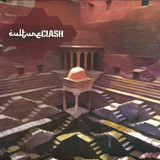
Forced to come up with a name, 'CultureClash' seemed like the obvious choice, even if the members of Awax were only creatively sparring among themselves. Along with the term 'ethno-techno', slightly dubious to a hopefully more conscious Western audience in 2017, these were the only guiding principles to the quietly ambitious project that soon combined cutting-edge machine rhythms with samples sourced from everywhere from Bolivia to Togo, and inspired by everything from Ravi Shankar's epic soundtrack to the Oscar-winning movie Ghandi, to the technical limits of their own setup requiring a dazzling degree of cut-and-paste work. Some tracks even emerged out of academic studies within the ethnomusicology department at The University of Amsterdam.
The show aired on October 2nd, 1992, recorded in one blistering take and without any rehearsals, traversing a huge variety of tempos and styles. If the performance wasn't seamless, it was undeniably thrilling, fresh and ambitious. As such, several labels, including Fernandez's aforementioned Irdial Discs expressed an interesting in commercially releasing CultureClash, while another imprint proposed a series of twelve-inches and an album. But the sheer complexity of the project meant that it never saw the light of day, while the trio embarked on different journeys ahead, both creative and personal.
Twenty five years later, and the original CultureClash lineup and founding members of The Awax Foundation provide the sound of the first release from Lost Futures. An otherworldly, ambitious and optimistic compilation, accompanied by extensive sleeve notes from the trio, CultureClash is a timeless ode to experimentation in dance music's ever-overlapping culture.
2018 played host to a bumper crop of sounds from some of Philly's grittiest, including Great Circles mainstays M//R and Chaperone. To close out the year that was, we are pleased to present Heckadecimal's 'Murder Tape.'
A Minneapolis-based producer and acid auteur, Heckadecimal has been a fixture within the vibrant Midwestern electronic music community for nearly 20 years. Founder of the legendary 'Anti-human' events and co-curator of the ever-prolific Always Human Tapes imprint - alongside Ryan Wurst and Peter Lansky - Heckadecimal's reputation is one of unrelenting creativity and tireless advocacy for sonic experimentation. His work has found its way to light via a slew of pseudonyms and stage monikers, including The Worm, noface and Wonder Sirens.
In short - Heckadecimal lives and breathes the sonic matter that he leaves pouring out of studio monitors, busted bar systems and finely tuned rave stacks, wherever his travels take him.
Live performance lies at the core of Heckadecimal's practice. When he stormed through Inciting HQ in Philly earlier this summer, he took command over an arsenal of hardware that reminded us of how Octave One or Shawn Rudiman might show up. These were machines that he had lived with; touched with custom modifications, hand-drawn stickers and pockmarks incurred in battle, one got the sense that the gear was a personal extension of the artist.
Perhaps it's a bit maudlin, but we feel a certain kinship with this project. Indeed, these tracks at times feel very much of a piece with the gnarled tonalities in which our stable typically traffics; all low-slung riddims that reach at equal lengths towards mutated IDM aesthetics and post-Packard Plant techno extrusions. These are future perfect grooves that glide along under the vast Midwestern sky, providing a fertile communication conduit with the City of Brotherly Love.
Give thanks for acid. Great Circles will see you in the New Year..
Optimo Music is delighted to release the new album from Lia Mice, Australian-born but UK-residing DJ, producer and instrument designer.
Here's a few words from Lia - "When I moved to London in 2015, many things changed at once - I started going to more techno and electro nights, I changed my live-set setup, and I had access to a fully-equipped recording studio through my music masters programme. At the same time I was reading a lot of books on time travel, not just science fiction but also psychology and neuroscience - like how the human brain perceives time from moment to moment, how we can experience overlapping time, and how we interact with our past and future through memory and imagination. 'The Sampler As A Time Machine' is the result of all these new influences coming together. The tracks were developed out of ongoing studio experiments interpreting these different ideas of time travel by using samplers and tape to re-sample and manipulate original music performed by me on various instruments including my voice."
'Breathe The Machine' is the first installment of Dojostudio and presents a musical world rich in harmonics, low frequency and melodic impact, yet with enough space in between to allow that perfect breathing room essential for powerful dance cuts. 'Breathe The Machine' portrays a world that initially feels robotic, yet instills an organic fluidity known only to come from humanoid beings, breathing life into a system littered with code and coldness. Billy Dalessandro presents 3 original cuts, plus a rendition of the title track by Mike Shannon.
Both for 'Breathe The Machine' and 'Tractor Beam' the Waldorf Microwave XT 2 and the Jomox 888 were the primary sound sources. For 'Breathe The Machine' the 888 was processed through a Jomox T-Resonator, which added harmonic distortion, and also spread the stereo spectrum out a bit offering the drums a more washed-out feel. The XT was layered track by track by performing patterns live into an editor until the desired ideas were properly recorded. Mike Shannon was brought on board to offer a contrasting expression of 'Breathe The Machine' and when asked how the process went he stated:
"I took the source sounds, edited them and processed them to work with a groove I had written for this remix. I mainly used the pad, lead synth and synth effects from the original. The rest of the gold I engineered."
On 'Tractor Beam', subtle use shows that ample space in between ideas make things seem larger than life. By allowing a more minimal approach in the production process the sounds can easily co-exist, allowing for that 'big room' sound without overwhelming the overall experience.
The digital exclusive 'Deliverance' was created using NI's Maschine for the drums, and FM8 and Reaktor were the sources of the synths. Drum patterns were created in Maschine and then recorded in realtime back into the DAW as it played, with real-time tweaking of the hi-hat to create the desired impact, especially at the break. The synth and pad patterns were recorded as MIDI into the editor, and then automation of the synths' VCF rounded out the expression needed to complete the emotional process.
All in all, DOJ001 is mostly an all-hardware showdown, with 'Deliverance' being the only 'virtual' attempt. Life is in nature, not in machines, yet the culmination of the two worlds can be beautiful, if only properly tamed and understood. Lest we beware! Stay tuned... and thanks for listening!
- Maybe that is something unique to Cologne, a good balance between the human and the machine. (...) This was an idea to find people particulary from Cologne, I think that there is a scene here. Just parachuting me in and seeing what will happen, you know. It's all about finding people who think alike.' Kurt Wagner (Lambchop)
In 2016 Week-End Festival invited Lambchop's Kurt Wagner to perform songs from his album FLOTUS in new version with musicians from Cologne. Here are two songs he did with Gregor Schwellenbach. Recorded live at Stadthalle Köln-Mülheim
Portland, Oregon resident Mary Sutton's solo debut materialized in the wake of a performance she gave at a clothing-optional soaking-pool sauna: 'I had never composed for synth before but wanted to make something people sitting motionless and naked in hot bubbly water would want to hear.'
It was while in this headspace that she reconnected with Satie's entrancing cyclical motifs, particularly the way 'he subtly spins melodic fragments, and pivots harmonies and phrases so the repetitions feel new and surprising yet soothingly familiar, as if casting a spell.'
The nine intuitive instrumentals comprising The Deep End accomplish exactly that, threading complementary shades of soft-hued hypnosis, dazed modal introspection, icy amusement park reverie, and lunar lullaby into a prismatic suite of contemplative melody and synthetic communion.
Sutton's songs are active rather than ambient yet their structure is more suggestive than scripted, full of lulls, asymmetries, and daydreams. Each track was written specifically to be played live on an analog synthesizer, with no overdubs or post-production wizardry. The sound of Saloli is one of warm-blooded wiring, turned on and tapped into, emotive and electric, storied machines speaking through all too human hands.
They say we are a product of our environment, you are what you eat and you reap what you sow. But what happens when you can no longerdig the earth and your food is toxic Amselcom has forever been near the forefront of change, exposing new ideas and giving insight through music and creativity. Our goal was always to bring the world closer by removing barriers and letting sounds and rhythm demonstrate humanity's true, loving nature. That is why a transformation has taken place and with this latest release we hope to give back and contribute without the shallow, meaningless compensation that feeds the music industry.
Geplantes Nichtstun demonstrates this concept perfectly, by saying it is time to remove ourselves from the machine and make our own way, in our own time. These tracks look to offer introspective that can only be found after eliminating barriers like money and fame. Taking time for idleness lets us forget about the things that try and control our lives, a necessary respite in a time of increasing global noise.Tracks like Opak offer the perfect accompaniment to a quiet time of soulful reflection and Mario Wagner's wonderful Control Room image brings us the idea of self direction and taking charge of your own destiny... one rest at a time.
Robotron is the machine formerly known as Xinner. This is its first offering for the ESP Institute. Side A's Dream Resonator is an idiosyncratic network — dexterous machine drum/percussion programming, an ebb and flow of floating arpeggios, syncopated counter-melodies and a hail of stabbing stringscontinually diffusing into ethereal vapor — all stacked into an (aptly-named) orchestral anthem. Side B's Ice takes a similar approach with arrangement, each instrument carving out its place in the track's mechanics for a glorious convergence of patterns, but, where side A proves optimistic, here we sense a more menacing undercurrent, an austerity powerfully articulated through towering kicks and claps so compressed they fill up every dark corner of negative space. Indeed, Robotron has an innate command for building and calibrating robust systems, but beneath this calculated veil we find the remnant human behavior of Xinner. These two songs will whisper loudly but scream quietly.