
Cerca:human machine

Lenxi's debut album on Nous'klaer Audio receives a well-deserved remix treatment, breathing new life into its original dream world. Kindred spirits Polygonia, oma totem, Human Space Machine, and Daisy Moon each reimagine the material through their own distinct sound. A powerful and diverse collection of reinterpretations: From intricate, hypnotic textures to driving, dancefloor-ready energy, each remix opens a new pathway towards a vibrant second life primed for club systems and festival stages alike.

With our 12th anniversary approaching, we invited Dutch artist Human Space Machine, who delivered Perception Field, a five track EP built around the idea that perception is never fixed.
Across a wide tempo range, the record explores how the same material can shift depending on focus and context. Foreground and background exchange roles. Subtle textures and negative space shape the impact as much as the main rhythmic elements. Perception Field approaches club music as something fluid and responsive, where meaning forms through the act of listening itself. It’s an impressive showcase from an artist that shows once again he’s capable of merging layers of his excellent sound design with deeper feelings.

With our 12th anniversary approaching, we invited Dutch artist Human Space Machine, who delivered Perception Field, a five track EP built around the idea that perception is never fixed.
Across a wide tempo range, the record explores how the same material can shift depending on focus and context. Foreground and background exchange roles. Subtle textures and negative space shape the impact as much as the main rhythmic elements. Perception Field approaches club music as something fluid and responsive, where meaning forms through the act of listening itself. It’s an impressive showcase from an artist that shows once again he’s capable of merging layers of his excellent sound design with deeper feelings.

HSH is a new collaborative series by Human Space Machine and Sunju Hargun. It is an exploration of their shared friendship & connection to electronics, machines and the beauty of unpredictable mistakes, extending into long studio improvisations that shaped an EP born from free-spirited jam sessions.
This debut features four jams combining the strengths of both artists. It is heady and meticulously crafted, filled with subtle details, a trippy fusion of light and dark, thoughtful and physical techno with space to experiment.
Something for everyone, every space and every hour.
Credits:
Written, Produced and Recorded in Amsterdam, March 2025.
Distributed by One Eye Witness
Mastering: Giuseppe Tillieci (Neel) Enisslab

space•lab presents the Negen EP from Human Space Machine, a journey into Mike Jungerius’ unique take on the deeper shades of techno. Featuring four meticulously crafted tracks, this release showcases his signature sound—as rolling basslines and hypnotic acid lines weave seamlessly through intricate percussion, beautifully balanced with the perfect dose of melody and harmonics.
Each track offers a unique glimpse into Human Space Machine’s refined approach to techno: atmospheric yet grounded, minimal but rich in texture. With tracks ranging from 100BPM to 144BPM, this is the record you can reach for at any time of the night.

- A1: Mattheis - Pt4
- A2: Aera - Glass Channel
- B1: Isole¦Üe - No Let
- B2: Dokumn - Come For You
- C1: Ed Davenport - Mendocino
- C2: The Drifter - Three Words Max
- D1: Human Space Machine - Mitochondria
- D2: Oliver Deutschmann - The Infidel
- E1: Mano Le Tough - An Hour In The Morning
- F1: Nathan Jonson - There's A Pink In There
- F2: Kev Sheridan - Samhain
11
Maeve kicks off their first label compilation 'Heavy Rotations Vol 1', covering all facets of the labels sound with tracks from Mano Le Tough, Isolée, Oliver Deutschmann, Ed Davenport, Aera and more. Comes as 3 LP in a specially designed cover consisting of 3 differently printed innersleves in a cut out outersleeve.

- A1: Robot Rock/Oh Yeah
- A2: Touch It/Technologic
- A3: Television Rules The Nation/Crescendolls
- B1: Too Long/Steam Machine
- B2: Around The World/Harder, Better, Faster, Stronger
- B3: Burnin'/Too Long
- C1: Face To Face/Short Circuit
- C2: One More Time/Aerodynamic
- C3: Aerodynamic Beats/Gabrielle, Forget About The World
- D1: Prime Time Of Your Life/Brainwasher/Rollin' & Scratchin'/Alive
- D2: Da Funk/Dadftendirekt
- D3: Superheroes/Human After All/Rock'n Roll
12
Daft Punk's 'ALIVE 2007' set, which won 2 Grammy Awards in 2009 (Best Electronic Album and Best Electronic Single categories) and was previously only available on CD and digital, will be released for the first time as a double vinyl with a triple gatefold sleeve.
Derived from their live performance at Bercy on 14 June 2007, this album was originally published the same year on November 19th. Through this amazing live experience, Daft Punk manipulated and reworked their established material, transposing and deconstructing the structures of their studio tracks.
A limited edition of 'ALIVE 2007' will be released at the same time, in a special box including the album on 2 solid white vinyls, plus a vinyl bonus (Side A: the show's encore (human after all / together / one more time (reprise) / music sounds better with you) /Side B : 'ALIVE 2007' pyramid logo etched), a 52 pages book (pictures taken during the shows), a slipmat and a download card.
'ALIVE 1997' is also being reissued separately. Recorded in 1997 in Birmingham during their first European tour, a few months after the release of 'Homework', this first live testimony was released in 2001. 45 minutes of non-stop live mixing, featuring the band's first standard tracks (Da Funk, Rollin' & Scratchin'...) along with those techno-electronic explosions unique to Daft Punk!

The record is pressed on 160 gram ultra clear vinyl, housed in a high gloss printed heavy sleeve, limited to 999 copies. The new release by the UK duo known as The KVB via the Minimal Wave sublabel Cititrax. Combining shoegaze guitars, minimal synth melodies, hypnotic drum machine rhythms and reverb drenched vocals, The KVB was first formed in 2010 as the solo project of Klaus Von Barrel.

- A1: As I Breathe On The T. T. C
- A2: Anna King
- A3: Space Age Punks
- A4: God Is A Machine
- A5: Feable
- A6: Got To Get Off The Earth
- B1: *Electronic Pink Panther
- B2: Human Question
- B3: Traffic
- B4: Loneliness
- B5: Jungle Chant
- B6: Hidden Melodies
- C1: This Time
- C2: Come On Over
- C3: Old Hollywood
- C4: A Kiss Without Lust
- C5: You Are The Special One
- C6: The Movement
- C7: Nuclear Waste
- D1: Fusion
- D2: Shadows
- D3: Interlude (Demo)
- D4: Feable (Demo)
- D5: Anna King (Demo)
- D6: Come On Over (Alt Version
25
Drama were the Canadian duo of Eric Simpson (Vocals, Bass Guitar, Guitar) and Don Stagg (Keyboards). Formed in in Mississauga, Ontario in 1978, the pair had previously played together in progressive psych bands Majik and VIIth Temple. Almost every Saturday, Eric and Don would record one song on a TEAC 4 track tape recorder after a couple of takes with very little over dubbing. The pair were influenced by what was playing on the radio during the recording sessions. Everyone else at that time was in a rock or pop band yet Drama were making electronic music. The pair released their debut LP 'Loneliness' on Psycho Records in 1979. There were 500 albums made and about 200 ended up in the garbage as band members shuffled from apartment to apartment. This was followed by a 4-track 7' later that year featuring live drums and additional guitar.
Seance Centre says it best, 'On Loneliness, the pair traded in their velvet and chord charts for thin ties and a cheap drum-machine. The LP still carries a whiff of patchouli, but the sound stings of solder and electricity, and inhabits a nascent zone somewhere between krautrock and new-wave. The vocal cuts are all clustered on the A-side, starting with an ode to the inefficiency of the Toronto Transit Commission - some things never change! The dystopian sci-fi themes are par for the League, and highlights are the love ballad 'Anna King' and the charming 'Feable'. The instrumentals on the B-side feel decidedly more Teutonic, and have a certain CBC charm that sounds like JP Decerf recording for Parry Music. It even opens with a slinky stoned Pink Panther.' For this first time vinyl reissue we've expanded to a double LP with a bonus album of the 4 songs from Old Hollywood 7' and 9 previously unreleased tracks and demo versions. All songs are remastered for vinyl by George Horn at Fantasy Studios in Berkeley. The vinyl comes housed in a jacket with original photo by Don Stagg taken from his apartment rooftop overlooking Toronto of a young teenager sniffing glue and includes an insert with photos and liner notes by Drama.

- 01: We Are The Biobots
- 02: Skratching Terminators (Feat. Dj D-Styles &Amp; Prime Cuts)
- 03: Coffeecuts (Feat. Dj Ben, Krootki &Amp; Pan Jaras)
- 04: Electrode (Feat. Dj Flip Flop &Amp; Prolifix)
- 05: Priority (Feat. Dj Tigerstyle &Amp; Dj Iq)
- 06: Supersonics (Feat. Dj Melo-D)
- 07: Jam Of A Borg (Feat. Daniel Drumz)
- 08: Cybots Patrol (Feat. Pan Jaras, Miyajima &Amp; Ken One)
- 09: Digital Human
- 10: 8 Bit Overheat (Feat. Mr Krime)
There are two versions of the vinyl edition: classic 140g black record or limited (Universe Edition) 140g black + 7" black vinyl with two bonus tracks.
WE ARE THE BIOBOTS is an album by Michal Baj (DJ Eprom), who has ties to Silesia. It will be released on 21th January 2026, by the legendary Polish label JuNouMi Records (est. 2002). WE ARE THE BIOBOTS is an album that not only talks about technological progress, but also touches on the digitization of human consciousness in the 21st century. Although it discusses the dangers of AI development, no artificial intelligence was used in its creation.
The album features legendary hip hop DJs, including the art of scratching. The album will feature the most outstanding DJs from Poland, England, the USA, and Japan. Thanks to this, the album has a chance to gain a broader, international context. Eprom's professional experience to date has allowed him to bring together such a wide range of artists and bring them together on the album, including:
DJ D-Styles – a legend of scratching from the USA. A pioneer of the genre. Member of groups such as The Beat Junkies and Invisibl Skratch Piklz, creator of many scratching techniques still used today.
DJ Prime Cuts – founder of the legendary Scratch Perverts from London, multiple world champion and creator of unique scratching techniques.
DJ Flip Flop, Prolifix – representatives of the DJ community from the US coast.
DJ Tigerstyle – a leading representative of the DJ community in England, multiple world champion in scratching.
DJ IQ – the most successful scratching champion in the world.
DJ Miyajima – the unrivaled master and creator of the Japanese school of scratching.
DJ Melo-d – co-founder of The Beat Junkies collective, multiple DJ champion hosting a legendary show on Radio HOT 97 in the US.
DJ Ben, Krootki – co-founders of the Modulators group from Poland, World Champions in scratching.
Daniel Drumz – Polish DJ and music producer known worldwide.
Mr Krime – pioneer of DJing and turntablism in Poland.
Michal Baj is a multi-talented musician, artist, and music producer born in Jastrzebie-Zdroj, as well as the owner of the analog Eprom Sounds Studio, where tracks based on mixing and mastering are produced and gain worldwide recognition.
The inspiration for the album is Eprom's connection to Silesia. His work at the KWK Borynia mine, surrounded by heavy equipment and mining technology, became a direct inspiration for creating a musical story about people, machines, as well as the directions of technological development and the impact they have on society.
The album is released by JuNouMi Records, a label specializing in vinyl records, founded in 2002. Your wax supplier.

- A1: Miami
- A2: Lullaby
- A3: Dryer
- A4: Dazzle
- A5: Green Eyes
- B1: Born Again
- B2: Did A Dj Ever Save Your Life
- B3: It Stopped Raining
- B4: The Walk
- B5: Seq24
- B6: Summers Almost Gone
- C1: Intro
- C2: St. Nazaire
- C3: Open Window
- C4: Cemetary
- C5: Hot Day
- C6: Rome
- C7 5: Am
- D1: Too Tired To Sleep (Awake)
- D2 12: Hours
- D3: Peace
- D4: Wildly Oscillating
- D5: Sugar Plums
- D6: Still
- D7: My Lovely
25
Once I Was Young and The Airplane Album find the producer taking yet another sonic right turn. "These records were made in the same year with a very similar creative process. I moved almost completely away from sampling, experimented more than ever with ambient and techno elements and used the album format as a way to tell a story about moments in my life." Once I Was Young is a storytelling work that journeys through analogue synth-pop, modulated techno and raw, dusty drums with otherworldly melodies. Moments of beauty come through escapist, naturalistic ambient tracks and fusions of Kraftwerkian sequencing with more classical piano, while stark, clubready grooves keep things moving. Airplane contrasts similar shades of light and dark, synthetic and organic, rough and smooth. Glitchy, imperfect analogue sounds, knackered drum machine grooves and eerie synth phrasing evoke a post-human world with icy atmospheres. Elsewhere, warmth comes from bittersweet melodies and loose, funky drums that ooze retro-future charm.
Once I Was Young and The Airplane Album show a diff erent side to Escobar, one that embraces introspection and experimentation while exploring a whole other world of meaningful machine soul

6
Colophon creates electronic music using synthesizers and drum machines from the '80s and '90s that are no longer in production. Everything beeps and crackles, shaping atmospheric soundscapes layered with deep basslines and melancholic pads full of character.
'Dimension Six EP' delivers a six-track journey, moving through techno, acid, slow burners, and ambient. Imperfections are left intact, giving the music a raw, human feel rather than something overly clean, clinical, or artificial. It's the meeting point between old and new technology that makes the process so fascinating and inspiring - the endless places you can go, discovering new sounds within sounds.
Alongside producing music, Colophon also runs 'Loop of Life', a record label where music, fine art, and graphic design converge, releasing limited-edition vinyl with handmade artwork covers.
Reviews
'The excellent, excellent sounds of Colophon' Ben Sims on NTS Radio, London
'My favourite tracks of the moment' ASOK on Rinse FM, London
4
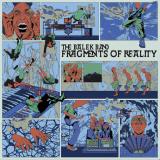
Some grooves don’t rush to the dancefloor — they crawl there, slow and heavy, like smoke wrapping around a bassline. With Fragments of Reality, The Balek Band sculpt an electronic funk that lives between shadow and light — an end-of-the-world fever dream, a Barjavel-style Ravage where chaos turns nihilistic.
No sequencer grid here — just four musicians sharing the same room, shaping air and tension together: drums locked tight with a slap bass, a guitar dripping with echo and heat, and a one-man orchestra behind his machines, weaving acid lines and synth arpeggios while mixing the band live — drenching it in delay, reverb, and saturation, like a dub producer in a Kingston studio, Lee Scratch Perry or King Tubby conjuring ghosts through smoke.
This isn’t fusion — it’s friction. A living ritual where the TB-303 hums, and machines don’t dominate but converse with the human pulse. Each track feels like a night that refuses to end — that humid in-between where trance slips into languor, and the body starts to think for itself.
The record recalls the cosmic jazz of Alain Mion or Eddy Louiss meeting the fiery energy of West African afrobeat musicians freshly arrived in a smoky Belleville basement in the mid-’80s. When The Balek Band summon ghosts, it’s only to reshape them — bending the past into something futuristic, alive, and strangely refreshing. Both disciplined and delirious, Fragments of Reality feels like a promise at dawn: dark funk for the late hours, slow acid for warm blood.
This EP isn’t nostalgic, though it remembers. It’s a transmission from a parallel past — a moment when jazz players met drum machines and decided never to stop playing. Each note sweats, each rhythm breathes. You can almost see the light cutting through the haze, faces half-awake, half-possessed.
The Balek Band aren’t recreating a moment — they’re keeping it alive.
Flesh and cables. Impulse and patience.
A band, not a loop.
A trip, not a format.
7
We are excited to continue our work with Art P / Art Programming by finally offering the first full-length work from this Bremen-based electronic group. Originally released only on cassette in 1983, the self-titled album has now been fully restored and remastered, complete with bonus tracks and unreleased mixes unearthed from a rare demo.
The LP opens with "Wesen vom anderen Stern" ("Beings from Another Planet"), a downtempo, 808-driven electro synth wave track with German lyrics telling a story of aliens capturing earth, becoming the new "Herren" (lords), while humans are reduced to mere "objects." Art Programming founding member Jens-Markus Wegener notes that this track has always been a favorite during live performances, and it's easy to imagine how the futuristic sounds would have blown people away at the time.
Next is the electro/proto-techno title track "Art Programming," which we previously issued on a limited 12" in its full-length form. With its straightforward Roland 808 rhythms, catchy synth lines, and vocoder vocals, it's a classic example of German electro, and one of the earliest proto-techno tracks - long before Cybotron claimed the techno mantle. Its extensive break and electronic twist make it an early precursor to the genre. Wegener recalls that this track was created exclusively by him and Grotelüschen, with Grotelüschen contributing most of the melodic elements, while Wegener focused on drum machine programming and vocoder vocals.
On "That's Me," the album welcomes back singer Claudia Roebke. Although it's an electronic composition, Roebke adds a rock-infused, almost psychedelic vibe to the song. The lyrics, written by Wegener, depict a person obsessed with their appearance, using irony to critique societal beauty norms, questioning the obsession with perfection and attraction.
The album continues with a series of uptempo electro tracks: "Videoscreen," "La Gare," and "Genscher Pull 'N' Push." The first two feature slightly different mixes from an earlier demo that we personally prefered over the versions that were available on the final cassette release. "Videoscreen" expands on the theme of social isolation, with lyrics reflecting on a world obsessed with watching video all day - a topic that resonates strongly with today's culture of doom scrolling and social media addiction.
Next up, "Genscher Pull 'N' Push" is an incredible electro/wave/proto-techno track recorded in October 1982 with a political edge. Originally omitted from the album, it was only available on the demo cassette we mentioned earlier. The song takes aim at German politics, with lyrics that shout "bitte geh nach links / bitte geh nach rechts" ("please go to the left" and "please go to the right"), referencing the shifting political allegiances during the 1982 coalition change, when Genscher's party, the FDP, left the Helmut Schmidt cabinet to join the CDU/CSU opposition. The track was never released as the political topic had become outdated just a few months later.
The album closes with "Light and Fire," which originally served as the album's opening track. Its quirky, upbeat vibe now makes for a fitting outro.
The gear used on this album reads like a dream list for early 80s electronic music production: Roland Jupiter 4, TR 808, TB 303, System 100, SVC 350, Korg Mono/Poly, Moog Prodigy, FRICKE-Sequenzer, Roland CSQ-100 Sequenzer, Coron DS-8, MM 12/2, Sony TC 399, TEAC-244 Portastudio, Ibanez DM 1000, EH-Electric Mistress, EV-Micro. This unique lineup of equipment sets the album apart from NDW releases of the era, lending it a distinct sound with heavy proto-techno leanings and that straightforward electro vibe we all love.
The album is being released as a very limited edition of 300 copies on transparent red vinyl, complete with a full picture sleeve and lyrics inlay. This is yet another rediscovered and restored 80s gem on our label that you definitely don't want to miss!
8
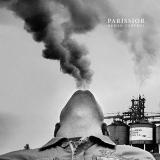
Parissior, moving between EBM, dark disco, indie dance and electronic music while blending analog and digital production.
The album brings together tracks that originally didn’t belong to previous EPs but eventually formed a coherent narrative exploring themes such as digital identity, illusion, authenticity and human imperfection.
From the sense of social pursuit in “The Chase”, to reflections on artificial validation in “True Connection” and “Smoke and Mirrors”, the record balances introspection with dancefloor energy.
The album also includes “Sintes Guarros” featuring Size M, and two additional digital-only tracks, expanding the project beyond the physical format.
Human Control ultimately works as a sonic map connecting machines, emotion and underground culture.

- Blow Mix
- Fluxstrata
- Phract Lament
- Hark Mix
- First Reflex
- Mu
- Drift Lens
- Tangent Bile
- Allegria
- Dull Echo
- Crabwalk
Late Bush presents “Hoarses” on the label Vlek Records, an original repertoire in which he blends electronic music - power ambient, IDM, avant-pop - and early music, which share the same affective intensity, a taste for ornamentation and a form of sonic excess.
At the heart of this material, AI-cloned voices, both human and spectral, extend the idea that any baroque interpretation is a reconstruction of the unknown. They contrast with organic strings recorded with Echo Collective, in a temporal and radical hybridization, creating a fluid and unstable material, between memory and simulation.
One of the conceptual starting points is essential: we have no sonic trace of baroque music as it was played. Only scores remain, and sometimes contradictory indications, a sensitive archaeology, even an imaginary projection.
Everything that is played today is therefore, in fact, a reconstruction, an interpretation of a vanished material. According to this logic and to pursue this reflection, the cloned voices, transformed by AI, are not a rupture but propose a natural continuation of this chain of reinvention, of this relationship to the invisible, to the indefinite. They do not aim to replace a human voice, but rather to embody the fact that any baroque restitution is already a fiction.
The project does not seek to imitate the real, but to play with the thresholds of the plausible, of the spectral. The music then becomes a fluid material, manipulable, alterable, and the performers, musicians or machines, are its vehicles.
The strings, carried by the sensitive and expressive interpretation of Echo Collective, breathe into the project a vibrant authenticity. Their presence brings an organic and tactile dimension that contrasts with the fluid and intangible aspect of the voices and the electronics.

4
There is a strong sense of craftsmanship throughout this release, hardware-driven, deeply textured, and full of character. MS14 brings together Myles Serge and Jamie Bissmire for a powerful journey into wonderfully raw, analog-rooted techno. And When the Sky Was Open captures the spirit of classic Detroit-infused machine music while pushing it forward with depth, soul, and precision. The record feels both timeless and immediate, balancing driving rhythm structures with a spacious, atmospheric edge that gives it a distinctive emotional weight. Rather than relying on sterile functionality, these cuts breathe with warmth, movement, and a human touch, making the record equally effective for deep listening and focused dancefloor moments. It is techno with substance: hypnotic, elegant, and uncompromising.

Signaling their long-anticipated debut on ICONYC, the label welcomes acclaimed Italian duo Glowal with their Future Faces EP. Uncompromising in its intent, this two-track capsule extends the duo’s emotional vocabulary, threading new ideas through their unmistakable sonic lens for a release that underscores the expressive precision at the heart of their craft.
Casting their gaze forward on “Future Faces”, Fabio Giannelli and Alessandro Gasperini open proceedings with a fractured rhythmic chassis driven by a throbbing low-end pulse that warps with each passing beat. Heavy percussive strikes carve their path into the night before a disarming female vocal emerges from the shadows, injecting a sense of yearning and fragile wonder into the piece. A sudden brake—like tires skidding across rain-slick asphalt—ushers in laser-etched synth lines that cry out with an anthemic resolve, while iridescent sequences bubble to the surface, sealing a striking first statement on the label.
Turning the corner, Glowal unveil the esoteric “Desert Soul,” a slow-burning reverie that expands on the EP’s emotional terrain. Patiently unfolding over fragmented rhythms and a meandering bassline, neon traces guide us toward a robotic vocal presence that introduces a subtle human-machine tension. Stripped to a minimal core yet rich in sentiment, “Desert Soul” resonates with quiet introspection—an understated meditation on self-discovery that lingers well beyond its final echo.

- A1: Intuition, Nimbus (5:34)
- A2: Alignment, Orbits (7:46)
- B1: Impatience, Magma (11:15)
- B2: Persistence, Buds (8:27)
Caterina Barbieri & Bendik Giske's At Source resounds music as wellspring, that which is essential and unknowable, and yet utterly primary. It finds two acclaimed composer-musicians building a world together in self-contained collaboration between analogue synthesis and an extended approach to the saxophone that conjures its own universe of sound. It is at once intimate and cosmic, drawing on the challenges and possibilities of their artistic exchange, tearing down technique to access all the expansive possibilities of their sonic meeting point.
At Source is a document of the world of sound to be conjured when two artists strive for something together, discovering the expansions and limitations of performance by bodies and machines. It is not an exercise in assimilation, but in productive exchange and creative confrontation. It does not draw on outside energies or influences, but grapples with what there is to find in their respective playing. "It also reflects how natural the collaboration was," says Barbieri, "a meeting at the source which was spontaneous, graceful and natural".
Barbieri and Giske first met and were enthralled by one another's performances at Kunsthaus Glarus in 2019, a meeting that spurred conversations on the power of transitions as a compositional force. Giske later contributed a rework of Fantas for Fantas Variations (Editions Mego, 2021), an ambitious undertaking to rescore Barbieri’s work for his saxophone and voice, a challenge Giske had started undertaking two years prior as an ongoing practice of transcription. “The request came as a proof of aligned ideas”, says Giske.
Their new collaborative project then started during an artistic residency in Milan’s ICA in 2021, by invitation of swiss artist and curator Jan Vorisek, as the world was emerging from lockdown. This meeting, and the preceding closure of sites for cultural exchange, made their work together 'feel like springtime' says Barbieri. Giske, who was on the brink of releasing his sophomore album, Cracks, then joined Barbieri's light-years tour, which functioned as an inaugural incarnation of her newborn label and platform through a series of multi-artist curated shows with appearances of Lyra Pramuk, Nkisi, MFO, among other artists.
Through the tour, they continued to develop material live, and this release, laid down in the studio, is true to that ever-evolving process of creation, where live feedback stays essential to the vitality of this collaborative effort. The tracks are each named with two evocative words that contain the two poles of their sound. Theirs is both abstract and cosmic, in the synth as machine undermined by Barbieri's naturalistic playing, and in Giske's continuous exploration of the symbiosis between his instrument, voice, and body. These binaries, of body and machine, posed various challenges, notably in how the stepped patterns Barbieri uses were near-impossible to translate for Giske's body to perform, and other times where mathematical resolutions were needed to sync their playing. Explains Giske: "It forced me to go to the core of what I am and what I have to offer”. Barbieri says that it "explores the liminality between the machine and the human, and the vulnerability in this process".
At Source is testament to two divergent practices finding a whole cosmos in which to convene; music is crystalised and made utterly enveloping through the focused and critical work of two musicians working at their peak. The versions here are, temptingly, "just one of many versions" of this abundant source material Giske explains. Like the best collaborations, At Source is more than the sum of its parts – bringing more to the feast than the simple combination of two musicians, promising versions upon versions of the exquisite material captured here.
