BLK JKS are a seminal force in the South African underground.
After an extended hiatus the Johannesburg foursome, championed by The Mars
Volta and TV On The Radio (amongst many others), return with a groundbreaking
new album.
Monster grooves meet guitar and brass driven afro-rock. Echoes of spiritual jazz, postapocalyptic funk, renegade dub and kwaito.
Features Malian guitarist Vieux Farka Tour and Beastie Boys accomplice Money Mark
on the track “Maiga.”
”This South African art-rock band traffics in complexity, cross-hatching not only rhythms
and textures but also the signifiers of genre”- The New York Times
“A prequel to 2009’s amazing After Robots … What occurs when you listen to Abantu is
that it is an Old Testament support to After Robots – where that album prophesied Afropunk, this album suggests the roots to that moment, an engrossing journey of Afrobeat,
fuzzy yet hugely suggestive drone and psych textures, and a bristling sense of both pride
and critique that sings through.” The Wire
“A dark and brooding number that simmers and smoulders as it goes, fueled by a driving
rhythm section and mournful horns.” - Brooklyn Vegan about single “Human Hearts”
“BLK JKS, an awe-inspiring exemplar of modern Africa’s indigenous sound, make a victorious return after an extended hiatus … They create something unique on this album.”
***** Morning Star
Cerca:human robot
- A1: Pilot: The Fire
- A2: Will I Remember To Remember?
- A3: My New Foster Parents
- A4: No Friends, Just Visions
- A5: Her Love Interest
- A6: His Love Interest
- A7: The Future Is Bright, The Future Is Orange
- B1: I, Robot?
- B2: The Ballad Of Loss And Self-Doubt
- B3: The Domestic Accomplices
- B4: Mastering My Powers
- B5: Infinite Versions Of Myself, Same Old House Fire
- B6: Let’s Run Into The Flames Together
- B7: Epic Plot Twist: Extinguished
For Fans Of: The Burning Hell; Belle & Sebastian; Iron & Wine.
Following swiftly on from last year’s Tiny Men Parts EP, Quiet Marauder re-enter the sonic fray with their latest Bubblewrap Collective long-player, The Gift, on 9th April 2021. Taking a strong divergence from the bombastic pop-punk of its predecessor, The Gift sees backing vocalist Kadesha Drija step to the foreground for the majority of the album, standing afront a richly crafted, multi-instrumental acoustic-folk backdrop.
Recorded pre-pandemic, January 2020, in The Burning Hell’s (Canada) pop-up Snowbird Studios, aka an art deco villa in Riofreddo, near Rome (Italy), this release marks another chapter in the ongoing international collaboration between the bands. For this album, Quiet Marauder’s (Wales) contributions of acoustic guitar, bass, trumpet and layered lead and backing vocals are granted further textural depth from their Canadian counterparts. These include minimalist harmonic splashes of flute, piano, organ (Jake Nicoll), electric guitar, bouzouki (Darren Browne) and bass clarinet (Ariel Sharratt).
Returning to the conceptual songwriting approach of previous releases MEN and The Crack And What It Meant, The Gift charts the narrative of a troubled teenage girl (Willow) haunted by visions of a mysterious house fire. Willow’s path is traced through well-meaning foster parents, teenage love interests, time-bending superpowers, distrust of domestic appliances and, ultimately, her own memories; covering themes of self-identity and the fallibility of human recall. Though the album marks a more overtly serious tone for the band, the sensitive subject matter is delicately handled through their trademark low-key, observational and, sometimes, darkly humorous lyrics.
Formed from the ashes of The Beta Band, The Aliens blazed a trail with two critically acclaimed LP's in the mid to late Noughties - hitting the UK official charts as well as Hollywood film & TV - before mysteriously vanishing from the Humanoid star system.
Hot on the heels of marking their return with the surprising electronica-delia of Electronville The Aliens pre-sent their latest album-length EP and a return to something more familiar for their long time fans. The A-side on Back To Beyond entails the 10 minute drone rock disasterpiece Follow The Son, the melancholy instru-mental sdlmnm strings and the bastard love child of two of their most popular songs in Roxbot. Side B features atmospheric instrumental tingler For Emma, a Robot Man disco mix appropriately titled Reboot Man and finishes with the longer, dirtier, rawer, inbred cousin of fan favourite Magic Man - Majic Man Pre-quel. Something old, something new, something borrowed, something blue… Back To Beyond is like a wedding of The Aliens.
After a dormant decade the mercurial Gordon Anderson AKA Lone Pigeon is on a crusade to release as many of his estimated 10,000 songs as Alienly possible and come to the rescue of the downward spiralling Humanoids of Planet Earth. While The Aliens continue work on their much anticipated new LP the good news is that there’s plenty to keep fans occupied in the meantime.
fter a small digital break, here is new record from the Comic Sans' vaults. First world appearance for Low Khey with 10 tracks exploring the 90-100 bpm side of experimental bass music. Call it mutant dancehall, deconstructed dub or industrial riddims, it's difficult to describe precisely in which genre the release falls.
Let's just imagine that Vybz Cartels' beats met Adrian Sherwood's punk dub sound design and that the whole thing was supervised by the evil twin of DJ Python. The big space left to the drums and the precise use of robotic sound-effects give a hyper-mechanical aspect to the riddim tracks which are aired by several interludes made of weird FX making it sound like futuristic commercials for spaceships or intergalactic bitcoin exchange.
The whole project has hidden references to artificial intelligence and problems that human are facing regarding the technology. The world in wich Low Khey lives is dominated by machines, and mankind is having a rough time to say the least! But there is hope for our Homo Sapien friend... If only he kept in mind this simple advice : Never. Trust. A. Cyborg.
Much like its predecessor, In Decay, the 2014 compilation of unreleased, early Com Truise recordings, In Decay, Too unlocks a new set of rarities and unheard fragments from the past for the producer's legion of fans. To accomplish such a feat, the Com camp tapped the Internet's foremost Com Truise archivist, Polychora (formerly Comrade), whose YouTube channel has diligently documented Seth Haley's musical output since his earliest Komputer Cast (Haley's podcast mix series) days. Polychora's vault and input helped Haley and the team locate and curate the ultimate sequence of career-spanning off-album material, showcasing an artist in perpetual orbit of hazy machinist nostalgia. Haley's singular style of melodic beat music is the work of countless iterations; with In Decay, Too, his idiosyncratic exercises, experiments, and pivots pause for a rightful wave of appreciation. Following the smeared introductory tones of "Zeta," the album locks into its first robotic groove on "Compress_ Fuse," a trademark Truise treatment with cascading synth lines and deep, sinister low-end bass stabs. Further down is the suspiciously bright "False Ascendancy," which lures listeners through a labyrinth of drum patterns and siren-like keys, all colliding into "Constant Fracture." The track pushes to the point of stress, reaching the album's apex with a punishing series of blows before fading to relief, where the beatless and contemplative "Trajectory" awaits. In 2019, Com Truise left his previous sci-fi narratives behind for the visceral Persuasion System, a markedly more human record, which now makes In Decay, Too something like a bookend to an era. One last transmission from coordinates unknown; a culminating exhale ahead of what's still yet to come.
- A1: Special Fun - Polar
- A2: Ranko Feat Lola Rue - Everyday
- A3: George John - Hope (Solo)
- A4: Larry Houl - The Vinyl Frontier
- A5: Ari Bald - Cluster Of Islands
- A6: Explorer Of The Humankind - I Feel U
- A7: Atbin - Who Want To
- A8: Lydia Eisenblätter - Episode One
- A9: Marco Lazovic - From Here To Eternity
- B1: Malik Kassim & Midnight Flavor - Little Girl
- B2: Donnie Moustaki - Robot Jesus
- B3: Last Nubian - 1 Choice
- B4: Duktus & Byte Chop - Sloppy Jam
- B5: Kolja Gerstenberg - Fall In Love
- B6: Wild Re§Ection - You The Only One
- B7: Lootbeg - Hollow Earth Filler
- B8: Dj Safeword - Who Got Da Space Powda?
- B9: Native Cruise - Distant Planes
We welcome to the Moustache Records family the oldskool electro legend Martin Matiske with his Electronic disco-ish 12 inch EP release "Robotic Theatre" This is a future vision of a theatre run by robots and is the era in which machines entertain mankind. Operas are written and played in a mechanical way. The pieces of "Robotic Theatre" deal with different terms of stage work. Track A1 is called "Acting Faces" and Refers to the rehearsing of the role, as well as the interaction of the actors on stage. The well-being of the actor does not often match what is played. He has to play even If it's painful. B2 is the track called "Machinery" Human beings are machines that build machines today. The advantage is perfection and time saving. Robots as actors are reliable and precise. B1 listen to the name "Transistor Dances"its Like The Hungarian Dances by Johannes Brahms you just need a dance to express happiness and remind your culture. Dances bring people together. A robotic dance should not be missing in a play. The last track of the EP is the tune "Practise" a story about a robot the has to practise to achieve perfection and it is fun." Don'tplay this underwater order now gone is gone.
Sludge machine music slapped through the infinite mixing desk by SRS - the combined mind of Sunun and Robin Stewart. At any pointData Fossil'sgiddy industrial riddims could collapse under their own weight. There are Sunun inputs and there are Robin Stewart inputs - but everything is offered up to their machines gladly for an output of nu-human-beat. Voices drift through the mix in hushed Italian and Robin's gruff roboticized drawl, floating dub chords left hanging for cavernous subs and rattled bones, distant harps and arps, a sudden blast of trills. 'Spit Fossil' itself is a clipped noise-pop wonder - the aural equivalent of a lights-on Avon dancefloor with only the weirdest left standing.
Recorded on the rooftop of a housing project called Camelot in 2018, the two Bristol locals debuted the live / unplanned collaboration in an inflatable arena called 'Toldo' in the Brunswick Club ballroom (RIP). Then again at Young Echo at the Cube Microplex - a night where it's said anything is possible (Sunun even dubbed Guest's live human heartbeat there recently….). IfData Fossilis hard to describe - it's just the sound of the musical freedom of a city that will never run dry.
It's a high Bokeh honour to welcome Sunun back after we helped release her 2018 debut,Ooid EP. Her live show continues to be the most inspiring re-use of dub principles we've witnessed (again and again). Time only grows her music outwards causing the Young Echo collective to demand she join them. SinceOoid,she's released a 12" of MPC wonders with close Bristol pals Cold Light.
Recently bearing his dub-side to all that didn't know on Trilogy Tapes'Time Travel EP, Robin Stewart is half of world conquering techno-cult Giant Swan. Also a veteran of Rwdfwd stable of imprints (Fuckpunk and NoCorner) - his music DNA is equal parts shoegaze and steppas. In 2020 he was officially recognised for having the largest collection of Bokeh t shirts.
During the uprising in 2000, aided by the League of Humanity, two of Dr: Gall’s advanced prototypes escape the Rossum Universal Robot factory and flee Earth on a decommissioned spacecraft.
Travelling aimlessly through space, they begin to wonder what their new home would look like. They tell each other stories of planets with no humans to enslave them, no factories to go to — planets where fresh blue water runs through pink, sun kissed mountaintops.
Perhaps it’s fortunate then that these Robots can feel no time, have no sense of past and future? And by the time their ship touches down on Ebaum’s Dreamland, who knows how many years have passed on Earth…
“Ebaum’s Dreamland” is the first Rossum Universal Tracks release.
It features a remix by Julius Steinhoff, who first discovered the scrambled transmissions in his deep space observatory in the woods.
Robotron successfully autonomized and has now breached the mainframe. This is its second offering for the ESP Institute. Side A’s Exodus picks up where the last 12” left off, the spoils of cybernetic war as scavenged by the now-defunct Xinner and translated by Robotron into machine dance music for a post-apocalyptic future. With only a select few analog machines with which to communicate, it manages to produce the most bombastic beat we’ve heard this side of the acid winter—a mighty compressor permeates all spare gaps in the waveform, as communicative bleeps and note-bending mechanics work in concert to assemble a highly dynamic composition— emboldening us with courage for a new age. On the flip side, Kamchatkan renders a sparse image of a only remaining organic life, found in the furthest Eastern reaches of the Asian continent, the Kamchatka peninsula. Here, Robotron experienced a metamorphosis, a collapse of its structured programming in which it became self-aware and transitioned from its quantitative agenda to a qualitative enlightenment. This breath of new life invigorated Robotron’s musical approach as heard in the aforementioned title, revealing an uncanny ability for humanistic percussion and lyrical Acid melodies. These two programs will conduct synchronized dances for the masses.
Industrial Doom Hardcore, or maybe Hardtechno at some point but anyway not too speed, very fat, crunchy and defenitly Hardcore in the spirit.
Long overdue, here comes AIR LQD’s first full-length player, Repeat Itself, making up for the direct follow-up of his acclaimed vinyl debut released on the label in 2016. Mixing science fiction, social criticism and punk ethics in the most cryptic fashion, the latest entry in the discography of the taciturn Belgian groove-maker sees him pushing further his electronic experimentation. Delving into the meanders of the human consciousness through hazy and abrasive rituals, brainpowered by robotics, artificial intelligence and urban metamorphism. The weird looping echo of a man-machine drifting through a vortex of feral scratches and overworked machinery. Slowly moving towards the event horizon of a supermassive black hole, leading to unexpected aural aberrations full of hidden, past and new meanings. Giving a last disillusioned glance at our human condition facing technological progress and the toxicity of the outside world.
Keys are Benedikt Frey and Chris Cox, the front and rear covers of a lucid
narrative of an incomprehensible nature. Substance induced Hara-kiri, a human
consciousness leaving it's temporary and insignificant vessel, a motorcycle ride
through the sands of a desolate Martian desert or a twisted eternity dissolved
inside Pandora's Box. These are just a few of the scenes effortlessly evoked by
the epic yet somehow erotic omnibus of slow-motion electronica that is Voltage.
In a time dominated by robotic beat and melody, this 8 part expedition away from
the dancefloor may surprise, disorientate and hypnotise. Allow Keys to seal you
in their infinite vacuum of flirtatious melancholia.
'Breathe The Machine' is the first installment of Dojostudio and presents a musical world rich in harmonics, low frequency and melodic impact, yet with enough space in between to allow that perfect breathing room essential for powerful dance cuts. 'Breathe The Machine' portrays a world that initially feels robotic, yet instills an organic fluidity known only to come from humanoid beings, breathing life into a system littered with code and coldness. Billy Dalessandro presents 3 original cuts, plus a rendition of the title track by Mike Shannon.
Both for 'Breathe The Machine' and 'Tractor Beam' the Waldorf Microwave XT 2 and the Jomox 888 were the primary sound sources. For 'Breathe The Machine' the 888 was processed through a Jomox T-Resonator, which added harmonic distortion, and also spread the stereo spectrum out a bit offering the drums a more washed-out feel. The XT was layered track by track by performing patterns live into an editor until the desired ideas were properly recorded. Mike Shannon was brought on board to offer a contrasting expression of 'Breathe The Machine' and when asked how the process went he stated:
"I took the source sounds, edited them and processed them to work with a groove I had written for this remix. I mainly used the pad, lead synth and synth effects from the original. The rest of the gold I engineered."
On 'Tractor Beam', subtle use shows that ample space in between ideas make things seem larger than life. By allowing a more minimal approach in the production process the sounds can easily co-exist, allowing for that 'big room' sound without overwhelming the overall experience.
The digital exclusive 'Deliverance' was created using NI's Maschine for the drums, and FM8 and Reaktor were the sources of the synths. Drum patterns were created in Maschine and then recorded in realtime back into the DAW as it played, with real-time tweaking of the hi-hat to create the desired impact, especially at the break. The synth and pad patterns were recorded as MIDI into the editor, and then automation of the synths' VCF rounded out the expression needed to complete the emotional process.
All in all, DOJ001 is mostly an all-hardware showdown, with 'Deliverance' being the only 'virtual' attempt. Life is in nature, not in machines, yet the culmination of the two worlds can be beautiful, if only properly tamed and understood. Lest we beware! Stay tuned... and thanks for listening!
Robotron is the machine formerly known as Xinner. This is its first offering for the ESP Institute. Side A's Dream Resonator is an idiosyncratic network — dexterous machine drum/percussion programming, an ebb and flow of floating arpeggios, syncopated counter-melodies and a hail of stabbing stringscontinually diffusing into ethereal vapor — all stacked into an (aptly-named) orchestral anthem. Side B's Ice takes a similar approach with arrangement, each instrument carving out its place in the track's mechanics for a glorious convergence of patterns, but, where side A proves optimistic, here we sense a more menacing undercurrent, an austerity powerfully articulated through towering kicks and claps so compressed they fill up every dark corner of negative space. Indeed, Robotron has an innate command for building and calibrating robust systems, but beneath this calculated veil we find the remnant human behavior of Xinner. These two songs will whisper loudly but scream quietly.
- A1: Setaoc Mass - Far Away From Yesterday
- A2: Juxta Position - Hexagon
- B1: Roman Poncet - Turn Down
- B2: Viers - Moomin Trash
- B3: Nocow - Metha
- C1: Kirilik - Batut
- C2: Lady Starlight - D5-12
- D1: Ubx127 - Vectors
- D2: Len Faki - Robot Evolution
- E1: Pablo Mateo - Anfang Ende Immer
- E2: Shlomi Aber - 3000 Reasons Why
- F1: Nocow - Run Far
- F2: Truncate - Bassline
- G1: Lewis Fautzi - Modern Humans
- G2: Jeroen Search - Rubidium
- H1: Amotik - Neela
- H2: Setaoc Mass - Silence
4x12" Set , Special 15th Anniversary Edition, with Special Deluxe 4 Gatefold, shrink wrapped incl Download Card
Celebrating its 15th anniversary as well as the monolithic catalogue 100, Figure releases a gem-packed compilation featuring 15 artists who are shaping the current sound of the label. Ranging from machine-driven stompers courtesy of Juxta Position, Kirilik or Lady Starlight, to punchy electro by Viers and UBX127, to Nocow's signature style wavey melancho-electronics, or the straight-up high-voltage-techno of Shlomi Aber, Lewis Fautzi and captain Len Faki himself, all adequately framed by Setaoc Mass' beautiful ambient pieces - this 4 LP-set encompasses everything Figure both past, present and future. Arriving in a unique gatefolded sleeve that carries the exclusive handmade visual art by Munich artist Julia Schewalie. Whether long time fan or newly recruited follower, this one is a must-have entry in every techno-lover's collection.
Transform and Wonder will be the second 12" release on Factory Floor's own imprint H/O/D Records. Transform, a section inspired by Maria's transformation from human into the robot, reveals itself in a haze of accumulating ambience and scattered percussion that evolves into the heavy repetitive bass groove reassuringly stabilizes Maria's journey into metamorphosis. The slow tempo and atmospheric wash of synths and electronics on side B 'Wonder' offering a hesitant hush contrast.
Fresh off the release of his 'Cosmo EP' earlier this year, longstanding label stalwart Fetisch reignites the fire with 'Singularity EP' - the second EP from the forthcoming Terranova album. A six-tracker featuring four original cuts plus a pair of remixes from Seattle's Pezzner and Istanbul's Rising Star Alican along with collaborations with Sifa (Congo) & Ivory (Milan). The outerspace'y stomp of Terranova's prime versions of 'Cosmochord' feat Flashmob and 'Cosmocode' feat Voltague, both lifted from his latest outing Cosmo EP, resonates deep into the grooves of the present platter, whilst the ethereally hypnotic vibe of 'Let It Fail' (feat. Sifa & Ivory), with its brittle percussions and slow-scudding pad tapestries, as well as the left-of-centre, hovering electro of 'Powergrid' draw in a further zero-G atmospheric vein and 'Sophia (Ode to a Robot)' are tailored for dawn-time party communion and intense stargazing momentums. All of these tracks are inspired by Fetisch's obsession with the current developments in creating artificial intelligence and robotic technology and his ambition to add androids to the impressive list of humanoid guests of the Terranova Soundsystem.
Already quite the jacking pumper, 'Cosmochord' gets a further menacing treat with Pezzner at the controls - ramming the doors of the club by means of loud kicks and lusty piano chords - each of them pounding with the impact of an apposite Glasgow kiss. Meanwhile Alican takes 'Cosmocode' further into Saturnian confines, densifying the minimal backbone of the track with an extended battery of arpeggios, bleeps and middle-eastern percussions thrown in for good measure. With the rolling techno shuffle of 'Escape Ism' and stuttering rhythmic engineering of 'Tempelhof' (the 'Terranova Maschinenraum' studio is located inside Berlins old airport). Fetisch loops the loop on a pulsating note, expanding the mind to horizons both poetic and physical - further establishing his unmatched sound signature.
"Resist the categories that define and divide"
Uncanny Valley EP sonically explores the uneasy, obscure but familiar relationships between human and machine in contemporary life. This is the debut release on RESIST, the record label launched by experimental club/art hybrid event from Belfast, Northern Ireland. This debut release is by RESIST event and label founder, Koichi. Remix comes from electronic music innovator and Eotrax label owner, Eomac in an anxiety driven, frenzied remix of the title track.
Jagged and angular sonics, and warm organic artefacts are the defining sound of this release, which imitates the theme behind the music. Machines are being engineered to have a place in intimate and personal areas of human life. What does it mean to be human in this increasingly digital world Are we anything more than complicated robots made of flesh Where does humanity stop and the uncanny begin
Koichi returns with a new sound, signalling a departure away from his previous aesthetic and into a new direction breaking free from the boundaries and categories of restrictive genre definitions. His music continues to contain a heavy techno aspect, and also draws on raw industrial and experimental influences.
Koichi is an electronic musician, music researcher, and event curator who explores resisting exclusionary identities and disrupting discourses of power and prejudice through music and live digital art.
Her Majesty's Ship is proud to present 'This Never Happened', the latest album from hugely talented French-American singer and producer Yan Wagner.
This always inventive and off kilter artist has had many top releases on labels like Kitsune and has worked with the likes of the legendary Arnaud Rebotini and Etienne Daho. He also has a side project, The Populists, is producing the first album of Calypso Valois and wrote the soundtrack for the short film 'Victoria' by Mathilde Marc. Someone who plays events like SXSW and Montreux Jazz Festival, Wagner's playful disco-pop tunes always find their way into the emotions of those who hear them.
For his second album, the artist wondered what to do: surprise everyone with a selection of ballads or serve up the electronic sounds that defined his last effort Forty Eight Hours. The answer lies somewhere in between, with covers of Frank Sinatra and Lee Hazlewood mixed in with fresh and catchy disco production. Unlike the last record produced by Arnaud Rebotini, this record is producer by Yan himself with a triple objective: to favour the first takes, the heat of the sound and to reduce the post- production to a minimum. It makes for something authentic and real, and is an album of artistic self-questioning, tenacious dreaming and overcoming doubt.
Says the artist, "The songs on this record are a series of lies; views of the mind. 'This Never Happened' is a collection of stories that never happened. Ten tracks talking of vain loves, of nocturnal experiences and of life and truth, which are all so short.'
Starting with the retro synths and shiny arpeggios of the title track, ensuing cuts like 'Blacker' are real chuggers with almost de-humanised vocals over the robot beats. 'SlamDunk Cha-Cha' is descended from Bowie with its camp synth wiggles and sung- spoken vocals. Switching up the tempo, slower tracks like 'Grenades' are perfectly glowing and frazzled with their pixelated melodies and cold chords. More upbeat affairs like 'No Love' are like lighter and cheerier versions of Depeche Mode, and the Sinatra cover 'It Was A Very Good Year' is a stirring, synth heavy version that is every bit as tender as the original.
This is a fantastic album of timeless electronic songs and is sure to be one of the standout releases of the year.
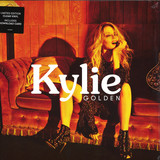
Limited Edition Clear Vinyl
Includes 12' Vinyl and Deluxe CD album, 30 page hard back book
Now that I've been to Nashville,' Kylie Minogue says with audible affection, I understand. It's like some sort of musical ley-line...'
Golden, Kylie's fourteenth studio album, is the result of an intensive working trip to the home of Country music, a city whose influence lingered on long after the pop legend and her team returned to London to finish the record: We definitely brought a bit of Nashville back with us,' she states. The album is a vibrant hybrid, blending Kylie's familiar pop-dance sound with an unmistakeable Tennessee twang. It was Jamie Nelson, Kylie's long-serving A&R man, who first came up with the concept of incorporating a Country element' into Kylie's tried-and-trusted style. That idea sat there for a little while, with Minogue and her team initially unsure about how to bring it to life. Then, when Grammy-winning songwriter Amy Wadge's publisher suggested Kylie should come over to collaborate in Nashville, a city Kylie had previously never visited, something clicked. You know when you're so excited about something,' she recalls, that you repeat it an octave higher and double the decibels I was like that. 'Nashville! Yes! Of course I would!'. I hoped it would help the album to reveal itself. I thought 'If I don't get it in Nashville, I'm not going to get it anywhere.''
Kylie's Nashville trip involved working alongside two key writers, both with homes in the city. One was British-born songwriter Steve McEwan (whose credits include huge Country hits for Keith Urban, Kenny Chesney and Carrie Underwood), and the other was the aforementioned Amy Wadge, another Brit (best known for her mega-selling work with Ed Sheeran). It was then a truly international project: Golden was mainly created with African-German producer Sky Adams and a list of contributors including Jesse Frasure, Eg White, Jon Green, Biff Stannard, Samuel Dixon, Danny Shah and Lindsay Rimes, and there's a duet with English singer Jack Savoretti.
However, the album's agenda-setting lead single Dancing was, significantly, first demoed with Nathan Chapman, the man who guided Taylor Swift's transition from Country starlet to Pop megastar. If anyone knows how to mix those two genres, Chapman does. Nathan was the only actual Nashvillean I worked with. He's got a huge studio in his house, which is probably due to his success with Taylor... there's plenty of platinum discs of her, and others on his walls.' There's something of the spirit of Peggy Lee's Is That All There Is, of Dylan Thomas' Do Not Go Gentle Into That Good Night, even of Liza Minnelli's Cabaret about Dancing, a song which not only opens the album but sets out its stall, providing a microcosm of what is to come. You've got the lyrical edge, that Country feel, mixed with some sampling of the voice and electronic elements, so it does what it says on the label. And I love that it's called 'Dancing', it's immediately accessible and seemingly so obvious, but there's depth within the song.'
The experience of simply being in Nashville was an overwhelming one, before Kylie had even arrived. Once I knew I was going to Nashville, people talked about the place with such enthusiasm. They said without doubt I would love it and, I would come back with songs. They were sending lists of restaurants, coffee shops and bars. It really was a beautiful and genuine response and it felt like I was about to have a life changing experience and in a way, I did.' The reality came as something of a surprise, when she found a far more modern metropolis than the vintage one she'd envisaged. I thought it would be like New Orleans: little houses and bars, with music spilling out onto the street. It reminded me more of Melbourne: apartment blocks going up everywhere! The main strip, Broadway, where the honky tonk bars are, that's where the street was filled with music and it was just amazing.' Mainly, Minogue remembers the heat and humidity. It was 100 degrees. It was like it was raining with no rain.' She also relished the chance to wander around unrecognised, visit a few venerable music bars and soak in the atmosphere. I didn't get to the Grand Ole Opry or the music museums but I managed to go to a couple of the institutions there like The Bluebird Cafe and The Listening Room, and just by being there, through some kind of osmosis, you get this rejuvenated respect for The Song, and the writing of The Song. There's no hoo-hah around it. There's a singer-songwriter there, talking about the song and singing the song, to an audience who are there to listen. Although, I have to confess I was guilty of starting to clap too soon during a long pause at the end of one of the songs. The guy made a bit of a joke out of it and got a laugh from it, but I thought 'Of all people in the audience, no...''
It's probably no coincidence, therefore, that every track on Golden is a Kylie co-write, making it arguably her most personal album to date. The end of 2016 was not a good time for me,' she says, referring to well-documented personal upheavals, so when I started working on the album in 2017, it was, in many ways, a great escape. Making this album was a kind of saviour. I'd been through some turmoil and was quite fragile when I started work on it, but being able to express myself in the studio made quick work of regaining my sense of self. Writing about various aspects of my life, the highs and lows, with a real sense of knowing and of truth. And irony. And joy!'
The songwriting process allowed Kylie to get a few things out of her system. Initially, she admits, it was cathartic, but it also wasn't very good. I think I was writing too literally. But I reached a point where I was writing about the bigger-picture, and that was a breakthrough. It made way for songs like Stop Me From Falling and One Last Kiss. It also meant I had enough distance to write an autobiographical song, like A Lifetime To Repair, with a certain amount of humour. The countdown in that song: 'Six-five-four-three, too many times...'. I don't know if that will be a single, but I can just imagine a girl with framed pictures of past boyfriends, and kind of going 'Oh god, when am I going to get this right'' When she listens back to Golden, Kylie can vividly hear the Nashville in it. It is, she'll agree, probably the first time that a Kylie album has sounded like the place it was made. You wouldn't normally relate my songs to the cities. Can't Get You Out Of My Head sounds more like Outer Space than London. But Shelby '68, for example, was written in London but it was done with Nashville in mind. It's about my Dad's car, and my brother recorded Dad driving it! I don't think I'd have written a number of the songs, including Shelby '68 and Radio On without having had that Nashville experience.'
The latter, she says, is about music being the one to save you.' Throwing herself into the making of the record, she says, crystallised that idea. If there's one love that will always be there for you, it's music. Well, it is for me, anyway.' That song, in particular, carries nostalgic echoes of the golden age of Country, as heard through Medium Wave transistors and tinny home stereos in the distant past. Like any child of the Seventies, Kylie had a basic grounding in Country music, mainly absorbed from older family members. My Step-Grandfather was born in Kentucky and though he lived most of his adult life in Australia, he never stopped listening to his beloved Country artists.' If there's any classic Country singer whose imprint can be heard on Golden, it's Dolly Parton.
Kylie saw Dolly live for the first time at the end of 2016, at the Hollywood Bowl. It was like seeing the light,' she beams. It was incredible. Everyone, whether they know it or not, is a Dolly Parton fan. When I was in Nashville, I did pick up a T-shirt that said 'What Would Dolly Do' Maybe that should be my mantra.' And, whether consciously or otherwise, there's a timbre and trill to Kylie's vocals on Radio On that is distinctly Parton-esque. My delivery is quite different on this album,' she says. A lot of things are 'sung' less. The first time I did that was with Where The Wild Roses Grow. On the day I met Nick Cave, when I recorded my vocals, he said 'Just sing it less. Talk it through, tell the story.' This album wasn't quite to that extreme, but a lot of the songs were done in fewer takes, to just capture the moment and keep imperfections that add to the song. I remember on my last album, a lot of producers were trying to take out literally every vibrato they heard. And that's not natural to my voice. I mean, I can make myself sound like a robot, but it's nice to sound like a human!' Working within the Country genre also gave Kylie permission to write in the Nashville vernacular. Because we were going there, I wasn't afraid to have lines like 'When he's fallen off the wagon we'd still dance to our favourite slow song', 'Ten sheets to the wind, I was all confused', 'I'll take the ride if it's your rodeo'. The challenge of bringing a Country element to the album made the process feel very fresh to me, kind of like starting over. I started to look at writing a different way, singing a different way.'
If ever Kylie lost confidence in the Country-Pop concept, and found herself pondering This is great, but back in the real world - my real world - how will this work', Jamie Nelson was there to badger her into sticking to the path. We found a way to make it a hybrid with what we'll call my 'usual' sound. It had to stay 'pop' enough to stay authentic to me, but country enough to be a new sound for this album. The closer we zoomed in, and the more we honed it, I knew Jamie was right. We sacrificed good songs that weren't right for this album, because we wanted it to be as cohesive as possible. The songs that were hitting the mark were these ones, so we decided to be strong, and that's how we wrapped up the album. What he said, that stuck with me, was that 'I'd hate to get to the end of this and really wish we'd gone for it.'' Having worked with Kylie for so long, Nelson was able to put this latest shift of direction into perspective. He said 'You've traditionally done it throughout your career. You had your PWL time, then you did a complete turn when you went to deConstruction, then another complete turn with Spinning Around, and R&B dance-pop, and then another turn with Can't Get You Out Of My Head, icy synth-pop, and this is another one.' He was right. It felt like the right time to have a change sonically. New label, new stories to tell, and a new decade almost upon me.'
Kylie Minogue will, it's scarcely believable, turn 50 this year. This looming milestone is partly behind the album's title, and title track. I had this line that I wanted to use: 'We're not young, we're not old, we're golden' because I'm asked so often about being my age in this industry. This year, I'll be 50. And I get it, I get the interest, but I don't know how to answer it. And that line, for my personal satisfaction, says it as succinctly as possible. We can't be anyone else, we can't be younger or older than we are, we can only be ourselves. We're golden. And the album title, Golden, reflects all of this. I liked the idea of everyone being golden, shining in their own way. The sun shines in daylight, the moon shines in darkness. Wherever we are in life, we are still golden.' One of the album's shiniest moments is Raining Glitter, an exuberant banger which ventures closest to Kylie's traditional dance-pop comfort zone. Eg White, who is one of the producers and writers and a great character, was talking about disco one day. I said 'I love disco, but you know the brief.' We needed to be going down the Country lane, so to speak. But we managed to bring them both together. When I wrote it, I was thinking about the Jacksons video for Can You Feel It where they're sprinkling glitter over everyone. And I think there's a Donna Summer record that's got that feel to it. I think that's my job: I basically leave a trail of glitter after every show I do anyway.'
Kylie is looking forward to the challenge of incorporating the Golden material into her live shows. Mixing these songs in with my existing catalogue is going to be fun. And it could be fun to do some of those songs with just a guitar. It'll make my acoustic set interesting...'Her incredibly loyal fans - to whom one Golden song, Sincerely Yours, is intended as a love letter' - will, she believes, have no problem with her latest stylistic shift. My audience have been with me on the journey, so I shouldn't be afraid that they won't come with me on this part. I've had fun with it, and I'm sure they will too.'
The time spent making Golden has, Kylie says, been a time of creative and personal renewal. I've met some amazing people, truly inspiring writers and musicians. My passion for music has never gone away, but it's got bigger and stronger.' And if there's an overriding theme to the record, it is one of acceptance. We're all human and it's OK to make mistakes, get it wrong, to want to run, to want to belong, to love, to dream. To be ourselves.'
I was able to both lose and find myself whilst making this album.'
The superb 'Forbidden Planet' is a shiny early electro cut with a great funk bass line, a real instrumental groove and fantastic melodies that shimmer like a hot sun. It's filled with joy and sounds as fresh today as ever, the way it ducks and dives and offers real warmth.The Francisco Remix keeps the funk vibe but changes the groove to be a more Chicago house style cut. As such it has a rasping bassline, big drums and coarse percussion that make you want to jack.The masterful Ali Renault—a go-to disco and synth specialist who runs Cyber Dance Records, Human Shield Record Company and most recently his own Vivod imprint—then turns out a hypnotic version that is more driven and direct for the dance floor, with robotic bass and epic reflective synth lines. It's a cinematic track with great analogue textures that goes back to the future.The last original is the excellent 'Stay With Me', a cosmic love song with breezy trumpets and dreamy disco vibes as well as soulful vocals. Italo melodies and infectious percussion finish it off and make it an instant crowd pleaser.
A new piece by Australian artist Tarquin Manek, devised in collaboration with poet Martina Quake of Canvey Island, UK and recorded at M.E.S.S. (Melbourne Electronic Sound Studio), utilising EMS VCS3, Oberheim OB-Xa and ARP 2600 in combination with cheap, contemporary consumer electronics. It is, to all intents and purposes, a short, cautionary story about love. It is also a folk-tale, a science fiction, a suicide note. Unusually for a long-form spoken word piece, it is immediate in its impact, and lasting in its effect. Our narrator is damaged and unreliable: Quake's voice, digitally processed into a flat, AI affectlessness, conveys this all too well. Is this the vernacular poetry of the Uncanny Valley, or is it just that loss makes robots - numb and listless not-quite-humans - of us all Locks revels in the space between the spontaneous and the programmed (what is a poem if not a programme). It's part Tales Of The Unexpected, part Susan Howe, part Ruth Rendell, part HAL (or Holly). Manek's music is widescreen but understated...a becalmed landscape populated by distant drones, just-out-of-focus field recordings, and phased, minimalistic, Rhodes-style keys. A sort of sombre, lunar jazz. Space-age bachelor pad music, maybe, for a bachelor at the edge of space and the end of his tether. Just as Quake's words are cumulative in their tragedy, so the music grows more agitated and turbulent, at certain points harking back to the smoked-out psycho-acoustics of Manek's 2015 Blackest Ever Black LP, Tarquin Magnet, and his work in F ingers with Samuel Karmel and Carla dal Forno.
Sofie Letitre releases her new EP 'Uncanny Valley' on DIVISION. On 'Uncanny Valley' Sofie Letitre delivers a dark mysterious sound that reminds of acts like FKA Twigs and Bjork. Like the evil sister of Massive Attack with the intensity of James Blake.
Uncanny Valley is a concept-album based on the Uncanny Valley principal, the point where there is aversion for a humanoid robot as he becomes more human. You will be drawn in themes like vulnerability versus invulnerability and perfection versus imperfection.
The EP is produced by Ferdy van der Singel and Thijs de Vlieger (NOISIA), and the vinyl contains the mp3 codes to download as well.
Hitting a particularly fertile patch with his music, A Sagittariun continues to ride the night skies with some heavy doses of cosmically sprinkled techno and kinetic electronica. 'Aruba (Overhead Mix)' is a seductive jam of Nuyorican (tech) soul, cloaked in warm synths with a breathy, human quality and deft melodies to ensure a smooth takeoff for the passengers. Lead cut on the vinyl is 'The Code Breaker', channeling some enchanting techno moods and themes on a no gimmicks, no cheap thrills, head & foot stomper, whilst 'Triangulum' prefers a mechanical rhythm of robotic tech funk, syrupy melodies and acidic motifs to deliver a dance in outer space.
Welcome to Berlin's best kept secret: 'Hot Pony: The Nightclub At The End Of The Universe'. It's from this fertile womb that 'Royal Athlete' was born. Created as a platform for the 'cosmic-italo-afro-electrofunk-boogie' sound that 'Hot Pony' blends so well, these release's will be various artists only and guaranteed party weapons for cybernetic lovers and space-jockeys. Always limited, always slamming. For this release we present the 'polyrhythmic renegade' turned electrofunk wizard Vexkiddy, his first new music since 2012's Pedantic Romantic on Human Shield, more cosmic nightdrive action from Giallo Disco's Antoni Maiovvi, a beast of a dancefloor heartbreaker from Bill Ambrose and Marika Gauci - the voice of UK Italo, better known together as 'The Dreamers' and finally the first release from Berlin's Dimitri SoEmotional a smooth modern-boogie-workout. Not to be missed!
Inspiriert von der Musik der Pianisten Comlon Nancarrow und Gyorgy Ligeti präsentiert Squarepusher fünf neue Kompositionen, eingespielt von den drei Robotern Z-Machines. Die drei Roboter, darunter ein Gitarrist mit 78 Fingern und ein Drummer mit 22 Armen, sind eine Entwicklung junger japanischer Roboteringenieure unter der musikalischen Leitung von Kenjiro Matsuo. Die CD ist ein Japan-Import im Klappcover mit Obi-Einleger und japanischen Liner Notes.
"To make music using instrument-playing robots fascinates me. People have often assumed that for music to be emotionally powerful it has to come directly from a human hand, whereas i disagree with that, and enjoy proving these people wrong. This project is an excellent way of exploring that area more." - Squarepusher