Following the success of the first vinyl release from the Moroccan label Sotor Records, featuring Zadig, Perc & Oscar Mulero, Sotor writes a new chapter in its discography with its second vinyl release. Meaning "lines" in Arabic, Sotor reflects its commitment to championing the diversity of the techno genre.
The label's ninth release, "Processing Range," is a musical ode to the lines of space-time. With four original tracks from the Portuguese producer, Sotor invites you on a techno journey between mental tension and physical release.
The album opens with DJ Dextro's "Controle," which delivers a massive, sharp rhythm, dystopian synths, and a true immersion into a techno black hole.
The journey continues with the second track on side A. This time, DJ Dextro unleashes an uncompromising version of "Blue Dot," achieving a precarious balance while showcasing his signature percussive style. The Portuguese artist delivers the perfect track to unleash a crowd.
On the B-side, DJ Dextro offers us the eponymous track, "Processing Range." We're quickly drawn into an allegory of this decadent modern world where humanity is rushing towards its own destruction. Expect dusty techno rhythms and that sumptuous synth that sounds like the end of times. Probably a future classic!
And you'll finish on a gentler but no less dynamic note from DJ Dextro. He concludes the EP with "31 Atlas," which will leave you weightless with its galloping bassline and abyssal synth.
Search:human tech
- 01: Glass Mask On
- 02: Celebrity Culture Simp Farm
- 03: Please Just Make It Stop
- 04: No Laughter Left In Me
- 05: Weaponizing My Failures
- 06: Unthinking My Every Thought
- 07: Insignificant Other
- 08: It Keeps On Stinging
- 09: I Took A Pill In Vilvoorde
- 10: Suffering In Technicolor
DOODSESKADER clearly haven’t had enough of redefining boundaries – they’ve only just gotten started. Tim De Gieter and Sigfried Burroughs return on April 3rd, 2026 with their third full-length album, The Change Is Me, a rollercoaster that can only be described as the unstable lovechild between witch house, hip-hop, industrial dream pop, and stadium rock that can’t decide if it wants to watch the world burn or shout from the rooftops that we need to save it. Their combination of grungy 90s melodies with distorted synths, sludgy bass, hard tuned vocals, rapping, singing, and explosions of undiluted rage at the current state of the world leave you wondering just exactly what it was you smoked last night, and if it was too much or not enough. The Change Is Me is an album that grabs you by the arm and asks if you’re ready to go on a grand adventure, then pulls you into its chaos before you can say “yes” or “no.”
Tim and Sigfried aren’t just breaking the boundaries between genres; they’re breaking out of their own Year cycle, a path they had laid out for themselves at the band’s inception in 2020. Up until now, the duo had set out to document their “journey to getting better” through writing one album each year: Year Zero (2020), Year One (2022), and most recently Year Two (2024). After spending eight months throughout 2024 and 2025 writing, recording, producing and mixing Year Three, the band scrapped the finished record entirely. Playing shows while simultaneously navigating the process of mixing Year Three created a sort of disconnect – the people that they were when they wrote that record and the people that playing shows made them become were no longer one and the same. “We’re people with faults and strengths, and we realized we needed to accept it. That’s equal parts bleak and liberating. If you’re so focused on self-improvement, you can’t even applaud yourself for how far you’ve come,” the band explains. “This project is meant to be a document of us and of the human condition, not a self-improvement handbook designed to keep us all stuck on what may or may not have happened to us or because of us in the past.”
DOODSESKADER chose instead to embark anew on a week-long creative journey in Tim’s own Much Luv Studio with one goal in mind: to make an album that captures who they are right now. Finally writing everything together in the same room for the first time in years, the process of bringing "The Change Is Me" to life was captured by Diana Lungu in their latest documentary, "Now I Know You See Me", out December 2nd, 2025.
"The Change Is Me" marks the beginning of DOODSESKADER’s shift into a more positive era, both musically and conceptually. Over the course of the 40-minute record we hear the two friends unite in a fight against a world that grows more and more disappointing, a concept made crystal clear in tracks like “Celebrity Culture Simp Farm,” “It Keeps On Stinging,” and of course the album’s epic closer “Suffering In Technicolor.” While their previous albums saw them trying to outrun their pasts and arrive at a better version of themselves, here the search for some external or internal revelation that will “make them better” is no more. It’s been replaced by the realization that change isn’t something we force: it’s gradual, and more importantly, it’s something that’s already there – we just need to reach out and accept it.
The band’s live appearances over the last several years have been instrumental in shaping their ideology. On stage is where the duo find connection; not only with the audience, but also with each other. Their sold-out release shows at Ancienne Belgique (2022) and VierNulVier (2024) have proven that they are one of Belgium’s must-see acts. Abroad, their energy has translated into a month-long EU/UK tour with French band Alcest in 2024, as well as appearances at festivals such as Roadburn Festival (NL), Eurosonic (NL), Hellfest (FR), Mystic Fest (PL), Jera On Air (NL), ArcTanGent (UK), Fluff Fest (CZ) and more.
"The Change Is Me" is out April 3rd, 2026 on DOODSESKADER’s own label, 45 Records.
Longtime friend of the label Eraserhead returns after over a decade away from producing music due to his surreal MS Paint work as 'Jim'll Paint It' becoming an unexpected cultural phenomenon. With his debut full-length, 'Violence', Eraserhead presents a truly eclectic electronic LP featuring collaborations with established producers such as Om Unit, Enduser, and Brain Rays, as well as the vocal talents of Nadia Rose, Beans (of Antipop Consortium), and Cadence Weapon. An album held together by theme and tone rather than style or tempo, 'Violence' is the culmination of a bitter wave of inspiration, initially conceived in the wake of a personal tragedy that quickly grew into a broader polemic about the state of the world.
Originally linking up with Love Love in its breakcore netlabel infancy with his refined, breaks-heavy breakcore/gabba, Eraserhead's flair for tight, intricate productions was evident in his finely tuned tracks of controlled chaos. This time around, his work is a darker, more expansive evolution of his sound, with the scale upsized and the stylistic scope massively broadened, remaining unfaithful to any single genre, but with firm nods to Breakcore, Grime, Drum & Bass, Techno, Rave, Dubstep, and Footwork, all chewed up with a hard industrial edge and cinematically framed by a backdrop of apocalyptic synths.
Opening with the cold tech-noir of 'Shining Brainless Beacon' to set the tone, the album quickly locks in with the blistering spoken-word headrush of 'Hurricane With Teeth' alongside rapper Beans, before Om Unit lends his expertise on the sharp groove and clinical bass blasts of 'Operation Hardtack'. The album shifts and morphs constantly throughout the runtime, moving from the raw and urgent acid techno of 'Crowd Control' to the crunching military march of the Gore Tech collaboration 'No More Worlds' and the tribal sci-fi footwork of the Brain Rays collaboration 'Night Visions'. 'Monolith' provides a final burst of catharsis, channelling Underworld by way of Nine Inch Nails, complete with writhing screams from Amée Chanter of sludge-punk-noise-rock duo Human Leather, before the heart of the album is laid bare with the painfully bleak closing dirge of 'Animal'. In its final moments, 'Violence' leaves the listener suspended between devastation and awe - an unflinching portrait of an uncaring world.
The latest in Field Records' run of essential vinyl pressings revisits Stephen Hitchell's 2009 masterpiece under his Variant alias, The Setting Sun. As part of Echospace and also celebrated for his productions as Intrusion and Soultek, Hitchell is considered a leading light in dub techno, with the versatility in his sound to range from rhythmic, physical pulses to purely tonal, abyssal drone. His work as Variant, which debuted with The Setting Sun, capitalises on this scope to deliver a compelling ambient-with-teeth set richly deserving of a proper vinyl pressing.
The Setting Sun first emerged on Echospace as a download-only release. Hitchell was at pains to map out the tools that went into the sound on the album — field recordings of storms in Berlin, Germany and train rides in Narita, Japan, outboard synths and samplers. Crucially, he declared no computers were used, and it shows. When The Setting Sun was recorded, in-the-box production was largely dominating electronic music and the technology had yet to replicate the warmth and character of analogue equipment. Hitchell's looming chords come baked with harmonic overtones, surface noise becomes another essential layer and fragments of distortion add to the narrative of these glacial, monumental pieces.
Hitchell threads his dub techno tendencies in subtle ways, from the kick pattering underneath 'As Time Stood Still' to the quintessential metallic delay ripples that define 'A Silent Storm'. 'Someplace Else' has a defined, albeit delicate, rhythm section guiding its lighter shades of pads and chords. However, drums are never a dominant aspect of the music, simply another layer in an intentionally coagulated whole. At times, flickering tones hint at space where percussion once stood, since muted to leave the wet signal setting a new course for the sound, somewhere far beyond drum duties. The hushed ceremony of tracks like 'Adrift' are the perfect scenario in which to absorb these microfibres of detail, where the genius of Hitchell can truly be savoured.
In line with the limitations of record pressing and Hitchell's proclivity for long-form tracks, 'The Setting Sun' is reserved for the digital edition of this reissue. It's a logical move, as the sound palette widens to encompass tangible, organic instrumentation evolving over the best part of half an hour. The presence of piano keys feels stark in the Variant sound world, but Hitchell ably folds these coded elements into his process bathed in the same curious luminosity that lingers around all his work. Evolving at a painstaking pace, the plaintive humanity in the cascading keys and plucked guitar strings renders one of the most personal expressions in Hitchell's considerable canon — a unique piece that holds its own space comfortably, while also adding to the overall weight of The Setting Sun as a profound benchmark in a stellar discography.
Salix is a bold new departure for modular synthesist Loula Yorke, seen here using an antique reed organ to explore the ancient roots of willow trees in magic, myth and medicine, as well as inviting another musician into her recording studio for the first time, clarinettist Charlotte Jolly.
The EP forms a sonic archive of a singular instrument: an antique free reed organ left behind by a previous encumbent of Asylum Studios, (the artists' co-operative in Suffolk where Yorke's Truxalis labelmate and life collaborator, Seiche, has a studio space). The organ is in poor condition and fascinatingly, painfully detuned. Yorke's recordings bring out its host of unusual quirks exacerbated by age and neglect: the powerful rhythmic creaking of the wooden treadles; the bone-shaking resonance emanating from its body at specific pitches; unexpected exclamations of harmonic collision from within the carcass redolent of a human voice; the piercing, shrieking whistles of broken reeds, and the powerful timbres unlocked via Yorke's experiments with various combinations of stops.
The three tracks that form Salix are inspired by a local weeping willow tree, a constant companion photographed over the course of a year. Boughs caught in a gyre. A maiden in mourning. Branches that gesture in the wrong direction. A tree turned upside down. A hand-woven willow basket, an old technology to gather and store. The journey of a lovelorn bard through the underworld, a bundle of willow under one arm for protection.
For the opening track, The Carrier Bag Theory of Fiction, Yorke recorded herself playing a simple unaccompanied improvisation on the organ, the only ornamentation being the processed sounds of the keys being struck and returning to their positions.
For Bundle of Styx, a spell of protection is cast and then broken. Yorke invited virtuoso clarinettist Charlotte Jolly into the studio to test combining the breathy textures of both brass and natural reeds, the instruments uniting and obsuring each other in turn during this one-take improvisation. The organ's unpredictable sharpened tunings take centre stage here, with Jolly using them as a point of departure to conjure a set of peerless harmonic improvisations live in the moment. Throughout the improvisation, Yorke, a self-taught musician, unpracticed on the organ, supports and challenges, freely admitting that she's not always sure what effect her decisions to move up and down the keyboard or pull out certain stops will have. Jolly's genius lies in her ability to meet and build on every uncertain pitch thrown her way, saying of the experience, "I love that Loula isn't classically trained, I can't predict at all what she's about to do."
For the final track, With the Red Dawn, Yorke has come up with another unique combination of textures, this time bringing her own specialism in modular synthesis to the fore. A ten-minute reed organ drone characterised with ever-shifting bass swells and overtones is layered with tuned sines, often shudderingly wave-folded, that ebb and flow both in intensity and harmonic colour according to the duty cycles of eight interrelated LFOs. These recordings are collaged with Yorke's singing voice and a langorous, ascending sequence across two octaves on Jolly's clarinet, all arranged to form a cohesive whole far greater than the sum of its parts. Smatterings of untuned percussion and a fragment of a conversation between the duo left in the final mix cements Yorke's unprecious DIY aesthetic into the release.
At its heart, Salix is like watching the wind in the willows; hundreds of thousands of identical tiny leaves moving in confluence on its branches; at once one thing and many things; moment-to-moment our perception makes out different individuals parts within this expanse of texture, before sinking back into the whole.
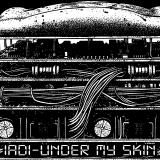
Between flesh and silicon. “Under My Skin” (2026) is the first album by IADI, released by Neo Life. A record like few
others, highly conceptual, cover art included. Its essence lies in the folds of the increasingly ambiguous relationship
between man and machine, where the former designs the latter and, perhaps without fully realizing it, is gradually
destined to adapt and be reprogrammed by it. Each track of “Under My Skin” is, in fact, a sort of interface, connector, or
any other imaginative point of contact between two creative phases, amid emotional impulses and binary calculations.
The sonic architecture oscillates between analog warmth and algorithmic coldness, constructing landscapes in which
pulsating synthesizers and mechanical rhythms seem to question each other. There's no linear narrative, but rather a
progressive immersion in a zone of near-friction, where the comfort of technology coexists with more than a faint
musical uneasiness, like a background noise that never ceases to remind you who's truly in charge. In “Under My Skin”,
the machine is neither an enemy nor a simple instrument: it's a real presence, intimate, even tactile, amplifying desires,
fears, and dreams of dawns beyond the digital realm. Intelligent dance music. Less noise, more sensations. Electronic,
but profoundly human.
The final result, then, is a music project that speaks to the present, yet sounds like an X-ray of the future, capturing that
fragile moment when humanity and technology stop observing each other from afar and begin to merge, track after
track. It's no coincidence that IADI's album opens with “Impulse”, an immediate expression of an electrical impulse, for
both humans and machines, which is also the language of the nervous system, as fast as it is vital—pure energy and
rhythm, a track as intense as it is irregular. And after this introduction, it's the turn of the equally erratic “Axon”, whose
title describes the neuron that transmits the signal over distance, telling the listener to sit back and relax for a new
journey through the notes toward the more melodic “Cortex”. The cerebral cortex, the ultimate seat of thought and
memory, becomes the source from which the musical flow of the first part of the work is drawn.
Then, suddenly, an automatic, or instinctive, response to the constant succession of impulses: “Reflex”, or zerotemperature techno, with a fragmented pace, featuring vocal samples, breaks, and restarts. In the producer's
imagination, the subsequent, and conversely placid, “Neuron” represents the emotional core of the second part of the
work, providing a kind of respite from the seething vibrations. While the neuron is the basic unit of the nervous system,
the synapse is the functional connection point between one neuron and another effector cell, essential for the
transmission of nerve impulses and communication in the nervous system, enabling functions such as learning and
movement. Likewise, a track like “Synapse” once again illuminates the path traced by IADI. The more experimental and
streamlined “Static” instead suggests true ordered chaos. “Dreamstate” is the conclusion suspended in the void, relating
to that dreamlike state between waking and sleeping, where consciousness fades toward infinity and visions begin. Pure
fading into the subconscious. Eternal return to where it all began. Dancing is a form of consciousness. Every beat is a
question. IADI, however, holds all the answers you need.
Solid Red Vinyl Edition - 10@ Mini album. Originally release in 2025 in a painfully limited 2x7" + Book edition.
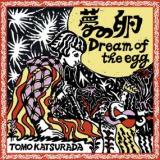
"Dream of the Egg" is the debut solo album by Tomo Katsurada, known for his work with the Japanese psychedelic band Kikagaku Moyo. This project is a unique fusion of music and visual art, inspired by the Japanese 1920s children's book “Yume No Tamago (Dream of the Egg)”. It reveals a deeply personal journey, reflecting Tomo's dreams and the numerous rebirths experienced in 2024—a year marked by profound new beginnings in every facet of his life.
This mini album was driven by a passion for raw and immediate expression. Every song was crafted and recorded with only the materials available to him at the time, embracing an organic and handmade atmosphere. By eschewing rhythm clicks and standard instrumental tunings, a spontaneous sound emerged, capturing the essence of both uncertainty and immediacy. Adding to this distinctive sonic landscape, guest musician Jonny Nash (UK) contributed ethereal guitar sounds on the first and final tracks, enriching the record's dream-like quality.
The journey begins with the opening track, "Moshimo," which means "If..." in Japanese. Here, Jonny's guitar weaves seamlessly with the vocal melody, creating a harmonious dialogue. The first half of the album concludes with "Zen Bungalow" a cover of Gabriel Yared's “Bungalow Zen” from the soundtrack of the film “Betty Blue 37°2 Le Matin”. This particular track is his partner’s favourite song to listen to every morning and left a profound impression on him. One day, he heard a song in his dream that combined both of these tracks and loved how they blended together. This experience inspired him to create a new arrangement, "Zen Bungalow," which has become a central piece of the “Dream of the Egg” album.
The third track serves as an interlude, printed on a flexi disk attached to the middle of a picture book. This interlude transitions the listener into"Inner Garden," a bittersweet folk song that explores themes of love. The EP's narrative spans 20 minutes, culminating in the final title track “Dream of the Egg”. This piece features a delicate session between Tomo & Jonny, combining cello and guitar to create a spectrum of tones that evoke the imagery of a rainbow. The focus on smooth dynamics and meticulous play reflects an intent to convey a sense of physical trembling. This track sounds like the beginning of a new dream; as if the egg of one’s dream is about to hatch, bringing a sense of anticipation and wonder to the listener. Throughout the album, a variety of instruments come into play, drifting between notes and embracing the beauty of imperfection. By incorporating free-form sounds in a highly technological age, the record aims to reconnect listeners with the tangible, human-made quality of sound.
Special Thanks
Jonny Nash – Guitar
After a moment of calm, De Lichting returns with the fourth instalment in its double LP album series, Vier.
Never losing touch with its roots in emotional dance music, Vier is a tribute to the electronic soul, something increasingly overlooked on today’s dancefloors. queniv’s Frequency Match opens the album as a gentle invitation, built on minimal drum work and long, stretched pads. RDS’s Aerial Reflections continues in the same vein, leaning into a more serious mood with old school flavoured rhythms.
The first heavier club moment comes from Human Space Machine with Test Rec. A more tense, primetime leaning, proggy groove unfolds, washed in nostalgic strings and trippy elements for both body and mind. Nathan Kofi follows with Kinesis, a proper Detroit infused techno track that pushes the experimental edge further, darker and more driving.
On the second record, the mood shifts into deeper melancholy with Eversines’ Lift The Veil, featuring classic deep house textures of Rhodes chords and FM basses. Nearing the end of the album, Proxyan’s Another delivers pure credits rolling, emotion drenched analogue funk electro, a track the rest of the group had to beg Robbert to include. We are glad we did.
As a kind of bonus track, RDS and Eversines close Vier with a tech house rework of their earlier track Missing. Released on vinyl for the first time, it was previously available only in digital form via Kalahari Oyster Cult.
Specs: Wrapped in shrink, DL code, insert with liner notes
"Music in DNA" is an album recorded in the early 1980s in New York City by Yasuhito Ohno, a young Japanese man breaking free from the constraints of his homeland. The album is a naive burst of outsider DIY enthusiasm, inspired by the multiple avant-garde movements of the era, in music, painting and performance, as well as the native energy of 80s NYC. Ohno channeled his youthful “edge” and zeal into open-minded lo-fi musical explorations using a mere two machines: the then-new technological glories of a four-track cassette recorder and that polyphonic synthesizer masterpiece, the Roland Juno-60; on several pieces he vocalizes. These seven tracks have a zestful, innocent, anything-goes charm, free from preciousness and self-consciousness: a raw and youthful human spirit at play in a new world. Ohno was also inspired by the humanistic promise of the general technological developments of the day, including DNA research, personal computing, and early computer graphics, an example of which can be found on the cover. Ohno later returned to Japan, becoming a renowned composer/producer. In an era of jaded cynicism, "Music in DNA" is a welcome taste of big-hearted innocence, a revival of a raw self. Available on CD/LP/Digital, with E/J liner notes.
Formed in Taipei in 2013, Scattered Purgatory (破地獄) has occupied a liminal space between drone, ambient, psychedelic folk and ritualistic kosmiche experimentation. Their early work, including ‘Lost Ethnography of the Miscanthus Ocean’ (2014) and ‘God of Silver Grass’ (2016), blended dense instrumental drones, improvisational guitar, and ambient textures rooted in the heat, humidity, and urban pulse of Taiwan. Over the years, the duo-turned-band has drawn on Krautrock, minimalist electronic music, and heavy drone traditions while remaining firmly grounded in Taiwanese geography and culture.
‘Post Purgatory’ emerges after a three-year hiatus following the pandemic, a period the band describes as pivotal to the album’s conception. “The feeling of loss and uncertainty has later become the inspiration of this record, and ‘time’ is the main theme – it can heal or it can destroy,” they explain. Musically and lyrically, the record traverses Taiwanese, traditional Chinese, and English, reflecting the multilingual fabric of Taipei life. While there isn’t a linear storyline, metaphor and poetry imbue the lyrics with reflections on love, loss, and the human experience, interlaced with influences of Hokkien and Mando pop and traces of trip-hop.
Recorded half in their home and half at the studio where they composed their first album, ‘Post Purgatory' integrates precision, clarity, and digital production techniques. Guest contributions—from White Wu’s dynamic drumming to Minyen Hsieh’s tenor saxophone and dotzio’s sci-fi-infused vocals—expand the band’s sonic palette, creating a doom metal record shaped by electronic sensibilities.
‘Post Purgatory’ is a statement of loss and re-empowerment, a bridge between their past and present. Through it, Scattered Purgatory reclaim their distinctive voice, presenting a sound that is at once rooted in Taiwan, informed by global musical traditions, and unflinchingly forward-looking.
credits
When you notice the cheerful mystery playing with the synths, the edges of this small world start to look slightly distorted. In any era, someone is always creating mysterious music on their own. (7FO)
----------------------------
Music in DNA is an album recorded in the early 1980s in New York City by Yasuhito Ohno, a young Japanese man breaking free from the constraints of his homeland. The album is a naive burst of outsider DIY enthusiasm, inspired by the multiple avant-garde movements of the era, in music, painting and performance, as well as the native energy of 80s NYC. Ohno channeled his youthful "edge" and zeal into open-minded lo-fi musical explorations using a mere two machines: the then-new technological glories of a four-track cassette recorder and that polyphonic synthesizer masterpiece, the Roland Juno-60; on several pieces he vocalizes. These seven tracks have a zestful, innocent, anything-goes charm, free from preciousness and self-consciousness: a raw and youthful human spirit at play in a new world. Ohno was also inspired by the humanistic promise of the general technological developments of the day, including DNA research, personal computing, and early computer graphics, an example of which can be found on the cover. Ohno later returned to Japan, becoming a renowned composer/producer. In an era of jaded cynicism, Music in DNA is a welcome taste of big-hearted innocence, a revival of a raw self. Available on CD/LP/Digital, with E/J liner notes.
- A1: Moth In The Headlights
- A2: Float Away
- A3: Göbekli Tepe
- A4: Absolute Cinema
- A5: Oh Brother
- A6: Medusa
- B1: Carpe Diem
- B2: Mannequin
- B3: This Fascination
- B4: Disappoint Me
- B5: All I Have To Do Is Dream
With their third album, Inanimate Objects of the 21st Century, Newcastle’s The Pale White prove once again that there’s no slowing them down. Following the success of their introspective sophomore album The Big Sad, brothers Adam (vocals/guitar) and Jack Hope (drums) return louder, sharper, and more defiant than ever. This third full-length is their most expansive yet: a record that blends the anthemic punch of classic rock with the urgency and edge of modern alternative.The title, Inanimate Objects of the 21st Century, is a nudge to the uncomfortable irony of our time – as technology accelerates, humanity feels increasingly frozen in place. Lead singer Adam Hope says: “Technology is moving, but we are not. Human civilization entered the 21st century wide-eyed and naive with mobile phones that would barely fit in our pockets. Fast forward a few decades and we’re so far from where we were that it almost looks like a bad 80’s sci-fi movie. Back then, that film would be watched in packed-out cinemas after an eagerly anticipated release, but now they stand emptier than they once were, attended mainly as a nostalgic experience in the age of Netflix and doomscrolling.
The birth of AI, algorithms, cryptocurrency, drones, holographic concerts, autonomous cars… we’re living in a strange transitional period which is both fascinating and terrifying in equal measure. We humans have now in fact become the inanimate objects - mannequins.After our softer, melancholic second album ‘The Big Sad’, we felt it was only right to move as fast as our world is moving and release our next within the year. ‘Inanimate Objects of the 21st Century’ is the evil twin, the Yin to The Big Sad’s Yang.”
Yeun Elez opens a breach: that of a forgotten threshold, a gateway to Hell concealed beneath the peat and legends of the Breton marshes, from which Hoel Moce borrows the name for this project.
Born from Celtic tales passed down in hushed tones, it summons wandering souls, suspended spirits, and those who have already reached the end of their journey. Having escaped from Techno Thriller, Hoel founded Yeun Elez in 2022, as an autonomous and haunting sonic territory.
Surrounded by talented collaborators (Maria: NaturaMorta, Lou Savary de Reymour), he weaves a ritualistic and visceral music, traversed by dreamlike landscapes, misty battlefields, and a fantastical medieval Brittany.
Between pagan symbolism and spectral visions, the project explores the murky depths of the human condition. Thus, birth, love, decline, death: the themes emerge as archaic truths. Betrayal and revenge exist alongside devotion and the quest for an ideal that transcends us.
Mixed by Luc Bersier (Reymour) and then mastered by Tioma Tchoulanov (UVB76, Nze Nze), this album by Yeun Elez doesn't reconstruct the past: it invents it to better haunt it.
Music like a rite of passage, both rooted and timeless, like an inner journey, dark and necessary, to a place where myths refuse to die.
- A1: A Perfect Storm
- A2: Etyd
- A3: Against The Dying Of The Light
- A4: For Every Dusk
- A5: Sheet
- A6: Pajarito
- A7: Losing Game (Sick)
- B8: Ay Querida
- B9: U / Rawls Slöja
- B10: Gymnasten
- B11: Just A Rock
- B12: You & We
- B13: Joy (Can’t Help But Sing)
White Vinyl[28,99 €]
José González has delivered a new album, Against the Dying of the Light, a companion and further meditation on the themes of his critically acclaimed album, Local Valley. Where Local Valley turned inward toward place, language, and personal reflection, this new record widens its gaze, becoming an urgent call to preserve the light of humanity with all its flaws, at a moment when, technology increasingly shapes how we think, feel, and relate to one another.
While José has always embraced technological advancement, he questions the assumption that every new possibility must be pursued to its maximum potential, especially when progress comes at the expense of human flourishing, attention, and empathy.
Keeping in the tradition of folk music as protest, José’s new single — sharing its title with the forthcoming album — urges listeners to resist systems that dehumanize and divide: “Disconnect from every algorithm, every perverse incentive that drags you down. Let’s rebel against the replicators, against the dying of the light. Kill the codes that feed the hate, keep the codes that make you thrive, celebrate the **king fact that we’re alive.”
Across the album, González works within a deliberately minimal framework, pushing his familiar palette to new heights through subtle variation, restraint, and detail. Each song unfolds with its own distinct character, proving how much emotional and musical range can be achieved within self - imposed limitations. Written in English, Swedish, and Spanish, the record reflects his Swedish - Argentine roots and frames its humanist message as a global one rather than a purely personal or political statement.
José González is one of the most quietly influential artists of our generation. The Swedish - Argentine artist has built a singular musical world from hypnotic, minimal guitar work and his unmistakably gentle voice — a sound that has become deeply personal to millions of listeners worldwide. With billions of streams across platforms and hundreds of thousands of physical records sold, González’s songs often act as emotional landmarks. Ask almost anyone, and they can name at least one of his tracks tied to a defining moment in their lives.
ADULT. kooperiert nicht. Seit über 25 Jahren verkörpert die dystopische Detroit-Synth-Punk-Institution, gegründet von Nicola Kuperus und Adam Lee Miller, unbeirrbare Frustration, Misstrauen und Beklemmung. Man könnte erwarten, dass sich die Kanten mit der Zeit abschleifen, doch ADULT. hat kein Interesse am Komfort eines Vermächtnisses. Noch nie klang die Musik des Duos so unmittelbar, so dringlich und so unverhohlen wütend wie auf dem abschließenden, kompromisslosen Kissing Luck Goodbye.Mit aufgerüstetem Equipment und einer neuen Klangbibliothek gebaut, ist das Material erdrückend dynamisch, lauter - und zugleich klarer. Kuperus' dominante Darbietung rückt im Mix stärker in den Vordergrund und skizziert ein Arsenal aus lebhaften, ätzenden Rufen, Sprechchören und Gedankensplittern. Lachen - ob in den Texten oder als besessene Präsenz - fungiert als Leitmotiv und verweist auf die bedrohliche Absurdität der modernen Zeit.,THE CHAOS IS WHAT THEY WANT", singt sie in ,R U 4 $ALE" - zugleich eine Absichtserklärung: einer brennenden Welt aus Gier und Unordnung mit trotzigem, meisterhaft zusammengebautem Chaos zu begegnen. ,Du hast in dieser Höllenlandschaft, in der wir gerade leben, zwei Möglichkeiten: kämpfen oder depressiv sein", sagt Miller. ,Beides ist okay. Aber, na ja, die Entscheidung war einfach."ADULT. ist bekannt für hochriskante Katharsis auf der Bühne und griff kürzlich auf seinen Backkatalog an Bassgitarren-Songs aus den 2000ern zurück, wobei sie die vorausschauende Anxiety Always-Ära erneut nachzeichneten - teils aus Notwendigkeit angesichts der heutigen politischen und technologischen Angsttemperatur. Die Reaktion war sofort spürbar: ,Wir waren in Paris, und die Kids sind von der Bühne gesprungen. Und ich dachte nur: Das ist großartig. Das ist irgendwie die Energie, in die ich wieder zurückwill", sagt Kuperus.Diese Erkenntnis fiel mit einer Reihe von Rückschlägen zusammen - Kuperus' Anfällen von chronischem Schwindel, dem Verlust ihres engen Freundes und Kollaborateurs Douglas McCarthy von Nitzer Ebb, dem das Album gewidmet ist - alles unter dem drohenden Regime noch einmal erheblich verschärft. ,Wir dachten nur: Alles zerbricht. Wir zerbrechen. Wir sind kaputt." Dieses Gefühl hielt jedoch nicht an, denn letztlich waren sie viel zu sehr von Wut aufgeladen, um stillzuhalten. Die Stimmung vor Kissing Luck Goodbye waren vier Mittelfinger, die kerzengerade nach oben zeigten.Anstatt sich zurückzuziehen, konzentrierten sie sich auf den Prozess und überarbeiteten ihr Setup - inklusive der ersten neuen Mikrofone seit 20 Jahren. Hält man das Album an irgendeiner Stelle an, zählt man wahrscheinlich ein Dutzend Dinge, die gleichzeitig passieren, in seltsamer, schwindelerregender und dissonanter Harmonie. ,No One Is Coming" attackiert Untätigkeit angesichts des Faschismus - ,NO ONE IS COMING TO YOUR RESCUE". ,None of It's Fun" feuert mit atemloser Dringlichkeit, rasenden Glissandi und pointierten Zeilen wie: ,OH I AM TEARING MY GUTS OUT / LOOK AT ME_ DO YOU THINK THAT THIS IS AMUSING?"Eine geradlinige Basslinie und Kickdrum prallen im Abschlusstrack ,Destroyers" auf pulsierende Mantras, werden dann vollständig gesättigt und kakophonisch. Ihre jüngeren Ichs hätten den Song vielleicht sich selbst zerstören lassen, doch hier gelang es ihnen, die Lautstärke durch alle Extreme hindurch zu stabilisieren und Raum für ein eindringliches, abschließendes A-cappella zu schaffen: WE PAY THE PRICE FOR THOSE IN POWER EXPLOITING YOU EXPLOITING ME CONSUMING YOU CONSUMING ME SICK SICK SICK SICKENING IT IS US THAT ARE DEVOURED BY EVERYTHING I WILL EAT YOUR HATE
One of the most innovative and ambitious albums ever made, Genioh Yamashirogumi’s Ecophony Rinne is a sonic masterpiece featuring over 200 musicians that expanded the limits of what music and sound could do.
Before Akira there was Ecophony Rinne. Originally released in 1986, Ecophony Rinne is a four-part symphony of “ecological music” by Geinoh Yamashirogumi that married ancient tradition with technological innovation, and changed the way we listen to music in the process.
Half-speed mastered at Abbey Road by Miles Showell, Time Capsule’s high-tech analogue reissue is the first to reproduce composer Ōhashi’s ground-breaking “Hypersonic Effect” theory on vinyl, cutting frequencies beyond the realm of human hearing into wax to capture the full spectrum emotional impact of this extraordinary work.
Founded by genius polymath Tsutomu Ōhashi aka Shoji Yamashiro, Geinoh Yamashirogumi is a shapeshifting collective of over a hundred members from across disciplines. Rejecting professional musicianship, Ōhashi cultivated an ethos where neuroscientists, psychologists, doctors, journalists, engineers and students could critique society through artistic expression and pursue their research in ethnomusicological performances that spanned global traditions, Eastern spirituality and Western classical form.
Ecophony Rinne represents the pinnacle of this vision - an expansive orchestral suite made with over 200 musicians that channeled Ōhashi’s thinking about mankind’s relationship with nature, and fundamental questions of life, death and rebirth.
Here pipe organ synths made from sampled Tibetan horns sit alongside field recordings from Central African forests, Buddhist mantras circle dummy head microphones, Javanese Jegog percussion ensembles pulse like verdant ecosystems, and the acoustics of temples, caves and landscapes are conveyed in the mix. Weaving together culture, nature and technology, it is a record that vibrates with the polyphony of life on Earth.
But Ecophony Rinne was not only musically innovative. Noticing the difference between vinyl and CD versions of the album where digital reproduction limited the sound, Ōhashi developed a theory of “Hypersonic Effect”, determining that ultra-high frequencies above 20khz can impact human perception even if they are inaudible. At once a physical and a psychological experience, to listen to Ecophony Rinne is to feel music differently.
The rest is history. After its release, Ōhashi was approached by director Katsuhiro Ōtomo to produce the soundtrack for Akira, the work for which Geinoh Yamashirogumi is best known. Emerging from the shadows at last, Ecophony Rinne was its transcendental blueprint, reissued in its most complete hypersonic form on vinyl for the first time.
Rather than describe nature, Ecophony Rinne embodied it. Rather than reflect culture, Ecophony Rinne defined it. Rather than explore technology, Ecophony Rinne changed it. As a work of art, it is more relevant than ever. You won’t have heard anything like it.
Scopeotaku’s latest is a continuation of themes he explored in System Failure. Mutating into darker dimensions, influenced by recent world events. reality error is steeped in strangled synths, tape hiss and distorted echoes. Featuring crushed low-tech rhythms and recordings inspired by science fiction B-movies. Scopeotaku seizes the means of production with full on DiY approach. Setting out to soundtrack a dystopian society that has lost touch with the soul of humanity. A world where corporate greed and disruptive extremist views amplified by echo chambers soaked in misinformation drown the voices of reason and compassion. Within this murky swamp however lies a glimmer of light and hope for us all to not accept the future but to shape it.
50 DiY tapes with download code included.
Recorded in Glasgow
Just when you thought Kevin Richard Martin's music couldn’t go any slower, lower or deeper, Sub Zero emerges. A slow-motion excavation of drug-tech, dub, dreamy noise and frozen ambience, the album gradually mutates into hypnotic pulsations and melodic melancholia. It is arguably Martin’s most striking release to date under his given name.
Originally released digitally on Bandcamp only in the depths of winter 2022, amid the final year of the COVID-19 pandemic and Russia’s initial invasion of Ukraine, this desolate epic went on to become KRM's best-selling digital album on the platform. With persistent demand for a vinyl pressing and a full DSP release from fans, Martin thought the time was right for Sub Zero to finally surface in its full glory: remastered and paired with fresh new artwork.
Unnervingly, the album is as beautiful as it is solemn, as glacial as it is relentless, and as subtle as it is terrifying. A trip into a sonic abyss, with a tour of a philosophical void, it’s to my ears, KRM’s most seductive work yet, and also his most emotionally resonant. Martin expertly balances tear-jerking motifs with heavier than hell rhythmic weight. With its melodic fog, eternal drones and eerie atmospherics, the peripheral throb of distant kick drums, the heartbeat punctuation of cavernous subs and the snowstorm blizzard of fuzz absolutely envelopes the mind, whilst crushing the soul.
In terms of lineage, Sub Zero might recall a more paranoid Porter Ricks, a dystopian GAS, or a brutally dubbed-out Pan Sonic. Most fitting, however, is its kinship with the deepest dub terrain Martin previously explored on In Blue, The Bug’s acclaimed 2020 collaboration with Dis Fig for Hyperdub, where he obsessively probed subaqueous pulses and low-end modulations.
Sub Zero is possibly the most minimal, desolate, and deviant dub record yet released on Martin’s PRESSURE label. It marks the point at which dub disappears into its own effects trails. Dub music capturing frozen moments in time. Dub as an addictive painkiller, that sounds both sacred and ocean deep.
The Alan Parsons Project / Joe Claussell
The Voice / I Wouldn’t Want To Be Like You (Joe Claussell Mixes)
Leave it to Joe Claussell to tap into our current collective artificial intelligence anxiety and render the racket divine. Alan Parson’s 1977 I Robot—the LP from which these two new edits were culled—was a harbinger for all the technological sheen and humanistic distress that was to come. Drawing from heady science fiction and even headier musicality and studio sophistication, ’The Voice’ evoked Jeremy Bentham-like omniscient surveillance, while the original ‘I Wouldn’t Want To Be Like You’ explores the ambivalent rift in perspective between the two poles of flesh and metal. For Claussell, the dichotomy leaves more unanswered questions and artistic possibilities, for the truth is always tangled and ripe for potential. Our bodies are propelled by the same electrons which accumulate in capacitors; our hearts, as Milford Graves was so enthralled, likewise transmit the same electric impulses which not only sustain our bodies but soundtrack our eternal, internal rhythm. These edits, with their strings, synthesizers and distortion-ravaged guitars, are protracted to dynamic sublimity, and seem aware of this seemingly opposing dynamic. Claussell, himself a lifelong proponent and interrogator of man’s relationship with mechanized rhythm and sound, leaves our earthly toil and unease behind for something greater, something yet unnamed, shared between us all at our finest. It's almost a feeling you can touch in the air…