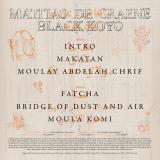
With Black Koyo, Mattias De Craene enters a sound world at once intimate and vast. Born from journeys in Morocco and Brussels, the project traces the rhythms, chants, and spirits of the Gnawa tradition, revealing a quiet resonance that echoes De Craene's own search for depth and presence. Guibri, qraqueb, call-and-response chants, saxophone, loops, and electronics come together in a trance-induced dialogue - ritualistic, elemental, and dreamlike - creating a space where listening becomes immersion, tradition meets imagination, and music unfolds as a shared act of reflection and wonder.
About Mattias De Craene
Mattias De Craene's artistic path is marked by rare coherence. As a central voice in Nordmann and MDC III, he developed a physical, rock-inflected jazz language driven by propulsion, volume, and trance-like collective energy. Over time, a period of personal rupture - burnout, tinnitus, depression - shifted his focus inward. The saxophone became a breathing, textural presence, and in his solo work, he weaves saxophone, electronics, loops, and minimal forms into a cinematic, hushed world where repetition, resonance, and silence slow perception. Rooted in ambient and introspection, his music prizes attention over impact, precision over excess - a quiet intensity recognized with a nomination as Musician for the Music Industry Awards (MIA's).
About Black Koyo
Black Koyo is a Brussels-based ensemble and one of the most compelling voices of the Gnawa tradition outside Morocco. Led by maalem Hicham Bilali, the group brings guibri, qrraqueb, and call-and-response chants to life with trance-like intensity and ritual precision. Their music is both rooted and contemporary, weaving earthbound rhythms and vocal invocations into ecstatic, immersive soundscapes, creating a space where ancestral resonance meets present-day imagination.
About Jan Bang
Jan Bang is a pioneering Norwegian producer and musician, celebrated for his mastery of live sampling and his ability to merge electronics with improvisation, rhythm, and texture in real time. He mixed the album and occasionally joins live performances, bringing his signature approach to sound as co-founder of the influential Punkt Festivaland collaborator with artists such as Jon Hassell, David Sylvian, Arve Henriksen, and ECM Records' roster. As a performer and sound architect, Bang creates immersive, trance-like sonic textures where silence and sound carry equal weight. Within Mattias De Craene ftBlack Koyo, his live sampling becomes an organic instrument, weaving saxophone, electronics, and Gnawa rhythms into hypnotic, physically charged soundscapes.
Line-up & credits
Mattias De Craene - sax, electronics | Hicham Bilali - guibri, vocals, qraqueb |Ismael Akhraz - vocals, qraqueb | Marwan Abantor - vocals, qraqueb
All tracks are original gnawa traditionals played by Black Koyo and arranged by Mattias De Craene.
Album produced & recorded by Mattias De Craene in Essaouira, Morocco and hometown Ghent, Belgium 2025.
Text by Hicham Bilali.
Mixed by Jan Bang at Punkt Studio
Mastered by Lieven Van Pee
Artwork by Marina Sviridova
Design by Benoit Van Geel
Manufactured and distributed by N.E.W.S.
Executive production by W.E.R.F. records
Supported by Flemish Government, Jazzlab, nona, HA Concerts, Aubergine artist Management,
KAAP, La Bestia (Wout Van Putten) & mdcmu.sic vzw.
2026 (c) W.E.R.F. records
Поиск:hush hush
Все
- 1: Lake Walk
- 2: Lazy Daisy
- 3: Ups & Downs
- 4: Silently
- 5: There Was A Nice Sunset
- 6: Somewhere Good
- 7: Slow Island
- 8: Movin’ On
If – in some parallel universe (or perhaps a not-so-distant-future version of the one we’re already sentenced to living in) – the evil overloads of artificial intelligence were actually successful in their attempts to create convincingly enjoyable “original music,” more specifically tasked with wholly encapsulating my own personal tastes by data-chugging some cocktail of – oh, I don’t know – the posters on my wall, the records in my “most listened to” pile, the mixtapes I made for others, intensive physical scans of my auditory cortex, amygdala, hippocampus, heart strings, whatever else they have splayed out on their autopsy table with the intention of generating one all-encompassing “perfect band” based on the fruitful sum of their findings – that band, for me, would be (or would at least sound exactly like) the Tara Clerkin Trio. It is, quite simply, without exception, the music I wish to hear.
Formed in Bristol UK (where none of them are from yet all of whom are deeply engrained) in 2020, the Tara Clerkin Trio – as it somewhat democratically exists today, despite the singular authority implied by its name – consists of the titular Tara Clerkin, her partner Sunny Joe Paradisos, and Sunny’s brother, Patrick Benjamin. I’ll confess, I don’t know what their respective roles are within the operation and there’s only a very small part of me that cares to learn, as one of my favorite qualities in an objective listening experience is the mystery of who is playing what, which sounds are “authentic” versus synthesized, which chunks are performed “live” in a room together versus meticulously Frankenstein’ed from measure to measure, or how exactly the overall sound is so (seemingly) effortlessly achieved. Though, I suspect, if and when I do witness a live performance by this band at any point, my enjoyment of the music will not be lost in my better understanding of it.
With two extraordinary mini-albums – In Spring (2021) and On The Turning Ground (2023) – making a splash on London’s formidable World of Echo label in wake of their self-titled 2020 debut, this upcoming Somewhere Good LP is, in many ways, the band’s most realised work. In running their usual gauntlet of idiosyncratic (*an overused adjective for which here there is regrettably no sufficient alternative) approaches, Clerkin & co. colour in and outside of compositional lines over the course of 40+ celebratory minutes - never wallowing, despite inherently somber subject matters of self-defeat, disease, displacement, restlessness, gentrification - allowing their arrangements and improvisations ample space and time to situate, stretch out, breathe, cross-pollinate, and ultimately take deeper hold on the listener’s imagination – all while somehow sounding more like themselves than ever before.
Of course, there are traceable influences herein, if one felt that such comparisons were necessary to properly examine and enjoy this music (they aren’t)… Being the big dumb American from the small boring town that I am, cornfed on ‘90s alternative radio with the enchantingly exotic sounds of Maxinquaye and Mezzanine emanating from my chunky tube television, I can’t help but to make a blatantly obvious reference to a “Bristol sound”, ie the whole trip-hop trip, the pastoral crooning over the suggestive urban grime of cracked electro/piano treatments, the digitally-yet-primitively reconstructed James Bond soundtrack string-beats, etc.. But the Tara Clerkin Trio is so infinitely much more than that. There are elements of avant-pop, modern classical, kraut-folk, audio verité, dare I say indie rock (and not of the beer guzzling, masturbatory fuzz-flex variety but perhaps more like a Trish Keenan-fronted Faust, Adrian Sherwood at the mixing desk of If You’re Feeling Sinister, or – in expanding on our alternate reality – a world in which High Llamas cut a full-length for Warp Records with Andrew Weatherall on coffee duty).
The hazy, unmappable skyline-mirage of droning harmonium, upright bass, peculiarly accentuated wind instruments, acoustic guitar, hushed yet literally mighty keys combine to hypnotizing effect. The band may make underlying nods to jazz, sure, but it’s not appropriation, it’s that they have the actual chops to build it out. Beneath the janky samples and oddball percussive embellishment lies actually great drumming. Beyond the manipulated vocal witchery and woefully reflective plain-spoke moments are Tara’s subtly inspired melodies, sung with what might honestly be the glue to the whole crazy equation. A calming consistency throughout the otherwise unpredictably dynamic, boldly intuitive, uniquely British exploration of this (their own) universe in song. – Ryan Davis (Chicago, February 2026)
Grace & Raffaella is the first collaborative release by ML and Vittoria Totale. Over nine tracks, the album strikes a deceptively minimalist tone, taking in a ton of musical as well as literary references. An elegy on a journey back to the present, with all the hushed intensity of an informed fever dream, Grace & Raffaella has a magic-realist feel. Its vocal parts serve as loopy self-fulfilling prophecies. Cut off from the sun, the gorge grows darker. Using an electroacoustic sense of spacing, as well as abstracted current-day club influences, with scraps of background noise fading in and out, this album's use and treatment of a snippet-like narrative is its core aesthetic. A digital gleam drenches the spoken bits into instances of subtle surrealism. Like a kitchen sink drama stripped of all deadweight. We are on the edge of relinquishing all control here. Rip up your diary and let go of the language of the old ones. Grace & Raffaella is a seductive slice of modern hyper-pop that defines its own intentions over and over again.
Stripped of its branches and reduced to the bare trunk, Evigt Morker 6 stands at the threshold where fire becomes voice and light devours the sky. Across six tracks, the music moves through hushed revelation, listening for a call that cannot be refused. Salvation and damnation burn side by side on the horizon, as everything else is consumed by flame. ''Kapa grenarna. Lat stammen sta ren infor slutet. Nar riket oppnas ska rosten tala i lagor, bara for dig. Lyssna, och se hur ljuset ater himlen tills oandligheten skymtar. Kliv in i den negativa elden dar intet vander sig om och blir till.''
- 01: The Dark Forest
- 02: Nightshift Superstar
- 03: Shimmering Scars
- 04: Cryogen
- 05: Be With You
- 06: Hexagons
- 07: The Sickness In You & I
- 08: Unravelling
- 09: Hush
- 10: Space Debris
Muse are a culturally-attuned, genre-defying band who channel the anxieties of each era—technology, power, rebellion, and identity—into maximalist, stadium-ready rock that evolves with the times while staying unmistakably Muse.
Kicking off with new single “Be With You,” this next era of Muse is rooted in electronic experimentation and an insatiable curiosity. ‘The WOW! Signal’ represents a world of cosmic mystery, existential hope, and the exhilarating possibility of contact with something far greater than ourselves.
- A1: Dear June – Amon Tobin
- A2: Paisley Knights – Amon Tobin
- A3: Neva – Amon Tobin
- A4: Deep Freda – Two Fingers
- A5: Strange Inside – Amon Tobin
- B1: Hush Say The Wilds – Amon Tobin
- B2: Slow Sun – Amon Tobin
- B3: First Cat Last Cat – Amon Tobin
- B4: Paranova – Amon Tobin Vs Cujo
- B5: Highland Park (The Secret Life Of Button-Down Fashion Bow) – Amon Tobin
Vol 1[26,01 €]
Contains tracks by Amon Tobin, Two Fingers, and Cujo previously only available to members of The Nomark Club, Nomark’s online subscription service.
NOMARK SELECTS Vol.1 includes the first new Cujo music since the Adventures in Foam album (1996)
A compilation of previously publicly unavailable tracks selected by the members of Nomark's online subscription service, The Nomark Club. The album features work from Amon, Two Fingers and sees the return of Cujo, Tobin's earliest alter ego.
Coyote are back with another typically carefully curated collection of Baleraic re-edits and revisions via the reliable (and hush-hush) Magic Wand imprint. The Nottingham twosome kick things off themselves with 'Carpenter', a dubby and bass-heavy extension of a dreamy, folksy number (all jangling acoustic guitar, stoned male lead vocals and gentle hand percussion), before we're treated to the 'Pointless edit' of 'Six Blade Scalpel' - a languid, bass-heavy revision of a late 70s blues/soft-rock number crafted by Bedmo Disco's Sell By Dave. There's an Americana/neo-folk feel to Andy Kidd's sublime extension of Dan England's 'I Don't Feel That Way', while YZ's edit of 'Sapelo' is a horizontal, Rhodes-laden, spoken word-sporting ambient delight.
- A1: Micå - Echoes Of Blue 6 21
- A2: Segensklang - Schauer Der Musen 5 18
- A3: Ümit Han - Eines Tages 6 12
- A4: Pass Into Silence - Pale Blue Dot 6 40
- A5: Würden & Schäfer - Analysis Of Variance Iv 5 25
- A6: Richard Ojijo - Verzettelung Live@Filmforum 5 00
- B1: Sebastian Mullaert / Hush - Forever Traces 7 28
- B2: Luis Reich - Distant Ort 6 48
- B3: Morgen Wurde - Wusste Längst Feat Tetsuroh Konishi 5 20
- B4: Dirk Leyers - Regolith 6 56
- B5: Thore Pfeiffer / Niko Tzoukmanis - Impuls 5 52
“Everything flows – nothing remains, there is only an eternal becoming and changing” is a well-known formulation of the river theory of the Greek philosopher Heraclitus, also known as panta rhei (ancient Greek: πάντα ῥεῖ, “everything flows”). This teaching states that everything in the universe is subject to constant change and that nothing stays the same forever. The metaphor of the river illustrates this: You can't step into the same river twice because both the river and you are constantly changing. The water is constantly flowing, but the river stays in one place. Thus, reality is constantly changing, even if sometimes perceived as constant.”
„Same Same but Different.“ Always different – always the same. Chill-Out DJ Heraklit
For the 26th time, the most consistent of all ambient compilations, in a constant flux of static change, is released on Kompakt. Joining good friends from the early days and reliable confidants are some new additions to the non-hierarchical charts of contemplative rapture culture.
Leading the way is Micå, a Japanese electronic musician whose finely chiseled, graceful musical style has made it onto the new collection with two pieces. Also making his debut is Richard Ojijo, a seasoned sound engineer known, among other things, for his long-standing collaboration with the artist Marcel Odenbach and the Cologne-based label Magazine. Oskø aka Max Hytrek, a multi-talented newcomer to Kompakt and the music scene, debuts with his rapturously ecstatic piece "Ar Vag." He's followed by Sebastian Mullaert, appearing for the second time—this time teamed up with Sebastian Lilja aka Hush Forever. After his surprise return last year after a 20 year hiatus, we are delighted that Tetsuo Sakae aka Pass Into Silence is back again this year with one of his distinctive sound gems. As are Dirk Leyers (Closer Musik) and Mikkel Metal. 18 tracks are featured on this CD. "Erlösung" (Redemption) is the title of Segensklang's closing track. A kind of ambient bolero into infinity. Or at least until next year...
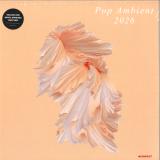
And what would Pop Ambient be without the iconic, artistic cover design of Veronika Unland, who once again, in her unmistakable way, says through the digital flower: The eye always listens...
On Now Claims My Timid Heart, Harris and Hedrick continue the experiment started on Swann and Odette, crafting closed systems that promote a hushed correspondence between their sonic (Basic Channel, drone metal) and literary influences (Kafka, Sebald, Pynchon).
On this album (their first record since 2017 as well as their first release on NYC’s Quiet Time Tapes), Harris and Hedrick eliminated much of music’s normal dependence on physical space, instead creating hermetically sealed sonic ‘rooms’ where the songs can live by sending samples and loops through convolution reverb. Each of the eight tracks on Timid Heart is fundamentally, thus, a field recording from an inaccessible world.
- A1: When I Sing, I Slip Into The Microphone. Into That Void, I Bring Comrade "Prayers", Then, Turning To Face The Outside, Together We Explode. Part I
- B1: When I Sing, I Slip Into The Microphone. Into That Void, I Bring Comrade "Prayers", Then, Turning To Face The Outside, Together We Explode. Part Ii
- C1: When I Sing, I Slip Into The Microphone. Into That Void, I Bring Comrade "Prayers", Then, Turning To Face The Outside, Together We Explode. Part Ii (Continued)
- D1: When I Sing, I Slip Into The Microphone. Into That Void, I Bring Comrade "Prayers", Then, Turning To Face The Outside, Together We Explode. Part Ii (Conclusion)
- D2: When I Sing, I Slip Into The Microphone. Into That Void, I Bring Comrade "Prayers", Then, Turning To Face The Outside, Together We Explode. Part Iii
Among the true Keiji Haino devotees, Nijiumu’s Era of Sad Wings (released on P.S.F. in 1993) has always held a special place in the pantheon. Operating for only a few years in the early 90s and apparently only performing a handful of shows, Nijiumu operated at the opposite end of the dynamic spectrum to Haino’s famed power trio Fushitsusha, dwelling in a hushed, meditative realm of mysterious droning sonorities and free-floating melodies that occasionally erupts into violence. Black Truffle is pleased to announce a new double-LP edition of a lesser-known 1994 Nijiumu recording, When I sing, I slip into the microphone. Into that void, I bring comrade “prayers”, then, turning to face the outside, together we explode. Here, Nijiumu is the trio of Haino, Tetuzi Akiyama and the obscure Takashi Matsuoka, the three performing on a wide variety of string, wind and percussion instruments, as well as electric guitar and bass, and Haino’s unmistakeable voice.
Like on the early solo Haino album that shares the group’s name (released on P.S.F. in 1993), the instrumentation swims in reverb (the use of which Akiyama recalls as ‘a kind of point of the band’), often obscuring the instrumental sources. On the short opening piece, a distant reed instrument arcs long buzzing melodies over a bed of cymbals and gongs, like a psychedelic take on Tibetan music. The epic second part, occupying almost 50 minutes, begins as a splayed, near-formless cloud of electric guitar and bass, shadowed by bowed and plucked strings, the three elements working through twisting atonal shapes. At various points in the recording, we hear what seems to be the sounds of musicians moving between instruments, their shuffling and bumps fitting seamlessly into this radically open music. Eventually, what sounds like electric guitar moves closer to the foreground, fixing on a repeated melodic cell around which hover mysterious clouds of long tones and a sporadic shaker. At the half-hour mark, the music begins to build to a violently emotive climax, Haino’s impassioned vocal cries punctuating a lumbering, bass-heavy murk, contrasted at points by what sounds like a tin whistle. Suddenly, the volume drops to a near-whisper, opening the way for the stunning final moments, which touch on the slow-motion balladry of Haino’s classic Affection, here given an eccentric twist by an occasional woodblock hit. The third piece opens with a hazy trio of rumbling bass, bowed strings and abstracted slide guitar, the latter calling to mind some of Akiyama’s later solo work. Eventually joined by Haino’s voice, its fragile, haunted tone might remind the listener of the man in black’s documented love of the madrigals of the murderous Count Gesualdo, before the recording abruptly breaks off mid-note. In this new edition, the Nijiumu trio recording is supplemented by a piece recorded solo by Haino in 1973, a bracing electronic blowout stretching almost half an hour. Using a homemade electronics setup to unleash a barrage of crunching distortion and shuddering harmonic fuzz, it takes its place in the canon of extreme live electronics next to Robert Ashley’s Wolfman and Walter Marchetti’s Osmanthus fragrans, looking forward to extreme noise years before Merzbow. Taken as a whole, these four sides of music are a stunning document of some of the lesser-known waystations of Haino’s singular creative path.
2025 Repress
For the second installment of its renewed imprint, Fuse's own in-house resident and one of Belgium's proudest exports Phara takes the reins for a deep dive into thick percussion and vibrant club landscapes. 'The Wall' puts current dance music under a microscope with a brush of truly vintage spontaneity, merging techno's confrontational nature with house's harmonic genuineness. This duality is reflected through Phara's own relationship with his home base Fuse and the complementary contrast between its two rooms.
The EP's title track serves as a hypnotic introduction for the A1, imposing a bass-heavy rhythm and a persistently oscillating synthline. A dense production full of energy, 'The Wall' inspires intrigue throughout its duration, revealing its true intentions through a capable sound system. Sharing the first side of the press is 'Blaes 208', a name that Fuse club goers will likely recognise, that guides the listener from effect into embrace. With lush keys echoing past a comforting drum sequence fit for a close-eyed dancefloor experience, Phara's impactful tendencies meet his affinity for the melodic through a blissful six minutes of crowd to selector connection. Switching sides, a return to a cold cold aesthetic is quickly apparent through 'Hush Now 206'. A pummeling, saturated bass competes with a kick of equal effect, rolling through a storm of metallic stabs. Mastering the message of urgency, Phara presents a lightshow of resonating percussive work, defining his space just to cut right through it. To close out with a lasting impression, the producer mutes the acoustics of his work through razor-sharp sound design dotting along playful snares, a duality reminiscent of the dynamism of Detroit electro. 'Motion Steps', referring to the stairs that ascend from Fuse's main room to its more left-field counterpart, captures the atmosphere of the almost shimmering music that can be expected to be played there; a place where Phara and many others have been known to explore the extremities of their music. He swiftly throws in melodic elements to recontextualize an otherwise pressing composition, and after three chapters of considerable weight, he concludes his record with infectious groove that flaunts technical ability.
Book[37,40 €]
In the final month of 2024, Meitei arrived in Beppu, a city long steeped in vapor, myth, and mineral memory. Invited to create onsen ambient music commemorating Beppu’s 100th anniversary, he immersed himself in the city’s geothermal psychogeography, where sound rises from the ground and time clings to mist.
Known for his Lost Japan (Shitsu-nihon) works, which channel forgotten eras into flickering auditory relics, Meitei took residence in the warehouse of Yamada Bessou, a century-old inn perched by the bay. Over two weeks, he listened intently to steam, to stone, to the atmosphere itself. The resulting work, Sen’nyū, traces the inner spirit of onsen culture. Like water finding its path, the music emerged with quiet inevitability, shaped by Meitei’s synesthetic sensibility and deep attunement to place.
Equipped with a microphone, he wandered Beppu’s sacred sites: Takegawara Onsen, Bouzu Jigoku, Hebin-yu, and the private baths of Yamada Bessou. There, he captured the breath of the springs, bubbling mud, hissing vents, wind against bamboo, and the murmurs of daily visitors. These field recordings became the sonic bedrock of Sen’nyū, an act of deep listening that attempts to render even the rising mist and shifting heat into sound.
Unfolding as a single, continuous piece, Sen’nyū drifts like fog through sulfur and stone. It traverses the veiled madness of Bouzu Jigoku, the spectral resonance of Yamada Bessou’s inner bath, and the hushed voices of Takegawara Onsen. It is a gesture of quiet reverence, for water’s patience, the land’s memory, and the hands that have bathed here for generations.
Where Meitei’s earlier works conveyed his personal impression of a fading Japan, Sen’nyū is grounded in tactile presence, music not imagined but encountered. Here, his practice moves closer to the spirit of kankyō ongaku, environmental music born from place, shaped by it, and inseparable from it.
As part of the project, Meitei conceived a two-day public sound installation inside Takegawara Onsen, culminating in a live performance. Bathers soaked in mineral-rich waters while submerged in sound, an embodied ritual of place, body, and listening.
Sen’nyū marks Meitei’s first full-length work centered entirely on onsen and opens a new chapter of his Lost Japan project under the expanded title 失日本百景 (One Hundred Lost Views of Japan), a series exploring extant sites of longing still quietly breathing within contemporary life. The album will be accompanied by Meitei’s first photo book, a visual document of his time in Beppu. A new layer is added to the world he has, until now, built only through sound.
Sen’nyū continues Meitei’s devotion to Japan as subject, while opening new terrain: both ritual and remembrance, an immersion into the mineral soul of Beppu.
Following releases on labels like Inner Islands, Home Normal and Muzan Editions, Japanese composer and sound artist Kenji Kihara is back with a new album that expertly channels the tranquil surroundings of his coastal hometown, Hayama, which is nestled between sea and mountains. What comes out is an immersive ambient work that is indebted to nature, marbled with field recordings of rustling leaves, waves and birdsong, and serene compositions that exude warmth through meticulous tonal layers. His music reflects the patient rhythm of daily life and the quiet shift of seasons, and is a great invitation to calm the mind and reflect. This is ambient that is in direct dialogue with the natural world.
16 years after debuting, Coyote's hush-hush Magic Wand imprint continues to be one of the most reliable sources of Balearic-minded re-edits and reworks. Their latest is suitably mysterious - a single-sided missive released with no information about either the uncredited scalpel fiend behind it or the source material. What we can tell you is that 'Suntrip' is undeniably ace, with our shadowy editor delivering an extended, lightly dubbed-out take on what sounds like a mid-1980s big studio number: the kind of off-beat pop-not-pop record that Balearic heads love. Think synth marimba lines, fretless bass, effects-laden drums, glassy-eyed male lead vocals, glistening guitars, nods to dub and lashings
- A1: Anticipation
- A2: Legend In Your Own Time
- B1: Our First Day Together
- B2: The Girl You Think You See
- B3: Summer’s Coming Around Again
- C1: Share The End
- C2: The Garden
- D1: Three Days
- D2: Julie Through The Glass
- D3: I’ve Got To Have You
Carly Simon’s quietly intense sophomore album comes across like an assertive notice nailed to a telephone pole for all to see. Bold, personal, and autobiographical, Anticipation announces the arrival of an artist who won’t back down. While Simon stands her ground on her eponymous debut, she elevates her passion and persona to heightened levels throughout this gold-certified record, dealing in private matters related to love, relationships, and desire. At times, Simon is nothing short of primal. She reflects on the difficulties of retaining your own identity while also giving yourself to a partner. Simon’s connection to her folk roots would never be stronger.
Sourced from the original master tapes, strictly limited to 3,000 numbered copies, pressed at Fidelity Record Pressing in California, and housed in a Stoughton gatefold jacket, Mobile Fidelity’s 180g 45RPM 2LP set of Anticipation lays bare the rich tapestries afforded by the spare blend of soft guitars, mellow orchestration, and dreamy melodies. Audiophiles and record collectors, take note: This is the first time Anticipation has been available on 45RPM. The wider grooves and dead-quiet surfaces prove extremely rewarding.
The rhythmic framework anchored by session pro Andy Newmark’s drumming sounds dynamic and balanced, with songs benefiting from a focused midrange and taut low-end. Simon’s attachment to and investment in each lyric is made evident by way of the intimate, hushed atmospherics and expansive responsiveness. And just as Simon’s vocals feel more transparent and direct, so, too, do the supporting choral arrangements.
Released before the singer-songwriter movement reached full bloom, Anticipation remains remarkable for the high-quality songwriting and Simon’s gutsy stance. The album cover — depicting the vocalist holding the gates at Queen Mary’s Garden in Regent’s Park and seemingly defying anyone to take her on — serves as a metaphor for the content within.
Known for having relationships with high-profile partners, Simon was heavily involved with Cat Stevens leading up to the recording of Anticipation. She draws from her experiences to craft tunes that resonate because of their honesty, realism, and strength. Few of those moments are better known than the Top 20 title track, which Simon composed in just 15 minutes as she waited for Stevens to pick her up for a date. Imbued with the nervousness, tension, and excitement that accompany the moments when a romance could go either way, the Grammy-nominated song presages the feminist-minded vulnerability and burning longing that informs a majority of the record.
On the soulful “Legend in Your Own Time,” also inspired by Stevens, Simon harnesses yearning as a conduit to feel-good paradise. Deemed by Rolling Stone an “absolute clincher, an awesome description of the psychic ravages of gone-nuts, know-nothing love,” her cover of Kris Kristofferson’s “I’ve Got to Have You” moans with no-holds-barred desire and breathtaking sensuality.
For all the wanting Simon pursues on Anticipation, her way of staying in control — vocally and personally — make the record a courageous statement of contemporary femininity. For further evidence, look to the bossa nova of “Summer’s Coming Around Again,” somber “Share the End,” soothing “Three Days,” and sincere “Julie Through the Glass,” a tribute to her young niece.
Simon would achieve international fame with her next album, No Secrets. Yet as this definitive reissue shows, Anticipation suggests the rest of the world was just a little late catching up to her.
Hild unites US sound sculptor zake and UK-based rhubiqs in a transatlantic collaboration steeped in plenty of their signature patience and emotional gravity. Across four slow-burning movements, deep drones, hushed piano lines and glacial textures unfold with cinematic allure as vastness and intimacy coexist. Rooted in both artists' post-rock backgrounds, this record feels less composed than discovered, as if each passage emerges organically from silence. There is plenty of fragile beauty in the stillness and looming sense of loss, so this is the sort of record that has a profound effect despite its knowing restraint.
Welcome to Club Partenopea — a masterclass in understated elegance and deep, introspective grooves.
Side A: Sunset Sessions – The Soundtrack Toward Night
A1. “Smooth Rides”
An energetic yet fluid track, “Smooth Rides” blends warm analog synths with a swinging groove, creating an immersive listening experience. It invites the listener to drift into its layered soundscapes and lose themselves in the rhythm.
A2. “Hope Is the Refuge”
The ultimate soundtrack for relaxation and good vibes. This soft-textured piece weaves shimmering pads with subtle piano flourishes, while hushed, ethereal vocal samples float in and out—not as a lead, but as an ambient layer—adding to its dreamy, gently melancholic mood.
________________________________________
Side B: Blending Into the Party-Time Pulse
B1. “Club Partenopea”
A deep house groove that shines with infectious piano riffs, acting like rhythmic exclamations. Joyous and unifying, it’s made for the dancefloor — pure, celebratory energy wrapped in elegance.
B2. “Timer Groove”
Your late-night companion. “Timer Groove” fuses the lush, immersive tones of deep house with a buoyant, uplifting bassline. It’s the perfect 1 AM tune—when the crowd gets intimate, the energy softens, and the music becomes a trusted guide through the night.
- A1: George Michael - Older
- A2: Natalie Imbruglia - Torn
- A3: The Cardigans - Lovefool
- A4: Hanson - Mmmbop
- A5: Aqua - Barbie Girl
- A6: Spice Girls - Spice Up Your Life
- A7: Boyzone - Picture Of You
- A8: Katrina And The Waves - Love Shine A Light
- B1: George Michael - You Have Been Loved
- B2: Bruce Springsteen - Secret Garden
- B3: Texas – Say What You Want
- B4: Sheryl Crow - A Change Would Do You Good
- B5: Paul Mccartney - Young Boy
- B6: Republica - Ready To Go
- B7: Robbie Williams - Old Before I Die
- C1: Radiohead - Paranoid Android
- C2: Kula Shaker - Hush
- C3: Embrace - All You Good Good People
- C4: The Charlatans - North Country Boy
- C5: The Seahorses - Love Is The Law
- C6: Oasis – D'you Know What I Mean?
- D1: Tori Amos - Professional Widow (Armand Van Helden's Star Trunk Mix)
- D2: Olive - You're Not Alone
- D3: The Source Feat. Candi Staton - You Got The Love
- D6: 911 - Bodyshakin
- D7: Backstreet Boys - Everybody (Backstreet's Back)
- D8: Steps - 5, 6, 7, 8
- E1: Pet Shop Boys – Somewhere
- E2: White Town - Your Woman
- E3: Duran Duran - Out Of My Mind
- E4: Suede – Saturday Night
- E5: Orbital – The Saint
- E6: Moby - James Bond Theme (Moby’s Re-Version)
- E7: The Chemical Brothers - Block Rockin' Beats
- F1: All Saints – I Know Where It's At
- F2: Whitney Houston - Step By Step
- F3: Ultra Nate - Free
- F4: Dannii Minogue - All I Wanna Do
- F5: Sash! - Encore Une Fois
- F6: Ricky Martin - María
- F7: Elton John - Something About The Way You Look Tonight
- D4: En Vogue - Don't Let Go (Love)
- D5: Eternal Feat. Bebe Winans - I Wanna Be The Only One
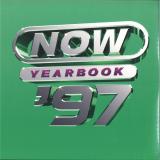
Step back into one of the most exciting years in pop history – a time when boundary-pushing alternative anthems, flawless dancefloor fillers, global megastars and fresh faces all collided on the charts. NOW - Yearbook 1997 celebrates an unforgettable year of hits with 43 massive tracks across a 3-LP set pressed on gorgeous green vinyl.
LP1 kicks off in style, with the stunning jazz-drenched ballad from legend George Michael, ‘Older’, before Natalie Imbruglia's huge debut single ‘Torn’. The Cardigans had a #2 smash with ‘Lovefool’ and Hanson hit the US & UK #1 with ‘MMMBop’. ‘Barbie Girl’ from Aqua and the Spice Girls’ anthemic ‘Spice Up Your Life’ were both #1s, and Boyzone’s ‘Picture Of You’ was a huge hit and featured in the film ‘Bean: The Ultimate Disaster Movie’. Eurovision glory happened for the UK in 1997, and winners Katrina And The Waves with ‘Love Shine A Light’ close the first side…while over on the other, a second George Michael classic from his ‘Older’ album, the beautiful ‘You Have Been Loved’, opens ahead of another contemporary masterpiece ‘Secret Garden’ from Bruce Springsteen. Texas scored a UK top 5 with ‘Say What You Want’, and Sheryl Crow had a top 10 hit with ‘A Change Would Do You Good’. Paul McCartney’s ‘Young Boy’ is next before ‘Ready To Go’ which gave Republica a Top 20 chart debut, and closing the first LP, Robbie Williams’ ‘Old Before I Die’, which became his second smash as a solo artist.
LP2 kicks off with Radiohead’s defining ‘Paranoid Android’, ahead of Kula Shaker’s hit cover of ‘Hush’, and alt-pop from Embrace (‘All You Good Good People’), The Charlatans (‘North Country Boy’) and The Seahorses (‘Love Is The Law’) before the side closes with Oasis’s huge #1 ‘D’You Know What I Mean?’ – the lead single from their third album ‘Be Here Now’… Flip the LP over and discover some of 1997’s dancefloor gold – opening with the club juggernaut and #1 ‘Professional Widow’ from Tori Amos, remixed for single release by Armand Van Helden, along with Olive’s UK #1 ‘You’re Not Alone’ and the huge ’97 ‘Now Voyager’ remix of ‘You Got The Love’ from The Source feat. Candi Staton. En Vogue’s powerful ‘Don’t Let Go (Love)’ is up next, ahead of ‘I Wanna Be The Only One’, a #1 for Eternal feat. Bebe Winans. LP2 finishes with pure pop gems from 911 with ‘Bodyshakin’, Backstreet Boys with ‘Everybody (Backstreet’s Back)’ and Steps with their debut hit ‘5, 6, 7, 8’.
The final LP opens with Pet Shop Boys’ and their brilliant version of the musical classic ‘Somewhere’, ahead of the genre-blending #1 ‘Your Woman’ from White Town, and the atmospheric ‘Out Of My Mind’ from Duran Duran. Suede’s plaintive ‘Saturday Night’ leads into three of the years’ electronic dance music highlights: Orbital provided the theme to the remake of ‘The Saint’, Moby with his re-imagining of the classic film-series theme: ‘James Bond Theme (Moby’s Re-Version)’ and The Chemical Brothers with the massive ’Block Rockin’ Beats’ completing the side…Turn the LP over for the final side featuring the debut from All Saints with ‘I Know Where It’s At’, and fabulous dance-pop from Whitney Houston with ‘Step By Step’, and both Ultra Naté and Dannii Minogue enjoyed euphoric hits with ‘Free’ and ‘All I Wanna Do’. Pan-European smash ‘Encore Une Fois’ from Sash! is followed by Ricky Martin’s global success ‘María’… but the final word on the collection goes to Elton John. His superb ‘Something About The Way You Look Tonight’ was one half of the biggest selling single of – not only 1997 – but of all time and ends the collection on a perfect pop high.
NOW – Yearbook 1997: A celebration of the diversity and creativity in the charts of a truly magical year in pop.
Highlighting a decade of working together as ‘Fronte Violeta’, Brazilian transdisciplinary artist Anelena Toku and musician and sound artist Carla Boregas are set to release the album ‘Fronte Violeta’, a captivating blend of aural compositions, scents and experiences.
Switching the moniker name to the album title serves as a way to showcase the culmination of their multidisciplinary project’s journey, developed from compiling fragments, sounds and intentions from their previous body of work comprising electroacoustic and electronic music composition, moving image, scent, installation and live performances.
‘Fronte Violeta’ is a sonic amalgam where synthesized sounds, percussion, voice, feathers, branches and other non-human sonorities coalesce. Toku and Boregas have skillfully woven together those elements creating a rich tapestry of interconnected sounds that tension our perception as something always in motion, never fully settling into an established form.