2025 Repress!
OFF / GRID makes a captivating debut on Life In Patterns with his 'Sonic Spectrum' EP. Previously recognized as an underground gem in the techno scene due to his acclaimed, self-released EP, 'Time To Shine,' the Hamburg-based producer has garnered significant attention in 2023 with EP releases on labels like Planet Rhythm, Uncage, DifferentSound, and Entourage Concept.
On LIP009, he presents four meticulously crafted vinyl tracks and a digital bonus track, each a testament to his remarkable talent for creating hard-hitting, euphoric DJ tools. His music is distinguished by cutting stabs, hypnotic acid lines, and a distinct dub influence, all seamlessly woven together with powerful drum sounds.
Buscar:hypno
Der US-amerikanische Musiker Pachyman veröffentlicht am 23. Mai sein neues Album 'Another Place' über ATO!
Über vier Alben hinweg hat sich Pachyman als meisterhafter Handwerker des Dub-Reggae bewiesen. Inspiriert von Legenden wie King Tubby und Scientist, nutzt er Vintage-Equipment, erschafft monumentale Klangwelten und versteht intuitiv die hypnotische Kraft der Wiederholung. Mit 'Another Place' geht er einen Schritt weiter: Er verbindet Dub mit den vielfältigen Einflüssen moderner Musik - von der Synth-Pop-Ästhetik eines William Onyeabor und Yellow Magic Orchestra bis hin zu den tiefen, atmosphärischen Klängen von Basic Channel’s Dub-Techno. Ein Album, das Tradition ehrt und zugleich neue Klangräume erschließt.
Norwegian electronic pioneer Lindstrøm returns with Sirius Syntoms – seven tracks of melodic, cosmic disco and shimmering synth grooves. This album marks a more focused and open sound than his previous work, with warm analog textures, pulsating rhythms, and hypnotic basslines at the core.
Combining the uplifting energy of house and the introspective tone of ambient synth music, Sirius Syntoms blends dancefloor elegance with emotional depth. The lead single “Cirkl” sets the tone for a record that’s both refined and playful.
This is also the relaunch of Lindstrøm’s Feedelity label, with artwork by longtime collaborator Ole Martin Lund Bø. For fans of cosmic disco, nu-disco, synth-driven house, and electronic explorations with heart and soul.
Orbital London returns after a three - year hiatus with "Revenant EP" , marking its lucky number seven release — this time featuring Jack Michael and the debut of Romanian duo The Apricots , consisting of Alexandra and DJ Slim Fit . A destined musical match, as Alexandra has been an Orbital fan since the very beginning.
Staying true to its concept, the release features two original tracks — one from each artist — while pushing creative boundaries as they remix each other's work.
On Side A , Jack Michael’s “Infinity” goes fast and driving with a heavy bassline, blending breakbeat and techno flavors. A haunting winding melody and a mysterious vocal add to the track’s hypnotic energy. The Apricots’ remix of Jack’s track blurs the lines between electro and breakbeat, with a trance vibration in the underneath layers and surprise dubstep insertion with a dirty bassline.
On Side B , The Apricots’ “Subdued” is powered by the rich, broken - beat percussion and a wild, rave - inspired bassline. As the title suggests, the heaviness of the bas s is m omentarily tamed by the emotive pads and melodies — only to return stronger for a different , yet electrifying bass interlude, topped with a deep male vocal. Jack Michael’s re shape of "Subdued" takes a dreamier approach, crafting a deeper breakbeat journey, dominated by long hefty bass wave s and bathed in quirky synths and etherial pads.
Bristol’s techno dreamweaver A Sagittariun returns to the fray with new music. A trio of tracks are featured on ‘The 23 Enigma’, and A Sagittariun’s first release since 2022’s ‘Strange Brew’ EP for Radio Slave’s REKIDS label.
A production career spanning near to fifteen years, with albums and single releases on labels such as Hypercolour, Running Back, Craigie Knowes, Permanent Vacation, Idle Hands and Secretsundaze, A Sagittariun traverses genres with ease, peddling raw and hypnotic techno, ambient dub, breakbeat and deep electronic sounds each tinged with a heavy dose of psychedelia and cosmic power!
‘Fountainhead’ and ‘Mind Games’ take it back to the raw, with panel beating drums, frenetic percussion and wigged out synths designed for the more discerning of dancefloors, whilst lead track ‘The 23 Enigma’ goes down a wormhole of muscular electronica as deep as a wizard’s sleeve.
A Sagittariun ‘The 23 Enigma’ is released from 16th May 2025.
Welcome to the era of “Artificial Renaissance”. Humanity and technology stand at a crucial and fundamental intersection. Echoing past cultural revolutions in a modern, technologically advanced world, everything is set to be redefined—our lives, our thoughts, and the way we move forward.
Dutch EBM/synth duo Staatseinde returns with “Artificial Renaissance”, an electrifying new mini-album. Fusing the urgency of classic EBM with the boldness of futuristic synth-punk, the band crafts an interstellar sonic journey fueled by pulsating rhythms and dystopian narratives.
The album blends space punk, italo-disco and electro into a dark, cinematic exploration of rebellion, euphoria, and dystopia. “Space Scream” launches with a cosmic punk battle cry, while “Tanzverbot” pulses with defiant energy against restriction. “Suicide Tuesday” captures post-club emptiness with shimmering 80s nostalgia, and “The Trip” unravels themes of environmental doom. “Freight” propels an italo-disco-infused space odyssey tackling exploitation, while “Une Mémoire Sans Fin” dives into AI’s eerie hold on human emotions. The fast-paced “Mutant Whispers” transforms the dancefloor into a space of fluid identity and resistance, closing with “The Mansion”, a hypnotic synth-driven descent into surreal miscommunication.
With “Artificial Renaissance”, Staatseinde ventures into unexplored sonic territory, expanding the boundaries of their lyrics, balancing artificial futuristic aesthetics with raw human emotions. As the lines between past and future blur, their pulsating music reminds us: the new age is already here.
Morning Stone is Pacific nostalgia. Now based in Mohkintsis territory on the Eastern side of the Rocky Mountains, Benoit Guimond, under his moniker Angel Science, draws us into his early life in Vancouver. That coast is still home, and his conifer-covered memories have been shaped into the organic textures of this record. Waving filtrations, archival recordings, rewinding spins and ethereal pads signal a return to the stones, sand and organic beach drift of the Pacific Northwest. Environmental rhythm and free-flowing flourishes reveal a musician in the core of his memory, at the forefront of an ever-evolving sonic journey.
Guimond has rapidly become a standout figure in Canada’s underground dance scene, celebrated for his subtle grooves and esoteric soundscapes with releases on PHTM, Echolocations, PPRZ and more. While he’s often linked to techno, Morning Stone reveals a softer, slower side that pushes through any previously held genres he has been confined to. The euphoria of Madrugada, the deep and hypnotic energy that reverberates in tracks Cee Dub and Shale, alongside the ambient textures of Alborz, all come together to strike a specifically pacific balance between the blissful and the raw. It offers a refreshing growth and a hit of balearic beyond conventional techno, while retaining the depth and edge that encapsulate a signature style.
Elena Colombi approved material!
Tondiue “Yesssssss”
Espiral Vital presents its first release, and the one responsible for kicking off this 01 is Rambal Cochet. An EP designed for long DJ sets, mains filled with hypnosis, open-air raves, or even underground clubs—the illusion of watching minds dance without thinking, structures built for enjoying extended mixes.The signature sound of Rambal Cochet, captured in a single EP, available exclusively on vinyl.
On the latest Soul Quest adventure, the imprint places the journey in the hands of Italian producer Flying Moth, who serves up an enriching palette of groove-laden cuts that are sure to chime along to bright days and sun-kissed evenings.
Flying Moth is the latest alias from producer Niccolò Terranova, who has already demonstrated his jazz-laden dance music chops through the Justnique project and others. Flying Moth is presented as the artist’s most personal project to date, with the ‘Oh Oh’ EP out on Apparel Music highlighting his ability to deliver highly danceable and beautifully presented soulful dance music that lives and breathes heartfelt moments and emotions.
Channelling a myriad of genres and eras, Flying Moth’s music is about catering to new kinds of experiences through displays of enriching musicality and deeply profound compositions. ‘Tides’ is the next step in Flying Moth’s journey, and it feels right at home amongst the sunny vistas and dancefloors of Soul Quest. The EPs opener, ‘Take you higher’ which was made alongside Renato Patriarca is a groover of the highest order. Allowing plenty of time to embed listeners deep within the mix, the first breakdown emerges with a delightful lead melodic line that embraces the chords. The further this track unravels, the more magic is presented—the flute solo is a notable example of this. ‘Bobby’s here’ shares connotations similar to the previous number, albeit with some subtle differences. The chords swirl and dance, with arpeggios adding cascades of melody alongside the hypnotic rhythm section. The track is one of diving deep through the layers in order to deliver a joyous forward momentum - one which feels like it will never cease.
‘Please, keep drinking with me’ begins with a typically upbeat feel. A semi-skippy drumming pattern provides the basis for an overflow of melodic brilliance to come forth, with the track retaining a powerful forward momentum through the mid-range. Inspired, breathy vocals and a one-of-a-kind key solo at the track’s halfway mark add personality and variance. ‘Always Groove in you’, a joint affair alongside Gondii, and this number wastes no time in getting going. A stripped-back yet varied groove weaves around a deep-set bass sequence, but the show that happens up top is a sight to behold - a continual shift between inspired key work and vocal snippets mean that the track never stands still, only evolves and grows. Wrapping things up is Toronto Hustle and Sean Roman providing their twist on ‘Please, keep drinking with me’, and as a remix, it adds an enormity of flavours in the form of sparkling keys, powerful bass notes, and infectious breakdowns.
‘Tides’ might only be Flying Moth’s second EP, but it is a sign of an exciting discography to come. For now, this EP contains all the ingredients to get dancefloors and living rooms moving. Filled to the brim with creativity, thought, and delicateness, ‘Tides’ has an infectious musicality to it - and, perhaps most importantly, a big heart. Time to revel in its emotive brilliance …
- A1: Patina Shift
- A2: Blistex
- A3: Rust Halo
- A4-: Lesio
- B1: Sightjacker Ft. Visio
- B2: Here Used To Be A Star
- B3: Spume (Formerly An Icefield)
- B4: Hypnoxia
- C1: Astral Trepidation Ft Jiyoung Wi
- C2: Spotshadowsphere
- C3: Cable Eater
- C4: Velvet Myst Ft. Heith
- D1: Nerveghost
- D2: Relaxus
- D3: L’ Inaperçu Nous Traverse Ft. Bernardino Femminielli And Habib Bardi
Corrosiv, the sophomore album from Orchestroll, reveals the duo at their most mature and vulnerable. Originally conceived as a reflection on hybridity and bastardization, the album deploys New Age and ambient compositional tropes as a launchpad, exposing their trite sanctity to the realities of corrosion. Having come of age in the 1970s and 1980s, the New Age movement perdures today as a domain of contradictions; its promise of transcendence riddled with the very commercialized dogma from which its adherents claim to flee. Healing modalities such as reiki, crystal therapy, and sound baths are simultaneously pathways to solace and sites of exploitation; their sonic counterparts—ethereal synth pads, shimmering textures, celestial drones—claim to facilitate meditation and enlightenment while devolving into empty signifiers of vitality. With Corrosiv, Orchestroll displays neither reverence nor disdain toward New Age: they exhume it instead, revealing the saccharine effervescence and commodified murk undergirding its aesthetics. The result is intoxicating—disquieting.
Born from a two-week residency at EMS Studios and expanded through a performance at MUTEK Montreal’s 25th anniversary, Corrosiv has since outgrown its original conceptual nucleus, taking on a broader scope. Its inquiry into New Age ideology’s voided rhetoric and aesthetic mysticism now informs a broader interrogation of cultural mediocrity, anti-authoritarianism, gatekeeping, music industry toxicity, and the crumbling edifice of late capitalism and techno-feudalism—all the mechanisms by which meaning is stripped from ceremony, and once-potent forms of knowledge are subsumed into the machinery of economic extraction, severed from their original essence, and transformed into hollow simulacra. Corrosiv distills these themes through a loose narrative: a soul, fixated on wellness as dictated by cosmetic economism, becomes ensnared in an endless afterlife, unable to transcend and shed its dilapidated consciousness.
Framed as an act of audio dissolution, the album thus engages in an alchemical process, whereby complex waveshaping, morphing synthesis, and distortion enact a ritual of fragmentation. There is also friction: between the rigid, mechanical imposition of systematized order and the untamed, chaotic force of organic metamorphosis. Here corrosion and confinement are not solely conceptual motifs; they are enacted in real time, sculpting the album’s terrain. Scraping, tarnishing, degradation—the languid wear of form and substance—become instruments in their own right: buffing as abrasion, entrapment as transformation, corrosion as a means of reconfiguration. The ‘protagonist,’ if there must be one, is the listener, caught within the throes of structural determinism and the potential for emancipation, unable to pass into something greater as the specters of collapsed futures accumulate in the margins.
Corrosiv extends its reach through collaborations with familiar voices: Heith (PAN), VISIO (Haunter), Femminielli (Drowned by Locals), Habib Bardi (Interzone), and Jiyoung Wi (Enmossed, Psychic Liberation, Doyenne) each leave their imprint on its sprawling landscape. At 1h16m, it is a procession, dense with earworms that burrow into the listener’s unconscious.
Misshapen, broken-down metals leach copper into blood, acid reflux burning through the core. Psyche disaggregates into cosmic turmoil, drifting between planes—tongue on rustline, gullet laced with solvent hymns, molars unlatching, bitcrushed to marrowspill. A spasm of brine, ferrous scripture, venomtext blooming in leaden rivulets, cartilage smoldering in phosphor decomposition, synapses drowning in a quicksilver choir. Crest of bile, churning ore, breath clotting into arsenic mist, vein-thread cinched, a corrosive gospel, limb by limb, oxidized to silence.
Ultimately, as the music exhales its final breath, its residue refuses to dissipate—and stillness alone remains. There are no conclusions here—no resolution, no collapse—only the slow drift outward of a vessel unmoored, lost in the sea of symbolic souring. Corrosiv sings the song of a world barren of prophecy, littered with aesthetic detritus. Whether this magic has been transfigured or simply worn away is unclear: the last breath dissipates, but the oxidation does not stop. The silence, too, will decay.
Conceptualized, composed, performed, recorded, mixed, engineered and produced by Jesse Osborne-Lanthier, and Asaël Richard-Robitaille in 2023 and 2024 at Elektron Musik Studion (EMS) - Stockholm, Sweden and Landsc8pe Studio - Montréal, QC, Canada.
Artwork by Jesse Osborne-Lanthier.
Mastered by Stephan Mathieu @ Schwebung Mastering.
- 1: The Heartwood Institute - The Moon Never Beams
- 2: The Heartwood Institute - A Kingdom By The Sea
- 3: Dream Division - The Raven
- 4: Dream Division - For My Mother
- 5: Everyday Dust - The Bells
- 6: Everyday Dust - The City In The Sea
- 7: Garden Gate - Spirits Of The Dead
- 8: Garden Gate - Dream Within A Dream
- 9: Ivan The Tolerable - Dream Land
- 10: Ivan The Tolerable - Valley Of Unrest
- 11: Hologram Teen - El Dorado
- 12: Hologram Teen - The Haunted Palace
- 13: Klaus Morlock - The Sleeper
- 14: Klaus Morlock - Bridal Ballad
Library of the Occult Records unviels ‘Music to Accompany the Poems of Edgar Allan Poe’ a haunting double LP that threads the legendary poet’s dark romanticism through the minds of some of the most evocative contemporary electronic artists.
The Library’s ever-expanding circle now united as the Library of the Occult Electronic Orchestra, bring their own haunted visions to Poe’s bleak and beautiful world. Ivan The Tolerable stretches krautrock pulses and experimental noise into something hypnotic and strange, while The Heartwood Institute channels vintage occult nostalgia. Sermons by the Devil drapes everything in a ritualistic haze and Klaus Morlock, ever the maestro of unease, paints in slow-moving shadows, melancholic, cinematic, and tinged with the surreal. It’s a record for twilight listening, flickering candles, and the spaces between.
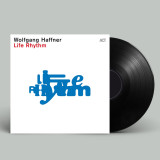
- Life Rhythm
- Balance
- Joy Of Life
- Eternity
- Desert Move Feat. Shantel & Thomas Konstantinou
- Second Nature Feat. Dominic Miller
- Open Land
- Full Circle Feat. Bill Evans
- Silence And Sound
- Supernova
- Home
»Ich denke immer wieder aufs Neue darüber nach, wie ich mich als Schlagzeug-spielender Bandleader so positionieren kann, dass das Instrument eine tragende Funktion einnimmt, dies aber auf eine musikalische Weise geschieht und auf keinen Fall als Zurschaustellung von Virtuosität«, sagt Wolfgang Haffner. Diese Haltung zieht sich als roter Faden durch seine gesamte Karriere - und auch durch »Life Rhythm«, sein zehntes Album auf ACT.
Und obwohl Haffners Musik gängigen Vorstellungen virtuoser Schlagzeug-Leader ganz bewusst widerspricht, steht das Instrument diesmal besonders im Fokus. Ausgangspunkt dafür war Wolfgang Haffners allererstes Solokonzert im Jahr 2022 auf Schloss Elmau. Er erinnert sich: »Das war eine Wahnsinns-Herausforderung bei der ich auch vor der Entscheidung stand: Spiele ich jetzt eine Stunde Schlagzeugsolo? Natürlich nicht! Also habe ich habe eine Menge melodisch klingender Perkussionsinstrumente eingebaut, Passagen live geloopt, mit Echos und Delays gearbeitet – im Grunde wie im Studio, nur eben auf der Bühne.« All dies brachte Haffner dazu, sich noch einmal auf ganz intensive Art mit dem Thema mit dem Instrument zu beschäftigen, welches ihn sein Leben lang begleitet. Und so haben alle Stücke auf »Life Rhythm« diesmal ihren Ursprung, nicht wie sonst bei Haffner, am Piano, sondern am Schlagzeug.
Das Ergebnis dieses Prozesses kann man gleich zum Auftakt von »Life Rhythm« auf dem Titeltrack erleben: Das Stück basiert auf einem hypnotischen Groove, bei dem nicht die Becken, wie sonst im Jazz üblich, die Time angeben, sondern vor allem die Trommeln. Das dieser Groove direkt Phil Collins und besonders an dessen Stück »Take Me Home« erinnert, ist kein Zufall: Collins' Art, Drum-Parts zu elementaren Teilen des Songwritings zu machen, ist bis heute eine von Haffners größten Inspirationen. Und auch jedes weitere der elf sehr kompakten, Song-haften Stücke auf »Life Rhythm« öffnet eine eigene Welt des musikalischen Schlagzeugspiels: Mal mal trocken-reduziert mit Besen wie auf »Balance«, poppig bei »Joy of Life«, mit filigranen Becken-Grooves, dezenter Elektronik und Percussion auf »Eternity« oder minimalis-tisch bis kurz vor der Stille in »Silence and Sound«.
Das aus all diesen Stilistiken ein so stimmiges Ganzes ent-steht liegt daran, das Wolfgang Haffner diese im Laufe seiner Karriere bis in die Tiefe durchdrungen hat - an der Seite von stilbildenden Charakteren wie Al Jarreau, Chaka Khan, Pat Metheny, Jan Garbarek, Esbjörn Svensson, Nils Petter Molvaer, Albert Mangelsdorff, Ricardo Villalobos und vielen, vielen mehr. All diese Kollaborationen haben Wolfgang Haffners Voka-bular am Instrument und auch als Komponist geprägt und die da-mit verbundenen, unterschiedlichsten Stile sind gleichermaßen Teil seiner musikalischen Persönlichkeit.
Vielseitigkeit und höchste Musikalität sind auch die Eigen-schaften, die Wolfgang Haffner und seine Mitmusiker auf »Life Rhythm« verbinden. Die Basis bildet ein bestens einges-pieltes Trio zusammen mit Keyboarder Simon Oslender, selbst auch Drummer und Bandleader, und Thomas Stieger, einem der gefragtesten deutschen Bassisten in Pop wie Jazz. Dazu kommen Trompeter Sebastian Studnitzky, Mitstreiter Haffners seit seinem ACT-Debüt »Shapes« und der Finne Arto Mikälä, eine echte Entdeckung in Sachen Klangvielfalt an der Gitarre. Diese Band herausragender Allrounder erweitert Haffner um eine Reihe musikalischer Charaktere, die der Musik ihre ganz eigene Farbe verleihen: Nils Landgren, Freund und Weggefährte seit mehr als 20 Jahren, Saxofon-Ikone Bill Evans, Sting-Gitarrist Dominic Miller, Balkan-Beat-Star Shantel, Bass-Feingeist Nicolas Fiszman, Oud-Virtuose Thomas Konstantinou und Bruno Müller, einer der besten deutschen Jazzgitarristen.
»Life Rhythm«, sagt Wolfgang Haffner, »ist für mich eine Fortsetzung, keine Wiederholung«. Die Musik trägt mit ihrer Wärme, Kraft und Klarheit die charakteristische Handschrift, die Haffner mit seinen Alben und auf tausenden von Konzerten in mehr als 100 Ländern zum wohl populärsten Schlagzeug-spielenden Leader Europas gemacht hat. Und gleichzeitig ist es eine Evolution seiner Musik. Gut möglich, dass Haffners Erfolg genau darin begründet ist, dass seine Musik immer etwas Ver-trautes und etwas Neues beinhaltet und dass Haffner sein Publikum so immer »mitnimmt« im Fluss seiner Ideen - und in einem gemeinsamen »Lebensrhythmus«
- A1: Tequila Coma
- A2: The Girl Who Sold Her Face
- A3: Eko
- A4: 1967
- A5: Vv
- B1: Dudu
- B2: What3Vr
- B3: Saiko
- B4: Evangelic Girl Is A Gun
- B5: Skullcrusher
Red-marbled Vinyl[25,63 €]
„Evangelic Girl Is A Gun“ ist yeules bisher hemmungslosestes und emotional entblößendstes Werk, in dem sie sich mit Ideen einer selbstzerstörerischen Identität auseinandersetzen, die sich durch die Leinwand der Postmoderne brennt. Begleitet von visuellen Kunstwerken, die in Zusammenarbeit mit dem Künstler Vasso Vu entstanden sind, und einem Video für die neueste Single, das von dem bereits erwähnten Neil Krug gedreht wurde, erforschen yeule die Dualität der Dunkelheit sowie ihre persönliche Geschichte mit ihrer Rolle als „Maler“. Durch die hypnotischen Melodien des Albums präsentieren sie ein Porträt des/ der gequälten Kunstschaffenden, der/ die in einem Bild gefangen ist, während yeules eindringliche Vocals wie ein emotionaler Würgegriff auf die Dance-Beats wirken.
Mit „Evangelic Girl Is A Gun“ verleihen yeule dem Triphop aus Bristol und dem Gothic-Style der 90er Jahre ihre eigene „cyborgianische“ Note. Das Album enthält Produktionen von A.G. Cook, Chris Greatti, Mura Masa, Clams Casino, Fitnesss und Kin Leonn, yeules vertrauter Kollaborateur und Co-Produzent des Vorgängeralbums, „softscars“ (2023). yeules unbehandelter Gesang auf dem Album trägt ebenfalls zu einem Gefühl von brennender Authentizität bei; die Rohheit kommt zum Vorschein, wenn sie auf Auto-Tune verzichten. Dieser schrille künstlerische Stil ist eine Abkehr von ihren früheren, glitchigen Werken. Als Gegenpol zum Aufkommen von KI wollten sie ihren Gesang mit einer „rohen, unersetzlichen Kante“ versehen.
„Evangelic Girl Is A Gun“ ist yeules bisher hemmungslosestes und emotional entblößendstes Werk, in dem sie sich mit Ideen einer selbstzerstörerischen Identität auseinandersetzen, die sich durch die Leinwand der Postmoderne brennt. Begleitet von visuellen Kunstwerken, die in Zusammenarbeit mit dem Künstler Vasso Vu entstanden sind, und einem Video für die neueste Single, das von dem bereits erwähnten Neil Krug gedreht wurde, erforschen yeule die Dualität der Dunkelheit sowie ihre persönliche Geschichte mit ihrer Rolle als „Maler“. Durch die hypnotischen Melodien des Albums präsentieren sie ein Porträt des/ der gequälten Kunstschaffenden, der/ die in einem Bild gefangen ist, während yeules eindringliche Vocals wie ein emotionaler Würgegriff auf die Dance-Beats wirken.
Mit „Evangelic Girl Is A Gun“ verleihen yeule dem Triphop aus Bristol und dem Gothic-Style der 90er Jahre ihre eigene „cyborgianische“ Note. Das Album enthält Produktionen von A.G. Cook, Chris Greatti, Mura Masa, Clams Casino, Fitnesss und Kin Leonn, yeules vertrauter Kollaborateur und Co-Produzent des Vorgängeralbums, „softscars“ (2023). yeules unbehandelter Gesang auf dem Album trägt ebenfalls zu einem Gefühl von brennender Authentizität bei; die Rohheit kommt zum Vorschein, wenn sie auf Auto-Tune verzichten. Dieser schrille künstlerische Stil ist eine Abkehr von ihren früheren, glitchigen Werken. Als Gegenpol zum Aufkommen von KI wollten sie ihren Gesang mit einer „rohen, unersetzlichen Kante“ versehen.
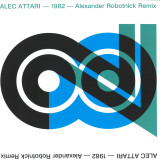
Alec Attari, a Turkish producer with a deep-rooted passion for minimal wave, EBM, and the most underground strains of Italo disco, makes a bold debut on our label with his extraordinary EP, « 1982 ». The title itself gives a knowing nod to the cult classic by Miss Kittin & The Hacker, and the release pays tribute to that landmark era when emerging technologies began producing both mainstream and underground hits later immortalized by pioneers like Ron Hardy at the Music Box and Frankie Knuckles at the Power Plant. The crown jewel of this record is an exceptional remix by Italian legend Alexander Robotnick. This version alone justifies acquiring the record, as it echoes the spirit of his classic "Problèmes d'Amour" with a mysterious, sinuous, and hypnotic vibe. Leading Side A is this striking track, aptly titled "Visage." Following it is "Time Machine," an electrifying nod to EBM and techno in the style of another icon, The Hacker. On A3, the original version of "Visage" brings its own serpentine elegance. Side B opens with "Visage" (Vondkreistan Remix), a track that recalls Ron Hardy's classic sets with a more electro, wave-tinged feel. Then, "Wave" brings to mind the finest era of Grenoble's Goodlife label, while "1982" closes the release with a powerful finale. This record glides between influences, from Legowelt and Alden Tyrell to Dopplereffekt, Random Factor, DMX Krew, and Anthony Rother. A true masterpiece from start to finish.
- A1: Dave Watts Aka Kinglman - The Loop Jerk
- A2: Kiki Hitomi - Red Mustang
- A3: Kris Kemist - Casio Hiphop
- A4: El Fata - Boom Sound
- A5: Jura Soundsystem - On My Way (Dub)
- B1: Pupajim - Tidal Wave (Raggattack Disco Dub)
- B2: Noda Wolfers - Cabal Of Puppeteers
- B3: Speng Bond - Wha Mek
- B4: Namahage - Voidout Dub
- B5: Tiiu Helina - Muuri Dub
Jahtari label compilation full of all-new Outsider Dubs, Dancehall bangers and lots of cosmic low end, marking twenty years of Reggae oddness from Leipzig.
Vol. 5 is the first addition to the Jahtarian Dubbers series in over ten years, starting off with ‘The Loop Jerk’ by DJ and activist Dave Watts aka KingLMan (who sadly passed away in 2024).
Kiki Hitomi turns up the heat with ‘Red Mustang’, a raw but sweet PG 18-rated Japanese lofi Reggae gem, followed by ‘Casio HipHop’, an addictive synth & drum machine session by UK bedrock producer Kris Kemist (Reality Shock Records).
Singjay miracle El Fata brings the positive energy with ‘Boom Sound’, a synthie dancehall scorcher hot off the tape reels at Naram’s studio in the New Zealand bush, while Jura Soundsystem’s hypnotizing ‘On My Way (Dub)’ easily shifts gears into Sly & Robbie-mode.
Side B starts off with Pupajim’s prophetic ‘Tidal Wave’, produced by digi-reggae specialist Raggattack and coming in an epic extended Disco Dub version.
Melodica wizard Taka Noda (Mystica Tribe) and synth shaman Danny Wolfers (Legowelt) enter into deep magnetic communion with their Sacred Tascam tape deck on ‘Cabal of Puppeteers’, followed by DJ veteran Speng Bond chanting ‘Wha Mek’ over a spaced out depth charge by Jahtari co-founder Rootah.
Gameboy-whisperer DJ Scotch Egg (WaqWaq Kingdom, Seefeel) joins forces with disrupt and Dub trumpet black belt Pablo Volt (STA) for a mindbending journey going all the way from synth heavy Roots to Acid Jazz, on Namahage‘s ‘Voidout Dub’.
The voyage ends with a hazy and mystical Ambient Dub version of ‘Muuri’ by Finish singer Tiiu Helinä, with Tapes on keys – not to be missed!
All lovingly mixed by disrupt, coming with iconic artwork by Disko 69 (Doppeldenk).
- Huevos Rancheros/Rapid Round
- Newtonin Kanuuna
- Døpehølm
- Tessæil
Skyjoggers, the innovative band from Tampere, Finland, fuses the exhilarating elements of space rock and psychedelic soundscapes. Their music captures the essence of cosmic exploration, characterized by hypnotic riffs and an experimental approach that pushes boundaries. With a focus on dynamic performances and rich instrumental textures, Skyjoggers invites listeners on a journey through uncharted musical territories.
On ”12021 : Post-Electric Apocalypse” Skyjoggers focus on themes such as death, loss and despair. Writing of the album took place during the pandemic, forest fires in the Amazon and wars around the planet - the band took inspiration from such themes trying to channel the hard topics into something beautiful shining a ray of hope and light into the world through music. The album showcases the heaviest side of Skyjoggers heard to this day, bringing elements of black and doom metal into the band's unique mix of modern space rock.
Skyjoggers are:
Alexi Belle - guitars & effects - Juan Rico - bass, synth & vocals - Gabo Sabor - drums & vocals
Drei Jahre nach der Veröffentlichung ihres Debütalbums "caroline" kommt jetzt ihr neues Album "caroline 2". Die Gruppe verbrachte 18 Monate mit verschiedenen Schreibsessions in Großbritannien, wobei die Aufnahmen hauptsächlich in den Big Jelly Studios in Ramsgate stattfanden. Produziert wurde das Album von Jasper Llewellyn, Casper Hughes, Mike O"Malley und Syd Kemp, gemischt von Jason Agel und gemastert von Heba Kadry. Das neue Album "caroline 2" beginnt mit einer lauten Gitarre, die den Sound und gleichsam die Marschroute für das neue Album vorgibt. Dabei gibt sich der Klangkosmos von caroline weiterhin als unergründlich. Voller euphorischer Tiefen und musikalischer Fallstricke, die einen zurück auf einen gemütlichen Soundteppich ziehen. Und dennoch klingt auch das neue unverkennbar nach der Band, die man nicht in Schubladen stecken kann. In gewisser Weise macht das zweite Album von caroline somit da weiter, wo sein Vorgänger aufgehört hat - das grandiose, selbstbetitelte Debüt von 2022 endete mit "Natural death", auf dem sie ebenfalls die Möglichkeiten von hypnotischen Gitarrenmustern erkundeten -, aber in vielen anderen Bereichen betreten sie Neuland. Das Ergebnis ist ein Album von außerordentlicher Tragweite, auf dem das Organische und das Künstliche, das Raue und das Schöne, das Ursprüngliche und das Verschwommene aufeinanderprallen und sich miteinander verbinden.
- Apartment Life
- The Machinist
- The Men Are Fighting
- Lakeland
- Seven And Seven
- Over & Over, Pt. 1
- Bells And Bells
Fit for Consequences: Original Recordings, 1984–1987 is the first ever archival release from Repetition Repetition, the “two-man electric minimalist band” consisting of Ruben Garcia and Steve Caton hailing from Los Angeles in the mid 1980’s. Repetition Repetition’s unique blend of cosmic art-rock minimalism / maximalism was self-released across a series of cassettes produced in micro editions, and while garnering the attention and participation of luminaries such as Harold Budd, remained under the radar during the band’s existence. Fit for Consequences: Original Recordings, 1984–1987 collects select material from across the duo’s catalog.
It was over a plate of Mexican breakfast food when Ruben Garcia and Steve Caton first told Harold Budd of Repetition Repetition and the worlds they intended to explore by respective way of synthesizers and guitars --- a rendezvous instigated by the former’s fan mail to the legendary composer. If the upstarts entered this restaurant from a one-way street of admiration, they would leave with not only Budd’s interest but, sometime later, a blessing in the wake of many hours shared by the three in Garcia’s Los Angeles home recording studio: “This is going to be difficult, but God help them, I think they’re great,” noted Budd in a USC lecture in 1985. Now several degrees removed from prior rock music aspirations, the real game was afoot.
Between 1984 and 1988, Repetition Repetition operated within something akin to the underground of the experimental underground, although even that designation perhaps overstates the case. The duo’s sparse output consisted of three cassettes self-released on Garcia’s Third Stone Music label: Repetition Repetition (1985), Lakeland (1987), and The Machinist (1987). Their songs would also be included during this period on Trance Port Tapes’ vital scene-scanning compilations assembled by A Produce. Live performances occurred with similar infrequency, but Garcia and Caton counted converts in quality over quantity, numbering among them the aforementioned Budd, a Chambers Brother, and, judging by a memorably drop-jawed reaction following a rare Repetition Repetition gig, Jackson Browne.
Likewise, critical support materialized in the form of KCRW deejays Brent Wilcox and Dean Suzuki, whose steady airplay positioned Repetition Repetition’s music amidst fearless company like Jon Hassell, Hiroshi Yoshimura, and Richard Horowitz. Yet, to hear fellow Trance Port featured players like Tom Recchion and Bruce Licher of Savage Republic tell it, Garcia and Caton moved as ghosts --- a notion more vexingly endorsed by the silence of record companies that failed to come knocking --- and therein lies an overarching truth to the work itself.
Journey to the heart of Repetition Repetition and one discovers a collective ear impossibly attuned to the hypnotic possibilities of stylistic convergence, the resulting music possessed of seamless multimodalities which beckon to a glimmering plane of the disembodied. Where Caton sought his artistic fixes at an intersection of popular genres, Garcia zoned in on the sonically spare, drawing from the same wellspring as the Enos and Rileys of his personal avant-garde pantheon, and in their coming together the two tapped into a deeper cosmic source. Synthetic walls of keyboard sound in forever states of reprise met waves of shimmering --- and at times even punishing --- guitar in reply, their soundscapes hovering convincingly between, as suggested in fittingly dualistic fashion in a press kit assembled by Garcia, such disparate sensations as bird flight in one song and oil drilling in the next.
But don’t call it a push-pull dynamic, as this was a creative partnership founded upon fluidity and organicism by way of, naturally, repetition. In contrast to, say, the Bressonian ideal of repetitive motion as a great stripping away, the concept in the hands of Garcia and Caton equated to ascendancy via continuous unfolding, a maximal route to minimalism. To be sure, their recording philosophy morphed over the course of the act’s short history, and what started as a process defined by consistent in-person interplay developed into a more isolated method formulated by Garcia, who eventually took to his own one-man bedroom-studio sessions in order to fully chart any and all potential ostinato-loaded paths which he could travel down, the Tascam-captured resonances subsequently provided to Caton as blueprints from which to take flight himself, adding layer upon layer of steel to the proceedings.
If the practice and execution changed, however, the evidence certainly didn’t rest in the results: The seamlessness remained, and, despite the brevity of their time together, so has Repetition Repetition. With this finely calibrated collection of songs in Fit for Consequences: Original Recordings, 1984–1987, Freedom To Spend sees to it that the private worlds of Garcia and Caton can now be visited by all rather than just the count-‘em-on-both-hands lucky few whose musical endeavors or collector vocations carried them into this once-distant dimension.
Repetition Repetition’s Fit for Consequences: Original Recordings, 1984–1987 will be released on Freedom To Spend in vinyl and digital editions on May 30, 2025. The collection includes extensive liner notes from Bill Perrine, and wil be offered alongside Over & Over, a supplemental collection of music available exclusively as a mail order cassette from Freedom To Spend and RVNG Intl.
- Fragment I
- Bodies
- Wolfsbane (Album Version)
- Reliks
- Whispers
- Fragment Ii
- Penance (Album Version)
- Fragment Iii
- Embers
- Rite
AQUAMARINE RED RIPPLE VINYL[26,01 €]
A mix of metallic doomgaze, epic gothic soundscapes and post punk attitude. Loud and crushing, yet sharp enough to stick in your head for days. There are two kinds of heavy bands: the ones that make a lot of noise and the ones that drag you somewhere you didn't know you needed to go. Cwfen (pronounced 'Coven') are the latter, and Sorrows is a record that doesn't just crush - it haunts long after the final note. The allure of Cwfen's sound lies in contrasts: the glacial ferocity of Amenra, with the velvet-and-razor vocals of King Woman, and the rotting grandeur of Type O Negative. It's as hypnotic as it is harrowing, but somehow even better than the sum of those parts. Since emerging from Glasgow's underground just 18 months ago, Cwfen's reputation is growing, selling out shows and pulling growing audiences into their doom-laden fever dream. Released in October, the band's debut single 'Reliks' was a hit with fans and critics, landing a spot on Kerrang!'s release of the week playlist. And rightly so. Their sound devours and delights in equal measure. "Cwfen have emerged from the darkest depths of the Caledonian underground with a beguiling blend of doom metal and gothic post-punk for those who like to live deliciously." Kerrang! Sorrows lives in the space around doom where the weight of the riffs is matched by the weight in your chest, where the lyrics and the songwriting are as important as the music itself. Loud and crushing, yet sharp enough to stick in your head for days. It builds, burns, collapses, resurrects. Big on riffs, bigger on feeling. The kind of songs you carry with you. Singer and rhythm guitarist Agnes Alder bears her claws one minute, then whispers the next, as the band follows like a storm front, rising, breaking, drowning you in the weight of it. From the guttural Penance to the lush Whispers, to the feral Wolfsbane and the insurrectionist Rite. It includes a long reworking of Embers and Bodies, the two self-recorded demos that launched them into the scene with a bang and their growing legion of fans already adore. Intricate vocal arrangements, heavy and harsh guitars, a mix of atmosphere and heft, it undoubtedly punches above its weight for a debut. As Agnes says: "When we stopped trying to fit into any one space, what came out was this beautiful mix of dark and light. Something visceral and cathartic." This is a band that sits right in the boundaries between the heavy genres, pulling in everyone from the young goths and to the die-hard metalheads alike and 'Sorrows' truly does deliver in spades. Make no mistake, Cwfen are set to be one of the names to watch in 2025. FFO: Chelsea Wolfe, Zetra, King Woman, Type O Negative, Alcest, Faetooth, Liturgy. Limited vinyl pressing, 500 copies in transparent red vinyl. Full colour Gatefold outer sleeve, with a full colour printed inner sleeve, Full download included as well.