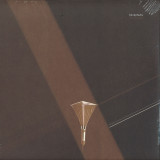
The #1 Best Selling Track for 2019 in Electronica / Downtempo genre on Beatport, Namito - 'Stone Flower' sees a new vinyl release featuring a previously unreleased, and vinyl only, remix by Satori. It also serves as a teaser for Satori's upcoming full length album on Sol Selectas Records.
Iranian artist Namito, who has made quite a name for himself over the years in the Techno scene of Berlin, diverges from this tip for 'Stone Flower', putting a new twist on a Persian classic. Creating a hypnotic deep house groove, with ethereal uplifting lyrics, listeners and dancers alike are taken on a journey to a time when Persian culture was at its peak of creativity and freedom.
Namito heard this traditional song at a family gathering in Iran, sung by his 2 sisters Mojgan and Marjan, and was instantly moved by its beauty. He invited his sisters into the studio the very next day to record their vocals, and the result is 'Stone Flower', which pays homage to the Persian tradition, while embracing the modern edge of electronic music at the same time.
For this special vinyl only remix, Satori winds his way deeper down into the electronic abyss, with a reinterpretation that maintains the original Persian vocals, but also blends in elements of an old Afghan interpretation of the same classic song, creating a tougher, club-leaning version.
The artwork by Helia Jamali, also of Persian decent, takes us into the mystical world of ancient scared geometry and displays the beauty of her home country Iran.
Search:hypno
The voice comes from a radio, protests in a country far away. Under the rising sun, cranes stalk the horizon, building more towers for the super -rich. Was it a dream, or did you hear sirens in the night? Qui volé? Who stole?
The rhythm, the battle, the call, a warning. The siren, the street, the horns. The bugs, the birds, the bees. And sounds stolen from your dreams. The last chapter in the Vertigo Inc odd-ysee. Hypnotic, pulsing late - late night leftfield house jams and junkyard rave constructions. On the flip, Flabberghast (Guillaume Coutu Dumont and Vincent Lemieux) massage a jiggling, whooping club dub from the track’s nervous skeleton
Josh Wink joins Ellum Audio for a stellar new single backed with a remix from DJ Seinfeld.
Josh Wink needs little introduction to fans, or even occasional listeners to dance music. The American DJ and producer has been one of the most enduring figures in the scene with a catalogue of music on labels like R&S, Strictly Rhythm, Nervous, Pokerflat, MNus and of course his own long standing Ovum Recordings imprint. As a DJ, he has travelled the globe since the mid-nineties, headlining festivals and clubs wherever he goes. What he has never done in his almost 30-year career is ever lose touch with the roots of underground dance music, something he demonstrates once again here with a standout new single for Maceo Plex’s label.
As Josh says, “Eric and I have known each other since the 90’s, when I would come to Dj in Houston Texas, and now so many years later, I’m excited to have my music released on his mighty Ellum imprint, including a great remix from Dj Sienfield”.
‘Feel’ is classic Josh Wink, near eight minutes of spacey, hypnotic dancefloor wonderment fuelled by syncopated percussion and arpeggiated bass which builds the tension before a spacious drop and meditative, spoken word vocal take the reins. Timeless and heartfelt this is a gem from the Philadelphia legend.
Remix duties fall to Sweden’s DJ Seinfeld, the lo-fi house pioneer and Young Ethics label boss who chops things up with a warped bassline, wonky FX and dancing synth lines to bring a brilliant alternative to the table.
LTD. BLUE SEAFOAM WAVE VINYL
Holy Hive ist ein Folk-Soul-Trio aus Brooklyn, bestehend aus Folksänger/Gitarrist Paul Spring, dem begehrten Soul-Schlagzeuger Homer Steinweiss und dem Bassisten Joe Harrison. Die Band hat sich durch fast schon legendäre Konzerte und ihre EP "Harping" einen Namen gemacht. Als Holy Hive erforschen sie die Beziehung zwischen den lyrischen Traditionen des Folk mit dem Rhythmus und der Ästhetik des Soul. Das Debütalbum "Float Back To You", aufgenommen in Queens im Studio Diamond Mine (von dem Steinweiss Mitbesitzer ist), besteht aus 10 eigenen Songs, einem Cover von "Be Thou By My Side" (ursprünglich von der britischen Gruppe Honeybus aus den Sechzigern) und einer Adaption des irischen Folksongs "Red Is The Rose". Steinweiss hat das Album produziert, als Gäste treten die Harfenistin Mary Lattimore, Leon Michels (El Michels Affair) am Saxofon und Keyboard, Shannon Wise (The Shacks) als Backgroundsängerin, Dave Guy (The Roots) an der Trompete, Nick Movshon am Bass und Paul Springs Ehefrau Sophia Heymans am Klavier auf. Homer Steinweiss arbeitet seit zwanzig Jahren als professioneller Schlagzeuger und hat in dieser Zeit den Beat zu Hits von Amy Winehouse, Bruno Mars, den Jonas Brothers, St. Vincent und Charles Bradley beigesteuert - um nur einige zu nennen. Als Gründungsmitglied von Sharon Jones & The Dap-Kings ist er mit der legendären Gruppe durch die ganze Welt getourt, bis er sich für eine Karriere im Studio entschieden hat. Paul Spring hat als Solokünstler sieben Alben mit eigenen Songs veröffentlicht, darunter, "Home of Song", eine von Kritikern sehr gelobte Platte mit Kinderliedern. Der Multiinstrumentalist Joe Harrison hat unter anderem mit Frank Dukes und Charles Bradley gespielt. Die symbiotische Beziehung zwischen Steinweiss und Spring ist wie die eines Spechts, der auf dem Rücken eines Nashorns sitzt. Springs zarter Gesang und seine flatternde Gitarre schweben in perfekter Harmonie über Homers bulligem Schlagzeug. Holy Hive sind eine vielschichtige Band: Manches an ihnen erschließt sich sofort, anderes erst später. Wie der Titelsong des Albums, der sich zuerst wie ein wunderschöner klassischer Liebessong anhört und sich dann als die Gefühle einer Frau entpuppt, die sich auf ihre Katze freut. Dafür steht Holy Hive: Die Musik geht verführerisch einfach ins Ohr und entfaltet sich dann sehr langsam - bis sie ganz aufblüht.
Mooring the 'Train Of Thought' at Hamburger Hafen, Latvia's R_R_ delivers aquatic ambience, buoyant electronics and tidal rhythms on the Growing Bin. Hold this shell(ac) to your ears and you’ll hear the sea…
As we hasten towards the inevitable Waterworld of the next century, Latvian composer, sound artist and lecturer Reinis Semēvics charts our safe passage to dry land with his debut album 'Train Of Thought'. Inspired by the rhythmic movement of water and how its rippled reflections bend our perception, Reinis sculpts an immersive sound collage - a precise mixture of field recordings and self-made sounds which swell and swirl as we bathe in their beauty.
Bookended by the Baltic's roar at the Bay of Rīga, 'Train Of Thought' drifts from the harbour to the open sea, conveying the restful calm and frenetic power of a body of water throughout. Misty pads and delicate piano conjure lapping waves and blue skies, bubbling sequences ripple up from the deep and cascading melodies fall around hypnotic rhythms, each distinct droplet offering a different feeling and mood. One moment flows into the next, nine rivers pouring into a single ocean of sonic bliss.
The alias R_R_ is a tribute to his grandfather, the composer Ģederts Ramans, whose influence helped set Reinis' sonic journey in motion. We're very happy he's decided to stop off in the Growing Bin, and we're sure you will be too.
Patrick Ryder
Fantastic first album of Tunisian producer Azu Tiwaline, melting psychedelic dub, industrial and hypnotic techno deeply rooted in her berber culture, supported by Lena Willikens, Nicola Cruz, Toma Kami and Violet, to name a few!
Azu Tiwaline is a new name for a new spirit: one of a producer inspired by the need to explore her origins, rooted in the Tunisian Sahara. The Call to a different sound, organic and raw, vibrating in the great spaces of the African desert where trance music resonates... Ecstatic ritual.
Her first album, Draw Me A Silence, conceived as a diptych, reveals the multiple facets of her identity. Uniting the bonds that connect Berber music, dub culture and techno hypnosis, Azu Tiwaline invites us to refocus on our senses and our Nature. She knows how to use contrasts between light and the invisible, exploring the complexity of our emotions and the mystery that emanates from them, in a polyrhythmic chiaroscuro that runs through each one of her tracks, and of which we discover, as we go along, all the outlines.
Draw Me A Silence Part. I (to be released in February 2020), delivers the most hypnotic variant of her music, centered on dark percussive rhythms and a skillful use of repetition; each of the 5 tracks ineluctably carrying the listener into a trance. Two major tunes particularly illustrate the artist's imagination: "Itrik" and "Berbeka", perfectly synthesizing the heritage of Berber trance music and her techniques derived from minimalist and repetitive electronic music.
The continuation, Draw Me A Silence Part. II (to be released in April 2020), gives prominence to a deep heritage drawn from the dub culture and its numerous bass music filiations. This second part thus gives a new breath in the use of sound space, exploited in a much broader way, leaving all their space to complex syncopated percussive lines, supported by massive basslines dedicated to the best sound-systems. Omok, the first of the five tracks of this Part II is the perfect demonstration of this, playing here the essential role of a bridge to the darker waters of this album's end.
Each of these two parts exist as an Entity, and it is only when they are united that they will reveal their full meaning. Thus, in May, Draw Me A Silence will find its final form in a double-vinyl unifying them. Listening to this album in its entirety offers us a wide panorama of the sound landscapes visited by Azu Tiwaline, who seems to breathe primitive sounds of a faraway desert into a music with modern tones - and vice versa. A resolutely hybrid sound and a singular experience, playing with contrasts and nuances to catch the listener in vast and so far unexplored territories.
Uniting cosmic tones and lovely notes, unique sound collages and electronic noises, Muzak pour ascenseurs en panne ("Muzak for Broken Lifts"), Brigitte Barbu's first album, explores a dreamy universe, at the crossroads of electronica and the 70s’ post-tune-in/drop-out, echoing shadows of the peculiar doppelgänger; Pépé Bradock. Ça Plane pour Brigitte Barbu…
Resonant guitar notes, odd sounds, electronic hallucinations, and unexpected warm synth layers all gather together in Brigitte Barbu's first enigmatic album. Recorded and mixed during a reclusive one-week residency in a very special studio, under the benevolent cubic radiation of "Our Lady of the Ark of the Covenant,” using a computer, synthesizers, and various string instruments, giving birth to this resolutely unique album. The guitars were sharply disciplined, propelling strings into strange and hypnotic limbos, somewhere between a weightless journey through time and a fresh science lab experiment.
A perky cosmic album running away from rules and gravity.
"I wanted to compose an ethereal abstract Hip-Hop LP" says Brigitte, "with guitar as a brainwashed instrument, mirroring machines and computers, even if surely far from being unplugged". So much for that… With a real introspective dimension, the record stands out for its pure whimsical mood. The artist had strict rules for composing: “Each track is based on the association between a title chosen for its consonances, an open tuning, a random tempo and frequencies chosen for their supposed effects, real or imagined, on the mind, body & soul.” For example: Taro Patch -> Whale -> 93,75 BPM or Dobro -> Bear-> 118,125 BPM, Air Resistance -> Open Em -> Panther-> 480 BPM etc.
Brigitte surgically framed an electro-acoustic compendium, finding its atmospheric mothership… Brigitte Barbu, referring to a special interlude from a vintage release "Escalope de Dingue” (Fool’s Cutlet), explains that Muzak pour Ascenseurs en Panne is in fact a custom tribute to family, friends, triggered cosmonauts, René Clément and the card game where the winner is the bearded monarch nonchalantly stabbing himself in the head. It’s a lot!
With a hybrid jazz based on African grooves, Ethio-oriental melodies and psychedelic dub this Belgian five-piece creates an atmosphere where ancient and modern sounds fuse into a powerful, hypnotic and groovy sensation.
Receiving critical acclaim for their second album 'Artifacts' (2017), the Belgian quintet are pleased to announce the release of their much-anticipated third album entitled 'Future Flora', released 12th April via Sdban Ultra on vinyl / cd / digital.
Piloted by saxophonist/flutist/composer Nathan Daems (Ragini Trio, Dijf Sanders, Echoes of Zoo), the input of notorious musicians, drummer Simon Segers (MDC III, De Beren Gieren, Stadt), cornet player Jon Birdsong (dEUS, Beck, Calexico), keyboardist Wouter Haest (Voodoo Boogie) and bassist Filip Vandebril (Lady Linn, The Valerie Solanas) leads to the specific universe that only Black Flower is able to create.
Where debut album 'Abyssinia Afterlife' (2014) and 'Artifacts' (2017) bathed in an atmosphere of psychedelics, mythical figures, ancient sounds and modern cultures, new album 'Future Flora' refers to the power of plants and their importance for the future.
"'Future Flora' is a metaphor for the importance of feeding and watering powerful and revolutionary ideas and initiatives that can save our world. You can compare it with plants that fight between the paving stones of the city for their future. These "urban warriors" need water to survive and grow. Their future and ours depends entirely on how we look at the plant world", says Daems.
Black Flower's musical cross-pollination of sounds and rhythms remain on 'Future Flora', but there is still room for a more Western touch with Romanian and Maloya (Réunion) influences. Daems developed his own arrangements where Western, Oriental and Ethiopian scales and chords are fused together to create a real mix of traditional instrumentation and modern electrical vibrations.
The strong underlying groove is omnipresent, but the room for psychedelics, folklore and experimentation grows. Songs like new single 'Hora de Aksum' combine modern western rhythms with doses of Balkan eccentricities while 'Future Flora' takes you on a psyche-delicious 21th century Ethio-dub-jazz trip with echoes of Mulatu Astatke and Fela Kuti.
"The general feeling that dominates is that of strength and perseverance. The feeling that we have to fight for our future and that we have to do it now! The whole album is interspersed with this atmosphere and sounds swirling, haunting and ecstatic. For those who once saw Black Flower live at work, this energy will be extremely recognizable", he adds.
Composed as a means to map the cultural translation between Chinese culture and European traditions, Piotr Kurek’s A Sacrifice Shall Be Made / All The Wicked Scenes is comprised of pieces composed between 2016 and 2018 specifically to accompany theatre performances directed by Tian Gebing (500m and The Decalogue) and Grzegorz Jarzyna (Two Swords). Kurek attended performance rehearsals in Beijing and Shanghai, with additional preparations and recording sessions taking place back in Warsaw.
While most of Kurek’s past work is unaccompanied by other musicians or outside help, A Sacrifice Shall Be Made / All The Wicked Scenes features various Polish and Chinese musicians both from classical and experimental scene (Barbara Kinga Majewska, Grzegorz Hardej, Łukasz Rychlicki and Hubert Zemler) as well as by actors of Paper Tiger Theatre Studio from Beijing. This approach of Kurek exploring new players and places is further juxtaposed as Kurek recycled samples from his own past, including various recordings with musicians he did throughout years, found sounds from the Internet, or cannibalised old solo work.
Recorded over the course of several years, this aural report of a monumental multi-disciplinary venture is in the end an enthralled and enthralling survey of a contemporary composer who is unencumbered by geographic or cultural boundaries. Concurrently, ditching any resemblance to local musical traditions and rearranging the compositions for all three performances, Kurek has formed an architecture that allows the phases of rituals to unfold while projecting social structure assumed in myth making. The regrouping of different moments in these stories is a curious way of narrating another myth — a synthetic, polyvalent story set in a city that strangely reassembles Beijing, Giza, and Prague at the same time.
Piotr Kurek is a Warsaw based musician and composer who straddles the world of electronic music taking inspiration from various genres but fitting comfortably in none. Through his unconventional use of a wide array of instruments both electronic and acoustic, he built a reputation for himself as a qualified inventor of hypnotic worlds drenched in uncanny arrangements.
Kurek has already released a range of idiosyncratic, forward-thinking works on a variety of imprints (including but not limited to Sangoplasmo, Black Sweat Records, Hands In The Dark, Dunno Recordings, Crónica, Foxy Digitalis) and participated in numerous music festivals including Unsound, CTM, OFF, TodaysArt and UH Fest as well as participating in extensive tours in Poland and abroad. In 2014 and 2015 he opened for Bonnie “Prince” Billy’s two European mini-tours. In 2016 he has been selected as a part of Shape platform for innovative music and audiovisual art from Europe.
Mameen 3 are soFa and Cheb Runner from Brussels. Both versatile players in the rather niche scene of oriental electronic music in the European capital, they only ran into each other at the Nyege Nyege Festival in Uganda two years ago. They clicked and after a first jam session they immediately launched Mameen 3.
Cheb Runner is the young Moroccan producer previously known as Gan Gah, now focussing on giving a modern outfit to various MENA music traditions. soFa is a true digger between all crates (his Pingipung Podcast is a gem!), as well as the curator behind the highly recommended Elsewhere vinyl compilations, released on labels such as Emotional Response or Music For Dreams. Following the Mameen 3 debut singles on Bongo Joe with excellent spaced out reggae- disco hybrids, Pingipung proudly unearths the Collapse EP featuring two collabs with legendary musicians.
A side: "Impostrazione" is a collaboration with Claudia Radulescu and Walter Hus. Radulescu is a Romanian visual artist who has written the lyrics for the song, boldly interpreted by the legendary Walter Hus on the occasion of her exhibition 'Hit' in Kanal - Centre Pompidou Brussels in 2019. Hus gained international reputation as a pianist in the 1980s and works as an avantgarde composer today, among many projects he created an opera for the graphic novel “Lint” by Chris Ware. Walter Hus performs an effusive vocal style accompanied by his modified Decap organ which became his trademark sound in the past decade. This jam delivered the material which Mameen 3 subsequently transformed into a hypnotic oriental slow-mo banger.
B side: "Wireless C" features another music veteran, Rodion GA, who describes himself as „Romania’s first one man band". He produced a remarkable electro-prog output in the 1970s and 80s. “Rodion GA sounds like he learned about music from hearing someone describe it in their second language, drunk. It sounds like nothing else: wrong in all the right ways,“ says The Guardian about his music. His collab with Mameen 3 turns out as a balearic, space reggae trip, with dreamy vocals by Rodion and solid bass, definitely a hymn in this year’s festival season, if only there was one...
Rich NxT returns to FUSE to open June with his latest EP, ‘The Swish Cheese’.
A quintessential member of the FUSE family since its formation, longstanding resident label favourite Rich NxT may well currently be in one of his finest periods of musical output to date. With recent releases and remixes via the likes of Moxy Muzik, S .A.S.H. and his own NxT Records, and fresh from his stand out remix of Planetary Notions head honcho Joe Rolét on Infuse, the London-
based DJ, producer and label boss now returns to his home imprint of FUSE in emphatic fashion to deliver three fresh original productions in the form of his ‘The Swish Cheese’ EP.
A-side and title cut ‘Swish Cheese’ is a low-slung effort that layers rumbling sub-bass and squelchy stabs beneath icy snares to reveal a twisting and hypnotic opener, whilst on the flip ‘Your Time’ welcomes rich organic percussion arrangements, soft chords amongst tripped-out vocal snippets and further warping basslines. To close, the slick ‘Heaven Base’ shapes up the package with authority as swinging drum grooves meet soaring vocals and arpeggiated synths lines, offering up yet more trademark no-nonsense Rich NxT sonics via the ever-impressing London imprint.
- A1: Dissolving Clouds
- A2: Birds Fly By Flapping Their Wings
- A3: Warmed By The Drift
- A4: In Triple Time
- B1: From A Solid To A Liquid
- B2: Arafura
- B3: Fall In Fall Out
- C1: Daphnis 26
- C2: Altostratus
- C3: Sherbrooke
- D1: People Are Friends
- D2: In The Shape Of A Flute
- D3: Fair Winds For Escort
- E1: Windscale Piles
- E2: Insolate
- E3: La Caldera
- F1: Birds Fly By Flapping Their Wings
- F2: Warmed By The Drift
- F3: Lost Horizon
Dropsonde was originally released by Touch (UK) in 2006. This is a reissue with seven previously unreleased recordings.
Widely regarded as one of Norwegian electronic music's most important artists, Biosphere's Geir Jenssen career spans nearly two decades, several albums, lots of remixes, various sound installations, commissions, soundtracks and even the odd Himalayan summit.
You may recognise his work without knowing it, so frequently does it crop up on TV trailers and idents. In the early 1990s he was a pioneer of so-called 'Ambient Techno', but since then, he has refined his sound into something more magnetic and enduring.
Dropsonde' isn't a soundtrack like the interwoven 'Substrata' nor an episodic journey in the way that 'Autour de la Lune' is. Here Geir Jenssen is pushing new directions towards the jazz colours of Miles Davis and Jon Hassell, whilst re-invigorating the pulse and projection of his signature sound: a hypnotic combination of pleasure and dread.
The spatial aspects some have dubbed "Arctic sound" but it summons strong feelings, or as Exclaim from Canada put it, "in order to climb higher, you must first go deeper". Jon Savage adds: "As with all of the Biosphere albums, the music draws you in and makes you want to listen and feel. Jenssen's work acts on a very emotional level, one that encourages you to drift away into a haze of images and scenes brought to you by the music, where spectacular beauty hides unseen danger. Intense and moving, but comforting and soothing at the same time."
A 'dropsonde' is a weather reconnaissance device designed to be dropped from an airplane or similar craft at altitude to take telemetry as it falls to the ground. It typically relays information to a computer in the dropping airplane by radio. The fall may be slowed by a parachute. Information collected by a typical dropsonde may include wind speed, temperature, humidity, and atmospheric pressure.
For the second release on Snowflake Soundtracks we introduce the mysterious Lineal. All three tracks in his Static EP share the same hypnotic stride towards a distant universe of atmospheric soundscapes and unfolding synth patterns. A masterful composition that already sounds like a classic.
Known for his grainy, analogue dance floor hits, Hungarian artist Norwell has returned with a powerful and transcendent 4-track EP, releasing through Fanzine Records. "In Between" EP is a drum-heavy, intricate series of grooves and soundscapes that draw the listener in from the beginning. While remaining faithful to the tendencies of techno, this record brings something of its own to the table in the form of acidic basslines and retro Kosmiche synth parts, resulting in a stunning array of textures.
"Eastern Echoes" is the opening track on this EP, and it deserves that spot. Combining an intense, Aphex-esque drum beat with hazy, dreamlike Middle Eastern inspired vox and pads, this track is a pumped-up monster of an introduction to the EP. This is immediately followed up with "Evaporate Yourself", a dark and brooding beat with a serpentine bassline that creeps its way through the track and combines with the lush, ethereal ebb and flow of the detuned synths and horror-themed vocals. This track is as cosmic as it is industrial, and sits on the fence between the two in a very unique way. "Model 244" on the other hand utilises a much more 70's modular sound reminiscent of early Kraftwerk hits adapted to the modern age. The track builds layers upon layers of left-field percussion that dance around the central arpeggiated bass in a very pleasing way, and Norwell doesn't leave out his signature glitchy, mechanical soundscapes, which give the track its glorious tension and release. The EP is rounded off with "Repetition Void", potentially the most experimental of the four tracks. Flanged hi-hats dance around the listeners ears and hazy analogue keys induce a hypnotic trance, exacerbated by the almost Papal choir vocals that fit seamlessly into the background.
As Norwell's first release through the Fanzine Label, this EP is dark, it is foreboding, and with the unexpected turns the rhythm takes, it doesn't care about your feelings. If you're ready to be punched in the face by this sci-fi horror listening experience, watch for the release of this EP, Fanzine latest addition to their roster of tasty electronic jams.
new quartet by Samuel Rohrer, Max Loderbauer, Stian Westerhus & Tobias Freund In the present era of media saturation, the artist's dilemma has shifted away from the question whether to fuse disparate stylistic elements, towards the decision of which energies to draw upon: a situation most rewarding for those who listen to musicians navigating this limitless terrain. One such journey, the captivating full-length release from Samuel Rohrer's new Kave quartet coming out this May, is bringing together players who are equally well-versed in the quick-thinking mechanics of free group improvisation and the compositional strategies of contemplative / ‘ambient’ electronic music. With Rohrer acting as creative director and most of the quartet sharing synthesizer duties, there’s a strong sense of unified purpose to this set, and a narrative flow that never causes the listener to focus on one constituent part at the expense of the whole. At the same time, the players know all well that cohesion counts for little without those constituent parts being compelling in their own right. Rohrer and Loderbauer, for example, have previously crafted a unique techno-organic approach with the Ambiq trio, and the lessons learned from that partnership are put to inspired use within this new configuration. Stian Westerhus’ contributions on guitar and vocals, along with Tobias Freund’s electronic reinforcements - Freund also has worked since many years with Max Loderbauer as NSI - all conspire to make something that Rohrer aptly compares as “forest”-like. It’s a descriptor that will have vastly different meanings for each listener. For Rohrer, it refers to music that is confident in the “deep-rootedness” of its foundations and defined by a density and mystery easily confused with darkness, while nevertheless proving its bright vitRight away, on the introductory odyssey 'Cambium' the quartet sets out to make good on this metaphor, creating a hypnotic foundation for what is about to unfold during the next 42 minutes, with brooding, slow, 'searchlight in a fog,' synth washes and percussive stridulation. The twin 'Hibernation' tracks show all the unique elements beginning to coalesce: the emotional tenor is one of vulnerability that melts into the determination of 'staring into the void', a temperamental state challenging to represent authentically in music. The atmosphere of psychic challenge effort lessly gives way to the faintly nostalgic glimmers of 'Giant Peach' - a literary reference to the macabre whimsy of Roald Dahl. The ultimate dissolution of barriers between organicism and synthesis is accomplished on the majestic 'Divided We Fall', a title referring to Westerhus’ smoky vocalization that winds into a double helix formed from electronic surges. Again, the ease with which it all comes together is mesmerizing, and while there’s an aura of risk accompanying this walk through the woods, there’s a much more enduring impression of carefully orchestrated growth and change.
Lamunai Records is proud to announce Titik Api, the 2nd opus of the Indonesian master Harry Roesli, recorded in 1975. Political activist, prominent member of the Tradisi Baru Movement (New Tradition) who
emerged in the 1970s, Harry Roesli worked with musicians, poets, playwrights who were commited to experimenting indonesian traditional culture. Titik Api is another successful effort to blend Indonesian's traditional instruments, such as gamelan, with Western music from progressive to funky hypnotic groove.
If Galaxy Lane’s first EP didn’t send the portals of time and space upside down, then the second EP will throw you down a vortex of hypnotic grooves juxtaposed with eerily erratic rhythms built in outer space.
The first of two EP’s to be trusted in the hands of Lone Romantic, ‘Night’ and ‘Later That Night’ will explore the concept of capturing moments in time.
Maybe Galaxy Lane can best summarise…
“I want people to really feel the mistakes in this music, the dirt, the rough and raw approach, the ‘sitting on the floor surrounded by wires at 3am messing with synths’ approach. That to me is the magic of this music, the interaction of man and machine, to hear the nuances, the tweaking of knobs and pushes of faders. I think we have lost that somewhat with digital technology, and have lost a lot of feeling in the process”
‘Night’ will propel the listener into ethereal textures layered over rough and raw beats, as outlined on opening track ‘Deep Space Nine’. If that sets you up for thinking this will be a dreamy ride, ‘Communication’ hits hard at the rear of the spaceship, coming at you with intergalactic bleeps, zaps and back cracking rhythms made for getting down.
Side 2 sets off on an exploration of wild eyed boundary flexing in the shape of ‘Enter The Light’. Pushing the machines to near breaking point whilst just hanging on, it’s a track that shows what can be done when the spaceship is left to drive itself, you can do nothing more than go with it and and see what happens.
‘Snow Day’ is perhaps the perfect way to round us back in. A more calmer, smoother ride, it’s unmistakable polyrhythms soothing the soul and setting us up for the next chapter…
If Galaxy Lane’s first EP didn’t send the portals of time and space upside down, then the second EP will throw you down a vortex of hypnotic grooves juxtaposed with eerily erratic rhythms built in outer space.
The first of two EP’s to be trusted in the hands of Lone Romantic, ‘Night’ and ‘Later That Night’ will explore the concept of capturing moments in time.
Maybe Galaxy Lane can best summarise…
“I want people to really feel the mistakes in this music, the dirt, the rough and raw approach, the ‘sitting on the floor surrounded by wires at 3am messing with synths’ approach. That to me is the magic of this music, the interaction of man and machine, to hear the nuances, the tweaking of knobs and pushes of faders. I think we have lost that somewhat with digital technology, and have lost a lot of feeling in the process”
‘Night’ will propel the listener into ethereal textures layered over rough and raw beats, as outlined on opening track ‘Deep Space Nine’. If that sets you up for thinking this will be a dreamy ride, ‘Communication’ hits hard at the rear of the spaceship, coming at you with intergalactic bleeps, zaps and back cracking rhythms made for getting down.
Side 2 sets off on an exploration of wild eyed boundary flexing in the shape of ‘Enter The Light’. Pushing the machines to near breaking point whilst just hanging on, it’s a track that shows what can be done when the spaceship is left to drive itself, you can do nothing more than go with it and and see what happens.
‘Snow Day’ is perhaps the perfect way to round us back in. A more calmer, smoother ride, it’s unmistakable polyrhythms soothing the soul and setting us up for the next chapter…
On his third solo album, following the success of "Éternel été", the founder of the electro duo Nôze is exploring, through piano and synths, the encounter between poetry and song. In this new work he has set to music verses by William Shakespeare, Victor Hugo, Pablo Neruda and on three songs, those of the poet Marceline Desbordes-Valmore, a pioneer of romanticism who notably influenced Verlaine and Baudelaire.
But what does this Oh !, giving its title to Ezéchiel Pailhès' third solo album, stand for? Is it an Oh ! of surprise, admiration or pain? "It is rather the Oh ! found in romantic poetry" says the French composer and singer with his deep and sweet voice. "An interjection that refers to a form of lament", even though it can convey other emotions such as complaint, nostalgia, a sad delight or a longed-for solace.
In Tout va bien, his previous album released in 2017, Ezéchiel Pailhès had set two Shakespeare sonnets to music. One of them, "Eternal été" has become a great success, thanks to its lines tinged with spleen and bliss. "Poetry, and its musicality, have always been part of my universe. For this new album, I therefore wanted to explore further the adaptation of poems into songs. "Bien Certain" is, once again, taken from William Shakespeare. "Tu te rappelleras" comes from Pablo Neruda's collection La centaine d'amour. "Oh ! Pourquoi te cacher ?" is from Victor Hugo. As for "Sans l'oublier", "La sincère" and "J'avais froid", they were all written by Marceline Desbordes-Valmore, a 19th century French poetess, still fairly unknown".
With Oh !, Ezechiel Pailhès has become more of a singer than ever before, through seven songs and four instrumental compositions, with intimate and warm modulations, carried by hypnotic piano melodies, instruments with unusual timbre and a subtle electronic production that recalls his past productions with his former duo Nôze.
"I wanted to expand my music further into songs" Ezéchiel adds, "to work more with my voice as a solo instrument and to limit the overlapping of voices and choirs found in my previous records". Produced in his Montreuil home studio, Oh ! is nevertheless imbued with an emotion found in his previous albums, close to 'saudade' or a slight melancholy, sometimes enhanced by chosen texts that evoke the disappointment of love, the longing, the distance between two people, or even men's weakness. "These poems evoke themes that may seem far from the concerns of our times. Yet, they are timeless and eternal; they manage to convey emotions that can often be difficult to say or write."
Among the texts chosen for this new album, the verses of the poet Marceline Desbordes-Valmore (1786-1859) are on a par with William Shakespeare's sonnets or Pablo Neruda's poem found on the same record:
" Sans l'oublier, on peut fuir ce qu'on aime.
On peut bannir son nom de ses discours,
Et, de l'absence implorant le secours,
Se dérober à ce maître suprême,
Sans l'oublier ! "
(…)
" Sans oublier une voix triste et tendre,
Oh ! que de jours j'ai vus naître et finir !
Je la redoute encore dans l'avenir :
C'est une voix que l'on cesse d'entendre,
Sans l'oublier ! "
"Without forgetting, we can run away from what we love.
Banish their name from our conversations,
And, begging the absence for consolation,
Escape the grip of this supreme master,
Without forgetting! "
(…)
"Without forgetting a sad and gentle voice,
Oh, how many days have I seen rise and fall!
And still I fear from the future:
A voice that can no longer be heard,
Without forgetting! "
Although less known today than her male counterparts, Marceline Desbordes-Valmore marked her times and the Romantic movement through the quality of her texts and her formal inventions, which Balzac admired, and whose influence seems to have been decisive on Verlaine and Baudelaire.
"Marceline Desbordes-Valmore's poetry is highly musical," says Ezéchiel with admiration. "Her artistry with rhythm and repetition sounds very good and takes on a new dimension when set to music. She even meant for some of her texts to become songs"