Changing Mindset is an EP developed around Tuber's title track,
This work is presented as a work of sonic craftsmanship, with a distinctive character that will make you delve towards the limits of electronic music. This sound fuses atmospheric, hypnotic and mental elements, creating a listening experience that goes beyond listening to become a total immersion into the cosmos.
-On the first remix, it denotes a special flavor thanks to the presence of Orbe, a true master in the creation of textures and enveloping sounds. Known for his skill in weaving complex sonic layers, he dives into the core of Tuber's main track, displaying an ability to transform and enrich every musical element.
-The second remix, created by HD Substance, promises to be an experience that will take listeners on a vibrant musical journey, inviting them to surrender to the beat with an infectious energy. The presence of HD Substance, backed by an extensive and outstanding trajectory in the music world, augurs a remix that goes beyond simply being listened to, it is a direct invitation to immerse oneself in the intensity of the sound and let oneself be carried away by the melody.
-The last remix, by Dinamite, adds a touch of elegance and forcefulness, completing the "Changing Mindset" EP. Dinamite, renowned for his ability to fuse musical sophistication with pulsating beats, brings with him an experience-laden perspective.
Buscar:hypnotic sounds
Repress
As we continue the five part journey to say goodbye to the Telomere Plastic series, we as always, are excited to share with you Telomere 020.2.
This second VA, features producers, Anderson, Aspetuck, Bænglund and Watch Patrol.
We begin off the record with ‘Funk Inspector’ from Bænglund. The track name here sums it up pretty well. Full on quirky funk in the airwaves. A delicious cut to keep everyone on there toes!
Next on the A2 we have Aspetuck with his ‘As the Fog Rolls In’, Starting off with a bubbly soundscape the track progresses into a hypnotic acidic journey keeping the mood deep and melancholic. Handle this one with care!
On the B1 we have Anderson who delivers another deep and beautifully crafted soundscape. This is a timeless tune that takes you on a sonic journey from start to finish. This will work wonders on the dance floor and during your introspective moments laying in bed with your headphones bumping.
Lastly, we close out the release with the one and only Watch Patrol who we have all dearly missed. We hope you enjoy this slowed down IDM breakbeat gem!
Very limited black copies as always with a few colored copies available via the Wex bandcamp, be quick!
»In Words« is the first solo album by the Danish musician, composer, and visual artist Alexander Tillegreen. The album represents a series of varied electronic music pieces while also carrying examples of ongoing work with psychoacoustic phenomena. Composed partly of material taken from his artistic practice as an installation artist and his ongoing interdisciplinary artistic research into psychoacoustic phenomena, Tillegreen investigates subjective sonic perception and the negotiation of language. Particularly, these investigations are done through the use of the phantom word illusion, originally discovered by music psychologist Diana Deutsch. Parts of the album were conceived when Tillegreen was the first artist ever in resident at the Max Planck Institute for Empirical Aesthetics. Triggering the brain’s tendency to interpret language-based auditory illusions as meaningful information and as words within the mind of the listener, Tillegreen’s unique sound works unfold like a kaleidoscope of phonetic mirrors which render possibilities to reflect upon the listener’s own psychological and culturally situated linguistic embeddedness. Gender-distorted voice perception, speech and language borders are all challenged and thematized throughout Tillegreen’s work. The listener’s head and bodily movement drastically affect the listening and the word interpretation. Their psychological subconsciousness, recent events, memories, and expectations as well as the listener’s motion in space all become co-creative and co- composing factors in a reactive and choreographic process of listening. The polyrhythmic seriality of spatialized syllabic structures is accompanied by elements of heavy bass drops, high-frequency tensions, undulating synth lines, and hypnotic effects. Some of the many compositional potentials of the phantom word illusions are exercised and unfolded in selected tracks throughout the album. The notion of language borders is approached from an entirely different and even more “anti-logocentric” perspective on the “eponymous” closing track »Assimilate (in Words)«, where the listener experiences the struggle and collapse of interpersonal communication through conversation. Other parts of the album represent more diverse approaches to abstract electronic music. »In Words« morphs soundscapes into glacial, spherical passages of ambient backdrops, while at other times emphasizes raw tectonic blocks of hyper-panning drones that erupt into high-velocity outlets of energetic, granular fields. Tillegreen is alternating between cyclical, minimalist, hypnotic approaches and complex, glitchy polyrhythmic melodic structures that shift and melt into evocative ambiences. The phantom words and the nature of Tillegreen’s musical visions progressively demand more of the listener’s attention and represent the artist’s ongoing artistic work and scientific research into psychoacoustics and language. While »In Words« is a highly conceptual album, the musical bandwidth is extensive.
‘Rituals’ is the new album of spiralling drone & ambient formations by Italian artist Danilo Betti aka April Clocks (Union Editions / Mixed Up); a new work of sublime disorientation by the Rimini-based outlier, arising from a period of reinvigorated artistic practice.
Emerging just over a year after the project’s second album ‘It Takes Time’, ‘Rituals’ heads deeper into spheres of consuming, hypnagogic haze, coursing through nine coalescent compositions of amorphous yet absorbing electronics.
Where ‘It Takes Time’ represented an autodidactic interpretation of Betti’s formative influences – namely shoegaze & proto-ambient - ‘Rituals’ is an enigmatic proposition, the product of subconscious resonances, a mysterious sound world that finds traces of evanescent beauty and uncanny captivation in sustained tones, cavernous oscillations, and aesthetic imperfections, like the notes of subtle surface noise embedded within many of these productions.
Attesting to the value of Betti’s background as an industrious solo artist, making music away from prevailing sites of activity, ‘Rituals’ consolidates the inspirations and hallmarks of the April Clocks project into an acute reflection of Betti’s vision, one that feels completely his own.
In the buried somnolent splendour of the opener ‘Hypersleep’, through the sound art rustle and time-stretched cycles of ‘A Cure’, into the stroboscopic magnitude of ‘Ceremony’ and the haunting string loops of ‘Coward’, Betti captures compelling impressions drawn from a submerged perspective; a deluge of smokescreens and crosscurrents from the other side.
Bearing the influence of subliminal states, ‘Rituals’ is nevertheless lucid and arresting. There are sumptuous holding patterns of ambient evaporation that stream into vast maelstroms of sound (‘Displaced Euphoria’), enervated organ themes that distil sensations of stasis and dissociation (‘Wound’), as well as psychedelic movements in wide tracts of negative space (‘No Time, No Land’). From here, the acoustic glitch of ‘Disappearer’ and the stratospheric slipstreams of ‘Mirror Being’ bring the album to an astonishingly dramatic conclusion.
Throughout such moments of reverie and tension, ‘Rituals’ makes for a hypnotic listening experience. It’s an album that signals a pronounced sense of development for the April Clocks project, from past vestiges of physicality to present degrees of heightened abstraction and ethereality, from the Warp-influenced rhythms and frameworks of ‘It Takes Time’ to the wide- ranging, experimental sounds that unfold here.
Encompassing forms of decomposition and otherworldly futurism, decay and sublimation, distortion and lustre, this is unique, cerebral music that reaches inward and ascends outward, drifting elsewhere, according to its own coordinates.
Recorded and Mixed at Tower of Disintegration, 2022.
Mastered by Miles Whittaker.
- A1: Nightmare Dimensions (11:50)
- A2: Behind The Veil (8:58)
- B1: Endless Black Space (18:57)
Limited edition 300 copies all pressed on mandarin orange coloured vinyl, and housed in a gloss finished full colour outer sleeve with insert, polylined inner bag and download code. Non-Returnable.
Recorded in Finland & the United Kingdom. Winter/Spring 2023
Finnish space travellers Nolla join forces with psychedelic guitar maestro Mike Vest (Bong, Blown Out, Modoki, Artifacts & Uranium, Drunk In Hell)
Inspired by classic space rock, driving hypnotic krautrock and bleak synth soundscapes, the Kaliyuga Express debut album is a story of ends and beginnings, light and darkness, dystopian worlds beyond and their warriors and masters.
Prepare to be blasted into endless black space!
‘Ultra Delays & Octave Hawkwind Guitar Compositions. At the Edge Of Time & The Universe.’
For fans of: Hawkwind, Can, Sun Dial, Bevis Frond, Space Rock, Kosmische Musik etc
Managing two record labels and the most successful electronic music school in the country has left Natia Sartania aka sTia with little time for her own music for the past 13 years. However, her musical journeys and transitions brought her back to "home". This 7-track album has been created by Natia since the full-scale invasion in Ukraine. She dedicates this album to all people who had to leave their homes behind.
It's not easy to define the musical genre of this EP. Mostly acoustic piano with some electronic ambience and squeaky pedal that gets in the way. Some melancholic recitative and hypnotic hip-hop instrumental in the end.
In A4 Natia collaborates with Luna Flowers and Sabana, the founding members of the most influential hip-hop collectives in Georgia such as "KayaKata", LTFR and Temple Pharmacy.
In B3 sTia's home is covered by one of the most promising young Georgian hip-hop instrumentalist Nikala
[g] 07: Home (Nikala rework) [feat. Nikala]
Every record looks different in terms of colors.
Głós
I welcome Głós on my label. Głós, currently based in Tokyo, Japan has made a point out of not following the sometimes linear Techno patterns with his artistry. He comes from a band-focused Rock-environment and runs his own label, arranged to be a wildly experimental project. In his earlier years, Głós was in several ways a close contributor to the Ressort Imprint label. However, with "Scarlit Scandals" he delivers a perfect hypnotic track, not too calm, not too fast with a deep kick.
More Influenza
More Influenza is a techno DJ/producer duo in Puglia (Italy) based and Resident DJ at WAYS collective. Their style is characterized by dirty sounds and repetitive rhythms influenced by the productions of the late 1990s. Vinyl lovers and avid collectors, More Influenza bring their passion for analog music and sonic eclecticism to their artistic experience. Perfect for Balders Audio. Welcome!
Emerging from the cold echoes of Reykjavík's underground music scene, ex.girls, previously known as Russian Girls, chart an inspiring journey from inception to international recognition. Founded in 2017 as a personal venture by Guðlaugur Einarsson, the act soon evolved into a vibrant, collaborative platform for kindred spirits bonded by an unyielding passion for music.
The project consists of three: frontman Tatjana Dís on vocals, alongside Guðlaugur Einarsson and Gylfi Sigurðsson. Their kinship took root at their erstwhile studio on Skúlagata in Reykjavík, where this creative sanctum became a melting pot of musical exploration, learning, and leisurely hangouts. Guðlaugur and Tantjana also ride the waves as members of the rock band Skrattar, whose album 'Hellraiser IV' saw Bjarki's experimental bbbbbb recors imprint venture outside strictly electronic music for the first time in 2021.
Despite their penchant for maintaining an enigmatic aura, ex.girls won the ‘Best Icelandic Electronic Music Song’ in 2022 with their anthem, 'Halda Áfram', released during the backdrop of the COVID-19 pandemic on bbbbbb recors, which translates to “keep on going”, became a beacon of hope during tough times in the Icelandic music scene. Their distinctive sound palette paints with broad strokes of lush arrangements cemented with a lo-fi disposition. It's a soundscape where the rumble of a crunchy bass meets a quirky sprinkle of Nordic humour, a signature style they fondly dub as 'SauerLounge'.
While the group has traditionally embraced a leisurely cadence in unveiling new music, anticipation bubbles as they gear up to their debut album, ‘Verk’. A twelve-track exploration of experimental, conceptual and unorthodox textures and sonics, with sounds and influences spanning rock and nu-wave through to electro, drone and ambient. The result? An absorbing and hypnotic trip, with twists and turns across every track, presenting a debut album that keeps you guessing minute by minute.
To be released in both vinyl and digital formats, the album will also welcome engaging remixes from artists native to Iceland and the broader global stage. In a world of ever-evolving music, ex.girls stand out as a testament to authentic collaboration, raw talent, and the art of electronic storytelling.
ex.girls ‘Verk’ LP drops via bbbbbb recors on 24th November 2023, with remixes to follow in the months ahead.
Mostly known for his work as founder, vocalist and main songwriter for The Legendary Pink Dots, Edward Ka- Spel has long forged an equally prolific career as a solo artist given to sometimes exploring similar sonic realms as his group but clearly working at such a pace the need to channel ideas and songs in this capacity must be enforced. And just as well too, because Edward Ka-Spel is one of those rare and exceptional artists whose high workrate doesn’t betray a keen sense of quality control. Long known as somebody unafraid to venture wherever he pleases, his work has for a few decades now long traversed the more outward-bound or so-called ‘fringe’ areas of electronic music, psychedelia, hypnotic rock, kosmische sounds and the avant-garde. Heartily sewn into all of this is Edward’s fantastic grasp of spinning a twilight tale or spiralling deep into the mind’s recesses to craft a song from comparatively nimble melodies and words of Kafka-esque proportions. It’s a strikingly rich blend that’s always deserved far more attention than the cult audience it thankfully at least has.'Tales from the Trenches' is the second release by Edward for Lumberton Trading Company. Following on from the abstract-flavoured ‘Permission to Leave the Temple’ 10” released at the start of 2023, this LP collects eight tracks of a personal nature mostly pinned into place by some refined electro rhythms, molten cosmic textures, plaintive strings, introspective keys and a late night hue that sways effortlessly between the beautiful, haunted and even, a couple of times, a steam-pumped and sweat-ravaged dancefloor. Limited to 500 only, 'Tales from the Trenches' delivers exactly as the title indicates. Everything may at first feel ominous or sombre in tone, but there’s also a glimmer of hope laid bare in all its sun-drenched glory poking between the cracks.
Milanese techno shaman MAIKE DEPAS travels from the dark to the dreamy side of the dance floor on his EP "Euphoria" (out 24 November on The Innovation Studio)
"Techno emissary Maike Depas storms back onto the scene with 'State of Techno', a bold fusion of past and present influences set to reshape dance floors in 2023." (Magnetic Mag)
"State of Techno is the Milanese producer's visionary work fusing 80's and 90's sounds through a modern lens creating an exhilarating release weaving through 30 years of underground club music." (The Brvtalist)
On the back of the breaky Grand Prix 2049 anthem "Midnight Ride", Milanese techno shaman MAIKE DEPAS (Michelangelo De Pasquale) travels from the dark ("We Move", "Inner Voices" and "Techno Appeal") to the dreamy side ("Midnight Ride" and "Green Hornet") of the dance floor on his EP "Euphoria", coming out on 24 November via The Innovation Studio. One foot in stoic Schranz techno of Chris Liebling"s CLR, the other one in eschatological goa trance of Dragonfly Records, never going under 134 BPM, Depas strikes the perfect balance between dystopia and utopia. "This is my idea of what the ravers want to listen inside the club's Depas reckons.
"Euphoria has two sonorities: the dark vibe, and the dreamy one. This is my idea of what the ravers want to listen inside the club's Maike Depas
With the complex arrangements of the past Depas-releases left out and the trusted workhorse a custom-made pitch black Roland TR-909 from 1983 responsible for doing the heavy lifting in the drum sections, "Euphoria" is a beat-heavy affair that draws its relentless drive and rhythmic richness from merging polyrhythmic patterns merged with streamlined melodies and nifty vocal samples such as the double entendre "quiero jugar una horas mas" (Engl. "I want to play one hour more") on the no-holds-barred hard trance number "Techno Appeal", and the riveting juxtaposition of mesmerizing female vocals and handclaps of roaring crowds in hypnotic "Inner Voices".
"These demoniac figures resemble human transformation and the idea of achieving euphoria through esotericism's Maike Depas
However, when it comes to Depas, there is always more to his music than merely being dead set on setting the dance floors on fire. The antler-wearing figures and witches" circles depicted in the artwork hint at Depas" invitation for the clubbers to let his music move them far beyond the physical world. "These demoniac figures resemble human transformation and the idea of achieving euphoria through esotericism's
Vocal Shades And Tones is a miraculous leftfield library classic from the genius mind of celebrated UK composer/singer/vocal arranger Barbara Moore. It's a heavenly groove-based blend of jazz, Latin, soft-psych, folk-funk and gospel soul. Recorded for the legendary Music De Wolfe in 1972, it's an audacious start-to-finish listen, as dizzying as it is dazzling. It's a perfect snapshot of a musical era, supported by Moore's glorious vocal arrangements. Widely regarded among collectors, DJs, and lounge/easy-listening acolytes as an absolute essential it is viewed as the holy grail by many production music heads, rarely appearing for sale and disappearing in a flash when it does. Indeed, originals now go for over £300 and it's easy to see why. Just one of the reasons why this fresh Be With reissue, part of a wider De Wolfe reissue campaign, is so utterly crucial.
Racing out the gate, the driving "Hot Heels" is a bright, sophisticated scat groove which sounds Brazilian, richly produced as if coming by the hand of Arthur Verocai. Yes, *that* good. It's followed by "It's Gospel" which is, er, a wonderfully slow and deeply soulful gospel treasure. The appropriately monikered "Steam Heat" is a darker, breathy gem, one for salacious crates and one of the record's most infamous tracks. "Fly Away" is pastoral West Coast soft rock, very much in conversation with John Cameron and Keith Mansfield's epochal KPM recording, Voices In Harmony. "His Name Was" is a stop-you-dead-in-your-tracks Beach Boys accapella church-organ stunner, whilst "Swing Over" is another carefree, richly produced sun-dappled smasher. The gentle Bossa and sunshine soul of the aptly-titled "Touch Of Warmth" closes out a virtually perfect A-Side.
The B-Side opens with the easy grace and dramatic build of "Voice Force Nine". The jaunty "Very Fine Fellow" may be the only track to slightly grate so we advise heading to the slower, moody "Shades-Tones", eminently more compelling with sparkling, hypnotic piano throughout, underpinning the gorgeous wordless vocals. Just beautiful. It was sampled by Redman for his Method Man-featuring "Do What Ya Feel" on the great Muddy Waters. We're back in Brazilian territory with the cool, uptempo "I'm Feather" before swooning to the warm, relaxed "Drifting", another total highlight which was famously sampled by Koushik on his legendary remix of Madvillain's "America's Most Blunted (Doom's Verse)". The penultimate track, "Take Off" is a bright, organ lounge groove before this remarkable set is rounded out by the beaty "Fly Paradise". It's so so good, it sounds like Rotary Connection fronted by The Mamas & the Papas. As noted in a recent Guardian article on Moore's life, "there is a plushness and electricity in the tight vocal harmonies that spring out, sung with the precision of cathedral choristers decades before Auto-Tune." Amen.
In the 1960s, Barbara Moore was a member of Top of the Pops’ resident vocal-harmony group, The Ladybirds and sang backing vocals for Dusty Springfield’s TV show. Her own outfit, the Barbara Moore Singers, were regulars on TOTP, singing with Jimi Hendrix when he performed "Hey Joe" live in Lime Grove Studios. An important detail for Moore was the shepherd’s pie she bought Hendrix when she found him alone, looking emaciated, near the BBC canteen. By 1970, she was working as a session singer for De Wolfe and, by 1972, was composing her own tracks for De Wolfe and working within their tight creative strictures. Each short track had to evoke an obvious mood and theme, with no significant key or tempo changes. Her response, this very album, managed to stay between the lines while cohering as an overarching artistic masterpiece.
The audio for Vocal Shades And Tones has been carefully remastered by Be With regular Simon Francis, ensuring this release sounds better than ever. Cicely Balston's expert skills have made sure nothing is lost in the cut whilst the records have been pressed to the highest possible standard at Record Industry in Holland. The original, iconic sleeve has been restored here at Be With HQ as the finishing touch to this long overdue re-issue.
mule musiq welcomes british producer jimmy wallace, presenting his debut album “red, yellow, black” - a nine track strong record that partly leaves the dancefloor behind.
since childhood, music has been a strong influence on the 33-year-old artist. his mother, a music teacher, exposed him to classical sounds from an early age.
but it was hearing the electronic tones of the french touch movement, which really ignited his mu-sical journey. a year later he started to dj, acting out his love for four-to-the-floor grooves in local clubs. today you'll find him on the bill with artists like ruf dug, mr scruff, or bradley zero, heating up the dance floors.
as a producer he has already released a handful of stunning eps, including one for sweden’s finest house label studio barnhus, and one for london’s revered rhythm section international imprint.
both feature house tunes with an edge, house tunes with a love for the roots of the genre along-side more reflective, ambient moments. he also runs the label tartan records, where he publishes dancefloor focused white labels.
his music has been championed by titans of the scene such as palms trax, ryan elliott, dj tennis, gilles peterson, dixon, and hunee. axel boman even coined his debut ep as “one of the very best demo emails ever received at label studio barhnus hq”.
an advance praise, that wallace now acknowledges with an album full of deeply crafted music. some tracks lean towards the dancefloor, like the swung sounds of “bubbles”, the hypnotic mael-strom of “good morning”, or the epic, jazzy moments of “labyrinth”.
the theme of nature is evident throughout, with field recordings and environmental sounds he rec-orded on the road, being fused with his own musical ideas.
tracks like “waterfall” and “tokyo street”, draw influence on time spent in asia, whereas "dhq", "by the river", and "by the lake" are inspired by his childhood and hometown in the shropshire country-side. “i’ve been writing ambient and more nature focused material for a few years now without really having a plan for it.
finally, this year after writing the tune “labyrinth” i felt i had a body of work which was both diverse and cohesive enough to bring together on a record. so, the album represents moments of time i have spent in various outdoor spaces around the world, using sound to try and turn these experi-ences into musical format.” wallace discloses.
the result is a mesmerizing long player featuring an evocative, emotional story arc that avoids ste-reotypes and straight party orientated narration. “having written plenty of club music for the past few years, i wanted to show a different side to my sound.
something more intimate, private, experimental which can be listened to away from the party.” he reveals on the meditative, blissful “red, yellow, black” - an album, which has the power to transport listeners to places and spaces new – for inspiration, relaxation, and dancefloor moments off the beaten path
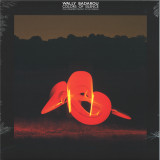
Synth pioneer and musical polymath, Wally Badarou is a genius. But you know that already. A vinyl version of his majestic Colors Of Silence has been craved by the Balearic cognoscenti ever since its low-key 2001 release. Indeed, when we first started work on Be With, we asked some pals with exquisite taste what their dream release would be. We asked Balearic legend Moonboots and, without hesitation, he said Colors Of Silence by Wally Badarou. We didn't know Wally had made this album. And most still don't. But that's about to change.
Colors Of Silence is ostensibly a new age album. As ever though, Wally's sophisticated synth textures and expressive keyboard runs are so full of character, so full of life, that this work of art transcends any easy genre categorisation. It's simply stunning, throughout. It sounds like A.r.t. Wilson or Suzanne Kraft, with traces of CFCF and Jonny Nash. But it was made a good decade earlier than the work of these modern giants. Sometimes, it doesn't seem far from some Larry Heard albums.
Island Records founder Chris Blackwell's friend Nathalie Delon asked Wally to provide music for the yoga DVD she was to release. Lack of time on both sides made them agree on using "quality demos" Wally had in his ideas bank. It's understandable why Colors Of Silence remains somewhat of a lost gem. As Wally explains: "Total lack of promotion made it an 'intimate' release, which was exactly what I was looking for: just a buzz-maker and time-buyer that would allow me to concentrate on the real thing as soon as I'd have time, which could also turn into a rare collecting item later, once the final versions made their way to success. You never know."
Over the years, Colors Of Silence has become a true cult record for the ambient/Balearic heads.
The beguiling but brief "Dance In The Dust" is the shuffling, hyper-percussive, hypnotic opener. It gives way to the deep serenity of "Amber Whispers". It's a gliding, divine, mini melodic masterpiece. It'll make you swoon in its extreme beauty. The bright and breezy "Where Were We" follows, a tropical, reggae-tinged bounce through the islands.
The uptempo groove is maintained on the keys-drizzled soca-funk of "The Lights Of Kinshasa" before Side A is rounded out with "Pictures Of You". It starts with stately, melancholic, unadorned piano and this alone would make for a beautiful song. But Wally always gives us that bit extra and he effortlessly introduces warm, dreamy pads and minimal, slo-mo percussion to augment a frankly stunning piece of work.
Ushering in Side B, Wally's mesmeric piano playing is to the fore again, in the intro to uber-chilled "Serendipity For Two". The playing becomes more mellifluous as the track progresses and adds warmth through exotic percussion, woodwind, sweeping synths and digi-drums. It has echoes of, er, Echoes. It segues seamlessly into the more propulsive, wavy "Smiles By The Millions". If you're not nodding and grinning along widely to the gently throbbing bassline underpinning this, we can't help you. The meditative "Higher Still" follows, cinematic in feel and ever so slightly sinister with the strings. It sounds particularly Badalamenti-esque, if you ask us.
That unmistakable, almost peculiar Badarou funk - so lyrical, so texturally rich and so rhythmically spacious - is all over "Oriental". Next up, "Days To Wonder" brings the serenity back, insistent yet melodic keys, as if played in a place of worship, coupled with birdsong, conjure a kind of instant nostalgia for halcyon days of youth. The contemplative "Dawn Of Europa" is a sombre, beatless, ambient journey whilst the glorious, too-brief "Crystal Falls" features soft percussion and sparkle before fully glistening with some gentle head-nod beats. Wally brings this incredible collection to a mellow, tender close with the graceful "Purple Lines".
There can be few artists more under-appreciated given their vast influence than Wally Badarou. His solo work practically defined the sound of the Balearic DJs of the 1980s, and thus the more sophisticated sound of dance culture thereafter. A synth specialist, Badarou was the long-time associate of Level 42. He was one of the Compass Point All Stars (with Sly and Robbie, Barry Reynolds, Mikey Chung and Uziah "Sticky" Thompson), the in-house recording team of Compass Point Studios responsible for a series of albums in the 1980s recorded by Grace Jones, Tom Tom Club, Mick Jagger, Black Uhuru, Gwen Guthrie, Jimmy Cliff and Gregory Isaacs. Badarou's keyboard playing could also be heard on albums by Robert Palmer, Marianne Faithfull, Herbie Hancock, M (Pop Muzik), Talking Heads, Manu Dibango and Miriam Makeba. He also produced Fela Kuti. Phew!
Meticulously remastered and cut by both Simon Francis and Cicely Balston respectively, it has been pressed to the highest possibly quality at Record Industry in Holland. Special thanks must go to Apiento from Test Pressing who first introduced us to Wally and facilitated all those early zoom meetings. It couldn't have happened without his help. Not least on pulling the art together, too, which features striking original photography by Mads Perch. Benji Roebuck of Roebuck Press did his thing brilliantly in art working the whole package to completion. All in all: essential.
- Derived From The Trout Mask In A Tentative Manner 04:55
- The Dissolution Of Time 08:57
- Abdication 05:02
- The Alphabet Of Steps 06:23
- Les Cycles Extatiques 06:52
- The Geometry Of Rhythmics 05:26
- At The Margin Of Moments 06:37
- Through The Deserts Of Postmodernity 09:36
- Stereometry Of Moving Bodies 06:27
- Suspecting Metaphysical Symbols 07:28
After two years, Carl and Andreas present their second album, and once again, it opens up a wide associative space for us. What strikes us initially is the uncommon instrumentation: a church organ, harpsichord, glass tubes, and more. Like their first album (The Aporias of Futurism), it is mysterious and dark. But it also carries a strong touch of rebellion and adrenaline, sometimes quite pointedly. The pieces are now shorter and feature intricate yet irresistible rhythms. The impact is immediate, yet it maintains a sense of solemnity and ceremony. The Apollonian complexity of the rhythms and subtle melodic interweavings is transformed into a Dionysian, ecstatic, hypnotic, and at times tribal context. "Music for Unknown Rituals" oscillates between primitive instincts and avant-garde intrigues.
The process began in Döblitz, a small village on the Saale river in Germany, inside an old church that houses an organ built in 1886 by Johann Adolph Ibach. Carl and Andreas gained access and secluded themselves there for a few days, accompanied by the organ, an instrument made of glass tubes, and a set of modular synthesizers. After recording the basic tracks in Döblitz, the work continued in Munich and Berlin. Carl played electric guitars, harpsichord, bass, metallophone, xylophone, Indian harmonium, and various percussive instruments. Andreas added layers of electronic sounds, noises, and atmospheric drones. He also created percussive structures extracted and derived from recorded material of technical and industrial noises, which contrasted with the acoustic drums played by Carl. The antithetical approach continues with the dichotomous arrangement of the instruments, often panned hard left and right in the stereo field, creating an antiphonic communication. Some parts, especially the use of the electric guitar, evoke memories of the psychedelic sixties. However, this is anything but a nostalgic album—these musical references are merely remnants, set pieces, and fragments used from a contemporary, post-modern, post-youth-cultural, and post-romantic perspective.
Although Andreas and Carl continue on their chosen path of composing music with an almost literary narrative structure, this album is conceptually and formally completely different from their first effort. If “The Aporias of Futurism” was a revolutionary manifesto (in a pataphysical sense), "Music for Unknown Rituals" is more like the implementation in action; it is the practical application of the previous statement. To put it another way, if "The Aporias of Futurism” was the conceptual manifesto of a dark utopia of modernity, "Music for Unknown Rituals" is the staging of free will surrendering to the myths and catharsis of a Greek tragedy. And in response to this, the artwork features a leitmotif of histrionics with hands, the hands being the first and intuitive part of the body to express something: a ritual, a prayer, a defeat...
— Andreas Gerth is one half of Driftmachine, and Carl Osterhelt is part of F.S.K and collaborates with Hans-Joachim Irmler of Faust. Both became connected through their participation in the Tied & Tickled Trio.
A Flor de Piel, the new album from singer-songwriter and composer Maria Monica Gutierrez (aka Montañera), is a meditative journey of self-discovery across oceans, time, and the traditional confines of genre. Originally from Bogota, Colombia, Gutierrez began the album as a way to explore her identity after a difficult move to London left her feeling untethered in a strange new place. The result is an examination of the immigrant's experience through a rich sonic lens of ambient pop textures, inspired by sources as disparate as Colombian traditional music, traditional Senegalese music, and whalesong from the depths of the Atlantic. The album begins with the title track "A Flor de Piel," Gutierrez's indelible vocals floating above a vast expanse before being joined by deep, silky bass and the plucks of a koto-like stringed instrument. "The song was inspired by traditional Japanese music," Gutierrez explains, "It's about making my heart a little lighter; I know that inside of me I can be as light as mist in heat, I can be fragile as the song of a sparrow." That sentiment perfectly encapsulates much of what makes A Flor de Piel so special. The album comes with a message of healing for all people, without forgetting the centuries of struggle and hurt that form the bedrock of modern society. The track "Santa Mar," for instance, is inspired by the musical traditions of afro-pacific women in Colombia, and the crucial role that they play as peacebuilders in the region. Backed by a hypnotic beat, the song features contributions from marimba player Cankita, alongside Las Cantadoras de Yerba Buena, an all-female vocal group that utilizes traditional Afro-Colombian music to preserve their history and promote peace. Standout track "Como Una Rama" is a futuristic take on bullerengue, a traditional style of music and dance originally developed by Maroon communities on Colombia's Caribbean coast. Deeply affecting, the song combines Gutierrez's indomitable voice with electronics that recall Steve Reich's rhythmic minimalism. "Cruzar," the final track on the album, feels almost like a lullaby, with a meditative harmonic style and trance-like vocal melody. "The lyrics," Gutierrez explains, "are a personal reminder of what is important to me: healing, letting go, breathing, evaporating, forgetting, changing, crystallizing." Across the 40-odd minutes of A Flor de Piel, Gutierrez triumphs at recontextualizing traditional sounds and sentiments into a modern form using synth-based and electronic textures. It's a fitting representation for the personal struggles that the artist endured during her move to London. Rather than dwelling solely on the past Guitierrez uses A Flor de Piel to summon the strength of past generations, and forge a new path forward. As she describes it, "The album has accompanied me through inner journeys of finding myself in a new territory _ of redefining myself, of remembering who I am _ in a strange place." As we drift towards an increasingly frightening and uncertain future, perhaps Montañera's A Flor de Piel is exactly what we need: something to give us strength, to bring us peace, and to accompany our journey into a strange new place.
Hailing from Las Vegas, Johnny Ruiz and the Escapers offer up two sides of the haunting group sounds, sure to scratch the itch of doo-wop and soul enthusiasts alike. Adorning the a-side is 'Sorry', a stark, creeping, dirge like ballad with a sparse rhythm track that swings eerily underneath Johnny's sublime lead and the Escapers plaintive harmonies, creating a hypnotic vibe that will have you dropping the needle over and over again. Continuing with the dark vibes but picking up the pace a couple of BPMs, 'The Prettiest Girl' brings a measure of hopefulness to the tune, evoking the earnest, lovelorn memories of youth. A must for fans of Nolan Strong and the Diablos Fortune Records output.
Splatter Vinyl[13,66 €]
Rhythm Cult's unstoppable momentum continues after achieving consecutive number-one positions across online and physical platforms. RCM019, their most recent release, welcomes the incredibly gifted Chilian producer Dinky into the fold.
Dinky's hypnotic blend of deep house, strong techno, and precise minimalism has earned her a residency at the famed Panorama Bar, in Berlin confirming her position as a unique voice in the electronic industry.
The EP kicks off with the soulful and uplifting "Come Hold Me," a futuristic house anthem that effortlessly fuses tribal rhythms with intricate stuttering synth patterns.
Dinky provides the unmistakable and irresistible vocal hook that suggest this will be a summer anthem in the making. "She's Got Nowhere To Go" follows, riding on an insistent one-note bass line and yet more addictive vocal snips, complemented by disco stabs that complete the party vibe. Dinky's skilful use of stuttering glitches and inventive sample manipulation showcases her love for minimal detail and angular funk.
Finally, dOP turn in not one but two remixes of their unique and unconventional take on house and techno. First, their reinterpretation of "Come Hold Me" takes us on a journey to the deeper realms of house, riding on a low-slung acidic bass groove while enveloping the listener in waves of lush synths, perfect material for warming up dancefloors or setting the mood for the early hours. Then they wrap “She’s Got Nowhere To Go’ around an elastic bass and dosed with warped synth lines to create an irresistibly explosive dancefloor weapon.
The EP exudes sophistication, weaving intricate futuristic house sounds that are imprinted with the influences of Balearic, acid, and deep house. These heaters are undoubtedly set to light up dancefloors throughout the summer season. With this exciting collaboration, Rhythm Cult further cements its position as one of the industry's most cutting-edge labels, and Dinky's addition adds a distinctive dimension to their roster.
Prepare to find yourself absorbed by this exceptional release from two forces shaping the future of electronic music.
Different elements, opposite and contrasting, can be indissoluble and necessary for each other.
The beauty of nature is balance in diversity.
“Sol Inspired” blends minimal sounds, dub influences, dark and hypnotic melodies.
Refined rhythms intertwine with enveloping bass lines, modular sequences lean on spatial atmospheres and textures, for a journey of total sound immersion.
A hidden gem of Uruguayan music, Los Terapeutas's second album, released in 1990, is an original take on candombe and its hypnotic groove, blending pop songcraft with expansive soundscapes, never losing their rhythmic pulse. Los Terapeutas is a band of songs, where new wave, candombe beat, funk and rock were mixed in a unique way, with a strange frontman who had traces of Eduardo Mateo, Damo Suzuki, Frank Zappa and David Byrne. "Candombe del no sé quien soy" is related to what the group did live at that time: looking for a state of hypnotic hanging with their songs. The playing of the candombe drums was obviously an inspiration to look for that trance state, as was the music of Mateo and that of Opa, but influences can also be traced from the rhythmic experiments of German band Can of the 70s. The album was released in the late 1990s, a complicated time for Uruguayan music. The album was released on vinyl, a format that was losing weight compared to the CD. They would not release an album together again until 1997. In the 2000s, Los Terapeutas slowly expanded their audience, while also leaning towards a more electric sound. The new generation of Uruguayan musicians recognized the pioneering work of the band and Alberto Wolf was seen as a kind of godfather by several of the rock groups that were beginning to become massive.
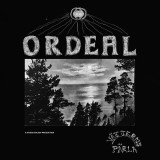
As an important agent of Gothenburg’s underground scene, Dan Johansson has been a member of several experimental harsh noise projects such as Sewer Election, and lo-fi indie folk bands like Enhet För Fri Musik and Amateur Hour. Ordeal is his latest solo output, and might as well be ashes stuck in the blast furnace's edges of his last longing career. Not by means of summing up genres or as a culmination of his musical development, but as a profound music piece weaved in his own household.
With not much more than a synthesizer, Vätterns Pärla is built by trembling, dissonant drones stained in feedback and reverberation, thickly textured by the no-fi quality of the recording, depicting a menacing atmosphere congested with heavy fumes. In Johansson's words, Ordeal "takes inspiration from the early 80’s albums of Maurizio Bianchi, filtered through a Gothenburgian no-fi bleakness. It’s an album for inner voyage, childhood memories, and places that now lost purpose and meaning”.
There's certainly intimacy and nostalgia, yet a claustrophobic, hypnotic ambiance wraps it all up in a contained and narrow space. Emphasis is put on texture rather than on detail, on color rather than on progression, on suspense rather than on conclusion. Tension varies stiffly, sometimes a drone layer dismantles and the mood seems to filter, but ragged edges are never polished. We can feel the walls and the air, which although tarnished, can be breathed in somehow. It's as if waking up in a dark room and having to recognize it with our ears and tact, testing its dimensions and its surface. The stillness in the chamber is like the stillness between gasps of storms.
Without visible stars, an enclosed share of night sky hides a heavy load of industrial debris underwater. These remnants are maybe the pearl regarding the album's title. It all can seem like a dream, a grim mechanical soundscape deafened by hefty, yet sporadic winds. Soil strives to make something grow, but sprouting is kept suspended, held by a dismal presentiment. Long shadows on the ground prove that darkness is about to befall. And as these shadows stretch, almost about to break up in a loud strike, the noise turns white.