MADVILLA steps out on FUSE’s LOCUS imprint for the first time as he reveals his four-track ‘Old Flame’ EP.
London-based, American-born DJ and producer MADVILLA is a name making serious waves within house music at present, with his driving and slick take on the genre via the likes of ANOTR’s No Art, Seb Zito’s Seven Dials and his own Hot Wings imprint welcoming supporters in Jamie Jones, Stacey Pullen and FUSE head-honcho Enzo Siragusa to name just a few. Up next, the surging talent steps out on FUSE sister imprint LOCUS for the very first time, following his recent appearance at their London home of 93 Feet East, as he delivers his four-track ‘Old Flame’ EP this May.
Lead cut ‘So Bad’ kicks things off as crisp drums meet resonant stabs, sweeping melodies and infectious vocal coos, before introducing the spacey soundscapes and hypnotic pads of title track ‘Old Flame’, accented by Shyam P’s tripped-out vocals throughout. Next, ‘Orbit’ takes things up a gear as skipping percussion arrangements go to work beneath spiralling lasers and jacking hats, whilst closing track ‘Takeout’ dives into the afters as rubbery bass licks, hazy synths and rumbling low-ends take listeners on a warping UK-tinged journey through entrancing sounds.
Buscar:hypnotic sounds
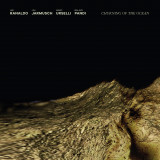
Extended Instrumental tracks from the nocturnal studio session of director and musician Jim Jarmusch, Sonic Youth's Lee Ranaldo, Balázs Pándi (Keiji Haino, Venetian Snares, Merzbow) and producer Marc Urselli (John Zorn, Mike Patton, Laurie Anderson a.o). All was recorded live and analog, and in the moment. Mixed, mastered, recorded and produced by Marc Urselli at EastSide Sound Studios, NYC, 2019. Artwork by Italian artist Sara D'Uva.
press quotes from the debut album (TR181)
Lee Ranaldo/Jim Jarmusch/ Marc Urselli/ Balázs Pándi is an egoless collection of ideas from four musicians who sound like they've been working together for an eternity - Daniel Sylvester, Exclaim! 2019
-
It’s exactly this unpredictability that makes the quartet’s evocative sounds thoroughly captivating - Poscic, The Quietus
-
A magical, hypnotic and somehow frightening album – Jazzthing 2019
For fans of AMON DÜÜL, CAN, FAUST, NEUBAUTEN, BRIAN ENO, CLUSTER, CULT OF LUNA, NINE INCH NAILS, MASSIVE ATTACK OR - Norwegian for "dizzy, confusing" - is the third album from Italian avant-rock trio OSLO TAPES, and the album keeps what the word promises: a dizzying ride through a feverish dreamscape of imaginary Norwegian highlands painted in cubistic shapes. Hypnotic basslines, repetitive drum patterns, new wave synths and psychedelic guitar textures covering the full width of the stereo room, all seamlessly woven into a gloomy Kraut - tapestry which sounds refreshingly_ modern, while paying tribute to the aged genre. Marco Campitelli, born and raised in Lanciano on the Southern Adriatic coast of Italy, founded OSLO TAPES in the early 2010s after a trip to the Norwegian Capital left him deeply impressed. Under the influence of this infatuation, he composed and produced OSLO TAPES' first record "OT (un cuore in pasto a pesci con teste di cane)" within a week in 2013. Supervised and supported by friend Amaury Cambuzat (faUSt / Ulan Bator), Campitelli's first attempt to capture the mystical vibe of Norway was released on DeAmbula Records (Ulan Bator, The Marigold, 7C). In 2015 he was joined by Mauro Spada and Federico Sergente (Zippo) and together they recorded OSLO TAPES' sophomore album "Tango Kalashnikov", also released on DeAmbula Records. "OR" is a much more collaborative effort for OSLO TAPES than the first two records. Next to Campitelli, the album was co-produced by Amaury Cambuzat (Ulan Bator) and James Aparicio (house engineer for Mute Records and mixing and mastering engineer for Depeche Mode, Mogwai, Nick Cave). During production, Campitelli became friends with Emil Nikolaisen of Serena Maneesh w h o guided him "through the Norwegian imagination". As a result, the record's title is also courtesy of Nikolaisen. During this journey spanning over eight songs, OSLO TAPES, completed by Mauro Spada (bass) and Davide Di Virgilio (drums and percussions) construct a dense and ever so dark atmosphere that is captivating, brooding and imaginative. After a spiraling takeoff with "Space is the place", we find ourselves floating weightlessly above the nocturnal Norwegian highlands through "Zenith" and "Kosmik Feels", an airy circulation of jazzy drums, pulsating bass lines and shimmering guitar clouds. We saddle up, gallop across the sky on "Bodo Dakar" and drift back into the night on "Cosmonaut". The trifecta of "Norwegian Dream", "Exotic Dreams" and "Obession Is The Mother of All" conclude this agitated fever dream journey. There is a sense of solitude in OSLO TAPES' compositions which makes it easy to imagine them as interstellar jam sessions between cosmonauts, each in their own isolated space capsule. Every spin of "OR" brings new discoveries: sometimes it is a noise that we did not notice before, sometimes a slight change in the drum groove, sometimes just a piece of the lyrics, meandering through our mental space. "OR" is a vertiginious journey to be remembered - and repeated. "The focus of Oslo Tapes is to harmonize the noise" says Marco Campitelli.
Lotus Wash drops his debut album on LBD Sounds, bringing a whole load of fresh material which came out from his experience as a session musician, and performing his experimental live sets around the Czech Republic. He connects the dots between classically trained musician and modular synth-head, working in Prague's DIY shop and creative community Noise Kitchen. The album spans across 6 original tracks of pure analogue bliss and live ideas, alongside three remixes from his closest allies, local producers Oliver Torr, Vision of 1994, and Hrtl.
The Field Theory was created during a period of deep fascination with quantum physics, with the tracks being conceptually and aesthetically inspired by some of its phenomena. Acoustically, it's mostly a slow and dark affair, with Lotus Wash only letting the light in very briefly when the sun is young (Magnetic Moment), keeping the shutter firmly closed for the rest of the record. His music does not rely on banging beats to drive it, instead letting intense grooves do the job from deep underground, just like on earth-shattering album opener Vacuum Fluctuation. He masters his craft of building atmosphere, a skill learnt during multiple collaborations with various Czech theatres. Of course, he lets the steam out occasionally, and always with devastating effect (Higgs Field, Casimir Force), but mostly choses to keep it capped, humming and hissing. When the sky clears, he opts for a minimalistic and hypnotic approach, only to disturb this peace with a killer bassline in one of the album's highlights – Spooky Action in A Distance – later re-imagined and re-electrified by Oliver Torr. Standard Model is anything but your standard techno, while Hrtl's remix of Magic Moment flirts with techno too, but on a dubbier and brighter side. Bringing the album to a close is Vision of 1994's downtempo take on the same track, finally letting you breathe out.
Leo Ceccanti should be a familiar name to all followers of the Claremont 56 label. Alongside sometime studio partner Gianluca Salvadori, he was responsible for two delightfully distinctive Almunia albums released on the label, 2011’s New Moon and 2013’s Pulsar. Both sets were filled with golden, sun-kissed sounds, psychedelic grooves and immersive, life-affirming soundscapes.
Now he’s decided to go it alone as Leo Almunia, delivering a debut album for Claremont 56 that’s every bit as alluring, wide-eyed and evocative as those he made with Salvadori. In keeping with his previous work, the album blends layered acoustic and electric guitars with toasty bass, dreamy synthesizers and grooves that variously touch on hypnotic house, chugging mid-tempo disco, sunset-ready Balearic beats and, on the glistening, life-affirming album highlight ‘Wishing Star’, loose-limbed jazz breaks.
What’s most significant about Ceccanti’s personal musical style is not the blend of stylistic influences he draws on – think psychedelic rock, progressive rock, jazz-rock, new age ambient and slow-motion disco – but rather the way he uses it to paint vivid aural images that genuinely linger long in the memory.
After opening with the duelling guitars and chunky dub disco grooves of ‘Sinking Fields’, Ceccanti sashays between magical moments of rush-inducing positivity, heart-tugging poignance and heady nostalgia.
Along the way, you’ll find numerous sonic highlights. On the intoxicating 21st century psychedelia of ‘Panerea’, jangling chords and eyes-closed psych-rock guitar solos ride a chugging, thickset electronic bassline, while ‘Il Cormorano’ is a metronomic, flash-fried workout rich in fuzz-tone guitar motifs, bluesy riffs and echoing instrumental touches.
He cannily joins the dots between Mid-West Americana and throbbing, psychedelic disco-chug on ‘Loveblind’, while ‘Minor Circle’ sits somewhere between Santana, the Pat Metheny Band and sunrise-ready Balearic blues. Arguably even better is the saucer-eyed brilliance of ‘Brillo De Luna’, where a dubbed-out electronic beat becomes enveloped in life-affirming acoustic guitar chords, exotic slide guitar motifs and string-bending solos. If John Lennon had ingested MDMA rather than LSD before writing ‘Across The Universe’, it would probably sound like this.
Then there’s the album’s crowning moment, closer ‘Can’t Hold a Lover’. A heart-aching, largely ambient instrumental that channels the loneliness and anguish felt by many of those separated from their nearest and dearest during the pandemic, it sees Ceccanti brilliantly wrap a variety of sun-bright guitar textures and solos around some of the loveliest synthesizer chords you’re every likely to hear. On an album packed with effervescent, mood-enhancing musical highs, it’s a rare moment of bittersweet bliss.
Recorded in 1973 in Rome - at Piero Umiliani’s "Sound WorkShop" – this one of the stand-out italian libraries to say the least. The whole record oozes a dreamy, mysterious, surrealist atmosphere enhanced by the vivid instrumentation that open a series of mesmerizing pieces which range from the gentle to the hypnotic. Eastern sounds, ritual horns and assorted metal banging and scrapping add to the whole mix for a landmark sound that will eventually evolve in delirious lysergic passages, hypnotic bass riffing, stoned funk beats, dubbed-out passages and Rino De Filippi trade-mark collage and sound manipulation.
"Vermintide 2 is a critically lauded first-person co-op action game that sees players smash, bash, and slice their way through the Chaos army and Skaven rat-men. Jesper Kyd (Assassin’s Creed, Borderlands, Hitman) amassed a broad palette of violent percussive sounds in creating his propulsive score. The music leans more towards this hypnotic array of scrapes, cracks, and thumps than it does the orchestral elements traditionally associated with dark fantasy — and is all the more distinct a score for it.
38 tracks (including seven bonus tracks not found on the digital release) have been specially mastered for vinyl, and will be pressed to audiophile-quality, heavyweight 180g discs in ‘Chaos Red’ and ‘Skaven Green’. These will be housed in a deluxe gatefold sleeve, with artwork designed by Fatshark Games, including ‘The Ubersreik Five’ front cover. "
Pure Donzin is the debut solo offering by Amsterdam - based Donald “Donny” Madjid - also known for his involvement in The Mauskovic Dance Band. On a pandemic - induced break from his usually busy tour ing schedule, Donny, armed with a 60’s drum machine and a few synths, made the most of his time off by experimenting with, and home - recording new sounds - resulting in a fully - fledged 9 - track album under the artist monicker Don Melody Club.
Whilst many of his local peers tend to turn to sounds further from home for inspiration, Madjid felt drawn to honour the literary and musical tradition of The Netherlands, following in the footsteps of classic and lesser known Dutch troubadours such as Ramses Shaffy (a cover of ‘Laat Me’ features on the album) and Ronald Langestraat. Don drew inspiration from bard - like storytelling and for the first time started writing in his native tongue, craftily forging lyrics that his rich tenor voice delivers with a sincerity that translates regardless of whether or not you understand Dutch. This intimacy is balanced evenly with synth and drum machine grooves, recalling Dutch New Wave legends Doe Maar - merging ear worm pop hooks and infectious danceable beats to these otherwise pe nsive ballads.
An ode to being immersed in the magic of the night in good company, an experience so lacking during the year in which the album was recorded, is the danceable Psychonauten. The track is a fine example of the glittering synthesis of infectio us musical atmosphere and lyrically rich straightforwardness Donny has mastered on the album.
The influence of The Mauskovic Dance Band, especially the bass driven, hypnotic groove - a signature sound Don guides in new directions - can be detected on Ver anderd. Somewhat of an anthem, it is laced with tones of 70’s West - African sounds, like fast percussive key arrangements and energetic backing vocals. An example of a more laid back tune on the record is Isabel, a cool nostalgic love song, a soother for a sentimental occasion.
Opening number Geen Nood (No Panic), lyrically nothing short of a ‘sign of the times’ track, paints a mindful setting of cycling past the Amsterdam canals, seeing the leaves in the water, and feeling your blood flow peacefully throu gh your veins - letting go of the need to be anywhere other than where you are. Be it through meditative observances, or hypnotic dance grooves, Pure Donzin is a record that tempts the listener to become just that: immersed in the moment.
Be With is delighted to present Jorge López Ruiz’s El Grito (Suite Para Orquesta De Jazz), eternal Argentinian magic released on CBS in 1967 that must be one of the most sought-after South American jazz LPs.
Living in Buenos Aires in the 60s, driven by creative impulse and rage Jorge López Ruiz used music as his platform to protest the Argentine military dictatorship: “I could never stand dictatorships, to be told how you have to think, what you have to do. Nor did I endure discrimination”.
A young López Ruiz had appeared on a television panel alongside writer, politician and philosopher Arturo Jauretche, criticising the Onganía dictatorship. Jauretche told López Ruiz “Now say it with music”. This was the deep inhale that lead to El Grito, literally “The Scream”. As López Ruiz later explained “Jauretche urged me that my protests should not remain in words and acquire the consistency of a work… but it was not so much what he told me but how he told me, what prompted me to make the work take shape, first in a live concert and then in a recording”.
As the police and military began resorting to kidnapping, torture and summary executions to quiet dissent, with depressing inevitability the artist community and their work were a particular target of the increasingly brutal regime. El Grito was banned not long after it was released and the majority of original copies were unceremoniously destroyed.
The work of a genius artist living under an opressive dictatorship, erased by the government of the time, this is buried treasure in every sense and it’s been a rare record for over 50 years. But it isn’t just being hard to find that has pushed up the prices of those few original copies that survived, this is a foundational record in the development of jazz in South America.
El Grito (Suite Para Orquesta De Jazz) is a showcase for Jorge López Ruiz’s skills as a composer and arranger as he leads a virtuoso orchestra of the likes of Mario Cosentino (alto sax), Baby López Furst (piano), Pichi Mazzei (drums), Gustavo Bergalli (trumpet), Oscar López Ruiz (guitar), Arturo Schneider (flute) and Jorge López Ruiz himself plays double bass on the fourth and fifth movements.
As the album’s sub-title explains, The album is a Jazz orchestra concept suite. Five movements, to be heard as a whole, that end where they begin.
“When I wrote it there was no history of a cyclical work in jazz. But I didn't notice that, I needed to express something and I did it. At that time they told me I was crazy, that such a thing was very difficult to do. But hey, I like challenges”.
Yet this is not challenging jazz. There are certainly avant garde, free jazz flourishes, but the hard bop characteristics make this a very accessible album: easy to listen to without being easy listening. López Ruiz’s love of film brings a definite cinematic feel.
The title movement opens the album in bombastic style. “El Grito” grabs you by the lapels and refuses to let go. Raw then controlled, it’s by turns stabbing then soothing, with rage weaved in and out of the elegant styles. “M.A.B. = Amor” is our favourite here. With a tense introduction and a patient build, a gentle sax sweeps in to lift everything up to meet the serene piano and soft drums. Elegantly paced, it moves back and forth between deep contemplation and a more urgent call and response between strings and horns. A near-eight-minute, slow motion marvel.
The second side eases in with the beautifully-titled “Hasta El Cielo, Sin Nubes, Con Todas Las Estrellas” (“Up To The Sky, No Clouds, With All The Stars”) a relatively brief mid-tempo piece featuring López Ruiz’s insistent bass notes high in the mix, and again blending the sublime with the emotive with its wild horns and tight rhythm section.
It’s followed by “Tendré El Mundo” (“I Will Have The World”) which also leads with hypnotic bass, but this time swifter, driven by crashing drums, rapid horn conversations and effortlessly cool piano flourishes. Rounding out the suite, “De Nuevo El Grito” (something like “The Next Scream” or “The Scream Renewed”) is a stylish closer. Whilst López Ruiz’s bass shifts the track along, the horns and piano are more restrained, yet no less stunning.
This Be With edition of El Grito sounds sensational, if we do say so ourselves. Working with audio from the original analogue tapes, the vinyl mastering chops of Simon Francis are on full show here in what he considers to be some of his best ever work for Be With. Pete Norman’s cutting skills have made sure nothing is lost. The tortured artwork has been restored here at Be With HQ as the finishing touch to helping this revered work find a rightful place in every protest art collection.
Advanced Nature is the second offering from Chicago’s indy electronic label Tres Dias. Completed during a global pandemic this project for Michael Fabiano and Juanne had been a long time coming. The two artists had spoken about wanting to release a record together after years of working side by side in Chicago’s underground music scene. So with the time available during the wildest year in modern history they succeeded in creating a life during wartime record. With hints of industrial, ebm, acid and techno fueling the record. The two aimed to thrust back a bold tapestry of sounds. From sonic visions of a dystopian future to shamenistic prayer infused house. The two managed to flush out a record that has a raw juxtaposition that's grounded in a solid foundation. Chicago based producer Michael Fabiano debuts with the slinking, somber industrial sounds of Aesthetic Existence. Plastic Process wades into warehouse territory with its swirling, hypnotic synth lines and brooding bassline. Juanne continues with Before Midnight, a static charged minimal acid track that stabs and reaches out for more. Finally Juanne ends with Design Your Drugs, a strictly dark room magic piece that unleashes ritualistic vocals and a raging bassline that doesn't hold back.
Crumb’s second album, Ice Melt, takes its name from the coarse blend of salts that you can buy from your local hardware store for $9.99. When sprinkled on your wintry steps, this mixture absorbs water and gives off heat, transforming the ice into a viscous, briney
slush and, eventually, nothing at all. Beginning with the dynamic chaos of “Up & Down,” and ending with Crumb’s closest thing to a lullaby, Ice Melt’ s ten tracks combine, like ice sculptures melting into a glistening puddle.
From the start, the group knew that cohesion was best achieved through plumbing their individual strengths— frontwoman Lila Ramani’s earliest songwriting, which catalyzed the group’s first two EPs; Bri Aronow’s knack for building (dis)affecting soundscapes; the hypnotic grounding of Jonathan Gilad’s drums, a Crumb mainstay; and Jesse Brotter’s distinctive bass playing, which subtly traces Ramani’s vocal melodies while providing an unrelenting pulse. These collective skills make Crumb a project of independent self-discovery, four creative minds converging around an idea that is always shifting and reforming.
Convening in Los Angeles to work with producer Jonathan Rado, Crumb tapped into atmosphere-creation like never before, building experimental compositions that are at turns head-nodding and surrealist, energetic and euphoric. Ramani characterizes the album as a “return back down to earth,” a deeply felt examination of “real substances and beings that live on this planet.” It is also the cultivation of road-worn musicians exploring brand-new sounds and thematic concepts, pushing themselves into territory they could never have anticipated five years ago.
After two UK #1 albums, 2 million album sales and an array of international acclaim, you might’ve thought you knew what to expect from Royal Blood. Those preconceptions were shattered when they released ‘Trouble’s Coming’ last summer. Hitting a melting pot of fiery rock riffs and danceable beats, they delivered something fresh, unexpected and yet entirely in tune with what they’d forged their reputation with.
The reaction was phenomenal, with highlights including 20 million streams, a premiere as Annie Mac’s Hottest Record and a run on Radio 1’s A-list and earned alternative radio support and media attention across the globe. In short, Royal Blood are primed to be bigger than ever before. That feat is set to be realised when they release their eagerly anticipated third album ‘Typhoons’ on April 30th via Warner Records.
When Mike Kerr and Ben Thatcher sat down to talk about making a new album, they knew what they wanted to achieve. It involved a conscious return to their roots, back when they had made music that was influenced by Daft Punk, Justice, and Philippe Zdar of Cassius. It also called for a similar back-to-basics approach to what had made their self-titled debut album so thrilling, visceral and original.
“We sort of stumbled on this sound, and it was immediately fun to play,” recalls Kerr. “That’s what sparked the creativity on the new album, the chasing of that feeling. It’s weird, though - if you think back to ‘Figure it Out’, it kind of contains the embryo of this album. We realised that we didn’t have to completely destroy what we’d created so far; we just had to shift it, change it. On paper, it’s a small reinvention. But when you hear it, it sounds so fresh.”
Those traits pulsate throughout the new single and title track. Kerr’s spiralling bass riff casts an hypnotic allure as it grows in intensity, while his vocals switch at will between a raw rock roar and a soulful falsetto. It’s underpinned by Thatcher’s thundering beats, his taut rhythms infused with groove-laden hi-hats.
After setting the tone with ‘Trouble’s Coming’, the album opens in breathless, take-no-prisoners style with the fierce metallic grooves of ‘Who Needs Friends’ hitting an early visceral peak. Royal Blood further reference their fresh array of influences by deploying vocodered vocals on ‘Million & One’ before dynamically switching between the biggest contrasts of their sound with ‘Limbo’. Already a fan favourite having been a regular during the duo’s 2019 shows, ‘Boilermaker’ lives up to its reputation and is more than matched by ‘Mad Visions’, which evokes a hyper-aggressive Prince. It ends with a final surprise in the shape of the stark piano ballad ‘All We Have Is Now’, a vulnerable and revealing reminder to live in the moment.
That song’s unguarded sentiments gives the album a redemptive finale. Whether directly or allusively, the album focuses on exploring the flipside of success that they’ve experienced. It comes from the realisation that success is much more complicated than it seems and that having the time to regain perspective is a precious commodity which becomes ever more elusive. The situation called for reflection and change, which Kerr addressed in Las Vegas. He downed an espresso martini and declared it to be his last drink, and soon discovered that his new-found sobriety would have a positive impact upon his creativity and life as a whole.
That new approach manifested itself in the duo’s decision to produce the majority of ‘Typhoons’ themselves. ‘Boilermaker’ was produced by Queens of the Stone Age frontman Josh Homme, the two bands having first connected when Royal Blood supported them on a huge North American tour. Meanwhile, the multiple Grammy Award winner Paul Epworth produced ‘Who Needs Friends’ and contributed additional production to ‘Trouble’s Coming’.
After two UK #1 albums, 2 million album sales and an array of international acclaim, you might’ve thought you knew what to expect from Royal Blood. Those preconceptions were shattered when they released ‘Trouble’s Coming’ last summer. Hitting a melting pot of fiery rock riffs and danceable beats, they delivered something fresh, unexpected and yet entirely in tune with what they’d forged their reputation with.
The reaction was phenomenal, with highlights including 20 million streams, a premiere as Annie Mac’s Hottest Record and a run on Radio 1’s A-list and earned alternative radio support and media attention across the globe. In short, Royal Blood are primed to be bigger than ever before. That feat is set to be realised when they release their eagerly anticipated third album ‘Typhoons’ on April 30th via Warner Records.
When Mike Kerr and Ben Thatcher sat down to talk about making a new album, they knew what they wanted to achieve. It involved a conscious return to their roots, back when they had made music that was influenced by Daft Punk, Justice, and Philippe Zdar of Cassius. It also called for a similar back-to-basics approach to what had made their self-titled debut album so thrilling, visceral and original.
“We sort of stumbled on this sound, and it was immediately fun to play,” recalls Kerr. “That’s what sparked the creativity on the new album, the chasing of that feeling. It’s weird, though - if you think back to ‘Figure it Out’, it kind of contains the embryo of this album. We realised that we didn’t have to completely destroy what we’d created so far; we just had to shift it, change it. On paper, it’s a small reinvention. But when you hear it, it sounds so fresh.”
Those traits pulsate throughout the new single and title track. Kerr’s spiralling bass riff casts an hypnotic allure as it grows in intensity, while his vocals switch at will between a raw rock roar and a soulful falsetto. It’s underpinned by Thatcher’s thundering beats, his taut rhythms infused with groove-laden hi-hats.
After setting the tone with ‘Trouble’s Coming’, the album opens in breathless, take-no-prisoners style with the fierce metallic grooves of ‘Who Needs Friends’ hitting an early visceral peak. Royal Blood further reference their fresh array of influences by deploying vocodered vocals on ‘Million & One’ before dynamically switching between the biggest contrasts of their sound with ‘Limbo’. Already a fan favourite having been a regular during the duo’s 2019 shows, ‘Boilermaker’ lives up to its reputation and is more than matched by ‘Mad Visions’, which evokes a hyper-aggressive Prince. It ends with a final surprise in the shape of the stark piano ballad ‘All We Have Is Now’, a vulnerable and revealing reminder to live in the moment.
That song’s unguarded sentiments gives the album a redemptive finale. Whether directly or allusively, the album focuses on exploring the flipside of success that they’ve experienced. It comes from the realisation that success is much more complicated than it seems and that having the time to regain perspective is a precious commodity which becomes ever more elusive. The situation called for reflection and change, which Kerr addressed in Las Vegas. He downed an espresso martini and declared it to be his last drink, and soon discovered that his new-found sobriety would have a positive impact upon his creativity and life as a whole.
That new approach manifested itself in the duo’s decision to produce the majority of ‘Typhoons’ themselves. ‘Boilermaker’ was produced by Queens of the Stone Age frontman Josh Homme, the two bands having first connected when Royal Blood supported them on a huge North American tour. Meanwhile, the multiple Grammy Award winner Paul Epworth produced ‘Who Needs Friends’ and contributed additional production to ‘Trouble’s Coming’.
Crumb’s second album, Ice Melt, takes its name from the coarse blend of salts that you can buy from your local hardware store for $9.99. When sprinkled on your wintry steps, this mixture absorbs water and gives off heat, transforming the ice into a viscous, briney
slush and, eventually, nothing at all. Beginning with the dynamic chaos of “Up & Down,” and ending with Crumb’s closest thing to a lullaby, Ice Melt’ s ten tracks combine, like ice sculptures melting into a glistening puddle.
From the start, the group knew that cohesion was best achieved through plumbing their individual strengths— frontwoman Lila Ramani’s earliest songwriting, which catalyzed the group’s first two EPs; Bri Aronow’s knack for building (dis)affecting soundscapes; the hypnotic grounding of Jonathan Gilad’s drums, a Crumb mainstay; and Jesse Brotter’s distinctive bass playing, which subtly traces Ramani’s vocal melodies while providing an unrelenting pulse. These collective skills make Crumb a project of independent self-discovery, four creative minds converging around an idea that is always shifting and reforming.
Convening in Los Angeles to work with producer Jonathan Rado, Crumb tapped into atmosphere-creation like never before, building experimental compositions that are at turns head-nodding and surrealist, energetic and euphoric. Ramani characterizes the album as a “return back down to earth,” a deeply felt examination of “real substances and beings that live on this planet.” It is also the cultivation of road-worn musicians exploring brand-new sounds and thematic concepts, pushing themselves into territory they could never have anticipated five years ago.
2LP on crystal clear vinyl. In these trying times, where intimacy and closeness are fraught with danger, Dans Dans (Dance Dance) brings you the sound of connection, communication, passion and togetherness.
In these trying times, where intimacy and closeness are fraught with danger, Dans Dans (Dance Dance) brings you the sound of connection, communication, passion and togetherness.
Dans Dans unites the talents of three of Belgium's most prolific music makers in Bert Dockx (Flying Horseman), Fred 'Lyenn' Jacques (Lyenn, Lanegan band) and Steven Cassiers (Dez Mona, DAAU). An utterly unique musical collective, the trio are set to release new album 'Zink' on the 23rd April via Ghent based independent, Unday Records.
From jazz, psychedelic blues and ecstatic noir soundtracks to spacey rock 'n' roll, Dans Dans cut their teeth on the cool jazz cafe scene in Flanders, Brussels with their sensational live performances and have since gone on to become a mainstay on the flourishing Belgian musical landscape.
Releasing their self-produced, eponymous debut album back in 2012, their highly distinctive, intuitive mix of musical styles and their ever-imaginative live shows caught the attention of discerning music lovers, journalists and promoters. A relatively unknown tour de force outside the Benelux region, Dans Dans have built a solid fan base since their inception with limited edition runs of early releases becoming collector's items among vinyl enthusiasts.
Well-received appearances at Cactus Festival, North Sea Jazz and Pukkelpop, as well as Gent Jazz, Ljubljana Jazz and Jazz Middelheim have confirmed their reputation as one of the most unique and exciting bands to come out of Belgium. In recent years, the group has been touring throughout Europe, garnering enthusiastic reactions beyond the Belgian borders as well. There's a case to be made that Dans Dans even played a key role in breaking down the wall between the Belgian jazz scene and the pop/rock circuit (years before pop journalists began referring to a New Wave of Belgian Jazz).
Opening with the moody noir rhythms of 'Cinder Bay', Dans Dans look to construct their own musical universe across 'Zink'. 'Naiad' unfolds into a devastating explosion of heavy feedback and wild, crashing drums before subtle electronica and baroque art-rock collide on 'Anemone' giving a good indication of Dans Dans' eclecticism. There's unquestionably a deep, underlying filmic beauty to the music, an evolving darkness and a perpetual sense of dread and paranoia. Elsewhere, 'Ravine' is intoxicating, provocative and uncompromising while the beatific 'Shell Star' is an infectious exploration of hypnotic grooves, atmospheric sounds and mind-bending melodies.
Producer Christine Verschorren (Philippe Catherine, Ivan Paduart) accentuates the music's wondrous fluidity throughout 'Zink'; the intriguing interplay; the subtle ties; the deep layering. Musical styles and influences are being blended organically and sublimated into what can only be called Dans Dans-music. "This is no fusion, no rock or jazz or ambient. This is the sound of the searching, intuitive human; of a timeless, mysterious dream; of the heart, the gut and the soul," says Dockx.
- 1: Just Imagine (Remix) :06
- 2: On A Summer's Day (Remix) 05:58
- 3: Tick Tock (Remix) 04:21
- 4: Things Like This (A Little Bit Deeper) (Remix) 0:58
- 5: I Can See Light Bend (Remix) 0:12
- 6: Tawkin Tekno (Remix) 04:59
- 7: Almost Nothing Is Nearly Enough (Remix) 0:58
- 8: Make It About (The Way That You Live) (Remix) 06:51
neon candy vinyl incl. 24"x12" poster
To Sonic Boom’s Pete Kember, re-imagining the past can lead to ways forward on life’s natural, interconnected path. In April of 2020, he released his first album in over 20 years called All Things Being Equal, a lush and psychedelic record full of interwoven synthesizers and droning vocal melodies, concerned with the state of humanity and the natural world. An entire year later, Kember has re-imagined his last release and created an album of self-remixed tracks called Almost Nothing Is Nearly Enough, inspired by the spirit of late 70s, early 80s records by artists like Kraftwerk, Blondie and Eddy Grant. His new album is hypnotic and moody, holding onto the existential framework of the original, but exposes a fresh, beating realm of possibility.
In his last album, All Things Being Equal, Kember told regenerative stories backwards and forwards as he explored dichotomies zen and fearsome, reverential of his analog toolkit and protective of the plants and trees that support our lives. His work is always complex, both in its instrumentation built using modular synthesizers, and with his attempts to observe the many variables that exist in the universe that are intrinsically connected. Kember takes his existential and musical curiosity even further in Almost Nothing Is Nearly Enough, explaining “how we interact now is especially critical.” Written while the world endures many environmental and human crises, the album is both a balm and a reminder to nurture our own relationships, both natural and personal.
Almost Nothing Is Nearly Enough includes remixes of six tracks from All Things Being Equaland two tracks previously released exclusively in Japan. The album opens just like the original, with “Just Imagine”in its remixed form. The modular synthesizer at its foundation sounds familiar, but as the song progresses it branches out into various veins of sparkling embellishments and deep humming to truly expand the world that the song attempts to envision. On the albums’title track “Almost Nothing Is Nearly Enough,” Kember’s instrumentation mirrors the interactions he wishes to inspire; synthesizers responding and building on one another, a conversation of sorts that the human world currently seems to avoid.
Almost Nothing Is Nearly Enough sets itself up to be a grooving, night-time record, while carrying on Sonic Boom’s sense of urgency to assess our relationship with the world. As Sonic Boom revisits his last album, he exposes the arteries and bones of his past work and shares its raw, exciting potential. The result is a re-textured and re-colored new set of songs, emphasizing Sonic Boom’s ability to make a sonically expansive album feel distinctly impactful for anyone who listens closely.
The Black Bones story is born out of a shared obsession for crate digging, collecting, and the playing of weird and wonderful music. Their releases so far have manifested in a highly-sought series of seven psychedelic disco 12"s - picking up numerous Record of the Week plaudits on the way. This considered curation and skill for pulling together far-flung sounds fully informs their first original material. These four bold and adventurous club cuts are a thrilling mix of straight-up house sounds, new beat, industrial, dub, sleaze and all the other good shit that comes with low-lighting and a heavy sound system. Kicking off with the full throttle 120 bpm of 'ABTS' - the duo take you straight to the 'floor with one of the wildest rides we've heard in some time. 'Denied' pulls us in to darker territory - chest pummelling bass, ominous high-pitched warnings and a chuggy acid throw-down finding us once again lost in that 5am dance floor fog. Over on the flip and 'Punghi' combines a hypnotic groove, dubbed out FX, percussion and a tripped-out Eastern breakdown. One for the more adventurous DJs and dance floor! The EP is closed by 'Gabi' which sounds like minimal gone maximal with an insane industrial switch-up. Enough words! As always, Black Bones let the music do the talking and this ambitious debut can quickly find itself shelved alongside the records that have fuelled their lifelong obsession.
Fresh off of their 2020 offering Adult Themes, El Michels Affair is back with a new full-length release. Titled Yeti Season, this newest album has everything we've come to expect from EMA's patented cinematic style of instrumental soul music. Where Adult Themes inspired a soundtrack to an imaginary film, Yeti Season brings us to a different place in time_with new inspirations. Taken with Turkish-styled funk and an almost Mumbai-esque take on soul, El Michels Affair offers us a different kind of drama and imagination with Yeti Season. If you've been following along, this shouldn't be viewed as too far a departure for El Michels Affair. The first single off of Yeti Season showed their hand back in 2018. A double-sided banger, that release brought the musical textures to the fore that dominate this record. The first song, titled "Unathi," is fully realized with the beautifully haunting-yet-hopeful vocals of Piya Malik, formally of 79.5_another Big Crown artist. Singing in Hindi, Piya's ethereal voice is telling us to work and strive together toward progress. Even if you don't understand her language, you can still hear the urgency of purpose, creating a lasting vibe that sits on top of it all. Leon Michels explains that Piya had a vital influence on this record: "When Piya started singing in Hindi, she had a different voice, a different tone. I knew we had to do something together." And so Piya appears on three other songs on Yeti Season: "Zaharila," "Murkit Gem," and "Dhuaan." Each providing particular signatures to the album. "Zaharila" is a building and changing love song punctuated by blaring trumpets, driving drums, and Piya's pleading lyrics. While the more upbeat "Murkit Gem" opens with a fuzzed out, Wu-Tang-esque baseline that buoys Piya's stylings. The psychedelic guitar and Piya's changing tones and textures singing about an all-consuming love are what pushed "Dhuaan" on to the second single from Yeti Season. There is also a vocal appearance from Shannon Wise of The Shacks, yet another Big Crown artist. Her song called "Sha Na Na," lies more in the familiar EMA vein: melodic, hypnotic, soulfully visual. But between Shannon's airy singing, the jumpy baseline, moody vibes, the active drum lines, it sounds like a pensive walk home after a strangely dramatic night. So what is Yeti Season? It could be more of a feeling than an actual place or time of year. It's a heavy album_as evidenced by the signature musicianship and dramatic vocal expressions. But it's also a hopeful record, with phrasings, textures, and chord changes that hint at something better_or fuller_coming our way. You hear it in songs like "Ala Vida," with its stabby, pulsing chords laying a bedrock for EMA's bright, atmospheric horn lines. Or even in "Fazed Out," which leaves you with a feeling of determination, a striving for resolution even though the driving, march-like song structure should accompany some conquering army. This persistence has to come from the fact that Leon Michels and company finished this record during the lockdown. It was a tough and troublesome time. But look at what has come of it: Yeti Season_a record of high and heavy drama, but also one of hope and promise. It may take a year like 2020 behind us to find hope in a winter big footed creature like a Yeti, but that's where we are.
Dalmata Daniel presents the new album by Dutch West Coast mid-veteran Roberto Auser as an opening act in the label's LP series that comes with colored sleeve and limited to 200 copies. Also includes a hand-numbered riso-print as insert.
Auser (born Derk Reneman) has been into cinematic (or b-videomatic) electro for more than a decade now, with releases on Viewlexx, Pinkman, Gooiland Electro/Enfant Terrible and more, ranging from atmospheric and hypnotic to tight and grim, but always loaded with a vision of a storyteller. In a Dutch way, for sure. Though Second Sun is, again, an audiovisual trip, that's not the primary concept here - it's probably the purest album-like experience of Robert Auser so far, presenting most of his characteristics and sounds, and also new elements, still, all are coherent and organic parts of Reneman's projective language of electronics.
La Morte Viene Dallo Spazio (Death Comes From Space)’s name is taken from an a late 50s Italian sci-fi b-movie, and this ensemble’s cinematic odyssey of sound is like Argento, Fulci and Bava taking acid with Magma and Jodorowsky. A solid departure from anything you will be listening to right now, La Morte Viene Dallo Spazio’s free-form journeys leave you in unknown astral territory and bake your brain. Composed of an open gathering of players, the Italian quintet combines flavours of Middle Eastern scales, droning theremin and guitars. Their flute-player’s frantic, progressive and abstract elements tear open the cosmic gates like Jethro Tull in a Giallo nightmare. The first album, ‘Sky Over Giza’, released in 2018, was a synth laden soundscape full of ancient mysticism and alien apparitions which gained them a rabid following in their home country of Italy and beyond. La Morte Viene Dallo Spazio’s second album on Svart Records; ‘Trivial Visions’, is a wholly unique experience. An enthralling listen in a confluence of sound and ritual atmospheres that craft a both vibrant and hypnotic effect with nods to black metal and extreme ends of the sound spectrum. This vivid, dreamy and cosmic material will transfer the listener to vast sonic dimensions where one could easily lose the way back to reality. Is this Jazz, Stoner-Rock, Psych-Rock or Progressive Rock? This is La Morte DalloS pazio and they’re in a universe of their own. Start receiving your deathly visions when the new album drops via Svart Records on the 26th of March 2021.