»White Noise« is a cooperation project between raster-media and the Max Planck Institute for Empirical Aesthetics. Artistic sound projects generated in the context of the scientific research institute will appear at irregular intervals. The themes and questions of empirical aesthetics research are taken up, questioned or challenged in very different ways. »White Noise« is conceived as an audio archive of the MPIEA artists in residence which records the artistic works on vinyl and documents the respective concepts and working methods in text form.
Victioria Keddie’s »Pshal P’shaw« (white noise #002) is a multimedia exploration delving into phonetic expression’s auditory and rhythmic nuances of phonetic expressions through an amalgamation of text, sound, video, data, and customized learning software. Drawing inspiration from the painter and architectural theorist Hermann Finsterlin who made speculative architectural renderings, the project originated during a residency at the Max Planck Institute of Empirical Aesthetics in Frankfurt in 2023.
The project’s engagement with the sonic landscape of the eight diphthongs in US English, documented through recorded sessions at EEG labs with participants of diverse international backgrounds, is not just a technical analyses. The applied script for the recording session, infused with a contemporary Western US dialect, ventures beyond, exploring the primal essence of phonetic expression and its impact on the oral landscape of mouth, throat, and tongue.
This work focuses on the spoken aspect of language: the art of oration, conversation, and mimicry. It reflects the beauty of our perpetual change, speaking directly to our humanity and the raw, tender moments of existence. It embraces the awkward, beautiful and vulnerable essence of our shared human experience.
Victoria Keddie is a multidisciplinary artist delving into sound, video, installation, and performance. Her work uncovers hidden narratives within ordinary artifacts and spaces, emphasizing their role in shaping our collective story. The examination of acoustic phenomena and language is a recurring theme in her artistic work. Keddie’s current projects navigate the acoustic complexity of language and dialects.
For over a decade, Keddie was co-director of E.S.P. TV, exploring the televisual medium for performance and sound. Keddie has performed and exhibited internationally. Recent fellowships include the NYSCA/NYFA for Music/Sound (2022), the Max Planck Institute for Empirical Aesthetics (2023), and the Bemis Center for Contemporary Art, Sound Art and Experimental Music Fellowship (2024).
»White Noise«, 40 p. magazine English/German, vinyl LP, cardboard box
Search:i am x
- A1: Leningrad Jazz Ensemble - Aria
- A2: Sh Jazz Quintet - Delilah
- A3: Josef Blaha Trio - Inter Mezzo Forte
- A4: Csaba Deseo Ensemble - Beyond The Csitári Mountains
- A5: Manfred Ludwig-Sextett - Skandinavia
- B1: Anatoly Vapirov - Mystery
- B2: Zbigniew Namyslowski - Piatawka
- B3: Andrzej Trzaskowski Quintet - Synopsis (Expression I)
- C1: Tomsits Quartet - Dhrupad
- C2: Nicolai Gromin Quartet - Corrida
- C3: Valery Kolesnikov, Vyacheslav Novikov, Vladimir Molotkov & Alexander Christidis - Rainbow
- D1: Tone Jansa - Goa
- D2: S+Hq - My Girl (And Other Things)
- D3: Pege Jazz Workshop - Hungarian Folk Song
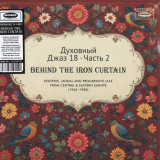
One of the most politically charged terms of the 20th century, the Iron Curtain was a metaphor for political and cultural division. In a post-war telegram Winston Churchill referred to the fault line that ran through Europe between East and West as "an Iron Curtain is drawn down upon their front. We do not know what is going on behind".
In this two-part album, as far as jazz is concerned, we will showcase, describe and celebrate exactly what was 'going on behind'. We see that music is the power supreme, with the ability to transcend all barriers, be they physical, political or metaphorical.
Our liner notes illustrate the complex and contradictory history of Soviet jazz, and the tracks we've chosen cover the key period of the early 1960s to the 1980s. It was during these dark years of the Cold War that the Soviet Union and its satellite states produced a number of outstanding artists playing in a variety of styles. The impact of modernism, from hard bop and Latin to modal and cool jazz, had found its way through cracks in the curtain. The deeply-felt ancestral strains of traditional European folk music were combined with the exciting new and progressive sounds of the West, and a radical, intoxicating brew was created that no amount of guns, tanks or polonium tea could overcome.
We chronicle the triumph of jazz at a time of extreme geopolitical conflict. What went on behind the Iron Curtain in these countries was once mysterious and unknown to the West, but the perseverance of their artists provided sound and light amid the secretive, dark days of the communist-capitalist standoff. There was no end of life-affirming spiritual jazz behind the Iron Curtain.
"Whether it's by improvisation in the African-American jazz tradition, or by a village kobza player standing on top of a damn hill - he feels connected to the stars."
Azzurro 80's new album—his first ever on LP—is a beautifully faded Polaroid that, like a true flashback, plunges listeners into the heart of the 1980s. It's a sonic journey that captures the essence of a decade, distant yet vividly etched in our collective memory.
The Roman producer unleashes his sonic vision with even greater intensity than before, weaving through dreamy italo-disco, electric atmospheres, soundtrack-worthy synth-pop, and boogie-funk grooves.
Each track opens a window onto an era the artist experienced only fleetingly as a child, yet he evokes it with a powerful and refreshingly original touch. Much like a classic library music record, these tracks conjure a wealth of images, scenes, and visual sequences—perfect soundtracks for imagined films or evocative advertising campaigns: as seductive as a perfume ad, as desirable as a car commercial, and brimming with the bright future the 80s promised.
It's no surprise that cinematic references spring to mind even before musical ones. The album echoes the dreamy atmospheres of early 80s Italian cinema, particularly films like Carlo Verdone's "Acqua e Sapone" (1983) and Carlo Vanzina's "Amarsi Un Po'" (1984). Meanwhile, flashes of New Romantic aesthetics and hints of electro-funk transport you to a neon-lit dance floor where a DJ is spinning the vinyl copy of Flashback.
Azzurro 80's new album is a vibrant, energetic work, balancing groove and emotion in equal measure and infused with a sense of nostalgia that feels remarkably contemporary.
Available May 9th on LP and Digital from Four Flies Records!
Electronic musician and singer/songwriter originally from Greece, ELLI, has called London home for the past 15 years, balancing her career as an automotive engineer with her passion for creating music. After collaborating
with several producers as a vocalist, she released music on renowned labels like Connected, Anjunadeep,Objektivity, and Truesoul. In addition to her successful collaborations, ELLI's solo journey began with her debut
single "Race My Heartbeat" on Prins Thomas’s Horisontal Mambo label.
She followed up with "Just for Me & You", released as part of Steven Julien's DJ Kicks mix on iconic !K7 Records.
Channelling a broad range of influences, her solo project explores the intersection between ambient/electronic ethereal soundscapes and a more upbeat side that leans towards cosmic synth-pop.
Human Engineering LP started with a performance photograph, taken during the first stages of the global Coronavirus lockdown in a disused municipal building in Easthampton, Massachusetts. Taking the form of a proficient and emphatic high-jump, with a recording of its sound, and a spoken text, amplified through the strings of an abandoned piano occupying the same space. The resulting photographic and sound documents formed the basis of an audio correspondence between Rick Myers, Andy Votel and Sean Canty which was recorded and arranged between Easthampton Mass. and Manchester from 2018 to 2024.
Hikari to Kage is the next chapter in the story of Wabi Sabi Audio Imprint, diving into the experimental and ambient realms of electronic music.
This beautiful album comes from the hands of Sarah Wreath, a German artist whose unique approach to sound exploration captured our hearts the moment we saw her live at Monument.
The album It's a narrative, an introspective journey that doesn't tell you what to feel but gently guides you toward your own perspective.
Three incredible remixes by DJ Hi-C, Pianeti Sintetici, and Jorge Fons bring their own vision of Sarah's music, each artist weaving their own story within Sarah's framework. Like Yin and Yang, light and shadow exist in balance, defining the beauty of the other-this is Hikari to Kage.
Mary Yuzovskaya unveils the 'The More You Know' remix EP on her vinyl-only Monday Off imprint, releasing 6th June 2025. Featuring reworks from Spain's ORBE, 90s US Techno legend Mike Parker, Judas Records' JUDAS, and Duna founder CONCEPTUAL.
First up, Token and Mote-Evolver artist and Orbe Records boss ORBE remixes 'Ittiologia', maintaining the original's hypnotism by amplifying its eerie soundscapes for a loopy, deep space trip. JUDAS, shrouded in mystery yet known for his self-released EPs on his eponymous label and releases on ARTS, then revisits 'Micologia', completely reworking its tripped-out sequences into short bursts of droning synth work.
Tresor, Semantica, and Prologue's Mike Parker also provides a version of 'Micologia', with the US Techno lynchpin slowing down its rhythm while its weighted synthlines bubble up between its kicks and rides. Closing out this remix package, Italy's CONCEPTUAL reworks 'Ittiologia', building tension via the original's dark and shadowy atmospheres but switching up its low-end for an electric, late-night feel.
Mary Yuzovskaya is a storyteller. Through delicate, masterful curation and a deep knowledge of experimental, trippy Techno, she weaves together sonic journeys - with 'The More You Know - Remixes' making for another excellent addition to her Monday Off label.
The latest transmission on Samurai tunes into half-time intensity with a psychedelic edge courtesy of leading French practitioner Vardae. Applying techno hypnotism and cinematic atmospheres to his snaking beat constructions, the Lyon-based artist delivers a pitch-perfect exercise in mystical meditation that follows a natural path from the Ancestral Voices LP.
Since first emerging around 2017, Vardae has been determined to establish a sound unbound by genre restrictions. To date he's successfully moved between cult labels such as Non Series and Ooda while pivoting from linear 4/4 to crooked broken beat without disrupting his immersive, finely sculpted production style.
Alongside his releases, Vardae is also responsible for the ouroboros festival that takes place every year in central France. Last summer, after the dancefloor closed on the final night of the the event, fabled Dutch transcendental ambient group Son Of Chi made an acoustic concert around the campfire that cast a spell over everyone present. This experience formed the inspirational basis for Vardae's new EP, drawing on the instinctive power of insistent rhythm and the spiritual intrigue that lies behind subtly dissonant tones - shadows cast by refined, restrained synthesis flickering in the imagined light of the flames.
From the rattle of timbale on 'The Light Motion' to the laser-focused ripples that charge through 'Voices Of Dispossession', Vardae bends and shapes his drum work with exacting intention across this EP. Treading the line between 85 and 170BPM, he approaches fierce peaks in his tracks with an exacting patience, building to the arp-soaked climax of 'Flaming As A Cloud' and its ecstatic, melodic crescendo.
Proudly individual and drawing from the deepest of musical experiences, Vardae's latest statement promises similarly profound moments when these pieces come into contact with the right souls and the right sound in the right setting.
CS003, our next offering on wax, is home-grown. The Instruction EP features three original productions by label co-founder Niall Kelly complimented by a remix from the inimitable Carl Finlow. Niall’s debut EP showcases his prowess as producer harking to a pool of influences found in the sonic DNA of our hometown of Leeds, with added firepower provided by a legendary artist with close ties to the city.
Echoes of the rowdy bygone Mint Club ooze through the slappy tech house roller ’Section 1’ which opens the record. The chunky basslines retro synths and robotic vocoder connect the dots from Niall’s palette to the unmistakeable sound of Yorkshire Bleep on ‘Seven Wolves’. Carl’s treatment of ‘Section 1’ pivots into a darker, dystopian soundscape full of fizzing hi hats and dizzying synths that amalgamate into a dancefloor shaker that is unmistakably Finlow. The EP is rounded off by Groove Key, a track which serves up a special disorientating euphoria designed to be heard on large soundsystems and felt deep within your bones.
As most of us now live in a world saturated with information, this album feels like a reflection of how the modern world might sound if it were to process its own chaos through a unified scream. Hailing from the highlands of Bandung, West Java, a city where tradition and modernization intertwine in the rhythm of daily life, Xin Lie unpretentiously translates this cultural fusion into a sonically rich and rhythmically bold debut LP.
The artist’s roots in the hardcore and punk scenes reverberate throughout the album, though they’ve been reshaped and refined for the club. There’s an undeniable pleasure in experiencing the chaos Xin Lie channels—irregular beats, dynamic frequencies, and disjointed grooves collide and expand, each track laced with a sense of unpredictable energy. Yet even in its most chaotic moments, the music feels deliberate, its edges softened by a sense of compositional care.
The album reveals a strange duality: tracks that seem to beckon you to the dance floor but never quite let you settle there. Frequencies flicker and fluctuate in patterns that feel just slightly off-grid, as though resisting traditional structures. Yet, amidst the digital textures, Xin Lie weaves in organic sounds—snippets of native conversations or environmental noise—creating layers that feel both intimate and expansive.It’s fair to say this album extends far beyond the boundaries of today’s club music.
Picture this: you’re moving through your daily routines—mundane, repetitive—and suddenly, the music shifts your perspective. It reframes the ordinary as something surreal, as though it’s deconstructing itself in real-time, breaking into fragments or conjuring entirely new forms. Perhaps it’s best imagined as the soundtrack to a multi-sensory art installation or a performance staged not in a gallery but in an unassuming house down your street. Who’s to say where it might take you?
Tornado Wallace arrives at Test Pressing with the main mix being a beautiful long track that develops over ten minutes, starting with keyboard melodies before the tracks goes into the club zone. The ‘Symphony Mix’ takes the train on an ambient mix with the Bitter Beats bringing fin for the DJ squad.
"Bassland Prophecy" was a collection of Southern California musicians, including Alex Xenophon (Deep Squared), Stuart Breidenstein (formerly of Skylab 2000), Alissa Kueker (vocals), and Maxx Vaxx (Euterpre, Butterfly Garden).
The act nourished and grew the emerging LA scene and was a renegade force in live electronic improvisation. Rather than composing full tracks, Breidenstein stated over email that they built musical "ingredients" on the fly, syncing DOS and hardware sequencers mid-performance. Their unpredictable sets, from illegal raves to makeshift desert parties, resulted in electrifying, unforgettable sonic trips.
Recalling 90s LA, Breidenstein said: “Before the internet, finding a rave was an adventure. You’d get a flyer with a phone number, call it the night of the event, then drive—sometimes 100 miles or more from a map point to the actual party. The scene was raw and underground, built by music obsessives hunting for the freshest sounds.”
Two standout tracks from 1996—“Nine / Deeper” and “Blue and Purple Starship of Trust”—perfectly represent their unique genre-bending concoctions. Against all odds, the recordings survived and have been given new life, remastered and reissued on Bristol-based *Sex Tapes From Mars*. To produce the wizardry, their setup included a Juno 106, Yamaha FB-01, a Roland S330 sampler, and a Sequential Circuits Pro-One mono synth with external MIDI, and some guitar effects pedals.
“Nine / Deeper,” born from one of their many spontaneous studio sessions, became eerily intertwined with recurring appearances of the number 9 and black cats. So much was the frequency of apophenia episodes that paranoia began to take over the artists. Recorded in a makeshift living room studio, the 14-minute excursion traverses genres and tempos, beginning quick and hypnotic, and climaxing chuggy and drenched in adlibbed acid lines, culminating in a surreal and legendary live performance in Hollywood. The piece captures the raw spontaneity of their sets, crafted with vintage gear, cassette tape recordings, and, as always, a DIY ethos. Breidenstein states, “While improvised sessions often failed, when it succeeded, it was definitely a kind of infectious magic the listener would recognize.”
“The Blue and Purple Starship of Trust” is a deeply personal piece, named after when Breidenstein saw a heavenly blue morning glory on a walk around his neighborhood, and emerged from heartbreak and the following deep depression entrenching his life at the time. Recorded in a single take onto cassette tape, blending piano, guitar, and heart-rending vocals into an emotional, dreamlike journey. The track starts with a lush, cascading synth sound, bolstered up by rolling, reverbing downtempo drums. Using Sequential Circuits Pro-One throughout, the rippling synths and off-key piano licks act like pipetted droplets of water, all elements bleeding into each other in some kind of hallucinogenic swelling, reflecting Breidenstein’s fading relationship. The guitar part is a nod to Bill Withers’ “Ain’t No Sunshine,” and Breidenstein recalls just “bawling as the guitar line was recorded.”
Created in a time of artistic struggle, living in an old school bus, surviving on instant noodles while hauling their gear from venue to venue, and scraping by on gig money, these recordings act as rare artifacts of a movement that thrived on passion and perseverance, standing as a poignant testament to resilience. Though they released a handful of tracks, ranging from deep house to ambient to techno, their true legacy lay in their high-energy, genre-blurring live shows, which are powerfully encapsulated within these recordings and leave a lasting impact on underground electronic music today.
Little Simz hat ihr sechstes Album Lotus angekündigt, das am 9. Mai über Awal Recordings erscheinen wird. Gleichzeitig präsentiert sie die erste Single Flood, featuring Obongjayar und Moonchild Sanelly. Der Albumtitel Lotus steht für Simz als Symbol für Erneuerung und Wachstum – ein zentrales Thema, das sich durch die musikalische und inhaltliche Reise des Albums zieht und die komplexen Phasen des Lebens reflektiert.
Little Simz gilt als eine der spannendsten und visionärsten Künstlerinnen Großbritanniens – Musikerin, Geschichtenerzählerin und Kulturkuratorin zugleich. So wird sie das diesjährige Meltdown Festival in London kuratieren, wie zuvor schon Superstars wie David Bowie, Yoko Ono, The Queens oder David Byrne. Mit mehreren Brit Awards, MOBOs und einem Ivor Novello Award sowie einer beeindruckenden Diskografie aus Mixtapes, EPs und fünf von Kritikern gefeierten Alben erzählt ihre Musik ihre eigene Geschichte – und die einer ganzen Generation. Simz' Vorgängeralbum "No Thank You" Ende 2022 hat es hierzulande auf die #11 der Charts geschafft. Im Jahr 2023 setzte sie ihren Weg als gefeierte Schauspielerin fort und kehrte in der letzten Staffel des Netflix-Dramas Top Boy zurück. Little Simz' Auftritt auf der Pyramid Stage des Glastonbury Festivals im Jahr 2024 festigte ihren Ruf als unnachahmliche Live-Performerin.
Produced by Chez Damier and Ron Trent, the track was born in NYC, inspired by a transformative night at the legendary Sound Factory Club. In the early morning haze, as the echoes of basslines and rhythms lingered, the duo channeled the energy of the dancefloor into their studio. The result captured the raw, soulful essence of Deep House, reflecting the dancefloor communion that transcended time and space. To extend the feeling while honoring the original, Atjazz was invited to bring his jazz-influenced touc
With his deep understanding of groove and texture, he reimagined the track through two distinct remixes, each offering a fresh perspective. While both versions explore different nuances, they remain faithful to the track’s core essence, maintaining its hypnotic flow while adding a renewed vibrancy to the dancefloor. The duo of Chez Damier and Ben Vedren, proudly welcome French producer Fred H, one of the closest members of their extended musical family, to deliver a special remix of their track "Berlin Nights In Paris".
The result is a re-imagination of the track, introducing a percussive soundscape that drives the rhythm forward while offering a space for the listeners' minds to wander, immersing them in an atmospheric journey. This reinterpretation preserves the original’s essence while infusing it with new textures, dynamic movement, and a hypnotic flow that deepens its emotional impact.
This collaboration is more than just a remix. It’s a testament to the creative synergy within their musical circle, reinforcing the timeless spirit of house music while pushing it forward. er. Through his deep connection to what truly ignites the dancefloor, DJ SOURIRES maintains the emotive spirit of the original track, keeping its essence intact, yet injecting fresh dynamics that transforms it into a high-octane dancefloor heat track. His intricate, oscillating drum programming and masterful arrangement drive the rhythm forward, creating a compelling urgency that commands attention and movement. The remix swells with intensity, amplifying the hypnotic elements of the original while layering in driving percussion, rich basslines, and sharp, yet spacious synths that build tension and release in all the right moments. Every twist and turn in this remix is an invitation to lose yourself in the dance.
It’s a follow-up long in the making as Ukrainian artist Volodymyr Gnatenko re-enters Kalahari orbit.
Somewhere between submerged video game OST and ritual incantation, Mershiy LP recalls the finest psychoacoustic ambient dub the ‘90s had to offer. Less direct than the previous album, allowing space for IDM introspection and some proper contemplation. A mind-melt but keeping it widescreen and pretty meticulous throughout.
Imagined vistas shot in pristine 4K, impeccably crafted with close listening in mind. Repeated listens reveal more insectoid detail and a knack for detailed sonic immersion.
A 6-track zone-out where diaphanous texture makes way for ominous dread as the narrative unfurls. Balancing urges and inclinations with a fathomless churn of acid, trance, dub and pointelist electronics.
Written and Produced by Volodymyr Gnatenko
Design by Susanne Janssen.
Mastered and cut by Anne Taegert at Dubplates And Mastering.
Distributed by One Eye Witness.
2025
- A1: Korogi ‘73 - Fushigi Song
- A2: Yas-Kaz - Hei (Theme Of Shikioni)
- A3: Yoichiro Yoshikawa - Tassili N'ajjer
- A4: Norihiro Tsuru - Farsighted Person
- B1: Geinoh Yamashirogumi - Theme Of Kaneda
- B2: Yoichiro Yoshikawa - Fiesta Del Fuego
- B3: Columbia Orchestra - Heart Beats / Theme For Andrew Glesgow
- B4: Kan Ogasawara - Gishin Anki
LP vinyl only release + 4 page liner notes (comes with hype sticker)
The percussive new age soundtracks of '80s and early '90s Japanese TV, anime and manga built alternative worlds and pushed boundaries in the process.
When Japanese composer Yas-Kaz left Tokyo for Bali in the mid 1970s he had little idea of how influential his trip would become. In studying the storied art of gamelan, the jazz and avant-garde percussionist opened a door to a world of sound and rhythm left behind by the West. The music he and his contemporaries made would become known as new age. It also happened to soundtrack the golden era of anime.
Awash with money and with the prerogative to entertain the burgeoning middle classes, anime in the 1980s experienced a creative and commercial boom. Not constricted by generic expectations, production houses such as the now renowned Studio Ghibli were able to experiment liberally with both form and content. And with it came the space for composers to be similarly adventurous.
TV, Anime & Manga New Age Soundtracks 1984-1993 charts this moment across eight tracks spanning classics of the genre and previously unknown rarities. The collection brings together music that found kinship in electronic and acoustic instrumentation, often combining spiritual or environmental themes with percussive, varied and highly refined syncopations of non-Western musical traditions.
Among them is ‘Kaneda’ by Geinoh Yamashirogumi, the shape-shifting group of self-styled musicians, anthropologists and computer scientists that masterminded the soundtrack to game-changing dystopian anime Akira - and with whom the sound, tuning and breakneck speed of Balinese gamelan has become indelibly entwined.
Reflecting the desires of the era to reach beyond Japan’s borders, many of the soundtracks featured were commissioned for narratives set in distant lands or alternative worlds. There’s violinist and composer Norihiro Tsuru’s ‘Farsighted Person’, written for The Heroic Legend of Arslān, set in ancient Persia; Yas-Kaz’s own ‘Hei (Theme of Shikioni)’, for period sci-fi manga & anime series Peacock King - Spirit Warrior; and two tracks - Tassili N’Ajjer and Fiesta Del Fuego - from Yoichiro Yoshikawa’s soundtrack to NHK’s proto-Planet Earth series The Miracle Planet.
Such was the variety and quality of the music produced, if there is a guiding principle to the tracks collected here it is a sense of escapism and adventure that came with the confluence of modern electronic instruments and a fascination with percussive traditions.
Elsewhere, pioneering children’s TV composer Chumei Watanabe’s ‘Fushigi Song’ (performed by a vocal group Korogi ‘72) offers a trippy and infectious groove with sonic similarities to Don Cherry’s ‘Brown Rice’; little-known jazz-funk library group Columbia Orchestra showcase the best of Tokyo’s session musicians on ‘Hearts Beats - Theme for Andrew Glasgow’; before lawyer-turned-composer Kan Ogasawara closes out the compilation with a dramatic flourish on ‘Gishin Anki’.
Following on from Time Capsule’s acclaimed deep-dive into the world of manga & anime synth-pop in 2022, this vinyl only collection is set to broaden and diversify an understanding of how soundtracks shaped the sound of new age music in Japan for a generation.
Curators: Kay Suzuki, Rintaro Sekizuka (Vinyl Delivery Service)
Artwork: Tu-yang
*all original recordings from mid 90s Estonian released cassettes. Fascinating interpretations of the UK breakbeat and Jungle sounds recorded when the world felt like a much bigger place.
Since hearing the first breakbeats via the Finnish radio nightly shows introducing the burgeoning UK scene, Virko Veskoja, later head figure of Lu:k, was completely swept away by this new technological language that sounded like machines trying to initiate contact with people. The fluttering rhythm patterns, strings and vocal lines haunting the pathways of the infinite network. Like hip hop taken over by Skynet.
Reimagining it all in mid-90’s Estonia, a fresh and dirt-poor republic newly welcomed to the family of sovereign states on the outskirts of Eastern Europe, was challenging, to say the least. Finally, with the help of entry level music programs, custom-made soundcards and self-built computers by the other Lu:k-head Tõnis Valk, Lu:k took the first tentative steps in the history of Estonian jungle.
Eight Lu:k cuts have been compiled into a handy selection, a true sign of the times when uncertainty came with certain hope and optimism – new territories to chart, new frontiers to conquer. A time of innocence captured so sublimely in Lu:k’s music.
The compilation starts with menacing orchestration that sounds like the birth of a civilization, like in „2001: A Space Odyssey“, or the arrival of Godzilla, only to give way to sweeeet strings and the inimitable Minnie Riperton in “Lovin U”, combining all the essential elements of Lu:k in a track that has remained uncorroded by time since its inception in 1994.
The following “Demo 3” is its antithesis – fast and nervous, a harbinger of the darker days of neurofunk and techstep ahead. More in line with the social realities of the time, when something (or someone) could materialise out of thin air and attack you just as violently as those beats here.
“La:v” was Lu:k’s signature track throughout their brief career that went on only for a few years, 1994-1997. Lifted to heaven’s by Petula Clarks’s wonderful vocals, it perfectly captures the pure essence of creation. “I made it in my bedroom. Something like that just came out. Sorry”, says Virko apologetically.
From the themes of love we are led towards darker scenarios again with “Drunk-Drive”, a more vengeful cut reminiscent of early Ram Records’ nocturnal dangers, skylines shaped by basslines. Previously only available on the uber-rare “Raadiomaja valvelauas” CD compilation from 2005.
“In the Limelight” is lifted from their second album “Dreams in Drums” from 1996 (only released on cassette), and if it’s meant to address their new-found underground celebrity status in Estonia, there is surprisingly little elation here – the track rather consists of introspective strings and beats that sound almost melancholic.
Out of the remaining three tracks, “Proov2mix” and “Kadunud leitud” are the result of a treasure hunt amongst the old, obsolete harddrives – little nuggets that were condemned to obscurity until now. Between them, another vocal-led cut “010”, a non-album track only featured on two comps until now, is a strong reminder of Lu:k’s prodigious ability to handle vocal lines and morph them together with their own weaving synthetic melodies, strong pads and commanding beats.
Lu:k’s music has been largely unavailable for the better part of this century, with original tapes and CD’s changing hands for a small fortune. This vinyl release couldn’t come at a better time, bringing a seminal chapter of Estonian dance music’s mythical history to light again, both for the old-school acolytes and new converts.
All music by Virko Veskoja
In an ever-expanding musical universe, Azymuth have long existed as a celestial giant, drawing countless artists, musicians and followers into their orbit. Marking fifty years since their 1975 debut album Azimuth, their new album Marca Passo proves that the band’s alchemic brew of Brazilian jazz-funk and cosmic samba soul remains as vital as ever, as the group honours the profound legacy of their departed founders.
Recorded in Rio de Janeiro, Marca Passo is the first full-length release since the passing of founding drummer Ivan "Mamão" Conti in 2023, following the earlier loss of keyboardist José Roberto Bertrami in 2012. Alex Malheiros, the sole remaining original member, sees his stewardship of the band’s musical legacy as his spiritual duty. He is joined by the equally devoted Kiko Continentino (Milton Nascimento, Djavan) on keyboards, who has been with the group since 2016, and new recruit Renato Massa (Marcos Valle, Ed Motta) on drums.
Yet since their earliest recorded music, Azymuth have always been far greater than the sum of their parts. The "three-man orchestra’s" unmistakable sound is rooted in Brazil's MPB studio scene of the 1970s and early 1980s—a time when artists blended traditional Brazilian rhythms with global jazz, rock, and emerging psychedelic and progressive elements. Marca Passo continues this legacy, seamlessly fusing Brazilian musical traditions with global influences while showcasing the exceptional musicianship that powers Azymuth's distinctive, multi-dimensional sound.
The album is produced by studio mastermind Daniel Maunick, responsible for Azymuth’s two previous studio albums, Fênix in 2016 and Aurora in 2011. Daniel’s credits also include albums by Marcos Valle, Sabrina Malheiros and Terry Callier. Azymuth also invited Daniel’s father, British jazz-funk royalty Jean Paul “Bluey” Maunick, of Incognito, to play guitar on a new version of Azymuth’s eighties classic “Last Summer In Rio”, in tribute to the song’s composer, José Roberto Bertrami. Equally, “Samba Pro Mamao” is a new composition dedicated to Azymuth’s beloved original drummer, Ivan “Mamão” Conti.
Credits:
Alex Malheiros - Bass, Acoustic Guitar & Vocals: 1,2, 3, 4, 5, 6, 7, 8, 9, 10
Kiko Continentino - Keyboards, Organ, Vocoder & Vocals: 2, 3, 4, 5, 6, 7, 8, 9, 10
Renato Massa - Drums & Vocals: : 2, 3, 4, 5, 6, 8, 9, 10
Ian Moreira - Percussion: 1, 2, 3, 4, 5, 6, 8, 9, 10
Sidinho Moreira - Percussion: 1, 2, 3, 4, 5, 7, 8, 9, 10
Dudu Viana - Keyboards & Vocals: 1
Victor Bertrami - Drums: 1
Mangueirinha - Repinique: 3
Jean Paul ‘Bluey’ Maunick - Electric Guitar: 5
Jose Carlos Bigorna - Soprano Sax: 9
Daniel Maunick: Additional Percussion, Synths & EFX: 1, 2, 3, 4, 5, 6, 7, 8, 9
Produced, Engineered, Mixed & Arranged by Daniel Maunick
Co-Produced & Arranged by Alex Malheiros
Executive Producer: Joe Davis
Recorded by:
Daniel Maunick & Leonardo Vieira @ Estúdio Nos Trilhos, Santa Teresa, Rio, Brazil
Daniel Maunick & Amadeu Signorelli @ Sigstudio, Niterói, Rio, Brazil
Daniel Maunick & Alex Malheiros @ Estúdio Basslab, Piratininga, Rio, Brazil
Mixed by Daniel Maunick @ The Sugar Shack, Carluke, Scotland
Artwork & Design: Tyler Askew
Space Dimension Controller (Ninja Tune, R&S, Dekmantel, Royal Oak) returns with a six-track EP that pays homage to the early 90s Artificial Intelligence era—think Warp Records, ambient techno, and the roots of IDM—but with his signature futuristic twist. While the foundation is unmistakably retrofuturist, SDC propels the sound into new dimensions, blending slow-motion acid lines, ethereal textures, and subtly propulsive rhythms for daydreamers and dancefloors alike.
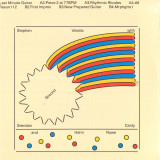
When you’re running a label, a demo occasionally comes across your desk that makes you reconsider everything you thought your label was all about. For Balmat, such was the case with this stunning album from Stephen Vitiello, Brendan Canty, and Hahn Rowe. It sounds like nothing we’ve released so far—and that very otherness opened up a whole new world of possibilities for us.
Fans of ambient, experimental electronic music, and sound art will be familiar with Vitiello, a New York native, long based in Virginia, who has collaborated with a cross-generational list of greats: Taylor Deupree, Steve Roden, Lawrence English, Tetsu Inoue, Nam June Paik, Ryuichi Sakamoto, Pauline Oliveros, and many more. On labels like 12k, Room40, and Sub Rosa, he has explored a wide range of minimalism, microsound, lowercase, ambient, improv, and other styles. But this album is something different. It may begin in ambient-adjacent territory, but it quickly veers off, and it just keeps zigzagging, taking on elements of krautrock, post-punk, dub, and the groove-heavy interplay of groups like Natural Information Society and 75 Dollar Bill.
This stylistic turn is thanks in large part to Vitiello’s choice of collaborators. “We’re coming from three different schools,” Vitiello says: “sound art, art rock, and punk rock.”
Active since the early 1980s, Rowe—a violinist, guitarist, and producer/engineer—has played with, or manned the boards for, a frankly jaw-dropping list of musicians: Herbie Hancock, Gil Scott-Heron, the Last Poets, Roy Ayers, John Zorn, Glenn Branca, Swans, Live Skull, Brian Eno, David Byrne, Anohni, R.E.M., Yoko Ono, and many more. But he might be most closely associated with Hugo Largo, a one-of-a-kind New York quartet—two basses, vocals, and Rowe’s violin—that in the late 1980s helped lay the groundwork for what would eventually become known as post-rock.
Canty, of course, is the legendary drummer of Fugazi, the visionary DC post-hardcore group, as well as Rites of Spring before them, and, currently, the Messthetics, a Dischord-signed instrumental trio with guitarist Anthony Pirog and Fugazi bassist Joe Lally.
Vitiello’s trio first collaborated on First, a 17-minute piece released on the Longform Editions label in 2023. Second picks up where the freeform drift of First left off, channeling the trio’s exploratory energies into more intentionally structured tracks and—in a real first for Balmat—some almost shockingly muscular grooves. “Sometimes my projects are more conceptually driven,” Vitiello says, “but I think this was more musically geared. I just wanted to open up the references and bring in an incredible drummer, bring in some melodies, and I’m sort of the center.” But his collaborators, he stresses, are “vastly creative in making anything I might suggest better.”
Like its predecessor, Second took shape in phases, shifting between improvisation and collage. Vitiello laid down the skeleton of the music at home, sketching out initial ideas on Rhodes keyboard and acoustic and electric guitar; he then fed the parts through samplers and his modular system, recording 10- or 20-minute jams. Once he had edited them into more structured forms, he hit the studio with Canty, who added not just drums but also bass and piano; finally, Vitiello took the results of those sessions to Rowe, who played violin, viola, electric bass, and 12-string acoustic and bowed electric guitar, and assisted in some of the final structuring and mixdown.
A few more surprises along the way: Reanimator’s Don Godwin, the studio engineer where Vitiello recorded with Canty, contributed what he calls “resonant dustpan”; and none other than Animal Collective’s Geologist, who just happened to be in the studio that day, sits in on hurdy gurdy on “Mrphgtrs1,” the album’s gorgeous, stunningly atmospheric drone closer. “I love these chance encounters,” Vitiello says. “Somebody I admire, a group I admire—that was an unexpected gift.”
An unexpected gift is a great way of describing Second as a whole: three veteran musicians venturing outside their usual zones and finding a new collaborative language together. The results can’t be neatly slotted into any given genre; they belong not to any given category, but to the spirit of conversation itself.