- A1: Renee - Change Your Style
- A2: Joe Simon - Love Vibration
- A3: Dennis Parker - Like An Eagle
- A4: Stereolab - The Black Arts
- B1: Bibio - Don't Summarise My Summer Eyes
- B2: Sbtrkt - Hold On (Feat Sampha)
- B3: Friendly Fires - Why Don't You Answer? (Exclusive Cover Version)
- B4: Sonna - One Most Memorable
- C1: Laurel Halo - Embassy
- C2: Dj Sprinkles - House Music Is A Controllable Desire You Can Own
- C3: Grouper - Invisible
- C4: Melody's Echo Chamber - Endless Shore
- D1: Cocteau Twins - Cherry-Coloured Funk
- D2: Slowdive - Shine
- D3: Nils Frahm - Over There, It's Raining
- D4: Benedict Cumberbatch - Flat Of Angles (Part 1 - Exclusive Spoken Word Piece)
Buscar:i love
The Frightnrs escort Daptone into the world of long-playing reggae with both the sweetest and the roughest record of the decade.
Crafted under the meticulous eye of black-belt reggae mastermind/producer Victor Axelrod (AKA Ticklah), Nothing More to Say is a rocksteady masterpiece the likes of which has not reared it's head since the golden era of Studio One. However, you'll find no imitation here - none of the faux-jamaican cliches of lesser reggae bands. Like all things Daptone, this record is above all soulful and honest.
Some things take time to happen, some things perhaps take a bit longer than they should but, finally, we are delighted to present an issue of the iconic, and sought-after, Brazilian album 'Alucinolândia' by Zito Righi e Seu Conjunto from 1969.
The trippy, surrealist 60s cover design with hands holding eyeballs is somewhat confusing. Rather than the stoner acid rock record that the art may suggest, 'Alucinolândia' is actually a quintessential 60s gem, mixing samba, MPB, bossa nova, quirky organ-led mod-jazz groovers and easy-listening crooners with a relaxed cool swagger.
Zito Righi aka Isidoro Righi, the Brazilian saxophonist, instrumentalist, conductor and composer brought together an illustrious cast for this masterpiece, including the much-loved vocalist Sônia Santos. Sônia delivers a masterclass on the album's opener, and maybe its crown-jewel 'Poema Ritmico Do Malandro’. The song is fierce and driving with an enticing funk intro that bursts into a Samba / Batucada workout. A real monster that works magic on the dancefloor. Sônia would later re-visit this track in 1971 on a recording for Copacabana Records, which Mr Bongo released as part of the Brazil45 series. The Brazilian songwriter Roberval penned three tracks on the record, including another highlight and the far too short 'Birimbau'; a catchy Brazilian jazzy-samba dancer at its finest. Other musicians include the drummer Fernando who also recorded with the greats Dila & Guilherme Coutinho.
The fact the record was released in 1969 meant it was probably a bit out of step with its contemporaries in comparison to the works of artists such as Os Mutantes, Gilberto Gil et al. The core of 'Alucinolândia' is that of a more optimistic early to mid-sixties party feelgood vibe rather than the angsty, psychedelia, and rebellion of the Tropicália movement. Over 50 years since its release, the work can finally be judged on its own merit; and what a beauty it is.
- A1: Marie Knight - That's No Way To Treat A Girl
- A2: Jack Montgomery - Dearly Beloved
- A3: J. B. Troy - Live On
- A4: Porgy & The Monarchs - My Heart Cries For You
- A5: Freddie Chavez - They'll Never Know Why
- A6: Clarence Reid - I'm Your Yes Man
- A7: Lou Lawton - Knick Knack Patty Wack
- A8: The Gentlemen Four - You Can't Keep A Good Man Down
- A9: Betty Moorer - Speed Up
- B1: The Masqueraders - Do You Love Me Baby
- B2: The Ivories - Please Stay
- B3: Leslie Uggams - Love Is A Good Foundation
- B4: Lord Thunder - Thunder
- B5: Maxine Brown - Let Me Give You My Lovin'
- B6: Billy Thompson - Black-Eyed Girl
- B7: Chuck Jackson - Hand It Over
- B8: Stanley Mitchell - Get It Baby
- B9: The Platters - With This Ring
WELCOME to the third volume in our Wigan Casino mini-series exploring the diverse playlist of the world's No.1 Northern Soul venue. The 23rd September 2018 marks the 45th Anniversary of the super club and we have selected 18 tracks that we hope capture the unique atmosphere of the huge ballroom and the mesmerizing dance moves that held us spellbound all those years ago.
WIGAN CASINO finally closed its doors in December 1981 after eight long years of weekly All-Nighters, during which time it came to define Northern Soul. The term had, of course, been coined years earlier, but it was the Casino Soul Club that established the style of music and the scene to the wider public.
The Casino transformed the Northern Soul scene into a mass youth movement with its own sound track, uniform, cultural icons and a 100,000 strong membership. In reality, the stereotype of moustachioed young men in baggy trousers and vest tops, festooned with sew-on patches, was actually quite short lived. Northern Soul was ever evolving and as the Seventies progressed so did the music and the fashion, embracing soulful-disco and jazz-funk. Today, 45 years on, it is still evolving and attracts followers from all over the globe to its international Weekenders and Festivals. Right On!
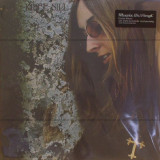
Judee Sill was an American singer and songwriter. She released two albums and partially completed a third album before her death in 1979. Sill encountered Graham Nash and David Crosby and toured with them for a time as their opening act, a year before the release of her debut album. She was hired by the Turtles to write songs, on which a few of them appeared on her debut album, such as 'Lady-O'. Two of Sill's biggest influences were Bach and Ray Charles.
Judee Sill's eponymous debut album of the same name was originally released in late 1971. Backing musicians include John Beck and Jim Pons from the Leaves. The majority of the album was produced by Henry Lewy, noted for his work with Joni Mitchell throughout the 70s. Graham Nash handled the duties for the single 'Jesus Was a Cross Maker' with his production designed to aim for radio airplay before the release of the album. Judee Sill featured Sill's voice in multiple overdubs, often in a four-part chorale or fugue. The songs are delivered in an acoustic style on guitar and, for 'Jesus was a Cross Maker' and 'Enchanted Sky Machines,' on piano. The songs on the album feature elements of folk, country, and gospel, but also strong classical influences.
REPRESS
5th album by the nine-piece instrumental collective from Amsterdam, Jungle by Night. Incl. downloadcard
After almost a decade of heating up dancefloors across the globe, Jungle by Night have reached manhood. In the process of creating their 5th album, the nine-headed collective melted years of passion, friendship, and influences from krautrock, dance, jazz, afrobeat together into new instrumental prose, fluently speaking the language of their instruments.
The band is an oddball ensemble within its own cosmos. A danceable and thundering live-act, connecting with crowds like no other, with beaming fun and energy along the way.
Black Vinyl[12,82 €]
Clear Vinyl[15,34 €]
Clear/Red Vinyl[26,68 €]
Red Marble Vinyl[25,00 €]
Super Session (1968) was conceived by Al Kooper and features the work of guitarists Mike Bloomfield and Stephen Stills. Kooper and Bloomfield had previously worked together on the sessions for the ground-breaking classic Highway 61 Revisited by Bob Dylan. For Super Session, Kooper recruited keyboardist Barry Goldberg and bassist Harvey Brooks, both members of the Electric Flag, along with well-known session drummer 'Fast' Eddie Hoh.
On the second day of recording, with the tapes ready to roll, Bloomfield did not show up. Kooper hastily called upon Stephen Stills, also in the process of leaving his band Buffalo Springfield. Regrouping behind Stills, Kooper's session men cut mostly vocal tracks, including 'It Takes A Lot to Laugh, It Takes A Train to Cry' from Highway 61 and a lengthy and atmospheric take of 'Season of the Witch' by Donovan.
The album peaked at #12 on the Billboard 200, and has been certified a Gold record. The success of this record opened the door for the 'supergroup' concept of the late 1960s and 1970s — Blind Faith, Crosby, Stills & Nash, and the like.
- A1: Ricardo Bomba - Você Vai Se Lembrar
- A2: Vânia Bastos - Tabu (The Sweetest Taboo)
- A3: Rosana Mendes & Grupo Veneno - Reague
- A4: Grupo Controle Digital - A Festa É Nossa
- B1: Villa Box - Break De Rua (Versão Longa)
- B2: Batista Junior - Cheira
- B3: Dado Brazzawilly - Saramandaia
- B4: Anacy Arcanjo - Toque Tambor
- C1: Fogo Baiano - O Fogo Do Sol
- C2: Dodô Da Bahia & As Virgens De Porto Seguro - Africamerica
- C3: Via Negromonte - Love Is All
- C4: Electric Boogies - Electric Boogies
- D1: Os Abelhudos - Contos De Escola (Edit)
- D2: Nanda Rossi - Livre Pra Voar (Edit)
- D3: André Melo - Onda De Amor
- D4: Região Abissal - Feminina Mulher (Instrumental)
Some Crate-digging Compilations Are Often The Result Of Someone Hand-picking Their Choice Favourites From Another Country's Musical History, Perhaps Unaware Or Uninvolved With Its Cultural Lineage In The Process. On Soundway's Latest Release - A Treasure Trove Of Synth Jams, Pop, Samba Boogie, Balearic And Electro From 1980 & '90s Brazil - The Tracks Are Picked By Millos Kaiser, One Half Of The Brazilian Duo Selvagem, Who Are At The Helm Of Throwing Some Of The Country's Best Dance Parties. It's A Rare Compilation That Offers Brazilian Music Actually Picked By A Brazilian.
Whilst Names Such As Ricardo Bomba, Villa Box, Fogo Baiano, Electric Boogies And Batista Junior May Not Be Household Names, They Tell An Untold, Yet Rich And Important Part Of Musical History In Brazil. The Release Also Covers A Decade That Has Been Intentionally Forgotten And Brushed Aside By Many In The Country.
Onda De Amor Is A Release That Is Loaded With Smooth Grooves, Bubbling Bass, Glistening Synthesisers, Funk Strutting Guitar Lines And Sheen Of Production That Undeniably Marks It Of Its Time. For Kaiser This Compilation Is About Reintroducing Music During A Period Of Reappraisal, Catching A New Wave And Hoping Contemporary Listeners Will Ride It With Him. the Idea Is To Do Justice To These Songs. Songs That Combine All The Right Ingredients That Should Have Put Them On
Radio Playlists When I Was Growing Up Or At Least In The Cases Of More Adventurous Djs'.
Millos Kaiser Is A Dj, Digger, Vinyl Junkie/dealer Born In Rio De
Janeiro And Living In São Paulo For The Past 8 Years. He Launched The Dance Party/club Night Selvagem With Partner Trepanado In 2010, Bringing Thousands Of Dancers One Sunday A Month To A Public Square In The Heart Of São Paulo.
In 1994, hip-hop was going through an at-times painful growth spurt. Since N.W.A.'s and Ice-T's ascent in the late '80s, the rap game was no longer owned by the East Coast. After the worldwide popularity of Dr. Dre's The Chronic in 1992, things were looking even worse for hip-hop's hometown. The East Coast / West Coast feud that would later indirectly claim the lives of Biggie and Pac was still in its infancy, but New York needed a shot in the arm. The hype behind young Queensbridge native Nasir 'Nas' Jones had been in full swing months before his smash debut album Illmatic, thanks to Columbia Records' promo machine. From his earliest appearance on Main Source's 'Live at the BBQ,' to his own accomplished debut 'Half Time' (as Nasty Nas, on the Zebrahead soundtrack in late 1992), it was clear that this kid was something special. In fact, the pressure on him must have been overwhelming at times. April 19, 1994 couldn't have come soon enough. And as soon as the first lines of 'N.Y. State of Mind' kick in, bolstered by perhaps DJ Premier's darkest beat of all time, the entire East Coast breathed a collective sigh of relief. God's Son had arrived. Backed by an absolute all-star cast of New York's top-shelf producers - Premier, Pete Rock, Large Professor, Q-Tip and a youngster named L.E.S. - the album never lets up. Serious to a fault, and lyrically dense to an extent that has possibly never been matched, the 20-year old Nas stood on the shoulders of his predecessors and proudly proclaimed, 'Don't f*** with the East... we are BACK.' Illmatic was actually a slow-burn, which might surprise fans that have come to its genius more recently. Despite an unheard-of '5 Mics' in The Source - despite an unwritten rule of never awarding classic status to debuts - it didn't go gold until early 1996, and didn't hit platinum status until late 2001. But when you dive deeper that shouldn't be a shock: like Black Moon and Wu-Tang's debuts, it was a dark, hard record, made for heads in New York, not teeny-boppers in Des Moines. There were no dance beats, no crossover love songs. Just boom-bap and rhymes, skills and heart.
Fast fünfzehn unerträglich lange Jahre ließ Grammy-Preisträger D'Angelo seine Millionen Fans auf ein neues Album warten - am 15. Dezember 2014 überrascht er die Welt mit der Veröffentlichung des Longplayers "Black Messiah", der AB SOFORT erhältlich ist. Die erste Single aus "Black Messiah" trägt den Titel "Really Love".
Die Aufnahmen zum dritten Longplayer des 40-jährigen US-Amerikaners fanden in den vergangenen fünfzehn Jahren in Zusammenarbeit mit seiner Band The Vanguard statt. Darüber hinaus waren Pino Palladino, James Gadson and Questlove an einigen der zwölf Songs beteiligt. An den Texten schrieben neben D'Angelo auch Q-Tip und Kendra Foster mit. Aufgrund der Qualität der Musiker konnte im Studio komplett auf digitale Plug-Ins verzichtet werden. Die Aufnahmen, Bearbeitung, Effekte und Abmischen erfolgten analog auf Band, zum größten Teil wurde altes (Vintage) Equipment verwendet.
Mit der Veröffentlichung von "Illmatic" etablierte sich Nas schnell als Hip-Hop-Ikone und hatte sich zu einem der angesagtesten Künstler in der Musikszene gemausert. Das legendäre Album wurde von den Kritikern als eine der beispielhaftesten Hip-Hop-Aufnahmen aller Zeiten gelobt. "Illmatic" trug auch viel zur Wiederbelebung der New York City Rap-Szene bei und ist heute eines der meistgefeierten und einflussreichsten Alben in der Geschichte. Nas stammt aus der Queensbridge Nachbarschaft von Long Island City, einer Hochburg der Rap-Künstler seit den 80er Jahren, und verkaufte weltweit über 20 Millionen Alben, ein Botschafter für die Hip-Hop-Kultur auf der ganzen Welt.
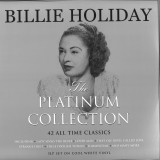
- A1: Lady Sings The Blues
- A2: That Ole Devil Called Love
- A3: All Of Me
- A4: I'e Got My Love To Keep Me Warm
- A5: Good Morning Heartache
- A6: Body & Soul
- A7: These Foolish Things
- B1: God Bless The Child
- B2: You Go To My Head
- B3: Blue Moon
- B4: The Very Thought Of You
- B5: Autumn In New York
- B6: Fine & Mellow
- B7: What A Little Moonlight Can Do
- C1: Solitude
- C2: I Can't Give You Anything But Love
- C3: The Blues Are Brewin
- C4: All Or Nothing At All
- C5: All Of You
- C6: I'm A Fool To Want You
- C7: Lover Man (Oh Where Can You Be?) (Oh Where Can You Be?)
- D1: Sormy Weather
- D2: Easy Living
- D3: Love Me Or Leave Me
- E3: Pennies For Heaven
- E4: Summertime
- E5: My Man
- E6: When You're Smiling (The Whole World Smiles With You) (The Whole World Smiles With You)
- E7: Ain't Nobody Business If I Do
- F1: Carelessly
- F2: Gloomy Sunday
- F3: I Cried For You
- F4: Can't Help Lovin' Dat Man
- F5: The Man I Love
- F6: Trav'lin Light
- F7: I'll Be Seeing You
- D4: I Loves You Porgy
- D5: It Had To Be You
- D6: One For My Baby (& One More For The Road) (& One More For The Road)
- D7: The Way You Look Tonight
- E1: Strange Fruit
- E2: A Fine Romance
- A1: Hello Baby
- A2: I Got The Rhythm (Feat. Elliott Cole)
- A3: All My Love (Feat. Juliette Ashby)
- A4: (Searching For) Peace & Love
- A5: Take You Home (Feat. Joss Stone)
- A6: Nothing Personal (Feat. Elliott Cole)
- A7: The Bakery Girl Intermission
- B1: One World (Feat. Herbal T)
- B2: Fires Glow (Feat. Emma Noble)
- B3: Magic Together (Feat. Elliott Cole)
- B4: Walk In The Sun (Feat. Professor Elemental)
- B5: Now I Feel Good (Feat. Elliott Cole)
REISSUE!
Multi-instrumentalist, composer, producer and DJ, Adam Gibbons (aka Lack of Afro) is back in considerable style with 'Hello Baby' - his fifth studio record and the first Lack of Afro album to be released on his own LOA Records imprint. 'Hello Baby' is a genre-bending colossus of an album that is packed full of Adam's trademark multi-instrumental goodness, heavy drums, percussion-packed production, and ear for a good tune.
- A1: Ain't Gonna Stop
- A2: You Can't Miss Something That You Never Had
- A3: A Love That's Worth Having
- A4: Good To The Last Drop
- A5: That's What I Call Lovin' You
- A6: You Gotta Try
- B1: Let Me Give You The Love You Need
- B2: Lucky To Be Loved By You
- B3: Keep On Doin' What You Do
- B4: Your Love Keeps Liftin' Me Higher
- B5: Do What You Wanna Do
2022 re-press, 180g vinyl
A monumental force firmly rooted in the soul canon, Willie Hutch is most notable for recording two of the best Blaxploitation soundtracks, The Mack and Foxy Brown. Yet his legacy is much greater. Outside of Marvin Gaye, Stevie Wonder and Smokey Robinson, Hutch was arguably Motown's top male solo artist of the 70s. Prior to his association with Gordy et al, Hutch crafted his opening statements for RCA, two vital LPs that Be With Records is honoured to present today.His debut, Soul Portrait (1969), is an incredible slice of gritty, Southern-fried soul. Think Stax with a touch of Detroit sparkle. As a whole, the album demonstrates the self-contained act Hutch was, he wrote every tune on the album while also arranging and conducting for it. It features 11 timeless grooves, with a blend of beat ballads and undeniable dancers.
The album's centrepiece is undoubtedly the iconic, brooding minor-key masterpiece "A Love That's Worth Having". The album's most recognisable track, it's a towering ballad drenched in stylish, sliding horns and elevated by its stunning backing vocalists. It was famously sampled by Madlib to augment his soundtrack for Stones Throw's Our Vinyl Weighs A Ton as well as 9th Wonder for the Murs classic "Dreamchaser". Whilst one can understand these iconic beatmakers for leaning on the work of a master, you really need to own the track in its full, unedited glory.
Horn-heavy opener "Ain't Gonna Stop" is a funk-fuelled monster, Hutch's fatback vocal aided by a vicious drum 'n' conga rhythm whilst the bumping uptown soul of "You Can't Miss Something That You Never Had" anticipates the Motown-vibe that Hutch went on to create. Supple guitar licks propel the loping, head-nod breaks of "Good To The Last Drop" whilst "That's What I Call Lovin' You" features gospel piano and plaintive, tender vocal turn. Rounding out Side A, the blazing horns of "You Gotta Try" hints at the Blaxploitation that was to come.Ushering in the flipside, the thundering proto-70s-Motown rhythm of "Let Me Give You The Love You Need" segues neatly into the bouncing Northern Soul favourite "Lucky To Be Loved By You" whilst Hutch's gutbucket guitar stylings are all over the smouldering "Keep On Doin' What You Do". "Your Love Keeps Liftin' Me Higher" is not a rendition of the Jackie Wilson classic, rather, it's a powerhouse original that indicates where Hutch would take his sound on The Mack. Closing the album, the anthemic "Do What You Wanna Do" name-checks contemporary dance fads before instructing the listener to just get up and dance.Brilliantly supported by a heavy roster of studio cats who combined to create a winning combination of horns, strings, and gorgeous female background vocalists, Soul Portrait is as complete a soul album as the decade's very best. Tricky to find for a number of years, this lovingly produced reissue is certainly welcome. Paired with the soaring follow-up, Season For Love, these recordings shine a new light on the early work of a soul legend. Officially licensed and remastered for vinyl by Simon Francis, it has been pressed on audiophile 180g vinyl for the first time and features the original artwork and liner notes.
The innovative hard bop of Jackie McLean began to evolve and take on a harder edge as the early-1960s progressed. Inspired by Ornette Coleman, the alto saxophonist began to venture gradually into the realm of the avant-garde, but on his own terms, never fully relinquishing a grounding in a soulful sense swing and chordal structures.With his 1963 album Destination… Out! he created a masterpiece of inside-out jazz with a unique quintet featuring Grachan Moncur III on trombone, Bobby Hutcherson on vibraphone, Larry Ridley on bass, and Roy Hayes on drums. This Blue Note Classic Vinyl Edition is all-analog, mastered by Kevin Gray from the original master tapes, and pressed on 180g vinyl at Optimal.
Having already proven that he is capable of maintaining sonic quality and distinction over the course of a full original program, Chevel (a.k.a. Dario Tronchin) now makes his LP debut for Stroboscopic Artefacts. His other S.A. contributions (including the inaugural entry in the label's singular Monad series, the "One Month Off" EP, his participation to the label's five-year retrospective series) have already hinted that a more complete exposition of his unique inner world would surface, and here it is at last.
Over the course of his young career, Chevel has gained a mastery over several compositional elements: Polaroid-like slow melodic fades, sharp ricocheting beats, and simply making one's headphones feel like a viable means of physical transportation. All of these elements come into play shortly after the needle hits the grooves of (Track A1), a euphoric introductory track marked by a spectral panning sequence and by beats chopped with a culinary expert's sense of elegance. The drum kit sounds that feature throughout are used sparely but - either because of this or in spite of this - provide maximum impact upon the listener's nervous system. The almost 'far Eastern' use of 'block' percussion on (Tracks A2 and B1) perfectly complements the synthetic sheen produced by fuzz distortion, radio static and bandpass-filtered sound bites, taking us to a terrain where a palette of decay effects provides just as much aesthetic inspiration as the presence of technological advancement.
There is more than enough humor and playfulness at work here, too, helping to once again banish the persistent stereotype of the modern techno producer as a sterile technician: the queasy melody line, sliced-and-diced whistling and gelatinous bounce of (Track D2) evoke a child's wonderment at playtime more than they do the rarefied rigour of the laboratory. The less pulsating numbers like (Track C3) and the closing (Track D3) will engage the listener as well, being like short audio films of abiogenesis (i.e. spontaneous generation of life from 'non-living' material) taking place. These tracks are not so much 'interludes' or contemplative retreats from the action as they are enhancers of it, utilizing fluttering cycles of melody to engage in a kind of conversation with the more driving tracks. As to the 'driving' tracks themselves: the places that they drive the listener to are satisfyingly beyond customary experience.
In other words, despite Chevel's keeping the sonic toolkit and overall atmosphere consistent from track to track, there is a rich variety in the emotional affectivity on display here. The net effect is like a dream state that leaves strong impressions even though one can't pinpoint exactly why they are doing so (and which leaves one wanting to dive back into the dream pool and experience something similar again.) This is a talent that unifies the diverse constellation of Stroboscopic Artefacts producers, and one that makes Chevel in particular one to continue watching, listening to, and experiencing.
Wire (USA/Germany/UK) - ''Very intriguing, can/'t wait to dive in.''
Pitchfork (USA) - "Nice use of space, though do find the atmosphere a little one-note. Percussion really pops."
RBMA - "Thanks for reaching out. Having a listen now and the album sounds really good. Happy to give it a shout on RBMA Twitter whenever is best for you."
Paramount Artists (UK) - "20/10 top effort!"
NTS Radio (UK) - ''Nice IDM music with fine textures and bass frequencies..''
Groove (Germany) - ''Very interesting delicate structures. Suggested for review in Groove.''
Exclaim! (Canada) - "I like this. I'll float it to my team and I'll let you know if anyone's interested in covering it."
Big Up Magazine (USA) - "Absolutely epic album."
Vicious Magazine (Spain) - "Great sounds, for our september issue, thx a lot!"
Little White Earbuds (USA) - ''Fantastic album from Chevel. I have unfortunately been at work today without my usual headphones but even listening on very poor quality ones, the rich sonic mastery comes through. Can't wait to get home and listen to this properly.''
Cone Magazine (UK) - "Thanks for sending this through. Looks great, and always interested about a new Stroboscopic release. I'll let you know when something goes up."
New 9-track EP and inaugural release from Detroit label 100 LIMOUSINES.
A fixture in the Detroit DJ world—Todd Modes has spent the last decade quietly releasing music on Going Good, FIT Sound, Golf Channel, M1 Sessions, Still Music, Fat Finger Cosmic, and Detroit Electronic Quarterly. Inspired by the birth of his son and the death of his grandfather—New Life is a deeply personal meditation on the cycles of life and time. An examination of the past and present assembled from recordings spanning the last 20+ years—this EP is an outstanding representation of Modes musical depth and artistic purpose—a prime example of the quality to be expected from 100 LIMOUSINES in the future.