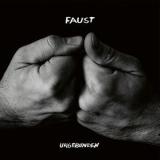
Over the years, Faust has become many things, distinct as fingers, yet united as the hand that forms the fist. This series of new LPs on Bureau B sees each living member of the legendary 1971-1974 line up present their own interpretation of the Faustian myth, working alone or with collaborators to create new material that reflects their contemporary vision of what Faust can be.
Over the years, Faust has become many things, distinct as fingers, yet united as the hand that forms the fist. This series of new LPs on Bureau B sees each living member of the legendary 1971-1974 line up present their own interpretation of the Faustian myth, working alone or with collaborators to create new material that reflects their contemporary vision of what Faust can be.
Over the years, Faust has become many things, distinct as fingers, yet united as the hand that forms the fist. This series of new LPs on Bureau B sees each living member of the legendary 1971-1974 line up present their own interpretation of the Faustian myth, working alone or with collaborators to create new material that reflects their contemporary vision of what Faust can be.
Over the years, Faust has become many things, distinct as fingers, yet united as the hand that forms the fist. This series of new LPs on Bureau B sees each living member of the legendary 1971-1974 line up present their own interpretation of the Faustian myth, working alone or with collaborators to create new material that reflects their contemporary vision of what Faust can be.
Over the years, Faust has become many things, distinct as fingers, yet united as the hand that forms the fist. This series of new LPs on Bureau B sees each living member of the legendary 1971-1974 line up present their own interpretation of the Faustian myth, working alone or with collaborators to create new material that reflects their contemporary vision of what Faust can be.
Over the years, Faust has become many things, distinct as fingers, yet united as the hand that forms the fist. This series of new LPs on Bureau B sees each living member of the legendary 1971-1974 line up present their own interpretation of the Faustian myth, working alone or with collaborators to create new material that reflects their contemporary vision of what Faust can be.
Meg Lui is a Northern California-born singer-songwriter, based in the Hudson Valley since 2015. In her songs, vivid lyrics and poignant melodies intertwine with a voice that feels both intimate and lasting. Through reflections on love, resilience, and the human experience, she offers listeners a window into her world.
A Californian by birth, Boston-educated at Berklee College of Music, musically raised in Brooklyn, and now settled in the Catskills, Meg has released music under the names M. Lui, Grover, and as part of the trio Ember Isles.
Her influences-ranging from Freddie Mercury, The
Cranberries, No Doubt, Sheryl Crow, and Bonnie Raitt-reflect her love for artists whose fearless individuality continues to shape her dynamic songwriting and performance.
Over the past two years, Meg has lent her voice to records including Sufjan Stevens' Javelin (2023), Sam Evian's Plunge, Denison Witmer's Anything At All, John Legend's My Favorite Dream, Keenan O'Meara's forthcoming record Bathe In The Everlasting Light, and Liam Kazar's Pilot Light. She performs regularly with Keenan O'Meara and Hannah Cohen and occasionally when the stars align, with the Hudson Valley country band Critter Bonus.
Across a glitching, glimmering constellation of 10 tracks, the record redraws the boundaries of her own subconscious through daring harmonic modulations, glitchy electronica, and frenetic orchestral sequencing. Deeply informed by Nordic folklore, it moves through a journey confronting body dysmorphia, control, and a staccatoing sense of self - reaching toward creative and emotional liberation through ethereal, amorphous avant-pop.
Within the work, the artist made the deliberate choice to take the focus away from her physical self - a protest, but also a tribute to the countless versions that form one person. "It's not about disappearing or being anonymous," she says, "more about loosening the grip of appearance, and letting the work exist without being defined by it."
Named for Bach's Inventions - played on piano growing up - Inventio carries a Baroque sensibility: trilling polyphonic textures and lush vocal harmonies rising above it all. Sonic touchstones include Björk, Elizabeth Fraser, and the kulning-style singing of Lena Willemark. Made across three years in Sweden, the album was built without Murex knowing it would become one. Collaborators including Pelle Westlin, Isak Hedtjärn, and Elvira Anderfjärd gave the work what Murex calls "extra arms." All music videos are directed by Murex herself.
"Making this album gave me back authority and power. I hope it's just as freeing to listen to."
“Tough love is a sonic dark romantic experience. Each song represents a different form of “Tough love”. A dark romance in Hollywood. Growing up in LA at the age of 17, now being 23 I’ve experienced a lot and learned so much about my self and love itself. All of these songs are written either about my own experiences, lessons and who I am today or inspired by a fantasy I’ve created in my mind and heart. These love songs tell the truth of what I desire and crave deeply, a love that is exciting and passionate and impossible to find in Hollywood, writing these songs are the closest I’ll ever get to living it. Words are spells. Songs are spells. I love writing about love because though it’s fleeting in those moments while I’m creating the record, its true. I live in it, feel it on my skin, close my eyes, taste it and make it real. Whether it’s something I want, something I had, something I’m missing, it is mine all the same. Tough love is about the darkest and toughest parts of love, songs for those themselves who are tough to love, and songs for love that’s tough to find.
Sonically I was inspired by, Massive attack, Portishead, Fleetwood Mac, Eagles, Alice in chains, nostalgic music from the 70s through the 90s and add my own dark twists. ” - Nessa Barrett
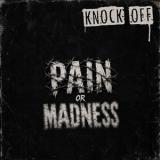
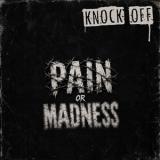
Knock Off präsentieren ihr siebtes Album "Pain Or Madness" _ ein Album, das nicht nur für die Band selbst in diesen Zeiten wichtig ist. Die Welt ist völlig verrückt und es scheint, als habe die Menschheit vergessen, wie man Konflikte löst, miteinander spricht und den Kreislauf der Selbstzerstörung stoppt. Und wenn die Schläge im persönlichen Umfeld näherkommen und das Schicksal zuschlägt, kann man schnell den Boden unter den Füßen verlieren. Wut, Hass, Aggression zusammen mit Depression, Lustlosigkeit, oder halt "Pain or Madness". Auf dieser Grundlage entstand Knock Offs siebtes Album. Punkrock war schon immer am stärksten, wenn die Zeiten düster sind, und dieses Album ist einfach eine musikalische Therapie und Offensive gegen alles was Dich zerstört. Knock Off spielen immer noch klassischen UK Oi! und Punkrock und haben ihren eigenen Stil über die Jahre perfektioniert, sorgen dabei aber stets aufs Neue für Überraschungen. Mit jeder verdammten Note spürt man, dass die Songs direkt aus dem Herzen kommen! Ein Schlag ins Gesicht, ohne Rücksicht auf Empfindlichkeiten, in Songs wie "Go Fuck yourself". Dieses Gefühl, wenn Hilflosigkeit in "Violence" umzuschlagen droht. Kein Diskutieren oder Erklären über Punk, denn "My Punk!" (is whatever I choose). Wenn die Jungs auf die '70s football youth' oder 'Good Times' zurückblicken, sind keine weiteren Erklärungen nötig, das ist und war deren Leben, hier gibt es nicht zu romantisieren. Selbst heutzutage kann man noch seinen Ärger rauslassen, und Knock Off tun das perfekt mit Songs wie "Anger is an energy" oder der dreckigen kleinen Selbstironie-Hymne "Middle age rage". "Pain or Madness" enthält ein Dutzend neuer Songs: Energiegeladene Punkrock-Hymnen mit großartigen sing-along Refrains und aggressiven Shoutings. Solch ein Album nach sieben Platten rauszubringen, ist ein auf keinen Fall zu verpassendes Statement! Zwei unterschiedlich mehrfarbige Vinyl-LP-Versionen erhältlich
Knock Off präsentieren ihr siebtes Album "Pain Or Madness" _ ein Album, das nicht nur für die Band selbst in diesen Zeiten wichtig ist. Die Welt ist völlig verrückt und es scheint, als habe die Menschheit vergessen, wie man Konflikte löst, miteinander spricht und den Kreislauf der Selbstzerstörung stoppt. Und wenn die Schläge im persönlichen Umfeld näherkommen und das Schicksal zuschlägt, kann man schnell den Boden unter den Füßen verlieren. Wut, Hass, Aggression zusammen mit Depression, Lustlosigkeit, oder halt "Pain or Madness". Auf dieser Grundlage entstand Knock Offs siebtes Album. Punkrock war schon immer am stärksten, wenn die Zeiten düster sind, und dieses Album ist einfach eine musikalische Therapie und Offensive gegen alles was Dich zerstört. Knock Off spielen immer noch klassischen UK Oi! und Punkrock und haben ihren eigenen Stil über die Jahre perfektioniert, sorgen dabei aber stets aufs Neue für Überraschungen. Mit jeder verdammten Note spürt man, dass die Songs direkt aus dem Herzen kommen! Ein Schlag ins Gesicht, ohne Rücksicht auf Empfindlichkeiten, in Songs wie "Go Fuck yourself". Dieses Gefühl, wenn Hilflosigkeit in "Violence" umzuschlagen droht. Kein Diskutieren oder Erklären über Punk, denn "My Punk!" (is whatever I choose). Wenn die Jungs auf die '70s football youth' oder 'Good Times' zurückblicken, sind keine weiteren Erklärungen nötig, das ist und war deren Leben, hier gibt es nicht zu romantisieren. Selbst heutzutage kann man noch seinen Ärger rauslassen, und Knock Off tun das perfekt mit Songs wie "Anger is an energy" oder der dreckigen kleinen Selbstironie-Hymne "Middle age rage". "Pain or Madness" enthält ein Dutzend neuer Songs: Energiegeladene Punkrock-Hymnen mit großartigen sing-along Refrains und aggressiven Shoutings. Solch ein Album nach sieben Platten rauszubringen, ist ein auf keinen Fall zu verpassendes Statement! Zwei unterschiedlich mehrfarbige Vinyl-LP-Versionen erhältlich
Released in August 2020 to much acclaim, as well as receiving many accolades as one of the best albums of 2020, Duval Timothy present Help (2021 edition).
This new and limited edition will be released independently by Duval Timothy’s Carrying Colour label, fashion brand and shop. It comes on 2 x 140g milky clear vinyl, with new 2 x 12" square posters and shrink-wrapped.
Help was recorded in London and Los Angeles, and reveals the artists' experience traversing the meshes of the music industry, mental health, YouTube self-help videos, and the healing he discovered through friendship and collaboration. Co-produced by Rodaidh McDonald (King Krule, The XX) and Marta Salogni (Bjork), with collaborations from Lil Silva, Melanie Faye, Vegyn, Desta Haile, Mr Mitch, Dave Okumo, and Twin Shadow amongst others.
Duval Timothy is a multidisciplinary artist, whose practise is centred around colour and involves the use of music, photography, textiles, painting, sculpture, design, cooking and video. In between delivering a celebrated cookbook for Penguin Books, and an interactive installation at Tate Modern Turbine Hall, Duval makes music, which is sampled by the likes of Solange and Loyle Carner and collaborates frequetly with cktrl, Vegyn, Kwes, and Mr Mitch.
out of Stock
Last delivered 4 years ago available to reorder, subject to availability
The debut vinyl release from New Jersey–born, Brighton-based alt rock weirdo Lonnie Gunn, a 7-track EP on flesh slice coloured vinyl strictly limited to 300 copies. Hip new music for gingers and children of divorce.
Dutch collective.multibeat return with OOO their third album and debut for Sonar Kollektiv. Rooted in Utrecht’s vibrant musical community, the trio of Boudewijn Pleij (keys), Thijs van Zutphen (bass) and Aron Smit (drums) blend hip-hop, jazz and beat culture into a groove-driven sound inspired by artists such as Robert Glasper, J Dilla and the contemporary UK jazz scene.
The three musicians first met while studying at the conservatoire in Utrecht, initially performing as a live backing band under the name Muddy Grease before evolving into a production-focused collective. Over the years they have built a reputation for connecting the worlds of jazz, hip-hop and contemporary beat music through an ever-expanding network of collaborators, while helping to foster a vibrant and experimental local scene around them.
Warm, collaborative and deeply groove-centred, OOO captures .multibeat at their most confident and expansive.
It is an album that honours the collective’s roots in jazz and hip-hop while continuing to push their sound into new and inspiring spaces, a fitting introduction to one of the most exciting young groups to emerge from the Dutch scene in recent years.
Following the 2023 album Young Hearts, produced in collaboration with Kenny Beats, 22 Durnham Dew finds Benny Sings turning inward for his most personal album to date.
After decades of touring and recording, Benny has embraced a more grounded, family-focused lifestyle. 22 Durnham Dew was created with and about his immediate family, featuring contributions from both his wife and daughter. Across its songs, Benny reflects on fatherhood, family life, and the everyday moments of adulthood.
Long celebrated as one of the most distinctive voices in modern pop, Benny Sings continues to showcase the warmth, craftsmanship, and effortless charm that define his work.
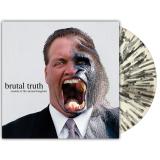
BRUTAL TRUTH's defining 1997 album is one of Grindcore's most essential releases! Now fully remastered by Brad Boatright and available on vinyl for the first time in more than 20 years! "From startling exercises in savage brevity to disorientating psych-rock squalls, it’s grind with no brakes, no safety net and absolutely no fear." - Metal Hammer
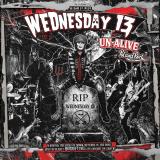
It was a hot day in the Polish summer, over 750,000 fans had crammed their way into the Czaplinek-Broczyno Airfield for the 2025 Pol’and’Rock Festival, a storied tradition for over 30 years. The Duke of Spook WEDNESDAY 13, hot off his smash hit album Mid Death Crisis (lauded by Metal Hammer, Loudwire, Blabbermouth, and more), took the stage and proceeded to decimate onlookers with a career spanning set of both WEDNESDAY 13 and Murderdolls hits. Thankfully, for us all, they had the soundboard tapped, and now that explosive performance will live on forever as UnAlive at Pol’and’Rock 2025, dropping September 25, 2026 via Napalm Records. A bloody good time from beginning to end, certified for high speeds and ghoulish splendor.
‘The Art Of Loving’ is a tender, intentional deep dive into the many dimensions of love – romantic, platonic, self, and everything in between. The album features the singles, ‘Nice To Each Other’, 'Man I Need' and ' Baby Steps'
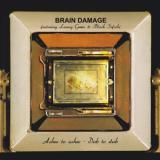
By 2004, dub had a history stretching back more than thirty years. This remarkable longevity can easily be explained by the evolving nature of this musical genre, which is constantly changing both artistically and technically, from Kingston to London, New York, and more recently Berlin, Paris, Lyon and Saint-Étienne. For example, it is worth noting that for some years now, in France and elsewhere, a good number of artists have been thinking in terms of dub from the outset, breaking free from the original Jamaican model, which involved drawing inspiration almost systematically from an existing vocal track. Thirty years on, with the release of their second album, Brain Damage aim to reconnect with this tradition. Recent collaborations with the two vocalists, Learoy Green and Black Sifichi, have indeed provided the ideal source material for the creation of five tracks, each rendered in their respective dub versions, thus forming an album with a symmetrical, even geometric character - from its very structure right down to its title: 'Ashes to ashes / Dub to dub'. At the heart of the project lies the astute choice of two guests, each operating in diametrically opposed spheres yet brought together for the occasion, thereby emphasising a certain 'unity of the circle': 'the unity of the circle'. Born of a genuine artistic vision, this geometric, symmetrical aesthetic-omnipresent in every detail of the album, both auditory and visual-complements Brain Damage's 'square' and robotic side, with its three-dimensional evocations. Always working in close collaboration with the very latest digital technologies. This brings to mind 'the balance of the cube'. Finally, the title itself, 'Ashes to ashes / Dub to dub', should be understood as a reference to the transience of all things in this world, against a backdrop of widespread, globalised, international, national and local crises_
First up in the series - Heavy Salsa and Latin Soul from Puerto Rico-born pianist Eddie Lebron and Orquesta Suave, the album that kickstarted Ghetto Records. Ghetto Records was Joe Bataan’s way to get over on “The Man” and out of the ‘hood, a bold move by an artist looking for independence and creative control in an industry that had exploited his talents and treated him like chattel. As Bataan puts it today, “Ghetto Records was part of my journey, a stepping stone to everything else that I’ve done. I learned enough that it enabled me to get out of the box with my thinking, it showed me how to deal with adversity.” Like many dreams and schemes born of the street, this one was audacious, perhaps even reckless to a fault. Hatched from desperation yet full of hope Ghetto Records came crashing down shortly after its inception. The seven albums in its discography languished out of print - until now. These are the definitive reissues of these albums, licensed from Joe Bataan, with his oversight and input into a 16 page oversize book by Pablo Yglesias that details Bataan’s larger-than-imagination life and his little Latin label that could.
A queer Black musician and daughter of Nigerian immigrants, Oladokun has become a vital cultural voice, writing songs that explore identity, faith, mental health, and social justice with honesty and restraint. Since her 2020 breakthrough, she has released two critically acclaimed albums, earned a finalist nod for Americana Artist of the Year, and saw her protest anthem "iseeamerica" named a finalist for the Recording Academy's Special Merit Award for Best Song for Social Change. Praised by The New York Times and Billboard for her ability to turn quiet introspectioninto lasting impact, Joy Oladokun has brought her music to national television on The Tonight Show Starring Jimmy Fallon, CBS Saturday Morning, and Austin City Limits, while her songs have been featured across major TV series. With collaborations spanning artists like Chris Stapleton, Brandi Carlile, and Maxo Kream, she is entering her next chapter by bringing an even broader, bolder sound to the table, continuing to prove herself as an artist who not only bends genre but bridges culture.
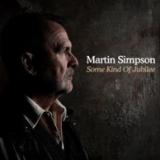
For acclaimed folk artist Martin Simpson, this release reflects not just a remarkable 50-year recording career, but over six decades shaped by song, tradition, and continual artistic growth. Yet this is not a retrospective, it's a forward-looking work, carrying the depth, skill, and passion of a lifetime into the present. Marking 50 years since his debut album Golden Vanity, Simpson describes Some Kind of Jubilee as "my best work to date." To realise this landmark project, he brings together an exceptional group of collaborators drawn from across his long and distinguished career. Among them are renowned pedal steel guitarist Greg Leisz, guitarist Zac Hobbs, cellist Liz Hanks, guitarist Louis Campbell, and double bassist Ben Nicholls. Together, they create a rich and textured soundscape that honours tradition while embracing fresh perspectives. Recorded at Groovemaster Studio in Santa Monica and completed in Yorkshire, the album blends newly written songs with reimagined traditional material and inspired reinterpretations from Simpson's own catalogue. The result is a deeply rooted yet vibrant collection that reflects both heritage and innovation. As Greg Leisz puts it, "This music has some profoundly deep roots - so dig in." With Some Kind of Jubilee, Martin Simpson honours his past while continuing to shape the future of folk music, reaffirming his place as one of the genre's most respected and enduring voices.
Nach der Breakout-EP „Discount Fireworks“ haben Roman Candle ihren Sound konsequent weiterentwickelt. Die jüngsten Singles zeigen eine Band, die emotionale Direktheit mit kontrolliertem Chaos verbindet; „Can We Watch Something Happy?“ basiert auf persönlichen Erfahrungen von Piper und unterstreicht den ungefilterten erzählerischen Ansatz der Band.
Originally released by CRI in 1974 and now reissued on vinyl for the first time by Death Is Not The End, Music by Earle Brown is a concise overview of the composer's landmark early experiments with graphic notation, open form structures and magnetic tape.
_______________________________
Times Five (1963): Govert Jurriaanse (flute), John Floore (trumpet), Harry Sparnaay (bass clarinet), Jaring Walta (violin), Roelof van Driesten (violin), Gerrit Oldeman (viola), and Harro Ruijsenaars (cello). Ton Hartsuiker acts as piano leader, with Earle Brown conducting the acoustic instruments alongside pre-recorded magnetic tape.
Octet I (1953): Composed, created, and realised entirely by Earle Brown using multi-channel magnetic tape.
December 1952: Composed by Earle Brown, solo piano by David Tudor.
Novara (1962): Govert Jurriaanse (flute), John Floore (trumpet), Harry Sparnaay (bass clarinet), Jaring Walta (violin), Roelof van Driesten (violin), Gerrit Oldeman (viola), Harro Ruijsenaars (cello), and Ton Hartsuiker (piano), with Earle Brown conducting.credits
Das fünfte Soloalbum von Jim James, dem Frontmann von My Morning Jacket, beschäftigt sich mit den psychischen Folgen des digitalen Zeitalters. Nachdem er ein umfangreiches Archiv mit Musikstücken entdeckt hatte, die er Anfang der 2010er Jahre für zwei große Film-Soundtrack-Projekte komponiert hatte, erlebte James einen plötzlichen Inspirationsschub und verwandelte diese Fragmente in ein fesselndes Werk voller gefühlvoller Psychedelia. „Wowed Out“, sein erstes neues Soloalbum seit acht Jahren, ist ein visionäres neues Werk von einem der experimentierfreudigsten Künstler der Rockmusik des 21. Jahrhunderts.
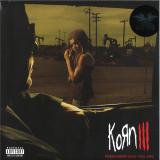
"Echtes Nu-Metal-Erbe auf Vinyl: eigenständige 1LP auf klassischem 140g Black Vinyl – das wegweisende 2010er Album, mit dem Korn zu ihren rohen Wurzeln zurückkehrten.
Legendäre Kollaboration mit Ross Robinson: Produziert vom Ur-Mastermind des Nu-Metal (u.a. Korn-Debüt, Life Is Peachy), eingefangen in schmutziger, ungeschönter Vintage-Produktionsweise ohne Pro-Tools-Politur.
Sammlerfreundliche Ausstattung: Hochwertiges Single-Pocket-Jacket mit 4/4-farbig bedruckter Innenhülle, Inlay-Design und exklusivem Marketing-Sticker direkt auf der Folie."
out of Stock
Last delivered 22 days ago available to reorder, subject to availability
The late sixties and early seventies spectacle of Jamaican Deejays taking their live performances out of the dance halls and translating them into hit records, not only marked the beginning of forty years of dance hall driven music on the island but also provided the original inspiration and template for the global dominance of rap and hip hop.
The art of deejay was now rightly recognised and the toasters or talk over artists advanced from introductions and interjections to stringing complete sets of lyrics together and riding the rhythm for the entire length of the song.
Deejays including U Roy, I Roy, Dennis Alcapone, Big Joe ,Little Joe and Prince Jazzbo who built their reputations working live on sound systems,now went one step beyond and moved on to become recording deejays with entire catalogues of hit singles and albums to their credit.
Throughout the seventies a whole host of mic men followed in their wake including Dillinger,Dr.Alimando,Clint Eastwood and Jah Stitch.
Talking records were not new, but 'talk over' records were...the repercussions of this uniquely Jamaican phenomenon would go on to reverberate worldwide...
Die britische Singer-Songwriterin und Musikerin Martina Topley-Bird wurde durch ihre Zusammenarbeit mit
den Trip-Hop-Pionieren Tricky und Massive Attack in der Musikbranche bekannt. Besonders hervorzuheben
ist ihr gefühlvoller Gesang auf dem Track ”Teardrop” von Massive Attack aus deren Album ”Mezzanine”,
der zu seiner atmosphärischen Wirkung beiträgt. Auch auf Trickys Debütalbum ”Maxinquaye” (1995)
hat ihre eindringliche Stimme den unverwechselbaren Sound geprägt. Als sie 2003 zu einer Solokarriere
überging, erntete sie mit ihrem für den Mercury Award nominierten Debütalbum ”Quixotic”, das bei Independiente Records erschien, großen Beifall der Kritiker. 2004 erweiterte Topley-Bird ihre Zusammenarbeit
und lieh ihre Stimme den Gorillaz-Tracks ”All Alone” und ”Kids with Guns” von deren Debütalbum ”Demon
Days”. Seitdem hat sie weitere Alben veröffentlicht, darunter ”Anything” (2004), ”The Blue God” (2008)
und ”Some Place Simple” (2010).
Martina Topley-Birds von der Kritik hochgelobtes und für den Mercury Award nominiertes Debütalbum
”Quixotic” wird zum ersten Mal auf Vinyl veröffentlicht. Diese erweiterte Ausgabe enthält das Originalalbum sowie drei B-Seiten und einen unveröffentlichten alternativen Mix der ersten Single ”Sandpaper
Kisses”. Sie wird auf Doppel-Vinyl gepresst und in einem Gatefold-Sleeve verpackt sein.
out of Stock
Last delivered 21 days ago available to reorder, subject to availability
Entre Nous is the debut album from Eden Aurelius. A beautifully poised collection for Short Span. A gorgeous showcase of her singular talent within a sparkling scene. Recorded in Brooklyn, NY, this is an innovative, and graceful body of music that feels truly contemporary.
This album felt important for us to have out in time for summer. Emerging out of the heat, a feeling brought alive with the sun. Music that evolves throughout seasons and carries a spectrum of emotional range.
Entre Nous is tight, but expansive. Its depth and complexity is languid but has gravitational pull. Like much of her work, this record feels so refreshing because its tracks are both sensory and illusory tones built in gossamer and transitory layers of satin. They have a remarkable sense of presence and pressure - floating rhythmically without sharp edges. There is guidance and gentle control that lead throughout the record.
The B side opens with “Ion” featuring Pontiac Streator. The song is formed out of a textural haze. A glistening, iridescent light appears, broken through fabric, projecting a blurred image onto the surface nearby. A hypnotic and evocative collaboration. The shared connection between the two artists’ command of rhythm and ambient language.
Mastered and cut by Mike Grinser at Manmade.
Art by Lucas Dupuy.
out of Stock
Last delivered 21 days ago available to reorder, subject to availability
Gi Gi describes his process as “dubwise sampledelia.” It begins with fragments and ends somewhere else entirely, destabilizing its source material until it stops pointing backward. A borrowed sound, looped and bent, eventually forgets where it came from; it stops referencing anything but itself.
This liquid sensibility shaped his earlier work, music that hovered between drift and propulsion, suggesting the dance floor without fully stepping onto it. Presence was implied, edges stayed soft. The center was always there, but diffused like mist on a screen.
With In Lieu, that center comes into focus. Half written in Texas, half in Australia, the shift isn’t simply geographic, but internal. The record moves with a coiled, anticipatory energy; the drums arrive with more force and the bass organizes the room instead of melting into it. It's dense with the feeling of more bodies in the frame. Textures still smear and refract, but they move around a clearer axis.
Where past records circled their core, these inhabit it, pulling closer to the body. “Some Of” and “Arque” lean into low-end pressure without abandoning his instinct for drift. "Pink Dirt" circles around mechanical drums and dizzying vocal chops, head-down and visceral. Elsewhere, voices gain newfound contour, materializing in “Downswept” with intimate musings and nearly forming a lead vocal on the title track before dissolving again.
In Lieu moves with a newfound confidence, compressing inward, sounding closer to the source of its own pulse.
Some recordings herald the future in ways that are impossible to see in real time. Teodros Makonnen With His Organ (ቴዎድሮስ መኮንን ከኦርጋኑ ጋር), by the artist Teodros Makonnen, also known as Teddy Mak, is one of those. Today, electronic sounds, synthesizers, and digital production are taken for granted in Ethiopian music, but in the early 1980s, they were novelties that polarized opinion. Even to this day, the story of Teodros Makonnen’s legacy has never been properly told. He played a decisive role in defining the sound of the digital era of Ethiopian music that emerged in the 1980s and beyond, both as a keyboard player and as a producer, songwriter, performer, and sound designer.
Ethiopian music was at a crossroads in the early 1980s. Much like music in the rest of the world, technology and automation heralded either a quantum leap in musical development or the annihilation of musicianship, depending on who you’d ask. The changes were incremental nonetheless, but with the benefit of hindsight one can clearly see that the changes meant different things in different contexts. Drum machines and electric organs came to replace many hotel bands because, all of a sudden, one musician could control drums, melody, and accompaniment. Teodros was one of the first musicians in Ethiopia to explore the possibilities this opened up.
Teodros’ father, Captain Makonnen Beri, was a chief pilot at Ethiopian Airlines and a music enthusiast at that. This would prove important to his development, as Makonnen brought back a piano from Germany, which would lead to the first steps in Teodros’ long musical career. Captain Makonnen’s work as Head of Flight Operations and as a pilot exposed him to the wider world that was far from commonplace for most Ethiopians. In a house where music captivated the whole family, the piano gave Teodros’ talent an outlet. Not only was a piano at home rare in Ethiopian households, his father also brought an Indian teacher to their home to teach Teodros and his brother, Captain Samuel Makonnen, music theory (solfeggio or ear training) and piano. Teodros and his youngest brother, the late great Dereje, a member of both the legendary Ibex Band and the Ethiopian reggae group Dallol, took up music from that point onward, with Teodros beginning to develop his proficiency at the age of eight. His father encouraged him to practice tirelessly at home, and Teodros later received musical schooling at the German School in Addis Ababa. His obvious talent led to studies and formal education at the Yared School of Music, followed by continued studies in American jazz at Northern Virginia Community College in Virginia. Teodros cut his teeth professionally in his mid-teens, not only as a keyboardist, but also as an arranger for the Wabi Shebelle and Dahlak bands in the 1970s. He mastered electronic sequencing early, rising to prominence through the midnight recording sessions held during the military curfew. The pressures imposed by the curfew required precise and disciplined recordings, and Teodros delivered just that. This, in turn, led to collaborations with iconic artists such as Mulatu Astatke, Aster Aweke, Menelik Wossenachew, Tilahun Gessesse, Mahmoud Ahmed, and Alemayehu Eshete. In those days, he sat in as a keyboardist with the Dahlak Band when Dawit Yifru took a hiatus to study in Russia, and also with the Ethiostar Band. He secured a residency at the Wabi Shebelle Hotel with the Shebele Band, together with Zelalem Tadese (drums), later succeeded by Elias Bekele, Mulugeta Hailu (bass), Teferi ‘Bibisha’ Mengesha (guitar), Kumelachew G/Selassie (trumpet), and Teshome Deneke (saxophone). A friendly competition developed between the bands associated with the Ras Hotel (the Ibex Band), Ghion Hotel (the Dahlak Band), and Wabi Shebelle Hotel (the Shebele Band). The music scene at Wabi Shebelle saw teenagers commanding the spotlight in an industry otherwise dominated by musicians of an older generation. At the Wabi Shebelle Hotel, Teodros met a diplomat from Saudi Arabia and later visited him at his home in Addis Ababa, a meeting that had unexpected musical consequences. The man owned a Yamaha double-deck keyboard. That evening, they recorded Teodros Makonnen With His Organ (ቴዎድሮስ መኮንን ከኦርጋኑ ጋር) in one take. This recording, a cornerstone in the early digital sound of Ethiopian music, came about almost by chance, simply because Teodros got the opportunity. Traditional Ethiopian songs were cast in a wholly electronic style. Once freed from backing duties, Teodros’ keyboards could explore dreamlike soundscapes that took Ethiopian music in new directions. Even though the cassette contained well-known Ethiopian songs, they were given highly original arrangements, performed on an electric organ with drum machine backing and rhythm patterns that left the listener with suggestive, lingering sounds. “Libesh Kabashen” (also known as “Anchi Bale Game”) and “Odu Gol Golesa” wrap you in the very stuff that dreams are made of. Originally released on cassette only, this recording exudes a mystique that surpasses even some of the most obscure Ethiopian recordings of the day. It remained more or less unknown outside of Ethiopia until now. Some of the tracks, like “Addis Fikir,” are permeated with an almost naive buoyancy, free-floating sounds that lost contact with the ground the moment they were conceived. Others, like “Meche New Hageren Yemayew” and “Lelitu Alnega Alegn,” carry a moodier, quirkier timbre, with pulsating rhythms in the background. Yet even the darker pieces contain an unmistakable wave, something essentially Ethiopian. If most recordings of Teodros’s contemporaries at the time were teeming with atmosphere, his songs seem instead at home in the stratosphere, almost ethereal. Some of the music here could be filed under “lullabies,” were it not for the recurring, almost brooding feeling that engulfs the listener on the aforementioned tracks. You could easily be forgiven for drifting into a blissful haze as the music washes over you.
Up to the advent of electronic music production, Ethiopia was totally dominated by big bands on the one hand, and small groups on the other. The former were tied to large institutions such as the military, the latter emerged from the entertainment industry, in hotel bars and nightclubs. These groups were commercially driven, and bands ultimately had to foster a mercenary approach to employment, albeit not to the passion for music. In the light of this, Teodros’ musical legacy can be seen in two ways. On the one hand, he is a key player in Ethiopian music from the 1970s onwards, leaving an indelible mark through hundreds of compositions and arrangements, including soundtracks for numerous documentary films and advertisements for different companies. On the other hand, the way he and others employed electronics brought Ethiopian music onto a fork in the road.
The replacement of traditional instruments with electronic equipment was seen as impending doom by some. Others, like Teodros, saw new avenues for performance, production, and creativity. Just as later producers like Abegasu Shiota of Admas, Teodros was a trailblazer who opened paths that it took Ethiopian music as a whole more than a decade to rush into. The hotel scene had already been pushed toward electronic music by financial necessity and cost-cutting. Today’s revived global interest in Ethiopian music from the seventies and eighties, alongside a broader resurgence, has changed the reasons for using digital means of music production. They have become tools for musical dreaming. This is where the dreaming began.
out of Stock
Last delivered 10 days ago available to reorder, subject to availability
Forest Swords' debut album 'Engravings' is back in print on vinyl and CD for the first time in years, newly remastered by Rashad Becker with previously unheard bonus tracks exclusive to this edition.
Created by electronic producer and composer Matthew Barnes, and originally released via Tri Angle Records, 'Engravings' received instant acclaim from the likes of Resident Advisor, Pitchfork, The Guardian and saw Barnes take his hypnotic live show across festivals like Sonar, Glastonbury, Unsound and Le Guess Who.
While much of British electronica is defined by its inner cities, 'Engravings' was recorded in Barnes' hometown on the banks of an ancient river in Merseyside, the album's earthy, organic soundscape reflected the landscape and climate: all silt and sandstone, woodlands and wind, with the ghosts of Liverpool's pop music and clubbing history echoing in the near distance.
The album was a prototype for a sonic vocabulary Barnes has expanded on over the next few years: in critically acclaimed studio albums ('Compassion' and 'Bolted' via Ninja Tune), collaborations with Massive Attack and Neneh Cherry, remixes for the likes of Bjork, as well as commissions for video games, ballet and film scores - of which he has carved a career as an in-demand composer and sound designer.
'Engravings' is a snapshot of an artist confidently defining their own language: a piece of work that distills influences like dub, ambient, rave, post-rock and psychedelia into an ancient-futurist musical vision that feels timeless and vital.
K-LONE returns to Wisdom Teeth with “Have a few days off” - a mini-LP of vivid, 4K club music that seeks out precious moments of release in an increasingly restless world.
The record marks his first outing on the label since 2023’s Swells, and in that time - once again - the world has changed. Thousand acre data centres. Multirotor drones. These long hot summers. K-LONE’s music has always played with escapism, but this time the question is: can music and creativity continue to provide escape when the world gets too loud to block out?
Stylistically the record absorbs the full range of K-LONE’s key musical touchstones - from swinging minimal house through to autonomic d’n’b and drifting ambient techno. Many of his established calling cards are on display here: his bright resounding chords, buoyant basslines, and fragmented vocal hooks. The record is full of joy and rapture, yet something feels off. Amongst the glowing melodies is a creeping dissonance. ASMR vocals float in and out of the mix like eerie audio hallucinations, and synths melt and detune as if warped from excessive heat. Amongst the idyll, life creeps in at the edges.
Colourful yet discordant; familiar yet strange. “You’re looking kinda sleepy. Have a few days off.”
out of Stock
Last delivered 9 days ago available to reorder, subject to availability
In the ever-evolving landscape of the underground music scene, few bands have made an impact quite like Selofan, an immensely talented duo of Joanna Pavlidou and Dimitris Pavlidis, has carved a niche for themselves within the international pantheon of darkwave, post-punk, and '80s synthpop, blending these influences to create a sound uniquely their own. Their journey, marked by a commitment to artistic integrity and evolution, has taken them from the cozy confines of local venues to the grand stages of international festivals, earning them a dedicated following and critical acclaim along the way. Their sixth album, Partners in Hell, released in October 2020, navigated the band through unprecedented times, testing their adaptability and resilience. Despite the hurdles to performing live and the global pandemic's challenges, Selofan emerged stronger, embarking on international tours with a newfound appreciation and connection with their global audience, during this period of introspection and isolation, Joanna Pavlidou embarked on a new venture, GIOVANNA, released under Selofan’s house label, Fabrika Records. GIOVANNA, which places Pavlidou at the helm of vocal and lyrical composition, represents a full on foray into synth-pop. showcasing a different facet of her artistic identity, with lyrics entirely in Greek. In 2023, Selofan hit the circuit hard, lighting up revered festivals with their presence. They stood shoulder to shoulder with heavy hitters like Molchat Doma and Lebanon Hanover at Grey Scale and performed with with the likes of The Sisters of Mercy, VNV Nation, and She Past Away at the Death Disco fest in their hometown of Athens. With each album they have released Selofan made significant strides in their evolution, deepening their engagement with their art. And their forthcoming seventh full length studio release, Animal Mentality, is poised to be their most compelling work yet. Animal Mentality unfolds as a labyrinthine journey through the elemental aspects of human emotion and experience, set against the backdrop of Selofan's signature darkwave sound. Each track on the album delves into different facets of the human condition, from the depths of desire to the pangs of isolation, encapsulating the duo's profound understanding of the intricate spectrum of human emotion and subjective experiences. The album kicks off with "Sticky Fingers," a track that melds cinematic scope with a haunting storyline, reminiscent of Jean-Michel Jarre's icy synths and a lyrical nod to Joy Division. This opening salvo revisits the tragic allure of classic car accident songs, weaving a tale of joy turned to sorrow amidst the snowy Alps. "Love's Secret Game" delves into the depths of forbidden desire, with vocals that echo the melancholy timbre of Xmal Deutschland, Lebanon Hanover, and Nico. It's a tale of passion and ephemeral connection, promising an enduring presence despite the inevitable fracture of time and distance. In "Lucille," sung by Dimitris Pavlidis, the plot is ensnared in the machinations of a tempestuous affair, with gothic undertones evoking the dramatic soundscapes of Ultravox and Clan of Xymox. The lyrics are steeped in danger and desire - a dance with the shadows. "Sacrifice Me" plunges into the abyss of despair, driven by a Bauhaus-esque bassline. It's a plea for release from the chains of alienation, a yearning for a final gesture of solace in the face of overwhelming darkness. "Bluebirds" offers a poignant reflection on solitude, with the fleeting imagery of bluebirds symbolizing the elusive quest for happiness. The song serves as a meditation on the internal struggle to maintain hope in a world shaded by sorrow. The narrative shifts with "Glassplitter," where German lyrics paint a portrait of deceptive allure and toxic entanglement. We are confronted with irresistible danger, masked by a veneer of beauty. "Ignoranz" continues the exploration in German, pondering the universality of misunderstanding. It's a reflection on the subjective nature of truth and the shared human experience of ignorance. "Behind My Eyelids" closes the odyssey, a contemplation on melancholy and metamorphosis. The phoenix rises from the ashes of betrayal to the brighter realm of renewal - a beautiful homage to the resilience of the human spirit amidst the often harrowing cycles of life. More than just an album, Animal Mentality is a milestone in Selofan's career, marking a decade of musical innovation and growth. It's a testament to their enduring spirit and a bold step into new realms of artistic expression. As Selofan continues to evolve, they remain at the forefront of their genre, pushing boundaries and exploring the depths of the human psyche through their haunting melodies and poignant lyrics.
For her new and most radical album »Electroacoustic Works for Halldorophone«, Martina Bertoni used the electronic instrument at EMS Stockholm to create four pieces that are massive in scale and incredibly intimate, sonically restrained and emotionally overwhelming—almost ambient and always demanding your full attention.
Martina Bertoni returns to Karlrecords with »Electroacoustic Works for Halldorophone,« her most radical album yet. The foundation for the four electroacoustic pieces was laid during a residency at Stockholm’s legendary Elektronmusikstudion (EMS) that the Berlin-based cellist and composer used to explore the curious instrument, originally designed by Halldór Úlfarsson in 2008, as an algorithmic system in order to examine tunings and the mathematical relationships between Aiming to analyse and understand their interaction beyond the composer’s control, Bertoni sought to engage more deeply with the concepts of time, tuning, and, most importantly, control. Accordingly, her four »Electroacoustic Works for Halldorophone« seem both massive in scale and incredibly intimate, sonically restrained and emotionally overwhelming— almost ambient and always demanding your full attention.
While the halldorophone—famously used by Hildur Guðnadóttir for her »Joker« score—roughly resembles a cello and can be played like one, it is an electronic instrument. The vibration of its strings is being picked up, amplified, and then routed through a speaker. This creates a feedback loop that becomes increasingly complex depending on how much gain is added to individual strings. Úlfarsson gave Bertoni a carte blanche for how to handle the instrument, but she stresses that she relied on »minimal interventions—some string strumming and plucking« that set the interactions of different sounds and frequencies into motion. »I decided to not approach it like a cellist would,« she explains. »Instead I used it as a kind of generative organ by turning it into a feedback machine, with tuned feedback triggering more feedback depending on the tuning, which was based on tetraphonic scales that I could apply on the four main strings as well as the sympathetic group of strings.«
Bertoni recorded the material in the EMS studio, later composing and arranging the four complex pieces in her home in Berlin, after which they were mixed and mastered by Ciaran O’Shea. While this can be considered a compositional abstraction process, traces of her concrete work as a performer are firmly ingrained in the music. »The halldorophone doesn’t have a line output, just a double set of speakers, which is why I recorded all sounds with two microphones in the EMS studio,« she explains. »That’s why there’s plenty of breathing sounds here and there—label owner Thomas Herbst and I jokingly refer to the album as my ›chamber music record‹.« And indeed, there is a striking sense of intimacy to these four pieces throughout which individual sounds, harmonic frequencies, and even subtle rhythmic figures seem to move both on their own accord but also according to a underlying vision that steers their interplay.
Indeed, »Electroacoustic Works for Halldorophone« is an album built on and marked by contrasts. The soothing polylogue of single sounds in the higher register on opener »Omen in G« is counterpointed by massive bass drones, while the second piece, »Nominal in D,« plays a cunning game of repetition and difference by combining thick textures with all kinds of rhythmic elements. »Fades in C«—the longest of the four pieces, clocking in at 17 minutes—unlocks the emotional potentials of the sonic qualities of the halldorophone, sounding at once serene and anthemic, and »Organon in D« closes the album by underscoring how Bertoni’s unconventional approach allows her to seamlessly transform simple, quiet tones into complex, towering walls of sound.
The Bronx rapper Tim Dog released his 1991 debut Penicillin on Wax to a hostile audience. Ever a king of controversy, he made a million enemies with his provocative single "Fuck Compton," a shameless attention ploy dissing N.W.A., DJ Quik, and America's entire Pacific Coast. Penicillin on Wax contains more of the same, as Tim trashes everybody from Kwame to Michel'le to Eddie Murphy. The lyrical insults were arguably the opening salvo in what would later become the East Coast versus West Coast hip hop conflict.
There's no doubt that Penicillin On Wax remains one of the true hardcore hip hop classics and one of many landmarks in sounds from the Bronx. Produced by probably the best hip hop producers of the early 90s, the Ultramagnetic MC's, this album contains some of the most energetic tracks you'll ever hear. Guest appearances on the mic from Kool Keith and Ced-Gee also enhance the LP.
Penicillin On Wax is available on black vinyl and includes an insert.
out of Stock
Last delivered 24 days ago available to reorder, subject to availability
Japanese acid pop outfit Cho Co Pa Co Cho Co Quin Quin channel the globe-trotting spirit of Haruomi Hosono’s 1970s tropical boogie on their debut album, Tradition.
Named after one of the basic rhythms of Cuban folk music and drawing on influences from across the globe, Cho Co Pa Co Cho Co Quin Quin are quite simply a world unto itself.
Comprised of three childhood friends, Daido, Yuta and So, who reconnected during the coronavirus pandemic, Cho Co Pa initially emerged as a playful way for the three 23-year-olds to pass the time. Tapping into their youthful connection, they created a sound that exudes confidence and curiosity, a homage to the masterful world of YMO’s and Happy End’s Haruomi Hosono, rooted in the trio’s own idiosyncratic experience of the present.
Recorded at home and promoted on hugely popular DIY TikTok videos, their debut album Tradition is a technicolour exercise in armchair travelling – a kind of lockdown exotica for the housebound whose nostalgic flights of fancy are laced with a sense of whimsical melancholy for the lost freedoms of youth.
Referencing everything from Afro-Cuban percussion to lo-fi beats, Buddhist spirituality to trap, each member of the band brings different musical inspirations to the table. Latin American and Middle Eastern styles sit adjacent to a fascination for the electronic music of Aphex Twin, Dorian Concept, Underworld and Daft Punk. At times, the music verges on acid pop bliss, at others, it grooves with the instrumental funk sensibility of BADBADNOTGOOD.
“In the first place, when I create a song, my goal is to transport the listener to a mysterious place,” vocalist Daido explained in a recent magazine interview. Using lyrics as another sonic texture in the composition of ideas, Cho Co Pa paint beguiling sonic postcards of far-flung moods across 12 highly original tracks.
Marrying the organic and the electronic on rhythmically sophisticated compositions like ‘Chichibu’ and ‘Watatsumi’, it is on the album’s standout track ‘Gandhara’ that the experimental sound of Cho Co Pa comes to the fore. Referencing the ancient city of Gandhara through which Buddhism made its way from India to China, the track is a vocoder-trap-inspired, Udu drum-driven pop jam that lilts with unmistakable Balearic flair. If that’s difficult to imagine, then know simply that ‘Gandhara’ sounds like nothing else on this side of Saturn. Even Daido seemed surprised by the outcome: “I feel like we were able to create something that exceeded our abilities. That was huge!”
Hugely popular in Japan, with festival appearances lined up alongside BADBADNOTGOOD at Asagiri Jam in October, it's safe to say the success of Tradition has taken Cho Co Pa by surprise. You won’t have heard anything like it."
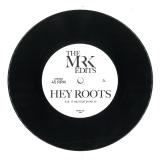
Mr. K turns his attention to his hometown with a couple of deep underground NYC disco cuts that have never appeared on 7-inch before: the stomping ‘Hey Roots’ by Black Rock and Ahzz’s sought-after ‘New York’s Movin’’. Black Rock’s ‘Hey Roots’ was the band’s follow-up to their 1975 proto-disco single ‘New York City Bump’ and takes a similar four-on-the-floor approach while raising the tempo to match the energy of a standard 1977 dancefloor cut. Mr. K’s edit builds the track methodically, using a sparse sprinkling of the original vocals and focusing on the hypnotic, Bohannon-esque beat. On the flip, he tackles the Peter Brown-adjacent classic ‘New York’s Movin’’, this time dropping the vocals entirely in favour of working with the wicked instrumental take, a wild jam that layers handclaps, tambourine, slicing rhythm-guitar and perfectly cheesy synth strings to make an irresistible dancefloor banger. Adding a dubby breakdown and arranging the parts to get the maximum out of the limited 7-inch real estate (both cuts here top the five-minute mark), Mr. K has given us another powerful tool in an ever-growing arsenal of dancefloor weapons.
out of Stock
Last delivered 24 days ago available to reorder, subject to availability