Milwaukee's powerhouse Altered Five Blues Band returns with their eighth studio album, Hammer & Chisel, a simmering set of eleven electrifying original songs that showcase why this award-winning group has remained at the forefront of contemporary blues for over two decades. Belted out with gusto by singer Jeff Taylor, each track crackles with the energy of a band firing on all cylinders—tight musicianship, razor-sharp guitar work, and witty lyrics that cut straight to the bone. From the opening salvo of the funky, horn-driven "I Got It Good" through the cautionary "Who Can You Trust" to the empowering closing statement of "The Will of Man," the album demonstrates the kind of top-notch performance that can only come from five musicians who've spent 24 years honing their collective sound. Produced by multi-GRAMMY winner Tom Hambridge and featuring guest harmonica ace Jason Ricci on three tracks, Hammer & Chisel captures the band at their peak.
On a Sunday in the early 70s in South LA one could asily find themselves experiencing the Pan Afrikan Peoples Arkestra doing what they do for the community, performing incredible music. "Live at Widney High December 26th, 1971" is a previously unreleased PAPA recording. It finds director Horace Tapscott conducting the band at Widney Career Preparatory & Transition Center, a special-education magnet high school in Los Angeles. The band played shows here between 1970 and "72, often sharing the bill with contemporaries John Carter and Bobby Bradford"s group, and at one point the Sun-Ra Arkestra. These weekend shows were free and meant for the surrounding Black community. On this date the PAPA performed a range of compositions from the Ark"s expansive songbook, including arrangements of tunes by Pharoah Sanders and John Coltrane.
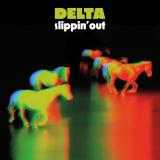
“From Birmingham and centred around the extraordinary songwriting talent of James and Patrick Roberts – initially as The Sea Urchins and since 1993 as Delta – they’ve only just got round to releasing their debut album, Slippin’ Out. It is a work of some beauty”. 9/10 NME ALBUM OF THE MONTH, 2000
“It’s classicist for sure, shot through with the influence of The Beatles, Byrds and Buffalo Springfield. In James’ downright beautiful closing ballad ‘I Want You’ one can also discern the school of ambitious English balladry that peaked in about 1968: The Casuals, Love Affair, Barry Ryan. The impression of accomplished old-schoolery is only furthered by the dizzying string arrangements penned by Louis Clark Jnr, son and namesake of the one-time orchestral chief of Electric Light Orchestra” – Mojo lead review, 2000
Having ended the 90s with the spirited ‘Laughing Mostly’ compilation of singles and demos (Guardian Album Of The Week) Delta finally released their debut studio album of twelve songs in the summer of 2000 on the Dishy Recordings label. Accepting that this might be their sole studio album the band threw everything at these recordings allowing it to exist in its own sphere, unbothered by their contemporary generation and disregarding the idea of even releasing a single.
Recorded at DEP International there was a notable difference to the scruffier, looser charm of their 1990s recordings, a tighter focus developed by having the experienced Lenny Franchi mixing the LP with them. Lenny had been working with a number of Island artists including My Bloody Valentine and Tricky so knew his way around a desk. There was also the question of budget (a few months passed between recording and mixing whilst funds were raised) so every day counted. Ultimately though you can hear the joy in the recordings, even amongst the melancholy and angst. As James recently recalled in an interview in Shindig! Magazine: “It was such a big deal for us. It’s one of my fondest memories doing that record. Everyone was happy. If there’s anything that I’d stand by, I think it would be that”
Louis Clark Jr joined the band towards the end of the ‘90s and brought a classically-trained element to the recordings particularly with his string arrangements. For ‘Cuckoo’, ‘I Want You’ and the prophetic ‘We Come Back’ Louis brought in eight players from the Birmingham Conservatoire; the baroque style is partly why the record often receives comparisons to Love’s ‘Forever Changes’.
On release ‘Slippin’ Out’ was a big favourite with writers at the NME, Mojo and The Guardian again and before long the band were signed to Mercury/Universal for their second studio album ‘Hard Light’, a far more expensive and expansive love affair. It was a temporary palatial home where things quietly fell apart again, but that’s another chapter.
“If long-term memory is nothing more than selective editing and only pop’s most weighty visceral works are built to last then it’s quite possible that in 50 years the Britpop era will be best recollected for the two bands it ostracised. Earlier this year we met Shack and thought their story of mercurial brilliance indicated the biggest music biz oversight of the 90s. We were wrong because we hadn’t met Delta yet. This is richer and more engrossing than anything by Shack”
Bettye Swann possessed one of the most emotive voices in soul music’s cannon but her recording career was that of a shooting-star; it blazed at the start, then illumined brightly before abruptly dissipating, all in just eleven years. In 1975 she ceased recording, moved to Las Vegas and retired her Bettye Swann persona.
The Louisianan Betty Jean Champion had relocated to Los Angeles as a young woman where in around 1964 she was introduced to Al Scott, owner of Money Records. It was her fourth Money 45 “Make Me Yours” that propelled Swann into the stratosphere. One of the defining songs of the era, it was her pathway to Capitol Records with whom she signed in 1968.
By 1972 Bettye was at Atlantic Records. The initial Atlantic 45 “Victim Of A Foolish Heart” b/w “Cold Day In Hell” recorded at Fame with Mickey Buckins and Rick Hall, made for a promising debut reaching #16 on the Billboard chart. It was followed by Bettye’s version of Merle Haggard’s “Today I Started Loving You Again” and “Til I Get It Right”, a gentle country-soul labour. “I’m Not That Easy To Lose” also dates from those sessions.
In an attempt to broaden her appeal Atlantic sent Swann to Sigma Sound in Philadelphia where she cut Phil Hurtt’s’ and Tony Bell’s “Kiss My Love Goodbye”, “Time To Say Goodbye” and “When The Game is Played On You”. Her fortunes continued to wane so Swann was next placed with Nashville producer Brad Shapiro. The results were artistically stellar and included three unissued gemstones in The Isley’s “This Old Heart of Mine”, a definitive version of Maxine Weldon’s “I Want Sunday Back Again”, and “Either You Love Me Or Leave Me”.
Premium first edition Kane West - western beats. Heavyweight vinyl, heavyweight sleeves, heavyweight design.
1xLP
12” Vinyl Records (180g, Black), Black and White Labels
12”Jacket 3mm Spine, 350gsm, Print 1/0 K, Gloss Machine Varnish + Hot Foil with Emboss on Front Cover, Hot Foil on Rear Cover
Full Colour 12” Board Sleeves
Creative Direction by Kane West
Design by Jacob Hulmston
Pencil Guy Artwork by Daniel Swan
The singles are long out of print!! “It's like electronic stoner rock. Very doomy, very sabbath! Sit back and nod your head to it. I don't know what this sounds like!’ JACK OSBOURNE (review of Kling Klang’s Heavydale in Kerrang) KKKKK - Single of The Week // “I could not believe it when I saw that there was a band named Kling Klang from Liverpool. A group named after Kraftwerk's Dusseldorf studio? I had to check them out. Pounding Krautrock inspired Motorik beat, like Neu! welded to incessant Phillip Glass keyboard riffs on acid. But somehow creating their own authentic style. I had to go and say “hello” and offer them studio time. Great maverick music… Their recordings still sound amazing, and like no other band that I have heard before or since.” Andy Mccluskey, OMD // “I first heard Kling Klang when recording The Coral with Geoff Barrow (BEAK>) and we immediately loved them. Heavydale blew me away then and still does. When we curated All Tomorrows Parties festival we invited them to play, then invited them to come on our European Tour for our Album Third. They were so awesome live. For me, when they played it was the beginning of the whole show and not just a support band. So cool this collection of singles is happening.” Adrian Utley, Portishead.
The most popular acoustic folk music group of the 1960s, Peter, Paul and Mary mixed great songs with political and social activism. They brought folk music to a new prominence in the post-McCarthy era, putting lyrics about politics and morality on the radio amid the syrupy boy-girl love tunes that dominated the airwaves. Presented here is the trio's debut album, originally issued in 1962, the splendid selftitled Peter, Paul and Mary. It features some of their most popular compositions such as 'Early in the Morning' and 'Cruel War', and great renditions of Hedy West's '500 Miles' and Pete Seeger's 'If I Had a Hammer'.
The bonus tracks were recorded live in San Francisco and Long Beach, California, late 1962: 'One Kind Favor', 'The Times They Are A' Changin', and 'If I Had My Way'. "The debut album by Peter, Paul & Mary is still one of the best albums to come out of the 1960s folk music revival. It's a beautifully harmonized collection of the best songs that the group knew, stirring in its sensibilities and its haunting melodies as it crosses between folk, children's songs, and even gospel. Peter, Paul & Mary, which hit the top spot on the album charts as part of a 185-week run, is the purest of the trio's albums, laced with innocent good spirits and an optimism that remains infectious"
f 6 ONE KIND FAVOR [Live version]
[m] 13 THE TIMES THEY ARE A' CHANGIN' [Live version]
[n] 14 IF I HAD MY WAY [Live version]
[f] 6 ONE KIND FAVOR [Live version]
[m] 13 THE TIMES THEY ARE A' CHANGIN' [Live version]
[n] 14 IF I HAD MY WAY [Live version]
A great name. A great cover. And - of course - outstanding library music.
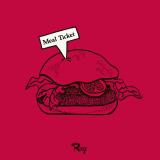
Soul City Orchestra's Meal Ticket houses titanic funk, mellow groove and symphonic disco-soul.
Released in 1977 on Rouge, a subsidiary of the prestigious and long-established British library label Music De Wolfe, Meal Ticket was crafted by the studio band Soul City Orchestra (a pseudonym for the De Wolfe in-house composers Chris Rae & Franck McDonald).
The driving instrumental funk-rock of the A Side is enhanced with strings and no little drama. However, it's undoubtedly the peerless flipside that makes this record an essential part of any collection.
Head straight to highlight "Chamber Maid"; insistent, conga-driven funky rock with lashings of string-heightened drama. It's sophisticated, classical and deeply classy.
The majestic, powerfully emotive "Sore Head" contains an excellent intro drum break and sultry slo-mo disco breaks throughout. It's low-key stunning. With a few melodic switch-ups, it's symphonic soul heaven and is comfortably the best and most beautifully crucial track on Side A.
The breezy, Philly soul-tinged "Short Change", its intense strings reminiscent of the Salsoul Orchestra and TSOP, presents an easy-glide funk that's just irresistible.
The funky, cool and slick AF "Wheeling And Dealing" is laconic flute and string-propelled sophisticated mid-tempo disco soul. It's worth the price of admission alone.
The breezy, mellowed out disco-funk workout "The Jam" is a deliciously slinky and sophisticated soul strut. Try not swaggering into the club with this in your head next time you venture into the murky world of "the night". Just ace.
The crowning glory is the sweeping, sublime symphonic disco breaks of horn-infused "Soul City Drive", an absolute monster of radiant heavy soul-funk à la Barry White with great string & brass arrangement.
Basically, this is essential for all groove-aficionados.
The audio for Meal Ticket has been meticulously remastered by Be With regular Simon Francis, ensuring this release sounds better than ever. Cicely Balston's expert skills have made sure nothing is lost in the cut whilst the records have been pressed to the highest possible standard at Record Industry in Holland. The original, iconic sleeve has been restored here at Be With HQ as the finishing touch to this long overdue re-issue.
out of Stock
Last delivered 7 months ago available to reorder, subject to availability
Great Day is one of the very best albums on the Music De Wolfe label and certainly one of the most sought after library records, full stop. It's been sampled by such heavyweights as Madlib, LTJ Bukem, El-P and The Alchemist (among many others). You likely already know all this. If you don't, get to know. One listen through and the £350 asking price for a VG copy starts to all make sense...
Originally released in 1972, it's credited to Music De Wolfe legends Simon Haseley (real name Simon Park) and "Peter Reno" (a collaborative alias used by composers Clifford "Cliff" Twemlow and Peter Taylor) Confused? No matter. It's one of the most consistent libraries you'll ever hear, packed with heavy blaxploitation-esque drama-funk break themes.
It opens with the feel-good, breezy piano beat number "Little Big John" before switching up to modern sweeping orchestral with heavy drums on the warm, deeply emotive "Summer Friend". Total highlight "Hammerhead" is as heavy as you'd want, from a track so-titled. It's a driving, imposing, orchestral funk-rock monster, famously used by The High & Mighty for their classic "Dirty Decibels" and, also, it was used as the backing for Beyonce's ace "Woman Like Me".
Up next, "Crimson" is melodic, plaintive and moodily introspective; a soft, oboe-enhanced instrumental of delicate beauty. Again, ace beats and breaks abound. The expansive title track, "Great Day" is melodic and bold; a horn-fuelled, mid-tempo rhythmic workout which builds to rather big end. Rounding out this first side, "Hard Crust" ups the ante with thrilling wah-wah funk-rock, a dramatic, pounding and aggressive thriller. Killer!
Side B opens with the steady, stealthy crime-funk of "Highball" before segueing brilliantly into the Hammond-laced relentless flute-funk of the driving "Bora". The powerful wah-wah wonderful "Hold Back" is haunting orchestral funk-rock, sampled by Madlib, El-P, Rakim, Sean Price and The Alchemist. It's easy to see why. Swaggering and staggering.
The cop show funk of "Silver Thrust" is fast, purposeful and persistent. Is it a cover version of the godlike "Stepping Stones" from Johnny Harris's Movements album? Either way, with up-tempo drums, bongos and flute you're going to be thrusting all night. The dynamic "Convoy" is a brassy, organ-fuelled sports-soundtrack b-boy breaks monster. Super Bowl Soul! Essential. To close out this quite extraordinary set, the insistent "Barracuda" presents dramatic rock feels over a persistent funky flute beat. It was sampled by LTJ Bukem for his classic "Sunrain" from 2000.
The audio for Great Day has been meticulously remastered by Be With regular Simon Francis, ensuring this release sounds better than ever. Cicely Balston's expert skills have made sure nothing is lost in the cut whilst the records have been pressed to the highest possible standard at Record Industry in Holland. The original, iconic sleeve has been restored here at Be With HQ as the finishing touch to this long overdue re-issue.
out of Stock
Last delivered 7 months ago available to reorder, subject to availability
To celebrate the tenth anniversary of their critically acclaimed second album, Preston's unholiest sons Evil Blizzard are please to announce a brand new re press of 'Everybody Come To Church' on limited edition (300) purple vinyl, with hand numbered full colour insert and DL code, and also on CD.
Featuring the live favourites 'Are You Evil?', 'Sacrifice' and 'Stupid People', the album has long ince been out of print.
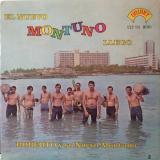
Roberto y su Nuevo Montuno recorded their first album, “El Nuevo Montuno Llegó” (1970), when Roberto Berríos was just 22 years old. This was also the debut release on Haddock’s own Uniart label. Berríos remembers that they did the recording in two sessions, splitting it up into four tracks per visit. The engineer was the famed Pedro “Pedrito” Henríquez, who recorded El Gran Combo, Roberto Roena and many others. The band had a mix of tasty, powerful originals, from Tony Cintrón’s title track that announced the band had arrived, ‘El Nuevo Montuno Llegó,’ to Quique Dávila’s mournful ‘Triste Arrabal.’ Then there was the hit Santería themed tune, ‘Llamé a Changó,’ which was a song that Quique Dávila brought to the band, but had been originally composed by Carlos Pinto, though Quique was given the credit. Dávila also composed ‘Me Queda Un Guaguancó,’ which is Roberto’s favorite song on the record (as well as a fan favorite), with Papo sounding like his friend Héctor Lavoe, and Quique Dávila’s proud manifesto declaring that Puerto Rico now had its own son montuno, ‘Oye Tu Son, Borinquen,’ featuring the pianist’s tasty but brief solo. The cover versions came from the group’s earliest period when most of their repertoire consisted of renditions of beloved but lesser known tunes, and include Louie Ramírez’s ‘Balancéate’ (a favorite of Roberto’s from Ray Barretto’s songbook), Bobby Valentín’s ‘Monina y Ramón’ (recorded during his stint with Willie Rosario), and a bolero indelibly sung by Cheo Feliciano when he was with the Joe Cuba Sextet, ‘Dichoso,’ written by Joe Cuba’s talented pianist, Nick Jiménez. Some of the arranging was done by Cintrón and some by Dávila, though Quique had some help from his old friend from El Combo Moderno, Freddie Miranda, who at that time was with Roberto Roena’s Apollo Sound. Roberto says that the arrangements of the cover tunes were made specifically to be different and more contemporary sounding than the originals. “El Nuevo Montuno Llegó” has become a legendary salsa dura classic from Puerto Rico and we are thrilled to present this first legitimately licensed and remastered vinyl reissue. It includes detailed liner notes that reveal the untold story of the band and their debut album, and rare photos.
Auf ihrem dritten Album ,Amaro" lädt uns Bibi Club dazu ein, uns den dunklen Bestien zu stellen, die uns unter der Oberfläche verfolgen, und uns der therapeutischen Kraft eines starken Lebenswillens hinzugeben. Es erkundet das sensible Spektrum zwischen dem Hier und Dort und verweist auf Liebe, Natur und Gemeinschaft als verbindendes Ziel. Die Songs zeichnen eine Karte einer eigenen Welt und folgen dabei dem Weg, den die Bibis in den letzten Jahren eingeschlagen haben. Nun verlassen wir das Wohnzimmer und tanzen in einem mentalen Raum, der mit Trauer und Angst in ihrer rohesten Form überladen ist. Nach dem Tod zweier geliebter Menschen im letzten Jahr hallt das Mantra ,Ich möchte lieben, ich möchte leben" intensiv in jeder Melodie nach; wenn das Herz ein Ort ist, der niemals stirbt, müssen wir es so schnell wie möglich erreichen. Inspiriert von unvergesslichen künstlerischen Begegnungen, Tourneen mit Blonde Redhead und Circuit des yeux sowie einer Zusammenarbeit mit Calvin Johnson präsentiert sich Bibi Club nun mit Avant-Pop und Electronic Body Music mit Elementen von Dark Wave und Neofolk, wobei gleichzeitig barocke Klänge mit Cembalos, Trompeten und auswendig zu lernenden rituellen Gesängen einfließen. Unterstützt von einer fürsorglichen Community, darunter der Saxophonist und Aktivist Dimitri Milbrun (George Sand) und die Singer-Songwriterin Helena Deland (A Different Light), ermöglicht Amaro Bibi Club, sich sowohl in intimer als auch in kollektiver Hinsicht zu definieren.
Carpenter Brut draws its influences from 80s TV shows and B-movies loaded with synthesizers.
The mysterious and discreet man evokes an encounter between Justice beats and the universe of John Carpenter.
Across ten tracks, Leather Temple, the third and final chapter of the Leather trilogychannels a raw and nervous energy, somewhere between saturated electro, industrialfever, and 90s synthetic pulse. Yet behind this intensityalso lies a cinematic andorchestral dimension, with arrangements that expand the horizon and add dramaticscope. A tight format, a constant intensity: Leather Temple goes all in on impact,balancing raw immediacy with the feel of a post-apocalyptic moviesoundtrack.
MariMari’s debut album “Mimitomesoshiteecho”, originally released in 1997, is finally getting its long awaited analog reissue.
Known for being fully backed by members of Fishmans, this work centers on MariMari’s vocals, which combine transparency and fragility, layered with
the floating, organic ensemble reminiscent of the Fishmans sound a truly unique album that deserves recognition across generations.
For this reissue, UK cutting engineer Dave Turner, who also handled the latest Fishmans reissues, took charge of the cutting process.
The original master’s charm has been maximized while optimizing the sound for today’s listening environments, bringing the album back to life with a
fresh sonic image.
It’s a unique universe with a distinct mood. Boy Deco’s SAP LP cements his offbeat artistic vision in a laid-back retro pop style. With distorted guitar riffs, wildly original arrangements and toplines that amplify the project’s intentional sense of ease, SAP is one of those rare gems you don’t forget and keep coming back to whenever you need to unwind.
Carpenter Brut draws its influences from 80s TV shows and B-movies loaded with synthesizers.
The mysterious and discreet man evokes an encounter between Justice beats and the universe of John Carpenter.
Across ten tracks, Leather Temple, the third and final chapter of the Leather trilogychannels a raw and nervous energy, somewhere between saturated electro, industrialfever, and 90s synthetic pulse. Yet behind this intensityalso lies a cinematic andorchestral dimension, with arrangements that expand the horizon and add dramaticscope. A tight format, a constant intensity: Leather Temple goes all in on impact,balancing raw immediacy with the feel of a post-apocalyptic moviesoundtrack.
MOLA - fierce gutter pop, bittersweet ballads and roaring indie anthems oscillating between heartbreak, chaos and radical connection. On Liebe Brutal (out 26.09.2025), raw emotion meets sharp irony, Italo-drama meets pogo energy. Isabella Streifeneder and producer Markus Harbauer deliver their most direct, dynamic and vulnerable record to date - brutally honest, brutally beautiful.
After decades spent shaping the sound of southern Madagascar and becoming one of the defining voices of tsapiky, Damily returns with Fanjiry, his most intimate and focused record to date. Known for electrifying village ceremonies and carrying the fever of Toliara across continents, he takes a sharp turn — not away from trance, but deeper into its core.
Recorded in just three days at Studio Black Box with analog wizard Peter Deimel, Fanjiry strips the tsapiky band down to a single guitar and a single heartbeat. Damily plays alone, yet fills the space completely — bass, rhythm, melody, pulse, and breath merging into a dense and vibrating sound. Every riff is architecture, every harmonic a door opening onto memory, childhood landscapes, and nights where music heals, binds, and exhausts the dark.
There is no nostalgia here, no museum of tradition. Fanjiry is a new frontier for tsapiky: raw, precise, suspended between earth and sky, born from craft and necessity. The title — the last star before dawn — captures its essence: a quiet moment before the world awakens, where a single guitar can hold an entire history and still point forward.
“Feel So Good Around U” , LB aka Labat ‘s debut album. French dance music producer & DJ, LB aka Labat’s nights are filled with live show and DJ Sets in iconic venues and major festivals. Insatiable, the artist churned out releases for over a decade. For his first long format, he stopped lonely home-studio and teamed up in Berlin, London, Paris & Melbourne with famous producers such as Baugruppe90, Heartstring, Sam Alfred, Crush3d, Memphis LK, Skin On Skin, Lucas V, Amne ou Notinbed.
The result is both a solo work and a collective manifesto, with a unique touch mixing drum & bass, house, reggaeton, electroclash enhanced with vocals used as samples.
Aufgenommen am 25. Juni 1962 live im Tsubo, einem Café in Berkeley, Kalifornien, zeigt „Full House“
den legendären Gitarristen Wes Montgomery auf dem Höhepunkt seiner Kreativität, begleitet von einem
beeindruckenden Ensemble mit dem Tenorsaxophonisten Johnny Griffn und dem Wynton Kelly Trio, das
durch seine Zusammenarbeit mit Miles Davis gereift war – dem Pianisten Wynton Kelly, dem Kontrabassisten Paul Chambers und dem Schlagzeuger Jimmy Cobb.
All About Jazz beschrieb das Album später als „einen Vorgeschmack auf das, was kommen und viel zu früh
verloren gehen sollte“, und die Darbietung wird diesem Versprechen gerecht. Was den Umfang angeht,
ist auf „Full House“ für jeden etwas dabei. Montgomerys lyrische Zurückhaltung kommt in „I’ve Grown
Accustomed to Her Face“ zum Tragen, während der mitreißende Bebop von „Blue ’N’ Boogie“ und der
lateinamerikanisch angehauchte Groove von „Cariba“ die ganze Bandbreite des dynamischen Zusammenspiels der Gruppe offenbaren. Untermalt von einem begeisterten Live-Publikum bleibt „Full House“ eine
der zugänglichsten und mitreißendsten Aufnahmen Montgomerys.
Diese Neuauflage des Albums erscheint als Teil der Original Jazz Classics Series auf 180-Gramm-Vinyl,
gepresst bei RTI, mit vollständig analogem Mastering von den Originalbändern bei Cohearent Audio und
einer Tip-On-Hülle, die das Original-Artwork originalgetreu nachbildet.
Der Pianist Vince Guaraldi und der brasilianische Gitarrist Bola Sete begegneten sich zum ersten Mal
während eines Aufenthalts im Club Trois Couleurs in San Francisco – eine schicksalhafte Begegnung, die
eine fruchtbare kreative Partnerschaft begründete, die schließlich West Coast Jazz mit Bossa Nova und
afro-brasilianischen Rhythmen verbindet.
Das 1964 aufgenommene Album „From All Sides“ war die zweite Zusammenarbeit des Duos (insgesamt
gab es drei) und gilt als eines ihrer entspanntesten und fröhlichsten Werke. Das Album ist mühelos und
eskapistisch und gleitet von einer federleichten Interpretation von „The Girl from Ipanema“ zum temperamentvollen Galopp von „Ballad of Poncho Villa“.
Während Guaraldi vor allem für seine zeitlosen Peanuts-Soundtracks gefeiert wird, werden langjährige Hörer
hier melodische Fäden erkennen, die später in diesem beliebten Universum wieder auftauchten. Adaptionen
des wehmütigen „Menino Pequeno da Bateria“ (später überarbeitet als „Little Drummer Boy“) und des
unbeschwerten „Choro“ erschienen später jeweils auf „A Charlie Brown Christmas“ (1965) und „He’s Your
Dog, Charlie Brown“ (1968).
Diese Neuauflage des Albums erscheint als Teil der Original Jazz Classics Series auf 180-Gramm-Vinyl,
gepresst bei RTI, mit vollständig analogem Mastering von den Originalbändern bei Cohearent Audio und
einer Tip-On-Hülle, die das Original-Artwork originalgetreu nachbildet.
After decades spent shaping the sound of southern Madagascar and becoming one of the defining voices of tsapiky, Damily returns with Fanjiry, his most intimate and focused record to date. Known for electrifying village ceremonies and carrying the fever of Toliara across continents, he takes a sharp turn - not away from trance, but deeper into its core. Recorded in just three days at Studio Black Box with analog wizard Peter Deimel, Fanjiry strips the tsapiky band down to a single guitar and a single heartbeat. Damily plays alone, yet fills the space completely - bass, rhythm, melody, pulse, and breath merging into a dense and vibrating sound. Every riff is architecture, every harmonic a door opening onto memory, childhood landscapes, and nights where music heals, binds, and exhausts the dark. There is no nostalgia here, no museum of tradition. Fanjiry is a new frontier for tsapiky: raw, precise, suspended between earth and sky, born from craft and necessity. The title - the last star before dawn - captures its essence: a quiet moment before the world awakens, where a single guitar can hold an entire history and still point forward.
Mal Devisa is the songwriting, liberation, and poetry project of multifarious artist Deja Carr. Starting in 2014 and breaking through with 2016's Kiid, Mal Devisa's work spans a selfmade spectrum of sound from gravitic, soulful rock to soliloquy to unabashed hip hop. Although known for her unmistakable, smoldering voice and loop-based, bass-forward compositions, Carr's talents also extend to reaches of spoken word and production, paralleled by aspirations to start both a youth foundation and Afrobeat orchestra. Such boundless inspiration is a central facet of Mal Devisa's work, whose sonically and narratively unrestrained passages teem with empathy and liberatory visions for a better world.
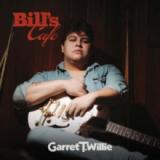
Named after his grandfather's pool hall cafe in Alert Bay, British Columbia, the record connects small-town grit with the bright lights of Nashville, where Willie recorded with Grammy- winning producer Tom Hambridge (Buddy Guy, Kingfish, Susan Tedeschi). From roadhouse stompers to backseat ballads, Garret T. Willie sings of love, loss, addiction, and resilience with a voice that cuts like hi- beam headlights on a dark backroad. Bill's Cafe is alive wire of energy and soul, carrying old-soul traditions into the future with fire and truth.
Conceived as a return to the music that shaped his formative years, the project draws its energy from late-night introspection, creative renewal, and a distinctly crepuscular sensibility. Initially conceived as a solo project, LOCUS NOIR is set to evolve into a fully-fledged band . Musically, LOCUS NOIR blends Type O Negative gloom, The Fields of the Nephilim mysticism, and Paradise Lost melancholy, all infused with a post- punk edge.
The result is a sound that feels both contemporary and timeless -- a modern interpretation of what Gothic Metal can be. On debut album 'Shadow Sun' , band main songwriter and vocalist Ben steps fully into a melodic, haunting vocal register, merging the theatrical delivery of Peter Murphy with subtle echoes of the late Peter Steele. The lyrics move between the esoteric and the intimate: love and death, desire and decay, nocturnal excess and the bitter aftertaste of parties stretching well past dawn.
James Davison, the most startlingly talented UK brass player of his generation, joins this highly experienced team with brilliant results. Charlie Parker's 'Ornithology',Thelonious Monk's 'Straight No Chaser', Billy Strayhorn's 'Satin Doll' and Horace Silver's 'Peace are amongst the gems to be found here. This is the second Woodville Records release to be based solely around the brilliant arranging skills of world class trombonist Mark Nightingale. The first, Alan Barnes plus 11 (WVCD151) featured Mark's adept and characterful handling of a twelve- piece ensemble. Jazz Classics ...with a Twist displays equal inventiveness and imagination, showcasing a sextet line-up in a programme of individually re-thought takes on these ageless tunes. In Mark's hands this band frequently resembles a much larger ensemble such is his skill in manipulating tone colour and voicing.
After being fired by Miles Davis and traveling to Philadelphia to combat his drug addiction in 1957, John Coltrane accepted an invitation from Thelonious Monk to join his quartet. They famously played at New York's Five Spot Cafe and despite the exquisite quality of the band's music, it yielded few recordings and Coltrane's tenure with Monk only lasted six months. Produced by Orrin Keepnews for his label Milestones, the album is compiled from sessions recorded during April, June, and July of 1957. It wasn't released until 1961 though, four years after the sessions took place, and after Coltrane had become a leader and jazz star in his own right.
[c] OFF MINOR [tk 4]
[f] EPISTROPHY [alt tk]
[g] FUNCTIONAL [alt tk]
[h] OFF MINOR [master]