With Recent Appearances On Boiler Room And The Groove Magazine Podcast Plus Sets Across Asia And Europe, Jamaica Suk's Fearsome Techno Sounds Are Winning Fans Far And Wide. A Year On From Her Debut Release On Her Own Gradient Label Comes This Stunning Second Volume.
A1 Stinger Ray Kicks Off The Ep With Zingy Modular-style Synth Sounds Pulsing Over A Bubbling, Murky Bassline. Sheet Metal Snares Punctuate The Beat, With A Switch-up Halfway Through Into Gnarled, Distorted Synth Crunches Catching You Unaware. These Brutalised Rhythms Morph In And Out Of Hypnotic Arpeggiated Pulses To Make For A Hallucinatory Ride With Ample Dashes Of Psychedelia Throughout.
A2 Fallen Sets It Outs Stall Immediately, With Filtered Down Acidic Bass Playing Out A Jagged Groove. A Manic Counterpart Mimics Its Rhythm But Dizzyingly Delayed Off The Beat To Create A Rugged, Funk-fuelled Feel. Cymbal Rides Pitch Up And Down, Unidentified Snarls Of Fx Mutate Around The Edges, All The While The Sharp Hi-hats Keep The Metronomic Heartbeat Going.
B1 Whispers Ups The Intensity. Delicate, Arpeggiated Chime Sounds Set A Crystalline Mood Before Swathes Of Intense, Darkly-tinged Synths Swell In And Out Of Focus Atop The Throbbing Kick Drums. The Effect Is That Of A Factory Full Of Machines Growing A Mind Of Their Own, Malfunctioning In A Pleasing Harmonic Dissonance.
B2 Twilight Rain (vinyl Only) Completes The Set With Infectious Triple Kick Drum Patterns Underpinning Dramatic Drum Hits And Warped Atmospheric Shivers That Create A Spooky Feel As Droning Bass Tones Carve A Path Through Your Speakers.
quête:i speak machine
The godfather of acid house, DJ Pierre, is back - bringing four heavyweight Chicago cuts to the fore, two of which, 'Pinball Machine' & 'The Spirit' are unreleased, exclusives.
'Sexy Aquarian' showcases Pierre's unique style putting his trademark spin on this classic vocal, combining it with a bumping bass and dizzying acid lines, to trigger old memories whilst giving you something new for your mind, your body and your soul.
Next up 'Pinball Machine' goes in heavy on the percussion - filling those speakers with a barrage of weighty toms, crisp hats and crunched up snares. The frenzied synth line bounces around relentlessly, pinging off the sides of your brain like a sonic arcade.
Take to the flip for a lesson in how to take jackin' house to another level. 'Whats Mine is Mine' delves beyond the beat, mixing sassy vocals and spiritual organ stabs, with a touch of swing reminiscent of an era long gone.
Closing out the EP, 'The Spirit' utilises another treasured vocal layering it behind punchy drum programming, a rumbling bass and atmospheric touches that add an ethereal tinge to the track.
DJ Feedback:
The Black Madonna - We Still Believe / Liaison Artists - Excellent!
Eli Escobar - OH yes.
PBR Streetgang - 20/20 Vision - classic
Andy Caldwell - Nettraxx / Cr2 Records - Ooh so so sublime. Good shit here!
Tony Humphries - The Zanzibar / New York - Nice peak time banger.
Danny Howard - BBC Radio 1 / Nothing Else Matters - Aceeeee. Wicked vocal!!! Love the vibe
The latest release on Arma comes from Dutch legend and devoutly deviant underground operator Ruud Lekx, aka Rude 66. With a legacy that reaches back to the early 90s and the rough and ready Dutch electro sound of Bunker Records and The Hague, he's maintained a distinctly non-conformist approach that touches on acid, Italo, techno and more besides, all finished with the punky attitude that sets him and peers like Unit Moebius and I-F apart.
The tracks gathered together on The Witch Trials EP come from throughout Lekx's career. As the artist himself says, 'tracks from wildly different eras and sessions suddenly can combine to form one coherent EP. It's almost like the A-side tracks were waiting for 20 years to be combined with the B-side tracks.'
The overriding theme that binds together these timeless machine excursions is that of medieval witch trials - a global phenomenon that peaked in the 15-1600's. Considering the suspicion, propaganda and mass moral panic involved in this strange curio of distant history, Lekx points to the parallels with the current age, 'of political polarization and fake news accusations flying all over.' The EP title is also a tribute to two records close to his heart: The Fall's Live At The Witch Trials, and the one-off Witch Trials project by members of the Dead Kennedys, Adrian Borland and Christian Lunch.
'Werewolves & Poisoners' and 'The Crusade Against Idolatry' are both archive tracks from the 1994-5 period when Lekx made his first albums for Bunker Records. The first track's charging arps, rugged kicks, nagging acid lines and discordant paranoia all speak to that trailblazing period, while 'The Crusade...' revels in canny programming of interwoven synth lines feeding into an unhinged, psychedelic rampage that reflects the righteous fervour and spiritual confusion of the EP concept.
'The Absence Of Diabolism' opens up the B-side with a different tone, having been produced in 2016 and demonstrating the deeper acid undulations Lekx has become known for in more recent years. Still delivered via the same trusted tools he was using in the 90s, the sound feels like an extension of the Rude 66 vision rather than a separate entity. 'Envious Are All The People, Witches Watch At Every Gate,' a cut from the late 90s, closes the EP out in a spacious, snarling exploration of broken acid electro laden with cinematic sweeps of synthesizer and a constant sense of unresolved tension.
Across these four tracks, Lekx displays the scope of his craft as Rude 66 while also proving that timeless music can make sense in any context, and that the threads of inspiration in an artist's journey can be followed, explored and even resolved 20 years later, when you least expect it
For Fans Of Hot Chip, J-pop, Dada. Perlita Is Responsible For 'sex Instruments', The First Ever Song Made Entirely Out Of Sounds Produced By Sex Toys, Including Guitars Played With Vibrators, Bass Notes From Anal Beads And Strokers For Rhythm. The Track Was Made Especially For A Pornhub Toys Ad Campaign.
Caballo Rojo ("red Horse") Is The Second Album By Perlita, A Band From Cádiz, Spain, Once Described By A British Critic As "a Hot Chip Fronted By Freddy Mercury". For The Follow-up To Their 2016 Debut Cangrejo Yeti ("yeti Crab"), The Threesome Have Come Up With A Titanic Piece That, Mood-wise, Jumps Around And Gallops Between Pop, Flashes Of Andalusian Folkloric Music, Drum Machines, Japanese Voices, Synths And Verses By Spanish Poet And Nobel Prize Laureate Juan Ramón Jiménez, Among Many Other Things.
Perlita Are Based Part-time Between Puerto De Santa María, Cádiz, And The Madrid Borough Of Lavapiés. That In Itself Could Constitute A Music Genre, But It's Not On Wikipedia Yet. Their Music Speaks Many Languages, Some Of Them Invented. There's Something In It That Echoes The South - The South Of The Andalusian Psychedelic Rock Bands Of Yore, But Also Of The Typical Cádiz Brand Of Humour, Of The Famous Carnival, And Of The Northwest-african Radio Waves Reaching The Beaches Of The City From Across The Gulf Of Cádiz.
Having Cut Their Teeth In Many Spanish Indie Bands, With Perlita, The Three Band Members Decided To Explore Other Worlds - Worlds Where Synths And Drum Machines Rule, Yet With Plenty Room For Wild Percussion And Marvellously Poppy Melodies. The New Direction Became Clear On Their First Effort Cangrejo Yeti, And Is Continued On Caballo Rojo: Electronic Pop Made With An Open Mind, With A Special Fondness Of The Poetry In Details, And With A Production That Is Morphing Throughout The Record - From A Sophisticated Accompaniment Gently Rocking Some Precious Verses To A Raw And Forceful Sound Slinging Almost Dada-like Shouts, Like A Poet At A Rave Hollering About The Dunes.
Bizz O.D. is somewhat of a mystery.
A known fact is that she released noisy hypnotic acid-house tracks on Force Inc. and Smile Communications back in 1993-1998. 'Warship The Speakers' was taken very literally when Detroit was kneeling in front of their sound- system praying to the allmighty bass drum. 'I'm Coming Out Of Your Speakers' went heavy rotation with Junior Vasquez at Sound Factory NYC. A collaboration with Jimi Tenor for OZON Records in 1995.
A few live shows have been proven to be Bizz O.D. herself. She would send someone, kinda anybody, to play her trademark Casio RZ-1 drum-machine and tweak her TB303 acid-lines. The vocal loops coming off some defunkt Dictaphone. So she's never been really seen or photographed. Bizzi has ZERO social media except the mentions on Discogs and some up-loads on YouTube.
'The New York Push' is two previously unreleased tracks. Fetish club, distortion and newyorican-soul all in one. Set aside some pretty bizarr promo pictures that will add to the mystery.
It's House, New York House with a Latin-Industrial subtext. Ok, whatever!
P.S. Bizz O.D. live shows this year in Berlin, her new home since 2017. The 'T' a monthly tea-dance with Eric D. Clark of Whirlpool Production fame at Paloma/Berlin. Catch her if you can!
Portland, Oregon resident Mary Sutton's solo debut materialized in the wake of a performance she gave at a clothing-optional soaking-pool sauna: 'I had never composed for synth before but wanted to make something people sitting motionless and naked in hot bubbly water would want to hear.'
It was while in this headspace that she reconnected with Satie's entrancing cyclical motifs, particularly the way 'he subtly spins melodic fragments, and pivots harmonies and phrases so the repetitions feel new and surprising yet soothingly familiar, as if casting a spell.'
The nine intuitive instrumentals comprising The Deep End accomplish exactly that, threading complementary shades of soft-hued hypnosis, dazed modal introspection, icy amusement park reverie, and lunar lullaby into a prismatic suite of contemplative melody and synthetic communion.
Sutton's songs are active rather than ambient yet their structure is more suggestive than scripted, full of lulls, asymmetries, and daydreams. Each track was written specifically to be played live on an analog synthesizer, with no overdubs or post-production wizardry. The sound of Saloli is one of warm-blooded wiring, turned on and tapped into, emotive and electric, storied machines speaking through all too human hands.
- A1: Emad Youssef - Al Bareedo Ana (The One I Love)
- A2: Abdel El Aziz Al Mubarak - Ma Kunta Aarif Yarait (I Wish I Had Known)
- B1: Kamal Tarbas - Min Ozzalna Seebak Seeb (Forget Those That Divide Us)
- B2: Madjzoub Ounsa - Arraid Arraid Ya Ahal (Love, Love Family)
- B3: Khojali Osman - Malo Law Safeetna Inta (What If You Resolve What's Between Us)
- C1: Zaidan Ibrahim - Ma Hammak Azabna (You Don't Care About My Suffering) (Live)
- C2: Saied Khalifa - Igd Allooli (The Pearl Necklace)
- C3: Taj Makki - Ma Aarfeen Nagool Shino! (We Don't Know What To Say!)
- D1: Hanan Bulu Bulu - Alamy Wa Shagiya (My Pain And Suffering) (Live)
- D2: Abdelmoniem Ekhaldi - Droob A Shoag (Paths To Love)
- D3: Samira Dunia - Galbi La Tahwa Tani (My Heart, Don't Fall In Love Again)
- E1: Mohammed Wardi - Al Sourah (The Photo)
- E2: Abdullah Abdelkader - Al Zaman Zamanak (It's Your Time)
- F1: Mustafa Modawi & Ibrahim El Hassan - Al Wilaid Al Daif (The Youth Who Came As A Guest)
- F2: Ibrahim El Kashif - Elhabeeb Wain (Where Is My Sweetheart)
- F3: Mohammed Wardi - Al Mursal (The Messenger)
In Sudan, the political and cultural are inseparable. In 1989, a coup brought a hardline religious government to power. Music was violently condemned. Many musicians and artists were persecuted, tortured, forced to flee into exile — and even murdered, ending one of the most beloved music eras in all of Africa and largely denying Sudan's gifted instrumentalists, singers, and poets, from strutting their creative heritage on the global stage.
What came before in a special era that protected and promoted the arts was one of the richest music scenes anywhere in the world. Although Sudanese styles are endlessly diverse, this compilation celebrates the golden sound of the capital, Khartoum. Each chapter of the cosmopolitan city's tumultuous musical story is covered through 16 tracks: from the hypnotic violin and accordion-driven orchestral music of the 1970s that captured the ears and hearts of Africa and the Arabic-speaking world, to the synthesizer and drum machine music of the 1980s, and the music produced in exile in the 1990s. The deep kicks of tum tum and Nubian rhythms keep the sound infectious.
Sudan of old had music everywhere: roving sound systems and ubiquitous bands and orchestras kept Khartoum's sharply dressed youth on their feet. Live music was integral to cultural life, producing a catalog of concert recordings. In small arenas and large outdoor venues, musical royalty of the day built Khartoum's reputation as ground zero for innovation and technique that inspired a continent.
Musicians in Ethiopia and Somalia frequently point to Sudan's biggest golden era stars as idols. Mention Mohammed Wardi — a legendary Sudanese singer and activist akin to Fela Kuti in stature and impact in his music and politics — and they often look to the heavens. A popular story is of one man from Mali who walked for three months across the Sahel to Sudan because the father of the woman he wanted to marry would only allow it if he got him a signed cassette from Wardi himself. Saied Khalifa is said to be the one of the few singers to make Ethiopian emperor Haile Selassie smile.
Such is the stature of Sudanese singers and the reputation of Sudanese music, particularly in the "Sudanic Belt," a cultural zone that stretches from Djibouti all the way west to Mauritania, covering much of the Sahara and the Sahel, lands where Sudanese artists are household names and Sudanese poems are regularly used as lyrics until today to produce the latest hits. Sudanese cassettes often sold more in Cameroon and Nigeria than at home.
But years of anti-music sentiment have made recordings in Sudan difficult to source. Ostinato's team traveled to Ethiopia, Somalia, Djibouti, and Egypt in search of the timeless cultural artifacts that hold the story of one of Africa's most mesmerizing cultures. That these cassette tape and vinyl recordings were mainly found in Sudan's neighbors is a testament to Sudanese music's widespread appeal.
With our Sudanese partner and co-compiler Tamador Sheikh Eldin Gibreel, a once famous poet and actress in '70s Khartoum, Ostinato's fifth album, following our Grammy-nominated "Sweet As Broken Dates," revives the enchanting harmonies, haunting melodies, and relentless rhythms of Sudan's brightest years, fully restored, remastered and packaged luxuriously in a triple LP gatefold and double CD bookcase to match the regal repute of Sudanese music.
A 20,000-word liner note booklet gives voice to the singers silenced by an oppressive regime.
Take a sail down the Blue and White Nile as they pass through Khartoum, carrying with them an ancient history and a never-ending stream of poems and songs. It takes two Niles to sing a melody.
- 1: Landing
- 2: Beneath The Ice
- 3: Endless Tide
- 4: Station Life
New 4-track Ep From Austin, Texas Analogue Hardware Enthusiast Bill Converse. Immersed In The Early Days Of The 90s Midwest Rave Scene, Bill Began Djing At A Young Age In Lansing, Michigan. Luminaries Such As Claude Young, Traxx, And Derrick May Were Key Early Influences. Techno, Noise, Ambient And Tape Processing Are All Part Of His Uncanny Sound Palette. His Debut Album 'meditations/industry' Was Released On Cassette In 2013 And Edited For A Vinyl Release On Dark Entries In 2016 Followed By Two 12' Singles 'warehouse Invocation' And '7 Of 9' The Same Year. In 2017 Converse Released His Second Album 'the Shape Of Things To Come' Followed By The Double Ep 'salt Of Mars'.
'hulled' Is A 25 Minute Journey Spread Across 4 Tracks Of Glacial Abandon. All Tracks Were Recorded Directly To Tape With No Overdubs, Made At Converse's Home Studio. Bill Says These Tracks Represent 'ocean Waves In Stormy Conditions, Dark Grey Blue Water, Or More Generally Speaking Something Ominous And Beautiful.' The Songs On This Album Reveal A Sublime Influence From Detroit Techno, Idm, And Acid. Built Around Vintage Synthesizer Lines And Gritty Drum Machine Percussion, The Tracks Ebb And Flow Like The Effect Of Sun Shimmering On Water, Woozy, Gauzy And Ephemeral. All Songs Were Mastered For Vinyl By George Horn At Fantasy Studios In Berkeley.
Each Ep Is Housed In A Die-cute Jacket Designed By Eloise Leigh With Peachy Pink Patterns Landing On An Alien Water Planet And Seeing Mysterious Playing Forms Under The Turquoise Water. Each Copy Includes A Postcard Featuring Photo Of Bill With Notes.
Cat.no.: De 222
Format: Ep
Tracklisting
- A1: Dreaming Of Me
- B1: Ice Machine
- C1: New Life (Remix)
- D1: Shout (Rio Mix)
- E1: Just Can't Get Enough (Schizo Mix)
- F1: Ant Second Now (Altered)
- G1: Depeche Mode - "Sometimes I Wish I Was Dead
- H1: Fad Gadget - "King Of The Flies" (Flexi Disc)
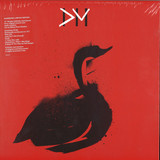
Depeche Mode - Speak & Spell 12" Single Box
Depeche Mode realized the format's potential and embraced the power of 12" vinyl and the avenues of innovation it opened up. The 12" single allowed the band to explore new sonic possibilities while the physical beauty of the packaging gave Depeche Mode room to develop a sophisticated and commanding visual aesthetic. Depeche Mode used their singles discography as a means of offering left field remixes and other delights for their fans.
Each box set in the series will contain the singles from each Depeche Mode album on audiophile-quality 12' vinyl, with audio remastered from the original tapes and cut at the legendary Abbey Road Studios. The artwork for the exterior of each of the new box sets draws on street art iconography inspired by the original releases, while the vinyl sleeves themselves feature the original vinyl single artwork.
Speak & Spell | The 12' Singles contains a facsimile reproduction of the rare Flexi Disc 'Sometimes I Wish I Was Dead' b/w 'King of the Flies' (the Fad Gadget track as on the original release); Dreaming Of Me 12': 'Dreaming of Me' b/w 'Ice Machine'; New Life 12': 'New Life (Remix)' b/w 'Shout! (Rio Mix)'; Just Can't Get Enough 12': 'Just Can't Get Enough (Schizo Mix)' b/w 'Any Second Now (Altered)'; original single poster reproduction; download card.
Crazy 12 Track Library Music Style Album On This Ace Italian Label. All Based Around Bumping Live Rhythms Triggering An Obscure Japanese Drum Synth Module..recorded In 2017.
.
It Was November 2017 When I Received A Call From An Old Friend, "hi Fabrizio, I Found A Rare Japanese Drum Machine, You Should Come And See It Before I Put This On Ebay." I Went To Check It Out And Immediately Realized It Had More Potential Than Just Drum Sounds Generation, It Was Able To Produce Quirky And Creepy Sounds If Triggered By Any Sound Source. So I Bought It And Brought In The Studio, Where Me And Alex Were Laying Down New Beats And Ideas. It Took Just Three Days Of Jams To Get The Skeleton Of This Record Done: I Programmed The Module To Receive Alex's Drum Hits And The Device Started Creating Synth Lines, Almost As It Was Speaking Its Own Language.i've Found A Soul In This Machine, And I Wanted To Bring It To Life In These Tracks, A Mix Of Arranged Compositions And Improvised Jams. No Root Keys, No Grids, No Clicks, Everything Came Out In An Instinctive And Natural Way
As Far As We Know It's The First Time This Synthesizer/drum Machine Is Been Used In This "improper" And New Way.
Damian Lazarus & The Ancient Moons have released their new track 'Feedback Loop'. This is the latest single to be taken from their forthcoming new album Heart of Sky, out on July 20th through Crosstown Rebels/BMG. Showcasing the warm textures of Jesse Appiah's soulful vocals and the Ancient Moons' top notch production, 'Feedback Loop' already sounds like a classic and is undoubtably one of the album's key moments. The song is about A.I., a conversation between man and machine, and rolls out of the speakers like a 21st Century update of Bristol's Wild Bunch sound system. Remixes for the dancefloor from Bedouin and Serge Devant, plus dubs from the legendary Mad Professor, follow on all formats next month.
Butter Sessions proudly presents the debut LP from label mainstay Cale Sexton. Last seen on the imprint with his club-minded EP East Link in 2016, Melondrama accumulates over 12 months work writing in studio.
Having taken a step back from live performance, the album is a marination of Sexton's musicianship, flexing his abilities as a bass-man, and incorporating live instrumentation and drenched arrangements to tell a vivid story. With the new found freedom of playing for himself, his inspired creations span electro-synth, deep milky way ambience and mutant drum machine funk. Produced as a solo act from the bass up, he's only accompanied on Previous Employee, with drums, synth and fx from Maryouss. His zonked imagination is brought to clarity by Corey Kikos' final mix, further animated via Ben Jones' sleeve design.
Full of emotion and adventure, the nine patiently durational earworms on Melondrama are a welcome antidote to the deluge of modern electronica that's designed for speed listening. Find a comfortable seat and let the mind travel.
Detroit label My Baby focusses on letting underground local talent shine, and that is the case with the second EP, a various artists affair featuring label boss Mister Joshooa, plus Remote Viewing Party and Tammy Pickle with a remix from My Baby.
The acts featured on this release are all residents of the famous TV Lounge/TV Bar venue in Detroit. The 12" includes Eddie C along with My Baby boss and TV Bar booker Mister Joshooa-who work together here as Tammy Pickle-plus Rickers, who is one half of ATAXIA, and How to Kill Detroit co-founders Remote Viewing Party, while Rickers and Joshooa also link as My Baby to remix one of the tracks.
First up are Remote Viewing Party with the superb '410'. It's five bumping minutes of silvery tech with whirring machines and gurgling synths all weaving around well programmed and punchy drums. Sure to infect real energy and freakiness into any club set.
Mister Joshooa makes his first appearance with the alluring 'Alright Fine', a slow and absorbing track of gloopy bass, percolating drums and unsettling vocals. Subtle acid lines and prickly hi hats all make this one really jump out of the speakers.
Next up, Mister Joshooa links with Rickers for a standout remix of '410' that is even more physical and driving. The metallic groove is run through with alien sounds, shooting synths and ghoulish voices that are filled with paranoia and will make a great atmosphere in the club.
Joshooa and downtempo disco don Eddie C then collaborate as Tammy Pickle for 'Indifference,' which is a perfectly slow and sensuous number with elastic synths and bass. Crisp hits drive it along and encourage you to sink deep into the groove.
This record is jam packed with talent and original ideas, and one that marks out this label as one to watch.
The music on this EP was conceived in China, between 1989 and 1993. The original tracks were mixed to DAT in real time, in a small neighbour-proof studio inside my apartment in Macau, a 19th floor with a view to the hurricanes. There's a small, unexpected or improbable story behind each track, some little magic fused with the local atmosphere, certainly guaranteeing their lasting authenticity 25 years later.
TAIPEI DISCO
Late 80s Guangzhou was an exotic city where the traditional past coexisted in harmony with the present and even already with the future.
I'd rather spend my weekends in Guangzhou than diving into Hong Kong consumerism - as most ex-pats in Macau did. I took a cab at the border and travelled 150 Km through chaotic roads with family and friends until reaching the hot, humid, mega South China metropolis.
We ate on street joints in the evenings, went on to a karaoke bar and ended up at Taipei Disco, the only proper club in town. All the others were inside hotels and played generic music or they were seedy, sleazy, smoky cabarets.
Taipei Disco used to be a cinema and played cantonese pop music and anglo-saxon pop/rock (that was new). The spacious dance floor was generously lighted, the atmosphere was airy and modern. Boys and girls were in the habit of dancing in pairs, one in front of the other, observing a respectful yet sensual distance. When the girl took a few steps back, the boy went along and vice versa. With legs and feet (more than the upper bodies) synchronized with the music, they never exceeded in extroversion. Cool.
I always carried a MicroComposer and a portable DAT recorder in my travels through China and weekends in Canton. Any spontaneous musical idea was imediately recorded and memorized. The MicroComposer allowed multitrack recording, which was very handy on the road. Based on the emphatic choreography of Taipei Disco's dancers, i started to compose a rhythm track while sitting at a table, with headphones, listening to Cantopop in the background. As if by magic - not a rare occasion in music - everything began fitting together. Odd as it may seem, the track ended up sounding more germanic (Kraftwerkian) than Cantonese pop.
The story ends in a circle: the cantonese DJ at Taipei Disco, whom i used to ask to play certain records, wanted to play my music at the disco when it was basically only just a rhythm track and little else. From a cupboard under his set up he took out a battered keyboard (unrecognizable brand) and invited me to play over the track with the available sounds on the keyboard. The circle was complete, with Cantonese clubbers happily dancing forwards and backwards, as if it were another Cantopop hit.
I didn't get payed but the house offered us free ice cream cups in which little Portuguese flags were sticked.
The track would be finished later, in studio, with vocoder strings ensemble and synth solos.
TAIPEI DISCO (LIVE)
The live version of 'Taipei Disco' was recorded during a live set at the China Pop venue, in Macau, 1993. China Pop was a rock club built in the ample space of an old fishing warehouse, located in the labyrinthic Inner Harbour area. It was decorated with large Mao Zedong and Cultural Revolution posters and memorabilia and had a unique atmosphere, fusing Pop Art with film noir. We began our performance at 1AM, pretty early for Macau's nightlife standards. We were lucky. An audience showed up. And in Macau there were always several friends among the audience, which tranformed a musical performance into a relaxed party.
The atmosphere was particularly surreal on that night. The front row was dominated by French Crazy Horse dancers, a sort of Oriental Moulin Rouge. The girls had finished their last performance of the evening at the Crazy Horse and were still energized from their show. During our performance, right in front of us and perfectly synched, we could hear the famous irreverent screams of can-can dancers. You always had to expect the unexpected in Macau.
RED MAMBO (IMPROMPTU)
I was familiar with the Portuguese-speaking African countries well before having lived in China. I found myself returning several times to one in particular, always attracted by its magic and very distinct, identitary culture and music: Cape Verde.
During the early years of DWART a lot of the inspiration for drum machine rhythms (Roland's TR series) came from African music, especially from new musical trends that gained full autonomy with Cape Verde's independence from Portugal, as was the case with funaná.
I had the privilege of having known and befriended some of the greatest Capeverdian composers, musicians and singers during the 70s and 80s, such as Bana, Luís Morais, Cesária Évora, Paulino Vieira, Chico Serra, Tito Paris, and historical bands such as Bulimundo (ambassadors of funaná) and Os Tubarões (great innovators of morna, coladera and funaná, with the sonic impact of an afro-beat big band).
When Luís Filipe de Barros began playing Os Tubarões for the first time on Portuguese radio, that was the turning point for African music in Portugal. The 'Tabanca' album was so widely heard and talked about that it quickly got a Portuguese release through one of the big labels of the time.
The mystic of this band from the Santiago Island would reach the East. Os Tubarões played to a packed room in Macau in 1992, and after the bombastic gig we arranged a dinner and party at my place.
We ate and drank generously and the moment came for a jam session at the small studio on the 19th floor. Because Os Tubarões didn't all fit in the studio, we recorded an impromptu with only three of the musicians: Tótó Silva (electric guitar), Mário Russo Bettencourt (bass) and Zeca Couto (piano). And there we were improvising without barriers, suddenly detached from cultural roots, labels and constraints, a truly unique moment. The track is now being released exactly as it was recorded, imbued with the real communion between the musicians. And it could only be titled 'Red Mambo'. I wish to dedicate it to the memory of Ildo Lobo and Jaime do Rosário, founders of Os Tubarões, sadly and too soon departed from the land of music.
- A1: Paula, Mi Habitación
- A2: Salomé, Soy Muy Poca Cosa
- A3: Cocky Mazzetti, ¿Por Qué ¿Por Qué
- A4: Elsa Baeza, Guapa
- A5: La Nueva Generación, Tim Dom Dom
- A6: Bruno Lomas, Nuestro Momento
- A7: Seison Show, La Muchacha Del Week-End
- B1: Antonio González, Notarás Que Aún Te Quiero
- B2: Antonio Prieto, Chove Chuva
- B3: Los 3 Sudamericanos, Un Hombre Y Una Mujer
- B4: Los Aguacates, Agua De Beber
- B5: Hermanas Benítez, Nada, Nada
- B6: Los Millonarios, Más Que Nada
- B7: Richard Y Sus Bambucos, Música En La Bahía
Mid last century. Commercial Music is a machine that generates dances that run each other over in the urge to reach the audiences and mark their place in time and history.
A never-ending list of choreographies co-habit: hully gully, madison, rock, limbo, twist and a long etcetera, until a new dance, bossa nova takes over the dance floors. Joao Gilberto, Tom Jobim or Vinicius de Moraes reach stardom in Brazil with this mix of samba and jazz, but the genre doesn't explode internationally until a few American jazzmen decide to import it. From there it reaches Europe, via France, thanks to Sacha Distel, the first on the continent to record an EP completely dedicated to this phenomenon.
It is 1962.
Shortly after in Spain, the number of artists including original or adapted tracks in their albums, escalate: Tony Vilaplana, Mina, Duo Dinámico, Latin Combo, Los 4 Brujos, Gina Baró, Grau Carol, Salomé or Marisol, who popularizes the new trend by recording 'Marisol rumbo a Río', a blockbuster film partially filmed in Brazil. The maestro Augusto Algueró writes the films soundtrack.
For this compilation we have consciously dug into the archives of three Barcelona based labels like Belter, Discophon and Olympo to serve Spanish sung bossa nova songs that have never, inexplicably, been released on vinyl, all songs are recorded during those two (musically speaking) prodigious decades: the twentieth centuries sixties and seventies.
Producer Okzharp and vocalist-artist-dancer Manthe Ribane both hail from South Africa, where Manthe still resides, while Okzharp lives in the London where he is a DJ and producer, initially cutting his teeth in LV, who in 2007 were one of the very first acts signed to Hyperdub. Manthe has been at the forefront of South Africa's cutting edge fashion, art and dance worlds for over a decade. After leaving LV, Okzharp and Manthe started collaborating, going on to release two well-received EPs on Hyperdub, 'Dumella 113' and 'Tell Your Vision', recorded in Joburg and London respectively. The recording of 'Closer Apart' reflects the title. Okzharp says 'Most of the music came out of headphone moments in hotel rooms, planes and airports in the brief periods of time that we spent together.' Describing Manthe as a co -producer, he continues 'She selected instrumental sketches and we developed them together, sometimes just keeping the bare bones or a melody or rhythm, or trying different elements or sounds.' Even though the album was built long distance, the short periods they spent together were the ground zero for creativity. Okzharp recalls 'One particular moment in Milan last year, we had a whole free day before our flight so we visited the Salone di Mobile design show. We were so inspired by an installation there just walking around, listening to the amazing soundtrack. That evening our flight was delayed, so we sat on the floor of the airport terminal putting musical ideas down for 'Time Machine' on the laptop speakers and writing the lyrics. "Tic Toc time, we'll be fine / Airport queues, cerulean blues / Viper trails cross the skies / Lights reflect in your eyes...' ' 'Closer Apart' has a softness and openness that contrasts the tougher sound of the EPs. Manthe explains, 'The new music is a 360 turn, an expression of my 'Lady' side. I grew up listening to Jazz, Classic and Gospel, I am a very soft spoken person, and it resonates with being confident with that. It's been crazy finding balance and finding a smart way to strengthen my weaknesses, I had to trust the process.'
Wolves Bay is a state of mind. An inspiration. A fantasy. Frequencies & sound waves bringing us back to the core of our art form. Music for the sake of it, without compromise, feeding the trance. The man & the machines speaking free & creating their own dimension. Who, where & how all this was made is irrelevant. It is all about love & self-expression. Going back to the basement. To the sweat. To the sound.
Truly nuts and really kind of essential... the Starship Commander had his whole approach to the Synthesiser Voice technique. B-Boys/Girls delight. Check the instrumental cut, Mastership - a head nod synth voyage of the highest order. Limited copies. TIP!
.
'How are you doing, Earthling' That's how Omer Coleman, Jr. addressed his public in the 80s, driving around Kansas City, Missouri in the electric space-car built especially for his alter ego Starship Commander Wooooo Wooooo.
Left Ear Records went back to Coleman's original master tapes for their vinyl reissue of the Commander's 1981 private press album Mastership, a lost electronic funk classic. Coleman performs in an alien voice that comes not from electronic filtering but from his own natural vocal distortions. This visitor from Mars wants people to be happy and, like his song goes, 'Laugh and Dance.' It's an endearing and very personal space-age funk that blends George Clinton and Kraftwerk in a vision of a better and happier world.
Born and raised in Kansas City, Coleman was musically inclined from an early age. His parents couldn't afford to buy him a real drum for orchestra, so he took up electrical wiring and wood shop instead, which fed his muse in a different direction. Omer built enormous speaker cabinets. In the late '70s he was a DJ, and ran a Mobile Disco business that took him across the country, hosting parties. After a trip to California, he came back to Kansas City inspired to dress up as Commander Wooooo Wooooo.
The future commander began working at the Armco Steel Mill in Kansas City when he was 18. He was inspired by older machinists who demanded perfection in their work and in their character. It was while he was working at the steel mill that Coleman came up with Starship Commander Wooooo Wooooo. One day coworker John Manley came up to Coleman with a vision of an electric car, and built it. His coworkers built all of his equipment, from lighting and fog machines to big steel eyeglasses. Coleman's sister, a seamstress, created his outfits.
Coleman started his own label in 1985 but took some time off from music to raise his children, and when they came of age his son recorded with Coleman as a gospel vocalist. When his son was killed in an auto accident in 2004, it took something out of him, and he stopped making music. But he's starting to get the feeling again.
Now 62, he's currently enjoying his retirement from a long stint with the IRS. The former Commander is in the middle of a house project where he's using metal ceiling tiles to line his walls. It's starting to look like a spaceship. Coleman promises, 'There is a real good possibility that we have not seen the last of Starship Commander Wooooo Wooooo!
Pat Padua'
Vactrol Park are Kyle Martin and Guido Zen. Besides responsible for 2 unforgettable eps on ESP Institute in 2015 & 2016 under this alias, Kyle and Guido are prolific producers, with Kyle being part of Spectral Empire (alongside Black Merlin), as well as half of Land of Light (with Johnny Nash) and more, while Guido has been producing under the alias of Brain Machine amongst others. Since Malka Tuti has been a fan of all of the above, it is no surprise the duo found its way into the ever growing family. With an LP scheduled later in 2018, this EP, self titled, is a door into the sound of Vactrol Park and its evolution - ever deeper, abstract, and mature. Always clear, coherent and flowing, never boring. Expect big things from this duo, as their live show, incorporating self-built modular synths and effects is destined for greatness....
Belgium-based Composer Christina Vantzou's Fourth Full-length For Kranky Ventures Further Into The Uniquely Elusive And Evocative Mode Of Ambient Classical Minimalism Which Has Become Her Signature: A Fragile Synthesis Of Contemplative Drift, Heady Silences, And Muted Dissonance. In Regards To The New Album She Speaks Of Focusing Particular Attention On The Effects Of The Recordings On The Body, And Of 'directing Sound Perception Into An Inner Space.'
No. 4 Took Shape Across Roughly Two Years, Incorporating A Diverse Array Of Musical And Conceptual Collaborators, Including Fellow Kranky Artists Steve Hauschildt And John Also Bennett (of Forma) As Well As Angel Deradoorian (ex-dirty Projectors), Clarice Jensen, Beatrijs De Klerck, And Members Of Belgium's Echo Collective. During The Creation Process Vantzou Wanted To 'blur Lines Of Hierarchy,' And Thus Allowed All Ensemble Members And Technical Assistants To Add Or Delete Elements. Despite Such A Spectrum Of Input The Eleven Tracks Feel Distinctly Cohesive, Weaving Elegant Textures And Resonant Open Spaces Within A Twilit Landscape Of Eclectic Instrumentation: Piano, Harp, Vibraphone, Voice, Strings, Marimba, Synthesizers, Gong, And Bells.
Vantzou Describes The Recording Process As One Of Prepared Spontaneity: That Is, 'having Plenty Of Ideas Ready To Explore Going Into The Session, But With Enough Time To Depart From Those Ideas And See What Happens.' This Mindset Of Premeditated Exploration Informs The Album's Emotive Textural Intuition, With Hushed Drones And Delicate Gestures Eliding In The Periphery Of The Mix. She Cites Sleep And 'the Loosening Of Time' As Two Formative Practices In Her Private And Professional Life, Which Manifests In The Quietly Hallucinatory Properties Of Vantzou's Music. No. 4 Feels Both Endless And Ephemeral, Immersive And Immaterial. It's A Music Of Horizon Lines And Half-light, Mapped With Feeling And Foresight.
Recorded In New York City And Brussels. Mixed In Berlin.
A Portion Of This Work Was Funded By A Generous Grant From The Flemish Community In Belgium.