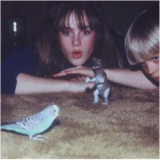
Elements of Life brings a full on boogie disco tune with some 80s synth goodness. The backgrounds are provided by an all star cast of singers including Cindy Mizelle, Audrey Wheeler, Anané, Dawn Tallman, and Ramona Dunlap. The song is penned by Nico Vega, just at 19 years old writing lyrics with the soul of a person who’s been through various experiences in life. It isa statement song coming from an adolescent stating where we are in the world today with war, and encouraging all to stop fighting, “no more war”,“Let Us Shine Bright As Day”, “Let Us Find A Peaceful Way”, “Let Me Hear You Say”, these words are crying out to the world.
Remixes by Josh Milan on the Josh Milan Honeycomb versions, feeding us an early 80s tune reminding us of the seminal label West End Records. The Louie Vega mixes stay true to the Elements Of Life sound mixed with some Detroit bass groove and synth overtones. A bonus track also added to the release featuring Axel Tosca on keyboards is entitled “Los Tonos Sagrados” which means The Sacred Tones.This instrumental has the early afrobeat rhythm with Axel Tosca ripping through with an organ solo and snare hits accenting the drums and music.Take a listen and enjoy the sounds of “Let Us Shine” and “Los Tonos Sagrados” and it’ll sure to have you with your arms up and eyes closed singing along with the choon in no time!! Available soon at all streaming and digital outlets, with vinyl coming too!!
Buscar:i tones
The wait for HULKOFF's forthcoming folk-metal album "Hersir" will soon be over. The album will be released on December 15, which is the official release date. Hersir is HULKOFF's fourth album and is preceded by "KVEN" 2017, Pansarfolk 2020 and Ragnarök 2021. With a dash of Scandinavian melancholy, ancient instruments and acoustic violins, Hersir offers an assortment of rockhard, earthy, melodic and furious folk-metal - a throwback in time accompanied by familiar and ancient Nordic tones. HULKOFF's sound is a seamless fusion of melody and aggression, forged to resonate with the ancient echoes of the North. His lyrics are a gateway to the distant past, delving into the ancestral tales and beliefs of the Kvens, Scythians, Goths, Celts, Finns, and the later Norse, all of which from which influences can be glimpsed through HULKOFF's rich repertoire. Songwriter, composer, and guitarist Pär Hulkoff stands apart from other artists with his uniquely deep voice and thunderous folk-sound - that are impossible to imitate. Unusual but familiar tones surround the ancient source material of Hersir, resulting in highly varied songs that range from aggressively uplifting to gnarly and determined folk-metal. Hersir comes with eleven tracks, blended with both English and Swedish lyrics.
The second crushing, soul mangling, neck bustin' album from Texas hardcore thrashers: Power Trip. Quite possibly the best thrash album you will have heard in the last decade. IMMENSE, MAMMOTH, MASSIVE.
Recorded by Arthur Rizik (Inquisition) , mastered by Joel Grind (Poison Idea, Toxic Holocaust) and features cover art by Paolo Girard.
POWER TRIP is a real band like no other. Their raw energy, musical proficiency, perfect song structure, rich tones, fierce riffs, persecution, and collective attitude have seeded them as one of the most prolific underground staples in the US metal, punk, and hardcore scenes. POWER TRIP has relentlessly toured the world for years with the likes of Anthrax, Lamb Of God, Cro-Mags, Negative Approach, Turnstile, Backtrack, Eyehategod, Bane, Off!, and more, and has performed with countless others, in addition to pummeling audiences at major festivals all over the US, Europe, and beyond. The band will be touring endlessly in support of this new album!
Luigi Madonna is back on his record label Contempo and continues to showcase the darker and more underground side of his sound with the analogue grooves on this hypnotic release.
This four-track EP blends raw sound design with industrial percussion and modulating synth lines, to create dance floor focused cuts in the style that Luigi Madonna has previously championed via Contempo.
Previous releases on Contempo have also featured tracks and remixes from the likes of JSPR, Alarico, Lobster and Marc Faenger.
"Yakamoz" opens the release with its rumbling bassline tense synths and thrashing hi-hats, before the ominous synth stabs, trippy vocals and brutal percussion of "Hydratonic" take control. "Slow Sigh" has a stripped-back style with murky atmospheric, high-speed rhythms and sinister vocal tones. "Ikigai (Jam Edit)" is an experimental track that closes out the release with its breakbeat rhythms, heavy sub-bass and glitching synth lines.
Berlin based producer and DJ, Fletcher, joins the roster of Anthony Georges Patrices’ Ausblick imprint this December with his ‘Blurred Lines’ EP. The past decade has seen Fletcher steadily unveiling his own distinctive twist on dub techno and micro house with a debut album on Steve O’Sullivan’s Mosaic and further material on the likes of Roger Gerressen’s Irenic, Ohm Series, his own Tact Recordings/Tactics. Here though he drops his new two tracker on the growing Ausblick label, following its recent release from label boss AGP with a remix from Playhouse legend LoSoul. Title-cut ‘Blurred Lines’ leads and see Fletcher lay down a sturdy, shuffled percussive groove at the foundation of the composition while ghostly chimes, swelling subs and modulating synths ebb and flow within its eight-minute duration. ‘What’s It All About’ follows and edges into more mind mending, minimalistic realms with oscillating bass tones, organic percussion and murky atmospherics all intertwined to create a low-slung dance floor focused tool.
Big Thief's music, rooted in the songs of Adrianne Lenker, paints in vivid tones "the process of harnessing pain, loss, and love, while simultaneously letting go, looking into your own eyes through someone else's, and being okay with the inevitability of death," says Adrianne.
Masterpiece, Big Thief's debut album, is -lled with characters and visceral narratives, songs that pivot in the space of a few words. Adrianne's voice and guitar playing speak of rich emotional territory with grace and insight. In her words, the record tracks "the masterpiece of existence, which is always folding into itself, people attempting to connect, to both shake themselves awake and to shake o the numbness of certain points in their life. The interpretations might be impressionistic or surrealistic, but they're grounded in simple things.'
Adrianne met her longtime musical partner, guitarist and singer, Buck Meek, in Brooklyn a few years ago, and they quickly formed a creative bond tempered by the experience of traveling and performing for months on end in old dive bars, yards, barns, and basements together. They recorded a pair of duo albums (A-Sides and B-Sides), and Adrianne showcased her songs on a solo album, Hours Were The Birds.
Now, as a full rock and roll band, with Buck on guitar, Max Oleartchik on bass, and James Krivchenia on drums, they bring a steady wildness, giving the songs an even deeper layer of nostalgia. "These guys feel like a pack of wolves at my back," says Adrianne, "they make the songs howl and bark with a fierce tenderness that gives me courage."
After spending last July in an old house that they turned into a studio on Lake Champlain with producer Andrew Sarlo, the resulting collection soars on what Big Thief fan Sharon Van Etten calls "...a real journey, with intelligent stories and twist-and-turn melodies.
Robert Hood's techno and Femi Kuti's Afrobeat intertwine in a new form where jazz-grooves reign supreme. For the fourth season of La Compagnie des Indes & Sourdoreille "Variations" live series of creations for France TV, the duo were united around the singer and producer James Brown, performing a tribute to the legendary Godfather of Soul who passed away in 2006. This "Variations" album is the live recording of this unique collaboration and performance, capturing a very special moment in time.
The evening witnessed a meeting of two icons in their own genres: one with synths and drum machines, the other on saxophone: Robert Hood and Femi Kuti embody excellence in their respective fields and the pair combined to make something truly unique, soulful, funky and spontaneous. Recorded in one 30+ minute take, "Variations" is embellished by Femi's exquisitely free-flowing yet restrained saxophone, whilst Hood anchors the groove with layers of pads and kicks with the long-time mastery of a true DJ.
Alongside Jeff Mills and Mad Mike, Hood is one of the original members of Detroit techno group Underground Resistance. His style is characterised by minimalist and experimental tones with an assertive groove. Throughout the '90s, he helped pave the way for techno to flourish - giving birth to minimal techno with his seminal album "Minimal Nation". Since then, he has been consistently forwarding electronic music culture with ground-breaking productions, sensational performances and his M-Plant label.
Alongside him, Femi Kuti takes on every musical style with his saxophone, which he plays with a virtuoso touch: pop, soul, electronic music and Afrobeat, of which he is one of the leading exponents. The son of Afrobeat singer and political activist Fela Kuti, he has inherited his father's zeal for both music and activism, where he continues to highlight the plight of most Nigerians living conditions in the oil rich state.
With "Variations" the duo capture an explosive combination on a special night in Paris 4 years ago, November 2019, filmed at the ADP Group headquarters (Paris Aéroport - Charles de Gaulle (CDG) - Roissy).
"It is so amazing when a vision comes to fruition. I enjoyed collaborating with the legendary Femi Kuti for this special project." Robert Hood
Black Truffle is pleased to announce the first LP documenting master khene player Sombat Simla, the label’s first collaboration with Japanese sound artist, field recordist, and researcher Yasuhiro Morinaga. Simla is known in Thailand as one of the greatest living players of the khene, the ancient bamboo mouth organ particularly associated with Laos but found throughout East and Southeast Asia. His virtuosic and endlessly inventive renditions of traditional and popular songs have earned him the title ‘the god of khene’, and he is known for his innovative techniques and ability to mimic other instruments and non-musical sound, including, as a writer for the Bangkok Post describes, ‘the sound of a train journey, complete with traffic crossings and the call of barbecue chicken vendors’. Aided by a group of Thai friends, in 2018 Morinaga travelled to the Maha Sarakham province in the Isan region, arranging to meet Simla in a remote spot surrounded by rice fields. Then and there, Morinaga recorded the solo performances heard on the LP’s first side. At Morinaga’s request, Simla began with a rendition of the train song ‘Lot Fay Tay Lang’. Beginning with long tones that seem to mimic a train horn, the performance soon moves into a rapid chugging rhythm, interrupted at points by vocal exclamations and the remarkable timbre Simla produces by singing through the khene. To listeners unfamiliar with Thai music, the pentatonic scales and rhythmic chug of many of the pieces can have surprising echoes of the rawest American blues. The range of Simla’s performance is astonishing, moving from compulsive rhythmic workouts on single chords and rapid-fire runs of single notes to gentle sing-song melodies, and using a fascinating array of techniques, including a rapid tremolo that sometimes sounds almost electronic. Later the same day, Morinaga followed Simla to a cattle shed where he met percussionist Mali Moodsansee to play some molam (folk songs found in Isan and neighbouring Laos), with Pattardon Ekchatree joining in on cymbal. At times, these molam songs have a wistful, romantic character quite different from the solo pieces. Backed up by the propulsive hand drums, Simla again dazzles with his melodic fluidity, rhythmic drive, and wild displays of unorthodox technique. As Morinaga writes, ‘It felt like they had been playing together so long that their breathing was perfectly in sync, and it was like listening to the precision of James Brown’s funk’. Accompanied by extensive liner notes by Morinaga detailing the day of recording, this is a stunning document of a master musician, seamlessly integrating tradition and innovation.
ARTIST OVERVIEW Mixing warm acoustic tones and strong vocals with heavy emo elements, the band launched several DIY tours, quickly developing a national presence. Signing with Boston indie Topshelf Records, they released their debut album, “The Earth Pushed Back" and in 2014, Have Mercy signed with vaunted indie Hopeless Records, which released their second LP, “A Place of Our Own”, later that year. Working with producers Paul Leavitt (All Time Low) and Brian McTernan (Thrice), Swindle and a rotating crew recorded the band’s Hopeless follow-up, “Make the Best of It”, which was released in early 2017. Have Mercy returned with “The Love Life” in 2019, which charted Swindle’s tumultuous personal life over the previous three years. The band came back in August 2022 with a self-tiled EP, released via Zodhiac Records, which caught the attention of Brooklyn Vegan, FLOOD Magazine, The Noise, and more. In september 2022 they shared an unreleased B-Side from their 2012 EP, My Oldest Friend, titled "Seventeen" via Rude Records. BAND MEMBERS Andrew Johnson // Guitar, Backing Vocals Brian Swindle // Lead Vocals, Guitar, Keyboard Nick Woolford // Bass, Backing Vocals TOURING HISTORY Since 2012, Have Mercy has toured both nationally and internationally with such acts as Taking Back Sunday, Motion City Soundtrack, Senses Fail, Mayday Parade, The Maine, The Wonder Years, Turnover, Real Friends and Neck Deep
Candlemass was formed by bassist & songwriter Leif Edling in Stockholm, Sweden in 1984 & is well known for its epic doom metal, having a great influence over a generation of the genre's subsequent greats such as Paradise Lost & My Dying Bride - Candlemass themselves taking a large influence from Black Sabbath.
'Ancient Dreams' was Candlemass' third album, released in 1988 & it featured a natural progression of slow- mid tempo epic arrangements from their previous release, 'Nightfall' - perhaps even more distinction between slow & faster parts - with the unique tones & unmistakable voice of Messiah Marcolin still dominating proceedings on this pure doom metal classic.
With a perfect balance between melody & sheer heaviness, it is still debatable as to whether this is the ultimate Candlemass & therefore greatest doom metal album of all time, with some giving this particular title preference over the seminal 'Nightfall' album. 'Ancient Dreams' was produced by Leif Edling & Candlemass & was recorded at Stockholm Recording studios in 1988.
Marking 35 years since release, this edition of 'Ancient Dreams' is presented on limited green marble-effect vinyl, featuring the original cover art
‘Rituals’ is the new album of spiralling drone & ambient formations by Italian artist Danilo Betti aka April Clocks (Union Editions / Mixed Up); a new work of sublime disorientation by the Rimini-based outlier, arising from a period of reinvigorated artistic practice.
Emerging just over a year after the project’s second album ‘It Takes Time’, ‘Rituals’ heads deeper into spheres of consuming, hypnagogic haze, coursing through nine coalescent compositions of amorphous yet absorbing electronics.
Where ‘It Takes Time’ represented an autodidactic interpretation of Betti’s formative influences – namely shoegaze & proto-ambient - ‘Rituals’ is an enigmatic proposition, the product of subconscious resonances, a mysterious sound world that finds traces of evanescent beauty and uncanny captivation in sustained tones, cavernous oscillations, and aesthetic imperfections, like the notes of subtle surface noise embedded within many of these productions.
Attesting to the value of Betti’s background as an industrious solo artist, making music away from prevailing sites of activity, ‘Rituals’ consolidates the inspirations and hallmarks of the April Clocks project into an acute reflection of Betti’s vision, one that feels completely his own.
In the buried somnolent splendour of the opener ‘Hypersleep’, through the sound art rustle and time-stretched cycles of ‘A Cure’, into the stroboscopic magnitude of ‘Ceremony’ and the haunting string loops of ‘Coward’, Betti captures compelling impressions drawn from a submerged perspective; a deluge of smokescreens and crosscurrents from the other side.
Bearing the influence of subliminal states, ‘Rituals’ is nevertheless lucid and arresting. There are sumptuous holding patterns of ambient evaporation that stream into vast maelstroms of sound (‘Displaced Euphoria’), enervated organ themes that distil sensations of stasis and dissociation (‘Wound’), as well as psychedelic movements in wide tracts of negative space (‘No Time, No Land’). From here, the acoustic glitch of ‘Disappearer’ and the stratospheric slipstreams of ‘Mirror Being’ bring the album to an astonishingly dramatic conclusion.
Throughout such moments of reverie and tension, ‘Rituals’ makes for a hypnotic listening experience. It’s an album that signals a pronounced sense of development for the April Clocks project, from past vestiges of physicality to present degrees of heightened abstraction and ethereality, from the Warp-influenced rhythms and frameworks of ‘It Takes Time’ to the wide- ranging, experimental sounds that unfold here.
Encompassing forms of decomposition and otherworldly futurism, decay and sublimation, distortion and lustre, this is unique, cerebral music that reaches inward and ascends outward, drifting elsewhere, according to its own coordinates.
Recorded and Mixed at Tower of Disintegration, 2022.
Mastered by Miles Whittaker.
Laolu makes his Crosstown Rebels debut with ‘Now I See’, combining with Off The Meds frontman Kamohelo Khoaripe across the two-track release. Having emerged via his versatile and dynamic DJ sets for the likes of Circoloco, with releases via labels such as Keinemusik, Innervisions and Anjunadeep, Swiss DJ/producer Laolu has stamped his mark while racking up support from Dixon and Black Coffee. Arriving in fine form, he closes out November with a classy label debut on Damian Lazarus’ renowned Crosstown Rebels as he serves up his latest two-track release ‘Now I See’ - a vibrant and personal release shaped and finalised after a decade following the birth of his daughter.
Spirited and resonant, combining soulful female vocals with organic percussion and sweeping melodies throughout, ‘Now I See’ is a warm and sonorous production set for heartfelt dancefloor moments, while ‘Monday To Sunday’ featuring the impactful vocals of Kamohelo takes a darker path as swirling bass patterns, menacing synths and warped tones merge around the commanding flute for a powerful late night cut.
Repress!
Two huge Bobby Womack classics, the heart-on-a-sleeve 'How Could You Break My Heart' and the sweet soul love song, 'Give It Up' get a much deserved, official remastered reissue.
Produced and composed alongside Patrick Moten, who worked with the likes of Loleatta Holloway, Anita Baker and Rosie Gaines, 'How Could You Break My Heart' was a massive record on the modern soul scene and still a favourite across the board with the biggest selectors and DJs on the circuit.
The blend of warm woozy keys and magical piano touches, over energetic strings, powerful horns and tight percussion, are near impossible not to get swept up by and provide the perfect backing for Womack to bare all. Arguably one of the greatest soul singers to have ever done it, endless amounts of passion and raw emotion emanate from his rugged tones as he swallows the bitter pill of heartache and rejection.
On the B side the bittersweet 'Give It Up' where soaring strings and sumptuous chord progressions, marry with the full range of Womack's vocals and those expert backing harmonies. A luscious sax solo and funk bass give a sultry feel that mixes with the tenderness on show, providing a powerful metaphor for the swirling emotions that come part and parcel with this ever-relatable tale of reaching out for love.
Trans-Millenia Consort is the near mythical debut album by the late West Coast composer, healer, and medium Pauline Anna Strom. First released in 1982, the album is a bold and beautiful evocation
of a life that exists between and beyond time. Evoking ancient rituals and primordial futures, the music of Trans-Millenia Consort glows with a strange iridescence; its pulsing embryonic waveforms flutter and drift, tones fall like raindrops of the long- ago, and melodies shimmer and dance across the ages like fireflies of a lost world. Restored and mixed from the original reels by Marta Salogni, and newly remastered, this is the album’s first ever official reissue, and the definitive edition of a visionary statement.
Following on from recent works for 12k, The Trilogy Tapes, and Important, Far More Decentralized is a new collection of subtle, enchanting pieces from Tokyo-based sound and visual artist Akhira Sano. Working with electronic, instrumental, and concrete sounds, he crafts immersive assemblages of long overlapping tones and blurred resonance, cut through with textural crunch and hiss. The resonant bell-like tones of opener ‘Kouai’ invite the listener in, calling up the warm sound palette of ambient classics like Hiroshi Yoshimura’s Music for Nine Postcards, but leaving any sense of compositional anchor behind for a free-floating harmonic drift. Woven through this seductive tonal cloud is a wavering stream of white noise and tactile pops, its textural grit threatening to derail the calmly reflective pool of pitched sounds, but never quite doing so. Each of these seven pieces occupies a similarly ruminative harmonic space while possessing its own identity. On ‘Neow’, lush tonal swells form around fragmented samples, touching on the techniques of early 2000s glitch artists like Ekkehard Ehlers. ‘Orbv’ is particularly subtle in its combination of rippling back-masked tonal wash, almost subliminal suggestions of field recordings, and distant traces of raw electronic interference, as if a Toshimaru Nakamura recording is playing through an open window across the road. ‘Margin’ weaves together a skein of wistful slow-motion melodies while untraceable, resonant clinks and ambiguous static washes rise gradually to the surface. In comparison to his recent Phase Contrast for Recollection on 12k, recognisable instrumental sounds are a rarity here, yet a hand-played feeling is present throughout. On ‘Teens’, filtered electric guitar tones reminiscent of the melancholic miniatures of Andrew Chalk float over aqueous burbles, bringing the album to a magisterial close. In the crowded field of contemporary electronic music tending toward ambience, Sano is a distinctive voice. Like his elegant abstract paintings, here seemingly static surfaces of unhurried calm reveal rich interior worlds of subtle activity and gentle chaos. Where much contemporary ambient music aims for an almost stifling cleanliness of tone, Sano breathes life into Far More Decentralized through the acceptance of imperfection, accident, and rough edges. As the artist himself says, ‘In a world where everything can be made perfectly, I think it’s a beautiful and primal act to touch the fragile and imperfect’
Following on from the psychoacoustic concrète of Outside Ludlow / Desert Disco LP (BT075), Sam Dunscombe returns to Black Truffle with Two Forests / Oceanic. Dunscombe has been active in recent years on multiple fronts, including as a key member of the Berlin community of Just Intonation researchers and practitioners; working with composers like Taku Sugimoto, Mary Jane Leach, and Anthony Pateras; and the release of Horatiu Radulescu - Plasmatic Music vol. 1 (the result of many years performance research into the thought and music of this seminal Romanian spectralist). In parallel with these activities, Dunscombe has been deeply involved in research on the role of music in psychedelic-assisted psychotherapy, prompting these two side long pieces, composed using field recordings and digital synthesis. As Dunscombe explains in the accompanying liner notes, music plays a key role in psychedelic-assisted therapy, yet it is often restricted to stock forms of New Age, ambient and electronica. Taking seriously the potential for spatio-environmental sonic experiences to add to the therapeutic process, these two pieces are intended to suggest how ‘a music-as-environment approach may help to add options to the therapist’s toolbox’. ‘Two Forests’ begins in a central Californian sequoia grove. Bird songs and buzzing insect life are treated with a variety of time-based processing methods (slicing and recombination, primitive granular synthesis, delay, and so on), which strip the field recordings of their linear, documentary character, reframing them in an enchanted web of traces and echoes. Analysing the pitches found in the original recordings, Dunscombe used them to generate a large Just Intonation pitch set. These tones are woven slowly into the field recordings, gradually building in density and complexity until the forest has been transformed into an unreal space of infinite proportions. Emerging from this cosmic expanse in the final minutes of the piece, we find ourselves in the Amazon rainforest outside Manaus, Brazil. As Dunscombe writes, the piece creates ‘a sense of place-gone-strange, of space and time simultaneously expanding and contracting across octaves, miles, and minutes’. On ‘Oceanic’, several recordings of different beaches fade in and out to create a texture both homogenous and constantly shifting in both the rhythm of the waves and each recording's sense of depth and distance. Tones relating in simple ratios to the average rhythm of each beach float over each other, colouring the white noise texture of the field recordings with shifting hues. In both pieces, Dunscombe forgoes the easy consonance that bogs down much contemporary ambient music for a richer harmonic array informed by extended tuning practices and spectralism. The end results suggest a hitherto undreamt-of meeting of Radulescu’s undulating sonic masses and the discreetly processed location recordings of Irv Teibel’s ‘psychologically ultimate’ Environments. Looking beyond the insularity that can afflict experimental music culture, Dunscombe’s work is a moving argument for the healing power of expanded approaches to sound and music. Even outside of a psychedelics-assisted therapy, frequent immersion in Two Forests / Oceanic is almost guaranteed to produce beneficial psychological results.
The Roger Webb Sound's Moonshade is one of the coolest records ever. Originally appearing via the legendary De Wolfe library in 1971, it's a sumptuous jazz-soul-funk instrumental set. Full of melodic, melancholic yet sun-drenched songs, rich with colour and contrast, it was composed by self-taught jazz pianist Roger Webb and features vocal performances by Barbara Moore. That's right; *the* powerhouse library music duo! It makes Moonshade the perfect precursor and accompaniment to Barbara Moore's eternal classic Vocal Shades And Tones. It will come as no surprise that original copies, if you can ever find them, will set you back north of 200 notes.
Moonshade is a phenomenal showcase of Brit maestro Webb's own roots in jazz. Those roots are served up here with a plethora of fast-stepping rhythms that truly give flight to the vocals of Barbara Moore, as they soar in wonderful ways. Moore sings wordlessly throughout, allowing her voice to act like another instrument in concert with the horns and keyboards elevating the fine arrangements. This is a deeply beautiful record.
The album opens with the ornate Baroque pop splendour of the sun-dappled melancholia of "Sunshine". Strings, piano and wordless female vocals combine to create this brief beauty of unimaginable grace. The cool "Gentle Eyes" features haunting and beautiful vocals, smooth jazz piano and horns and a general easy vibe without being easy listening, if you know what we mean. You do. Just listen. The pounding "Heavy Lace" is one for the beat-heads, funky open drums (!) with muted organ, bassy piano chords and ace horns. Sampled by Quakers for their great debut album on Stones Throw. The nostalgic "Yesterday" is wistful and beautifully melodic instrumental soul music with gorgeous acoustic guitar and flutes. It's followed by the light, lilting "Petal Soft" which features more Baroque styles, overflowing with flutes and harps. The bright, bouncing "Coaster" is an easy-going piano-led, guitar-driven swinger whilst "Grey Sigh" is another classic. A real highlight, with more fantastic propulsive drums and percussion and plaintive wordless vocals courtesy of Barbara. Speaking of which, the soft, sweet Rhodes jazz of the lilting "Sweet Thing" is another staggering showcase of the brilliance of Barbara. Just astounding.
Head straight past the honky-tonk-by-numbers piano jaunt "Cough Drop" and luxuriate in the soft, delicate beauty of the album's melodic, cyclical title track, "Moon Shade". Fragile flutes and acoustic guitar float across judicious bass notes before giving way to slightly ominous piano and, again, those beguiling wordless vocals. And then round again to the flute refrain of the intro. This time with the vocals to see us out. Majestic drama jazz at its finest. The cello-and-flute adorned "Sapphire" is a fluid orchestral beauty whilst "Interweave" rides with more urgency in its string and bass stabs. When the warm keys enter, it's a bonafide mellifluous wonder. The softer "Musette" begins in beautifully gentle fashion before pivoting for a driving yet elegant piano middle section. It reverts back to the mellow intro, for its outro. Understood? The melodic organ and prominent rhythm section running through "Reminiscence" makes for a delightfully understated folk-funk instrumental whilst the cool, rolling piano feels of "7.30 For 8.00" seem to perfectly suit the phrase "dinner jazz". It's no bad thing, c'mon. This classy, memorable set is rounded out by the half-minute mince of the Barbara-blessed "Sparky". It's just over too soon!
The audio for Moonshade has been brilliantly remastered by Be With regular Simon Francis, ensuring this release sounds better than ever. Cicely Balston's expert skills have made sure nothing is lost in the cut whilst the records have been pressed to the highest possible standard at Record Industry in Holland. The original, iconic sleeve has been restored here at Be With HQ as the finishing touch to this long overdue re-issue.
Keplar releases a vinyl reissue of 2001’s »Curve,« the second album released by Frank Bretschneider on Mille Plateaux under his real name. »Curve« saw him pick up on the underlying concept of 1999’s »Rand,« but gave his explorations of the sonic and stylistic range of electronic music notably more space and time to unfold.
Merging compositional minimalism with sonic complexity, the eight tracks display an affinity for the production techniques of dub music, which had already been a major reference point for Bretschneider’s work before. Its subtle grooves, especially in the rhythmically charged pieces towards the end of the album, also nod at the dance music-inspired work of contemporaries such as SND or Vladislav Delay. Produced during a prolific time for Bretschneider, who had previously co-run the Rastermusic label and was at that time still active under his Komet moniker, he considers »Curve« to be a crucial album in his discography.
Bretschneider was an important figure in the 1980s Karl-Marx-Stadt (Chemnitz) scene and released his first solo experiments with electronic music through his own klangFarBe tape label as early as 1985. Throughout the 1990s, he was part of projects such as Produkt and Tol and also released solo albums as Komet on Rastermusic, which he had co-founded in 1995 together with Olaf Bender a.k.a. Byetone. At the turn of the millennium, he gradually started releasing more solo records under his real name. After 1999’s »Rand,« followed »Rausch« on 12k—with whose owner Taylor Deupree he would collaborate for 2002’s »Balance,« reissued in 2020 by Keplar—in the following year and, finally, »Curve.« Produced after he had moved to Berlin, Bretschneider used a Clavia Nord Modular as his primary sound source and the Logic DAW to modulate and synchronise the sounds, adding only drum loops to some tracks in the second half of the album.
»Curve« is a record that is hard to pigeonhole and thus an archetypical Bretschneider album: marked by a meticulous attention to detail, infinitely playful, and fully dedicated to pushing the envelope of electronic music. It is no wonder that it left a lasting mark on the international scene for adventurous electronic music.
All tracks composed and recorded by Frank Bretschneider.
Originally released on Mille Plateaux in 2001.
Remaster and cut by Lupo @ Loop-O.
Artwork by Frank Bretschneider & Tim Tetzner.
Text by Kristoffer Cornils.
mule musiq welcomes british producer jimmy wallace, presenting his debut album “red, yellow, black” - a nine track strong record that partly leaves the dancefloor behind.
since childhood, music has been a strong influence on the 33-year-old artist. his mother, a music teacher, exposed him to classical sounds from an early age.
but it was hearing the electronic tones of the french touch movement, which really ignited his mu-sical journey. a year later he started to dj, acting out his love for four-to-the-floor grooves in local clubs. today you'll find him on the bill with artists like ruf dug, mr scruff, or bradley zero, heating up the dance floors.
as a producer he has already released a handful of stunning eps, including one for sweden’s finest house label studio barnhus, and one for london’s revered rhythm section international imprint.
both feature house tunes with an edge, house tunes with a love for the roots of the genre along-side more reflective, ambient moments. he also runs the label tartan records, where he publishes dancefloor focused white labels.
his music has been championed by titans of the scene such as palms trax, ryan elliott, dj tennis, gilles peterson, dixon, and hunee. axel boman even coined his debut ep as “one of the very best demo emails ever received at label studio barhnus hq”.
an advance praise, that wallace now acknowledges with an album full of deeply crafted music. some tracks lean towards the dancefloor, like the swung sounds of “bubbles”, the hypnotic mael-strom of “good morning”, or the epic, jazzy moments of “labyrinth”.
the theme of nature is evident throughout, with field recordings and environmental sounds he rec-orded on the road, being fused with his own musical ideas.
tracks like “waterfall” and “tokyo street”, draw influence on time spent in asia, whereas "dhq", "by the river", and "by the lake" are inspired by his childhood and hometown in the shropshire country-side. “i’ve been writing ambient and more nature focused material for a few years now without really having a plan for it.
finally, this year after writing the tune “labyrinth” i felt i had a body of work which was both diverse and cohesive enough to bring together on a record. so, the album represents moments of time i have spent in various outdoor spaces around the world, using sound to try and turn these experi-ences into musical format.” wallace discloses.
the result is a mesmerizing long player featuring an evocative, emotional story arc that avoids ste-reotypes and straight party orientated narration. “having written plenty of club music for the past few years, i wanted to show a different side to my sound.
something more intimate, private, experimental which can be listened to away from the party.” he reveals on the meditative, blissful “red, yellow, black” - an album, which has the power to transport listeners to places and spaces new – for inspiration, relaxation, and dancefloor moments off the beaten path