"This is where you have been forever and will always be forever." Stuart Dempster, speaking about what it feels like to be in a cistern where time seems to stop.
Stuart Dempster created Underground Overlays From The Cistern Chapel in the same cistern where the legendary Deep Listening album was recorded. Reverberating with powerful, deep tones, this double LP is intended as a companion to the acclaimed Oliveros/Dempster/Panaiotis album Deep Listening.
Underground Overlays From The Cistern Chapel is one of the deepest drone albums ever recorded. Nine trombones, didjeridu and Tibetan bells fill the massive two million gallon cistern with dense sonic reverberations that are both haunting and healing.
Packaged in a heavy duty paper sleeve printed with metallic gold ink to match the Deep Listening design.
Search:i tones
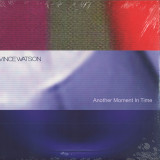
We’ve waited over 20 years and finally Vince Watson is releasing the follow up to his seminal ‘Moments In Time’ album released on Ibadan and Alola, entitled ‘Another Moment In Time’. Over the twenty years since the release of ‘Moments In Time’, Vince has put out more than ten LPs of various flavours. Here he returns to the vibe and feel of those early works. ‘Another Moment in Time’ wastes no time in exploring those rich, melancholic tones with his stunning piano chords and an essence of nostalgia that is both thought provoking and deeply satisfying. This album takes Vince Watson ever further into his original sound but with a pristine quality and finesse that his early work was yet to benefit from.
There are many highlights, from the opener with its rich acid deepness and subtle keys, to the energetic and deeply fulfilling ‘Flashback’ that gives a nod to Funk d’Void’s Diablo or KiNK. ‘Peace Of Mind’ features the incredible talents of the hallowed Underground Resistance ‘Timeline’ keyboard master Jon Dixon as co-writer, this combination of both musicians is an ear to behold; the piano and Rhodes playing is straight up high-tech jazz. ‘Lost In the Deep’ takes its cues from Detroit but hits different with twisting chords and grooves. ‘Whispers’ delivers the most melancholic deepness on the LP, whereas ‘Sunshine’ is pure out and out happiness with its twisting chords and a firm foundation in Detroit. Written on the first sunny day after the winter, you can hear the breath of relief within the track.
‘Rendezvous Finale’ is the 3rd and final version of a cut that’s had a long and satisfying journey. Originally released on Carl Craig’s Planet E in 2006, it was then formatted into Afro House for Osunlade’s Yoruba Records in 2018, and in ‘22 this new version was debuted for Carl Cox’s Birthday at DC10 in Ibiza for Vince’s live set. The reaction sealed the deal! ‘Forever’ and ‘Make A Wish’ are straight up club cuts that featured on a single also in ‘22. The album closes out with the peacefully beautiful ‘Sleep’ that rounds things off to sonic perfection.
20 years is a long time to wait, and it would do ‘Another Moment in Time’ no justice to simply say it was worth the wait. This feels like the next evolution in Vince Watson. The finesse, the musicality, musicianship, and the production levels are of the highest level. ‘Peace of Mind’ and ‘Flashback’ may well be two of the biggest tracks that Watson has released to date.
g D1 Rendezvous Finale
Wildly creative East Anglian musician Carl Brown is welcomed to the Love Love fold with great excitement. Carl has been consistently doing his own thing in music for quite a while and it’s high time some more people heard his sound. So many great ideas and lush feels are packed within. And while the sound palette is often electronic the tracks are positively human in nature, incorporating a wide variety of styles - playful, clever and eccentric, full of melodic shenanigans and top notch musicianship.
Upfront we get two rip-roaring braindance epics in the forms of title track ‘Koto アシッド’ and 2nd track ‘747 الرياض কলকাতা’, before ’S.E.T Ad '87’ changes the pace completely, cleansing the auditory palate ahead of the 2nd half of the EP with a spacey 80s dream. The pace settles out on the flip-side after the frazzling breakneck openers, slippery tones pirouetting atop a gracefully chugging bass line in ‘FWP’. Following this proceeds an unorthodox sequence of musical notes that somehow induces a series of highly concentrated fist-clenching emotions. ‘747 Red Eye Return’ slows its parent track down to a near still pace, its meditative tones bearing down like oppressive heat, before the final track provides a slice of brilliant musical escapism.
Surprising to the last second and brain-tingling throughout, this EP captures a colourful morsel of Carl’s work and should leave a lasting taste of what is yet to come from this sonic tinkerer.
It is always our pleasure to have new talents in the house, and we've been following Notzing's development since long ago. His approach to techno is absolutely personal and complex, hard and intrincated, mental and physical.
Protae is the first missile in this box full of weapons, a super busy techno exercise with compacted drums, drilling synth lines and random metallic hits breaking the monotony. The effect on the floor is devastating and has been tested extensively in dancefloors worldwide by label owner Oscar Mulero in the past months. 7 minutes of pure dancefloor mayhem.
Fagus continues with the sickness, with hysterical synth washe repeating an hypnotic chant, adding layers of sound as the groove goes by. Repetition is here the key to proper trance, not exactly with pleasant tones but by aggression.
Ekaterin is gummy and elastic with formant synth sounds chewing frequencies and changing constantly in shape. Another mental mantra with a physical drive.
Molniya slows down the pace and dives into profound sound scapes full of unnatural underwater sounds and washes providing a feeling of scuba diving.
To end this sonic odyssey, Emision goes completely beatless, growing from the profound sub bass frequencies to crispy and crunchy surface noises, creating the soundtrack of floating in outer space with no gravity. Please beware of the super intense bass tones when playing on a big sound system.
The perfect combination of experimentation and punchiness, keep an eye on this guy, is gonna make some proper noise in the coming years.
Following nearly 20 years of working together as a trio, and numerous cross-collaborations in different configuration between them, Ideologic Organ presents Placelessness, the debut full-length by Chris Abrahams, Oren Ambarchi, and Robbie Avenaim, comprising two long-form works at juncture of ambient music, minimalism, rigorous experimentalism and improvisation, and machine music. Having carved distinct pathways across a diverse number of musical idioms for decades, Chris Abrahams, Oren Ambarchi, and Robbie Avenaim are each, respectively, among the most noteworthy and groundbreaking figures to have emerged from Australia's thriving experimental music scene. Ambarchi and Avenaim first encountered Abrahams when seeing the Necks - the project that has served as the primary vehicle for his singular approach to the piano since its founding in 1987 - together during the late 1980s, not long after having met in Sydney's underground music community. The pair's collaborations date back more than 35 years, criss-crossing Ambarchi's pioneering solo and ensemble work for guitar and Avenaim's visionary efforts for SARPS (Semi Automated Robotic Percussion System), robotic and kinetic extensions to his drum kit. In 2004, fate brought the three together in a trio performance at the What Is Music? Festival, the annual touring showcase of experimental music founded and run by Ambarchi and Avenaim between 1994-2012. For the nearly two decades since, Abrahams, Ambarchi, and Avenaim have intermittently reformed in exclusively live contexts, in Australia and abroad, cultivating and refining the fertile ground first tilled in that early meeting. Placelessness is the first album to present this remarkable trio's efforts in recorded form. Placelessness is the joining of three highly individualised streams, working in perfect harmony; the point at which friendship, mutual respect, and decades of creative exploration produce a singular spectrum of sound. Featuring Abrahams on piano, Ambarchi on guitar, and Avenaim on drums, the album's two sides draw on each artist's enduring dedication to long-form composition. Its two pieces, Placelessness I and Placelessness II, initially began as a single, 40 minute work, before being divided and reworked into distinct, complimentary gestures for the corresponding sides of the LP. Beginning with restrained clusters of reverberant piano tones, Placelessness I progresses at an almost glacial pace, with Abrahams' interventions increasing met by sparse responses, darting within vast ambiences, on guitar and percussion by Ambarchi and Avenaim. Remarkably conversational within its convergences of tonal, rhythmic, and textural abstraction, over the work's duration a progressive sense of tension unfurls and contracts, refusing release, as each of the ensemble's members contribute to an increasingly tangled sense of density at its resolve. While an entirely autonomous work, Placelessness II rapidly realises a distillation of the energy hinted at across the length of its predecessor. Following a luring passage of harmonious calm, Abrahams' launches into shimmering lines of repeating arpeggios, complimented at each escalation of tempo by Avenaim's machine gun fire percussion work and Ambarchi's masterful delivery of tonality and texture, as the trio collectively generate dense sheets of pointillistic ambience within which individual identity is almost lost, before slowly unspooling into unexpected abstractions and dissonances that deftly intervene with the work's inner logic and calm. What could easily be termed a maximalist take on Minimalism, Placelessness is a masterstroke of contemporary, real time composition, that blurs the boundaries between ambient music, experimentalism, free improvisation, and machine music. Drawing on Chris Abrahams, Oren Ambarchi, and Robbie Avenaim's decades of respective solo and collaborative practice, and the culmination of nearly twenty years of working together as a trio, it's two durational pieces - Placelessness I and Placelessness II - take form with a startling sense of effortlessness and grace, neither shying away from explicit beauty or rigorously tension within their forms.
The first vinyl release from American artist Sydney Spann, Sending Up A Spiral Of well encapsulates Spann’s body of work thus far. On their music, which reacts to themes of family systems and care work, Sydney writes, “people who have done care work —nannies, sex workers, therapists, nurses— may possess their own musical knowledge, developed over time through particular modes of voicing practiced to achieve a desired outcome in their labor. Attending intimately to these ways of voicing and listening and bringing them into a sound practice could be a way to legitimize a less recognized kind of musical knowledge.”
Sending Up A Spiral Of explores this unarticulated expression through sound and song. The titular piece traces Spann within some quixotic woodland, as if beginning inside of some urban fairy-story. Self-soothing singing quivers under dragging branches, peeling cement and other tactile grit. The work drops into a new proximity half-way through as electronic contours overtake the environment. Sine-tones smolder in a pulsating choreography, perhaps reminiscent of Richard Maxfield’s “Night Music” played at half-speed.
The second section of the record depicts a series of five smaller portraits, expressed (or disguised) as lullabies. An oceanic humming permeates them. “Possession” and “Purposeful Evening” are the most song-like lullabies, with their verse-chorus repetition and melodic simplicity. Innocuous words “baby” and “honey” are encoded with deeper, often painful connotations. Sydney’s voice and vision for this album is ambitious, cloaked in the strains and contradictions of what love means in the nuclear family.
A 16-page artist pamphlet of rubbings, photographs and sheet music accompanies the LP, along with a digital PDF of Spann’s thesis “Sending Up A Spiral Of: A Musical Epistemology Made Through Care Work.”
Four tracks of esoteric and spatial electronica are served up on Quartz’s debut release for R&S Records.
Via releases for Metalheadz, Rupture London and System Music, amongst others, the ascending producer from Cardiff has impressed with his unique take on drum & bass, and more recently via grime influenced dubstep.
A thrilling hybrid of sounds and rhythms are pulled together on the ‘Deity Spear’ release as Quartz deploys angular breakbeats, gargantuan bass tones, convoluted rhythms, and panoramic sound design across four mesmerising tracks.
The opening track ‘Lilac Cobwebs’ is a reference and homage to his deceased mother, featuring a snippet of one of her last voice notes to him, and a reference to a colour he fondly remembers of her.
A spellbinding and dense release from one of the UK’s most audacious producers.
Disco re-edit master Moplen sprinkles his magic on the golden grooves of Jackie Moore’s classic, ‘Holding Back’ for the third release on A’s and Bees backed with the original Breakdown and Chin-Mental mixes from the mighty John Morales and Sergio Munzabai (M&M).
Continuing their run of heavyweight pressings that marry remastered originals with new interpretations of those prized cuts, A’s and Bees look to ’83 with this sensuous slice of disco heat, blending beefy slap bass with a soaring string section and Jackie’s soulful vocal tones. A cover of David Simmons’ 1979 classic ‘Holdin' Back’ penned by Gregg Diamond and Steve Love, Moore’s interpretation is a high energy disco hit from across the Atlantic.
Opening up the release, re-work whiz Moplen was graced with the stems to the original recording, tweaking, finessing and squeezing out all the best bits of the original building the tension across 7 sublime minutes, that balances deftness with full frontal power. Taking the A2, the original vocal mix in all its glory, produced and arranged by MFSB’s Bobby Eli.
On the B side two masterful M&M mixes from the legendary duo of John Morales and Sergio Munzabai in the form of the Breakdown and Chin-Mental versions.
50% of the profits from this release will be donated towards the British Beekeepers Association.
For BiD006 we're very pleased to announce that renowned Artist Matt Sewell has agreed to release his fledgling audio project, Sewell & The Gong on the label.
4 guitar led mystical meanderings and deep meditations of cosmic transcendental psychedelic folk.
Matt's acoustic guitar has been a fixture of his studio for many years, although nobody would ever of known as he kept it pretty much to himself.
Over the years he developed a self taught, repetitive, finger picked style in hushed tones to not bother anybody. Just a quiet little part of his studio practise, calming looping melodies.
Like his art, his music is very much inspired by nature, earth magic and cosmic wanderings. His 'A Crushing Glow' compilations are pretty much a defining list of inspirations.
Never heard by anybody outside of the family home that all changed after Matt started working with Newcastle based multi-instrumentalist, fellow pathfinder and astral traveler Chris Tate.
Combining forces Chris helped build a beautiful world for Matt's melodies to wander in, deep and lush and always, always positive.
In Rumi's poem A Great Wagon he writes of a place of total acceptance. "Out beyond ideas of wrongdoing and rightdoing, there is a field. I'll meet you there," It is a boundless, liminal space where we can release the judgments we make and carry of ourselves, and the comparisons to others. When we think of this field, there is a sense of tranquility that only comes when we are undisturbed by the shadow self and see existence as neither bright nor dim, white nor black. But as lead singer Greg Bertens explains, arriving there is a whole different story. "This is a poem I've returned to over the years, and I love the idea of this place, but getting there is life's journey." Bertens adds "I think the longing for and elusiveness of this field is a recurring theme in our music." Field is enveloped by themes of regret, disconnection and frustration but with the space to understand that these feelings are a natural part of the struggle between reconciling the inner and outer self. The Los Angeles/San Francisco-based group have been indie shoegaze stalwarts since their formation in 2001. After two decades and a handful of line-up changes, their extensive discography presents a dynamically textural, lush psychedelic rock that has featured guest appearances by members of Pavement, My Bloody Valentine, and Snow Patrol, among others. 2021's LP We Weren't Here was hailed for its dense instrumental blanket, where unrelenting hi-hats and heavy kicks exist alongside dreamy drone guitar. This propulsive nature permeates Field, as members Bertens, Noël Brydebell (vocals), Nyles Lannon (guitar), Jason Ruck (synths), Justin LaBo (bass), and Adam Wade (drums) produce a kaleidoscopic sonic landscape. Patient, sprawling instrumentation builds a foundation in which Bertens' themes of endurance, perseverance and clarity can bloom with a considered poise. As a lyricist who writes in response to the instrumental arrangements, rather than a focus on a specific theme or person, Field is a testament to Film School's ability to create in the moment, and to showcase the magic that stems from when we are truly present. Album opener "Tape Rewind" is a swirling rush of color, as sustained guitars, darkened bass lines and urgent, percussive swells dance alongside each other. "This is the newest of all the songs on the record and feels like a new level of heaviness for the band," Bertens explains, noting that its lyrical context of struggling to move past trauma adds to its cathartic essence. Field is bookended by heavier themes, with closer "All I'll Ever Be" taking on the perspective of those we hurt when we embrace our own toxic behaviors. Originally written to be a simple acoustic guitar and vocals song soon turned into an ethereal, effects-laden composition, with Noël's hazy lead vocals ushering in a new-found acceptance. "It's all I want / To be released / And all I can be," she laments, cementing Field's message of accepting ourselves in whatever form we find ourselves in. "Defending Ruins" is a murky relentless underworld, inspired by the freewheeling tones of Texas-based band Holy Wave. "Defending the ruins, defending remains," Bertens spits, among a richly-layered outro. "Don't You Ever" confirms Film School's ability to merge both delicate and growling instrumentation throughout the album, with the song's softly spoken section hovering above sparkling guitar. "Is This A Hotel" bends towards the electronic aspects of the band, with wailing synths accompanying a story of bitter desire. With over two decades in the industry, Field cements Film School as a distinct, dominant force in the shoegaze scene. Soaked in an emotionally open, imaginative atmosphere, the album is both singular and expansive, and leaves the door open for a constantly evolving interpretation. Film School have never confined themselves to the rigidity of specifics, and it's on Field that they urge us to look beyond the binary of certainty, and to take a second look
Bump 'n Grind Wax takes another turn in their vinyl-only exploration into the intersections of dance and sound system music. The Uganda Connect, Swordman Kitala, brings two dancefloor killers straight from Kampala's active underground hip hop and dance scene to this limited edition vinyl-only 7" release on Bump 'n Grind Wax! An MC with heavy influences from dancehall and hip hop traditions, Swordman Kitala has been tearing up leftfield dance-focused productions from cross-genre artists like Tom Blip, Soft-Bodied Humans, and DJ Scotch Egg. With memorable performances and releases with the musical-trendsetting Nyege Nyege Festival, Swordman Kitala's infectious flow pairs perfectly with club-ready tracks, crafting a sound that is being felt in all corners of the world!
The A-Side of BNG-006, "Chidongo", hits straight to the gut with militant drums, off-kilter claps, industrial tones, and rapid-fire lyrics. The elements combine for a rough and tough dance track that will have necks breaking, bodies shaking, and sweat-dripping from your brow as your gun fingers pop off in the dance. B-Side brings the magic man from Richmond, VA, Charles Benjamin, into the fold, with this special edit of Swordman Kitala's "Bade". Swordman Kitala's rudeboy lyrics champion him as the "Uganda Connect" while Charles Benjamin adds the omnipresent low-end, sirens, and wick drum pattern which crescendos towards the end of the track into a dance-ready drum groove that DJs will be looping for years to come.
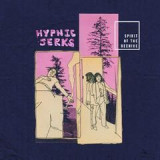
Unlike the spiraling momentum of the band's sophomore LP, pleasure suck, the spirit of the beehive takes a more grounded approach here, though the ground it's standing on is equally otherworldly. Dreamy is a fitting adjective, but the ten tracks on Hypnic Jerks never fully slip into the peaceful character of dream-pop. Hypnic Jerks has the quality of an indescribable dream fading from memory as you slowly begin to regain consciousness. Its warped guitar tones, transcendental synths and smattering of eerie audio samples conjure this purgatorial space between reverie and reality. It's an arena where the songs unexpectedly contort themselves and take on different textures, morphing in and out of one another. Once the celestial harmonies, balmy keys and creeping false climax of album closer it's gonna find you roll past, it's clear that the spirit of the beehive has secured a seat at this decade's table of musical visionaries.
- A1: Puppet (Equinox Remix)
- A2: Daisy Takes Two (Meat Beat Manifesto Dub Selection Remix)
- B1: Stachybotrys (Coco Bryce Rework)
- B2: Lucky Gonk (Macc & Dgohn Remix)
- C1: Electryon (Wisp Remix)
- C2: Lucky Gonk (Forest Drive West Remix)
- D1: Turnips Are Ok (Rognvald Remix)
- D2: Conty (Scrase Remix)
- E1: Ninnyhammer (Djrum Remix)
- E2: Robin's Windmill (Skee Mask Remix)
- F1: Af0156984 (Quavis Remix)
- F2: Invisible Sandwich (Carl Brown's Pea & Mint Mix)
repressed !
Undesignated remixes is an expansive project containing 12 remixes of tracks from dgoHn’s iconic 2020 full-length by some choice artists from in and around the Love Love sphere. Remixes that take dgoHn’s unique razor-sharp original productions and send them through a loop and round the twist, some stripped down, some messed up, most but not all maintaining the speedier tempos that dgoHn likes to work around. The result is a collection of seriously futuristic electronic music with some stylistic leanings towards labels like braindance or drumfunk or jungle but completely genre-eluding as a whole, reshaped from the minerals of the original LP by some absolute dons of their craft.
Opening the album Equinox does a fantastic job highlighting the lushness of ‘Puppet’ layering sky-high sunshine pads before sliding into Meat Beat Manifesto’s heavy sci-fi acid dub version of ‘Daisy Takes Two’. A woozy remix of ‘Lucky Gonk’ by Macc & dgoHn marks the first new material from them as a duo since ’09 and Wisp also makes a rare appearance bringing his inimitable post-rephlexian vibes on an agonisingly wonderful, melody-heavy remix of 'Electryon'. Skee Mask’s choice of remixing ‘Robin’s Windmill’ turns the original into a bundle of writhing rhythms organically unfolding with swelling ambient tones. Homegrown heroes Rognvald & Scrase both opt for pumped up post-breakcore in unconventional time signatures while Djrum emphatically provides the LP’s dose of peak jungle choppage, tempering the drum breaks of ‘Ninnyhammer’ with a blistering amen. Also featured on the LP are crisp and beefy drum workouts courtesy of Coco Bryce and Forest Drive West, visceral and apocalyptic half-time bass from Activia Benz affiliated duo Quavis and virtuosic noir-jazz tearout from fellow East-Anglian Carl Brown.
1979 Linda Williams gold from the Arista archives gets a much welcomed official, remastered reissue.
With an intro that does exactly as its title suggests, 'Elevate Our Minds' became a huge rare groove record in the mid to late '80s. Produced by the late, great Richard Evans who worked with the very best in the business, from Gene Chandler and Marlena Shaw, to Ramsey Lewis and Ahmad Jamal, it's supremely arranged, blending a Bossa Nova beat and trumpet trills with Linda's distinctly New York authenticity that comes through in the vocals. Like a trip to the blissful beaches of Rio whilst bringing a touch of the New York disco glam along for the ride. Exotic yet familiar, all in the same breath.
On the flip, 'City Living', a straight up New York disco killer - oozing with funk, dripping in brass blasts, off beat hats and spruced up synths, it's a primetime ode to the hustle and bustle of the city. Williams' glorious tones, assisted by a majestic troupe of backing singers, glisten alongside the classy drumming and polished bass badness that lays behind it.
The tone always makes the music. But only those who actually make the sound An ancient-house-avantgarde dream has always been there since the legendary -Warehouse- days of Ron Hardy, to bring more sounds and tones constantly to an independent, repetitive development. And thus beyond the limits of an executive creative artist on the otherwise purely commercial sense what we call in common -beyond imagination-. -Raw Footage-, the latest album concoction of Chicago house legend Ron Trent (Prescription) on his new imprint -Electric Blue- works in the best sense of Stanislav Lem heroes Trurl & Klapauciusals, cruising like those two metal brains frantically invented by the universe of 4/4-Sounds to get insane tracks out of the new material matter located there, and put them together to brand new ones. This trackwerk varies as well as of course between classical Chi-Town to the context of contemporary, epic house dubs and lives in a perfidious manner from the interaction of various computer
modules that constantly spits out new and exciting interactions. In the end, the software sings only as digital output of great analog sounds, which may well be understood as a mocking voice to the majority of contemporary Homeboy wackiness formats.-Unpredictable- and less -cryptic- might fit here as a keyword excellent, where you kick out of the rough house plant a significant entertainment value must, without the need to posess necessarily the same nerves of steel. Anyone who has ever really wondered what House sound could be appropriate for a journey through the vastness of the universe is, gets there now at this point completely to his fullest expense. Trent 2012 and its tracks on this album reflect a lot about the revolutionary founder of -Spirit of music- from the mid-80s, who is recorded then as now but with inadequate slogans such as -light years ahead of its time-. For as
Trents body of work -Raw Footage- is also particularly scary genius material, although still of totally solid stress field and background from the musical spectrum between the Windy City and the Motor City engine bridled her.-But heres to the Future- For Sir Trent more than twenty years after -Altered States- and the relevant follow-ups, thats not really a problem!
Der Ton Macht immer die Musik. Nur wer macht eigentlich den Ton Ein uralter-House-Avantgarde-Traum war und ist es seit den legendären
:Warehouse: Tagen eines Ron Hardy, Sounds und Töne immer ständig neu zur selbstständigen, repetitiven Entfaltung zu bringen und somit die kreativen Grenzen des exekutiven Künstlers über die sonst im rein kommerziellen Sinne gängige Vorstellungskraft hinaus zu sprengen.
:Raw Footage:, das neueste Album-Machwerk von Chicago House-Legende Ron Trent (Prescription) auf seinem neuen Imprint :Electric Blue: kommt im besten Sinne der Stanislav Lem Heroen Trurl & Klapauciusals, und cruiost wie jene beiden Metallgehirne wie wahnsinnig durch das All der 4/4-Sounds, um aus dem dort befindlichen Materiematerial neue, wahnsinnige Tracks zu erfinden und zusammenzustellen. Dieses Trackwerk variert denn auch wie selbstverständlich zwischen dem klassischen Chi-Town-Kontext bis zu kontemporären, epischen House-Dubs, und lebt auf perfide Art
und Weise aus der Interaktion verschiedenster Computermodule, die dabei ständig neue aufregende Interaktionen ausspuckt. Am Ende singt eine digitale Software nur noch als Output großer analoger Sounds, die durchaus als Spottgesang auf den Großteil eitgenössischer Homeboy-Frickelei Formate verstanden werden dürfen.:Unberechenbar: und weniger kryptisch mag hier als Schlagwort vortrefflich passen, wo man dem rohen Housewerk ganz erheblichen Unterhaltungswert abgewinnen muss, ohne das man dazu unbedingt gleich Nerven wie Drahtseile benötigt. Wer sich je
eigentlich gefragt hat , welcher House-Sound so für eine Reise durch die endlosen Weiten des Universums angemessen sein könnte, kommt an dieser Stelle jetzt völlig(st) auf seine Kosten. Trent 2012 und seine Tracks reflektieren mit diesem Album zwar viel von dem revolutionären Gründerspirit einer Musik aus der Mitte der 80er-Jahre, die damals wie heute dennoch nur unzureichend mit Slogans wie ihrer Zeit um Lichtjahre voraus zu erfassen ist. Denn wie Trents Gesamtwerk ist eben auch :Raw Footage: insbesondere furchteinflößend genialer Stoff, wenngleich auch immer noch vom ganz und gar soliden Spannungsfeld und Background des musikalischen Spektrums zwischen der Windy und der Motor City her aufgezäumt. :But here's to the future: - Für Trent auch mehr als zwanzig Jahre nach :Altered States: und den einschlägigen follow-ups nicht wirklich ein Problem!
Life On Mars is the 1976 debut album by the American R&B/jazz fusion singer, arranger, musician, composer and conductor Dexter Wansel. The album is considered to be a "space-funk" classic, inspired by David Bowie's "Life On Mars?". Wansel composed his own sci-fi sounds with swirling, ring-like oscillators, cosmic sub tones, and metallic, otherworldly leads using his signature ARP 2600 synthesizer. Wansel's pioneering synth sound was shared on numerous records with artists like MFSB, Billy Paul, Evelyn "Champagne" King, Teddy Pendergrass, and The Jones Girls. The album inspired other artists and Wansel's "Theme From The Planets" drum beat intro is hailed as being one of the first foundation beats of hip-hop. His sampled music has been used by Kanye West, Lil Wayne, Drake, Rick Ross, J. Cole, Wiz Khalifa, and Ice Cube amongst others.
Life On Mars is available as a limited edition of 1500 individually numbered copies on translucent blue coloured vinyl.
London label Mysticisms knows how to dig out some truly lush house grooves whether that's in the form of unreleased house meets IDM, classic reissues or debuts from new school artists. N-GYNN falls into that latter camp having started to make waves on the likes of Hamam House Pleasure Club and his Superlux Records label. He explores a dreamy and cuddly house world here with rolling analogue drums, wispy new-age percussion and whimsical cosmic melodies that all make for otherworldly grooves. 'Journeys' has the feeling of an ancient ritual in the sky, 'Alistera' is a kaleidoscope of colour and 'Kebaya' has a more earthy Afro feel. 'Funk Break Beat' closes with a jumbled groove peppered with dial tones, string loops and bulbous acid.
British epic doom metallers Godthrymm (featuring members once
involved in such luminaries as My Dying Bride, Anathema, Vallenfyre, and
Solstice) return with their new album, Distortions
The follow- up to 2020's widely- lauded 'Reflections' shows the Halifax- based
quartet of Hamish Glencross (guitars/ vocals), Catherine Glencross (keyboards/
vocals), "Sasquatch" Bob Crolla (bass), and Shaun "Winter" Taylor-Steels (drums)
elegantly expanding upon their sound and vision. With tracks like "Follow Me,"
featuring former My Dying Bride compatriot Aaron Stainthorpe, "Echoes," and
"Devils," Distortions advances Godthrymm into the hallowed halls of the genre
they adore to death.
"I absolutely wanted to create a much more layered and complex arrangement in
the sound," says Godthrymm's Hamish Glencross. "Totally amping up the
contrasts to the extreme--the light shines brighter, and the darker depths are vast
trenches. There is a lot more harmony and melancholy for much of it, but also
some slab-heavy riffing, too. We wanted a total progression in the production and
more class and clarity in the sound, as opposed to Reflections, which could get
quite dense in tone."
Distortions is the second part of Glencross' Visions trilogy-- the third part,
Projections, is already in the works. Throughout its seven- track, hour- long
expanse, Godthrymm's sophomore effort delves deeper into the despondent
march of post-pandemic singles "Chasm" and "In Perpetuum," the latter released
exclusively on Decibel Magazine's Decibel Flexi Series in 2022. Glencross'
emotionally-charged vocals pair perfectly with his towering riffs and thoughtful,
crestfallen harmonies. The rhythmic foundation of Crolla and Taylor- Steels is
absolutely critical to Glencross' woebegone eclat. With Catherine Glencross'
angelic vocals and atmospheric keyboards stitched into the monumental "As
Titans," the granite-hard "Obsess and Regress," and the stirring "Pictures Remain,"
Distortions has it all.
The songwriting for Distortions began during the first lockdown. For an album
centered lyrically on grief, loss, regret, resolve, love, and determination, it's hard to
imagine something inexplicably heavy yet remarkably beautiful. Producer Andy
Hawkins (Hark, Grave Lines) was the perfect man for the job. Spread across The
Nave Studio in Leeds and Sasquatch Music Studio in Huddersfield, he captured
Godthrymm at their most menacing ("Unseen Unheard") and vulnerable ("Follow
Me"). The tones he extracted from Glencross, Crolla, and Taylor-Steels absolutely
crush, while the brighter moments (like Catherine Glencross' spell-binding vocals
on "Obsess and Regress") splinter Godthrymm's disheartened darkness in two.
Distortions was mastered by Mark Midgley (Doom, Hellkrusher) for Northern
Mastering Co.
Black Truffle is pleased to welcome free jazz legend Joe McPhee back to the fold with Oblique Strategies, a wild trio recorded in Antwerp in 2018 in the company of Mette Rasmussen’s fire-breathing alto saxophone and Dennis Tyfus’s post-Fluxus antics on tape, voice, and percussion. Rasmussen and Tyfus have previously recorded together as Bazuinschal, and some similar strategies are on display here: mysterious metallic scrapes, extended tones in which voice and sax become indistinguishable, comic explosions of varispeed tape. With McPhee on board, however, proceedings are more sumptuous, with the two horns moving fluidly from expeditions into the extremes of their instruments’ registers to pointillistic note-splatter and Ayler-esque folk melodies; we even get to bask in some of the slow-motion free blues that McPhee has now been playing for half a century. McPhee is heard primarily on tenor, Rasmussen mainly on alto, but with Rasmussen doubling on sundry objects, and the whole trio contributing vocals, certainty about who is doing what becomes nigh impossible.
The recording and production add to this hazy unclarity. Where much contemporary improvised music aims at dryly clinical hi-fi, the lively reverberant space of Oblique Strategies calls to mind the less-than-pristine sonics of classic free jazz artefacts like John Tchicai’s Afrodisiaca or McPhee’s own Underground Railroad. A further dimension of oblique unpredictability is added by subtle changes in the sense of space: at times merely a reverb tail glimpsed between phrases, at other points the whole mix seems to be momentarily swallowed up in slap-back, blurring the lines between acoustic instruments and the decayed fidelity of Tyfus’ tape playback. Spread across four pieces ranging from four to nineteen minutes in length, Oblique Strategies moves with anarchic swagger from explosions of clattering cymbals and bellowing horns to near-silent episodes of mysterious rumble and clunk. ‘Death or Dinner?’ opens the record with a lovely duet of climbing melodic patterns shared between the two saxophones, played with a buzzing oboe-like tone. A long, wavering note sung by Tyfus cues the first of countless changes of direction, eventually leading to a crescendo of watery splutters and duelling saxes. At points Tyfus’ keening resemble the signature moves of his friend and collaborator, Ghédelia Tazartès; at others, his tape-sped huffs and puffs possess a rawness reminiscent of Henri Chopin or Gil Wolman. The dialogue between wailing saxophones and vocal cries, punctuated by percussive thuds and crashes, can at times feel less like a musical performance and more like the calls of some mysterious forest creatures, possessing a primordial energy that might remind some listeners of the outdoor antics of Brötzmann and Bennink’s Schwarzwaldfahrt.
Oblique Strategies can also be delicate at times, as on the beautiful third piece, ‘Destilled Edible’, dominated by a slow, microtonal melody played with a breathy tone resembling a shakuhachi. The closing side-long ‘Light My Fire’ ranges across classic improv call and response, skittering trumpet blurts, inept cymbal clatter, mock-operatic vocals, and crude tape manoeuvres. Momentarily pausing at the ten-minute mark for an interlude of ghostly room sound and crackling texture, its closing moments unfurl a glorious dual saxophone finale, the almost epic tone subtly undermined by Tyfus quietly tapping out swing rhythms. Arriving in a striking sleeve adorned with Tyfus’ drawings, Oblique Strategies is an invigoratingly free-spirited blast of improvisation.
Downloads
Big Crown Records is proud to present the debut full length offering from Les Imprimés, Rêverie. The stirring and ethereal sounds of Les Imprimés have been making fans of anyone who hears them since their first 7" single hit the speakers. Morten Martens is the man behind the band. Born, raised, and working in Kristiansand, Norway, he keeps a low prole while making his heart felt, highly infectious, and unique music. This album is a long time coming for Martens and it is sure to make him a name to be reckoned with. The first thing you notice listening to Les Imprimés is the high level of musician-ship. Martens plays nearly every instrument on the recordings and handles the production and arranging. He has been making records for decades, winning a Spellemann Award (aka, the Norwegian Grammy) in 2006 for producing a HipHop album as well as getting nominations across three other genres. While awards and accolades speak to the level of his talent, this new album really shows who he is an artist on his own terms. Moving away from being a hired gun on the touring scene naturally led him to start doing more studio work. Slowly collecting gear and getting more experi-ence behind the boards he built his own studio on the island of Odderoya and was making a living playing with and recording other people's music. As the story goes, after those sessions would end he would work on his own project into the wee hours of the night. From these late night sessions, Les Imprimés was born and Rêverie began to take shape. However, "it wasn't until COVID, when things locked down, that I was really able to nd the time to focus on Les Imprimés" Morten says about creating and leading his own solo project. "It was a scary time. But I knew I had to do something with it." He took the sum of his inuences, combined them with his own vibe and got busy writing the music, playing the instruments, and singing the songs. "It's soul music, but I don't exactly have the soul voice," Morten explains humbly. "But I do it my own way, in a way that's mine. "It is his sound, his fingerprint, his sensibility, that makes his music hard to put in a box. The album showcases both Martens' range and his ability to make a cohesive album. The lead single "Falling Away" starts with a raw drum break and turns into a lushly arranged tune that paints the picture of love when it slips away. On "Still Here" he professes his resilience through life's twists and turns over a thundering track that puts a new spin on the B side ballad genre. Songs like "You" and "Our Love" mix tones from 60s and 70s Soul with arrangement nods to Doo Wop records while Martens' lyrics and delivery leave you singing the melodies long after they finish. "Love & Flowers" finds Martens in a moment of clarity with a song that ts the niche sub genre of happy break up tunes, the four on the floor track will move the dancefloor or while the message will resonate with anyone who put too much effort into the wrong situation in their lives. However, it is songs like "Muse" and "Chess" that really encapsulate the uniqueness of Les Imprimés as they push the boundaries of genre, one a profession of love for music and the other a cover of an electronic record respectively. Martens' lyrics, emotion, and delivery truly make the whole thing come together and stand out from any of his peers. There's an infectiousness and a pop sensibility in the writing that is done with the utmost class and taste giving Les Imprimés the rare quality of immediate attraction that only deepens the more you listen.