The debut album from Addy Weitzman, ‘Light Months Will Fly Over Us’ explores new-wave, romantic pop and art rock with elegance and ambition, drawing from Weitzman’s scattered network of collaborators, as well as a “frighteningly vast” personal archive of compositions. Sequenced by Seth Troxler and released on his Slacker 85 label, it represents a pivot in musical direction for the imprint, and a showcase for the songwriting craft Weitzman honed as a member of cult electro duo Footprintz, and Montreal synth-pop projects The Beat Escape and Dawn to Dawn.
The title Light Months Will Fly Over Us is derived from a line in a poem by the Russian writer Anna Ahkmatova. Weitzman was immediately struck by its “hopefulness, its mystery… it gives the feeling of being suspended, hanging in a dream-like state”. This interpretation has been translated to the album, rich in memorable songwriting that nonetheless invites the listener to lean in further. Delicately mixed by engineer Pierre Guerineau, known for his work alongside Marie Davidson, each of the eight tracks gently interrogates life’s greater mysteries; fear, love and salvation, each defining and revealing the human soul.
Opener ‘End of The Line’ invites us into an immediately lush space of lounge lizard existentialism, soft brass and piano helping Weitzman introduce “where the journey begins and the fantasy dies”. Across orchestral arrangements arranged by Adam Wilcox, whose sensitive, ambitious compositions are weaved throughout the album, ‘Beyond The Speed of Life’ brings to mind the laments of Scott Walker. Navigating vulnerability via grandeur, Weitzman’s earnest vocals flourish in wide-eyed call-and-response with the object of a transcendent love affair.
Alongside collaborator, Richard Lamb, the next chapter of the LP plunges into contrasting machine-driven moods; the wry, bubbling ‘Entertainment Is All I Wanted (And I Found It)’ is imbued with the playfulness and experimentation of 80s electronic pioneers such as Fad Gadget, while the tougher, icier ‘Stranger To Your Kind’ shifts in a more instrumental direction, recalling Weitzman’s dancefloor experience, as well as contemporaries such as Matthew Dear.
Album centerpiece and striking first single ‘Running & Returning’ is the first of a suite of three tracks in collaboration with Weitzman’s The Beat Escape and Dawn to Dawn bandmate, Patrick Boivin. Blending lush saxophones and angular guitars with a wistful melodic touch and lyrics, its irresistible art-rock rhythm provides the foundation for one of Weitzman’s most involving vocal performances.
It’s followed by an anthem for existential absurdity: ‘Ice Cream Candle’ provides a driving acceptance that “the more and more you learn, the less you understand”; Weitzman submits to this uncertainty with equal grace on ‘No Man’s Land’, as baroque invocations of “words swept through the fields” and meeting “where the water lilies grow” give way to a blistering guitar solo, humbly riding hypnotic percussion.
For the compassionate finale of Light Months Will Fly Over Us, Weitzman narrates the experience of ‘Gabrielle’, a woman slipping between rooms between shuttered blinds in the towering city, “where cigarettes and roses fill the air.”
As lyrically delicate as it is musically ambitious, Light Months Will Fly Over Us is a sublime debut album, enriched with care, love and much-needed enchantment.
Buscar:ice city
- A1: Suffocate City Feat. Spencer Charnas Of Ice Nine Kills (3:33)
- A2: Holy Water (Feat. Ivan Moody Of Five Finger Death Punch) (3:01)
- A3: Blood Mother (3:17)
- A4: Doom And Gloom (3:18)
- A5: Dark Thoughts (4:01)
- A6: You’re So Ugly When You Cry Feat. Bert Mccracken Of The Used (3:23)
- B1: Chernobyl (3:21)
- B2: Dopamine (3:44)
- B3: Voodoo Doll (3:57)
- B4: Happier Than You (3:10)
- B5: Alien (4:10)
- C1: Generation Psycho (3:51)
- C2: Stay Weird (3:29)
- C3: Hearse For Two (Feat. Lilith Czar) (3:28)
- C4: Evergreen (3:23)
- C5: Skinny Lies (3:21)
- D1: Lost Boy
- D2: Stay Weird (Beyond The Abyss) (3:42)
- D3: Suffocate City (Live) (4:47)
- D4: Alien (Demo) / Friends Like These
After securing the number 1 spot on Billboard’s Mainstream Rock Airplay chart with their song Suffocate City (feat. Spencer Charnas), The Funeral Portrait will release a deluxe edition of their critically acclaimed second album, Greetings From Suffocate City on June 13th! The deluxe collection includes “Holy Water” feat. Ivan Moody, “Hearse for Two” feat. Lilith Czar and three brand new songs, “Skinny Lies,” “Evergreen,” and “Lost Boy.” Enjoy a total of 24 songs on the digital deluxe album, or choose between the CD or double vinyl that includes the exclusive track “Friends Like These”!
[l] C1 Generation Psycho (3:51) [EXPLICIT]
[m] C2 Stay Weird (3:29) [EXPLICIT] /
[o] C4 Evergreen (3:23) [EXPLICIT]
[q] D1 Lost Boy [EXPLICIT]
[r] D2 Stay Weird (Beyond The Abyss) (3:42) [EXPLICIT]
[s] D3 Suffocate City (Live) (4:47) [EXPLICIT]
- A1: Watch My Hands
- A2: Sugar Water (Feat. Quelle Chris And Anjimile)
- A3: Crooked Stick (Feat. Ghais Guevera And Alfred.)
- A4: Recitatif (Feat. Teller Bank$)
- A5: Run, Run, Run Pt. Ii
- A6: We're Outside, Rejoice!
- B1: All The Loved Ones (What Would We Do???) (Feat. Icecoldbishop And Pink Siifu)
- B2: F.f.o.l. (Feat. Teller Bank$)
- B3: Listen Gentle
- B4: Magic, Alive!
- B5: Could've Been Different
McKinley Dixon’s Durchbruch begann in 2021 mit dem vielgeliebten "For My Mama and Anyone Who Look Like Her" und setzte sich 2023 mit "Beloved! Paradise! Jazz!“ fort, beides instrumentenreiche Glanzleistungen im Geschichten erzählen, die sich mit dem Trauma und der Trauer über den Verlust eines jungen Freundes befassen.
Das neue nicht weniger bedeutungsvolle Album "Magic, Alive!“ setzt in vielerlei Hinsicht die Arbeit seiner Vorgänger fort: Es ist die Geschichte von drei Kindern, die ihren besten Freund verlieren sowie eine umfassende Betrachtung dessen, was Magie im Leben ausmacht. Kann Magie der Glaube an etwas sein, das wir nicht sehen können, genauso wie das Vertrauen in Wunder, Zaubersprüche und Portale für etwas, das jenseits unserer eigenen Erfahrung liegt? "Magic, Alive!" wurde ins Leben gerufen, als Dixon eine unerwartete E-Mail vom englischen Produzenten Sam Yamaha erhielt. Dixons frühe Beats hatten Yamahas eigene Arbeit inspiriert. Es dauerte nicht lange, und Dixon traf sich mit ihm in London und wühlte sich durch sein Archiv, um eine Fülle von Beats zu finden, die mit seinem eigenen Ansatz und dem aufkeimenden Konzept für "Magic, Alive!" übereinstimmten. Im Juli 2024 kehrte Dixon in seine Heimatstadt Richmond im US-Bundesstaat Virginia zurück und brachte eine Reihe von Sounds von Sam Yamaha und Koff mit, mit dem er bereits zusammengearbeitet hatte. Zusammen mit einer Reihe von Gästen und Freund*innen, von der Sängerin Anjimile und dem einfallsreichen Alabama-Emcee Pink Siifu bis hin zu Posaunist Reggie Pace und Harfenist Eli Owens, hat Dixon diese Beats weit aufgespalten und mit Hooks, Bläsersätzen und Gastauftritten versehen. Außerdem hat er mehrere Songs aneinandergereiht, so dass sich "Magic, Alive!" wie ein Traum bewegt oder zumindest wie eine alternative Realität, in der neue Regeln herrschen.
- A1: The Wraith Of The Rings 7:05
- A2: (I) The Fields That I Recall
- (Ii) Emissary
- (Iii) The Fields That I Recall (Reprise) 8:02
- A3: City Walls 6:11
- B1: Against The Wind 5:15
- B2: (I) Where You Lead I’ll Follow
- (Ii) Stormcrow And Pilgrim
- (Iii) Where You Lead I’ll Follow (Reprise) 8:47
- B3: Return Of The Mountain King 6:40
- C1: The End Of Summer (Galadriel’s Theme) 5:51
- C2: This Gallant Band Of Manic Strangers 3:46
- C3: The Fellowship 4:23
- D1: Deep Winter (Live) 5:13
- D2: Fire And Ice (Live) 4:56
DESCRIPTION
Escape Music has the pleasure to announce the re-release of much-loved vocalist Bob Catley (Magnum/Avantasia) “Middle Earth” album. After the great success of ‘The Tower’, Bob and Gary got together again for the follow-up – ‘Legends’. It was during this period that Bob and Gary first discussed their mutual love for the work of JRR Tolkein, which planted a seed in Gary’s mind, which finally led to this full-blown concept album based around Tolkein’s work on ‘The Hobbit’ and ‘Lord of the Rings’.‘Middle Earth’ is, of course, the mythical world where all these events take place, and once again Gary’s wonderfully evocative lyrics fully immerse us into this wonderful and colourful universe. As with the previous album ‘Legends’, the band again mostly consisting of members of Ten, such as Vinny Burns and Steve McKenna, with the drum stool being occupied by Dante Fox’s Jon Cookesy. Artwork has once again been provided my world-renowned artist Rodney Matthews, whose career is inextricably linked with Magnum/Bob Catley. This ‘fellowship’ was once more prepared to take Gary’s evocative work and Bob Catley’s mercurial vocals out into the world once more.
Carwyn Ellis & Rio 18 release their new album "Fontana Rosa". Possibly the world's only musical group to fuse Latin music of all kinds with the Welsh language, this time Rio 18 draw inspiration from slightly different musical corners, including Chicano Soul, Nuyorican pop, and Salsoul disco plus Latin sounds filtered through the cultural spectrum of the USA.
Most significantly though, the album was among the last ever to be recorded by the acclaimed producer Liam Watson at his legendary studio and shrine to all things analogue, Toerag Studios - a huge inspiration and influence on Rio 18's Carwyn Ellis. The "Fontana Rosa" sessions saw Ellis draw together an all-star band at the fabled studio which is perhaps best known through its place in the White Stripes history.
Talking about the story and gestation of the album, Carwyn said:
"I was in Mexico City with Baldo Verdú when I heard that Toerag Studios in London was going to close. It came as a shock - Toerag and Liam Watson, its owner and resident producer had been a massive influence on me. Liam, along with Edwyn Collins, had taught me much of what I know about recording, had hired me as an instrumentalist on countless sessions and had helped me to get started when I began my own solo career. And over the years, I'd still go in to record with Liam whenever the opportunity arose. When I heard that Liam was shutting up shop, I took it upon myself to try and ensure he went out with a musical bang. I rounded up the best band I could get: the aforementioned Venezuelan percussion wiz and singer, Baldo Verdú: American drummer, multi-instrumentalist and producer Shawn Lee: the Isle of Wight's finest drum and percussion master, producer and composer Rupert Brown (whom I'd originally met at Toerag many moons ago): Elan Rhys, one of Wales's finest voices and long term collaborator with Rio 18, as well as being one third of the wonderful folk group, Plu: and Kassin - my Brazilian brother from Rio de Janeiro, bassist and producer with artists such as Jorge Ben, Caetano Veloso, Gilberto Gil and a multitude of others, including Carwyn Ellis & Rio 18.
So this was my dream team, assembled to make beautiful music one more time at Toerag (I have to add at this point that Shawn and Rupert hit it off so well at our sessions that they booked their own session shortly afterwards! Look out for the brilliant Shawn Lee's Toerag Orchestra 'Percussion Discussion' album). Toerag, if you're not familiar with the place, made its name as London's foremost analogue studio for some 30 years, recording directly to tape which in essence means musicians playing live, together in a room until they get it right. And the sound? Oh the SOUND!! And this is all Liam Watson's doing, his sonic aesthetic - a real master engineer. The studio is perhaps best known as the place where the White Stripes recorded their monster hit album 'Elephant' but for me it's where I got to record with James Hunter, Lay Low (from Iceland), Quruli (from Japan), Fabienne Delsol (from France) and made many lasting friendships, learnt a great deal about popular music, as well as making a bunch of my own best recordings with Colorama.
Over the course of five days we laid down as much music as we could. We had some visitors too: guitar slinger Little Barrie (Primal Scream, The The and Liam Gallagher among other things, but also my dear bandmate in Edwyn Collins's band): sax and flute maestro Jim Hunt (Amy Winehouse, Primal Scream, Duffy and very many others): and Diego Laverde Rojas, the Colombian Latin harp virtuoso.
This time the music had a slightly different edge - although we still maintained our Brazilian/Welsh connection on 'Deffro'r Dydd' (written with and sung by Elan Rhys), our Cumbia vibe and some Merengue ('Mariposa' and 'Te Adoro', sung by Baldo Verdú) and even a traditional Afro-Venezuelan tune ('La Quichimba', again sung by Baldo) - the main influence for me this time was Latin music as recorded in the USA, both new and old. 'No More Secrets' is a straight up slice of Salsoul disco, while 'Hei Ti' is a punky funky but of Nu Yorican pop somewhere between ESG and the Beastie Boys. But one of my main influences in the last couple of years has been the current wave of Chicano Soul coming from California, particularly via the Penrose and Big Crown labels. I was turned on to this music when I was in Japan in early 2023 - Takashi-san at Pleased To Meet Me Records in Nara played me the Altons' 'Float' and I was hooked!
And that music has a similar aesthetic to Toerag: music recorded live to tape by excellent engineers, performed by fine musicians and singers. So our songs 'Impossible', 'Heartbreaker' and 'Lovesick' are very much in this vein. And that just leaves the title track, 'Fontana Rosa'."
- A1: Into The Starfield (Main Theme)
- A2: Planetrise
- A3: First Flight
- A4: New Atlantis
- A5: The Sol System
- A6: Go Steady, Go Safe
- B1: Peaks And Valleys
- B2: Triumvirate
- B3: Field Of Vision
- B4: Starlight Far From Home
- B5: Exploration I - Home Planets
- C1: The Mountain Builders
- C2: The Red Land
- C3: Ancient Forces
- C4: Constellations
- C5: Navigator Corps
- D1: The Last Explorers
- D2: Within The Walls
- D3: Long Shadows
- D4: A Home Among The Stars
- D5: Exploration Ii - The Hills And The Mountains
- E1: Death And Crimson
- E2: The Rock
- E3: The New Old Frontier
- E6: Moonbase
- F1: The World Machine
- F2: Deep Time
- F3: Akila City
- F4: Field Agent
- F5: Hardness Scales
- F6: Exploration Iii - Explorers Club
- G1: Stars And Sacrifice
- G2: Heliosphere
- G3: Core Sample
- G4: Chamber
- G5: Tenacity Of Life
- H1: Cydonia
- H2: Wrecked Tech
- H3: In Silent Orbit
- H4: Tectonics
- H5: Snowball
- H6: Exploration Iv - Vulcanism
- I1: Weapons To Bear
- I2: Supra Et Ultra
- I3: Abandoned
- I4: Decay Heat
- I5: Roughneck High-Tech
- I6: Exploration V - Evergreen
- J1: Sublevels
- J2: The Eye
- E4: The Safety Of The Citizens
- J3: Under A Distant Sun
- J4: Echo Marker
- J5: Exploration Vi - Strange Sands
- K1: Understory
- K2: Badlanders
- K3: Canopy
- K4: Neon
- K5: Exploration Vii - The Ice Lands
- L1: Aurora
- L2: Deep Freeze
- L3: You Make Your Cut, You Get Your Cut
- L4: Exploration Viii - The Far Reaches
- L5: Nobody's Home
- L6: A Home In The Galaxy
- E5: Freestar
Bethesda Game Studios und Laced Records haben sich zusammengetan, um die Musik von 'Starfield' auf Deluxe-Vinyl zu bringen.
In allen Titeln der Bethesda Game Studios ist die Musik ein wesentlicher Bestandteil der Reise des Spielers und ein ständiger Begleiter während seines Abenteuers. Die langjährige Zusammenarbeit zwischen dem Komponisten Inon Zur und dem Studio begann bereits 2008 mit der Veröffentlichung von Fallout 3. Die Musik zu 'Starfield' sollte sowohl die Weite des Weltraums als auch die Neugier der Menschen auf das Unbekannte zum Ausdruck bringen. So verwob Zur traditionelle und nicht-traditionelle orchestrale und elektronische Klänge zu einem Klangteppich aus Organischem und Synthetischem.
Während der Entwicklung hat das Team ein eklektisches Spektrum an Referenzpunkten durchlaufen: Es begann bei den Sci-Fi-Grundsäulen von John Williams und Jerry Goldsmith, durchquerte einen klassischen Nebel von Debussy, Ravel und Prokofiev, flog an Vangelis' überragendem Synthesizerwerk vorbei und warf einen Blick auf die experimentellen Arbeiten der Einstürzenden Neubauten und von John Cage.
In den Orchesterstücken von Starfield, die vom Budapester Filmorchester eingespielt wurden, beschwören verschiedene Instrumentalgruppen oft imaginäre Aspekte des Weltraums herauf. Schnelle, sich wiederholende Sequenzen in den Holzbläsern stellen Partikel dar. Streicher, die wellenförmige Akkorde spielen, imitieren lange Wellen interstellarer Energie. Die Blechbläser werden zum Leuchtfeuer der Melodie, das über die Galaxie hinaus strahlt. In ähnlicher Weise erhalten die eher elektronischen Cues ein Gefühl von Erhabenheit durch schwere Synthesizerflächen, die kryptische, sich wiederholende Muster und ungewöhnliche perkussive Schläge untermauern.
Aeralie Brighton (DEATHLOOP, Ori-Serie) ist auf dem Soundtrack als Sängerin zu hören.
- A1: Into The Starfield (Main Theme)
- A2: Planetrise
- A3: First Flight
- A4: New Atlantis
- A5: The Sol System
- A6: Go Steady, Go Safe
- B1: Peaks And Valleys
- B2: Triumvirate
- B3: Field Of Vision
- B4: Starlight Far From Home
- B5: Exploration I - Home Planets
- C1: The Mountain Builders
- C2: The Red Land
- C3: Ancient Forces
- C4: Constellations
- C5: Navigator Corps
- D1: The Last Explorers
- D2: Within The Walls
- D3: Long Shadows
- D4: A Home Among The Stars
- D5: Exploration Ii - The Hills And The Mountains
- E1: Death And Crimson
- E2: The Rock
- E3: The New Old Frontier
- E4: The Safety Of The Citizens
- E5: Freestar
- E6: Moonbase
- F1: The World Machine
- F2: Deep Time
- F3: Akila City
- F4: Field Agent
- F5: Hardness Scales
- F6: Exploration Iii - Explorers Club
- G1: Stars And Sacrifice
- G2: Heliosphere
- G3: Core Sample
- G3: Chamber
- G3: Tenacity Of Life
- H1: Cydonia
- H2: Wrecked Tech
- H3: In Silent Orbit
- H4: Tectonics
- H5: Snowball
- H6: Exploration Iv - Vulcanism
- I1: Weapons To Bear
- I2: Supra Et Ultra
- I3: Abandoned
- I4: Decay Heat
- I5: Roughneck High-Tech
- I6: Exploration V - Evergreen
- J1: Sublevels
- J2: The Eye
- J3: Under A Distant Sun
- J4: Echo Marker
- J5: Exploration Vi - Strange Sands
- K1: Understory
- K2: Badlanders
- K3: Canopy
- K4: Neon
- K5: Exploration Vii - The Ice Lands
- L1: Aurora
- L2: Deep Freeze
- L3: You Make Your Cut, You Get Your Cut
- L4: Exploration Viii - The Far Reaches
- L5: Nobody's Home
- L6: A Home In The Galaxy
Bethesda Game Studios und Laced Records haben sich zusammengetan, um die Musik von 'Starfield' auf Deluxe-Vinyl zu bringen.
In allen Titeln der Bethesda Game Studios ist die Musik ein wesentlicher Bestandteil der Reise des Spielers und ein ständiger Begleiter während seines Abenteuers. Die langjährige Zusammenarbeit zwischen dem Komponisten Inon Zur und dem Studio begann bereits 2008 mit der Veröffentlichung von Fallout 3. Die Musik zu 'Starfield' sollte sowohl die Weite des Weltraums als auch die Neugier der Menschen auf das Unbekannte zum Ausdruck bringen. So verwob Zur traditionelle und nicht-traditionelle orchestrale und elektronische Klänge zu einem Klangteppich aus Organischem und Synthetischem.
Während der Entwicklung hat das Team ein eklektisches Spektrum an Referenzpunkten durchlaufen: Es begann bei den Sci-Fi-Grundsäulen von John Williams und Jerry Goldsmith, durchquerte einen klassischen Nebel von Debussy, Ravel und Prokofiev, flog an Vangelis' überragendem Synthesizerwerk vorbei und warf einen Blick auf die experimentellen Arbeiten der Einstürzenden Neubauten und von John Cage.
In den Orchesterstücken von Starfield, die vom Budapester Filmorchester eingespielt wurden, beschwören verschiedene Instrumentalgruppen oft imaginäre Aspekte des Weltraums herauf. Schnelle, sich wiederholende Sequenzen in den Holzbläsern stellen Partikel dar. Streicher, die wellenförmige Akkorde spielen, imitieren lange Wellen interstellarer Energie. Die Blechbläser werden zum Leuchtfeuer der Melodie, das über die Galaxie hinaus strahlt. In ähnlicher Weise erhalten die eher elektronischen Cues ein Gefühl von Erhabenheit durch schwere Synthesizerflächen, die kryptische, sich wiederholende Muster und ungewöhnliche perkussive Schläge untermauern.
Aeralie Brighton (DEATHLOOP, Ori-Serie) ist auf dem Soundtrack als Sängerin zu hören.
- A1: Montego Bay - Everything (Paradise Mix) 04 59
- A2: Atelier - Got To Live Together (Club Mix) 06 06
- A3: Golem - Music Sensations 04 56
- B1: The True Underground Sound Of Rome Feat. Stefano Di Carlo - Gladiators 05 26
- B2: Eagle Parade - I Believe 04 26
- C1: Dj Le Roi - Bocachica (Detroit Version) 05 28
- C2: Green Baize - Synthetic Rhythm 01 41
- C3: M.c.j. Feat. Sima - Sexitivity (Deep Mix) 05 30
- D1: Kwanzaa Posse Feat. Funk Master Sweat - Wicked Funk (Afro Ambient Mix) 06 31
- D2: Progetto Tribale - The Bird Of Paradise 06 29
- D3: Mbg - The Quite 06 59
Vol 1[28,99 €]
Googling “paradise house”, the first results to pop up are an endless list of European b&b’s with whitewashed lime façades, all of them promising “…an unmatched travel experience a few steps from the sea”. Next, a little further down, are the institutional websites of a few select semi-luxury retirement homes (no photos shown, but lots of stock images of smiling nurses with reassuring looks). To find the “paradise house” we’re after, we have to scroll even further down. Much further down.
It feels like yesterday, and at the same time it seems like a million years ago. The Eighties had just ended, and it was still unclear what to expect from the Nineties. Mobile phones that were not the size of a briefcase and did not cost as much as a car? A frightening economic crisis? The guitar-rock revival?! Certainly, the best place to observe that moment of transition was the dancefloor. Truly epochal transformations were happening there. From America, within a short distance one from the other, two revolutionary new musical styles had arrived: the first one sounded a bit like an “on a budget” version of the best Seventies disco-music – Philly sound made with a set of piano-bar keyboards! – the other was even more sparse, futuristic and extraterrestrial. It was a music with a quite distinct “physical” component, which at the same time, to be fully grasped, seemed to call for the knotty theories of certain French post-modern philosophers: Gilles Deleuze, Félix Guattari, Paul Virilio... Both those genres – we would learn shortly after – were born in the black communities of Chicago and Detroit, although listening to those vinyl 12” (often wrapped in generic white covers, and with little indication in the label) you could not easily guess whether behind them there was a black boy from somewhere in the Usa, or a girl from Berlin, or a pale kid from a Cornish coastal town.
Quickly, similar sounds began to show up from all corners of Europe. A thousand variations of the same intuition: leaner, less lean, happier, slightly less intoxicated, more broken, slower, faster, much faster... Boom! From the dancefloors – the London ones at least, whose chronicles we eagerly read every month in the pages of The Face and i-D – came tales of a new generation of clubbers who had completely stopped “dressing up” to go dancing; of hot tempered hooligans bursting into tears and hugging everyone under the strobe lights as the notes of Strings of Life rose up through the fumes of dry ice (certain “smiling” pills were also involved, sure). At this point, however, we must move on to Switzerland.
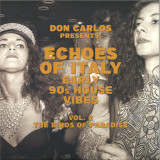
In Switzerland, in the quiet and diligent town of Lugano, between the 1980s and 1990s there was a club called “Morandi”. Its hot night was on Wednesdays, when the audience also came from Milan, Como, Varese and Zurich. Legend goes that, one night, none less than Prince and Sheila E were spotted hiding among the sofas, on a day-off of the Italian dates of the Nude Tour… The Wednesday resident and superstar was an Italian dj with an exotic name: Don Carlos. The soundtrack he devised was a mixture of Chicago, Detroit, the most progressive R&B and certain forgotten classics of old disco music: practically, what the Paradise Garage in New York might have sounded like had it not closed in 1987. In between, Don Carlos also managed to squeeze in some tracks he had worked on in his studio on Lago Maggiore. One in particular: a track that was rather slow compared to the BPM in fashion at the time, but which was a perfect bridge between house and R&B. The title was Alone: Don Carlos would explain years later that it had to be intended both in the English meaning of “by itself” and like the Italian word meaning “halo”. That wasn’t the only double entendre about the song, anyway. Its own very deep nature was, indeed, double. On the one hand, Alone was built around an angelic keyboard pattern and a romantic piano riff that took you straight to heaven; on the other, it showcased enough electronic squelches (plus a sax part that sounded like it had been dissolved by acid rain) to pigeonhole the tune into the “junk modernity” section, aka the hallmark of all the most innovative sounds of the time: music that sounded like it was hand-crafted from the scraps of glittering overground pop.
No one knows who was the first to call it “paradise house”, nor when it happened. Alternative definitions on the same topic one happened to hear included “ambient house”, “dream house”, “Mediterranean progressive”… but of course none were as good (and alluring) as “paradise house”. What is certain is that such inclination for sounds that were in equal measure angelic and neurotic, romantic and unaffective, quickly became the trademark of the second generation of Italian house. Music that seemed shyly equidistant from all the rhythmic and electronic revolutions that had happened up to that moment (“Music perfectly adept at going nowhere slowly” as noted by English journalist Craig McLean in a legendary field report for Blah Blah Blah magazine). Music that to a inattentive ear might have sounded as anonymous as a snapshot of a random group of passers-by at 10AM in the centre of any major city, but perfectly described the (slow) awakening in the real world after the universal love binge of the so-called Second Summer of Love.
For a brief but unforgettable season, in Italy “paradise house” was the official soundtrack of interminable weekends spent inside the car, darting from one club to another, cutting the peninsula from North to centre, from East to West coast in pursuit of the latest after-hours disco, trading kilometres per hour with beats per minute: practically, a new New Year’s Eve every Friday and Saturday night. This too was no small transformation, as well as a shock for an adult Italy that was encountering for the first time – thanks to its sons and daughters – the wild side of industrial modernity. The clubbers of the so-called “fuoriorario” scene were the balls gone mad in the pinball machine most feared by newspapers, magazines and TV pundits. What they did each and every weekend, apart from going crazy to the sound of the current white labels, was linking distant geographical points and non-places (thank you Marc Augé!) – old dance halls, farmhouses and business centres – transformed for one night into house music heaven. As Marco D’Eramo wrote in his 1995 essay on Chicago, Il maiale e il grattacielo: “Four-wheeled capitalism distorts our age-old image of the city, it allows the suburbs to be connected to each other, whereas before they were connected only by the centre (…) It makes possible a metropolitan area without a metropolis, without a city centre, without downtown. The periphery is no longer a periphery of any centre, but is self-centred”.
“Paradise house” perfectly understood all of this and turned it into a sort of cyber-blues that didn’t even need words, and unexpectedly brought back a drop of melancholic (post?)-humanity within a world that by then – as we would wholly realise in the decades to come – was fully inhuman and heartless. A world where we were all alone, and surrounded by a sinister yellowish halo, like a neon at the end of its life cycle. But, for one night at least, happy."
- Miaux - 22H44 05:45
- Miaux - Bal(L)Ade Bucolique 04:47
- Miaux - Midnight Snack 02:12
- Miaux - Rêverie Parallèle 05:01
- Miaux - And The Nose 04:12
- Miaux - Ice Cream 05:12
- Miaux - Lunar Surface 03:59
- Miaux - Stare 02:24
- Miaux - Improvisatie 02:24
- Miaux - Nebulus 04:10
- Lieven Martens & Luc Dockx - The Bird Sings, Variations I 06:42
- Lieven Martens & Luc Dockx - The Bird Sings, Variations Ii 09:17
- Lieven Martens & Luc Dockx - The Bird Sings, Variations Iii 07:44
- Lieven Martens & Luc Dockx - The Bird Sings, Variations Iv 08:15
2025 cassette edition, originally released in 2023 on 2CD/digital.
Recordings + booklet of the unveiling of »Katharina AW«, a relational artwork by Joris Martens. The unveiling event took place at St. Catharine’s Church in Hoogstraten - a city in the northeast of Belgium - on two Saturdays in May 2021.
While beholding the artwork, a woven tapestry, you listen to organ music by Miaux. Outside the church, you hear the carillon gurgle with music by Lieven Martens and town carillonneur Luc Dockx, prolonging the event into the public space.
Joris Martens created »Katharina AW« for the city hall of Hoogstraten. The tapestry now serves as an informal conversation starter in the conference room. Joris Martens is a multi-disciplinary artist and works in the field where applied arts and fine arts meet.
Miaux played her own compositions on the church organ. The songs appeared on the albums Black Space White Cloud, Hideaway, Dive and Gigi - released by Ultra Eczema, Lal Lal Lal, and Alien Passengers - and were originally written for electronic keyboard. Mia demonstrates that the church organ, which is normally used as an underscore for sadness or compelling thoughts, is a fitting instrument of connection. Through its resonance, we communicate our sounds.
Lieven Martens invented sketches for the carillon—by loading bird sounds into the computer program Melodyne, varying them and converting them to musical notes. As a nod to the religion crazy Olivier Messiaen, who considered the birds to be God’s chosen singers and songstresses. The trifles were translated on the carillon by town carillonneur Luc Dockx. The playing comes into and out of focus. In this way, Lieven creates a dreamscape and breaks with the dreary carillon as an instrument of power.
Luc Dockx studied church music at the Lemmens Institute in Leuven and the carillon at the Royal Carillon School in Mechelen. He is the city carillonneur of Hoogstraten since 2002. Dockx is an active practitioner of the art of improvisation on the carillon.
A new artist appears on the streets of City HC Records, he is Andrey Orenstein
multidisciplinary artist, part of the alternative Rock band ‘Tequilajazz’, with several solo musical incarnations such as: Amor Entrave, for electronic Indie beats with tocuhes of IDM of broken beats, Do you like trains? for Acid House, and 50DIX, dedicated to street beats such as jungle, drum n bass, ghetto house, Juke and Footwork, and the pseudonym he uses for Go Ahead! EP, the new and multifaceted 22nd release from the Valencian label.
IF U WANT 2 is the elegant track that takes us into the bustling avenues of the 2st century megapolis, where the urban rhythms of the dance battles in Chicago, Footwork and Juke, along with brief Jungle passages alternate in a brilliant composition with funk and jazz nuances accompanying tight percussion and distorted kicks at 160 BPM.
Tough and Ghetto House and rugged acid define FOOLZ, second track of the A-side in which the demonic power of the 303 sounds embrace the thick and husky voice that together with infectious laughter set a rhythm as pugnacious as it is playful.
FETTA DI LIMONE, Juke, Footwork and Jungle, a perfect combination of American influences, legacy of Dj Rashad together with the English tradition around bass music, are fused by 50DIX with the unexpected and playful Italian lyrics of Tomasso Girardi, in perfect conjunction with the pianos, ethereal pads and mutant synths, that forge the development of the track. Already anthemic before the first beat sounds.
Juke, IDM, Halftime and abstract broken beats combine for the ultimate dance elixir, in the last track of the vinyl titled ICE FEELS KEEN, reaching 170 BPM in a catharsis of braindance, soul and acid exaltation in a dreamy harmony, where the syncopated notes of Oleg Egorov's bass and the velvety voice of Julia Garnits (Ice Hokku) commune.
Bonus digital track - 50Dix ICE FEELS KEEN (DZA REFLIP). Hypnotic, sharp and minimalistic, DZA's remix transforms the original track into an intimate and evocative experience, in which every sonic element acquires more prominence and presence.
Bonus digital track 2 - Fetta di limone (Kaxtelian remix) Inspired by the classic hardtrance sounds of the 90s, from Valencian dance temples such as Chocolate, Kaxtelian reinterprets the track with distorted drums, catchy melodies and Rave spirit at 165 bpm.
Mastering by Steve Voidloss at Black Monolith Studios in London (UK), except for the Bonus track 2 mastered by Raszia.
Once again, artwork and design by Dani Requeni, giving artistic coherence to the label's aesthetic.
- I Miss You, I Do
- Crooked Teeth
- Greyhound Station
- I Love You
- Day Old Thoughts
- Maybe I Ve Wasted My Time
- Took The Train Til The End
- You Re Mine, I M Yours
- Born In Spring
- Happy New Year
Arny Margret, Iceland’s remarkable and poetic upcoming singer-songwriter, is due to release her second album ‘I Miss You, I Do’ on March 7th via One Little Independent Records. The follow-up to 2022’s celebrated, minimalist folk debut ‘they only talk about the weather’ sees her working with new producers in America to develop and hone a sound that’s more textured, expansive, and mature.
‘I Miss You, I Do’ incorporates sessions from Arny Margret’s trips to New York City, North Carolina, and Colorado, as well as those recorded in Iceland. During extensive international touring, she wrote prolifically and spent time getting to know producers and musicians who each brought their own unique and individual talents to the project. Arny’s atmospheric and introspective material has been layered with country-inflected full band ensembles, keys, banjo, harmonium, slide guitar and more, adding an ambience that only enhances her natural ability to convey crystal-clear imagery within thematically rich writing.
In pursuit of her creative vision, Arny enlisted producers Josh Kaufman, Andrew Berlin, Brad Cook, and Guðm. “Kiddi” Kristinn Jónsson. Josh Kaufman is best known for his work with Grateful Dead founder Bob Weir, The National, This Is The Kit, Hiss Golden Messenger, Josh Ritter, and The War on Drugs. Andrew Berlin, GRAMMY nominated for his work on Gregory Alan Isakov’s record ‘Evening Machines’, also mixes national punk rock staples such as A Wilhelm Scream, Rise Against, and Teenage Bottlerocket. Brad Cook served as a producer for Bon Iver, Big Red Machine, Waxahatchee, Hand Habits, Kevin Morby, and Whitney amongst others. Arny also returned to Iceland to record with her long-time collaborator and friend Kiddi Jónsson in Reykjavík, Iceland.
- A1: Closed– Living In Your Eyes
- A2: Squash Gang– I Want An Illusion
- A3: Vicio Latino– ¿Qué Me Pasa, Qué Me Pasa?
- A4: Fresh (4)– The Wolf (El Lobo)
- A5: Vicio Latino– ¿Sabes Qué Hora Es?
- A6: David Lyme– Bye Bye Mi Amor
- A7: Norman (3)– Let’s Go To The Beach
- A8: Steve Clark– No More Love
- A9: Victor Ark– Let Me Go (80S Remix)
- A10: Amaze– Feel L’amore (Eddy Mi Ami Remix)
- A11: Tokio– You Can’t Stop This Game
- A12: Mister X (4)– It’s Ok
- A13: Franz And Frankie– Secrets Of The City
- A14: Jules Tropicana– Come On
- A15: Charly Danone– You Ain’t Got A Chance
- B1: Green Ice– Gigolo
- B2: Kristian Conde– Dolce Vita
- B3: David Lyme– Bambina
- B4: Charly Danone– You Can Do It
- B5: Mata-Hari– Mata-Hari
- B6: Daydream (2)– In The Night
- B7: Marce– I Want You
- B8: Daydream (2)– Crazy
- B9: Squash Gang– Moving Your Hips
- B10: Alan Cook– Do You Want To Stay?
- B11: Closed– Crazy Love
- B12: Victor Ark– Coming Back (80S Remix)
- B13: Alan Cook– Don’t Give Up
- A1: Dear John
- A2: Angel Artist Feat Tom Misch
- A3: Ice Water
- A4: Ottolenghi Feat Jordan Rakei
- A5: You Don't Know Feat Rebel Kleff & Kiko Bun
- A6: Still
- A7: It's Coming Home
- A8: Desoleil (Brilliant Corners) Feat Sampha)
- B1: Loose Ends Feat Jorja Smith
- B2: Not Waving, But Drowning
- B3: Krispy
- B4: Sail Away Freestyle
- B5: Looking Back
- B6: Carluccio
- B7: Dear Ben Feat Jean Coyle-Larner
Loyle Carner will release his highly anticipated sophomore record, 'Not Waving, But Drowning' on 19 April via AMF Records.
'Not Waving, But Drowning' follows Loyle's BRIT (Best Male, Best Newcomer) and Mercury Prize nominated, top 20 debut 'Yesterday's Gone'. The bedrock of honest and raw sentimentality that you heard on 'Yesterday's Gone' left an inextinguishable mark on music in general and UK Hip Hop in particular, standing out as an ageless, bulletproof debut.
'Not Waving, But Drowning', Loyle's new album, gives yet more evidence - as if it were needed - of his razor-sharp flow and his unique storytelling ability. Yes, he can rap, but he allies that with the sensitivity of a poet, the observational skills of a novelist, and warmth of your best friend. The album opens with 'Dear Jean', a letter to his mother in which he's telling her that he has found the love of his life, 'a woman from the skies', and he's moving out.
It goes without saying that Loyle's music is hard to categorise, but what is even more impressive is that for someone who grew up listening to Mos Def, Biggie Smalls, Roots Manuva, and Wu Tang Clan, he doesn't sound like any of them. Although he might from time to time give lyrical nods to them, he's no imitator.
Loyle loves cooking. There are two tracks on this album named after chefs. The British-Israeli chef Yotam Ottolenghi, and the now deceased Italian chef Antonio Carluccio. 'Ottolenghi' the first single from the album was featured on the BBC Radio 1 B-list, BBC 6 Music A-list and has already been streamed over 5 million times.
Loyle refers to real life for everything, the title of 'Yesterday's Gone' came from a song of his step father, the title of his new album 'Not Waving, But Drowning' comes from a poem by his grandfather, which in turn came from a Stevie Smith poem. What you hear on the track 'Krispy' is real. He is pouring his heart out to his best friend Rebel Kleff after their relationship went downhill, he invites him on the track to say his piece but he doesn't turn up, so we get a flugel solo instead.
Loyle also has his own personal black consciousness movement. When he refers to his 'fathers' in the track 'Looking Back' he really is referring to two fathers. His biological father, a black man who he knows, but knows very little of, and his step father, a poet and musician who happens to be a white man but died a sudden unexpected death from epilepsy (SUDEP). With no real emotional ties to his biological father, but a deep connection with a deceased step-father, where does a young child turn He succinctly captures many of the great, unspoken, cultural and historical paradoxes of multicultural Britain on 'Looking Back'.
An album like this is hard to find. It is for those who like their Hip Hop to have soul, and their soul to have spirit. This is because it works on so many levels, but it is reflecting the personality of its creator. There are a host of collaborators here, Jorja Smith, Rebel Kleff, Kiko Bun, Kwes, Jordan Rakei, Sampha, Tom Misch and more, but none are overpowering. They blend righteously into place.
Loyle is not bitter with people who have let him down, or a society that lets so many down, but the combination of anger and love he has gives his voice the perfect blend of strength and vulnerability. This might be a coming of age album, but it's also a coming of ageless album. Loyle's 2019 Spring tour - which includes London's Roundhouse - sold out within 20 minutes of being on sale.
Not Waving, But Drowning
A rapper that raps about family is hard to find. The boys in the 'hood' tend not to be that interested in how much a 'brother' loves his mother, or how much he misses his dad, or even how much he misses his best friend. The boys in the 'hood' tend to be obsessed with the size of their cars, girls, bank accounts, and other personal 'possessions'. Loyle Carner's Mercury and BRIT Prize nominated debut 'Yesterday's Gone' (Released 2017), made it clear that he wasn't that kind of rapper. In fact, every time I talk to him about his work we talk about the world, and we tended to confuse ourselves by calling his work rap, poems, or songs, sometimes in the same sentence. They are in truth all of these things.
Here's some poetry.
Honestly I need them.
I hate them but I grieve them
I think I've finally found the reason
Trust
Like the fire needs the air.
I won't burn unless you're there.
'Not Waving, But Drowning', Loyle's forthcoming new album, gives us yet more evidence, (if it were needed), that he still has what rappers call, flow, but he hasn't lost any of his story telling qualities. Yes, the boy can rap, but a rapper with the sensitivity of a true poet, the observational skills of a novelist, and warmth of your best friend. The album opens with 'Dear Jean', a letter to his mother in which he's telling her that he has found the love of his life, (a woman from the skies), and he's moving out. He really loves the woman from the skies, but he still loves his mum, and so he reassures her that there is no competition, and tells her that 'She's not behind me or behind you, but beside we and beside two', his words. Or to put it another way, moving out without moving out. My words.
It goes without saying that Loyle's music is hard to categorise, but what is even more impressive is that for someone who grew up listening to Mos Def, Biggie Smalls, Roots Manuva, and Wu Tang Clan, he doesn't sound like any of them. Although he might from time to time give lyrical nods to them, he's no imitator. He says finding his own voice was something he always found easy. Although young, (in terms of a musical career), he has confidence in his own words and his own voice, and has never been tempted to sound like he's been hanging out in the USA, or rolling in 'Grime' on the mean streets of East London. And so when it comes to the creative process he doesn't simply find a beat to jump on and ride. Beats are important, but they are tenderly layered with samples, keyboards, or live drums, all imaginatively assembled for the laying on of words. Some tracks start with the idea, some with poetry, and some with a verse from a singer or some other melodic inspiration, but there is no formula.
Here's some poetry.
Don't hold any memories of us
Rather hold you everyday until the memories are dust
Yo we only caught the train
Cos you know I hate the bus
A prolific reader, who has dyslexia is hard to find. Add ADHD (Attention deficit hyperactivity disorder) to that and life should become even more difficult. To deal with your difficulties you devise coping strategies, which can differ from person to person. Loyle loves cooking. There are two tracks on this album named after chefs. The British-Israeli chef Ottolenghi, and the now deceased Italian chef Antonio Carluccio. Loyle describes himself as 'weird' because he is happy to read a cookbook as if he was reading a novel or a book of poetry. He has opened a cookery school for young adults not just because he loves food and wants to make more of it, but because it is one of the few things that can focus the ADHD mind. And when it comes to his other love, football, his approach is the same. Focus. He wanted to be a striker he says, up front scoring goals, but found his best position was in midfield because he was able to focus, check options, and see passes ahead of time, providing passes for other players just when they needed them. He says, 'You don't grow out of ADHD, you grow into it.' Loyle is also working with Levi's® on their music project where he is mentoring young musicians over a six month period, culminating at Liverpool Sound City festival.
More poetry.
When the going is tough
I wait till it falls on deaf ears
Hearsay
Without the boundaries of love
He also said, 'Ask most people and they will say that they love their mothers, but most are not going to rap about her'. On his first album Loyle's mum Jean wrote about the 'scribble of a boy' that growing up would take things apart to see how they worked. On this album she speaks with pride about a man who has found his place in the world.
Yes, poetry.
I'm still looking for the answers
Trying to find the right questions
Still waiting for my fathers
But can't break them in to sections
This poetry is serious. Loyle has his own personal black consciousness movement. He told me that he always felt safe at home, and being the darkest one in the family never meant a thing, but then when he had to face the outside world he felt hostility. It shook him up. Now he had to start asking questions, but what were the questions. This is serious. When he refers to his 'fathers' in the verse above taken from the track 'Looking Back' he really is referring to two fathers. His biological father, a black man who he knows, but knows very little of, and his step father, a poet and musician who happens to be a white man but died a sudden unexpected death from epilepsy (SUDEP). So to whom would a young black (or mixed race) kid turn He succinctly captures many of the great, unspoken, cultural and historical paradoxes of multicultural Britain when he says, 'My great grandfather could of owned my other one.' We are a people descended from enslaved people on one hand, and enslavers on the other, something we are still struggling to come to terms with, and this can be apparent in one family. A big book could have told you that, but here we get it in one line on the track, Looking Back.
Loyle refers to real life for everything. The album is peppered with captured moments that he records on his phone. These moments can range from conversations with taxi drivers, to capturing the moment when England scores a goal in the world cup. The title of 'Yesterday's Gone' came from a song of his step father, the title of his new album 'Not Waving but Drowning' comes from a poem by his grandfather, which in turn came from a Stevie Smith poem. What you hear on the track 'Krispy' is real. He is pouring his heart out to his best friend after their relationship went downhill, he invites him on the track to say his piece but he doesn't turn up, so we get a flugel solo instead. Yes people, this is real.
An album like this is hard to find. It is for those who like their Hip Hop to have soul, and their soul to have spirit, this is an album for those who have, (I'm sorry, I'm going to say it), emotional intelligence. This is because it works on so many levels, but it is reflecting the personality of its creator. There are a host of collaborators here, Jorja Smith, Rebel Kleff, Kiko Bun, Jordan Rakei, Sampha, Tom Misch and more, but none are overpowering. They blend righteously into place. Loyle is not bitter with people who have let him down, or the society that has let him down, but the combination of anger and love he has gives his voice the perfect blend of strength and vulnerability. This might be a coming of age album, but it's also a coming of ageless album. His first album worked, and this second album is a continuation of that work. Not creating a form, but being formless, as someone like Bruce Lee once said.
And here's some poetry from mum.
We talked long in to the darkest hours
Until we saw the burnished sky
And our eyes stung
As our words blurred and became thoughts
As we were silenced by the dawn
We clung to each other like sailors in a storm
Fresh from beasting the end-of-year charts with her 'I Miss Your Love' remix project, Ghost Assembly, aka Manchester DJ and writer Abigail Ward, is back with a double A-side: RESIST! / I Keep on Making the Same Mistake.
RESIST! (Extended 12" Mix)
Laid down quickly and angrily after attending a demo in Manchester city centre, RESIST! aims to capture the galvanising spirit of protest and put it on wax.
A 111bpm acid chugger that will leave dancefloors of an ALFOS or Optimo persuasion begging for more, this is uncompromising machine funk at its crudest.
Duelling 303s twist around each other whilst a taut, snaking 707 groove underpins unexpected blasts of Arabic rhythm, almost as if DJ Pierre had remixed 'Get UR Freak On', relocating it to the Middle East.
As a stuttering Harper Hay vocal sample urges us to RESIST!, the track climaxes with an ice-cold acid house string coda banged out on a disobedient synth. Please note: the sub on this record may trouble your duodenum.
RESIST! (Utter Kunt Mix)
The Utter Kunt mix is a sparse and daring Sleng Teng-inspired avant-dub affair strictly for discerning dancefloors only. Improbably combining hints of the Mission Impossible theme, Les Negresses Vertes' 'Zobi La Mouche' and the rough-hewn sampling of 'Duck Rock', this is a radiant obstacle in the path of the obvious. Warning: collectors of On-U, EBM and New Beat could experience a spate of nocturnal emissions upon purchasing this record.
The A-side closes with a BONUS BEATS version of the Utter Kunt Mix: a must-have DJ tool.
I KEEP ON MAKING THE SAME MISTAKE
Picking up the pace to 120, 'I Keep on Making the Same Mistake' sees Ghost Assembly returning to her string-drenched sad banger comfort zone, pairing a chilly breakbeat with a bass riff reminiscent of Joey Beltram having a gut-wrenching cry wank. Keening vocals supplied by Hazel Grove are chopped up, tormented and eventually hurled down a K-hole as the strings build and the drama escalates.
When the credits roll on this cinematic masterpiece we hear a wistful French lesbian talking about 'borrowed bliss'.
A future comedown classic; also sounds good slowed down to 33rpm.
The E.P. signs off with a stunning string-a-pella that will linger long after the needle hits the run-out groove.
Born as a culture and art movement that began in the Bronx in New York city in 1973, Hip Hop emerged from neigh- borhood block parties thrown by the Black Spades, an African-American group that at the time was describes a being a gang, a club, and a music group. Since then, and for the last fifty years, Hip hop culture has spread to both urban and suburban communities throughout the United States and subsequently the world, Furthermore, it has become a phenomenon that influenced music, fashion and pop culture as a whole. An album that features many of the most influential artists of the genre, including Run DMC, LL Cool J, Grandmaster Melle Mel, Ice-T, Slick Rick, Eric B, & Rakim, Naughty By Nature and Big Daddy Kane among many others. It also includes a curated selection extrac- ted from the Rap Mania: The Roots Of Rap event, which was a bi-coastal simulcast concert that brought together some of the most popular Hip Hop artists of that era for a one-time-only show. East Coast Hip Hop meets West Coast Hip Hop before the gangsta craze and east vs west rivalry really got started. The show was a celebration of the 15th Anniversary of Hip Hop and took place simultaneously at the Apollo Theater in New York City and The Palace Theater in Hollywood. With fantastic artwork and remastered sound, this is essential collection, that any hip hop fan will treasure and that will help as an introduction to those interested in knowing more about a movement that changed the course of pop culture. Also, remember that this is not available on streaming platforms.
- A1: Progetto Tribale - The Sweep
- A2: Onirico - Echo Giomini
- A3: Open Spaces - Artist In Wonderland
- B1: Alex Neri – The Wizard (Hot Funky Version)
- B2: M C.j. Feat. Sima - To Yourself Be Free - Instrumental Mix Energy Prod
- B3: Mato Grosso - Titanic Expande
- C1: Dreamatic - I Can Feel It (Part 1)
- C2: Carol Bailey - Understand Me Free Your Mind (Dream Piano Remix)
- C3: The True Underground Sound Of Rome - Secret Doctrine
- D1: Don Carlos - Boy
- D2: Lazy Bird – Jazzy Doll (Odyssey Dub)
Vol 2[28,99 €]
Volume 1 of this expertly curated project of 90s Italian House - put together by Don Carlos.
If Paradise was half as nice… by Fabio De Luca.
Googling “paradise house”, the first results to pop up are an endless list of European b&b’s with whitewashed lime façades, all of them promising “…an unmatched travel experience a few steps from the sea”. Next, a little further down, are the institutional websites of a few select semi-luxury retirement homes (no photos shown, but lots of stock images of smiling nurses with reassuring looks). To find the “paradise house” we’re after, we have to scroll even further down. Much further down.
It feels like yesterday, and at the same time it seems like a million years ago. The Eighties had just ended, and it was still unclear what to expect from the Nineties. Mobile phones that were not the size of a briefcase and did not cost as much as a car? A frightening economic crisis? The guitar-rock revival?! Certainly, the best place to observe that moment of transition was the dancefloor. Truly epochal transformations were happening there. From America, within a short distance one from the other, two revolutionary new musical styles had arrived: the first one sounded a bit like an “on a budget” version of the best Seventies disco-music – Philly sound made with a set of piano-bar keyboards! – the other was even more sparse, futuristic and extraterrestrial. It was a music with a quite distinct “physical” component, which at the same time, to be fully grasped, seemed to call for the knotty theories of certain French post-modern philosophers: Gilles Deleuze, Félix Guattari, Paul Virilio... Both those genres – we would learn shortly after – were born in the black communities of Chicago and Detroit, although listening to those vinyl 12” (often wrapped in generic white covers, and with little indication in the label) you could not easily guess whether behind them there was a black boy from somewhere in the Usa, or a girl from Berlin, or a pale kid from a Cornish coastal town.
Quickly, similar sounds began to show up from all corners of Europe. A thousand variations of the same intuition: leaner, less lean, happier, slightly less intoxicated, more broken, slower, faster, much faster... Boom! From the dancefloors – the London ones at least, whose chronicles we eagerly read every month in the pages of The Face and i-D – came tales of a new generation of clubbers who had completely stopped “dressing up” to go dancing; of hot tempered hooligans bursting into tears and hugging everyone under the strobe lights as the notes of Strings of Life rose up through the fumes of dry ice (certain “smiling” pills were also involved, sure). At this point, however, we must move on to Switzerland.
In Switzerland, in the quiet and diligent town of Lugano, between the 1980s and 1990s there was a club called “Morandi”. Its hot night was on Wednesdays, when the audience also came from Milan, Como, Varese and Zurich. Legend goes that, one night, none less than Prince and Sheila E were spotted hiding among the sofas, on a day-off of the Italian dates of the Nude Tour… The Wednesday resident and superstar was an Italian dj with an exotic name: Don Carlos. The soundtrack he devised was a mixture of Chicago, Detroit, the most progressive R&B and certain forgotten classics of old disco music: practically, what the Paradise Garage in New York might have sounded like had it not closed in 1987. In between, Don Carlos also managed to squeeze in some tracks he had worked on in his studio on Lago Maggiore. One in particular: a track that was rather slow compared to the BPM in fashion at the time, but which was a perfect bridge between house and R&B. The title was Alone: Don Carlos would explain years later that it had to be intended both in the English meaning of “by itself” and like the Italian word meaning “halo”. That wasn’t the only double entendre about the song, anyway. Its own very deep nature was, indeed, double. On the one hand, Alone was built around an angelic keyboard pattern and a romantic piano riff that took you straight to heaven; on the other, it showcased enough electronic squelches (plus a sax part that sounded like it had been dissolved by acid rain) to pigeonhole the tune into the “junk modernity” section, aka the hallmark of all the most innovative sounds of the time: music that sounded like it was hand-crafted from the scraps of glittering overground pop.
No one knows who was the first to call it “paradise house”, nor when it happened. Alternative definitions on the same topic one happened to hear included “ambient house”, “dream house”, “Mediterranean progressive”… but of course none were as good (and alluring) as “paradise house”. What is certain is that such inclination for sounds that were in equal measure angelic and neurotic, romantic and unaffective, quickly became the trademark of the second generation of Italian house. Music that seemed shyly equidistant from all the rhythmic and electronic revolutions that had happened up to that moment (“Music perfectly adept at going nowhere slowly” as noted by English journalist Craig McLean in a legendary field report for Blah Blah Blah magazine). Music that to a inattentive ear might have sounded as anonymous as a snapshot of a random group of passers-by at 10AM in the centre of any major city, but perfectly described the (slow) awakening in the real world after the universal love binge of the so-called Second Summer of Love.
For a brief but unforgettable season, in Italy “paradise house” was the official soundtrack of interminable weekends spent inside the car, darting from one club to another, cutting the peninsula from North to centre, from East to West coast in pursuit of the latest after-hours disco, trading kilometres per hour with beats per minute: practically, a new New Year’s Eve every Friday and Saturday night. This too was no small transformation, as well as a shock for an adult Italy that was encountering for the first time – thanks to its sons and daughters – the wild side of industrial modernity. The clubbers of the so-called “fuoriorario” scene were the balls gone mad in the pinball machine most feared by newspapers, magazines and TV pundits. What they did each and every weekend, apart from going crazy to the sound of the current white labels, was linking distant geographical points and non-places (thank you Marc Augé!) – old dance halls, farmhouses and business centres – transformed for one night into house music heaven. As Marco D’Eramo wrote in his 1995 essay on Chicago, Il maiale e il grattacielo: “Four-wheeled capitalism distorts our age-old image of the city, it allows the suburbs to be connected to each other, whereas before they were connected only by the centre (…) It makes possible a metropolitan area without a metropolis, without a city centre, without downtown. The periphery is no longer a periphery of any centre, but is self-centred”.
“Paradise house” perfectly understood all of this and turned it into a sort of cyber-blues that didn’t even need words, and unexpectedly brought back a drop of melancholic (post?)-humanity within a world that by then – as we would wholly realise in the decades to come – was fully inhuman and heartless. A world where we were all alone, and surrounded by a sinister yellowish halo, like a neon at the end of its life cycle. But, for one night at least, happy.
Strut proudly reintroduces a classic from the Topomic catalogue, Ice’s ‘Each Man Makes His Destiny’, officially available on vinyl for the first time.
After relocating from the United States to Paris, Ice began performing regularly in the city’s Barbès district, a vibrant area with a large North African immigrant community. The band’s heavy Afro-funk sound caught the attention of producer Pierre Jaubert, leading them to become the resident session musicians at his independent Parisound studio.
Immersed in the local influences, Ice began integrating African-inspired chants, textures, and rhythms into their distinct funk style. In 1973, the group recorded their debut album, ‘Each Man Makes His Destiny’, a psychedelic funk exploration that hinted at the evolving sound that would later define them as the Lafayette Afro-Rock Band and, eventually, Ice once more.
Produced by Jaubert, the album brings some powerful social commentary on claustrophobic tracks like ‘Too Little Room’ and ‘Suicide’, under-pinned by a determination to succeed despite the adversity.
Remastered by The Carvery.
Coloured[25,17 €]
Ben Lukas Boysen’s new album, Alta Ripa, signifies a seismic shift in his artistic journey. It revisits the foundational impulses of his youth, shaped amidst the serene beauty of rural Germany—a bucolic backdrop where his creative palette flourished. However, it was his move to Berlin in the early 2000s that electrified his sound, infusing it with the city’s pulsating energy and diverse cultural influences. Alta Ripa captures this transformative experience, blending the introspective melodies of his rural beginnings with the bold, experimental tones born from Berlin’s vibrant electronic music scene. This album is a testament to Boysen’s evolution, showcasing how geographical shifts can profoundly shape artistic expression.
Boysen’s fourth studio album under his own name, Alta Ripa is a nod to his beginnings as much as a hint to his future, and as a work, it’s almost contradictory in its boldness and humility. He invites the listener on a journey of self-discovery; both for himself and for them, describing the music as “something the 15-year-old in me would have liked to hear but only the grown-up version of myself can write.”
His last two albums involved working closely with other musicians, including cellist Anne Müller, flugelhorn player Steffen Zimmer, and drummer Achim Färber. However, inspired in part by a recent return to live performance, Alta Ripa sees Boysen circling back to his passion for pure computer music.
For Boysen, the return to his youthful musical language marks a major turning point in his career. It represents a departure from his roots in classical music – his mother was an opera singer and his father an actor with an appreciation for Wagner, Arvo Pärt, Keith Jarrett, and Stockhausen. Although these are still important influences, Alta Ripa encapsulates a new, exploratory interplay between Boysen’s careful craft and his ability to let go of some of the process.
The album’s title comes from the original Roman name of the town that Boysen grew up in, Altrip, where he lived until his early twenties. This formative period is central to the ideas behind this album, from Boysen’s parental ‘schooling’ in classical music through to his sonic journeys through drum and bass, Aphex Twin, and Autechre — all of which changed his idea of what music could be. The extreme energy of tracks like ‘Acperience 1’ by Hardfloor, ‘Tracks & Fragment’ by Cari Lekebusch, ‘Focus2 Implan’ by Jiri.Ceiver, and ‘Low On Ice’ by Alec Empire are also pivotal influences.
For Boysen, this time of his musical development also involved knocking down the pillars that he previously thought had carried his world. A key moment for Boysen was being given a precious (pre-internet) club cassette at school that featured artists like Source Direct, Photek and Goldie. Excited by this new discovery, he introduced his father to the song ‘Dred Bass’ by Dead Dred. After the song finished, Boysen Sr. turned off the tape and proclaimed it was “the end of all music”. This heated exchange sparked a new, and more mature dialogue between the two that involved them sharing and discussing music on a regular basis.
Boysen’s classical and jazz music upbringing might not be easily noticeable from the electronic palette that he uses. But it can be found in its bones; the structure of the tracks and their dynamic shifts. On Alta Ripa, he intentionally embraces a spirit of controlled chaos, churning out sonic ideas to see what sticks.
One of Brian Eno’s Oblique Strategy cards contains the phrase “gardening, not architecture”, and the trajectory of Boysen’s creative path reflects this metaphor. In much of his previous work he followed a sort of Brutalist architect’s approach; here, he was fully responsible for the tracks’ austere structures and planned them with deliberate care. But by sacrificing some of that control on Alta Ripa, he sets the right conditions for a dark and unpredictable, organic growth. It’s a push forward into a new world.
Black[23,49 €]
Ben Lukas Boysen’s new album, Alta Ripa, signifies a seismic shift in his artistic journey. It revisits the foundational impulses of his youth, shaped amidst the serene beauty of rural Germany—a bucolic backdrop where his creative palette flourished. However, it was his move to Berlin in the early 2000s that electrified his sound, infusing it with the city’s pulsating energy and diverse cultural influences. Alta Ripa captures this transformative experience, blending the introspective melodies of his rural beginnings with the bold, experimental tones born from Berlin’s vibrant electronic music scene. This album is a testament to Boysen’s evolution, showcasing how geographical shifts can profoundly shape artistic expression.
Boysen’s fourth studio album under his own name, Alta Ripa is a nod to his beginnings as much as a hint to his future, and as a work, it’s almost contradictory in its boldness and humility. He invites the listener on a journey of self-discovery; both for himself and for them, describing the music as “something the 15-year-old in me would have liked to hear but only the grown-up version of myself can write.”
His last two albums involved working closely with other musicians, including cellist Anne Müller, flugelhorn player Steffen Zimmer, and drummer Achim Färber. However, inspired in part by a recent return to live performance, Alta Ripa sees Boysen circling back to his passion for pure computer music.
For Boysen, the return to his youthful musical language marks a major turning point in his career. It represents a departure from his roots in classical music – his mother was an opera singer and his father an actor with an appreciation for Wagner, Arvo Pärt, Keith Jarrett, and Stockhausen. Although these are still important influences, Alta Ripa encapsulates a new, exploratory interplay between Boysen’s careful craft and his ability to let go of some of the process.
The album’s title comes from the original Roman name of the town that Boysen grew up in, Altrip, where he lived until his early twenties. This formative period is central to the ideas behind this album, from Boysen’s parental ‘schooling’ in classical music through to his sonic journeys through drum and bass, Aphex Twin, and Autechre — all of which changed his idea of what music could be. The extreme energy of tracks like ‘Acperience 1’ by Hardfloor, ‘Tracks & Fragment’ by Cari Lekebusch, ‘Focus2 Implan’ by Jiri.Ceiver, and ‘Low On Ice’ by Alec Empire are also pivotal influences.
For Boysen, this time of his musical development also involved knocking down the pillars that he previously thought had carried his world. A key moment for Boysen was being given a precious (pre-internet) club cassette at school that featured artists like Source Direct, Photek and Goldie. Excited by this new discovery, he introduced his father to the song ‘Dred Bass’ by Dead Dred. After the song finished, Boysen Sr. turned off the tape and proclaimed it was “the end of all music”. This heated exchange sparked a new, and more mature dialogue between the two that involved them sharing and discussing music on a regular basis.
Boysen’s classical and jazz music upbringing might not be easily noticeable from the electronic palette that he uses. But it can be found in its bones; the structure of the tracks and their dynamic shifts. On Alta Ripa, he intentionally embraces a spirit of controlled chaos, churning out sonic ideas to see what sticks.
One of Brian Eno’s Oblique Strategy cards contains the phrase “gardening, not architecture”, and the trajectory of Boysen’s creative path reflects this metaphor. In much of his previous work he followed a sort of Brutalist architect’s approach; here, he was fully responsible for the tracks’ austere structures and planned them with deliberate care. But by sacrificing some of that control on Alta Ripa, he sets the right conditions for a dark and unpredictable, organic growth. It’s a push forward into a new world.
Tristan Arp returns to Wisdom Teeth with his sophomore LP: ‘a pool, a portal’ - a vast, multi-dimensional record of pin-drop rhythms, hushed vocals and swirling ambience that maps out a vivid limbic space between the natural and the digital worlds. The LP began life while Tristan was still living in Mexico City, and was subsequently finished in New York. Carrying on from where his acclaimed debut ‘Sculpturegardening’ left off, the record marries hallucinatory modular synths with cello, found sound and spoken word, creating a rich sonic world in which machines mimic nature and acoustic instruments merge with their digital counterparts. Across the record’s narrative arc, listeners are invited to imagine a future world in which nature and machines collaborate to rewild and search for new modes of being. Far from apocalyptic, the artist’s vision is yearning and hopeful - a reflection on how we might evolve to overcome our very human limitations. “Hopefully we can all open a little portal into another world and integrate what we learn into our own”, Tristan offers. True to his word, Tristan shared much of the creative process with his machines, using modular generative processes to create randomised, improvisatory moments that he could collaborate on as artist and observer. Most of the tracks were captured in single takes as live performances and improvisations that were subsequently edited and cut down. Speaking of ‘Life After Humans’ - the record’s beguiling 10-minute centrepiece - Tristan recalls: “I neglected to record multi-track outs, but it was actually super empowering to be left with just a stereo track: I couldn’t mix individual elements even if I wanted to after the recording, but I’m happy I inadvertently limited myself in that way.” Alongside his own voice, the record features a stunning appearance from fast-rising Guatemalan cellist and vocalist, Mabe Fratti. The pair met in Mexico City in 2020, where she helped Tristan to learn cello - an encounter that ultimately went on to inform the recordings that made up ‘Sculpturegardening’. Her appearance on ‘a pool, a portal’ marks a full-circle moment in their creative relationship. The album’s artwork features photography by Zhang An - a photographer based in Nanjing, China. Despite their appearances, these are unmanipulated photos of real-world ice formations. As is the case throughout ‘a pool, a portal’, the lines between the natural and the artificial are playfully indistinct.