Iceland's Thule offshoot label 66 Degrees was a vital label back in the day. After a 20-year hiatus, it came back strong in August and now follows up quickly with a second superb EP. This one is a carefully curated various artists collection that pulls together some local house anthems new and old. Ozy's 'Sequential Dub' is a super smooth deep house number with lush chord work. Sanasol brings heavier, more raw house drums and grinding bass that will get floors in a sweat. Oz Artists mixes up a raw, mechanical groove with balmy, dreamy pads up top to make for something utterly compelling on 'Atomox; while last of all Terry Cummingz pays homage to dusty Windy City house on his perfectly lo-fi 'Cherry Bon Bon. Classy business for sure.
Suche:ice city
Black Vinyl[31,51 €]
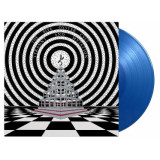
Tyranny and Mutation is the second studio album by American hard rock band Blue Öyster Cult, released on February 11, 1973, by Columbia Records. The album was recorded at the Columbia Studios in New York City during the year before and was produced by Murray Krugman and Sandy Pearlman. On May 12, 1973, the album peaked at #122 on the Billboard 200.
The song “Baby Ice Dog” features lyrics by singer/poet Patti Smith (who was keyboardist Allen Lanier’s girlfriend at the time), who would make several lyrical contributions to the band’s repertoire during its career. The song “The Red & The Black”, with lyrics referencing the Royal Canadian Mounted Police, is a renamed, re-recorded version of “I’m on the Lamb But I Ain’t No Sheep” from the same-titled debut album. The song was later covered by the Minutemen and Band of Susans.
Celebrating its 50th anniversary, Tyranny and Mutation is available as a limited edition of 2000 individually numbered copies on translucent blue coloured vinyl.
- A1: Recording A Tunnel (The Horns Play Underneath The Canal) (The Horns Play Underneath The Canal)
- A2: Les Lumieres (Part 1)
- A3: Les Lumieres (Part 2)
- A4: Throw It On A Fire
- A5: Recording A Tunnel (The Horns Play Underneath The Canal) Continued (The Horns Play Underneath The Canal)
- A6: The Upwards March
- A7: The Bells Play The Band
- B1: Recording A Tape (Typewriter Duet) (Typewriter Duet)
- B2: Nuevo
- B3: Salvatore Amato
- B4: Recording A Tunnel (The Invisible Bells) (The Invisible Bells)
Black Vinyl[17,44 €]
Clear Vinyl
Erased Tapes are immensely proud to announce the reissue of the debut album Recording a Tape the Colour of the Light by Bell Orchestre. To honour the album"s original recordings the album is also seeing its first vinyl repress since it was released in 2005. Originally formed in 1999 whilst studying at university, the first music Bell Orchestre made was live scores for contemporary dance performances. A few years later, the studio sessions for Recording A Tape.. took place simultaneously in the same studio as when Arcade Fire were recording their eponymous debut album Funeral. The two Montreal-based bands took turns to record their albums but due to the growing interest in Arcade Fire, Bell Orchestre was put on hold as band members Parry and Sarah Neufeld quickly became occupied with Arcade Fire"s busy touring schedule. "The Bell Orchestre album was almost done, but it kind of sat there. We were just sitting on this album that we were really proud of, but we didn"t have anyone to pay attention to it" Parry told Pitchfork in 2005. The album was released to critical acclaim and has since received cult status among fans. Bell Orchestre is a collaborative instrumental group based in Montreal. Its six members come from wildly divergent musical backgrounds, and the unlikely chemistry that results from their collaboration is the very thing that sustains their connection. It"s as if the group as a whole has tapped into a very particular, very distinct energy: like that of an approaching storm. In many ways, Bell Orchestre is the sum of not only its parts, but the sum of its influences and inspirations. Among those influences can be listed such diverse artists as Lee "Scratch" Perry, Arvo Pärt, Charles Mingus, and Talk Talk. But ultimately they work together to create something that none of them has quite heard before. Bell Orchestre has been known to retreat into the woods to make and write music: from a residency at the Banff Centre for the Arts, to the forests of Quebec and Vermont, and back to their hometown of Montreal. The specifics of time and place, the elemental forces at work outside, and those forces that exist inside, all come into play within Bell Orchestre"s musical process. This particular music could be made by no one else at no other time in history. The experience of listening to Bell Orchestre, whether live or recorded, is almost that of experiencing a form of synaesthesia: the result is a collage-like construction of not just sound, but visual elements as well. From a herd of elephants to that approaching storm on the horizon, from a quiet forest in the country to ice forming on a city street, from watching vapour trails disappear in the sky to watching the changing light of dusk through a window. The result then is not so much cinematic as it is evocative: Bell Orchestre have not just written the music to the film - they have created an invisible film that only comes to life in the listening
- A1: Recording A Tunnel (The Horns Play Underneath The Canal) (The Horns Play Underneath The Canal)
- A2: Les Lumieres (Part 1)
- A3: Les Lumieres (Part 2)
- A4: Throw It On A Fire
- A5: Recording A Tunnel (The Horns Play Underneath The Canal) Continued (The Horns Play Underneath The Canal)
- A6: The Upwards March
- A7: The Bells Play The Band
- B1: Recording A Tape (Typewriter Duet) (Typewriter Duet)
- B2: Nuevo
- B3: Salvatore Amato
- B4: Recording A Tunnel (The Invisible Bells) (The Invisible Bells)
Clear Vinyl[24,33 €]
Black Vinyl
Erased Tapes are immensely proud to announce the reissue of the debut album Recording a Tape the Colour of the Light by Bell Orchestre. To honour the album"s original recordings the album is also seeing its first vinyl repress since it was released in 2005. Originally formed in 1999 whilst studying at university, the first music Bell Orchestre made was live scores for contemporary dance performances. A few years later, the studio sessions for Recording A Tape.. took place simultaneously in the same studio as when Arcade Fire were recording their eponymous debut album Funeral. The two Montreal-based bands took turns to record their albums but due to the growing interest in Arcade Fire, Bell Orchestre was put on hold as band members Parry and Sarah Neufeld quickly became occupied with Arcade Fire"s busy touring schedule. "The Bell Orchestre album was almost done, but it kind of sat there. We were just sitting on this album that we were really proud of, but we didn"t have anyone to pay attention to it" Parry told Pitchfork in 2005. The album was released to critical acclaim and has since received cult status among fans. Bell Orchestre is a collaborative instrumental group based in Montreal. Its six members come from wildly divergent musical backgrounds, and the unlikely chemistry that results from their collaboration is the very thing that sustains their connection. It"s as if the group as a whole has tapped into a very particular, very distinct energy: like that of an approaching storm. In many ways, Bell Orchestre is the sum of not only its parts, but the sum of its influences and inspirations. Among those influences can be listed such diverse artists as Lee "Scratch" Perry, Arvo Pärt, Charles Mingus, and Talk Talk. But ultimately they work together to create something that none of them has quite heard before. Bell Orchestre has been known to retreat into the woods to make and write music: from a residency at the Banff Centre for the Arts, to the forests of Quebec and Vermont, and back to their hometown of Montreal. The specifics of time and place, the elemental forces at work outside, and those forces that exist inside, all come into play within Bell Orchestre"s musical process. This particular music could be made by no one else at no other time in history. The experience of listening to Bell Orchestre, whether live or recorded, is almost that of experiencing a form of synaesthesia: the result is a collage-like construction of not just sound, but visual elements as well. From a herd of elephants to that approaching storm on the horizon, from a quiet forest in the country to ice forming on a city street, from watching vapour trails disappear in the sky to watching the changing light of dusk through a window. The result then is not so much cinematic as it is evocative: Bell Orchestre have not just written the music to the film - they have created an invisible film that only comes to life in the listening
Tribal Earth is an ongoing project created by Canadian artist Michael Bennett. Tribal Earth's 1983 recording “Interaction/Reaction'' features a fusion of post-punk, DIY mutant wave and minimal synth-pop that is backed by infectious funk and dub elements alongside Linn Drum machine rhythms. Heavy basslines and synths swirl, stab, and ring alongside Bennett’s smooth vocal delivery into 3 timeless art-avant pop gems “Interaction/Reaction,” “Got to Move,” and “Who Are You (In the Movies).” This 40th anniversary edition is remastered directly from the master tapes and is a collaboration between Invisible City Editions and Michael Bennett. For fans of 99 Records, This Heat, and Lifetones. An underrated one of a kind IC fave. Limited Pressing.
Limited vinyl pressing in collaboration with Rico Toto. Artwork by Floating Bstrd.
Invisible City Editions continues our 10 year anniversary in adventurous sounds. We are thrilled to announce the re-release of Rico Toto’s 1993 CD recording Fwa Épi Sajès. Mind melting synthesizers and drum machines fuse with ancient Guadeloupe Gwo-ka rhythms in this musical endeavour Rico Toto describes as “Electro-ka.” The improvised live instruments of the Moundjahka ensemble meld with electronic abstraction to create a psychedelic, immersive digital diaspora dream state. With nods to Jon Hassell’s’ atmospheric soundscapes, YMO and Baldelli / TBC Cosmic mixtapes, this selection of songs encompasses an entire spectrum of moods and sounds. The A side begins with fourth-world tropical percussions, opening with sounds of nature in “Jungle Meditation” and leading into the downtempo summer synthpop jam “Yadadé.” The B side takes a darker turn, starting off with the deep chugging rhythms of “Rawal Pindi” and continuing even deeper with synth sounds and haunting vocals that culminates into the dreamy meditative final track, “Golgotha.”
Lucky', the title of Nada Surf's fifth album, is at once literal and ironic. Like the songs that singer / guitarist Matthew Caws, bassist Daniel Lorca and drummer Ira Elliot crafted for their previous two albums, Let Go' (2003) and The Weight Is A Gift' (2005), Lucky is filled with images of restlessness, longing and the elusiveness of love. Yet the band counterbalances the lyrical bitter sweetness with musical buoyancy. Intimate songs become in-it-together anthems, thanks to the chiming guitars, propulsive rhythms, and the emotional candour in Caws' vocals. A song like Beautiful Beat' segues from a sparsely arranged, confessional first verse into a harmony-laden chorus and reaches multi-layered, canon-like proportions before the track fades out. If Caws is often suggesting that romance and resolution may still be an inch or two out of reach, he's also proffering immediate musical solace. Turn up the volume, hit the repeat button, and your troubles, for a blissful three minutes or so, will disappear.
The three members of Nada Surf have played together now for a dozen years. They've survived overnight major-label success and the inevitable morning-after bleariness, persevering past obstacles that would have sunk a less resilient combo, to become one of America's most truly independent and respected bands. Experience has only made their work richer, bringing gravity to the subject matter and lightness to its presentation. Keeping things honest has become a modus operandi.
Kieran Hebden’s Text Records is proud to announce Bolts, the debut album from British-Armenian producer Hagop Tchaparian, set for release in autumn 2022.
“Can I say, my friends call me Hagop? I don’t want people to struggle with my long name. I always liked that Eminem introduced himself and said “hi, my name is….” I think I want to be called Hagop so people find it easy to connect.”
Hagop’s debut album Bolts features ten tracks of hyper-personal rhythm music that mixes techno with field recordings of his travels through Armenian and Mediterranean culture. Early DJ support has come from Four Tet, Gilles Peterson and Nikki Nair. The artwork for Bolts was curated by skateboard, music and sports photography legend Atiba Jefferson.
“As a teenager I would make the pilgrimage to Slam City skateboard shop - I couldn't really afford to buy anything other than Thrasher magazine. I would see Atiba’s photos and get super inspired and want to push across the bridge and go skate Southbank. Downstairs was Rough Trade Records where I would be able to find the music from the music section in Thrasher and music i heard in the background of skate videos that I couldn’t really seem to find anywhere else. Atiba was photographing loads of these bands too so it's absolutely a crazy dream to be able to work with someone who provided so much of the inspiration throughout my life.”
- A1: Rock This Mother
- A2: Talk To Me Girl
- A3: You Can Find Me
- A4: Check This Out
- A5: Jesus Going To Clean House
- A6: Hope You Understood
- A7: Is It What You Want
- A8: Love Is Everlasting
- A9: This Is Hip-Hop Art
- A10: Opposite Of Love
- A11: Do You Know What I Mean
- B1: Saving All My Love For You
- B2: Look Out Here I Come
- B3: Girl You Always Talking
- B4: Have A Great Day
- B5: Take My Hand
- B6: I Need Your Love
- B7: Your Town
- B8: Talk Around Town
- B9: Booty Head/Take A Little Walk
- B10: I Love My Mama
- B11: I Never Found Anyone Like You
Vinyl LP[23,49 €]
As the sun sets on a quaint East Nashville house, a young man bares a piece of his soul. Facing the camera, sporting a silky suit jacket/shirt/slacks/fingerless gloves ensemble that announces "singer" before he's even opened his mouth, Lee Tracy Johnson settles onto his stage, the front yard. He sways to the dirge-like drum machine pulse of a synth-soaked slow jam, extends his arms as if gaining his balance, and croons in affecting, fragile earnest, "I need your love… oh baby…"
Dogs in the yard next door begin barking. A mysterious cardboard robot figure, beamed in from galaxies unknown and affixed to a tree, is less vocal. Lee doesn't acknowledge either's presence. He's busy feeling it, arms and hands gesticulating. His voice rises in falsetto over the now-quiet dogs, over the ambient noise from the street that seeps into the handheld camcorder's microphone, over the recording of his own voice played back from a boombox off-camera. After six minutes the single, continuous shot ends. In this intimate creative universe there are no re-takes. There are many more music videos to shoot, and as Lee later puts it, "The first time you do it is actually the best. Because you can never get that again. You expressing yourself from within."
"I Need Your Love" dates from a lost heyday. From some time in the '80s or early '90s, when Lee Tracy (as he was known in performance) and his music partner/producer/manager Isaac Manning committed hours upon hours of their sonic and visual ideas to tape. Embracing drum machines and synthesizers – electronics that made their personal futurism palpable – they recorded exclusively at home, live in a room into a simple cassette deck. Soul, funk, electro and new wave informed their songs, yet Lee and Isaac eschewed the confinement of conventional categories and genres, preferring to let experimentation guide them.
"Anytime somebody put out a new record they had the same instruments or the same sound," explains Isaac. "So I basically wanted to find something that's really gonna stand out away from all of the rest of 'em." Their ethos meant that every idea they came up with was at least worth trying: echoed out half-rapped exhortations over frantic techno-style beats, gospel synth soul, modal electro-funk, oddball pop reinterpretations, emo AOR balladry, nods to Prince and the Fat Boys, or arrangements that might collapse mid-song into a mess of arcade game-ish blips before rallying to reach the finish line. All of it conjoined by consistent tape hiss, and most vitally, Lee's chameleonic voice, which managed to wildly shape shift and still evoke something sincere – whether toggling between falsetto and tenor exalting Jesus's return, or punctuating a melismatic romantic adlib with a succinct, "We all know how it feels to be alone."
"People think we went to a studio," says Isaac derisively. "We never went to no studio. We didn't have the money to go to no studio! We did this stuff at home. I shot videos in my front yard with whatever we could to get things together." Sometimes Isaac would just put on an instrumental record, be it "Planet Rock" or "Don't Cry For Me Argentina" (from Evita), press "record," and let Lee improvise over it, yielding peculiar love songs, would-be patriotic anthems, or Elvis Presley or Marilyn Monroe tributes. Technical limitations and a lack of professional polish never dissuaded them. They believed they were onto something.
"That struggle," Isaac says, "made that sound sound good to me."
In the parlance of modern music criticism Lee and Isaac's dizzying DIY efforts would inevitably be described as "outsider." But "outsider" carries the burden of untold additional layers of meaning if you're Black and from the South, creating on a budget, and trying to get someone, anyone within the country music capital of the world to take your vision seriously. "What category should we put it in?" Isaac asks rhetorically. "I don't know. All I know is feeling. I ain't gonna name it nothing. It's music. If it grabs your soul and touch your heart that's what it basically is supposed to do."
=
Born in 1963, the baby boy of nine siblings, Lee Tracy spent his earliest years living amidst the shotgun houses on Nashville's south side. "We was poor, man!" he says, recalling the outhouse his family used for a bathroom and the blocks of ice they kept in the kitchen to chill perishables. "But I actually don't think I really realized I was in poverty until I got grown and started thinking about it." Lee's mom worked at the Holiday Inn; his dad did whatever he had to do, from selling fruit from a horse drawn cart to bootlegging. "We didn't have much," Lee continues, "but my mother and my father got us the things we needed, the clothes on our back." By the end of the decade with the city's urban renewal programs razing entire neighborhoods to accommodate construction of the Interstate, the family moved to Edgehill Projects. Lee remembers music and art as a constant source of inspiration for he and his brothers and sisters – especially after seeing the Jackson 5 perform on Ed Sullivan. "As a small child I just knew that was what I wanted to do."
His older brother Don began musically mentoring him, introducing Lee to a variety of instruments and sounds. "He would never play one particular type of music, like R&B," says Lee. "I was surrounded by jazz, hard rock and roll, easy listening, gospel, reggae, country music; I mean I was a sponge absorbing all of that." Lee taught himself to play drums by beating on cardboard boxes, gaining a rep around the way for his timekeeping, and his singing voice. Emulating his favorites, Earth Wind & Fire and Cameo, he formed groups with other kids with era-evocative band names like Concept and TNT Connection, and emerged as the leader of disciplined rehearsals. "I made them practice," says Lee. "We practiced and practiced and practiced. Because I wanted that perfection." By high school the most accomplished of these bands would take top prize in a prominent local talent show. It was a big moment for Lee, and he felt ready to take things to the next level. But his band-mates had other ideas.
"I don't know what happened," he says, still miffed at the memory. "It must have blew they mind after we won and people started showing notice, because it's like everybody quit! I was like, where the hell did everybody go?" Lee had always made a point of interrogating prospective musicians about their intentions before joining his groups: were they really serious or just looking for a way to pick up girls? Now he understood even more the importance of finding a collaborator just as committed to the music as he was.
=
Isaac Manning had spent much of his life immersed in music and the arts – singing in the church choir with his family on Nashville's north side, writing, painting, dancing, and working various gigs within the entertainment industry. After serving in the armed forces, in the early '70s he ran The Teenage Place, a music and performance venue that catered to the local youth. But he was forced out of town when word of one of his recreational routines created a stir beyond the safe haven of his bohemian circles.
"I was growing marijuana," Isaac explains. "It wasn't no business, I was smoking it myself… I would put marijuana in scrambled eggs, cornbread and stuff." His weed use originated as a form of self-medication to combat severe tooth pain. But when he began sharing it with some of the other young people he hung out with, some of who just so happened to be the kids of Nashville politicians, the cops came calling. "When I got busted," he remembers, "they were talking about how they were gonna get rid of me because they didn't want me saying nothing about they children because of the politics and stuff. So I got my family, took two raggedy cars, and left Nashville and went to Vegas."
Out in the desert, Isaac happened to meet Chubby Checker of "The Twist" fame while the singer was gigging at The Flamingo. Impressed by Isaac's zeal, Checker invited him to go on the road with him as his tour manager/roadie/valet. The experience gave Isaac a window into a part of the entertainment world he'd never encountered – a glimpse of what a true pop act's audience looked like. "Chubby Checker, none of his shows were played for Black folks," he remembers. "All his gigs were done at high-class white people areas." Returning home after a few years with Chubby, Isaac was properly motivated to make it in Music City. He began writing songs and scouting around Nashville for local talent anywhere he could find it with an expressed goal: "Find someone who can deliver your songs the way you want 'em delivered and make people feel what you want them to feel."
One day while walking through Edgehill Projects Isaac heard someone playing the drums in a way that made him stop and take notice. "The music was so tight, just the drums made me feel like, oh I'm-a find this person," he recalls. "So I circled through the projects until I found who it was.
"That's how I met him – Lee Tracy. When I found him and he started singing and stuff, I said, ohhh, this is somebody different."
=
Theirs was a true complementary partnership: young Lee possessed the raw talent, the older Isaac the belief. "He's really the only one besides my brother and my family that really seen the potential in me," says Lee. "He made me see that I could do it."
Isaac long being a night owl, his house also made for a fertile collaborative environment – a space where there always seemed to be a new piece of his visual art on display: paintings, illustrations, and dolls and figures (including an enigmatic cardboard robot). Lee and Issac would hang out together and talk, listen to music, conjure ideas, and smoke the herb Isaac had resumed growing in his yard. "It got to where I could trust him, he could trust me," Isaac says of their bond. They also worked together for hours on drawings, spreading larges rolls of paper on the walls and sketching faces with abstract patterns and imagery: alien-like beings, tri-horned horse heads, inverted Janus-like characters where one visage blurred into the other.
Soon it became apparent that they didn't need other collaborators; self-sufficiency was the natural way forward. At Isaac's behest Lee, already fed up with dealing with band musicians, began playing around with a poly-sonic Yamaha keyboard at the local music store. "It had everything on it – trumpet, bass, drums, organ," remembers Lee. "And that's when I started recording my own stuff."
The technology afforded Lee the flexibility and independence he craved, setting him on a path other bedroom musicians and producers around the world were simultaneously following through the '80s into the early '90s. Saving up money from day jobs, he eventually supplemented the Yamaha Isaac had gotten him with Roland and Casio drum machines and a Moog. Lee was living in an apartment in Hillside at that point caring for his dad, who'd been partially paralyzed since early in life. In the evenings up in his second floor room, the music put him in a zone where he could tune out everything and lose himself in his ideas.
"Oh I loved it," he recalls. "I would really experiment with the instruments and use a lot of different sound effects. I was looking for something nobody else had. I wanted something totally different. And once I found the sound I was looking for, I would just smoke me a good joint and just let it go, hit the record button." More potent a creative stimulant than even Isaac's weed was the holistic flow and spontaneity of recording. Between sessions at Isaac's place and Lee's apartment, their volume of output quickly ballooned.
"We was always recording," says Lee. "That's why we have so much music. Even when I went to Isaac's and we start creating, I get home, my mind is racing, I gotta start creating, creating, creating. I remember there were times when I took a 90-minute tape from front to back and just filled it up."
"We never practiced," says Isaac. "See, that was just so odd about the whole thing. I could relate to him, and tell him about the songs I had ideas for and everything and stuff. And then he would bring it back or whatever, and we'd get together and put it down." Once the taskmaster hell bent on rehearsing, Lee had flipped a full 180. Perfection was no longer an aspiration, but the enemy of inspiration.
"I seen where practicing and practicing got me," says Lee. "A lot of musicians you get to playing and they gotta stop, they have to analyze the music. But while you analyzing you losing a lot of the greatness of what you creating. Stop analyzing what you play, just play! And it'll all take shape."
=
"I hope you understood the beginning of the record because this was invented from a dream I had today… (You tell me, I'll tell you, we'll figure it out together)" – Lee Tracy and Isaac Manning, "Hope You Understand"
Lee lets loose a maniacal cackle when he acknowledges that the material that he and Isaac recorded was by anyone's estimation pretty out there. It's the same laugh that commences "Hope You Understand" – a chaotic transmission that encapsulates the duality at the heart of their music: a stated desire to reach people and a compulsion to go as leftfield as they saw fit.
"We just did it," says Lee. "We cut the music on and cut loose. I don't sit around and write. I do it by listening, get a feeling, play the music, and the lyrics and stuff just come out of me."
The approach proved adaptable to interpreting other artists' material. While recording a cover of Whitney Houston's pop ballad "Saving All My Love For You," Lee played Whitney's version in his headphones as he laid down his own vocals – partially following the lyrics, partially using them as a departure point. The end result is barely recognizable compared with the original, Lee and Isaac having switched up the time signature and reinvented the melody along the way towards morphing a slick mainstream radio standard into something that sounds solely their own.
"I really used that song to get me started," says Lee. "Then I said, well I need something else, something is missing. Something just came over me. That's when I came up with 'Is It What You Want.'"
The song would become the centerpiece of Lee and Isaac's repertoire. Pushed along by a percolating metronomic Rhythm King style beat somewhere between a military march and a samba, "Is It What You Want" finds Lee pleading the sincerity of his commitment to a potential love interest embellished by vocal tics and hiccups subtlely reminiscent of his childhood hero MJ. Absent chord changes, only synth riffs gliding in and out like apparitions, the song achieves a lingering lo-fi power that leaves you feeling like it's still playing, somewhere, even after the fade out.
"I don't know, it's like a real spiritual song," Lee reflects. "But it's not just spiritual. To me the more I listen to it it's like about everything that you do in your everyday life, period. Is it what you want? Do you want a car or you don't want a car? Do you want Jesus or do you want the Devil? It's basically asking you the question. Can't nobody answer the question but you yourself."
In 1989 Lee won a lawsuit stemming from injuries sustained from a fight he'd gotten into. He took part of the settlement money and with Isaac pressed up "Saving All My Love For You" b/w "Is It What You Want" as a 45 single. Isaac christened the label One Chance Records. "Because that's all we wanted," he says with a laugh, "one chance."
Isaac sent the record out to radio stations and major labels, hoping for it to make enough noise to get picked up nationally. But the response he and Lee were hoping for never materialized. According to Isaac the closest the single got to getting played on the radio is when a disk jock from a local station made a highly unusual announcement on air: "The dude said on the radio, 107.5 – 'We are not gonna play 'Is It What You Want.' We cracked up! Wow, that's deep.
"It was a whole racist thing that was going on," he reflects. "So we just looked over and kept on going. That was it. That was about the way it goes… If you were Black and you were living in Nashville and stuff, that's the way you got treated." Isaac already knew as much from all the times he'd brought he and Lee's tapes (even their cache of country music tunes) over to Music Row to try to drum up interest to no avail.
"Isaac, he really worked his ass off," says Lee. "He probably been to every record place down on Music Row." Nashville's famed recording and music business corridor wasn't but a few blocks from where Lee grew up. Close enough, he remembers, for him to ride his bike along its back alleys and stumble upon the occasional random treasure, like a discarded box of harmonicas. Getting in through the front door, however, still felt a world away.
"I just don't think at the time our music fell into a category for them," he concedes. "It was before its time."
=
Lee stopped making music some time in the latter part of the '90s, around the time his mom passed away and life became increasingly tough to manage. "When my mother died I had a nervous breakdown," he says, "So I shut down for a long time. I was in such a sadness frame of mind. That's why nobody seen me. I had just disappeared off the map." He fell out of touch with Isaac, and in an indication of just how bad things had gotten for him, lost track of all the recordings they'd made together. Music became a distant memory.
Fortunately, Isaac kept the faith. In a self-published collection of his poetry – paeans to some of his favorite entertainment and public figures entitled Friends and Dick Clark – he'd written that he believed "music has a life of its own." But his prescience and presence of mind were truly manifested in the fact that he kept an archive of he and Lee's work. As perfectly imperfect as "Is It What You Want" now sounds in a post-Personal Space world, Lee and Isaac's lone official release was in fact just a taste. The bulk of the Is It What You Want album is culled from the pair's essentially unheard home recordings – complete songs, half-realized experiments, Isaac's blue monologues and pronouncements et al – compiled, mixed and programmed in the loose and impulsive creative spirit of their regular get-togethers from decades ago. The rest of us, it seems, may have finally caught up to them.
On the prospect of at long last reaching a wider audience, Isaac says simply, "I been trying for a long time, it feels good." Ever the survivor, he adds, "The only way I know how to make it to the top is to keep climbing. If one leg break on the ladder, hey, you gotta fix it and keep on going… That's where I be at. I'll kill death to make it out there."
For Lee it all feels akin to a personal resurrection: "It's like I was in a tomb and the tomb was opened and I'm back… Man, it feels so great. I feel like I'm gonna jump out of my skin." Success at this stage of his life, he realizes, probably means something different than what it did back when he was singing and dancing in Isaac's front yard. "What I really mean by 'making it,'" he explains isn't just the music being heard but, "the story being told."
Occasionally Lee will pull up "Is It What You Want" on YouTube on his phone, put on his headphones, and listen. He remembers the first time he heard his recorded voice. How surreal it was, how he thought to himself, "Is that really me?" What would he say to that younger version of himself now?
"I would probably tell myself, hang in there, don't give up. Keep striving for the goal. And everything will work out."
Despite what's printed on the record label, sometimes you do get more than one chance.
- A1: Striving For Perfection
- A2: Knuckleheadz Feat. Ghost Face Killer Aka Tony Starks & Golden Arms Aka Lucky Hands
- A3: Knowledge God
- A4: Criminology Feat. Ghost Face Killer Aka Tony Starks
- A5: Incarcerated Scarfaces
- B1: Rainy Dayz Feat. Ghost Face Killer Aka Tony Starks & Blue Raspberry
- B2: Guillotine (Swordz) Feat. Ghost Face Killer Aka Tony Starks, Inspektah Deck Aka Rollie Fingers, & Genius
- B3: Can It All Be So Simple (Remix) Feat. Ghost Face Killer Aka Tony Starks
- C1: Shark Niggas (Biters)
- C2: Ice Water Feat. Ghost Face Killer Aka Tony Starks & Cappachino
- C3: Glaciers Of Ice Feat. Ghost Face Killer Aka Tony Starks & Master Killa Aka Noodles Vocals By Blue Raspberry & 62Nd Assassin Of Sunz Of Man
- C4: Verbal Intercourse Feat. Ghost Face Killer Aka Tony Starks & Nas Aka Nas Escobar
- C5: Wisdom Body Feat. Ghost Face Killer Aka Tony Starks
- D1: Spot Rusherz
- D2: Ice Cream Feat. Ghost Face Killer Aka Tony Starks, Method Man Aka Johnny Blaze & Cappachino
- D3: Wu-Gambinos Feat. Ghost Face Killer Aka Tony Starks, Method Man Aka Johnny Blaze, The Rza Aka Bobby Steels & Master Killa Aka Noodles
- D4: Heaven & Hell Feat. Ghost Face Killer Aka Tony Starks
Re-pressed at last!! Limited purple vinyl. The cultural phenomenon that is the Wu-Tang cannot accurately be described without referencing one of the pillars in the Clan's discography, Chef Raekwon's Only Built 4 Cuban Linx remains firmly planted as one of the defining triumphs in their artistic legacy. The oft referred "Purple Tape", has been cited and debated by many as the greatest Wu-Tang solo project to date and a remains a bullet point in any discussion involving the greatest "Cocaine Rap" or "Street Hop" albums of all time. Raekwon's narrative, plays out like a movie script from the violent, drug fueled, underbelly of New York City's criminal landscape, intricately woven over instrumentals from the legendary mastermind behind the Wu-Tang Clan, The RZA. Even the album's main feature "Tony Starks aka Ghostface Killer", referred to as such rather described as a "guest star" appearing on 12 of the albums 18 tracks. It should be noted that while the Only Built 4 Cuban Linx did produce a string of successful singles, such as "Ice Cream", "Incarcerated Scarfaces", and "Criminology", like all classic cinema, the album was intentionally engineered to be appreciated in one sitting, played from beginning to end. In continuing with it's proud tradition of honoring historically significant hip hop albums, Get On Down is honored to present Raekwon's "Only Built 4 Cuban Linx" for the first time ever on double translucent purple vinyl housed in a high density resealable poly bag. This edition features for the first time ever on vinyl, the formerly CD only bonus track, "North Star (Jewels)". And if that wasn't enough, the entire album also features completely enhanced and painstakingly remastered audio. This is the definitive must-own vinyl edition of Raekwon's masterpiece.
Add color, reframe, follow the prism, head to the beach. Not sure we’d ever be talking about Grotto Terrazza, the Munich based art/music/life project of Thomas Schamann, in these terms, but here we are, adjusting to his ever evolving collage of life in the form of his new album ‘Kalte Köstlichkeiten’, an ecstatic uptempo, punchy mitteleuropa celebration of punks in the city.
If his 2019 debut ‘Stumpfer Gegenstand’ (also co-released by Cut Surface and Maple Death) introduced us to Grotto Terrazza’s beautiful intimate translucent dark beat poetry set over art-punk ritmik, foggy nightclubs and musk-induced industrial malaise, Kalte Köstlichkeiten sets the record straight by adding a whole new dimension. Cold Delicacies (the literal translation) delivers so much more, 12 melting popsicles that furiously jump from dancefloor post-punk, brazen EBM, funk sleaze and smoked out cold-wave.
- A1: Rock This Mother
- A2: Talk To Me Girl
- A3: You Can Find Me
- A4: Check This Out
- A5: Jesus Going To Clean House
- A6: Hope You Understood
- A7: Is It What You Want
- A8: Love Is Everlasting
- A9: This Is Hip-Hop Art
- A10: Opposite Of Love
- A11: Do You Know What I Mean
- B1: Saving All My Love For You
- B2: Look Out Here I Come
- B3: Girl You Always Talking
- B4: Have A Great Day
- B5: Take My Hand
- B6: I Need Your Love
- B7: Your Town
- B8: Talk Around Town
- B9: Booty Head/Take A Little Walk
- B10: I Love My Mama
- B11: I Never Found Anyone Like You
Cassette[11,72 €]
As the sun sets on a quaint East Nashville house, a young man bares a piece of his soul. Facing the camera, sporting a silky suit jacket/shirt/slacks/fingerless gloves ensemble that announces "singer" before he's even opened his mouth, Lee Tracy Johnson settles onto his stage, the front yard. He sways to the dirge-like drum machine pulse of a synth-soaked slow jam, extends his arms as if gaining his balance, and croons in affecting, fragile earnest, "I need your love… oh baby…"
Dogs in the yard next door begin barking. A mysterious cardboard robot figure, beamed in from galaxies unknown and affixed to a tree, is less vocal. Lee doesn't acknowledge either's presence. He's busy feeling it, arms and hands gesticulating. His voice rises in falsetto over the now-quiet dogs, over the ambient noise from the street that seeps into the handheld camcorder's microphone, over the recording of his own voice played back from a boombox off-camera. After six minutes the single, continuous shot ends. In this intimate creative universe there are no re-takes. There are many more music videos to shoot, and as Lee later puts it, "The first time you do it is actually the best. Because you can never get that again. You expressing yourself from within."
"I Need Your Love" dates from a lost heyday. From some time in the '80s or early '90s, when Lee Tracy (as he was known in performance) and his music partner/producer/manager Isaac Manning committed hours upon hours of their sonic and visual ideas to tape. Embracing drum machines and synthesizers – electronics that made their personal futurism palpable – they recorded exclusively at home, live in a room into a simple cassette deck. Soul, funk, electro and new wave informed their songs, yet Lee and Isaac eschewed the confinement of conventional categories and genres, preferring to let experimentation guide them.
"Anytime somebody put out a new record they had the same instruments or the same sound," explains Isaac. "So I basically wanted to find something that's really gonna stand out away from all of the rest of 'em." Their ethos meant that every idea they came up with was at least worth trying: echoed out half-rapped exhortations over frantic techno-style beats, gospel synth soul, modal electro-funk, oddball pop reinterpretations, emo AOR balladry, nods to Prince and the Fat Boys, or arrangements that might collapse mid-song into a mess of arcade game-ish blips before rallying to reach the finish line. All of it conjoined by consistent tape hiss, and most vitally, Lee's chameleonic voice, which managed to wildly shape shift and still evoke something sincere – whether toggling between falsetto and tenor exalting Jesus's return, or punctuating a melismatic romantic adlib with a succinct, "We all know how it feels to be alone."
"People think we went to a studio," says Isaac derisively. "We never went to no studio. We didn't have the money to go to no studio! We did this stuff at home. I shot videos in my front yard with whatever we could to get things together." Sometimes Isaac would just put on an instrumental record, be it "Planet Rock" or "Don't Cry For Me Argentina" (from Evita), press "record," and let Lee improvise over it, yielding peculiar love songs, would-be patriotic anthems, or Elvis Presley or Marilyn Monroe tributes. Technical limitations and a lack of professional polish never dissuaded them. They believed they were onto something.
"That struggle," Isaac says, "made that sound sound good to me."
In the parlance of modern music criticism Lee and Isaac's dizzying DIY efforts would inevitably be described as "outsider." But "outsider" carries the burden of untold additional layers of meaning if you're Black and from the South, creating on a budget, and trying to get someone, anyone within the country music capital of the world to take your vision seriously. "What category should we put it in?" Isaac asks rhetorically. "I don't know. All I know is feeling. I ain't gonna name it nothing. It's music. If it grabs your soul and touch your heart that's what it basically is supposed to do."
=
Born in 1963, the baby boy of nine siblings, Lee Tracy spent his earliest years living amidst the shotgun houses on Nashville's south side. "We was poor, man!" he says, recalling the outhouse his family used for a bathroom and the blocks of ice they kept in the kitchen to chill perishables. "But I actually don't think I really realized I was in poverty until I got grown and started thinking about it." Lee's mom worked at the Holiday Inn; his dad did whatever he had to do, from selling fruit from a horse drawn cart to bootlegging. "We didn't have much," Lee continues, "but my mother and my father got us the things we needed, the clothes on our back." By the end of the decade with the city's urban renewal programs razing entire neighborhoods to accommodate construction of the Interstate, the family moved to Edgehill Projects. Lee remembers music and art as a constant source of inspiration for he and his brothers and sisters – especially after seeing the Jackson 5 perform on Ed Sullivan. "As a small child I just knew that was what I wanted to do."
His older brother Don began musically mentoring him, introducing Lee to a variety of instruments and sounds. "He would never play one particular type of music, like R&B," says Lee. "I was surrounded by jazz, hard rock and roll, easy listening, gospel, reggae, country music; I mean I was a sponge absorbing all of that." Lee taught himself to play drums by beating on cardboard boxes, gaining a rep around the way for his timekeeping, and his singing voice. Emulating his favorites, Earth Wind & Fire and Cameo, he formed groups with other kids with era-evocative band names like Concept and TNT Connection, and emerged as the leader of disciplined rehearsals. "I made them practice," says Lee. "We practiced and practiced and practiced. Because I wanted that perfection." By high school the most accomplished of these bands would take top prize in a prominent local talent show. It was a big moment for Lee, and he felt ready to take things to the next level. But his band-mates had other ideas.
"I don't know what happened," he says, still miffed at the memory. "It must have blew they mind after we won and people started showing notice, because it's like everybody quit! I was like, where the hell did everybody go?" Lee had always made a point of interrogating prospective musicians about their intentions before joining his groups: were they really serious or just looking for a way to pick up girls? Now he understood even more the importance of finding a collaborator just as committed to the music as he was.
=
Isaac Manning had spent much of his life immersed in music and the arts – singing in the church choir with his family on Nashville's north side, writing, painting, dancing, and working various gigs within the entertainment industry. After serving in the armed forces, in the early '70s he ran The Teenage Place, a music and performance venue that catered to the local youth. But he was forced out of town when word of one of his recreational routines created a stir beyond the safe haven of his bohemian circles.
"I was growing marijuana," Isaac explains. "It wasn't no business, I was smoking it myself… I would put marijuana in scrambled eggs, cornbread and stuff." His weed use originated as a form of self-medication to combat severe tooth pain. But when he began sharing it with some of the other young people he hung out with, some of who just so happened to be the kids of Nashville politicians, the cops came calling. "When I got busted," he remembers, "they were talking about how they were gonna get rid of me because they didn't want me saying nothing about they children because of the politics and stuff. So I got my family, took two raggedy cars, and left Nashville and went to Vegas."
Out in the desert, Isaac happened to meet Chubby Checker of "The Twist" fame while the singer was gigging at The Flamingo. Impressed by Isaac's zeal, Checker invited him to go on the road with him as his tour manager/roadie/valet. The experience gave Isaac a window into a part of the entertainment world he'd never encountered – a glimpse of what a true pop act's audience looked like. "Chubby Checker, none of his shows were played for Black folks," he remembers. "All his gigs were done at high-class white people areas." Returning home after a few years with Chubby, Isaac was properly motivated to make it in Music City. He began writing songs and scouting around Nashville for local talent anywhere he could find it with an expressed goal: "Find someone who can deliver your songs the way you want 'em delivered and make people feel what you want them to feel."
One day while walking through Edgehill Projects Isaac heard someone playing the drums in a way that made him stop and take notice. "The music was so tight, just the drums made me feel like, oh I'm-a find this person," he recalls. "So I circled through the projects until I found who it was.
"That's how I met him – Lee Tracy. When I found him and he started singing and stuff, I said, ohhh, this is somebody different."
=
Theirs was a true complementary partnership: young Lee possessed the raw talent, the older Isaac the belief. "He's really the only one besides my brother and my family that really seen the potential in me," says Lee. "He made me see that I could do it."
Isaac long being a night owl, his house also made for a fertile collaborative environment – a space where there always seemed to be a new piece of his visual art on display: paintings, illustrations, and dolls and figures (including an enigmatic cardboard robot). Lee and Issac would hang out together and talk, listen to music, conjure ideas, and smoke the herb Isaac had resumed growing in his yard. "It got to where I could trust him, he could trust me," Isaac says of their bond. They also worked together for hours on drawings, spreading larges rolls of paper on the walls and sketching faces with abstract patterns and imagery: alien-like beings, tri-horned horse heads, inverted Janus-like characters where one visage blurred into the other.
Soon it became apparent that they didn't need other collaborators; self-sufficiency was the natural way forward. At Isaac's behest Lee, already fed up with dealing with band musicians, began playing around with a poly-sonic Yamaha keyboard at the local music store. "It had everything on it – trumpet, bass, drums, organ," remembers Lee. "And that's when I started recording my own stuff."
The technology afforded Lee the flexibility and independence he craved, setting him on a path other bedroom musicians and producers around the world were simultaneously following through the '80s into the early '90s. Saving up money from day jobs, he eventually supplemented the Yamaha Isaac had gotten him with Roland and Casio drum machines and a Moog. Lee was living in an apartment in Hillside at that point caring for his dad, who'd been partially paralyzed since early in life. In the evenings up in his second floor room, the music put him in a zone where he could tune out everything and lose himself in his ideas.
"Oh I loved it," he recalls. "I would really experiment with the instruments and use a lot of different sound effects. I was looking for something nobody else had. I wanted something totally different. And once I found the sound I was looking for, I would just smoke me a good joint and just let it go, hit the record button." More potent a creative stimulant than even Isaac's weed was the holistic flow and spontaneity of recording. Between sessions at Isaac's place and Lee's apartment, their volume of output quickly ballooned.
"We was always recording," says Lee. "That's why we have so much music. Even when I went to Isaac's and we start creating, I get home, my mind is racing, I gotta start creating, creating, creating. I remember there were times when I took a 90-minute tape from front to back and just filled it up."
"We never practiced," says Isaac. "See, that was just so odd about the whole thing. I could relate to him, and tell him about the songs I had ideas for and everything and stuff. And then he would bring it back or whatever, and we'd get together and put it down." Once the taskmaster hell bent on rehearsing, Lee had flipped a full 180. Perfection was no longer an aspiration, but the enemy of inspiration.
"I seen where practicing and practicing got me," says Lee. "A lot of musicians you get to playing and they gotta stop, they have to analyze the music. But while you analyzing you losing a lot of the greatness of what you creating. Stop analyzing what you play, just play! And it'll all take shape."
=
"I hope you understood the beginning of the record because this was invented from a dream I had today… (You tell me, I'll tell you, we'll figure it out together)" – Lee Tracy and Isaac Manning, "Hope You Understand"
Lee lets loose a maniacal cackle when he acknowledges that the material that he and Isaac recorded was by anyone's estimation pretty out there. It's the same laugh that commences "Hope You Understand" – a chaotic transmission that encapsulates the duality at the heart of their music: a stated desire to reach people and a compulsion to go as leftfield as they saw fit.
"We just did it," says Lee. "We cut the music on and cut loose. I don't sit around and write. I do it by listening, get a feeling, play the music, and the lyrics and stuff just come out of me."
The approach proved adaptable to interpreting other artists' material. While recording a cover of Whitney Houston's pop ballad "Saving All My Love For You," Lee played Whitney's version in his headphones as he laid down his own vocals – partially following the lyrics, partially using them as a departure point. The end result is barely recognizable compared with the original, Lee and Isaac having switched up the time signature and reinvented the melody along the way towards morphing a slick mainstream radio standard into something that sounds solely their own.
"I really used that song to get me started," says Lee. "Then I said, well I need something else, something is missing. Something just came over me. That's when I came up with 'Is It What You Want.'"
The song would become the centerpiece of Lee and Isaac's repertoire. Pushed along by a percolating metronomic Rhythm King style beat somewhere between a military march and a samba, "Is It What You Want" finds Lee pleading the sincerity of his commitment to a potential love interest embellished by vocal tics and hiccups subtlely reminiscent of his childhood hero MJ. Absent chord changes, only synth riffs gliding in and out like apparitions, the song achieves a lingering lo-fi power that leaves you feeling like it's still playing, somewhere, even after the fade out.
"I don't know, it's like a real spiritual song," Lee reflects. "But it's not just spiritual. To me the more I listen to it it's like about everything that you do in your everyday life, period. Is it what you want? Do you want a car or you don't want a car? Do you want Jesus or do you want the Devil? It's basically asking you the question. Can't nobody answer the question but you yourself."
In 1989 Lee won a lawsuit stemming from injuries sustained from a fight he'd gotten into. He took part of the settlement money and with Isaac pressed up "Saving All My Love For You" b/w "Is It What You Want" as a 45 single. Isaac christened the label One Chance Records. "Because that's all we wanted," he says with a laugh, "one chance."
Isaac sent the record out to radio stations and major labels, hoping for it to make enough noise to get picked up nationally. But the response he and Lee were hoping for never materialized. According to Isaac the closest the single got to getting played on the radio is when a disk jock from a local station made a highly unusual announcement on air: "The dude said on the radio, 107.5 – 'We are not gonna play 'Is It What You Want.' We cracked up! Wow, that's deep.
"It was a whole racist thing that was going on," he reflects. "So we just looked over and kept on going. That was it. That was about the way it goes… If you were Black and you were living in Nashville and stuff, that's the way you got treated." Isaac already knew as much from all the times he'd brought he and Lee's tapes (even their cache of country music tunes) over to Music Row to try to drum up interest to no avail.
"Isaac, he really worked his ass off," says Lee. "He probably been to every record place down on Music Row." Nashville's famed recording and music business corridor wasn't but a few blocks from where Lee grew up. Close enough, he remembers, for him to ride his bike along its back alleys and stumble upon the occasional random treasure, like a discarded box of harmonicas. Getting in through the front door, however, still felt a world away.
"I just don't think at the time our music fell into a category for them," he concedes. "It was before its time."
=
Lee stopped making music some time in the latter part of the '90s, around the time his mom passed away and life became increasingly tough to manage. "When my mother died I had a nervous breakdown," he says, "So I shut down for a long time. I was in such a sadness frame of mind. That's why nobody seen me. I had just disappeared off the map." He fell out of touch with Isaac, and in an indication of just how bad things had gotten for him, lost track of all the recordings they'd made together. Music became a distant memory.
Fortunately, Isaac kept the faith. In a self-published collection of his poetry – paeans to some of his favorite entertainment and public figures entitled Friends and Dick Clark – he'd written that he believed "music has a life of its own." But his prescience and presence of mind were truly manifested in the fact that he kept an archive of he and Lee's work. As perfectly imperfect as "Is It What You Want" now sounds in a post-Personal Space world, Lee and Isaac's lone official release was in fact just a taste. The bulk of the Is It What You Want album is culled from the pair's essentially unheard home recordings – complete songs, half-realized experiments, Isaac's blue monologues and pronouncements et al – compiled, mixed and programmed in the loose and impulsive creative spirit of their regular get-togethers from decades ago. The rest of us, it seems, may have finally caught up to them.
On the prospect of at long last reaching a wider audience, Isaac says simply, "I been trying for a long time, it feels good." Ever the survivor, he adds, "The only way I know how to make it to the top is to keep climbing. If one leg break on the ladder, hey, you gotta fix it and keep on going… That's where I be at. I'll kill death to make it out there."
For Lee it all feels akin to a personal resurrection: "It's like I was in a tomb and the tomb was opened and I'm back… Man, it feels so great. I feel like I'm gonna jump out of my skin." Success at this stage of his life, he realizes, probably means something different than what it did back when he was singing and dancing in Isaac's front yard. "What I really mean by 'making it,'" he explains isn't just the music being heard but, "the story being told."
Occasionally Lee will pull up "Is It What You Want" on YouTube on his phone, put on his headphones, and listen. He remembers the first time he heard his recorded voice. How surreal it was, how he thought to himself, "Is that really me?" What would he say to that younger version of himself now?
"I would probably tell myself, hang in there, don't give up. Keep striving for the goal. And everything will work out."
Despite what's printed on the record label, sometimes you do get more than one chance.
Limited Pressing.
Invisible City Editions returns with an official repress of a fantastic double-sided private press rarity from 1989 Detroit. Featuring two legendary Inner City alumni Producer/keyboardist Engineer Art Forest and Inner City background vocalist dancer/singer Shawn Pittman. On the A side a lush slow modern soul slow burner “Dreams'' features a deep,spatial throbbing bass line with glistening synths floating underneath cool angelic hypnotic vocals by Ms Pittman.” 'Dreams are only Dreams till you make it real' chants Shawn Pittman and we’re lead down a dazzling maze of mirrors. With “I'm Losing Control (Extended Bass-ment Club Mix)” on the flipside a wild late night warehouse dub remix features sci-fi vocal effects,fostex tape loops and ultra-heavy bass and driving drum machines. Minimal lush soul perfect for early mornings and the post-club world and a wild sci-fi house winner for late night club sessions. An IC fave! Remastered by Brandenberg/The Carvery (Note: we’ve also removed the drum machine going out of sync that was on the original press) Official Repress via Art Forest and his label Wildboy.Essential stuff!
Art Forest is an Electronic Engineer and production wizard from Detroit Michigan. He originally recorded 2 of Inner CItys’ Biggest Hits “Good Life” and “Big Fun” and continues to record to this day. Art Forest still finds and repairs equipment to add to his studio today. He also recorded for Paula Abdul “Straight Up” and Madonnas’ “Justify My Love” Shawn Pittman was a singer and dancer from Detroit who was a good friend of Inner City vocalist Paris Grey. Shawn Pittman sang backing vocals and harmonies on “Good Life” and “Big Fun”.
Opening with the buzz of a smartphone on vibrate, First Hate’s sophomore album Cotton Candy launches to life with “Someone New,” a synth-driven statement of intent. The Danish duo’s charged songs are rooted in a recognizable universe, but traverse a wide array of genre experiments and pop detours. Cotton Candy follows the quest of its protagonist stumbling through a crumbling world, winning and losing lovers, swinging from extreme highs to hopeless lows. The title alludes to transience and ecstasy, the surge of a sugar rush before nausea sets in, the way cotton candy dissolves into nothingness leaving only sticky fingers. Throughout, the productions glitter with synthetic detail and hypermodern finesse, effervescent but elusive. “Life is a rollercoaster and we’ve ridden the ups and downs.” During the recording sessions, a collage of Copenhagen musicians flowed through the studio. First Hate is a fixture of the city’s creative community, but ultimately exists in their own sphere, carving a niche as parallel universe pop stars, embracing sweet and bitter, risk and reward: “Sometimes the ones who love you most are the ones who hold you back.” Anton and Joakim grew up in Copenhagen and met when they were 15 through common friends on the street where they lived. “I didn’t enjoy being home so I used to stay at my friend Jakob's basement in an old church on Willemoesgade street,” says Wei. “His mom was the priest. She baptized Anton at age eight during his Jesus phase when he demanded a late baptism from his atheist parents. Jakob was friends with Elias who lived up in Anton’s end and they introduced us to each other. One summer my parents finally married after 20 years of dating. Joakim moved in for two weeks and we accidentally trashed the apartment while they were on their honeymoon. Later on Jakob, Elias, and two other friends, Dan and Johan, formed the band Iceage. Watching our friends’ growing success was a catalyst in creating our own project. At that point everybody in our friend group was making punk music, so the most punk thing we could think to do was start a pop duo.” The First Hate catalog comprises more than nine years of work, including their 2017 cult classic, A Prayer For The Unemployed, a collaborative album Dittes Bog, two EPs and several singles. All of the recordings are self-produced, until they are ready to be finished in the studio. “We have sort of a twin alliance. Like couples finishing each other’s spaghetti at restaurants, we finish each other’s music. Having people enter this sacred mix has been such a pleasure.” On stage Anton and Joakim embody the contrasting yet complimentary energies of yin and yang: Joakim pushing buttons, steering the ship, working synths and samplers with harmonious calm, while Anton’s body bullets around the stage, pounding out his kinetic dance moves. The name Anton means fragile flower, an apt metaphor for his stage presence. A fragile flower shooting through concrete. To behold a performer who consistently delivers such intense live performances is a rare pleasure. “Live means love. When everything is right. When we meet the audience heart to heart. Then the planet spins even faster.” First Hate has performed over a hundred shows across Europe, Asia, the U.S., and Russia, both as headliners and alongside fellow Copenhagen acts Iceage, Lust For Youth, Communions, Soho Rezanejad, Trentemøller and Grand Prix. “We are on a quest of love, yes it’s as cheesy as that.”
Strapping Young Lad was a Canadian extreme metal band formed by Devin Townsend in Vancouver in 1994. The band started as a one-man studio project; Devin Townsend played most of the instruments on the 1995 debut album, Heavy as a Really Heavy Thing. By 1997, he had recruited permanent members; this line-up, which consisted of Townsend on vocals and guitar, Jed Simon on guitar, Byron Stroud on bass, and Gene Hoglan on drums, lasted until the band's dissolution. Strapping Young Lad's music was characterized by the use of polyrhythmic guitar riffing and drumming, blast beats and wall of sound production. band leader Devin Townsend was also noted for his eccentric appearance and on-stage behaviour, which greatly contributed to the band's intense live performances. The band gained critical success and a growing underground fan base from their 1997 album City. After a hiatus between 1999 and 2002, the band released three more albums, reaching their commercial peak with the 2006 effort, The New Black. Townsend disbanded Strapping Young Lad in May 2007, announcing his decision to retreat from public view while continuing to record solo albums. Listenable has been delighted to reissue All Strapping Young Lad Legendary studio albums on De Luxe Limited Edition Vinyls. A brand new vinyl master has been made for each album. This is the last one of the series and what an incredible debut album , Sheer Madness ! Grab it now !.Strapping Young Lad was a Canadian extreme metal band formed by Devin Townsend in Vancouver in 1994. The band started as a one-man studio project; Devin Townsend played most of the instruments on the 1995 debut album, Heavy as a Really Heavy Thing. By 1997, he had recruited permanent members; this line-up, which consisted of Townsend on vocals and guitar, Jed Simon on guitar, Byron Stroud on bass, and Gene Hoglan on drums, lasted until the band's dissolution. Strapping Young Lad's music was characterized by the use of polyrhythmic guitar riffing and drumming, blast beats and wall of sound production. band leader Devin Townsend was also noted for his eccentric appearance and on-stage behaviour, which greatly contributed to the band's intense live performances.
- A1: My Thoughts 3/Pop's Prayer
- A2: 6 Mile Show (Feat Icewear Vezzo)
- A3: Sincerely Face
- A4: Tunnel Vision
- A5: Overtime (Feat Yung Lean)
- B1: Blood, Sweat & Tears (Feat G Herbo)
- B2: Go Yard
- B3: Me, Wife & Kids
- B4: Idols
- B5: Same Pain
- C1: Let Me Down (Feat 42 Dugg)
- C2: Steak N Lobster
- C3: Needed Some Love
- C4: Mob
- C5: Dancing With The Devil (Feat Landstrip Chip & Pusha T)
- D1: Palm Angels, Palms Itching
- D2: Kush & Codeine (Feat Wiz Khalifa)
- D3: Seduction
- D4: Richard Flair
- D5: Motown Music
Following the commercial success of the 2021 album Unf*ckwitable and an overall banner year for the Detroit rapper, Babyface Ray comes with the aptly titled and highly anticipated album, FACE, which sees him stake his claim as “The Face of the City.” Production on the twenty-track album is largely handled by 808 Mafia, DJ Esco and others, and features appearances from Icewear Vezzo, Yung Lean, Pusha T, G Herbo, Wiz Khalifa, 42 Dugg & Landstrip Chip. With an already impressive list of cosigns from artists such as Future and Tyler, The Creator, Babyface Ray continues his all-out assault to put Motor City on the map and isn’t taking his foot off the gas anytime soon.
From Pacific City Discs, to you the listener, this summer, a DJ mix of fantasy and splash-energy is coming to you in a small edition of vinyl. Fantasy writer/recording artist, Francesco Cavaliere, while visiting his seaside childhood vacation location, was extended an impromptu invitation, to DJ an 80s swimming club. He had this to say about his experience:
“I was at Shangri-La and a boy and girl from the bathhouse in silver swimsuits and sand-colored streaks waved me over with a drink and asked me if I would like to DJ the next day during my lesson on the beach at Tana del Pirata! I then and there I laughed but then I accepted (I had nothing at home just my mp3 player and a Nokia with music inside) The next day there was a little wind on the beach and the umbrellas swayed to the left. From the heat they could catch fire, white flames, instead the sea was rough and that wind with very long wrists cheered us up, blowing gaseous clouds in our faces. Perfect for the day ahead. After the first few pieces, I began to see that a group of kids jumped into the adjacent pool trying flips bombs and candle dives. Someone at the bar was playing Altered Beast .. so sipping a drink with ice I imagined DJ werewolf repeating catchy pieces while a kite half cobra half skyscraper inflated above us.”
This Impromptu Disc is fresh now, for you to frolic with this summer, while entertaining a daydream in the midst of entering a body of water while witnessing an apparition in the sky.
Selected and compiled by Francisco Cavaliere
Artwork by Spencer Clark
A simple idea in an over complicated moment. Strip away aesthetics and be artist centric, sharing and explore collisions, sounds and genres. Step out of comfort zones to release a series of EPs of broad, challenging and deep music.
Starting with The Proposal by A Strange Wedding, this Lyon based producer from the Worst label, builds on their "modern style" slow trance to create a label anthem, a template. Stretched Arp, hypnotic bass and searing melody, underpinned by ocean wide kick. Merci for the perfect beginning.
Datasal are next, as this Gothenburg's trio's debut arrives. Acoustics (Miyazawa flute / Fender bass) and electronics (Roland RS-09 / Korg Mono) collide; prog rock meets post punk meets dance; outside organised compositions to improvise to the beat.
Side two leads back to the origin. 84PC, the dormant Tel Aviv collective that developed out of the city's Michatronix Crew (featuring Katzele, Naduve, Asaf and Yovav), return with a previously unreleased remix from Khidja. Their "Welcome To The Pleasuredome" moment is peak time perfection.
To close Barcelona's Iro Aka arrive with another debut. Having dispatched edits on Hard Fist and 44,100Hz Social Club, their bubbling 303 is a tender dreamtime finale that points ahead.
A simple idea in an over complicated moment. Strip away aesthetics and be artist centric, sharing and explore collisions, sounds and genres. Step out of comfort zones to release a series of EPs of broad, challenging and deep music.
Starting with The Proposal by A Strange Wedding, this Lyon based producer from the Worst label, builds on their "modern style" slow trance to create a label anthem, a template. Stretched Arp, hypnotic bass and searing melody, underpinned by ocean wide kick. Merci for the perfect beginning.
Datasal are next, as this Gothenburg's trio's debut arrives. Acoustics (Miyazawa flute / Fender bass) and electronics (Roland RS-09 / Korg Mono) collide; prog rock meets post punk meets dance; outside organised compositions to improvise to the beat.
Side two leads back to the origin. 84PC, the dormant Tel Aviv collective that developed out of the city's Michatronix Crew (featuring Katzele, Naduve, Asaf and Yovav), return with a previously unreleased remix from Khidja. Their "Welcome To The Pleasuredome" moment is peak time perfection.
To close Barcelona's Iro Aka arrive with another debut. Having dispatched edits on Hard Fist and 44,100Hz Social Club, their bubbling 303 is a tender dreamtime finale that points ahead.
Third album of this post-punk/avant-rock french project.
RIEN VIRGULE is before everything else musically, the meeting of four people, islands of desires, tentacles that embrace each other. Or “the meeting of a soldering iron and an iceberg, a pigeon asleep in a packet of chips, a smashed path in a debaptized city” (according to J. Burgun).
For 8 years, two albums and numerous concerts, they have been peddling a generous, graceful and cold, intensely vibrating music.
In a radical and deviant approach to Pop music, the classical structures of verse-chorus serve as a playground and experimentation, where rhythmic, melodic and noisy functions merge.
In June 2019, Jean-Marc Reilla passed away. His homemade instrumentarium and laughter continue to resonate for his loved ones, and his memory lives on in the music of RIEN VIRGULE that has become a trio.


