A cocktail of rebellious queer vocal fragments, deceptive percussive granules and swaying hammered vibrations, upsammy and Valentina Magaletti's first collaboration trembles with suspense. The seeds of 'Seismo' were sown following a commission from Amsterdam's Rijksmuseum to soundtrack an exhibition of work from the Museum Boijmans van Beuningen in Rotterdam and the duo didn't want to approach their collaboration flippantly. So, wandering the museum's maze of rooms, they recorded various improvised percussive sounds with their arsenal of microphones, using the space to inform various rhythms and textures that were sculpted later into electroacoustic vignettes. This was just the starting point, though; as Magaletti and upsammy began performing together, the project evolved and 'Seismo' began to take shape. The duo had struck on a salient aesthetic concept, using mostly digital and acoustic mallet instruments to blur the boundary between their roles and create friction between the synthetic and the authentic. And the finished record is a phantasmagoric push-and-pull between its various conflicting elements: harmony and dissonance, randomness and predictability, openness and constraint. 'Seismo' isn't the first time that upsammy has studied her environment in search of revelation. On her acclaimed second album, 2024's 'Germ in a Population of Buildings', the Amsterdam-based DJ, producer and multidisciplinary artist erected her complex, unorthodox rhythms and eerie melodies around a modernist frame of field recordings collected in various cityscapes, countering heavyweight basslines with subtle, microscopic sounds. London-based Italian vanguard Magaletti, meanwhile, has applied her unique logic to innumerable projects at this point, working with everyone from batida icon Nídia and hardcore-dub outfit Moin to French writer Fanny Chiarello and British bass scientist Shackleton. For years she's approached the drums with criticism, attempting to challenge any preconceptions, something that's most visible on 2020's 'A Queer Anthology of Drums'. And both artists' thoughtful perspectives are welded together seamlessly on 'Seismo', a dizzying suite of eight eccentric statements that's fragile but never insecure, gauzy but not indistinct. An unnerving sense of space characterizes 'It Comes to an End' as Magaletti's in situ improvisations herald for upsammy's microscopic glitches and chiming pitch-bent melodies. It's almost unbalancing to witness the track's impossible dimensionality, the interplay between reverberant marimba hits and bone-dry synths, or percussion that's been recorded and processed in consciously different settings. A new architecture emerges in the sound itself that the two artists scan and explore meticulously, testing its boundaries with undulating hybridized rhythms on the invigorating 'Superimposed' and offsetting the powdery drums with liquified smacks and alien voices. The duo's vibrations are knotted with piano flourishes on 'Hyperlocalize', balanced with artificial clanks and clangs that disappear into the track's sonorous atmosphere, replaced by whispers and half-hallucinated insectoid chirps. 'Seismo' is an album that feeds off the energy generated by its juxtapositions: the tension and anticipation that's melted by rapid, hyperactive movement and the finely drawn rhythms disrupted by a layer of indistinct, barely perceptible microsounds. It's a collaboration that sounds like two minds challenging each other but not wrestling, each peering from their own distinct vantage point and imagining a third landscape shaped by optimistic, queer vibrations.
Поиск:icon
Все
UILTY RAZORS, BONA FIDE PUNKS.
Writings on the topic that go off in all directions, mind-numbing lectures given by academics, and testimonies, most of them heavily doctored, from those who “lived through that era”: so many people today fantasize about the early days of punk in our country… This blessed moment when no one had yet thought of flaunting a ridiculous green mohawk, taking Sid Vicious as a hero, or – even worse – making the so-called alternative scene both festive and boorish. There was no such thing in 1976 or 1977, when it wasn’t easy to get hold of the first 45s by the Pistols or the Clash. Few people were aware of what was happening on the fringes of the fringes at the time. Malcolm McLaren was virtually unknown, and having short hair made you seem strange. Who knew then that rock music, which had taken a very bad turn since the early 1970s, would once again become an essential element of liberation? That, thanks to short and fast songs, it would once again rediscover that primitive, social side that was so hated by older generations? Who knew that, besides a few loners who read the music press (it was even better if they read it in English) and frequented the right record stores? Many of these formed bands, because it was impossible to do otherwise. We quickly went from listening to the Velvet Underground to trying to play the Stooges’ intros. It’s a somewhat collective story, even though there weren’t many people to start it.
The Guilty Razors were among those who took part in this initial upheaval in Paris. They were far from being the worst. They had something special and even released a single that was well above the national average. They also had enough songs to fill an album, the one you’re holding. In everyone’s opinion, they were definitely not among the punk impostors that followed in their wake. They were, at least, genuine and credible.
Guilty Razors, Parisian punk band (1975-1978). To understand something about their somewhat linear but very energetic sound, we might need to talk about the context in which it was born and, more broadly, recall the boredom (a theme that would become capital in punk songs) coupled with the desire to blow everything off, which were the basis for the formation of bands playing a rejuvenated rock music ; about the passion for a few records by the Kinks or the early Who, by the Stooges, by the Velvet mostly, which set you apart from the crowd.
And of course, we should remember this new wave, which was promoted by a few articles in the specialized press and some cutting-edge record stores, coming from New York or London, whose small but powerful influence could be felt in Paris and in a handful of isolated places in the provinces, lulled to sleep by so many appalling things, from Tangerine Dream to President Giscard d’Estaing...
In 1975-76, French music was, as almost always, in a sorry state ; it was still dominated by Johnny Hallyday and Sylvie Vartan. Local rock music was also rather bleak, apart from Bijou and Little Bob who tried to revive this small scene with poorly sound-engineered gigs played to almost no one.
In the working class suburbs at the time, it was mainly hard rock music played to 11 that helped people forget about their gruelling shifts at the factory. Here and there, on the outskirts of major cities, you still could find a few rockers with sideburns wearing black armbands since the death of Gene Vincent, but it wasn’t a proper mass movement, just a source of real danger to anyone they came across who wasn't like them. In August 1976, a festival unlike any other took place in Mont-de-Marsan – the First European Punk Festival as the poster said – with almost as many people on stage as in the audience. Yet, on that day, a quasi historical event happened, when, under the blazing afternoon sun, a band of unknowns called The Damned made an unprecedented noise in the arena, reminiscent of the chaotic Stooges in their early adolescence. They were the first genuine punk band to perform in our country: from then on, anything was possible, almost anything seemed permissible.
It makes sense that the four+1 members of Guilty Razors, who initially amplified acoustic guitars with crappy tape recorder microphones, would adopt punk music (pronounced paink in French) naturally and instinctively, since it combines liberating noise with speed of execution and – crucially – a very healthy sense of rebellion (the protesters of May 1968 proclaimed, and it was even a slogan, that they weren’t against old people, but against what had made them grow old. In the mid-1970s, it seemed normal and obvious that old people should now ALSO be targeted!!!).
At the time, the desire to fight back, and break down authority and apathy, was either red or black, often taking the form of leafleting, tumultuous general assemblies in the schoolyard, and massive or shabby demonstrations, most of the time overflowing with an exciting vitality that sometimes turned into fights with the riot police. Indeed, soon after the end of the Vietnam War and following Pinochet’s coup in Chile, all over France, Trotskyist and anarcho-libertarian fervour was firmly entrenched among parts of the educated youth population, who were equally rebellious and troublemakers whenever they had the chance. It should also be noted that when the single "Anarchy in the UK" was first heard, even though not many of us had access to it, both the title and its explosive sound immediately resonated with some of those troublemakers crying out for ANARCHY!!! Meanwhile, the left-wing majority still equated punks with reckless young neo-Nazis. Of course, the widely circulated photos in the mainstream press of Siouxsie Sioux with her swastikas didn’t necessarily help to win over the theorists of the Great Revolution. It took Joe Strummer to introduce The Clash as an anti-racist, anti-fascist and anti-ignorance band for the rejection of old-school revolutionaries to fade a little.
The Lycée Jean-Baptiste Say at Porte d’Auteuil, despite being located in the very posh and very exclusive 16th arrondissement of Paris, didn’t escape these "committed" upheavals, which doubled as the perfect outlet for the less timid members of this generation.
“Back then, politics were fun,” says Tristam Nada, who studied there and went on to become Guilty Razors’ frontman. “Jean-Baptiste was the leftist high-school in the neighbourhood. When the far right guys from the GUD came down there, the Communist League guys from elsewhere helped us fight them off.”
Anything that could challenge authority was fair game and of course, strikes for just about any reason would lead to increasingly frequent truancy (with a definitive farewell to education that would soon follow). Tristam Nada spent his 10th and 11th unfinished grades with José Perez, who had come from Spain, where his father, a janitor, had been sentenced to death by Franco. “José steered my tastes towards solid acts such as The Who. Like most teenagers, I had previously absorbed just about everything that came my way, from Yes to Led Zeppelin to Genesis. I was exploring… And then one day, he told me that he and his brother Carlos wanted to start a rock band.” The Perez brothers already played guitar. “Of course, they were Spanish!”, jokes their singer. “Then, somewhat reluctantly, José took up the bass and we were soon joined by Jano – who called himself Jano Homicid – who took up the rhythm guitar.” Several drummers would later join this core of not easily intimidated young guys who didn’t let adversity get the better of them.
The first rehearsals of the newly named Guilty Razors took place in the bedroom of a Perez aunt. There, the three rookies tried to cover a few standards, songs that often were an integral part of their lives. During a first, short gig, in front of a bewildered audience of tough old-school rockers, they launched into a clunky version of the Velvet Underground's “Heroin”. Challenge or recklessness? A bit of both, probably… And then, step by step, their limited repertoire expanded as they decided to write their own songs, sung in a not always very accurate or academic English, but who cared about proper grammar or the right vocabulary, since what truly mattered was to make the words sound as good as possible while playing very, very fast music? And spitting out those words in a language that left no doubt as to what it conveyed mattered as well.
Trying their hand a the kind of rock music disliked by most of the neighbourhood, making noise, being fiercely provocative: they still belonged to a tiny clique who, at this very moment, had chosen to impose this difference. And there were very few places in France or elsewhere, where one could witness the first stirrings of something that wasn’t a trend yet, let alone a movement.
In the provinces, in late 1976 or early 1977, there couldn’t be more than thirty record stores that were a bit more discerning than average, where you could hear this new kind of short-haired rock music called “punk”. The old clientele, who previously had no problem coming in to buy the latest McCartney or Aerosmith LP, now felt a little less comfortable there…
In Paris, these enlightened places were quite rare and often located nex to what would become the Forum des Halles, a big shopping mall. Between three aging sex workers, a couple of second-hand clothes shops, sellers of hippie paraphernalia and small fashion designers, the good word was loudly spread in two pioneering places – propagators of what was still only a new underground movement. Historically, the first one was the Open Market, a kind of poorly, but tastefully stocked cave. Speakers blasted out the sound of sixties garage bands from the Nuggets compilation (a crucial reference for José Perez) or the badly dressed English kids of Eddie and the Hot Rods. This black-painted den was opened a few years earlier by Marc Zermati, a character who wasn’t always in a sunny disposition, but always quite radical in his (good) choices and his opinions. He founded the independent label Skydog and was one of the promoters of the Mont-de-Marsan punk festivals. Not far from there was Harry Cover, another store more in tune with the new New York scene, which was amply covered in the house fanzine, Rock News (even though it was in it that the photos of the Sex Pistols were first published in France).
It was a favorite hang-out of the Perez brothers and Tristam Nada, as the latter explained. “It’s at Harry Cover’s that we first heard the Pistols and Clash’s 45s, and after that, we decided to start writing our first songs. If they could do it, so could we!”
The sonic shocks that were “Anarchy in the UK”, “White Riot” or the Buzzcocks’s EP, “Spiral Scratch” – which Guilty Razors' sound is reminiscent of – were soon to be amplified by an unparalleled visual shock. In April 1977, right after the release of their first LP, The Clash performed at the Palais des Glaces in Paris, during a punk night organised by Marc Zermati. For many who were there, it was the gig of a lifetime…
Of course, Guilty Razors and Tristam were in the audience: “That concert was fabulous… We Parisian punks were almost all dressed in black and white, with white shirts, skinny leather ties, bikers jackets or light jackets, etc. The Clash, on the other hand, wore colourful clothes. Well, the next day, at the Gibus, you’d spot everyone who had been at this concert, but they weren’t wearing anything black, they were all wearing colours.”
It makes sense to mention the Gibus club, as Guilty Razors often played there (sometimes in front of a hostile audience). It was also the only place in Paris that regularly scheduled new Parisian or Anglo-Saxon acts, such as Generation X, Siouxsie and the Banshees, the Slits, and Johnny Thunders who would become a kind of messed-up mascot for the venue. A little later, in 1978, the Rose Bonbon – formerly the Nashville – also attracted nightly owls in search of electric thrills… In 1977, the iconic but not necessarily excellent Asphalt Jungle often played at the Gibus, sometimes sharing the bill with Metal Urbain, the only band whose aura would later transcend the French borders (“I saw them as the French Sex Pistols,” said Geoff Travis, head of their British label Rough Trade). Already established in this small scene, Metal Urbain helped the young and restless Guilty Razors who had just arrived. Guitarist for Metal Urbain Hermann Schwartz remembers it: “They were younger than us, we were a bit like their mentors even if it’s too strong a word… At least they were credible. We thought they were good, and they had good songs which reminded of the Buzzcocks that I liked a lot. But at some point, they started hanging out with the Hells Angels. That’s when we stopped following them.”
The break-up was mutual, since, Guilty Razors, for their part, were shocked when they saw a fringe element of the audience at Metal Urbain concerts who repeatedly shouted “Sieg Heil” and gave Nazi salutes. These provocations, even still minor (the bulk of the skinhead crowd would later make their presence felt during concerts), weren’t really to the liking of the Perez brothers, whose anti-fascist convictions were firmly rooted. Some things are non-negotiable.
A few months earlier (in July 1978), Guilty Razors had nevertheless opened very successfully for Metal Urbain at the Bus Palladium, a more traditonally old-school rock night-club. But, as was sometimes the case back then, the night turned into a mass brawl when suburban rockers came to “beat up punks”.
Back then, Parisian nights weren’t always sweet and serene.
So, after opening as best as they could for The Jam (their sound having been ruined by the PA system), our local heroes were – once again – met outside by a horde of greasers out to get them. “Thankfully,” says Tristam, “we were with our roadies, motorless bikers who acted as a protective barrier. We were chased in the neighbouring streets and the whole thing ended in front of a bar, with the owner coming out with a rifle…”
Although Tristam and the Perez brothers narrowly escaped various, potentially bloody, incidents, they weren’t completely innocent of wrongdoing either. They still find amusing their mugging of two strangers in the street for example (“We were broke and we simply wanted to buy tickets for the Heartbreakers concert that night,” says Tristam). It so happened that their victims were two key figures in the rock business at the time: radio presenter Alain Manneval and music publisher Philippe Constantin. They filed a complaint and sought monetary compensation, but somehow the band’s manager, the skilful but very controversial Alexis, managed to get the complaint withdrawn and Guilty Razors ended up signing with Constantin with a substantial advance.
They also signed with Polydor and the label released in 1978 their only three-track 45, featuring “I Don't Wanna be A Rich”, “Hurts and Noises” and “Provocate” (songs that exuded perpetual rebellion and an unquenchable desire for “class” confrontation). It was a very good record, but due to a lack of promotion (radio stations didn’t play French artists singing in English), it didn’t sell very well. Only 800 copies were allegedly sold and the rest of the stock was pulped… Initially, the three tracks were to be included on a LP that never came to be, since they were dropped by Polydor (“Let’s say we sometimes caused a ruckus in their offices!” laughs Tristam.) In order to perfect the long-awaited LP, the band recorded demos of other tracks. There was a cover of Pink Floyd's “Lucifer Sam” from the Syd Barrett era – proof of an enduring love for the sixties’ greats –, “Wake Up” a hangover tale and “Bad Heart” about the Baader-Meinhof gang, whose actions had a profound impact on the era and on a generation seeking extreme dissent... On the album you’re now discovering, you can also hear five previously unreleased tracks recorded a bit later during an extended and freezing stay in Madrid, in a makeshift studio with the invaluable help of a drummer also acting as sound engineer. He was both an enthusiastic old hippie and a proper whizz at sound engineering. Here too, certain influences from the fifties and sixties (Link Wray, the Troggs) are more than obvious in the band’s music.
Shortly after a final stormy and rather barbaric (on the audience’s side) “Punk night” at the Olympia in June 1978, Tristam left the band ; his bandmates continued without him for a short while.
But like most pioneering punk bands of the era, Guilty Razors eventually split up for good after three years (besides once in Spain, they’d only played in Paris). The reason for ceasing business activities were more or less the same for everyone: there were no venues outside one’s small circuit to play this kind of rock music, which was still frightening, unknown, or of little interest to most people. The chances of recording an LP were virtually null, since major labels were only signing unoriginal but reassuring sub-Téléphone clones, and the smaller ones were only interested in progressive rock or French chanson for youth clubs. And what about self-production? No one in our small safety-pinned world had thought about it yet. There wasn’t enough money to embark on that sort of venture anyway.
So yes, the early days of punk in France were truly No Future!
Originally released in 2010 via Jesse Rose’s Made To Play label, Oliver Dollar’s ‘Doin Ya Thang’ has gained iconic House track status. A standout record that blends deep, rolling basslines with crisp percussion and a catchy, looped vocal hook from a certain Detroit based DJ & Producer. Built around a stripped-back rhythm and its infectious swing make sure it’s still a favourite among DJs. Now picked up by Defected this is the first official reissue on vinyl since its original release.
"Invaders Must Die" is The Prodigy"s 5th album, and is 40 minutes of having your head battered by future nostalgia, serotonin levels twisted by feel-good horrorcore and your synapses snapped by whiplash attitude. It"s the sound of The Prodigy mixing up genres, contorting the past and rewiring the future, ram-raiding through the tranquility of music"s status quo like a blot on the landscape of England"s dreaming. The first thing you notice about "Invaders Must Die" is how complete it sounds, a consistent collection of bangers all firing from the same cannon. The next thing you notice about "Invaders Must Die" is just how melodic it is. Not just melody in the vocal sense but in the heyday-of-hardcore keyboard-hookline sense. Yes, if The Prodigy have learned anything from the hugely successful live shows it was that those old skool rave anthems still rock hard - and are every bit as iconic to their generation as punk was to the nation"s forty-somethings. So "Invaders Must Die" is awash with references to the free party generation, thundering along like the mother of all E-rushes, all hairs tingling, spine jumping and lips buzzing. But not a retroactive arms-in-the-air, water-sharing nostalgia trip, but a set fuelled by punk"s saliva-dripping rabid snarl. "Invaders" also features Dave Grohl drumming on "Run With The Wolves".
Two of the most iconic Dexter Wansel recordings are being issue for the first time in the UK back-to-back on 7” single. “The Sweetest Pain” features singer Terri Wells who will be in the UK to perform it live for Dexter with his 33 piece MFSB tribute orchestra on Sunday 12th April at the Eventim Apollo. “Theme from The Planets” opens with a drum break that became one of the most sampled beats in hip-hop history—heard in tracks by Kanye West, Lil Wayne, Drake, Rick Ross, J. Cole, Ice-T, and many more.
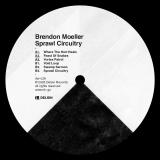
An artist that never stops exploring new territories in sound, Brendon Moeller returns to Delsin with six deep techno steppers following up his Highly Concentrated EP from 2022. Low in frequencies, high in energies. Over the course of six tracks Moeller morphs his iconic dub informed productions into highly intelligent rhythmic arrangements. From introvert techno loops to adventurous dub stepping heavy hitters, it's a full pack of an exciting new chapter in Moeller's extensive catalogue.
Y-TRAXX'S "MYSTERY LAND" RETURNS ON VINYL WITH NEW REMIX BY ROY ROSENFELD:
The legendary trance anthem Mystery Land by Y-Traxx returns to the spotlight. First released in 1995, the track achieved iconic status after featuring prominently in the 2000 box-office No. 1 movie Kevin & Perry Go Large. The original track is now being reissued on vinyl. The release includes the Original Mix, the classic Sickboy Courtyard Mix, the Søluna Remix - winner of the Beatport Remix Contest - and a brand-new remix from Roy Rosenfeld. Available from 3 April via Serious Beats Classics.
With its hypnotic melodies, driving beats, and mysterious atmosphere, "Mystery Land" became a symbol of the 90s trance scene and grew into a cult classic. The track was picked up worldwide by influential DJs, including Paul Oakenfold, and featured prominently on his mix album Perfecto Fluoro (1996).
The new remix by Roy Rosenfeld brings a fresh, modern take to the iconic track, preserving the emotion of the original while adding a powerful peak-time, sunrise energy. Rosenfeld comments: "Remixing Mystery Land was an honor for me. I've loved this track for many years, so the process was very natural and fun. The vision came quickly, keeping the emotion of the original and pushing it into a peak-time, sunrise energy."
ABOUT ROY ROSENFELD:
Roy Rosenfeld is a leading DJ and producer in the house music scene, known for his warm, melodic, and instantly recognizable sound. Since 2009, he has built an impressive international career with releases on labels such as All Day I Dream, Lost & Found, and Rumors, and with iconic tracks like Epika and Kala. His music receives worldwide support from top artists including Solomun, Black Coffee, and Keinemusik. Alongside his studio work, Roy is a highly sought-after performer at clubs and festivals around the globe and the driving force behind the successful No Drama event concept in Tel Aviv.
This release combines nostalgia with contemporary trance production, offering both longtime fans and a new generation the chance to experience this timeless classic in a refreshed form.
Heavyweight psychedelic improvisers EarthBall are back with their third and most monstrous record to date: ‘Outside Over There’, released on Upset The Rhythm (Nov 7th). Born from the haunted basements of Nanaimo, Canada, the quintet thrives on spontaneity, shaping improvisation into jagged hallucinations and ecstatic eruptions.
Recorded live-off-the-floor in 2024 in Jeremy, Izzy, and Kellen’s basement, and mixed by drummer John Brennan, ‘Outside Over There’ is an album that feels both summoned and inevitable. Each track lands with uncanny purpose, as if uncovered rather than written.
The opener, 100%, features a cameo from comedian and English icon Stewart Lee, who lent his blessing for the band to use a fragment of his stand-up. The album was mastered by John Dieterich (Deerhoof), with liner text contributed by longtime comrade John Olson (Wolf Eyes). Olson describes the album in his unmistakable style:
“This eight-track odyssey unfolds like a dreamscape, where whispered incantations brush against the shadowy fringes of the cosmos, and wild, Cézanne-inspired rock anthems erupt like geysers of color in the midst of a western warm and wet rain storm… culminating in the sprawling eleven minute masterpiece, ‘And The Music Shall Untune The Sky,’ aptly dubbed the Earth Crusher. A creation so utterly deconstructed and intertwined with the pulse of nature itself that if AI was called upon to conceive ‘Outside Over There’ anew, it would just spit back, “F.U. in Tree Font”. An enchanting invitation for even the flat-earthers to join the circle, if only just a little.”
EarthBall’s trajectory has been relentless. Their 2024 album ‘It’s Yours’ was praised by The Quietus as “fully aggressive and fully life-affirming,” and by The Wire as "a boisterous mind-melting album”. The band’s live double set LP ‘Actual Earth Music Vol. 1 & 2’ (2025) captured blistering performances: a performance opening for Wolf Eyes at the Fox Cabaret, and a Café OTO improvised throw-down featuring Chris Corsano and Steve Beresford. These releases on their own confirm them as one of Canada’s most vital experimental exports, not to mention the impressive self-released discography on their Bandcamp. The band’s reach has stretched far beyond their west coast roots with a UK tour May 2024, plus this past June, EarthBall closed Montreal’s Suoni Per Il Popolo Festival alongside Pulitzer Prize-winning composer Raven Chacon. This November they will perform at Le Guess Who? Festival in Utrecht, with a European tour to follow (tour dates below). Outside of EarthBall, each member carries their own torch. Jeremy Van Wyck, founding member of the legendary Shearing Pinx, has toured extensively, released over 100 records, and has been a vital force in the Vancouver and West Coast underground for the past 25 years. He and Isabel Ford (Izzy) play together not only in EarthBall, but also in Psychedelic Dirt, Shearing Pinx, Behaviours, and Crotch.
John Brennan collaborates widely, including recently with Endlings (Raven Chacon and John Dieterich), Evichen (Victoria Shen), Francesco Fonassi, Plan Your Future (with Greg Saunier of Deerhoof), Brennan/Corsano duo and Physics with John Dieterich. Kellen Maclaughlin performs with KVMP and Ora Corgan, while saxophonist Liam Murphy is a west coast staple, playing with the best across Vancouver Island and the mainland. On three of the tracks of ‘Outside Over There’, the band is joined by their comrade Justin Patterson, who also plays with Brennan in the duo Modale. This cross-pollination fuels EarthBall’s sound - a collective improvisation, psychically overdriven, and grinding into bloom.
Outside Over There’ is more than an album though, it is a ritual, a gathering of sound at the forest’s edge; where feedback, saxophone screams, and ecstatic vocals dissolve the boundary between chaos and clarity. EarthBall invite you into their circle, to share in the joyful terror of spontaneous creation. ‘Outside Over There’ will be released on November 7th through Upset The Rhythm digitally and as a limited blue-in-black vinyl LP.
- A1: Fire (Live 10/12/68, Winterland, San Francisco)
- A2: Foxey Lady (Live 10/10/68, Winterland, San Francisco)
- A3: Like A Rolling Stone (Live 10/11/68, Winterland, San Francisco)
- B1: Hey Joe (Live 10/11/68, Winterland, San Francisco)
- B2: Little Wing (Live 10/12/68, Winterland, San Francisco)
- B3: Are You Experienced (Live 10/11/68, Winterland, San Francisco)
- B4: Purple Haze (Live 10/10/68, Winterland, San Francisco)
Sourced from electrifying live performances across October 10–12, 1968, this collection showcases Hendrix at peak creativity, delivering towering versions of his most iconic songs alongside extended improvisations that reveal new dimensions of his musicianship. From the blistering intensity of “Fire” to the soulful sweep of “Little Wing” and the psychedelic charge of “Are You Experienced?”, this curated single‑LP set offers a powerful snapshot of Hendrix in his prime.
- A1: First Instrument
- A2: Mona Lisa Left Eye
- A3: Bebe Kids
- A4: Push Me Around Ft. Zack Fox
- A5: Hypnagogia
- A6: Nda Ft. Paris Texas
- A7: Fuck Cigarettes
- A8: Broke Ass Hoes
- B1: Opposite Sex
- B2: Describe
- B3: I Mac
- B4: Shrooms
- B5: Take Me Im Drugs
- B6: Lebanon James
- B7: Art Of Seduction
- B8: Play W Your Pride
Emerging from the vivid chaos of Detroit’s underground, ZelooperZ returns with Dali Ain’t Dead — a surreal yet deeply grounded statement from one of rap’s most singular voices. Following his recent collaborative exploration Dear Psilocybin (with Real Bad Man) — which found him moving through a “stream of psychosis” just before sobriety. (Pitchfork) — ZelooperZ enters this new chapter not simply as the same intricate-flows rapper, but as a rising cult-figure in underground hip-hop who’s forged an identity both enigmatic and quietly unstoppable.
On Dali Ain’t Dead, ZelooperZ channels the spirit of the surreal — the album’s title a nod to the iconic surrealist artist Salvador Dalí — as he reframes his world post-substance, post-chaos, yet still dripping with vivid imagination. Reviews highlight that the album finds him in a more focused mode: one critic writes that “ZelooperZ seems to have adopted a similar outlook to Dalí… embracing sobriety and allowing his art to exist as the psychotropic fuel for his mind.” (Album of the Year) Production (courtesy of Dilip) is inventive and cohesive, blending experimental hip-hop, trap, cloud-rap and drumless textures to mirror Ze’s newly clear-eyed vantage point and trademark eccentricity. (Legends Will Never Die)
Tracks like “Mona Lisa Left Eye” and “Push Me Around” (featuring Zack Fox) carry Z’s jagged humor and restless energy, while deeper cuts like “Shrooms” and “Take Me I’m Drugs” trace his evolving relationship with psychedelia and the legacy of his past. (Legends Will Never Die) In doing so, the record positions itself as the sound of a freak-icon in transition — still wild, still weird, but sharpened, matured, operating with a purpose and increasingly commanding the attention of fans who relish the underground unusual.
ZelooperZ’s trajectory continues to rise. From his roots in the Bruiser Brigade collective in Detroit to the present moment as a cult figure whose every release feels like a mission statement, Dali Ain’t Dead confirms that he’s no longer just the oddball off-to-the-side: he’s the weirdo that others are quietly watching. This album isn’t just for the longtime disciples of his left-field aesthetic — it’s an invitation to anyone curious about hip-hop bending, breaking, and rebuilding itself from the fringes inward.
- A1: I Need A Break
- A2: Little Claws
- A3: Kill The Lie
- A4: Set In Motion
- A5: Wrong Shape
- B1: Don’t Gotta Think About U
- B2: No Regular No Chance
- B3: Everything’s Under Control (Feat. Pink Siifu)
- B4: Really Really Right
LA-based producer Real Bad Man and LA musician Genevieve Artadi announce their new collaborative album Everything Is Under Control, out October 3rd via the producer’s own Real Bad Man Records. Alongside the announcement, the duo are sharing two new singles from the forthcoming album, “Don’t Gotta Think About U” and “Little Claws”. The former is an electro pop banger that propels Artadi’s intoxicating vocals to the forefront and arrives with an accompanying visual. With Everything Is Under Control, Real Bad Man is proving his versatility as a producer, crafting intricate and lively electronic-forward foundations for an old friend in Genevieve to explore an eclectic, funky approach to her vocals.
Speaking about the single, Artadi says, "'Don’t Gotta Think About U' is about a person celebrating the explosion of her most recent unhealthy romantic relationship. Her spitefulness and delusion of freedom indicate she’s still inside the pattern she hasn’t yet realized she keeps signing herself up for. The sound is melancholic pop, the thread that has always tied Adam and me together despite our musical differences."
"I love juxtaposing dense drums and a very pretty voice," Real Bad Man says of collaborating with Artadi. "That’s what 'Don’t Wanna Think About U' is. We’re also trying to make something catchy at the same time, that’s what I’ve always been drawn to musically is blending genres and moods and get them to work together. As well as pulling Genevieve away from what she does with Knower and her solo stuff.
Real Bad Man’s collaboration with Artadi is a radical shift in approach for the producer, whose previous full-length projects this year were rooted in the distinct strain of underground hip-hop that he’s amassed an extensive catalog in. Everything Is Under Control marks an entirely different, and unpredictable, sonic approach for the duo, embracing experimentation and synth-led electronica that’s reminiscent of Artadi’s work as part with Pollyn (her former band with Adam/Real Bad Man) as well as current duo KNOWER with Louis Cole. Real Bad Man’s latest project extends his prolific run of collaborations this year, embarking in a new genre and sound entirely after releasing full-length projects with ZelooperZ (Dear Psilocybin), Boldly James (Conversational Pieces) and Willie The Kid (Midnight) in the first half of 2025.
Known for her complex, yet playful writing style, Genevieve Artadi has made a name for herself through four solo albums that stretch the gambit of jazz, dream pop and dance music. The last three albums were released on iconic label Brainfeeder Records and the fourth (Another Leaf) was made as part of her being a composer-in-residence with Sweden’s Norrbotten Big Band. She’s also been an accomplished collaborator with her bands Expensive Magnets, Pollyn and KNOWER, and performing and recording with the likes of Thundercat and Snarky Puppy.
Check out “Don’t Gotta Think About U” and “Little Claws” above, see below for more details on Everything Is Under Control and stay tuned for more from Real Bad Man coming soon.
DJ Support: Luke Una, Leftfield, Ewan McVicar, Optimo, Damian Lazarus, Jimpster, Hifi Sean, Lovefingers, Heidi Lawden, Justin Robertson, Damian Harris, Sean Johnston (ALFOS)
Electronic music icon Jon Dasilva continues to push forward into the future with “Sun Brings Joy”, alongside Swedish production compadre Skyskrapa and vocalist extraordinaire Donald Waugh.
Coming in a few different flavours, the Bass ID mix has already piqued interest on the socials... is it house? Is it techno? Is it bass music? Who knows, but Luke Una has already called it “the tune of the year”…
The package is completed with a remix from in demand genre bending dj/producer Spatial Awareness.
A mercurial producer, he has had a string of cutting-edge productions to his name spanning over two decades, on labels including Ellum Audio, Rush Hour, Soma, Mute, Deconstruction, Better Days, Eskimo, and many more. His early productions were considered seminal works, combining breaks, African influences, Acid and Bleep culture.
He is in the process of finishing a number of electronic projects for labels such as Balkan Vinyl, Mighty Force, I Love Acid and Hottwerk.
- A1: Intro Girl Under The Grey Cloud
- A2: I Will Overcome
- A3: Beware . The South London Lover Boy
- A4: The Whatsapp Shakespeare
- B1: Winter Woman
- B2: Click Clack Symphony Feat Hans Zimmer
- B3: I Know You´re Hurting
- B4: Life Boat
- C1: I Hate The Way I Look Today
- C2: Goodbye Henry Feat Al Green
- C3: Nightingale Lane
- C4: Skin & Bones
- D1: Where Is My Husband!
- D2: Fields Feat Grandad Michael
- D3: Joy Feat Amma & Absolutely
- D4: Happier Times Ahead
- D5: Fin
Four-time GRAMMY Award-nominated global superstar RAYE, is releasing her highly anticipated sophomore album THIS MUSIC MAY CONTAIN HOPE. The album, set in 4 “seasons” with each side of the vinyl being a different season, takes listeners on a sonic journey that begins with darkness and ends with light.
“Music is medicine. I’ve always said that, and I guess I’m in the process of making medicine for myself that I can share with the world. I want us all to say to ourselves that it’s going to be all right, and I’m going to have faith in the seeds that I’ve planted beneath the snow. I wanted to create something that is a hug or bed or soft place for that person who needs it.”
RAYE recently kicked off her massive 51-date sold-out arena tour THIS TOUR MAY CONTAIN NEW MUSIC includes arena dates across Europe and the UK — including six sold-out nights at The O2 — before heading to North America with stops at iconic venues such as Radio City Music Hall (April 15 and 16th) and the Greek Theatre (May 12 and 13th). Additionally, RAYE will be a special guest on Bruno Mars’ The Romantic Tour for 27 stadium shows across the US this summer.
Far Out Recordings proudly presents Ladeiras De Santa Teresa, the debut collaboration between Rio-jazz maverick Antonio Neves and carioca percussion master Thiaguinho Silva. In what could well be the first ever Brazilian jazz album centered around two drummers, Ladeiras De Santa Teresa is an uncompromisingly groove-rich recording, steeped in trad-samba roots and brass power.
Since his acclaimed 2021 album A Pegada Agora E Esssa Antonio Neves has remained a mainstay of the international facing Brazilian scene, performing both as a trombonist and drummer. His instrumental contributions to contemporary classics like Ana Frango Eletrico’s Little Electric Chicken Heart, Bruno Berle’s No Reino Dos Afetos 2, and Bala Desejo’s Sim Sim Sim will be marveled upon by future generations. His partner in crime Thiaguinho Silva happens to be the son of percussion icon Robertinho Silva, who has played on more or less every canonical Brazilian record, Arthur Verocai (1972), Clube Da Esquina (Milton Nascimento and Lo Borges, 1972), and India (Gal Costa, 1973) to name barely a few. Thiaguinho himself has worked with Marcelo D2, Gal Costa, Liniker and Alice Caymmi, and upon listening to Ladeiras De Santa Teresa, it’s clear that Thiaguinho is more than a worthy successor to carry the Silva family torch.
Some listeners may already be familiar with “Das Neves,” which appeared on Mr Bongo’s Rio De Janeiro-focused Hidden Waters compilation in 2023. The track showcases the profoundly skilled Neves brothers brass section (Antonio alongside brother Edu, who has performed with Hermeto Pascoal), the fiery elegance of pianist Luiz Otávio (Dora Morelenbaum), and Thiaguinho’s pulsating samba breaks. This synergised combo continues across the album, notably on “Fendas Vocais” with Neves doubling up on drums, exhibiting his inventive and fearless skill as an arranger. The album also features street-artist, musician and rapper Joca, adding vocalised dynamism and swagger to an otherwise entirely instrumental record on “Viagem de Trem”.
The album’s title Ladeiras De Santa Teresa (The hills of Santa Teresa) is named in tribute to Rio De Janeiro’s famed Santa Teresa neighborhood, a bohemian enclave with scenic views of the iconic cityscape. The spirit of Santa Teresa with its expansive city views and bustling energy is embodied in the album which encapsulates the jazz and samba histories felt within the neighborhood’s windy alleyways and cobbled streets.
Ladeiras De Santa Teresa by Neves E Silva is out on vinyl, CD and digital on Friday 20th March 2026.
The fifteenth release from electro label Gladio Operations once again brings us a multi-artist format, featuring new faces and a distinctly Spanish flavour.
This EP opens with the return of producer Cycloplex, with his characteristic minimalist sound.
This track, titled ‘EP01-A’, once again showcases his powerful and aggressive bass lines.
From Gerona comes one of the new and talented artists on the Spanish electro scene. David Pasajero makes his debut on Gladio Operations with ‘Dislektro’, a fluid journey of melodies and warm textures infused with acidic touches.
On the B-side we find Barcelona producer Dark Vektor, who needs no introduction, as he is one of the Spanish icons of electro sound. This artist also makes his debut on the label with ‘Te Voy A Dar Ahhhhh’, a dizzying track with suspenseful melodies and a powerful bass line that will keep you on the dance floor no matter what.
The Spanish duo Slit Observers is another of the label’s new faces and treats us to this vibrant track titled ‘Green Machine’, where we encounter dark passages with a perfect dose of acid and embellished with subtle vocoders.
The EP closes with a collaboration between German producers Intergalactic Noize Commander and Elektrotechnik, the latter an artist who has released music previously. ‘Informationen’ is a rough track, created in the most hidden German bunkers, featuring arpeggios and robust bass lines that dominate throughout the whole track, accompanied by gloomy vocals.
For more than 25 years, Black Label Society has stood as one of heavy music’s most unshakeable pillars, delivering album after album of blues-soaked grooves, hard-hitting riffs, and soul-baring ballads. “Engines of Demolition” makes no exception to the steady rule of unrelenting commitment to pure, uncompromising, hard rock.
In 2022, Wylde was invited to honor his fallen brothers, the late great Dimebag Darrell Abbott and his brother Vinnie Paul, as part of Pantera Celebration. Writing and recording with Black Label Society over these last four years is when Engines of Demolition was born. Engines of Demolition follows the release of four singles, “The Gallows” (2024), "Lord Humungus" (2025), “Broken and Blind” (2025) and “Name In Blood” (2026), and marks the first full-length album release since Doom Crew Inc. (2021).
Black Label Society is the pure expression of the paradox of Zakk Wylde’s darkest, loudest riffs and softest soul crushing ballads. BLS is a relentless heavy, bluesy, unhinged hard-rock-metal circus quartet summoning caffeine-fueled cacophony on records and the stage. BLS songs are odes to celebration and mourning from the darkest depths to the highest of highs.
A charismatic hard rock and metal marauder recognized as a living legend and guitar icon, Wylde rose to prominence when Ozzy Osbourne chose him as his loyal axe man. Multi platinum albums, countless guitar magazine covers, Worldwide sold out tours, his own guitar and coffee brands add to Wylde’s ever-growing legacy. He gets as much joy from fronting his Black Label Society as he did playing on stage with his hero, Ozzy Osbourne, to his Black Sabbath cover band, Zakk Sabbath.
Seit mehr als 25 Jahren ist Black Label Society eine der unerschütterlichsten Säulen der Heavy-Musik und liefert Album um Album bluesgetränkte Grooves, knallharte Riffs und gefühlvolle Balladen. „Engines of Demolition“ fügt sich nahtlos ein in das unerbittliche Bekenntnis der Band zu purem, kompromisslosem Hardrock.
Im Jahr 2022 wurde Wylde eingeladen, im Rahmen der Pantera Celebration seine verstorbenen Brüder, den großartigen Dimebag Darrell Abbott und seinen Bruder Vinnie Paul, zu ehren. Während er in den letzten vier Jahren mit Black Label Society Songs schrieb und aufnahm, entstand „Engines of Demolition“. Das Album folgt auf die Veröffentlichung von vier Singles, „The Gallows“ (2024), „Lord Humungus“ (2025), „Broken and Blind“ (2025) und „Name In Blood“ (2026) - und ist das erste Studio-Album seit Doom Crew Inc. (2021).
Black Label Society ist der pure Ausdruck des Paradoxons von Zakk Wyldes dunkelsten, lautesten Riffs und sanftesten, herzzerreißenden Balladen. BLS ist ein unerbittliches, bluesiges, verstörendes Hardrock-Metal-Zirkusquartett, das auf Platten und auf der Bühne eine koffeinhaltige Kakophonie hervorruft. BLS-Songs sind Oden an das Feiern und Trauern, von den dunkelsten Tiefen bis zu den höchsten Höhen.
Wylde, ein charismatischer Hardrock- und Metal-Musiker, der als lebende Legende und Gitarrenikone gilt, wurde bekannt, als Ozzy Osbourne ihn zu seinem treuen Gitarristen machte. Multi-Platin-Alben, unzählige Titelseiten von Gitarrenmagazinen, weltweit ausverkaufte Tourneen, seine eigene Gitarren- und Kaffeemarke tragen zu Wyldes ständig wachsendem Vermächtnis bei. Er hat genauso viel Freude daran, seine Black Label Society zu leiten, wie er sie hatte, als er mit seinem Helden Ozzy Osbourne auf der Bühne stand oder mit seiner Black Sabbath-Coverband Zakk Sabbath spielte.
- 1: Lack Of Love
- 2: Bb
- 3: Andata
- 4: Solitude
- 5: For Jóhann
- 6: Aubade 2020
- 7: Ichimei - Small Happiness
- 8: Mizu No Naka No Bagatelle
- 9: Bibo No Aozora
- 10: Aqua
- 11: Tong Poo
- 12: The Wuthering Heights
- 13: 20220302 - Sarabande
- 14: The Sheltering Sky
- 15 20: 180219 (W/Prepared Piano)
- 16: The Last Emperor
- 17: Trioon
- 18: Happy End
- 19: Merry Christmas Mr. Lawrence
- 20: Opus - Ending
Experience the profound artistry of Ryuichi Sakamoto with Opus, a definitive vinyl collection curated by the composer himself. Spanning decades of groundbreaking work, this 4-LP set brings together iconic film scores, Yellow Magic Orchestra classics, and deeply personal compositions that reflect Sakamoto’s singular musical voice. Highlights include Merry Christmas Mr. Lawrence, Andata, and Aqua, alongside never-before-released pieces including for Jóhann (a tribute to Jóhann Jóhannsson), BB (dedicated to Bernardo Bertolucci), and 20180219 (featuring prepared piano).
Pressed at 45 RPM across four heavyweight LPs for exceptional audio fidelity, each disc is housed in its own jacket with matching black paper dust sleeves. The set is encased in a hand-crafted textured slipcase with elegant black foil detailing and includes a collector’s booklet with composition notes and credits. Opus is more than a retrospective; it’s a final statement from one of the most influential composers of our time.
- A1: Yume No Funanori
- A2: Andromeda No Kanata
- A3: Uzumaku Sargasso
- A4: Nagareboshi No Dance
- A5: Toki No Lost World
- A6: Shinobiyoru Invade
- A7: Oyasumi Future Men
- A8: Oira Ha Sabishii Space Man
- B1: Kirameku Inner Space
- B2: Toumei Wakusei He Warp
- B3: Astronaut No Uta
- B4: Ok! Captain
- B5: Icarus No Hoshi
- B6: Youki Na Alien
- B7: Ijigen No Eden
- B8: Poplar Doori No Ie
(Vinyl LP with obi strip and 4-page insert, pressed and printed in Japan) The legendary soundtrack of the Captain Future anime is finally getting its long awaited vinyl reissue
Composed by Yuji Ohno, renowned for his work on the Lupin the Third soundtrack, this masterpiece delivers a unique “Space × Jazz × Funk” approach, creating an unparalleled galactic groove. From the fiercely funky slap bass of “Beyond Andromeda”, to the spacey, mellow Rhodes on “Good Night, Future Men”, the iconic tracks that colored this cosmic adventure are back in all their glory
This is a must have for fans of anime, jazz-funk, rare groove, and synth sounds.
(Vinyl LP with obi strip and 4-page insert, pressed and printed in Japan) The legendary soundtrack of the Captain Future anime is finally getting its long awaited vinyl reissue
Composed by Yuji Ohno, renowned for his work on the Lupin the Third soundtrack, this masterpiece delivers a unique “Space × Jazz × Funk” approach, creating an unparalleled galactic groove. From the fiercely funky slap bass of “Beyond Andromeda”, to the spacey, mellow Rhodes on “Good Night, Future Men”, the iconic tracks that colored this cosmic adventure are back in all their glory
This is a must have for fans of anime, jazz-funk, rare groove, and synth sounds.
- 01: De Alegria Raiou O Dia
- 02: Tudo Era Lindo
- 03: A Cruz
- 04: Hello Mr. Wonder
- 05: Bem Querer
- 06: Pra Que Vou Recordar O Que Chorei
- 07: Zé Marmita
- 08: Bichos E Crianças
- 09: O Metr?
Carlos Dafé (born October 25, 1947) is a singer and songwriter from Rio de Janeiro, recognised as one of the iconic voices of the Brazilian samba-soul era. Born into a family of musicians and trained at the conservatory, he rose to prominence in the 1970s alongside Tim Maia, Cassiano, and Hyldon, shaping the sound of Rio Noir with his warm baritone voice and soulful phrasing. His 1977 album, Pra Que Vou Recordar, became a cult classic among collectors and DJs worldwide, earning him the title of "Prince of Brazilian Soul." Still active today, Carlos Dafé remains an essential reference for artists exploring the boundaries between samba, soul, and MPB (Brazilian Popular Music). Released in 1977, Pra Que Vou Recordar reveals Carlos Dafé at the peak of his art, blending samba-soul, MPB, and the warm groove of the 1970s Rio de Janeiro scene. Surrounded by some of the city's finest musicians, Dafé showcases his baritone voice in deeply melodic arrangements and a series of songs that have become fan favourites. An album imbued with soul and elegance. The sound of BrazilianBlack music at its most sincere and timeless.